
- Home
- »
- Medical Devices
- »
-
Clinical Wearable Monitoring Devices Market Report, 2033GVR Report cover

Clinical Wearable Monitoring Devices Market (2026 - 2033)
Size, Share & Trends Analysis Report By Connectivity (Wi-Fi, Cellular), By Application (Diabetes, Respiratory), By Product (Wearable ECG/Heart Rhythm Monitors, Wearable Blood Pressure Monitors), By End Use, By Region, And Segment Forecasts
Market Size, 2025
$22.0BMarket Estimate, 2026
$24.8BMarket Forecast, 2033
$65.2BCAGR, 2026–2033
14.8%Clinical Wearable Monitoring Devices Market Summary
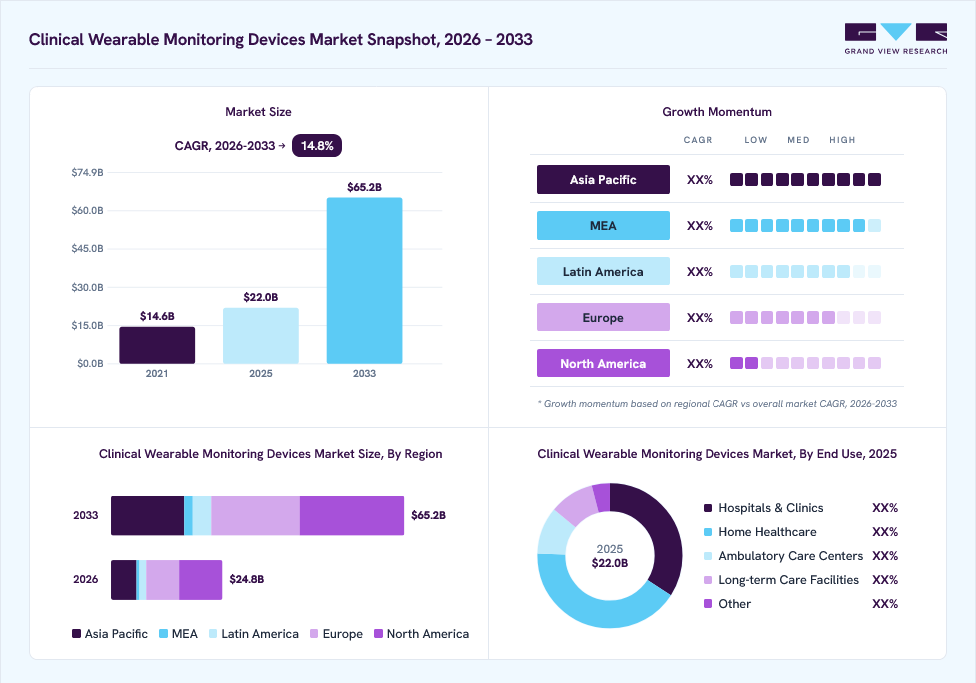
The global clinical wearable monitoring devices market size was valued at USD 22.0 billion in 2025 and is projected to grow from USD 24.8 billion in 2026 to USD 65.2 billion by 2033, at a CAGR of 14.8% from 2026 to 2033. The market in North America dominated with a revenue share of 39.3% in 2025. This growth is attributed to the growing adoption of remote patient monitoring, rising prevalence of chronic diseases, advancements in wearable sensors and connectivity, and expansion of clinical-grade wearable products.
 Source: Grand View Research, IR Documents, Primary Interviews, Paid DatabasesTo learn more about this report,
 Download Free Sample Report
Key Market Trends & Insights
- By product: Continuous glucose monitoring devices segment held the largest market share of 25.3% in 2025.
- By connectivity: Bluetooth segment held the largest market share of 58.0% in 2025.
- By application: Cardiovascular segment held the largest market share of 28.3% in 2025.
- By end use: Home healthcare segment held the largest market share of 41.3% in 2025.
Regional Highlights
- Largest regional market: North America (39.3% revenue share, 2025)
- Fastest-growing regional market: Asia Pacific (highest CAGR, 2026-2033)
- By country: The U.S. held the largest market share in 2025
Market Size & Forecast
- Market size in 2025: USD 22.0 Billion
- Estimated market size in 2026: USD 24.8 Billion
- Projected market size by 2033: USD 65.2 Billion
- CAGR (2026-2033): 14.8%
Prism AI by Grand View Research Free to tryAsk a question about the clinical wearable monitoring devices marketTry asking✓Every figure cited from GVR research Prefer the report? Download free sample →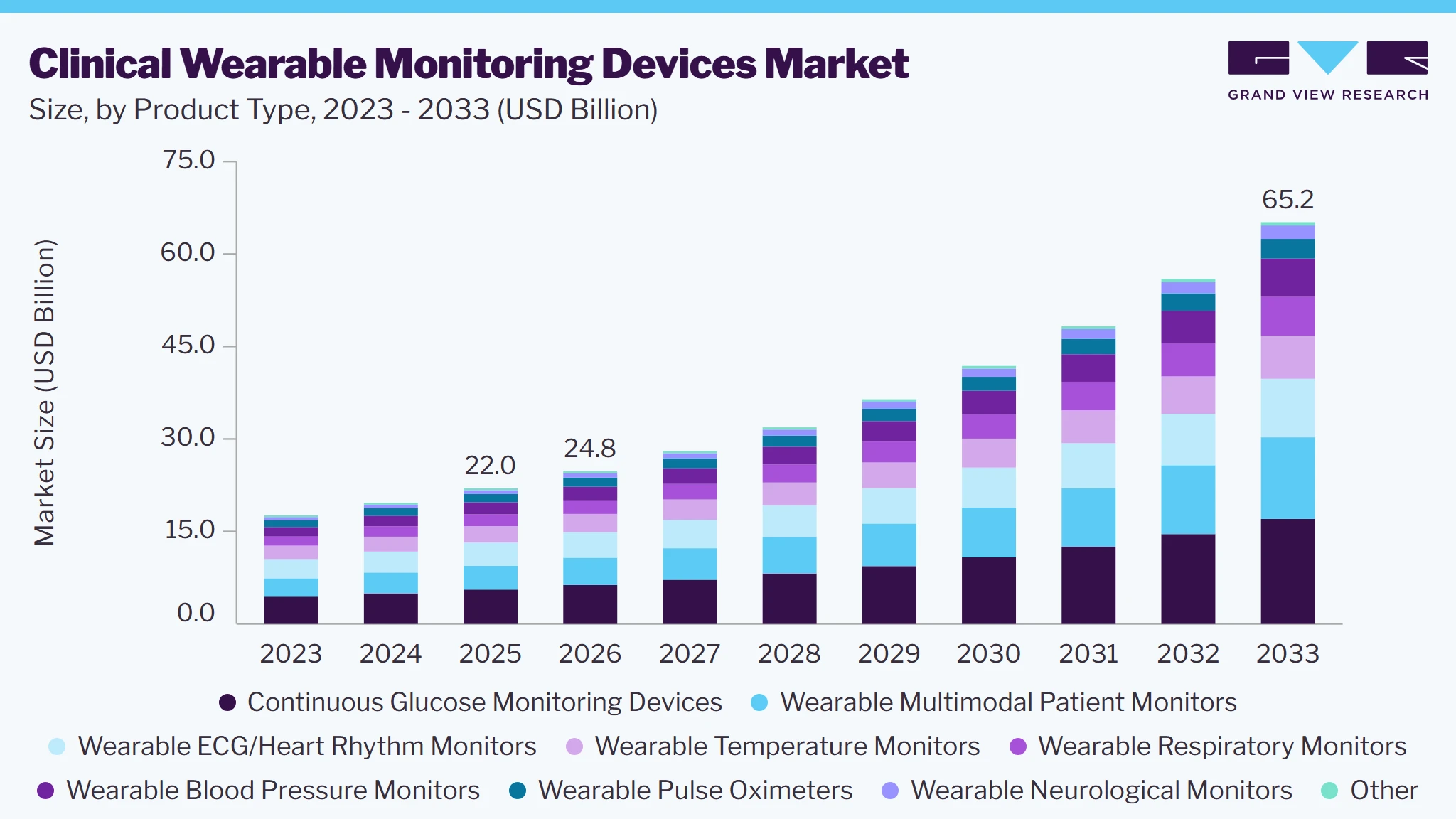 To learn more about this report, Download Free Sample Report
Market Dynamics
The market is driven by the increasing prevalence of chronic disease, rising adoption of hospital-at-home and remote patient monitoring, growing healthcare expenditure, and demand for early detection of patient deterioration. Advancements in AI-enabled analytics, multimodal sensing, miniaturized sensors, and wireless connectivity are supporting adoption, while high device costs, data privacy concerns, interoperability challenges, and regulatory requirements may restrain market growth.
The increasing prevalence of cardiovascular diseases, diabetes, hypertension, chronic respiratory diseases, and cancer is driving demand for continuous and remote patient monitoring. Chronic conditions require long-term disease management and regular assessment of physiological parameters, increasing the need for wearable monitoring devices across hospitals, ambulatory settings, and home healthcare. According to the World Health Organization's 2025 report, noncommunicable diseases caused at least 43 million deaths in 2021, with cardiovascular diseases accounting for at least 19 million deaths, followed by cancers with 10 million deaths and chronic respiratory diseases with 4 million deaths. approximately 589 million adults aged 20-79 years were living with diabetes globally in 2024, and this number is projected to reach 853 million by 2050.
In addition, the International Diabetes Federation (IDF) Diabetes Atlas reported in 2025 that This growing disease burden supports demand for wearable ECG, glucose, blood pressure, respiratory, and multimodal monitoring devices for continuous physiological tracking and earlier clinical intervention.
Region
Adults with Diabetes (2024)
Western Pacific
215.4 million
South-East Asia
106.9 million
Middle East & North Africa
84.7 million
Europe
65.6 million
North America & Caribbean
56.2 million
South & Central America
35.4 million
Africa
24.6 million
Global
588.5 million
Diabetes Prevalence by IDF Region, 2024 (Million Adults)
Limited integration of clinical wearable monitoring devices with electronic health records (EHRs), hospital information systems, and existing patient-monitoring platforms can restrict their adoption. Differences in data formats, communication protocols, and device standards can make it difficult to transfer and interpret patient data across healthcare systems.
In addition, inconsistent interoperability standards, cybersecurity requirements, and integration costs can increase implementation complexity for healthcare providers. These challenges may limit the seamless use of wearable-generated data in clinical workflows and reduce the efficiency of continuous patient monitoring.
The integration of AI with clinical wearable monitoring devices is creating opportunities to improve continuous patient surveillance and clinical decision-making. AI algorithms can analyze data from multiple wearable sensors, including ECG, SpO₂, respiratory rate, temperature, and pulse rate, to identify abnormal physiological patterns and support earlier detection of patient deterioration. For instance, in June 2026, Masimo received FDA 510(k) clearance for an AI-enabled opioid-induced respiratory detection capability integrated into its Radius VSM wearable continuous patient monitor. The capability analyzes continuous physiological data to help identify respiratory risk sooner, supporting earlier clinical intervention. This development highlights the growing opportunity to integrate AI-based analysis with clinical wearable monitoring.
“Opioid-Induced Respiratory Depression remains a critical patient-safety concern. With OIRD detection, Masimo is bringing advanced pattern recognition to continuous, wearable monitoring, helping clinicians identify earlier changes in a patient’s respiratory status that may not be apparent through traditional approaches. This capability reflects our ongoing focus on working closely with clinicians to address complex patient-safety challenges with meaningful innovation. OIRD detection on Radius VSM will help expand continuous monitoring from simple measurement to meaningful insight, supporting safer care throughout the hospital.”
- Dr. Basil Matta, Chief Medical Officer at Masimo.
Market Concentration & Characteristics
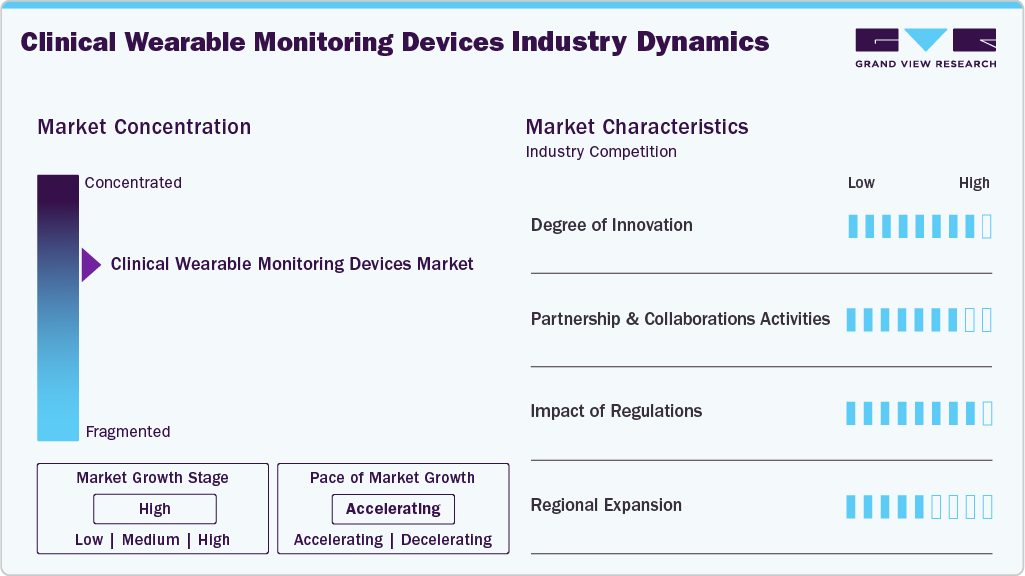
The degree of innovation in the clinical wearable monitoring devices industry is high, driven by advancements in multimodal sensing and integration of multiple physiological parameters into a single clinical wearable platform. Manufacturers are moving beyond single-parameter monitoring toward wearable devices that can simultaneously capture complementary vital signs, providing clinicians with more comprehensive patient data. For instance, in July 2026, LifeLens Technologies received FDA 510(k) clearance for expanded indications for its Wearable Physiological Monitoring system, adding SpO₂, heart rate, respiratory rate, heart rate variability, and skin temperature monitoring to its existing ECG capability. This development highlights the innovation of multimodal clinical monitoring within wearable devices.
The level of partnerships and collaboration activities in the clinical wearable monitoring devices industry is moderate to high, with manufacturers partnering with healthcare providers, technology companies, and clinical organizations to expand continuous monitoring, integrate wearable data into clinical workflows, and strengthen hospital-to-home care capabilities. For instance, in June 2026, Medtronic expanded its strategic partnership with Corsano Health B.V. through a new U.S. distribution agreement for Corsano’s multi-parameter wearable, designed for continuous monitoring of vital signs in hospital and hospital-to-home settings.
 To learn more about this report, Download Free Sample Report
“At Corsano Health, our mission is to transform healthcare by giving clinicians actionable insights that can improve patient outcomes, from the hospital to the home. With this innovation, we envision that advanced patient monitoring will be easier to use in daily clinical practice, helping streamline workflows, support earlier intervention, and enable new ways of delivering care. Together, we are redefining connected care to meet the changing needs of health systems, help address workforce challenges, and support more personalized and efficient patient management at every stage of care.”
- Peter Stas, Corsano Health’s CEO
The impact of regulations is significant in the clinical wearable monitoring devices industry, as products must meet requirements for safety, performance, clinical validation, software, and data security. In the U.S., the devices require FDA clearance, while in Europe, manufacturers must comply with the EU Medical Device Regulation (MDR) before commercialization.
The regional expansion of the clinical wearable monitoring devices industry is high. Key players are expanding through regional partnerships, distribution networks, regulatory approvals, and localized product launches to improve access to clinical-grade wearable monitoring. For instance, in June 2026, Medtronic expanded its U.S. Acute Care & Monitoring wearables portfolio through an exclusive distribution agreement with Corsano Health B.V. for its FDA-cleared multi-parameter wearable. The agreement strengthens access to continuous multi-parameter monitoring across U.S. acute-care settings.
Analyst Perspective
The market is driven by the increasing adoption of continuous physiological monitoring, rising prevalence of remote patient monitoring, growing demand for remote and hospital-at-home care, and advances in sensor miniaturization and wireless connectivity. Adoption is shifting toward multimodal, continuous, AI-enabled, and clinically validated wearable monitors that can simultaneously track multiple physiological parameters and support earlier clinical intervention.
Product Insights
The continuous glucose monitoring devices segment dominated the market with a revenue share of 25.3% in 2025, driven by the established clinical use of CGM for continuous glucose tracking, increasing diabetes prevalence, and growing adoption of wearable glucose monitoring for long-term disease management. The presence of major manufacturers such as Abbott and Dexcom, along with expanding product portfolios and improved sensor performance, is supporting segment growth. For instance, in December 2025, Dexcom launched the Dexcom G7 15 Day CGM system, extending sensor wear time to up to 15.5 days and improving accuracy compared with the standard G7. The longer wear duration reduces the frequency of sensor replacements and provides greater convenience for patients requiring continuous glucose monitoring.
The wearable multimodal patient monitors segment is expected to grow at the fastest CAGR during the forecast period from 2026 to 2033. Growth is driven by increasing demand for simultaneous monitoring of multiple physiological parameters, including ECG, SpO₂, heart rate, respiratory rate, temperature, and blood pressure. Advances in integrated sensors, wireless connectivity, and AI-enabled analytics are further supporting adoption across hospitals, home healthcare, and remote patient monitoring settings. Increasing demand for continuous and comprehensive patient surveillance is expected to accelerate the adoption of multimodal wearable monitors.
Connectivity Insights
The Bluetooth segment held the largest share at 58.0% in 2025, supported by its widespread integration into clinical wearable monitoring devices, low power consumption, broad smartphone and medical device compatibility, and cost-effective short-range data transmission. Bluetooth connectivity enables continuous transfer of physiological data from wearable sensors to smartphones, gateways, and clinical monitoring platforms, supporting its extensive adoption across ECG, glucose, pulse oximetry, temperature, and multimodal monitoring devices.
The cellular segment is expected to grow at the fastest CAGR during the forecast period from 2026 to 2033. Growth is driven by increasing demand for direct transmission of physiological data from wearable devices without relying on smartphones or local networks. Cellular connectivity enables remote, continuous monitoring across hospitals, home healthcare, and ambulatory settings, particularly where independent connectivity and broader geographic coverage are required.
Application Insights
The cardiovascular diseases segment held the largest share of 28.3% in 2025. This dominance is due to the high prevalence of cardiovascular diseases such as coronary artery disease, heart failure, arrhythmias, hypertension, and stroke, increasing demand for continuous monitoring of ECG, heart rate, heart rhythm, and blood pressure. The growing adoption of clinical-grade wearable cardiac monitors, including ECG patches and multimodal monitoring devices, is driving segment growth and helping maintain its leading position.
The remote patient monitoring segment is expected to grow at the fastest CAGR of 17.1% during the forecast period from 2026 to 2033. Growth is driven by increasing demand for home-based care, chronic disease management, continuous physiological monitoring, and connected healthcare technologies. The expansion of wearable devices capable of transmitting real-time patient data to healthcare providers is further supporting the adoption of clinical wearable monitoring in remote care settings.
End Use Insights
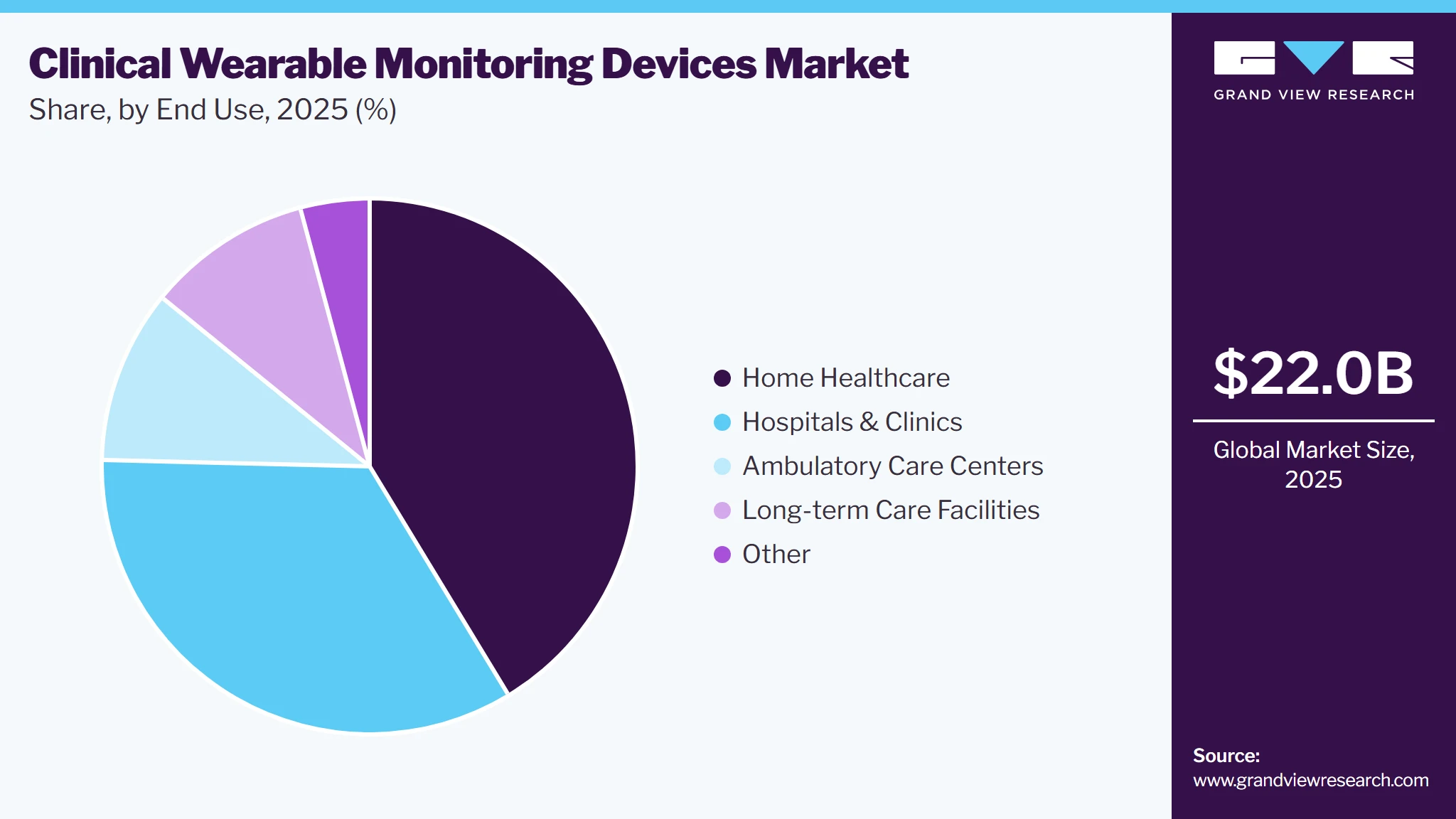
The home healthcare segment accounted for the largest revenue share at 41.3% in 2025. This dominance is driven by increasing demand for home-based chronic disease management, remote patient monitoring, and continuous physiological tracking. The growing adoption of connected clinical wearable devices enables patients to be monitored outside traditional healthcare settings while allowing healthcare providers to receive and assess physiological data remotely.
 To learn more about this report, Download Free Sample Report
The ambulatory care centers segment is expected to grow significantly during the forecast period, supported by increasing outpatient procedures, demand for short-term physiological monitoring, and the adoption of wearable devices for patient assessment and post-procedure observation.
Regional Insights
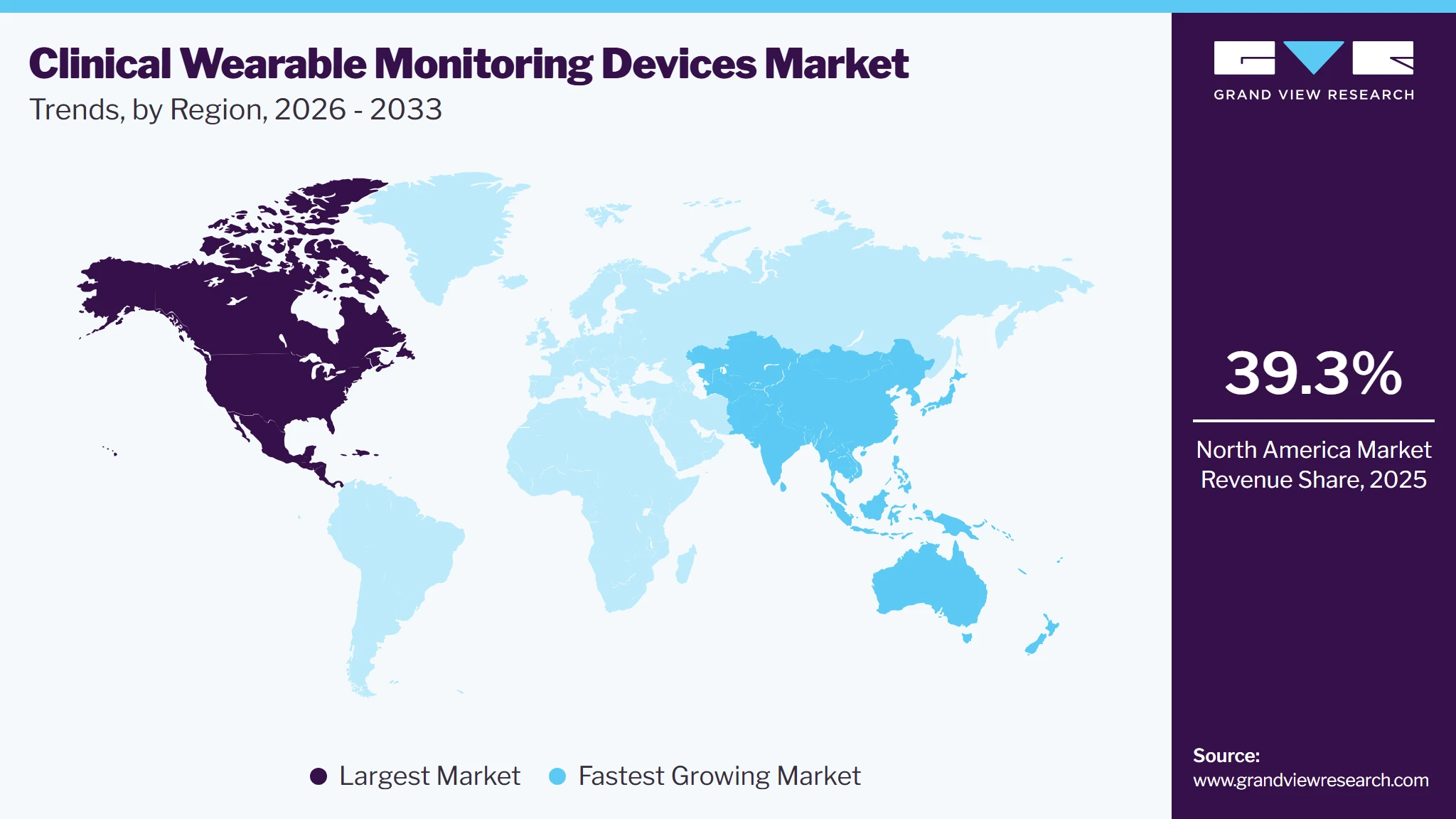
North America dominated the clinical wearable monitoring devices market in 2025 with a revenue share of 39.3%. This dominance is driven by advanced healthcare infrastructure, high adoption of remote patient monitoring, and a strong presence of clinical wearable manufacturers. The region benefits from the presence of key players Abbott, Dexcom, Masimo, iRhythm, VitalConnect, and GE HealthCare. For instance, in July 2026, Dexcom was selected as the first participant in the FDA’s TEMPO Digital Health Devices Pilot Program, with its Dexcom Glucose Health Program integrating data from the Dexcom G7 and Stelo, along with contextual health information and AI-powered insights, to support chronic disease management. This development supports the expansion of clinical-grade wearable glucose monitoring into broader chronic disease management.
 To learn more about this report, Download Free Sample Report
U.S. Clinical Wearable Monitoring Devices Market Trends
The clinical wearable monitoring devices market in the U.S. dominated North America due to the country's healthcare expenditure, high chronic disease prevalence, established remote patient monitoring practices, and a strong presence of clinical wearable manufacturers. Growth is driven by the presence of major players such as Abbott, Dexcom, Masimo, iRhythm, VitalConnect, and GE Healthcare. For instance, in August 2026, iRhythm entered into an agreement to acquire VitalConnect for approximately USD 287.5 million, expanding its cardiac monitoring portfolio with FDA-cleared wearable biosensors and continuous multi-vital monitoring capabilities. The transaction is expected to strengthen clinical wearable monitoring across ambulatory, inpatient, and hospital-to-home care settings.
Europe Clinical Wearable Monitoring Devices Market Trends
The clinical wearable monitoring devices market in Europe held a significant share in the global market in 2025, driven by aging populations, chronic disease prevalence, established healthcare systems, and increasing adoption of connected monitoring. For instance, in August 2026, Philips announced new collaborations with Blue Spark Technologies, Caretaker Medical, Cuviva, LifeSignals, Respiree, and SmartWare to expand its open patient-monitoring ecosystem. The collaborations integrate wearable and out-of-hospital technologies into Philips' ecosystem, supporting continuous monitoring from hospital admission through recovery at home.
“Monitoring is no longer just about what happens at the bedside. Healthcare organizations need a more connected approach that helps clinicians maintain visibility into patient status across care settings. By building an open, enterprise-wide ecosystem that connects technologies, data, and workflows, we can help deliver continuous patient insight, support smoother transitions in care, and create a more coordinated experience for clinicians and patients.”
- Sangdo Kim, Category Leader, NextGen Acute and Transitional Care Monitoring, Philips.
The UK clinical wearable monitoring devices market is supported by a well-established healthcare infrastructure, an aging population, a high chronic disease burden, and increasing adoption of remote patient monitoring. The NHS's focus on virtual wards, home-based care, and digital health solutions is supporting demand for continuous physiological monitoring outside traditional hospital settings. Growing adoption of connected ECG, glucose, respiratory, and multimodal monitoring devices is expected to support market expansion.
The clinical wearable monitoring devices market in Germany is driven by the advanced healthcare infrastructure, aging population, high healthcare expenditure, and a strong medical device industry, which collectively drive market growth. The increasing demand for continuous monitoring and home-based care is driving the adoption of clinical-grade wearable technologies. The presence of established medical-device manufacturers and growing integration of connected monitoring into clinical workflows is expected to further support market growth.
Asia Pacific Clinical Wearable Monitoring Devices Market Trends
The clinical wearable monitoring devices market in the Asia Pacific is expected to grow at the fastest CAGR of 16.3% over the forecast period from 2026 to 2033. Market growth is driven by expanding healthcare infrastructure, a growing chronic disease burden, and rising adoption of remote and connected patient monitoring. For instance, Vivalink continued to offer clinically validated wearable monitoring solutions in the region, including sensors designed for continuous physiological monitoring and remote patient care. Its clinical-grade wearables monitor parameters such as ECG, heart rate, respiratory rate, SpO₂, and temperature, enabling the expansion of continuous monitoring across hospital and home-care settings.
Japan clinical wearable monitoring devices market is driven by advanced healthcare infrastructure, an aging population, high healthcare expenditure, and a well-established medical-device industry. The country's growing need for continuous monitoring of older adults and patients with chronic conditions is driving demand for connected, clinical-grade wearable monitoring technologies. Strong adoption of digital healthcare and remote patient monitoring is expected to further support market growth.
The clinical wearable monitoring devices market in China represents a significant growth opportunity due to its large patient population, expanding healthcare infrastructure, rising burden of chronic diseases, and increasing adoption of digital healthcare technologies. Growing investments in healthcare digitization and remote patient monitoring support demand for continuous physiological monitoring. The presence of domestic and international medical-device manufacturers is also improving the availability of clinical-grade wearable monitoring solutions.
Latin America Clinical Wearable Monitoring Devices Market Trends
The clinical wearable monitoring devices market in Latin America is expected to grow significantly over the coming period, due to increasing healthcare digitization, rising chronic disease burden, expanding remote patient monitoring, and improving healthcare infrastructure. The growing adoption of home-based care and connected healthcare technologies is driving demand for continuous physiological monitoring. Increasing use of wearable ECG, glucose, respiratory, and multimodal monitoring devices is expected to create further opportunities across the region.
Middle East & Africa Clinical Wearable Monitoring Devices Market Trends
The clinical wearable monitoring devices market in MEA is supported by healthcare modernization, increasing healthcare investments, growing digital health adoption, and rising demand for remote patient monitoring. Expansion of hospital infrastructure and home-based healthcare services is creating opportunities for continuous physiological monitoring. Increasing adoption of connected clinical technologies is expected to support demand for wearable ECG, glucose, pulse oximetry, and multimodal monitoring devices.
Key Clinical Wearable Monitoring Devices Company Insights
Key market players are strengthening their positions through clinical-grade wearable product launches, sensor innovation, multimodal monitoring capabilities, regulatory clearances, portfolio expansion, and geographic expansion. Established companies such as Abbott Laboratories, Dexcom, Masimo, iRhythm Technologies, and Koninklijke Philips leverage strong clinical portfolios and healthcare distribution networks, while emerging players focus on disease-specific monitoring, wearable biosensors, and continuous physiological monitoring.
Competition is expected to remain high as established manufacturers leverage strong clinical relationships, regulatory expertise, and broad distribution networks, while emerging players compete through specialized wearable technologies, continuous monitoring capabilities, and focused clinical applications.
Key Clinical Wearable Monitoring Devices Companies
The following key companies have been profiled for this study on the clinical wearable monitoring devices market.
-
Abbott Laboratories
-
Dexcom, Inc.
-
Masimo Corporation
-
iRhythm Technologies, Inc.
-
VitalConnect, Inc.
-
BioIntelliSense, Inc.
-
Koninklijke Philips N.V.
-
GE HealthCare Technologies Inc.
-
Medtronic (Corsano Health B.V.)
-
Empatica, Inc.
-
Biobeat Technologies Ltd.
-
VivaLNK, Inc.
-
Brady Diagnostics, Inc. (Baxter)
-
Cardiac Insight, Inc.
-
Biofourmis, Inc.
-
LifeSignals, Inc.
Competitive Benchmarking
Category
Operating Strategies
Competitive Edge
Weakness
Established Players (Abbott Laboratories, Dexcom, Inc., Masimo Corporation, iRhythm Technologies, Inc., VitalConnect, Inc., Koninklijke Philips N.V., GE HealthCare Technologies Inc.)
Expand clinical wearable monitoring portfolios, integrate AI and multimodal sensing, strengthen hospital and remote patient monitoring partnerships, obtain regulatory clearances, and expand distribution across end use.
Established clinical brands, FDA-cleared product portfolios, strong R&D capabilities, extensive healthcare-provider relationships, and broad distribution networks.
High development and regulatory costs, complex integration with healthcare IT systems, dependence on reimbursement and clinical adoption, and competition from specialized wearable manufacturers.
Emerging Players (BioIntelliSense, Inc., Empatica, Inc., Biobeat Technologies Ltd., VivaLNK, Inc.)
Develop specialized multimodal and continuous-monitoring wearables, expand AI-enabled analytics, target hospital-at-home and remote patient monitoring applications, strengthen technology partnerships, and expand into new geographic markets.
Specialized wearable technology, compact sensor designs, continuous physiological monitoring, flexible product development, and a focus on specific clinical applications.
Smaller distribution networks, lower brand recognition, limited financial resources compared with large medtech companies, narrower product portfolios, and dependence on regulatory approvals and strategic partnerships.
Recent Developments
-
In August 2026, Empatica received FDA clearance for Parkinson’s monitoring through its Empatica Health Monitoring Platform, which uses clinical-grade wearables and AI-based digital biomarkers to track measures such as bradykinesia, dyskinesia, sleep, and medication compliance. The platform's use in more than 150 hospitals and clinical sites highlights the expansion of wearable monitoring into neurological disease management.
"Wearable monitoring enhances our understanding of how Parkinson's symptoms change daily and respond to treatment. Bringing objective, real-world data into clinical care can assist clinicians in making more informed, personalized decisions and better support people living with Parkinson's."
- Ritesh Ramdhani, MD, Associate Professor of Neurology and Director of the Deep Brain Stimulation Program
-
In March 2026, iRhythm Technologies presented new clinical evidence supporting its Zio ambulatory ECG portfolio across multiple patient populations at the ACC.26 Scientific Sessions. The wearable ECG monitoring platform provides ambulatory cardiac monitoring and supports the identification of clinically actionable arrhythmias.
-
In October 2024, BioIntelliSense received FDA clearance for its BioButton Multi-Patient wearable and BioDashboard system for continuous patient monitoring. The medical-grade wearable enables automated collection of vital signs for continuous monitoring across hospital units and hospital-level care at home.
Clinical Wearable Monitoring Devices Market Report Scope
Report Attribute
Details
Market size in 2025
USD 22.0 billion
Estimated market size in 2026
USD 24.8 billion
Projected market size by 2033
USD 65.2 billion
Growth rate
CAGR of 14.8% from 2026 to 2033
Actual data
2021 - 2025
Forecast period
2026 - 2033
Quantitative units
Market value in USD billion, and CAGR from 2026 to 2033
Report coverage
Revenue forecast, company ranking, competitive landscape, growth factors, and trends
Segments covered
Product, connectivity, application, end use, region
Regional scope
North America; Europe; Asia Pacific; Latin America; MEA
Country scope
U.S.; Canada; Mexico; Germany; UK; France; Italy; Spain; Norway; Denmark; Sweden; China; Japan; India; South Korea; Australia; Thailand; Brazil; Argentina; Saudi Arabia; South Africa; UAE; Kuwait
Key companies profiled
Abbott Laboratories; Dexcom, Inc.; Masimo Corporation; iRhythm Technologies, Inc.; VitalConnect, Inc.; BioIntelliSense, Inc.; Koninklijke Philips N.V.; GE HealthCare Technologies Inc.; Medtronic (Corsano Health B.V.); Empatica, Inc.; Biobeat Technologies Ltd.; VivaLNK, Inc.; Brady Diagnostics, Inc. (Baxter); Cardiac Insight, Inc.; Biofourmis, Inc.; LifeSignals, Inc.
Customization scope
Free report customization (equivalent up to 8 analysts working days) with purchase. Addition or alteration to country, regional & segment scope.
Pricing and purchase options
Avail customized purchase options to meet your exact research needs. Explore purchase options
Global Clinical Wearable Monitoring Devices Market Report Segmentation
This report forecasts revenue growth at global, regional, and country levels and provides an analysis of the latest industry trends in each of the sub-segments from 2021 to 2033. For this study, Grand View Research has segmented the global clinical wearable monitoring devicesmarket report based on product, connectivity, application, end use, and region:
-
Product Outlook (Revenue, USD Million, 2021 - 2033)
-
Wearable ECG/Heart Rhythm Monitors
-
Wearable Blood Pressure Monitors
-
Wearable Pulse Oximeters
-
Continuous Glucose Monitoring Devices
-
Wearable Temperature Monitors
-
Wearable Respiratory Monitors
-
Wearable Multimodal Patient Monitors
-
Wearable Neurological Monitors
-
Other
-
-
Connectivity Outlook (Revenue, USD Million, 2021 - 2033)
-
Bluetooth
-
Wi-Fi
-
Cellular
-
Other Connectivity Technologies
-
-
Application Outlook (Revenue, USD Million, 2021 - 2033)
-
Cardiovascular
-
Diabetes
-
Respiratory
-
Neurological
-
Postoperative
-
Remote Patient Monitoring
-
Other Applications (Sleep, Maternal & Fetal, etc.)
-
-
End Use Outlook (Revenue, USD Million, 2021 - 2033)
-
Hospitals & Clinics
-
Home Healthcare
-
Ambulatory Care Centers
-
Long-term Care Facilities
-
Other
-
-
Regional Outlook (Revenue, USD Million, 2021 - 2033)
-
North America
-
U.S.
-
Canada
-
Mexico
-
-
Europe
-
UK
-
Germany
-
France
-
Italy
-
Spain
-
Denmark
-
Sweden
-
Norway
-
-
Asia Pacific
-
China
-
Japan
-
India
-
South Korea
-
Australia
-
Thailand
-
-
Latin America
-
Brazil
-
Argentina
-
-
Middle East and Africa (MEA)
-
South Africa
-
Saudi Arabia
-
UAE
-
Kuwait
-
-
Research Methodology
The clinical wearable monitoring devices market figures in this report are based on a proven research process that combines executive interviews with secondary research from proprietary databases, company filings, and recognized regulatory and institutional sources. Market size is built through value-chain sizing-reconciling supply-side and demand-side estimates-and triangulated with bottom-up and top-down approaches. Every estimate passes multiple levels of expert validation before publication, with each clinical wearable monitoring devices segment quantified using the revenue-capture definitions in the table below.
Segment Definition
Product
Revenue Capture Definition
Wearable ECG/Heart Rhythm Monitors
Revenue generated from the sale of clinical-grade FDA-approved wearable devices used for continuous or intermittent ECG and heart-rhythm monitoring, including wearable cardiac patches and ambulatory ECG monitors.
Wearable Blood Pressure Monitors
Revenue generated from the sale of clinical-grade wearable devices used for continuous or intermittent blood pressure monitoring and blood pressure trending.
Wearable Pulse Oximeters
Revenue generated from the sale of clinical-grade wearable devices used to measure and continuously monitor blood oxygen saturation (SpO₂) and pulse rate.
Continuous Glucose Monitoring Devices
Revenue generated from the sale of wearable continuous glucose monitoring devices used to continuously measure interstitial glucose levels for diabetes management and clinical monitoring.
Wearable Temperature Monitors
Revenue generated from the sale of clinical-grade wearable devices used for continuous or intermittent body or skin temperature monitoring and temperature trending.
Wearable Respiratory Monitors
Revenue generated from the sale of wearable clinical devices used to monitor respiratory rate, respiratory effort, oxygenation, and other respiratory parameters.
Wearable Multimodal Patient Monitors
Revenue generated from the sale of clinical-grade wearable devices capable of simultaneously monitoring multiple physiological parameters, such as ECG, heart rate, SpO₂, respiratory rate, temperature, blood pressure, and activity.
Wearable Neurological Monitors
Revenue generated from the sale of clinical-grade wearable devices used to monitor neurological parameters or disease-related biomarkers, including movement, tremor, seizure activity, sleep, and other neurological indicators.
Other
Revenue generated from other clinical-grade wearable monitoring devices used to monitor physiological parameters or clinical conditions not classified under the major product categories above.
Connectivity
Revenue Capture Definition
Bluetooth
Revenue generated from clinical wearable monitoring devices that use Bluetooth connectivity to transmit physiological data to smartphones, tablets, gateways, or clinical monitoring systems.
Wi-Fi
Revenue generated from clinical wearable monitoring devices that use Wi-Fi connectivity to transmit patient monitoring data to healthcare platforms, hospital networks, or remote monitoring systems.
Cellular
Revenue generated from clinical wearable monitoring devices with cellular connectivity that enable direct transmission of physiological data to healthcare providers or remote monitoring platforms without relying on local Wi-Fi networks.
Other Connectivity Technologies
Revenue generated from clinical wearable monitoring devices using other connectivity technologies, including NFC, proprietary wireless protocols, or combinations of connectivity technologies.
Application
Revenue Capture Definition
Cardiovascular
Revenue generated from clinical wearable monitoring devices used to monitor cardiovascular parameters, including ECG, heart rate, heart rhythm, and blood pressure, for cardiovascular disease management and cardiac surveillance.
Diabetes
Revenue generated from clinical wearable monitoring devices used for continuous glucose monitoring and physiological tracking to support diabetes management and glycemic control.
Respiratory
Revenue generated from clinical wearable monitoring devices used to monitor respiratory parameters, including respiratory rate, SpO₂, and respiratory patterns, for respiratory disease management and surveillance.
Neurological
Revenue generated from clinical wearable monitoring devices used to monitor neurological conditions and related parameters, including movement, tremor, seizure activity, sleep, and other neurological biomarkers.
Postoperative
Revenue generated from clinical wearable monitoring devices used for continuous or intermittent monitoring of patients following surgical procedures to support early detection of physiological deterioration and postoperative complications.
Remote Patient Monitoring
Revenue generated from clinical wearable monitoring devices used to remotely collect and transmit patient physiological data to healthcare providers for continuous monitoring, chronic disease management, and follow-up care.
Other Applications
Revenue generated from clinical wearable monitoring devices used in other applications, including sleep monitoring, maternal and fetal monitoring, rehabilitation, and other specialized clinical applications.
End-use
Revenue Capture Definition
Hospitals & Clinics
Revenue generated from the sale of clinical wearable monitoring devices used in hospitals and clinics for inpatient monitoring, clinical assessment, diagnosis, postoperative surveillance, and continuous physiological monitoring.
Home Healthcare
Revenue generated from the sale of clinical wearable monitoring devices used in home healthcare settings for remote patient monitoring, chronic disease management, recovery monitoring, and long-term physiological tracking.
Ambulatory Care Centers
Revenue generated from the sale of clinical wearable monitoring devices used in ambulatory care centers for short-term monitoring, diagnostic assessment, outpatient procedures, and follow-up care.
Long-term Care Facilities
Revenue generated from the sale of clinical wearable monitoring devices used in nursing homes, skilled nursing facilities, and other long-term care settings for continuous monitoring and management of patients with chronic or age-related conditions.
Other
Revenue generated from the sale of clinical wearable monitoring devices used in other healthcare settings, including rehabilitation centers, specialty care facilities, research institutions, and clinical trial settings.
Estimation Model
Stage
Description
Top-Down
Commodity Flow Analysis: Market size was estimated by analyzing revenues generated by key clinical wearable monitoring device manufacturers, supported by company annual reports, investor presentations, product portfolios, regulatory filings, distributor insights, and industry databases. Revenue contributions from private companies were assessed using secondary and primary research to derive the overall market value.
Segmentation
Country-Level Segment Share Modeling: Product-type and application shares were estimated using country-specific chronic disease prevalence, healthcare infrastructure, wearable monitoring adoption, clinical utilization, reimbursement conditions, remote patient monitoring penetration, and availability of clinical-grade wearable products. Weighted averages were applied to derive regional and global segment distributions.
Validation
Data Triangulation & Validation Model: Market estimates were validated through triangulation of secondary research, primary interviews, company-level revenue assessments, product-level analysis, device shipment estimates, ASP analysis, and demand-side adoption trends to ensure consistency across products, applications, regions, and countries.
Forecasting
Forecasting & CAGR Modeling: Market forecasts were developed using chronic disease prevalence, aging population trends, remote patient monitoring adoption, clinical wearable penetration, technological advancements, AI integration, product launches, healthcare expenditure, and regulatory developments. Trend analysis and growth modeling were applied to estimate market growth and CAGR from 2026 to 2033
Delivered Customizations
This report has been delivered with the following In-depth customizations
Client Request
Customization Delivered
Value Adds
Pricing Benchmarks and ASP Analysis
Analysis of average selling prices (ASP), pricing benchmarks, and pricing variations for clinical wearable monitoring devices across products, monitoring parameters, and connectivity technologies.
Supports competitor price benchmarking, product positioning, pricing strategy development, and identification of revenue opportunities across hospital, ambulatory, home healthcare, and remote patient monitoring settings.
Competitive Positioning & Market Share Analysis
Company market share analysis, product portfolio benchmarking, wearable monitoring technology comparison, recent product launches, AI and multimodal monitoring capabilities, strategic initiatives, partnerships, and mergers & acquisitions.
Enables benchmarking of established and emerging players, identification of competitive gaps, and development of market expansion, product development, and partnership strategies.
Regional Opportunity Analysis
Assessment of regional opportunities based on remote patient monitoring prevalence, cardiovascular disease burden, diabetes prevalence, remote patient monitoring adoption, healthcare expenditure, wearable medical-device adoption, reimbursement environment, regulatory framework, and digital-health infrastructure across key countries and regions.
Helps identify high-growth markets, prioritize geographic expansion, optimize resource allocation, and identify opportunities in hospital, home healthcare, ambulatory, and long-term care settings.
Frequently Asked Questions About This Report
The home healthcare segment dominated the market with a revenue share of 41.3% in 2025.
North America dominated the clinical wearable monitoring devices market with a share of 39.3% share in 2025.
Key factors that are driving the market growth include growing adoption of remote patient monitoring, rising prevalence of chronic diseases, advancements in wearable sensors and connectivity, and expansion of clinical-grade wearable products.
Some key players operating in the clinical wearable monitoring devices market include Abbott Laboratories, Dexcom, Inc., Masimo Corporation, iRhythm Technologies, Inc., VitalConnect, Inc., BioIntelliSense, Inc., Koninklijke Philips N.V., GE HealthCare Technologies Inc., Medtronic (Corsano Health B.V.), Empatica, Inc., Biobeat Technologies Ltd., and VivaLNK, Inc.
The Bluetooth segment held the largest market share in 2025.
The cardiovascular disease segment dominated the market with a revenue share of 28.3% in 2025.
The global clinical wearable monitoring devices market size was valued at USD 22.0 billion in 2025 and is estimated at USD 24.8 billion for 2026.
The global clinical wearable monitoring devices market is expected to grow at a CAGR of 14.8% from 2026 to 2033, reaching USD 65.2 billion by 2033.
Asia Pacific is the fastest-growing region over the forecast period.
About the Author(s)
Medical Devices Research Team
Healthcare · Medical DevicesThis report was authored by the medical devices research team at Grand View Research - comprising two research analysts, one senior research analyst, and one industry expert - with specialized expertise in the medical devices segment of the healthcare industry. All findings are based on proprietary healthcare databases, executive interviews, and regulatory analysis, subject to internal peer review prior to publication.
Last Updated:
Speak to Analyst

Customize this report to your needs - add regions, segments, or data points, with 20% free customization.
Or view our licence options:


ISO 9001:2015 & 27001:2022 Certified
We are GDPR and CCPA compliant! Your transaction & personal information is safe and secure. For more details, please read our privacy policy.


