
- Home
- »
- Medical Devices
- »
-
Cold Compression Therapy Market Size Report, 2026-2033GVR Report cover
![Cold Compression Therapy Market (2026 - 2033)Report]()
Cold Compression Therapy Market (2026 - 2033)
Size, Share, & Trends Analysis Report By Product Type (Cold Compression Systems, Accessories & Consumables), By Application, By Distribution Channel, By End Use, By Region, And Segment Forecasts
Market Size, 2025
$1.2BMarket Estimate, 2026
$1.3BMarket Forecast, 2033
$1.9BCAGR, 2026–2033
5.4%Cold Compression Therapy Market Summary
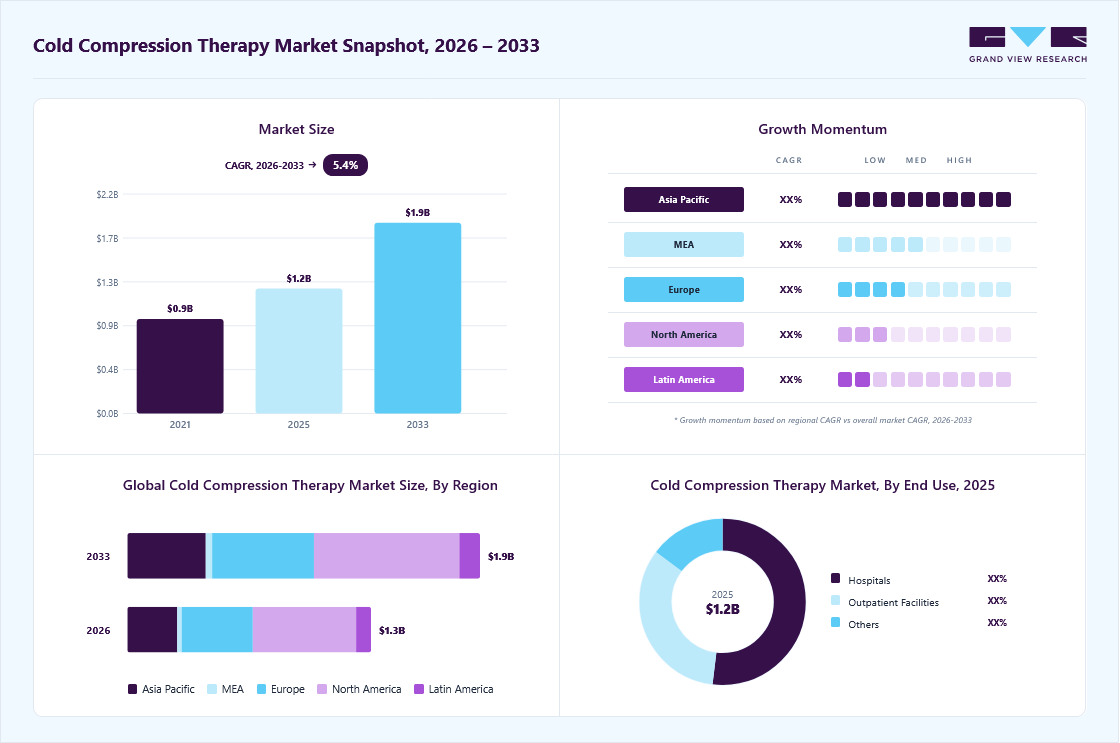
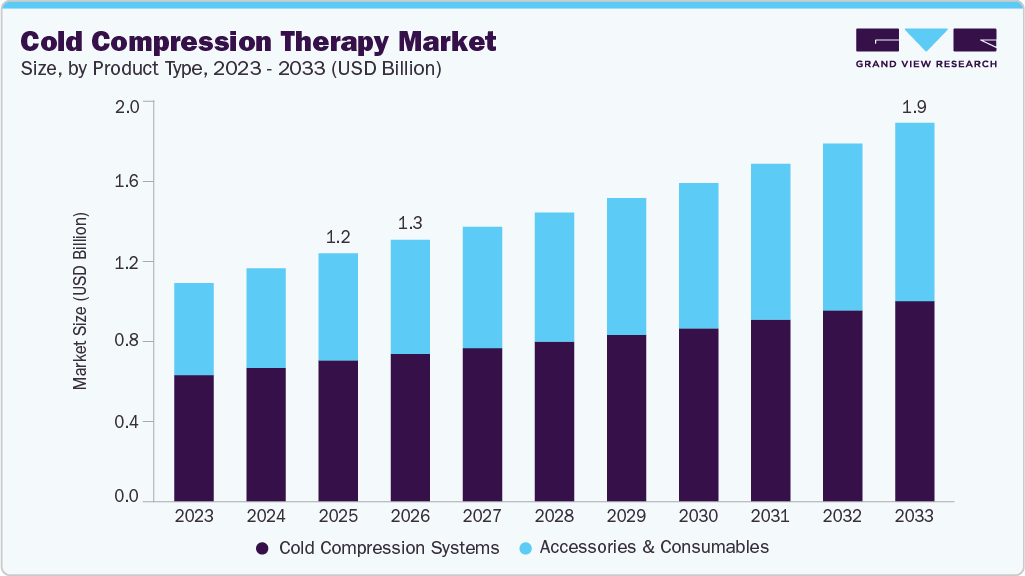
The global cold compression therapy market size was valued at USD 1.2 billion in 2025 and is projected to grow from USD 1.3 billion in 2026 to USD 1.9 billion by 2033, at a CAGR of 5.4% from 2026 to 2033. The market in North America dominated with a revenue share of 42.6% in 2025. The cold compression therapy market is growing, driven by rising demand for non-invasive, drug-free pain management solutions.
Key Market Trends & Insights
- By product type: Cold compression systems segment held the largest market share in 2025.
- By application: Post-operative therapy segment held the largest market share in 2025.
- By end use: Hospitals segment held the largest market share in 2025.
- By distribution channel: Offline segment held the largest market share in 2025.
Regional Highlights
- Largest regional market: North America (42.6% revenue share, 2025)
- Fastest-growing regional market: Asia Pacific (highest CAGR, 2026-2033)
- By country: The U.S. held the largest market share in 2025
Market Size & Forecast
- Market size in 2025: USD 1.2 Billion
- Estimated market size in 2026: USD 1.3 Billion
- Projected market size by 2033: USD 1.9 Billion
- CAGR (2026-2033): 5.4%
This therapy, which combines cold application with controlled compression, is widely used to reduce swelling, inflammation, and pain associated with sports injuries, orthopedic conditions, and post-surgical recovery.Increasing cases of musculoskeletal disorders and a growing aging population are expanding the patient base requiring such treatments. In addition, the rising number of orthopedic and joint-related surgeries is strengthening the adoption of cold compression devices in post-operative care. Technological advancements, including portable, user-friendly systems with adjustable temperature and compression settings, are supporting their use across hospitals, rehabilitation centers, and home care environments.
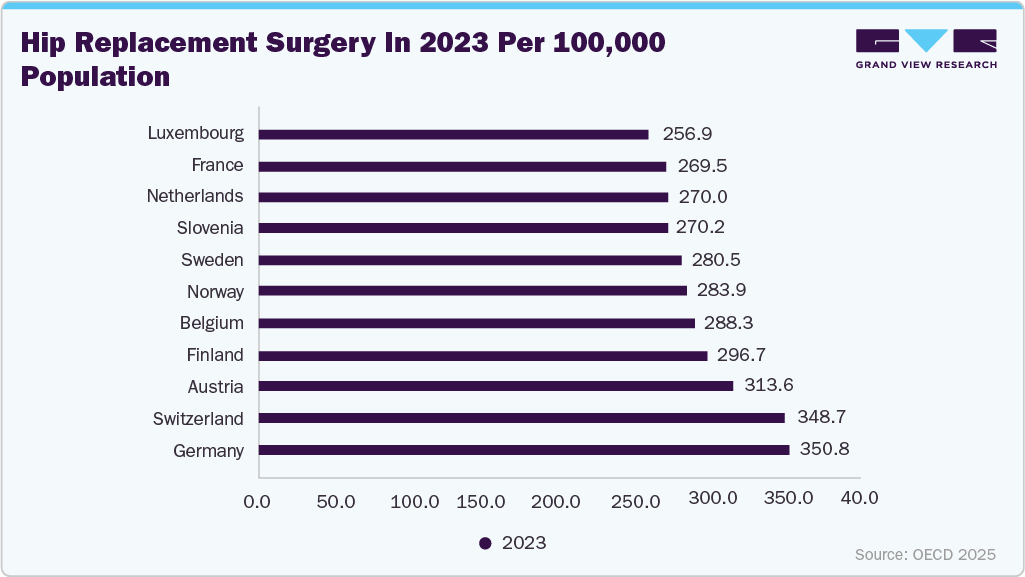
The rising number of post-operative therapies associated with procedures such as hip replacement and knee replacement is driving growth in the cold compression therapy products market. As the prevalence of joint disorders such as osteoarthritis continues to increase, more patients are undergoing these procedures, creating a greater need for structured recovery and rehabilitation. Effective management of pain, swelling, and inflammation after surgery has become a critical aspect of patient care, driving greater adoption of cold compression therapy systems. These devices support faster healing by reducing tissue inflammation and improving circulation, while also helping to limit reliance on pain medications. Healthcare providers are incorporating such therapies into recovery protocols to enhance patient outcomes, improve mobility, and shorten recovery timelines. In addition, the growing preference for home-based rehabilitation is driving demand further, as patients seek convenient, efficient recovery solutions outside hospital settings. As the volume of these surgical procedures continues to rise, the need for advanced post-operative care solutions is expanding, thereby driving market growth.
“People assume that most knee replacement patients are young, active baby boomers who have damaged their knees through sports and other activities. But when we look at the representative set of patients age 45 to 64, they aren’t like that.”- David Ayers, MD, chair of the department of orthopedics and physical rehabilitation at the University of Massachusetts Medical School.
Knee replacement surgery in 2023, per 100,000 population
Country
2023 Value
% Increase (2013-2023)
Switzerland
318.3
48.60%
Germany
267.9
41.10%
Australia
263.8
38.10%
Finland
263.5
30.70%
Austria
234.5
8.90%
Luxembourg
226.7
13.30%
Canada
224.9
31.60%
France
204.8
41.10%
Sweden
172.2
25.20%
Korea
171.8
42.00%
Italy
171.7
64.60%
Slovenia
169.2
56.80%
Source: OECD 2025
The rising incidence of sports and athletic injuries is driving significant growth in the cold compression therapy products market, as athletes and physically active individuals require effective solutions for rapid pain relief and recovery. Injuries such as sprains, strains, ligament tears, and muscle inflammation are common in both professional and recreational sports, creating a strong demand for immediate, efficient treatment. Cold compression therapy is widely adopted in sports medicine for its ability to reduce swelling, control inflammation, and alleviate pain shortly after injury, helping prevent further tissue damage and accelerate healing. Sports teams, fitness centers, and rehabilitation facilities are incorporating these systems into their injury management protocols to support quicker return-to-play timelines. In addition, the growing awareness of injury prevention and recovery, along with the expansion of fitness activities and organized sports participation, is further driving demand. The availability of portable, easy-to-use cold compression devices has also enabled athletes to use these therapies outside clinical settings, thereby reinforcing their adoption.
“As more high school athletes get involved in sports, we must recognize that a change needs to be made not only to prevent these injuries, but to lower the associated impact of the patient’s physical health, overall health care costs for families and the health care burden for hospitals,” - Jordan Neoma Pizzarro, a medical student at George Washington University.

The increasing prevalence of chronic pain and musculoskeletal disorders is significantly driving the growth of the cold compression therapy market. Conditions such as osteoarthritis, rheumatoid arthritis, tendonitis, and lower back pain are becoming more common due to aging populations, sedentary lifestyles, and increasing obesity rates. These disorders often result in persistent inflammation, swelling, and pain, requiring long-term, effective management. Cold compression therapy is adopted as a non-invasive, drug-free method to reduce inflammation, numb pain, and improve mobility. In addition, patients with chronic conditions require repeated, prolonged therapy, which increases demand for both clinical and home-use cold compression devices.
-
According to data published by the National Library of Medicine in 2025, musculoskeletal disorder cases are projected to reach 2.1 billion globally by 2035, significantly increasing the burden of disease worldwide.
Market Concentration & Characteristics
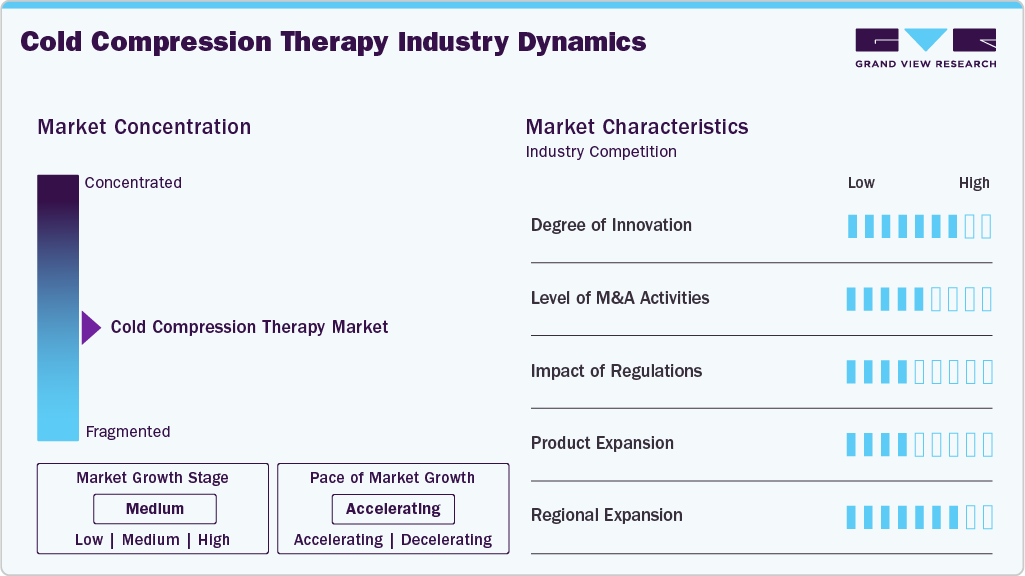
The cold compression therapy market is characterized by strong demand, driven by its widespread use in post-operative care, sports injury management, and the treatment of chronic musculoskeletal conditions. The market includes a mix of advanced motorized systems and simpler non-motorized products such as wraps and ice packs, catering to both clinical and home care settings. Innovation plays a key role, with manufacturers focusing on portable designs, improved temperature control, and user-friendly interfaces to enhance patient compliance. The presence of established medical device companies alongside emerging players contributes to continuous product development and competitive pricing. In addition, the market benefits from increasing awareness of non-pharmacological pain management, growing adoption in outpatient and rehabilitation centers, and expanding distribution channels, including hospitals, physiotherapy clinics, and e-commerce platforms.
The cold compression therapy products market is characterized by continuous innovation, driven by advancements in device functionality, portability, and patient comfort. Manufacturers are incorporating features such as programmable temperature control, adjustable compression settings, and automated circulation systems to improve therapeutic effectiveness. The introduction of lightweight, portable, and battery-operated devices has enabled greater adoption in home care settings alongside hospitals and rehabilitation centers. In addition, improvements in ergonomic design, quieter operation, and user-friendly interfaces are enhancing patient convenience and compliance. Although the fundamental technology remains established, ongoing product enhancements and design innovations are expanding application areas and supporting broader market adoption.
In March 2025, Anderson Medical Supplies, Inc. (AMS), in partnership with Sensoria Health, announced the launch of the SMART PLUG for Intermittent Cold Compression Therapy (ICCT) Remote Patient Monitoring System at NextMed Health 2025 in San Diego. The SMART PLUG is a patent-pending solution that combines custom hardware, mobile and cloud-based software, and an AI system to monitor patient adherence and enhance rehabilitation outcomes. Designed for the workers’ compensation market, it addresses the lack of real-time data on patient compliance and recovery progress.
Regulatory frameworks play a critical role in shaping the cold compression therapy market by ensuring product safety, clinical effectiveness, and quality standards across devices used in post-operative care and injury management. Compliance with medical device regulations, such as approval requirements, labeling standards, and clinical validation, increases product development timelines and increases entry barriers for new manufacturers. In established markets, stringent regulatory oversight drives innovation toward technologically advanced and evidence-based solutions, including integrated monitoring and smart therapy systems. In addition, evolving guidelines for home healthcare and remote patient monitoring are encouraging the adoption of connected cold compression devices, while reimbursement policies and workers’ compensation regulations are improving patient access and supporting broader clinical use.
Chengdu Cryo-Push Medical Technology Co., Ltd. achieved a significant milestone by receiving certification from TÜV Rheinland, a globally recognized leader in independent inspection and certification services. This achievement underscored the company’s commitment to maintaining the highest standards of quality, safety, and reliability in its products and operations.
The cold compression therapy market is characterized by a high level of mergers and acquisitions, as companies seek to strengthen their product offerings, expand their geographic reach, and enhance their technological capabilities. Market participants are acquiring niche and innovative firms to integrate advanced features and improve treatment efficiency. These strategic moves also help companies broaden their presence across hospitals, rehabilitation centers, and home care segments. In addition, mergers and acquisitions are being used to optimize distribution networks and achieve operational efficiencies. This trend reflects a competitive landscape where consolidation is playing an important role in shaping market growth and innovation.
In October 2025, WRS Group announced that it had entered into a definitive agreement with Avanos Medical to acquire substantially all assets and rights related to Avanos’ U.S. Game Ready orthopedic rental business. The acquisition, effective December 2025, strengthened WRS Group’s position in orthopedic pain management and recovery solutions by expanding its cold and compression therapy offerings. In addition, both companies entered into a long-term distribution and supply agreement, under which Avanos continues to manufacture and supply Game Ready systems while supporting a smooth business transition.
The cold compression therapy market is expanding as adoption increases across both developed and emerging healthcare systems. Rising volumes of orthopedic procedures drive growth, expand sports medicine infrastructure, and lead to early adoption of advanced rehabilitation technologies. Increasing awareness of non-pharmacological pain management, along with a growing aging population prone to joint disorders, is further supporting demand. In addition, improvements in healthcare infrastructure, higher healthcare spending, and the rising prevalence of musculoskeletal conditions and sports injuries are contributing to broader market penetration. Expanding access to healthcare services and a stronger focus on post-operative care and rehabilitation are also supporting this geographic growth.
Product Type Insights
Cold compression systems dominate the product type segment due to their advanced ability to deliver controlled cold therapy combined with intermittent pneumatic compression. These devices are widely used in hospitals, orthopedic clinics, and post-operative care settings because they provide consistent temperature regulation, adjustable pressure levels, and more effective pain and swelling reduction than non-powered alternatives. Their strong clinical adoption in sports injuries and surgical recovery further reinforces their leading position in the market.
The accessories & consumables segment is expected to witness the fastest CAGR in the cold compression therapy market during the forecast period, driven by the recurring need for replacement wraps, tubing, cooling pads, gel packs, connectors, and straps used alongside cold compression systems. As the installed base of cold compression devices continues to expand across hospitals, rehabilitation centers, sports clinics, and homecare settings, demand for compatible consumables is rising steadily. In addition, manufacturers are increasingly focusing on bundled therapy kits, customized body-part accessories, and disposable hygiene-related components, which is further accelerating segment growth. The increasing adoption of home-based rehabilitation and post-operative recovery solutions is also supporting repeat purchases of consumables, making this segment a strong recurring revenue stream for market players.
Application Insights
Post-operative therapy dominates the application segment due to its extensive use in managing pain, swelling, and inflammation after major surgical procedures, particularly orthopedic procedures such as knee and hip replacements and ligament reconstructions. Cold compression and cold therapy systems are routinely integrated into post-surgical care protocols in hospitals and rehabilitation centers to enhance recovery outcomes, reduce reliance on opioid medications, and improve patient mobility in the early healing phase. The strong clinical endorsement of cold therapy in surgical recovery, along with standardized post-operative rehabilitation pathways, continues to drive its widespread adoption.
Sports & athletic injuries represent the fastest growing application segment, driven by the rising incidence of injuries among professional athletes, fitness enthusiasts, and recreational sports participants. Increasing participation in high-impact sports such as football, basketball, and running has led to a higher prevalence of sprains, strains, ligament injuries, and muscle fatigue, creating strong demand for rapid recovery solutions. Cold therapy and compression systems are adopted by sports teams, physiotherapy centers, and even individual users for immediate injury management and accelerated recovery. Growing awareness of performance recovery, coupled with the expansion of sports medicine infrastructure and greater emphasis on injury prevention and rehabilitation, is further accelerating adoption.
End Use Insights
Hospitals dominate the end-use segment due to their central role in managing post-operative recovery and acute injury care, where cold compression and cold therapy systems are extensively used as part of standardized treatment protocols. These devices are widely used in orthopedic departments, surgical wards, and rehabilitation units to reduce pain, control inflammation, and support faster patient recovery after procedures such as joint replacements and ligament repairs. Hospitals also benefit from strong procurement capacity, trained clinical staff, and established reimbursement frameworks, which facilitate large-scale adoption of advanced cold therapy systems. In addition, the high volume of surgical procedures performed in hospital settings continues to reinforce their position as the primary end-use environment for these technologies.
Home healthcare is the fastest-growing end-use segment, driven by the increasing shift toward decentralized care and patient preference for recovery in comfortable, non-clinical environments. Portable, user-friendly cold therapy devices enable patients to manage pain and swelling effectively at home after surgery or injury, reducing the need for frequent hospital visits. Rising healthcare costs, shorter hospital stays, and growing emphasis on outpatient recovery programs are further accelerating this transition. In addition, advancements in device design, including improved portability, ease of use, and digital monitoring features, are enhancing patient compliance and safety. This combination of convenience, cost efficiency, and expanding post-discharge care models is making home healthcare the fastest-growing end-use segment.
Distribution Channel Insights
Offline distribution channels dominate the segment due to their strong presence in hospitals, orthopedic clinics, rehabilitation centers, and medical device specialty stores, where cold compression and cold therapy systems are typically recommended and supplied directly by healthcare professionals. These channels play a critical role in ensuring proper device selection, patient education, and clinical integration, especially for post-operative and injury recovery care. In addition, established distributor networks, institutional procurement contracts, and strong relationships between manufacturers and healthcare providers further strengthen offline channel dominance. The preference for in-person consultations and guided use in clinical environments continues to sustain demand through traditional distribution channels, making offline channels the leading segment in the market.
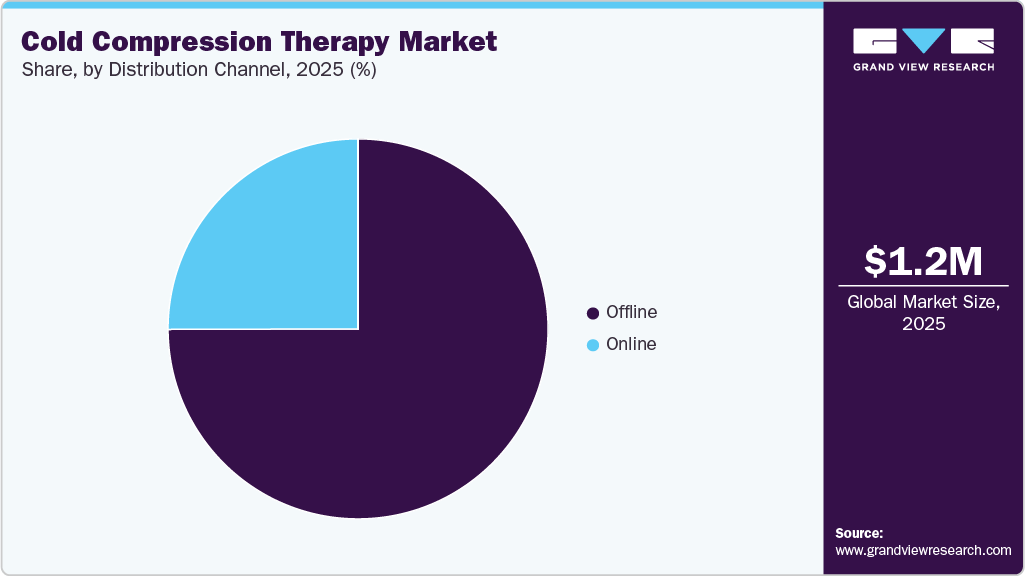
Online distribution channels are the fastest-growing segment, driven by the rapid expansion of e-commerce platforms and increasing consumer preference for convenient, direct-to-home purchasing options. Patients recovering from injuries or surgery are turning to online platforms to access portable cold therapy devices, cold wraps, and compact compression systems without visiting physical stores. The growth of digital healthcare awareness, improved product availability on medical e-commerce websites, and competitive pricing are further accelerating this shift.
Regional Insights
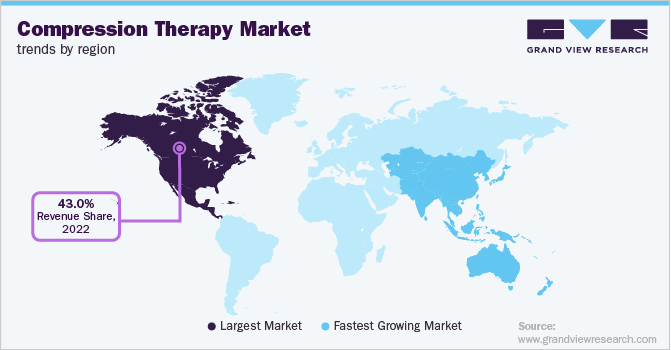
North America dominated the overall market with the largest share of 42.56% in 2025. North America is growing significantly in the cold compression therapy market due to its advanced healthcare infrastructure, high healthcare spending, and strong adoption of innovative rehabilitation technologies. The region holds a substantial market share, supported by a high prevalence of musculoskeletal disorders and sports-related injuries, which drive demand for effective pain management solutions. In addition, the increasing number of orthopedic procedures, including joint replacement surgeries, is boosting the use of cold compression therapy in post-operative care. The presence of well-established hospitals, rehabilitation centers, and sports medicine facilities further supports adoption.
U.S. Cold Compression Therapy Market Trends
The cold compression therapy market in the U.S. accounted for the largest market revenue share in North America in 2025. The U.S. is growing rapidly in the cold compression therapy market, largely driven by the high incidence of sports and athletic injuries at the professional, collegiate, and recreational levels. Increasing participation in fitness activities, contact sports, and endurance training has led to a rise in injuries, including ligament tears, sprains, and muscle strains, creating sustained demand for effective recovery solutions. Cold compression therapy is widely adopted in sports medicine for immediate pain relief, inflammation control, and faster rehabilitation, making it a standard component of injury management protocols. In addition, the presence of advanced sports medicine infrastructure, athletic training programs, and rehabilitation centers further supports product adoption. The growing emphasis on non-invasive, drug-free recovery methods and faster return-to-play timelines continues to drive market expansion in the country.
-
According to a study published by the American Osteopathic Academy of Orthopedics in 2025. A total of 1,238 injuries were identified, yielding a national estimate of 77,963 injuries. The most common injuries were fractures (27%) and sprains (27%). Injuries were predominantly concentrated in the upper trunk, lower trunk, and wrist. The majority (91%) of injuries occurred in players aged 50 and older, with an 88% increase in injury rates since 2020.
Europe Cold Compression Therapy Market Trends
Europe is growing in the cold compression therapy market due to increasing adoption of non-pharmacological pain management solutions and a rising prevalence of musculoskeletal disorders across the population. The region benefits from well-established healthcare systems and a strong focus on post-operative rehabilitation, particularly following orthopedic procedures such as joint replacements. In addition, the growing aging population is driving higher demand for effective therapies for pain and inflammation management. Increasing participation in sports and fitness activities is also leading to a rise in sports-related injuries, further supporting the use of cold compression therapy in recovery and rehabilitation. Continuous advancements in medical devices and expanding access to physiotherapy and outpatient care services are driving market growth in the region.
-
During the 2023-2024 season, the Premier League recorded a substantial increase in injuries, resulting in financial losses of more than USD 337.3 million. Teams reported an injury approximately every 94 minutes of match play, indicating a high physical strain across competitions. Injury-related expenses across Europe’s top five leagues also increased by about 5% compared to the previous season. Knee injuries rose by 10.2%, reaching 367 cases during the season. In addition, injuries among under-21 players increased by 50%, reflecting greater physical demands and a rising injury burden in professional football.
The UK cold compression therapy market is growing due to increasing demand for advanced post-operative rehabilitation and sports injury management solutions. A driver is the rising burden of musculoskeletal conditions involving joints, ligaments, muscles, and soft tissues, which require effective management of pain, swelling, and inflammation during recovery. The country also reports a high volume of orthopedic procedures, such as knee and hip replacements, further underscoring the need for structured post-surgical rehabilitation therapies. In addition, growing participation in football, rugby, and other high-impact sports has led to a higher incidence of ligament injuries, fractures, and muscle strains, supporting the adoption of cold compression therapy in sports medicine and physiotherapy settings. The presence of a well-established healthcare system, strong rehabilitation services, and increasing awareness of non-invasive, drug-free treatment options continues to drive broader market adoption across clinical and home care environments.

Adults and children living with musculoskeletal conditions in the UK
Countries
Population Group
Cases
England
Adults
960,000
Children
31,000
Northern Ireland
Adults
17,000,000
Children
490,000
Wales
Adults
530,000
Children
19,000
Scotland
Adults
1,700,000
Children
48,000
Source: Arthritis UK, 2025
The cold compression therapy market in Germany is growing due to rising demand for advanced post-operative rehabilitation and effective pain management solutions, particularly in orthopedics and sports medicine. The country has a strong and well-established healthcare system that supports the adoption of modern medical devices across hospitals, physiotherapy centers, and outpatient care settings. Rising cases of musculoskeletal disorders and sports-related injuries are driving greater use of cold compression therapy for controlling pain, swelling, and inflammation during recovery. In addition, Germany’s emphasis on evidence-based treatment approaches and early rehabilitation practices is encouraging the adoption of non-invasive and drug-free recovery solutions. Expanding rehabilitation infrastructure and increasing access to specialized physiotherapy services are further driving nationwide market expansion.
Asia Pacific Cold Compression Therapy Market Trends
The Asia Pacific region is experiencing fastest growth in the cold compression therapy market, driven by rising healthcare expenditure, improved medical infrastructure, and increasing awareness of advanced rehabilitation solutions. The region is witnessing a growing prevalence of musculoskeletal disorders and sports-related injuries, driven by changing lifestyles, urbanization, and increasing participation in fitness and athletic activities. Expanding orthopedic procedures, including joint replacements and trauma surgeries, are further boosting the demand for effective post-operative pain and swelling management. In addition, the growing adoption of non-invasive, drug-free therapies and the rapid expansion of physiotherapy and outpatient care services are driving market growth.
The cold compression therapy market in India is growing due to rising cases of musculoskeletal disorders, road accidents, and sports-related injuries that require effective pain and inflammation management. Increasing participation in cricket, football, badminton, gym training, and other fitness activities has led to a higher incidence of ligament tears, sprains, muscle strains, and joint injuries, driving strong demand for recovery solutions in sports medicine. The expanding number of orthopedic procedures, including knee and joint replacement surgeries, is further supporting the adoption of cold compression therapy in post-operative care. In addition, improving healthcare infrastructure, expanding access to physiotherapy and rehabilitation services, and increasing awareness of non-invasive, drug-free treatment options are encouraging wider use across hospitals, clinics, sports training centers, and home care settings. The focus on faster recovery and improved athletic performance is further accelerating market growth in the country.
-
According to data published by the National Laboratory of Medicine in 2025, A study assessing 400 participants with an average age of 20.4 ± 3.2 years reported a relatively young, active population, with males accounting for 60% and females for 40% of the sample. 48.5% of participants experienced injuries, indicating a high injury burden across sports activities. Among different sports, football recorded the highest injury prevalence at 64%, with ankle sprains and anterior cruciate ligament (ACL) tears being the most common. Wrestling followed with a 58% injury rate, primarily due to shoulder dislocations, while athletics reported injuries in 42% of participants, mainly hamstring strains. Cricket showed the lowest injury prevalence at 30%, with frequent cases of lower back pain and elbow tendinitis.
The Japan cold compression therapy market is driven by its rapidly aging population, increasing incidence of orthopedic and sports-related injuries, and strong adoption of advanced rehabilitation technologies in hospitals and sports medicine clinics. The country’s well-established healthcare system and strong focus on post-surgical recovery, particularly after procedures such as knee and hip replacements, are significantly boosting demand for non-invasive pain management solutions, such as cold compression devices. In addition, Japan’s growing emphasis on early mobility and faster recovery protocols, along with rising awareness of physiotherapy-based home care solutions, is encouraging the wider adoption of portable, AI-enabled cold compression systems. In 2025, according to the World Economic Forum, Japan's Ministry of Internal Affairs and Communications reported that, as of 2024, the country had a record 36.25 million people aged 65 and over, accounting for 29.3% of the total population. This share is projected to rise to 34.8% in 2040 and 36.3% in 2045. Japan's proportion of elderly residents is already far higher than second-ranked Martinique (25.3%), making it the world's most aged society.
Latin America Cold Compression Therapy Market Trends
Latin America is expanding in the cold compression therapy market, driven by the rising burden of musculoskeletal disorders and increasing adoption of advanced post-operative recovery solutions. The region is experiencing a significant increase in cases of osteoarthritis, particularly among the aging population, which is creating higher demand for non-invasive pain management and rehabilitation therapies such as cold compression devices. Rising healthcare expenditure across key economies, such as Brazil, is improving access to modern medical technologies, supporting the adoption of these therapies in hospitals, rehabilitation centers, and sports medicine clinics. In addition, government initiatives to strengthen healthcare infrastructure and rising awareness of sports- and fitness-related injuries are further driving market expansion in Latin America.
-
According to the Brazilian Journal of Physical Therapy in 2025, in 2023, the Brazilian public healthcare system allocated approximately USD 58 million toward the management of osteoarthritis. Costs associated with inpatient treatment were higher than those for outpatient care, indicating a greater financial burden linked to hospital-based management. Among outpatient services, physiotherapy was the most frequently utilized intervention.
MEA Cold Compression Therapy Market Trends
The Middle East & Africa (MEA) region is emerging as an important market for cold compression therapy, supported by a rising burden of musculoskeletal disorders, increasing sports and orthopedic injuries, and rapid improvements in healthcare infrastructure. Growing adoption of advanced post-operative recovery solutions in hospitals, rehabilitation centers, and sports medicine clinics is further driving demand for cold compression devices across countries such as Saudi Arabia, the UAE, and South Africa. The region’s expanding geriatric population and higher incidence of osteoarthritis and joint-related disorders are also contributing to increased utilization of non-invasive pain management therapies, strengthening market penetration. A supporting factor for market expansion is Saudi Arabia’s Vision 2030, which is transforming the healthcare sector through large-scale investments in hospital infrastructure, rehabilitation services, and the adoption of medical technology. The initiative emphasizes improving healthcare quality and accessibility, and encourages the integration of advanced therapeutic devices, such as cold compression systems, into orthopedic and post-surgical care pathways.
Key Cold Compression Therapy Company Insights
The cold compression therapy market is highly competitive, with key players holding significant market share. Major companies are pursuing a range of organic and inorganic strategies, including new product development, collaborations, acquisitions, mergers, and regional expansion, to address unmet customer needs.
Key Cold Compression Therapy Companies:
The following key companies have been profiled for this study on the cold compression therapy market.
- Enovis Corporation
- Breg, Inc.
- Össur
- Hyperice
- Zynex Medical, Inc. (Altivera Medical Holdings, LLC)
- Tianjin Konbest Technology Co., Ltd.
- SISSEL UK Limited (Performance Health)
- Kinetec Medical Products Ltd (MedFac group)
- Sorgen.Co
- BSN Medical (essity)
Recent Developments
-
February 2026,Breg, Inc., a company specializing in orthopedic bracing and cold therapy solutions, announced a new collaboration with PatientIQ. This platform automates patient-reported outcomes and digital care pathways in orthopedics. Through PatientIQ’s Marketplace Partners program, healthcare providers can integrate Breg’s cold therapy solutions into patient treatment pathways, improving access to recovery tools that support better post-operative outcomes while easing clinical workload and operational demands.
-
August 2025, Hyperice, a global high-performance wellness brand, has introduced the worldwide launch of Hyperice X 2, the latest version of its leading contrast therapy product line. Developed following its 2021 acquisition of RecoverX and refined through extensive athlete testing, Hyperice X 2 represents an advanced portable contrast therapy solution. The Hyperice X 2 Knee and Hyperice X 2 Shoulder devices feature enhanced features over earlier models, including deeper cooling, increased heating, and integrated compression to support improved warm-up and recovery for athletes and active individuals.
“Our mission is to provide the most advanced and effective solutions to help people move, feel, and perform better every day. With Hyperice X 2 Shoulder and Hyperice X 2 Knee, we’re not just advancing recovery, we’re redefining it. This next generation maintains the mobility and power of its predecessor while seamlessly fusing contrast therapy and compression into a sleek, more practical design.” - Jim Huether, CEO of Hyperice.
-
August 2025, Breg, Inc., an established provider of orthopedic bracing and billing solutions, has entered into a renewed five-year supplier agreement with Aspen Medical Products to maintain the distribution of its advanced spinal product portfolio.
Cold Compression Therapy Market Report Scope
Report Attribute
Details
Market size in 2025
USD 1.2 billion
Estimated market size in 2026
USD 1.3 billion
Projected market size by 2033
USD 1.9 billion
Growth rate
CAGR of 5.4% from 2026 to 2033
Actual data
2021 - 2025
Forecast period
2026 - 2033
Quantitative units
Revenue in USD million/billion and CAGR from 2026 to 2033
Report coverage
Revenue forecast, company ranking, competitive landscape, growth factors, and trends
Segments covered
Product type, application, end use, distribution channel, region
Regional scope
North America; Europe; Asia Pacific; Latin America; MEA
Country scope
U.S.; Canada; Mexico; UK; Germany; France; Italy; Spain; Denmark; Sweden; Norway; Japan; China; India; Australia; Thailand; South Korea; Brazil; Argentina; South Africa; Saudi Arabia; UAE; Kuwait.
Key companies profiled
Enovis Corporation; Breg, Inc.; Össur; Hyperice; Zynex Medical, Inc. (Altivera Medical Holdings, LLC); Tianjin Konbest Technology Co., Ltd.; SISSEL UK Limited (Performance Health); Kinetec Medical Products Ltd (MedFac group); Sorgen.Co; BSN Medical (essity)
Customization scope
Free report customization (equivalent to up to 8 analysts working days) with purchase. Addition or alteration to country, regional & segment scope.
Pricing and purchase options
Avail customized purchase options to meet your exact research needs. Explore purchase options
Global Cold Compression Therapy Market Report Segmentation
This report forecasts country-level revenue growth and analyzes the latest industry trends and opportunities across sub-segments from 2021 to 2033. For this study, Grand View Research has segmented the cold compression therapy market report based on product, distribution channel, application, end use, and region:
-
Product Type Outlook (Revenue, USD Million, 2021 - 2033)
-
Cold Compression Systems
-
With Compression
-
Without Compression
-
-
Accessories & Consumables
-
Cold Therapy Wraps
-
Cold Therapy Pads / Gel Packs
-
Tubing, Connectors & Reservoir Components
-
Others
-
-
-
Application (Revenue, USD Million, 2021 - 2033)
-
Post-Operative Therapy
-
Sports & Athletic Injuries
-
Post-Trauma Therapy
-
Chronic Pain Management & Rehabilitation
-
Others
-
-
Distribution Channel (Revenue, USD Million, 2021 - 2033)
-
Online
-
Offline
-
-
End Use (Revenue, USD Million, 2021 - 2033)
-
Hospital
-
Outpatient Facilities
-
Others
-
-
Region Outlook (Revenue, USD Million, 2021 - 2033)
-
North America
-
U.S.
-
Canada
-
Mexico
-
-
Europe
-
UK
-
Germany
-
France
-
Italy
-
Spain
-
Denmark
-
Sweden
-
Norway
-
-
Asia Pacific
-
Japan
-
China
-
India
-
Australia
-
South Korea
-
Thailand
-
-
Latin America
-
Brazil
-
Argentina
-
-
Middle East & Africa
-
South Africa
-
Saudi Arabia
-
UAE
-
Kuwait
-
-
Frequently Asked Questions About This Report
The cold compression systems segment dominated the cold compression therapy market with a market share of 56.9% in 2025, while accessories & consumables is the fastest-growing type.
The post-operative therapy segment dominated the cold compression therapy market with a market share of 41.8% in 2025, while sports & athletic injuries is the fastest-growing application.
The offline segment dominated the cold compression therapy market with a market share of 74.9% in 2025, while online is the fastest-growing channel.
Asia Pacific is the fastest-growing region over the forecast period.
The hospitals segment held the largest revenue share of 51.7% in 2025, while home healthcare is the fastest-growing segment.
North America dominated the cold compression therapy market share of 42.6% in 2025. This dominance is attributed to increasing healthcare awareness, growing adoption of advanced rehabilitation technologies, rising sports injury cases, and continuous research and development initiatives across the healthcare sector.
Key players include Enovis Corporation; Breg, Inc.; Össur; Hyperice; Zynex Medical, Inc. (Altivera Medical Holdings, LLC); Tianjin Konbest Technology Co., Ltd.; SISSEL UK Limited (Performance Health); Kinetec Medical Products Ltd (MedFac group); Sorgen.Co; BSN Medical (essity).
The cold compression therapy market is driven by the rising prevalence of sports injuries, increasing orthopedic and post-surgical procedures, growing geriatric population with arthritis and musculoskeletal disorders, and rising demand for non-invasive pain management and home healthcare solutions. Technological advancements in portable and wearable therapy devices are also supporting market growth.
The global cold compression therapy market size was valued at USD 1.2 billion in 2025 and is estimated at USD 1.3 billion for 2026.
The global cold compression therapy market is expected to grow at a CAGR of 5.4% from 2026 to 2033, reaching USD 1.9 billion by 2033.
About the Author(s)
Medical Devices Research Team
Healthcare · Medical DevicesThis report was authored by the medical devices research team at Grand View Research - comprising two research analysts, one senior research analyst, and one industry expert - with specialized expertise in the medical devices segment of the healthcare industry. All findings are based on proprietary healthcare databases, executive interviews, and regulatory analysis, subject to internal peer review prior to publication.
Last Updated:
Speak to Analyst

Need a Tailored Report?
Customize this report to your needs — add regions, segments, or data points, with 20% free customization.
Or view our licence options:


ISO 9001:2015 & 27001:2022 Certified
We are GDPR and CCPA compliant! Your transaction & personal information is safe and secure. For more details, please read our privacy policy.












