
- Home
- »
- Medical Devices
- »
-
Combination Aesthetic Treatment Devices Market Report, 2033GVR Report cover

Combination Aesthetic Treatment Devices Market (2026 - 2033)
Size, Share & Trends Analysis Report By Product (Integrated Devices, Standalone Devices), By Application, By End Use (Med Spas, Dermatology Clinics), By Region, And Segment Forecasts
Market Size, 2025
$3.5BMarket Estimate, 2026
$3.9BMarket Forecast, 2033
$7.9BCAGR, 2026–2033
10.6%Combination Aesthetic Treatment Devices Market Summary
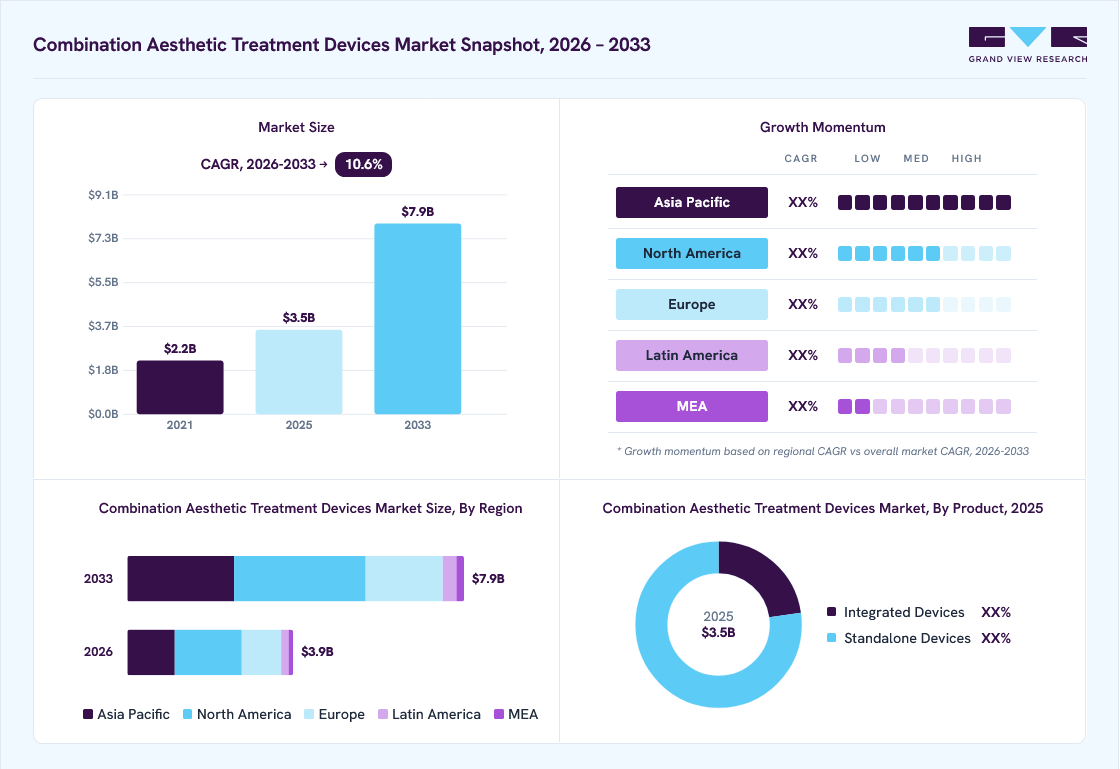
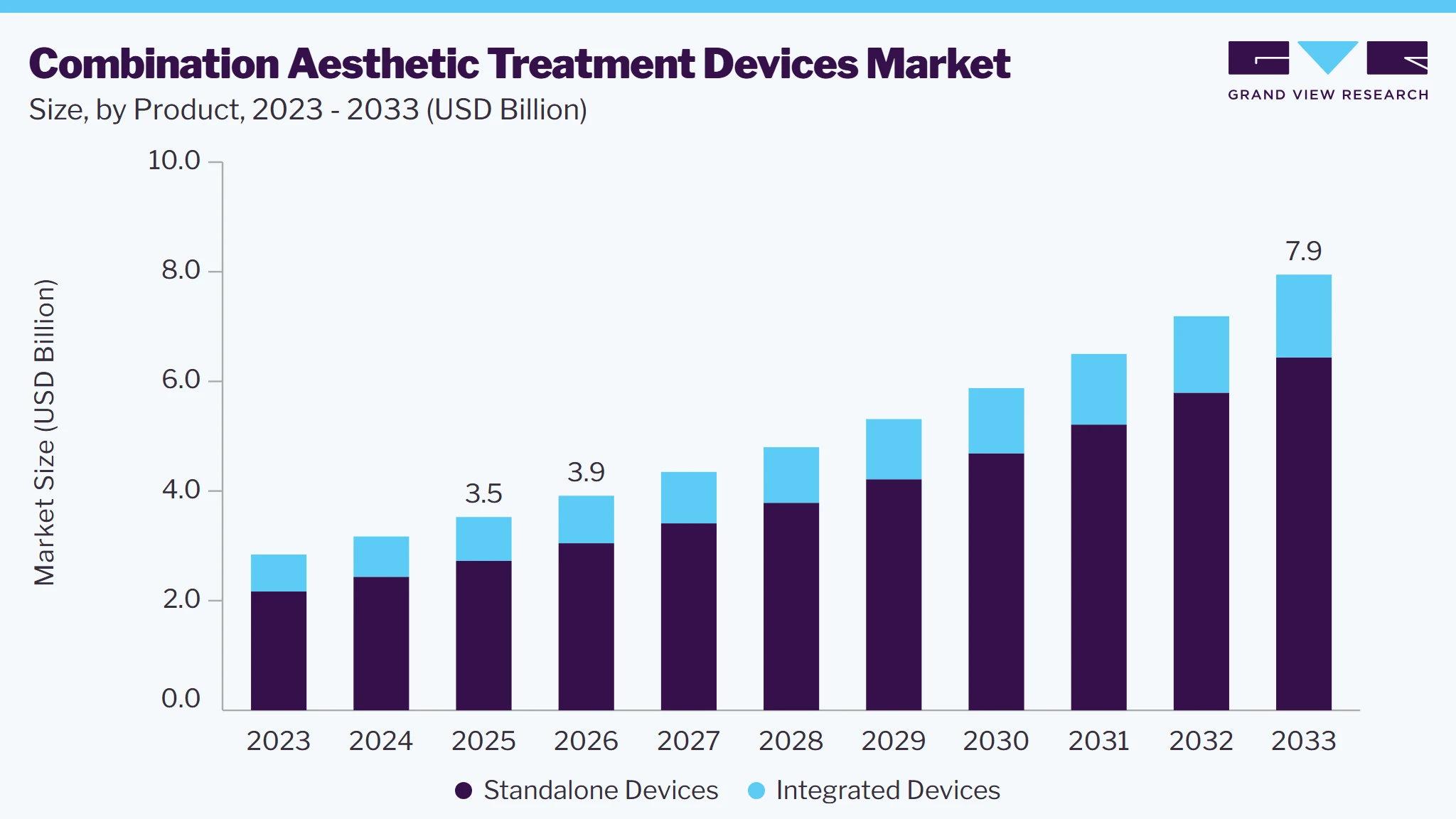
The global combination aesthetic treatment devices market size was valued at USD 3.5 billion in 2025 and is projected to grow from USD 3.9 billion in 2026 to USD 7.9 billion by 2033, at a CAGR of 10.6% from 2026 to 2033. North America dominated the market, accounting for a revenue share of 40.7% in 2025. The global market is expanding as aesthetic practices increasingly adopt treatment platforms and protocols capable of addressing multiple cosmetic concerns through complementary technologies and modalities.
 Source: Grand View Research, IR Documents, Primary Interviews, Paid DatabasesTo learn more about this report,
 Download Free Sample Report
 Key Market Trends & Insights
- By product: The standalone devices segment held the highest market share of 77.3% in 2025.
- By application: The skin rejuvenation, resurfacing & tightening segment held a leading market share of 21.2% in 2025.
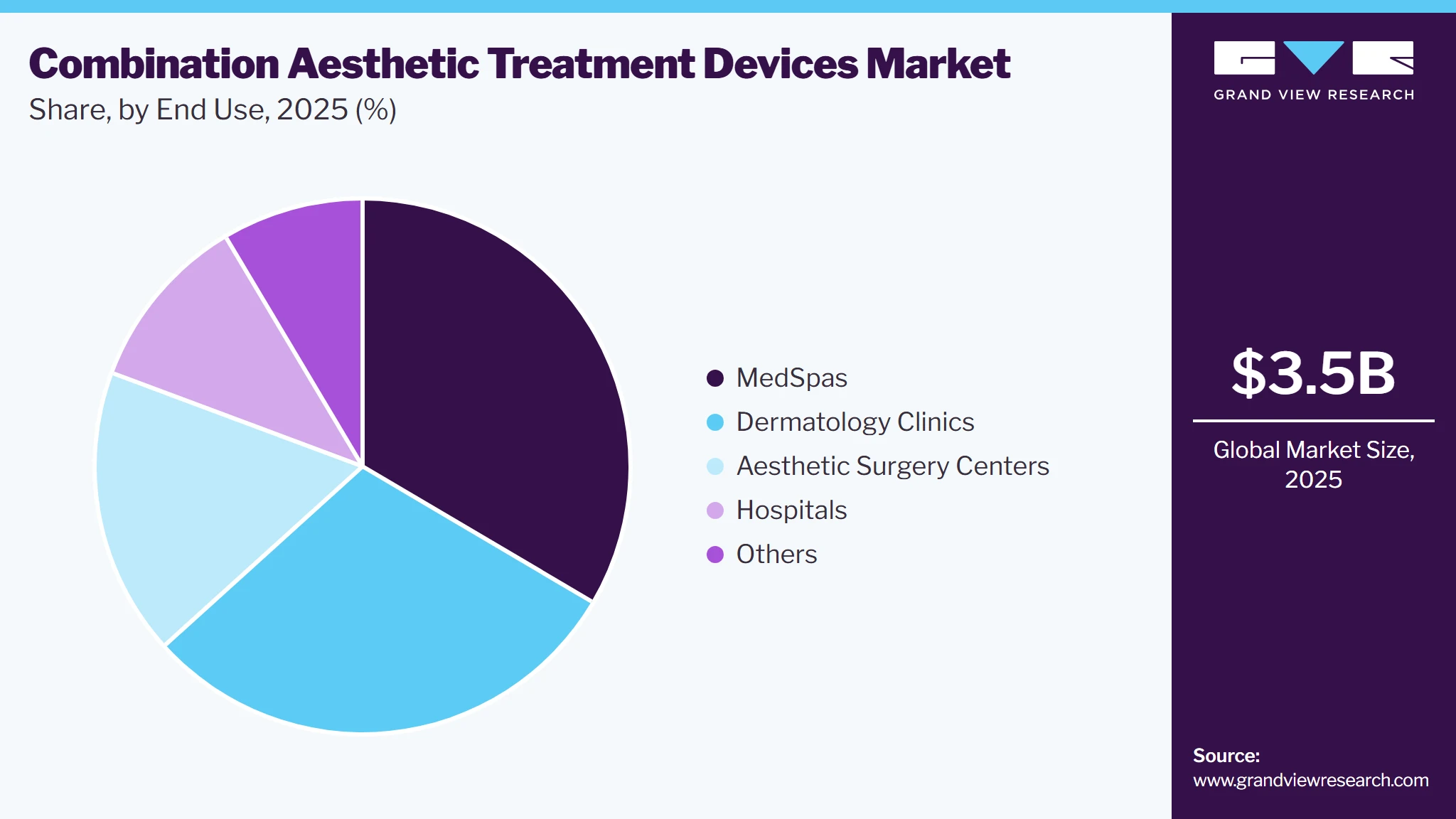
- By end use: The medspas segment held a leading market share of 33.5% in 2025.
Regional Highlights:
- Largest regional market: North America (40.7% revenue share, 2025)
- Fastest-growing regional market: Asia Pacific (highest CAGR, 2026-2033)
- By country: The U.S. held the largest market share in 2025.
Market Size & Forecast
- Market size in 2025: USD 3.5 billion
- Estimated market size in 2026: USD 3.9 billion
- Projected market size by 2033: USD 7.9 billion
- CAGR (2026-2033): 10.6%
Three ways to get this report
Buy it, customize it, or ask a question.Ask an Analyst
A direct answer, usually in 1 working day
- AccessReport author, directly
- Reply timeWithin 1 working day
- No sales callDirect answer only
- FormatEmail reply
- CostFree, no cost
Get the Full Report
What the study covers
- FormatsPDF · Excel · Dashboard
- Timeline2026–2033 annual, 2025 base
- Coverage20+ countries, 5 regions
- Companies10+ key players profiled
Customize the Report
20% free customization
- IncludeCountries, segments, points
- TailorTo your product definition
- ExtendDeeper competitor detail
- OrA fully bespoke study
- Turnaround5–10 working days
Combination aesthetic treatment solutions enable providers to address multiple patient concerns through complementary technologies, either within an integrated platform or through coordinated treatment protocols. The market is being supported by the increasing preference for minimally invasive aesthetic procedures, demand for personalized treatment plans, expansion of MedSpas and dermatology practices, and manufacturers' focus on multifunctional platforms that broaden treatment capabilities while improving utilization of clinical space and capital equipment.
Demand for combination aesthetic treatment devices is being supported by the growing preference for minimally invasive procedures that provide visible aesthetic improvements with limited downtime, as well as by the increasing number of patients seeking treatment for multiple concerns such as skin aging, pigmentation, vascular lesions, acne scars, unwanted hair, skin laxity, wrinkles, and uneven skin texture. According to the American Society of Plastic Surgeons (ASPS), more than 28.5 million minimally invasive aesthetic procedures were performed in the U.S. in 2024, including approximately 3.70 million skin-resurfacing procedures and 3.11 million skin-treatment procedures, which include laser hair removal, IPL, tattoo removal, and laser treatment of leg veins. The breadth of these procedures demonstrates the substantial demand for energy-based aesthetic treatments and supports the adoption of platforms that enable providers to address multiple indications through a single system.
 To learn more about this report, Download Free Sample Report
 The growing need to customize treatments according to individual patient characteristics further supports demand for combination platforms. Skin type, pigmentation, degree of photoaging, vascularity, tissue laxity, treatment depth, and tolerance for downtime can vary considerably between patients. A combination aesthetic system enables providers to adjust the technology, wavelength, energy delivery, penetration depth, and treatment sequence according to these characteristics. For example, IPL can be used for photorejuvenation and vascular or pigmented concerns, while fractional resurfacing, RF, RF microneedling, or other modalities can address skin texture, laxity, and collagen remodeling. The ability to combine or sequence complementary technologies, therefore, provides aesthetic practices with greater flexibility than a single-purpose device. FDA-cleared multi-function platforms similarly demonstrate that a single system can incorporate multiple modalities for indications such as hair reduction, acne, pigmented lesions, vascular lesions, and scars.
The high prevalence of dermatological conditions that can be addressed with energy-based modalities is another important factor supporting market growth. Acne, acne scarring, rosacea, pigmentation abnormalities, vascular lesions, and unwanted hair create a large potential patient base for aesthetic laser and light treatments. A global epidemiological study published in the Journal of the American Academy of Dermatology reported an overall acne prevalence of 20.5%, rising to 28.3% among individuals aged 16-24 years, and approximately 1 in 5 people aged 25-39 years were affected by acne. The American Academy of Dermatology (AAD) also recognizes laser and light-based therapies as treatment options for selected acne-related concerns, while laser and light treatments can reduce redness and visible blood vessels associated with rosacea. A recent systematic review covering 19 population-based studies and approximately 64.1 million individuals estimated pooled global rosacea prevalence at 3.22%, further demonstrating the sizeable population affected by conditions for which energy-based treatments may be considered. The presence of multiple indications within the same patient population encourages clinics to acquire multi-combination aesthetic platforms rather than separate, single-purpose systems.
Market Dynamics
The increasing penetration of medical spas and aesthetic-focused dermatology practices is further supporting demand for versatile treatment platforms. These providers typically offer multiple aesthetic procedures across skin rejuvenation, resurfacing, pigmentation, vascular treatment, hair removal, tightening, and body-contouring applications. A single platform capable of supporting several indications can therefore improve equipment utilization by allowing the same capital asset to be used across a wider range of procedures. This is particularly relevant for practices seeking to expand their service portfolio without acquiring a separate device for every treatment category. Current combination aesthetic platforms demonstrate this trend through systems combining technologies such as IPL, diode laser, RF, fractional RF, microneedling, and HIFU within configurable workstations.
The growing demand for comprehensive and personalized aesthetic treatments is a major driver for the market. Consumers increasingly seek treatment plans that address multiple concerns, including wrinkles, pigmentation, uneven skin tone, vascular abnormalities, acne scars, skin laxity, unwanted hair, and changes in skin texture. This demand is encouraging aesthetic practices to adopt combination technologies that enable providers to customize treatments according to patient characteristics and treatment objectives. Combination platforms allow different technologies to be used sequentially or within a broader treatment program, potentially reducing the need for multiple standalone treatment systems. The increasing preference for minimally invasive procedures with limited downtime further supports adoption. Combination platforms can provide providers with multiple treatment options while maintaining a relatively compact equipment footprint. Recent product development illustrates this trend. Alma Harmony integrates Q-Switch laser, fractional ablative laser, IPL, non-ablative laser, and green diode laser technologies within a single platform and is positioned for applications including skin resurfacing, rejuvenation, pigmentation, vascular lesions, hair removal, acne and acne scars, and tattoo removal.
High initial investment and complex training requirements represent a key restraint for the market. Integrated platforms can incorporate multiple technologies, handpieces, applicators, and treatment modes, increasing acquisition, maintenance, servicing, and upgrade costs. For smaller aesthetic practices and dermatology clinics, the capital expenditure associated with a multifunctional platform may be difficult to justify when patient volumes for individual indications are limited. Standalone devices can therefore remain attractive for practices focused on a narrower treatment portfolio. Combination treatment protocols also require appropriate treatment planning and operator expertise. Different technologies have distinct treatment parameters, safety considerations, contraindications, and operating requirements. As the number of modalities incorporated into a treatment platform increases, providers may require additional training to optimize modality selection, sequencing, and treatment settings. This creates a particular barrier for smaller independent clinics and newly established aesthetic practices where access to trained personnel and technical support may be limited.
Market Concentration & Characteristics
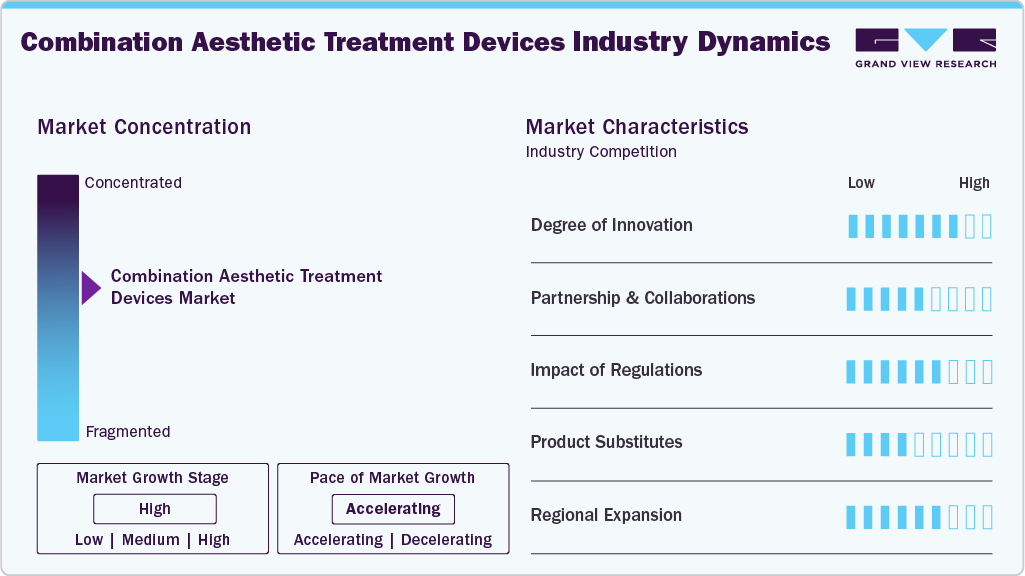
The combination aesthetic treatment devices industry is fragmented, with leading companies such as Alma Lasers, Cutera, Candela, Lumenis, InMode, and Cynosure holding strong positions across different technology categories. These companies are increasingly competing through multi-technology platforms that integrate or accommodate multiple energy-based modalities, including lasers, intense pulsed light (IPL), radiofrequency (RF), RF microneedling, ultrasound, and other energy technologies. Competition is increasingly centered on platform versatility, treatment customization, clinical outcomes, ease of use, and the ability to address multiple aesthetic indications using a single system.
The market is characterized by a high degree of innovation, with manufacturers increasingly integrating multiple technologies into modular platforms and developing systems capable of supporting multiple aesthetic applications. Integrated platforms are increasingly being designed to allow clinics to expand their treatment menu without purchasing a separate device for every application. For example, Lumenis' Stellar M22 combines four technologies-XPL, ResurFX, Multi-Spot Nd, and Q-Switched Nd-within a modular platform covering skin rejuvenation, pigmentation, vascular lesions, acne, hair removal, tattoo removal, and other applications.
 To learn more about this report, Download Free Sample Report
 Partnerships and collaborations are becoming an important strategy in the market as manufacturers seek to broaden treatment capabilities, combine complementary technologies, strengthen clinical expertise, and accelerate adoption of combination-treatment protocols. Rather than developing every technology internally, aesthetic device companies increasingly collaborate with technology providers, clinicians, training organizations, and other industry stakeholders to expand their treatment ecosystems and improve the clinical utilization of combination aesthetic platforms. For instance, in March 2026, Cartessa Aesthetics partnered with South Korea-based Classys to introduce QUADESSY in the U.S., an advanced radiofrequency microneedling platform integrating minimally invasive and non-invasive RF technologies. The platform uses a dual-depth design and multiple handpieces to deliver customized treatment across different skin layers and indications, while automated impedance measurement supports consistent energy delivery.
Regulatory oversight has a significant impact on the market because manufacturers must establish the safety, performance, and intended use of individual technologies incorporated into multifunctional platforms. Regulatory considerations become more complex when a single platform incorporates several energy sources, wavelengths, treatment modes, or interchangeable handpieces. Manufacturers may therefore need to address multiple intended uses and clinical applications across different regulatory jurisdictions. Regulatory requirements also affect combination protocols involving injectable products and devices. The regulatory status of an injectable product does not automatically extend to its use in combination with a particular device or treatment protocol.
The combination aesthetic treatment devices industry faces substitution from surgical procedures and non-device-based aesthetic treatments that can deliver similar outcomes for individual indications. These procedures/treatments can address specific applications such as skin rejuvenation, pigmentation, vascular lesions, acne scars, skin tightening, and hair removal without requiring a combination aesthetic platform. For clinics with a narrower treatment portfolio, purchasing a single-purpose device may provide a lower initial investment and simpler operation compared with acquiring a platform incorporating multiple technologies. However, combination aesthetic systems can offer greater treatment versatility and equipment utilization when providers manage multiple aesthetic indications.
Regional expansion is an important growth strategy in the market as manufacturers seek to extend their geographic presence through international product launches, distribution partnerships, and expansion of energy-based technology portfolios. Companies are increasingly targeting North America, Europe, and Asia-Pacific, where aesthetic practices are adopting platforms capable of addressing multiple indications while improving equipment utilization and treatment versatility. The expansion strategy is particularly evident among manufacturers originating in Asia and Europe that are entering the U.S. and other high-value markets through established aesthetic-device distributors. For instance, in July 2026, Cynosure Lutronic announced the European launch of XERF, a dual-frequency monopolar RF skin-tightening platform previously available in the U.S. and Asia-Pacific.
Analyst Perspective
The market has emerged as a rapidly evolving segment within the broader aesthetic devices industry, driven by the increasing demand for comprehensive aesthetic treatments, growing adoption of minimally invasive procedures, rising preference for personalized treatment protocols, and continuous innovation in energy-based aesthetic technologies. Unlike single-modality devices that are designed to address specific aesthetic concerns, combination aesthetic platforms integrate two or more technologies, such as laser, intense pulsed light (IPL), radiofrequency (RF), ultrasound, and other energy-based modalities, into a single system. This approach enables aesthetic providers to address multiple indications, including skin rejuvenation, pigmentation, vascular lesions, skin tightening, body contouring, and hair removal, through a more versatile treatment platform.
Product Insights
The standalone devices segment dominated the market in 2025 and accounted for the largest share of 77.3% of the overall revenue. These systems provide providers with broader treatment capabilities by combining multiple technologies or treatment modalities into a comprehensive aesthetic solution. The segment benefits from increasing demand for platforms that can address multiple indications using a single equipment investment. Such systems can support skin rejuvenation, resurfacing, tightening, pigmentation correction, vascular treatment, hair removal, acne and scar treatment, and body applications. Standalone devices also allow providers to build treatment programs around multiple technologies rather than relying on a single procedure. This increases their relevance among MedSpas and aesthetic practices offering broad treatment menus.
The integrated devices segment is expected to witness a significant CAGR of 8.3% over the forecast period. Integrated devices combine multiple treatment technologies, applicators, or energy sources within a single platform and are increasingly designed around modularity and scalability. The growth of integrated systems is supported by providers' interest in reducing equipment footprint, improving utilization, expanding treatment offerings, and simplifying workflow management. Current systems, such as InMode OptimasMAX demonstrate the integration of fractional RF, IPL, hair removal, vascular treatment, and other technologies within one workstation.
Application Insights
The skin rejuvenation and photorejuvenation segment dominated the market in 2025. The segment benefits from a broad patient population seeking treatment for wrinkles, photoaging, uneven skin tone, skin laxity, textural irregularities, and other age-related skin changes. The application is particularly well suited to combination treatment because different technologies can address different components of skin aging. Light-based technologies can target pigmentation and vascular abnormalities, while laser, RF, ultrasound, and microneedling technologies can address resurfacing, collagen remodeling, and tissue tightening
The pigmentation & vascular lesions segment is expected to witness the highest CAGR over the forecast period. The segment includes treatments for pigmented lesions, sun damage, vascular lesions, telangiectasia, redness, and related concerns. Combination systems are particularly relevant because pigmentation and vascular concerns can involve different chromophores, depths, and treatment requirements. Platforms incorporating IPL, Q-Switched laser, Nd, vascular-specific technologies, and other energy sources can therefore provide broader treatment flexibility. Lumenis' Stellar M22, for example, combines IPL and laser-based technologies and includes applications targeting pigmented lesions, vascular lesions, rosacea, sun damage, and skin rejuvenation..
End Use Insights
The medspas segment held the largest revenue share in 2025 and is expected to witness fastest CAGR over the forecast period. The growth is supported by the increasing consumer preference for convenient, minimally invasive aesthetic procedures and the expansion of treatments offered by medical spas. Medspas increasingly offer a wide range of treatments, including skin rejuvenation, pigmentation correction, acne and acne-scar treatment, hair removal, vascular-lesion treatment, skin tightening, and body contouring, increasing the demand for combination aesthetic treatment devices that combine several energy-based technologies in a single system. Compared with purchasing multiple standalone devices, combination platforms can allow medspas to address a wider range of indications while improving room utilization, reducing equipment footprint, and enabling practitioners to develop combination or sequential treatment protocols. Growing demand for personalized treatments is another important factor, as patients increasingly expect treatments tailored to their skin type, condition, and desired downtime rather than a one-size-fits-all procedure.
 To learn more about this report, Download Free Sample Report
 The dermatology clinics segment is anticipated to grow at the second fastest CAGR over the forecast period. The growth is driven by the expansion of dermatology practices into cosmetic dermatology and the increasing demand for minimally invasive aesthetic procedures. Dermatology clinics treat a wide range of conditions, creating a need for platforms that can address multiple indications using different energy-based technologies. Combination aesthetic treatment devices are therefore gaining importance as they enable dermatologists to offer several treatments using a single system, improve equipment utilization, reduce the need for multiple standalone devices, and support personalized treatment plans based on patients’ skin types and specific conditions. The growing adoption of combination and customized treatment approaches, along with increasing patient preference for procedures involving less downtime, is further encouraging dermatology clinics to invest in versatile aesthetic technologies.
Regional Insights
North America Combination Aesthetic Treatment Devices Market Trends
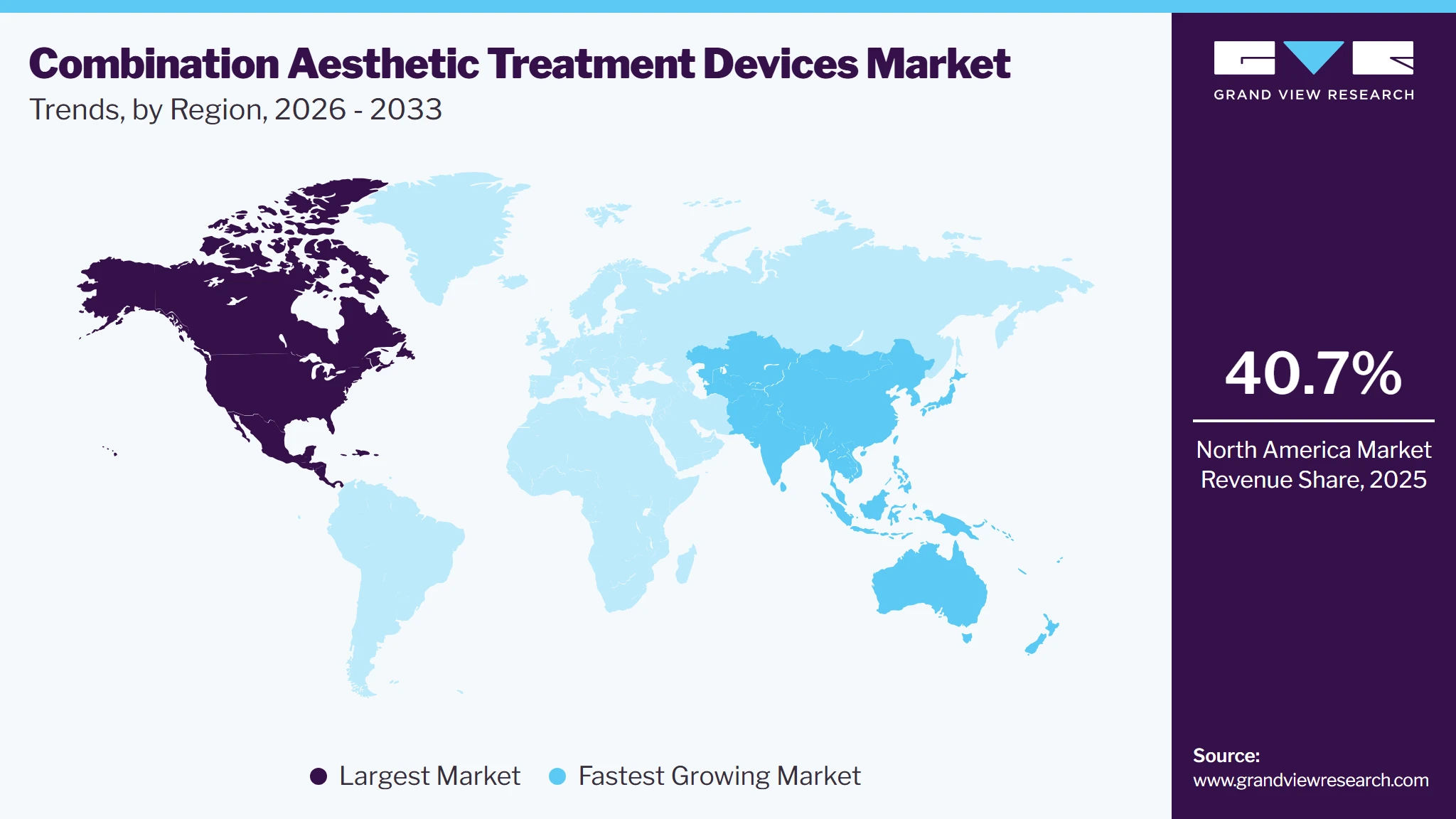
The combination aesthetic treatment devices industry in North America accounted for the largest global revenue share of 40.7% in 2025. The region’s leading position can be attributed to the high adoption of minimally invasive and non-invasive aesthetic procedures, strong presence of established aesthetic device manufacturers, high availability of specialized dermatology and aesthetic clinics, and growing consumer willingness to spend on appearance-related treatments. The U.S. represents the major contributor to regional demand, supported by a large and well-established aesthetic services ecosystem. According to the American Society of Plastic Surgeons (ASPS), more than 28 million minimally invasive procedures were reported in the U.S. in 2024, demonstrating the substantial underlying demand for procedures that commonly use energy-based technologies such as lasers, light-based systems, and skin-resurfacing devices.
 To learn more about this report, Download Free Sample Report
 U.S. Combination Aesthetic Treatment Devices Market Trends
The combination aesthetic treatment devices industry in the U.S. is experiencing robust growth, driven by the high volume of aesthetic procedures, increasing preference for minimally invasive treatments, technological advancement in energy-based devices, and expansion of aesthetic practices and medical spas. U.S. consumers increasingly favor procedures that provide visible results with limited downtime, creating demand for technologies such as laser resurfacing, IPL, RF, ultrasound, and RF microneedling. This demand is reflected in the 2024 ASPS statistics, which reported 9.88 million neuromodulator procedures, 5.33 million HA filler procedures, and 3.70 million skin-resurfacing procedures, illustrating the scale of the country's minimally invasive aesthetic treatment ecosystem. For combination aesthetic platforms specifically, this broad procedure mix creates an attractive environment for systems that can support multiple indications and combination treatment protocols, rather than requiring clinics to purchase separate devices for every application.
Europe Combination Aesthetic Treatment Devices Market Trends
The Europe combination aesthetic treatment devices industry is being shaped by the strong adoption of non-invasive and minimally invasive aesthetic procedures, increasing consumer acceptance of aesthetic treatments, and the region’s established dermatology and medical aesthetics infrastructure. Demand is particularly supported by growing interest in skin rejuvenation, tightening, resurfacing, pigmentation correction, hair removal, and body-contouring procedures, which creates a favorable environment for platforms that combine multiple energy-based technologies. The region also benefits from stringent medical-device standards under the EU Medical Device Regulation (MDR), which support confidence in the safety and performance of compliant aesthetic devices. In addition, Europe has a strong cross-border medical aesthetics ecosystem, with countries such as Spain attracting international patients for aesthetic procedures.
The UK combination aesthetic treatment devices industry is steadily growing. The growth is driven by increasing demand for non-surgical aesthetic procedures, a well-developed network of dermatology and aesthetic clinics, growing consumer preference for treatments with limited downtime, and continued adoption of advanced energy-based technologies. The UK is also an important European market for aesthetic procedures and has a growing focus on treatment safety and practitioner standards. In 2025, the Joint Council for Cosmetic Practitioners (JCCP) highlighted the importance of appropriate premises standards for non-surgical aesthetic treatments, while the UK Government continued work toward stronger regulation of higher-risk cosmetic procedures. These developments are significant for combination aesthetic platforms because clinics increasingly require reliable, clinically supported technologies that can be operated within professional treatment environments.
The Spain combination aesthetic treatment devices industry is experiencing significant growth in the global market. The growth is driven by the country's strong aesthetic treatment sector, rising demand for non-invasive procedures, increasing medical tourism, and growing availability of aesthetic clinics equipped with advanced technologies. Spain has become an important destination for international aesthetic patients, supported by its developed healthcare infrastructure, experienced aesthetic practitioners, and relatively accessible treatment costs. The country's growing preference for non-invasive procedures is particularly relevant to combination aesthetic platforms because treatments such as laser hair removal, skin resurfacing, skin tightening, pigmentation correction, and body contouring can be delivered using different energy-based technologies.
Asia Pacific Combination Aesthetic Treatment Devices Market Trends
The combination aesthetic treatment devices industry in Asia-Pacific is gaining significant momentum and is expected to witness the fastest CAGR of 12.3% during the forecast period. The market is being driven by the rapid expansion of medical aesthetics, increasing consumer acceptance of non-invasive and minimally invasive procedures, rising disposable incomes, growing awareness of aesthetic treatments, and the increasing availability of advanced dermatology and aesthetic clinics across the region. Asia-Pacific also has a strong base of aesthetic technology innovation, particularly in countries such as China, South Korea, Japan, and Australia. In addition, the region's growing preference for personalized treatments and combination procedures is encouraging clinics to invest in platforms capable of addressing multiple indications, including pigmentation, wrinkles, acne scars, skin laxity, vascular conditions, and unwanted hair, through different energy modalities.
China's combination aesthetic treatment devices industry is experiencing rapid expansion, driven by the country's large and increasingly sophisticated medical aesthetics industry, rising consumer interest in non-invasive treatments, growing demand for skin rejuvenation, and continued development of domestic aesthetic-device technologies. The increasing adoption of energy-based aesthetic procedures is creating opportunities for platforms that combine technologies such as IPL, lasers, radiofrequency, ultrasound, and microneedling within a single system. In parallel, China's regulatory environment is placing greater emphasis on medical-device quality and lifecycle management; the National Medical Products Administration (NMPA) released a revised Good Manufacturing Practice framework for medical devices in 2025, with implementation scheduled for November 2026. These developments, together with the expansion of professional aesthetic clinics and increasing consumer demand for customized and combination treatments, are supporting the adoption of multifunctional aesthetic platforms in China.
South Korea's combination aesthetic treatment devices industry is experiencing strong growth, driven by the country's well-established medical aesthetics industry, high consumer acceptance of cosmetic procedures, strong demand for skin rejuvenation and contouring treatments, and its position as an important hub for aesthetic-device innovation. The country's K-beauty culture, advanced dermatology infrastructure, high concentration of aesthetic clinics, and growing medical tourism have created a favorable environment for energy-based aesthetic technologies. South Korea is also an important source of aesthetic-device innovation, with domestic manufacturers developing laser, RF, ultrasound, and other energy-based systems for both domestic and international markets. Moreover, the availability of skilled practitioners and high demand for skin tightening, resurfacing, pigmentation correction, hair removal, and other non-surgical procedures are creating strong opportunities for combination aesthetic platforms that enable clinics to offer multiple treatments using a single equipment system.
Latin America Combination Aesthetic Treatment Devices Market Trends
The Latin America combination aesthetic treatment devices industry is emerging as a high-growth market, driven by the increasing adoption of non-surgical aesthetic procedures, growing consumer interest in appearance-enhancing treatments, expansion of aesthetic clinics, and rising availability of advanced energy-based technologies. According to the 2024 International Society of Aesthetic Plastic Surgery (ISAPS) Global Survey, Brazil recorded approximately 769,245 non-surgical aesthetic procedures, demonstrating the substantial demand for non-surgical treatments in the region. The growing preference for procedures with limited downtime, including skin tightening, facial rejuvenation, laser-based treatments, and body-contouring procedures, is creating opportunities for combination aesthetic platforms that enable providers to address several aesthetic indications using different energy technologies.
The Brazil combination aesthetic treatment devices industry is growing significantly. The growth is supported by the country's large aesthetic procedure base, strong consumer acceptance of cosmetic treatments, established network of plastic surgeons and dermatology clinics, and increasing demand for non-surgical and minimally invasive procedures. Brazil ranked second globally for total aesthetic procedures in 2024, with more than 3.1 million surgical and non-surgical procedures. This broad mix of aesthetic services supports demand for multifunctional equipment capable of treating different skin concerns and supporting combination treatment protocols. Furthermore, Brazil's strong aesthetic medicine culture and established professional infrastructure create favorable conditions for manufacturers offering platforms that combine laser, IPL, RF, ultrasound, and other energy-based technologies.
Middle East & Africa Combination Aesthetic Treatment Devices Market Trends
The Middle East & Africa (MEA) combination aesthetic treatment devices industry is witnessing steady growth, driven by rising demand for aesthetic procedures, increasing investment in modern healthcare infrastructure, growing medical tourism, and expanding availability of specialized dermatology and aesthetic centers. The region's medical aesthetics sector is also supported by the growing popularity of non-surgical procedures such as skin tightening, hair removal, facial rejuvenation, pigmentation treatment, and body contouring, creating opportunities for platforms capable of delivering multiple treatment modalities. The UAE and other Gulf markets are also important destinations for international aesthetic patients. As providers increasingly seek to offer broader treatment portfolios while maintaining efficient use of clinical space and capital equipment, combination aesthetic platforms are becoming attractive alternatives to purchasing several standalone systems.
The Saudi Arabia combination aesthetic treatment devices industry is experiencing notable growth, driven by increasing consumer demand for cosmetic and dermatological treatments, expansion of private healthcare and aesthetic facilities, healthcare-sector modernization under Saudi Vision 2030, and growing adoption of advanced laser and energy-based technologies. The country's healthcare transformation is encouraging investment in modern clinical infrastructure and improving regulatory oversight of cosmetic procedures. Saudi Arabia is also developing as a regional destination for medical and aesthetic services, while consumers increasingly seek treatments for skin rejuvenation, hair removal, skin tightening, pigmentation, and body contouring. This combination of rising procedure demand, infrastructure development, and greater emphasis on professional and compliant use of cosmetic laser technologies is supporting opportunities for combination aesthetic platforms that allow aesthetic providers to deliver several treatments through a single integrated system.
Key Aesthetic Treatment Devices Company Insights
The combination aesthetic treatment devices industry is highly competitive, with leading manufacturers focusing on developing versatile systems that integrate multiple energy-based technologies to address a broad range of aesthetic concerns. Market participants are increasingly investing in combination treatment capabilities, modular platforms, interchangeable handpieces, advanced energy delivery systems, and personalized treatment protocols to meet the growing demand for non-invasive and minimally invasive aesthetic procedures.
Key Aesthetic Treatment Devices Companies:
The following key companies have been profiled for this study on the combination aesthetic treatment devices market
-
BTL Aesthetics
-
InMode
-
Allergan
-
Lumenis
-
Sciton
-
Cynosure
-
Cutera
-
Candela
-
VAIM Global
-
PharmaResearch
-
Galderma
-
Solta
-
Alma Laser
-
Merz Pharma
Competitive Benchmarking
Category
Operating Strategies
Competitive Edge
Weakness
Established Players (BTL Aesthetics, InMode, Lumenis, Sciton, Cynosure, Cutera, Candela, Alma Lasers, Allergan / AbbVie, Galderma, Merz Pharma)
- Focus on broadening multi-technology portfolios and developing integrated or modular platforms capable of addressing multiple aesthetic indications.
- Focus on injectable aesthetics and participation in combination treatment ecosystems involving fillers, biostimulants, skin boosters, and device-based procedures.
- Strong brand recognition, established physician relationships, broad technology portfolios, clinical evidence, distribution infrastructure, and established installed bases.
- Strong injectable portfolios, physician relationships, established aesthetic brands, and extensive provider networks.
- High R&D, regulatory, manufacturing, training, and service costs; complex platforms can require extensive operator training and maintenance.
- Primarily injectable-led portfolios provide less direct exposure to capital equipment compared with integrated device manufacturers.
Emerging Players (VAIM Global, PharmaResearch, Solta Medical)
- Focus on specialized technologies, modular systems, injectable solutions, and targeted aesthetic applications that can participate in combination treatment protocols.
- Flexible product development, specialized technology positioning, and ability to address specific treatment niches.
- Smaller installed bases, distribution networks, financial resources, and brand recognition relative to the largest global aesthetic-device companies.
Recent Developments
- In May 2026, Allergan Aesthetics received Health Canada Authorization for its HArmonyCa with Lidocaine - a next generation collagen stimulation injectable, that incorporates hyaluronic acid (HA) and calcium hydroxyapatite (CaHA) in one injection.
- In March 2025, Alma Lasers announced the global debut of the new Alma Harmony, an upgraded multi-platform aesthetic system integrating IPL, Q-Switch laser, fractional ablative laser, non-ablative lasers, and green diode laser technologies. The platform expands treatment versatility through multiple energy modalities in a single system, supporting personalized treatments for skin rejuvenation, resurfacing, pigmentation, vascular lesions, hair removal, and tattoo removal, strengthening the IPL + multi-laser platform segment.
Combination Aesthetic Treatment Devices Market Report Scope
Report Attribute
Details
Market size in 2025
USD 3.5 billion
Estimated market size in 2026
USD 3.9 billion
Projected market size by 2033
USD 7.9 billion
Growth rate
CAGR of 10.6% from 2026 to 2033
Base year for estimation
2025
Historical data
2021 - 2024
Forecast period
2026 - 2033
Quantitative units
Revenue in USD billion and CAGR from 2026 to 2033
Report coverage
Revenue forecast, company ranking, competitive landscape, growth factors, and trends
Segments covered
Product, application, end use, region
Regional scope
North America; Europe; Asia Pacific; Latin America; MEA
Country scope
U.S.; Canada; Mexico; UK; Germany; France; Italy; Spain; Denmark; Sweden; Norway; Japan; China India; Australia; Thailand; South Korea; Brazil; Argentina; South Africa; Saudi Arabia; UAE; Kuwait
Key companies profiled
BTL Aesthetics; InMode; Allergan; Lumenis; Sciton; Cynosure; Cutera; Candela; VAIM Global; PharmaResearch; Galderma; Solta; Alma Laser; Merz Pharma
Customization scope
Free report customization (equivalent up to 8 analyst’s working days) with purchase. Addition or alteration to country, regional, and segment scope
Pricing and purchase options
Avail customized purchase options to meet your exact research needs. Explore purchase options
Global Combination Aesthetic Treatment Devices Market Report Segmentation
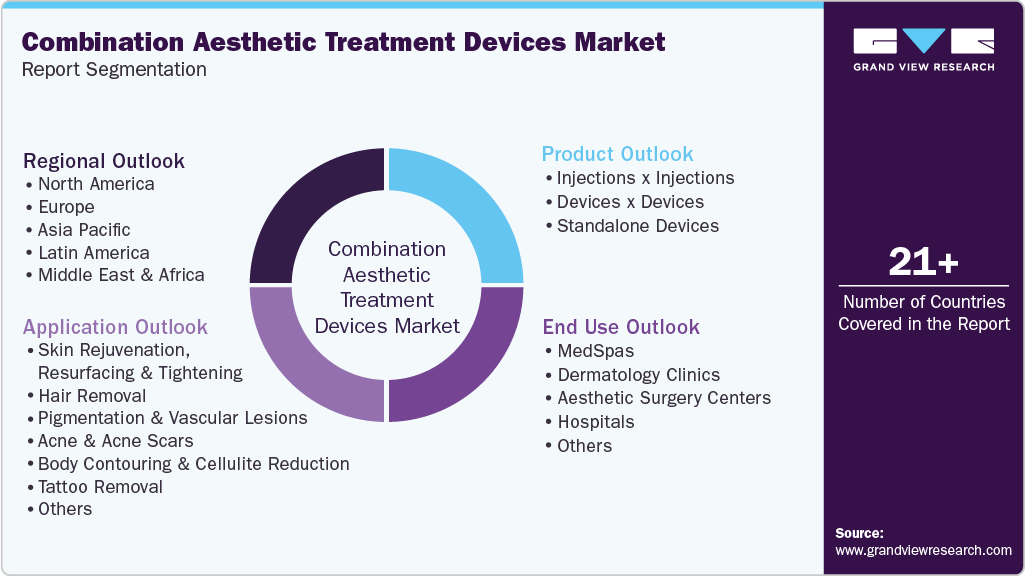
This report forecasts revenue growth at global, regional, and country levels and provides an analysis of the latest industry trends in each of the sub-segments from 2021 to 2033. For this study, Grand View Research has segmented the global combination aesthetic treatment devices market report based on product, application, end use, and region:
 To learn more about this report, Download Free Sample Report
 -
Product Outlook (Revenue, USD Billion, 2021 - 2033)
-
Integrated Devices
-
Injections x Injections
-
HA x Biostimulants
-
HA x Skin Boosters
-
Others
-
-
Devices x Devices
-
RF x EMS
-
RF x Ultrasound
-
IPL x Laser
-
Others
-
-
-
Standalone Devices
-
Injections x Injections
-
Devices x Devices
-
Injections x Devices
-
-
-
Application Outlook (Revenue, USD Billion, 2021 - 2033)
-
Skin Rejuvenation, Resurfacing & Tightening
-
Hair Removal
-
Pigmentation & Vascular Lesions
-
Acne & Acne Scars
-
Body Contouring & Cellulite Reduction
-
Tattoo Removal
-
Muscle Toning / Muscle Stimulation
-
Other Applications
-
-
End Use Outlook (Revenue, USD Billion, 2021 - 2033)
-
MedSpas
-
Dermatology Clinics
-
Aesthetic Surgery Centers
-
Hospitals
-
Others
-
-
Regional Outlook (Revenue, USD Billion, 2021 - 2033)
-
North America
-
U.S.
-
Canada
-
Mexico
-
-
Europe
-
UK
-
Germany
-
France
-
Italy
-
Spain
-
Norway
-
Denmark
-
Sweden
-
-
Asia Pacific
-
China
-
Japan
-
South Korea
-
Thailand
-
Australia
-
India
-
-
Latin America
-
Brazil
-
Argentina
-
-
MEA
-
South Africa
-
Saudi Arabia
-
UAE
-
Kuwait
-
-
Research Methodology
The combination aesthetic treatment devices market figures in this report are based on a proven research process that combines executive interviews with secondary research from proprietary databases, company filings, and recognized regulatory and institutional sources. Market size is built through value-chain sizing-reconciling supply-side and demand-side estimates-and triangulated with bottom-up and top-down approaches. Every estimate passes multiple levels of expert validation before publication, with each combination aesthetic treatment devices segment quantified using the revenue-capture definitions in the table below.
Segment Definition
Segment - Product
Revenue capture definition
Integrated Devices
Revenue generated through aesthetic devices that combine two or more treatment modalities within a single integrated platform. Revenue includes initial device procurement, platform upgrades, interchangeable handpieces, applicators, accessories, software, service contracts, and recurring consumables where applicable.
Standalone Devices
Revenue generated through combination use of two or more injectable aesthetic products or aesthetic devices (or energy-based modalities operated as separate units) within a treatment protocol. Revenue is captured through product units/syringes/vials utilized per treatment, with ASP varying by category, formulation, geography, and treatment protocol.
Segment - Application
Revenue capture definition
Skin Rejuvenation, Resurfacing & Tightening
Revenue generated from combination procedures and platforms used to address wrinkles, photoaging, skin texture, pigmentation, laxity, resurfacing, and collagen-remodeling objectives. Revenue includes equipment sales, handpieces, consumables, and attributable procedure-based utilization.
Hair Removal
Revenue generated from combination IPL, laser, RF-assisted, or other technologies used for reduction of unwanted hair.
Pigmentation & Vascular Lesions
Revenue generated from combination treatments targeting pigmented lesions, photodamage, vascular lesions, telangiectasia, redness, and related concerns using IPL, laser, RF, or complementary technologies.
Acne & Acne Scars
Revenue generated from combination treatments targeting active acne, acne-related inflammation, pigmentation, textural irregularities, and acne scars through energy-based and complementary modalities.
Body Contouring & Cellulite Reduction
Revenue generated from combination technologies used for body contouring, localized tissue remodeling, skin tightening, cellulite reduction, and related body-aesthetic objectives.
Tattoo Removal
Revenue generated from combination laser/light-based treatment platforms and protocols used for tattoo pigment reduction or removal.
Muscle Toning / Muscle Stimulation
Revenue generated from combination RF, electromagnetic, EMS, and other technologies used for muscle stimulation and associated body-contouring applications.
Other Applications
Revenue from other combination aesthetic applications, including scar treatment, stretch marks, intimate aesthetics, hair restoration, and other emerging applications.
Segment - End Use
Revenue capture definition
MedSpas
Revenue generated through equipment procurement and combination aesthetic treatments performed in medical spas. Revenue includes capital platform sales, treatment-related device utilization, handpieces, applicators, injectables, consumables, and service revenue.
Dermatology Clinics
Revenue generated through combination aesthetic procedures performed within physician-led dermatology practices. Revenue includes device sales, injectable consumption, consumables, service contracts, and procedure-related utilization.
Aesthetic Surgery Centers
Revenue generated through combination aesthetic treatments performed in plastic surgery and cosmetic surgery centers, including device-based and injectable treatment protocols.
Hospitals
Revenue generated through hospital-based dermatology, plastic surgery, cosmetic surgery, and outpatient aesthetic departments through institutional procurement and capital equipment purchases.
Others
Revenue generated through other aesthetic providers, specialty centers, physician offices, wellness/aesthetic facilities, and other relevant treatment settings.
Estimation Model
Step
Guiding Question
Process Steps
Data Sources
Scope Definition
What exactly counts as a combination aesthetic treatment?
1. Define combination categories: injections + devices, devices + devices, injections + devices. 2. Separate integrated single‑platform devices from multi‑product combination therapy. 3. Set inclusion and exclusion criteria (aesthetic indications only; exclude therapeutic and dental indications). 4. Segment by product, application end use, geographic and temporal scope.
Regulatory bodies (FDA, Health Canada, Department of Health Thailand), company websites, professional associations
Build the Product Base
How many combination‑capable platforms and products are in the market?
1. Build a manufacturer‑ and SKU‑level database of integrated devices and combination injectable devices. 2. Combine the installed base of integrated multi‑modality platforms (IPL+RF+EMS, RF+Ultrasound, IPL+Laser, others). 3. Estimate annual new placements and cumulative installed base growth. 4. Estimate replacement, upgrade and obsolescence rates.
Regulatory bodies (FDA, Department of Health Thailand), company websites, professional associations
Estimate Penetration
How widely are combination protocols adopted, and how intensively used?
1. Estimate adoption rates and usage, dermatology clinics, aesthetic surgery clinics, medspas. 2. Quantify the shift from single to combination treatment plans (e.g., HA + botulinum toxin + device). 3. Estimate procedure volumes and utilization by application - rejuvenation, body contouring, acne, scars, hair removal, pigmentation, vascular lesions. 4. Estimate average monthly utilization frequency per modality pair.
Primary interviews with dermatologists, plastic surgeons, aesthetic physicians, clinic operators
Revenue Conversion
How does adoption translate into market revenue?
1. Determine average selling price by platform type and per unit price for injectables. 2. Calculate revenue from new platform sales and first‑fill product volumes. 3. Calculate replacement, upgrade and cross‑modality treatment revenue. 4. Add recurring revenue - consumables, tips, cartridges, injectables.
Company product price schedules, regulatory filings, distributor pricing, The Aesthetic Guide, The Consult
Delivered Customizations
This report has been delivered with the following In-depth customizations
Client Request
Customization Delivered
Value Adds
Porter Analysis
Conducted a comprehensive Porter’s Five Forces analysis of the global multi-modality aesthetic platforms market, evaluating threat of new entrants, supplier power, buyer power, threat of substitutes, and competitive rivalry. The analysis considered regulatory requirements, R&D and clinical validation costs, component suppliers, purchasing decisions of aesthetic practices, alternative treatment technologies, product differentiation, innovation, pricing, partnerships, and M&A. It also incorporated macroeconomic factors such as disposable income, aesthetic expenditure, inflation, interest rates, equipment financing, foreign exchange, and economic uncertainty influencing capital investments.
Enables stakeholders to understand the competitive structure, entry barriers, pricing pressures, supplier dependencies, and purchasing dynamics shaping the multi-modality aesthetic platforms market. The analysis supports strategic decisions related to platform development, technology sourcing, pricing, financing models, portfolio expansion, and geographic prioritization.
Competitive Landscape
Conducted a detailed competitive landscape assessment of the global multi-modality aesthetic platforms market, comparing leading manufacturers based on platform configurations, modality combinations, treatment indications, technology, clinical evidence, regulatory clearances, pricing, distribution, partnerships, product launches, and geographic presence. The analysis also evaluated strategies to expand installed bases through multifunctional platforms that can replace multiple standalone devices, considering capital expenditure, financing availability, operating costs, equipment replacement cycles, and return on investment across developed and emerging markets.
Enables stakeholders to gain a comprehensive understanding of the competitive landscape, benchmark key market participants, and identify strategic growth opportunities. The analysis supports informed decision-making related to product portfolio optimization, competitive positioning, partnership evaluation, investment prioritization, and market expansion.
Geographic Analysis
Conducted a comprehensive geographic assessment of the multi-modality aesthetic platforms market across North America, Europe, Asia-Pacific, Latin America, and the Middle East & Africa, evaluating aesthetic procedure demand, clinic infrastructure, physician adoption, healthcare expenditure, disposable income, medical tourism, regulatory environments, and technology accessibility. The analysis also assessed emerging-market potential, macroeconomic conditions, distributor networks, partnerships, local manufacturing, regulatory approvals, and product launches to identify regions with favorable growth and commercialization opportunities.
Enables stakeholders to identify high-potential geographic markets, regional adoption drivers, market-entry opportunities, and economic risks influencing demand for multi-modality aesthetic platforms. The analysis supports decisions regarding regional expansion, distributor selection, localization, pricing, financing strategies, regulatory planning, and resource allocation.
About the Author(s)
Medical Devices Research Team
Healthcare · Medical DevicesThis report was authored by the medical devices research team at Grand View Research - comprising two research analysts, one senior research analyst, and one industry expert - with specialized expertise in the medical devices segment of the healthcare industry. All findings are based on proprietary healthcare databases, executive interviews, and regulatory analysis, subject to internal peer review prior to publication.
Last Updated:
Speak to Analyst

Customize this report to your needs - add regions, segments, or data points, with 20% free customization.
Or view our licence options:


ISO 9001:2015 & 27001:2022 Certified
We are GDPR and CCPA compliant! Your transaction & personal information is safe and secure. For more details, please read our privacy policy.


