
- Home
- »
- Animal Health
- »
-
Companion Animal Imaging Market Size, Share Report, 2033GVR Report cover
![Companion Animal Imaging Market Size, Share & Trends Report]()
Companion Animal Imaging Market (2025 - 2033) Size, Share & Trends Analysis Report By Product (Equipment, Accessories/ Consumables, Software), By Type, By Animal, By Application, By Modality (Fixed, Portable), By End Use, By Region, And Segment Forecasts
- Report ID: GVR-4-68040-622-1
- Number of Report Pages: 150
- Format: PDF
- Historical Range: 2021 - 2023
- Forecast Period: 2025 - 2033
- Industry: Healthcare
- Report Summary
- Table of Contents
- Segmentation
- Methodology
- Download FREE Sample
-
 Download Sample Report
Companion Animal Imaging Market Summary
The global companion animal imaging market size was estimated at USD 1.27 billion in 2024 and is projected to reach USD 2.36 billion by 2033, growing at a CAGR of 7.23% from 2025 to 2033. The market is continuously growing, driven by rising pet ownership, increasing prevalence of chronic or zoonotic diseases, and technological advancements in imaging.
Key Market Trends & Insights
- North America companion animal imaging market held the largest share of 39.29% of the global market in 2024.
- The companion animal imaging in the U.S. is expected to grow significantly over the forecast period.
- By product, the equipment segment held the highest market share of 55.87% in 2024.
- Based on animal, the dogs segment held the highest market share in 2024.
- By type, X rays segment held the highest market share in 2024.
Market Size & Forecast
- 2024 Market Size: USD 1.27 Billion
- 2033 Projected Market Size: USD 2.36 Billion
- CAGR (2025-2033): 7.23%
- North America: Largest market in 2024
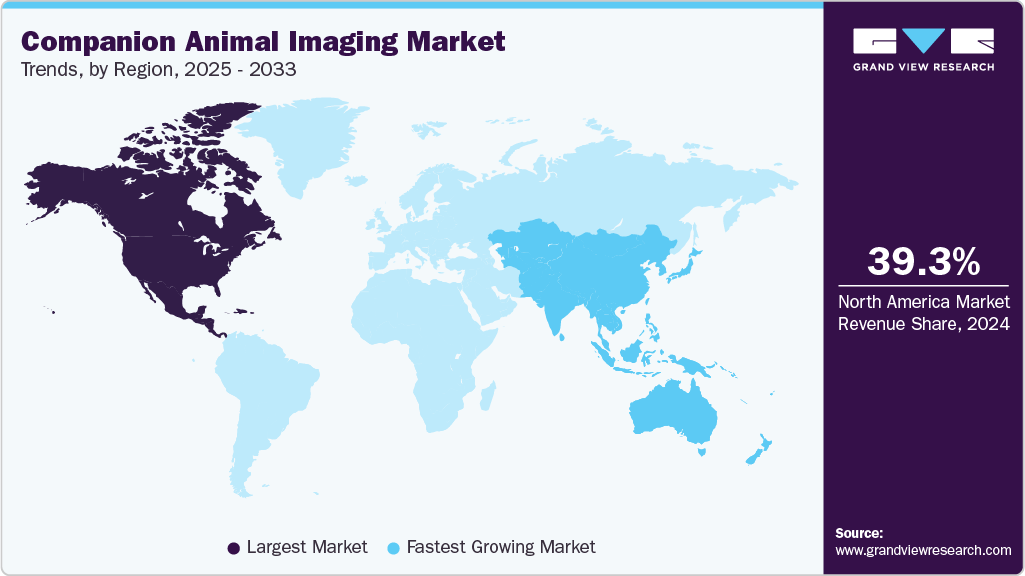
- Asia Pacific: Fastest growing market
Millennials make up the largest demographic of pet owners, and approximately 66% of U.S. households own a pet. In the U.S., according to the 2024 report, approximately 65.1 million households own a dog, while 46.5 million households have a cat. The rising proportion of chronic diseases is one of the significant factors driving market growth. Chronic illnesses such as cancer, arthritis, cardiovascular diseases, and diabetes are increasingly being diagnosed in companion animals due to improved veterinary diagnostics. These conditions often require repeated and detailed imaging for effective monitoring and management.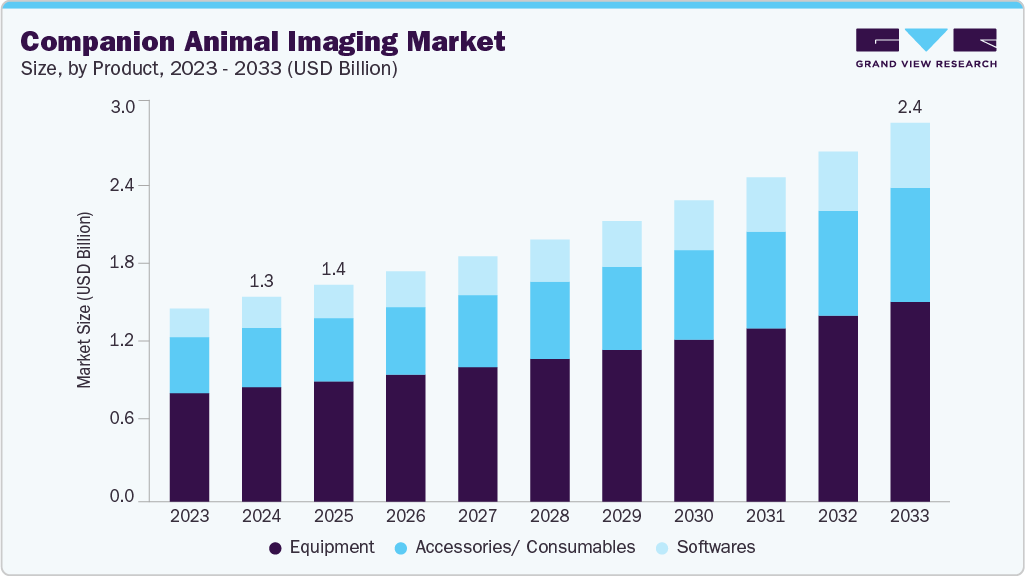
In addition, the rising incidence of zoonotic diseases has heightened awareness about accurate diagnostic tools, pushing for widespread use of imaging to track disease progression and containment. A survey conducted in January 2024 reported the proportion of diseases by the pet owners over the lifetime period only in the U.S. The chart below illustrates various numbers of diseases along with their frequency of occurrence:
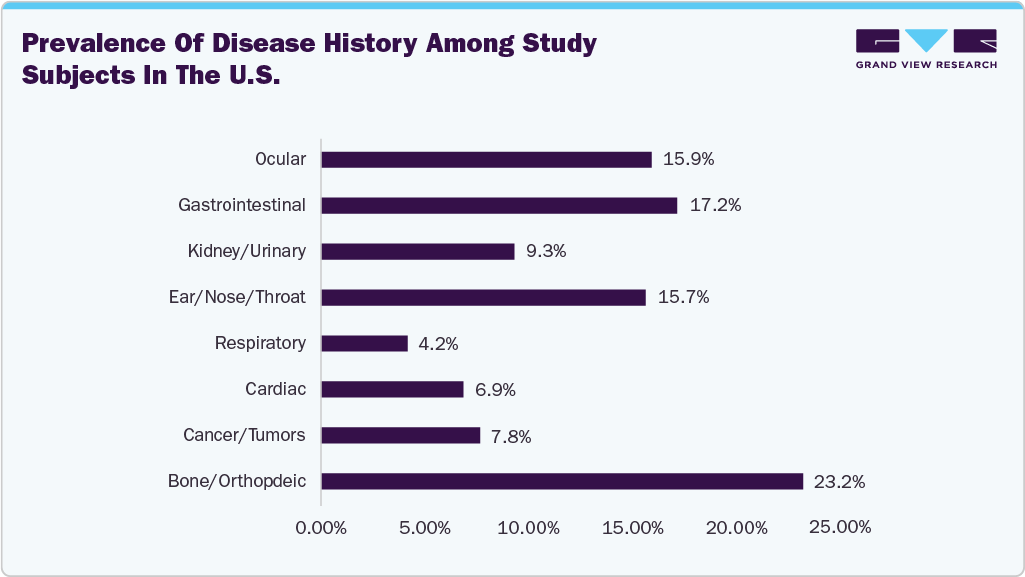
Early and precise detection through imaging is vital for both animal and public health, particularly in cases involving potentially transmissible diseases. This growing disease burden across pet populations is a primary driver boosting the need for advanced imaging solutions.
Continuous innovations in imaging technologies such as MRI, CT scans, digital radiography, and ultrasound have significantly enhanced diagnostic capabilities in veterinary medicine. These technologies now offer higher resolution, faster results, and more accurate diagnoses, facilitating better treatment decisions.
Technological Advancements in Imaging Techniques
-
High-Resolution Imaging Modalities: Innovations such as portable ultrasound machines and advanced 3D imaging have enhanced accessibility and accuracy, allowing for better preoperative planning and postoperative monitoring.
-
Advancements in Ultrasonography: Advancements have improved image quality and resolution, making it particularly useful for examining the abdomen, heart, and reproductive systems across various animal species. Enhanced transducers and imaging techniques have allowed for more precise diagnoses and procedures like guided biopsies.
-
Digital Radiography and PACS Systems: The shift from traditional film-based radiography to digital radiography offers immediate image access, lower radiation doses, and enhanced image manipulation capabilities. The implementation of Picture Archiving and Communication Systems (PACS) facilitates secure storage, remote access, and easy sharing of images among veterinary professionals, improving collaboration and diagnostic efficiency.
Such technological advancements are boosting market growth for imaging of companion animals. The miniaturization and cost-effectiveness of imaging equipment have made it more accessible to smaller veterinary clinics, increasing adoption. These technological improvements not only improve animal care but also broaden the scope of veterinary practices, driving growth in the companion animal imaging industry globally.
The global rise in pet ownership, especially in urban and developed regions, significantly fuels the demand for companion animal imaging. As pets are increasingly considered family members, owners are more willing to invest in their health and well-being. According to 2025 pet ownership statistics, China has the largest number of dogs and cats after the U.S., with 27.4 million dogs and 54.3 million cats. Humanization of pets has also prompted the availability of premium services, mirroring human healthcare standards. These trends are especially strong in North America and Europe, where pet ownership is high and veterinary care is seen as a necessity.
Market Concentration & Characteristics
The market exhibits a high market concentration with an accelerating pace. The companies possess significant technological capabilities, wide distribution networks, and strong brand recognition, which gives them a competitive edge. Innovations are frequent, high capital requirements and regulatory hurdles create barriers for new entrants, reinforcing the position of top companies and sustaining the concentrated market structure.
The market demonstrates a strong degree of innovation with advancements in digital radiography, portable imaging, and AI-based image interpretation. For instance, in January 2023, Esaote North America, Inc. introduced the Magnifico Vet MRI system for diverse veterinary settings and high-quality scanning for animals of all sizes. These technologies enhance diagnostic precision, workflow efficiency, and patient outcomes. Companies are heavily investing in R&D to develop multimodal systems and cloud-based imaging platforms, helping veterinarians make faster, more informed clinical decisions in real time.
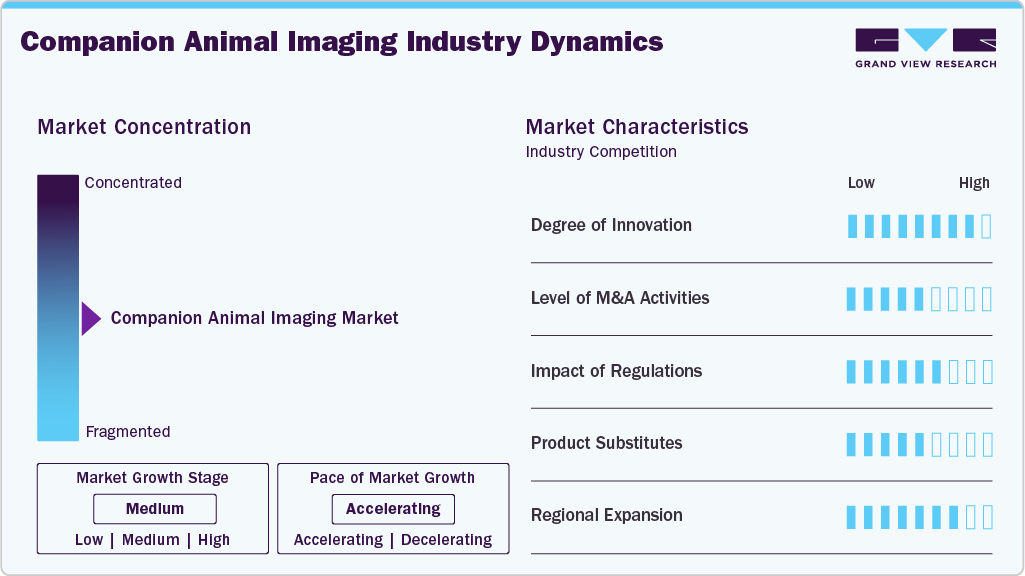
The market experiences a moderate level of mergers and acquisitions activity as companies seek to expand their capabilities and geographic reach. Strategic acquisitions allow key players to integrate novel technologies, strengthen their imaging portfolios, and access emerging markets. For example, in April 2024, Asteris partnered with VetlinkPRO to revolutionize veterinary care by seamlessly integrating imaging solutions with practice management software. These activities foster competition, streamline distribution networks, and accelerate product development cycles, contributing to a more consolidated yet dynamic industry environment.
Regulatory frameworks moderately impact the market, particularly in equipment approvals, radiation usage, and veterinary-specific device classification. Compliance with FDA, EMA, and regional regulatory bodies ensures safety and efficacy but can lengthen product launch timelines. However, rising demand for standardized animal diagnostics is prompting regulators to streamline approval pathways, encouraging greater market participation and product innovation.
Substitution threats remain limited in this market. While basic diagnostic methods like physical exams or lab tests are used for preliminary assessments, they cannot match the accuracy and detail provided by advanced imaging modalities like CT, MRI, and ultrasound. The clinical need for non-invasive, real-time visualization in diagnosing internal issues in pets supports sustained demand for imaging technologies.
Regional expansion is a key growth strategy for market leaders. Companies are entering developing regions such as Asia-Pacific, Latin America, and the Middle East through partnerships, joint ventures, and localized manufacturing. Growing pet ownership, increasing veterinary care awareness, and improving healthcare infrastructure in these regions offer significant opportunities to scale imaging solutions tailored to regional demands and capacities.
Product Insights
The equipment segment held the largest revenue share of 55.87% in 2024 in the market, driven by the increasing adoption of advanced imaging technologies such as MRI, CT, ultrasound, and digital radiography. These tools are essential for accurate diagnosis, treatment planning, and monitoring of various conditions in pets. The rising number of veterinary clinics, greater pet ownership, and demand for early disease detection have further fueled equipment demand. In addition, innovations in portable and point-of-care imaging systems enhance accessibility and workflow efficiency. As veterinary care becomes more specialized and technology-driven, the equipment segment continues to dominate the market in both value and volume.
The software segment is experiencing the fastest growth in the market, driven by the integration of AI-powered diagnostics, cloud-based platforms, and advanced visualization tools. These innovations enhance diagnostic accuracy, streamline workflows, and facilitate remote consultations, addressing the increasing demand for efficient and accessible veterinary care. For instance, in May 2025, ANTECH introduced RapidRead Dental, an AI-driven radiology interpretation tool designed to transform veterinary dentistry. Furthermore, the shift towards cloud/web-based delivery models simplifies installation and maintenance, reducing IT overhead for veterinary practices. This trend, coupled with the growing emphasis on preventive care and the humanization of pets, underscores the pivotal role of software solutions in modern veterinary diagnostics.
Animal Insights
The dogs segment dominated the market, accounting for the largest revenue share of 51.56% in 2024. This prominence is attributed to the high global dog population and the increasing demand for advanced diagnostic services tailored to dogs’ health. In 2023, Europe’s dog population reached approximately 106.36 million, marking a rise from about 104.34 million in 2022, indicating steady growth in pet ownership across the region. The growing prevalence of chronic conditions such as arthritis, cancer, and heart disease in dogs has heightened the need for imaging modalities like X-rays, ultrasounds, CT scans, and MRIs. In addition, the rise in pet insurance adoption and the trend of pet humanization have led owners to invest more in comprehensive veterinary care, further fueling the demand for dog imaging solutions.
The cats segment is emerging as the fastest-growing category in the market, driven by increasing cat adoption and heightened awareness of cats-specific health issues. Cats are particularly susceptible to conditions such as chronic kidney disease, hyperthyroidism, and various cancers, necessitating advanced diagnostic imaging for early detection and effective treatment. Innovations in imaging technologies, including high-resolution ultrasound and low-dose CT scans, have enhanced diagnostic capabilities for cat patients. The growing trend of pet humanization has led cat owners to seek comprehensive veterinary care, further propelling the demand for sophisticated imaging solutions tailored to cats' health needs.
Type Insights
X-ray imaging stands as the most widely used in the market, having a market share of 37.84% in 2024, owing to its affordability, rapid results, and versatility in diagnosing various conditions such as fractures, respiratory issues, and dental problems. The widespread adoption of digital radiography, which offers enhanced image quality and reduced radiation exposure, further propels this segment's growth. In May 2023, IMV Technologies announced its acquisition of Veterinary Solutions, a Belgium-based company specializing in veterinary digital radiography (DR X-Ray) systems and PACS software, which ultimately enhanced IMV’s imaging portfolio. The availability of portable X-ray devices has expanded access to diagnostic imaging in remote and rural areas, reinforcing the segment's leading position in the market.
Video endoscopy is rapidly emerging as the fastest-growing segment in the market, propelled by a global shift toward minimally invasive diagnostics and treatments. This technique enables veterinarians to perform real-time, high-definition internal examinations such as gastrointestinal, respiratory, and urogenital assessments without resorting to invasive surgery. The demand is particularly strong in small animal care, where procedures like foreign body retrieval, biopsies, and feeding tube placements are increasingly common. Technological advancements, including flexible and portable video endoscopes, are enhancing accessibility and efficiency in veterinary practices. With rising pet ownership and heightened awareness of advanced veterinary care, the video endoscopy segment is poised for significant growth in the coming years.
Application Insights
The orthopedics and traumatology segment stood as the largest application area in the market, holding a significant share of 37.91% in 2024. This dominance is driven by the rising incidence of musculoskeletal disorders among pets, including fractures, joint diseases, and ligament injuries, particularly in active and aging animals. Advanced imaging modalities such as X-ray, MRI, and CT scans are increasingly utilized to diagnose these conditions, enabling precise treatment planning and improved outcomes. The growing adoption of minimally invasive surgical techniques further underscores the need for detailed imaging. In addition, the expansion of veterinary clinics equipped with sophisticated diagnostic tools contributes to the segment's leading position in the market.
The oncology segment is emerging as the fastest-growing area, propelled by the increasing prevalence of cancer among pets and the rising demand for early, accurate diagnostics. Technologies such as MRI, CT scans, ultrasound, and digital radiography enable veterinarians to visualize tumors, assess disease progression, and guide treatment decisions effectively. The market's growth is further fueled by significant investments in research and development. The Morris Animal Foundation announced funding for eight new research grants in January 2024 to study various dog cancers, such as lymphoma and bone cancer, to improve understanding, diagnosis, and treatment options. Increasing funding opportunities are another factor responsible for market growth.
Modality Insights
The fixed imaging systems segment represents the largest share of 54.94% in 2024, owing to their high image resolution, advanced diagnostic capabilities, and widespread use in veterinary hospitals and specialty clinics. These systems, including fixed X-ray, MRI, and CT scanners, offer superior imaging quality essential for accurate diagnosis and treatment planning. Their ability to handle a higher patient volume and accommodate large or complex imaging procedures makes them the preferred choice in established veterinary settings. In addition, advancements in fixed imaging technologies, such as enhanced digital interfaces and AI integration, have reinforced their dominance in comprehensive veterinary diagnostic care.
The portable imaging systems segment is experiencing rapid growth driven by the increasing demand for flexible, point-of-care diagnostic solutions. Technological advancements have led to the development of compact, wireless devices such as portable X-rays, ultrasounds, and CT scanners, enabling veterinarians to perform diagnostics in diverse settings, including remote clinics and field operations. This mobility enhances accessibility to veterinary care, particularly in underserved areas, and supports timely decision-making in emergency situations. The integration of features like AI-powered image analysis and cloud-based data sharing further augments the efficiency and accuracy of these portable systems, solidifying their role as a pivotal component in modern veterinary diagnostics.
End Use Insights
The veterinary clinics & hospitals segment held the largest share in 2024, accounting for approximately 59.16% of revenue. This dominance is attributed to the widespread availability of advanced diagnostic equipment such as X-ray, ultrasound, CT, and MRI systems within these facilities, enabling comprehensive diagnostic services for a variety of animal health conditions. Veterinary clinics and hospitals serve as primary points of care for pet owners, offering both routine check-ups and specialized treatments, which drives the demand for imaging services. The increasing pet population, coupled with rising awareness of animal health and the adoption of pet insurance, further fuels the growth of this segment. In addition, the integration of cutting-edge technologies like AI-powered imaging and cloud-based data management systems enhances diagnostic accuracy and operational efficiency, solidifying the central role of veterinary clinics and hospitals in the market.
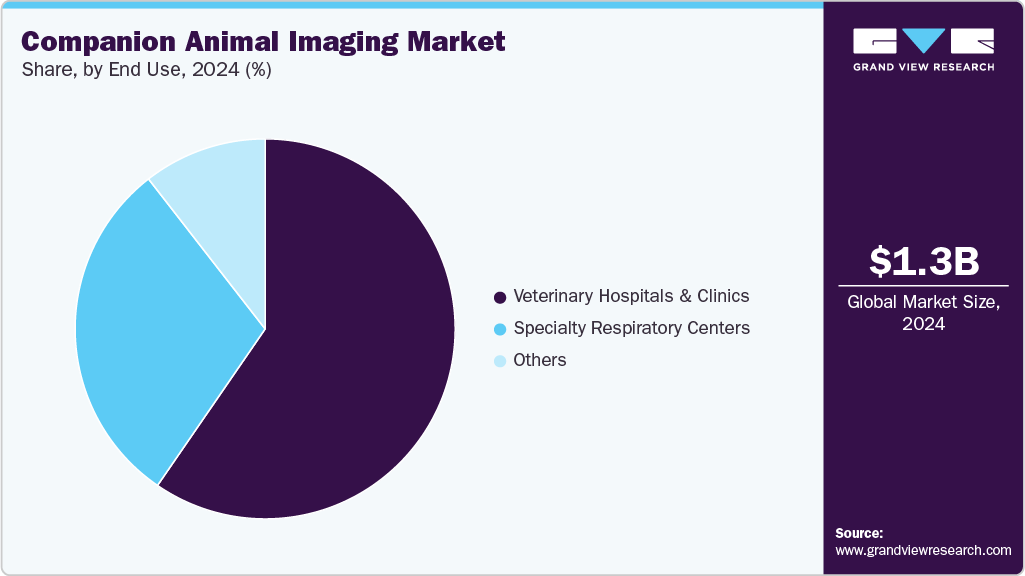
The others include research institutes, diagnostic laboratories, which are emerging as the fastest-growing segment in the market. This growth is driven by increased investments in veterinary research, the adoption of advanced imaging technologies, and the rising demand for precise diagnostics in animal health. Research institutions are leveraging cutting-edge imaging modalities such as MRI, CT scans, and digital radiography to study animal physiology, disease mechanisms, and to develop new treatment protocols. Simultaneously, diagnostic laboratories are expanding their services, offering specialized imaging diagnostics that support early disease detection and comprehensive health assessments. The integration of artificial intelligence and cloud-based platforms in these settings enhances diagnostic accuracy and facilitates collaborative research efforts. As the focus on animal health intensifies, research institutes and diagnostic laboratories are poised to play a pivotal role in advancing veterinary imaging solutions.
Regional Insights
The North American companion animal imaging industry dominated globally with a revenue share of 39.29% in 2024, driven by increasing pet ownership and humanization of pets. Technological advancements, such as AI-integrated diagnostics and portable imaging devices, are enhancing diagnostic accuracy and accessibility. The adoption of pet insurance and the expansion of veterinary infrastructure further bolster market dynamics, positioning North America as a dominant force in the global companion animal imaging sector.
U.S. Companion Animal Imaging Market Trends
The U.S. companion animal imaging industry is experiencing robust growth, driven by rising pet healthcare expenditures and advancements in diagnostic technologies. AAVR Veterinary Association is continuously engaged in educating veterinarians and technicians about imaging levels for the appropriate care of the patients. The integration of artificial intelligence in imaging diagnostics and the development of portable imaging devices are enhancing diagnostic accuracy and accessibility, further propelling market growth.
Europe Companion Animal Imaging Market Trends
The European companion animal imaging industry is expanding steadily, driven by heightened awareness of animal health and significant technological advancements. Some of the players include Canon Medical Systems Europe, Esaote SpA, Siemens Healthineers, GE Healthcare, and IDEXX Laboratories, which are at the forefront, offering innovative imaging solutions. For example, in January 2023, GE HealthCare and Sound Technologies announced a collaboration to distribute the Vscan Air, a wireless, pocket-sized ultrasound device, to veterinary practices across the U.S, with operational and ergonomic excellence in a compact, silent, and environmentally friendly design.
The UK companion animal imaging industry is driven by the adoption of advanced imaging modalities like CT and MRI, along with the integration of artificial intelligence for enhancing diagnostic accuracy and efficiency. Collaborations are expanding in the UK market, for instance, in May 2025, Canon Medical Systems UK partnered with Quality Medical Services (QMS) to supply Canon’s ultrasound, CT, and MRI systems to veterinary practices throughout the UK.
Asia Pacific Companion Animal Imaging Market Trends
The Asia-Pacific companion animal imaging industry is the fastest-growing region in the market, driven by rising disposable incomes and heightened awareness of animal health. Companies that are at the forefront are delivering innovative imaging solutions that meet the evolving needs of healthcare providers in the Asia Pacific. For example, in September 2024, Fujifilm’s Synapse Radiology PACS had been recognized as the top-performing Picture Archiving and Communication System (PACS) in the Asia and Oceania region, earning the "Best in KLAS" award for 2024.
The companion animal imaging industry in India is witnessing robust growth, driven by increasing pet ownership, heightened awareness of animal health, and advancements in diagnostic technologies. Partnerships and collaborations reflect a growing trend of integrating imaging technologies into India's veterinary healthcare infrastructure, focusing on animal health. For instance, in December 2024, Mars Veterinary Health entered India's veterinary sector through a minority investment in Crown Veterinary Services (Crown Vet), marking its first foray into the Indian market. This strategic partnership aims to expand Crown Vet's clinic network across major cities.
Latin America Companion Animal Imaging Market Trends
The companion animal imaging industry in Latin America is experiencing significant growth, driven by rising pet ownership, increasing awareness of animal health, and advancements in diagnostic technologies. The adoption of advanced imaging modalities like CT and MRI, along with the integration of artificial intelligence, is enhancing diagnostic accuracy and efficiency, further propelling market expansion.
Brazil's companion animal imaging industry is witnessing significant advancements in infrastructure and technology. The growing use of advanced diagnostic tools such as molecular diagnostics and advanced imaging systems is significantly improving early and precise detection of chronic conditions in companion animals. These innovations are expanding access to sophisticated veterinary diagnostics nationwide, contributing to market expansion.
Middle East & Africa Companion Animal Imaging Market Trends
The Middle East and Africa companion animal imaging industry is growing rapidly, driven by rising pet ownership, increasing awareness of animal health, and advancements in diagnostic imaging technologies such as X-ray, MRI, and ultrasound. Some of the companies actively working include Siemens, Philips, Fujifilm, and Aspect Imaging. Investments in research centers and the adoption of AI-powered imaging are accelerating market growth.
The South Africa companion animal imaging industry is expanding, driven by increasing pet adoption, rising disposable income, and growing awareness of preventive pet healthcare. Technological advancements in imaging modalities like X-ray, ultrasound, MRI, and AI integration enhance diagnostic accuracy. For example, in February 2024, the University of Pretoria's Onderstepoort Veterinary Academic Hospital announced the launch of South Africa's largest CT scanner for veterinary use, the Siemens Somatom Confidence 64 Slice CT scanner with a sliding gantry.
Key Companion Animal Imaging Company Insights
The competitiveness among players in the market is intense, driven by rapid technological advancements and rising pet healthcare demand. Key companies dominating the market include IDEXX Laboratories, Heska Corporation, FUJIFILM Holdings America Corporation, and Esaote SPA. Collaborations and partnerships are pivotal to enhancing imaging solutions. PerkinElmer launched the Vega ultrasound system to advance non-invasive diagnostics.
Key Companion Animal Imaging Companies:
The following are the leading companies in the companion animal imaging market. These companies collectively hold the largest market share and dictate industry trends.
- IDEXX Laboratories, Inc.
- Esaote SPA
- Antech Diagnostics, Inc.
- General Electric Company
- Midmark Corporation
- FUJIFILM Holdings America Corporation
- Hallmarq Veterinary Imaging
- CANON MEDICAL SYSTEMS EUROPE B.V.
- Shenzhen Mindray Animal Medical Technology Co., LTD
- Siemens Healthcare Limited
Recent Developments
-
In May 2025, Mars launched the GREENIES Dogs Dental Check, an AI-powered tool that uses smartphone photos and artificial intelligence to help pet owners identify early signs of dental health issues in their dogs.
-
In May 2024, Esaote North America, Inc. introduced the MyLab Omega eXP VET, a compact and portable ultrasound system crafted to enhance veterinary diagnostics provides durability, speed, and precision, and it provides veterinarians with advanced imaging capabilities and greater diagnostic flexibility wherever care is needed.
-
In January 2024, Esaote North America, Inc. introduced the Magnifico Vet MRI system, a veterinary-focused imaging solution designed to deliver high diagnostic performance across diverse clinical settings. Tailored for efficiency, it enables fast, accurate imaging of animals of all sizes, streamlining veterinary diagnostics.
Companion Animal Imaging Market Report Scope
Report Attribute
Details
Market size value in 2025
USD 1.35 billion
Revenue forecast in 2033
USD 2.36 billion
Growth rate
CAGR of 7.23% from 2025 to 2033
Historical Period
2021 - 2023
Actual data
2024
Forecast period
2025 - 2033
Quantitative units
Revenue in USD million/billion and CAGR from 2025 to 2033
Report coverage
Revenue forecast, company ranking, competitive landscape, growth factors, and trends
Segments covered
Product, type, animal, application, modality, end use, and region
Regional scope
North America; Europe; Asia Pacific; Latin America; MEA
Country scope
U.S.; Canada; Mexico; UK; Germany; France; Italy; Spain; Denmark; Sweden; Norway; Japan; China; India; Australia; South Korea; Thailand; Brazil; Argentina; South Africa; Saudi Arabia; UAE; Kuwait
Key companies profiled
IDEXX Laboratories, Inc.; Esaote SPA; Antech Diagnostics, Inc.; General Electric Company; Midmark Corporation; FUJIFILM Holdings America Corporation; Hallmarq Veterinary Imaging; CANON MEDICAL SYSTEMS EUROPE B.V.; Shenzhen Mindray Animal Medical Technology Co., LTD; Siemens Healthcare Limited
Customization scope
Free report customization (equivalent up to 8 analysts working days) with purchase. Addition or alteration to country, regional & segment scope.
Pricing and purchase options
Avail customized purchase options to meet your exact research needs. Explore purchase options
Global Companion Animal Imaging Market Report Segmentation
This report forecasts revenue growth at global, regional, and country levels and provides an analysis of the latest industry trends in each of the sub-segments from 2021 to 2033. For this study, Grand View Research has segmented the global companion animal imaging market report based on product, type, animal, application, modality, end use, and region.
- Product Outlook (Revenue, USD Million, 2021 - 2033)
-
Equipment
-
Accessories/ Consumables
-
Software
-
-
Type Outlook (Revenue, USD Million, 2021 - 2033)
-
X-ray
-
Ultrasound
-
MRI
-
CT Respiratory
-
Video Endoscopy
-
-
Animal Outlook (Revenue, USD Million, 2021 - 2033)
-
Dogs
-
Cats
-
Horses
-
Others
-
-
Application Outlook (Revenue, USD Million, 2021 - 2033)
-
Orthopedics and Traumatology
-
Oncology
-
Cardiology
-
Neurology
-
Respiratory
-
Dental Applications
-
Others
-
-
Modality Outlook (Revenue, USD Million, 2021 - 2033)
-
Fixed
-
Portable
-
-
End Use Outlook (Revenue, USD Million, 2021 - 2033)
-
Veterinary Hospitals and Clinics
-
Specialty Imaging Centers
-
Others
-
-
Regional Outlook (Revenue, USD Million, 2021 - 2033)
-
North America
-
U.S.
-
Canada
-
Mexico
-
-
Europe
-
UK
-
Germany
-
France
-
Italy
-
Spain
-
Denmark
-
Sweden
-
Norway
-
Rest of Europe
-
-
Asia Pacific
-
Japan
-
India
-
China
-
South Korea
-
Australia
-
Thailand
-
Rest of APAC
-
-
Latin America
-
Brazil
-
Argentina
-
Rest of LATAM
-
-
Middle East and Africa (MEA)
-
South Africa
-
Saudi Arabia
-
UAE
-
Kuwait
-
Rest of MEA
-
-
Frequently Asked Questions About This Report
b. The global companion animal imaging market size was estimated at USD 1.27 billion in 2024 and is expected to reach USD 1.35 billion in 2025.
b. The global companion animal imaging market is expected to grow at a compound annual growth rate of 7.23% from 2025 to 2033 to reach USD 2.36 billion by 2033.
b. North America dominated the companion animal imaging market with a share of over 39% in 2024, driven by increasing pet ownership and humanization of pets. Technological advancements, such as AI-integrated diagnostics and portable imaging devices are enhancing diagnostic accuracy and accessibility.
b. Some key players operating in the companion animal imaging market include IDEXX Laboratories, Inc., Esaote SPA, Antech Diagnostics, Inc.,General Electric Company, Midmark Corporation, FUJIFILM Holdings America Corporation, Hallmarq Veterinary Imaging, CANON MEDICAL SYSTEMS EUROPE B.V., Shenzhen Mindray Animal Medical Technology Co., LTD, Siemens Healthcare Limited
b. Key factors that are driving the market growth include rising pet ownership, increasing prevalence of chronic or zoonotic diseases and technological advancements in imaging.


Share this report with your colleague or friend.
Need a Tailored Report?
Customize this report to your needs — add regions, segments, or data points, with 20% free customization.


ISO 9001:2015 & 27001:2022 Certified
We are GDPR and CCPA compliant! Your transaction & personal information is safe and secure. For more details, please read our privacy policy.
Trusted market insights - try a free sample
See how our reports are structured and why industry leaders rely on Grand View Research. Get a free sample or ask us to tailor this report to your needs.













