
- Home
- »
- Pharmaceuticals
- »
-
Complementary & Alternative Medicine Market Report 2026-2033GVR Report cover

Complementary And Alternative Medicine Market (2026 - 2033)
Size, Share & Trends Analysis Report By Intervention (Mind Healing, Body Healing), By Distribution Method (Direct Sales, E-sales, Distance Correspondence), By Region, And Segment Forecasts
Market Size, 2025
$222.6BMarket Estimate, 2026
$277.5BMarket Forecast, 2033
$1,430.7BCAGR, 2026–2033
26.4%Complementary And Alternative Medicine Market Summary
The global complementary and alternative medicine market size was valued at USD 222.6 billion in 2025 and is projected to grow from USD 277.5 billion in 2026 to USD 1,430.7 billion by 2033, at a CAGR of 26.4% from 2026 to 2033. The market in Europe dominated with a revenue share of 30.9% in 2025. Growing awareness regarding complementary and alternative medicine (CAM), increasing disposable income, and government initiatives to boost CAM are some of the major factors driving market growth.
 Source: Grand View Research, IR Documents, Primary Interviews, Paid DatabasesTo learn more about this report,
 Download Free Sample Report
 Key Market Trends & Insights
- By intervention: Traditional alternative medicine segment held the largest market share of 33.8% in 2025.
- By distribution method: Direct sales segment held the largest market share of 58.0% in 2025.
Regional Highlights
- Largest regional market: Europe (30.9% revenue share, 2025)
- Fastest-growing regional market: North America (highest CAGR, 2026-2033)
- By country: UK held the largest market share in 2025
Market Size & Forecast
- Market size in 2025: USD 222.6 Billion
- Estimated market size in 2026: USD 277.5 Billion
- Projected market size by 2033: USD 1,430.7 Billion
- CAGR (2026-2033): 26.4%
Three ways to get this report
Buy it, customize it, or ask a question.Ask an Analyst
Analyst response in 1 business day
- AccessReport author, directly
- Reply timeWithin 1 working day
- No sales callDirect answer only
- FormatEmail reply
- CostFree, no cost
Get the Full Report
What the study covers
- FormatsPDF · Excel · Dashboard
- Timeline2026–2033 annual, 2025 base
- Coverage20+ countries, 5 regions
- Companies10+ key players profiled
Customize the Report
20% free customization
- IncludeCountries, segments, points
- TailorTo your product definition
- ExtendDeeper competitor detail
- OrA fully bespoke study
- Turnaround5–10 working days
Rising adoption of electronic and digital delivery methods continues to support market growth, as these platforms expand the reach and accessibility of complementary and alternative medicine therapies and products. Teleconsultation, virtual wellness platforms, and online retail channels have enabled CAM providers to overcome geographic limitations and improve patient engagement. Governments and regulatory bodies are increasingly undertaking initiatives to establish clinical and scientific support for selected CAM practices, with the objective of formal recognition and broader integration into healthcare systems. In parallel, the rising penetration of the internet and social media has strengthened promotional and service delivery channels for CAM therapies, contributing to higher adoption rates. For instance, The Healing Company Ltd. delivers energy-based therapies through distance healing models, using teleconferencing and video-based consultations. Additionally, the availability of natural supplements, herbal formulations, and botanicals through e-commerce platforms has significantly enhanced product visibility and consumer reach. Emerging technologies such as virtual reality and holographic interfaces are also demonstrating potential to enhance experiential therapies and improve accessibility, particularly in guided meditation, sound therapy, and mind-body treatments.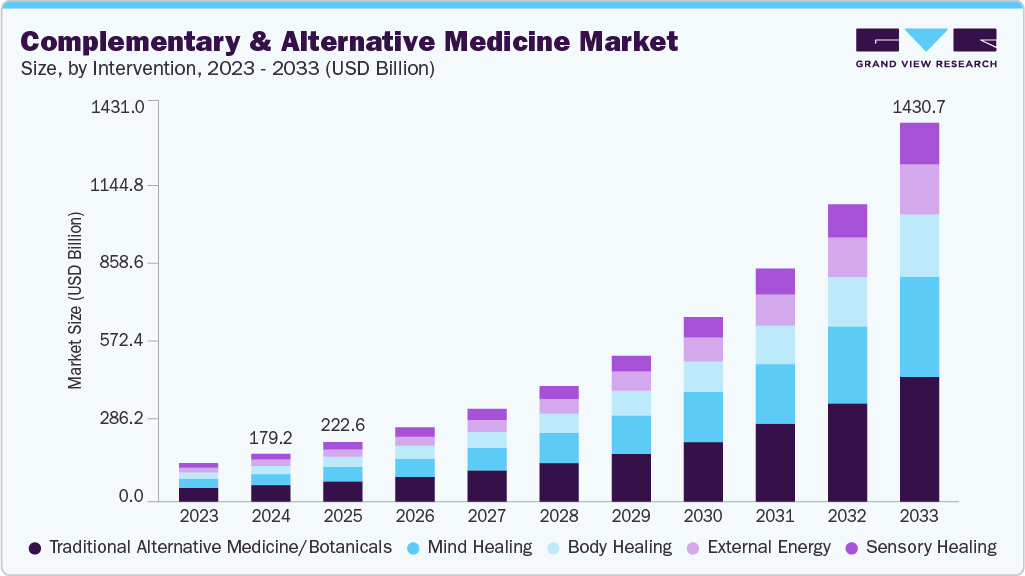 To learn more about this report, Download Free Sample Report
 In May 2025, the World Health Organization formally adopted the Global Traditional Medicine Strategy 2025 - 2034, underscoring international efforts to strengthen evidence generation, digital documentation, and responsible integration of traditional and complementary medicine into national health systems. The strategy explicitly highlights the role of digital health tools and data platforms in improving access, monitoring outcomes, and supporting research validation, reinforcing the relevance of electronic and virtual delivery models within the CAM market.
According to a recent article published on the Six Senses website, the company emphasizes the therapeutic power of sound across its wellness programs, integrating ancient sound healing practices with modern audio technology. Both initiatives underscore the growing emphasis on sound therapy in the wellness industry, reflecting a commitment to holistic and immersive well-being experiences. Sound therapy, known for its calming effects, adds another dimension to the growing array of wellness offerings, highlighting the industry's commitment to holistic well-being.
Market Dynamics
The complementary and alternative medicine market is benefiting from a sustained shift in consumer behavior toward preventive healthcare and long-term wellness management. Individuals are increasingly prioritizing proactive health measures, opting for natural and holistic therapies to maintain overall well-being and reduce the likelihood of chronic conditions. This trend is significantly driving demand for modalities such as herbal medicine, yoga, meditation, and naturopathy.
Growing awareness regarding the limitations of reactive treatment approaches and the side effects associated with prolonged pharmaceutical use is further encouraging consumers to adopt preventive health strategies. Complementary therapies are widely perceived as lower-risk and suitable for continuous use, particularly in areas such as stress management, immunity support, and lifestyle-related health concerns, thereby strengthening their role in routine wellness practices.
In addition, rising health consciousness across urban populations and increased access to health information through digital platforms are accelerating the adoption of personalized and preventive care solutions. This is fostering consistent demand for both practitioner-based therapies and natural health products, positioning complementary and alternative medicine as a key component within the broader preventive healthcare landscape.
The complementary and alternative medicine market faces constraints due to inconsistencies in product formulation and limited large-scale clinical evidence across certain therapies. This restraint exerts a high impact in the near term, as variability in composition and outcomes may restrict acceptance among healthcare professionals and limit integration into formal treatment frameworks.
These limitations affect the reliability and reproducibility of CAM products and therapies, particularly in comparison to standardized pharmaceutical alternatives. The absence of uniform testing protocols and validated efficacy data can influence consumer trust and slow adoption in regulated and evidence-driven markets.
Over the long term, the impact is expected to moderate to medium, supported by increasing research activities, clinical trials, and efforts toward standardization. Such developments are anticipated to improve product consistency and strengthen the scientific foundation of CAM practices.
Market Concentration & Characteristics
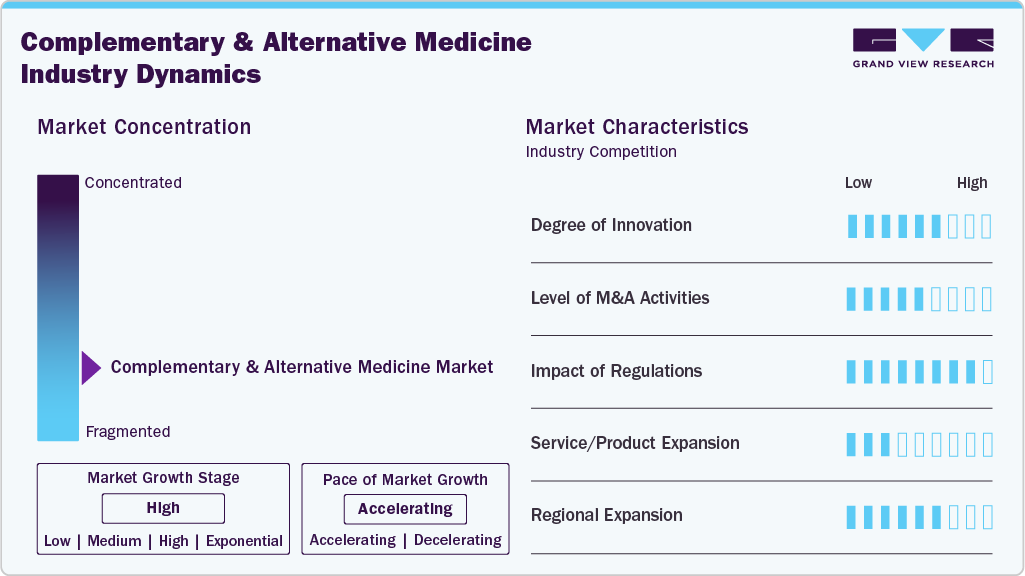
The market growth stage is high and accelerating. Alternative medicine is overly reliant on technology. However, advancements such as increasing internet usage drive the sale of these products via online distribution methods, and even Yoga classes are being conducted online. The growing incidence of chronic diseases, the rising geriatric population, and increasing awareness regarding Complementary & Alternative Medicine (CAM) are driving its adoption. As per reports from the National Center for Complementary and Integrative Health, around 40% of American adults and 12% children use some form of alternative medicine for the treatment of chronic disease and general health.
The space witnesses a notable M&A and product launch activity by the leading players. For instance, in January 2022, Adoratherapy launched its Alkemie Chakra Healing line, an innovative offering comprising dry touch body oils, body lotions, lotion candles, and aroma perfume sprays, all infused with scents carefully designed to foster balance and healing through the power of aromatherapy. Aromatherapy harnesses the therapeutic potential of essential oils, making it a significant addition to the wellness landscape.
 To learn more about this report, Download Free Sample Report
 While most of the products or services offered as a part of CAM need to be registered with country-specific regulatory bodies, there are no stringent requirements in terms of product quality or efficacy. For instance, Ayurvedic practices are a state issue, and the states are only required to register such practices. Factors such as a lack of specific regulations for alternative medicine, such as auriculotherapy, osteomyology, therapeutic touch, and aromatherapy, among others, may lead to low adoption of these therapies. In addition, ayurvedic and homeopathic treatments have limited coverage in insurance plans, due to which patients have to pay out-of-pocket for these treatments.
Regulatory organizations are also working on the development of medical tourism, which attracts people from all over the world and allows them to seek world-class alternative medical care. For instance, in several areas, Indian regulatory authorities have made major investments in the creation and standardization of alternative medical services. In India, a government entity known as the "Ministry of Ayush" has been established to oversee education, product creation, research, and other services related to yoga, ayurveda, homeopathy, and naturopathy.
Conventional medicine still serves as a notable alternative to CAM, but the increasing consumer inclination toward holistic health and wellness sustains the demand for CAM therapies such as acupuncture and naturopathy, indicating the enduring popularity of alternative treatments.
Intervention Insights
The traditional alternative medicine segment dominated the market with the largest revenue share of 33.8% in 2025. The traditional alternative medicine and botanicals segment has been growing at a lucrative rate, driven by rising consumer preference for natural remedies across preventive and therapeutic applications. As demand has expanded, companies have broadened their portfolios to include a wider range of herbal and plant-based products. For instance, GNC offers an extensive portfolio of herbal supplements such as ashwagandha, echinacea, and turmeric, reflecting the increasing commercialization of traditional botanicals.
The Ayurveda subsegment is expected to dominate the traditional alternative medicine market, supported by technological advancements and rising government engagement. Digital tools are being leveraged to improve product standardization, manufacturing efficiency, and patient access. In addition, institutional efforts are strengthening the evidence base for traditional medicine, for instance, in June 2025, the World Health Organization’s Global Traditional Medicine Centre, in collaboration with the Pan American Health Organization, convened a regional consultation in São Paulo to define research priorities and collaboration frameworks aimed at advancing evidence-based traditional medicine practice. Complementing these initiatives, the Indian government has launched digital Ayurveda Health and Wellness Centres to provide telemedicine and e-consultation services, reinforcing technology-enabled delivery models within the Ayurveda ecosystem.
The mind healing segment is expected to grow at a CAGR of 28.0% over the forecast period. The mind healing market presents several opportunities for growth, including the development of new mental health treatments and therapies, expanding mental health services to underserved populations, and integrating mental healthcare into primary care. For instance, integration of mental healthcare into primary care has been an area of growth in recent years. Many primary care clinics now offer mental health services alongside physical health services, which has helped increase the accessibility of mental healthcare and reduce the stigma surrounding mental health treatment. The Transcendental Meditation (TM) subsegment is expected to dominate the mind healing market, driven by programs and institutes such as the Maharishi University of Management in Iowa, U.S., which offers a comprehensive education in transcendental meditation and its related practices.
Distribution Method Insights
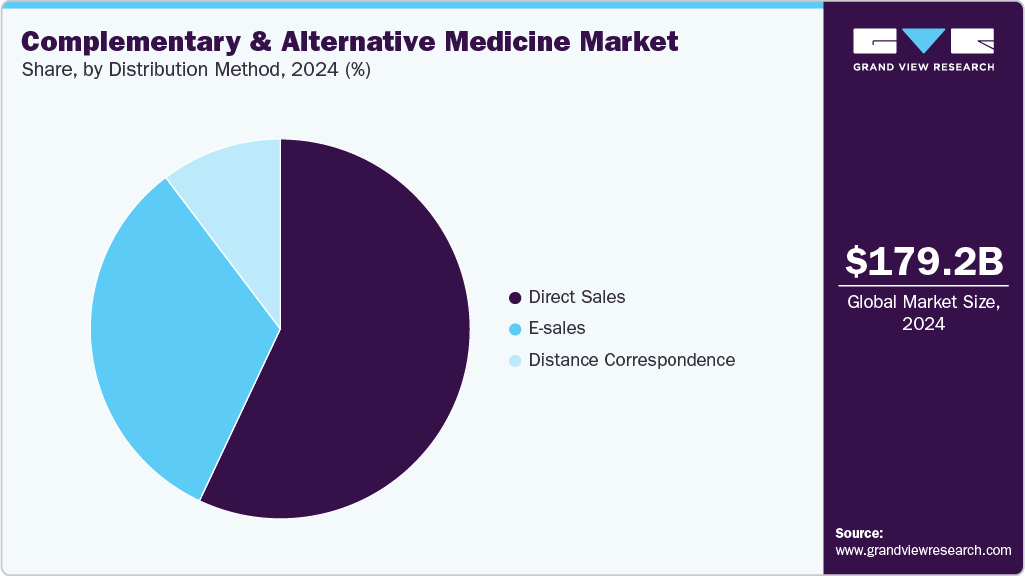
The direct sales segment held the largest revenue share of 58.0% in 2025.This can be attributed to high rates of self-prescribed use of Complementary and Alternative Medicine (CAM) products, especially botanicals and traditional medicine. Pharmacists and healthcare professionals are recommended to conduct community-based programs aimed at spreading awareness about botanicals, which can boost the usage of CAM services accessed directly by physicians.
 To learn more about this report, Download Free Sample Report
 The E-sales segment is projected to grow at a CAGR of 27.5% over the forecast period due to the increased adoption of the internet and online methods, such as video training, to communicate & train the patient. Several complementary and alternative medicine treatments, including hypnotherapy, meditation, yoga, and energy healing, are increasingly delivered through digital formats such as videos, e-manuals, and online teaching modules, including guided hypnotism, sound-based therapies, and mind-influencing audio content. Adoption of these electronically delivered CAM services has accelerated due to the widespread penetration of internet-based audio-visual learning and virtual coaching platforms, enabling patients to access therapies remotely. This trend is further supported by improving internet infrastructure, rising mobile device adoption, and heightened awareness driven by social media engagement. In parallel, e-sales channels for CAM products have strengthened digital adoption. For instance, in 2025, iHerb continued to expand its global fulfillment capabilities and broadened its portfolio of herbal supplements and natural products, reinforcing the role of e-commerce in improving access to complementary and alternative medicine offerings worldwide.
Regional Insights
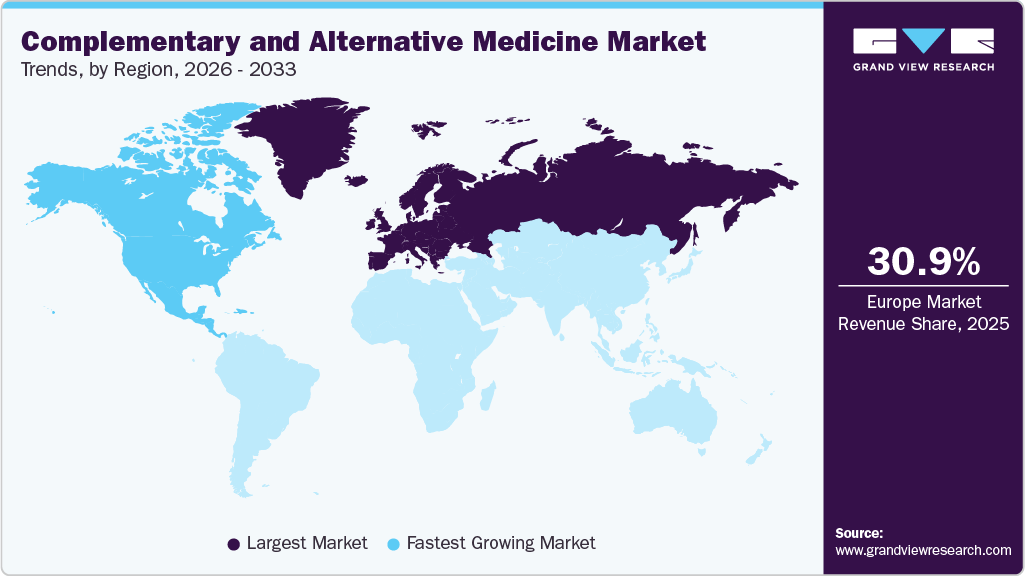
North America complementary and alternative medicine market is expected to grow at the fastest rate of 28.0% from 2026 to 2033. This rapid growth is driven by increasing awareness and adoption of advanced therapies, strong healthcare infrastructure, and supportive regulatory frameworks. In addition, rising investments in research and development and the presence of key players that drive expansion. The region’s high patient demand and well-established medical facilities further accelerate market growth.
Europe Complementary And Alternative Medicine Market Trends
The complementary and alternative medicine market in Europe held the largest share of 30.9% in 2025. The UK dominated the industry in Europe. Acupuncture, chiropractic, homeopathy, hypnosis, medical herbalism, and osteopathy together account for about USD 543.71 million in annual spending in the UK, where over four out of ten people use complementary medicine at some point. 60% of people with musculoskeletal disorders and arthritis, whose symptoms are frequently chronic, are especially drawn to these medications. Additionally, it is reported that 92% of the public wants alternative therapies to be listed by the NHS; however, it has limited coverage for alternative therapies. NHS states that it does not cover most of the therapies and, in contrast, recommends consulting a general practitioner in the first instance.
 To learn more about this report, Download Free Sample Report
 Asia Pacific Complementary And Alternative Medicine Market Trends
The complementary and alternative medicine market in Asia Pacific is expected to grow significantly during the forecast period. The increased demand for herbal supplements is driving the expansion of the complementary & alternative medicine industry in Asia-Pacific. China held the largest market share, and India is estimated to grow at the fastest CAGR over the forecast period. A study says that about 80% of people in China opt for traditional medicine supplements, Reiki, and acupuncture to cure chronic illnesses and many other diseases. China has also had abundant resources to use alternative medicine for a long time.
As per the NCBI article published in September 2022, the National Medical Commission (NMC) in India has made it a requirement for every medical college to establish a "Department of Integrative Medicine Research. This move aims to foster the collaboration of modern medicine with practices like homeopathy and traditional Indian medical systems such as Ayurveda. This development is anticipated to have a positive impact on industry growth.
Key Complementary And Alternative Medicine Companies Insights
Key players operating in the complementary and alternative medicine market are undertaking various initiatives to strengthen their presence and increase the reach of their products and services. Strategies such as expansion activities and partnerships are key in propelling the market growth. Some of the prominent companies in the Complementary and Alternative Medicine Market include John Schumacher Unity Woods Yoga Centre, Nordic Nutraceuticals, Pure Encapsulations, LLC.
Siddhalepa Ayurveda GmbH, BGG Europe SA, and DRONANIA pharmaceuticals GmbH are some of the emerging market participants in the space. Emerging companies are employing various strategies such as mergers & acquisitions to expand their footprint and grow at a fast pace.
-
Pure Encapsulations, LLC. is involved in research-backed, hypoallergenic dietary supplements and nutraceuticals. The company supports holistic health and preventive care by offering high-quality, science-based formulations. Its strong partnerships with healthcare practitioners and global distribution network position it as a leading contributor to the Complementary and Alternative Medicine Market, improving patient wellness and safety through natural interventions.
-
Sheng Chang Pharmaceutical Company is a major manufacturer of traditional Chinese medicines (TCM) and herbal formulations. With large-scale production capabilities and regulatory-compliant operations, the company provides widely used herbal therapies across Asia and beyond.
Key Complementary And Alternative Medicine Companies:
The following are the leading companies in the complementary and alternative medicine market. These companies collectively hold the largest market share and dictate industry trends.
- Columbia Nutritional
- Nordic Nutraceuticals
- Ramamani Iyengar Memorial Yoga Institute
- The Healing Company Ltd.
- John Schumacher Unity Woods Yoga Centre
- Sheng Chang Pharmaceutical Company
- Pure encapsulations, LLC.
- Herb Pharm
- AYUSH Ayurvedic Pte Ltd.
Recent Developments
-
In September 2025, Apollo AyurVAID and Vivekananda Yoga University (VaYU), USA, signed a Memorandum of Understanding (MoU) to co-develop accredited, continuing education and research programs in Yoga, Ayurveda, and Integrative Medicine.
-
In July 2025, at the AI for Good Global Summit, the WHO, ITU, and WIPO jointly released a technical report on AI applications in traditional medicine, outlining approaches to responsibly use digital tools while protecting cultural heritage and data sovereignty.
-
In June 2025, A Regional Consultation on traditional medicine research priorities was held by WHO’s Global Traditional Medicine Centre and PAHO in São Paulo, defining key research themes and collaboration targets to support evidence-based traditional medicine practice.
-
In May 2025, The World Health Assembly (WHA78) formally adopted the WHO Global Traditional Medicine Strategy 2025-2034, committing Member States to strengthen evidence, regulation, quality, and integration of traditional, complementary, and integrative medicine into health systems worldwide.
-
In November 2024, China committed USD 5 million over five years to support the WHO’s Traditional, Complementary, and Integrative Medicine (TCIM) program. This funding aimed to advance the upcoming WHO Traditional Medicine Strategy 2025-2034, which will be launched at the Seventy-eighth World Health Assembly in May 2025.
-
In April 2023, SHA Wellness Clinic expanded its presence in the Middle East. This initiative was anticipated to boost the company’s overall revenue.
-
In March 2023, Ayurveda femtech brand Gynoveda secured USD 10 million in Series A funding, with India Alternatives Fund leading the investment. The funds will be utilized to intensify research and development efforts, introduce new Ayurvedic products, and enhance brand visibility. Gynoveda aims to expand its team to more than 50 members, focusing on ayurveda, technology, content, and community aspects to further support women's healthcare. The investment is expected to propel the company's growth trajectory.
-
In February 2023, NatureKue introduced Nafliva LiverSmart, a nutritional supplement that helps promote healthy liver function. This product's active ingredient consists of a combination of pu'er tea, known as Deepure tea extract, and silybin from Milk Thistle.
-
In February 2023, SEVA Experience entered into a partnership with The Standard, Huruvalhi Maldives, for a wellness program that included meditation, yoga, and holistic practices.
Complementary And Alternative Medicine Market Report Scope
Report Attribute
Details
Market in 2025
USD 222.6 billion
Estimated Market size in 2026
USD 277.5 billion
Projected Market size by 2033
USD 1,430.6 billion
Growth rate
CAGR 26.4% from 2026 to 2033
Base year for estimation
2025
Historical data
2021 - 2024
Forecast period
2026 - 2033
Quantitative units
Revenue in USD million/billion, and CAGR from 2026 to 2033
Report coverage
Revenue forecast, company ranking, competitive landscape, growth factors, trends
Segments covered
Intervention, distribution method, region
Regional scope
North America; Europe; Asia Pacific; Latin America; Middle East & Africa
Country scope
U.S.; Canada; Mexico; UK; Germany; France; Italy; Spain; Denmark; Sweden; Norway; China; Japan; India; Australia; South Korea; Thailand; Brazil; Argentina; South Africa; Saudi Arabia; UAE; Kuwait
Key company profiled
Columbia Nutritional; Nordic Nutraceuticals; Ramamani Iyengar Memorial Yoga Institute; The Healing Company Ltd.; John Schumacher Unity Woods Yoga Centre; Sheng Chang Pharmaceutical Company; Pure Encapsulations, LLC.; Herb Pharm; AYUSH Ayurvedic Pte Ltd.
Customization scope
Free report customization (equivalent up to 8 analysts working days) with purchase. Addition or alteration to country, regional & segment scope.
Pricing and purchase options
Avail customized purchase options to meet your exact research needs. Explore purchase options
Global Complementary And Alternative Medicine Market Report Segmentation
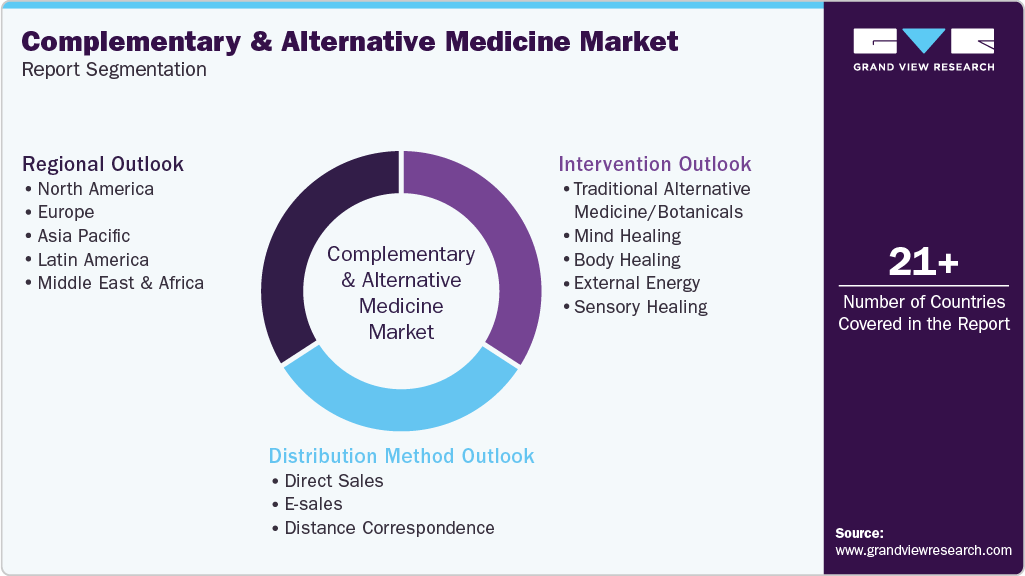
This report forecasts revenue growth at global, regional, and country levels and provides an analysis of the latest industry trends in each of the sub-segments from 2021 to 2033. For this study, Grand View Research has segmented the global complementary and alternative medicine market report based on intervention, distribution method, and region:
 To learn more about this report, Download Free Sample Report
 -
Intervention Outlook (Revenue, USD Million, 2021 - 2033)
-
Traditional Alternative Medicine/Botanicals
-
Ayurveda
-
Apitherapy
-
Bach Flower Therapy
-
Naturopathic Medicine
-
Traditional Chinese Medicine
-
Traditional Korean Medicine
-
Traditional Japanese Medicine
-
Traditional Mongolian Medicine
-
Traditional Tibetan Medicine
-
Zang Fu Theory
-
-
Mind Healing
-
Autosuggestion
-
Hypnotherapy
-
Neuro-linguistic Programming
-
Self-hypnosis
-
Spiritual Mind Treatment
-
Transcendental Meditation
-
-
Body Healing
-
Acupressure
-
Acupuncture
-
Alexander Technique
-
Auriculotherapy
-
Autogenic Training
-
Chiropractic
-
Cupping Therapy
-
Kinesiology
-
Osteomyology
-
Osteopathy
-
Pilates
-
Qigong
-
Reflexology
-
Yoga
-
-
External Energy
-
Magnetic Therapy
-
Bio-magnetic Therapy
-
Magnetic Resonance Therapy
-
-
Radionics
-
Reiki
-
Therapeutic Touch
-
Chakra Healing
-
-
Sensory Healing
-
Aromatherapy
-
Music therapy
-
Sonopuncture
-
Sound Therapy
-
-
-
Distribution Method Outlook (Revenue, USD Million, 2021 - 2033)
-
Direct Sales
-
E-sales
-
Distance Correspondence
-
-
Regional Outlook (Revenue, USD Million, 2021 - 2033)
-
North America
-
U.S.
-
Canada
-
Mexico
-
-
Europe
-
UK
-
Germany
-
France
-
Italy
-
Spain
-
Denmark
-
Sweden
-
Norway
-
-
Asia Pacific
-
Japan
-
China
-
India
-
Australia
-
South Korea
-
Thailand
-
-
Latin America
-
Brazil
-
Argentina
-
-
Middle East & Africa
-
South Africa
-
Saudi Arabia
-
UAE
-
Kuwait
-
-
Frequently Asked Questions About This Report
Some key players operating in the complementary & alternative medicine market include Nordic Nutraceuticals, Columbia Nutritional, Ramamani Iyengar Memorial Yoga Institute, Herb Pharm, John Schumacher Unity Woods Yoga Centre, Pure Encapsulations, LLC., The Healing Company Ltd, AYUSH Ayurvedic Pte Ltd, and Sheng Chang Pharmaceutical Company.
Key factors that are driving the complementary and alternative medicine market growth include wide acceptance of alternative treatments among the general population, further causing an upswing in the number of yoga studios, meditation centers, spas, and complementary wellness facilities.
Traditional alternative medicine held the largest revenue share 33.8% in 2025.
Direct sales held the largest share (over 58.0%) in 2025.
The global complementary and alternative medicine market was estimated at USD 222.6 billion in 2025 and is expected to reach USD 277.5 billion in 2026.
The global complementary and alternative medicine market is expected to grow at a compound annual growth rate of 26.4% from 2026-2033 to reach USD 1,430.7 billion by 2033.
Europe dominated with a 30.9% revenue share in 2025.
About the Author(s)
Pharmaceuticals Research Team
Healthcare · PharmaceuticalsThis report was authored by the pharmaceuticals research team at Grand View Research - comprising two research analysts, one senior research analyst, and one industry expert - with specialized expertise in the pharmaceuticals segment of the healthcare industry. All findings are based on proprietary healthcare databases, executive interviews, and regulatory analysis, subject to internal peer review prior to publication.
Last Updated:
Speak to Analyst

Customize this report to your needs - add regions, segments, or data points, with 20% free customization.
Or view our licence options:


ISO 9001:2015 & 27001:2022 Certified
We are GDPR and CCPA compliant! Your transaction & personal information is safe and secure. For more details, please read our privacy policy.


