
- Home
- »
- Medical Devices
- »
-
Consumer Health Contract Manufacturing Market Report, 2033GVR Report cover
![Consumer Health Contract Manufacturing Market Size, Share & Trends Report]()
Consumer Health Contract Manufacturing Market (2026 - 2033) Size, Share & Trends Analysis Report By Product (Nutritional Supplements, Medical Devices, Personal Care Products, Over-the-counter (OTC) Drugs), By Service, By End Use, By Region, And Segment Forecasts
- Report ID: GVR-4-68040-531-6
- Number of Report Pages: 150
- Format: PDF
- Historical Range: 2021 - 2025
- Forecast Period: 2026 - 2033
- Industry: Healthcare
- Report Summary
- Table of Contents
- Segmentation
- Methodology
- Download FREE Sample
-
 Download Sample Report
Consumer Health Contract Manufacturing Market Summary
The global consumer health contract manufacturing market size was estimated at USD 138.2 billion in 2025 and is projected to reach USD 278.8 billion by 2033, growing at a CAGR of 9.2% from 2026 to 2033. The market growth can be attributed to the shifting trends toward preventive health and wellness-oriented consumption patterns.
Key Market Trends & Insights
- The North America consumer health contract manufacturing market held the largest share of 33.1% of the global market in 2025.
- The consumer health contract manufacturing in the U.S. is expected to grow significantly over the forecast period.
- Based on product, the over-the-counter (OTC) drugs segment held the largest market share in 2025.
- Based on service, the finished dose manufacturing segment held the highest market share in 2025.
- Based on end use, the pharmaceutical & biopharmaceutical companies segment held the highest market share in 2025.
Market Size & Forecast
- 2025 Market Size: USD 138.2 Billion
- 2033 Projected Market Size: USD 278.8 Billion
- CAGR (2026-2033): 9.2%
- North America: Largest market in 2025
- Asia Pacific: Fastest growing market
Companies are increasingly outsourcing manufacturing to achieve cost-efficiency and avoid high capital investment while improving scalability. In addition, the proliferation of D2C and emerging wellness brands is expanding the client base for contract manufacturers. Furthermore, strategic outsourcing by large pharmaceutical and nutraceutical companies is enhancing operational focus on core competencies.The market growth is fueled by an increase in the demand for efficient manufacturing processes, compliance with strict regulations, and specialized expertise. The trend among companies to outsource manufacturing activities to avoid the substantial capital commitments associated with establishing and maintaining in-house production infrastructure has led increase in demand for contract manufacturing in the consumer health industry.
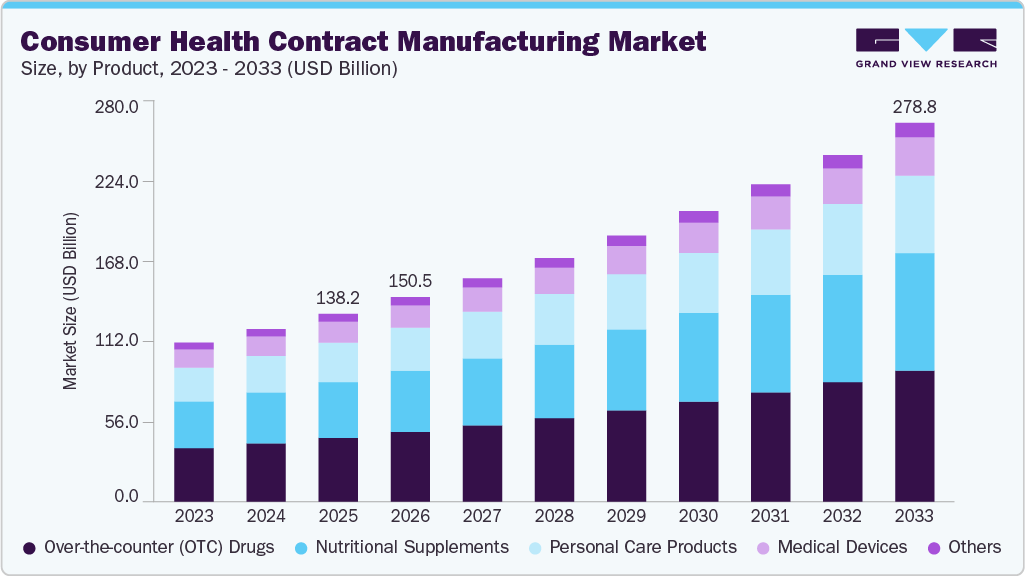
Further, the growing necessity for efficient and cost-effective production processes propels the market. As companies seek to improve operational efficiency while minimizing capital expenditure, many organizations have opted for contract manufacturing services for their production needs. Consumer health segments such as dietary supplements, over-the-counter drugs, and personal care products have gained popularity among consumers, resulting in demand for dedicated manufacturing facilities. In addition, advancements in technology that include automation and sustainability also contribute positively to market growth. Besides, stringent compliance regulations encourage consumer health and pharmaceutical brands to collaborate with contract manufacturing firms to meet the evolving standards of the market.
In addition, innovation and technological advancements in formulation development play a significant role in driving the market growth. Advanced technologies, automation, innovative packaging, and sustainable manufacturing practices are some of the latest trends within this industry. Technological advancements and innovations have led manufacturers to develop efficient and sustainable production practices, as well as innovative packaging to accommodate consumers' changing tastes and preferences. Further, the growing adoption of e-commerce and direct-to-consumer marketing channels is expected to drive the need for flexible and efficient production processes. Such factors are expected to drive the market growth in the upcoming years.
Opportunity Analysis
This market is witnessing numerous opportunities for growth fueled by increased demand for innovative products, such as plant-based or clean-label supplements and customized personal care products. The trend of increasing outsourcing due to the rise in the number of newer brands, especially in private label skin care and OTC hygiene sectors, is creating a newer clientele base for CMOs. Besides, the enactment of stringent regulations by agencies worldwide is leading to collaborations with specialized CMOs capable of providing comprehensive services. Geographically, the shift towards emerging economies is contributing to the generation of new demands, owing to increasing health consciousness and underdeveloped manufacturing infrastructure in those regions. Capacity expansion through acquisitions and asset exchanges is assisting companies to scale rapidly and enter new markets more easily. Besides these factors, advances in formulation techniques, flexible manufacturing, and logistics operations are contributing to market growth. The key market opportunities are as follows:
-
Expansion into Vegan, Plant-Based, and Clean-Label Supplement Formats
The growing trends among health-conscious and ethically driven consumer segments are expected to drive the material demand for vegan, plant-based, and clean-label supplement formats across global markets. Most contract manufacturers are actively investing in specialized production infrastructure, including plant-derived capsule-filling lines, gummy manufacturing equipment, and clean-label formulation capabilities, which are well-positioned to serve an expanding base of brand owners seeking differentiated product offerings.
-
Personal Care and Private-Label Skincare Co-Manufacturing
The increasing number of emerging beauty and personal care brands entering the market without in-house manufacturing capabilities is driving consistent demand for private-label and co-manufacturing services across skincare, haircare, and hygiene segments. Contract manufacturers that provide end-to-end solutions, including customized formulation development, regulatory support, adaptable minimum order quantities, and packaging services, are well-positioned to meet the needs of this expanding client base efficiently.
-
Co-Packing Opportunities in Personal Care Hygiene Products
Due to regulatory issues surrounding over-the-counter drugs, including hand sanitizers, topical antiseptics, and related personal hygiene products, many brands are outsourcing to experienced co-packers to support their FDA compliance, validated batch testing, ingredient sourcing, and scalable production. As CMOs with compliant infrastructure and flexible packaging capabilities are distinctly positioned to serve this underserved segment, as hygiene product demand
-
Geographic Expansion into High-Growth Emerging Markets
Health-conscious consumption in emerging economies presents tremendous opportunities for CMOs to invest in cost-effective, compliant manufacturing capabilities. Emerging economies are experiencing rising consumption driven by higher awareness levels and an expanding middle class.
-
Site Acquisition and Asset Transfer as a CMO Capacity Expansion Strategy
CMOs that have acquired or divested GMP-certified production facilities can quickly expand their manufacturing capacity. This asset transfer dynamic simultaneously generates new CMO capacity and deepens long-term outsourcing relationships between innovator companies and their manufacturing partners, creating a mutually reinforcing growth mechanism that benefits both parties and broadens the overall supply base available to consumer health brand owners.
Impact of U.S. Tariffs on Consumer Health Contract Manufacturing Industry
The tariffs imposed by the U.S. on imported raw materials, active pharmaceutical ingredients, and packing material have an effect on the market through increased production costs. Most of the nutraceutical and over-the-counter medications use global procurement of materials such as botanical extracts, vitamins, and other excipients sourced from Asia, hence they are prone to variations in tariffs. The higher production costs result in changes in pricing policies, with many opting for the cost-plus method as the best approach. These methods put pressure on pricing in consumer health brands, especially those that do not have much margin for absorbing costs. Some companies have opted to change their procurement processes to lower tariffs. There is also an increased tariff on finished products, leading to partnerships between brands and domestic manufacturers. However, moving the production or procurement process may be complicated and entail re-validation of regulations, which can affect timing and expenses.
Contract manufacturers that are larger and have an extensive network of operations across the globe have the ability to reduce these risks by virtue of their flexibility in terms of manufacturing and procurement processes. At the same time, the issues that arise from tariffs create opportunities for companies operating as contract manufacturers. In the long run, these tariffs are bound to make the companies adopt effective supply chain optimization.
Technological Advancements
There is an emerging trend in contract manufacturing of adopting technology that integrates manufacturing and packaging operations across different consumer health products. In the global market, manufacturers are acquiring the capability to produce a wide range of products, such as OTC medications, nutraceuticals, personal care products, and medical devices, from the same production lines. The demand for rapid commercialization of new products, faster development processes, and customization has led contract manufacturers to adopt integrated, multi-functional, and digitized production lines. In addition, innovations in process engineering are making manufacturing more consistent while enabling higher throughput.
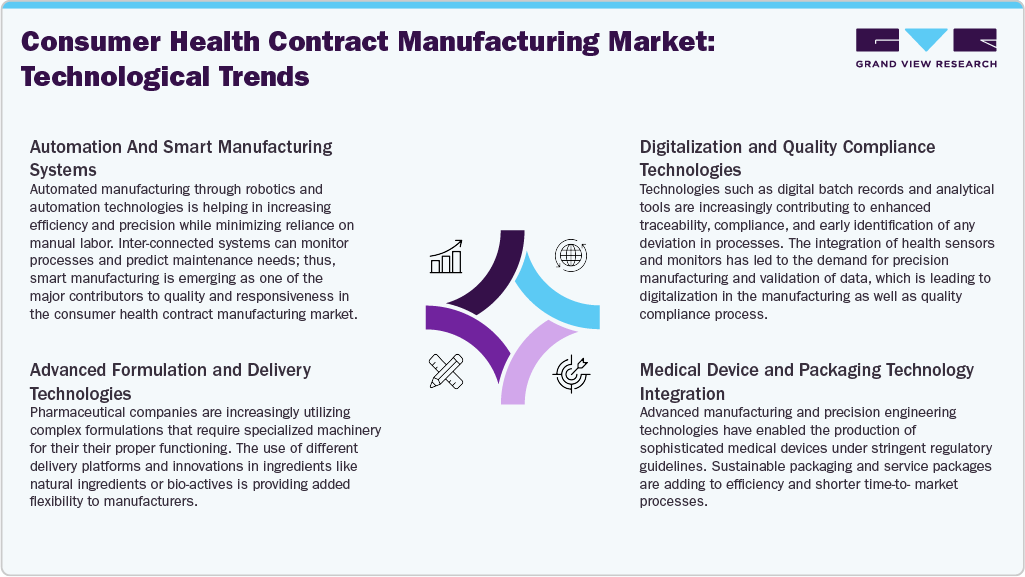
In addition, manufacturers are increasingly investing in advanced digital platforms to improve product traceability and ensure regulatory compliance for nutraceuticals and consumer-focused medical devices. Furthermore, growing consumer preference for specialized dosage forms, including gummies, soft gels, and multilayer tablets, is expected to drive market growth. For instance, expansions in manufacturing capacity for vegan soft gels and multi-format supplements manufacturing highlight the growing adoption of technological capabilities to accommodate the needs of evolving consumer health products.
Pricing Model Analysis
The pricing model landscape in the market is driven by growing requirements for product diversity across OTC drugs, nutraceuticals, personal care products, and consumer medical devices. The pricing structures vary based on formulation complexity, dosage formats such as gummies, soft gels, liquids, and topical applications, regulatory compliance requirements, and scale of production. Moreover, the manufacturing costs are shaped by ingredient sourcing, especially for plant-based and specialty inputs, along with packaging and labeling requirements. Furthermore, geographical production strategies and tariff exposure are affecting cost structures and contract negotiations.
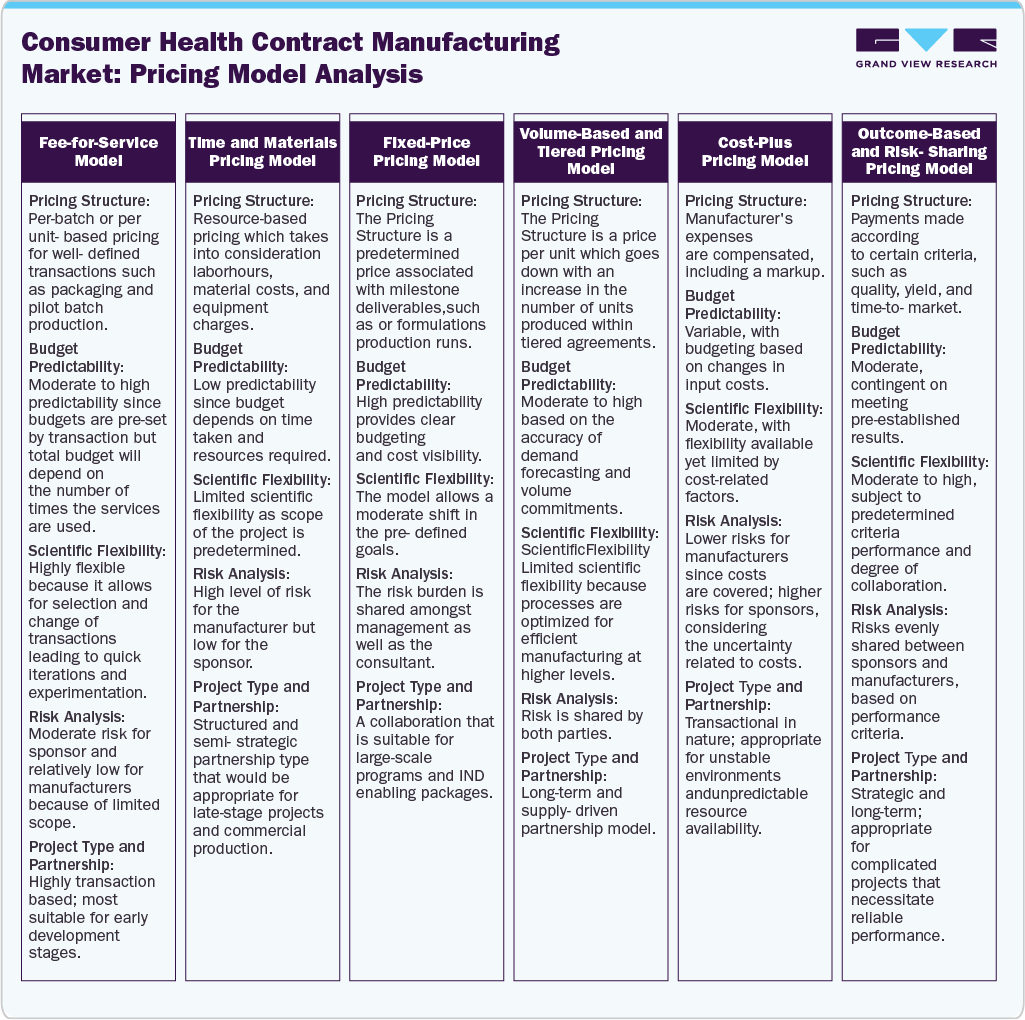
The pricing models are evolving as brand owners increase outsourcing to accelerate product launches and expand portfolios. These contract manufacturers are moving beyond transactional pricing toward integrated, long-term agreements that include formulation support, regulatory compliance, and supply chain management. Thus, these changes are aligning pricing structures with performance, scalability, and lifecycle stages, from product development to commercial manufacturing.
Market Concentration & Characteristics
The consumer health contract manufacturing industry growth stage is medium, and growth is accelerating. The market is characterized by the degree of innovation, level of M&A activities, regulatory impact, service expansion, and regional expansion.
The industry is progressing towards automation, intelligent manufacturing systems, and the digitization of processes for increased efficiency and scalability. Furthermore, innovations in dosage forms such as gummies, soft chews, and plant-based capsules have been driving differentiation among products. Formulations, rapid prototyping, and functional ingredients have been continuously improved in order to enable quick product design and customization. These aforementioned factors allow the contract manufacturers to cater to the changing needs of consumers while ensuring quality and uniformity at large-scale manufacturing.
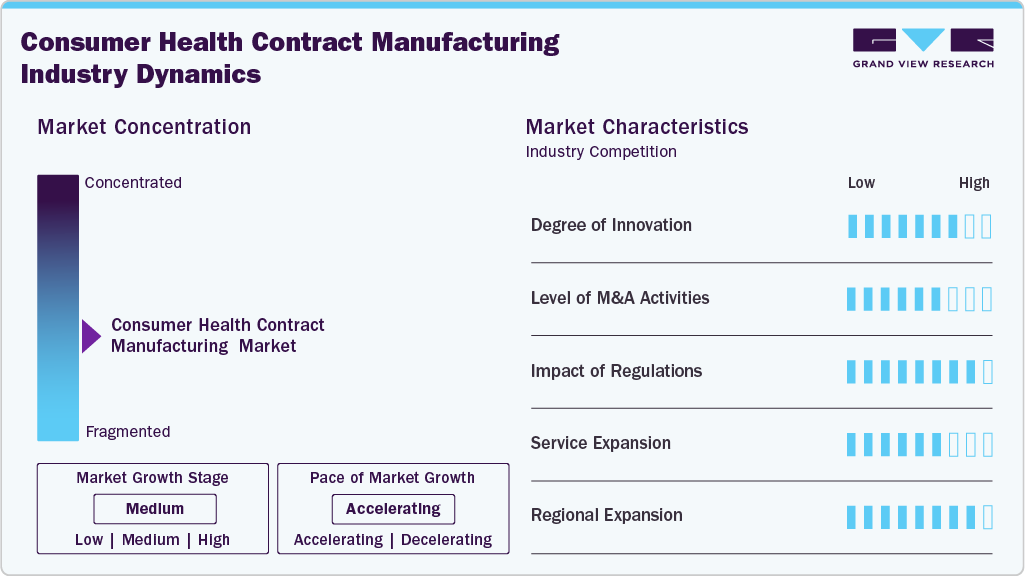
The growing regulatory landscape, including guidelines on dietary supplements, OTC medicines, and quality requirements from agencies such as the U.S. FDA and EFSA, has greatly impacted the manufacturing process. Therefore, adherence to such regulations involves implementing stringent quality systems, traceability, and labeling practices, especially concerning nutraceutical and consumer healthcare products. Although regulatory complexities drive up manufacturing costs, they create significant opportunities for contract manufacturers with regulatory knowledge.
The merger and acquisition activities in the consumer health contract manufacturing industry continue to rise, with companies trying to increase their formulation expertise, dosage forms, and geographical reach. The drive for mergers and acquisitions is necessitated by the requirement for diversification in order to provide a range of services in the nutraceuticals, OTC drugs, and personal care products. Niche formulation specialists, as well as regional manufacturers, continue to be acquired in order to increase competitive advantage.
The strategy to expand services in this industry includes the provision of a wider range of services by manufacturers in addition to manufacturing alone. The services provided by these companies include formulation, packaging, regulations, and distribution services, which help brands get products to the market faster as well as ease the process of product development. Multi-format manufacturing services help companies to manufacture products for several different sectors.
Expansion is vital as firms open up factories and research laboratories in North America, Europe, and the Asia Pacific regions due to increasing demand in other parts of the world. The emerging economies, especially in the Asia region, provide competitive advantages through cost efficiency, health-conscious consumers, and favorable manufacturing environments. Localization will help them cope with regulatory differences in various regions and enhance their supply chain capabilities.
Product Insights
The over-the-counter (OTC) drugs segment dominated the market with a share of 33.9% in 2025, due to increasing self-medication trends and rising awareness around early treatment of common conditions such as cold, pain, allergies, and digestive issues. Consumers are increasingly seeking accessible and cost-effective healthcare solutions, reducing dependency on prescription medications. Contract manufacturers are supporting this demand by enabling large-scale, compliant production of tablets, syrups, creams, and topical formulations.
The nutritional supplements segment is expected to grow significantly during the forecast period, driven by a strong shift toward preventive healthcare and daily wellness management. Increasing focus on immunity, energy, and overall health is fueling demand for vitamins, minerals, proteins, and functional supplements across diverse consumer groups. Contract manufacturers are facilitating this expansion by offering advanced formulation capabilities, flexible production across formats such as gummies, powders, and efficient scaling of high-volume demand. Their role in customization, innovation, and rapid commercialization is enabling brands to continuously introduce new products aligned with evolving consumer preferences.
Service Insights
The finished dose manufacturing segment dominated the market in 2025 due to the growing demand for convenience, standardized dosing, and attractive packaging, which is driving the need for end-to-end manufacturing solutions. The contract manufacturers are providing integrated services, including formulation, filling, packaging, and labeling, allowing companies to accelerate commercialization while maintaining compliance and quality standards. Their ability to handle large-scale production with flexibility is enabling faster response to market demand and supporting the continuous launch of differentiated consumer health products.
API manufacturing is anticipated to grow at the fastest CAGR over the forecast period. The segment is driven by increasing demand for high-purity, consistent, and scalable raw materials, which is expected to drive outsourcing to specialized manufacturers with advanced synthesis, fermentation, and quality control capabilities. Contract API manufacturers enable streamlined production, regulatory compliance, and reduced dependency on fragmented supply chains. This is supporting faster product development and ensuring the uninterrupted availability of critical inputs across global consumer health markets.
End Use Insights
The pharmaceutical and biopharmaceutical companies segment accounted for the largest revenue share in 2025, driven by increasing demand for high-volume production of over-the-counter drugs, nutritional supplements, and medical devices. These companies require manufacturing partners capable of meeting stringent quality standards and regulatory compliance, including good manufacturing practices (GMP), to ensure safe and effective products for global markets. Besides, the need for scalable and flexible production further strengthens this segment’s position, as contract manufacturers can accommodate diverse formulations and complex dosage forms while supporting rapid market launches. In addition, pharmaceutical and biopharmaceutical companies increasingly outsource production to focus on research, development, and marketing, further boosting their reliance on specialized contract manufacturing organizations.
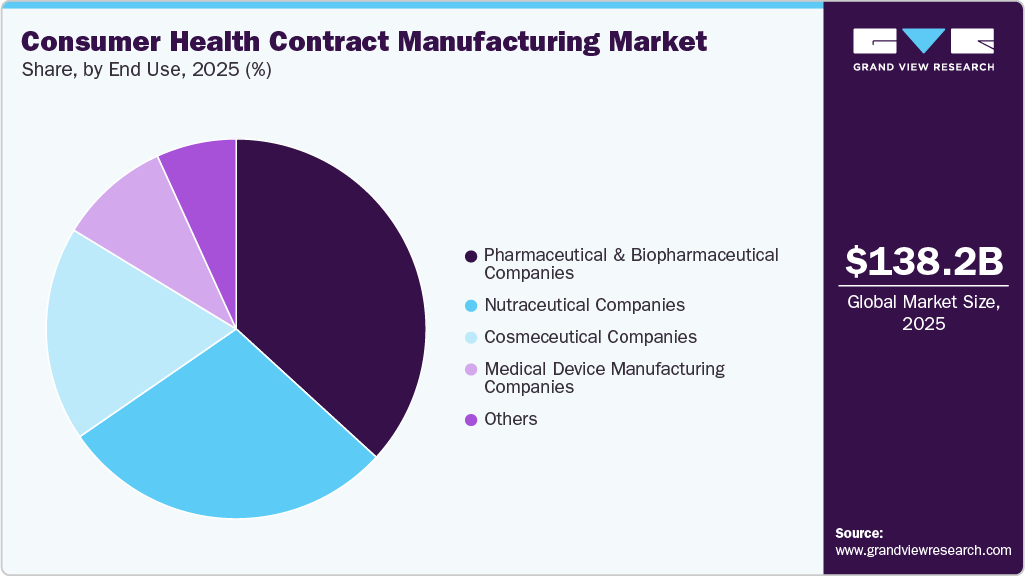
The nutraceuticals companies segment is anticipated to grow at the fastest CAGR over the forecast period. This growth can be attributed to rising consumer demand for preventive and wellness products, including vitamins, minerals, and dietary supplements. Growing health awareness, coupled with an increased focus on immunity, bone and muscle health, and lifestyle-related nutrition, has driven companies to scale production through contract manufacturers. The strengthening of regulatory frameworks and adherence to GMP in the key markets, such as India, have enhanced product quality and consumer dependence, further supporting segment growth. In addition, nutraceutical companies benefit from the flexibility offered by contract manufacturers, including multi-format production capabilities and advanced technologies that allow rapid formulation development and market introduction. Similarly, supply chain optimization, regional manufacturing hubs, and strategic sourcing of raw materials ensure consistent production and timely delivery, accommodating the rising volume of nutraceutical products.
Regional Insights
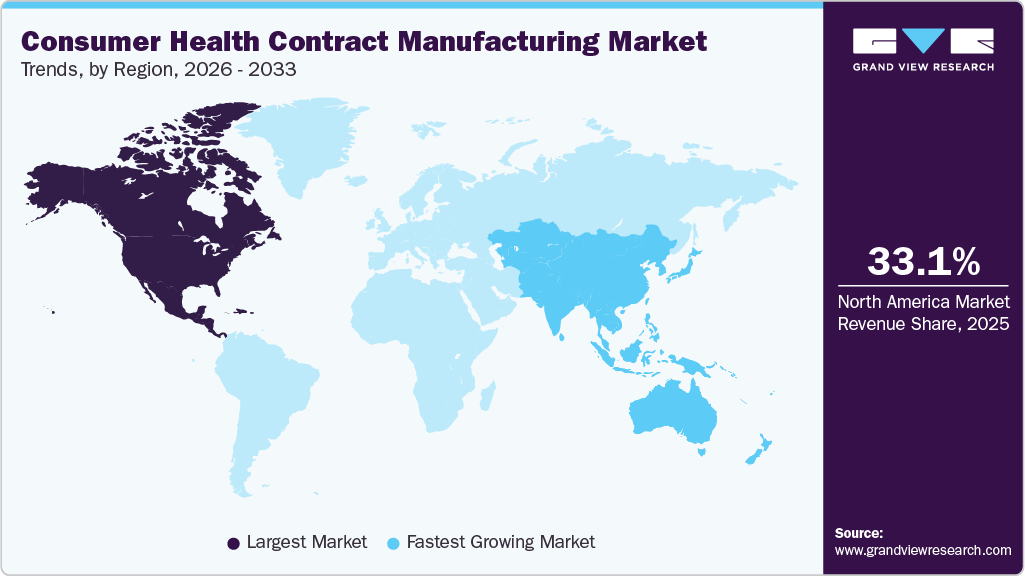
North America dominated the global consumer health contract manufacturing market in 2025, holding a revenue share of 33.1%. The market growth is driven by the presence of well-established contract manufacturing organizations (CMOs) and continuous innovation across diverse consumer health segments, including over-the-counter (OTC) pharmaceuticals, personal care products, and nutraceuticals. The region benefits from a mature outsourcing ecosystem, where leading consumer health companies increasingly rely on specialized contract manufacturers to manage expanding and complex product portfolios, optimize production efficiency, and accelerate product launch timelines in the market.
In addition, the growing consumer inclination toward personal hygiene, wellness, and preventive healthcare is expected to drive the demand for a wide range of consumer health products, thereby strengthening the need for scalable manufacturing capabilities. The expansion of multi-channel distribution networks, including retail chains, pharmacies, e-commerce platforms, and direct-to-consumer models, has further amplified product accessibility and volume requirements. Thus, these factors are expected to boost the demand environment for contract manufacturing services in the region.
U.S. Consumer Health Contract Manufacturing Market Trends
The consumer health contract manufacturing market in the U.S. accounted for the highest market share in North America. The growing prominence of nutraceutical products is significantly influencing the expansion of the U.S. market by enabling companies to meet evolving consumer demand with high-quality and consistent offerings. For instance, according to an article published by Akums Drugs and Pharmaceuticals Ltd., in April 2025, increasing awareness around preventive healthcare, immunity enhancement, and overall wellness has shifted consumer preferences toward dietary supplements, functional foods, and fortified products. This transition has encouraged consumer health companies to depend on specialized contract manufacturers that offer advanced production capabilities, regulatory expertise, and stringent quality control systems. As a result, outsourcing has become a strategic approach for companies aiming to accelerate product launch timelines, maintain compliance, and ensure reliable supply across diverse product categories.
Canada consumer health contract manufacturing market is driven by increasing investments in advanced CMO capabilities and integrated service models. For instance, Bora Pharmaceuticals has strengthened its industry presence by expanding its footprint through high-quality CDMO services and a dual-engine approach that combines contract manufacturing with specialized drug development, particularly in niche and rare disease segments. The company continues to invest in manufacturing infrastructure, operational efficiency, skilled talent, and biologics capabilities, enabling it to support pharmaceutical and biotech partners across the entire product lifecycle, from development to large-scale commercialization.
Europe Consumer Health Contract Manufacturing Market Trends
The consumer health contract manufacturing market in Europe is witnessing strong momentum, supported by increasing consolidation activities, targeted investments in facility-level capacity expansion, and the rise of vertically integrated CMO platforms across both established and emerging markets. Private equity firms play a critical role in shaping the competitive landscape, particularly across Western Europe, where platform-building strategies are enabling the development of large, multi-capability manufacturing networks. Investments such as the consolidation of surgical instrument manufacturing clusters in Germany and the expansion of medical molding capabilities across international supply chains are enhancing operational scale, technical expertise, and cross-border manufacturing efficiencies. Together, these aforesaid factors are contributing to market growth in Europe.
Germany consumer health contract manufacturing market is experiencing accelerated growth due to the rising demand for functional supplements and condition-specific nutraceuticals. For instance, in September 2025, SIRIO, a global CDMO known for its expertise in gummy and soft gel formulations, showcased its expanded X Mg portfolio at CPHI Frankfurt, introducing a range of magnesium-based products designed to address key wellness needs such as muscle health, recovery, sleep, and relaxation. With increasing consumer interest in magnesium driven by its benefits in energy support, immunity, and stress management, the company has developed six ready-to-launch concepts, including advanced formulations that combine multiple magnesium sources in innovative formats such as gummies, soft gels, and effervescent tablets. These offerings are designed to simplify product selection for consumers while enabling brands to respond quickly to evolving health trends. Thus, such a growing number of product launches coupled with other strategic initiatives undertaken by the companies in Germany are expected to drive market growth.
The consumer health contract manufacturing market in the UK has a supportive regulatory environment, and rising innovation in medical technologies is strengthening the trajectory of the market. For instance, according to the Medicines and Healthcare Products Regulatory Agency, in February 2026, clinical investigations for medical devices reached a record high in 2025, with approvals increasing by 17% compared to the previous year, alongside faster review timelines averaging 51 days. Moreover, the country is attracting companies to test advanced technologies, particularly in neuro-technology and AI-driven healthcare solutions, supported by initiatives such as fee waivers for small firms, early access pathways, and enhanced scientific guidance. These measures are improving accessibility to innovation, encouraging more companies to develop and introduce new health technologies within the country.
Asia Pacific Consumer Health Contract Manufacturing Market Trends
The consumer health contract manufacturing market in the Asia Pacific region is expected to register the fastest growth over the forecast period, driven by rising healthcare expenditures and expanding opportunities in key markets such as Japan, China, and India. The increasing consumer focus on preventive healthcare, wellness, and nutrition has led to higher demand for dietary supplements, vitamins, and functional foods. For instance, Japanese pharmaceutical companies are collaborating with contract manufacturers to produce specialized nutraceutical supplements tailored for aging populations, while Indian wellness brands are outsourcing production of immunity-boosting powders and gummies to scale efficiently. The rapid expansion of these end-use industries, including nutraceuticals, personal care, and OTC products, is further boosting the demand for flexible and high-quality manufacturing solutions.
China consumer health contract manufacturing market is witnessing rapid expansion as brands increasingly seek reliable partners to meet the rising demand for nutraceuticals and dietary supplements. For instance, Shandong Health Source Biological Engineering Co., Ltd is strategically positioned to drive this growth by offering end-to-end solutions, from custom formulation and contract manufacturing to packaging, labeling, and quality assurance. With FDA-registered, cGMP-compliant facilities and a dedicated team of formulation, regulatory, and quality experts, the company ensures that every product meets stringent safety and efficacy standards, giving both startups and established brands the confidence to scale in China’s dynamic health market. Such developments, along with rising investments in the consumer health industry and growing demand for various OTC drugs & personal care products, are anticipated to drive the market growth.
The consumer health contract manufacturing market in Japan is driven by the presence of high-quality standards, advanced formulation capabilities, and strict regulatory compliance. The market growth is driven by a growing aging population, increasing health awareness, and preference for convenient dosage forms such as soft gels, gummies, and powders. Contract manufacturers offer integrated services and support the production of dietary supplements, functional foods, OTC products, and personal healthcare items. Technological advancements, including automation and digital traceability systems, further enhance efficiency and transparency. Strong domestic and international partnerships continue to expand outsourcing opportunities in this highly regulated and innovation-driven market. Moreover, the foreign and domestic companies increasingly seek local partners to navigate regulatory requirements, optimize production, and accelerate the product launch timeline for new consumer health products. Thus, the advanced R&D infrastructure, combined with a population that values high-quality, effective healthcare solutions, positions Japan as a strategic hub for contract manufacturing services in the consumer health sector.
India consumer health contract manufacturing marketis growing due to the rapid evolution of India’s consumer health and personal care sector, with companies seeking specialized partners to navigate regulatory complexities, ensure product quality, and accelerate product launch timelines. For instance, ALLMASK operates as a full-service skincare and cosmetics contract manufacturer, offering a comprehensive portfolio of services that spans product formulation, scalable production, packaging solutions, and rigorous quality assurance. Their capabilities cover a wide spectrum of products, including facial masks, body masks, serums, eye masks, cosmetic pads, and wipes, all manufactured under GMP, ISO 9001:2015, ISO 13485:2016, and WHO-certified standards. This level of compliance ensures that partner brands can meet both domestic and international regulatory requirements, reducing the risk of recalls or compliance-related delays, which is critical in maintaining consumer trust and brand reputation. Moreover, a growing focus on healthy lifestyles and the increasing availability of OTC products support appropriate self-diagnosis and self-treatment. Such factors are anticipated to drive the market growth.
Latin America Consumer Health Contract Manufacturing Market Trends
The consumer health contract manufacturing market in Latin America is driven by growing demand for cost-efficient, high-quality production of dietary supplements, nutraceuticals, and functional foods, along with robust regulatory support. Countries such as Brazil and Argentina are emerging as prominent manufacturing hubs, driven by expanding healthcare infrastructure, regional prioritization of wellness products, nearshoring opportunities due to the current geopolitical climate, and favorable labor and production costs. These factors make Latin America an attractive destination for both local and multinational consumer health brands seeking efficient, reliable manufacturing solutions.
Brazil consumer health contract manufacturing market growth is attributed to rising consumer awareness and growing demand for health and wellness products, which are driving expansion in Brazil’s pharmaceutical sector. The industry is one of the largest investors in marketing, channeling substantial resources into promoting products across multiple platforms. For instance, according to an article published in July 2024, leading companies in the country rank among the top advertisers, with some allocating over $1 billion (0.05 USD billion) annually to campaigns that span television, digital platforms, social media, and influencer-driven initiatives. These multi-channel efforts create significant demand for over-the-counter (OTC) and health-focused products, requiring manufacturers to ensure both high-volume production and consistent product quality to meet rapidly shifting consumer expectations. Moreover, growing strategic initiatives further contribute to market growth.
Middle East and Africa Consumer Health Contract Manufacturing Market Trends
The consumer health contract manufacturing market in MEA is witnessing significant growth, driven by rising demand for affordable, high-quality nutraceuticals, dietary supplements, and functional foods, supported by evolving regulatory frameworks. Countries such as the UAE, Saudi Arabia, and South Africa are emerging as key manufacturing hubs due to expanding healthcare infrastructure, favorable business policies, increasing urbanization, and cost-efficient labor and production capabilities. These dynamics are attracting both local and international consumer health brands seeking reliable and scalable manufacturing solutions in the region.
South Africa consumer health contract manufacturing market is driven by growing demand for accessible and high-quality healthcare products across the country. Rising urbanization, increasing disposable income, and heightened awareness of preventive healthcare and wellness products are expanding the need for over-the-counter (OTC) medicines, vitamins, and nutritional supplements. At the same time, government health initiatives and public-private partnerships are prioritizing the local production of essential medicines to improve healthcare access, ensure supply security, and reduce dependency on imports. This environment is driving pharmaceutical companies to seek reliable contract manufacturing partners capable of delivering consistent quality, meeting regulatory requirements, and scaling production efficiently to address both consumer and institutional demand. These factors are expected to provide new growth opportunities for the market.
The consumer health contract manufacturing market in the UAE is growing significantly, due to consumer preference for natural, safe, and research-driven health products. Nutraceuticals and botanical supplements are gaining appeal among health-conscious consumers who seek preventive care and overall wellness. This shift is encouraging pharmaceutical and wellness brands to partner with contract manufacturers that can blend traditional botanical knowledge with modern scientific standards. Contract manufacturing in the UAE focuses on producing high‑quality herbal and nutraceutical products formulated under trained professionals, subjected to rigorous safety and quality testing, and compliant with internationally recognized guidelines. These capabilities enable brands to meet strict regulatory standards and deliver products that align with evolving consumer expectations for effectiveness and safety. Moreover, growing interest in new and innovative natural ingredients-based nutritional products, OTC drugs, and personal care products drives the market growth.
Key Consumer Health Contract Manufacturing Company Insights
The key players operating across the market are adopting strategic initiatives such as service launches, mergers & acquisitions, partnerships & agreements, and expansions to gain a competitive edge in the market. For instance, in February 2026, Sirio Pharma launched lutein soft chew supplements for eye health. Such an initiative targets unmet consumer needs, enhances product differentiation, and drives growth in specialized nutraceutical segments within the market.
Key Consumer Health Contract Manufacturing Companies:
The following key companies have been profiled for this study on the consumer health contract manufacturing market.
- Lonza
- Recipharm AB
- Piramal Consumer Products
- Scapa Healthcare
- Catalent, Inc.
- SCN BestCo
- Aenova Group
- Ventiz Healthcare
- Bionova
- Aurohealth
- Siegrified AG
- Thermo Fisher Scientific Inc.
- Famar
- Sirio Pharma Co., Ltd.
- Tishcon Corporation
- Vit-Best Nutrition Inc.
Recent Developments
-
In October 2025, Sirio Pharma launched soft chews development capabilities. These kind of initiatives expands dosage innovation, support multifunctional formulations, and meet rising demand for consumer-friendly formats in the market.
-
In December 2024, Lonza expanded hard gelatin capsule manufacturing capacity in India and China, adding new automated lines. Such expansions increase regional production, improve flexibility, and support rising demand in nutraceuticals, strengthening the consumer health contract manufacturing ecosystem.
Consumer Health Contract Manufacturing Market Report Scope
Report Attribute
Details
Market size value in 2026
USD 150.5 billion
Revenue forecast in 2033
USD 278.8 billion
Growth rate
CAGR of 9.2% from 2026 to 2033
Historical year
2021 - 2025
Forecast period
2026 - 2033
Quantitative units
Revenue in USD billion/million and CAGR from 2026 to 2033
Report coverage
Revenue forecast, company ranking, competitive landscape, growth factors, and trends
Segments covered
Product, service, end use, region
Regional scope
North America; Europe; Asia Pacific; Latin America; MEA
Country scope
U.S.; Canada; Mexico; UK; Germany; France; Italy; Spain; Denmark; Sweden; Norway; Japan; China; India; Thailand; South Korea; Australia; Brazil; Argentina; South Africa; Saudi Arabia; UAE; Kuwait; Oman; Qatar
Key companies profiled
Lonza; Recipharm AB; Piramal Consumer Products; Scapa Healthcare; Catalent, Inc.; SCN BestCo; Aenova Group; Ventiz Healthcare; Bionova, Aurohealth; Siegfried AG; Thermo Fisher Scientific Inc.; Famar; Sirio Pharma Co., Ltd.; Tishcon Corporation; Vit-Best Nutrition Inc.
Customization scope
Free report customization (equivalent up to 8 analysts working days) with purchase. Addition or alteration to country, regional & segment scope.
Pricing and purchase options
Avail customized purchase options to meet your exact research needs. Explore purchase options
Global Consumer Health Contract Manufacturing Market Report Segmentation
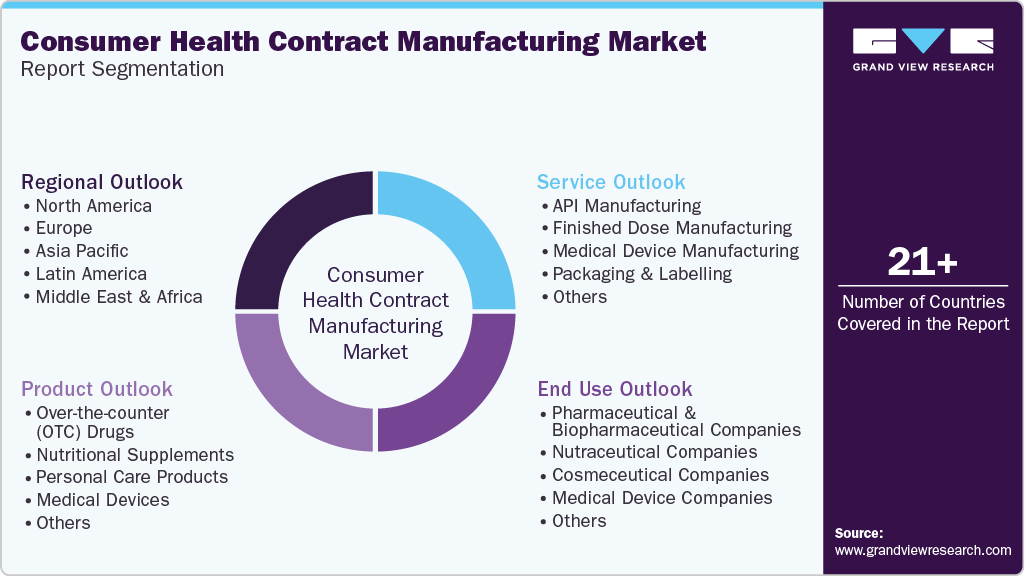
This report forecasts revenue growth at global, regional, and country levels and provides an analysis of the latest industry trends in each of the sub-segments from 2021 to 2033. For this study, Grand View Research has segmented the global consumer health contract manufacturing market based on product, service, end use, and region:
-
Product Outlook (Revenue, USD Million, 2021 - 2033)
-
Over-the-counter (OTC) Drugs
-
Nutritional Supplements
-
Personal Care Products
-
Medical Devices
-
Others
-
-
Service Outlook (Revenue, USD Million, 2021 - 2033)
-
API Manufacturing
-
Finished Dose Manufacturing
-
Medical Device Manufacturing
-
Packaging & Labelling
-
Others
-
-
End Use Outlook (Revenue, USD Million, 2021 - 2033)
-
Pharmaceutical & Biopharmaceutical Companies
-
Nutraceutical Companies
-
Cosmeceutical Companies
-
Medical Device Companies
-
Others
-
-
Regional Outlook (Revenue, USD Million, 2021 - 2033)
-
North America
-
U.S.
-
Canada
-
Mexico
-
-
Europe
-
UK
-
Germany
-
France
-
Italy
-
Spain
-
Denmark
-
Sweden
-
Norway
-
-
Asia Pacific
-
Japan
-
China
-
India
-
Australia
-
Thailand
-
South Korea
-
-
Latin America
-
Brazil
-
Argentina
-
-
Middle East & Africa
-
South Africa
-
UAE
-
Saudi Arabia
-
Kuwait
-
Qatar
-
Oman
-
-
Frequently Asked Questions About This Report
b. The global consumer health contract manufacturing market size was estimated at USD 138.2 billion in 2025 and is expected to reach USD 150.5 billion in 2026.
b. The global consumer health contract manufacturing market is expected to grow at a compound annual growth rate of 9.2% from 2026 to 2033 to reach USD 278.8 billion by 2033.
b. Some key consumer health contract manufacturing market players are Lonza, Recipharm AB, Piramal Consumer Products, Scapa Healthcare, Catalent, Inc, SCN BestCo, Aenova Group, Ventiz Healthcare, Bionova, Aurohealth, Siegrified AG, Thermo Fisher Scientific Inc, Famar, Sirio Pharma Co., Ltd, Tishcon Corporation, and Vit-Best Nutrition Inc. among others.
b. Key factors driving the consumer health contract manufacturing market growth are the shifting trends toward preventive health and wellness-oriented consumption patterns. In addition, the proliferation of D2C and emerging wellness brands is expanding the client base for contract manufacturers. Besides, strategic outsourcing by large pharmaceutical and nutraceutical companies is enhancing operational focus on core competencies.
b. North America dominated the consumer health contract manufacturing market, with a share of 33.1% in 2025. This is attributable to the strong presence of CMOs and increasing demand for outsourcing services in the region, growing innovations in consumer health products, growing emphasis on personal care practices and self-care, and rising stringent regulatory framework.


Share this report with your colleague or friend.
Need a Tailored Report?
Customize this report to your needs — add regions, segments, or data points, with 20% free customization.


ISO 9001:2015 & 27001:2022 Certified
We are GDPR and CCPA compliant! Your transaction & personal information is safe and secure. For more details, please read our privacy policy.
Trusted market insights - try a free sample
See how our reports are structured and why industry leaders rely on Grand View Research. Get a free sample or ask us to tailor this report to your needs.













