
- Home
- »
- Food Safety & Processing
- »
-
Dairy Processing Equipment Market Size Report, 2026-2033GVR Report cover

Dairy Processing Equipment Market (2026 - 2033)
Size, Share & Trends Analysis Report By Equipment Type (Homogenizers, Membrane Filtration Equipment, Separators, Pasteurizers, Mixing & Blending Equipment), By Application (Cheese), By Region, And Segment Forecasts
Market Size, 2025
$14.5BMarket Estimate, 2026
$15.5BMarket Forecast, 2033
$24.0BCAGR, 2026–2033
6.4%Dairy Processing Equipment Market Summary
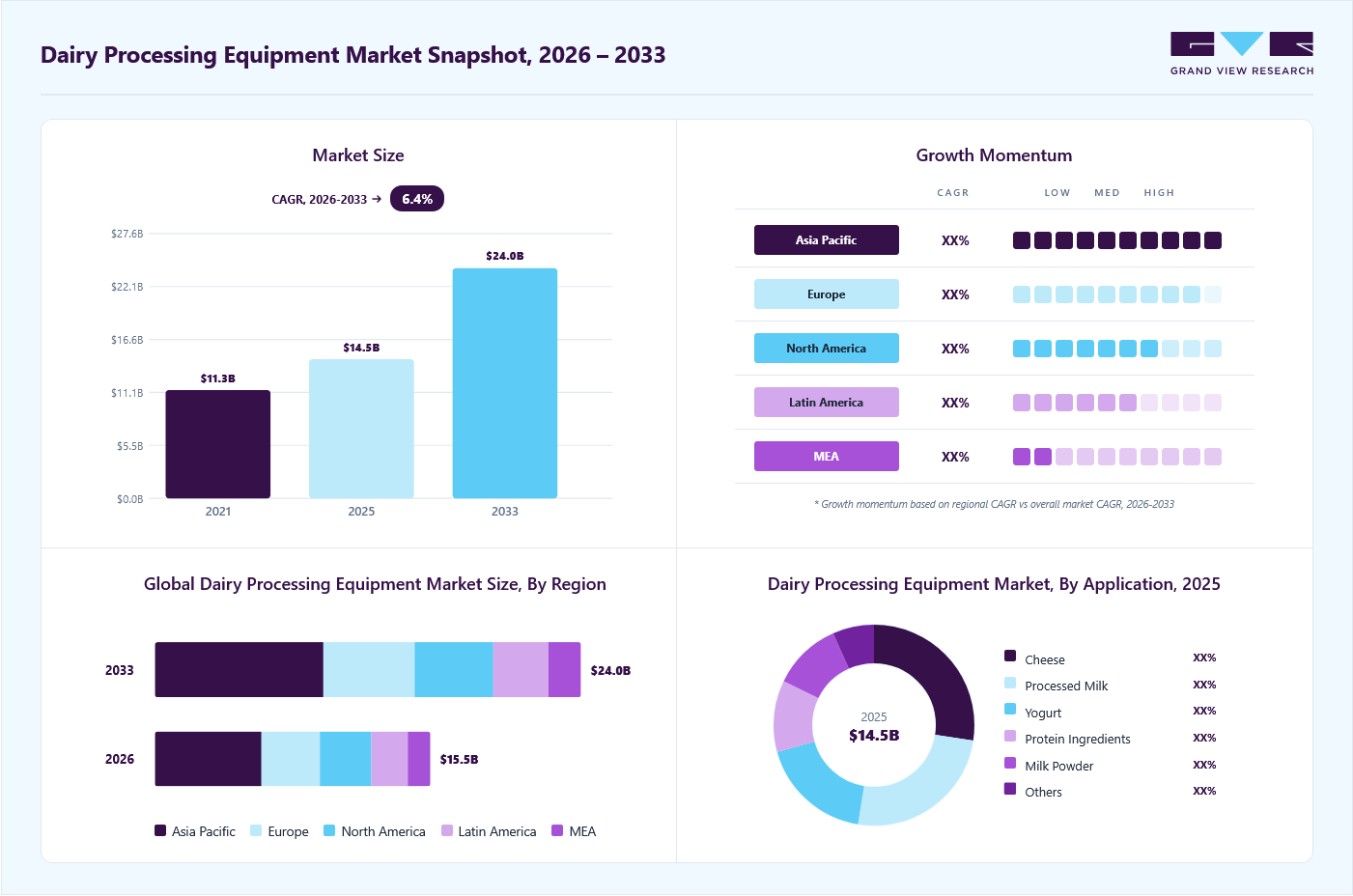
The global dairy processing equipment market size was valued at USD 14.5 billion in 2025 and is projected to grow from USD 15.5 billion in 2026 to USD 24.0 billion by 2033, at a CAGR of 6.4% from 2026 to 2033. Asia Pacific dominated the global market with the largest revenue share of 38.6% in 2025. Products such as processed milk, cheese, and yogurt are gaining popularity due to their convenience and extended shelf life compared to raw alternatives.
 Source: Grand View Research, IR Documents, Primary Interviews, Paid DatabasesTo learn more about this report,
 Download Free Sample Report
 Key Market Trends & Insights
- By Equipment Type: Pasteurizers led the market with a revenue share of 23.3% in 2025.
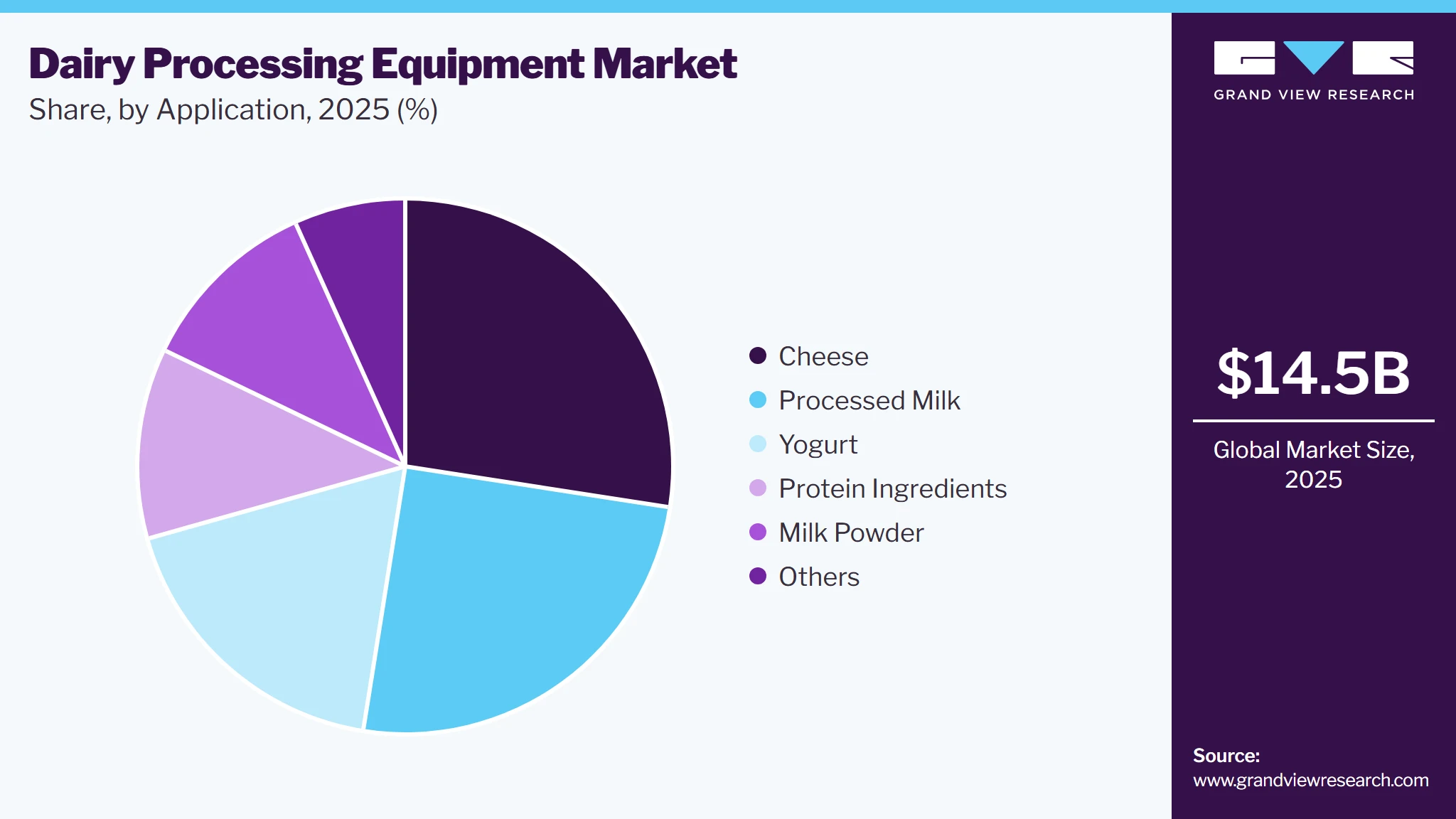
- By Application: Cheese segment led the market with the largest revenue share of 27.4% in 2025.
Regional Highlights
- Largest regional market: Asia Pacific (38.6% revenue share, 2025)
- By country: The India held the largest market share in 2025.
Market Size & Forecast
- Market size in 2025: USD 14.5 Billion
- Estimated market size in 2026: USD 15.5 Billion
- Projected market size by 2033: USD 24.0 Billion
- CAGR (2026-2033): 6.4%
Three ways to get this report
Buy it, customize it, or ask a question.Ask an Analyst
Analyst response in 1 business day
- AccessReport author, directly
- Reply timeWithin 1 working day
- No sales callDirect answer only
- FormatEmail reply
- CostFree, no cost
Get the Full Report
What the study covers
- FormatsPDF · Excel · Dashboard
- Timeline2026–2033 annual, 2025 base
- Coverage20+ countries, 5 regions
- Companies10+ key players profiled
Customize the Report
20% free customization
- IncludeCountries, segments, points
- TailorTo your product definition
- ExtendDeeper competitor detail
- OrA fully bespoke study
- Turnaround5–10 working days
The Food and Agricultural Organization (FAO) has projected a 2.2% annual increase in global milk production, underscoring the necessity for efficient processing equipment to keep pace with this rising demand. A significant trend driving market expansion in the dairy processing sector is the increasing health consciousness among consumers. This shift has led to heightened demand for healthier dairy options, with consumers prioritizing products that are lower in fat, sugar, and cholesterol. In response, manufacturers are innovating and diversifying their product ranges to include functional dairy items enriched with probiotics and vitamins. Consequently, there is a rising need for specialized processing equipment that can effectively handle these health-oriented variations, which, in turn, is propelling advancements in dairy processing technologies.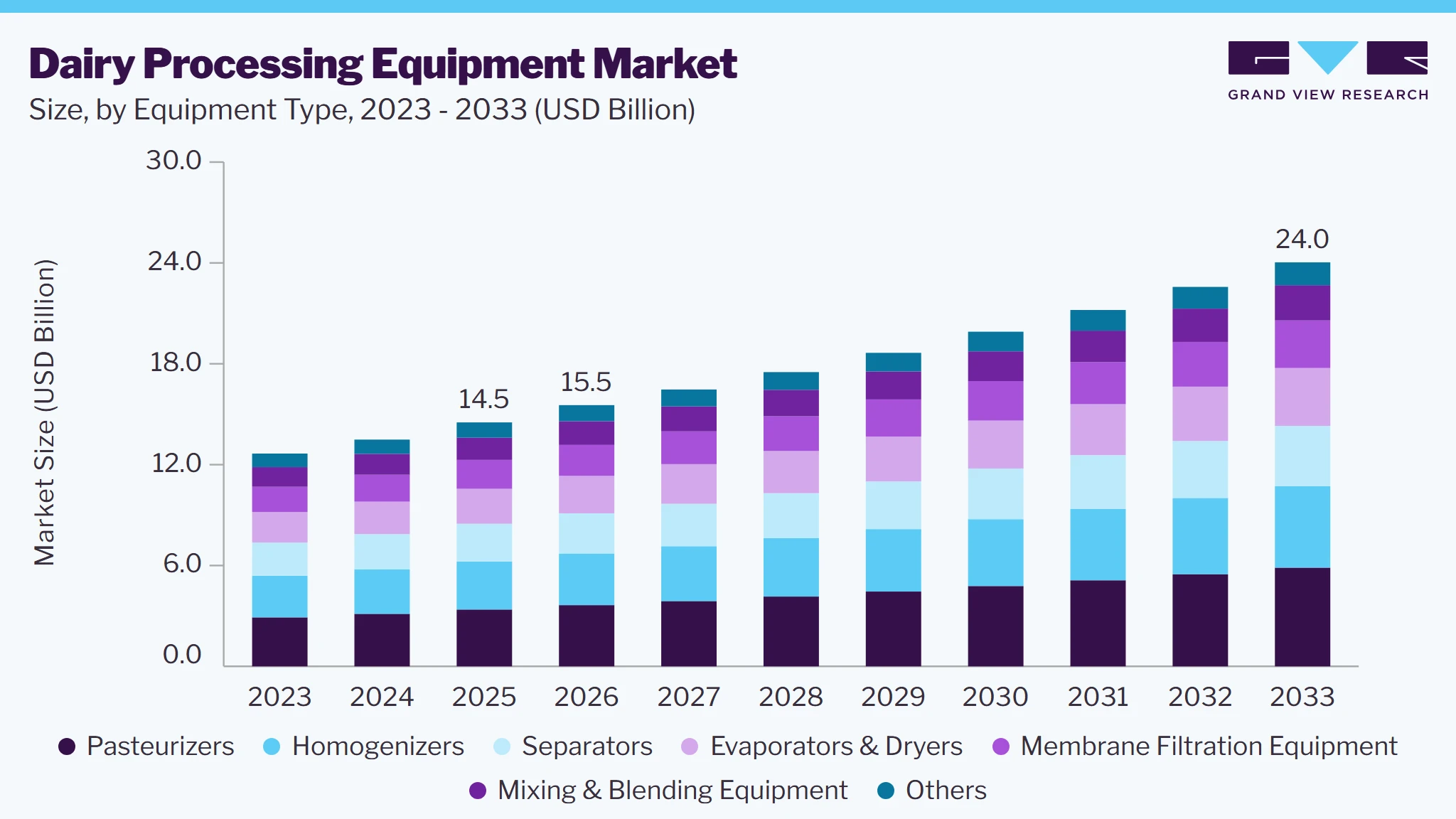 To learn more about this report, Download Free Sample Report
 Moreover, the introduction of sophisticated equipment, such as advanced homogenizers and evaporators, enables manufacturers to produce dairy products with improved consistency and extended shelf life. The ongoing trend toward automation in dairy processing is also transform operational efficiency, resulting in reduced labor costs and enhanced product quality. These technological innovations are essential for developing modern processing solutions that meet the dynamic demands of the market.
Moreover, many governments, particularly in developing regions, are implementing financial incentives such as subsidies and tax rebates aimed at stimulating growth within the dairy sector. Programs such as India’s Dairy Processing and Infrastructure Development Fund (DIDF) illustrate concerted efforts to strengthen milk processing capabilities by funding modern facilities, thereby supporting the dairy processing equipment industry’s evolution.
Market Dynamics
The dairy processing equipment market is experiencing steady growth driven by rising global consumption of dairy products, increasing demand for value-added dairy offerings, and ongoing modernization of dairy processing facilities. Dairy manufacturers are investing in advanced processing technologies to improve product quality, ensure food safety compliance, enhance production efficiency, and reduce operational costs. Growing demand for protein-enriched products, yogurt, cheese, and milk powders is encouraging the adoption of automated homogenization, pasteurization, filtration, and drying systems.
The increasing consumption of processed dairy products such as cheese, yogurt, flavored milk, dairy beverages, and protein-based nutritional products is a major factor driving the dairy processing equipment market. Consumers are increasingly seeking convenient, nutritious, and premium dairy products, prompting manufacturers to expand production capacities and invest in advanced processing technologies. This trend is particularly evident in emerging economies where urbanization, changing dietary habits, and rising disposable incomes are fueling dairy product demand.
Dairy processors are focusing on product diversification and innovation to cater to evolving consumer preferences. The production of specialty dairy products requires precise processing, filtration, mixing, and heat-treatment technologies, leading to higher adoption of sophisticated dairy processing equipment. Investments in automation and high-capacity processing systems are also helping manufacturers improve efficiency, maintain consistent product quality, and meet growing market demand.
The high upfront cost associated with dairy processing equipment remains a significant challenge for market growth. Advanced systems such as membrane filtration units, evaporators, dryers, and automated processing lines require substantial capital expenditure, making adoption difficult for small and medium-sized dairy enterprises. In addition to installation expenses, ongoing maintenance, energy consumption, and compliance-related costs can further increase the total cost of ownership.
The increasing adoption of membrane filtration, digital monitoring, and automated process control technologies presents significant growth opportunities for market participants. Dairy processors are seeking solutions that improve production efficiency, reduce waste, optimize energy usage, and enhance product consistency. Membrane filtration systems, in particular, are gaining traction for protein concentration, lactose reduction, and ingredient standardization applications, supporting the growth of high-value dairy products.
Analyst Perspective
The dairy processing equipment market is benefiting from the global shift toward value-added dairy products, including cheese, yogurt, protein ingredients, and processed milk, which require advanced processing technologies to ensure product quality, safety, and operational efficiency. Rising dairy consumption in emerging economies, coupled with increasing investments in automated processing facilities, is driving demand for modern equipment such as pasteurizers, homogenizers, membrane filtration systems, and evaporators. Additionally, growing emphasis on food safety regulations, energy efficiency, and production scalability is encouraging dairy processors to upgrade existing infrastructure and adopt technologically advanced processing solutions. Asia Pacific is expected to remain a key growth engine, supported by expanding dairy production, rising disposable incomes, and continued modernization of the dairy value chain.
Equipment Type Insights
Based on equipment type, pasteurizers segment led the market with the largest revenue share of 23.3% in 2025, as pasteurization effectively eradicates harmful bacteria, ensuring milk safety and enhancing preservation quality. As consumer demand for packaged and long-lasting dairy products rises, the need for efficient pasteurization equipment has increased. Technological advancements also improve energy efficiency and lower operational costs for dairy processors.
Homogenizers are projected to grow at a significant rate over the forecast period. Homogenizers are essential for reducing fat molecule size, ensuring uniformity and stability in products such as milk, cream, and ice cream. As consumer demand for high-quality dairy products grows, manufacturers are investing in advanced homogenization technologies to enhance efficiency and meet evolving industry standards.
Application Insights
Based on application, the cheese segment led the market with the largest revenue share of 27.4% in 2025, driven by evolving dietary preferences and rising disposable incomes. The expansion of fast-food outlets and the culinary industry further intensify demand for cheese. Innovations in production techniques and a preference for artisanal cheeses require advanced processing equipment for consistent quality and efficiency.
 To learn more about this report, Download Free Sample Report
 Processed milk is expected to grow at the fastest rate of 7.1% over the forecast period. With increasing urbanization and busier lifestyles, consumers are increasingly turning to readily available processed milk products. Rising health consciousness further drives the preference for pasteurized and fortified options. Technological advancements in processing equipment enhance production efficiency, catering to the growing demand for processed milk in urban and rural markets.
Regional Insights
North America dairy processing equipment market is expected to register significant growth over the forecast period, fueled by rising consumer demand for high-quality dairy products and technological innovations. The region prioritizes automation and efficiency enhancements, resulting in increased investments in advanced processing technologies. Moreover, the trend of health-conscious consumers seeking organic and natural dairy options positively influences market dynamics.
U.S. Dairy Processing Equipment Market Trends
The U.S. dairy processing equipment market dominated the North America dairy processing equipment market with in 2024. The country hosts numerous key players who consistently invest in research and development to improve production capabilities and address changing consumer demands. Moreover, the nation’s well-established supply chain and distribution networks enable the efficient delivery of processed dairy products to the industry.
Asia Pacific Dairy Processing Equipment Market Trends
Asia Pacific dominated the dairy processing equipment market with the largest revenue share of 38.6% in 2025. The region is experiencing rapid urbanization, rising disposable incomes, and an increasing demand for dairy products. Countries such as China and India are seeing notable growth in dairy consumption, fueled by shifting dietary preferences and the popularity of processed dairy items, supported by advancements in processing technology.
 To learn more about this report, Download Free Sample Report
 The dairy processing equipment market in India held the largest share in the Asia Pacific region in 2025.
The dairy processing equipment market in China dominated the Asia Pacific dairy processing equipment market in 2024. China’s commitment to modernizing its dairy industry through technological advancements has substantially increased the demand for processing equipment. Government support for dairy farming and processing initiatives enhances production efficiency and product quality, while rising health consciousness among consumers further drives the demand for processed milk and cheese products.
Europe Dairy Processing Equipment Market Trends
Europe dairy processing equipment market held substantial market share in 2024, aided by a robust dairy industry characterized by high-quality standards and diverse product offerings. Countries such as Germany are experiencing steady growth, fueled by rising consumer demand for cheese, yogurt, and processed dairy products, alongside a strong emphasis on sustainability and technological advancements.
The Germany dairy processing equipment market is expected to grow in the forecast period. The German dairy industry is recognized for its commitment to innovation and quality, driving demand for advanced machinery that improves production efficiency while adhering to rigorous regulatory standards. Furthermore, Germany’s strategic location within Europe enhances the export of processed dairy products, supporting growth in its processing equipment market.
Key Dairy Processing Equipment Company Insights
Some key companies operating in the market include SSP Private Limited; Inoxpa S.A.U.; GEA Group Aktiengesellschaft; ALFA LAVAL; among others. Strategic initiatives encompass expanding product portfolios, enhancing automation, and prioritizing sustainability to address consumer demands, while collaborations among manufacturers drive growth through improved efficiency and offerings.
-
SSP Private Limited excels in delivering turnkey solutions for the dairy industry, emphasizing innovative and sustainable processing technologies. With over 40 years of experience, the company designs and implements systems for evaporation, drying, and extraction for a diverse global clientele.
-
ALFA LAVAL is a premier provider of specialized equipment and solutions for the dairy processing sector, offering products such as separators, pasteurizers, and homogenizers to enhance efficiency, product quality, and sustainability while focusing on innovation to meet evolving consumer demands.
Key Dairy Processing Equipment Companies
The following key companies have been profiled for this study on the dairy processing equipment market.
-
SSP Private Limited
-
Inoxpa S.A.U.
-
GEA Group Aktiengesellschaft
-
ALFA LAVAL
-
IDMC Limited
-
A&B Process Systems (JBT)
-
Feldmeier Equipment, Inc.
-
Sealtech Engineers
-
Gemak Ltd.
-
Alle rechten voorbehouden
Competitive Benchmarking
Category
Operating Strategies
Competitive Edge
Weakness
Established Players (e.g., GEA Group Aktiengesellschaft, ALFA LAVAL, Inoxpa S.A.U., A&B Process Systems (JBT), Feldmeier Equipment, Inc.)
- Focus on delivering complete dairy processing lines including pasteurization, homogenization, separation, evaporation, and drying systems.
- Invest significantly in automation, digital process control, energy-efficient technologies, and global after-sales service networks.
- Strong global presence with established relationships among large dairy processors and multinational food companies.
- Extensive R&D capabilities supporting innovation, product reliability, and compliance with international food safety standards.
- Higher equipment and installation costs may limit adoption among small and medium-sized dairy processors.
- Complex organizational structures can result in longer project execution and decision-making timelines.
Emerging & Regional Players (e.g., IDMC Limited, SSP Private Limited, Sealtech Engineers, Gemak Ltd., Alle rechten voorbehouden, IDMC Limited)
- Focus on providing cost-effective and customized dairy processing equipment tailored to regional market requirements.
- Expand through localized manufacturing, engineering services, and turnkey dairy plant projects.
- Competitive pricing and greater flexibility in meeting specific customer requirements and plant configurations.
- Strong understanding of local regulations, dairy production practices, and regional customer preferences.
- Limited international market penetration and comparatively lower brand recognition.
- Lower investments in advanced automation, digitalization, and large-scale research and development activities compared to global leaders.
Recent Developments
-
In March 2024, GEA showcased innovative separator technologies at Anuga FoodTec 2024, addressing industry challenges such as rising energy costs and labor shortages by focusing on efficiency in water and energy consumption.
-
In February 2024, Feldmeier Equipment Inc. announced plans to invest over USD 20 million in expanding its Shell Rock, Iowa facilities by adding 130,000 square feet of advanced stainless steel manufacturing space.
Dairy Processing Equipment Market Report Scope
Report Attribute
Details
Market size in 2025
USD 14.5 billion
Estimated market size in 2026
USD 15.5 billion
Projected market size by 2033
USD 24.0 billion
Growth rate
CAGR of 6.4% from 2026 to 2033
Base year for estimation
2025
Historical data
2021 - 2024
Forecast period
2026 - 2033
Quantitative units
Revenue in USD billion and CAGR from 2026 to 2033
Report coverage
Revenue forecast, company ranking, competitive landscape, growth factors, and trends
Segments covered
Equipment type, application, region
Regional scope
North America; Europe; Asia Pacific; Latin America; Middle East & Africa
Country scope
U.S.; Canada; Mexico; UK; France; Germany; Netherlands; China; India; Japan; South Korea; Australia; Brazil; Argentina; South Africa; Saudi Arabia
Key companies profiled
SSP Private Limited; Inoxpa S.A.U.; GEA Group Aktiengesellschaft; ALFA LAVAL; IDMC Limited; A&B Process Systems (JBT); Feldmeier Equipment, Inc.; Sealtech Engineers; Gemak Ltd.; Alle rechten voorbehouden
Customization scope
Free report customization (equivalent up to 8 analysts' working days) with purchase. Addition or alteration to country, regional & segment scope.
Pricing and purchase options
Avail customized purchase options to meet your exact research needs. Explore purchase options
Global Dairy Processing Equipment Market Report Segmentation
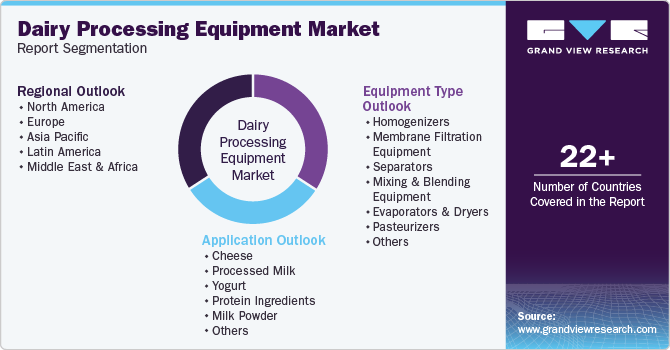
This report forecasts revenue growth at global, regional, and country levels and provides an analysis of the latest industry trends in each of the sub-segments from 2021 to 2033. For this study, Grand View Research has segmented the global dairy processing equipment market report based on equipment type, application, and region:
 To learn more about this report, Download Free Sample Report
 -
Equipment Type Outlook (Revenue, USD Million, 2021 - 2033)
-
Homogenizers
-
Membrane Filtration Equipment
-
Separators
-
Mixing & Blending Equipment
-
Evaporators & Dryers
-
Pasteurizers
-
Others
-
-
Application Outlook (Revenue, USD Million, 2021 - 2033)
-
Cheese
-
Processed Milk
-
Yogurt
-
Protein Ingredients
-
Milk Powder
-
Others
-
-
Regional Outlook (Revenue, USD Billion, 2021 - 2033)
-
North America
-
U.S.
-
Canada
-
Mexico
-
-
Europe
-
France
-
Germany
-
Netherlands
-
UK
-
-
Asia Pacific
-
Japan
-
China
-
India
-
Australia
-
South Korea
-
-
Latin America
-
Brazil
-
Argentina
-
-
Middle East & Africa
-
South Africa
-
Saudi Arabia
-
-
Research Methodology
Segment Definition
Equipment Type
Revenue Capture Definition
Homogenizers
Revenue generated from homogenization equipment used to reduce and uniformly distribute fat globules within milk and dairy products, improving product stability, texture, consistency, and shelf life. Includes single-stage and multi-stage homogenizers.
Membrane Filtration Equipment
Revenue generated from membrane-based filtration systems used for concentration, purification, fractionation, and separation of dairy components. Includes microfiltration (MF), ultrafiltration (UF), nanofiltration (NF), and reverse osmosis (RO) equipment.
Separators
Revenue generated from centrifugal separation equipment used to separate cream from milk, clarify dairy liquids, remove impurities, and standardize fat content in dairy processing operations.
Mixing & Blending Equipment
Revenue generated from equipment used for blending, mixing, emulsifying, and incorporating ingredients during the production of dairy products. Includes agitators, mixers, emulsifiers, and batch or continuous blending systems.
Evaporators & Dryers
Revenue generated from equipment used to remove moisture from dairy products through evaporation and drying processes. Includes falling film evaporators, spray dryers, fluidized bed dryers, and related systems used in milk powder, whey powder, and dairy ingredient production.
Pasteurizers
Revenue generated from thermal processing equipment used to destroy harmful microorganisms and extend the shelf life of milk and dairy products. Includes batch pasteurizers, HTST (High-Temperature Short-Time), UHT (Ultra-High Temperature), and continuous pasteurization systems.
Others
The others category includes cooling systems, CIP systems, storage tanks, and crystallizers.
Application
Revenue Capture Definition
Cheese
Revenue generated from dairy processing equipment used in the production of natural cheese, processed cheese, specialty cheese, and cheese ingredients.
Processed Milk
Revenue generated from equipment utilized in the production of fluid milk products, including pasteurized milk, UHT milk, flavored milk, lactose-free milk, and fortified milk beverages.
Yogurt
Revenue generated from dairy processing equipment used in yogurt manufacturing, including fermentation, mixing, homogenization, incubation, cooling, and packaging preparation processes.
Protein Ingredients
Revenue generated from equipment used to manufacture dairy-derived protein ingredients such as whey protein concentrates (WPC), whey protein isolates (WPI), milk protein concentrates (MPC), casein, and other functional dairy proteins.
Milk Powder
Revenue generated from equipment used in the production of whole milk powder, skimmed milk powder, infant formula ingredients, and specialty dairy powders through concentration and drying processes.
Others
The others segment includes butter, cream, ice cream, condensed milk, and dairy desserts.
Estimation Model
Layer
Key Question
Methodology / Description
Dairy Product Demand Layer
Who primarily drives demand for dairy processing equipment?
The estimation begins by analyzing demand from major dairy product categories including processed milk, cheese, yogurt, milk powder, protein ingredients, butter, and dairy beverages. Production volumes, consumption trends, population growth, and changing dietary preferences are evaluated to determine the base demand for dairy processing equipment globally.
Technology Adoption Layer
Which dairy processing technologies are gaining market traction?
The potential market demand is further assessed through the adoption of key processing technologies such as homogenizers, pasteurizers, membrane filtration systems, separators, evaporators, dryers, and automated milk equipment. Equipment modernization rates, automation trends, food safety requirements, and energy-efficiency initiatives are analyzed to estimate technology penetration levels.
Equipment Deployment Layer
How many dairy processing systems are being installed and upgraded?
Annual demand is estimated based on new dairy plant construction, capacity expansion projects, replacement of aging equipment, and modernization of existing facilities. Increasing investments in dairy infrastructure, value-added dairy production, and advanced processing capabilities contribute to overall equipment deployment estimates.
Revenue Layer
How much revenue is generated from dairy processing equipment sales?
Market revenue is calculated by aggregating earnings generated from equipment sales. Revenue contributions are analyzed across equipment types, applications, plant capacities, and geographic regions to derive the overall da
Delivered Customizations
This report has been delivered with the following In-depth customizations
Client Request
Customization Delivered
Value Adds
Competitive Benchmarking of Dairy Processing Equipment Manufacturers
A comprehensive benchmarking assessment was conducted covering leading dairy processing equipment manufacturers based on product portfolio, processing capabilities, technological advancements, regional presence, strategic initiatives, and end-use industry focus. The analysis highlighted competitive positioning across homogenization, pasteurization, membrane filtration, separation, and drying technologies.
Enabled identification of market leaders, technology innovators, and emerging participants. Provided strategic insights into competitive differentiation, investment priorities, and potential partnership or acquisition opportunities.
Application-Level Demand Assessment and Growth Analysis
Detailed evaluation of demand patterns across key dairy applications including processed milk, cheese, yogurt, protein ingredients, and milk powder production. The customization examined production trends, equipment adoption rates, investment activity, and future growth opportunities across each application segment.
Helped stakeholders identify high-growth application areas, optimize resource allocation, and prioritize investments in rapidly expanding dairy product categories and processing technologies.
Technology and Automation Landscape Assessment
An in-depth review of advanced dairy processing technologies was provided, including membrane filtration systems, automated pasteurization units, digital process controls, energy-efficient dryers, and smart manufacturing solutions. The study assessed adoption trends and their impact on operational efficiency and product quality.
Delivered actionable insights into emerging technology trends, automation opportunities, sustainability benefits, and future equipment requirements, supporting long-term strategic planning and innovation initiatives.
Frequently Asked Questions About This Report
The global dairy processing equipment market size was estimated at USD 14.5 billion in 2025 and is expected to reach USD 15.5 billion in 2026.
The global dairy processing equipment market is expected to grow at a compound annual growth rate of 6.4% from 2026 to 2033 to reach USD 24.0 billion by 2033.
Asia Pacific dominated the market in 2025, accounting for 38.6% of global revenue, driven by expanding dairy production, rising disposable incomes, and increasing investments in modern dairy processing infrastructure.
Asia Pacific is expected to remain one of the fastest-growing regional markets, supported by strong growth in dairy consumption and ongoing modernization of processing facilities.
The cheese segment accounted for the largest revenue share of 27.4% in 2025, driven by growing global consumption of cheese and increasing investments in cheese production facilities.
Major trends include the adoption of automated processing systems, increasing use of membrane filtration technologies, growing focus on energy-efficient equipment, and rising demand for value-added dairy products.
The pasteurizers segment led the market with a revenue share of 23.3% in 2025, owing to its critical role in ensuring product safety, extending shelf life, and complying with food safety regulations.
Key market participants include GEA Group, Alfa Laval AB, SPX FLOW, Tetra Pak International S.A., Krones AG, Paul Mueller Company, IDMC Limited, and Scherjon Dairy Equipment Holland B.V.
Key growth drivers include increasing demand for cheese, yogurt, milk powder, and protein ingredients, growing focus on food safety and quality standards, rising automation in dairy processing facilities, and expanding dairy production in emerging economies.
About the Author(s)
Food Safety & Processing Research Team
Consumer Goods · Food Safety & ProcessingThis report was authored by the food safety & processing research team at Grand View Research - comprising two research analysts, one senior research analyst, and one industry expert - with specialized expertise in the food safety & processing segment of the consumer goods industry. All findings are based on proprietary consumer goods databases, executive interviews, and regulatory analysis, subject to internal peer review prior to publication.
Last Updated:
Speak to Analyst

Customize this report to your needs - add regions, segments, or data points, with 20% free customization.
Or view our licence options:


ISO 9001:2015 & 27001:2022 Certified
We are GDPR and CCPA compliant! Your transaction & personal information is safe and secure. For more details, please read our privacy policy.


