
- Home
- »
- Communications Infrastructure
- »
-
Data Center Support Infrastructure Market Size Report, 2033GVR Report cover

Data Center Support Infrastructure Market (2026 - 2033)
Size, Share & Trends Analysis Report By Infrastructure (Power Distribution Systems, Cooling Systems), By Enterprise Size, By Tier Level (Tier 1, Tier 2), By End-use, By Region, And Segment Forecasts
Market Size, 2025
$62.2BMarket Estimate, 2026
$67.1BMarket Forecast, 2033
$119.9BCAGR, 2026–2033
8.6%Data Center Support Infrastructure Market Summary
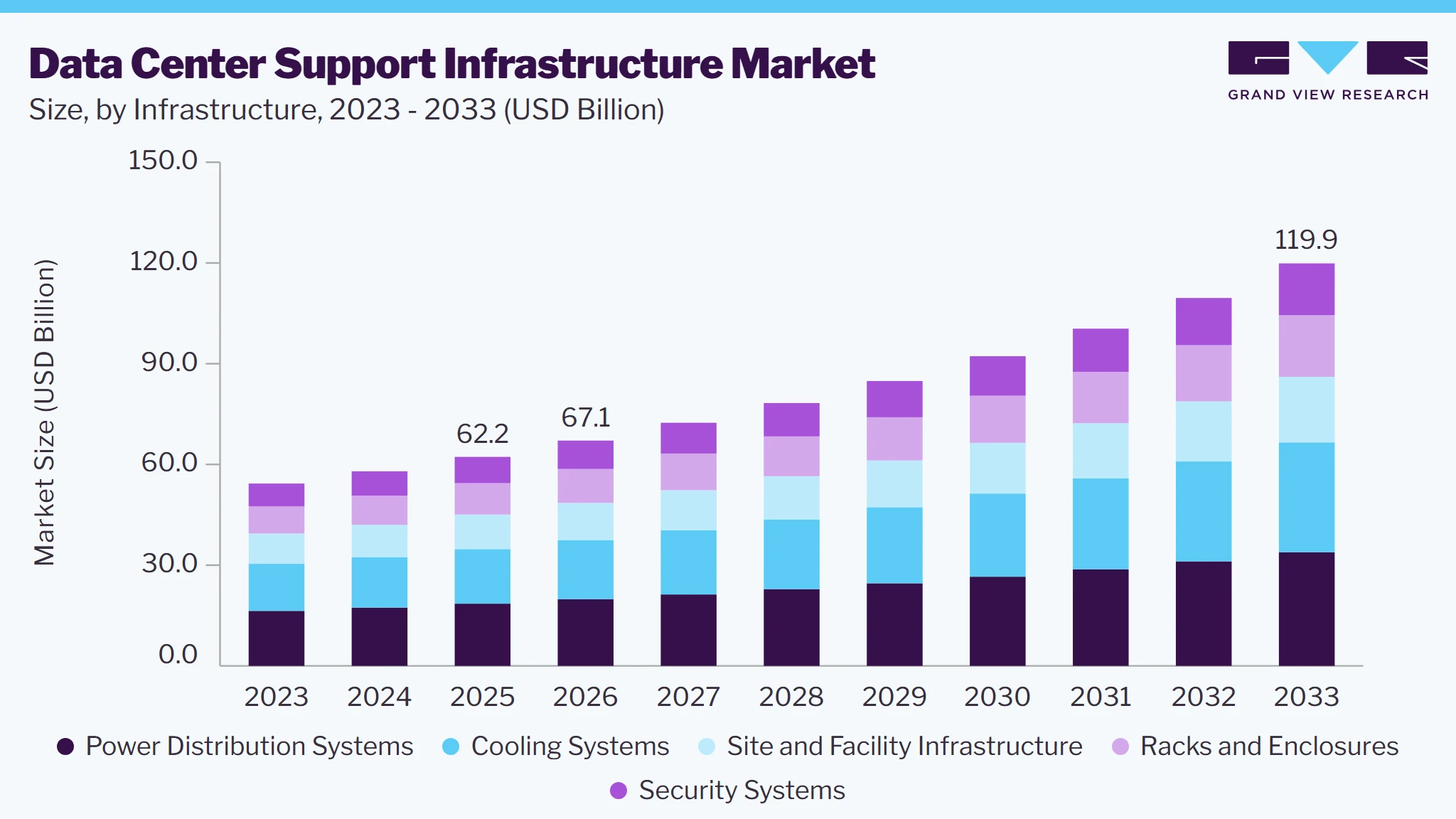
The global data center support infrastructure market size was valued at USD 62.2 billion in 2025 and is projected to grow from USD 67.1 billion in 2026 to USD 119.9 billion in 2033, at a CAGR of 8.6% from 2026 to 2033. North America dominated the market, accounting for a revenue share of 36.9% in 2025. The industry encompasses critical components such as power systems (UPS, generators), cooling systems, racks, monitoring systems, and Racks and Enclosures solutions.
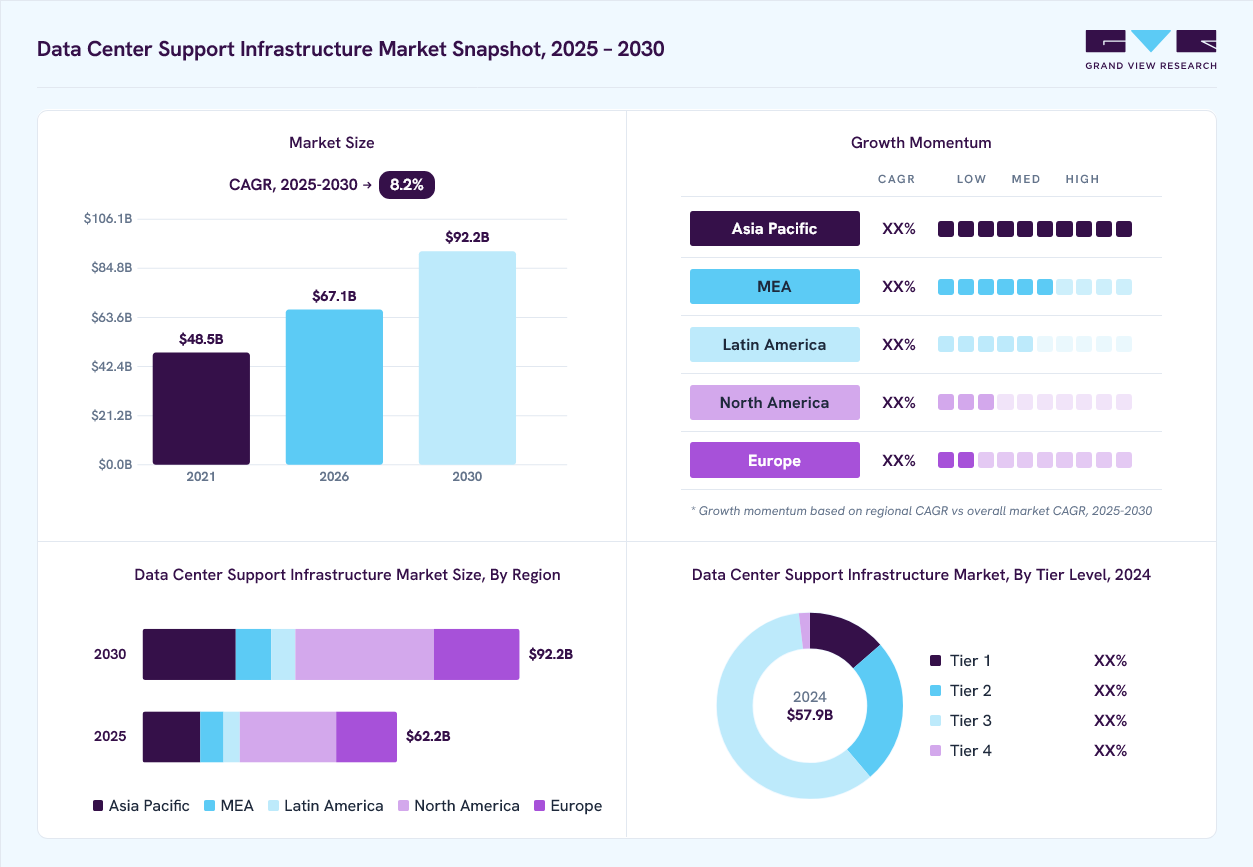 Source: Grand View Research, IR Documents, Primary Interviews, Paid DatabasesTo learn more about this report,
 Download Free Sample Report
 Key Market Trends & Insights
- By infrastructure: Power Distribution Systems segment dominated the market, with a revenue share of 29.8% in 2025.
- By tier level: Tier 3 held the largest market share of 59.6% in 2025.
- By enterprise size: Large enterprises segment held the largest revenue share of 82.0% in 2025.
- By end-use: Cloud Service Provider segment held the largest revenue share in 2025.
Regional Highlights
- Largest regional market: North America (36.9% revenue share, 2025)
- Fastest-growing regional market: Asia Pacific (highest CAGR, 2026-2033)
- By country: The U.S. held the largest market share in 2025.
Market Size & Forecast
- Market size in 2025: USD 62.2 Billion
- Estimated market size in 2026: USD 67.1 Billion
- Projected market size by 2033: USD 119.9 Billion
- CAGR (2026-2033): 8.6%
Three ways to get this report
Buy it, customize it, or ask a question.Ask an Analyst
A direct answer, usually in 1 working day
- AccessReport author, directly
- Reply timeWithin 1 working day
- No sales callDirect answer only
- FormatEmail reply
- CostFree, no cost
Get the Full Report
What the study covers
- FormatsPDF · Excel · Dashboard
- Timeline2026–2033 annual, 2025 base
- Coverage20+ countries, 5 regions
- Companies10+ key players profiled
Customize the Report
20% free customization
- IncludeCountries, segments, points
- TailorTo your product definition
- ExtendDeeper competitor detail
- OrA fully bespoke study
- Turnaround5–10 working days
North America continues to witness significant investments in hyperscale and AI-focused data centers by major cloud service providers and technology companies. The growing deployment of GPU-intensive workloads requires advanced power distribution, high-capacity cooling systems, intelligent rack infrastructure, and resilient backup power solutions, driving demand for modern data center support infrastructure.These elements ensure the operational reliability, efficiency, and Racks and Enclosures of data centers. The rapid adoption of cloud services, big data analytics, internet of things (IoT), and AI-driven Tier Levels is transforming the technology landscape. Organizations across industries are migrating their workloads to the cloud, leveraging its scalability, cost efficiency, and flexibility. This surge in demand for cloud computing fuels the need for robust data centers capable of handling massive volumes of data and ensuring uninterrupted services. To support these operations, data centers require advanced support infrastructure, including efficient cooling systems to manage heat from high-density servers, reliable power backup systems to prevent downtime, and intelligent management solutions for optimal performance and energy utilization. This trend drives continuous innovation and investment in Tier 3, enabling businesses to meet growing digital demands and ensure seamless operations in an increasingly data-driven world.
 To learn more about this report, Download Free Sample Report
 Hyperscale data centers cater to large-scale cloud operations, offering extensive Power Distribution Systems and computational capabilities, while edge data centers provide localized, low-latency services for real-time Tier Levels like IoT and 5G. The rise of these facilities has created a need for scalable and modular infrastructure to accommodate rapid growth and evolving technology demands. Hyperscale data centers require optimized cooling and power systems to manage high-density workloads, ensuring efficiency and reliability. Edge data centers, on the other hand, emphasize compact and flexible solutions to support deployment in remote or distributed locations. Together, these developments are transforming the data center landscape, driving innovation in infrastructure to meet the diverse and growing demands of modern digital ecosystems.
The integration of artificial intelligence (AI) and machine learning in monitoring and management systems is expected to revolutionize operational efficiency and predictive maintenance capabilities. Liquid cooling solutions, driven by increasing server densities and energy efficiency requirements, are anticipated to gain substantial traction. The shift toward renewable energy sources and the adoption of battery energy Power Distribution Systems highlights the market's focus on sustainability. The growing demand for edge data centers, coupled with the rise of Industry 4.0 Tier Levels, presents new growth opportunities. Furthermore, the adoption of modular data centers and flexible infrastructure solutions will enable faster deployment and scalability. Emerging markets, particularly in Asia Pacific and MEA, are likely to play a pivotal role in market expansion, supported by digital transformation initiatives and economic development.
Despite strong growth prospects, the market faces notable restraints. High initial capital expenditures for deploying advanced support infrastructure pose challenges, particularly for small and medium-sized enterprises (SMEs). Additionally, the complex integration of modern solutions such as AI-driven monitoring systems and liquid cooling technologies with existing infrastructure can deter adoption. Rising energy costs and ongoing operational expenses for managing power and cooling systems are also significant concerns for operators aiming to maintain profitability.
Market Dynamics
The data center support infrastructure market is experiencing strong growth as organizations expand hyperscale, enterprise, colocation, and edge data centers to support artificial intelligence (AI), cloud computing, high-performance computing (HPC), big data analytics, and digital transformation initiatives. The increasing deployment of high-density servers and GPU-accelerated infrastructure is driving demand for advanced support systems, including power distribution units (PDUs), uninterruptible power supplies (UPS), liquid and precision cooling solutions, intelligent racks, cabling infrastructure, and Data Center Infrastructure Management (DCIM) software to ensure reliable and efficient operations. The rapid adoption of AI workloads and high-performance computing is accelerating investments in next-generation cooling technologies, energy-efficient power infrastructure, and modular data center solutions capable of handling higher power densities while minimizing energy consumption. Furthermore, the expansion of hyperscale cloud facilities, colocation services, and edge computing deployments, coupled with growing investments in digital infrastructure and sovereign data centers, is increasing the need for resilient support infrastructure that ensures maximum uptime, operational continuity, and regulatory compliance. Rising focus on sustainability, carbon reduction, and renewable energy integration is encouraging operators to modernize facilities with intelligent energy management systems, battery energy storage, and advanced monitoring platforms. Additionally, continuous advancements in liquid cooling, AI-driven infrastructure management, predictive maintenance, automation, and smart facility technologies are expected to support the long-term growth of the data center support infrastructure market.
The rapid adoption of artificial intelligence (AI), machine learning (ML), high-performance computing (HPC), and cloud computing is a major driver of the data center support infrastructure market. AI workloads require high-density server deployments that generate substantial heat and consume significantly more power than conventional IT infrastructure. As hyperscale cloud providers, colocation operators, and enterprises expand AI-ready facilities, demand is increasing for advanced support infrastructure, including high-capacity UPS systems, intelligent power distribution units (PDUs), liquid cooling solutions, precision cooling equipment, DCIM platforms, and resilient backup power systems. These technologies enable efficient power management, thermal optimization, and continuous uptime, making support infrastructure a critical component of next-generation data centers.
High capital expenditure and increasing energy costs remain significant restraints for the data center support infrastructure market. Deploying modern support infrastructure requires substantial investments in power distribution systems, backup generators, liquid cooling technologies, battery energy storage, fire protection systems, intelligent monitoring platforms, and facility modernization. Additionally, AI-driven data centers consume significantly higher levels of electricity, increasing operational expenses associated with power supply, cooling, and maintenance. Retrofitting existing facilities to accommodate high-density computing environments can also be technically complex and costly. These financial and operational challenges may delay infrastructure upgrades, particularly for small and medium-sized enterprises (SMEs) and regional data center operators with limited investment capacity.
The increasing focus on sustainability and modular data center development presents a significant opportunity for the data center support infrastructure market. Data center operators are investing in energy-efficient cooling systems, intelligent energy management platforms, renewable energy integration, battery energy storage, and AI-powered infrastructure monitoring to reduce carbon emissions and improve operational efficiency. At the same time, the growing deployment of modular and prefabricated data centers enables faster expansion, lower construction costs, and greater scalability for hyperscale, edge, and enterprise facilities. As governments and enterprises prioritize green data center initiatives and digital infrastructure modernization, demand for advanced, sustainable, and modular support infrastructure solutions is expected to grow substantially.
Analyst Perspective
The data center support infrastructure market is at the forefront of the global digital infrastructure transformation, driven by the rapid adoption of artificial intelligence (AI), high-performance computing (HPC), cloud computing, edge computing, and increasingly dense data center deployments. As hyperscale cloud providers, colocation operators, enterprises, and government organizations expand their digital infrastructure, investments in resilient power distribution, advanced cooling systems, intelligent monitoring platforms, racks and enclosures, and physical security solutions are accelerating. The emergence of AI workloads and GPU-intensive computing is significantly increasing rack power densities, making energy-efficient power management and next-generation liquid cooling technologies critical for maintaining operational reliability and minimizing energy consumption. The primary competitive advantage will belong to infrastructure vendors that can deliver integrated, scalable, and sustainable solutions by combining intelligent power systems, AI-driven Data Center Infrastructure Management (DCIM), advanced thermal management, modular infrastructure, predictive maintenance, and renewable energy integration into a unified platform. As organizations prioritize operational resilience, energy efficiency, and carbon reduction, vendors capable of supporting AI-ready, high-density, and environmentally sustainable data centers will be best positioned to create long-term value. Furthermore, growing investments in hyperscale and edge data centers, sovereign digital infrastructure, modular facilities, and autonomous data center operations are expected to strengthen the strategic importance of data center support infrastructure, driving sustained market growth and continuous technological innovation worldwide.
Infrastructure Insights
Based on infrastructure, the power distribution systems segment led the market with the largest revenue share of 29.8% in 2025 and is expected to grow at the significant CAGR over the forecast period. The increasing power demand from high-density servers is driven by the growth of data-intensive Tier Levels such as AI, machine learning, and big data analytics. These Tier Levels require significant computational resources, which in turn lead to higher power consumption. As servers become more powerful and data centers become more densely packed to accommodate these workloads, the need for efficient power distribution systems becomes critical. These systems must be capable of managing increased electrical loads, ensuring that each server and component receives a stable power supply. Efficient power distribution systems help optimize energy usage, reduce waste, and ensure reliable performance, making them essential for modern data centers.
The cooling systems segment is expected to grow at a significant rate during the forecast period. Data centers are prioritizing energy-efficient cooling systems to reduce costs and meet sustainability goals due to rising energy prices and environmental concerns. Solutions like free cooling, economizers, and energy-efficient units help minimize energy consumption and lower the carbon footprint. These technologies optimize cooling performance, reduce operational costs, and support green initiatives, making them essential in addressing the growing demand for both efficiency and environmental responsibility in data center operations.
Tier Level Insights
Based on tier level, the Tier 3 segment led the market with the largest revenue share of 59.6% in 2025. Tier 3 data centers offer a balance between cost-efficiency and reliability, providing uptime with minimal downtime, making them ideal for organizations needing dependable operations without the high costs of Tier 4 facilities. Their design supports critical but not ultra-critical workloads, appealing to a wide range of businesses. Additionally, the rising number of mid-sized enterprises and regional cloud service providers drives demand for Tier 3 facilities. These organizations value the scalability, flexibility, and reliability that Tier 3 infrastructure provides, enabling them to efficiently manage their growing IT needs while maintaining operational stability. This combination of attributes makes Tier 3 data centers a popular choice in diverse markets.
The Tier 4 segment is anticipated to grow at a significant CAGR of 8.9% during the forecast period. The rise in hyperscale data centers, fueled by global cloud providers and enterprises, is driving demand for Tier 4 infrastructure. These facilities prioritize robust support systems to ensure redundancy, fault tolerance, and maximum operational efficiency. Tier 4 data centers meet the stringent reliability and performance standards required for hyperscale operations, enabling seamless management of massive data volumes, and ensuring uninterrupted services for critical Tier Levels across industries.
Enterprise Size Insights
Based on enterprise size, large enterprise segment led the market with the largest revenue share of 82.0% in 2025. As large enterprises expand their IT infrastructures to handle growing data processing and power distribution system’s needs, the demand for more powerful and reliable data centers increases. This expansion drives the need for advanced support infrastructure, including efficient power distribution, cooling systems, and high-performance networking solutions. Furthermore, many enterprises are embracing hybrid and multi-cloud strategies, combining on-premises data centers with cloud-based services. This shift requires robust and scalable support infrastructure that can seamlessly integrate with both local and cloud environments, handling diverse workloads effectively. The combination of growing IT infrastructure demand and the adoption of hybrid cloud models propels the need for adaptable and resilient data center support systems.
The small & medium-sized enterprises segment is expected to grow at the fastest CAGR during the forecast period. SMEs are rapidly adopting cloud-based services to improve efficiency, reduce costs, and scale operations. As they migrate to the cloud, there is a rising need for reliable data center support infrastructure to ensure seamless integration and ongoing support. This infrastructure, including power distribution, cooling, and network solutions, is crucial for managing the growing digital requirements of SMEs, ensuring they can operate efficiently while scaling their cloud environments.
End Use Insights
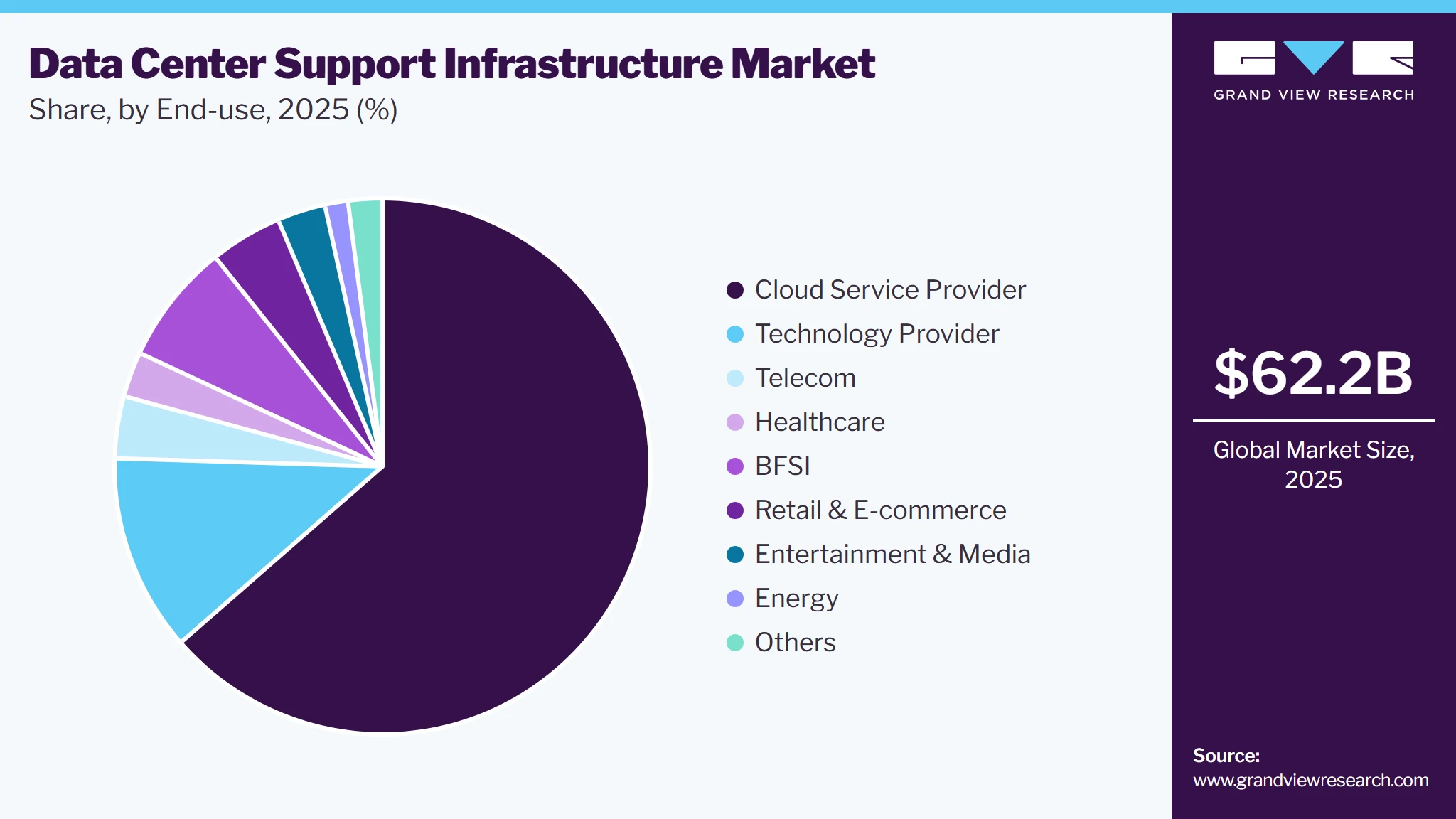
Based on end-use, the cloud Service provider segment held the largest revenue share in 2025. Cloud service providers are expanding their global reach to tap into new markets and support a growing customer base. This expansion necessitates the establishment of new data centers in various regions, each equipped with robust support infrastructure to ensure scalability and deliver localized services. Additionally, the rise in demand for Software-as-a-Service (SaaS), Platform-as-a-Service (PaaS), and Infrastructure-as-a-Service (IaaS) offerings is driving the need for cloud providers to maintain large-scale, high-performance data centers. These services require scalable, high-capacity infrastructure capable of managing vast amounts of customer data and complex workloads, pushing cloud service providers to invest in advanced, efficient data center support systems to meet these growing demands.
 To learn more about this report, Download Free Sample Report
 The technology provider segment is expected to grow at the fastest CAGR during the forecast period. As businesses and cloud service providers expand their data centers, the demand for advanced infrastructure solutions in power distribution, cooling, networking, and Racks and Enclosures systems rises. Technology providers are well-positioned to meet these needs by delivering innovative and reliable solutions that improve the performance and efficiency of data center operations. Their offerings help optimize resource usage, reduce costs, and ensure the high availability and Racks and Enclosures, supporting the growth of modern data centers.
Regional Insights
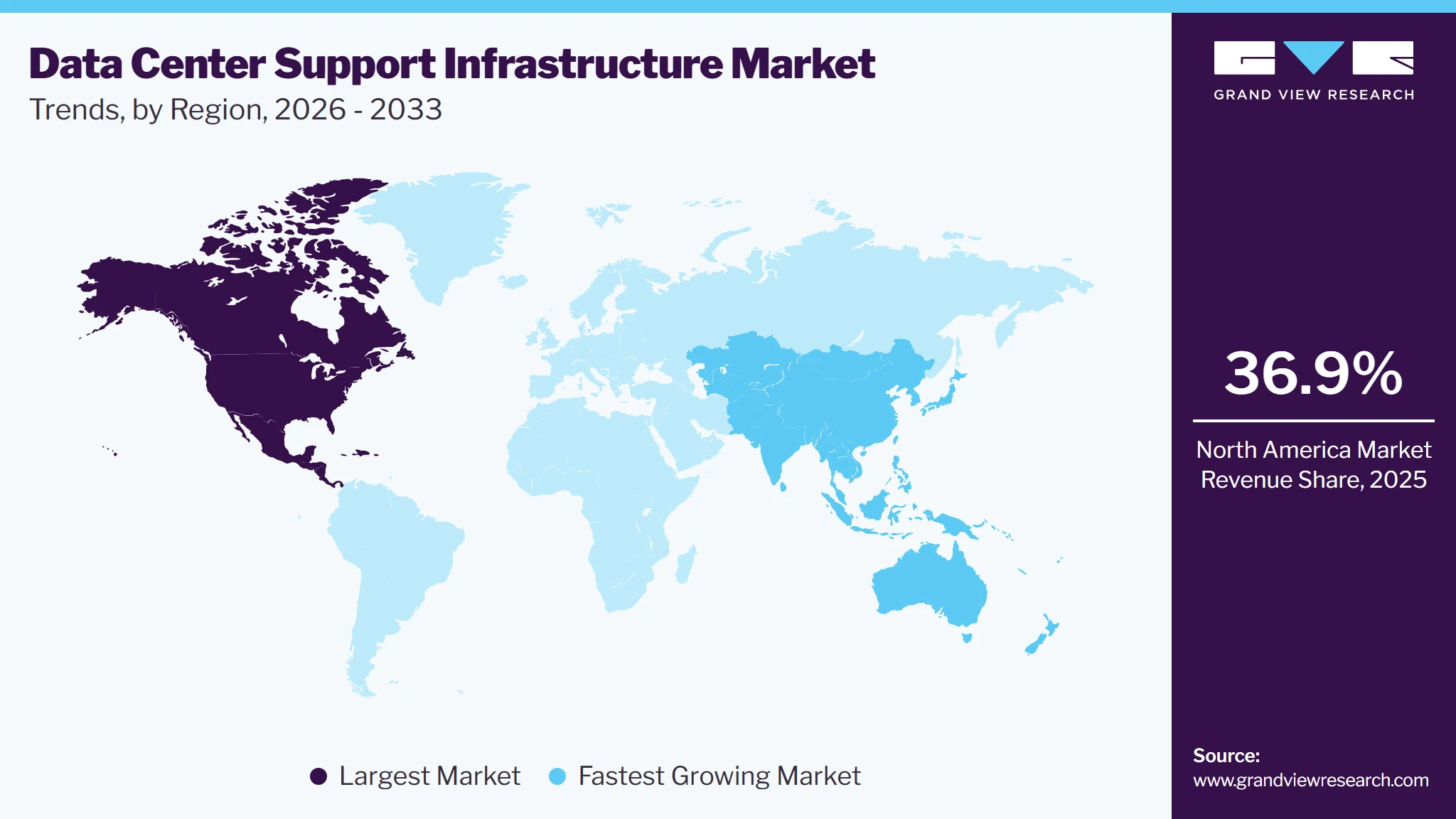
North America dominated the data center support infrastructure market with the largest revenue share of 36.9% in 2025. The increasing digitalization of industries such as healthcare, finance, retail, and manufacturing is pushing the need for robust Tier 3. Organizations are adopting cloud-based services and enterprise resource planning (ERP) systems, creating demand for highly efficient data center support infrastructure to handle increased workloads, ensuring business continuity, and meeting Racks and Enclosures requirements. North American companies, particularly in the tech sector, are focusing on sustainability by adopting energy-efficient data center solutions. There is a rising demand for green data center solutions, such as advanced cooling technologies, renewable energy integrations, and energy-efficient power distribution systems, to help meet both regulatory requirements and environmental goals.
 To learn more about this report, Download Free Sample Report
 U.S. Data Center Support Infrastructure Market Trends
The data center support infrastructure market in the U.S. held the largest share in the North America region in 2025. The U.S. is a leader in cloud computing services, with major providers like AWS, Microsoft Azure, and Google Cloud expanding rapidly. This growth drives increased demand for data center support infrastructure, including power distribution, cooling, and Racks and Enclosures systems. As these providers scale their operations to meet growing customer needs, they require advanced infrastructure solutions to ensure efficient, reliable, and secure data center performance across regions.
Europe Data Center Support Infrastructure Market Trends
The data center support infrastructure market in Europe is expected to grow significantly at a CAGR of over 7.1% from 2025 to 2030. Europe is a global leader in sustainability efforts, with many countries setting ambitious goals to reduce carbon footprints. Data center operators in the region are adopting energy-efficient and eco-friendly solutions, such as advanced cooling systems and renewable energy sources. This focus on sustainability drives demand for energy-efficient infrastructure and green technologies within data centers.
The U.K. data center support infrastructure industry is expected to grow rapidly in the coming years. The rollout of 5G networks across the UK is a major factor boosting the demand for data center support infrastructure. As 5G requires low-latency processing and high-speed data transfer, there is an increased need for data centers that can handle these requirements. Telecommunications companies are investing in new infrastructure to support 5G, thereby driving demand for high-performance support systems.
The data center support infrastructure market in Germany held a substantial share in 2024. Germany is a leader in industrial automation and Industry 4.0, where smart factories, robotics, and data-driven manufacturing processes require robust IT infrastructures. These technologies generate vast amounts of data that need to be processed, stored, and analyzed in real time. The demand for data centers that can support these high-performance workloads, and the associated power and cooling needs is growing rapidly.
Asia Pacific Data Center Support Infrastructure Market Trends
The data center support infrastructure market in Asia Pacific is expected to grow significantly at a CAGR of over 10.1% from 2025 to 2030. The growth of e-commerce platforms and digital services in countries like China, India, Japan, and Southeast Asia is driving demand for robust data center support infrastructure. As these businesses expand their online presence and enhance their digital offerings, there is a need for data centers to manage web traffic, transaction processing, and customer data. This drives the need for advanced infrastructure solutions, including high-capacity power and cooling systems.
China data center support infrastructure industry held a substantial market share in 2024. China’s accelerated adoption of cloud computing across various industries such as finance, manufacturing, healthcare, and e-commerce is a key driver for the data center support infrastructure market. Major cloud service providers like Alibaba Cloud, Tencent Cloud, and Baidu are expanding their infrastructure to meet the growing demand for cloud-based services. This shift to cloud computing increases the need for advanced power distribution, cooling, and Racks and Enclosures systems in data centers.
The data center support infrastructure industry in Japan held a substantial share in 2024. Japan is making significant strides in AI research and the development of high-performance computing (HPC) solutions. These technologies require large-scale data processing and Power Distribution Systems capabilities, which increases the demand for specialized Tier 3. As HPC, AI, and big data analytics continue to gain prominence across industries like automotive, robotics, and healthcare, data centers equipped with high-density power distribution and advanced cooling solutions are essential to meet the growing computational needs.
India data center support infrastructure industry is growing rapidly. India is a global hub for information technology (IT) services and business process outsourcing (BPO). As demand for IT services and outsourcing continues to grow, businesses are expanding their infrastructure to support their operations. This expansion requires modern, reliable data centers that can provide scalable solutions for data Power Distribution Systems, processing, and management, further driving demand for advanced data center support infrastructure.
Key Data Center Support Infrastructure Company Insights
Key players operating in the industry include Corning, Schneider Electric, Leviton, Legrand, Eaton, ABB, Motivair, Panduit, Rittal, Chatsworth Products, APC by Schneider Electric, Raritan, Hubbell, Vertiv, and Emerson Network Power. The companies are focusing on various strategic initiatives, including new product development, partnerships & collaborations, and agreements to gain a competitive advantage over their rivals. The following are some instances of such initiatives.
-
In January 2025, Panduit partnered with Hyperview to offer modern Data Center Infrastructure Management (DCIM) software tools to enhance clients' capabilities in security, environment responsiveness, and operational efficiency. By integrating Hyperview’s cloud-based platform with Panduit's critical power solutions, the collaboration aims to provide comprehensive insights, optimize operations, and promote sustainability. This move ensures seamless service continuity for existing clients while leveraging the advanced capabilities of Azure-based infrastructure for scalability and privacy
-
In April 2024, Eaton partnered with Red Dot Analytics (RDA) to enhance data center operations with AI-focused solutions. This collaboration aims to improve predictive maintenance, anomaly detection, and energy optimization in data centers. By integrating RDA’s Cognitive Digital Twin technology with Eaton’s expertise in power management, the partnership seeks to boost sustainability, resilience, and efficiency in handling the growing demand for AI and high-density computing workloads.
Key Data Center Support Infrastructure Companies
The following key companies have been profiled for this study on the data center support infrastructure market.
-
Corning
-
Schneider Electric
-
Leviton
-
Legrand
-
Eaton
-
ABB
-
Motivair
-
Panduit
-
Rittal
-
Chatsworth Products
-
APC by Schneider Electric
-
Raritan
-
Hubbell
-
Vertiv
-
Emerson Network Power
Competitive Benchmarking
Category
Operating Strategies
Competitive Edge
Weakness
Established Players (Schneider Electric, Vertiv, Eaton, ABB, Siemens, Legrand, Rittal, Johnson Controls, STULZ, Delta Electronics)
- Established players focus on delivering comprehensive data center support infrastructure solutions, including power distribution, cooling, racks, DCIM software, physical security, and facility management systems.
- Their strategies emphasize continuous product innovation, AI-ready power and cooling technologies, liquid cooling solutions, sustainability initiatives, modular data center infrastructure, strategic acquisitions, and long-term partnerships with hyperscale cloud providers, colocation operators, and enterprise customers.
- Established vendors benefit from broad product portfolios, extensive global distribution networks, strong brand recognition, and decades of expertise in mission-critical infrastructure.
- Their integrated end-to-end solutions, advanced R&D capabilities, global service organizations, and long-standing customer relationships provide a significant competitive advantage.
- Strong financial resources enable investments in smart infrastructure, AI-driven monitoring platforms, and sustainable technologies while ensuring large-scale manufacturing capacity and worldwide support services.
- These companies face high research and development costs, significant capital investment requirements, and increasing pressure to innovate rapidly as AI workloads drive higher rack densities and power consumption.
- Rising raw material costs, supply chain disruptions, skilled labor shortages, evolving environmental regulations, and pricing pressure from regional manufacturers may impact profitability.
- Additionally, upgrading legacy infrastructure to support liquid cooling and high-density computing environments requires substantial investments and longer deployment cycles.
Emerging Players (Submer, CoolIT Systems, LiquidStack, Asperitas, DCX, Iceotope, Motivair, EkkoSense)
- Emerging players primarily focus on specialized support infrastructure technologies such as liquid cooling, immersion cooling, AI-driven DCIM platforms, thermal management solutions, modular infrastructure, and intelligent energy optimization.
- Their strategies emphasize innovation, strategic collaborations with hyperscale operators and OEMs, scalable deployment models, and targeting rapidly growing AI, HPC, and edge data center markets.
- Many also offer flexible, sustainability-focused solutions that reduce energy consumption and improve data center efficiency.
- Emerging companies offer highly specialized technologies optimized for high-density AI infrastructure, enabling superior thermal performance, lower energy consumption, and improved sustainability.
- Their ability to rapidly innovate, develop niche solutions, and adopt new cooling and monitoring technologies allows them to address evolving customer requirements more quickly than larger competitors. Strong focus on software-driven optimization and modular deployment also enhances their market differentiation.
- Emerging vendors often have limited manufacturing capacity, smaller global sales and service networks, and lower brand recognition compared with established infrastructure providers.
- Dependence on partnerships with OEMs, system integrators, and hyperscale customers may limit market reach.
- High capital requirements, rapid technological changes, certification requirements, and competition from established infrastructure companies present challenges to achieving large-scale commercial adoption and long-term profitability.
Data Center Support Infrastructure Market Report Scope
Report Attribute
Details
Market size value in 2025
USD 62.2 billion
Estimated market size in 2026
USD 67.1 billion
Projected market size by 2033
USD 119.9 billion
Growth rate
CAGR of 8.6% from 2026 to 2033
Base year for estimation
2025
Historical data
2021 - 2024
Forecast period
2026 - 2033
Quantitative units
Revenue in USD billion and CAGR from 2026 to 2033
Report coverage
Revenue forecast, company ranking, competitive landscape, growth factors, and trends
Segments covered
Infrastructure, tier level, enterprise size, end use, region
Regional scope
North America; Europe; Asia Pacific; Latin America; MEA
Country scope
U.S.; Canada; Mexico; Germany; UK; France; China; Japan; India; South Korea; Australia; Brazil; Saudi Arabia; South Africa; UAE
Key companies profiled
ABB; APC by Schneider Electric; Chatsworth Products; Corning; Eaton; Emerson Network Power; Hubbell; Legrand; Leviton; Motivair; Panduit; Raritan; Rittal; Schneider Electric; Vertiv
Customization scope
Free report customization (equivalent up to 8 analysts' working days) with purchase. Addition or alteration to country, regional & segment scope.
Pricing and purchase options
Avail customized purchase options to meet your exact research needs. Explore purchase options
Global Data Center Support Infrastructure Market Report Segmentation
This report forecasts revenue growth at global, regional, and country levels and provides an analysis of the latest industry trends in each of the sub-segments from 2021 to 2033. For this study, Grand View Research has segmented the global data center support infrastructure market report based on Infrastructure, tier level, enterprise size, end use and region.
-
Infrastructure Outlook (Revenue, USD Million, 2021 - 2033)
-
Power Distribution Systems
-
Cooling Systems
-
Racks and Enclosures
-
Site and Facility Infrastructure
-
Security Systems
-
-
Tier Level Outlook (Revenue, USD Million, 2021 - 2033)
-
Tier 1
-
Tier 2
-
Tier 3
-
Tier 4
-
-
Enterprise Size Outlook (Revenue, USD Million, 2021 - 2033)
-
Large Enterprise
-
Small & Medium Sized Enterprises
-
-
End Use Outlook (Revenue, USD Million, 2021 - 2033)
-
Cloud Service Provider
-
Technology Provider
-
Telecom
-
Healthcare
-
BFSI
-
Retail & E-commerce
-
Entertainment & Media
-
Energy
-
Others
-
-
Regional Outlook (Revenue, USD Million, 2021 - 2033)
-
North America
-
U.S.
-
Canada
-
Mexico
-
-
Europe
-
Germany
-
U.K.
-
France
-
-
Asia Pacific
-
China
-
India
-
Japan
-
South Korea
-
Australia
-
-
Latin America
-
Brazil
-
-
Middle East & Africa
-
U.A.E
-
Saudi Arabia
-
South Africa
-
-
Research Methodology
The data center support infrastructure market figures in this report are based on a proven research process that combines executive interviews with secondary research from proprietary databases, company filings, and recognized regulatory and institutional sources. Market size is built through value-chain sizing-reconciling supply-side and demand-side estimates-and triangulated with bottom-up and top-down approaches. Every estimate passes multiple levels of expert validation before publication, with each data center support infrastructure segment quantified using the revenue-capture definitions in the table below.
Segment Definition
Segment - Infrastructure Type
Revenue capture definition
Power Distribution Systems
Power distribution systems comprise the electrical infrastructure that delivers reliable and uninterrupted power to IT equipment within a data center. These systems include uninterruptible power supplies (UPS), power distribution units (PDUs), switchgear, transformers, busways, generators, and battery energy storage systems, ensuring continuous operations, power redundancy, and protection against electrical failures.
Network and System Management
Network and system management includes the software and hardware solutions used to monitor, control, optimize, and maintain data center operations. It encompasses Data Center Infrastructure Management (DCIM), network monitoring, environmental monitoring, asset management, predictive maintenance, and automation platforms that enhance operational efficiency, availability, and performance.
Racks and Enclosures
Racks and enclosures are physical structures designed to securely house servers, storage systems, networking equipment, and power distribution components. They provide efficient space utilization, airflow management, cable organization, equipment protection, and scalability to support high-density computing environments.
Site and Facility Infrastructure
Site and facility infrastructure includes the physical and environmental systems that support data center operations. It comprises cooling systems, HVAC equipment, fire detection and suppression systems, raised flooring, lighting, building management systems (BMS), structural infrastructure, and other facility components that ensure optimal operating conditions and business continuity.
Security Systems
Security systems consist of physical security technologies that protect data center facilities, personnel, and critical assets from unauthorized access and threats. These solutions include access control systems, biometric authentication, surveillance cameras, intrusion detection systems, perimeter security, and environmental security monitoring.
Segment - Tier Level
Revenue capture definition
Tier 1
Tier 1 data centers provide basic IT infrastructure with a single path for power and cooling and minimal redundancy. They are suitable for organizations with limited availability requirements and planned downtime for maintenance.
Tier 2
Tier 2 data centers feature redundant power and cooling components while maintaining a single distribution path. They offer improved reliability and reduced downtime compared to Tier 1 facilities, making them suitable for businesses requiring moderate availability.
Tier 3
Tier 3 data centers are concurrently maintainable, allowing maintenance activities without interrupting IT operations. They incorporate multiple power and cooling paths with redundant infrastructure, delivering high availability for enterprise and mission-critical applications.
Tier 4
Tier 4 data centers provide fault-tolerant infrastructure with fully redundant power, cooling, and distribution systems. They ensure maximum availability and continuous operation even during equipment failures, making them ideal for mission-critical industries requiring near-zero downtime.
Segment - Enterprise Size
Revenue capture definition
Large Enterprise
The Large enterprises segment, with respect to the number of employees, typically comprises organizations employing more than 1,000 employees for multinational corporations.
Small & Medium Sized Enterprises
(SMEs)
The SMEs segment, with respect to the number of employees, generally includes organizations employing between 10 and 999 employees.
Segment - End Use
Revenue capture definition
Cloud Service Provider
Cloud service providers deploy large-scale support infrastructure to ensure reliable power, cooling, monitoring, and security for hyperscale and multi-tenant cloud environments. These solutions enable continuous service availability, scalability, and efficient resource utilization.
Technology Provider
Technology providers, including software developers, IT service firms, semiconductor companies, and hardware manufacturers, utilize data center support infrastructure to support application hosting, research and development, AI workloads, and enterprise IT operations.
Telecom
Telecommunications companies use support infrastructure to maintain highly available network facilities, edge data centers, and communication platforms that support 5G networks, cloud connectivity, and low-latency digital services.
Healthcare
Healthcare organizations deploy data center support infrastructure to securely manage electronic health records (EHRs), medical imaging, telemedicine platforms, clinical applications, and healthcare analytics while ensuring regulatory compliance and uninterrupted service.
BFSI
The banking, financial services, and insurance (BFSI) sector relies on resilient support infrastructure to ensure continuous availability of transaction processing, digital banking, fraud detection, payment systems, and regulatory compliance while minimizing operational risk.
Retail & E-commerce
Retail and e-commerce organizations utilize data center support infrastructure to support online shopping platforms, inventory management, payment processing, customer analytics, and omnichannel operations while maintaining high service availability during peak demand periods.
Entertainment & Media
Media and entertainment companies deploy support infrastructure to manage video streaming, digital content creation, broadcasting, gaming platforms, and content delivery networks that require high-performance, reliable, and scalable data center operations.
Energy
Energy companies use data center support infrastructure to support smart grid management, industrial automation, oil and gas operations, renewable energy monitoring, and real-time operational analytics while ensuring continuous system availability.
Others
This segment includes government, education, manufacturing, transportation, logistics, research institutions, and other industries that implement data center support infrastructure to support mission-critical applications, digital transformation initiatives, and secure IT operations.
Estimation Model
Layer
Question
Analysis
Data Center Infrastructure Demand Layer
Who can benefit from Data Center Support Infrastructure?
Identify organizations deploying enterprise, hyperscale, colocation, modular, and edge data centers, including cloud service providers, telecom operators, financial institutions, healthcare organizations, government agencies, manufacturers, retailers, research institutions, and digital service providers. Analyze infrastructure requirements for power, cooling, racks, monitoring, and physical security to define the total addressable market.
Digital Infrastructure Expansion Layer
Where is demand for Data Center Support Infrastructure generated?
Evaluate growth in artificial intelligence (AI), machine learning (ML), high-performance computing (HPC), cloud computing, edge computing, 5G, IoT, big data analytics, digital transformation, and enterprise application modernization. Assess investments in hyperscale, enterprise, and colocation data centers, along with increasing rack densities and power requirements, to determine the operationally reachable market.
Infrastructure Deployment & Modernization Layer
Who actively adopts Data Center Support Infrastructure?
Analyze adoption across hyperscale cloud providers, colocation operators, enterprise data centers, telecom companies, government organizations, healthcare providers, financial institutions, manufacturing facilities, and edge data center operators. Evaluate deployment of UPS systems, PDUs, cooling solutions, racks, DCIM platforms, building management systems, and physical security infrastructure to identify active infrastructure buyers and deployment potential.
Revenue Generation Layer
How is revenue generated?
Assess revenue generated through sales of power distribution systems, cooling infrastructure, racks and enclosures, network and system management software, DCIM solutions, physical security systems, installation and commissioning services, infrastructure modernization, maintenance and support contracts, managed infrastructure services, consulting, and lifecycle upgrades to estimate the overall market revenue.
Delivered Customizations
This report has been delivered with the following In-depth customizations
Client Request
Customization Delivered
Value Adds
Support Infrastructure Vendor Competitive Benchmarking
Assessed leading data center support infrastructure vendors based on power distribution technologies, cooling solutions, DCIM capabilities, rack and enclosure offerings, physical security systems, energy efficiency, sustainability initiatives, AI-ready infrastructure, pricing strategies, product portfolios, partnerships, geographic presence, and market share.
Enables stakeholders to benchmark competitors, identify technology leadership, evaluate product differentiation, assess innovation strategies, and formulate competitive product development and go-to-market plans.
Power Infrastructure Technology Benchmarking
Evaluated UPS systems, PDUs, switchgear, generators, battery energy storage systems (BESS), busways, intelligent power management solutions, redundancy architectures, energy efficiency, vendor capabilities, and product innovations.
Enables stakeholders to compare power infrastructure technologies, optimize power architecture, reduce operational risks, improve energy efficiency, and support AI-ready, high-density data center deployments.
Cooling Infrastructure Competitive Analysis
Assessed precision air cooling, liquid cooling, immersion cooling, rear-door heat exchangers, chillers, cooling distribution units (CDUs), thermal management technologies, cooling efficiency, vendor innovations, and deployment trends.
Helps organizations identify optimal cooling technologies, lower operating costs, improve thermal efficiency, and support high-density AI and HPC workloads.
Frequently Asked Questions About This Report
The global data center support infrastructure market size was valued at USD 62.2 billion in 2025 and is expected to reach USD 67.1 billion in 2026.
The global data center support infrastructure market is expected to grow at a CAGR of 8.6% from 2026 to 2033 to reach USD 119.9 billion by 2033.
North America dominated the market, accounting for a revenue share of 36.9% in 2025.
Asia Pacific is the fastest-growing region over the forecast period.
The power distribution systems segment led with a 29.8% revenue share in 2025, while cooling systems is the fastest-growing segment.
The Tier 3 segment led with a 59.6% revenue share in 2025, while Tier 4 segment is the fastest-growing segment.
The large enterprise segment led the market with the largest revenue share of 82.0% in 2025.
Key players operating in the data center support infrastructure industry include Corning, Schneider Electric, Leviton, Legrand, Eaton, ABB, Motivair, Panduit, Rittal, Chatsworth Products, APC by Schneider Electric, Raritan, Hubbell, Vertiv, and Emerson Network Power.
Organizations across industries are migrating their workloads to the cloud, leveraging its scalability, cost efficiency, and flexibility. This surge in demand for cloud computing fuels the need for robust data centers capable of handling massive volumes of data and ensuring uninterrupted services. To support these operations, data centers require advanced support infrastructure, including efficient cooling systems to manage heat from high-density servers, reliable power backup systems to prevent downtime, and intelligent management solutions for optimal performance and energy utilization.
About the Author(s)
Communications Infrastructure Research Team
Technology · Communications InfrastructureThis report was authored by the communications infrastructure research team at Grand View Research - comprising two research analysts, one senior research analyst, and one industry expert - with specialized expertise in the communications infrastructure segment of the technology industry. All findings are based on proprietary technology databases, executive interviews, and regulatory analysis, subject to internal peer review prior to publication.
Last Updated:
Speak to Analyst

Customize this report to your needs - add regions, segments, or data points, with 20% free customization.
Or view our licence options:


ISO 9001:2015 & 27001:2022 Certified
We are GDPR and CCPA compliant! Your transaction & personal information is safe and secure. For more details, please read our privacy policy.


