
- Home
- »
- Medical Devices
- »
-
Dental CBCT Market Size, Share, Growth Report, 2026-2033GVR Report cover

Dental CBCT Market (2026 - 2033)
Size, Share & Trends Analysis Report By Field of View (Small FOV (?8×8 cm)), By Imaging Configuration (Standalone CBCT Systems), By Clinical Application (Implantology), By End-use, By Region, And Segment Forecasts
Market Size, 2025
$703.0MMarket Estimate, 2026
$752.2MMarket Forecast, 2033
$1,208.7MCAGR, 2026–2033
7.0%Dental CBCT Market Summary
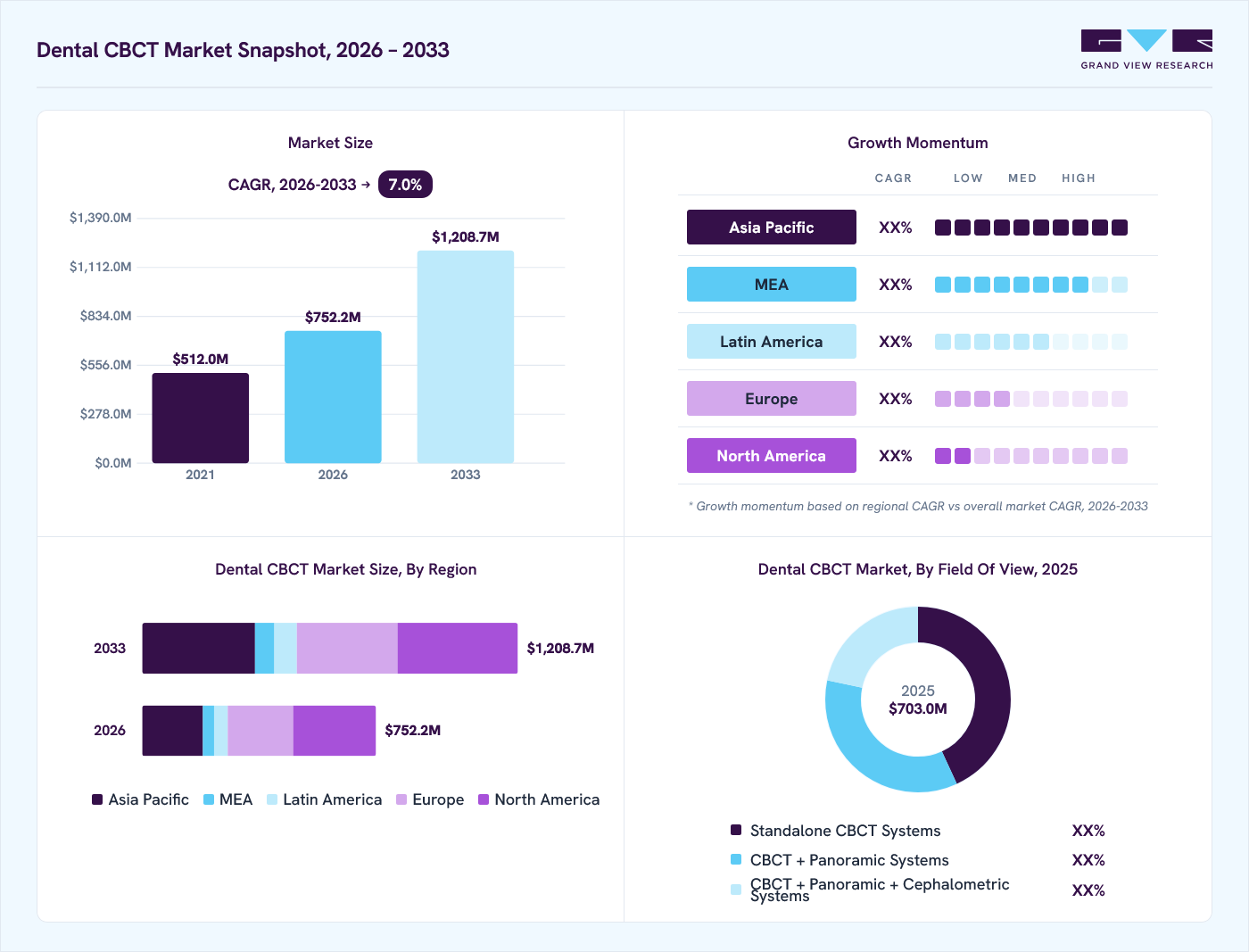
The global dental CBCT market size was valued at USD 703.0 million in 2025 and is projected to grow from USD 752.2 million in 2026 to USD 1,208.7 million by 2033, at a CAGR of 7.0% from 2026 to 2033. North America dominated the market, accounting for a revenue share of 35.7% in 2025. The growth of the global dental cone beam computed tomography (CBCT) market is driven by the increasing adoption of digital dentistry, rising demand for accurate 3D diagnostic imaging, and the growing number of dental implant, orthodontic, endodontic, and oral surgery procedures worldwide.
 Source: Grand View Research, IR Documents, Primary Interviews, Paid DatabasesTo learn more about this report,
 Download Free Sample Report
Key Market Trends & Insights
- By Field of View (FOV): Medium FOV (>8×8 cm to ≤15×15 cm) held the largest revenue share of 44.2% in 2025.
- By imaging configuration: Standalone CBCT systems held the largest revenue share of 43.1% in 2025.
- By clinical application: Implantology held the largest revenue share of 37.5% in 2025.
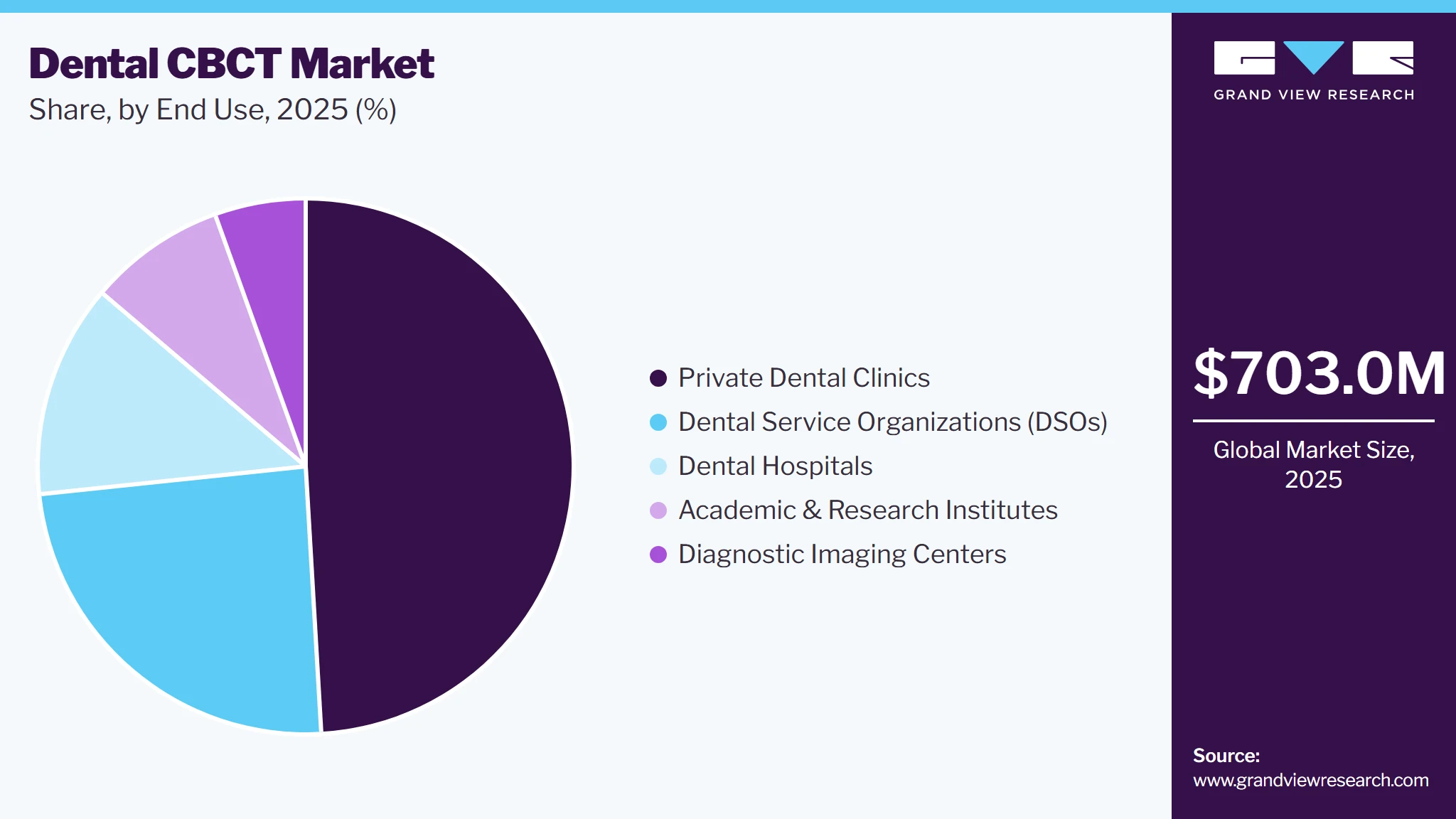
- By end use: Private dental clinics held the largest revenue share of 49.1% in 2025.
Regional Highlights
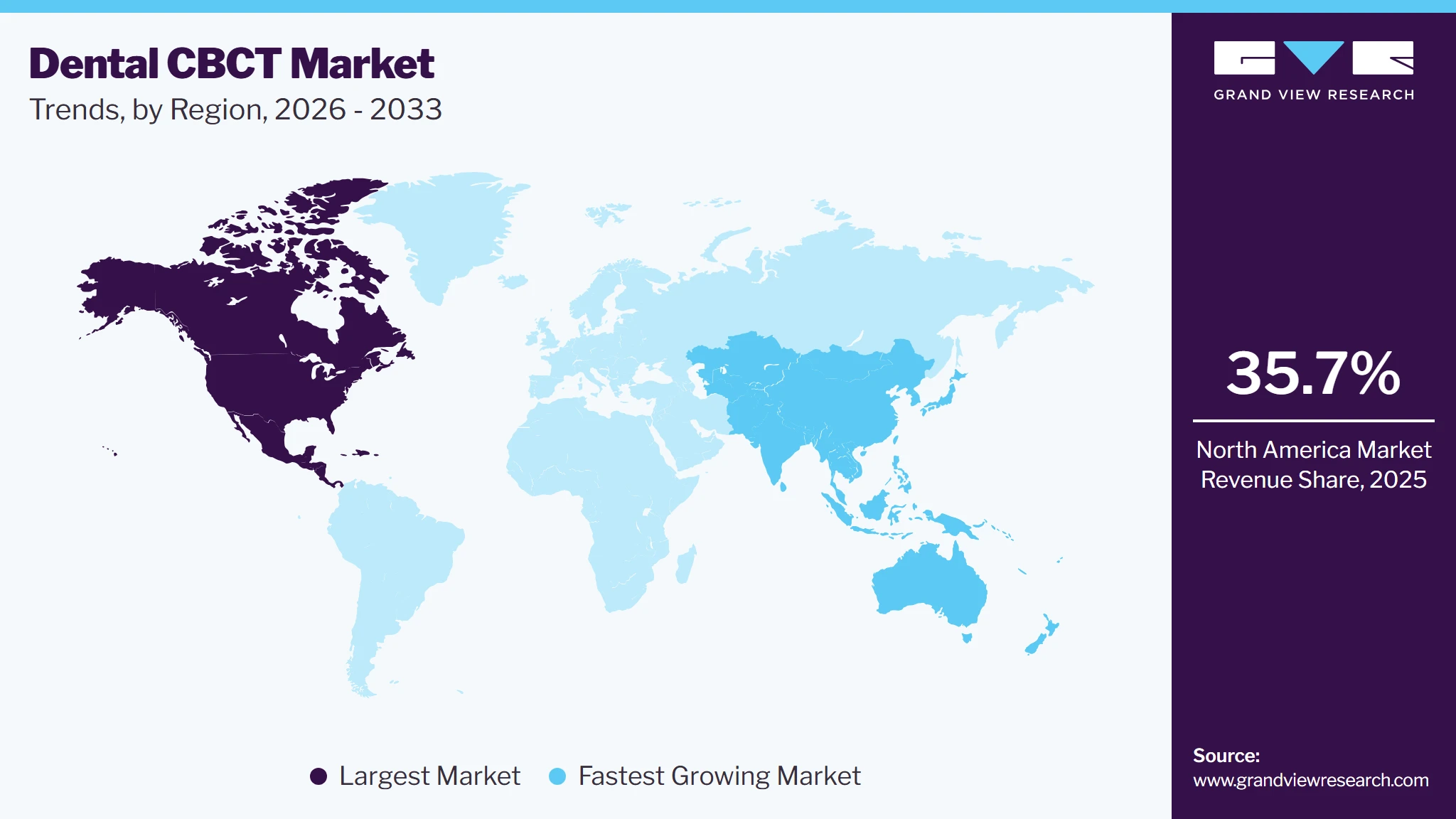
- Largest regional market: North America (35.7% revenue share, 2025)
- Fastest-growing regional market: Asia Pacific (highest CAGR, 2026-2033)
- By country: The U.S. held the largest share in 2025
Market Size & Forecast
- Market size in 2025: USD 703.0 Million
- Estimated market size in 2026: USD 752.2 Million
- Projected market size by 2033: USD 1,208.7 Million
- CAGR (2026-2033): 7.0%
Prism AI by Grand View Research Free to tryAsk a question about the dental CBCT marketTry asking✓Every figure cited from GVR research Prefer the report? Download free sample →
In addition, this growth is due to the increasing focus on integrated digital workflows that improve diagnostic efficiency and reduce the time required for treatment planning. This integration enables clinicians to access, analyze, and share CBCT scans more efficiently, enhancing collaboration between dentists, radiologists, and specialists. As digital dentistry becomes more widespread, demand is increasing for interoperable imaging solutions that enable faster clinical decision-making, improve the patient experience, and optimize practice productivity. For instance, in February 2026, DEXIS announced the integration of BeamReaders into DTX Studio version 4.7, enabling clinicians and laboratories to access CBCT interpretation services directly within the imaging software. The integration connected users with a network of more than 70 oral and maxillofacial radiologists, who had collectively delivered over 900,000 CBCT scan interpretations, improved workflow efficiency, and supported faster, more accurate treatment planning.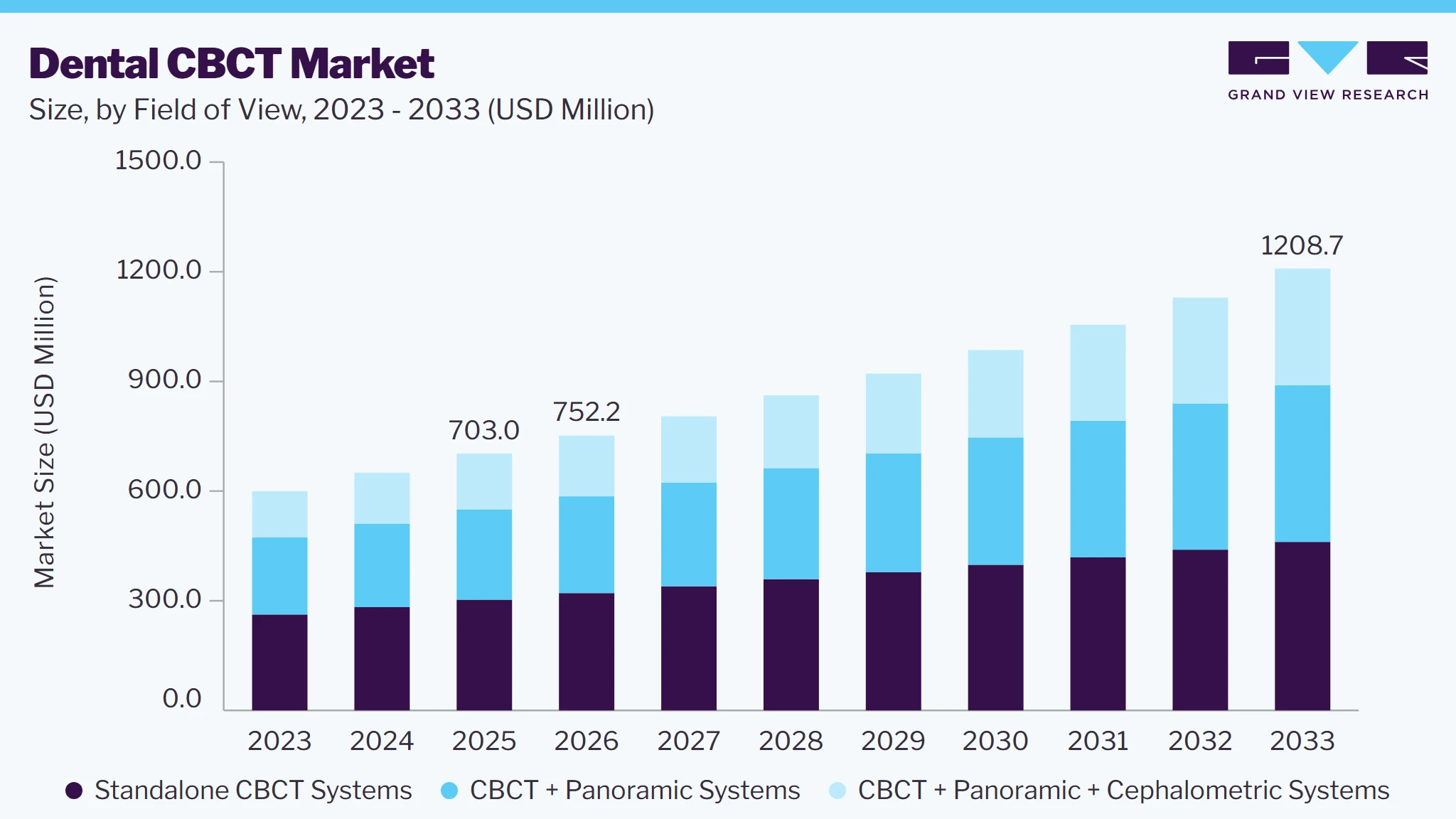 To learn more about this report, Download Free Sample Report
"For nearly two decades, BeamReaders has worked to make radiologist expertise accessible to every dental practice," said Anthony Allison, Director of Growth at BeamReaders. "This integration removes the last point of friction, as clinicians can now get a second set of expert eyes on any scan in just a few clicks."
Increasing adoption of evidence-based clinical guidelines is supporting the wider use of CBCT imaging across dental practices. Professional dental organizations are continuously updating imaging recommendations to reflect advances in technology, radiation safety, and clinical evidence, enabling dentists to use CBCT more confidently and appropriately in daily practice. As more dental professionals align their practices with updated clinical standards, the adoption of CBCT systems continues to increase across both general dentistry and specialty clinics. For instance, in January 2026, the American Association of Endodontists (AAE) and the American Academy of Oral and Maxillofacial Radiology (AAOMR) released the updated joint position statement, "Use of Cone-Beam Computed Tomography in Endodontics 2025 Update." The revised guidance replaced the 2015 statement and introduced 12 streamlined clinical recommendations, reflecting the latest evidence, technological advancements, and best practices for the safe and effective use of CBCT in endodontics.
“The 2025 update delivers a more accessible and modern framework for how and when CBCT should be used in endodontic diagnosis and treatment,” said Dr. Steven J. Katz, President of the American Association of Endodontists. “We’re offering clinicians both guidance and flexibility rooted in the latest evidence and real-world use.”
“With increasing advancements in dental imaging-including artificial intelligence tools and expanded CBCT use in complex cases-it’s critical that dental professionals stay current on protocols that optimize patient outcomes while minimizing unnecessary exposure,” Dr. Katz added.
Growing Preference for CBCT in Complex Dental Procedures
Cone beam computed tomography is preferred over conventional panoramic radiography (OPG) when 3D imaging is required for accurate diagnosis and treatment planning. In dental implant planning, CBCT provides true 1:1 measurements of bone height, width, and density, whereas OPG images may be 20-30% magnified, making precise measurements less reliable. It is also the preferred imaging modality for complex wisdom tooth extractions, as it accurately identifies the relationship between tooth roots and the inferior alveolar nerve, helping reduce the risk of nerve injury. In endodontics, CBCT enables the detection of missed canals, vertical root fractures, and periapical lesions that may not be visible on 2D radiographs due to anatomical superimposition. Also, CBCT offers detailed visualization of temporomandibular joint (TMJ) structures, supporting the diagnosis of condylar erosion, ankylosis, and other bony abnormalities. It is also essential for orthognathic (jaw) surgery planning, where comprehensive 3D anatomical assessment and virtual surgical planning improve surgical precision and treatment outcomes.
Comparative Analysis of Panoramic X-Ray (OPG) and CBCT:
Feature
OPG (Panoramic X-Ray)
CBCT (Cone Beam CT)
Dimensions
2D flat panoramic image
3D volumetric dataset
Radiation Dose
Very low (5–26 µSv)
Low (30–200 µSv)
Scan Time
15–20 seconds
10–40 seconds
Image Detail
Good overall view with limited fine detail
High-resolution imaging with sub-millimeter accuracy
Cost Range*
AED 150–350 (USD 41–95)
AED 500–1,500 (USD 136–408)
Best Suited For
General screening, orthodontics, and routine dental assessment
Implant planning, complex oral surgery, root canal diagnosis, and advanced treatment planning
Insurance Coverage
Usually covered with a dental referral
Often requires pre-authorization and clinical justification
Source:Doctors Clinic Diagnostic
 To learn more about this report, Download Free Sample Report
Market Dynamics
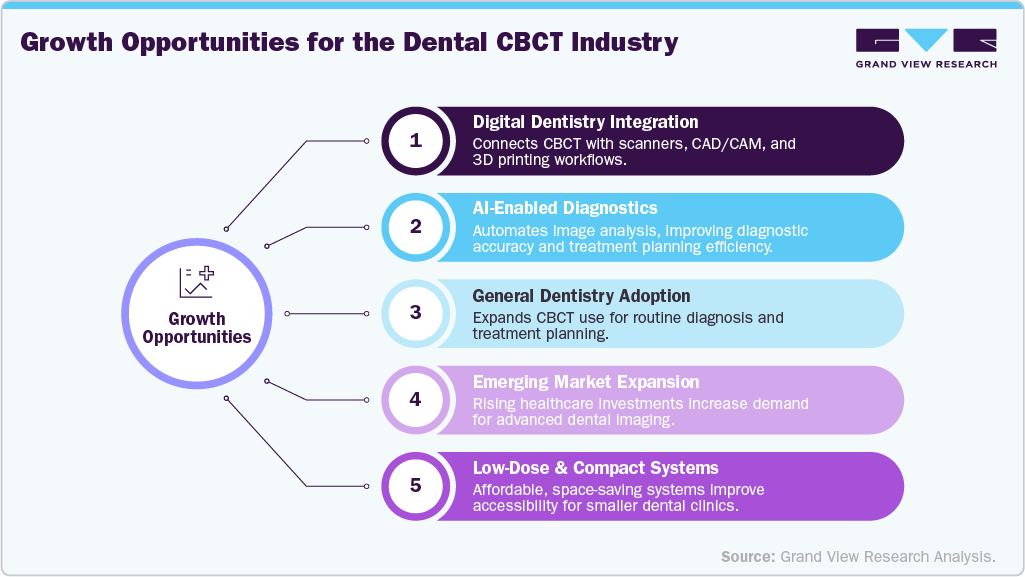
The dental cone beam computed tomography market is experiencing steady growth due to the increasing adoption of digital dentistry and the rising demand for accurate three-dimensional (3D) diagnostic imaging. CBCT systems provide detailed visualization of teeth, jawbones, nerves, and surrounding anatomical structures, enabling precise diagnosis and treatment planning for dental implants, orthodontics, endodontics, periodontics, and oral and maxillofacial surgery. Compared with conventional two-dimensional dental imaging, CBCT offers higher diagnostic accuracy while using lower radiation doses than traditional medical CT scans. The market is further supported by the integration of AI, CAD/CAM systems, intraoral scanners, and 3D printing into digital dental workflows, improving clinical efficiency and treatment outcomes. In addition, the growing prevalence of oral diseases, increasing demand for cosmetic and restorative dental procedures, expansion of specialty dental clinics, and continuous technological advancements such as low-dose imaging and faster scan times are expected to drive sustained market growth during the forecast period.
Dental clinics and hospitals are replacing conventional imaging methods with digital technologies that provide faster, more accurate, and three-dimensional images. CBCT systems play an important role in digital workflows by supporting procedures such as dental implants, orthodontics, endodontics, and oral surgery. The integration of AI further improves efficiency by automatically identifying anatomical structures, assisting in treatment planning, and reducing the time required for image analysis. This helps dentists make more accurate clinical decisions while improving patient outcomes.
The high cost of purchasing and maintaining dental CBCT systems remains a major restraint for market growth. Installing a CBCT unit requires significant initial investment, making it difficult for small dental clinics and independent practitioners to adopt the technology. In addition to the equipment cost, clinics must invest in software licenses, installation, radiation shielding, regular maintenance, calibration, and staff training to operate the system efficiently. Periodic software upgrades and servicing also increase the overall operating expenses throughout the product's lifecycle. In many developing countries, limited healthcare budgets and financial constraints further reduce the ability of dental practices to invest in advanced imaging technologies.
Emerging economies present significant growth opportunities for the dental CBCT market, driven by the ongoing expansion of dental healthcare infrastructure and rising investment in advanced diagnostic technologies. Countries such as India, China, Brazil, and several Middle Eastern nations are witnessing rapid growth in private dental clinics, multispecialty hospitals, and dental education institutions. Rising disposable incomes, growing awareness of oral health, and increasing demand for cosmetic dentistry, dental implants, and orthodontic treatments are encouraging healthcare providers to adopt advanced imaging solutions.
Market Concentration & Characteristics
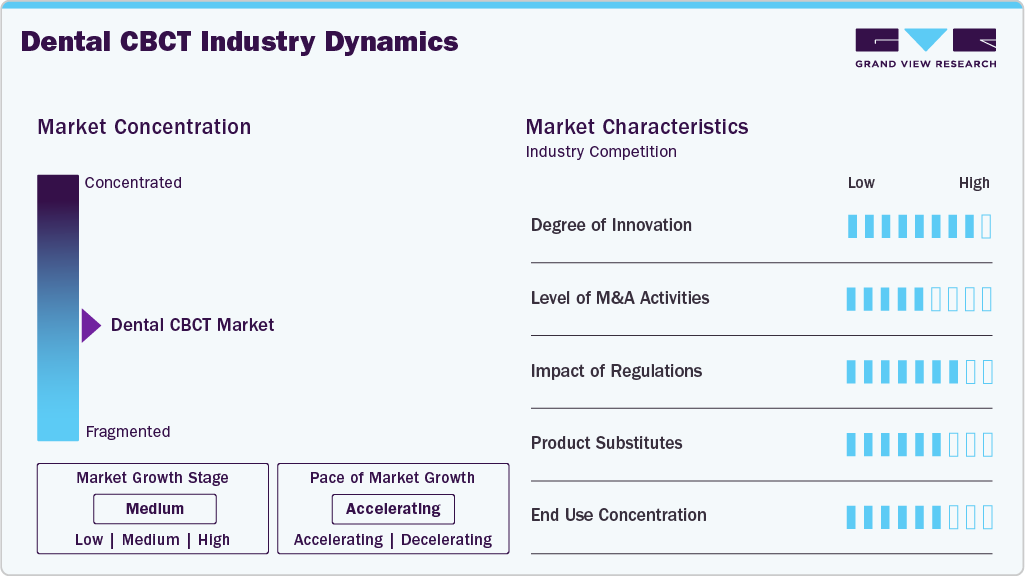
The dental CBCT market is characterized by a high degree of innovation, driven by continuous advancements in digital imaging, AI, and workflow integration. Manufacturers are introducing CBCT systems with low-dose imaging protocols, faster scan times, enhanced image resolution, larger fields of view, and AI-assisted diagnostic capabilities. For instance, Planmeca offers its proprietary Planmeca Ultra Low Dose protocol across its CBCT systems, enabling 3D imaging with a lower patient radiation dose than standard panoramic imaging while maintaining diagnostic image quality through advanced low-dose algorithms.
The dental CBCT industry has witnessed moderate to high merger and acquisition activity, as leading dental technology companies continue expanding their digital dentistry portfolios. Companies are acquiring software developers, digital workflow providers, and imaging technology firms to strengthen their offerings in CBCT, CAD/CAM, AI, and cloud-based treatment planning. These strategic acquisitions enable manufacturers to provide integrated digital ecosystems rather than standalone imaging equipment.
 To learn more about this report, Download Free Sample Report
Dental CBCT systems are regulated as medical imaging devices, making regulatory compliance a significant factor influencing product development and commercialization. Manufacturers must comply with stringent requirements related to radiation safety, image quality, software validation, cybersecurity, quality management systems, and clinical performance. In major markets such as the U.S. and Europe, CBCT systems require regulatory clearance before commercialization. Compliance with the European Medical Device Regulation (MDR 2017/745) and FDA 510(k) requirements increases development costs but ensures device safety and effectiveness.
The market faces moderate competition from substitute imaging modalities, including digital intraoral radiography, panoramic X-ray systems, cephalometric imaging, and conventional medical CT scans. For routine dental examinations, dentists often rely on two-dimensional radiographs because they are less expensive and expose patients to lower radiation. However, for complex procedures such as dental implant planning, impacted teeth assessment, endodontics, and maxillofacial surgery, CBCT remains the preferred imaging modality due to its superior three-dimensional visualization and diagnostic accuracy. As a result, substitute products primarily affect routine diagnostic applications rather than advanced dental procedures.
Demand for dental CBCT systems is highly concentrated among dental specialty clinics, multispecialty dental hospitals, academic institutions, and oral and maxillofacial surgery centers. Dental implant centers and orthodontic practices represent the largest users of CBCT because treatment planning requires accurate 3D anatomical assessment. Growing adoption of digital dentistry has also increased CBCT installations in prosthodontic, endodontic, and periodontic clinics. As dental service providers continue to invest in integrated digital workflows, purchasing decisions by these specialized healthcare facilities significantly influence overall market growth.
Analyst Perspective
The dental CBCT market is expected to witness steady growth, owing to the rising adoption of digital dentistry, growing demand for dental implants and orthodontic treatments, and the growing use of 3D imaging for precise diagnosis and treatment planning. Technological advancements such as AI-enabled image analysis, low-dose imaging, and seamless integration with CAD/CAM systems, intraoral scanners, and digital workflows, continue to support market expansion. Companies focusing on innovation, regulatory compliance, cost-effective solutions, and strong after-sales support are expected to strengthen their competitive position. In addition, increasing investments in modern dental infrastructure and the rapid expansion of specialty dental clinics in emerging economies will create significant growth opportunities.
Field of View (FOV) Insights
The Medium FOV (>8×8 cm to ≤15×15 cm) segment dominated the dental CBCT market, accounting for 44.2% share in 2025. This dominance is supported by the increasing availability of CBCT systems offering flexible medium field of view imaging for comprehensive dental diagnostics. For instance, in March 2025, Planmeca expanded its CBCT portfolio with the launch of the Planmeca Viso G1, a next-generation imaging system featuring a maximum FOV of 11 × 11 cm. The medium FOV configuration is designed to support a wide range of clinical applications, including implantology, orthodontics, endodontics, temporomandibular joint (TMJ) imaging, and comprehensive dental diagnostics. The system also incorporates advanced technologies such as Planmeca Ultra Low Dose and Planmeca CALM motion correction, enabling high-quality diagnostic imaging while minimizing patient radiation exposure.
“Planmeca has always been a pioneer in the dental industry, and our sights are firmly on the horizon even now,” states Timo Müller, Vice President of Planmeca’s X-ray division. “We strongly believe in the Planmeca Viso product family, as bolstered by our satisfied Viso customers in nearly 80 countries around the world. The new devices have once again been developed while listening closely to user feedback and suggestions - with patient safety and diagnostic image quality always as the top priority in line with our Ultra Low Dose philosophy. Viso is, quite simply, the future.”
The large FOV (>15×15 cm) segment is expected to grow at the fastest CAGR during the forecast period, driven by the rising demand for comprehensive craniofacial imaging in complex dental procedures, including full-arch implant rehabilitation, orthognathic surgery, oral and maxillofacial surgery, airway analysis, and TMJ assessment. Large FOV systems enable clinicians to capture the entire craniofacial region in a single scan, reducing the need for multiple exposures while improving diagnostic accuracy and treatment planning efficiency. The increasing adoption of multidisciplinary digital workflows and guided surgical procedures is further driving demand for large FOV CBCT systems. For instance, in February 2025, Vatech Co., Ltd received U.S. FDA 510(k) clearance for the Green X 21 CBCT system, featuring an expanded field of view (FOV) of up to 21 × 19 cm. The system supports panoramic, cephalometric, 3D CBCT, ENT CT, and Face Scan imaging, enabling comprehensive craniofacial examinations for oral surgery, implantology, orthodontics, and ENT applications, thereby strengthening the adoption of large FOV CBCT systems for advanced diagnostic workflows.
Imaging Configuration Insights
The standalone CBCT systems segment dominated the dental CBCT industry, accounting for 43.1% share in 2025. This dominance is supported by the widespread preference among dental clinics and imaging centers for dedicated CBCT units, which offer high-resolution 3D imaging, faster scan times, and greater operational flexibility than integrated systems. Standalone systems are also easier to install and maintain, making them well-suited to both small- and mid-sized dental practices and high-throughput diagnostic centers. In addition, their ability to deliver consistent image quality for a wide range of applications, such as implant planning, orthodontics, and oral surgery, further strengthens their adoption across end users.
The CBCT + Panoramic + Cephalometric Systems segment is expected to grow at the fastest CAGR during the forecast period, driven by the increasing demand for comprehensive, multi-modality imaging platforms that support both diagnostic and orthodontic treatment planning within a single unit. These integrated systems enhance clinical workflow efficiency by combining 3D CBCT imaging with panoramic and cephalometric radiography, reducing the need for multiple devices and enabling more precise orthodontic assessments, orthognathic surgery planning, and airway analysis. The rising adoption of digital orthodontics, clear aligner treatments, and AI-assisted treatment planning is further accelerating demand for these multifunctional imaging solutions.
Clinical Application Insights
The implantology segment dominated the dental CBCT market, accounting for 37.5% share in 2025. This dominance is supported by the rising demand for dental implant procedures driven by increasing tooth loss cases, an aging population, and the growing preference for fixed, aesthetic tooth replacement solutions. CBCT imaging is widely used in implantology for precise assessment of alveolar bone quality, nerve canal mapping, and optimal implant positioning, thereby significantly improving surgical accuracy and reducing the risk of complications. The rapid adoption of digital implant planning and guided surgery workflows is further strengthening the reliance on CBCT systems in implant procedures.
The orthodontics segment is expected to grow at a significant CAGR during the forecast period, driven by the increasing adoption of digital orthodontic workflows, rising demand for clear aligner treatments, and growing need for precise 3D craniofacial imaging in diagnosis and treatment planning. CBCT imaging enables orthodontists to accurately assess tooth positioning, jaw relationships, airway space, and skeletal asymmetries, which improves treatment precision and outcomes. In addition, the integration of CBCT with AI-based treatment planning software and 3D printing technologies further enhances its use in orthodontics, supporting more predictable and customized treatment approaches.
End Use Insights
The private dental clinics segment dominated the dental CBCT industry, accounting for 49.1% share in 2025. This dominance is driven by the rapid installation of in-house imaging systems, rising patient inflow for aesthetic and restorative procedures, and the shift toward same-day digital dentistry workflows. Clinics are investing in CBCT systems to improve diagnostic accuracy for implant planning, orthodontics, and endodontic treatments while reducing dependency on external imaging centers. In addition, manufacturers are offering compact, cost-efficient CBCT solutions and service-backed installation packages, making adoption more feasible for small and mid-sized practices. For instance, in October 2025, the Aspen Group initiated a large-scale rollout of advanced digital imaging systems, including CBCT units, across more than 1,100 Aspen Dental locations in the U.S. The deployment includes Planmeca Viso and ProMax CBCT systems integrated with AI-enabled workflows and low-dose imaging protocols such as Planmeca CALM and Ultra Low Dose technology, aimed at improving diagnostic efficiency and reducing retakes. This expansion highlights the accelerating adoption of CBCT technology across large private dental clinic networks, reinforcing the segment’s dominance in the market.
"Henry Schein and Planmeca have a shared commitment to providing practitioners with high-quality, innovative solutions that ultimately enhance patient care," says Steven Kizy, Vice President and General Manager of Henry Schein’s US Dental Group. "We are pleased to provide our combined offering to Aspen Dental’s network of over 1,100 dental offices."
 To learn more about this report, Download Free Sample Report
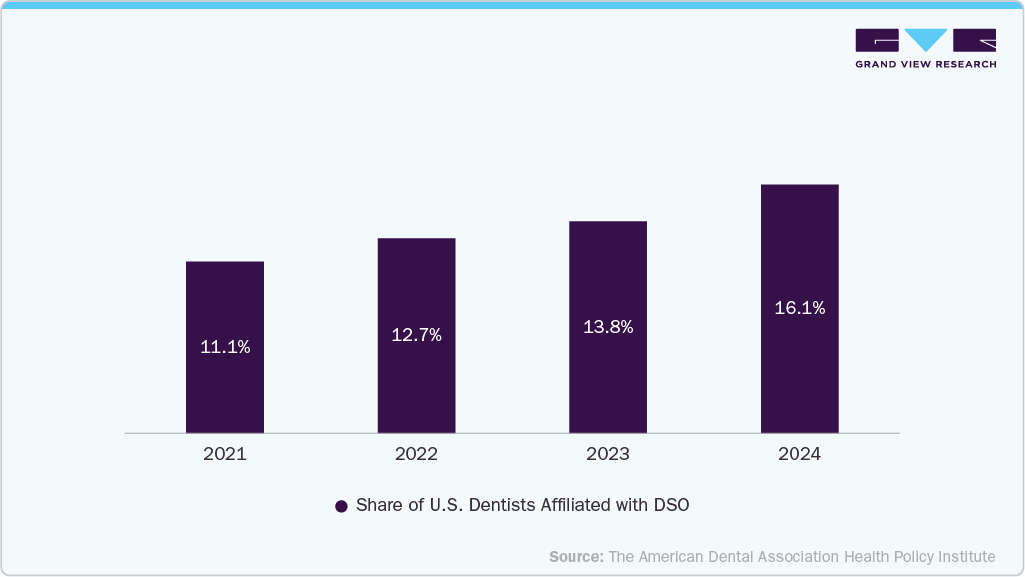
The Dental Service Organizations (DSOs) segment is expected to grow at the fastest CAGR during the forecast period, driven by the rapid consolidation of dental practices under large corporate networks, increasing investments in centralized diagnostic imaging infrastructure, and the need for standardized clinical workflows across multi-location dental groups. DSOs are also expanding their capacity to deliver high-volume dental care by integrating advanced technologies such as CBCT systems, which improve diagnostic consistency, treatment planning efficiency, and cross-clinic interoperability. In addition, strong private equity backing and scalable operating models are enabling faster technology adoption across affiliated practices. For instance, the share of U.S. dentists affiliated with DSOs increased from 11.1% in 2021 to 16.1% in 2024, highlighting the accelerating consolidation trend in the dental industry and the expanding role of DSOs in driving large-scale deployment of advanced dental imaging technologies, including CBCT systems, across multi-clinic networks.
 To learn more about this report, Download Free Sample Report
Regional Insights
The North America dental CBCT market held the largest share of 35.7% in 2025, owing to the region's advanced dental healthcare infrastructure, high adoption of digital dentistry, favorable reimbursement for selected dental procedures, and the widespread presence of specialty dental clinics and DSOs. Increasing demand for dental implants, orthodontics, endodontics, and oral surgery continues to drive CBCT installations, as clinicians rely on 3D imaging for accurate diagnosis and treatment planning. For instance, according to the American Dental Association Research, annual dental implant placements in the U.S. are projected to reach 5.7 million by 2026, driving greater demand for dental CBCT systems for accurate implant planning and guided surgery.
 To learn more about this report, Download Free Sample Report
U.S. Dental CBCT Market Trends
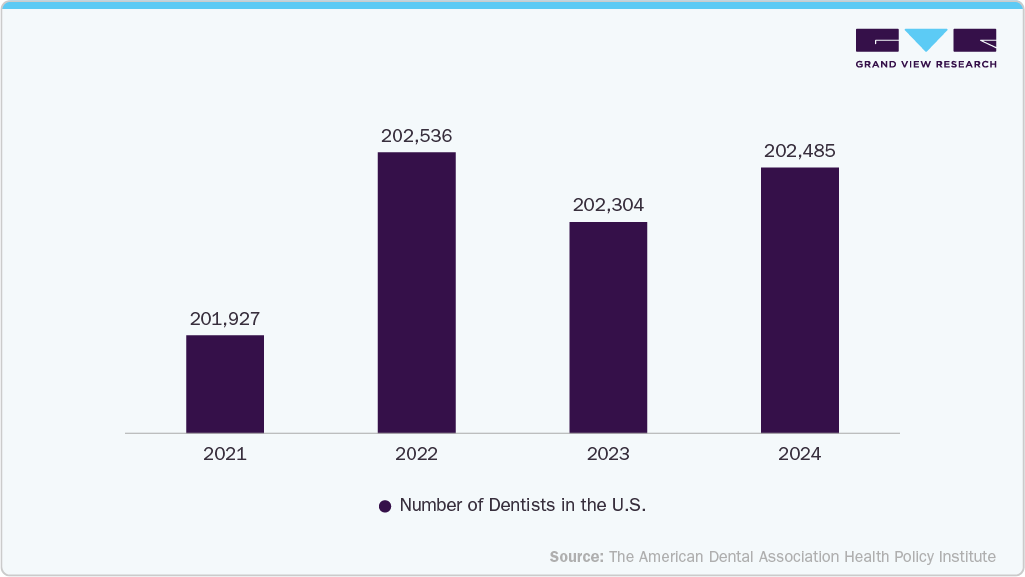
The U.S. dental CBCT industry is witnessing significant growth due to the growing adoption of AI-enabled imaging software, digital treatment planning, and guided implant workflows, which continue to strengthen CBCT utilization across DSOs, specialty clinics, and private practices. For instance, according to the American Dental Association Health Policy Institute, there were 202,485 professionally active dentists in the U.S. in 2024, reflecting a large clinical workforce capable of adopting advanced diagnostic technologies such as CBCT. This extensive provider base, combined with continued investments in digital dental technologies, is supporting sustained market growth.
Europe Dental CBCT Market Trends
 To learn more about this report, Download Free Sample Report
The Europe dental CBCT industry is experiencing steady growth due to increasing adoption of digital dentistry, rising demand for implantology and orthodontic treatments, and strong investments in modern dental clinics across Germany, France, Italy, Spain, and the UK. The region benefits from highly trained dental professionals, established regulatory standards, and growing awareness regarding the clinical advantages of 3D imaging for precise diagnosis and treatment planning.
The UK dental CBCT market is witnessing steady growth due to the increasing burden of oral diseases, rising adoption of digital dentistry, and growing demand for advanced diagnostic imaging in orthodontics and endodontics. Dental clinics are integrating CBCT systems to improve diagnostic accuracy and treatment planning while supporting minimally invasive dental procedures. For instance, in September 2025, according to NHS England, 21,162 children aged 5-9 years were admitted to hospitals in England due to tooth decay during 2024/2025, compared with 13,667 admissions for acute tonsillitis, making tooth decay the leading cause of hospital admissions in this age group. The high prevalence of dental disease is increasing the need for early and precise diagnosis, thereby supporting the adoption of dental CBCT systems across the UK.
Asia Pacific Dental CBCT Market Trends
The Asia Pacific dental CBCT industry is expected to grow at the fastest CAGR during the forecast period. This growth is driven by the increasing number of private dental clinics, rising investments in modern dental infrastructure, and rising awareness of the clinical benefits of CBCT, which are accelerating the adoption of advanced dental imaging systems across the region. For instance, in April 2026, Eka Dental Care announced plans to expand its network to more than 25 self-owned clinics by FY2027. The company stated that it would strengthen its presence across the Mumbai Metropolitan Region while expanding into Tier 1 cities such as Pune and Bengaluru, aiming to improve access to standardized, affordable, and high-quality dental care across India. This continued expansion of organized dental care networks and investments in advanced diagnostic infrastructure are expected to drive the adoption of CBCT systems, supporting sustained market growth.
Dr. Jeevan Shetty, Co-Founder & COO, Eka Dental Care, added: “A huge need exists in the market for reliable and affordable dental services that will provide patients with confidence and trust in their providers. At Eka Dental Care, we’re combining clinical quality with the use of standardized protocols, high-quality technology, and an emphasis on patient hygiene and ethical behavior to provide this solution.”
The China dental CBCT market is witnessing strong growth due to the rapid expansion of digital dentistry and increasing demand for advanced diagnostic imaging across private dental clinics and hospitals. Private dental clinics are investing in modern imaging technologies to improve clinical efficiency, enhance patient outcomes, and support digital workflows integrated with intraoral scanners, CAD/CAM systems, and AI-assisted treatment planning. In addition, the presence of domestic manufacturers and continued government investments in healthcare modernization are further strengthening the adoption of dental CBCT systems across China.
Latin America Dental CBCT Market Trends
The Latin America dental CBCT industry is expected to witness strong growth during the forecast period due to the increasing prevalence of oral diseases, rising adoption of digital dentistry, and expanding access to advanced dental care services. Countries such as Brazil and Argentina are experiencing growing demand for dental procedures, driving the need for 3D diagnostic imaging. In Brazil, the large patient population, improving dental infrastructure, and expanding network of private dental clinics are supporting the adoption of CBCT systems. The country is also recognized as a major destination for dental tourism, particularly for implantology and cosmetic dentistry, where CBCT plays a critical role in accurate diagnosis, treatment planning, and image-guided procedures.
MEA Dental CBCT Market Trends
The Middle East & Africa dental CBCT industry is witnessing significant growth due to increasing investments in healthcare infrastructure, rising adoption of digital dentistry, and growing demand for advanced diagnostic imaging in dental clinics and hospitals. Countries such as Saudi Arabia, the UAE, Kuwait, and South Africa are promoting the modernization of dental care through investments in advanced imaging technologies and digital treatment workflows. Governments are expanding access to oral healthcare through healthcare transformation initiatives and regulatory reforms. Collectively, these factors are expected to strengthen the adoption of dental CBCT systems and drive the continued regional expansion of the market.
 To learn more about this report, Download Free Sample Report
Key Dental CBCT Company Insights
Some of the key companies in the dental CBCT market include Dentsply Sirona, Planmeca Oy, Carestream Dental, J. Morita Corporation, Vatech Co., Ltd., NewTom (Cefla s.c.), ACTEON Group, PreXion Inc., Genoray Co., Ltd., RAY Co., Ltd., Owandy Radiology, Cefla Group, Asahi Roentgen, DÜRR Dental, LargeV Instrument, and Perlove Medical. Organizations are focusing on increasing customer base to gain a competitive edge in the industry. Therefore, key players are taking several strategic initiatives, such as product launches and partnerships with other major companies.
Key Dental CBCT Companies
The following key companies have been profiled for this study of the dental CBCT market.
-
Dentsply Sirona
-
Planmeca Oy
-
Carestream Dental
-
J. Morita Corporation
-
Vatech Co., Ltd.
-
NewTom (Cefla s.c.)
-
ACTEON Group
-
PreXion Inc.
-
Genoray Co., Ltd.
-
RAY Co., Ltd.
-
Owandy Radiology
-
Cefla Group
-
Asahi Roentgen
-
DÜRR Dental
-
LargeV Instrument
-
Perlove Medical
Competitive Benchmarking
Operating Strategies
Competitive Edge
Weaknesses
Established Players (Dentsply Sirona, Planmeca Oy, Carestream Dental)
- Focus on developing advanced CBCT systems with AI-assisted diagnostics, low-dose imaging, and larger field-of-view (FOV) options.
- Expand global presence through strategic partnerships with dental hospitals, universities, distributors, and specialist dental clinics.
- Strong global brand recognition, extensive R&D capabilities, broad product portfolios, established distribution and service networks.
- Strong regulatory expertise, digital workflow integration, and comprehensive training programs enable these companies to maintain leadership in premium CBCT systems.
- High R&D costs, significant regulatory compliance requirements, and premium product pricing may limit adoption among smaller dental clinics.
- Long product development cycles and increasing competition from cost-effective Asian manufacturers also pose challenges.
Emerging Players (PreXion Inc., Genoray Co., Ltd., RAY Co., Ltd., Owandy Radiology)
- Expanding distribution in emerging markets and developing compact imaging solutions for small and medium-sized dental practices.
- Emphasize continuous product improvements, digital workflow compatibility, international certifications, and expansion through regional distributors.
- Competitive pricing, flexible product offerings, faster product development, and growing presence in Asia-Pacific, Latin America, and the Middle East.
- Ability to address demand from cost-sensitive customers while gradually strengthening international distribution and digital imaging capabilities.
- Comparatively lower global brand recognition, smaller direct sales and service networks, and limited penetration in North America and Western Europe.
- Dependence on regional distributors, relatively lower R&D budgets, and challenges in obtaining regulatory approvals across highly regulated markets may restrict broader expansion.
Recent Developments
-
In May 2026, Dentsply Sirona launched Smart View - Detect, the world's first FDA-cleared AI-enabled diagnostic aid for detecting periapical radiolucencies (PARLs) in CBCT scans. The solution, available through DS Core and CE-approved in Europe, improved CBCT review efficiency and was associated with an approximately 46% relative increase in the detection of teeth with PARLs.
“Smart View - Detect is designed to support dentists at two important moments-when reviewing complex CBCT data and when explaining findings to patients,” said Wolf-Dieter Perlitz, Senior Director DS Core at Dentsply Sirona. “By bringing a first of its kind AI-based diagnosis support into DS Core, we continue to advance the value of Connected Dentistry, helping clinicians feel confident in their evaluations, work more efficiently, and communicate more clearly with patients.”
-
In April 2026, Maulana Azad Institute of Dental Sciences inaugurated a state-of-the-art 3D dental imaging facility equipped with a CBCT system to enhance diagnostic precision and treatment planning. The advanced imaging technology provided high-resolution 3D scans with lower radiation exposure and was expected to improve patient care, clinical training, and dental research.
-
In December 2025, Overjet received U.S. Food and Drug Administration 510(k) clearance for its Overjet CBCT Assist imaging software. The AI-powered solution was designed to support the review and diagnostic interpretation of cone beam computed tomography (CBCT) scans by automatically identifying anatomical structures and providing quantitative measurements to enhance diagnosis and treatment planning.
“This FDA clearance for CBCT Assist, Overjet’s 10th FDA clearance to date, is a critical milestone that reinforces our leadership in bringing clinically validated AI to the forefront of oral healthcare,” said Dr. Wardah Inam, CEO of Overjet. “As the industry standard for dental AI, we are committed to giving providers the best tools available to drive evidence-based treatment and ensure the highest quality of care for their patients.”
-
In November 2025, Fussen globally launched the Rubik X CBCT platform after receiving CE and FDA certifications. The company introduced two models-Rubik X1 for general dental practices and Rubik X3 for implant, orthodontic, and maxillofacial applications-featuring field-of-view options of up to 18×20 cm and advanced one-shot cephalometry capabilities.
-
In October 2025, Carestream Dental launched CS 3D Imaging Premium, an AI-powered imaging software solution that streamlined implant planning, improved case acceptance, and simplified case sharing. The software combined CBCT scans with digital impressions and used AI to automate tooth identification and virtual implant placement, enabling faster, more accurate implant workflows.
“CS 3D Imaging Premium represents our commitment to driving innovation in digital dentistry,” Andrew Malcolmson, president, Imaging Technology Solutions, Carestream Dental, said. “By integrating advanced AI into our solutions, we are enabling dental practices to work more efficiently; enhance patient engagement through clearer treatment options; and foster seamless communication between clinicians. This launch demonstrates our dedication to transforming clinical workflows and empowering dental professionals to deliver what's next in exceptional care.”
-
In August 2025, Vatech launched the Clever One integrated dental platform in the U.S. following FDA clearance for its AI-driven lesion detection feature. The platform unified panoramic, CBCT, intraoral, facial, and STL imaging into a single workflow and introduced AI-powered diagnostic and treatment-planning capabilities, as well as cloud-based collaboration.
Dental CBCT Market Report Scope
Report Attribute
Details
Market size in 2025
USD 703.0 million
Estimated market size in 2026
USD 752.2 million
Projected market size by 2033
USD 1,208.7 million
Growth rate
CAGR of 7.0% from 2026 to 2033
Base year for estimation
2025
Actual estimates/Historical data
2021 - 2024
Forecast period
2026 - 2033
Quantitative units
Revenue in USD million and CAGR from 2026 to 2033
Report coverage
Revenue forecast, company ranking, competitive landscape, growth factors, and trends
Segments covered
Field of view, imaging configuration, clinical application, end use, region
Regional scope
North America; Europe; Asia Pacific; Latin America; Middle East & Africa
Country scope
U.S.; Canada; Mexico; UK; Germany; France; Italy; Spain; Denmark; Sweden; Norway; Japan; China; India; Thailand; Australia; South Korea; Brazil; Argentina; South Africa; Saudi Arabia; UAE; Kuwait
Key companies profiled
Dentsply Sirona; Planmeca Oy; Carestream Dental; J. Morita Corporation; Vatech Co., Ltd.; NewTom (Cefla s.c.); ACTEON Group; PreXion Inc.; Genoray Co., Ltd.; RAY Co., Ltd.; Owandy Radiology; Cefla Group; Asahi Roentgen; DÜRR Dental; LargeV Instrument; Perlove Medical.
Customization scope
Free report customization (equivalent up to 8 analyst’s working days) with purchase. Addition or alteration to country, regional & segment scope
Pricing and purchase options
Avail customized purchase options to meet your exact research needs. Explore purchase options
Global Dental CBCT Market Report Segmentation
This report forecasts revenue growth at the global, regional & country levels and provides an analysis of the latest industry trends in each of the sub-segments from 2021 to 2033. For this study, Grand View Research has segmented the global dental CBCT market report based on field of view, imaging configuration, clinical application, end use, and region:
-
Field of View Outlook (Revenue, USD Million, 2021 - 2033)
-
Small FOV (≤8×8 cm)
-
Medium FOV (>8×8 cm to ≤15×15 cm)
-
Large FOV (>15×15 cm)
-
-
Imaging Configuration Outlook (Revenue, USD Million, 2021 - 2033)
-
Standalone CBCT Systems
-
CBCT + Panoramic Systems
-
CBCT + Panoramic + Cephalometric Systems
-
-
Clinical Application Outlook (Revenue, USD Million, 2021 - 2033)
-
Implantology
-
Orthodontics
-
Endodontics
-
Oral & Maxillofacial Surgery
-
Periodontics
-
General Dentistry
-
-
End Use Outlook (Revenue, USD Million, 2021 - 2033)
-
Private Dental Clinics
-
Dental Service Organizations (DSOs)
-
Dental Hospitals
-
Academic & Research Institutes
-
Diagnostic Imaging Centers
-
-
Regional Outlook (Revenue, USD Million, 2021-2033)
-
North America
-
U.S.
-
Canada
-
Mexico
-
-
Europe
-
UK
-
Germany
-
France
-
Italy
-
Spain
-
Denmark
-
Sweden
-
Norway
-
-
Asia Pacific
-
Japan
-
China
-
India
-
Thailand
-
Australia
-
South Korea
-
-
Latin America
-
Brazil
-
Argentina
-
-
Middle East & Africa
-
South Africa
-
Saudi Arabia
-
UAE
-
Kuwait
-
-
Research Methodology
The dental CBCT market figures in this report are based on a proven research process that combines executive interviews with secondary research from proprietary databases, company filings, and recognized regulatory and institutional sources. Market size is built through value-chain sizing-reconciling supply-side and demand-side estimates-and triangulated with bottom-up and top-down approaches. Every estimate passes multiple levels of expert validation before publication, with each dental CBCT segment quantified using the revenue-capture definitions in the table below.
Segment Definition
Segment - Field of View
Revenue capture definition
Small FOV (≤8×8 cm)
Revenue generated from CBCT systems designed for localized dental imaging, primarily used for endodontics, single-tooth diagnosis, implant planning for individual teeth, and limited anatomical assessments.
Medium FOV (>8×8 cm to ≤15×15 cm)
Revenue generated from CBCT systems capable of imaging multiple teeth, a complete dental arch, or both jaws, making them suitable for implantology, orthodontics, periodontics, oral surgery, and general dentistry.
Large FOV (>15×15 cm)
Revenue generated from CBCT systems offering comprehensive craniofacial imaging with a large field of view. These systems are primarily used for complex implant cases, orthognathic surgery planning, temporomandibular joint (TMJ) evaluation, airway analysis, oral and maxillofacial surgery, and advanced orthodontic treatment planning. Large FOV systems are commonly installed in dental hospitals, academic institutions, and specialty imaging centers.
Estimation Model
Layer Name
Description
Bottom-Up Estimation
The market is estimated by analyzing the installed base and annual procurement of dental CBCT systems across private dental clinics, DSOs, dental hospitals, academic & research institutes, and diagnostic imaging centers at the country, regional, and global levels. The assessment incorporates demand across small, medium, and large field-of-view (FOV) systems, along with different imaging configurations, including standalone CBCT, CBCT + panoramic, and CBCT + panoramic + cephalometric systems.
Top-Down Approach
The market estimation begins with an assessment of the global dental imaging equipment market, followed by evaluating the contribution of CBCT systems through secondary research and expert validation. The analysis considers key market indicators such as the number of dental clinics, adoption of digital dentistry, volume of dental implant and orthodontic procedures, utilization of advanced 3D imaging technologies, and investments in modern dental infrastructure across major countries.
Supply-Side Analysis
The analysis evaluates the manufacturing capacity and annual shipments of leading CBCT manufacturers, along with product portfolio diversification based on field of view (FOV), imaging configuration, and software capabilities. It also assesses manufacturing facilities, average selling prices, regional sales performance, distribution and dealer networks, service infrastructure, and geographic revenue contribution.
Delivered Customizations
This report has been delivered with the following In-depth customizations
Client Request
Customization Delivered
Value Adds
CBCT System Configuration & Clinical Workflow Assessment
Performed an in-depth evaluation of dental CBCT systems based on Field of View (FOV), small, medium, and large, and imaging configurations, including standalone CBCT, CBCT with panoramic imaging, and CBCT with panoramic plus cephalometric capabilities. The assessment examined the suitability of each configuration for implantology, orthodontics, endodontics, oral surgery, periodontics, and routine dental diagnosis while identifying trends in technology adoption, imaging workflow, and equipment utilization across different dental specialties.
Assists manufacturers and investors in identifying the most commercially attractive CBCT configurations, prioritizing product development, aligning technology investments with clinical demand, and targeting specialty-specific growth opportunities.
Practice-Level Investment & Utilization Analysis
Assessed CBCT utilization patterns across private dental clinics, dental service organizations (DSOs), dental hospitals, academic institutions, and diagnostic imaging centers. The study analyzed equipment investment priorities, ownership versus referral imaging models, equipment utilization rates, replacement planning, financing preferences, and factors influencing capital expenditure decisions. It also compared adoption trends across developed and emerging healthcare markets.
Enables companies to refine commercial strategies, identify customer groups with the highest purchasing potential, improve channel planning, develop competitive financing models, and optimize regional market expansion strategies.
Technology Benchmarking & Competitive Capability Assessment
Benchmarked major CBCT manufacturers based on imaging performance, AI integration, digital workflow compatibility, field-of-view flexibility, radiation dose optimization, service capabilities, geographic footprint, and innovation pipeline. The analysis also reviewed strategic initiatives such as product upgrades, software enhancements, regulatory approvals, channel expansion, and partnerships that influence competitive positioning within the dental imaging industry.
Provides actionable insights for competitive benchmarking, product differentiation, technology roadmap planning, strategic partnerships, and long-term business expansion while helping companies strengthen their position in the rapidly evolving digital dentistry ecosystem.
Frequently Asked Questions About This Report
The global dental CBCT market size was valued at USD 703.0 million in 2025 and is estimated at USD 752.2 million for 2026.
The global dental CBCT market is expected to grow at a CAGR of 7.0% from 2026 to 2033, reaching USD 1,208.7 million.
Key factors include increasing adoption of digital dentistry, rising demand for accurate 3D diagnostic imaging, and the growing number of dental implant, orthodontic, endodontic, and oral surgery procedures worldwide.
North America dominated with a 35.7% revenue share in 2025.
Asia Pacific is the fastest-growing region over the forecast period.
The medium FOV (>8×8 cm to ≤15×15 cm) segment held the largest share of 44.2% in 2025, while the large FOV (>15×15 cm) is the fastest-growing segment over the forecast period.
The standalone CBCT systems held the largest share of 43.1% in 2025, while CBCT + Panoramic + Cephalometric Systems is the fastest-growing segment over the forecast period.
The private dental clinics held the largest share of 49.1% in 2025, while Dental Service Organizations (DSOs) is the fastest-growing segment over the forecast period.
Key players include Dentsply Sirona, Planmeca Oy, Carestream Dental, J. Morita Corporation, Vatech Co., Ltd., NewTom (Cefla s.c.), ACTEON Group, PreXion Inc., Genoray Co., Ltd., RAY Co., Ltd., Owandy Radiology, Cefla Group, Asahi Roentgen, DÜRR Dental, LargeV Instrument, and Perlove Medical.
The implantology held the largest share of 37.5% in 2025 and is the fastest-growing segment over the forecast period.
About the Author(s)
Medical Devices Research Team
Healthcare · Medical DevicesThis report was authored by the medical devices research team at Grand View Research - comprising two research analysts, one senior research analyst, and one industry expert - with specialized expertise in the medical devices segment of the healthcare industry. All findings are based on proprietary healthcare databases, executive interviews, and regulatory analysis, subject to internal peer review prior to publication.
Last Updated:
Speak to Analyst

Customize this report to your needs - add regions, segments, or data points, with 20% free customization.
Or view our licence options:


ISO 9001:2015 & 27001:2022 Certified
We are GDPR and CCPA compliant! Your transaction & personal information is safe and secure. For more details, please read our privacy policy.


