
- Home
- »
- Healthcare IT
- »
-
Digital Health For Cardiovascular Market Size Report, 2033GVR Report cover

Digital Health For Cardiovascular Market (2026 - 2033)
Size, Share & Trends Analysis Report By Component (Software, Hardware, Services), By End-use (Patients, Providers, Payers), By Region (North America, Europe, Asia Pacific), And Segment Forecasts
Market Size, 2025
$50.2BMarket Estimate, 2026
$59.0BMarket Forecast, 2033
$158.9BCAGR, 2026–2033
15.2%Digital Health For Cardiovascular Market Summary
The global digital health for cardiovascular market size was valued at USD 50.2 billion in 2025 and is projected to grow from USD 59.0 billion in 2026 to USD 158.9 billion by 2033, at a CAGR of 15.2% from 2026 to 2033. North America dominated the market, accounting for the largest revenue share of 38.1% in 2025. The rising prevalence of cardiovascular diseases and the demand for continuous, technology-enabled care are accelerating the adoption of digital health solutions for cardiovascular management.
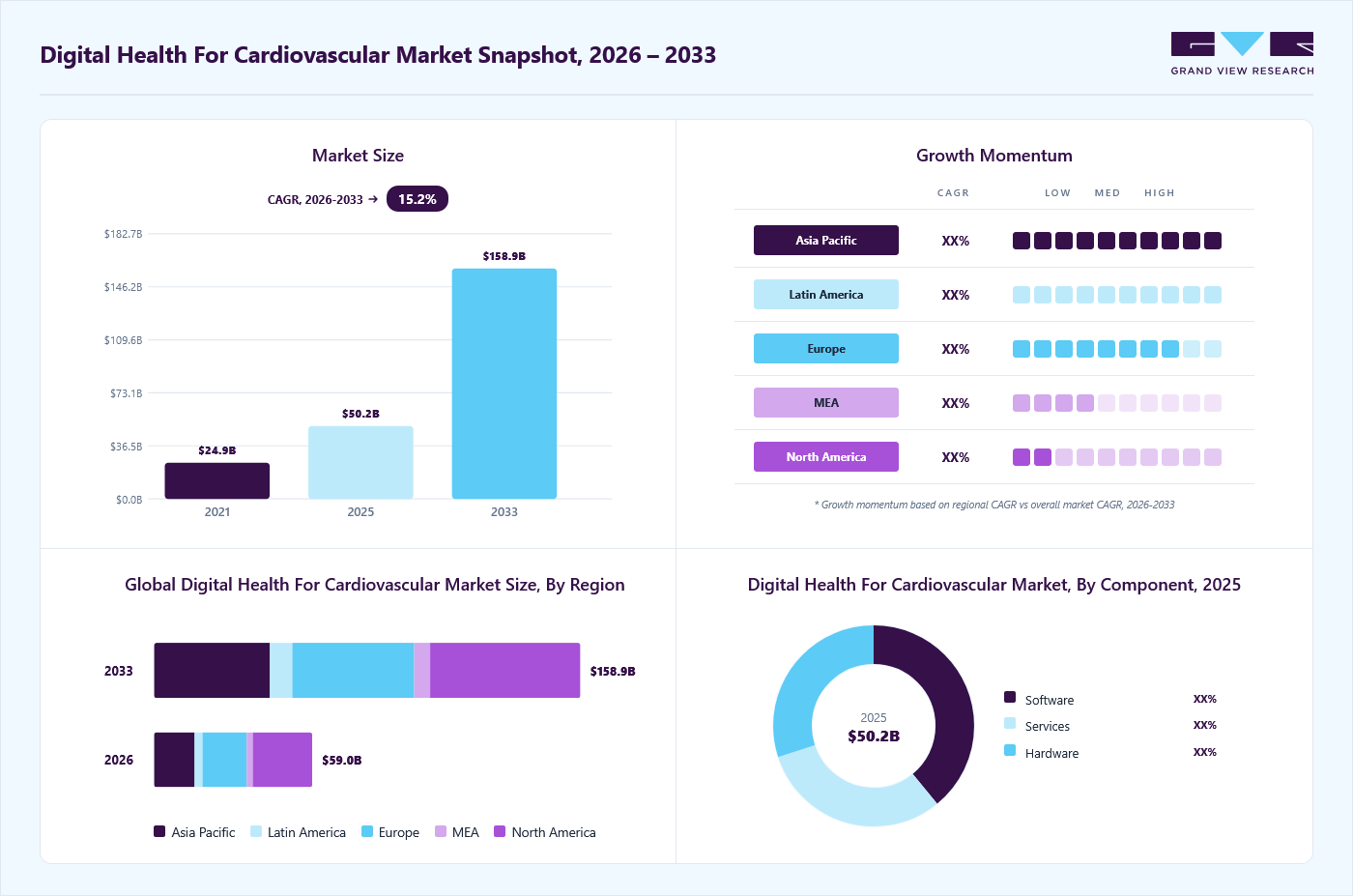 Source: Grand View Research, IR Documents, Primary Interviews, Paid DatabasesTo learn more about this report,
 Download Free Sample Report
Key Market Trends & Insights
- By component: The software segment held the largest market share of 39.1% in 2025.
- By end-use: The patient segment held a dominant market share of 34.5% in 2025.
Regional Highlights
- Largest regional market: North America (38.1% revenue share, 2025)
- Fastest-growing regional market: Asia Pacific (highest CAGR, 2026-2033)
- By country: The U.S. held the largest market share in 2025.
Market Size & Forecast
- Market size in 2025: USD 50.2 Billion
- Estimated market size in 2026: USD 59.0 Billion
- Projected market size by 2033: USD 158.9 Billion
- CAGR (2026-2033): 15.2%
Prism AI by Grand View Research Free to tryAsk a question about the digital health for cardiovascular market✓Every figure cited from GVR research Prefer the report? Download free sample →
Technologies such as remote patient monitoring, wearable devices, mobile health applications, telecardiology, and AI-enabled diagnostic platforms enable early disease detection, ongoing monitoring, and personalized treatment.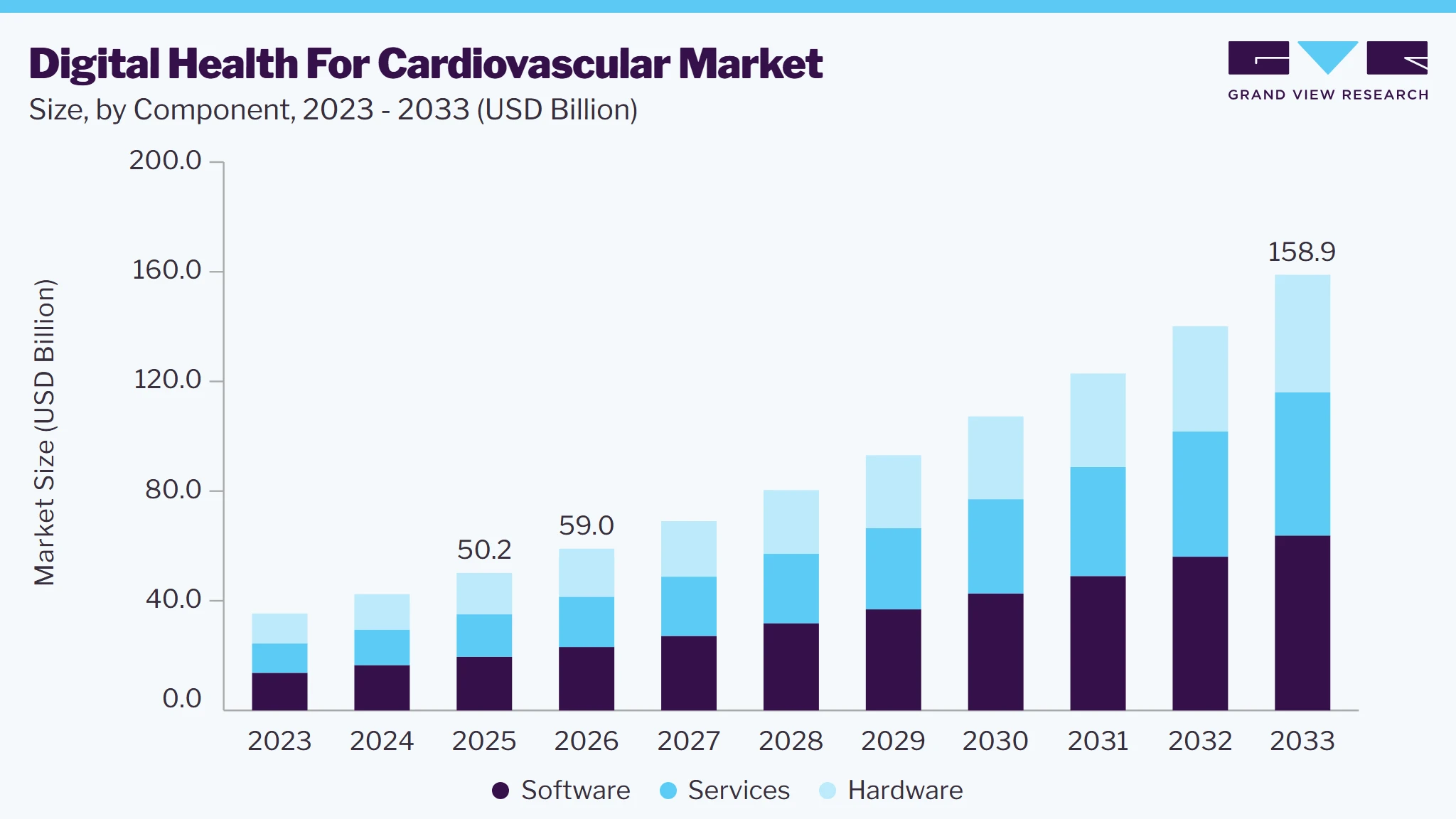 To learn more about this report, Download Free Sample Report
These tools help healthcare providers improve disease management, increase patient engagement, and ease the strain on traditional healthcare systems.
Market Dynamics
The digital health for cardiovascular market is experiencing significant growth, driven by the increasing adoption of remote patient monitoring, wearable cardiac devices, telecardiology, artificial intelligence (AI), and connected health platforms that enable continuous and personalized cardiovascular care. The rising prevalence of cardiovascular diseases, growing emphasis on early diagnosis and preventive care, and increasing demand for value-based healthcare are accelerating the integration of digital technologies across clinical and home care settings. In addition, advancements in AI-powered analytics, cloud-based platforms, and interoperable digital health ecosystems are improving clinical decision-making, patient engagement, and care coordination. However, concerns related to data privacy, cybersecurity, interoperability, regulatory compliance, and the high implementation costs of advanced digital health solutions continue to restrain market adoption, particularly among smaller healthcare providers. Addressing these challenges through secure, scalable, and interoperable digital health technologies is expected to remain a key focus for industry stakeholders and support long-term market growth.
The increasing collaboration between healthcare providers, medical device companies, and technology firms is driving growth in the digital health for cardiovascular market. Organizations are partnering to combine cardiovascular monitoring devices, artificial intelligence (AI), real-time analytics, cloud connectivity, and telehealth capabilities to improve early detection and remote management of heart conditions. These collaborations are expanding access to continuous cardiovascular monitoring and enabling healthcare providers to receive patient data outside traditional clinical settings. For instance, in July 2025, OMRON Healthcare expanded its collaboration with Tricog Health to launch KeeboHealth, an AI-powered connected health platform that combines OMRON’s connected cardiovascular monitoring devices with Tricog’s AI-based cardiac analysis engine. The platform supports real-time data analysis and home-based monitoring to identify early warning signs and support remote cardiac care. Similarly, in July 2025, Philips collaborated with Epic to integrate Philips’ ambulatory cardiac monitoring and diagnostic services with Epic’s Aura platform, improving interoperability between cardiac monitoring technologies and electronic health records. Such collaborations are accelerating the integration of digital technologies into cardiovascular care and contributing to overall market growth.
Data privacy and cybersecurity concerns remain key challenges limiting the adoption of digital health solutions for cardiovascular care. Connected medical devices, wearable technologies, remote patient monitoring (RPM) platforms, and cloud-based healthcare systems continuously collect, transmit, and store sensitive patient information, including electrocardiograms (ECGs), heart rate and rhythm data, blood pressure measurements, cardiac imaging records, and treatment histories. As healthcare organizations become increasingly reliant on interconnected digital ecosystems, the risk of cyberattacks, unauthorized access, and data breaches continues to grow.
These risks have become more prominent with the increasing use of connected cardiovascular monitoring technologies. For instance, in January 2025, the U.S. Food and Drug Administration (FDA) identified cybersecurity vulnerabilities in certain Contec and Epsimed patient monitors that could potentially allow unauthorized access to patient information and remote manipulation of device functions. Such incidents reinforce concerns regarding the security and reliability of connected medical devices and may delay their adoption across healthcare settings.
In addition, healthcare providers and technology vendors must comply with stringent data protection regulations such as HIPAA, GDPR, and other regional privacy frameworks, which require robust encryption, secure cloud infrastructure, identity and access management, continuous security monitoring, regular software updates, and disaster recovery planning. According to the HIPAA Journal, 725 large healthcare data breaches affecting 500 or more individuals had been reported by January 2025, highlighting the growing cybersecurity risks facing the healthcare sector. Meeting these security and regulatory requirements increases implementation complexity and operational costs, particularly for smaller healthcare providers with limited financial and technical resources, thereby restraining the adoption of digital health solutions for cardiovascular care.
The expansion of remote patient monitoring (RPM) is creating significant growth opportunities for the digital health for cardiovascular market as healthcare systems increasingly shift toward proactive, home-based management of chronic cardiovascular conditions. Heart failure remains one of the leading causes of hospitalization and readmission, with nearly one in four patients readmitted within 30 days of discharge. Healthcare providers are increasingly adopting RPM programs to enable continuous monitoring of vital signs, symptoms, and treatment adherence, improving care coordination while reducing avoidable hospitalizations and healthcare costs.
This transition is driving demand for connected cardiovascular monitoring devices, cloud-based patient management platforms, telecardiology solutions, and digital care coordination services. For instance, in August 2025, the American Heart Association launched the Connected Care program in collaboration with Cadence, a virtual heart failure management program that combines remote monitoring devices with clinical support, enabling hospitals to enroll patients before discharge and monitor their health remotely.
Supporting this trend, a meta-analysis published, a meta-analysis published in January 2025 in the European Journal of Heart Failure demonstrated that remote monitoring programs significantly reduce hospitalizations and mortality when combined with timely clinical intervention. As healthcare providers continue expanding virtual cardiovascular care beyond traditional clinical settings, RPM is expected to become a key driver of long-term market growth.
Technological Trend Analysis
Artificial intelligence (AI) is emerging as a transformative technology in the digital health for cardiovascular market by enhancing diagnostic accuracy, clinical decision-making, and predictive disease management. AI algorithms can rapidly analyze complex datasets generated from electrocardiograms (ECGs), echocardiography, cardiac imaging, and electronic health records to identify cardiovascular abnormalities, stratify patient risk, and support earlier diagnosis. These capabilities improve workflow efficiency, reduce diagnostic variability, and enable more personalized treatment planning.
The market is also witnessing rapid advancements in predictive analytics and machine learning, enabling healthcare providers to anticipate disease progression and optimize clinical interventions. For instance, a UHN-led study published in Nature in March 2026 demonstrated that AI models using smartwatch-derived physiological data could predict worsening heart failure days to weeks before hospitalization by estimating changes in cardiopulmonary fitness. Furthermore, the ongoing developments in AI, cloud computing, and interoperable digital health platforms are improving clinician confidence, facilitating integration into existing healthcare workflows, and accelerating the adoption of AI-enabled cardiovascular solutions across hospitals, outpatient clinics, and home healthcare settings.
Market Concentration & Characteristics
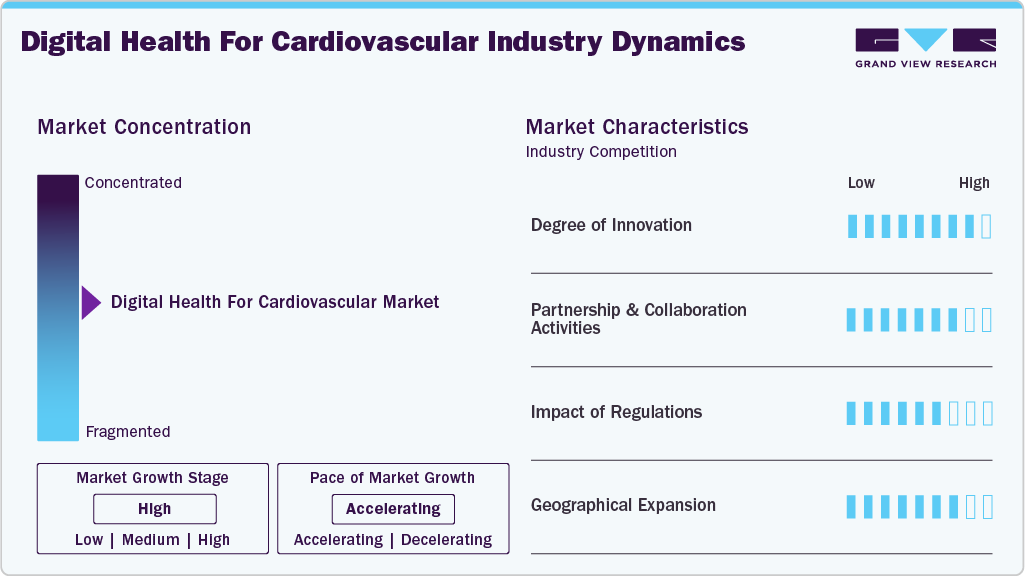
The digital health for cardiovascular market exhibits a high degree of innovation, driven by rapid advancements in artificial intelligence (AI), wearable technologies, remote patient monitoring (RPM), cloud-based analytics, and connected care platforms. Continuous innovation is enhancing real-time patient monitoring, predictive risk assessment, and personalized disease management while expanding cardiovascular care beyond traditional clinical settings. For instance, in August 2025, Respiree received FDA 510(k) clearance for its RS001 cardio-respiratory wearable and 1Bio connected care platform, expanding passive cardio-respiratory monitoring into home-based care. This development highlights the growing integration of wearable sensors, AI-enabled analytics, and connected digital health platforms to support continuous cardiovascular monitoring and improve clinical decision-making.
Partnership and collaboration activities are high as technology companies, healthcare providers, and medical organizations increasingly combine capabilities to advance digital cardiovascular care. For instance, in November 2025, the American College of Cardiology partnered with OpenEvidence to develop AI-enabled tools that integrate cardiovascular clinical guidance and research into clinical decision-making. Such collaborations are strengthening the integration of artificial intelligence and evidence-based digital tools into cardiovascular care.
 To learn more about this report, Download Free Sample Report
The impact of regulations is moderately high in the digital health for cardiovascular market, as companies must comply with requirements related to data privacy, cybersecurity, medical device safety, artificial intelligence, and clinical validation. These regulations influence product development, approval, commercialization, and data management practices. As regulatory requirements become more stringent, vendors are required to invest in compliance systems, cybersecurity infrastructure, and software governance, increasing operational complexity and influencing market growth.
Geographical expansion is high as companies increasingly extend AI-based diagnostics, connected devices, and digital cardiovascular solutions into new regional markets. For instance, in July 2025, AliveCor launched its AI-powered Kardia 12L ECG system in India following its successful introduction in the U.S., after receiving approval from India’s Central Drugs Standard Control Organization (CDSCO). This expansion is helping extend advanced digital cardiac monitoring technologies into the Asia-Pacific market and broaden access to AI-enabled cardiovascular care.
Case Study: Kafri Heart and Vascular Clinic Elevates Cardiology Care with PrognoCIS EHR
Overview
Kafri Heart & Vascular Clinic, a California-based cardiovascular practice, provides comprehensive cardiac care supported by advanced diagnostic services. To improve clinical documentation, streamline workflows, and transition from paper-based records to a digital environment, the clinic implemented the PrognoCIS cloud-based cardiology electronic health record (EHR) platform. The solution was selected for its specialty-specific functionality, cloud accessibility, and integration with cardiovascular diagnostic workflows.
Challenge
Prior to adopting PrognoCIS, the clinic relied on paper-based documentation, making patient record management and clinical documentation less efficient. Physicians also required secure remote access to patient records and cardiovascular diagnostic information to support timely clinical decision-making across multiple care settings. These limitations affected workflow efficiency and increased the administrative burden associated with managing patient information.
Solution
The clinic implemented PrognoCIS, a cloud-based EHR designed specifically for cardiology practices. The platform offers specialty-specific templates, customizable clinical workflows, secure cloud-based access, and integration with cardiovascular diagnostic equipment. Key capabilities included:
-
Cloud-Based Electronic Health Records: Secure access to patient records from any authorized location.
-
Specialty-Specific Cardiology Templates: Customized documentation templates for cardiovascular examinations and procedures.
-
Diagnostic Integration: Integration with cardiovascular diagnostic systems to improve access to clinical data.
-
Customizable Workflow Management: Configurable workflows designed to support efficient clinical documentation and practice operations.
These capabilities enabled the clinic to transition to a fully digital workflow while improving documentation efficiency and accessibility of patient information.
Results
Following implementation, Kafri Heart & Vascular Clinic reported several operational improvements, including:
-
Successful transition from paper-based documentation to a cloud-based electronic health record system.
-
Improved efficiency in clinical documentation through specialty-specific templates and streamlined workflows.
-
Secure remote access to patient records and cardiovascular diagnostic information, enabling physicians to review patient data from multiple locations.
-
Enhanced workflow efficiency through integrated documentation and digital record management.
Business Impact
By implementing PrognoCIS, Kafri Heart & Vascular Clinic strengthened its digital infrastructure and improved clinical workflow efficiency. The adoption of a specialty-focused cardiology EHR enhanced documentation, facilitated secure access to patient information, and supported more efficient cardiovascular care delivery. This case illustrates the growing role of cloud-based, specialty-specific digital health platforms in improving operational efficiency and supporting the digital transformation of cardiovascular practices.
Analyst Perspective
The rising burden of cardiovascular diseases is accelerating demand for remote patient monitoring, wearable devices, telehealth platforms, AI-enabled diagnostics, and digital care management solutions. In addition, growing adoption of cloud computing, artificial intelligence, and data analytics is improving real-time cardiovascular monitoring, clinical decision-making, and personalized care. Strengthening requirements for early disease detection, remote access to care, interoperability, and healthcare cost optimization are further supporting market uptake. These factors are expected to support the steady growth of the digital health for cardiovascular market over the forecast period.
Component Insights
The software segment held the largest market share of 39.1% in 2025. The segment's dominance is attributed to the growing adoption of AI-powered cardiovascular analytics, remote patient monitoring platforms, clinical decision support tools, and digital applications for cardiovascular disease management. These solutions enable healthcare providers to analyze data from ECG devices, wearable sensors, and connected monitoring systems, supporting early diagnosis and personalized care. For instance, in July 2025, the U.S. FDA cleared Anumana's ECG-AI Low Ejection Fraction 12-Lead algorithm, a machine-learning-based software designed to identify patients with reduced ejection fraction from ECG data. Such regulatory clearances support the integration of AI-based software into cardiovascular diagnostic workflows and strengthen demand for software-driven digital health solutions.
The service segment is expected to grow at the fastest growth rate over the forecast period. Growth is driven by the increasing demand for remote patient monitoring, telecardiology, clinical data interpretation, and technology implementation services. The rising adoption of connected cardiovascular devices is also increasing demand for services that support data analysis and clinical decision-making. For instance, in January 2025, Withings introduced its Cardio Check-Up telemedicine service, which provides users with professional reviews of ECG data and cardiologist reports. The growing integration of digital technologies with specialist-led cardiovascular care is expected to support the expansion of the services segment.
End-use Insights
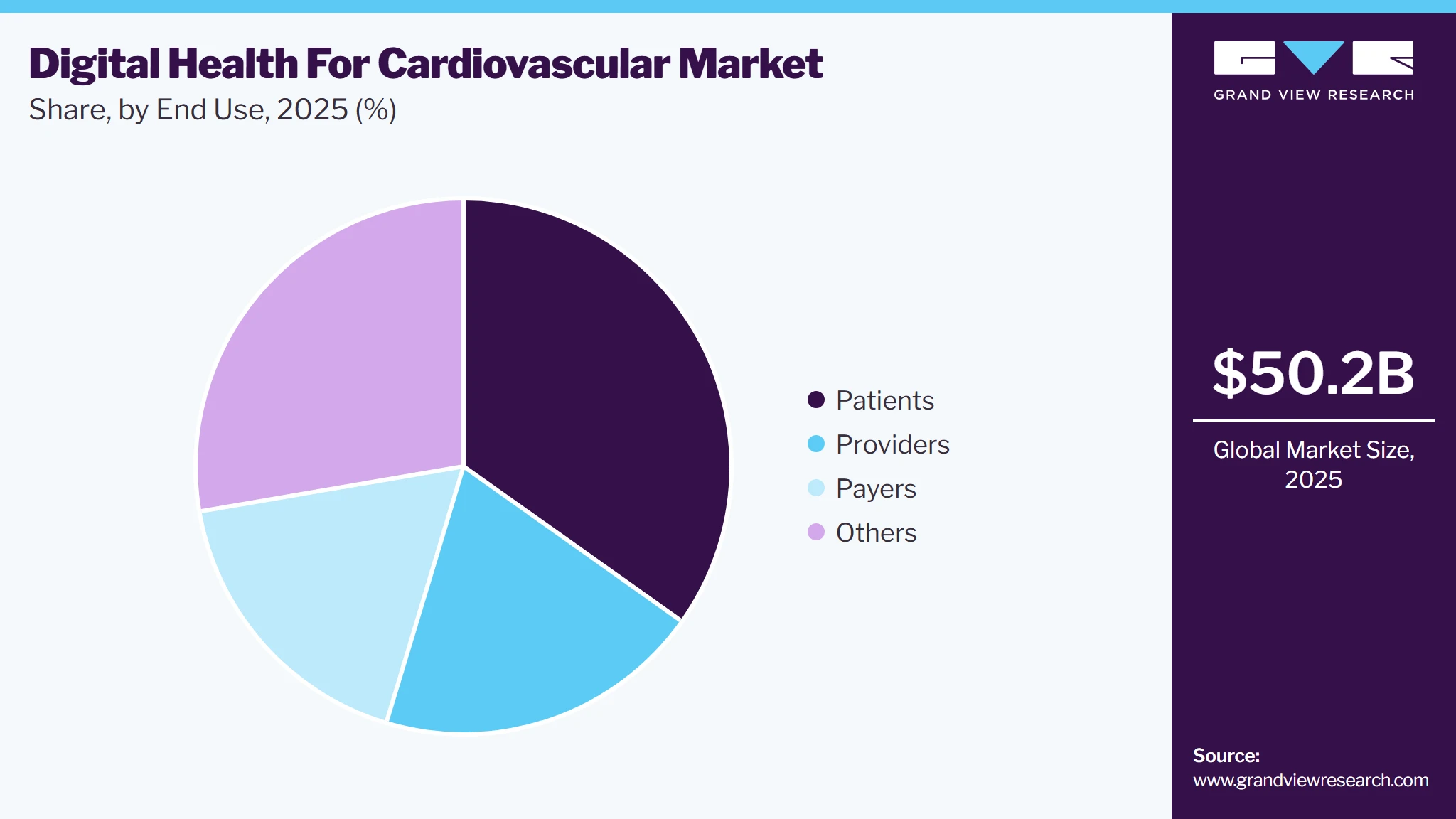
The patients segment held the largest market share of 34.5% in 2025 and is projected to grow at the fastest CAGR over the forecast period. Growth is primarily driven by the increasing adoption of wearable devices, remote patient monitoring (RPM), mobile health applications, and other digital tools that enable individuals to continuously monitor cardiovascular health, support early disease detection, and improve self-management of chronic conditions. For instance, in December 2025, Apple introduced hypertension notifications on Apple Watch in India, using machine learning to analyze heart sensor data over 30-day periods and identify patterns linked to possible hypertension. The feature was trained on data from over 100,000 participants and clinically validated in a study with more than 2,000 participants. Such advancements in consumer-centric digital health technologies are expanding access to continuous cardiovascular monitoring, enhancing patient engagement, and accelerating the adoption of digital health solutions for cardiovascular care.
 To learn more about this report, Download Free Sample Report
The providers segment is expected to witness significant growth in the digital health for cardiovascular market, driven by increasing adoption of telecardiology, remote patient monitoring, AI-enabled diagnostics, electronic health records (EHRs), and clinical decision-support solutions across hospitals, cardiology centers, and clinics. Digital health technologies enable healthcare providers to remotely monitor patients with cardiovascular conditions, support early detection of abnormalities, improve care coordination, and facilitate personalized disease management. The integration of wearable and connected medical devices with digital platforms further enables continuous monitoring of parameters such as ECG, blood pressure, heart rate, and oxygen saturation, reducing the need for frequent in-person visits. In addition, growing emphasis on preventive and value-based care, reducing hospital readmissions, and improving clinical efficiency is expected to drive the adoption of digital cardiovascular health solutions among healthcare providers.
Regional Insights
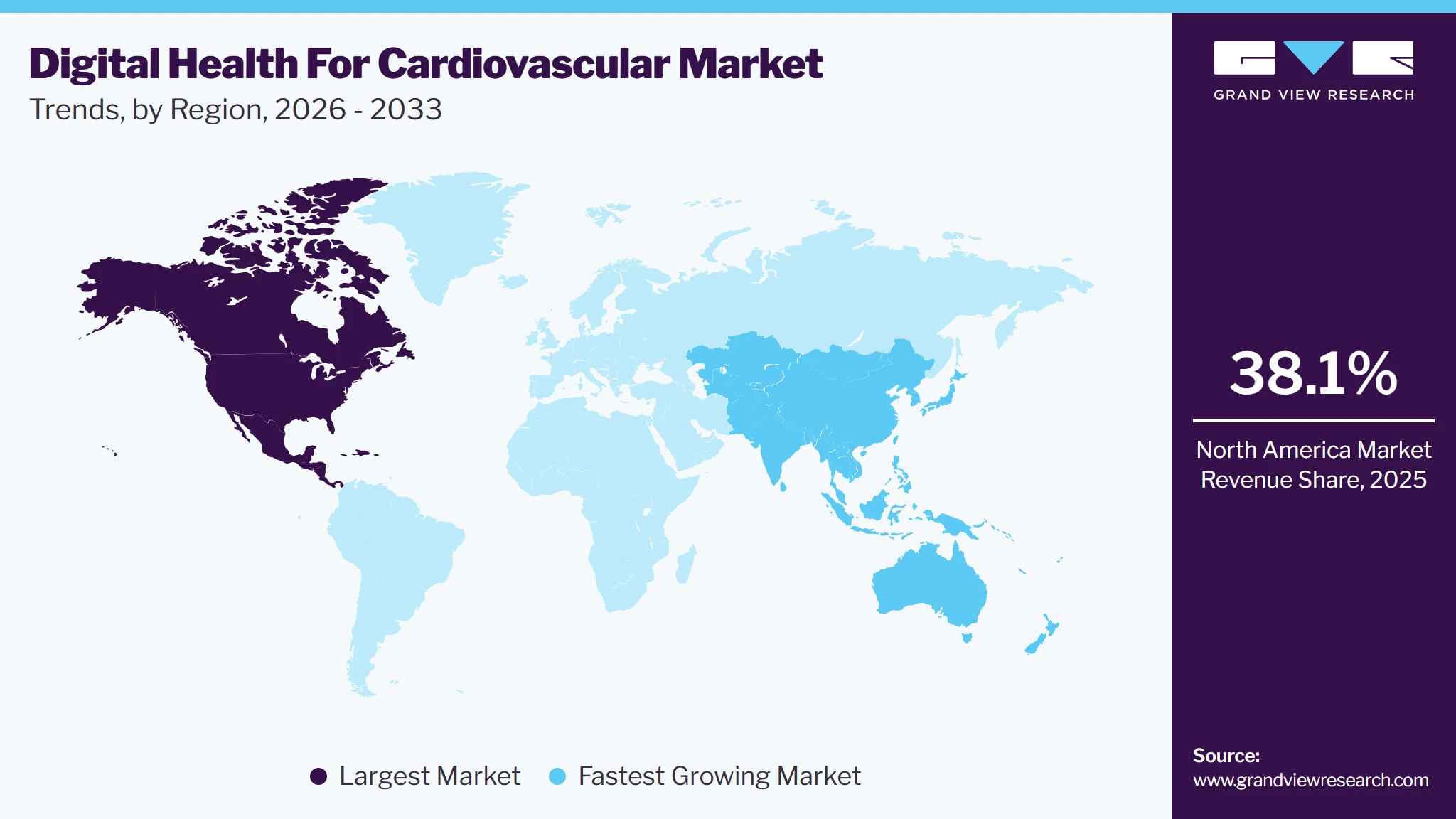
North America dominated the digital health for cardiovascular market, accounting for the largest revenue share of 38.1% in 2025. Growth is driven by the high adoption of remote patient monitoring, wearable cardiac devices, AI-based diagnostics, and digital health platforms. Strong healthcare infrastructure, high healthcare IT spending, the rising burden of cardiovascular diseases, and increasing integration of digital tools with EHR systems further support market growth.
 To learn more about this report, Download Free Sample Report
U.S. Digital Health For Cardiovascular Market Trends
The U.S. digital health for cardiovascular market dominated the North American market in 2025. Market growth is supported by the widespread adoption of remote patient monitoring, AI-enabled diagnostics, and digital cardiovascular imaging. For instance, in July 2025, EviCore updated its coverage guidelines to include Cleerly’s AI-based coronary plaque analysis, supporting broader adoption of AI-powered coronary imaging in the U.S. Increasing healthcare IT spending, advanced digital infrastructure, and the growing burden of cardiovascular diseases are further driving the adoption of digital health solutions for cardiovascular disease management.
Europe Digital Health For Cardiovascular Market Trends
The Europe digital health for cardiovascular market is driven by strong healthcare infrastructure, increasing adoption of remote patient monitoring, and growing use of AI-enabled cardiovascular diagnostics. The region is also benefiting from rising investments in digital health infrastructure and the integration of wearable devices, telehealth platforms, and electronic health records. In addition, the increasing burden of cardiovascular disease and the need for early diagnosis and continuous disease management are driving the adoption of digital cardiovascular solutions across hospitals and healthcare networks.
The UK digital health for cardiovascular market is driven by increasing adoption of digital health solutions across the NHS and private healthcare providers. Remote monitoring, AI-enabled diagnostics, and connected cardiac devices are increasingly being used to improve early detection and long-term cardiovascular disease management. For instance, in June 2026, Royal Devon University Healthcare NHS Foundation Trust was recognized for its digital care pathway, which provides 24/7 home heart monitoring for patients using wearable ECG devices. The system integrates wearable ECG data with the Trust’s electronic patient record, enabling continuous monitoring, faster diagnosis, and earlier clinical intervention. This End Use highlights the increasing integration of wearable cardiac monitoring with hospital information systems and is expected to support the growth of digital cardiovascular solutions in the UK.
The Germany digital health for cardiovascular market is supported by advanced healthcare infrastructure, increasing digitalization, and growing adoption of digital cardiovascular solutions. For instance, in September 2025, Germany added a new reimbursement code for the ProHerz digital health application, enabling physicians to bill for monitoring and evaluating patients with heart failure using the app. The application helps patients identify early changes in their condition and supports ongoing disease management. This development is strengthening the integration of prescription-based digital health applications into cardiovascular care and supporting market growth in Germany.
Asia Pacific Digital Health for Cardiovascular Market Insights
Asia Pacific is expected to register the fastest CAGR of 16.1% during the forecast period. Growth is driven by the rising burden of cardiovascular diseases, the increasing digitization of healthcare, and the growing adoption of remote monitoring, wearable devices, and AI-based cardiovascular diagnostics. Government investments in digital health infrastructure and the expansion of telehealth services are improving access to cardiac care, particularly in rural and underserved areas. For instance, in October 2025, China’s AI-enabled digital health ecosystem is increasingly being used for cardiovascular disease prevention, risk assessment, and remote monitoring.
The China digital health for cardiovascular market held a significant share of the Asia Pacific market in 2025. Market growth is supported by the rapid adoption of AI-based cardiovascular diagnostics and digital health platforms. For instance, in June 2025, Fudan University-affiliated Zhongshan Hospital and the Shanghai Institute for Advanced Research in Intelligent Science jointly launched CardioMind, an AI model specifically designed for cardiovascular care. The platform can analyze clinical information and multiple diagnostic data sources, including CT, echocardiography, and genetic testing, to support cardiovascular diagnosis and decision-making. This development highlights the increasing use of AI-enabled digital health solutions in China’s cardiovascular care system.
The India digital health for cardiovascular market is expanding due to increasing healthcare digitization, rising demand for remote monitoring, and growing adoption of AI-enabled cardiovascular solutions. Government initiatives and investments in indigenous digital health technologies are improving access to preventive and cardiac care, particularly in underserved areas. For instance, in January 2026, India’s Technology Development Board supported the development of a continuous glucose monitoring device incorporating cardiovascular biomarkers to detect heart conditions early. The device is designed to enable continuous monitoring of health parameters and identify early signs of cardiovascular risk. Such initiatives are encouraging the development of locally produced connected health technologies and supporting the integration of digital monitoring into preventive cardiovascular care. This is expected to support the adoption of digital health solutions across hospitals, clinics, and home care settings in India.
Latin America Digital Health For Cardiovascular Market Insights
The Latin America digital health for cardiovascular market is witnessing increasing adoption of remote patient monitoring, telecardiology, wearable cardiac devices, and AI-enabled cardiovascular diagnostics. Market growth is supported by the rising burden of cardiovascular disease, expanding digital healthcare infrastructure, and growing demand for affordable, accessible cardiac care. For instance, in March 2026, Lenovo Brazil and the Heart Institute (InCor-HCFMUSP) presented TRAdA, an AI-enabled wearable solution for remote arrhythmia monitoring. The system continuously analyzes cardiac electrical signals and sends real-time alerts to healthcare professionals when abnormalities are detected. Such developments highlight the growing commercialization of AI-powered remote cardiac monitoring solutions and support the expansion of digital cardiovascular care across Latin America.
The Brazil digital health for cardiovascular market is growing owing to the rising burden of cardiovascular diseases, increasing adoption of telemedicine, and growing investments in digital healthcare infrastructure. Government initiatives promoting digital health and interoperability, along with greater integration of electronic health records, are further supporting market growth. As healthcare systems increasingly emphasize early disease detection, chronic disease management, and value-based care, the demand for digital cardiovascular solutions is expected to continue to grow across hospitals, specialty clinics, and home care settings.
Middle East & Africa Digital Health for Cardiovascular Market Insights
The Middle East & Africa digital health for cardiovascular market is growing due to increasing healthcare digitization, rising cardiovascular disease burden, and growing adoption of AI-enabled diagnostics and remote monitoring solutions. Governments and healthcare providers are investing in digital technologies to improve early diagnosis and continuous cardiac care. For instance, in August 2025, King Abdullah Medical City in Saudi Arabia launched a remote heart failure monitoring program to expand access to specialized cardiac care and support preventive intervention. The initiative demonstrates the increasing adoption of remote cardiovascular monitoring in the region and supports the expansion of digital health solutions for cardiovascular disease management.
The Saudi Arabia digital health for cardiovascular market is witnessing strong growth, supported by the country's Vision 2030 healthcare transformation strategy, increasing healthcare digitalization, and rising prevalence of cardiovascular diseases. In addition, initiatives by the Ministry of Health and the Saudi Health Information Exchange (NPHIES) are improving interoperability and enabling more integrated patient care. The growing adoption of remote patient monitoring, wearable cardiac devices, and AI-assisted clinical decision support is enhancing early diagnosis and long-term management of cardiovascular conditions.
Key Digital Health For Cardiovascular Company Insights
The players in the digital health for cardiovascular market are pursuing strategic initiatives, including partnerships, collaborations, acquisitions, and product launches, to expand their digital cardiovascular care capabilities, strengthen technological expertise, and broaden their market presence. Companies are increasingly focusing on AI-enabled diagnostics, remote patient monitoring, connected devices, digital therapeutics, and cardiovascular data analytics to improve patient outcomes and care delivery.
Key Digital Health For Cardiovascular Companies
The following key companies have been profiled for this study on the digital health for cardiovascular market
-
Apple, Inc.
-
Orange Business
-
Epic Systems Corporation
-
NXGN Management, LLC.
-
Siemens Healthineers AG
-
GE HealthCare
-
CardiAI
-
Cardiologs
-
UltraSight
-
HeartVista Inc. (Vista.ai)
-
Viz.ai, Inc.
-
RSIP Vision
-
Cleerly, Inc.
Competitive Benchmarking
Category
Operating Strategies
Competitive Edge
Weakness
Established Players
Apple, Inc.; Epic Systems Corporation; Siemens Healthineers AG; GE HealthCare
Focus on expanding integrated digital health ecosystems through connected devices, electronic health records, AI-enabled diagnostics, remote patient monitoring, cloud platforms, and cardiovascular data analytics. These companies invest in R&D, regulatory approvals, strategic partnerships, interoperability, and global distribution networks to strengthen adoption across healthcare systems.
Strong brand recognition, extensive financial resources, broad technology portfolios, and established relationships with hospitals, physicians, and patients. Integrated ecosystems enable cross-selling digital platforms, connected devices, imaging solutions, and healthcare IT systems.
High development and implementation costs can limit adoption among smaller healthcare providers and cost-sensitive markets. Complex platforms may require significant infrastructure, integration, cybersecurity capabilities, and specialized training.
Emerging Players
Cardiologs; UltraSight; HeartVista Inc. (Vista.ai); Cleerly, Inc.
Focus on developing specialized AI-enabled cardiovascular solutions for ECG analysis, cardiac imaging, ultrasound, coronary artery disease detection, and clinical decision support. These companies pursue targeted regulatory approvals, clinical validation, strategic partnerships, and focused commercialization to expand adoption in specific cardiovascular applications.
High specialization supports rapid innovation and focused product development. AI-based solutions can address specific clinical needs, improve diagnostic efficiency, and support earlier detection of cardiovascular diseases. Smaller organizational structures also enable greater market agility.
Limited financial resources, smaller sales networks, and narrower product portfolios compared with established technology companies. Market expansion depends heavily on regulatory approvals, clinical evidence, reimbursement adoption, and partnerships with healthcare providers and larger technology companies.
Recent Developments:
-
In July 2026, Karoo Health raised USD 16.2 million in Series A funding to expand its AI-native cardiovascular care platform. The company connects payers, providers, and patients through a unified workflow layer that supports earlier risk detection, better care coordination, and lower costs.
-
In January 2026, CardioOne launched CardioOne Connect, an integrated digital platform combining ambulatory cardiac diagnostics, chronic care management, and remote patient monitoring. The platform connects with existing electronic medical records (EMRs) and provides care teams with continuous patient monitoring, coordinated care planning, and diagnostic insights through cloud-based technology.
-
In March 2026, AISAP partnered with Cardiology Consultants of Philadelphia (CCP) to deploy an AI-enabled cardiac diagnostic platform. The collaboration will use AI-driven protocols across pilot sites and joint research initiatives to support the detection and management of heart failure and valvular disease. The partnership highlights the growing use of AI-based cardiovascular diagnostics within large cardiology networks .
-
In October 2025, Bayosthiti AI, an Indian subsidiary of Biostate AI, partnered with Narayana Health to develop AI models specifically designed to predict cardiovascular disease in Indian populations. The collaboration involves a 12,000-patient study and aims to develop India-specific cardiac datasets and predictive models. This initiative is expected to support the development of more population-specific AI tools for cardiovascular risk assessment and early disease detection .
-
In September 2025, The U.S. FDA cleared Apple’s smartwatch hypertension notification feature, which uses an AI algorithm and optical heart sensor data to flag patterns consistent with chronic high blood pressure.
-
In March 2024, Wellysis, a Samsung subsidiary, collaborated with Artella Solutions (ARTELLA) to unveil its remote cardiac monitoring service in the U.S. This partnership is geared towards offering the FDA-cleared S-Patch electrocardiogram monitoring solution from ARTELLA across 10 states.
Digital Health for Cardiovascular Market Report Scope
Report Attribute
Details
Market size in 2025
USD 50.2 billion
Estimated market size in 2026
USD 59.0 billion
Projected market size by 2033
USD 158.9 billion
Growth rate
CAGR of 15.2% from 2026 to 2033
Actual data
2021 - 2025
Forecast period
2026 - 2036
Quantitative units
Revenue in USD million and CAGR from 2026 to 2033
Report coverage
Revenue forecast, company ranking, competitive landscape, growth factors, and trends
Segments covered
Component, end-use, region
Regional scope
North America; Europe; Asia Pacific; Latin America; MEA
Country scope
U.S.; Canada; UK; Germany; Spain; France; Italy; Spain; Denmark; Sweden; Norway; China; Japan; India; Australia; South Korea; Thailand; Brazil; Argentina; Mexico; South Africa; Saudi Arabia; UAE; Kuwait
Key companies profiled
Apple, Inc.; Orange Business; Epic Systems Corporation; NXGN Management, LLC.; Siemens Healthineers AG; GE HealthCare; CardiAI; Cardiologs; UltraSight; HeartVista Inc. (Vista.ai); Viz.ai, Inc.; RSIP Vision; Cleerly, Inc.
Customization scope
Free report customization (equivalent up to 8 analysts working days) with purchase. Addition or alteration to country, regional & segment scope.
Pricing and purchase options
Avail customized purchase options to meet your exact research needs. Explore purchase options
Global Digital Health For Cardiovascular Market Report Segmentation
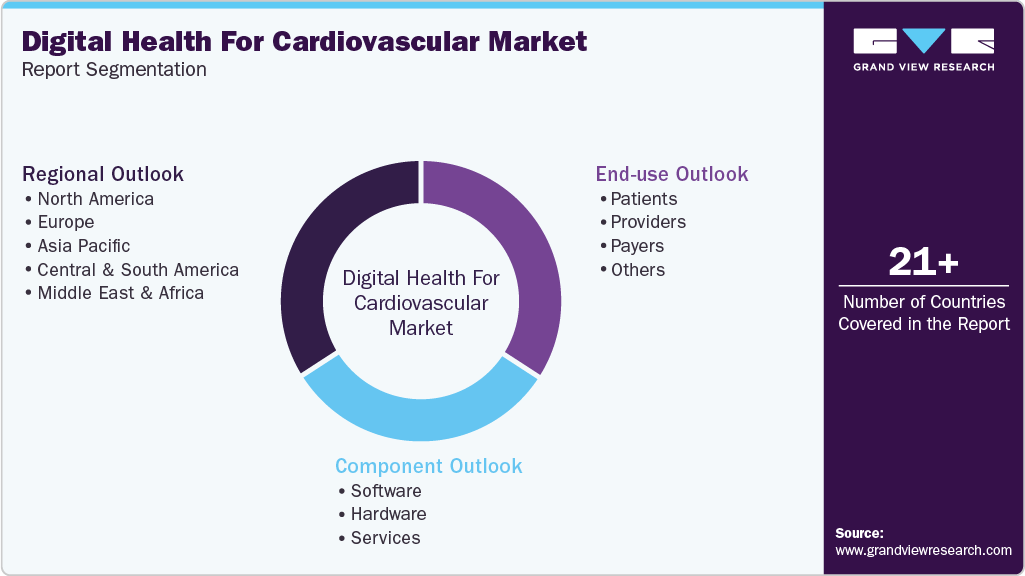
This report forecasts revenue growth at the global, regional, & country levels and provides an analysis of industry trends in each sub segment from 2021 to 2033. For the purpose of this study, Grand View Research has segmented the global digital health for cardiovascular market on the basis of component, end-use and region:
 To learn more about this report, Download Free Sample Report
-
Component Outlook (Revenue, USD Million, 2021 - 2033)
-
Software
-
Hardware
-
Services
-
-
End-use Outlook (Revenue, USD Million, 2021 - 2033)
-
Patients
-
Providers
-
Payers
-
Others
-
-
Regional Outlook (Revenue, USD Million, 2021 - 2033)
-
North America
-
U.S.
-
Canada
-
Mexico
-
-
Europe
-
UK
-
Germany
-
France
-
Italy
-
Spain
-
Denmark
-
Sweden
-
Norway
-
-
Asia Pacific
-
Japan
-
China
-
Australia
-
India
-
South Korea
-
Thailand
-
-
Central & South America
-
Brazil
-
Argentina
-
-
Middle East & Africa
-
South Africa
-
Saudi Arabia
-
UAE
-
Kuwait
-
-
Research Methodology
The digital health for cardiovascular market figures in this report are based on a proven research process that combines executive interviews with secondary research from proprietary databases, company filings, and recognized regulatory and institutional sources. Market size is built through value-chain sizing—reconciling supply-side and demand-side estimates—and triangulated with bottom-up and top-down approaches. Every estimate passes multiple levels of expert validation before publication, with each digital health for cardiovascular segment quantified using the revenue-capture definitions in the table below.
Segment Definition
Segment
Segment Definition
By Component
Hardware
Includes physical devices and equipment used to collect, monitor, transmit, or support cardiovascular health data. This segment covers wearable devices, remote patient monitoring devices, connected medical devices, sensors, and related digital health hardware used across cardiovascular care.
Software
Includes digital platforms, applications, and software solutions used to collect, analyze, manage, visualize, and exchange cardiovascular health data. This segment covers clinical decision-support software, patient monitoring platforms, disease management applications, analytics platforms, and other cardiovascular digital health solutions.
Services
Includes technology-enabled services that support the implementation, operation, maintenance, integration, and management of digital health solutions for cardiovascular care. This segment includes remote monitoring, telehealth, consulting, system integration, technical support, and managed digital health services.
By End Use
Patients
Includes digital cardiovascular health solutions used directly by patients for disease monitoring, prevention, diagnosis support, treatment management, medication adherence, rehabilitation, and continuous health tracking.
Providers
Includes hospitals, clinics, physicians, cardiology centers, diagnostic centers, and other healthcare organizations that use digital health solutions to support cardiovascular screening, diagnosis, treatment, monitoring, care coordination, and clinical decision-making.
Payers
Includes insurance companies, government health programs, and other healthcare financing organizations that use digital health technologies to support cardiovascular disease management, population health monitoring, claims management, preventive care, and cost optimization.
Others
Includes research institutions, pharmaceutical and biotechnology companies, employers, public health organizations, and other entities that use digital health solutions for cardiovascular research, clinical trials, population health programs, employee wellness, and healthcare innovation.
Estimation Model - Model Details
The market was analyzed using a multi-dimensional research and estimation framework integrating cardiovascular disease burden assessment, digital health adoption modeling, connected device utilization analysis, software subscription modeling, healthcare IT expenditure assessment, company revenue mapping, reimbursement analysis, top-down market validation, and regional weighted-factor analysis.
Component
Methodology Objective
Key Parameters / Inputs
Output Generated
Clinical & Healthcare Validation Framework
Ensure all market estimates remain clinically relevant and commercially realistic
Cardiovascular disease prevalence, treatment pathways, physician adoption, patient engagement, digital care utilization, reimbursement policies
Clinically validated and commercially feasible market estimates
Revenue Estimation Framework
Estimate total market revenue across hardware, software, and services
Device ASP benchmarking, software licensing, SaaS subscriptions, RPM reimbursement, service contracts, company revenue mapping
Market Revenue (USD Million)
Connected Device Utilization Modeling
Estimate deployment and utilization of connected cardiovascular devices
Wearables, ECG monitors, implantable cardiac monitors, connected blood pressure monitors, patient adoption
Active Device Utilization
Software Adoption Modeling
Estimate utilization of cardiovascular software platforms
AI-enabled ECG analysis, clinical decision support, cloud platforms, digital therapeutics, interoperability
Software Adoption Trends
Service Revenue Modeling
Estimate recurring revenue generated through digital cardiovascular services
Remote patient monitoring, telecardiology, virtual cardiac rehabilitation, physician review services
Service Revenue
Patient Population Modeling
Estimate digitally addressable cardiovascular patient population
Disease prevalence, diagnosis rates, eligible patients, digital health penetration
Addressable Patient Population
Company Market Share Validation
Reconcile modeled market estimates with manufacturer and vendor activity
Annual reports, investor presentations, cardiovascular digital revenue disclosures, product portfolio mapping
Company Market Share Analysis
Regional Market Assessment
Estimate regional and country-level market distribution
Healthcare expenditure, digital maturity, reimbursement environment, EHR penetration, internet connectivity
Regional Market Distribution
Segment-Level Adoption Modeling
Estimate adoption across hardware, software, services, applications, and end users
Technology adoption, reimbursement, provider readiness, patient engagement
Segment-Level Adoption Trends
Top-Down Market Validation
Validate bottom-up estimates using industry-level opportunity assessment
Digital health spending, healthcare IT expenditure, cardiovascular care spending, investor guidance
Top-Down Market Reconciliation
Primary Research Framework
Validate assumptions and calibrate market models using expert interviews
Cardiologists, electrophysiologists, hospital IT leaders, digital health providers, payers
Assumption Validation & Forecast Calibration
Regional Weighted-Factor Analysis (QFD Framework)
Estimate regional and segment-level adoption using weighted analytical scoring
Digital infrastructure, reimbursement maturity, disease burden, healthcare expenditure, technology adoption
Regional & Segment-Level Share Estimation
Forecast Validation & Triangulation
Ensure consistency across all analytical layers and forecasting outputs
Historical trend analysis, supply-demand reconciliation, adoption validation, company benchmarking
Final Forecast Validation & Internal Consistency
Delivered Customizations
This report has been delivered with the following In-depth customizations
Client Request
Customization Delivered
Value Adds
Competitive Landscape & Technology Benchmarking
Comprehensive benchmarking of leading digital health companies, technology providers, and cardiovascular solution portfolios, including AI, remote patient monitoring, wearable devices, digital therapeutics, and telecardiology platforms.
Enabled competitive intelligence, identification of technology gaps, and benchmarking of product portfolios against key market players.
Go-to-Market Strategy
Delivered strategic insights on target customer segments, buying behavior, reimbursement dynamics, competitive landscape, channel strategies, and adoption barriers across key regional markets.
Supported commercialization planning, market prioritization, partnership identification, and successful product launch and expansion strategies.
Strategic Country Opportunity Assessment
Country-level analysis covering digital health maturity, reimbursement environment, regulatory framework, healthcare infrastructure, disease burden, competitive intensity, and investment activity.
Enabled informed market entry, expansion, partnership, and investment decisions by identifying the most attractive regional growth opportunities.
Frequently Asked Questions About This Report
The global digital health for cardiovascular market size was valued at USD 50.2 billion in 2025 and is estimated at USD 59.0 billion for 2026.
Key factors that are driving the market growth include increasing prevalence of cardiovascular diseases (CVD’s), the rapid advancement in healthcare technology along with rising healthcare expenditure coupled with growing demand for remote patient monitoring services.
Some key players operating in the digital health for cardiovascular market include Orange Business, GE Healthcare, HEALTH INFORMATION MANAGEMENT SYSTEMS (HIMS), Apple Inc., Siemens Healthineers AG, Oracle (Cerner Corporation), NXGN Management, LLC, Samsung, DOVEN, CardiAI, AliveCor, Inc., Verily Life Sciences LLC, HeartFlow, Inc., Bardy Diagnostics, Inc., Vista AI, Viz ai, RSIP Vision, Cleerly, Inc.
The software segment held the largest market share of 39.1% in 2025, while service segment is fastest growing component.
North America dominated with a 38.1% revenue share in 2025.
Asia Pacific is the fastest-growing region over the forecast period.
The global digital health for cardiovascular market is expected to grow at a CAGR of 15.2% from 2026 to 2033, reaching USD 158.9 billion by 2033.
The patients segment held the largest market share of 34.5% in 2025 and is the fastest growing segment.
About the Author(s)
Healthcare IT Research Team
Healthcare · Healthcare ITThis report was authored by the healthcare it research team at Grand View Research - comprising two research analysts, one senior research analyst, and one industry expert - with specialized expertise in the healthcare it segment of the healthcare industry. All findings are based on proprietary healthcare databases, executive interviews, and regulatory analysis, subject to internal peer review prior to publication.
Last Updated:
Speak to Analyst

Customize this report to your needs - add regions, segments, or data points, with 20% free customization.
Or view our licence options:


ISO 9001:2015 & 27001:2022 Certified
We are GDPR and CCPA compliant! Your transaction & personal information is safe and secure. For more details, please read our privacy policy.


