
- Home
- »
- Petrochemicals
- »
-
Electronic Specialty Gas Market Size & Share Report, 2033GVR Report cover

Electronic Specialty Gas Market (2026 - 2033)
Size, Share & Trends Analysis Report By Product (Nobel Gases, Carbon-Based Gases), By Application (Etching, Lithography), By End Use (Semiconductor Manufacturing, Flat Panel Displays), By Region, And Segment Forecasts
Market Size, 2025
$2.8BMarket Estimate, 2026
$3.1BMarket Forecast, 2033
$7.3BCAGR, 2026–2033
12.9%Electronic Specialty Gas Market Summary
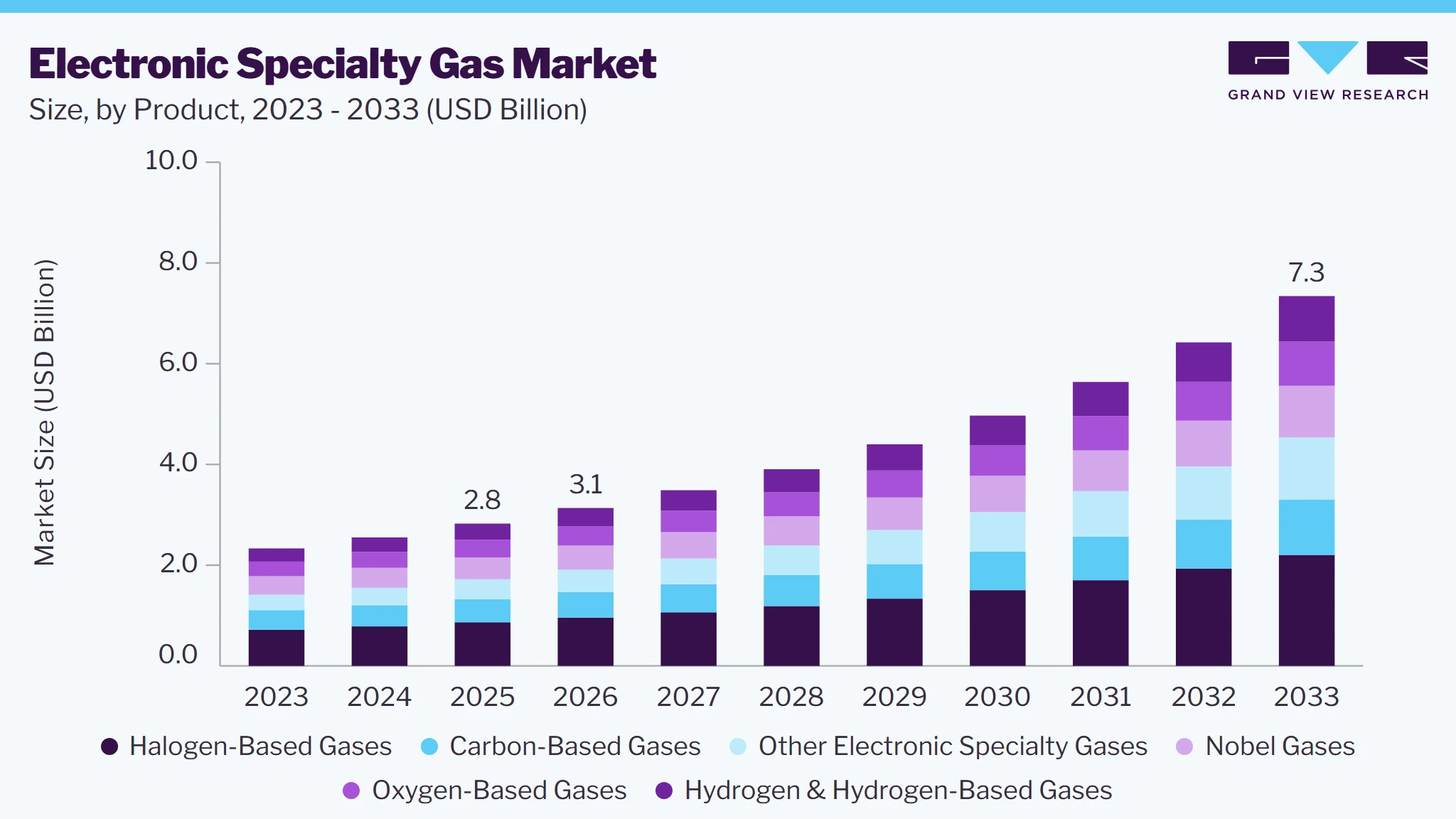
The global electronic specialty gas market size was valued at USD 2.8 billion in 2025 and is projected to grow from USD 3.1 billion in 2026 to USD 7.3 billion by 2033, at a CAGR of 12.9% from 2026 to 2033. The market in Asia Pacific dominated with a revenue share of 57.9% in 2025. This growth is primarily supported by expanding semiconductor fabrication capacity and rising demand for highly pure process gases used in advanced electronic manufacturing.
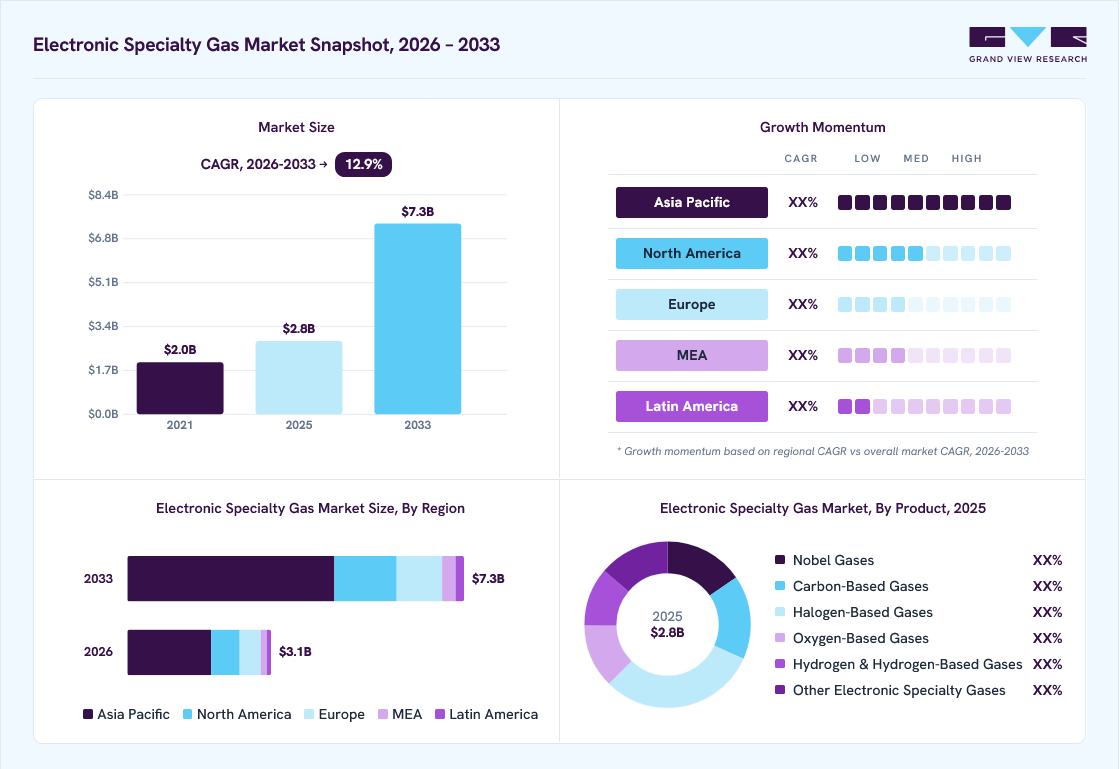 Source: Grand View Research, IR Documents, Primary Interviews, Paid DatabasesTo learn more about this report,
 Download Free Sample Report
 Key Market Trends & Insights
- By product: Halogen-based gases segment held the largest market share of 30.7% in 2025.
- By application: Etching segment held the largest market share of 32.3% in 2025.
- By end use: Semiconductor manufacturing segment held the largest market share of 77.0% in 2025.
Regional Highlights
- Largest regional market: Asia Pacific (57.9% revenue share, 2025)
- By country: India is witnessing the fastest CAGR in APAC
Market Size & Forecast
- Market size in 2025: USD 2.8 Billion
- Estimated market size in 2026: USD 3.1 Billion
- Projected market size by 2033: USD 7.3 Billion
- CAGR (2026-2033): 12.9%
Three ways to get this report
Buy it, customize it, or ask a question.Ask an Analyst
A direct answer, usually in 1 working day
- AccessReport author, directly
- Reply timeWithin 1 working day
- No sales callDirect answer only
- FormatEmail reply
- CostFree, no cost
Get the Full Report
What the study covers
- FormatsPDF · Excel · Dashboard
- Timeline2026–2033 annual, 2025 base
- Coverage20+ countries, 5 regions
- Companies10+ key players profiled
Customize the Report
20% free customization
- IncludeCountries, segments, points
- TailorTo your product definition
- ExtendDeeper competitor detail
- OrA fully bespoke study
- Turnaround5–10 working days
 To learn more about this report, Download Free Sample Report
 Market Dynamics
The market is driven by the growing complexity and production volume of semiconductors, displays, LEDs, and photovoltaic devices, which require highly controlled gases for deposition, etching, doping, lithography, and chamber cleaning. Increasing device miniaturization and advanced manufacturing processes are raising requirements for exceptional purity, consistency, and reliable delivery. However, high investment requirements for purification facilities, specialized storage systems, analytical capabilities, and safety infrastructure can restrict new supplier entry. Stringent customer qualification procedures further lengthen commercialization cycles. Supply disruptions involving critical gases and geographically concentrated production also create procurement risks for electronics manufacturers. In response, suppliers are expanding localized production, on-site generation, and integrated supply networks to strengthen supply security and reduce operational disruptions. Sustainability considerations are driving the development of more efficient processes and alternatives to high-impact gases.
The continued expansion of semiconductor manufacturing is a key factor supporting demand for high-purity process gases. Advanced logic and memory devices require tightly controlled materials for critical fabrication steps, including deposition, etching, doping, lithography, and chamber cleaning. As chip architectures become increasingly complex, manufacturers require gases with exceptionally high purity and consistent specifications to minimize defects and maintain production yields.
In addition, investments in new wafer fabrication facilities across major electronics-producing regions are increasing the need for reliable and geographically diversified supply arrangements. This trend is encouraging suppliers to strengthen local production capabilities, expand purification infrastructure, and provide integrated gas delivery solutions. Companies with advanced technical capabilities and strong supply networks are therefore well positioned to benefit from the industry's expanding manufacturing base.
Increasing regulatory scrutiny associated with certain fluorinated gases represent a significant restraint on industry expansion. Several gases used in semiconductor manufacturing, including perfluorocarbons, nitrogen trifluoride, and sulfur hexafluoride, have high global warming potential and can remain in the atmosphere for extended periods. Regulatory scrutiny surrounding their production, handling, use, and emissions is therefore increasing. Compliance can increase operating costs for both suppliers and end users. Companies may need to invest in advanced emission-control equipment, monitoring systems, leak-prevention measures, and alternative process technologies. In addition, Substitute gas qualification can be complex, as semiconductor fabrication requires extensive testing to ensure process changes do not affect device performance or manufacturing yields.
The increasing focus on supply-chain resilience presents a significant opportunity for manufacturers to establish production facilities closer to semiconductor and electronics clusters. Localized supply can reduce transportation risks, improve delivery reliability, and provide customers with greater operational security. This creates scope for investments in regional purification plants, on-site production systems, and specialized distribution infrastructure.
A further opportunity lies in developing technologies that improve process efficiency and reduce the environmental impact associated with certain high-global-warming-potential gases. Suppliers can differentiate their offerings through gas recycling, abatement-compatible solutions, and alternative chemistries that support customers' sustainability objectives without compromising manufacturing performance. Such innovations can strengthen long-term customer relationships and create additional value beyond conventional gas supply.
Market Concentration & Characteristics
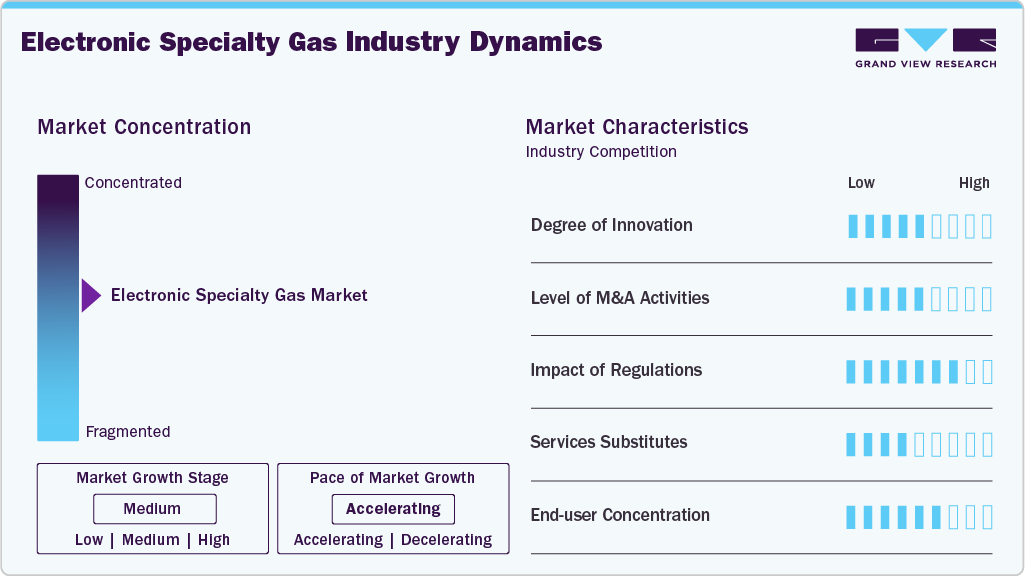
The competitive landscape is characterized by large multinational industrial gas suppliers alongside specialized producers with strong expertise in high-purity and process-specific materials. Leading participants compete on product purity, portfolio breadth, technical capabilities, security of supply, and the ability to provide integrated gas delivery and on-site management solutions. The industry covers a wide range of products, including fluorinated gases, silicon precursors, dopants, deposition gases, corrosives, and lithography gases, creating opportunities for both diversified suppliers and niche specialists. Established companies such as Linde and Air Liquide benefit from extensive global production networks, broad product portfolios, and long-standing relationships with semiconductor manufacturers.
 To learn more about this report, Download Free Sample Report
 Their competitive advantage increasingly extends beyond gas supply to include purification, distribution systems, analytical services, and total materials management. Specialized manufacturers compete through expertise in particular high-value molecules and regional proximity to major fabrication clusters. Competition is further influenced by stringent customer qualification requirements, which create significant barriers to entry and strengthen relationships between qualified suppliers and end users. Strategic investments in localized production, capacity expansion, supply-chain resilience, and environmentally improved process solutions are therefore becoming increasingly important competitive strategies.
Analyst Perspective
The outlook remains closely tied to the continued expansion and technological advancement in semiconductor manufacturing. As device architectures become more complex, the need for highly pure, reliable, and application-specific gases is expected to increase. Supply security and localized production will become increasingly important competitive differentiators. The industry also offers attractive opportunities for specialized suppliers capable of meeting stringent purity and consistency requirements. However, high qualification barriers and environmental pressures surrounding certain process gases will continue to challenge market participants.
Product Insights
The halogen-based gases segment dominated with a revenue share of 30.7% in 2025, due to their widespread use in precision semiconductor fabrication. Fluorine-, chlorine-, and bromine-containing compounds are essential for plasma etching and chamber-cleaning operations. Their ability to selectively remove materials supports the production of increasingly intricate circuit structures. Higher purity requirements and the premium nature of several fluorinated products also contributed to their value generation. Continued migration toward smaller process geometries is expected to sustain their strategic importance.
Hydrogen & hydrogen-based gases segment is the fastest growing with a CAGR of 13.9% over the forecast period. Their application in epitaxial growth, thermal processing, deposition, and other fabrication stages supports rising consumption. Increasing investment in advanced chip production and compound semiconductor technologies is creating additional demand. These materials are also valued for their role in maintaining controlled manufacturing environments. Expansion of high-performance computing and power electronics is expected to further strengthen growth prospects.
Application Insights
The etching segment dominated with a share of 32.3% in 2025 as the process is fundamental to transferring precise patterns onto semiconductor wafers and selectively removing deposited layers. Advanced device architectures require increasingly accurate material removal and tighter process control. As feature sizes shrink, manufacturers depend on specialized chemistries to maintain production precision and yields. Growing complexity in logic and memory devices continues to reinforce the segment's substantial consumption base.
Deposition & film formation is the fastest growing, with a CAGR of 13.9% from 2026 to 2033. Advanced chips require multiple ultra-thin layers to be formed with exceptional uniformity and consistency. The shift toward three-dimensional transistor structures and sophisticated memory architectures is increasing process intensity. Rising production of AI, high-performance computing, and advanced memory devices further supports this trajectory. Consequently, demand for specialized precursors and high-purity materials is expected to increase significantly.
End Use Insights
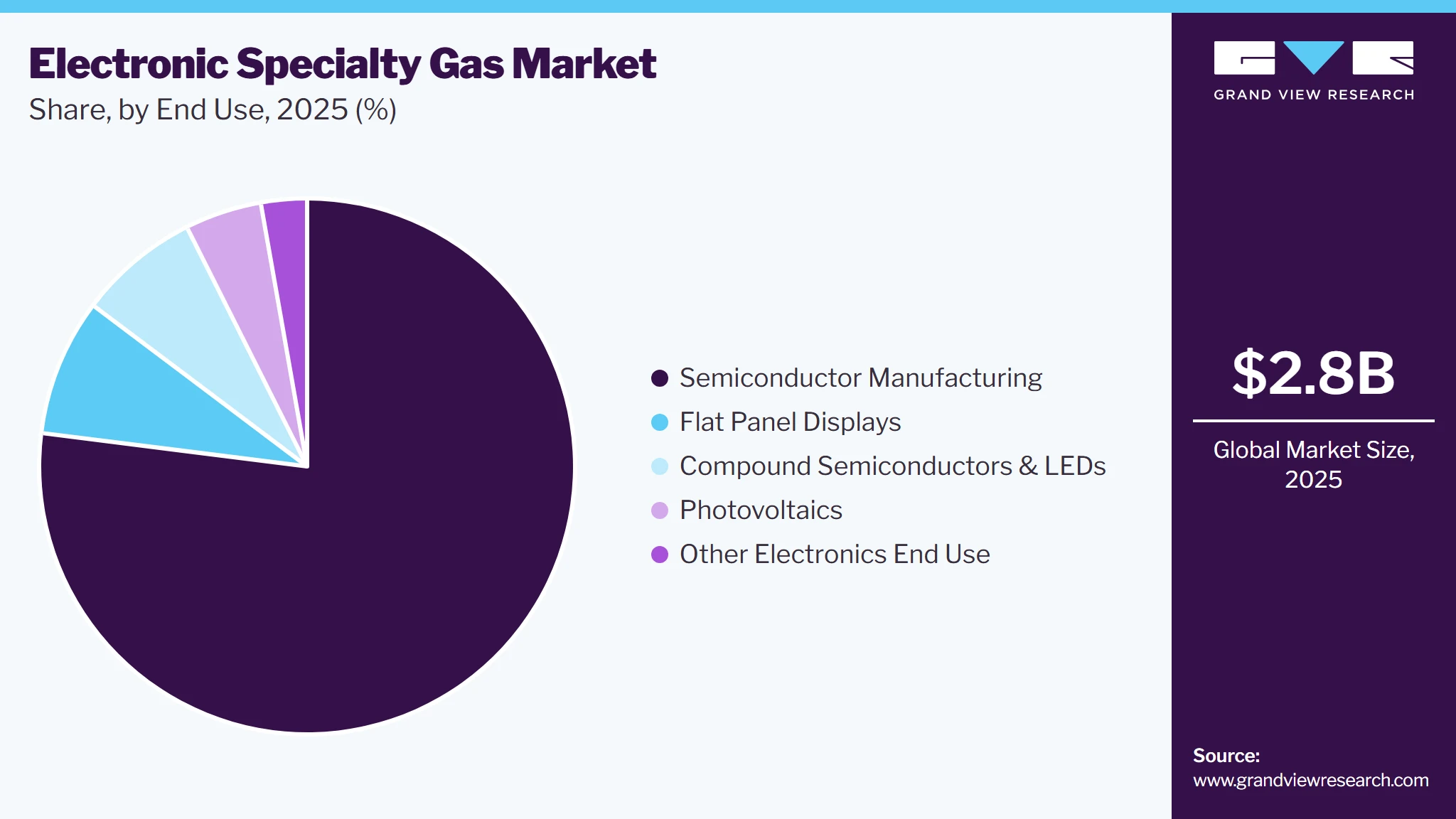
The semiconductor manufacturing segment held the largest share of 77.0% in 2025. Chip fabrication requires highly controlled materials across numerous stages, from wafer processing to final device formation. Expanding investments in logic, memory, power, and analog production facilities have strengthened the segment's consumption requirements. Advanced fabrication plants also require reliable access to ultra-high-purity products and sophisticated delivery systems. The continued expansion of global semiconductor capacity is expected to maintain its dominant position.
 To learn more about this report, Download Free Sample Report
 Compound semiconductors & LEDs is the fastest growing segment, with a CAGR of 14.2% from 2026 to 2033. Growing adoption of gallium nitride and gallium arsenide technologies is supporting demand across high-frequency and high-power applications. Electric vehicles, 5G infrastructure, data centers, and advanced lighting are creating new avenues for deployment. Their production involves specialized processes such as epitaxial growth that require precisely formulated materials. Ongoing technological advancement in optoelectronics and power devices is therefore expected to accelerate consumption.
Region Insights
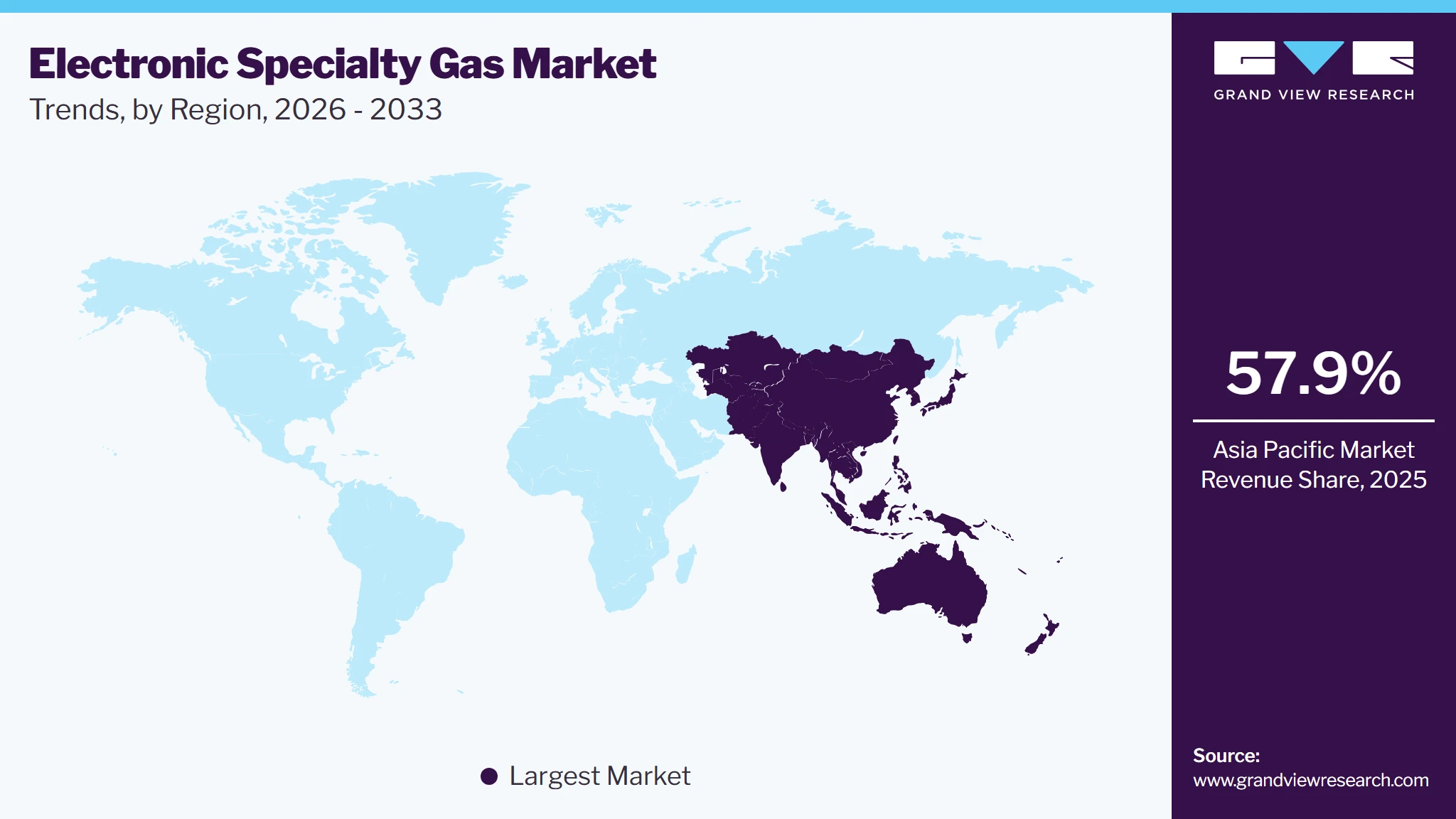
Asia Pacific electronic specialty gas market held the largest revenue share of 57.9% in 2025, and is expected to grow at the fastest CAGR over the forecast period. APAC constitutes the principal center of consumption, underpinned by its concentration of semiconductor fabrication, flat panel display production, and broader electronics manufacturing. China, Taiwan, South Korea, Japan, and Southeast Asia collectively account for a substantial share of global electronics capacity, creating sustained requirements for ultra-high-purity and application-specific gases. These materials are essential across deposition, etching, doping, chamber cleaning, and other critical fabrication processes. The region's strategic importance is further strengthened by continued investment in advanced logic, memory, compound semiconductors, and display technologies.
 To learn more about this report, Download Free Sample Report
 Electronic specialty gas market in China represents one of the most dynamic markets, supported by the country's efforts to strengthen its domestic semiconductor ecosystem and develop greater self-sufficiency in critical electronic materials. Its extensive manufacturing base spans integrated circuits, displays, consumer electronics, and photovoltaic products, supporting broad consumption across multiple gas categories. China is also recognized as one of the world's major demand centers for these specialized materials. The growing emphasis on supply-chain localization is creating favorable conditions for domestic manufacturers capable of meeting stringent purity and reliability standards. At the same time, international suppliers retain opportunities where advanced technologies, specialized molecules, and established qualification capabilities are required.
North America Electronic Specialty Gas Market Trends
North America is gaining strategic importance as semiconductor manufacturing investment increasingly focuses on regional capacity development and supply-chain resilience. The expansion of fabrication facilities is generating additional requirements for high-purity process materials, on-site supply infrastructure, and sophisticated gas management services. The United States remains the region's primary demand center and a major global market for electronic specialty gases. The regional outlook is supported by growing investment in advanced computing, artificial intelligence, data centers, automotive electronics, and memory technologies. This manufacturing expansion is encouraging suppliers to establish production and purification facilities closer to customer locations.
U.S. Electronic Specialty Gas Market Trends
The U.S. is expected to remain a major contributor to regional demand due to its expanding semiconductor manufacturing base and leadership in advanced technology development. Investments across logic, memory, artificial intelligence, and high-performance computing are increasing the need for highly controlled materials used throughout the chip fabrication process. SEMI identifies the U.S. as one of the seven principal markets covered in its assessment of electronic specialty gas demand. A key business trend is the increasing preference for localized and integrated supply arrangements. Semiconductor manufacturers require not only consistent product quality but also dependable storage, delivery, purification, and analytical capabilities.
Europe Electronic Specialty Gas Market Trends
Europe presents a strategically evolving market, driven by initiatives to reinforce the regional semiconductor value chain and reduce dependence on external sources. The region has established strengths in automotive, industrial, power, and sensor technologies, each of which requires a reliable supply of advanced semiconductor materials. The ongoing focus on technological sovereignty is encouraging investments across semiconductor manufacturing, materials, equipment, and research infrastructure. This environment creates opportunities for suppliers that can establish localized production capabilities and support customers with specialized technical services.
Electronic specialty gas market in Germany holds a prominent position within the European semiconductor landscape, supported by its strong automotive, industrial automation, power electronics, and manufacturing sectors. The country produces more than one-third of Europe's chips and has established semiconductor clusters that connect device manufacturers, materials suppliers, equipment companies, and research institutions. Germany is also pursuing initiatives to strengthen its microelectronics value chain and encourage investment in manufacturing and next-generation technologies.
Middle East & Africa Electronic Specialty Gas Market Trends
The Middle East & Africa currently accounts for a comparatively smaller share of global consumption, primarily because the region has a limited concentration of large-scale semiconductor fabrication facilities. Demand is largely associated with electronics manufacturing, telecommunications infrastructure, industrial applications, and selected technology investments rather than extensive wafer fabrication. Opportunities may initially emerge through specialized distribution, partnerships, and the supply of high-purity materials to develop electronics ecosystems. The pace of expansion is expected to depend largely on the establishment of a broader semiconductor manufacturing base and the development of supporting industrial infrastructure.
Latin America Electronic Specialty Gas Market Trends
Latin America remains an emerging market, with consumption primarily linked to electronics assembly, automotive production, telecommunications, and other intensive technology industries. The region's relatively limited wafer fabrication capacity currently restricts large-scale demand for highly specialized process gases compared with Asia Pacific, North America, and Europe. However, industrial modernization and the expansion of automotive electronics, renewable energy technologies, and advanced manufacturing could gradually broaden the regional customer base. Future opportunities are likely to be concentrated around developing industrial clusters rather than widespread demand across the region.
Key Electronic Specialty Gas Company Insights
Companies are strengthening their market position by expanding localized production capabilities, investing in advanced purification technologies, and establishing supply infrastructure near major semiconductor manufacturing hubs. They are also pursuing long-term customer partnerships, broadening their portfolios with high-value process gases, and developing lower-emission solutions to address evolving technological and environmental requirements.
-
Kanto Denka Kogyo Co., Ltd. is a prominent specialist in fluorinated electronic gases, leveraging its integrated fluorine-related technologies to manufacture a broad portfolio for semiconductor fabrication. Its offerings support critical processes such as film formation, etching, and chamber cleaning, including products such as NF₃, WF₆, CF₄, C₄F₆, and its proprietary KSG series. The company is strengthening its position through the development of high-performance, lower-environmental-impact materials tailored to increasingly advanced semiconductor processes.
-
Central Glass Co., Ltd. maintains a strong position in semiconductor process materials through its portfolio of CVD, cleaning, and next-generation etching gases. Its offerings include WF₆, trimethylsilane, ClF₃, and the CEG series, addressing the requirements of increasingly miniaturized and complex chip architectures. In January 2025, the company announced the commencement of mass production of CEG 39A for advanced semiconductors, reinforcing its focus on high-performance and environmentally adaptive process materials.
Key Electronic Specialty Gas Companies
The following key companies have been profiled for the study on the electronic specialty gas market.
-
Linde plc
-
Air Liquide S.A.
-
Air Products and Chemicals, Inc.
-
Taiyo Nippon Sanso Corporation
-
Entegris, Inc.
-
SK specialty Co., Ltd.
-
Kanto Denka Kogyo Co., Ltd.
-
Resonac Corporation
-
Central Glass Co., Ltd.
-
Guangdong Huate Gas Co., Ltd.
-
Suzhou Jinhong Gas Co., Ltd.
-
Hyosung Chemical Corporation
Company Categorization
Operating Strategies
Competitive Edge
Weaknesses
Mature Players: Linde plc, Air Liquide S.A., Air Products and Chemicals, Inc., Taiyo Nippon Sanso Corporation, Entegris, Inc., SK specialty Co., Ltd., Kanto Denka Kogyo Co., Ltd., Resonac Corporation.
- Focus on multi-year supply agreements and deep integration with major semiconductor and electronics manufacturers.
- Establish production, purification, and supply facilities near key fabrication clusters to improve supply reliability.
- Maintain diversified portfolios covering specialty, ultra-high-purity, and bulk gases alongside gas management services.
- Invest in advanced purification technologies, analytical capabilities, gas recycling, and next-generation process materials.
- Benefit from long-standing customer relationships and established product qualification histories.
- Operate extensive manufacturing and distribution networks across major electronics-producing regions.
- Possess advanced expertise in purity control, gas handling, and application-specific solutions.
- Leverage strong financial resources to support dedicated infrastructure, research, and capacity expansion.
- Face higher operational complexity due to extensive global operations and diversified business portfolios.
- May respond more slowly to changing regional requirements because of large organizational structures.
- Require substantial capital investment to maintain specialized production and supply infrastructure.
- Can face greater exposure to fluctuations in demand from large, established semiconductor customers.
Emerging Players: Central Glass Co., Ltd., Guangdong Huate Gas Co., Ltd., Suzhou Jinhong Gas Co., Ltd., Hyosung Chemical Corporation
- Focus on strengthening their presence within rapidly expanding domestic semiconductor and electronics markets.
- Develop locally produced alternatives to reduce dependence on imported high-value materials.
- Expand selectively into high-growth and technologically advanced product categories.
- Build partnerships with semiconductor manufacturers, research institutions, and technology providers to accelerate product qualification.
- Respond quickly to changing customer requirements and regional market conditions.
- Benefit from localized production can reduce transportation costs and supply-chain dependence.
- Align closely with government and industry initiatives aimed at strengthening domestic supply chains.
- Capitalize on strong growth opportunities created by expanding semiconductor manufacturing capacity.
- Have relatively limited international manufacturing and distribution networks.
- Face lengthy and demanding qualification processes for critical semiconductor applications.
- May have technological limitations in producing the most advanced molecules and ultra-high-purity grades.
- Possess comparatively lower financial resources for large-scale expansion, infrastructure development, and research activities.
Recent Developments
-
In July 2026, Linde plc announced a USD 1 billion investment to expand its on-site industrial gas complex in Phoenix, Arizona, supporting the expansion of a major semiconductor manufacturing facility. The project includes two new air separation units to increase the supply of ultra-high-purity nitrogen, oxygen, and argon for two new semiconductor fabs.
-
In January 2026, Air Liquide completed the acquisition of DIG Airgas, strengthening its industrial gas position in South Korea. The transaction expanded Air Liquide's regional footprint and reinforced its ability to serve a technologically advanced market with significant semiconductor and electronics activity.
Electronic Specialty Gas Market Report Scope
Report Attribute
Details
Market size in 2025
USD 2.8 billion
Estimated market size in 2026
USD 3.1 billion
Projected market size by 2033
USD 7.3 billion
Growth rate
CAGR of 12.9% from 2026 to 2033
Base year for estimation
2025
Historical data
2021 - 2024
Forecast period
2026 - 2033
Quantitative units
Revenue in USD billion and CAGR from 2026 to 2033
Report coverage
Revenue forecast, volume forecast, company ranking, competitive landscape, growth factors, and trends
Segments covered
Product, application, end use and region
Regional Scope
North America; Europe; Asia Pacific; Latin America; Middle East & Africa
Country scope
U.S.; Canada; Mexico; Germany; UK; France; Italy; Spain; China; India; Japan; South Korea; Brazil; Argentina; Saudi Arabia; South Africa.
Key companies profiled
Linde plc; Air Liquide S.A.; Air Products and Chemicals, Inc.; Taiyo Nippon Sanso Corporation; Entegris, Inc.; SK specialty Co., Ltd.; Kanto Denka Kogyo Co., Ltd.; Resonac Corporation; Central Glass Co., Ltd.; Guangdong Huate Gas Co., Ltd.; Suzhou Jinhong Gas Co., Ltd.; Hyosung Chemical Corporation
Customization scope
Free report customization (equivalent up to 8 analysts’ working days) with purchase. Addition or alteration to country, regional & segment scope.
Pricing and purchase options
Avail customized purchase options to meet your exact research needs. Explore purchase options
Electronic Specialty Gas Market Report Segmentation
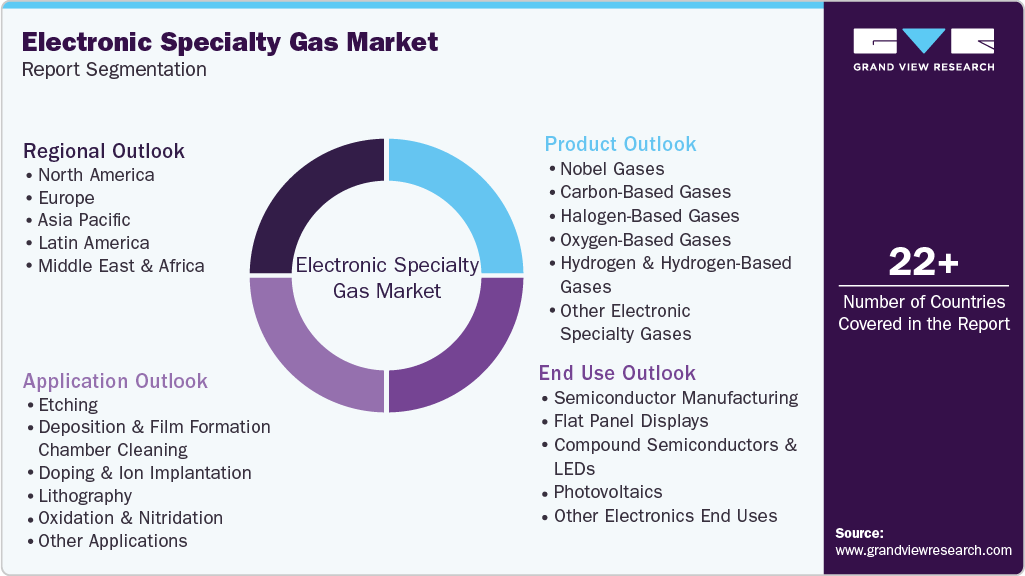
This report forecasts volume & revenue growth at global, regional, and country levels and provides an analysis of the latest industry trends in each of the sub-segments from 2021 to 2033. For this study, Grand View Research has segmented the electronic specialty gas market report based on product, application, end use, and region:
 To learn more about this report, Download Free Sample Report
 -
Product Outlook (Revenue, USD Billion, 2021 - 2033)
-
Nobel Gases
-
Carbon-Based Gases
-
Halogen-Based Gases
-
Oxygen-Based Gases
-
Hydrogen & Hydrogen-Based Gases
-
Other Electronic Specialty Gases
-
-
Application Outlook (Revenue, USD Billion, 2021 - 2033)
-
Etching
-
Deposition & Film Formation
-
Chamber Cleaning
-
Doping & Ion Implantation
-
Lithography
-
Oxidation & Nitridation
-
Other Applications
-
-
End Use Outlook (Revenue, USD Billion, 2021 - 2033)
-
Semiconductor Manufacturing
-
Flat Panel Displays
-
Compound Semiconductors & LEDs
-
Photovoltaics
-
Other Electronics End Uses
-
-
Regional Outlook (Revenue, USD Billion, 2021 - 2033)
-
North America
-
U.S.
-
Canada
-
Mexico
-
-
Europe
-
UK
-
Germany
-
France
-
Italy
-
Spain
-
-
Asia Pacific
-
China
-
Japan
-
India
-
South Korea
-
-
Latin America
-
Brazil
-
Argentina
-
-
Middle East and Africa (MEA)
-
South Africa
-
Saudi Arabia
-
-
Research Methodology
The electronic specialty gas market figures in this report are based on a proven research process that combines executive interviews with secondary research from proprietary databases, company filings, and recognized regulatory and institutional sources. Market size is built through value-chain sizing—reconciling supply-side and demand-side estimates—and triangulated with bottom-up and top-down approaches. Every estimate passes multiple levels of expert validation before publication, with eachelectronic specialty gas segment quantified using the revenue-capture definitions in the table below.
Segment Definition
Product
Revenue capture definition
Nobel Gases
Customer expenditure covers ultra-high-purity helium, neon, argon, krypton, and xenon used in plasma processing, lithography, wafer fabrication, and other sophisticated electronics operations. Pricing is influenced by purity grade, supply security, delivery infrastructure, and increasingly stringent process specifications.
Carbon-Based Gases
Value is captured from carbon-containing chemistries utilized in thin-film formation, patterning, reactor maintenance, and related fabrication steps. Consumption rises with the production of complex integrated circuits requiring precise process control and consistent material characteristics.
Halogen-Based Gases
Income stems from fluorine-, chlorine-, and bromine-containing compounds employed for selective material removal and process-equipment cleaning. Advanced device architectures and shrinking circuit dimensions increase the requirement for tightly controlled, high-purity formulations.
Oxygen-Based Gases
Commercial returns originate from oxygen-containing materials used for oxidation, plasma treatment, surface modification, and film-processing operations. Their utilization is supported by requirements for controlled layer formation and improved device reliability.
Hydrogen & Hydrogen-Based Gases
Sales are linked to ultra-pure hydrogen and hydrogen-containing mixtures required for epitaxial growth, annealing, thermal treatment, and deposition processes. Higher output of advanced chips and compound devices contributes to greater consumption.
Other Electronic Specialty Gases
Additional earnings arise from dopants, silicon precursors, nitrogen compounds, and customized mixtures developed for highly specific production requirements. These offerings typically command premium pricing because of demanding purity thresholds, technical complexity, and qualification requirements.
Application
Revenue capture definition
Etching
Spending is associated with process materials that selectively remove layers to create intricate circuit structures on wafers. Progress toward smaller nodes and three-dimensional architectures increases the need for precise pattern-transfer capabilities.
Deposition & Film Formation
Economic activity comes from precursor gases used to build ultra-thin functional layers through CVD, ALD, and related techniques. Investment in advanced memory, logic devices, displays, and solar technologies supports this requirement.
Chamber Cleaning
Value generation results from specialized chemistries that eliminate deposits accumulating inside fabrication equipment between processing cycles. Their use helps control contamination, maintain tool productivity, and support consistent manufacturing yields.
Doping & Ion Implantation
Customer purchases cover dopant materials introduced into semiconductor substrates to modify electrical characteristics. Growing complexity in logic, memory, power electronics, and compound devices strengthens demand for tightly specified inputs.
Lithography
Revenue is derived from ultra-pure materials supporting pattern-definition processes and associated equipment operations. Continued movement toward finer feature sizes and next-generation exposure technologies creates opportunities for specialized suppliers.
Oxidation & Nitridation
Commercial expenditure reflects gases used to create oxide and nitride layers that provide insulation, passivation, and other essential functional properties. Rising requirements for uniformity, reliability, and performance underpin their utilization.
Other Applications
Further income is generated from epitaxy, diffusion, surface conditioning, annealing, advanced packaging, and emerging fabrication techniques. The diversification of electronics technologies broadens demand for customized, application-specific chemistries.
End Use
Revenue capture definition
Semiconductor Manufacturing
The primary spending base comes from wafer-fabrication activities requiring specialized gases across patterning, layer formation, impurity introduction, thermal treatment, and equipment maintenance. Capacity additions and rising output of advanced logic and memory devices support sustained purchasing.
Flat Panel Displays
Customer demand is linked to LCD, OLED, and other display production, where high-purity inputs support coating, plasma processing, and fabrication-tool upkeep. Expanding consumer electronics output and demand for high-resolution screens contribute to consumption.
Compound Semiconductors & LEDs
Commercial value is associated with the production of materials such as gallium nitride, gallium arsenide, and silicon carbide, along with light-emitting devices. Growth in power systems, optical communications, automotive electronics, and efficient lighting provides a strong demand base.
Photovoltaics
Expenditure arises from solar-cell fabrication processes involving layer deposition, surface treatment, and controlled modification of semiconductor materials. Investments in renewable energy capacity and advances in cell technologies contribute to purchasing requirements.
Other Electronics End Uses
Incremental sales originate from sensors, MEMS, optical components, research laboratories, advanced packaging, and emerging electronic technologies. These specialized applications often require customized mixtures and exceptionally stringent purity specifications, creating higher-value opportunities.
Estimation Model
Layer No.
Layer Name
Key Question
Description
01
Raw Material & Production Layer
What forms the supply base?
Identify the chemical feedstocks and precursor materials required to manufacture high-purity process gases, including fluorine- and chlorine-based intermediates, silicon compounds, hydrides, rare gases, and other specialty chemicals. Assess the availability of raw materials, purification technologies, synthesis capabilities, cylinder and packaging infrastructure, bulk storage systems, filling operations, analytical laboratories, and quality-assurance procedures. The assessment also considers stringent safety standards, contamination control, transportation requirements, and regulatory compliance governing production and distribution.
02
Application Adoption Layer
Where is electronic specialty gas s utilized?
Evaluate usage across semiconductor fabrication, flat-panel displays, photovoltaic cells, LEDs, compound semiconductors, and other advanced electronics manufacturing activities. These materials support critical processes such as thin-film deposition, etching, doping, ion implantation, lithography, chamber cleaning, and epitaxial growth. Adoption is influenced by semiconductor production capacity, technological advancements, device miniaturization, manufacturing yields, and increasingly stringent purity requirements.
03
Consumption Intensity Layer
How extensively is electronic specialty gas consumed?
Analyze consumption patterns according to fabrication technology, wafer size, production capacity, process complexity, device type, and facility utilization rates. The assessment considers the volume and frequency of gases required across deposition, etching, cleaning, doping, and other manufacturing stages, as well as differences between mature and advanced process nodes. Demand intensity is also shaped by fab expansion, equipment throughput, material efficiency, gas recovery systems, and the increasing use of highly specialized molecules in next-generation devices.
04
Revenue Layer
How is market revenue generated?
Revenue is generated through the supply of high-purity and application-specific gases to semiconductor, display, photovoltaics, and other electronics manufacturers. Commercial value is derived from bulk and packaged gas sales, long-term supply contracts, on-site production, purification services, gas delivery systems, and technical support. Growth is supported by premium products for advanced fabrication processes, localized manufacturing investments, portfolio expansion, supply-chain integration, and rising demand for reliable materials in high-performance electronics production.
Delivered Customizations
This report has been delivered with the following In-depth customizations
Client Request
Customization Delivered
Value Adds
Regional segmentation
The assessment provides country-level market sizing and forecasts, supported by an evaluation of semiconductor fabrication capacity, electronics manufacturing output, wafer production, display manufacturing, photovoltaic activity, government incentive programs, and investment pipelines. It examines regional supply chains, availability of high-purity feedstocks, domestic production capabilities, import-export patterns, infrastructure, and proximity to major fabrication clusters. The analysis also considers technology trends, localization initiatives, environmental regulations, and the development of advanced manufacturing ecosystems across individual countries.
Supports geographic expansion, production-site selection, supply-chain planning, distribution network development, and investment prioritization by identifying countries with expanding semiconductor capacity, strong electronics manufacturing bases, favorable policy support, and attractive demand potential for high-purity process materials.
Opportunity Assessment
Comprehensive evaluation of emerging opportunities across advanced semiconductor nodes, compound semiconductors, memory devices, flat-panel displays, photovoltaics, and other high-technology applications. The assessment examines the potential arising from localized gas production, on-site supply systems, next-generation deposition and etching materials, lower-global-warming-potential alternatives, gas recovery technologies, and expanding fabrication capacity. It also considers technological innovation, supply-chain diversification, regulatory developments, and evolving purity requirements across major regions.
Helps identify high-growth applications, product categories, customer segments, and geographic markets by assessing fabrication investments, technology transitions, material requirements, and procurement priorities. The findings support portfolio development, capacity expansion, product innovation, strategic collaborations, localization initiatives, and market-entry planning.
Competitive Benchmarking
Comparative assessment of leading manufacturers based on their product portfolios, purity capabilities, production footprint, technological expertise, application coverage, geographic reach, research capabilities, supply reliability, and customer support. The benchmarking also evaluates investments, capacity additions, product commercialization, partnerships, acquisitions, sustainability initiatives, and the ability to meet stringent qualification requirements across semiconductor and electronics applications.
Enables companies to evaluate their competitive standing, technological strengths, portfolio gaps, operational capabilities, and differentiation opportunities against multinational and specialized suppliers. The insights support decisions related to product development, capacity planning, regional expansion, technology investment, strategic partnerships, acquisitions, customer engagement, and long-term market positioning.
Frequently Asked Questions About This Report
The global electronic specialty gas market size was valued at USD 2.8 billion in 2025 and is estimated at USD 3.1 billion for 2026.
Asia Pacific represented 57.9% of revenue in 2025. Asia Pacific constitutes the principal center of consumption, underpinned by its concentration of semiconductor fabrication, flat panel display production, and broader electronics manufacturing.
The electronic specialty gas market is primarily driven by rising semiconductor production and the growing complexity of advanced electronic devices. Increasing demand for high-purity gases in applications such as deposition, etching, lithography, doping, and chamber cleaning further supports market expansion.
Some of the key players operating in the electronic specialty gas market include Linde plc; Air Liquide S.A.;Air Products and Chemicals, Inc.;Taiyo Nippon Sanso Corporation;Entegris, Inc.;SK specialty Co., Ltd.;Kanto Denka Kogyo Co., Ltd.;Resonac Corporation;Central Glass Co., Ltd.;Guangdong Huate Gas Co., Ltd.;Suzhou Jinhong Gas Co., Ltd.;Hyosung Chemical Corporation
Halogen-based gases dominated with a revenue share of 30.7% in 2025, due to their widespread use in precision semiconductor fabrication. Fluorine-, chlorine-, and bromine-containing compounds are essential for plasma etching and chamber-cleaning operations.
Etching dominated with a share of 32.3% in 2025 as the process is fundamental to transferring precise patterns onto semiconductor wafers and selectively removing deposited layers.
Compound semiconductors & LEDs is the fastest growing segment, with a CAGR of 14.2% from 2026 to 2033. Growing adoption of gallium nitride and gallium arsenide technologies is supporting demand across high-frequency and high-power applications.
The global electronic specialty gas market is expected to grow at a CAGR of 12.9% from 2026 to 2033, reaching USD 7.3 billion by 2033.
Semiconductor manufacturing held the largest share of 77.0% in 2025. Chip fabrication requires highly controlled materials across numerous stages, from wafer processing to final device formation.
About the Author(s)
Petrochemicals Research Team
Bulk Chemicals · PetrochemicalsThis report was authored by the petrochemicals research team at Grand View Research - comprising two research analysts, one senior research analyst, and one industry expert - with specialized expertise in the petrochemicals segment of the bulk chemicals industry. All findings are based on proprietary bulk chemicals databases, executive interviews, and regulatory analysis, subject to internal peer review prior to publication.
Last Updated:
Speak to Analyst

Customize this report to your needs - add regions, segments, or data points, with 20% free customization.
Or view our licence options:


ISO 9001:2015 & 27001:2022 Certified
We are GDPR and CCPA compliant! Your transaction & personal information is safe and secure. For more details, please read our privacy policy.


