
- Home
- »
- Plastics, Polymers & Resins
- »
-
Enzyme-Responsive Biodegradable Polymers Market Report, 2025-2033GVR Report cover
![Enzyme-Responsive Biodegradable Polymers Market (2025 - 2033)Report]()
Enzyme-Responsive Biodegradable Polymers Market (2025 - 2033)
Size, Share & Trends Analysis Report By Material (Polyesters, Polyhydroxyalkanoates (PHA), Polysaccharide-Based Polymers), By End Use, By Region And Segment Forecasts,
Market Size, 2024
$121.4MMarket Estimate, 2026
$149.9MMarket Forecast, 2033
$321.0MCAGR, 2025–2033
11.4%Enzyme-Responsive Biodegradable Polymers Market Summary
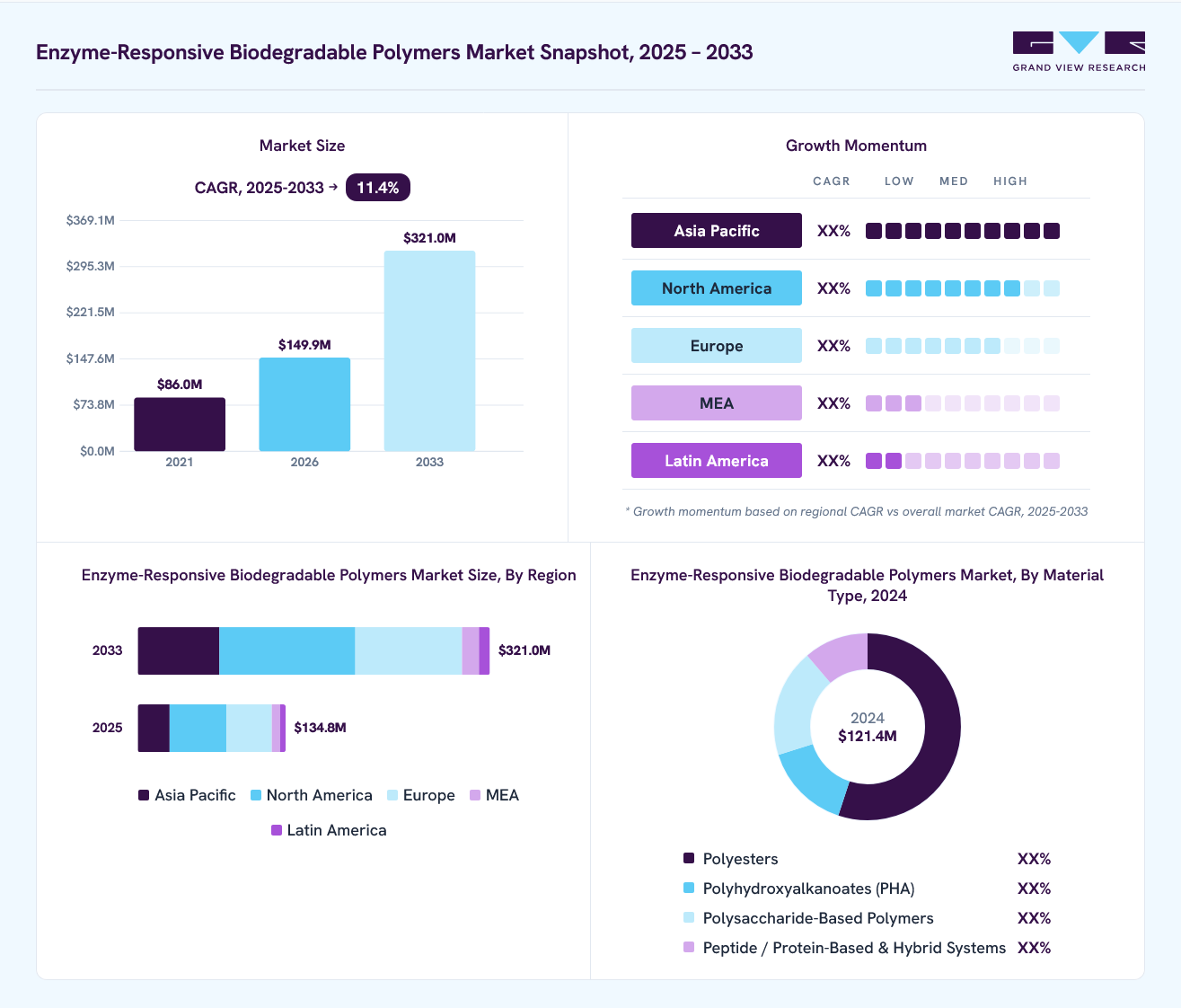
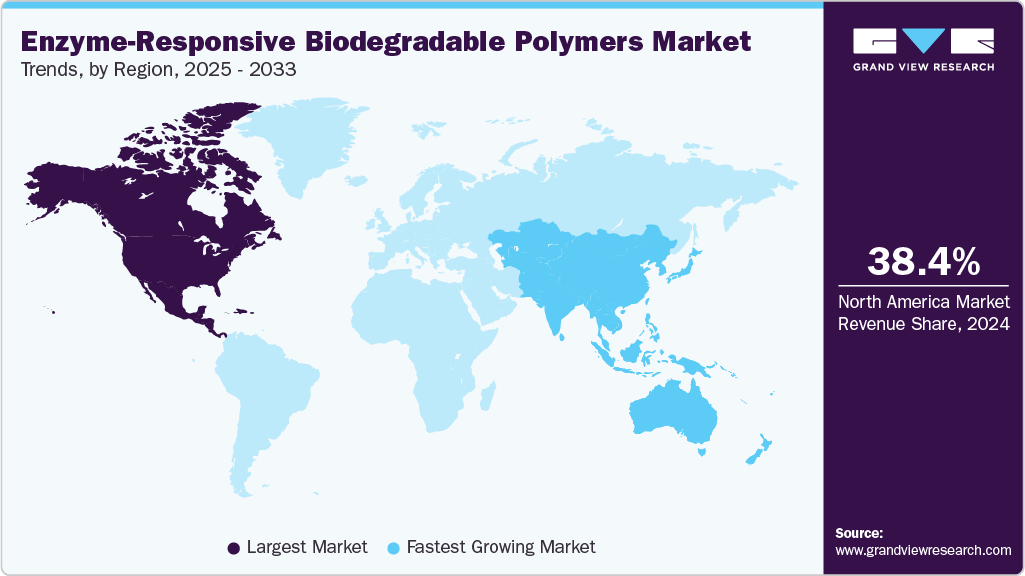
The global enzyme-responsive biodegradable polymers market size was valued at USD 121.4 million in 2024 and is projected to grow from USD 149.9 million in 2026 to USD 321.0 million by 2033, at a CAGR of 11.4% from 2025 to 2033. North America dominated the market, accounting for a revenue share of 38.4% in 2024. Rising demand for sustainable materials in packaging and agriculture is driving the adoption of enzyme-responsive biodegradable polymers, as industries seek eco-friendly alternatives that degrade naturally without harming the environment.
Key Market Trends & Insights
- The enzyme-responsive biodegradable polymers market in China is expected to grow at a substantial CAGR of 12.9% from 2025 to 2033.
- By material, the peptide / protein-based & hybrid systems segment is expected to grow at a considerable CAGR of 12.3% from 2025 to 2033 in terms of revenue.
- By end use, the drug delivery systems segment is expected to grow at a considerable CAGR of 11.9% from 2025 to 2033 in terms of revenue.
Market Size & Forecast
- 2024 Market Size: USD 121.4 Million
- 2033 Projected Market Size: USD 321.0 Million
- CAGR (2025-2033): 11.4%
- North America: Largest market in 2024
- Asia Pacific: Fastest growing market
Advancements in enzyme engineering and biocatalysis are further boosting the efficiency and cost-effectiveness of these polymers, encouraging broader industrial applications. Precision-triggered biodegradation is moving from the lab to targeted commercial use. Investment in enzyme-cleavable linkages and tailor-made polymer backbones is accelerating the development of materials that remain stable in use but rapidly degrade under specific biological cues, enabling controlled lifetimes in medical implants, drug carriers, and selected packaging formats. This technical maturation is being matched by stronger industry funding in stimuli-responsive materials and publications that document translational progress toward real-world formulations. Recent reviews and feature articles show a steady rise in enzyme-responsive systems designed for clinical and controlled-delivery applications.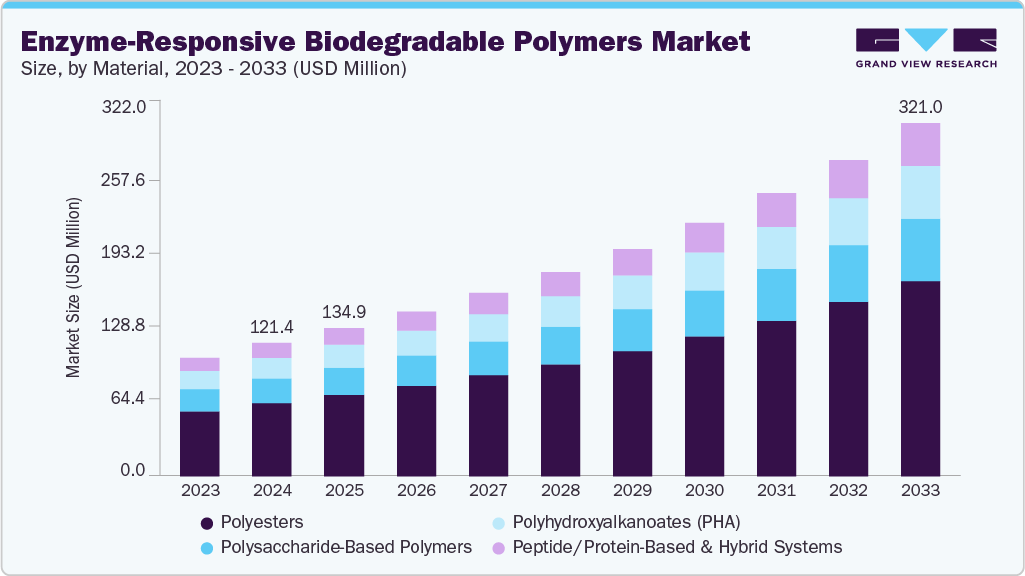
Drivers, Opportunities & Restraints
Healthcare and precision drug delivery are the primary commercial pulls for enzyme-responsive biodegradable polymers. Clinically motivated demand for site-specific therapeutics, responsive implants, and diagnostic scaffolds that reduce systemic exposure and enable better patient outcomes is encouraging polymer chemists and medical developers to prioritize enzyme-cleavable designs. Parallel growth in the enzymes and biotechnology sector is lowering barriers to scalable formulations and analytical validation, making enzyme-triggered materials more commercially viable. Market reports and enzyme market analyses confirm the expanding investment and adoption in the life sciences, which directly support this driver.
There is a clear white space for premium, functionally graded materials that combine regulatory-compliant biodegradability with tunable activation thresholds. Companies that can demonstrate consistent manufacturing scale-up, validated degradation profiles, and regulatory safety data will unlock high-value contracts in implantable devices, targeted oncology therapies, and specialty packaging for bioactive foods or agrochemicals. Furthermore, partnerships between polymer producers and enzyme suppliers or diagnostic firms can create integrated product-service models that capture lifecycle value rather than selling polymer resin alone. Recent market forecasts for biodegradable and stimuli-responsive polymers highlight the commercial potential of such vertically integrated offerings.
Commercialization faces cost and regulatory friction. Advanced enzyme-responsive chemistries increase raw material and development costs and require rigorous biodegradation and toxicology testing to meet medical and food-contact standards. In addition, heterogeneity in international regulations for biodegradable claims and the limited availability of standardized test methods for enzyme-triggered degradation increase the time to market and raise compliance costs. These factors compress margins for early entrants and favor larger incumbents or well-funded startups that can absorb extended validation cycles. Industry market analyses highlight regulatory complexity and cost as material constraints on near-term scale-up.
Market Concentration & Characteristics
The market growth stage of the enzyme-responsive biodegradable polymers industry is medium, and the pace is accelerating. The market exhibits fragmentation, with key players dominating the industry landscape. Major companies, including Evonik Industries AG, Danimer Scientific, Kaneka Corporation, and others, play a significant role in shaping the market dynamics. These leading players often drive innovation within the market, introducing new products, technologies, and applications to meet the evolving demands of the industry.
The enzyme-responsive biodegradable polymers sector shows frontier-level innovation driven by molecular-level design and application-specific engineering. Researchers are developing precise cleavage motifs and hybrid chemistries that decouple mechanical performance from degradation kinetics, enabling materials that perform as long as needed and then clear predictably. Advances in enzyme engineering, 3D printing with smart inks, and validated in vivo degradation studies are accelerating translation from bench prototypes to regulated products. Commercial momentum is concentrated where proof-of-concept efficacy and scalable synthesis intersect, particularly in medical devices and high-value packaging.
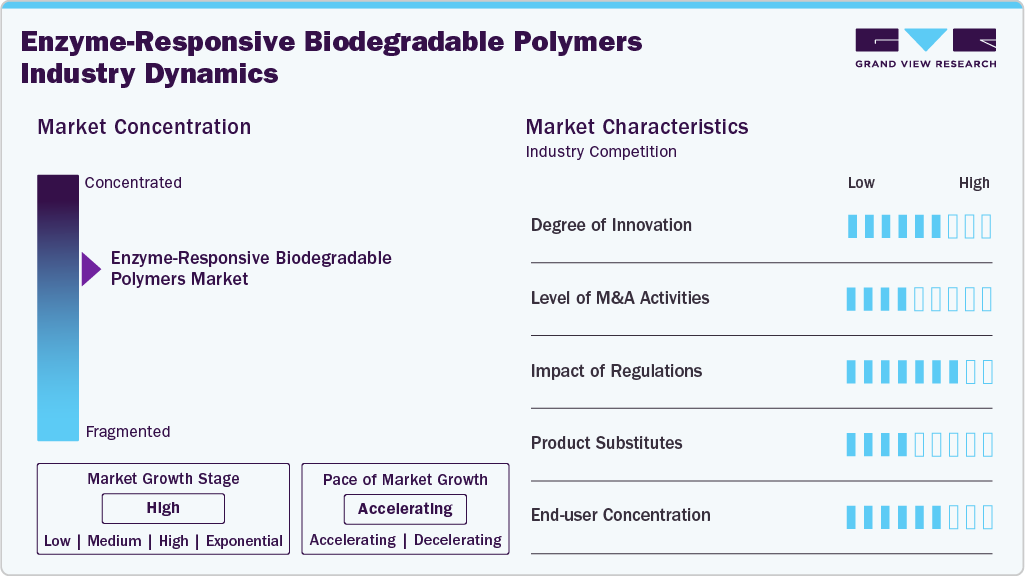
Substitution pressure comes from established biodegradable and stimuli-responsive materials that deliver similar outcomes at a lower cost or with simpler validation. Conventional biodegradable polymers such as PLGA, PLA, and natural polymers like gelatin and chitosan remain preferred where broad regulatory precedent or cost-efficiency matters, especially for bulk medical disposables and agricultural films. Non-enzyme triggers, for instance pH-, temperature- or light-responsive systems, also compete when the target environment offers reliable alternative stimuli and shorter development timelines. Market adoption, therefore, favors enzyme-responsive solutions only when their selectivity produces clear clinical or functional advantages that justify higher development and compliance spend.
Material Insights
Polyesters dominated the enzyme-responsive biodegradable polymers industry in terms of revenue, accounting for a market share of 55.03% in 2024, and it is forecast to grow at 11.5% CAGR from 2025 to 2033. Industrial polyesters are benefiting from purposeful chain design that enables enzyme-cleavable ester bonds and predictable hydrolysis rates. Producers are reformulating PLA and polycaprolactone to balance in-use performance with end-of-life enzyme sensitivity, enabling certified compostability or targeted degradation in controlled waste streams. This shift reduces post-consumer persistence and creates clearer circularity claims that appeal to large brand owners and regulators. Adoption hinges on reliable scale-up of these modified polyesters and validated degradation data.
The peptide/protein-based & hybrid systems segment is anticipated to grow at a substantial CAGR of 12.3% during the forecast period. Peptide and protein-based systems provide precise biological recognition and cleavage by endogenous enzymes, creating highly selective degradation profiles. Their modular chemistry allows conjugation with synthetic polymers to tune mechanical strength and clearance rates while preserving bioactivity. This makes them attractive for premium biomedical applications where predictable resorption and minimal inflammatory response are required. Commercialization depends on reproducible synthesis and cost reductions in peptide production.
End Use Insights
Drug delivery systems dominated the global market in terms of revenue, accounting for a share of 38.24% in 2024, and are forecast to grow at an 11.9% CAGR from 2025 to 2033. Enzyme-responsive polymers are unlocking localized payload release, which improves therapeutic indices and reduces systemic side effects. Platforms that respond to tumor- or infection-specific enzymes enable on-site drug liberation and dose sparing, which is particularly compelling for oncology and infectious disease therapeutics. Payers and developers value demonstrable efficacy gains, creating a clear pathway for premium pricing where clinical benefit is proven. Regulatory and manufacturing validation of trigger fidelity remains a gating factor.

The tissue engineering & regenerative medicine segment is expected to expand at a notable CAGR of 11.6% through the forecast period. In tissue engineering, enzyme-sensitive scaffolds permit synchronized scaffold removal and new tissue formation, improving functional integration. Designers now embed enzymatically degradable motifs to match scaffold degradation with healing kinetics for bone, cartilage, and soft tissue repair. This approach reduces the need for secondary removal procedures and supports better long-term outcomes, which appeals to hospital procurement and clinical teams. Widespread adoption will follow robust in vivo performance data and streamlined regulatory pathways.
Regional Insights
The North America enzyme-responsive biodegradable polymers industry held the largest share of 38.43% in 2024 and is expected to grow at a considerable CAGR of 11.5% over the forecast period. North America benefits from a deep enzyme and biotechnology supply chain that lowers technical barriers for enzyme-responsive materials. Large enzyme manufacturers and a mature enzyme market provide reliable inputs and analytical services that accelerate formulation testing. Venture and corporate R&D funding in the region concentrates on translational work, improving the odds of lab-to-factory scale-up. This ecosystem shortens development cycles for medical and specialty packaging applications.
Regional healthcare systems and large integrated medical-device buyers in North America create early commercial demand for high-performance, degradable implants and controlled-release systems. Hospitals and specialty clinics prioritize solutions that reduce reintervention and total cost of care, which supports higher-margin enzyme-responsive products. Procurement pathways and reimbursement models that recognize device value make buyers more willing to pay for measurable clinical benefits. Industry reports show strong market capture where clinical benefit is clear.
U.S. Enzyme-Responsive Biodegradable Polymers Market Trends
The enzyme-responsive biodegradable polymers industry in the U.S. has gained ground from precision medicine and targeted therapeutics, creating specific demand for polymers that release payloads in response to disease-associated enzymes. Active clinical trial pipelines for responsive nanomaterials and drug carriers provide validation routes for enzyme-triggered systems. Robust venture capital flows and strategic pharma-biotech partnerships in the U.S. fund late-stage development and regulatory filings. This alignment between science, capital, and trials underpins the rapid commercialization of clinically proven platforms.
Europe Enzyme-Responsive Biodegradable Polymers Market Trends
The Europe enzyme-responsive biodegradable polymers industry has witnessed favorable government policy and an increased demand for certified biodegradable solutions that meet traceable end-of-life criteria. The Ecodesign for Sustainable Products Regulation and EU bioplastics frameworks require clearer sustainability claims and labelling. Brand owners and converters in Europe respond by specifying advanced biodegradable chemistries, including enzyme-sensitive materials, which enable them to demonstrate compliance and reduced environmental impact. This regulatory pull creates a steady market for validated enzyme-responsive products.
Asia Pacific Enzyme-Responsive Biodegradable Polymers Market Trends
The enzyme-responsive biodegradable polymers industry in the Asia Pacific has gained impetus from low-cost manufacturing capacity with rapidly growing demand in packaging, agriculture, and consumer goods, creating a large addressable market for enzyme-responsive materials. Regional feedstock availability, investments in bio-based polymer capacity, lower unit costs, and supporting local commercial trials have augured well for the regional market. Fast adoption by domestic brand owners seeking sustainable differentiation accelerates scale production. Market data indicate that the region leads the global volume and growth in bio-based and biodegradable polymers.
Key Enzyme-Responsive Biodegradable Polymers Company Insights
The industry is highly competitive, with several key players dominating the landscape. Major companies include Evonik Industries AG, Danimer Scientific, and Kaneka Corporation, among others. The enzyme-responsive biodegradable polymers industry is characterized by a competitive landscape with several key players driving innovation and market growth. Major companies in this sector are investing heavily in research and development to enhance the performance, cost-effectiveness, and sustainability of their products.
Key Enzyme-Responsive Biodegradable Polymers Companies:
The following are the leading companies in the enzyme-responsive biodegradable polymers market. These companies collectively hold the largest market share and dictate industry trends.
- Evonik Industries AG
- Danimer Scientific
- Kaneka Corporation
- Newlight Technologies
- Biomer
- NatureWorks
- BASF SE
- Tepha Medical Devices
Recent Developments
-
In June 2024, Carbios entered discussions with Zhink Group to develop industrial PET biorecycling capacity in China, advancing enzyme-driven depolymerisation for large-scale circularity. The agreement formalized a joint intent to pursue a licensing contract for a plant with a minimum 50k tonnes/year capacity, signaling the commercialization of enzyme-based polymer recycling in a major manufacturing market.
-
In February 2024, Carbios signed De Smet Engineers & Contractors as an engineering partner to build its planned PET biorecycling facility in Longlaville, France. The collaboration covered project management and procurement support for what the companies describe as the world’s first industrial enzymatic PET recycling plant, a key step toward industrial enzyme-polymer integration.
Enzyme-Responsive Biodegradable Polymers Market Report Scope
Report Attribute
Details
Market size in 2024
USD 121.4 million
Estimated Market size in 2026
USD 149.9 million
Projected Market size by 2033
USD 321.0 million
Growth rate
CAGR of 11.4% from 2025 to 2033
Historical data
2021 - 2023
Forecast period
2025 - 2033
Quantitative units
Revenue in USD Million, Volume in Kilotons, and CAGR from 2025 to 2033
Report coverage
Revenue forecast, competitive landscape, growth factors, and trends
Segments covered
Material, end use, region
Regional scope
North America; Europe; Asia Pacific; Latin America; Middle East & Africa
Country Scope
U.S.; Canada; Mexico; Germany; France; UK; Spain; Italy; China; Japan; India; South Korea; Brazil; Argentina; Saudi Arabia; South Africa; UAE
Key companies profiled
Evonik Industries AG; Danimer Scientific; Kaneka Corporation; Newlight Technologies; Biomer; NatureWorks; BASF SE; Tepha Medical Devices
Customization scope
Free report customization (equivalent up to 8 analyst’s working days) with purchase. Addition or alteration to country, regional & segment scope
Pricing and purchase options
Avail customized purchase options to meet your exact research needs. Explore purchase options
Global Enzyme-Responsive Biodegradable Polymers Market Report Segmentation
This report forecasts revenue growth at the global, regional, and country levels, providing an analysis of the latest industry trends in each sub-segment from 2021 to 2033. For this study, Grand View Research has segmented the global enzyme-responsive biodegradable polymers market report on the basis of material, end use, and region:
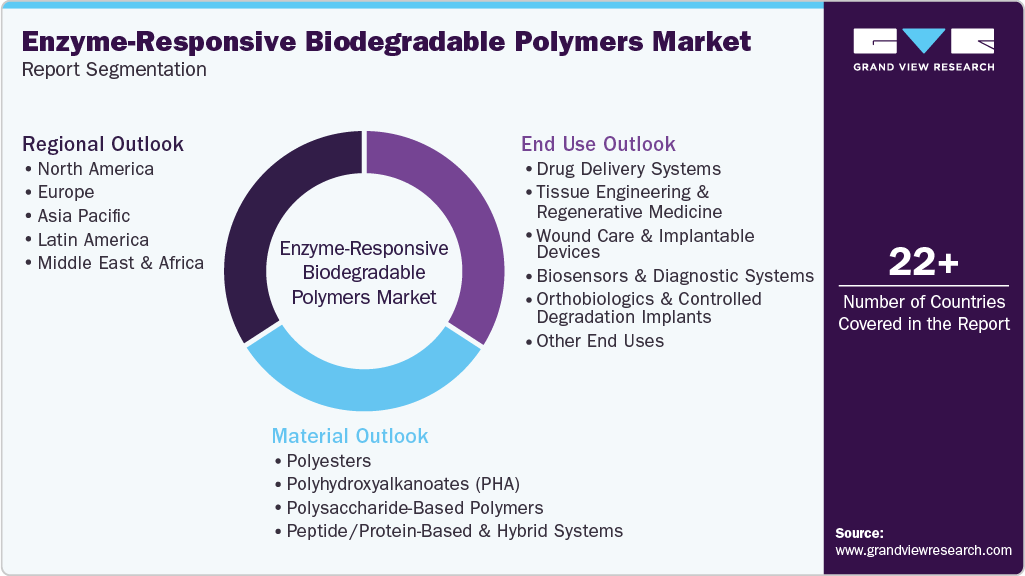
-
Material Outlook (Volume, Kilotons; Revenue, USD Million, 2021 - 2033)
-
Polyesters
-
Polyhydroxyalkanoates (PHA)
-
Polysaccharide-Based Polymers
-
Peptide / Protein-Based & Hybrid Systems
-
-
End Use Outlook (Volume, Kilotons; Revenue, USD Million, 2021 - 2033)
-
Drug Delivery Systems
-
Tissue Engineering & Regenerative Medicine
-
Wound Care & Implantable Devices
-
Biosensors & Diagnostic Systems
-
Orthobiologics & Controlled Degradation Implants
-
Other End Uses
-
-
Regional Outlook (Volume, Kilotons; Revenue, USD Million, 2021 - 2033)
-
North America
-
U.S.
-
Canada
-
Mexico
-
-
Europe
-
Germany
-
UK
-
France
-
Italy
-
Spain
-
-
Asia Pacific
-
China
-
India
-
Japan
-
South Korea
-
-
Latin America
-
Brazil
-
Argentina
-
-
Middle East & Africa
-
Saudi Arabia
-
South Africa
-
UAE
-
-
About the Author(s)
Plastics, Polymers & Resins Research Team
Bulk Chemicals · Plastics, Polymers & ResinsThis report was authored by the plastics, polymers & resins research team at Grand View Research - comprising two research analysts, one senior research analyst, and one industry expert - with specialized expertise in the plastics, polymers & resins segment of the bulk chemicals industry. All findings are based on proprietary bulk chemicals databases, executive interviews, and regulatory analysis, subject to internal peer review prior to publication.
Last Updated:
Speak to Analyst


Customize this report to your needs — add regions, segments, or data points, with 20% free customization.
Or view our licence options:


ISO 9001:2015 & 27001:2022 Certified
We are GDPR and CCPA compliant! Your transaction & personal information is safe and secure. For more details, please read our privacy policy.


