
- Home
- »
- Plastics, Polymers & Resins
- »
-
Ethylene Vinyl Acetate Copolymer Market Size Report, 2033GVR Report cover

Ethylene Vinyl Acetate Copolymer Market (2026 - 2033)
Size, Share & Trends Analysis Report By Type, By Application (Film, Foam, PV Cells), By End-use (Consumer Goods, Medical & Healthcare), By Region (North America; Europe; Asia Pacific; Latin America; Middle East & Africa) And Segment Forecasts
Market Size, 2025
$10.1BMarket Estimate, 2026
$10.8BMarket Forecast, 2033
$16.9BCAGR, 2026–2033
6.6%Ethylene Vinyl Acetate Copolymer Market Summary
The global ethylene vinyl acetate copolymer market size was valued at USD 10.1 billion in 2025 and is projected to grow from USD 10.8 billion in 2026 to USD 16.9 billion by 2033, at a CAGR of 6.6% from 2026 to 2033. Asia Pacific dominated the market, accounting for a revenue share of 46.3% in 2025. Growing environmental awareness and increasingly stringent regulations promoting sustainability are supporting the growth of the ethylene vinyl acetate (EVA) copolymer market.
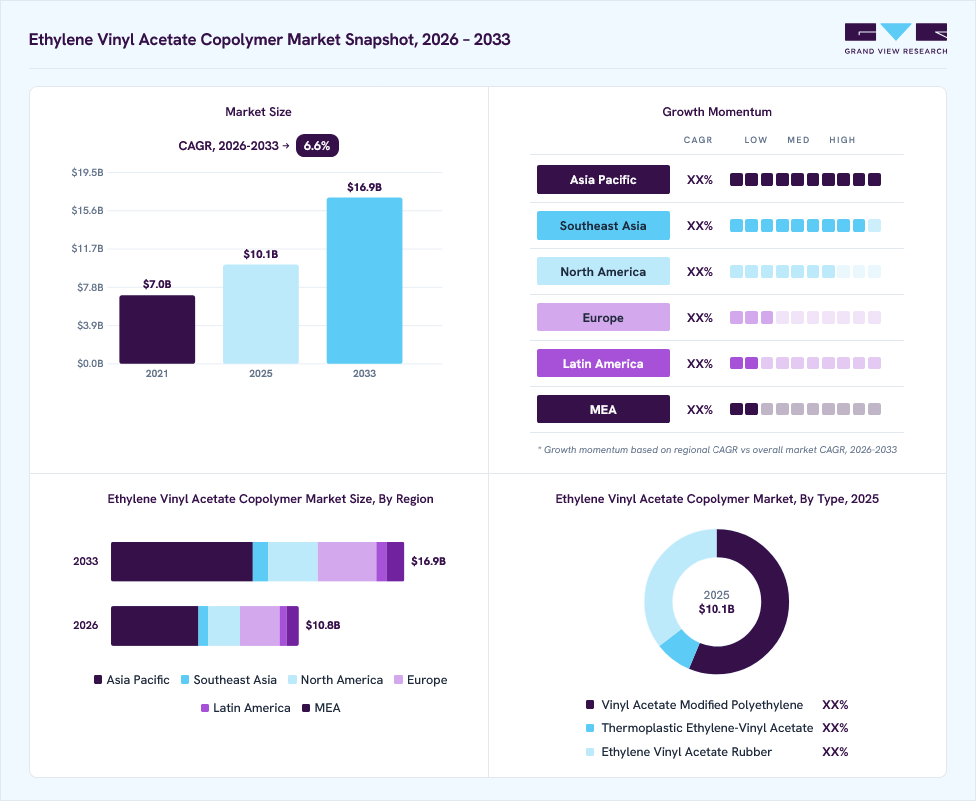 Source: Grand View Research, IR Documents, Primary Interviews, Paid DatabasesTo learn more about this report,
 Download Free Sample Report
Key Market Trends & Insights
- By type: Vinyl acetate modified polyethylene segment led the market with the largest revenue share of 56.2% in 2025.
- By application: Photovoltaic cells segment led the market with the largest revenue share of 35.1% in 2025.
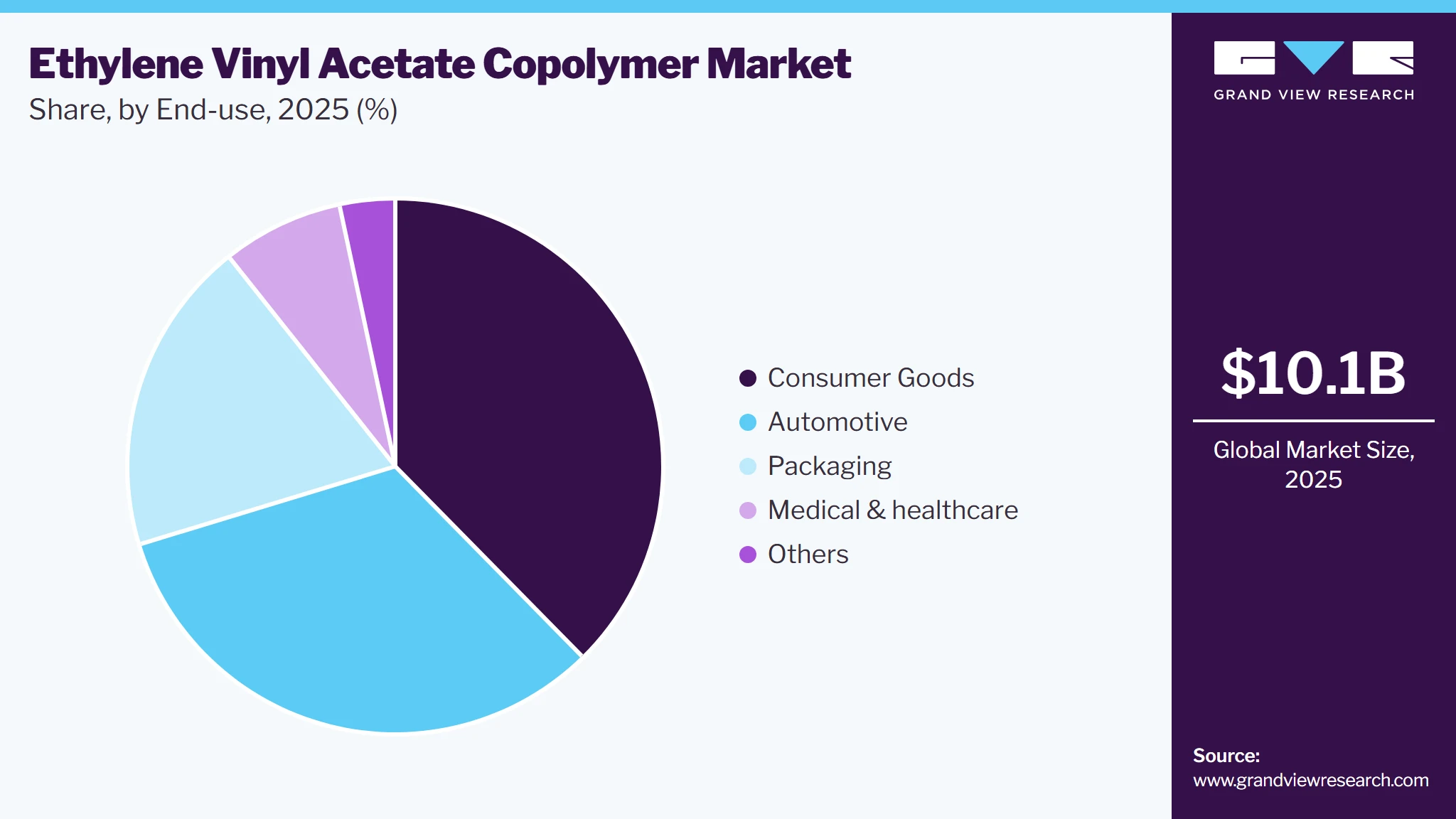
- By end use: Consumer goods segment led the market with the largest revenue share of 37.6% in 2025.
Regional Highlights
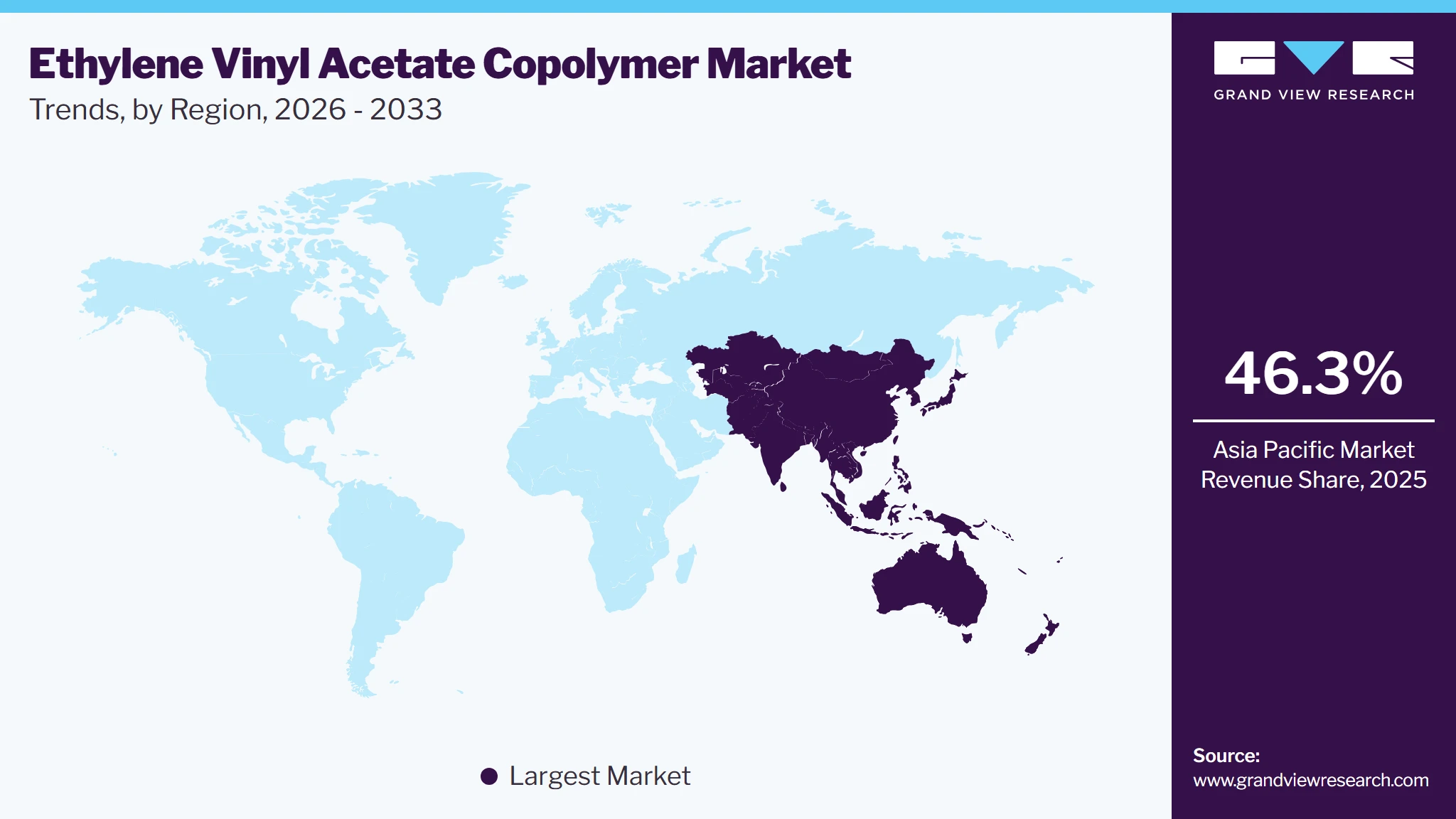
- Largest regional market: Asia Pacific (46.3% revenue share in 2025)
- By country: The U.S. held the largest market share in 2025.
Market Size & Forecast
- Market size in 2025: USD 10.1 Billion
- Estimated market size in 2026: USD 10.8 Billion
- Projected market size by 2033: USD 16.9 Billion
- CAGR (2026-2033): 6.6%
Three ways to get this report
Buy it, customize it, or ask a question.Ask an Analyst
Analyst response in 1 business day
- AccessReport author, directly
- Reply timeWithin 1 working day
- No sales callDirect answer only
- FormatEmail reply
- CostFree, no cost
Get the Full Report
What the study covers
- FormatsPDF · Excel · Dashboard
- Timeline2026–2033 annual, 2025 base
- Coverage20+ countries, 5 regions
- Companies10+ key players profiled
Customize the Report
20% free customization
- IncludeCountries, segments, points
- TailorTo your product definition
- ExtendDeeper competitor detail
- OrA fully bespoke study
- Turnaround5–10 working days
Additionally, rising demand from the packaging, footwear, and automotive industries is accelerating market expansion, as EVA enhances product durability, flexibility, and performance. The increasing preference for lightweight, high-performance materials, coupled with advancements in manufacturing technologies and broader adoption across end-use sectors, is further contributing to the global growth of the market. This growth is attributed to the increasing applications in packaging, footwear, and automotive industries are significant contributors, as ethylene vinyl acetate (EVA) properties enhance product durability and flexibility. In addition, the rising demand for sustainable solutions in packaging and construction, alongside the expansion of the renewable energy sector, particularly in solar technology, fuels market growth. Furthermore, regulatory pressures for environmentally friendly materials further support this trend, positioning EVA as a versatile choice across various sectors.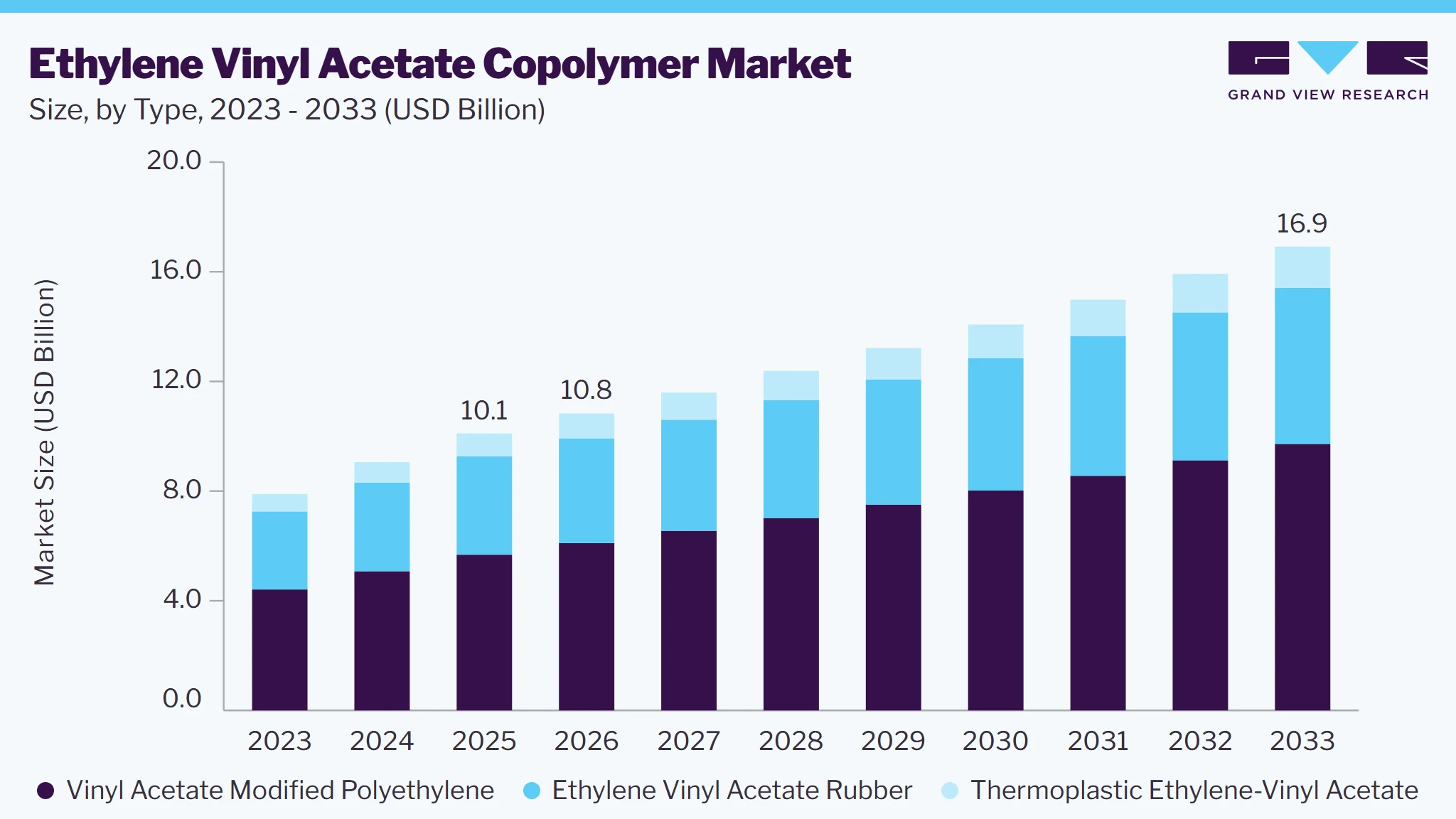 To learn more about this report, Download Free Sample Report
EVA copolymers are produced from a combination of vinyl acetate monomer and ethylene, resulting in an elastomeric polymer renowned for its high coefficient of friction, low seal initiation temperatures, and impressive toughness. The healthcare sector is a primary driver of market growth as the demand for versatile solutions in adhesives, sealants, and coatings rises, particularly in developing economies. In addition, the automotive industry's expansion, with increased production of vehicles utilizing EVA in components like bumpers and molded parts, significantly contributes to market dynamics.
Moreover, technological advancements and a heightened focus on sustainability are shaping the EVA market trends. Its applications in footwear, packaging, and renewable energy solutions underscore its importance as industries seek flexible and durable materials. The photovoltaic sector is witnessing a surge in EVA demand due to its role in encapsulating solar cells, ensuring effective light transmission while protecting against environmental damage. This trend aligns with the growing adoption of solar energy.
Furthermore, manufacturers respond to environmental concerns by developing bio-based alternatives to traditional EVA derived from fossil fuels. These sustainable options utilize renewable resources such as sugarcane or cassava. The healthcare industry is also expanding its use of EVA due to its flexibility and biocompatibility, finding applications in medical devices like drug delivery systems and blood bags. In packaging, EVA's superior barrier properties enhance the shelf life of food and pharmaceuticals, further driving its adoption across various sectors. The rising demand across multiple industries and a shift towards sustainable practices positions the EVA market for continued growth.
Market Dynamics
The ethylene vinyl acetate (EVA) copolymer market is transitioning from a conventional polymer segment into a strategically important component of the sustainable materials industry. Rising demand for environmentally friendly solutions in packaging, construction, healthcare, and renewable energy is encouraging manufacturers to expand EVA production and develop bio-based alternatives from renewable feedstocks. Technological advancements are enhancing material performance, flexibility, and durability, while growing solar energy adoption is increasing demand for EVA in photovoltaic encapsulation applications. Additionally, expanding automotive and healthcare industries, coupled with regulatory pressure for sustainable materials, are accelerating market growth, innovation, and competitive differentiation across global end-use sectors.
The growing use of solar photovoltaic (PV) systems significantly drives the Ethylene Vinyl Acetate (EVA) copolymer market. EVA is commonly utilized as an encapsulating material in solar panels due to its outstanding transparency, strong bonding properties, flexibility, and capacity to shield photovoltaic cells from moisture, dust, and mechanical damage. As governments across the globe enhance the adoption of renewable energy through favorable policies, incentives, and goals for carbon reduction, the installation of solar panels continues to rise, thereby directly increasing the demand for EVA copolymers.
Additionally, the worldwide shift towards sustainable energy and the decreasing costs associated with solar power production have stimulated substantial investments in large-scale, commercial, and residential solar initiatives. EVA continues to be the favored encapsulation material as it improves the longevity, effectiveness, and operational life of solar panels. Given that solar energy is anticipated to be a key component of future energy supplies, the demand for EVA in photovoltaic uses is expected to increase consistently, contributing to the overall growth of the market.
Volatile raw material prices remain a significant challenge for the ethylene vinyl acetate copolymer market. EVA production relies heavily on key petrochemical feedstocks, particularly ethylene and vinyl acetate monomer (VAM), which collectively account for a substantial portion of overall manufacturing costs. Fluctuations in crude oil prices, supply-demand imbalances, and disruptions across global supply chains can significantly increase feedstock expenses, creating uncertainty for manufacturers and impacting production economics. In addition, limited availability of raw materials and regional supply constraints can further intensify pricing pressures. These cost fluctuations often compress profit margins and can limit adoption in price-sensitive end-use industries, making effective procurement strategies, supply chain optimization, and production efficiency improvements critical for sustaining long-term market growth.
The growing demand for advanced healthcare solutions is creating significant opportunities for the ethylene vinyl acetate copolymer market. Medical-grade EVA is increasingly utilized in pharmaceutical and medical device applications due to its biocompatibility, non-toxicity, flexibility, and ability to provide controlled permeability. These properties make it suitable for transdermal patches, targeted implants, intravaginal drug delivery rings, blood bags, specialized tubing, and sustained-release drug delivery systems. In addition, advancements in medical technologies and increasing investment in advanced therapeutics are expanding its application scope. Rising healthcare expenditure, growing demand for high-performance medical devices, and stricter quality standards are further accelerating EVA adoption, supporting long-term market growth.
Analyst Perspective
The market for Ethylene Vinyl Acetate (EVA) copolymer is set for consistent growth, bolstered by its wide range of applications and advantageous performance traits across various industries. EVA's capacity to provide flexibility, durability, impact resistance, and ease of processing has facilitated its adoption in major sectors such as footwear, packaging, wire and cable, automotive, and renewable energy. From the viewpoint of an analyst, market growth is increasingly influenced by the need for lightweight materials, sustainable manufacturing methods, and innovative polymer solutions that can adapt to changing performance demands. Although variations in the prices of ethylene feedstock may affect short-term market conditions, continuous product innovation, expansions in production capacity, and rising demand from end users are projected to support the long-term growth of the market.
Type Insights
Based on type, the vinyl acetate modified polyethylene segment led the market with the largest revenue share of 56.2% in 2025. This growth is attributed to its advantageous properties, such as low molecular weight and excellent barrier capabilities. These characteristics make VAMPE particularly suitable for packaging applications in consumer goods, food, and beverages. In addition, its versatility allows it to be used in various products, including foam blister packs, insulation foams, and tapes. Furthermore, as industries increasingly prioritize effective moisture and gas barriers, demand for VAMPE continues to rise, significantly contributing to market expansion.
Thermoplastic ethylene-vinyl acetate is expected to grow at a CAGR of 1.4% over the forecast period, owing to its unique combination of flexibility, durability, and ease of processing. This segment is particularly favored in applications requiring lightweight materials, such as automotive components and packaging solutions. In addition, the increasing demand for sustainable and efficient materials across diverse industries further enhances TEVA's appeal. Furthermore, its application in solar energy solutions, which is an encapsulant for photovoltaic modules, also boosts its market presence. As renewable energy initiatives expand globally, the demand for TEVA is expected to accelerate, driving significant growth in this segment.
Application Insights
Based on the application, the photovoltaic cells segment led the market with the largest revenue share of 35.1% in 2025 attributed to its versatile properties, such as high transparency, flexibility, and excellent barrier characteristics. These attributes make EVA films ideal for various applications, including packaging, agriculture, and construction. In addition, the increasing demand for sustainable and eco-friendly packaging solutions has further propelled market growth. Furthermore, as industries focus on reducing their carbon footprint, EVA films are increasingly favored for their ability to provide effective moisture and gas barriers while complying with food safety regulations, enhancing their appeal across multiple sectors.
The photovoltaic cells application segment is expected to grow at a CAGR of 1.9% over the forecast period. This growth is primarily fueled by the rapid expansion of the solar energy sector. EVA is a crucial encapsulant in photovoltaic panels, protecting solar cells from environmental damage while ensuring optimal light transmission. In addition, the growing global emphasis on renewable energy sources and government incentives for solar installations drive this trend. Furthermore, as more residential and commercial projects incorporate solar technology, the need for high-quality EVA films will continue to rise, solidifying their importance in enhancing the efficiency and longevity of solar panels.
End Use Insights
Based on end use, the consumer goods segment led the market with the largest revenue share of 37.6% in 2025, owing to its excellent properties, such as flexibility, durability, and adhesion. These attributes make EVA ideal for various applications, including packaging for food and beverages, which require effective moisture and gas barriers. In addition, the rising consumer preference for sustainable and eco-friendly materials pushes manufacturers to adopt EVA in their products. Furthermore, as e-commerce continues to expand, the demand for reliable packaging solutions further propels the growth of EVA in consumer goods.
 To learn more about this report, Download Free Sample Report
Packaging is expected to grow at a CAGR of 1.5% over the forecast period attributed to versatility and performance characteristics. EVA's exceptional barrier properties, transparency, and flexibility make it a preferred choice for various packaging applications. In addition, the increasing focus on sustainable packaging solutions is also a key driver, as companies seek materials that minimize environmental impact while maintaining product integrity. Furthermore, as global consumption patterns shift towards more packaged goods, particularly in food and healthcare, the need for effective and reliable packaging solutions using EVA continues to grow, enhancing its market presence.
Regional Insights
North America ethylene vinyl acetate copolymer market is expected to grow significantly over the forecast period, driven by strong footwear, packaging, and automotive demand. In addition, the presence of key manufacturers and ongoing technological advancements enhance market dynamics. Furthermore, there is a growing emphasis on sustainability and innovation in applications such as solar energy and medical devices, further propelling the demand for EVA products. This combination of factors positions North America as a crucial region for EVA growth.
The ethylene vinyl acetate copolymer market in Canada is expected to witness substantial growth supported by increasing investments in renewable energy and sustainable packaging solutions. In addition, the rising demand for EVA across various applications, including medical devices and consumer goods packaging, reflects industries' efforts to adopt eco-friendly materials that comply with regulatory standards. Furthermore, as Canadian companies prioritize sustainability and innovation in their product offerings, the EVA market is expected to experience significant expansion, aligning with global trends toward environmentally responsible practices.
Asia Pacific Ethylene Vinyl Acetate Copolymer Market Trends
Asia Pacific dominated the ethylene vinyl acetate copolymer market with the largest revenue share of 46.3% in 2025 attributed to rapid industrialization and a booming manufacturing sector, particularly in countries such as China and India. The ethylene vinyl acetate copolymer market in China accounted for the largest market revenue share in the Asia Pacific in 2025. In addition, the increasing demand for EVA in diverse applications such as footwear, packaging, and automotive components is a key factor. Furthermore, the region's focus on renewable energy projects, especially solar energy, enhances EVA's role as an encapsulant for photovoltaic cells, solidifying its market presence and driving further expansion.
 To learn more about this report, Download Free Sample Report
The ethylene vinyl acetate copolymer market in China dominated the Asia Pacific market and accounted for the largest revenue share in 2024 attributed to rapid industrialization and a strong chemical sector. The country's expanding manufacturing capabilities contribute to the high demand for EVA products across various applications, including packaging and automotive components. Furthermore, government initiatives promoting renewable energy bolster the demand for EVA in solar applications, enhancing its market dynamics.
Southeast Asia Ethylene Vinyl Acetate Copolymer Market Trends
The Southeast Asia ethylene vinyl acetate copolymer market is expected to grow at a CAGR of 2.4% over the forecast period, owing to the expansion of consumer goods and packaging industries. In addition, economic development and increased foreign investments propel the need for durable and flexible materials. Furthermore, as e-commerce continues to rise in the region, the demand for effective packaging solutions utilizing EVA is also increasing. This trend contributes significantly to market growth, positioning Southeast Asia as a vital player in the global EVA landscape.
Europe Ethylene Vinyl Acetate Copolymer Market Trends
The Europe ethylene vinyl acetate copolymer market had a significant revenue share in 2025 attributed to stringent regulations promoting sustainable materials and an increased focus on recycling initiatives. In addition, the automotive sector's shift towards lightweight materials significantly boosts EVA demand. Furthermore, the growing healthcare sector also requires high-performance EVA for medical applications, contributing to overall market growth. As European industries adapt to environmental challenges while seeking innovative solutions, EVA's versatility positions it as a key material across various regional sectors.
Key Ethylene Vinyl Acetate Copolymer Company Insights
Some of the key companies in the market include Exxon Mobil Corp., Dow Inc., LyondellBasell Industries Holdings B.V., and others. These companies adopted various strategies, including new product launches, focused on sustainable and innovative solutions, such as eco-friendly EVA formulations for packaging and solar applications to enhance the competitive viability. In addition, strategic collaborations with end-user industries aim to expand market reach and leverage technological advancements. Furthermore, mergers and acquisitions are being pursued to consolidate market share and enhance production capabilities, while investments in research and development ensure continuous improvement and adaptation to evolving consumer demands.
Exxon Mobil Corporation manufactures a wide range of chemical products, including EVA resins, which are utilized in various applications such as packaging, automotive components, and consumer goods. The company operates in multiple segments, including upstream exploration and production, downstream refining and marketing, and chemical manufacturing, positioning itself as a key player in producing high-performance materials like EVA.
Eastman Chemical Company produces EVA resins that are widely used in applications such as adhesives, films, foams, and medical packaging. The company operates in several segments, including Additives & Functional Products, Advanced Materials, and Chemical Intermediates. Their focus on innovation and sustainability drives the development of advanced EVA formulations tailored for diverse industries, reinforcing their position in the global EVA market.
Key Ethylene Vinyl Acetate Copolymer Companies:
The following key companies have been profiled for this study on the ethylene vinyl acetate copolymer market.
-
Exxon Mobil Corp.
-
Dow Inc.
-
LyondellBasell Industries Holdings B.V.
-
Eastman Chemical Company
-
Arkema
-
Borealis AG
-
Celanese Corp.
-
INEOS
-
Total
-
LG Chem
-
Braskem
-
Dairen Chemical Corp.
-
Lotte Chemical Corp.
Competitive Benchmarking
Category
Operating Strategies
Competitive Edge
Weakness
Established Players (Exxon Mobil Corp.; Dow Inc.; LyondellBasell Industries Holdings B.V.; Eastman Chemical Company; Arkema; Borealis AG; Celanese Corp.; INEOS; TotalEnergies; LG Chem)
- Broad portfolios of ethylene vinyl acetate copolymer solutions spanning vinyl acetate modified polyethylene, thermoplastic EVA, EVA rubber, specialty film grades, foam materials, hot melt adhesives, and photovoltaic encapsulation products used across packaging, automotive, medical & healthcare, consumer goods, renewable energy, and industrial applications.
- Strong focus on material innovation, process optimization, advanced polymer technologies, and development of high-performance EVA formulations that deliver enhanced flexibility, durability, adhesion, impact resistance, and weatherability while supporting evolving sustainability and circular economy objectives.
- Extensive investments in R&D, production capacity expansion, feedstock integration, strategic partnerships with packaging converters, solar module manufacturers, automotive suppliers, and healthcare product manufacturers, alongside global distribution networks that strengthen market presence across key regional markets.
- Strong expertise in polymer science, large-scale petrochemical integration, and advanced manufacturing capabilities that support consistent production of high-quality EVA materials across diverse vinyl acetate content ranges and performance specifications.
- Established customer relationships across packaging, photovoltaic, automotive, footwear, healthcare, and industrial sectors, supported by global supply chains, technical service capabilities, and the ability to meet stringent quality, regulatory, and application-specific requirements.
- Advanced innovation capabilities enabling continuous development of specialty EVA grades for solar encapsulation, medical applications, high-performance adhesives, flexible packaging, and lightweight industrial components, supporting product differentiation and long-term market competitiveness.
- High dependence on ethylene and vinyl acetate monomer (VAM) feedstocks exposes manufacturers to fluctuations in crude oil prices, raw material volatility, and supply chain disruptions that can impact production economics and profit margins.
- Increasing regulatory pressure related to plastic waste management, recycling requirements, carbon emission reduction targets, and sustainability expectations may require substantial investments in circular material solutions, bio-based alternatives, and compliance initiatives, potentially increasing operational costs and affecting market competitiveness in certain regions.
Emerging Players (Braskem; Dairen Chemical Corp.; Lotte Chemical Corp.)
- Focus on expanding ethylene vinyl acetate (EVA) copolymer production and downstream application capabilities across packaging, automotive components, footwear, adhesives, photovoltaic encapsulation, and industrial materials.
- These companies emphasize capacity expansion, process optimization, and integration of bio-based and low-carbon feedstocks to align with global sustainability trends.
- Strategic initiatives include investments in advanced polymer technologies, product portfolio diversification, and partnerships with converters, OEMs, and renewable energy manufacturers to strengthen market penetration and application development.
- Strong production scale, integrated petrochemical value chains, and established R&D capabilities support competitiveness in EVA markets. These players benefit from extensive distribution networks, cost-efficient manufacturing infrastructure, and diversified product portfolios spanning polyethylene, EVA, and specialty polymers.
- Their ability to serve high-volume applications such as packaging films, solar encapsulation, and footwear materials enhances market positioning.
- Additionally, growing investments in sustainability-focused materials and renewable energy-linked applications strengthen long-term demand relevance and innovation leadership.
- High dependence on petrochemical feedstocks exposes these players to ethylene and vinyl acetate monomer price volatility, impacting margins. Significant capital requirements for capacity expansion, technology upgrades, and sustainability compliance may constrain agility.
- Intense competition from global polymer manufacturers and regional producers can limit pricing power in commoditized segments.
- Additionally, evolving environmental regulations, supply chain disruptions, and transition risks associated with decarbonization initiatives may create operational and cost pressures across EVA production and commercialization.
Recent Developments
-
In May 2024, INEOS successfully acquired LyondellBasell’s Ethylene Oxide and Derivatives (EO&D) business, including production facilities in Bayport, Texas. This strategic move enhances INEOS's presence in the largest global market, the U.S. market, and complements its existing operations in Louisiana. The Bayport facility produces high-purity ethylene oxide, crucial for manufacturing ethylene vinyl acetate copolymer (EVA) and other derivatives, supporting various applications in the packaging and automotive sectors. This acquisition positions INEOS for growth in the evolving chemical landscape.
Ethylene Vinyl Acetate Copolymer Market Report Scope
Report Attribute
Details
Market size in 2025
USD 10.1 billion
Estimated market size in 2026
USD 10.8 billion
Projected market size by 2033
USD 16.9 billion
Growth rate
CAGR of 6.6% from 2026 to 2033
Base year for estimation
2025
Historical data
2021 - 2024
Forecast period
2026 - 2033
Quantitative units
Revenue in USD million/billion, volume in kilotons, and CAGR from 2026 to 2033
Report coverage
Revenue forecast, company ranking, competitive landscape, growth factors, and trends
Segments covered
Type, application, end use, region
Regional scope
North America; Europe; Asia Pacific; Latin America; Middle East & Africa
Country scope
U.S., Canada, Mexico, UK, Germany, France, Italy, India, China, Japan; South Korea, Australia, Brazil, Argentina, Kuwait, Saudi Arabia, South Africa, UAE
Key companies profiled
Exxon Mobil Corp.; Dow Inc.; LyondellBasell Industries Holdings B.V.; Eastman Chemical Company; Arkema; Borealis AG; Celanese Corp.; INEOS; Total; LG Chem; Braskem; Dairen Chemical Corp.; Lotte Chemical Corp.
Customization scope
Free report customization (equivalent up to 8 analysts' working days) with purchase. Addition or alteration to country, regional & segment scope.
Pricing and purchase options
Avail customized purchase options to meet your exact research needs. Explore purchase options
Global Ethylene Vinyl Acetate Copolymer Market Report Segmentation
This report forecasts revenue growth at global, regional, and country levels and analyzes the latest industry trends in each sub-segment from 2021 to 2033. For this study, Grand View Research has segmented the global ethylene vinyl acetate copolymer market report based on type, application, end use, and region:
 To learn more about this report, Download Free Sample Report
-
Type Outlook (Volume, Kilotons; Revenue, USD Million, 2021 - 2033)
-
Vinyl Acetate Modified Polyethylene
-
Thermoplastic Ethylene-Vinyl Acetate
-
Ethylene Vinyl Acetate Rubber
-
-
Application Outlook (Volume, Kilotons; Revenue, USD Million, 2021 - 2033)
-
Film
-
Foam
-
Hot Melt Adhesives
-
Photovoltaic Cells
-
Others
-
-
End use Outlook (Volume, Kilotons; Revenue, USD Million, 2021 - 2033)
-
Automotive
-
Packaging
-
Medical & Healthcare
-
Consumer Goods
-
Others
-
-
Regional Outlook (Volume, Kilotons; Revenue, USD Million, 2021 - 2033)
-
North America
-
U.S.
-
Canada
-
Mexico
-
-
Europe
-
UK
-
Germany
-
France
-
Italy
-
-
Asia Pacific
-
India
-
Japan
-
China
-
South Korea
-
-
Southeast Asia
-
Malaysia
-
Indonesia
-
Thailand
-
-
Latin America
-
Brazil
-
Argentina
-
-
Middle East and Africa (MEA)
-
Kuwait
-
Saudi Arabia
-
UAE
-
South Africa
-
-
Research Methodology
The ethylene vinyl acetate copolymer market figures in this report are based on a proven research process that combines executive interviews with secondary research from proprietary databases, company filings, and recognized regulatory and institutional sources. Market size is built through value-chain sizing - reconciling supply-side and demand-side estimates - and triangulated with bottom-up and top-down approaches. Every estimate passes multiple levels of expert validation before publication, with each ethylene vinyl acetate copolymer segment quantified using the revenue-capture definitions in the table below.
Segment Definition
Segment - Type
Revenue capture definition
Vinyl Acetate Modified Polyethylene
Revenue is captured through the production and sale of vinyl acetate modified polyethylene grades utilized across packaging, wire & cable, adhesives, films, and consumer applications. Demand is driven by its improved flexibility, impact resistance, low-temperature performance, and enhanced processing characteristics, enabling manufacturers to develop cost-effective and durable solutions for a wide range of industrial and consumer applications.
Thermoplastic Ethylene-Vinyl Acetate
Revenue is captured through the commercialization of thermoplastic ethylene-vinyl acetate materials used in footwear, packaging films, photovoltaic encapsulation, medical products, and molded components. Growth is supported by its excellent elasticity, transparency, toughness, and processability, allowing manufacturers to meet performance requirements while supporting lightweight and versatile product development across multiple end-use sectors.
Ethylene Vinyl Acetate Rubber
Revenue is captured through the supply of ethylene vinyl acetate rubber grades utilized in automotive components, industrial products, footwear, seals, gaskets, and flexible engineering applications. Demand is driven by its superior resilience, flexibility, impact absorption, weather resistance, and durability, supporting increasing adoption in applications requiring long-term mechanical performance and enhanced environmental resistance.
Segment - Application
Revenue capture definition
Film
Revenue is captured through the utilization of ethylene vinyl acetate copolymer in packaging films, agricultural films, protective films, lamination films, and specialty barrier applications. Demand is driven by its excellent flexibility, transparency, sealability, puncture resistance, and moisture protection properties, supporting growing requirements across food packaging, industrial packaging, and specialty film applications.
Foam
Revenue is captured through the application of ethylene vinyl acetate copolymer in footwear midsoles, sports equipment, cushioning materials, protective packaging, and insulation products. Growth is supported by its lightweight nature, shock absorption capability, flexibility, and durability, enabling manufacturers to enhance product comfort, protection, and performance across consumer and industrial sectors.
Hot Melt Adhesives
Revenue is captured through the incorporation of ethylene vinyl acetate copolymer in hot melt adhesive formulations used in packaging, woodworking, bookbinding, hygiene products, and assembly applications. Demand is driven by strong bonding performance, rapid setting characteristics, ease of processing, and compatibility with multiple substrates, supporting efficient manufacturing operations across diverse industries.
Photovoltaic Cells
Revenue is captured through the use of ethylene vinyl acetate copolymer as an encapsulation material in photovoltaic modules and solar panels. Growth is supported by increasing solar energy installations, demand for renewable energy solutions, and EVA’s ability to provide excellent transparency, adhesion, weather resistance, and long-term protection for photovoltaic cells against environmental degradation.
Others
Revenue is captured through ethylene vinyl acetate copolymer applications across wire & cable, medical devices, coatings, sealants, consumer products, and specialty industrial sectors. Demand is driven by expanding application versatility, continuous material innovation, evolving performance requirements, and increasing adoption of flexible and durable polymer solutions across emerging markets.
Segment - End Use
Revenue capture definition
Automotive
Revenue is captured through the application of ethylene vinyl acetate copolymer in interior components, wire insulation, seals, gaskets, vibration-dampening materials, and electric vehicle systems. Growth is supported by increasing focus on lightweight materials, vehicle durability, electrical safety, and enhanced passenger comfort, along with rising adoption of advanced polymer solutions across automotive manufacturing.
Packaging
Revenue is captured through the utilization of ethylene vinyl acetate copolymer in flexible packaging films, sealants, lamination structures, food packaging, pharmaceutical packaging, and hot melt adhesives. Demand is driven by the need for superior sealing performance, flexibility, puncture resistance, product protection, and compliance with stringent packaging quality standards across food, beverage, and healthcare industries.
Medical & Healthcare
Revenue is captured through the use of ethylene vinyl acetate copolymer in drug delivery systems, blood bags, medical tubing, transdermal patches, pharmaceutical packaging, and specialized healthcare devices. Growth is supported by its biocompatibility, flexibility, safety profile, and ability to meet stringent regulatory requirements, enabling broader adoption across advanced medical and therapeutic applications.
Consumer Goods
Revenue is captured through the incorporation of ethylene vinyl acetate copolymer in footwear, sporting goods, toys, personal accessories, household products, and recreational equipment. Demand is driven by increasing consumer preference for lightweight, durable, flexible, and comfortable products, along with manufacturers’ efforts to enhance product performance and design versatility.
Others
Revenue is captured through ethylene vinyl acetate copolymer applications across construction, renewable energy, electrical & electronics, industrial manufacturing, agriculture, and specialty engineering sectors. Growth is supported by expanding industrial applications, increasing infrastructure development, renewable energy investments, continuous product innovation, and growing demand for high-performance polymer materials across diverse end-use industries.
Estimation Model
Layer Name
Key Question
Description
Top-Down EVA Demand Scan Layer
What defines market boundaries?
This layer begins with global ethylene vinyl acetate copolymer demand across packaging, footwear, automotive, medical & healthcare, photovoltaic modules, consumer goods, adhesives, and industrial applications, then filters consumption intensity based on manufacturing output, packaging demand, solar energy installations, healthcare expansion, material performance requirements, and regulatory initiatives supporting product safety, sustainability, and renewable energy adoption.
End-Use Industry Validation Layer
Where is demand generated?
This layer evaluates demand distribution across packaging films, foam products, hot melt adhesives, photovoltaic encapsulation materials, medical devices, automotive components, consumer goods, and specialty industrial applications, aligning market revenue with performance requirements such as flexibility, impact resistance, transparency, adhesion, durability, weather resistance, and regulatory compliance across major end-use sectors.
Type & Application Conversion Layer
Who captures market revenue?
This layer converts end-use consumption volumes into ethylene vinyl acetate copolymer revenue by applying type and application mix ratios across vinyl acetate modified polyethylene, thermoplastic ethylene-vinyl acetate, ethylene vinyl acetate rubber, films, foams, hot melt adhesives, photovoltaic cells, and other specialty applications, while accounting for vinyl acetate content levels, processing technologies, material specifications, performance standards, certification requirements, and manufacturer pricing strategies throughout the value chain.
Regional Commercial Cross-Check Layer
How are assumptions validated?
This layer validates demand concentration by comparing Asia Pacific’s dominance in footwear manufacturing, packaging production, electronics assembly, and solar panel installations, Europe’s strong sustainability regulations and renewable energy investments, and North America’s growing demand for advanced packaging, healthcare products, and automotive applications, while also considering emerging opportunities in Latin America and the Middle East driven by industrialization, infrastructure development, rising consumer goods demand, and expanding renewable energy projects.
Delivered Customizations
This report has been delivered with the following In-depth customizations
Client Request
Customization Delivered
Value Adds
Regional Segmentation
Breakdown of ethylene vinyl acetate copolymer demand across key regions including North America, Europe, Asia Pacific, Southeast Asia, Latin America, and Middle East & Africa, with demand drivers mapped by region-specific industrial activity, regulatory environment, and end-use penetration
Enables clients to identify high-growth geographies, align capacity planning with regional demand shifts, and optimize market entry strategies based on regulatory and industrial maturity levels.
Cross-Segmentation
Integration of end-use industries (automotive, packaging, medical & healthcare, consumer goods, photovoltaics) with product types and applications (films, foams, adhesives, rubber grades).
Provides clarity on high-value intersections, enabling targeted product development, portfolio prioritization, and optimized resource allocation across the fastest-growing sub-segments.
Opportunity Assessment
Identification of high-growth and emerging opportunities across applications, sustainability-driven innovations, and technology advancements in EVA usage.
Supports strategic investment decisions, innovation roadmap development, and prioritization of high-margin, future-ready application segments driving long-term market expansion.
Frequently Asked Questions About This Report
The ethylene vinyl acetate copolymer market was estimated at around USD 10.1 billion in the year 2025 and is expected to reach around USD 10.8 billion in 2026.
The ethylene vinyl acetate copolymer market is expected to grow at a compound annual growth rate of 6.6% from 2026 to 2033 to reach around USD 16.9 billion by 2033.
The vinyl acetate modified polyethylene led the ethylene vinyl acetate copolymer market in 2025 with a 56.2% share. Growth is driven by its low molecular weight, strong adhesion properties, and excellent moisture and gas barrier performance.
Some of the key players operating in the ethylene vinyl acetate copolymer market include Exxon Mobil Corp., Dow Inc, LyondellBasell Industries Holdings B.V., Eastman Chemical Company, Arkema S.A., Celanese Corporation, LG Chem, LOTTE Chemical CORPORATION, Braskem, DCC, ADTEK Consolidated Sdn Bhd, Hanwha Solutions/Chemical Corporation, and Total.
Key factors driving the ethylene vinyl acetate copolymer market growth include laws & regulations enforced by governments, increasing awareness regarding sustainable plastic waste management, and reduction in environmental impact from plastic production.
The Asia Pacific Ethylene Vinyl Acetate Copolymer market accounted for the largest share of 46.3% market size in 2025.
Consumer goods segment led the market with the largest revenue share of 37.6% in 2025.
Based on application, the photovoltaic cells segment accounted for the largest share of 35.1% market size in 2025. EVA serves as a critical encapsulant in photovoltaic panels, offering excellent protection to solar cells against environmental stress while ensuring high light transmission efficiency.
About the Author(s)
Plastics, Polymers & Resins Research Team
Bulk Chemicals · Plastics, Polymers & ResinsThis report was authored by the plastics, polymers & resins research team at Grand View Research - comprising two research analysts, one senior research analyst, and one industry expert - with specialized expertise in the plastics, polymers & resins segment of the bulk chemicals industry. All findings are based on proprietary bulk chemicals databases, executive interviews, and regulatory analysis, subject to internal peer review prior to publication.
Last Updated:
Speak to Analyst

Customize this report to your needs - add regions, segments, or data points, with 20% free customization.
Or view our licence options:


ISO 9001:2015 & 27001:2022 Certified
We are GDPR and CCPA compliant! Your transaction & personal information is safe and secure. For more details, please read our privacy policy.


