
- Home
- »
- Clothing, Footwear & Accessories
- »
-
Europe Retail Vending Machine Market, Industry Report 2033GVR Report cover
![Europe Retail Vending Machine Market Size, Share & Trends Report]()
Europe Retail Vending Machine Market (2026 - 2033) Size, Share & Trends Analysis Report By Product (Beverage Vending Machines, Snacks Vending Machines, Food Vending Machines), By Location (Manufacturing, Offices, Colleges & Universities), By Payment Mode, By Country, And Segment Forecasts
- Report ID: GVR-4-68040-892-6
- Number of Report Pages: 107
- Format: PDF
- Historical Range: 2021 - 2025
- Forecast Period: 2026 - 2033
- Industry: Consumer Goods
- Report Summary
- Table of Contents
- Segmentation
- Methodology
- Download FREE Sample
-
 Download Sample Report
Europe Retail Vending Machine Market Summary
The Europe retail vending machine market size was valued at USD 14.24 billion in 2025 and is projected to reach USD 20.43 billion by 2033, growing at a CAGR of 4.7% from 2026 to 2033. Growth is strongly supported by the region’s high reliance on convenient consumption across workplaces, transport corridors, and public spaces, where vending machines serve as a practical alternative to cafés and quick-service outlets.
Key Market Trends & Insights
- The Italy retail vending machine market accounted for a market share of 18.8% in 2025.
- By product, beverages vending machines accounted for a market share of 38.2% in 2025.
- By location, manufacturing accounted for a market share of 35.8% in 2025.
- By payment mode, cashless payments held the largest market share in 2025.
Market Size & Forecast
- 2025 Market Size: USD 14.24 Billion
- 2033 Projected Market Size: USD 20.43 Billion
- CAGR (2026-2033): 4.7%
Industry observations from the European Vending & Coffee Service Association (EVA) indicate that hot beverages, particularly coffee, remain the most dominant vending category in Europe, alongside cold drinks, packaged snacks, sandwiches, and ready-to-eat meal solutions. The sustained culture of coffee consumption across the continent reinforces strong demand for premium hot drink vending formats.A substantial share of machines is deployed in offices, factories, hospitals, universities, and public administration buildings, where vending supports predictable, high-frequency demand throughout the day. This workplace concentration distinguishes Europe from many other regions, as vending machines serve not only snacks but also meal substitutes such as sandwiches, salads, soups, and microwavable food options in environments where time constraints reduce access to traditional foodservice. In parallel, the region’s highly developed public transport networks drive additional volume, with vending machines embedded into metro systems, rail terminals, and airport corridors where commuters and travelers require fast refreshment access without waiting or language barriers.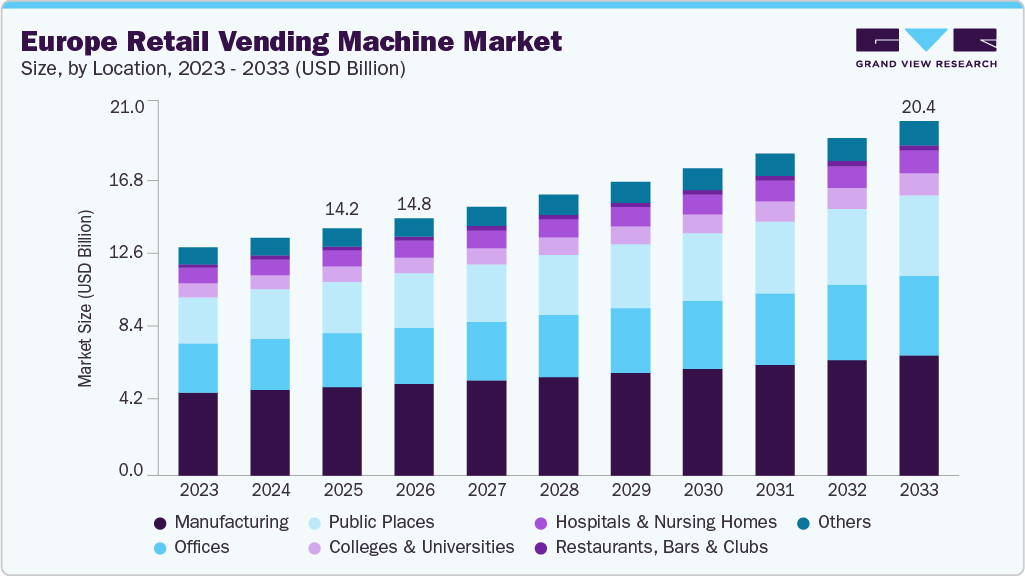
Furthermore, the demand is fueled through tourism, with international footfall concentrated in major hubs such as Paris, Rome, Barcelona, Vienna, and Amsterdam. Vending operators strategically place machines in high-traffic cultural zones, transit interchanges, and hospitality corridors to capture consistent tourist consumption. These machines provide standardized, always-available access to beverages, snacks, and convenience items, supporting strong utilization during seasonal travel peaks and across 24-hour mobility environments.
A major shift underway in Europe is the upgrading of vending assortments and technology as consumer expectations evolve beyond traditional packaged offerings. Younger buyers increasingly expect healthier, fresher, and more premium products even in automated formats, pushing operators to stock protein snacks, fruit, low-sugar beverages, and fresh refrigerated meals rather than relying solely on confectionery. Smart vending innovators such as Foodji and Selfly Store are expanding across European cities with digitally enabled machines offering fresh meal rotation, app-based payments, and real-time inventory control. At the same time, Europe is leading the adoption of advanced vending concepts dispensing gourmet coffee, freshly baked goods, and even hot prepared meals, positioning vending as an extension of modern urban foodservice rather than a low-value retail channel.
Brand Market Share Insights
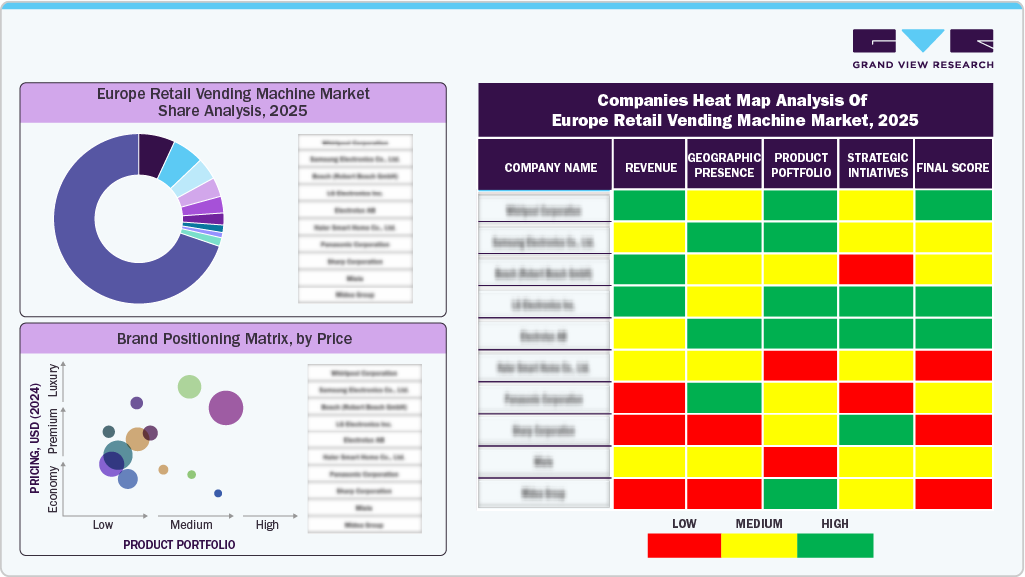
The Europe retail vending machine market features a mix of long-established international operators and regionally specialized players, creating a competitive landscape shaped by continuous technology upgrades and service-led innovation. To stay aligned with evolving consumer expectations, vending companies are prioritizing machine performance, product freshness, and seamless user experience across high-traffic environments such as offices, transit hubs, hospitals, and universities. Modern vending systems increasingly integrate cashless payments, contactless tapping, mobile wallet compatibility, and QR-based purchasing, reflecting Europe’s rapid shift toward digital transactions. Operators are also investing in smart telemetry and remote monitoring technologies that allow real-time stock tracking, predictive maintenance, and dynamic product replenishment, improving operational efficiency and reducing downtime.
Consumer Insights
Across Europe, vending machine demand is being shaped by a broad consumer base that includes millennials and Gen Z, time-constrained urban professionals, and an aging yet highly active commuter and workplace population aged 45+. Younger consumers are driving higher purchase frequency and experimentation with newer vending formats such as cashless smart machines and fresh-food options, while older demographics continue to rely on vending for consistent, familiar categories such as hot beverages, packaged snacks, and convenient meal substitutes. This multigenerational user base has widened the addressable vending market beyond impulse consumption, pushing operators to tailor assortments for both lifestyle-driven convenience and daily routine reliance across offices, hospitals, and transit environments.
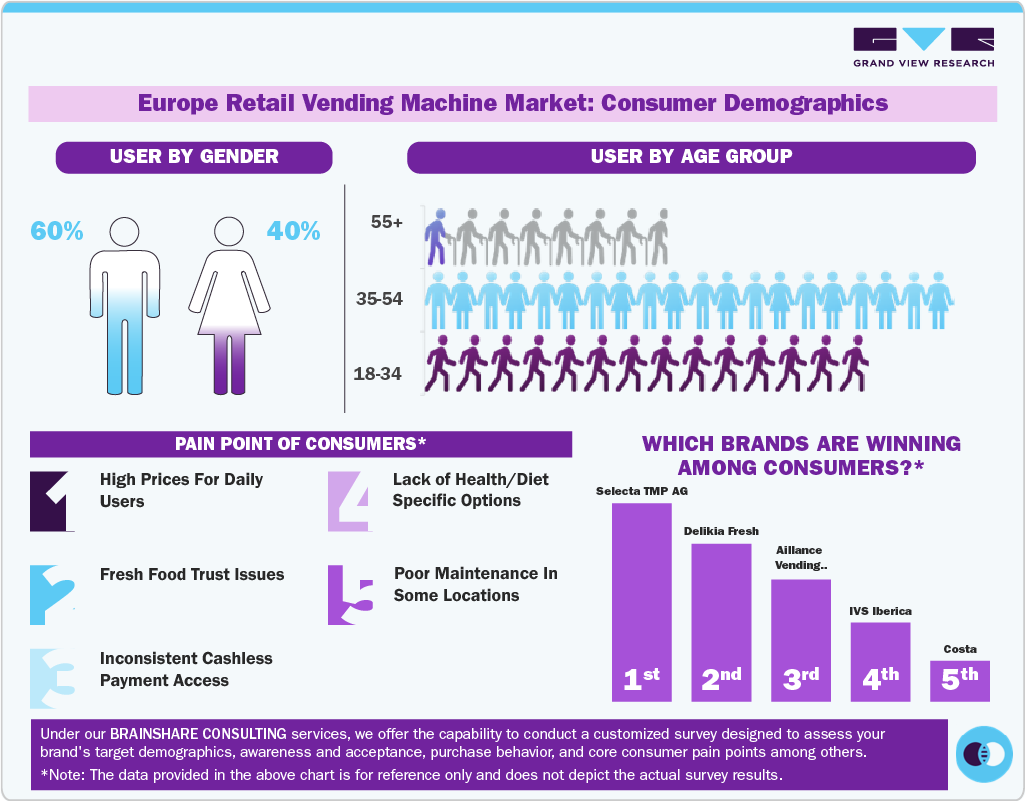
Consumer trends in Europe increasingly reflect a preference for vending solutions that deliver quality, variety, and immediate usability, rather than traditional confectionery offerings alone. Buyers are showing stronger demand for premium coffee machines, healthier snack assortments, chilled ready-to-eat meals, and functional beverages that align with wellness-oriented lifestyles. Product expectations now extend to freshness, nutritional transparency, and broader choice, particularly in Northern and Central European markets where consumers are more accustomed to high-quality workplace food infrastructure. Vending is also benefiting from Europe’s dense commuting networks, where machines positioned in metro stations, rail terminals, and airports serve as essential convenience points for fast-paced urban living.
Shoppers across Europe are also increasingly influenced by digital integration and machine experience. Cashless payments, mobile wallet compatibility, interactive touchscreens, and real-time product visibility are becoming baseline expectations, especially among younger users accustomed to frictionless retail. Consumers often assess vending credibility through cleanliness, product rotation frequency, and brand quality, while peer feedback, corporate procurement preferences, and workplace satisfaction surveys influence machine selection in institutional settings. Smart vending platforms that offer app-based purchasing, loyalty integration, and personalized recommendations are gaining traction as operators modernize beyond legacy coin-operated systems.
Product Insights
Beverages retail vending machines accounted for a 38.22% share of the Europe revenue in 2025, driven by rising consumer preference for convenient, on-the-go beverage access across high-traffic environments such as offices, transit locations, and public spaces. Increasing demand for ready-to-consume options, including premium coffee, functional drinks, and healthier beverage alternatives, is expanding product offerings beyond traditional soft drinks. Businesses are leveraging vending machines as a cost-efficient, 24/7 retail solution, reducing operational dependency while ensuring continuous availability. At the same time, technological advancements such as AI-enabled systems, IoT integration, and cashless payment options, including mobile wallets and QR codes, are enhancing user convenience and streamlining transactions, further supporting market growth.
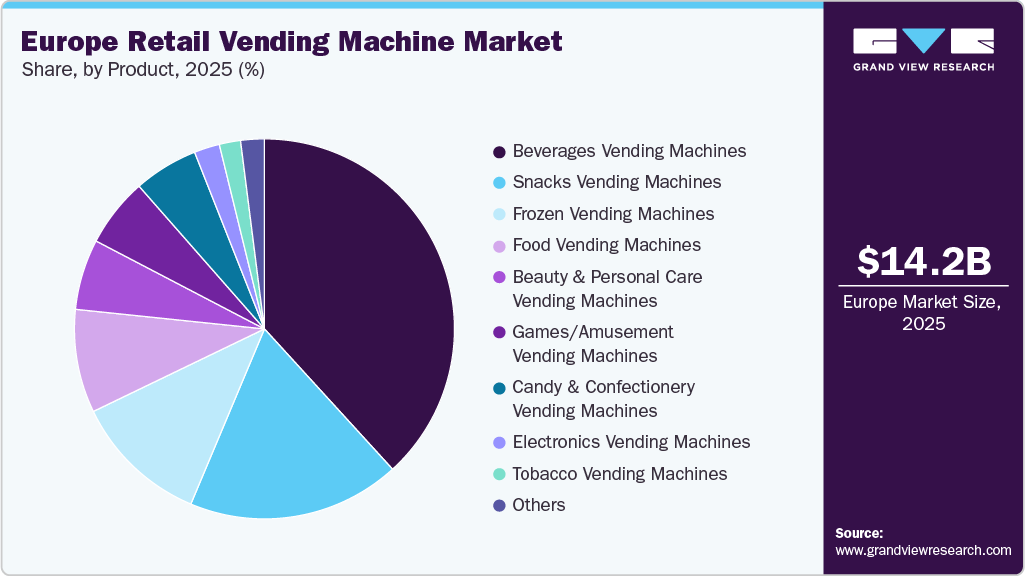
The snacks retail vending machine market is expected to grow at a CAGR of 5.0% from 2026 to 2033, driven by increasing demand for convenient, on-the-go food options in urban environments. Busy work schedules and rising commuting times are encouraging consumers to opt for quick snacking solutions, positioning vending machines as an efficient alternative to traditional retail. Strong placement across offices, educational institutions, healthcare facilities, and transport hubs is supporting consistent usage and expanding accessibility. In addition, the growing demand for packaged snacks, including healthier options such as protein bars, baked snacks, and low-sugar options, is broadening product offerings across vending formats.
Location Insights
Retail vending machines in manufacturing accounted for a share of 35.7% in 2025 in Europe, supported by increasing deployment across industrial facilities to ensure uninterrupted access to food and beverages during long and shift-based operations. Manufacturing sites are integrating vending solutions to serve large workforces operating across multiple shifts, where traditional retail access is limited. Employers are expanding machine assortments to include energy drinks, packaged snacks, and ready-to-eat meals that support sustained productivity on the shop floor. In addition, automation-driven environments and strict production schedules are encouraging the adoption of self-service vending as a reliable, time-efficient solution. Technological upgrades such as cashless payments, remote inventory management, and machine monitoring are further improving operational efficiency and ensuring consistent product availability.
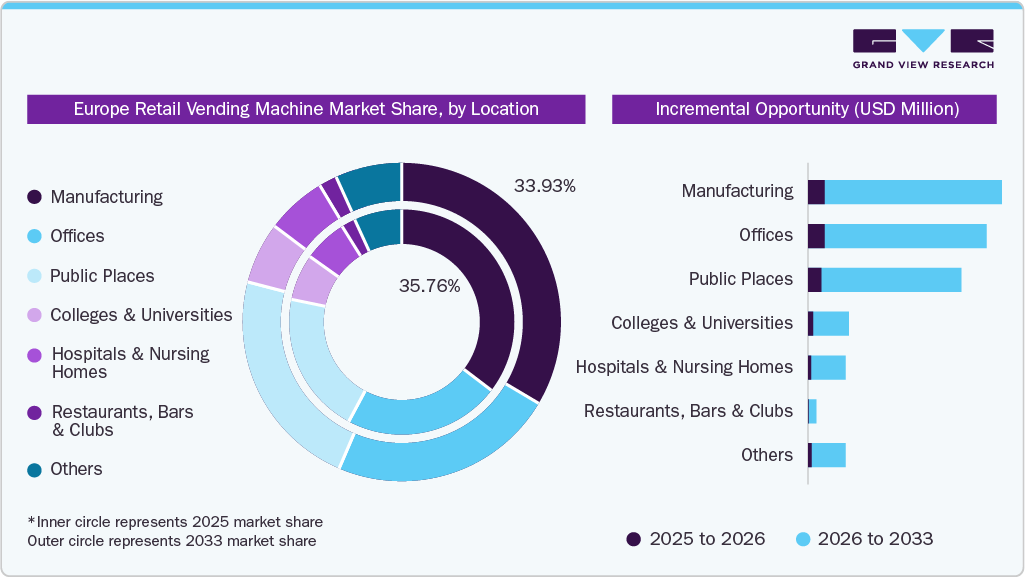
Retail vending machines in public places are projected to grow at a CAGR of 5.9% from 2026 to 2033, driven by increased deployment in high-footfall locations such as transit stations, shopping centers, tourist zones, and entertainment venues. Continuous movement of commuters, travelers, and visitors across these environments is driving demand for quick, self-service access to snacks, beverages, and ready-to-consume products. The ability of vending machines to operate round-the-clock without staffing constraints makes them a preferred solution for serving dynamic and time-sensitive consumer needs. In addition, expansion across leisure destinations, urban mobility hubs, and hospitality-linked spaces is improving accessibility and visibility, encouraging impulse purchases.
Payment Mode Insights
Cashless payments dominated with a share of 74.9% in 2025, supported by the expansion of smart vending formats equipped with touchscreen interfaces, app-based purchasing, loyalty integration, and real-time product availability systems. Operators are increasingly upgrading machines to accommodate digital payments as cash usage gradually declines in several Western and Northern European markets. In addition, cashless systems enable operators to improve transaction efficiency, reduce cash handling costs, and unlock data-driven personalization opportunities, such as targeted promotions and dynamic pricing.
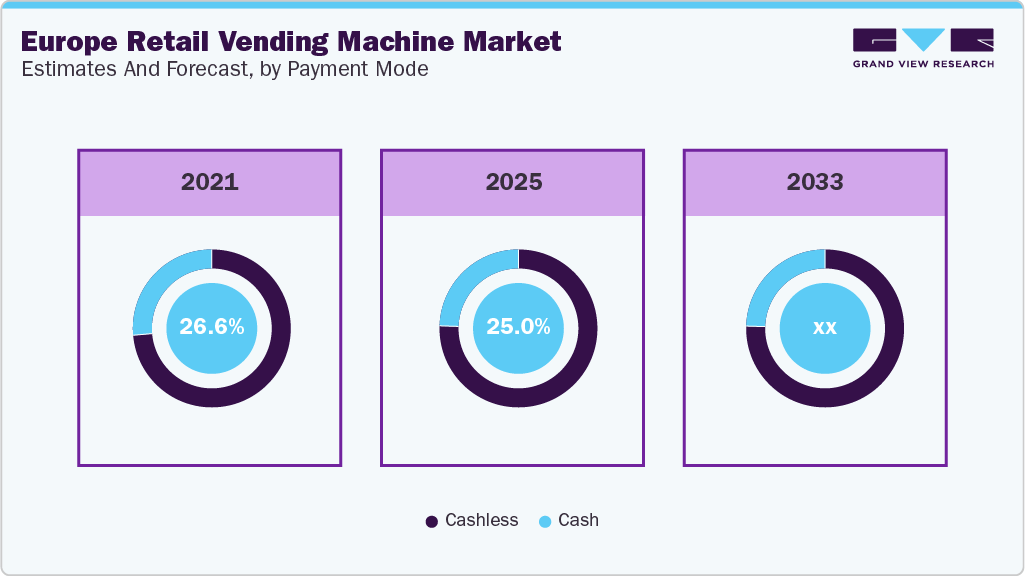
The cash payment segment is expected to register a CAGR of 2.9% over the forecast period. Demand for cash-based vending remains particularly strong in traditional machine formats deployed in workplaces, transit stations, schools, and public buildings, where consumers prioritize speed, familiarity, and accessibility without the need for banking apps or digital wallets. In several European markets, especially in Southern and Eastern Europe, cash remains the most widely used payment method for small, low-value purchases such as coffee, snacks, and cold drinks, maintaining its dominance in vending transactions.
Country Insights
Italy Retail Vending Machine Market Trends
The Italy retail vending machine industry accounted for a share of 18.8% in 2025 of the Europe revenue. The Italian market is supported by changing lifestyle patterns and evolving consumer expectations, which are reinforcing the expansion of the vending market across Italy. Operators are increasingly modernizing their machine networks with cashless payment options, smart monitoring, and improved product assortments that include healthier snacks, chilled beverages, and fresh food. The growth of urban mobility, tourism-driven footfall in major cities such as Rome, Milan, Florence, and Venice, and the expansion of automated retail in commercial environments are further strengthening demand.
Germany Retail Vending Machine Market Trends
The retail vending machine industry in Germany is expected to grow at a CAGR of 5.2% from 2026 to 2033. The market is supported by strong demand for convenient, self-service food and beverage options across urban and industrial environments. Consumers frequently rely on vending machines for quick access to coffee, bottled drinks, and packaged snacks during commuting, work breaks, and travel. The country’s well-developed public transport network and large manufacturing workforce are driving consistent usage across transit hubs, office complexes, and industrial facilities. In addition, vending adoption is expanding across locations such as shopping centers, hospitals, and educational institutions, ensuring steady footfall and repeat usage.
France Retail Vending Machine Market Trends
The France retail vending machine industry is expected to grow at a CAGR of 4.9% from 2026 to 2033. The growth is attributed to strong demand for convenient refreshment options integrated into daily routines across urban centers. Consumers frequently purchase coffee, bottled beverages, and packaged snacks during commuting, work breaks, and leisure activities, driving consistent machine usage. The country’s emphasis on coffee consumption and snacking culture is reinforcing demand across offices, transit locations, and public spaces. In addition, vending machine adoption is expanding across shopping centers, hospitals, educational institutions, and recreational venues, ensuring steady footfall throughout the day. Increasing deployment of cashless payment systems and technologically advanced vending formats is further improving accessibility and transaction efficiency, supporting continued market growth.
Ireland Retail Vending Machine Market Trends
The retail vending machine industry in Ireland is expected to grow at a CAGR of 4.7% from 2026 to 2033. The market is supported by increasing deployment of vending solutions in rural and semi-urban areas where access to convenience retail remains limited. Operators are using vending machines to bridge last-mile retail gaps by offering essential snacks, beverages, and ready-to-consume products in locations with lower store density. In addition, rising tourism activity and seasonal travel across Ireland are creating demand for easily accessible refreshment points in tourist destinations, on highways, and in outdoor recreational areas. The market is also benefiting from growing demand for locally sourced snacks and beverages, with vending operators incorporating regional products to align with consumer preferences.
Netherlands Retail Vending Machine Market Trends
The Netherlands retail vending machine industry is expected to grow at a CAGR of 4.7% from 2026 to 2033. The growth is due to the increasing deployment of automated retail solutions in corporate offices and co-working spaces where flexible work formats require on-demand food and beverage access. The country’s strong focus on workplace efficiency is encouraging employers to install vending machines that reduce time spent on external food purchases. In addition, high adoption of unattended retail formats, including micro-markets and smart kiosks, is accelerating vending integration across modern retail ecosystems. The market is also benefiting from growing demand for fresh and ready-to-eat meal options, with machines offering sandwiches, salads, and dairy-based products to cater to evolving consumption patterns.
Spain Retail Vending Machine Market Trends
The retail vending machine industry in Spain is expected to grow at a CAGR of 4.6% from 2026 to 2033. The market is driven by the market benefits from Spain’s strong café and snack consumption culture, where consumers frequently seek quick refreshment options during commuting, shopping, and daily routines. Hot beverages, bottled drinks, and impulse snack categories remain core demand drivers, while vending adoption is also expanding across commercial venues such as malls, gyms, hospitals, and educational campuses, reinforcing broader machine utilization throughout the day.
UK Retail Vending Machine Market Trends
The UK retail vending machine industry is expected to grow at a CAGR of 4.6% from 2026 to 2033. The market is supported by the country’s strong on-the-go consumption habits and high demand for quick refreshment options during daily routines. Consumers frequently purchase hot beverages, packaged drinks, and ready-to-eat snacks across commuting routes, workplaces, and urban retail environments. Vending machine adoption is expanding across locations such as shopping centers, gyms, hospitals, and educational institutions, ensuring consistent access throughout the day.
Switzerland Retail Vending Machine Market Trends
The retail vending machine industry in Switzerland is expected to grow at a CAGR of 4.4% from 2026 to 2033. The growth is attributed to the country’s high-income consumer base and strong preference for premium, high-quality food and beverage offerings. Vending machines are increasingly stocked with gourmet coffee, fresh dairy products, and premium snacks, aligning with local consumption standards. The market is also benefiting from widespread deployment in alpine tourism locations, ski resorts, and travel corridors where access to traditional retail is limited but demand for quick refreshments remains high. In addition, Switzerland’s advanced infrastructure and reliability standards are encouraging the adoption of technologically sophisticated vending machines with high uptime and automated monitoring systems.
Poland Retail Vending Machine Market Trends
The Poland retail vending machine industry is expected to grow at a CAGR of 4.4% from 2026 to 2033. The market is supported by rapid urban development and increasing installation of vending machines across residential complexes and mixed-use developments. As modern housing and commercial projects expand, vending machines are being integrated as convenient, on-site retail solutions for daily essentials. The market is also benefiting from rising demand among younger consumers and students, particularly across university campuses where quick, affordable snacking options are preferred. In addition, the growing penetration of international vending operators and local distributors is improving machine availability and product variety.
Portugal Retail Vending Machine Market Trends
The retail vending machine industry in Portugal is expected to grow at a CAGR of 4.0% from 2026 to 2033. The growth is supported by strong tourism activity and increasing demand for convenient refreshment options across coastal cities and travel destinations. Vending machines are being widely deployed in tourist zones, beaches, and transit points to cater to seasonal footfall and high visitor traffic. The market is also benefiting from rising adoption in hospitality-linked locations such as hotels, hostels, and serviced apartments, where self-service solutions enhance guest convenience. In addition, the growing preference for compact retail formats in space-constrained urban areas is encouraging the installation of vending machines across residential neighborhoods and public spaces.
Key Europe Retail Vending Machine Companies:
- Selecta TMP AG
- Delikia Fresh
- Alliance Vending Services
- IVS Iberica
- Costa
- NVCS Ltd.
- Express Vending
- Nayax Ltd.
- Worldline
- ventopay GmbH
- On Track Innovations Ltd.
- CCV Group B.V.
Recent Developments
-
In December 2024, Cantaloupe, Inc. introduced its new Smart Stores, a modern unattended retail solution designed to go beyond traditional vending by addressing key operational challenges such as labor shortages, theft, and shrinkage while maintaining a smooth customer experience. The Smart Stores operate through a secure unlock-and-shop system, where customers authenticate payment at the point-of-sale, select items that are automatically tracked in a digital cart, and complete the purchase with a simple pay-and-go process. With this launch, Cantaloupe aims to help food, beverage, and retail operators scale self-service environments more efficiently while providing consumers with a convenient, secure grab-and-go shopping experience.
-
In August 2024, Vending Venue Ltd. announced the launch of a new automated pizza vending concept designed to offer freshly prepared pizza through self-service machines. The initiative reflects the company’s effort to expand convenient, on-demand food options in high-traffic locations by combining quick-service dining with vending technology. By delivering hot meals with minimal staffing requirements, the launch highlights the growing role of smart vending solutions in meeting consumer demand for fast, accessible, and modern food experiences.
Europe Retail Vending Machine Market Report Scope
Report Attribute
Details
Market size value in 2026
USD 14.84 billion
Revenue forecast in 2033
USD 20.43 billion
Growth rate (revenue)
CAGR of 4.7% from 2026 to 2033
Actuals
2021 - 2025
Forecast period
2026 - 2033
Quantitative units
Revenue in USD million/ billion and CAGR from 2026 to 2033
Report coverage
Revenue forecast, company ranking, competitive landscape, growth factors, and trends
Segments covered
Product, location, payment mode, country
Regional scope
Europe
Country scope
UK; Ireland; Germany; France; Italy; Switzerland; Poland; Portugal; Netherlands; Spain
Key companies profiled
Selecta TMP AG; Delikia Fresh; Alliance Vending Services; IVS Iberica; Costa; NVCS Ltd.; Express Vending; Nayax Ltd.; Worldline; ventopay GmbH; On Track Innovations Ltd.; CCV Group B.V.
Customization scope
Free report customization (equivalent up to 8 analysts working days) with purchase. Addition or alteration to country, regional & segment scope.
Pricing and purchase options
Avail customized purchase options to meet your exact research needs. Explore purchase options
Europe Retail Vending Machine Market Report Segmentation
This report forecasts revenue growth at the regional, and country levels and provides an analysis of the latest industry trends and opportunities in each of the sub-segments from 2021 to 2033. For this study, Grand View Research has segmented the Europe retail vending machine market report on the basis of product, location, payment mode, and country.
-
Product Outlook (Revenue, USD Million, 2021 - 2033)
-
Beverage Vending Machines
-
Hot Beverage Vending Machines
-
Cold Beverage Vending Machines
-
-
Snacks Vending Machines
-
Food Vending Machines
-
Frozen Vending Machines
-
Tobacco Vending Machines
-
Games/Amusement Vending Machines
-
Beauty & Personal Care Vending Machines
-
Candy & Confectionery Vending Machines
-
Pharmaceuticals Vending Machines
-
Electronics Vending Machines
-
Book & Magazine Vending Machines
-
-
Location Outlook (Revenue, USD Million, 2021 - 2033)
-
Manufacturing
-
Offices
-
Colleges & Universities
-
Hospitals & Nursing Homes
-
Restaurants, Bars & Clubs
-
Public Places
-
Others
-
-
Payment Mode Outlook (Revenue, USD Million, 2021 - 2033)
-
Cashless
-
Cash
-
-
Country Outlook (Revenue, USD Million, 2021 - 2033)
-
Europe
-
UK
-
Ireland
-
Germany
-
France
-
Italy
-
Switzerland
-
Poland
-
Portugal
-
Netherlands
-
Spain
-
-
Frequently Asked Questions About This Report
b. The Europe retail vending machine market is expected to grow at a compound annual growth rate of 4.7% from 2026 to 2033 to reach USD 20.43 billion by 2033.
b. Beverage retail vending machine accounted for a 38.22% share of the Europe revenue in 2025, due to high, repeat demand for coffee, soft drinks, and ready-to-drink beverages in offices, transit hubs, and public spaces.
b. Some key players operating in the Europe retail vending machine market Selecta TMP AG; Delikia Fresh; Alliance Vending Services; IVS Iberica; Costa; NVCS Ltd.; Express Vending; Nayax Ltd.; Worldline; ventopay GmbH; On Track Innovations Ltd.; CCV Group B.V.
b. The Europe retail vending machine market is driven by increasing demand for convenient, on-the-go purchasing solutions across transit hubs, offices, and public spaces. Growing adoption of cashless payments, smart vending technologies, and expanding product offerings including fresh food and beverages are further supporting market growth
b. The Europe retail vending machine market size was estimated at USD 14.24 billion in 2025 and is expected to reach USD 14.84 billion in 2026.


Share this report with your colleague or friend.
Need a Tailored Report?
Customize this report to your needs — add regions, segments, or data points, with 20% free customization.


ISO 9001:2015 & 27001:2022 Certified
We are GDPR and CCPA compliant! Your transaction & personal information is safe and secure. For more details, please read our privacy policy.
Trusted market insights - try a free sample
See how our reports are structured and why industry leaders rely on Grand View Research. Get a free sample or ask us to tailor this report to your needs.













