
- Home
- »
- Communications Infrastructure
- »
-
Fog Computing Market Size, Share And Growth Report, 2030GVR Report cover

Fog Computing Market (2024 - 2030) Size, Share & Trends Analysis Report By Component (Hardware, Software), By Application, By Region, & Segment Forecasts
Fog Computing Market Summary
The global fog computing market size was valued at USD 372.9 million in 2023 and is projected to reach USD 8,358.1 million by 2030, growing at a CAGR of 50.8% from 2024 to 2030. With the growing number of connected IoT devices, there is an increasing need to process and analyze data closer to the source.
Key Market Trends & Insights
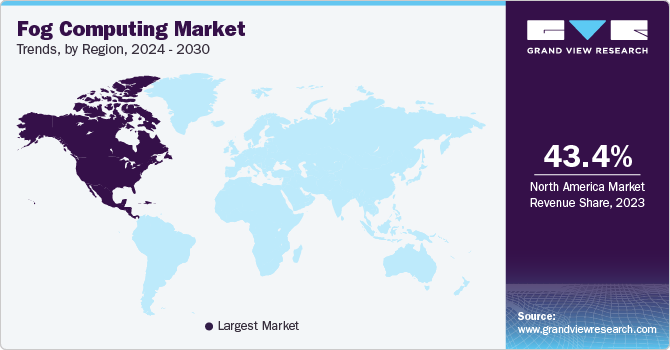
- North America fog computing market dominated the market with revenue share of 43.4% in 2023.
- The Middle East and Africa region is expected to witness the fastest CAGR over the forecast period.
- Based on component, the software segment dominated the market and accounted for a market revenue share of 64.1% in 2023.
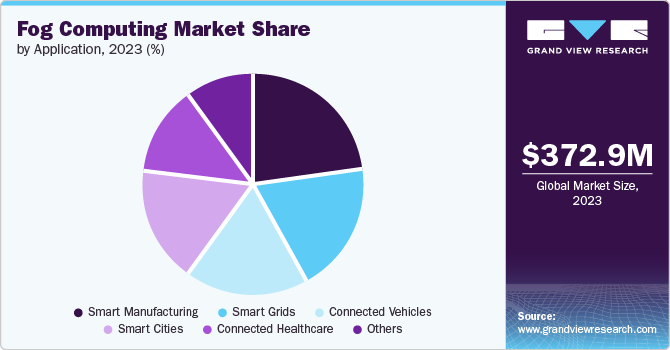
- Based on application, the smart manufacturing segment accounted for the largest market revenue share in 2023.
Market Size & Forecast
- 2023 Market Size: USD 372.9 Million
- 2030 Projected Market Size: USD 8,358.1 Million
- CAGR (2024-2030): 50.8%
- North America: Largest market in 2023
- Middle East and Africa: Fastest growing market
Three ways to get this report
Buy it, customize it, or ask a question.Ask an Analyst
Analyst response in 1 business day
- AccessReport author, directly
- Reply timeWithin 1 working day
- No sales callDirect answer only
- FormatEmail reply
- CostFree, no cost
Get the Full Report
What the study covers
- FormatsPDF · Excel · Dashboard
- Timeline2024–2030 annual, 2023 base
- Coverage20+ countries, 5 regions
- Companies10+ key players profiled
Customize the Report
20% free customization
- IncludeCountries, segments, points
- TailorTo your product definition
- ExtendDeeper competitor detail
- OrA fully bespoke study
- Turnaround5–10 working days
Fog computing provides a decentralized infrastructure that brings computation, storage, and networking closer to the devices generating data. This proximity reduces latency, improves response times, and enhances data processing efficiency, making it a necessary solution for IoT ecosystems.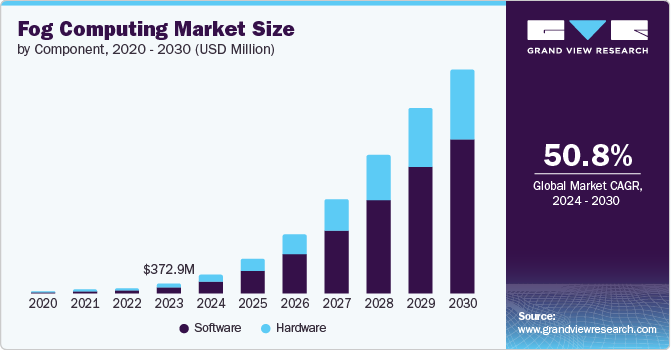 Source: Grand View Research, IR Documents, Primary Interviews, Paid DatabasesTo learn more about this report,
 Download Free Sample Report
 Low latency and real-time processing are essential in many applications, such as autonomous vehicles, industrial automation, and healthcare. Fog computing addresses these needs by enabling data processing and reducing the time it takes to transfer data to a centralized cloud. This capability is crucial for quick response applications such as preventing accidents with autonomous vehicles or monitoring critical health parameters in real time. The emphasis on low-latency solutions drives organizations to adopt fog computing as part of their IT infrastructure.
Data security and privacy are major concerns in today’s digital landscape. In 2022, data breaches resulted in an average loss of USD 4.35 million for businesses. During the first half of 2022, approximately 236.1 million ransomware attacks occurred globally. Fog computing enhances security by processing sensitive data rather than sending it to a centralized cloud. This processing minimizes the exposure of data to potential breaches during transmission. Additionally, fog nodes implement robust security measures tailored to specific local environments, providing an added layer of protection. Fog computing is beneficial for maintaining data integrity and compliance with stringent regulatory requirements in industries such as healthcare and finance that handle sensitive information.
Component Insights
The software segment dominated the market and accounted for a market revenue share of 64.1% in 2023. Fog computing software contributes to cost reduction and operational efficiency by minimizing the need for extensive data transmission to centralized clouds. By processing data locally, businesses reduce bandwidth usage and associated costs. This localized processing reduces the need for high bandwidth and lowers operational costs. The cost-saving benefits and operational efficiencies that fog computing software provides make it a cost-effective solution for businesses pursuing the optimization of their IT expenditures.
The hardware segment is expected to register the fastest CAGR during the forecast period. Edge devices, such as routers, gateways, and switches, are becoming more advanced and capable of handling complex computing tasks. These advancements enable better data processing at the edge of the network, reducing latency and improving data management efficiency. The development of powerful processors and enhanced memory capabilities in these devices allows them to perform real-time analytics and processing, which is essential for applications requiring immediate responses. These developments and advancements are driving the demand for hardware services.
Application Insights
The smart manufacturing segment accounted for the largest market revenue share in 2023. Smart manufacturing relies on interconnected devices and systems that generate vast data. Fog computing facilitates the efficient management and processing of this data by decentralizing computational resources. This decentralization enhances the performance and reliability of IoT networks. It allows for more scalable and flexible manufacturing operations, resulting in higher automation, customization, and optimization levels in their production processes.
 To learn more about this report, Download Free Sample Report
 The smart cities segment is anticipated to register the fastest CAGR over the forecast period. Smart cities rely on a network of connected devices and systems to function effectively. Fog computing supports this connectivity by enabling local data processing and reducing the load on centralized cloud servers. This decentralized approach enhances the reliability and performance of smart city applications, ensuring that critical services remain operational even during network disruptions. Additionally, fog computing enables real-time information analysis from surveillance cameras, emergency response systems, and other public safety infrastructure by processing data at the edge. These factors combined are driving the demand for fog computing in smart cities.
Regional Insights
North America fog computing market dominated the market with revenue share of 43.4% in 2023. North America includes a significant number of companies in the fog computing market, including major technology companies, startups, and research institutions. Companies such as Cisco, IBM, and Microsoft have a strong regional presence and are actively developing and promoting fog computing technologies. Their presence drives competition and innovation, driving North America's fog computing market growth.
 To learn more about this report, Download Free Sample Report
 U.S. Fog Computing Market Trends
The U.S. dominated the market and accounted for a market revenue share of 86.1% in 2023. With increasing cyber threats and data breaches, organizations prioritize protecting sensitive information. In the first half of 2022, over 53 million U.S. citizens were affected by cybercrime. Fog computing offers enhanced security by processing data locally, minimizing the need to transmit it to centralized cloud servers and reducing the risk of data breaches. This approach ensures that sensitive information remains secure and compliant with stringent data protection regulations.
Europe Fog Computing Market Trends
The Europe fog computing market is expected to witness significant growth over the forecast period. The region's exposure to natural disasters, such as wildfires, floods, and extreme weather events, emphasizes the importance of infrastructure and real-time data analytics. Fog computing enables proactive disaster preparedness and response by processing critical data locally, even in adverse conditions when internet connectivity may be disrupted. This capability enhances emergency response coordination, public safety measures, and infrastructure resilience, safeguarding communities and minimizing the impact of disasters, driving its demand.
The UK fog computing market is expected to witness significant growth over the forecast period. The UK healthcare sector is driving the adoption of fog computing, particularly in advancing telemedicine and digital health solutions. By processing medical IoT data, fog computing facilitates real-time patient data monitoring, remote diagnostics, and personalized healthcare delivery. This capability enhances healthcare efficiency and reduces treatment delays, particularly in rural areas. This convenience of virtual consultations and remote patient monitoring is driving the demand in the market.
Middle East & Africa Fog Computing Market Trends
The Middle East and Africa region is expected to witness the fastest CAGR over the forecast period. The region has extensive network connectivity, high-speed internet access, and advanced data centers that support the deployment of fog computing solutions. This infrastructure provides the necessary foundation for implementing fog computing across various applications. Additionally, the availability of skilled IT professionals and expertise in the region further accelerates the adoption and development of fog computing technologies.
The UAE fog computing market is expected to witness significant growth over the forecast period. Fog computing supports smart transportation systems, traffic management, and energy-efficient building operations by processing real-time sensor data from IoT devices. This localized data processing enhances urban mobility, reduces congestion, and optimizes energy consumption, contributing to environmental sustainability and driving demand. The local municipalities use fog computing to modernize public services, improve infrastructure, and facilitate innovation in smart city technologies.
Key Fog Computing Companies Insights
Some key companies in the fog computing market include Cisco Systems, Inc., IBM Corporation, Intel Corporation, Microsoft, and others.
-
IBM includes an extensive portfolio of technology and consulting solutions across various industries. The company's product offerings include cloud computing services through IBM Cloud, artificial intelligence (AI) solutions via IBM Watson, and blockchain technologies.
-
Microsoft Corporation offers the Windows operating system, Microsoft Office, and the Azure cloud computing platform, which provide businesses and developers with a wide range of cloud services. Additionally, Microsoft provides AI and machine learning capabilities with its Azure AI and cognitive services and supports collaboration and communication through Microsoft Teams.
Key Fog Computing Companies:
The following are the leading companies in the fog computing market. These companies collectively hold the largest market share and dictate industry trends.
- Aikaan Labs Pvt. Ltd.
- Aispire, Inc.
- Cisco Systems, Inc.
- Crosser Technologies
- Ekkono Solutions AB
- IBM Corporation
- Intel Corporation
- IOTech Systems Limited
- Microsoft
- Schneider Electric
- TERAKI GmbH
- TTTech Computertechnik AG
Fog Computing Market Report Scope
Report Attribute
Details
Market size value in 2024
USD 710.0 million
Revenue forecast in 2030
USD 8,358.1 million
Growth Rate
CAGR of 50.8% from 2024 to 2030
Base year for estimation
2023
Historical data
2018 - 2022
Forecast period
2024 - 2030
Quantitative units
Revenue in USD million and CAGR from 2024 to 2030
Report coverage
Revenue forecast, company ranking, competitive landscape, growth factors, and trends
Segments covered
Component, application, region
Regional scope
North America, Europe, Asia Pacific, Latin America, MEA
Country scope
U.S., Canada, Mexico, UK, Germany, France, Japan China, India, South Korea, Australia, Brazil, UAE, South Arabia, South Africa
Key companies profiled
Aikaan Labs Pvt.Ltd; Aispire, Inc.; Cisco Systems, Inc.; Crosser Technologies; Ekkono Solutions AB; IBM Corporation; Intel Corporation; IOTech Systems Limited; Microsoft; Schneider Electric; TERAKI GmbH; TTTech Computertechnik AG
Customization scope
Free report customization (equivalent up to 8 analysts working days) with purchase. Addition or alteration to country, regional & segment scope.
Pricing and purchase options
Avail customized purchase options to meet your exact research needs. Explore purchase options
Global Fog Computing Market Report Segmentation
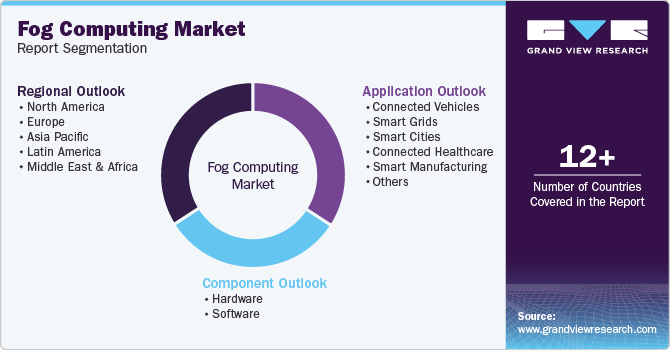
This report forecasts revenue growth at global, regional, and country levels and provides an analysis of the latest industry trends in each of the sub-segments from 2018 to 2030. For this study, Grand View Research has segmented the fog computing market report based on component, application, and region:
 To learn more about this report, Download Free Sample Report
 -
Component Outlook (Revenue, USD Million , 2018 - 2030)
-
Hardware
-
Gateways
-
Routers & Switches
-
IP Video Cameras
-
Sensors
-
Micro Data Sensors
-
-
Software
-
-
Application Outlook (Revenue, USD Million, 2018 - 2030)
-
Connected vehicles
-
Smart Grids
-
Smart Cities
-
Connected Healthcare
-
Smart manufacturing
-
Others
-
-
Regional Outlook (Revenue, USD Million, 2018 - 2030)
-
North America
-
U.S.
-
Canada
-
Mexico
-
-
Europe
-
UK
-
Germany
-
France
-
-
Asia Pacific
-
Japan
-
China
-
India
-
South Korea
-
Australia
-
-
Latin America
-
Brazil
-
-
Middle East and Africa (MEA)
-
UAE
-
South Arabia
-
South Africa
-
-
About the Author(s)
Communications Infrastructure Research Team
Technology · Communications InfrastructureThis report was authored by the communications infrastructure research team at Grand View Research - comprising two research analysts, one senior research analyst, and one industry expert - with specialized expertise in the communications infrastructure segment of the technology industry. All findings are based on proprietary technology databases, executive interviews, and regulatory analysis, subject to internal peer review prior to publication.
Last Updated:
Speak to Analyst

Customize this report to your needs - add regions, segments, or data points, with 20% free customization.
Or view our licence options:


ISO 9001:2015 & 27001:2022 Certified
We are GDPR and CCPA compliant! Your transaction & personal information is safe and secure. For more details, please read our privacy policy.


