
- Home
- »
- Medical Devices
- »
-
Formulation Development Outsourcing Market Report, 2033GVR Report cover

Formulation Development Outsourcing Market (2026 - 2033)
Size, Share & Trends Analysis Report By Service (Preformulation, Formulation Development), By Formulation (Oral, Injectable), By Therapeutic Area (Neurology, Hematology), By End Use, By Region, And Segment Forecasts
Market Size, 2025
$40.1BMarket Estimate, 2026
$43.3BMarket Forecast, 2033
$79.8BCAGR, 2026–2033
9.1%Formulation Development Outsourcing Market Summary
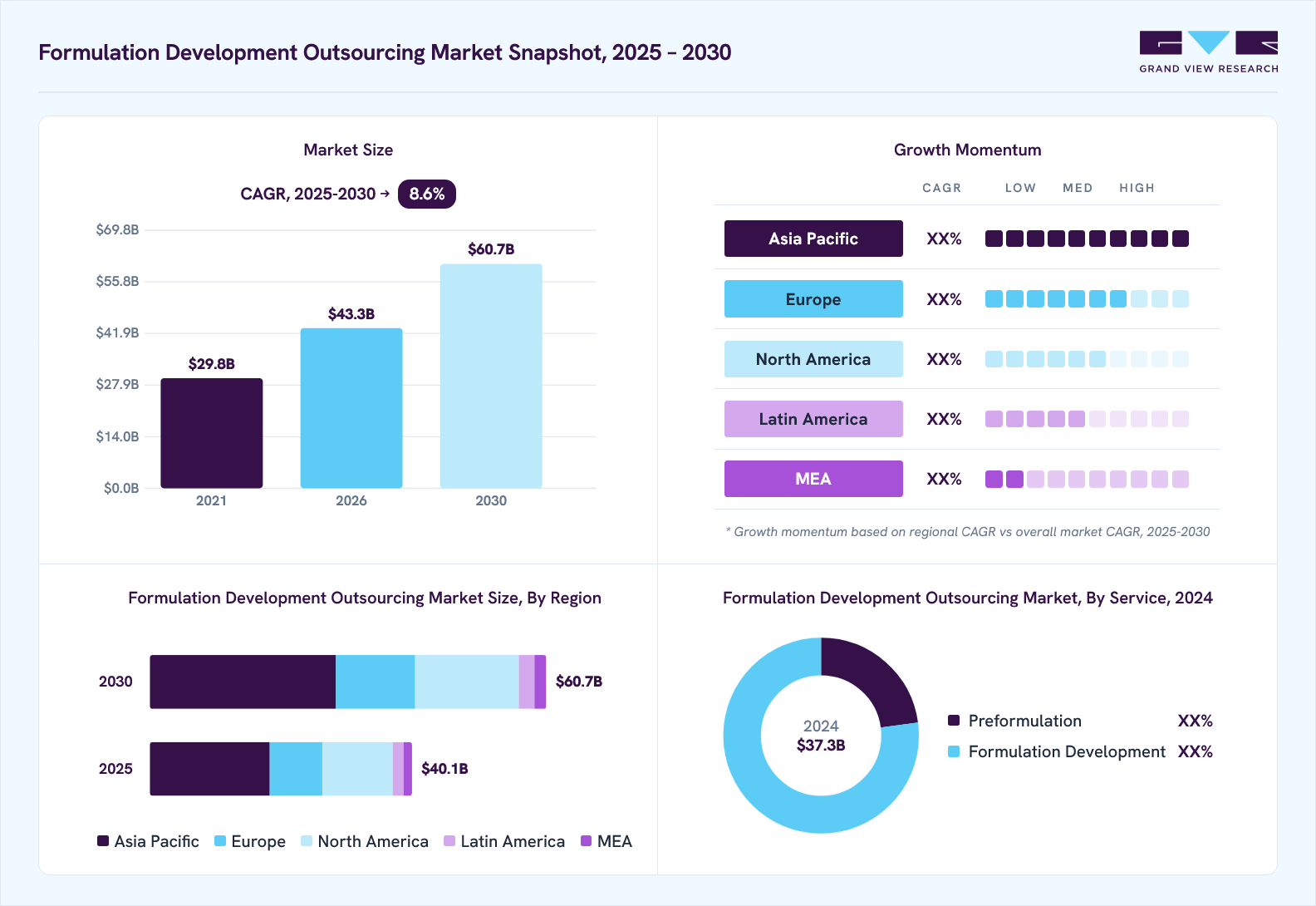
The global formulation development outsourcing market size was valued at USD 40.1 billion in 2025 and is projected to grow from USD 43.3 billion in 2026 to USD 79.8 billion by 2033, at a CAGR of 9.1% from 2026 to 2033. The market in Asia Pacific dominated with a revenue share of 45.7% in 2025. The formulation development outsourcing industry is experiencing growth due to an expanding pharmaceutical and biotechnology pipeline, increasing complexity of drug formulations, rising demand for specialized drug delivery technologies, and the growing outsourcing of research and development activities to contract service providers.
 Source: Grand View Research, IR Documents, Primary Interviews, Paid DatabasesTo learn more about this report,
 Download Free Sample Report
 Key Market Trends & Insights
- By service: Formulation development segment held the largest market share of 77.3% in 2025.
- By formulation: Oral segment held the largest market share of 65.3% in 2025.
- By end use: Pharmaceutical and biopharmaceutical companies segment held the largest market share of 50.5% in 2025.
- By therapeutic area: Oncology segment held the largest market share of 27.6% in 2025.
Regional Highlights
- Largest regional market: Asia Pacific (45.7% revenue share, 2025)
- By country: China held the largest market share in 2025.
Market Size & Forecast
- Market size in 2025: USD 40.1 Billion
- Estimated market size in 2026: USD 43.3 Billion
- Projected market size by 2033: USD 79.8 Billion
- CAGR (2026-2033): 9.1%
Three ways to get this report
Buy it, customize it, or ask a question.Ask an Analyst
Analyst response in 1 business day
- AccessReport author, directly
- Reply timeWithin 1 working day
- No sales callDirect answer only
- FormatEmail reply
- CostFree, no cost
Get the Full Report
What the study covers
- FormatsPDF · Excel · Dashboard
- Timeline2026–2033 annual, 2025 base
- Coverage20+ countries, 5 regions
- Companies10+ key players profiled
Customize the Report
20% free customization
- IncludeCountries, segments, points
- TailorTo your product definition
- ExtendDeeper competitor detail
- OrA fully bespoke study
- Turnaround5–10 working days
Pharmaceutical and biotechnology companies are increasingly relying on contract development organizations (CDOs), contract development and manufacturing organizations (CDMOs), and contract research organizations (CROs) to access specialized scientific expertise, advanced formulation technologies, and regulatory support while reducing development timelines and optimizing operational costs. The growing prevalence of poorly soluble molecules, biologics, peptides, and complex drug products has further accelerated demand for outsourced formulation development services.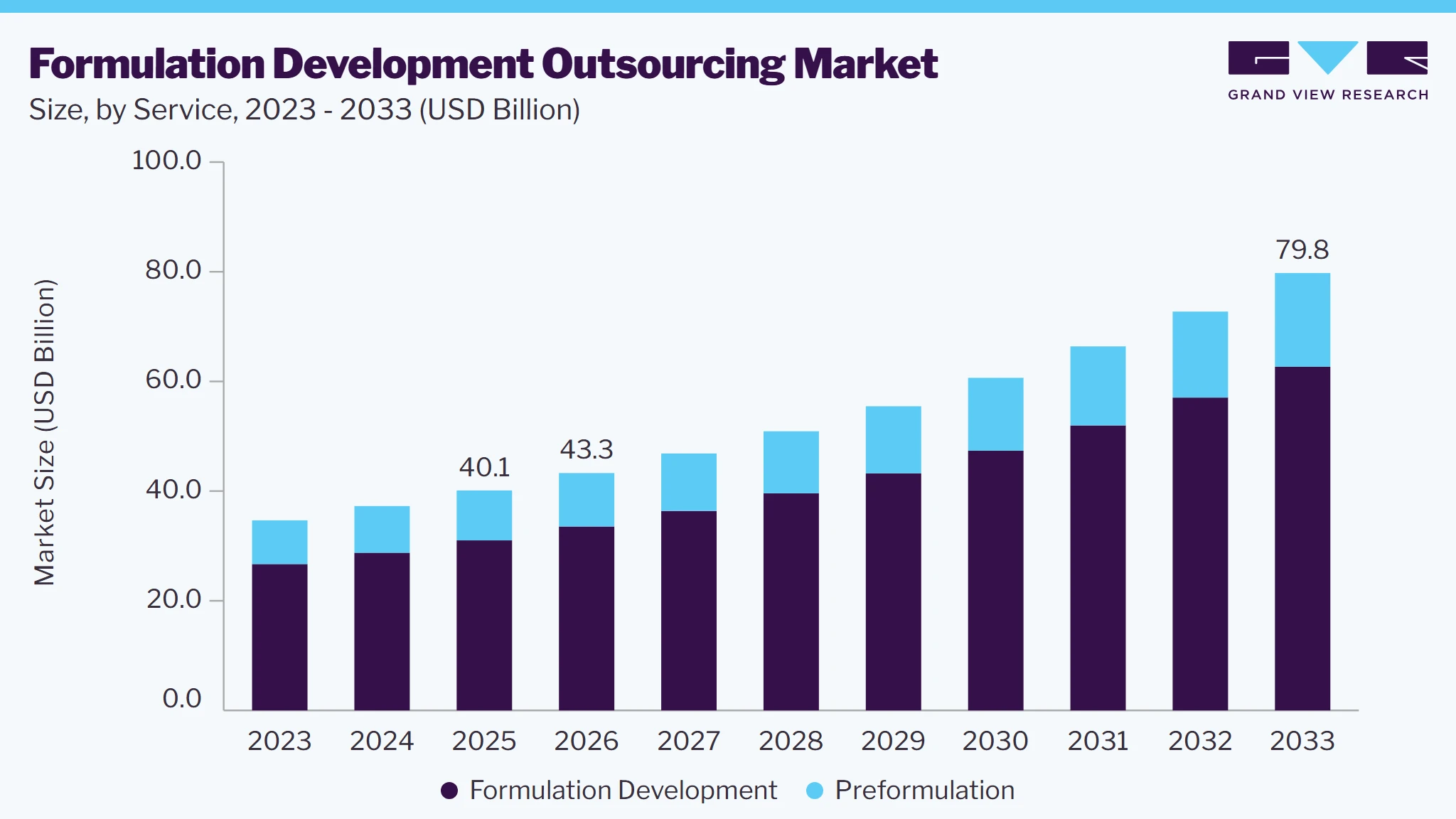 To learn more about this report, Download Free Sample Report
 The increasing number of drug candidates entering preclinical and clinical development remains a primary growth driver for the market. Modern drug candidates frequently require advanced formulation approaches to improve solubility, bioavailability, stability, and patient compliance. This has increased demand for specialized services, including preformulation studies, formulation optimization, analytical method development, stability testing, scale-up, and technology transfer. As a result, leading service providers continue to expand their formulation development capabilities and invest in advanced drug delivery platforms. For instance, in February 2025, Recipharm AB opened a new Pilot Scale Development Centre in Germany, expanding its product development capabilities for oral solid dosage forms. The facility enhances GMP pilot-scale development, technology transfer, and small-scale manufacturing while complementing the company's existing capabilities in oral solids, sterile fill & finish, and biologics. Such investments strengthen end-to-end development capabilities and address increasing outsourcing demand from pharmaceutical and biotechnology companies.
Growing outsourcing of formulation development activities is another significant factor supporting market expansion. Establishing an in-house formulation development infrastructure requires substantial investments in laboratories, analytical instrumentation, specialized scientific personnel, and regulatory capabilities. Consequently, pharmaceutical companies increasingly collaborate with specialized outsourcing partners that possess broad formulation expertise, established quality systems, and experience supporting regulatory submissions across multiple markets.
Similarly, strategic developments continue to strengthen the overall market landscape. For instance, in January 2025, Lonza Group expanded its drug product development capabilities through investments in formulation development and integrated development services to support complex pharmaceutical products from early-stage development through commercialization. The market growth is moderated by stringent regulatory requirements, increasing formulation complexity, lengthy development timelines, and the limited availability of highly experienced formulation scientists. However, continued growth in biologics, complex generics, personalized medicines, and advanced drug delivery systems, together with increasing outsourcing by small and mid-sized pharmaceutical and biotechnology companies, is expected to create substantial long-term opportunities for formulation development outsourcing providers.
Market Dynamics
The formulation development outsourcing market is becoming increasingly strategic within the pharmaceutical value chain as drug molecules become more complex and development timelines face greater pressure. Pharmaceutical and biotechnology companies are increasingly leveraging specialized outsourcing partners to access advanced formulation expertise, reduce capital expenditures, improve regulatory compliance, and accelerate product commercialization. The market is witnessing growing demand for biologics, specialty pharmaceuticals, and innovative drug delivery technologies, while digital formulation design, AI-enabled development platforms, and Quality-by-Design (QbD) frameworks continue to reshape service delivery models.
The primary growth driver for the formulation development outsourcing market is the increasing complexity of pharmaceutical pipelines, particularly biologics, specialty drugs, and poorly soluble small molecules. According to Grand View Research, the market was valued at approximately USD 37.3 billion in 2024 and is projected to reach USD 60.7 billion by 2030, expanding at an 8.6% CAGR. The growing prevalence of chronic diseases and expanding oncology and biologics pipelines are driving demand for sophisticated formulation expertise that many sponsors lack internally. Pharmaceutical companies are increasingly outsourcing formulation activities to gain access to advanced technologies such as lipid-based systems, amorphous solid dispersions, nanoformulations, and controlled-release delivery platforms. Recent industry trends also indicate increasing adoption of AI-assisted formulation design, continuous manufacturing, and digital process optimization. Furthermore, regulatory emphasis on Quality-by-Design (QbD) and accelerated development timelines has strengthened the value proposition of specialized outsourcing partners capable of reducing technical risks and improving speed-to-market.
Despite strong growth prospects, regulatory scrutiny and intellectual property (IP) risks remain major restraints for formulation development outsourcing providers. Drug formulations often involve proprietary technologies, novel excipients, and complex manufacturing processes that require extensive data protection and strict confidentiality controls. Pharmaceutical sponsors remain cautious when transferring sensitive formulation knowledge to third-party partners, particularly across multiple geographic regions. In addition, increasing FDA, EMA, and ICH compliance requirements continue to raise operational costs for outsourcing providers. Regulatory expectations surrounding GMP compliance, data integrity, process validation, and quality documentation have become significantly more stringent, requiring continuous investments in infrastructure and quality systems. Small and mid-sized service providers frequently face challenges in maintaining regulatory readiness while remaining cost competitive. Moreover, delays in regulatory approvals, technology transfer challenges, and formulation failures during scale-up can negatively impact project timelines and profitability. These factors collectively create barriers to outsourcing adoption, particularly for highly complex or first-in-class drug products.
Market Concentration & Characteristics
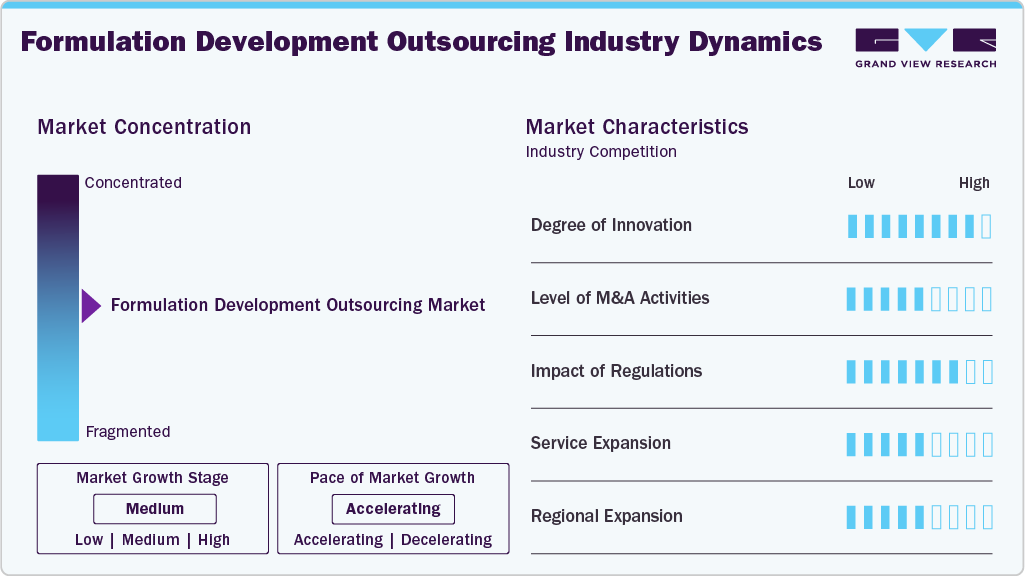
The formulation development outsourcing market growth stage is medium, and the pace of growth is accelerating. The market is characterized by the degree of innovation, level of M&A activities, regulatory impact, product expansion, and regional expansion.
The market is experiencing significant innovation, driven by the emergence of complex drug delivery systems, nanotechnology-based formulations, and 3D printing techniques for personalized medicine. Furthermore, the integration of continuous manufacturing and advanced excipient technologies is essential to address changing client demands, enhance drug stability, and improve bioavailability, thus opening up new opportunities in the market.
 To learn more about this report, Download Free Sample Report
 Regulatory frameworks established by organizations such as the FDA and EMA have heightened the demand for GMP-compliant formulation development. These regulations prioritize data integrity, Quality by Design (QbD), and adherence to ICH guidelines, compelling Contract Research Organizations (CROs) to upgrade their processes. Such regulation has led to the adoption of more advanced formulation practices and rigorous documentation standards. Thus, the impact of regulations is a significant factor that has created a rise in demand for market production.
The competition among market players is driven by the growth of CDMOs and CROs acquiring specialized formulation experts to expand their service offerings and strengthen their comprehensive drug development capabilities. The availability of advanced technologies, unique dosage forms, and opportunities for regional expansion reflects a trend toward integrated development platforms and an increasing need for complex formulations, which, in turn, is driving higher levels of M&A activity.
The formulation development outsourcing industry remains moderately fragmented due to the presence of CDMOs, CROs, and specialized formulation providers. As the demand for delivery systems and biologic formulations increases, the service providers are witnessing competitive advantages, leading to increased fragmentation within this outsourcing space.
Regional expansion is increasing, with CROs/CDMOs setting up formulation development hubs in Asia-Pacific, Eastern Europe, and Latin America to capitalize on lower costs and talent availability. In addition, the U.S. and Western Europe continue to serve as innovation centers, while India and China are emerging as key outsourcing destinations due to supportive policies, growing expertise, and strong demand for cost-effective development solutions.
Analyst Perspective
The formulation development outsourcing market is expected to transition from a cost-driven outsourcing model toward a strategic innovation partnership model over the next five years. Growing biologics pipelines, complex drug modalities, and increasing regulatory expectations will continue to accelerate demand for specialized formulation expertise and integrated development capabilities. Providers investing in AI-enabled formulation design, advanced drug delivery platforms, continuous manufacturing technologies, and biologics-focused infrastructure are expected to capture disproportionate market share gains. As pharmaceutical sponsors increasingly prioritize speed-to-clinic, development flexibility, and risk mitigation, outsourcing partners offering differentiated scientific capabilities and end-to-end development support will emerge as preferred strategic collaborators in the evolving drug development ecosystem.
Impact of U.S. Tariffs on the Global Formulation Development Outsourcing Market
The imposition of U.S. tariffs on imported pharmaceutical ingredients, specialty excipients, laboratory equipment, analytical instruments, and scientific consumables has increased operating and capital costs for formulation development outsourcing service providers. Higher prices for laboratory instruments, dissolution testing systems, particle characterization equipment, stability chambers, and formulation processing equipment have raised investment requirements for expanding formulation development laboratories. In addition, increased costs for imported excipients, specialty polymers, lipids, and other formulation materials have affected development budgets and procurement timelines for outsourced formulation projects.
Pharmaceutical and biotechnology companies may experience higher outsourcing costs for formulation development services, particularly for complex formulations involving biologics, injectable products, lipid-based formulations, modified-release technologies, and poorly soluble drug candidates. To mitigate these challenges, formulation development organizations have diversified supplier networks, increased regional sourcing of critical raw materials and laboratory consumables, and strengthened inventory management strategies to improve supply chain resilience. Equipment manufacturers have also expanded local manufacturing and service capabilities to reduce dependence on imported components and minimize tariff-related disruptions.
Despite these challenges, demand for formulation development outsourcing services remains strong, supported by the growing pharmaceutical pipeline, increasing complexity of drug formulations, expanding biologics development, and continued outsourcing by pharmaceutical and biotechnology companies seeking specialized scientific expertise. Long-term outsourcing partnerships, investments in regional research infrastructure, and the development of localized supply chains are expected to partially offset the impact of higher input costs. Consequently, increasing regional formulation development capabilities and continued investment in advanced laboratory technologies are expected to strengthen industry resilience and support the sustained growth of the global market.
Technological Advancements
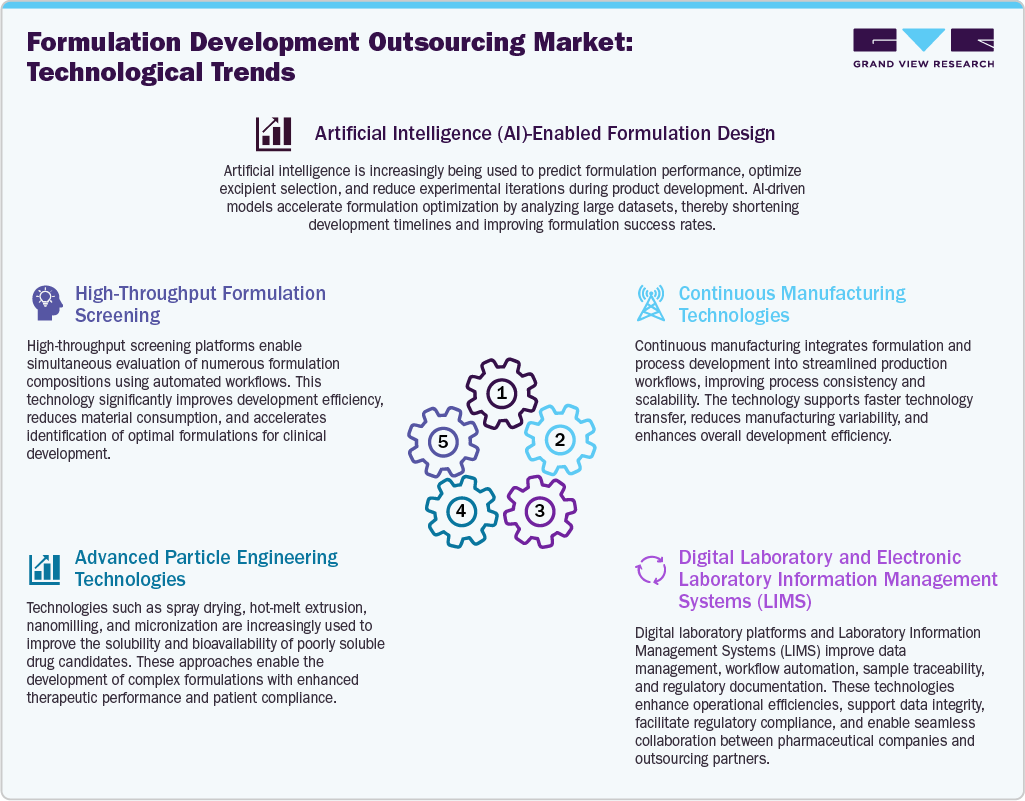
Technological advancements are improving efficiency, reducing development timelines, and expanding service capabilities across the formulation development outsourcing market. Artificial intelligence (AI) is increasingly supporting formulation design through predictive modeling, excipient selection, and optimization of formulation parameters, enabling faster decision-making during early-stage development. High-throughput formulation screening technologies allow rapid evaluation of multiple formulations while minimizing material consumption and laboratory resources. Continuous manufacturing technologies are facilitating seamless scale-up, improving process consistency, and supporting faster technology transfer from development to commercial production.
 To learn more about this report, Download Free Sample Report
 Advanced particle engineering technologies, including spray drying, hot-melt extrusion, nanomilling, and micronization, are enhancing the solubility, bioavailability, and stability of complex drug candidates, particularly poorly soluble molecules. In addition, digital laboratory platforms and laboratory information management systems (LIMS) strengthen data management, workflow automation, sample traceability, and regulatory documentation. The integration of these technologies is enabling service providers to improve operational efficiency, strengthen regulatory compliance, support the development of complex formulations, and address the increasing outsourcing requirements of pharmaceutical and biotechnology companies.
Pricing Model Analysis
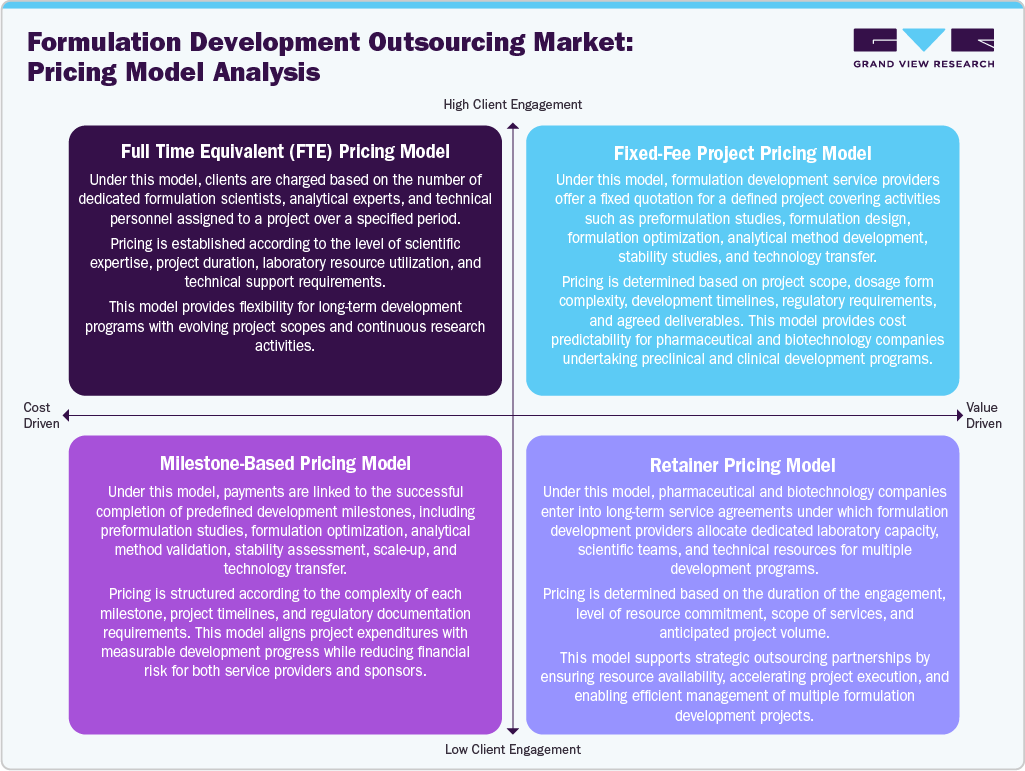
Fixed-fee project pricing remains one of the most widely adopted models for formulation development outsourcing, offering predefined pricing for specific activities such as preformulation studies, formulation optimization, analytical method development, stability studies, and technology transfer. The full-time equivalent (FTE) model is commonly used for long-term development programs that require dedicated scientific teams and continuous technical support, with pricing based on the number of personnel and the duration of engagement.
 To learn more about this report, Download Free Sample Report
 Milestone-based pricing is structured around the successful completion of predefined development stages, including formulation screening, prototype selection, analytical validation, stability assessment, and technology transfer, thereby aligning project expenditures with measurable deliverables. In addition, dedicated development programs or retainer pricing are increasingly adopted through long-term outsourcing agreements, under which service providers allocate dedicated laboratory capacity, scientific expertise, and technical resources across multiple development programs. Pricing under these models is influenced by project scope, formulation complexity, dosage form, development timelines, resource commitment, regulatory requirements, and the breadth of services provided. The adoption of multiple pricing structures enables service providers to address varying customer requirements while supporting cost visibility, resource optimization, and long-term strategic collaborations across the market.
Service Insights
Based on service, the market is segmented into pre-formulation and formulation development. The formulation development segment led the market with the largest revenue share of 77.3% in 2025. This growth can be attributed to the high complexity of drug formulations, rising R&D costs, and the demand for accelerated time-to-market. In addition, an increasing number of pharmaceutical and biopharmaceutical firms are shifting towards outsourcing to witness specialized expertise and innovative technologies. Besides, an expanding pipeline of biologics, high-potency medications, and novel drug delivery methods is expected to propel market growth. Furthermore, growing regulatory demands and the trend toward personalized medicine are stimulating manufacturers to partner with outsourcing providers that possess strong compliance capabilities.
The preformulation segment is expected to grow at the second-fastest CAGR during the forecast period. Preformulation significantly contributes to formulation development, which focuses on evaluating the key properties of an API, including solubility, stability, particle size, polymorphism, and compatibility with excipients. This phase helps identify potential challenges early on and informs the choice of appropriate formulation strategies. This formulation is essential for improving bioavailability, ensuring product stability, and fulfilling regulatory requirements. Thus, preformulation reduces risks throughout development and facilitates a more efficient transition to clinical trials. As the complexity of molecules increases and the need for optimized drug delivery systems grows, the importance of preformulation is expected to drive the market over the estimated time period.
Formulation Insights
Based on formulation, the market is segmented into oral, injectable, topical, and others. The oral segment accounted for the largest market revenue share in 2025 with 65.3%. Oral formulations are a primary focus in development due to their high patient acceptance, ease of use, and cost-effectiveness. In the pharmaceutical and biopharmaceutical industry, the rising need for new medications for the generic population and the expiration of patents for exclusive small-molecule drugs are driving growth in the segment. Besides, it emphasizes the optimization of the drug's release characteristics, bioavailability, and stability while accounting for factors such as solubility, permeability, and first-pass metabolism. Moreover, oral formulations encompass various forms, including tablets, capsules, and liquid suspensions, each designed to meet therapeutic requirements and patient demographics. In addition, recent advancements in controlled-release technologies and taste-masking techniques have further enhanced patient adherence, solidifying oral delivery as a method in pharmaceutical development.
The injectable segment is expected to grow at the fastest CAGR during the forecast period. Growth is driven by the expanding pipeline of biologics, biosimilars, peptides, and nucleic acid-based therapies, which require specialized sterile formulation development capabilities. In addition, increasing outsourcing of complex injectable formulation development, rising demand for long-acting and sustained-release injectables, and growing investments in advanced parenteral drug delivery technologies are expected to accelerate development timelines and support market growth.
Therapeutic Area Insights
Based on therapeutic area, the market includes oncology, infectious disease, neurology, hematology, respiratory, cardiovascular, dermatology, and others. The oncology segment, with 27.6% share dominated the market in 2025. The rising need for anticancer drug formulations, a growing pipeline of biologics, and the demand for targeted drug delivery systems drive the increasing demand for formulation development outsourcing in oncology. Furthermore, strict regulatory requirements and heightened research and development spending are expected to boost the need for outsourcing services that provide expertise, scalability, and compliance. These factors are expected to enhance the demand for the market.
The cardiovascular segment is anticipated to register the second-fastest CAGR during the forecast period. The growing trend of formulation development outsourcing is gaining increased attention due to the rising incidence of heart-related diseases and the growing demand for combination formulations & patient-centric drug delivery solutions. In addition, outsourcing partners offer specialized capabilities, regulatory guidance, and scalability, accelerating development timelines with advanced research and development teams. Such factors are expected to drive the market over the estimated time period.
End-use Insights
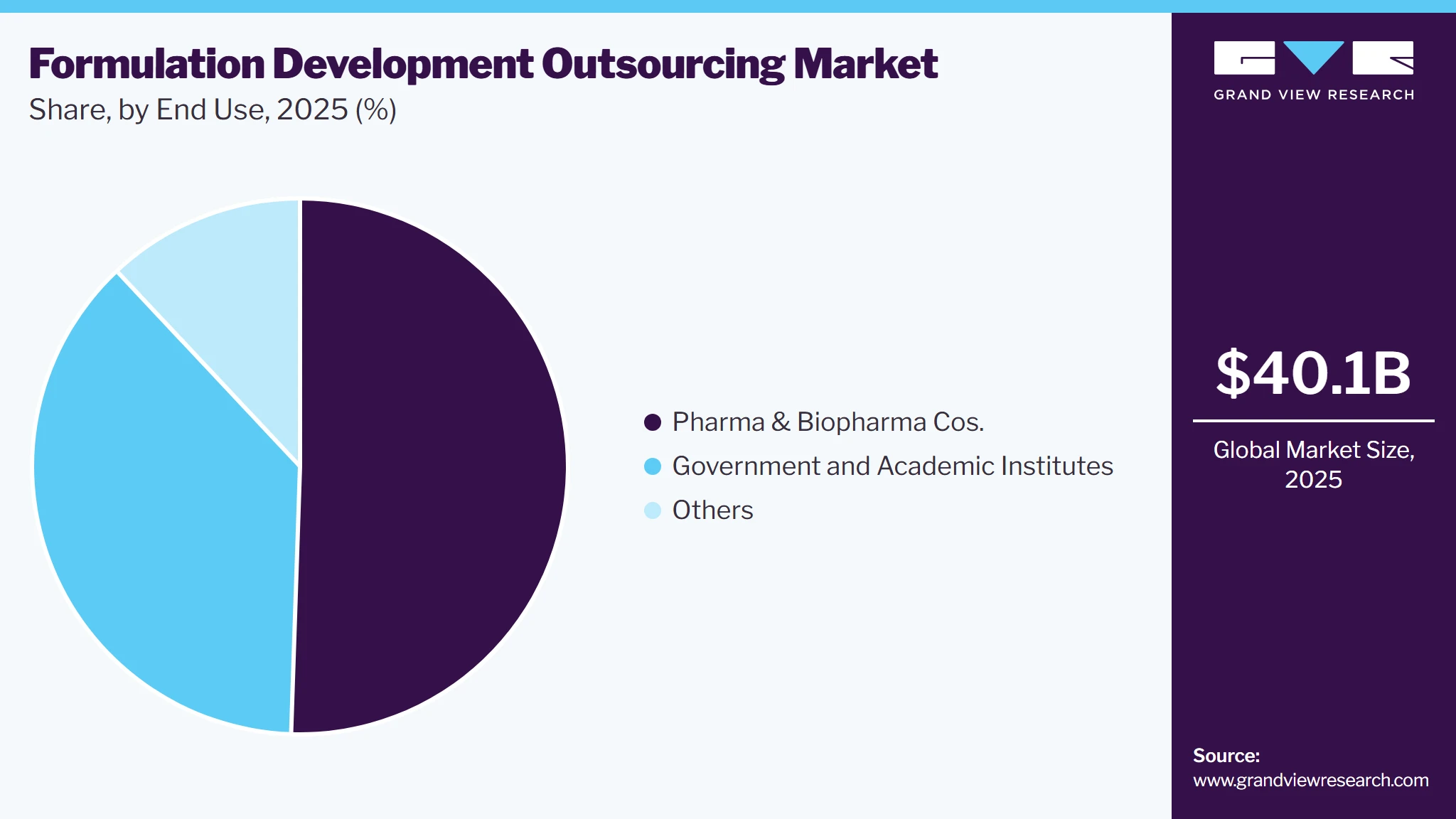
Based on end use, the market includes pharmaceutical and biopharmaceutical companies, government and academic institutes, and others. The pharmaceutical and biopharmaceutical companies segment accounted for 50.5% revenue share in 2025. This growth can be attributed to increasing demand for biologics, rising cost pressures, and a growing need for specialized formulation R&D and commercialization efforts. In addition, these services facilitate advanced formulation technologies, scalability, and development processes that adhere to good manufacturing practice (GMP) standards.
 To learn more about this report, Download Free Sample Report
 The government and academic institutes segment is anticipated to grow at a significant CAGR during the forecast period. Currently, several government and academic institutes are opting for formulation development outsourcing to address infrastructure requirements, expertise, and regulatory compliance. This trend is influenced by an increased focus on research, the need for cost efficiency, and the urgency to advance early-stage drug candidates to clinical evaluation. Moreover, outsourcing service providers are helping institutions translate laboratory research into viable therapeutic candidates through optimized outsourcing models. Such factors are expected to drive the market over the forecast period.
Regional Insights
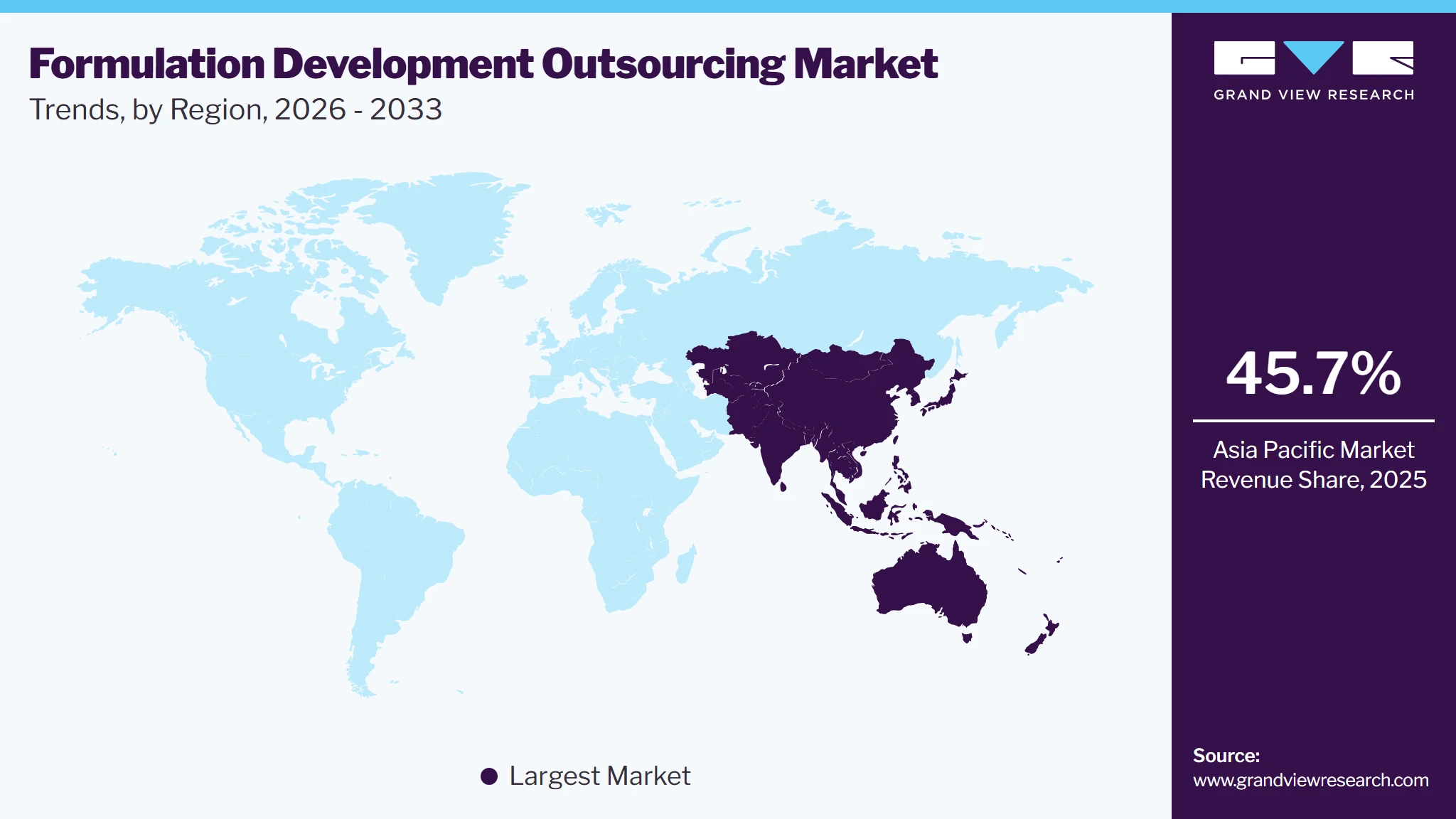
Asia Pacific dominated the formulation development outsourcing market with the largest revenue share of 45.7% in 2025. The region’s growth is driven by increasing pharmaceutical spending, improved healthcare infrastructure, the growing burden of diseases, and the low manufacturing costs that attract many pharmaceutical companies from developed nations to outsource their manufacturing to Asia Pacific. In addition, countries such as India, China, and South Korea are emerging as centers for formulation R&D owing to an advanced, skilled workforce and alignment with global regulatory standards. Furthermore, the demand for complex generics and biosimilars is driving investments in advanced formulation technologies. Moreover, the presence of local and established CDMOs expanding their capabilities in the global market is expected to drive market growth.
 To learn more about this report, Download Free Sample Report
 The formulation development outsourcing market in China is driven by the booming biopharma sector, favorable regulatory reforms, and increasing demand for complex generics and innovative therapies. Furthermore, the expanding presence of local and established companies enhancing their capabilities in injectables, oral solids, and biologics is expected to drive market growth. Besides, the cost benefits and quicker market entry are major factors driving market growth.
The Japan formulation development outsourcing market is supported by increased demand for high-generics, growing drug innovations, and the rising requirement for cost efficiency. In addition, the growing adoption of advanced drug delivery systems and QbD methodologies, along with collaborations with global CDMOs to access specialized expertise and expedite time-to-market, drive market growth.
The formulation development outsourcing market in India is experiencing rapid growth, driven by the presence of key players providing outsourcing services and a robust generic drug industry that is increasingly focusing on complex formulations. This has led to rising demand for outsourcing services to produce generics, thereby increasing the need for formulation development capabilities that meet global quality standards and attract international partnerships.
North America Formulation Development Outsourcing Market Trends
North America held a significant market share in 2025.The rising demand for complex formulations and sustained-release medications is expected to drive market growth during the forecast period. Furthermore, numerous pharmaceutical companies are seeking to outsource formulation development, as it reduces project timelines and minimizes associated risks, which is appealing to biotech firms globally looking to collaborate with outsourcing service providers. In addition, stringent regulations of the FDA and Health Canada have led pharmaceutical firms to engage with experienced outsourcing partners to ensure compliance and quality oversight. The integration of AI-driven technologies for formulation optimization and automation is also expected to propel market growth in the coming years.
The U.S. formulation development outsourcing industry held the largest share of North America in 2025. Regulatory requirements and the increasing need for personalized medications are anticipated to fuel market growth during the forecast period. Moreover, the rising utilization of AI-driven formulation technologies is positively impacting market growth. Furthermore, the increasing number of startups in the pharmaceutical and biotechnology sectors is enhancing the industry's ability to innovate cost-effectively and accelerate drug development processes.
The Canada formulation development outsourcing market is expected to grow at a significant CAGR during the forecast period. Market growth is supported by expanding drug formulations and an increasing emphasis on the pharmaceutical drug development process. In addition, there is increased focus on designing formulations and optimizing the composition of drug products to ensure stability, effectiveness, and patient acceptability. These factors are expected to support market growth.
Europe Formulation Development Outsourcing Market Trends
The Europe formulation development outsourcing industry’s growth is driven by a growing pharmaceutical pipeline, demand for outsourcing services, and emerging R&D activities focused on formulation. This increasing need for more specialized formulation methods is expected to support market growth. In addition, formulation development is a specialized area within European pharmaceutical drug development that requires dedicated resources, including skilled scientists, high-quality ingredients, and advanced instrumentation, which further drives the market growth. The rising requirement for innovative drugs to address chronic and life-threatening conditions also contributes to the growth of this market.
The formulation development outsourcing market in Germany held a significant share of Europe in 2025. This growth can be attributed to enhanced expertise in formulations throughout various development stages. Besides, an increasing number of clinical trials and a rising need for outsourcing services to ensure stable manufacturing, storage, handling, and patient management are expected to drive the market growth.
The UK formulation development outsourcing market is expected to grow significantly over the forecast period.The market expansion is supported by a well-established pharmaceutical and biotechnology ecosystem, increasing clinical development activities, and the presence of leading contract research organizations (CROs), contract development organizations (CDOs), and contract development and manufacturing organizations (CDMOs). Rising investments in biologics, complex drug formulations, advanced drug delivery systems, and personalized medicines are increasing demand for specialized formulation development services. In addition, continued government support for life sciences, expansion of research and development infrastructure, and increasing outsourcing by global pharmaceutical and biotechnology companies are expected to contribute to sustained market growth.
Latin America Formulation Development Outsourcing Market Trends
The Latin America formulation development outsourcing industry is expected to witness steady growth during the forecast period. Market expansion is supported by the growth of the pharmaceutical and biotechnology sectors, rising clinical research activity, and the outsourcing of formulation development by global pharmaceutical companies. Improvements in regulatory frameworks, expansion of research and development infrastructure, and increasing investment in complex drug formulations and biologics are creating opportunities for formulation development service providers. Continued investments in pharmaceutical innovation, laboratory capabilities, and regional drug development activities are expected to support long-term market growth.
The Brazil formulation development outsourcing market accounted for the largest share of Latin America in 2025. The country's well-established pharmaceutical industry, expanding research and development ecosystem, and increasing investment in innovative therapeutics are driving demand for outsourced formulation development services. Growing collaboration between domestic and multinational pharmaceutical companies, government initiatives supporting pharmaceutical innovation, and expansion of contract research and development capabilities are strengthening Brazil's position as a regional outsourcing hub. Increasing demand for advanced drug delivery systems and complex formulations is expected to further support market growth during the forecast period.
Middle East & Africa Formulation Development Outsourcing Market Trends
The Middle East & Africa formulation development outsourcing industry is projected to register moderate growth during the forecast period. Market growth is supported by increasing investments in pharmaceutical research and manufacturing, expanding healthcare infrastructure, and government initiatives promoting domestic pharmaceutical production. Rising clinical development activities, improving regulatory frameworks, and growing collaboration between regional and international pharmaceutical companies are contributing to increasing demand for formulation development outsourcing services. Expansion of pharmaceutical innovation hubs and research infrastructure is expected to support sustained market growth.
The UAE formulation development outsourcing market is experiencing steady growth due to increasing investments in pharmaceutical research, life sciences infrastructure, and contract development capabilities. Government initiatives aimed at strengthening the domestic pharmaceutical sector and encouraging innovation are supporting the establishment of advanced research and development facilities. Growing partnerships between multinational pharmaceutical companies, biotechnology companies, and regional service providers, along with the expansion of life sciences free zones and innovation clusters, are expected to strengthen the country's position as a regional center for pharmaceutical development and outsourcing services.
Key Formulation Development Outsourcing Company Insights
The key players operating across the market are adopting strategic initiatives such as service launches, mergers & acquisitions, partnerships & agreements, and expansions to gain a competitive edge in the market. For instance, in September 2025, Piramal Pharma Solutions expanded the formulation development capabilities of its Morpeth, UK facility by installing a Korsch XM-12 bilayer tablet press. The investment strengthens the site's capabilities for fixed-dose combinations, modified-release formulations, and oral solid dosage product development, supporting more advanced formulation development services for pharmaceutical customers.
Key Formulation Development Outsourcing Companies
The following key companies have been profiled for this study of the formulation development outsourcing market.
-
SGS S.A.
-
Intertek Group plc
-
Recipharm
-
Lonza
-
Charles River Laboratories International, Inc.
-
Eurofins Scientific SE
-
Element
-
Labcorp
-
Thermo Fisher Scientific, Inc.
-
Catalent Inc.
Competitive Benchmarking
Category
Operating Strategies
Competitive Edge
Weakness
Established Players (Lonza, Thermo Fisher Scientific, Catalent, CRL)
- Expanding end-to-end development-to-commercialization offerings to secure long-term client relationships.
- Investing in advanced delivery platforms, biologics formulations, sterile injectables, and global manufacturing footprints.
- Deep regulatory experience and established GMP-compliant infrastructure across multiple regions.
- Ability to support complex molecules, late-stage development, and commercial-scale manufacturing.
- Higher operating costs and longer internal decision-making processes.
- Capacity constraints and reduced flexibility for small or early-stage projects.
Emerging Players (Recipharm, Intertrek Group plc, Element)
- Targeting niche formulation technologies and specialized therapeutic segments.
- Offering flexible project structures and accelerated development timelines to attract biotech clients.
- Cost-efficient operating models and greater responsiveness to customized project requirements.
- Strong focus on innovation-led formulation approaches and emerging drug modalities.
- Limited commerregulatorying capabilities and global market presence.
- Lower brand recognition and fewer long-term regulatory inspection track records.
Recent Developments
-
In October 2025, Recipharm AB inaugurated new parenteral development and sterility laboratories at its Bengaluru, India, facility. The investment expands sterile formulation development, analytical testing, sterility assessment, and proof-of-concept injectable development capabilities, strengthening the company's integrated formulation development and regulatory support services for global pharmaceutical and biotechnology customers.
-
In April 2025, Lonza announced a collaboration with Ethris to develop spray-dried mRNA vaccine formulations for mucosal delivery. The collaboration combines Lonza's particle engineering, formulation development, and manufacturing expertise to optimize room-temperature stable formulations while supporting scalable manufacturing for clinical development and potential commercialization.
Formulation Development Outsourcing Market Report Scope
Report Attribute
Details
Market size in 2025
USD 40.1 billion
Estimated market size in 2026
USD 43.3 billion
Projected market size by 2033
USD 79.8 billion
Growth rate
CAGR of 9.1% from 2026 to 2033
Historical data
2021 - 2025
Forecast period
2026 - 2033
Quantitative units
Revenue in USD million/billion and CAGR from 2026 to 2033
Report coverage
Revenue forecast, company ranking, competitive landscape, growth factors, and trends
Segments covered
Service, formulation, therapeutic area, end use, region
Regional scope
North America; Europe; Asia Pacific; Latin America; MEA
Country scope
U.S.; Canada; Mexico; Germany; UK; France; Italy; Spain; Norway; Denmark; Sweden; Russia; Iceland; Finland; China; Japan; India; South Korea; Australia; Thailand; Singapore; Brazil; Argentina; Saudi Arabia; South Africa; UAE; Kuwait; Israel
Key companies profiled
SGS S.A.; Intertek Group plc; Recipharm; Lonza; Charles River Laboratories International, Inc.; Eurofins Scientific SE; Element; LabCorp; Thermo Fisher Scientific, Inc.; Catalent Inc.
Customization scope
Free report customization (equivalent up to 8 analysts' working days) with purchase. Addition or alteration to country, regional & segment scope.
Pricing and purchase options
Avail customized purchase options to meet your exact research needs. Explore purchase options
Global Formulation Development Outsourcing Market Report Segmentation
This report forecasts revenue growth at the global, regional, and country levels and provides an analysis of the latest industry trends in each of the sub-segments from 2021 to 2033. For this study, Grand View Research has segmented the global formulation development outsourcing market report based on service, formulation, therapeutic area, end-use, and region:
-
Service Outlook (Revenue, USD Million/Billion, 2021 - 2033)
-
Preformulation
-
Formulation Development
-
-
Formulation Outlook (Revenue, USD Million/Billion, 2021 - 2033)
-
Oral
-
Injectable
-
Topical
-
Others
-
-
Therapeutic Area Outlook (Revenue, USD Million/Billion, 2021 - 2033)
-
Oncology
-
Infectious Disease
-
Neurology
-
Hematology
-
Respiratory
-
Cardiovascular
-
Dermatology
-
Others
-
-
End-use Outlook (Revenue, USD Million/Billion, 2021 - 2033)
-
Pharmaceutical and Biopharmaceutical Companies
-
Government and Academic Institutes
-
Others
-
-
Regional Outlook (Revenue, USD Million/Billion, 2021 - 2033)
-
North America
-
U.S.
-
Canada
-
Mexico
-
-
Europe
-
UK
-
Germany
-
France
-
Italy
-
Spain
-
Denmark
-
Sweden
-
Norway
-
-
Asia Pacific
-
Japan
-
China
-
India
-
Australia
-
Thailand
-
South Korea
-
-
Latin America
-
Brazil
-
Argentina
-
-
Middle East & Africa
-
South Africa
-
UAE
-
Saudi Arabia
-
Kuwait
-
Qatar
-
Oman
-
-
Research Methodology
The formulation development outsourcing market figures in this report are based on a proven research process that combines executive interviews with secondary research from proprietary databases, company filings, and recognized regulatory and institutional sources. Market size is built through value-chain sizing-reconciling supply-side and demand-side estimates-and triangulated with bottom-up and top-down approaches. Every estimate passes multiple levels of expert validation before publication, with each formulation development outsourcing segment quantified using the revenue-capture definitions in the table below.
Segment Definition
By Service
Preformulation
Early-stage characterization of APIs including solubility, stability, compatibility, and physicochemical profiling.
Formulation Development
Design and optimization of dosage forms, delivery systems, manufacturing processes, and scale-up strategies.
By Formulation
Oral
Development of tablets, capsules, powders, suspensions, and controlled-release oral dosage forms.
Injectable
Development of sterile liquid, lyophilized, biologic, and parenteral formulations administered via injection.
Topical
Formulation of creams, gels, ointments, lotions, patches, and dermatological products.
Others
Includes inhalation, ophthalmic, nasal, transdermal, implantable, and specialty delivery systems.
By Therapeutic Area
Oncology
Drug formulations developed for cancer therapies and targeted oncology treatments.
Infectious Disease
Formulations addressing bacterial, viral, fungal, and parasitic infections.
Neurology
Treatments targeting neurological and neurodegenerative disorders.
Hematology
Therapies addressing blood-related disorders and coagulation diseases.
Respiratory
Products designed for asthma, COPD, pulmonary disorders, and related conditions.
Cardiovascular
Formulations developed for heart disease, hypertension, and vascular conditions.
Dermatology
Skin-related pharmaceutical and cosmeceutical formulations.
Others
Includes metabolic, autoimmune, gastrointestinal, ophthalmology, and rare disease applications.
By End Use
Pharmaceutical & Biopharmaceutical Companies
Commercial pharmaceutical innovators and biotechnology companies outsourcing formulation activities.
Government & Academic Institutes
Public research organizations, universities, and government-funded drug development programs.
Others
Virtual biotech firms, specialty healthcare companies, and independent research organizations.
Estimation Model
Layer Name
Description
Bottom-Up Revenue Model
Market size is estimated by identifying major and emerging contract development organizations (CDOs), contract research organizations (CROs), CDMOs, and specialized formulation development service providers offering pre-formulation studies, formulation design, analytical method development, dosage form optimization, scale-up support, and technology transfer services.
Revenue attributable to formulation development outsourcing is derived from annual reports, investor presentations, company websites, regulatory filings, service portfolios, disclosures, and management commentary.
Company-level revenues generated from formulation development services are aggregated and validated using laboratory infrastructure, formulation technology capabilities, customer base, project volumes, and industry benchmarks to estimate the overall market size.
Project-Based Outsourcing Model
Market value is estimated by evaluating the volume of outsourced formulation development projects undertaken across preclinical, clinical, and commercial product development stages.
Key parameters assessed include the number of formulation development programs, the number of dosage forms developed, project complexity, development timelines, laboratory utilization, and average pricing for formulation development services.
The total number of outsourced projects is multiplied by the average project value, and the result is validated against reported service revenues, capacity expansion initiatives, and outsourcing agreements to estimate the overall market.
Outsourcing Penetration Model
Market size is estimated by assessing the proportion of pharmaceutical, biotechnology, and specialty pharmaceutical companies that outsource formulation development activities instead of maintaining comprehensive in-house development capabilities.
Outsourcing rates are determined through primary interviews, industry publications, strategic collaborations, contract development agreements, pharmaceutical company disclosures, and outsourcing trends across small molecules and biologics.
The addressable market is calculated by applying outsourcing penetration rates to total spending on pre-formulation studies, formulation development, analytical support, stability testing, process optimization, scale-up, and technology transfer, thereby estimating the overall formulation development outsourcing market.
Delivered Customizations
This report has been delivered with the following In-depth customizations
Client Request
Customization Delivered
Value Adds
Formulation Development Outsourcing Market Trends & Opportunity Assessment
Assessment of outsourcing penetration trends, biologics and specialty drug pipeline growth, advanced drug delivery technologies, AI-enabled formulation development, regulatory evolution, strategic partnerships, M&A activity, and regional outsourcing opportunities across the formulation development ecosystem.
Identifies high-growth therapeutic segments, emerging formulation technologies, outsourcing hotspots, unmet development needs, and investment opportunities.
Competitive Landscape & Market Share Assessment
Evaluation of established and emerging outsourcing providers based on formulation expertise, delivery platform capabilities, biologics experience, regulatory track record, geographic footprint, technology differentiation, partnership activity, and commercialization support capabilities.
Highlights competitive intensity, white-space opportunities, differentiation strategies, partnership potential, acquisition targets, and market entry pathways.
Technology, Capacity & Regulatory Landscape Review
Analysis of formulation technologies, bioavailability enhancement platforms, sterile and complex dosage capabilities, continuous manufacturing adoption, Quality-by-Design implementation, GMP compliance trends, digital formulation tools, and global regulatory developments.
Supports investment prioritization, capability expansion planning, technology roadmap development, regulatory readiness, and long-term growth strategies.
Frequently Asked Questions About This Report
Some key players operating in the formulation development outsourcing market are SGS S.A., Intertek Group plc, Recipharm, Lonza, Charles River Laboratories International, Inc., Eurofins Scientific SE, Element, Labcorp, Thermo Fisher Scientific, Inc., Catalent Inc.
The increased demand for new drug development, the growing prevalence of chronic diseases, the rising focus on regulatory requirements for high-quality products, and the emergence of specialty pharmaceuticals are contributing to the demand for formulation development services globally. Besides, significant investments in research and development (R & D) to develop therapeutics contribute to market growth. Moreover, rising need for oral medications, injectables, biologic active pharmaceutical ingredients (APIs), and viral vectors drives the market growth
The formulation development segment led with a 77.3% revenue share in 2025, and is the fastest-growing service.
Asia Pacific dominated the market, accounting for the largest revenue share of 45.7% in 2025.
The oncology segment led with a 27.6% revenue share in 2025, and is the fastest-growing therapeutic area.
The global formulation development outsourcing market size was valued at USD 40.1 billion in 2025 and is estimated at USD 43.3 billion for 2026.
The global formulation development outsourcing market is expected to grow at a CAGR of 9.1% from 2026 to 2033, reaching USD 79.8 billion by 2033.
The oral segment led with a 65.3% revenue share in 2025, while the injectable segment is the fastest-growing segment.
The pharmaceutical and biopharmaceutical companies segment accounted for 50.5% revenue share in 2025.
About the Author(s)
Medical Devices Research Team
Healthcare · Medical DevicesThis report was authored by the medical devices research team at Grand View Research - comprising two research analysts, one senior research analyst, and one industry expert - with specialized expertise in the medical devices segment of the healthcare industry. All findings are based on proprietary healthcare databases, executive interviews, and regulatory analysis, subject to internal peer review prior to publication.
Last Updated:
Speak to Analyst

Customize this report to your needs - add regions, segments, or data points, with 20% free customization.
Or view our licence options:


ISO 9001:2015 & 27001:2022 Certified
We are GDPR and CCPA compliant! Your transaction & personal information is safe and secure. For more details, please read our privacy policy.


