
- Home
- »
- Animal Health
- »
-
GCC Veterinary Medicine Market Size Report, 2026-2033GVR Report cover

GCC Veterinary Medicine Market (2026 - 2033)
Size, Share & Trends Analysis Report By Product (Biologics, Pharmaceuticals, Medicated Feed Additives), By Animal, By Route of Administration, By Distribution Channel, By Country, and Segment Forecasts
Market Size, 2025
$861.7MMarket Estimate, 2026
$946.0MMarket Forecast, 2033
$1,900.4MCAGR, 2026–2033
10.5%GCC Veterinary Medicine Market Summary
The GCC veterinary medicine market size was valued at USD 861.7 million in 2025 and is projected to grow USD 946 million in 2026 to USD 1,900.4 million by 2033, at a CAGR of 10.5% from 2026 to 2033. The market is driven by rising demand for meat, poultry and dairy products, alongside government food-security initiatives that support livestock productivity and animal health management. The need to prevent and control livestock diseases and zoonotic infections is increasing demand for vaccines, anti-infectives, antiparasitics, and other preventive treatments.
Key Market Trends & Insights
- By animal: Production animals segment led the market with the largest revenue share of 63.0% in 2025.
- By product: Pharmaceuticals segment led the market with the largest revenue share of 58.5% in 2025.
- By route of administration: Injectable segment led the market with the largest revenue share of 44.4% in 2025.
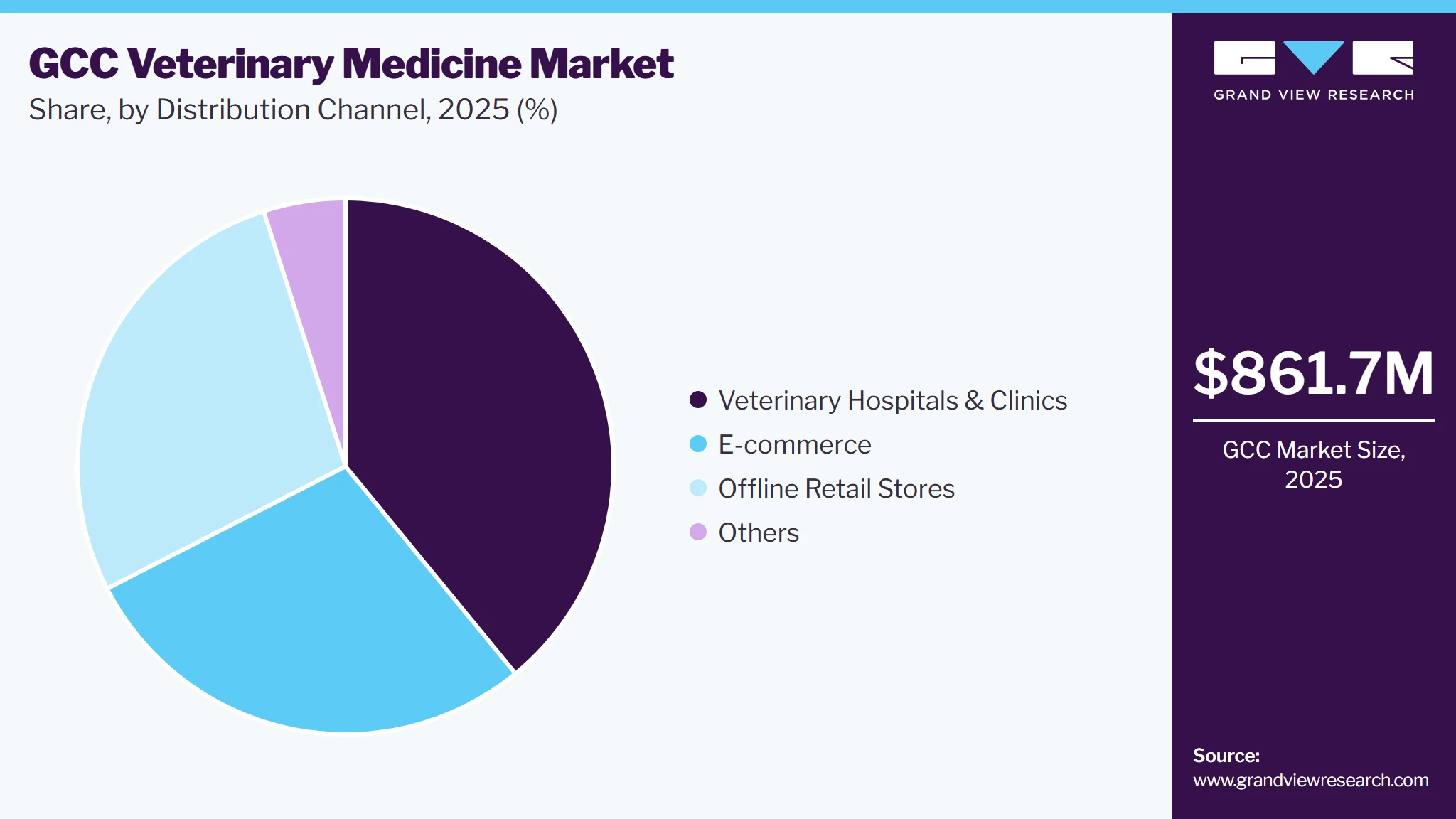
- Based on distribution channel: Veterinary hospitals & clinics segment led the market with the largest revenue share of 39.1% in 2025.
Market Size & Forecast
- Market size in 2025: USD 861.7 Million
- Estimated market size in 2026: USD 946.0 Million
- Projected market size by 2033: USD 1,900.4 Million
- CAGR (2026-2033): 10.5%
Prism AI by Grand View Research Free to tryAsk a question about the GCC veterinary medicine marketTry asking✓Every figure cited from GVR research Prefer the report? Download free sample →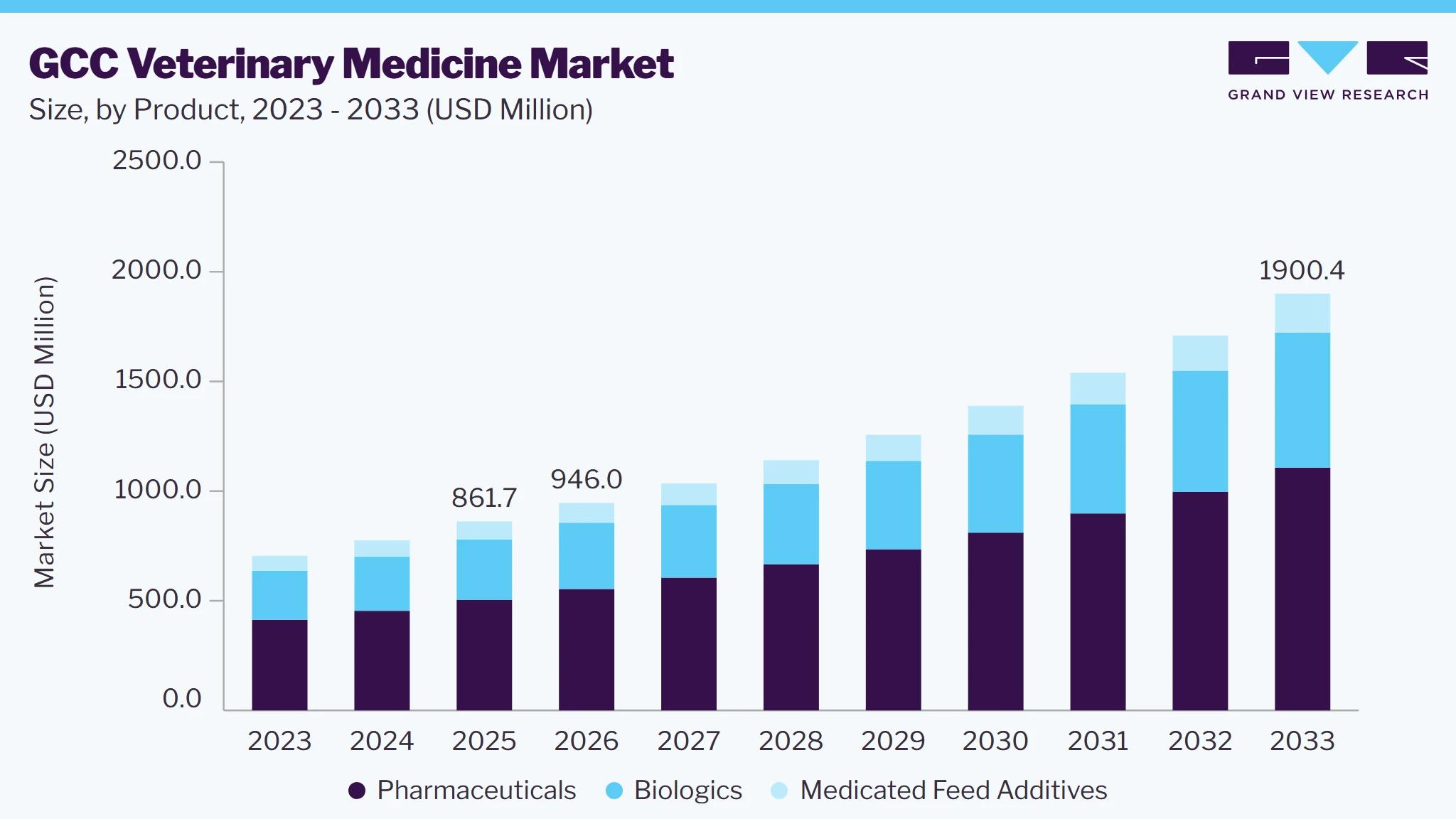 Source: Grand View Research, IR Documents, Primary Interviews, Paid DatabasesTo learn more about this report,
 Download Free Sample Report
Market Dynamics
The GCC veterinary medicine market is characterized by uneven demand across countries, a strong livestock-oriented customer base, and substantial cross-border dependence on imported products. Saudi Arabia is the largest market for veterinary vaccines by trade value: it accounted for vdvrh 74% of GCC veterinary vaccine imports in 2024, worth USD 124 million, while the UAE zeesvvhzt bvv efrcf 13% (USD 23 million) and Oman 5.5%. However, import volumes show a more varied pattern: Saudi Arabia imported approximately 872 tons of veterinary vaccines in 2024, compared with 165 tons in the UAE, 86 tons in Qatar and 81 tons in Oman. This indicates that market activity is concentrated in the two largest economies, while smaller markets such as Qatar are also relevant to regional demand.
The market also reflects differences in product mix, pricing, and supply-chain structure between GCC countries. In 2024, the average import price of veterinary vaccines was approximately USD 135,581 per ton, but prices varied considerably by destination: Kuwait recorded around USD 175,925 per ton, compared with approximately USD 60,078 per ton in Qatar. This variation may reflect differences in vaccine portfolios, product specifications and shipment composition rather than simply differences in retail prices. The UAE and Kuwait also have some domestic vaccine production capacity, although regional supply remains reliant on imports. Overall, competition is shaped by the ability of manufacturers and distributors to maintain product registrations, reliable cold-chain logistics and access to veterinary clinics, farms and government procurement channels.
The GCC veterinary medicine market is supported by expanding livestock production and rising meat consumption, driven by population growth, urbanization, higher disposable incomes, tourism and regional food-security priorities. According to the supplied Euromonitor 2025 data, total GCC meat consumption increased from 2.37 million tons in 2020 to 2.82 million tons in 2025, representing a CAGR of 3.6%. Saudi Arabia accounted for the largest share, with 1.73 million tons in 2025, while Qatar and Kuwait recorded the fastest growth at 7.0% and 6.5%, respectively. Meat consumption is projected to reach 3.20 million tons by 2030, indicating sustained demand for livestock production, animal health management and veterinary medicines.
Rising meat demand and dependence on international suppliers are strengthening the need for livestock disease prevention, vaccination, parasite control and veterinary treatment to maintain animal productivity and food safety. Poultry represented the largest meat category, with GCC consumption reaching 2.29 million tons in 2025, up from 1.90 million tons in 2020. Saudi Arabia alone accounted for approximately 1.43 million tons, while the UAE reached 378,600 tons. Qatar also reported a livestock population of approximately 1.14 million animals in 2024, alongside 50 licensed animal production projects, reflecting investment in domestic livestock development. Furthermore, GCC meat and meat-product imports were valued at approximately USD 4.33 billion in 2025 according to the supplied trade data. These developments support demand for veterinary pharmaceuticals, vaccines, antibiotics, antiparasitic products, and preventive animal healthcare solutions.
Antimicrobial resistance (AMR) and stricter antibiotic-use regulations are emerging as significant constraints on the GCC veterinary medicine market, as governments strengthen controls over veterinary antimicrobial products to preserve their effectiveness in human healthcare. For instance, the UAE's Emirates Drug Establishment (EDE) has announced a nationwide prohibition on the veterinary use of ciprofloxacin effective November 1, 2026. The restriction covers veterinary medicines and raw materials containing the antibiotic and affects nine veterinary products, requiring manufacturers and suppliers to withdraw the affected products before implementation. The decision follows a scientific assessment of antimicrobial resistance evidence, including studies conducted by UAE University, reflecting the country's increasing emphasis on responsible antibiotic use.
Such restrictions can limit the availability of certain established veterinary medicines, increase regulatory compliance costs and require manufacturers to reformulate products or introduce alternative treatments. Veterinary pharmaceutical companies, distributors and clinics may also face additional requirements relating to product registration, antimicrobial stewardship and prescription controls. As other GCC countries strengthen their AMR surveillance and antibiotic-use policies, suppliers may need to adapt product portfolios to country-specific regulations, potentially increasing market-entry costs and slowing the commercialization of veterinary antibiotics.
Expansion of veterinary vaccine and biologics manufacturing presents a significant opportunity in the GCC veterinary medicine market, particularly as governments seek to strengthen animal health security, reduce dependence on imported veterinary products and support food security. Saudi Arabia is emerging as a regional manufacturing hub through initiatives such as the Veterinary Biotech Park in Dhurma, launched in December 2025. The facility is intended to attract international vaccine and veterinary-product manufacturers and serve markets across Saudi Arabia, the wider GCC, the Middle East and Africa.
Saudi Arabia is emerging as a key investment destination for veterinary vaccine manufacturing, supported by government initiatives focused on localizing pharmaceutical production, technology transfer and strengthening animal-health security. For instance, in February 2026, the National Livestock and Fisheries Development Program signed an MoU with French veterinary pharmaceutical company Ceva to establish local veterinary vaccine manufacturing capabilities. The partnership covers technology transfer, commercial-scale production, modernization of mRNA vaccine technologies, and joint research into vaccines for Middle East Respiratory Syndrome (MERS) in camels and rabies.
The opportunity is further supported by Saudi Arabia’s June 2026 agreement with Boehringer Ingelheim and AniVax to explore local veterinary vaccine production, establish a national antigen bank covering local and regional disease strains, and strengthen research, field trials and technical training. These initiatives create scope for manufacturers to establish local production facilities, enter technology-transfer partnerships and develop vaccines tailored to diseases affecting GCC livestock and poultry. Local manufacturing could also improve product availability, strengthen regional supply chains and support exports to neighboring markets. However, these developments are currently concentrated in Saudi Arabia; their wider impact across the GCC will depend on investment, regulatory approvals, manufacturing capacity and demand from other member states.
GCC Veterinary Medicine Regulatory Landscape - Comparative Overview
The GCC veterinary medicine regulatory environment is based on a common regional legislative framework, supported by country-specific regulatory authorities and implementation procedures. Although Saudi Arabia, UAE, Qatar, Kuwait, Oman and Bahrain follow common principles for veterinary product quality, safety and efficacy, requirements for product registration, manufacturer approval, local representation, import permits, labeling and post-marketing surveillance vary across countries. Harmonization therefore does not automatically provide a single GCC-wide marketing authorization.
The key regulatory distinction is that Saudi Arabia and UAE have structured product-registration frameworks, Oman has a dedicated veterinary products law and executive regulation, while Qatar, Kuwait and Bahrain require closer verification of current product-specific registration and import procedures. Companies planning GCC market entry should prepare a common technical dossier and supplement it with country-specific administrative, licensing, labeling and import requirements.
Regulatory parameter
Saudi Arabia
UAE
Qatar
Kuwait
Oman
Bahrain
Regulatory authority
SFDA
EDE
Ministry of Municipality
PAAFR
MAFWR
Ministry of Municipalities Affairs & Agriculture
Product registration
Required
Required
Country-specific approval
Country-specific approval
Required
Verify product-specific route
Manufacturer registration
Required
Required
-
-
Required
Supporting documents required
Local representative / importer
Required
Required
Local licensed importer
Local licensed importer
Local licensed establishment
Licensed veterinary pharmacy / warehouse
Technical dossier
Quality, safety, efficacy
Quality, safety, efficacy
Authority-specific requirements
Authority-specific requirements
Quality, safety, efficacy
Product documentation and analysis
Import authorization
Import clearance
Import approval / clearance
Veterinary import approval
Veterinary import approval
Prior approval
Specific import permit
Labeling requirements
Product labeling and leaflet
Arabic/English requirements
Local requirements
Local requirements
SPC, leaflet and packaging
Approved leaflet / product documentation
Pharmacovigilance
Required
Required
Verify local requirements
Verify local requirements
Required
Periodic reporting obligations
Regulatory framework
SFDA veterinary regulations
Federal Decree-Law 21/2025
National veterinary regulations
National veterinary regulations
Royal Decree 34/2017; Decision 60/2023
National veterinary import regulations
Key regulatory consideration
Structured registration and dossier assessment
New federal framework effective Jan 2026
Confirm registration and import pathway
Confirm current product authorization pathway
Detailed product and manufacturer registration
Local establishment licensing and import permits
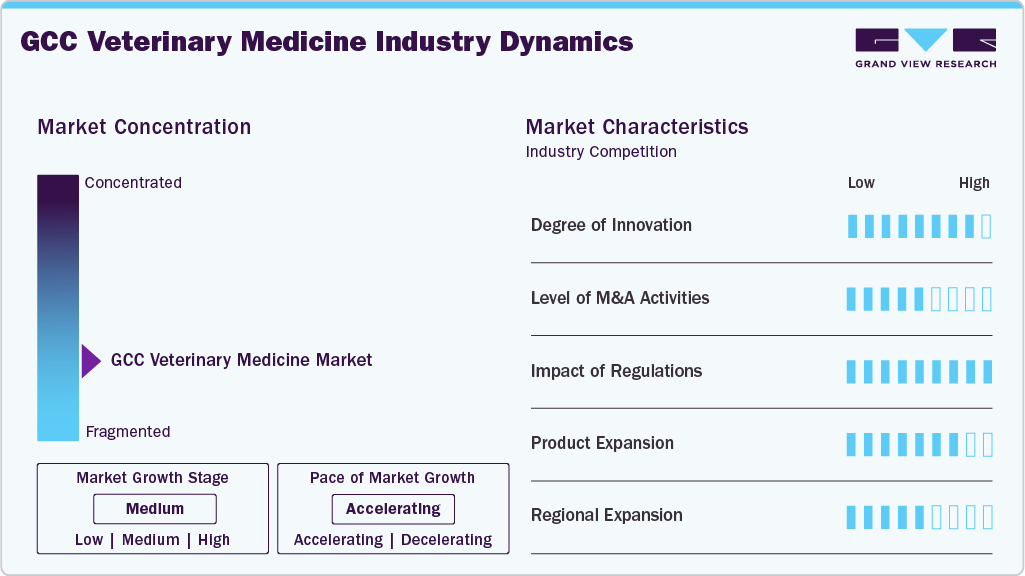
Market Concentration & Characteristics
The industry is characterized by international supplier participation, country-level product approvals and specialized distribution requirements. Veterinary medicines are subject to regulatory controls covering product registration, manufacturing standards, labeling, importation, and legal supply status. Saudi Arabia’s SFDA, for instance, has specific guidance governing the classification and supply status of veterinary medicinal products, alongside the GCC Veterinary Products Act and Regulation. Distribution typically involves manufacturers, authorized importers, veterinary pharmacies, clinics, livestock suppliers, and government procurement channels. Biologics and vaccines require additional attention to storage conditions and cold-chain handling, while medicines for food-producing animals must be managed in accordance with relevant use and residue requirements.
Competition is shaped less by price alone and more by product registration, local distribution reach, technical support and the ability to supply different animal-health segments. Multinationals typically leverage established brands, research capabilities and specialised products, while regional manufacturers can compete through proximity, product availability and established distributor relationships. Market participation also varies by business model: some companies focus on manufacturing and importing medicines, while others provide diagnostics, veterinary services or distribution.
 To learn more about this report, Download Free Sample Report
Innovation in the GCC veterinary medicine industry is increasingly focused on preventive vaccines, advanced biologics, disease surveillance and diagnostic technologies, rather than only conventional treatments. For instance, in June 2026, Saudi Arabia’s signed a partnership agreement with the National Livestock and Fisheries Development Program; AniVax and Boehringer Ingelheim include plans for a national antigen bank covering local and regional disease strains, vaccine research, field trials, and improved diagnostic capabilities. The collaboration also includes technical training and epidemiological data exchange, indicating a shift towards locally adapted disease-prevention solutions.
Publicly disclosed evidence of large-scale mergers and acquisitions specifically involving veterinary medicine companies in the GCC is limited. The market appears to rely more on strategic partnerships, distribution agreements, technology transfers, and localization collaborations than on major acquisitions. For Instance, Saudi Arabia’s agreements with Ceva and Boehringer Ingelheim demonstrate how international animal-health companies are entering or strengthening their regional presence through cooperation with government-linked programs and local partners. These arrangements allow companies to access local manufacturing opportunities and distribution networks without necessarily acquiring existing businesses.
Regulation have a direct impact on product registration, market entry, manufacturing, importation, and distribution across the GCC. The GCC Veterinary Products Law establishes a common regional framework for veterinary products and manufacturing standards, including good manufacturing practices; however, implementation and licensing remain the responsibility of each country’s competent authority. The UAE strengthened its framework through a Federal Decree-Law issued on 10 December 2025, covering product development, registration, pricing, import, export, distribution and sale. It also introduced a fast-track marketing authorization route for qualifying innovative veterinary products. These requirements increase compliance obligations but provide clearer pathways for manufacturers that meet quality and safety standards.
Companies are broadening veterinary portfolios beyond conventional medicines towards vaccines, biologics and products targeting region-specific animal diseases. Saudi Arabia’s February 2026 MoU with France’s Ceva includes cooperation on poultry vaccines, mRNA technology, camel MERS vaccine research, and rabies solutions. Separately, the June 2026 agreement involving Boehringer Ingelheim and AniVax covers priority vaccine development, an antigen bank and diagnostic capabilities. These initiatives illustrate opportunities to expand product ranges across poultry, livestock and camel health, while adapting formulations and disease coverage to regional requirements.
Saudi Arabia is positioning itself as a potential regional base for veterinary biotechnology manufacturing and distribution. The Veterinary Biotech Park in Dhurma, launched in December 2025, is designed to attract international companies involved in vaccine and veterinary-product development, provide laboratory infrastructure, and support regional headquarters. Its stated target markets extend beyond Saudi Arabia to the GCC, the wider Middle East and Africa. This creates opportunities for manufacturers to establish production or research operations in Saudi Arabia and serve neighboring markets through regional distribution networks, subject to each destination country’s product registration and import requirements.
Analyst Perspective
The GCC veterinary medicine market is expected to experience steady development, supported by sustained demand for animal health products across commercial livestock, poultry and companion animals. Demand is expected to remain particularly strong in production-animal healthcare, as governments and industry participant’s priorities livestock productivity, disease prevention, food security and compliance with animal-health standards. At the same time, growing pet ownership and increasing access to veterinary services are broadening demand for preventive and therapeutic treatments for companion animals.
Animal Insights
On the basis of animals, production animals held the largest share of 63.0% in 2025, driven by the region’s substantial livestock and commercial poultry sectors. According to the GCC Annual Statistical Yearbook, the region had approximately 42.5 million livestock in 2024, comprising 25.7 million sheep (60.5% of the total), 12.5 million goats, 3.2 million camels and 1.2 million cattle. This large production-animal population creates recurring demand for vaccines, antibiotics, antiparasitic treatments, nutritional medicines and disease-prevention products. Commercial poultry production further strengthens this demand. According to the report published by the Statistical Center for the Cooperation Council, Saudi Arabia alone produced approximately 1.3 million tons of broiler chicken in 2024, an increase of 12.9% from 2023. The scale of livestock and poultry farming, together with the need to maintain animal health, productivity, and food supply, supports the dominant contribution of production animals to veterinary medicine sales.
The companion animal segment in the GCC veterinary medicine market is the fastest growing, with a CAGR of 10.9% over the forecast period. This growth is supported by increasing pet ownership, changing attitudes towards cats and dogs, rising disposable incomes and increase in spending on preventive and specialized veterinary care. For instance, the UAE pet population increased by 59%, from approximately 588,700 in 2014 to 938,000 in 2024, according to a 2025 USDA Foreign Agricultural Service report. This expanding pet base is creating recurring demand for vaccinations, anti-parasitic medicines, antibiotics and treatments for chronic conditions. Rising expenditure on preventive healthcare and access to specialized veterinary clinics are further supporting demand for higher-value medicines and advanced treatments.
Product Insights
On the basis of product, pharmaceuticals held largest share of 58.5% in 2025 due to their extensive use in the treatment and management of animal diseases across livestock, poultry and companion animals. Veterinary pharmaceuticals, including antibiotics, antiparasitics, anti-inflammatory drugs and other therapeutic medicines, are used to manage bacterial and parasitic infections, respiratory disorders, digestive diseases and other common animal-health conditions. Their demand is supported by the need for timely treatment, routine veterinary care and maintaining animal productivity in commercial farming operations. Furthermore, the availability of medicines for both acute and chronic conditions creates a broad and recurring demand base across the region. For instance, in February 2026, UAE's Emirates Drug Establishment (EDE) is officially launched. It provides an instance of growing institutional support for pharmaceutical manufacturing and supply-chain development. Its Holistic National Manufacturing Project explicitly includes the localization of veterinary products alongside human medicines and agricultural inputs.
The biologics segment is anticipated to grow at the fastest CAGR of 10.7% over the forecast period of 2026-2033, driven by increasing demand for preventive healthcare, vaccination and advanced disease-control solutions for livestock and poultry. Veterinary biologics, particularly vaccines, help prevent infectious diseases, reduce animal mortality and minimize production losses, making them important for livestock productivity and regional food security. The need for effective control of zoonotic diseases further strengthens demand; according to Saudi Arabia’s National Livestock and Fisheries Development Program, approximately 75% of animal diseases are transmissible to humans, highlighting the importance of veterinary disease prevention and surveillance.
Saudi Arabia is supporting this trend through initiatives to develop domestic veterinary biologics capabilities. For instance, in December 2025, the country launched the Veterinary Biotech Park in Dhurma, comprising laboratory, research and integrated industrial facilities to attract international companies involved in vaccine and veterinary-product development. The initiative also includes opportunities to localize foot-and-mouth disease vaccine production and aims to serve Saudi Arabia, the GCC, the wider Middle East and Africa. By encouraging research, technology transfer and local manufacturing, these developments are expected to improve access to veterinary vaccines and advanced biologics, supporting the segment's projected growth across the region.
Route of Administration Insights
Based on route of administration, injectable dominated the market with share of 44.4% in 2025, since they provide rapid and reliable drug delivery, accurate dosing and effective administration of vaccines, antibiotics, antiparasitics and other therapeutic products. Injectable formulations are widely used in livestock and poultry healthcare, particularly for vaccination programs, disease treatment and herd-level disease prevention. They are also suitable for administering medicines to animals that may be difficult to treat orally, ensuring that the required dose is delivered directly into the body. In commercial livestock operations, injectable vaccines and medicines are particularly important for managing infectious diseases and reducing treatment-related losses. The expansion of veterinary vaccine development and localization initiatives in Saudi Arabia, including research into foot-and-mouth disease vaccines, further illustrates the continued relevance of injectable products in regional animal healthcare.
Moreover, others segment in the GCC veterinary medicine market is expected to grow at a fastest CAGR. Growth is likely to be supported by increasing adoption of specialized drug-delivery methods, including intranasal, intraocular, intrauterine and intramammary administration, depending on the medicine and animal species. These routes enable targeted treatment of specific conditions, such as respiratory infections, eye disorders, uterine infections and mastitis in dairy animals. Intranasal vaccines and medicines offer a non-invasive approach to respiratory disease prevention, while intramammary formulations are used to treat udder infections in dairy cattle. The growing focus on specialized veterinary care and disease-specific treatment is expected to encourage demand for these alternative administration routes across livestock, poultry and companion animals. Their use can provide targeted drug delivery and, in certain applications, reduce the need for systemic medication.
Distribution Channel Insights
Veterinary hospitals & clinics segment dominated with a share of 39.1% in 2025, owing to their role as primary points of diagnosis, prescription and treatment for both livestock and companion animals. These facilities provide access to qualified veterinarians who select and administer prescription medicines, vaccines, antibiotics, antiparasitics and specialized treatments based on animal health requirements. The growing number of companion animal clinics, particularly in urban centers such as Dubai, Abu Dhabi and Riyadh, is also supporting medicine sales through this channel. In addition, veterinary hospitals provide diagnostic services, surgical care and preventive healthcare, generating demand for a wider range of medicines than channels focused mainly on product retail.
 To learn more about this report, Download Free Sample Report
E-commerce segment is expected to grow with highest CAGR of 11.6% over the forecast, driven by increasing internet penetration, widespread smartphone usage and the growing adoption of digital purchasing platforms across the region. Online channels offer veterinary clinics, livestock owners and pet owners convenient access to medicines, vaccines, nutritional products and parasite-control treatments, along with product comparisons, home delivery and easier repeat ordering. The expansion of pet ownership and demand for routine treatments, particularly flea and tick medications, supplements and other regularly purchased products, is further encouraging online purchases.
Additionally, the development of specialized online pet-care platforms and digital pharmacy services in countries such as the UAE and Saudi Arabia is improving access to veterinary products. E-commerce platforms can also serve customers in locations with limited access to physical veterinary pharmacies, although prescription requirements, product authenticity, cold-chain logistics and country-specific import regulations remain important considerations. The convenience of digital ordering and the expansion of online veterinary retail are therefore expected to support faster growth in this channel compared with traditional distribution channels.
Regional Insights
Saudi Arabia held the largest share, driven by rising companion-animal healthcare demand, and government efforts to strengthen domestic production, improving animal disease control, and enhancing regulatory capabilities. For instance, in December 2025, Veterinary Biotech Park in Dhurma is launched to attract international companies, localize veterinary vaccine and product development, and strengthen supply-chain resilience. Additionally, in April 2025, MoU between the Saudi Food and Drug Authority (SFDA) and France’s ANSES is expected to support scientific collaboration, technical training, and improvements in veterinary medicine quality, safety, efficacy, and regulatory evaluation. Together, these initiatives could encourage investment, expand local production capacity, and improve access to veterinary medicines, supporting the countries livestock productivity and food-security objectives.
UAE veterinary medicine market held the second-largest share in 2025 driven by rising pet ownership, demand for advanced companion-animal care, livestock health management and national food-security priorities. Demand spans companion-animal medicines, such as vaccines, antiparasitics and treatments for skin or joint conditions and production-animal products, including poultry vaccines, antibiotics and livestock parasite-control medicines. For instance, in June 2026, UAE-based Al Khayyat Investments announced a USD 100 million investment in VetHealth, covering pharmaceuticals, biologicals, biosecurity, nutrition and diagnostics. Additionally, growing regulatory development is contributing to market growth. For instance, UAE’s Federal Decree-Law No. 21 of 2025, effective from 1 January 2026, strengthens the framework for veterinary product registration, manufacturing, importation and distribution, creating a more structured environment for suppliers and manufacturers.
Key GCC Veterinary Medicine Company Insights
The GCC veterinary medicine market is competitive, with multinational animal health companies competing alongside regional vaccine manufacturers and suppliers. Key players include Zoetis, Merck Animal Health (MSD), Boehringer Ingelheim, Elanco, Ceva Santé Animale, Virbac, Dechra Pharmaceuticals, Vetoquinol, Phibro Animal Health, MEVAC and JOVAC. Their portfolios span veterinary pharmaceuticals, vaccines, parasiticides and other animal health products for livestock, poultry, camels and companion animals. MEVAC and JOVAC are notable regional players in veterinary vaccines. Competition is driven by product efficacy and safety, portfolio breadth, pricing, regulatory approvals, veterinary relationships and distribution capabilities. Multinational companies benefit from established brands and broad product portfolios, while regional manufacturers can compete in selected vaccine categories and local supply opportunities. Demand for livestock disease control, food security and companion animal care is also encouraging investment in local manufacturing and partnerships.
Key GCC Veterinary Medicine Companies
The following key companies have been profiled for this study on the GCC veterinary medicine market.
-
Zoetis
-
Merck & Co., Inc.
-
Ceva
-
Boehringer Ingelheim International GmbH
-
Elanco
-
Virbac
-
Dechra Pharmaceuticals
-
Vetoquinol
-
Phibro Animal Health Corporation
-
MEVAC
-
JOVAC
Competitive Benchmarking
Category
Operating Strategies
Competitive Edge
Weakness
Established Global Leaders - Zoetis, Merck & Co., Inc., Boehringer Ingelheim International GmbH, Ceva, Elanco, Dechra, Phibro Animal Health Corporation
- Maintain broad portfolios of veterinary pharmaceuticals, vaccines, parasiticides, anti-infectives, and specialty therapies for livestock, poultry, equine, camel, and companion animals. Invest in product innovation, regulatory registrations, veterinary education, technical support, and partnerships with distributors, poultry integrators, livestock producers, and veterinary clinics.
- Strong international brands, diversified product portfolios, established research and development capabilities, and access to specialized medicines and biologics. Broad product coverage supports competition across livestock production and companion-animal healthcare. Saudi Arabia's large market and the UAE's developed veterinary services provide attractive commercial opportunities.
- High research and development costs, regulatory and registration requirements, dependence on local importers and distributors for many products, and competition from lower-priced alternatives. Market access can also be affected by tender pricing, product availability, cold-chain requirements, and differences in demand between GCC countries.
Emerging Players - MEVAC, JOVAC, UNIVET, Klybeck Life Sciences
- Focus on competitively priced veterinary medicines, vaccines, feed additives, and livestock-health solutions. Build regional market access through product registrations, distributor agreements, and relationships with veterinary professionals, livestock farms, and poultry producers. Domestic players can focus on locally manufactured veterinary formulations, generic medicines, feed additives, disinfectants, and selected animal-health products. Strategies include expanding product registrations, serving domestic distributors and livestock customers, developing regional export networks, and competing on product availability, price, and responsiveness to local requirements.
- Regional market familiarity, competitive pricing, experience in livestock and poultry health, and the ability to serve selected product categories and markets. Regional manufacturers can complement multinational portfolios and provide alternatives for price-sensitive customers. Proximity to customers, familiarity with domestic regulations and distribution channels, potential manufacturing-cost advantages, and the ability to supply selected products with shorter regional lead times.
- Generally less global brand recognition than the largest multinationals, with potential limitations in R&D resources, specialized product breadth, and international distribution reach. Commercial expansion depends on country-specific registrations, distributor access, product quality, and the ability to compete with established multinational brands. Smaller portfolios and potentially lower R&D investment than multinational competitors. Not all local suppliers manufacture medicines themselves; some primarily import, register, or distribute third-party products.
Recent Developments
-
In February 2026, CEVA partnered with Saudi Arabia to localize veterinary vaccine manufacturing, transfer advanced technology, and develop vaccines targeting poultry diseases, rabies, and MERS-CoV in camels. The initiative aims to strengthen domestic production, biosecurity, and food security through an initial investment of approximately USD 66 million and participation in the Dhurma Biotech Park.
-
In June 2026, Boehringer Ingelheim, AniVax, and National Livestock and Fisheries Development Program signed a tripartite MoU with Saudi Arabia to promote local veterinary vaccine manufacturing, establish a national antigen bank, and strengthen research and development. The partnership also aims to build local expertise, improve disease surveillance, and enhance the Kingdom’s veterinary vaccine supply security in line with Saudi Vision 2030.
-
In April 2025, Ceva Animal Health participated in the Middle East Poultry Expo 2025 in Saudi Arabia, which attracted over 320 exhibitors from 40 countries and more than 11,000 visitors from 54 nations. The company used the event to strengthen regional partnerships and promote poultry-health solutions, working alongside its local distributor, MAS, to support poultry productivity and food security.
GCC Veterinary Medicine Market Report Scope
Report Attribute
Details
Market size in 2025
USD 861.7 million
Estimated market size in 2026
USD 946.0 million
Projected market size by 2033
USD 1,900.4 million
Growth Rate
CAGR of 10.5% from 2026 to 2033
Actual Data
2021 - 2025
Forecast period
2026 - 2033
Quantitative units
Revenue in USD Million and CAGR from 2026 to 2033
Report coverage
Revenue forecast, company ranking, competitive landscape, growth factors, and trends
Segments covered
Product, animal, route of administration, distribution channel and country
Country scope
Saudi Arabia, Oman, UAE, Kuwait, Qatar ,Bahrain
Key companies profiled
Zoetis, Merck & Co., Inc., Ceva, Boehringer Ingelheim International GmbH, Elanco, Virbac, Dechra Pharmaceuticals, Vetoquinol, Phibro Animal Health Corporation, MEVAC, JOVAC
Customization scope
Free report customization (equivalent up to 8 analysts working days) with purchase. Addition or alteration to country, & segment scope.
Pricing and purchase options
Avail customized purchase options to meet your exact research needs. Explore purchase options
GCC Veterinary Medicine Market Report Segmentation
This report forecasts revenue growth at country levels and provides an analysis of the latest industry trends in each of the sub-segments from 2021 to 2033. For this study, Grand View Research has segmented the GCC veterinary medicine market report based on product, animal, route of administration, distribution channel, and country:
-
GCC Veterinary Medicine Market by Product Outlook (Revenue, USD Million 2021 - 2033)
-
Biologics
-
Vaccines
-
Modified/ Attenuated Live
-
Inactivated (Killed)
-
Other Vaccines
-
-
Other Biologics
-
-
Pharmaceuticals
-
Parasiticides
-
Anti-infectives
-
Anti-inflammatory
-
Analgesics
-
Others
-
-
Medicated Feed Additives
-
-
GCC Veterinary Medicine Market by Animal Outlook (Revenue, USD Million 2021 - 2033)
-
Production Animals
-
Poultry
-
Swine
-
Cattles
-
Sheep & Goats
-
Others
-
-
Companion Animals
-
Dogs
-
Cats
-
Horses
-
Others
-
-
-
GCC Veterinary Medicine Market by Route of Administration Outlook (Revenue, USD Million 2021 - 2033)
-
Oral
-
Injectable
-
Topical
-
Others
-
-
GCC Veterinary Medicine Market by Distribution Channel Outlook (Revenue, USD Million 2021 - 2033)
-
Veterinary Hospitals & Clinics
-
E-commerce
-
Offline Retail Stores
-
Others
-
-
GCC Veterinary Medicine Market Country Outlook (Revenue, USD Million 2021 - 2033)
-
Saudi Arabia
-
Oman
-
UAE
-
Kuwait
-
Qatar
-
Bahrain
-
Research Methodology
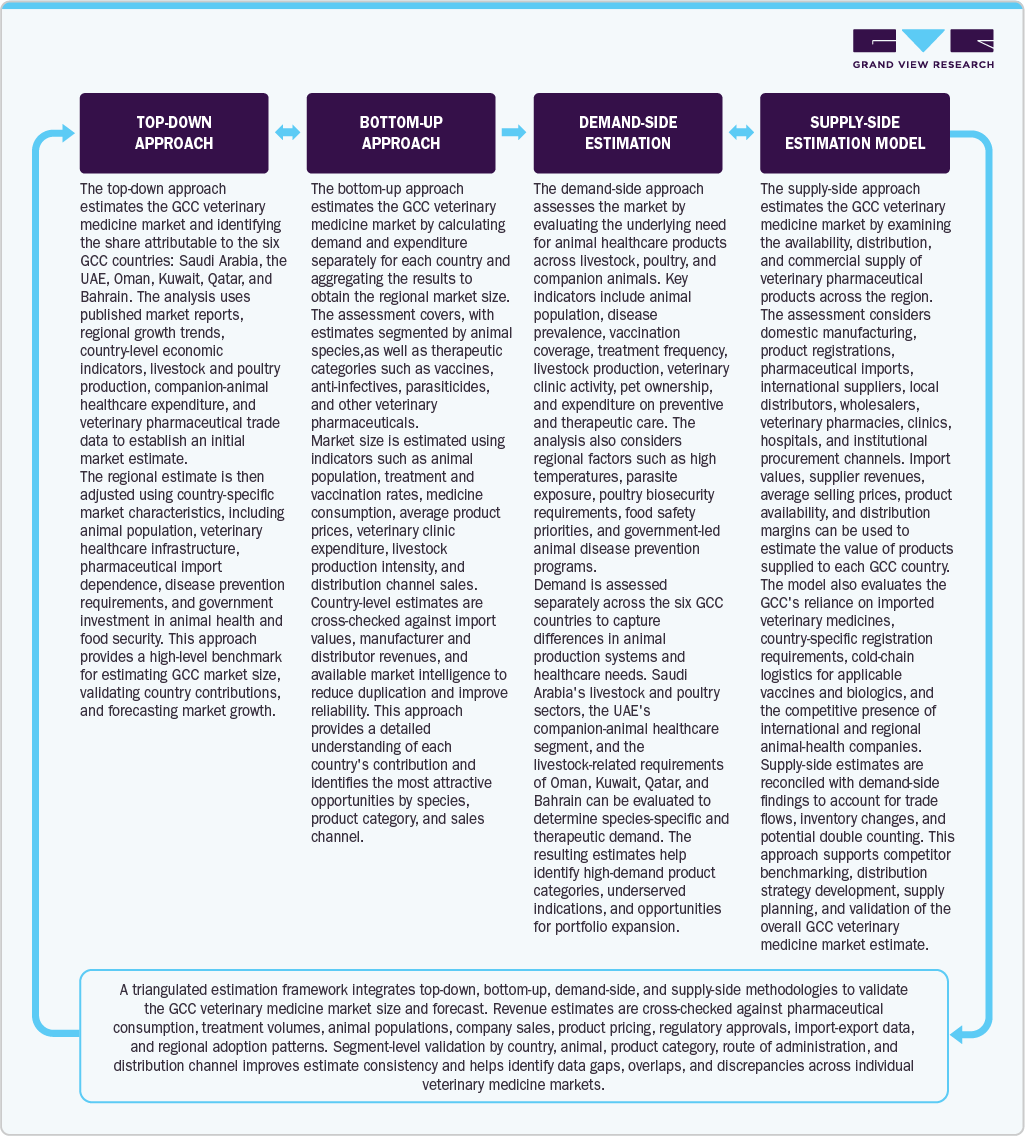
The GCC veterinary medicine market figures in this report are based on a proven research process that combines executive interviews with secondary research from proprietary databases, company filings, and recognized regulatory and institutional sources. Market size is built through value-chain sizing - reconciling supply-side and demand-side estimates - and triangulated with bottom-up and top-down approaches. Every estimate passes multiple levels of expert validation before publication, with each GCC veterinary medicine segment quantified using the revenue-capture definitions in the table below.
Segment Definition
Product
Definition
Biologics
Revenue generated from veterinary biological products used for disease prevention, diagnosis, or treatment, including vaccines and other biologically derived veterinary products.
Vaccines
Revenue generated from veterinary vaccines administered to animals to stimulate immunity against specific infectious diseases.
Modified/Attenuated Live Vaccines
Revenue generated from veterinary vaccines containing live microorganisms that have been modified or attenuated to stimulate an immune response without causing the targeted disease under intended use conditions.
Inactivated (Killed) Vaccines
Revenue generated from veterinary vaccines containing microorganisms that have been inactivated and are administered to stimulate protective immune responses.
Other Vaccine Types
Revenue generated from veterinary vaccine types other than modified/attenuated live and inactivated vaccines.
Other Biologics
Revenue generated from veterinary biological products other than vaccines, including products such as immunological and other biologically derived preparations.
Pharmaceuticals
Revenue generated from veterinary pharmaceutical products used for the prevention, treatment, control, or management of diseases and health conditions in animals.
Parasiticides
Revenue generated from veterinary medicines used to prevent or control internal and external parasites in animals.
Anti-infectives
Revenue generated from veterinary medicines used to prevent or treat infections caused by bacteria, fungi, parasites, or other infectious agents.
Anti-inflammatory
Revenue generated from veterinary medicines used to reduce inflammation associated with diseases, injuries, or other health conditions in animals.
Analgesics
Revenue generated from veterinary medicines used to manage or relieve pain in animals.
Others
Revenue generated from veterinary medicines that do not fall under parasiticides, anti-infectives, anti-inflammatory, or analgesic products.
Medicated Feed Additives
Revenue generated from veterinary products incorporated into animal feed to prevent, control, or manage specific diseases or health conditions and to support animal health.
Animal
Definition
Production Animals
Revenue generated from veterinary pharmaceutical and biologic products used for the prevention, treatment, and management of diseases and health conditions in animals raised for food production and agricultural purposes.
Poultry
Revenue generated from veterinary pharmaceutical and biologic products used for the prevention, treatment, and management of diseases and health conditions in chickens, turkeys, ducks, and other commercially raised birds.
Pigs
Revenue generated from veterinary pharmaceutical and biologic products used for the prevention, treatment, and management of diseases and health conditions in pigs and swine raised for commercial production.
Cattle
Revenue generated from veterinary pharmaceutical and biologic products used for the prevention, treatment, and management of diseases and health conditions in beef and dairy cattle.
Sheep & Goats
Revenue generated from veterinary pharmaceutical and biologic products used for the prevention, treatment, and management of diseases and health conditions in sheep and goats raised for commercial or agricultural purposes.
Others
Revenue generated from veterinary pharmaceutical and biologic products used in other production animals not classified under poultry, pigs, cattle, or sheep & goats.
Companion Animals
Revenue generated from veterinary pharmaceutical and biologic products used for the prevention, treatment, and management of diseases and health conditions in animals primarily kept as pets or for companionship.
Dogs
Revenue generated from veterinary pharmaceutical and biologic products used for the prevention, treatment, and management of diseases and health conditions in dogs.
Cats
Revenue generated from veterinary pharmaceutical and biologic products used for the prevention, treatment, and management of diseases and health conditions in cats.
Horses
Revenue generated from veterinary pharmaceutical and biologic products used for the prevention, treatment, and management of diseases and health conditions in horses kept for companionship, recreation, sport, or other non-food purposes.
Others
Revenue generated from veterinary pharmaceutical and biologic products used in other companion animals not classified under dogs, cats, or horses.
Route of Administration
Definition
Oral
Revenue generated from veterinary products administered orally through the mouth, including tablets, boluses, powders, granules, and oral liquids.
Injectable
Revenue generated from veterinary products administered through injection, including intravenous, intramuscular, subcutaneous, and other injectable routes.
Topical
Revenue generated from veterinary products applied directly to the skin, coat, or localized external areas of an animal.
Others
Revenue generated from veterinary products administered through routes other than oral, injectable, or topical administration.
Distribution Channel
Definition
Veterinary Hospitals & Clinics
Revenue generated from veterinary pharmaceutical and biologic products sold or supplied through veterinary hospitals, clinics, and veterinary practices for professional use or animal treatment.
E-commerce
Revenue generated from veterinary pharmaceutical and biologic products sold through online marketplaces, veterinary e-commerce platforms, and other digital retail channels.
Offline Retail Stores
Revenue generated from veterinary pharmaceutical and biologic products sold through physical retail outlets, including veterinary pharmacies, pet stores, agricultural stores, and other brick-and-mortar outlets.
Others
Revenue generated from veterinary pharmaceutical and biologic products distributed through channels other than veterinary hospitals and clinics, e-commerce, and offline retail stores.
Estimation Model
 To learn more about this report, Download Free Sample Report
Delivered Customizations
This report has been delivered with the following In-depth customizations
Client Request
Customization Delivered
Value Adds
GCC Veterinary Medicine Market Assessment
The study can provide country-level market sizing and forecasts across veterinary pharmaceuticals, vaccines, parasiticides, anti-infectives, and other veterinary therapies. It can distinguish demand across poultry, cattle, sheep, goats, camels, horses, and companion animals, with specific consideration of Saudi Arabia's livestock and poultry production, the UAE's companion-animal healthcare sector, and the livestock-related requirements of Oman, Kuwait, Qatar, and Bahrain. The assessment can also evaluate import dependence, local manufacturing, disease prevention programs, food security initiatives, and country-specific market opportunities.
Provides a comparative view of market attractiveness, growth opportunities, species-specific demand, and competitive intensity across the GCC. Supports country prioritization, sales forecasting, market entry planning, portfolio allocation, and identification of attractive opportunities in production-animal and companion-animal healthcare.
Veterinary Pharmaceutical Portfolio & Therapeutic Opportunity Assessment
The study can assess demand for anti-infectives, vaccines, parasiticides, anti-inflammatory medicines, analgesics, reproductive-health products, nutritional therapies, and specialty veterinary medicines. It can evaluate applications across poultry, cattle, sheep, goats, camels, horses, dogs, and cats, including preventive versus therapeutic usage, treatment frequency, seasonal disease patterns, and unmet needs. Particular attention can be given to poultry health and livestock productivity in Saudi Arabia, tick and parasite control in livestock, camel health, and specialized companion-animal therapies in the UAE and other GCC markets.
Helps prioritize therapeutic categories, species, and indications according to demand potential, treatment recurrence, disease burden, product differentiation, and commercial feasibility. Supports product portfolio optimization, new product launches, R&D prioritization, and identification of underserved animal-health segments across the GCC.
Veterinary Drug Regulatory & Commercialization Assessment
The study can compare veterinary drug registration requirements, applicable GCC and national regulatory frameworks, product classification, manufacturing and quality documentation, import permits, labeling requirements, prescription controls, pharmacovigilance obligations, and applicable medicine and antimicrobial stewardship requirements. It can examine the role of the GCC regulatory framework alongside country-specific authorities, including the Saudi Food and Drug Authority (SFDA) in Saudi Arabia, and distinguish requirements for pharmaceuticals, vaccines, biologics, and products intended for food-producing versus companion animals.
Helps companies assess regulatory feasibility, anticipate documentation requirements, identify country-specific compliance obligations, and plan product registration and launch sequencing. Supports evaluation of time-to-market, regulatory investment, import readiness, and commercialization risks across GCC markets.
Regional Supply Chain & Distribution Assessment (partially visible)
The study can map import flows, local manufacturing capabilities, distributor networks, wholesale structures, public and private procurement, veterinary clinic coverage, and farm-level distribution. It can assess the role of international suppliers, regional distributors, and veterinary healthcare providers in reaching production-animal and companion-animal customers.
Provides visibility into market access and distribution structures, supporting distributor selection, channel prioritization, pricing, and supply chain optimization across GCC markets.
About the Author(s)
Animal Health Research Team
Industry · Animal HealthThis report was authored by the animal health research team at Grand View Research - comprising two research analysts, one senior research analyst, and one industry expert - with specialized expertise in the animal health segment of the industry industry. All findings are based on proprietary industry databases, executive interviews, and regulatory analysis, subject to internal peer review prior to publication.
Last Updated:
Speak to Analyst

Customize this report to your needs - add regions, segments, or data points, with 20% free customization.
Or view our licence options:


ISO 9001:2015 & 27001:2022 Certified
We are GDPR and CCPA compliant! Your transaction & personal information is safe and secure. For more details, please read our privacy policy.


