
- Home
- »
- Next Generation Technologies
- »
-
Geopatriation Market Size And Share Report, 2026-2033GVR Report cover
![Geopatriation Market Size, Share & Trends Report]()
Geopatriation Market (2026 - 2033) Size, Share & Trends Analysis Report By Service Type (Relocation Services, Immigration & Visa Management, Tax & Payroll Services, Workforce Compliance Services), By Organization Size, By End Use, By Region, And Segment Forecasts
Market Size, 2025
$22.5BMarket Estimate, 2026
$27.4BMarket Forecast, 2033
$123.2BCAGR, 2026–2033
23.9%Geopatriation Market Summary
The global geopatriation market size was valued at USD 22.5 billion in 2025 and is projected to grow from USD 27.4 billion in 2026 to USD 123.2 billion by 2033, at a CAGR of 23.9% from 2026 to 2033. North America dominated the global market with the largest revenue share of 37.1% in 2025. The market is driven by rising concerns over data sovereignty and national security, increasing government regulations mandating local data residency and control, growing adoption of sovereign cloud and domestic digital infrastructure initiatives, escalating geopolitical tensions influencing cross-border data governance strategies, expanding investments in localized AI, cloud, and cybersecurity ecosystems, and increasing enterprise demand for regulatory compliance, operational resilience, and reduced dependence on foreign technology providers.

Key Market Trends & Insights
- The geopatriation industry in the U.S. accounted for the largest market revenue share in North America in 2025.
- By service type, the relocation services segment led the market with the largest revenue share of 32.4% in 2025.
- By application, the large enterprises segment led the market with the largest revenue share of 66.2% in 2025.
- By end use, the government & defense segment is expected to grow at the fastest CAGR of 26.0% from 2026 to 2033.
Market Size & Forecast
- 2025 Market Size: USD 22.5 Billion
- 2026 Market Size: USD 27.4 Billion
- 2033 Projected Market Size: USD 123.2 Billion
- CAGR (2026-2033): 23.9%
- North America: Largest market in 2025
The geopatriation industry is witnessing significant momentum as governments and enterprises increasingly prioritize sovereign cloud infrastructure to maintain greater control over critical data assets. Organizations are migrating workloads from foreign-hosted environments to domestic or regionally governed cloud platforms to address evolving data sovereignty requirements. This trend is particularly evident across regulated sectors such as government, defense, financial services, and healthcare, where compliance obligations are becoming more stringent. Investments in national cloud ecosystems are encouraging the development of localized data centers, cybersecurity frameworks, and digital infrastructure. As a result, sovereign cloud adoption is emerging as a key growth catalyst supporting long-term expansion of the data localization market and broader geopatriation initiatives.The growing adoption of data sovereignty regulations is reshaping enterprise data governance strategies worldwide. Governments are introducing stricter policies that require sensitive information to be stored, processed, and managed within national borders, creating strong demand for geopatriation solutions. Enterprises are increasingly redesigning IT architectures to comply with country-specific regulatory frameworks while minimizing legal and operational risks. This trend is fostering investments in domestic cloud services, local hosting environments, and compliance-focused digital infrastructure. Consequently, regulatory enforcement is becoming a major driver supporting the growth of the data residency market and accelerating geopatriation adoption worldwide.

Increasing geopolitical tensions and concerns regarding foreign technology dependencies are driving organizations to repatriate critical digital assets. Governments are placing greater emphasis on securing strategic data, applications, and digital services within trusted jurisdictions to strengthen national resilience. Enterprises are responding by diversifying technology partnerships and reducing exposure to external geopolitical risks through localized digital infrastructure strategies. The trend is also encouraging investments in domestic cloud providers, cybersecurity capabilities, and national digital ecosystems. As geopolitical considerations become central to technology decision-making, demand for geopatriation services is expected to expand significantly over the forecast period.
Market Dynamics
The rapid emergence of AI sovereignty strategies is driving the geopatriation industry, as governments seek greater control over critical data, computing infrastructure, and artificial intelligence ecosystems. Countries are increasingly investing in domestic AI capabilities to reduce dependence on foreign cloud providers and technology vendors. The growing importance of generative AI, large language models, and advanced analytics is creating demand for locally governed datasets and secure computing environments. Organizations are aligning their digital transformation strategies with national requirements for data ownership, transparency, and regulatory compliance. This shift is accelerating the migration of sensitive workloads, applications, and data assets into sovereign and domestically controlled environments.
Simultaneously, governments are launching comprehensive digital sovereignty programs to strengthen national security, economic resilience, and technological competitiveness. Public investments in sovereign cloud infrastructure, local data centers, cybersecurity frameworks, and AI innovation hubs are expanding the foundation for geopatriation initiatives. Enterprises operating in regulated industries are increasingly required to ensure that strategic data remains within national borders and under trusted jurisdictional oversight. The combination of regulatory mandates and geopolitical considerations is encouraging businesses to repatriate critical digital assets from foreign-hosted platforms. As a result, the convergence of AI sovereignty and national digital independence initiatives is expected to remain a significant growth catalyst for the geopatriation industry over the forecast period.
The geopatriation industry faces a significant restraint in the form of high infrastructure migration costs and the complexity associated with transitioning from globally distributed digital environments to localized systems. Organizations often need to invest substantially in domestic data centers, sovereign cloud platforms, cybersecurity solutions, and compliance management frameworks to support geopatriation initiatives. The migration of large volumes of data, applications, and mission-critical workloads can require extensive planning, specialized expertise, and prolonged implementation timelines. For many enterprises, particularly small and medium-sized organizations, these financial and operational requirements create barriers to adoption. As a result, cost considerations remain a key challenge affecting the pace of geopatriation deployment.
In addition, many enterprises continue to rely on legacy IT infrastructure that was not designed to support modern data sovereignty and localization requirements. Integrating older systems with new sovereign cloud environments can create compatibility issues, operational disruptions, and increased cybersecurity risks during migration. Organizations must also manage potential downtime, business continuity concerns, and performance optimization challenges during repatriation of digital assets. The complexity of restructuring existing technology ecosystems often delays decision-making and extends project timelines. Consequently, infrastructure modernization requirements and legacy system constraints continue to restrain broader adoption of geopatriation solutions across multiple industries.
The rapid development of sovereign AI ecosystems is creating significant opportunities for the geopatriation industry, as governments and enterprises seek to build domestically controlled artificial intelligence capabilities. Countries are investing heavily in national AI infrastructure, including local data centers, high-performance computing resources, sovereign cloud platforms, and secure data repositories. The increasing need to train and deploy AI models using locally governed datasets is driving demand for data repatriation and localized digital environments. Organizations are prioritizing trusted infrastructure that aligns with national security requirements, regulatory frameworks, and data sovereignty objectives. This trend is opening new revenue opportunities for geopatriation solution providers offering secure data migration, hosting, and governance services.
In parallel, the growing focus on digital sovereignty, AI governance, and strategic technology independence is encouraging public and private sector investments in domestic digital ecosystems. Enterprises operating in highly regulated industries are seeking localized environments to support AI innovation while ensuring compliance with evolving data residency regulations. The emergence of sovereign AI initiatives is also increasing demand for specialized cybersecurity, data management, and cloud orchestration capabilities. Technology providers that enable the seamless migration of AI workloads and critical datasets into sovereign infrastructure are well positioned to capitalize on this market shift. Consequently, the expansion of sovereign AI ecosystems is expected to create substantial long-term growth opportunities across the geopatriation industry.
Market Concentration & Characteristics
The geopatriation industry demonstrates a moderately fragmented competitive landscape, driven by the participation of sovereign cloud providers, digital infrastructure companies, managed service providers, cybersecurity specialists, and data residency solution vendors. Market growth is being fueled by the increasing emphasis on digital sovereignty, national data governance frameworks, and localized technology ecosystems. Competitive dynamics vary significantly across regions, as regulatory requirements and jurisdiction-specific compliance standards influence vendor selection and deployment strategies. This environment enables both established technology firms and specialized regional providers to compete effectively by offering tailored solutions that address local data control requirements. As a result, the market continues to exhibit a diverse mix of participants serving different industry and geographic needs.
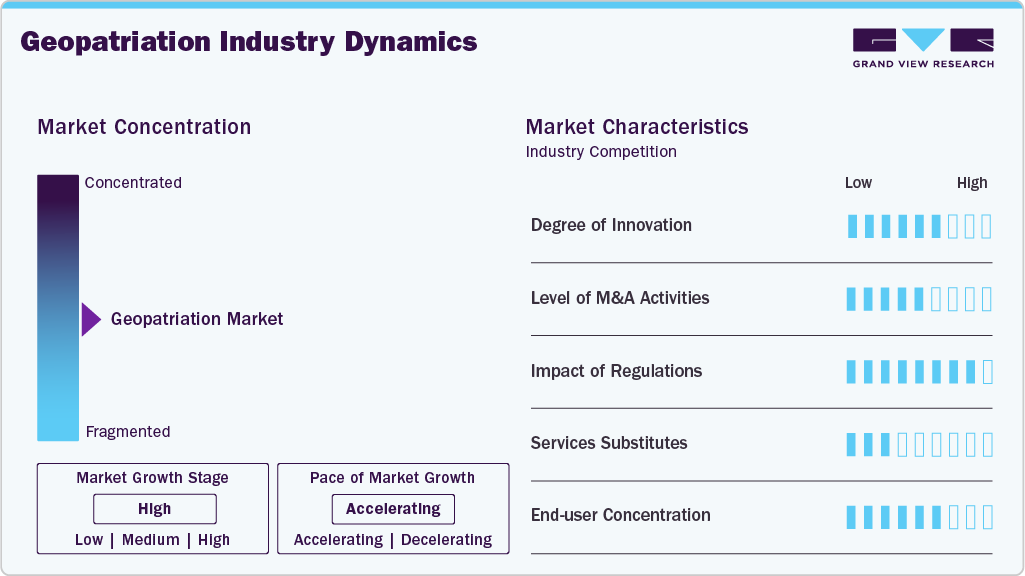
The geopatriation industry is characterized by strong innovation in sovereign cloud computing, secure data migration, compliance management, and localized hosting services. Strategic collaborations among cloud operators, telecommunications providers, government agencies, and cybersecurity firms are becoming increasingly important for expanding service capabilities and strengthening market presence. Vendors are focusing on enhancing data protection, operational resilience, and regulatory alignment to differentiate their offerings in an increasingly competitive environment. The growing adoption of domestic digital infrastructure and trusted technology frameworks is creating opportunities for emerging players alongside established market participants. Consequently, the geopatriation industry remains dynamic and competitive, with market influence distributed across a broad range of global and regional solution providers.
Service Type Insights
The relocation services segment led the market with the largest revenue share of 32.4% in 2025, driven by the growing need for seamless workforce mobility and cross-border employee transition support. Organizations are increasingly investing in employee relocation services to facilitate the repatriation of talent, ensure business continuity, and address evolving geopolitical and regulatory requirements. The rising adoption of global talent management strategies and international workforce restructuring initiatives is further strengthening demand for comprehensive relocation solutions. Companies are prioritizing end-to-end relocation support, including immigration assistance, housing coordination, destination services, and cultural integration programs to improve employee experience and operational efficiency. As enterprises continue to realign their workforce strategies in response to changing economic and geopolitical conditions, demand for global mobility services and relocation management solutions is expected to remain a key growth driver for the geopatriation industry.
The workforce compliance services segment is anticipated to grow at the fastest CAGR during the forecast period, owing to the increasing demand for regulatory compliance, cross-border employment governance, and workforce risk management. Organizations are placing greater emphasis on global workforce compliance solutions to navigate evolving labor laws, immigration regulations, tax obligations, and data protection requirements across multiple jurisdictions. The growing complexity of international workforce relocation and repatriation processes is driving the adoption of specialized compliance services that help reduce legal and operational risks. Enterprises are increasingly leveraging compliance management platforms and advisory services to ensure adherence to country-specific employment regulations while maintaining workforce mobility. As governments continue to strengthen labor and immigration frameworks, demand for workforce compliance solutions is expected to accelerate, supporting the expansion of the global market.
Organization Size Insights
The large enterprises segment accounted for the largest market revenue share in 2025, driven by the increasing adoption of global mobility and employee relocation programs across multinational organizations. Large enterprises are investing in workforce mobility solutions to efficiently manage international talent movements, support business expansion, and strengthen workforce continuity. The growing demand for cross-border workforce management and international assignment management is encouraging organizations to implement comprehensive relocation and employee support services. In addition, evolving immigration regulations, tax compliance requirements, and talent retention initiatives are accelerating the adoption of relocation management services and expatriate management solutions. As companies continue to optimize their global talent strategies, demand for global workforce solutions and workforce relocation services is expected to remain a key growth driver for the segment.
The SME segment is anticipated to grow at the fastest CAGR during the forecast period, driven by the increasing adoption of global mobility solutions, international talent acquisition strategies, and cross-border business expansion initiatives. Small and medium-sized enterprises are increasingly utilizing employee relocation services and workforce transition programs to access skilled talent, establish overseas operations, and strengthen their competitive position in global markets. The growing availability of cost-effective relocation management services, immigration support, and workforce compliance solutions is making geopatriation services more accessible to SMEs. In addition, the rise of remote work models and international hiring practices is encouraging businesses to invest in structured workforce mobility and employee onboarding solutions. As SMEs continue to expand their global footprint, demand for talent mobility services, global workforce management, and employee relocation support is expected to drive sustained segment growth.
End Use Insights
The IT & telecommunications segment accounted for the largest market revenue share in 2025, primarily due to increased demand for global talent mobility, international workforce deployment, and cross-border employee relocation programs. Technology and telecom companies are actively leveraging employee relocation services to address skilled talent shortages, support global expansion strategies, and enhance workforce flexibility across multiple regions. The rapid growth of digital transformation initiatives, cloud computing projects, artificial intelligence development, and telecommunications infrastructure investments is further driving the need for specialized workforce movement solutions. In addition, organizations are prioritizing international assignment management and workforce compliance services to ensure seamless employee transitions while adhering to regional regulatory requirements. As competition for highly skilled technology professionals intensifies, demand for workforce mobility solutions, talent relocation services, and global workforce management is expected to remain strong within the sector.
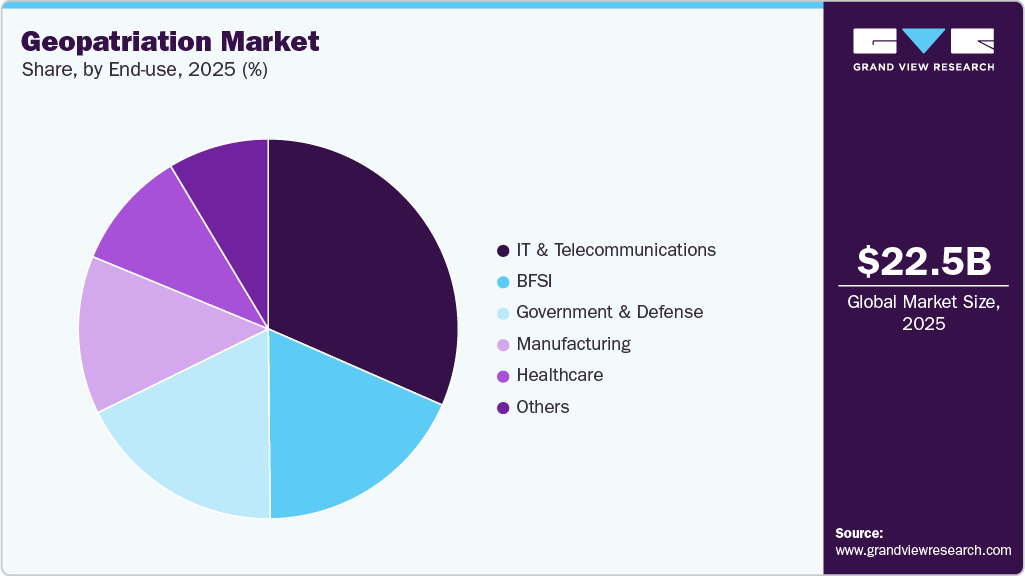
The government & defense segment is anticipated to grow at the fastest CAGR during the forecast period, driven by increasing investments in workforce relocation services, strategic personnel deployment, and international mission support programs. Government agencies and defense organizations are increasingly adopting global mobility solutions to efficiently manage diplomatic assignments, defense cooperation initiatives, and cross-border workforce transitions. The growing emphasis on national security, talent retention, and operational readiness is accelerating demand for specialized employee relocation and workforce management services. In addition, evolving regulatory requirements, international partnerships, and overseas infrastructure projects are creating a greater need for workforce compliance services and relocation support solutions. As governments continue to expand global engagement and modernize defense, demand for talent mobility services, international workforce management, and employee transition programs is expected to support sustained segment growth.
Regional Insights
North America dominated the global geopatriation market with the largest revenue share of 37.1% in 2025, supported by growing adoption of sovereign data infrastructure, digital asset repatriation, national cloud ecosystems, and cyber resilience frameworks. Enterprises and public-sector organizations are increasingly relocating critical digital resources to domestically controlled environments to strengthen governance and security. The region is witnessing substantial investments in trusted computing environments and locally governed cloud platforms. Strong regulatory oversight and advanced digital infrastructure continue to position North America as a leading market for geopatriation initiatives.

U.S. Geopatriation Market Trends
The geopatriation market in the U.S. accounted for the largest market revenue share in North America in 2025, driven by increasing investments in trusted cloud environments, strategic data control, critical infrastructure security, and domestic AI ecosystems. Federal agencies and enterprises are prioritizing localized digital operations to enhance national security and reduce exposure to external technology risks. The growing focus on secure data processing and sovereign technology capabilities is accelerating adoption across multiple industries. Furthermore, public and private sector investments in resilient digital infrastructure are expected to support long-term market expansion.
Europe Geopatriation Market Trends
The geopatriation market in Europe is expected to grow significantly over the forecast period, supported by rising demand for digital autonomy, regional data governance, privacy-centric infrastructure, and sovereign technology platforms. Organizations are increasingly localizing data operations to align with evolving compliance requirements and strengthen control over strategic information assets. Government-led initiatives to build independent digital ecosystems are driving investments in localized cloud and cybersecurity capabilities. The region's strong regulatory environment continues to encourage widespread adoption of geopatriation solutions.
Asia Pacific Geopatriation Market Trends
The geopatriation market in the Asia Pacific is anticipated to grow at the fastest CAGR over the forecast period, driven by expanding data localization frameworks, national digital transformation programs, domestic cloud adoption, and localized AI infrastructure. Governments across the region are strengthening digital sovereignty policies to improve control over critical information and technology assets. Rapid economic digitization and increasing investments in secure digital ecosystems are creating significant opportunities for market participants. The growing emphasis on self-reliant technology development and regulatory compliance is expected to accelerate the adoption of geopatriation across the region.
Key Geopatriation Company Insights
Some of the key companies in the geopatriation industry include Microsoft, Amazon Web Services (AWS), Google Cloud, Oracle, and IBM. and, among others.
-
Microsoft is a global technology company that provides cloud computing, cybersecurity, and enterprise software solutions through its Azure platform. The company plays a significant role in the global market by offering sovereign cloud capabilities and region-specific data residency options. Its portfolio supports organizations seeking greater control over data storage, processing, and regulatory compliance requirements. Microsoft specializes in sovereign cloud infrastructure, digital sovereignty frameworks, and localized cloud environments for government and regulated industries.
-
Google Cloud provides cloud computing, artificial intelligence, analytics, and cybersecurity solutions for enterprises and public-sector organizations. The company has expanded its presence in the global market through sovereign cloud partnerships and regional data governance offerings. Its services enable organizations to maintain operational control while addressing evolving data sovereignty and compliance requirements. Google Cloud specializes in secure cloud operations, regionalized data management, and sovereign digital infrastructure solutions.
Key Geopatriation Companies
The following key companies have been profiled for this study on the geopatriation market.
-
Microsoft
-
Amazon Web Services (AWS)
-
Google Cloud
-
Oracle
-
IBM
-
SAP
-
Thales
-
OVHcloud
-
Alibaba Cloud
-
Tencent Cloud
-
T-Systems
-
Equinix.
Competitive Benchmarking
Operating Strategies
Competitive Edge
Weaknesses
Mature Players: Microsoft; Amazon Web Services (AWS); Google Cloud; Oracle; IBM.
- Mature players are expanding sovereign cloud offerings, localized data hosting capabilities, and jurisdiction-specific cloud regions to address evolving data sovereignty requirements.
- Mature players are developing multi-cloud governance platforms, hybrid cloud architectures, and workload portability solutions to support enterprise geopatriation requirements.
- Strong global infrastructure networks, extensive compliance expertise, and advanced cloud management platforms support large-scale geopatriation deployments.
- Comprehensive security portfolios, threat intelligence capabilities, and established compliance frameworks enable large-scale secure deployments.
- Significant capital requirements for regional infrastructure expansion and complex regulatory compliance obligations may affect operational flexibility.
- Managing AI governance requirements across multiple jurisdictions can increase operational complexity and compliance costs.
Emerging Players: OVHcloud; Alibaba Cloud; Tencent Cloud; T-Systems; Clever Cloud.
- Emerging players are strengthening regional cloud ecosystems and localized infrastructure services to capitalize on increasing demand for sovereign digital environments.
- Emerging vendors are focusing on regional AI platforms, domestic data processing frameworks, and localized AI deployment environments.
- Vendor-neutral approaches, customized cloud environments, and competitive pricing structures enhance market appeal.
- Agile innovation capabilities and stronger focus on regional digital sovereignty initiatives support market adoption.
- Limited international infrastructure presence and lower enterprise penetration compared to hyperscale providers may restrict expansion opportunities.
- The complexity of integrating legacy enterprise environments with modern security architectures can create deployment challenges.
Recent Developments
-
In January 2026, Amazon Web Services (AWS) introduced the AWS European Sovereign Cloud to address growing demand for data sovereignty and localized cloud operations across Europe. The initiative enables organizations to store and manage sensitive data within European Union jurisdictions while maintaining compliance with regional regulations. The launch reflects the increasing adoption of sovereign cloud strategies as governments and enterprises seek greater control over critical digital assets. It also highlights the growing importance of geopatriation, digital sovereignty, and regulatory-driven investments in cloud infrastructure in the European market.
-
In May 2026, Tata Consultancy Services (TCS) expanded its SovereignSecure Cloud offering into the European Union to support growing demand for digital sovereignty and localized cloud infrastructure. The solution enables governments and regulated enterprises to maintain greater control over data, applications, and digital operations within EU jurisdictions while meeting evolving regulatory requirements. The platform integrates sovereign cloud capabilities, country-specific localization frameworks, and governance controls designed to enhance compliance and operational resilience. This expansion highlights increasing investment in sovereign cloud ecosystems, data localization strategies, and geopatriation initiatives across Europe.
Geopatriation Market Report Scope
Report Attribute
Details
Market size value in 2025
USD 22.5 billion
Market size value in 2026
USD 27.4 billion
Market size value in 2033
USD 123.2 billion
Growth rate
CAGR of 23.9% from 2026 to 2033
Base year for estimation
2025
Historical data
2021 - 2024
Forecast period
2026 - 2033
Quantitative units
Revenue in USD million/billion, and CAGR from 2026 to 2033
Report coverage
Revenue forecast, company ranking, competitive landscape, growth factors, and trends
Segment scope
Service type, organization size, end use, region
Region scope
North America; Europe; Asia Pacific; Latin America; Middle East & Africa
Country scope
U.S.; Canada; Mexico; Germany; UK; France; China; Japan; India; Australia, South Korea, Brazil, KSA, UAE, South Africa
Key companies profiled
Microsoft, Amazon Web Services (AWS); Google Cloud; Oracle; IBM; SAP; Thales; OVHcloud; Alibaba Cloud; Tencent Cloud; T-Systems; Equinix
Customization scope
Free report customization (equivalent up to 8 analysts’ working days) with purchase. Addition or alteration to country, regional & segment scope
Pricing and purchase options
Avail customized purchase options to meet your exact research needs. Explore purchase options
Global Geopatriation Market Report Segmentation
This report forecasts revenue growth at global, regional, and country levels and provides an analysis of the latest industry trends and opportunities in each of the sub-segments from 2021 to 2033. For this study, Grand View Research has segmented the global geopatriation market report based on the service type, organization size, end use, and region.

-
Service Type Outlook (Revenue, USD Billion, 2021 - 2033)
-
Relocation Services
-
Immigration & Visa Management
-
Tax & Payroll Services
-
Workforce Compliance Services
-
Mobility Consulting
-
Others
-
-
Organization size Outlook (Revenue, USD Billion, 2021 - 2033)
-
Large Enterprises
-
SMEs
-
-
End Use Outlook (Revenue, USD Billion, 2021 - 2033)
-
IT & Telecommunications
-
BFSI
-
Manufacturing
-
Healthcare
-
Government & Defense
-
Others
-
-
Regional Outlook (Revenue, USD Billion, 2021 - 2033)
-
North America
-
U.S.
-
Canada
-
Mexico
-
-
Europe
-
UK
-
Germany
-
France
-
-
Asia Pacific
-
China
-
Japan
-
India
-
Australia
-
South Korea
-
-
Latin America
-
Brazil
-
-
Middle East & Africa (MEA)
-
KSA
-
UAE
-
South Africa
-
-
Delivered Customizations
This report has been delivered with the following In-depth customizations
Client Objective
Custom Research Modules Delivered
Strategic Value / Business Impact
Geopatriation Strategy & Digital Sovereignty Planning
Data sovereignty and localization demand analysis
Sovereign cloud adoption and migration assessment
Regulatory compliance and jurisdictional risk evaluation
Competitive benchmarking of sovereign cloud and geopatriation providers
Identified high-growth opportunities in sovereign cloud and localized infrastructure markets
Supported enterprise digital sovereignty and compliance strategies
Enhanced competitive positioning in regulated industries
Enabled data-driven cloud repatriation and infrastructure planning decisions
Sovereign Cloud Infrastructure & Technology Assessment
Sovereign cloud platform benchmarking
Multi-cloud and hybrid cloud repatriation analysis
Digital sovereignty framework and governance assessment
AI sovereignty and localized data ecosystem evaluation
Identified emerging technology and infrastructure investment opportunities
Supported sovereign cloud transformation initiatives
Improved operational resilience and digital asset control planning
Strengthened long-term cloud and infrastructure investment decisions
Data Governance, Compliance & Cyber Resilience Intelligence
Data residency and regulatory compliance assessment
Cybersecurity, digital trust, and infrastructure resilience analysis
Cross-border data transfer and governance evaluation
Sovereign infrastructure risk and dependency benchmarking
Improved regulatory compliance and governance visibility
Identified infrastructure optimization and localization opportunities
Reduced operational, compliance, and cybersecurity risks
Supported resilient, secure, and jurisdiction-controlled digital infrastructure strategies
Frequently Asked Questions About This Report
The global geopatriation market size was estimated at USD 22.5 billion in 2025 and is expected to reach USD 27.4 billion in 2026.
The global geopatriation market is expected to grow at a compound annual growth rate of 23.9% from 2026 to 2033, reaching USD 123.2 billion by 2033.
North America dominated the geopatriation market, accounting for over 37% in 2025, driven by accelerating enterprise demand for data sovereignty, stringent regulatory compliance requirements, and the growing repatriation of critical workloads from public cloud environments to domestically governed infrastructure.
Some key players operating in the geopatriation market include Microsoft, Amazon Web Services (AWS), Google Cloud, Oracle, IBM, SAP, Thales, OVHcloud, Alibaba Cloud, Tencent Cloud, T-Systems, and Equinix
Key factors driving market growth include increasing concerns about data sovereignty and regulatory compliance, rising cloud cost-optimization initiatives, growing geopolitical risks affecting cross-border data flows, and accelerating enterprise adoption of domestically controlled digital infrastructure.
About the Author(s)
Next Generation Technologies Research Team
Technology · Next Generation TechnologiesThis report was authored by the next generation technologies research team at Grand View Research - comprising two research analysts, one senior research analyst, and one industry expert - with specialized expertise in the next generation technologies segment of the technology industry. All findings are based on proprietary technology databases, executive interviews, and regulatory analysis, subject to internal peer review prior to publication.
Last Updated:
Speak to Analyst

Need a Tailored Report?
Customize this report to your needs — add regions, segments, or data points, with 20% free customization.
Or view our licence options:


ISO 9001:2015 & 27001:2022 Certified
We are GDPR and CCPA compliant! Your transaction & personal information is safe and secure. For more details, please read our privacy policy.












