
- Home
- »
- Petrochemicals
- »
-
Grease Market Size, Share & Trends Report, 2026-2033GVR Report cover

Grease Market (2026 - 2033)
Size, Share & Trends Analysis Report By Form (Mineral, Synthetic), By Application (Construction, Metal & Mining), By Region (North America, Europe, Asia Pacific, Central & South America, Middle East & Africa), And Segment Forecasts
Market Size, 2025
$6.3BMarket Estimate, 2026
$6.5BMarket Forecast, 2033
$8.8BCAGR, 2026–2033
4.4%Grease Market Summary
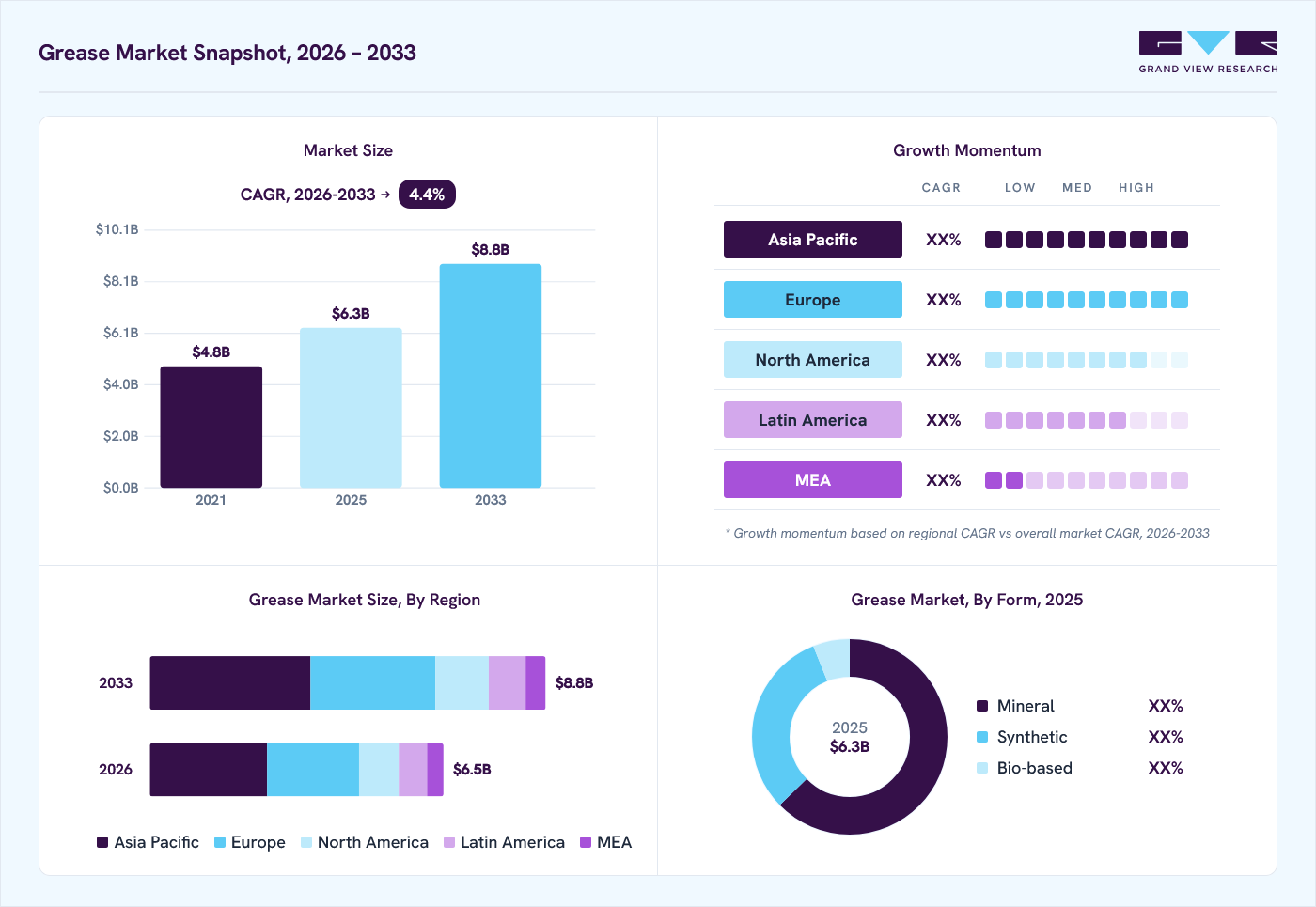
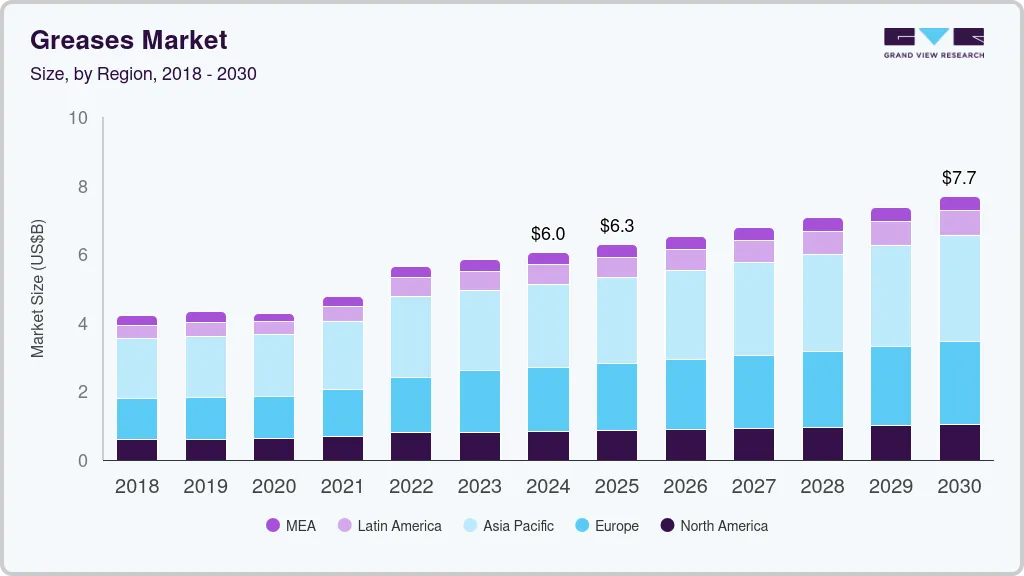
The global grease market size was valued at USD 6.3 billion in 2025 and is projected to grow from USD 6.5 billion in 2026 to USD 8.8 billion by 2033, at a CAGR of 4.4% from 2026 to 2033. Asia Pacific market dominated, with a revenue share of 39.9% in 2025. Due to the surging demand for vehicles and spare parts, the increasing demand for automotive grease worldwide is expected to contribute to market growth in the coming years.
 Source: Grand View Research, IR Documents, Primary Interviews, Paid DatabasesTo learn more about this report,
 Download Free Sample Report
Key Market Trends & Insights
- By form: Mineral held a dominant position, contributing 62.6% of total revenue in 2025.
- By application: Manufacturing segment accounted for the largest revenue of 51.6% in 2025.
Regional Highlights
- Largest regional market: Asia Pacific (39.9% revenue share, 2025)
- By country: China held the largest market share in 2025.
Market Size & Forecast
- Market size in 2025: USD 6.3 Billion
- Estimated market size in 2026: USD 6.5 Billion
- Projected market size by 2033: USD 8.8 Billion
- CAGR (2026-2033): 4.4%
Three ways to get this report
Buy it, customize it, or ask a question.Ask an Analyst
Analyst response in 1 business day
- AccessReport author, directly
- Reply timeWithin 1 working day
- No sales callDirect answer only
- FormatEmail reply
- CostFree, no cost
Get the Full Report
What the study covers
- FormatsPDF · Excel · Dashboard
- Timeline2026–2033 annual, 2025 base
- Coverage20+ countries, 5 regions
- Companies10+ key players profiled
Customize the Report
20% free customization
- IncludeCountries, segments, points
- TailorTo your product definition
- ExtendDeeper competitor detail
- OrA fully bespoke study
- Turnaround5–10 working days
The construction industry is one of the major consumers of the product across the world. This industry uses the product to lubricate and protect the moving parts of heavy construction equipment and machinery, including excavators, bulldozers, cranes, loaders, and dump trucks.
It reduces friction, wear, and corrosion in components such as bearings, gears, bushings, pins, and hydraulic cylinders, thereby extending the lifespan of different equipment and improving their performance. There are three major forms: bio-based, mineral, and synthetic. The product is mainly classified based on the raw material used in manufacturing. Bio-based products include raw materials such as vegetable oil. Vegetable oils such as soybean, rapeseed, sunflower, and palm oil are among the most commonly used feedstocks for bio-based products. Among these, soybean oil is widely utilized for its availability, low cost, and suitable viscosity characteristics for lubricant applications.
 To learn more about this report, Download Free Sample Report
Formulation development involves designing the product composition by blending synthetic base oils, thickeners, and additives in specific proportions. The formulation is optimized to achieve the desired viscosity, temperature stability, load-carrying capacity, corrosion protection, and other performance attributes required for the intended application.
The global market is changing in terms of raw materials owing to the rising demand for bio-based products. APAC has emerged as one of the largest product consumers due to the region's rapidly growing manufacturing, construction, metal & mining industries, and industrial development. The Asia Pacific product market has started mirroring the American and European regulatory systems, and thus, countries like Japan and South Korea are emphasizing eco-labeled products.
The global greases and lubricants industry is governed by stringent regulations, ranging from their production to use & disposal. Furthermore, the additives used in manufacturing grease are checked for their toxicity and potential to harm the environment. Some of the regulatory bodies that influence market dynamics include the Occupational Safety & Health Administration (OSHA), Environmental Protection Agency (EPA), and Registration, Evaluation, Authorization and Restriction of Chemicals (REACH) standards.
Market Dynamics
The grease market is experiencing steady growth, driven by increasing demand for high-performance lubrication solutions across automotive, industrial manufacturing, mining, construction, and renewable energy sectors. As industrial equipment becomes more automated and operates under higher loads, end users are prioritizing greases that offer extended relubrication intervals, superior wear protection, and enhanced resistance to water, oxidation, and extreme temperatures. At the same time, the growing adoption of electric vehicles, wind turbines, and centralized lubrication systems is creating demand for application-specific grease formulations. However, volatility in base oil and lithium prices, along with tightening environmental regulations on lubricant formulations, continues to influence production costs and product development strategies. Consequently, manufacturers are increasingly investing in advanced thickener technologies, synthetic grease formulations, and sustainable lubricants to improve product performance and strengthen their competitive position.
Drivers - Rising Demand for High-Performance Lubrication in Industrial Equipment and Heavy Machinery
The expansion of industrial manufacturing, mining, construction, and material handling operations is driving demand for high-performance greases that can operate reliably under severe mechanical loads and harsh environmental conditions. Unlike conventional lubricating oils, greases provide long-lasting lubrication in components where relubrication is difficult, such as bearings, gears, and sealed-for-life equipment. Industries are increasingly adopting premium greases with enhanced water resistance, oxidation stability, and wear protection to reduce unplanned downtime, extend equipment service life, and lower maintenance costs. This shift toward reliability-centered maintenance is increasing the consumption of specialty and synthetic greases across industrial applications.
The transition toward predictive maintenance and higher equipment efficiency is further reinforcing grease demand. Organizations are investing in automated lubrication systems and condition monitoring to improve asset utilization and reduce lifecycle costs. According to the International Organization for Standardization (ISO), effective lubrication is a fundamental element of asset management and equipment reliability, while the National Lubricating Grease Institute (NLGI) highlights that appropriate grease selection and maintenance significantly improve bearing performance and operational life. As manufacturers continue to prioritize operational efficiency and asset reliability, demand for advanced grease formulations is expected to grow across both developed and emerging industrial markets.
The grease market is constrained by fluctuations in the prices of key raw materials, particularly base oils and thickeners such as lithium hydroxide, calcium, and aluminum compounds. Lithium-based greases account for a significant share of industrial and automotive grease consumption due to their excellent thermal stability and water resistance. However, increasing demand for lithium from the electric vehicle battery industry has intensified supply pressures, resulting in price volatility for lithium compounds. This directly affects grease manufacturers' production costs and creates challenges in maintaining stable pricing for end users.
Base oil prices remain closely linked to crude oil market dynamics, geopolitical developments, and refinery operating rates, making production costs susceptible to supply chain disruptions. Since many industrial customers procure greases through long-term contracts, manufacturers often have limited flexibility to pass on sudden increases in raw material costs. Consequently, prolonged feedstock price volatility can compress profit margins, delay procurement decisions, and encourage end users to optimize lubricant consumption, thereby restraining market growth.
Opportunity - Growing Deployment of Wind Energy Infrastructure Creating Demand for Specialty Greases
The global expansion of wind energy installations presents a significant growth opportunity for the grease market. Wind turbines operate under continuous mechanical stress and are exposed to extreme temperatures, humidity, and varying environmental conditions, making high-performance greases essential for lubricating main bearings, pitch bearings, yaw systems, and gearbox components. As countries accelerate investments in renewable energy to achieve decarbonization targets, the installation of both onshore and offshore wind farms is increasing, creating sustained demand for specialty greases with superior oxidation stability, water resistance, and extended service life.
Wind farm operators are increasingly focused on minimizing maintenance costs and maximizing turbine availability, particularly for offshore installations where servicing is complex and expensive. This is driving the adoption of synthetic and long-life grease formulations that enable extended relubrication intervals and improve equipment reliability. According to the International Energy Agency (IEA), global wind capacity continues to expand as renewable energy deployment accelerates, while the Global Wind Energy Council (GWEC) projects sustained additions of new wind power capacity over the coming years. These trends are expected to create long-term opportunities for grease manufacturers to develop application-specific products for the renewable energy sector.
Market Concentration & Characteristics
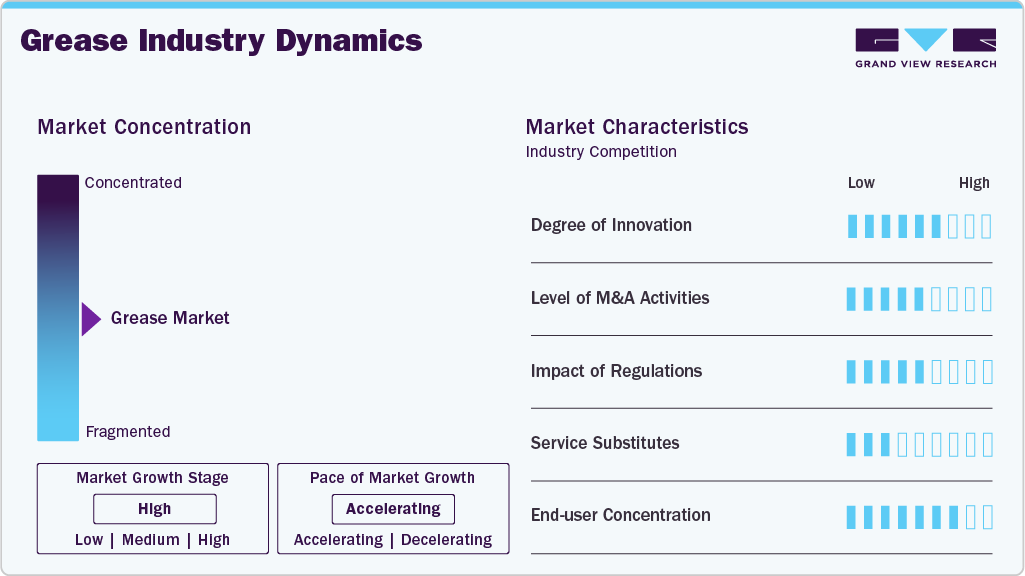
The market is moderately fragmented, and players aim to achieve optimum business growth and strong market positioning through production capacity expansions, new product development, and research & development. For instance, in 2024, Shell Lubricants (a subsidiary of Shell plc) finalized the acquisition of MIDEL and MIVOLT, both United Kingdom-based companies, from Manchester's M&I Materials Ltd. This acquisition marks Shell's commitment to produce, distribute, and promote the MIDEL and MIVOLT product ranges, enhancing its worldwide lubricants portfolio.
Manufacturers have anticipated a huge gap in product and technology development; thus, they are investing in research & development to add new products to their portfolios and develop better technology for various end-use industries of the product. For instance, in 2024, GB Lubricants introduced its latest innovation, GB Super Universal Tractor Oil 15W-30. This multifunctional oil, designed for farm machinery, is formulated with top-grade virgin mineral base oils and advanced additive systems. It ensures optimal lubrication for various tractor components. In addition, Canoil Canada Ltd. launched different products in 2022-23, including lubricants, greases, and metalworking oils.
 To learn more about this report, Download Free Sample Report
Shell plc, Exxon Mobil Corporation, Chevron Corporation, FUCHS, and TotalEnergies, among others, are the key manufacturers operating in the product market. These companies have a stronghold in emerging markets and export their products to various end use applications. Manufacturers are mainly adopting strategies such as partnerships to increase their market footprint. For instance, in 2022, NYCO declared the renewal of its partnership agreement with easyJet, ensuring the continued provision of TURBONYCOIL 600 for the airline's Airbus A320 CEO and NEO family aircraft fleet.
Form Insights
By form, the mineral held a dominant position, contributing 62.6% of total revenue in 2025, owing to their better solubility with additives and cost-effectiveness. Mineral-based products are considered inherently biodegradable (degrading > 20 percent to < 60 percent within 28 days) if exposed to the natural environment. A mineral-based product is a lubricating grease that utilizes mineral oil as its fluid component. These products are widely used in various industrial applications due to their satisfactory performance and versatility. Mineral-based products consist of three main components: a base oil, a thickener, and additives. The base oil in mineral-based products is typically a mineral oil, which provides lubrication and reduces friction between moving parts.
Synthetic products consist of synthetic oils containing a mixture of synthetic thickeners, or bases, in petroleum oils. Synthetic products are available in water-soluble and water-resistant forms and may be used over a wide temperature range. For example, AMSOIL INC., a grease manufacturer, offers water-resistant synthetic greases for various end use industries, including manufacturing and mining. Compared with mineral-oil-based lubricants, synthetic lubricants provide better resistance to extreme temperatures and environments. They tend to resist oxidation better, allowing for a longer shelf life.
Bio-based products are formulated using biodegradable and renewable feedstock or base stock. To be termed bio-based, the products don’t have to be entirely composed of unadulterated vegetable oil; rather, only the base materials need to be renewable. Different companies manufacturing bio-based products use different feedstocks; for instance, BIOBLEND SUATAINABLE PERFORMANCE, a U.S.-based manufacturer of bio-based greases, uses natural plant esters as their base oils, which makes them readily biodegradable.
Application Insights
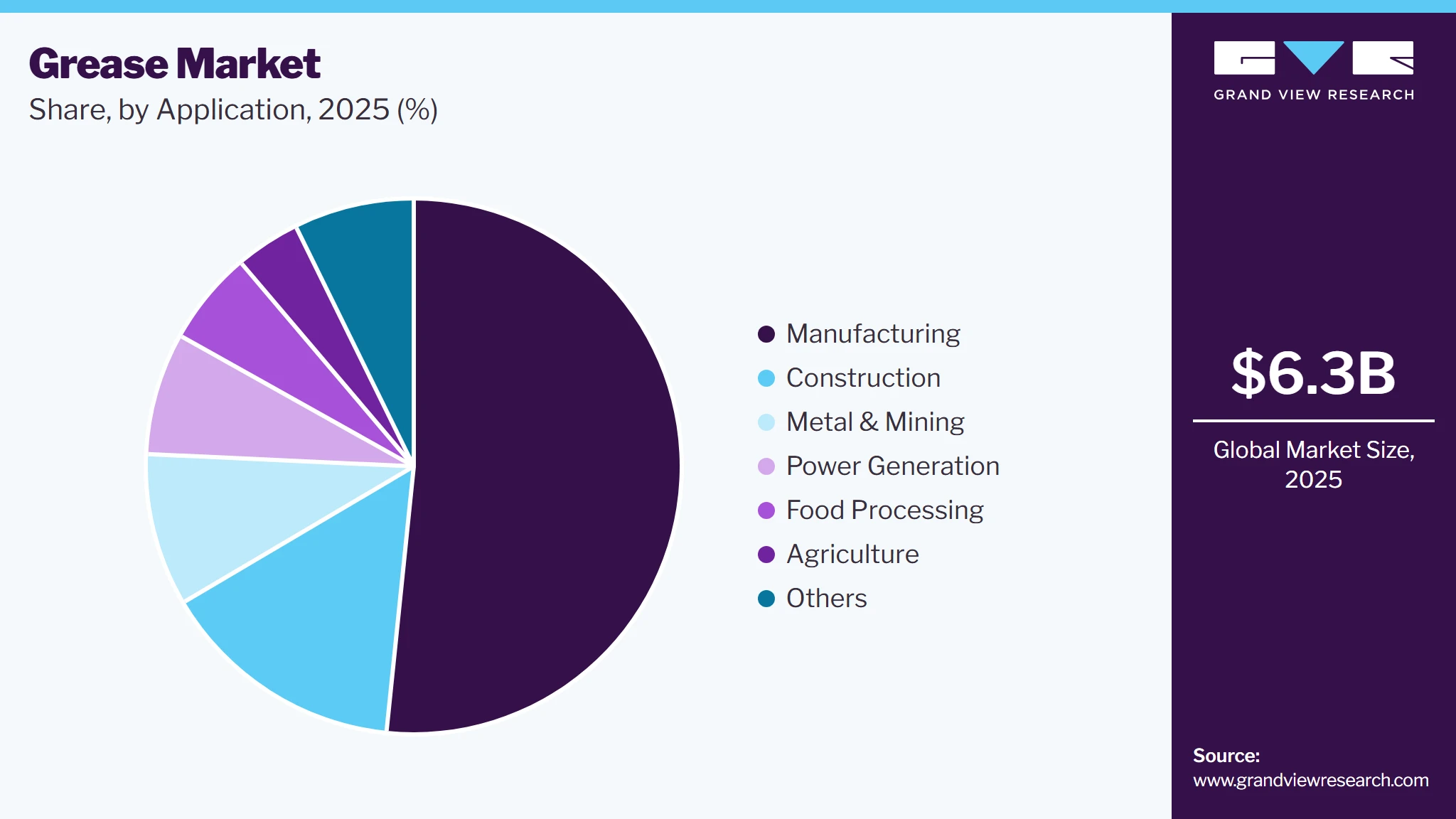
Manufacturing segment accounted for the largest revenue of 51.6% in 2025. Grease plays a crucial role in manufacturing heavy machinery by providing lubrication to moving parts, reducing friction, preventing wear and tear, and ensuring smooth operation. Proper lubrication with grease prevents heavy machinery components from grinding against each other, which can cause damage and release harmful contaminants into the system.
 To learn more about this report, Download Free Sample Report
Greases form a protective film between moving parts, reducing friction and minimizing wear and tear. High-quality products can lubricate isolated or relatively inaccessible components for extended periods without frequent replenishment. This is especially beneficial in heavy machinery that operates under extreme conditions such as high temperatures, pressures, shock loads, or slow speeds under heavy loads.
Greases play a crucial role in the construction industry, providing lubrication and protection to various mechanical components and equipment. They are extensively used to maintain construction equipment, such as excavators, cranes, bulldozers, and loaders. These heavy machines require regular lubrication to ensure smooth operation and prevent wear and tear. The products are applied to the moving parts, such as bearings, gears, and joints, to reduce friction and extend the lifespan of the equipment.
Regional Insights
The North American market for grease is primarily driven by growing product usage in key end use sectors such as construction, food processing, and power generation. Construction is one of the key end users in the region, which mainly depends on grease products for heavy equipment like bulldozers, excavators, and cranes, which require robust lubrication in high-load, high-speed applications. In addition, the "Affordable Healthcare Act" in 2023 is expected to stimulate the construction of a greater number of healthcare units and hospitals, which, in turn, is expected to boost the demand for products in the region over the forecast period.
National policies promoting the housing sector's recovery are expected to positively impact future construction trends. Reconstruction activities in the U.S., coupled with infrastructure development in Canada and Mexico due to rapid industrialization, are expected to provide immense market potential in North America over the forecast period, thus increasing the demand for the product in the region.
U.S. Grease Market Trends
The U.S construction industry is growing rapidly due to positive commercial real estate market fundamentals and the country’s strong economy. The government provides more funding for building schools, hospitals, and other public projects. A fewupcoming projects in the U.S. include the South San Francisco Civic Center campus construction, the Second Avenue Subway Construction Project, the O’Hare Airport Construction Project, and the LaGuardia Airport Construction Project. These projects are expected to further propel construction working hours, leading to an increase in the operation time of the machinery used in construction activities and, therefore, increasing product consumption in the coming years.
Asia Pacific Grease Market Trends
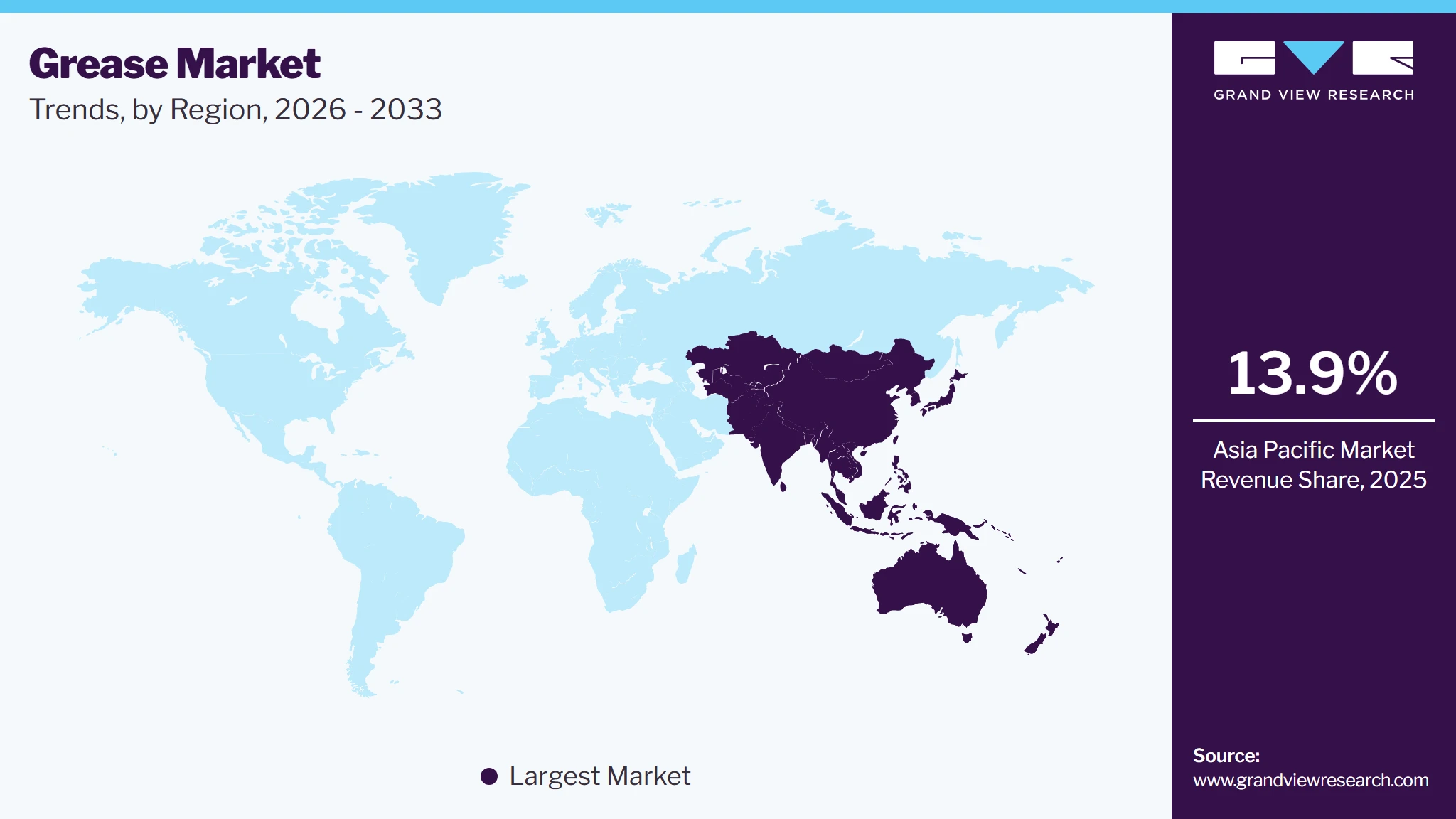
Asia Pacific dominated the grease market with the highest revenue share of 39.9% in 2025, owing to construction activities and growing demand for products from the automotive sector in emerging countries such as India, Japan, and South Korea. These factors are expected to drive the market over the forecast period. According to the data published by the International Organization of Motor Vehicle Manufacturers, Asia Pacific is the largest transportation market in the world, with numerous automobile manufacturers, thus ensuring a steady growth in automobile production in the region. Asia Pacific witnessed a growth of 10% in vehicle production in 2023 compared to 2022, and the region’s automotive production reached 55.1 million units in 2023, establishing it as a major driver for the product market in the region.
 To learn more about this report, Download Free Sample Report
China dominated the Asia Pacific grease market in 2025. China grease market is expected to be one of the promising product markets in the region on account of the government’s support to promote investments in the manufacturing sector. Several companies are expanding or setting up new manufacturing facilities due to low labor costs and the country's ease of raw material procurement. The growing manufacturing sector is expected to propel the demand for products in automotive, construction, electrical & electronics, and other industries.
The grease market in India is expected to witness a substantial growth rate. According to India Brand Equity Foundation, the country is one of the prominent automotive manufacturers globally, with a total production of three-wheelers, passenger vehicles, quadricycles, and two-wheelers accounting for 38,59,030 units in 2023. The country's automotive sector received a cumulative equity FDI inflow of around USD 33.77 billion between April 2000 and September 2022. This positive outlook for the automotive industry in the country is likely to propel product demand in the coming years.
Europe Grease Market Trends
The grease market in Europe is expected to grow significantly as Europe is a major hub for automotive production. Therefore, the demand for automotive greases is expected to be substantial. Grease is mainly used as a lubricant for machinery used in automotive manufacturing. Surging automobile production in Germany, Hungary, Romania, Austria, and the UK, along with strong OEM automotive manufacturing bases in the region, is expected to drive the demand for grease. A few top European OEMs include Mercedes-Benz Group AG, Volkswagen AG, Stellantis NV, Bayerische Motoren Werke AG, and Renault SA.
Germany grease market is experiencing lucrative demand growth. The German automotive industry is one of the largest in the world. According to the KBA federal transport authority, new car sales in Germany accounted for a 7.3% share in 2023 and reached a total of 2.8 million vehicles. Germany sold over 524,000 full-electric cars in 2023. According to Trading Economics, car production in Germany increased to 312,100 units in January from 258,254 units in December 2023. Thus, the rising automotive production, import, and export of vehicles positively impact the automotive manufacturing industry in Germany, propelling the demand for greases and related products. This is expected to significantly contribute to the demand for greases in the country over the forecast period.
The grease market in the UK is influenced by various factors, including its application in tire manufacturing. Greases are widely used as a curing agent in tire manufacturing. Factors such as the increasing number of on-road vehicles globally and the need for tire replacements are expected to drive the UK’s demand for greases.
Latin America Grease Market Trends
The grease market in Latin America is expected to grow substantially over the forecast period due to the region’s high economic growth in the past few years. Increasing consumer disposable income has surged the demand for automobiles, which is expected to augment the demand for automotive parts and their manufacturing, further leading to a positive impact on the product over the forecast period. Significant new investments in housing and public works are expected to boost infrastructure growth in Colombia, thereby augmenting the product demand over the next seven years. Thus, the increasing number of infrastructure development projects is expected to drive the demand for greases, which are heavily used in the small and large machinery operating on construction sites.
Brazil grease market growth is projected to surge in the upcoming years. Brazil is the leading producer of automobiles in Central & South America and has emerged as the ninth-largest automobile producer in the world. According to the International Organization of Motor Vehicle Manufacturers, automotive production in Brazil witnessed an increase of 3.27% in 2023 compared to 2021. Thus, the rising production of vehicles is further expected to increase the demand for more manufacturing facilities, further leading to a high demand for greases in the country.
Middle East & Africa Grease Market Trends
The grease market in the Middle East and Africa is expected to grow substantially over the forecast period, owing to the improvement in oil pricing, as per the IMF. The market is likely to be driven by the expanding oil and gas industry and increasing construction expenditures in the region. Greases are used in heavy machinery used in metal mining, gas exploration, and oil extraction activities. Thus, the growing demand for oil and gas is expected to increase the consumption of greases in the Middle East.
Saudi Arabia grease market is experiencing a significant rise in product demand. The country's construction sector has grown substantially, driven by mega projects such as the Red Sea Project and the Qiddiya entertainment city. These developments have increased the need for greases used in construction machinery. Mega construction projects and oil refining facilities are major end-users of greases in the country. Several infrastructure projects have been sanctioned by the Saudi government, further developing the country's infrastructure sector.
Key Grease Company Insights
Some key players operating in the market include Shell plc, Exxon Mobil Corporation, Chevron Corporation, FUCHS, and TotalEnergies.
-
Established players compete and outplay the regional players by strategically integrating across the value chain to ensure seamless supply chain activities and reduce production and operating costs. In addition, companies involved in manufacturing greases develop new products and production technologies. Companies are also backwardly integrating to save the operationalcostsof raw material procurement.
-
For instance, companies such as Chevron Corporation, ExxonMobil Corporation, INEOS, and Shell Plc are backward integrated in the market's value chain and, hence, are involved in manufacturing different raw materials.
Key Grease Companies
The following key companies have been profiled for this study on the grease market.
-
NYCO
-
Battenfeld-Grease & Oil Corporation of New York
-
RichardsApex, Inc.
-
Lubriplate Lubricants Company
-
GB Lubricants
-
Canoil Canada Ltd.
-
Eastern Oil Company
-
JAX Incorporated
-
Daubert Chemical Company
-
D-A Lubricant Company
-
Xaerus Performance Fluids, Inc.
-
MorOil Technologies
-
Royal High Performance Oil & Greases
-
Industrial Oils Unlimited
-
Primrose Oil Company, Inc.
-
Environmental Lubricants Manufacturing, Inc. (ELM)
-
Cadillac Oil
-
CONDAT
-
LUBRITA Europe B.V.
-
COGELSA Efficient Lubrication
-
Interflon
Competitive Benchmarking
Category
Operating Strategies
Competitive Edge
Weakness
Established Players (NYCO, Lubriplate Lubricants Company, GB Lubricants, JAX Incorporated, Daubert Chemical Company, D-A Lubricant Company, CONDAT, LUBRITA Europe B.V., COGELSA Efficient Lubrication, Interflon)
- Focus on expanding specialty grease portfolios, investing in R&D for high-performance and synthetic lubricants, strengthening distributor networks, securing long-term industrial supply agreements, and developing application-specific solutions for sectors such as food processing, mining, power generation, and manufacturing.
- Strong brand recognition, broad product portfolios, extensive technical expertise, established global or regional distribution networks, certifications for specialty applications (e.g., food-grade lubricants), and long-standing relationships with OEMs and industrial customers.
- Higher operating costs, significant investments required for regulatory compliance and product innovation, and exposure to fluctuations in base oil and specialty additive prices, which can impact margins.
Emerging Players (Battenfeld-Grease & Oil Corporation of New York, RichardsApex, Inc., Canoil Canada Ltd., Eastern Oil Company, Xaerus Performance Fluids, Inc., MorOil Technologies, Royal High Performance Oil & Greases, Industrial Oils Unlimited, Primrose Oil Company, Inc., Environmental Lubricants Manufacturing, Inc. (ELM), Cadillac Oil)
- Focus on regional market expansion, competitive pricing, customized lubrication solutions, niche industrial applications, and partnerships with local distributors to strengthen market presence.
- Greater operational flexibility, faster response to customer-specific requirements, competitive pricing strategies, and strong relationships with regional industrial customers enable effective competition in localized markets.
- Limited production capacity, lower international brand recognition, narrower product portfolios, constrained R&D resources, and limited access to global distribution channels compared with established competitors.
Recent Developments
-
In March 2025, D-A Lubricant Company announced the acquisition of Crystal Packaging, a contract blending company based in Henderson, Colorado. This strategic move aims to expand D-A Lubricant's blending capabilities and strengthen its presence in the western U.S. market.
-
In February 2025, GB Lubricants introduced a new Scania P 280 truck to its fleet, enhancing delivery efficiency across the UK. This initiative aligns with the company's sustainability goals, as the truck uses green energy sourced from the Gateshead District Energy Scheme.
-
In May 2024, GB Lubricants introduced its latest innovation, GB Super Universal Tractor Oil 15W-30. This multifunctional oil, designed for farm machinery, is formulated with top-grade virgin mineral base oils and advanced additive systems. It ensures optimal lubrication for various tractor components.
-
In November 2023, NYCO revealed that Pegasus Airlines, a prominent low-cost carrier in Turkey, opted for TURBONYCOIL 600 to provide engine lubrication across its entire fleet. Pegasus, recognized as one of the rapidly expanding airlines in the region, now boasts a fleet of 100+ aircraft.
-
In January 2024, Shell Lubricants (a subsidiary of Shell plc) finalized the acquisition of MIDEL and MIVOLT, both United Kingdom-based companies, from Manchester's M&I Materials Ltd. This acquisition marked Shell's commitment to produce, distribute, and promote the MIDEL and MIVOLT product ranges, enhancing its worldwide lubricants portfolio.
Grease Market Report Scope
Report Attribute
Details
Market size in 2025
USD 6.3 billion
Estimated market size in 2026
USD 6.5 billion
Projected market size by 2033
USD 8.8 billion
Growth rate
CAGR of 4.4% from 2026 to 2033
Base year for estimation
2025
Historical data
2021 - 2024
Forecast period
2026 - 2033
Quantitative units
Revenue in USD million/billion, volume in kilotons and CAGR from 2026 to 2033
Report coverage
Revenue forecast, company ranking, competitive landscape, growth factors, and trends
Segments covered
Application, region
Regional scope
North America; Europe; Asia Pacific; Central & South America; MEA
Country scope
U.S., Canada, Mexico, Germany, UK, France, Italy, Spain, China, Japan, India, South Korea, Brazil, Argentina, Saudi Arabia, South Africa
Key companies profiled
NYCO; Battenfeld-Grease & Oil Corporation of New York; RichardsApex; Inc.; Lubriplate Lubricants Company; GB Lubricants; Canoil Canada Ltd.; Eastern Oil Company; JAX Incorporated; Daubert Chemical Company; D-A Lubricant Company; Xaerus Performance Fluids; Inc.; MorOil Technologies; Royal High-Performance Oil & Greases; Industrial Oils Unlimited; Primrose Oil Company, Inc.; Environmental Lubricants Manufacturing, Inc. (ELM); Cadillac Oil; CONDAT; LUBRITA Europe B.V.; COGELSA Efficient Lubrication; Interflon
Customization scope
Free report customization (equivalent up to 8 analysts' working days) with purchase. Addition or alteration to country, regional & segment scope.
Pricing and purchase options
Avail customized purchase options to meet your exact research needs. Explore purchase options
Global Grease Market Report Segmentation
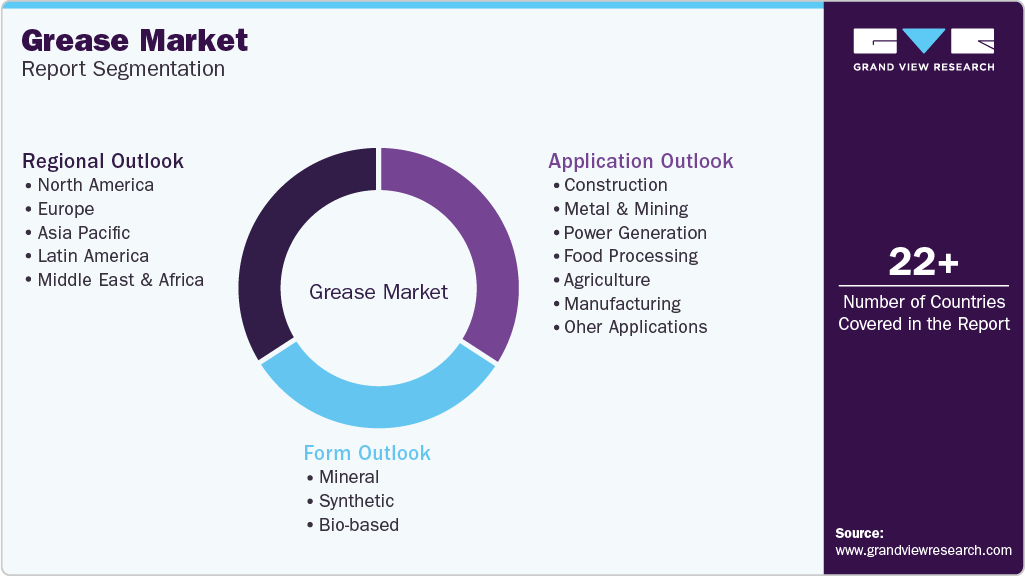
This report forecasts revenue and volume growth at global, regional, and country levels and provides an analysis of the latest industry trends in each of the sub-segments from 2021 to 2033. For this study, Grand View Research has segmented the global grease market report based on product, application, and region:
 To learn more about this report, Download Free Sample Report
-
Form Outlook (Volume, Kilotons; Revenue, USD Million, 2021 - 2033)
-
Mineral
-
Synthetic
-
Bio-based
-
-
Application Outlook (Volume, Kilotons; Revenue, USD Million, 2021 - 2033)
-
Construction
-
Metal & Mining
-
Power Generation
-
Food Processing
-
Agriculture
-
Manufacturing
-
Oher Applications
-
-
Regional Outlook (Volume, Kilotons; Revenue, USD Million, 2021 - 2033)
-
North America
-
U.S.
-
Canada
-
Mexico
-
-
Europe
-
Germany
-
UK
-
France
-
Italy
-
Spain
-
-
Asia Pacific
-
China
-
India
-
Japan
-
South Korea
-
-
Latin America
-
Brazil
-
Argentina
-
-
Middle East & Africa
-
Saudi Arabia
-
South Africa
-
-
Research Methodology
The grease market figures in this report are based on a proven research process that combines executive interviews with secondary research from proprietary databases, company filings, and recognized regulatory and institutional sources. Market size is built through value-chain sizing-reconciling supply-side and demand-side estimates-and triangulated with bottom-up and top-down approaches. Every estimate passes multiple levels of expert validation before publication, with each grease segment quantified using the revenue-capture definitions in the table below.
Segment Definition
Segment - Form
Revenue capture definition
Mineral
Revenue generated from the sale of mineral oil-based greases used across automotive, industrial, construction, mining, and general machinery applications for routine lubrication and equipment protection.
Synthetic
Revenue generated from synthetic grease formulations supplied for high-performance applications requiring superior thermal stability, oxidation resistance, extended service life, and operation under extreme temperatures and loads.
Bio-Based
Revenue generated from bio-based greases manufactured using renewable feedstocks and supplied to industries seeking environmentally acceptable lubrication solutions, including agriculture, marine, forestry, and environmentally sensitive industrial operations.
Segment - Application
Revenue capture definition
Construction
Revenue generated from greases used for lubricating construction equipment and machinery, including excavators, loaders, cranes, bulldozers, and concrete handling equipment.
Metal & Mining
Revenue generated from greases supplied for mining equipment, metal processing machinery, crushers, conveyors, heavy-duty bearings, and other equipment operating under high-load and harsh environmental conditions.
Power Generation
Revenue generated from greases utilized in power generation assets, including wind turbines, hydroelectric equipment, thermal power plants, generators, motors, and auxiliary rotating equipment.
Food Processing
Revenue generated from food-grade greases used in food and beverage processing equipment, packaging machinery, conveyors, mixers, and other machinery requiring compliance with food safety standards.
Agriculture
Revenue generated from greases supplied for agricultural machinery such as tractors, harvesters, irrigation equipment, seeders, and other farm equipment requiring reliable lubrication under dusty and wet operating conditions.
Manufacturing
Revenue generated from greases used in industrial manufacturing equipment, including electric motors, bearings, conveyors, pumps, compressors, machine tools, and automated production systems.
Other Applications
Revenue generated from greases supplied to additional applications, including marine, railway, aerospace, automotive aftermarket, pulp & paper, and other specialized industrial equipment requiring lubrication solutions.
Estimation Model
Layer Name
Key Question
Description
Total Addressable Market (TAM)
What is the overall size of the global greases market?
Estimated the total revenue generated from the sale of mineral, synthetic, and bio-based greases across all regions by analyzing production volumes, manufacturer revenues, trade statistics, and end-user consumption patterns.
Form Segmentation
Which grease formulations contribute to market revenue?
Market revenue was allocated across Mineral, Synthetic, and Bio-Based greases based on production mix, product pricing, adoption rates, and application-specific demand across industries.
Application Analysis
Which applications account for the highest grease consumption?
Revenue was distributed across Construction, Metal & Mining, Power Generation, Food Processing, Agriculture, Manufacturing, and Other Applications by evaluating equipment population, lubrication requirements, grease consumption intensity, and replacement cycles.
Regional Market Assessment
Which regions generate the largest revenue opportunities?
Market estimates were developed for North America, Europe, Asia Pacific, Latin America, and the Middle East & Africa based on industrial activity, automotive production, mining operations, manufacturing output, infrastructure investment, and lubricant consumption trends.
Delivered Customizations
This report has been delivered with the following In-depth customizations
Client Request
Customization Delivered
Value Adds
Regional Segmentation
A comprehensive regional assessment of the greases market was conducted across North America, Europe, Asia Pacific, Latin America, and Middle East & Africa. The study evaluated country-level demand for mineral, synthetic, and bio-based greases while examining consumption across construction, metal & mining, power generation, food processing, agriculture, manufacturing, and other industrial applications. Regional manufacturing capacity, industrial output, and lubricant consumption trends were also assessed.
Provides greater visibility into regional demand patterns and country-specific consumption trends. Supports market expansion planning, capacity allocation, and prioritization of high-growth industrial markets.
Cross-Segmentation Analysis
The relationship between grease formulations and end-use industries was assessed to evaluate the adoption of mineral, synthetic, and bio-based greases across construction equipment, mining machinery, power generation assets, food processing equipment, agricultural machinery, and manufacturing operations. Performance requirements and application-specific lubrication needs were also examined.
Enables identification of high-value formulation-application combinations. Supports product portfolio optimization, targeted product development, and commercialization strategies aligned with industry-specific requirements.
Opportunity Assessment
Growth opportunities were assessed across bio-based lubricants, high-performance synthetic greases, renewable energy equipment, electric vehicles, automated manufacturing, and food-grade lubrication solutions. The analysis also examined evolving industrial maintenance practices and increasing demand for longer-lasting, environmentally compliant lubricants.
Enables identification of emerging growth segments and high-potential investment areas. Supports innovation planning, product portfolio expansion, and long-term business development strategies.
Frequently Asked Questions About This Report
Mineral held a dominant position, contributing 62.6% of total revenue in 2025.
The global greases market size was valued at USD 6.3 billion in 2025 and is projected to grow from USD 6.5 billion in 2026.
Manufacturing segment accounted for the largest revenue of 51.6% in 2025.
The global greases market is expected to grow at a CAGR of 4.4% from 2026 to 2033, reaching USD 8.8 billion by 2033.
Asia Pacific market dominated, with a revenue share of 39.9% in 2025.
Key players include NYCO, Battenfeld-Grease & Oil Corporation of New York, RichardsApex, Inc., Lubriplate Lubricants Company, GB Lubricants, Canoil Canada Ltd., Eastern Oil Company, JAX Incorporated, Daubert Chemical Company, D-A Lubricant Company, Xaerus Performance Fluids, Inc., MorOil Technologies, Royal High- Performance Oil & Greases, Industrial Oils Unlimited, Primrose Oil Company, Inc., Environmental Lubricants Manufacturing, Inc. (ELM), Cadillac Oil, CONDAT, LUBRITA Europe B.V., COGELSA Efficient Lubrication, Interflon
Key factors that are driving the greases market growth include surging growth of vehicles and their spare parts.
About the Author(s)
Petrochemicals Research Team
Bulk Chemicals · PetrochemicalsThis report was authored by the petrochemicals research team at Grand View Research - comprising two research analysts, one senior research analyst, and one industry expert - with specialized expertise in the petrochemicals segment of the bulk chemicals industry. All findings are based on proprietary bulk chemicals databases, executive interviews, and regulatory analysis, subject to internal peer review prior to publication.
Last Updated:
Speak to Analyst

Customize this report to your needs - add regions, segments, or data points, with 20% free customization.
Or view our licence options:


ISO 9001:2015 & 27001:2022 Certified
We are GDPR and CCPA compliant! Your transaction & personal information is safe and secure. For more details, please read our privacy policy.


