
- Home
- »
- Consumer F&B
- »
-
High Protein Bakery Products Market Size Report, 2026-2033GVR Report cover

High Protein Bakery Products Market (2026 - 2033) Size, Share & Trends Analysis Report By Product (Bread, Cookies, Muffins, Waffles, Pancakes), By Distribution Channel (Hypermarkets & Supermarkets, Convenience Stores), By Region, And Segment Forecasts
Market Size, 2025
$4.8BMarket Estimate, 2026
$5.1BMarket Forecast, 2033
$7.8BCAGR, 2026–2033
6.3%High Protein Bakery Products Market Summary
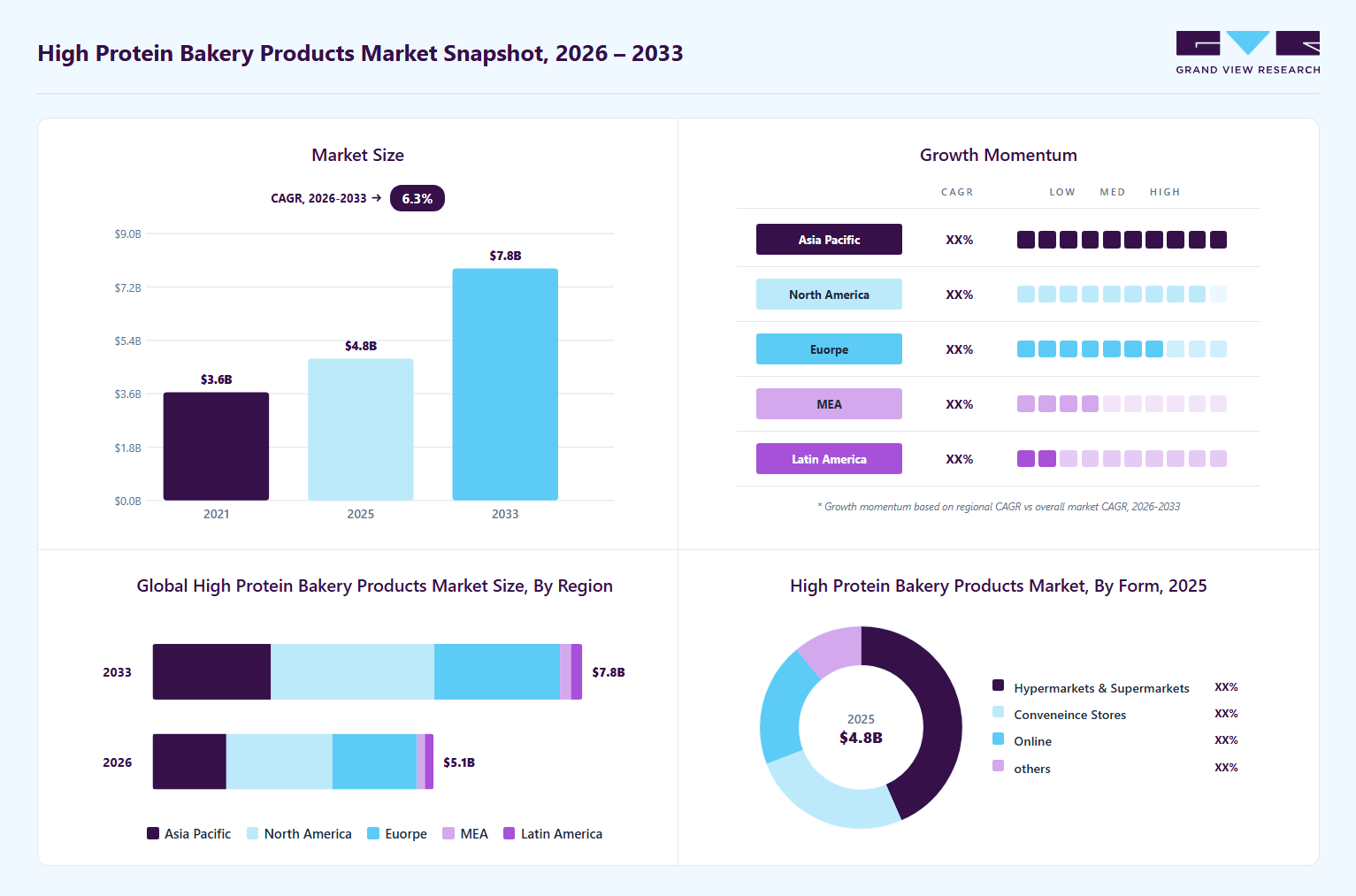
The global high protein bakery products market size was valued at USD 4.8 billion in 2025 and projected to grow from USD 5.1 billion in 2026 to USD 7.8 billion by 2033, at a CAGR of 6.3% from 2026 to 2033. North America dominated the global market with the largest revenue share of 37.7% in 2025. The market is driven by an increasing emphasis on health and wellness among consumers, with individuals proactively seeking protein-rich food products to support muscle development, repair, and overall well-being.
 Source: Grand View Research, IR Documents, Primary Interviews, Paid DatabasesTo learn more about this report,
 Download Free Sample Report
Key Market Trends & Insights
- By product: Bread segment led the market with the largest revenue share of 53.3% in 2025.
- By distribution channel: Online retail segment is expected to grow at the fastest CAGR of 7.0% from 2026 to 2033.
Regional Highlights
- Largest regional market: North America (37.7% revenue share, 2025)
- Fastest-growing regional market: Asia Pacific (highest CAGR, 2026-2033)
- By country: The U.S. held the largest market share in 2025.
Market Size & Forecast
- Market size in 2025: USD 4.8 Billion
- Estimated market size in 2026: USD 5.1 Billion
- Projected market size by 2033: USD 7.8 Billion
- CAGR (2026-2033): 6.3%
Three ways to get this report
Buy it, customize it, or ask a question.Ask an Analyst
Analyst response in 1 business day
- AccessReport author, directly
- Reply timeWithin 1 working day
- No sales callDirect answer only
- FormatEmail reply
- CostFree, no cost
Get the Full Report
What the study covers
- FormatsPDF · Excel · Dashboard
- Timeline2026–2033 annual, 2025 base
- Coverage20+ countries, 5 regions
- Companies10+ key players profiled
Customize the Report
20% free customization
- IncludeCountries, segments, points
- TailorTo your product definition
- ExtendDeeper competitor detail
- OrA fully bespoke study
- Turnaround5–10 working days
The use of high-protein flours sourced from grains and legumes, such as wheat, chickpeas, and lentils, helps provide protein without excessive fats or sugars. This aligns with the trend toward clean eating and the demand for natural and nutritious ingredients in bakery products. The rising interest in protein-rich foods is a result of several shifts in consumer behavior and lifestyle choices, which have directly impacted the demand for high-protein bakery products. As awareness of the benefits of a protein-rich diet grows, many people are prioritizing health and fitness. Protein plays a crucial role in muscle repair, weight management, and overall wellness. Consumers are increasingly seeking products that align with their health goals, and protein-enriched bakery products are an easy way to incorporate more of this essential nutrient into their diet without sacrificing convenience or taste.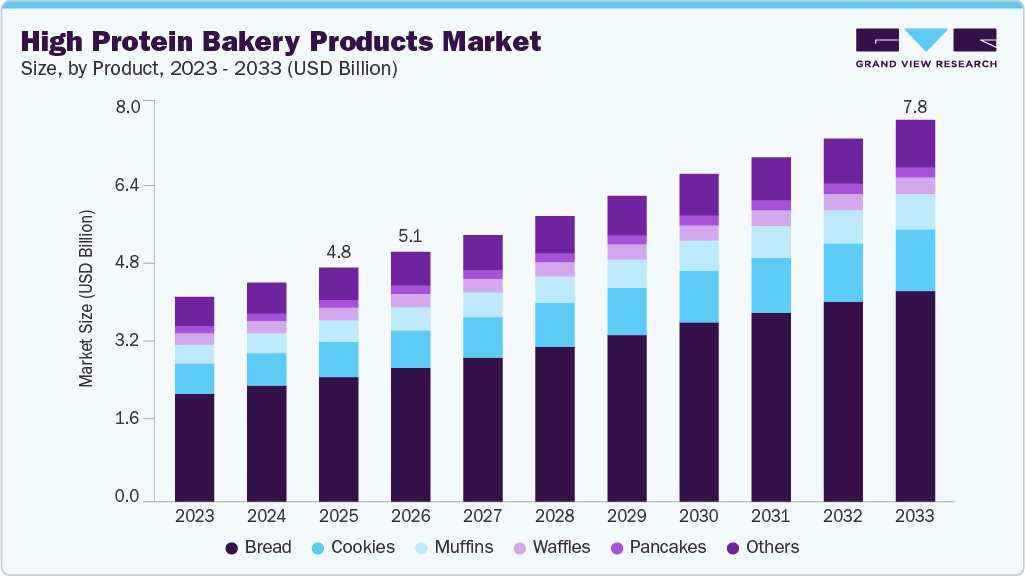 To learn more about this report, Download Free Sample Report
The high protein bakery products industry has evolved into a significant segment within the broader functional and health-oriented bakery industry. Growth in the market is being supported by increasing consumer preference for nutrient-dense foods that combine convenience with enhanced nutritional value. Changing dietary habits, rising awareness regarding protein intake, and the growing popularity of active lifestyles have encouraged consumers to seek alternatives to traditional bakery products. As a result, manufacturers are expanding their portfolios with protein-fortified bread, cookies, muffins, cakes, and snack bars designed to meet the demand for healthier everyday food options. The market is also benefiting from the rapid expansion of organized retail, e-commerce platforms, and premium packaged food categories across both developed and emerging economies.
The market is witnessing a steady pace of product launches as food manufacturers seek to strengthen their presence within the functional bakery segment. Companies are introducing a diverse range of protein-enriched products, including artisan-style breads, soft-baked cookies, breakfast pastries, brownies, and ready-to-eat snack items. For instance, in May 2026 launch of Oroweat Protein Breads by Bimbo Bakeries USA. The company introduced Protein White Bread and Protein Honey Oat Bread, each providing 20 grams of complete protein per two-slice serving. The launch demonstrates how mainstream bakery manufacturers are increasingly investing in functional bread products that combine traditional bakery appeal with enhanced nutritional benefits.
Innovation is increasingly focused on combining multiple health benefits within a single product, such as high protein with low carbohydrate content, added dietary fiber, or digestive wellness support. Seasonal flavors, premium ingredients, and convenient packaging formats are also being utilized to attract younger consumers and expand product appeal in mainstream retail channels. The growing competition within the category is encouraging continuous investment in research, branding, and differentiated product positioning.
The regulatory environment surrounding high-protein bakery products is becoming increasingly important as governments and food safety authorities strengthen oversight of nutritional labeling and health claims. Manufacturers are required to comply with established standards related to protein content declarations, ingredient disclosure, allergen labeling, and permissible functional claims. Regulatory scrutiny is particularly significant in areas such as clean-label marketing, plant-based product positioning, and the substantiation of nutritional benefits. In addition, evolving consumer expectations regarding transparency and food safety are encouraging companies to adopt stricter quality assurance practices and traceable sourcing systems. Compliance with regional food regulations and labeling requirements remains essential for maintaining consumer trust and ensuring successful market expansion.
Market Dynamics
The expansion of functional snacking has become the growth driver in the high protein bakery products industry, as consumers increasingly replace traditional meals with smaller, nutrient-focused eating occasions throughout the day. Modern consumers are seeking snacks that deliver both convenience and functionality, particularly products that support satiety, sustained energy, muscle recovery, and balanced nutrition. This shift has encouraged bakery and snack manufacturers to transform traditionally indulgent categories such as cookies, brownies, wafers, flapjacks, muffins, and snack cakes into protein-enriched formats that align with evolving wellness goals. The growing influence of hybrid lifestyles, longer working hours, fitness-oriented routines, and on-the-go consumption patterns is further accelerating demand for portable functional bakery snacks that combine taste with nutritional value.
High production and ingredient costs remain a significant restraint in the high protein bakery products industry, as manufacturers continue to face rising expenses associated with protein fortification and clean-label formulation. The incorporation of premium ingredients such as whey protein isolates, milk proteins, pea protein concentrates, enzyme systems, and texture stabilizers substantially increases overall formulation and processing costs compared to conventional bakery products. In April 2025, IFF highlighted that manufacturers developing high protein food and bakery products continue to face increasing formulation costs due to the need for specialized protein systems, flavor maskers, and texture-management ingredients required to maintain product quality and consumer acceptability.
Consumer Insights
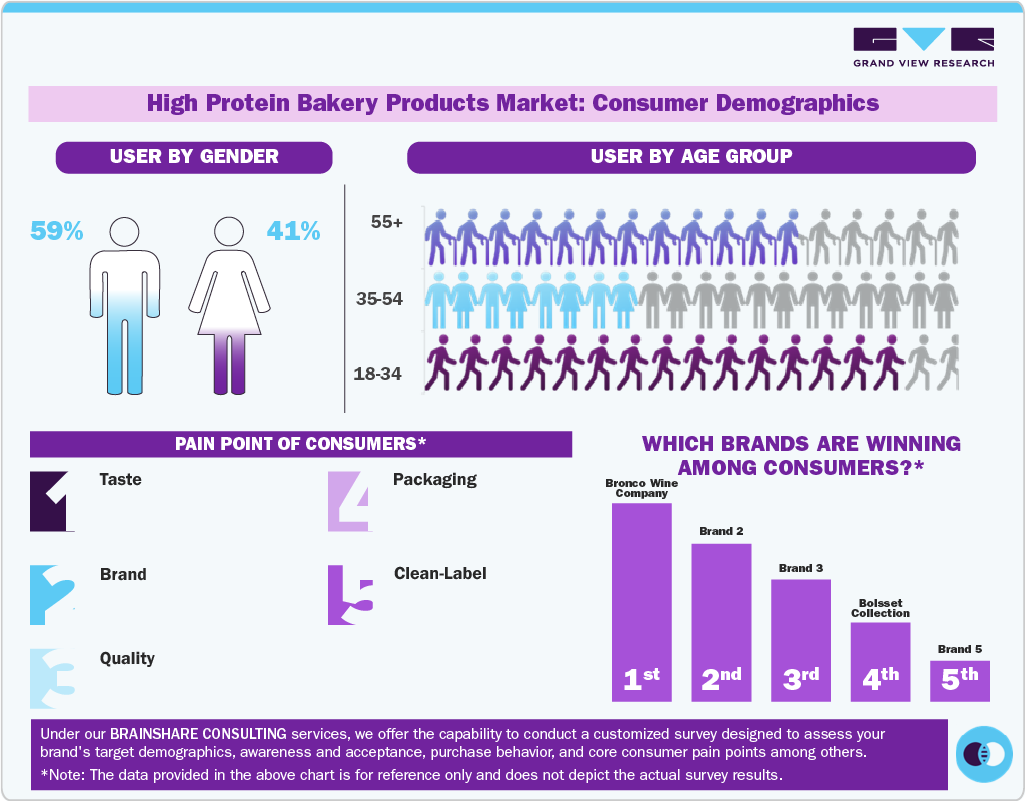
Consumer behavior within the high-protein bakery category reflects a broader shift toward preventive health and balanced nutrition. Modern consumers, particularly millennials, fitness enthusiasts, and working professionals, are actively seeking convenient food formats that support muscle health, energy management, and weight control. A significant proportion of consumers are willing to pay a premium for protein-fortified products, highlighting the strong perceived value of functional nutrition. The demand is also expanding beyond traditional gym-focused demographics, with increasing adoption among health-conscious families, plant-based consumers, and individuals seeking healthier snacking alternatives that don't compromise taste or convenience.
 To learn more about this report, Download Free Sample Report
Convenience remains a major purchasing driver within the category, particularly as consumers increasingly adopt on-the-go eating habits and smaller, more frequent meal occasions. Modern consumers prefer portable and ready-to-eat snack formats that align with busy lifestyles while also supporting nutritional goals. As a result, demand is rising for individually packaged bakery snacks that combine protein fortification with additional health-oriented attributes such as low sugar, high fiber, clean-label ingredients, and plant-based formulations. Consumers are also increasingly willing to experiment with bakery products containing alternative proteins, including pea, oat, soy, and chickpea proteins, particularly among younger demographics seeking sustainable and functional food choices.
Sensory experience continues to play a critical role in consumer acceptance and repeat purchasing behavior within the high protein bakery segment. Despite increasing health awareness, consumers remain unwilling to compromise on flavor, softness, freshness, and overall indulgence when selecting protein-enriched baked products. Products perceived as overly dense, dry, artificial, or overly processed often experience lower repeat purchase rates, underscoring the importance of taste and texture optimization for long-term brand success. In addition, consumers are becoming more attentive to ingredient transparency, nutritional labeling, and product authenticity, encouraging manufacturers to prioritize clean-label positioning, recognizable ingredients, and transparent health claims in order to strengthen consumer trust and product differentiation.
Product Insights
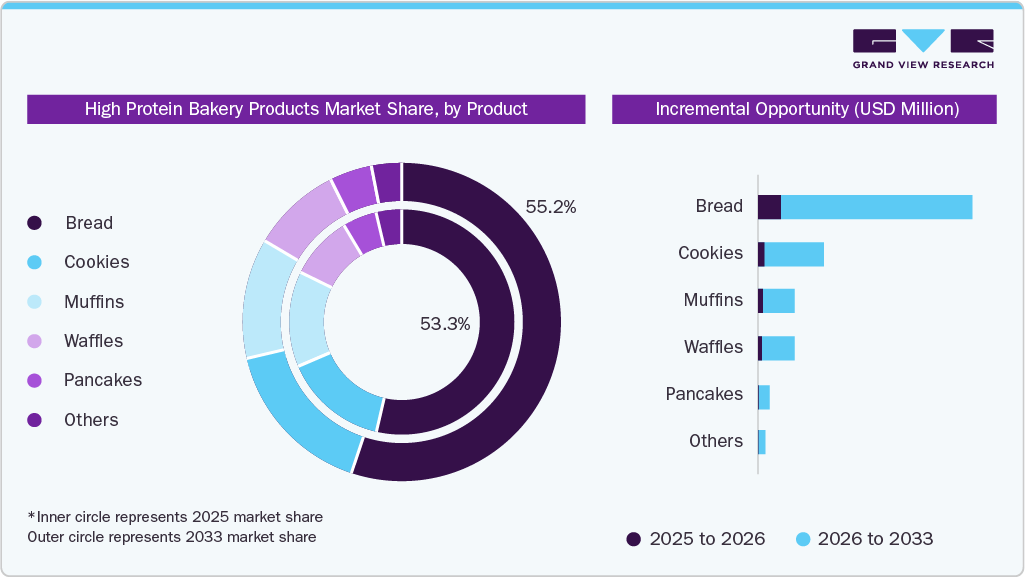
The bread segment led the market with the largest revenue share of 53.3% in 2025, due to its widespread daily consumption and strong consumer familiarity across global markets.Consumers are increasingly shifting toward protein-enriched bread products as part of balanced meal routines, particularly for breakfast and sandwich applications. In addition, manufacturers are expanding their offerings with multigrain, low-carb, high-fiber, and plant-protein formulations to address evolving consumer preferences for wellness, satiety, and weight management. The strong retail presence of bread products across supermarkets, convenience stores, and online grocery channels further supports the segment’s dominant market position.
 To learn more about this report, Download Free Sample Report
The cookies segment is projected to grow at the fastest CAGR of 7.2% from 2026 to 2033. The rising availability of high-protein cookies in diverse flavors, formulations, and nutritional profiles is significantly propelling market growth. Manufacturers are continuously innovating to create cookies that strike an optimal balance between taste and nutritional benefits, thereby attracting a broader consumer base.
Distribution Channel Insights
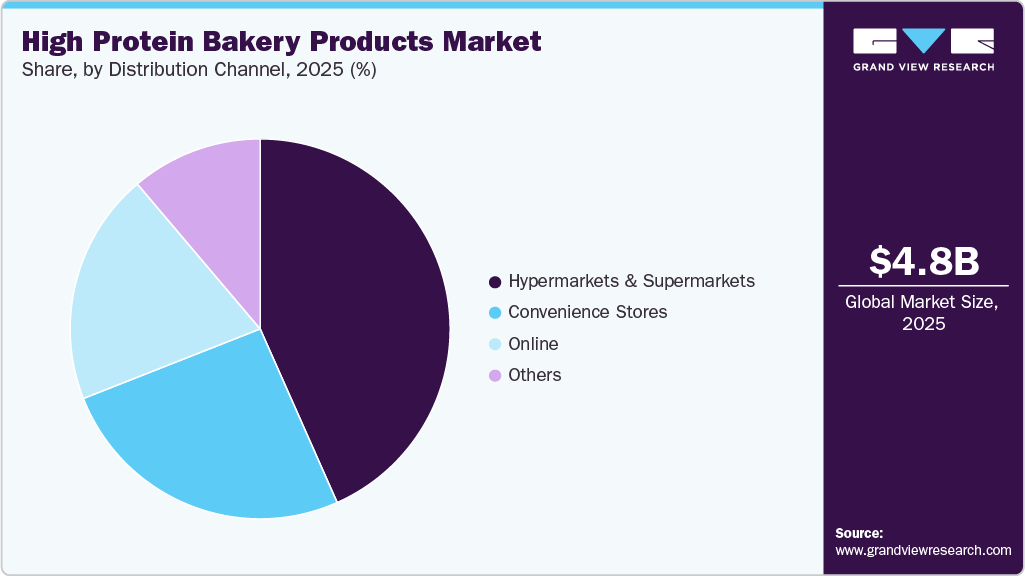
The hypermarkets & supermarkets led the market with the largest revenue share of 43.4% in 2025. This can be attributed to the extensive reach and ability of hypermarkets and supermarkets to cater to a broad and diverse consumer base. These large-format retail outlets have an array of high protein bakery options on shelves, providing consumers with convenient and accessible purchasing opportunities. Well-established infrastructure and efficient supply chain management of the organized retail sector facilitate seamless product availability and visibility, contributing significantly to overall sales. Moreover, manufacturers actively collaborate with these retailers to optimize shelf space, implement effective merchandising strategies, and launch promotional campaigns that attract and engage target consumers.
 To learn more about this report, Download Free Sample Report
The online distribution segment is expected to grow at the fastest CAGR of 7.0% from 2026 to 2033, driven by the increasing consumer preference for digital shopping platforms and convenience-led purchasing behavior. E-commerce channels enable consumers to access a broader range of protein-enriched bakery products, compare nutritional profiles, evaluate pricing, and explore emerging brands more efficiently than traditional retail formats. The growing adoption of direct-to-consumer sales models, subscription-based snack deliveries, and quick-commerce platforms is further strengthening online product accessibility. In addition, digital retail platforms enable manufacturers to leverage consumer data analytics to better understand purchasing behavior, personalize product recommendations, and optimize product portfolios in line with evolving dietary preferences and health trends.
Regional Insights
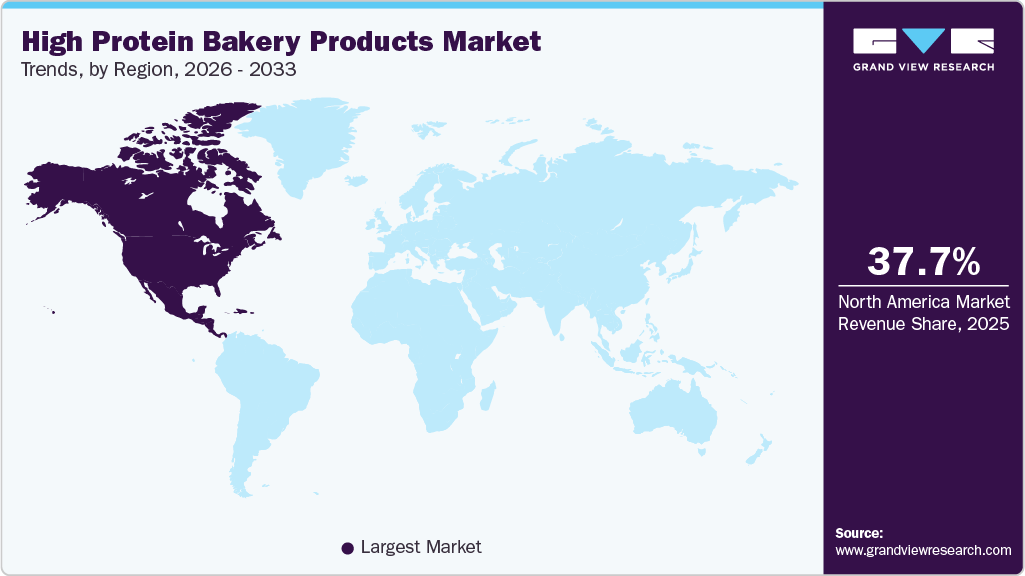
North America dominated the global high protein bakery products market with the largest revenue share of 37.7% in 2025. Consumers in the region are increasingly focused on health and wellness, driving demand for bakery products with nutritional benefits, such as high protein content. The region continues to witness increasing demand for protein-fortified breads, cookies, muffins, snack bars, and breakfast bakery products as consumers prioritize convenient foods with enhanced nutritional value. The growing popularity of high protein diets, fitness-oriented eating habits, and functional snacking trends is accelerating product innovation across retail and foodservice channels. In addition, the strong presence of health-focused food manufacturers, advanced bakery processing infrastructure, and expanding e-commerce penetration is contributing to regional market growth. The increasing adoption of clean-label, low-sugar, and plant-based bakery products is further encouraging manufacturers to diversify their protein-enriched product portfolios across North America.
 To learn more about this report, Download Free Sample Report
U.S. High Protein Bakery Products Market Trends
The high-protein bakery products market in the U.S. accounted for the largest market share in North America in 2025, driven by strong consumer demand for functional foods, a growing fitness culture, and an increasing preference for convenient high-protein snacking options. Consumers in the country are actively incorporating protein-enriched bakery products into daily meal routines for satiety, energy management, and wellness support. The market is also benefiting from rapid innovation in protein cookies, breakfast pastries, muffins, brownies, and artisan-style breads positioned around clean-label and reduced-sugar claims. In January 2026, Premier Protein partnered with Hometown Food Company to launch high-protein muffin mixes and microwavable muffin cups in the U.S., highlighting rising consumer demand for convenient, protein-enriched bakery products in the breakfast and snacking categories.
The Canada high protein bakery products market is projected to grow at a significant CAGR of 7.4% from 2026 to 2033. Canada’s market is increasingly influenced by clean-label consumption patterns and plant-based nutrition trends. Consumers are showing a strong preference for bakery products formulated with recognizable ingredients, reduced additives, and sustainable protein sources. Oat protein, pea protein, flaxseed, and ancient grains are gaining traction in bakery formulations due to rising consumer interest in environmentally conscious nutrition. Demand is particularly strong for protein-enriched breakfast bakery products and soft-baked snack bars targeting urban professionals and younger demographics seeking healthier convenience foods. Canadian manufacturers are also prioritizing non-GMO and allergen-friendly bakery innovations to address evolving dietary sensitivities and transparency expectations.
Europe High Protein Bakery Products Market Trends
The high protein bakery products market in Europe is being shaped by the region’s growing focus on balanced nutrition, premium bakery experiences, and sustainable ingredient sourcing. Consumers increasingly prefer bakery products that offer moderate protein enhancement while maintaining artisanal quality, freshness, and authentic flavor profiles. The region is witnessing rising demand for protein-enriched sourdough bread, seeded bakery products, and premium breakfast pastries with natural ingredient positioning. Ingredient innovation is strongly focused on dairy proteins, wheat proteins, sunflower proteins, and fermented plant proteins that support clean-label formulation strategies. Sustainability and reduced food processing are becoming central considerations in product development across European markets.
The Germany high protein bakery products market is strongly influenced by sports nutrition culture and the country’s well-established preference for functional bread products. Consumers demonstrate high demand for protein-enriched wholegrain breads, rye bakery products, and seeded rolls that support satiety and digestive wellness. Bakery manufacturers are increasingly integrating plant proteins such as pea, sunflower, and fava bean proteins into traditional bread applications while maintaining clean-label standards and regional bakery authenticity. High protein bakery innovation in Germany is also supported by growing consumer preference for organic and minimally processed functional foods.
The high protein bakery products market in Spain is witnessing steady growth due to increasing consumer preference for balanced nutrition products that align with Mediterranean dietary habits and active lifestyle trends. Consumers in the country are increasingly seeking bakery products that combine traditional taste profiles with functional nutritional benefits, particularly within breakfast and snacking categories. Demand is rising for protein-enriched breads, cereal bars, breakfast biscuits, and on-the-go baked snacks formulated with whole grains, oat protein, nuts, and plant-based ingredients. The growing influence of gym culture, greater awareness of sports nutrition, and healthier snacking habits among younger consumers are further accelerating market expansion. In addition, Spanish consumers demonstrate a strong preference for clean-label, minimally processed bakery products, encouraging manufacturers to focus on natural protein sources and reduced-sugar formulations. The expansion of modern retail channels and health-focused supermarket offerings is also improving accessibility to functional bakery products across the country.
Asia Pacific High Protein Bakery Products Market Trends
The high protein bakery products market in the Asia Pacific is projected to grow at the fastest CAGR of 7.0% from 2026 to 2033, driven by several key factors, including urbanization, changing dietary preferences, and growing consumer health consciousness. The region's rapid urbanization has increased disposable incomes, enabling more consumers to seek premium and health-oriented food products. Moreover, the rising interest in health and wellness, particularly among younger consumers, has further driven the market growth.
The China high protein bakery products market held a significant share in the Asia Pacific in 2025. The market is mainly driven by increasing health awareness, urbanization, and the rising popularity of high-protein diets. Consumers, especially young professionals, fitness enthusiasts, and health-conscious individuals, are actively seeking protein-enriched alternatives to traditional baked goods.
The high protein bakery products market in India is projected to grow at a significant CAGR of 7.8% from 2026 to 2033. As the Indian consumer base becomes more fitness-focused, especially among urban dwellers, health-conscious individuals, and athletes, there is a growing appetite for protein-enriched alternatives to traditional baked goods. Brands like Savory’s, Yoga Bar, and The Protein Bakery have introduced high-protein bread, cookies, and snacks, targeting consumers who are looking for healthier snack options.
Central & South America High Protein Bakery Products Market Trends
The high protein bakery products market in Central & South America is projected to grow at a moderate CAGR of 3.8% from 2026 to 2033. In countries like Brazil, Mexico, and Argentina, consumers are becoming more focused on nutrition and functional foods, particularly as they seek to improve muscle health, manage weight, and boost overall wellness. The demand for protein-fortified bakery products, such as high-protein bread, cakes, and cookies, is being fueled by athletes, gym-goers, and health-conscious individuals. Domestic and international brands, including Fit Food, Naturalis, and Myprotein, are introducing a variety of protein-enriched baked goods that often incorporate both animal-based proteins (whey, casein) and plant-based proteins (pea, soy).
Middle East & Africa High Protein Bakery Products Market Trends
The high-protein bakery products market in the Middle East & Africa is witnessing increasing demand driven by rising urbanization, growing youth populations, and expanding health awareness. Consumers are gradually shifting toward healthier packaged snack products, particularly in metropolitan areas with strong exposure to international food trends. Demand is strongest for protein-enriched flatbreads, breakfast bakery items, and snack bars positioned around energy and active lifestyles. Manufacturers are increasingly adapting formulations to halal requirements and regional flavor preferences while improving affordability and product accessibility through modern retail expansion.
Key High-Protein Bakery Products Company Insights
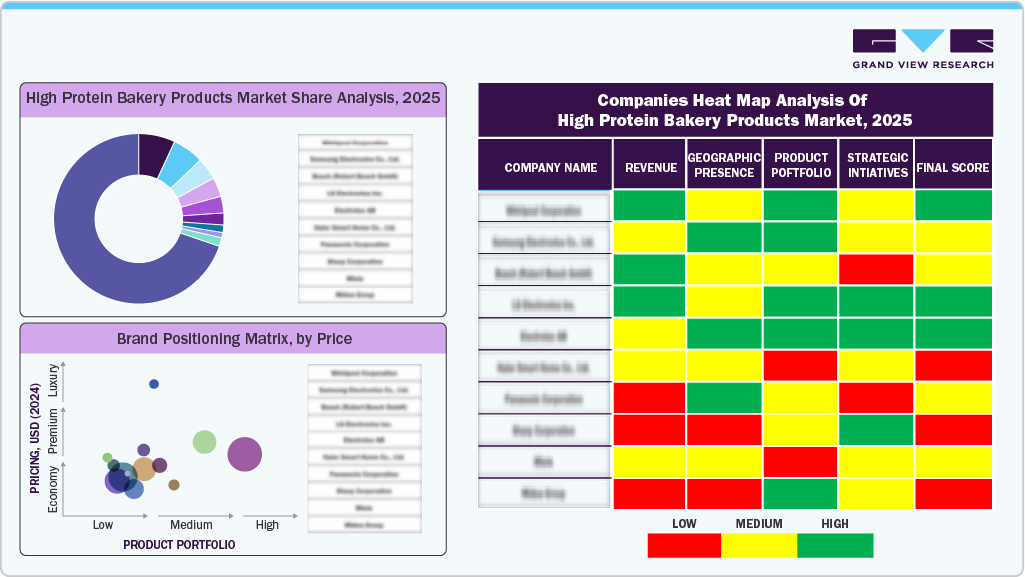
Established companies and emerging players create a competitive environment by focusing on product innovation, quality, and pricing strategies. The competitive intensity is fueled by the need for continuous investment in facilities, automation, and skilled personnel to maintain operational efficiency and market relevance. This landscape is further shaped by growing consumer demand for health and wellness-oriented bakery products.
Increasing awareness of health concerns, such as diabetes and obesity, is prompting consumers to adopt healthier alternatives in bakery products. This shift in consumer preferences is driving the demand for specialized ingredients such as gluten-free flour, protein isolates, and allergen-free alternatives, creating opportunities for suppliers who can cater to these health-conscious needs.
 To learn more about this report, Download Free Sample Report
Key High-Protein Bakery Products Companies:
The following key companies have been profiled for this study on the high protein bakery products market.
-
Mondelēz International
-
Grupo Bimbo S.A.B. de C.V.
-
Kellanova
-
Quest Nutrition & WorldPantry.com LLC
-
ARYZTA AG
-
Kodiak Cakes, LLC.
-
Simple Mills
-
Naturell India Pvt. Ltd.
-
Modern Bakery LLC
-
The Protein Bakery
Recent Developments
-
In May 2026, Oroweat launched Fiber Power Bread and two new Protein Bread variants in the U.S., containing 20 grams of protein per two slices. The launch reflects increasing consumer demand for functional staple bakery products supporting satiety and balanced nutrition.
-
In January 2026, Premier Protein partnered with Hometown Food Company to launch high-protein muffin mixes and microwavable muffin cups delivering 13-15 grams of protein per serving. The launch highlights rising demand for convenient protein-enriched breakfast bakery products and functional snacking formats.
-
In January 2026, Nature’s Own introduced Life Wheat + Protein Bread with 22 grams of protein per serving, targeting consumers following high-protein and keto-friendly dietary lifestyles. The product also features a high fiber content and a clean-label positioning, without artificial preservatives or colors.
-
In April 2025, Thomas’, a brand under Bimbo Bakeries USA, launched High Protein Bagels containing 20g of plant-based protein, specifically targeting consumers seeking nutritious breakfast alternatives without compromising taste or texture.
High Protein Bakery Products Market Report Scope
Report Attribute
Details
Market size in 2025
USD 4.8 billion
Estimated Market size in 2026
USD 5.1 billion
Projected Market size by 2033
USD 7.8 billion
Growth rate
CAGR of 6.3% from 2026 to 2033
Base year for estimation
2025
Historical data
2021 - 2025
Forecast period
2026 - 2033
Quantitative units
Revenue in USD million/billion, CAGR from 2026 to 2033
Report coverage
Revenue forecast, company ranking, competitive landscape, growth factors, and trends
Segments covered
Product, distribution channel, region
Regional scope
North America; Europe; Asia Pacific; Central and South America; Middle East & Africa
Country scope
U.S.; Canada; Mexico; Germany; UK; France; Italy; Spain; China; Japan; India; Australia & New Zealand; Brazil; Saudi Arabia; UAE
Key companies profiled
Mondelēz International; Grupo Bimbo S.A.B. de C.V.; Kellanova; Quest Nutrition LLC; ARYZTA AG; Kodiak Cakes, LLC; Simple Mills; Naturell India Pvt. Ltd.; Modern Bakery LLC; The Protein Bakery
Customization scope
Free report customization (equivalent up to 8 analysts working days) with purchase. Addition or alteration to country, regional & segment scope.
Pricing and purchase options
Avail customized purchase options to meet your exact research needs. Explore purchase options
Global High Protein Bakery Products Market Segmentation
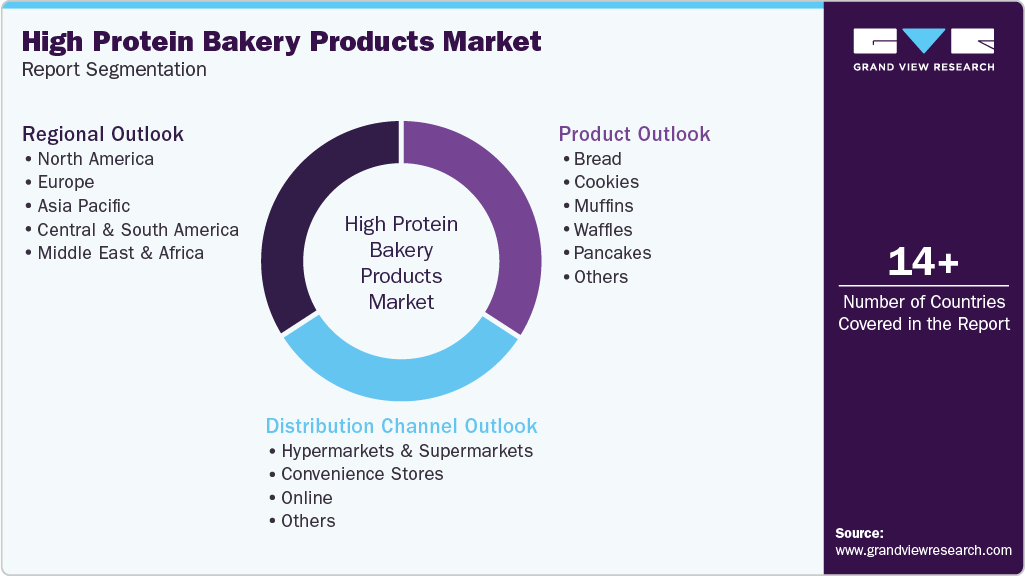
This report forecasts revenue growth at the global, regional and country level and provides an analysis of the latest industry trends and opportunities in each of the sub-segments from 2021 to 2033. For this study, Grand View Research has segmented the global high protein bakery products market report based on the product, distribution channel, and region.
 To learn more about this report, Download Free Sample Report
-
Product Outlook (Revenue, USD Billion, 2021 - 2033)
-
Bread
-
Cookies
-
Muffins
-
Waffles
-
Pancakes
-
Others
-
-
Distribution Channel Outlook (Revenue, USD Billion, 2021 - 2033)
-
Hypermarkets & Supermarkets
-
Convenience Stores
-
Online
-
Others
-
-
Regional Outlook (Revenue, USD Billion, 2021 - 2033)
-
North America
-
U.S.
-
Canada
-
Mexico
-
-
Europe
-
Germany
-
UK
-
France
-
Italy
-
Spain
-
-
Asia Pacific
-
China
-
Japan
-
India
-
Australia & New Zealand
-
-
Central & South America
-
Brazil
-
-
Middle East & Africa
-
Saudi Arabia
-
UAE
-
-
Delivered Customizations
This report has been delivered with the following In-depth customizations
Client Request
Customization Delivered
Value Adds
Manufacturing Cost Analysis
Evaluation of production cost structure across high-protein bakery products, including raw material pricing, protein fortification costs, processing technology requirements, texture stabilization expenses, packaging costs, and supply chain considerations. Analysis of operational challenges impacting profitability and large-scale commercialization.
Support margin optimization and pricing strategies. Identify cost-efficient ingredient alternatives, manufacturing improvement opportunities, and operational risk areas to strengthen production scalability and investment planning.
Retail Expansion Strategies
Analysis of retail distribution strategies across supermarkets, convenience stores, specialty nutrition outlets, e-commerce platforms, and quick-commerce channels for high-protein bakery products. Assessment of shelf positioning trends, private-label expansion, consumer purchasing behavior, and regional retail penetration opportunities.
Identify high-potential retail channels and market-entry opportunities. Support go-to-market planning, distribution expansion, retailer partnership strategies, and consumer targeting initiatives to improve category visibility and sales performance.
Regulatory Compliance Overview
Assessment of regulatory frameworks governing high-protein bakery products across key regions, including protein labeling requirements, nutritional claim standards, clean-label regulations, ingredient approvals, allergen declarations, and food safety compliance. Analysis of evolving regulations related to functional foods, plant-based proteins, and health positioning across major markets.
Support regulatory risk assessment and smoother market entry strategies. Identify compliance gaps, labeling requirements, and region-specific regulatory changes to strengthen product development, international expansion, and brand credibility across the functional bakery industry.
Frequently Asked Questions About This Report
The Asia Pacific is the fastest-growing region over the forecast period.
Some of the key market players in the high protein balkery products market are Mondelēz International; Grupo Bimbo S.A.B. de C.V.; Kellanova; Quest Nutrition LLC; ARYZTA AG; Kodiak Cakes, LLC; Simple Mills; Naturell India Pvt. Ltd.; Modern Bakery LLC; The Protein Bakery
The market is driven by an increasing emphasis on health and wellness among consumers, with individuals proactively seeking protein-rich food products to support muscle development, repair, and overall well-being.
The global high protein bakery products market was estimated at USD 4.8 billion in 2025 and is expected to reach USD 5.1 billion in 2026.
The global high protein bakery products market is expected to grow at a compound annual growth rate of 6.3% from 2026 to 2033 to reach USD 7.8 billion by 2033.
North America dominated the global market with the largest revenue share of 37.7% in 2025.
Bread segment led the market with the largest revenue share of 53.3% in 2025.
Online retail segment is expected to grow at the fastest CAGR of 7.0% from 2026 to 2033.
About the Author(s)
Consumer F&B Research Team
Consumer Goods · Consumer F&BThis report was authored by the consumer f&b research team at Grand View Research - comprising two research analysts, one senior research analyst, and one industry expert - with specialized expertise in the consumer f&b segment of the consumer goods industry. All findings are based on proprietary consumer goods databases, executive interviews, and regulatory analysis, subject to internal peer review prior to publication.
Last Updated:
Speak to Analyst

Customize this report to your needs - add regions, segments, or data points, with 20% free customization.
Or view our licence options:


ISO 9001:2015 & 27001:2022 Certified
We are GDPR and CCPA compliant! Your transaction & personal information is safe and secure. For more details, please read our privacy policy.


