
- Home
- »
- Medical Devices
- »
-
Hybrid PET MRI Systems Market Size, Share Report, 2033GVR Report cover

Hybrid PET MRI Systems Market (2026 - 2033)
Size, Share & Trends Analysis Report By Type (Traditional PET-MRI systems, Helium-free PET-MRI systems), By Application (Oncology, Neurology, Cardiovascular, Musculoskeletal), By End-use, By Region, And Segment Forecasts
Market Size, 2025
$473.9MMarket Estimate, 2026
$485.8MMarket Forecast, 2033
$599.4MCAGR, 2026–2033
3.0%Hybrid PET MRI Systems Market Summary
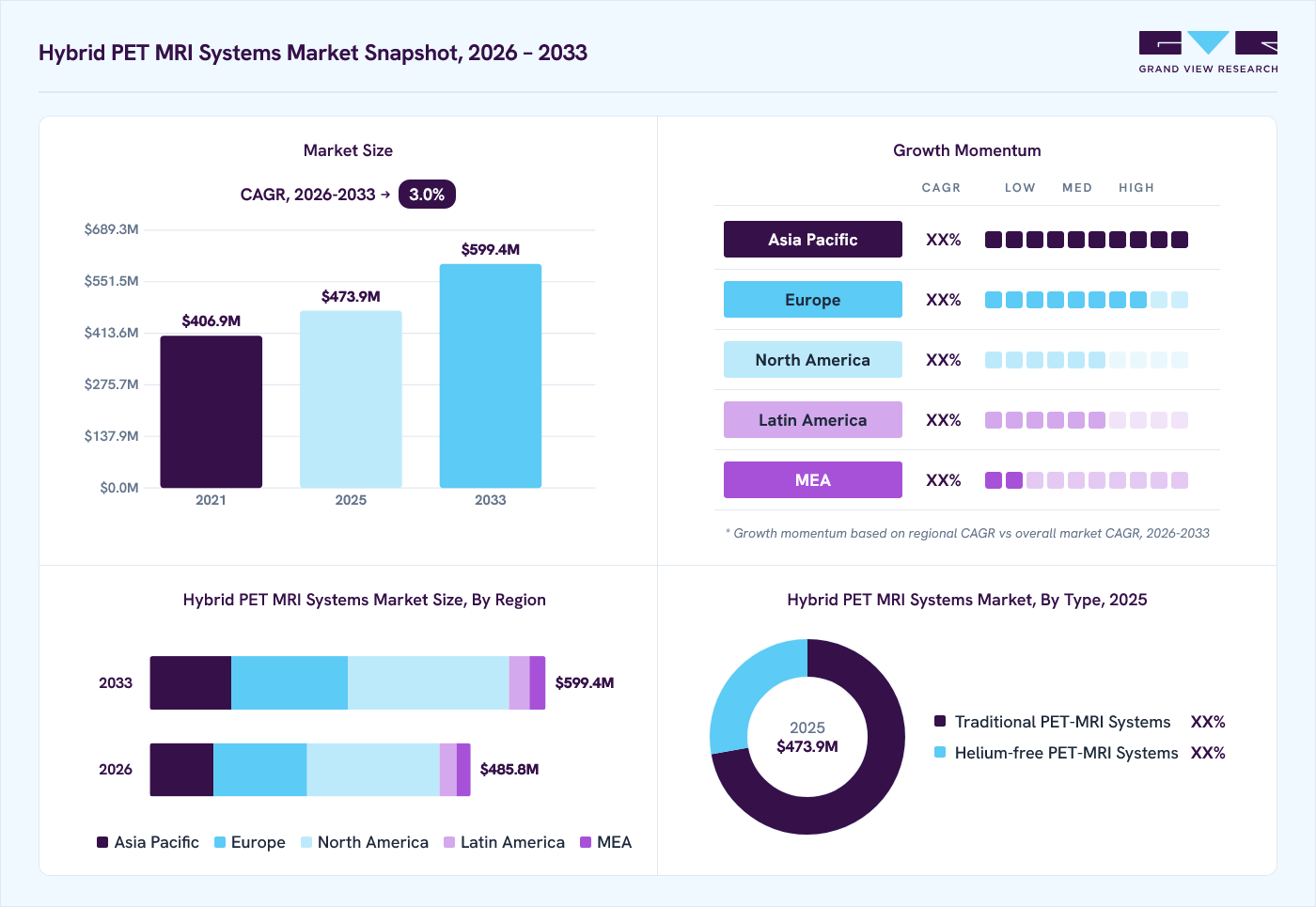
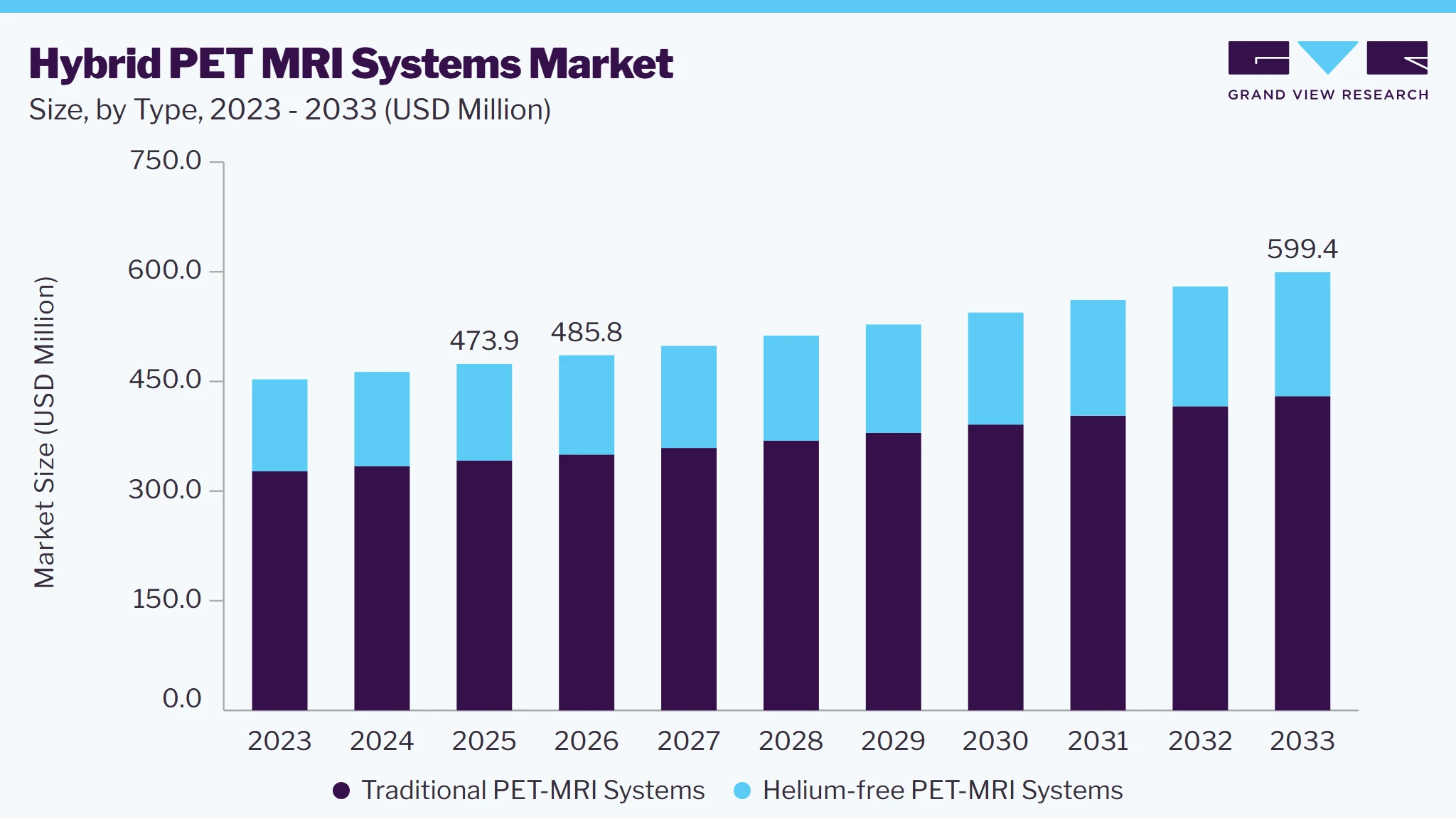
The global hybrid PET MRI systems market size was valued at USD 473.9 million in 2025 and is projected to grow from USD 485.8 million in 2026 to USD 599.4 million by 2033, at a CAGR of 3.0% from 2026 to 2033. North America dominated the market, accounting for the revenue share of 41.3% in 2025. The industry is experiencing strong growth, driven by the increasing adoption of advanced multimodal imaging technologies, rising demand for precise and early disease diagnosis, and growing applications in oncology, neurology, and cardiology.
 Source: Grand View Research, IR Documents, Primary Interviews, Paid DatabasesTo learn more about this report,
 Download Free Sample Report
 Key Market Trends & Insights
- By type: Traditional PET-MRI systems segment held the highest market share of 72.1% in 2025.
- By application: Oncology segment held a leading market share in 2025.
- By end-use: Hospitals segment held a leading market share in 2025.
Regional Highlights
- Largest regional market: North America (41.3% revenue share, 2025)
- Fastest-growing regional market: Asia Pacific (highest CAGR, 2026-2033)
- By country: The U.S. held the largest market share in 2025.
Market Size & Forecast
- Market Size in 2025: USD 473.9 million
- Estimated market size in 2026: USD 485.8 million
- Projected Market Size by 2033: USD 599.4 million
- CAGR (2026-2033): 3.0%
Three ways to get this report
Buy it, customize it, or ask a question.Ask an Analyst
A direct answer, usually in 1 working day
- AccessReport author, directly
- Reply timeWithin 1 working day
- No sales callDirect answer only
- FormatEmail reply
- CostFree, no cost
Get the Full Report
What the study covers
- FormatsPDF · Excel · Dashboard
- Timeline2026–2033 annual, 2025 base
- Coverage20+ countries, 5 regions
- Companies10+ key players profiled
Customize the Report
20% free customization
- IncludeCountries, segments, points
- TailorTo your product definition
- ExtendDeeper competitor detail
- OrA fully bespoke study
- Turnaround5–10 working days
 To learn more about this report, Download Free Sample Report
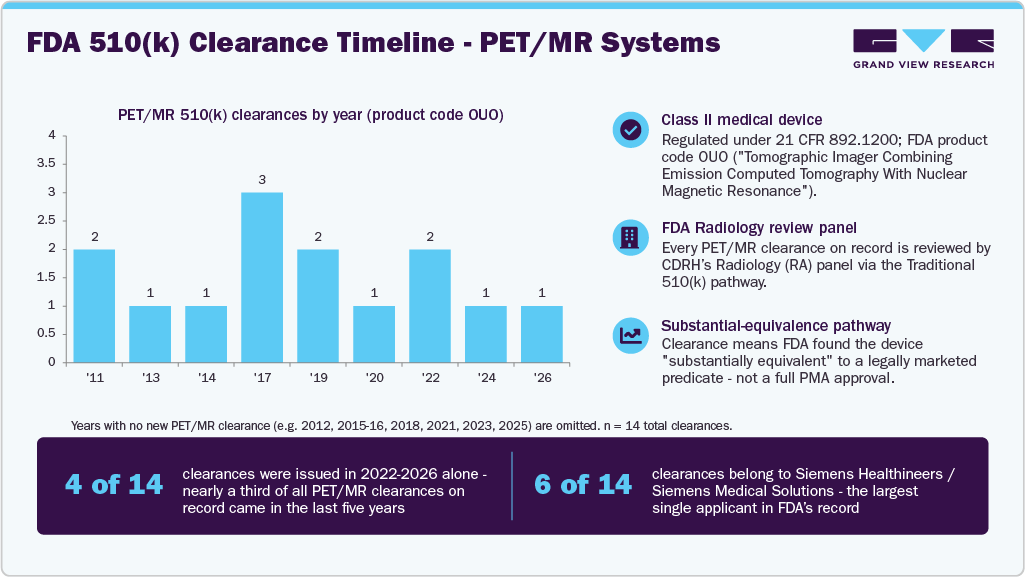
 Hybrid PET/MRI (positron emission tomography/magnetic resonance imaging) systems combine simultaneous functional and anatomical imaging in a single examination, a capability the FDA classifies as a Class II medical device under 21 CFR 892.1200, product code OUO. Since the first U.S. clearance in 2011, fourteen PET/MR systems have received FDA 510(k) clearance, spanning four manufacturers. Over the same period, federal health agencies have tracked a growing burden of the two disease categories. PET/MR is most often used to evaluate cancer and neurodegenerative disease, while CMS has progressively simplified Medicare’s coverage rules for PET-based diagnosis.
 To learn more about this report, Download Free Sample Report
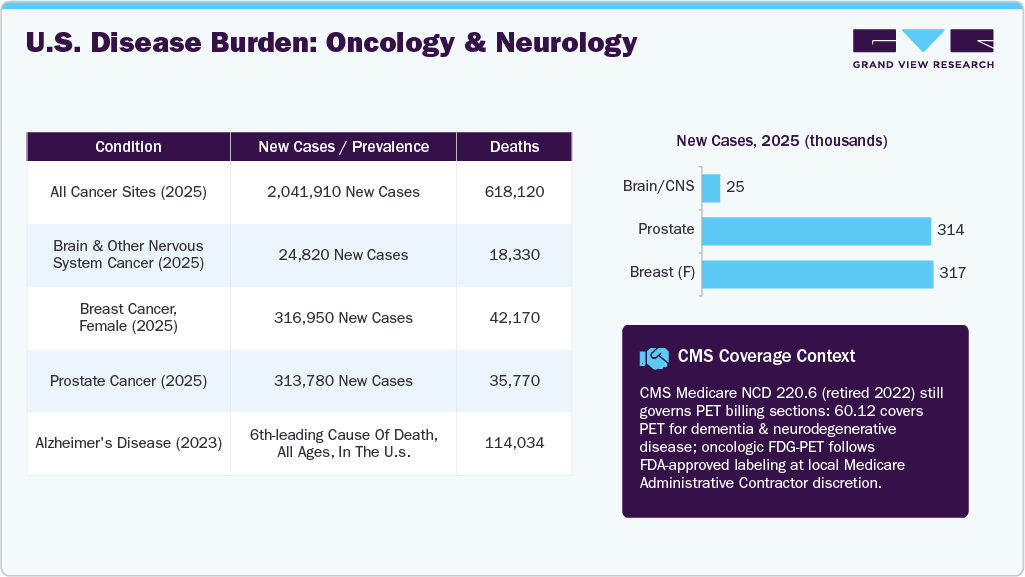
 The National Cancer Institute’s SEER Program, the U.S. government’s authoritative source for population-based cancer statistics, projected 2,041,910 new cancer cases and 618,120 cancer deaths in the United States in 2025 across all sites. Within that total, several specific cancer types carry particular relevance to PET/MR: brain and other nervous-system cancers, where SEER projected 24,820 new cases and 18,330 deaths in 2025, with 187,162 Americans living with a brain or CNS cancer diagnosis as of 2022; and the two most commonly diagnosed solid tumors, female breast cancer (316,950 new cases, 42,170 deaths) and prostate cancer (313,780 new cases, 35,770 deaths) in 2025. PET/MR’s ability to fuse metabolic activity with high-resolution soft-tissue anatomy is particularly suited to brain tumor delineation and to monitoring treatment response in cancers where sequential PET and MRI exams were previously required.
On the neurology side, CDC’s National Center for Health Statistics recorded Alzheimer’s disease as the sixth-leading cause of death in the United States across all ages in 2023, with 114,034 recorded deaths, a burden that continues to grow as the U.S. population ages. Emerging Alzheimer’s drug therapies increasingly rely on PET imaging to confirm diagnosis before treatment and on MR imaging to monitor for treatment-related side effects. A combination hybrid PET/MR performs in a single simultaneous session rather than two separate appointments.
 To learn more about this report, Download Free Sample Report
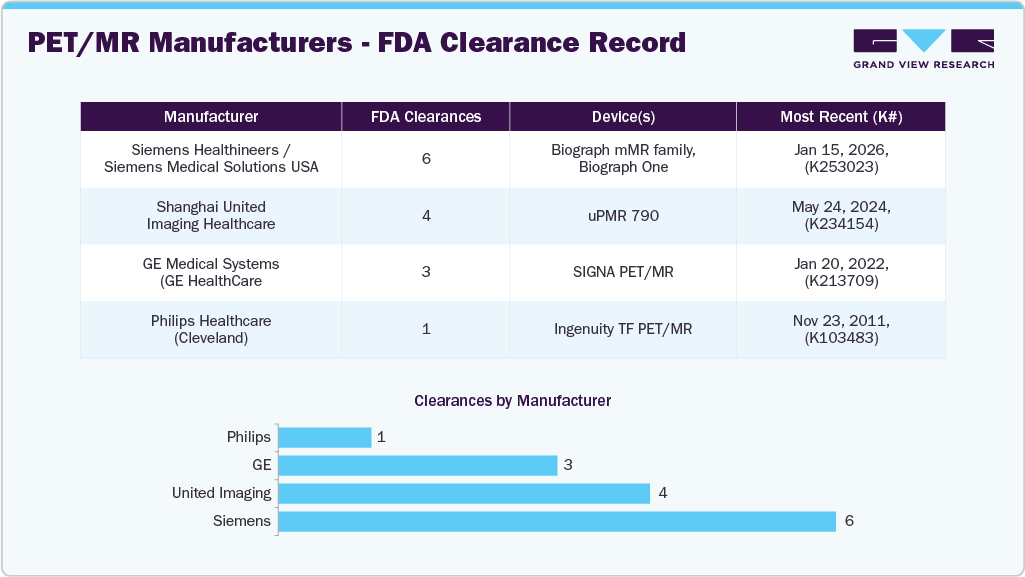
 Because the FDA’s 510(k) database records the applicant on every clearance, it is possible to build a complete, non-proprietary picture of which companies have brought hybrid PET/MR systems to the U.S. market and how often.
Siemens Healthineers (filing under both Siemens Medical Solutions U.S. and, most recently, Siemens Healthineers AG) holds six of the fourteen clearances on record, the most of any applicant. Its clearance history begins with the Biograph mMR (K103429, 2011) and continues through several hardware and software updates to that platform (K133226 in 2013, K163234 in 2017, K172531 in 2017, K200213 in 2020) before culminating in the Biograph One (K253023), a second-generation PET/MR platform cleared in January 2026 the most recent filing in the category and Siemens’ first ground-up PET/MR refresh since the original Biograph mMR fourteen years earlier.
Shanghai United Imaging Healthcare holds four clearances, all under the same device name, uPMR 790, filed in February 2019, November 2019, November 2022, and May 2024, a cadence suggesting iterative updates to a single platform rather than a new product line each time. GE Medical Systems (doing business as GE HealthCare) holds three clearances for its SIGNA PET/MR system, filed in November 2014, February 2017, and January 2022. Philips Healthcare (Cleveland) holds a single clearance, the Ingenuity TF PET/MR (K103483), cleared in November 2011 alongside Siemens’ original Biograph mMR and not updated in the FDA’s OUO record since.
 To learn more about this report, Download Free Sample Report
 Market Dynamics
The hybrid PET MRI systems market is being supported by the increasing demand for advanced multimodal imaging, growing prevalence of cancer and neurological disorders, rising need for accurate disease diagnosis and staging, and technological advancements in PET and MRI platforms. PET/MRI combines the molecular and functional information of positron emission tomography with the high soft-tissue contrast of magnetic resonance imaging, enabling comprehensive assessment within a single examination. Increasing adoption in oncology, neurology, cardiology, and pediatric imaging, along with improvements in image reconstruction, artificial intelligence, and system integration, is also supporting market development.
One of the key drivers of the hybrid PET MRI systems market is the growing demand for highly sensitive and precise diagnostic imaging technologies that can provide complementary anatomical, functional, and molecular information. PET/MRI systems enable simultaneous assessment of metabolic activity and soft-tissue structures, supporting improved diagnosis, disease characterization, treatment planning, and monitoring.
The growing burden of cancer and neurological disorders is further increasing demand for advanced imaging modalities. PET/MRI is particularly valuable in oncology for tumor detection, staging, recurrence assessment, and treatment response evaluation, while its superior soft-tissue contrast makes it useful in brain and neurological imaging. Increasing research applications, technological improvements in motion correction and image reconstruction, and the integration of artificial intelligence are further expanding the clinical utility of hybrid PET/MRI systems.
High acquisition and installation costs remain an important restraint for the hybrid PET MRI systems industry. PET/MRI systems integrate two sophisticated imaging technologies within a single platform, requiring specialized equipment, shielding, dedicated infrastructure, advanced software, and highly trained personnel. These requirements can result in significantly higher capital expenditure compared with conventional PET or MRI systems.
The financial burden can be particularly challenging for smaller hospitals and imaging centers in emerging markets, where healthcare budgets and access to advanced imaging infrastructure remain limited. In addition, system maintenance, radioactive tracer availability, specialized technical expertise, and complex workflow requirements can increase the overall cost of ownership. Consequently, high capital investment, infrastructure requirements, and operational complexity remain key barriers to broader adoption of hybrid PET/MRI systems.
Market Concentration & Characteristics
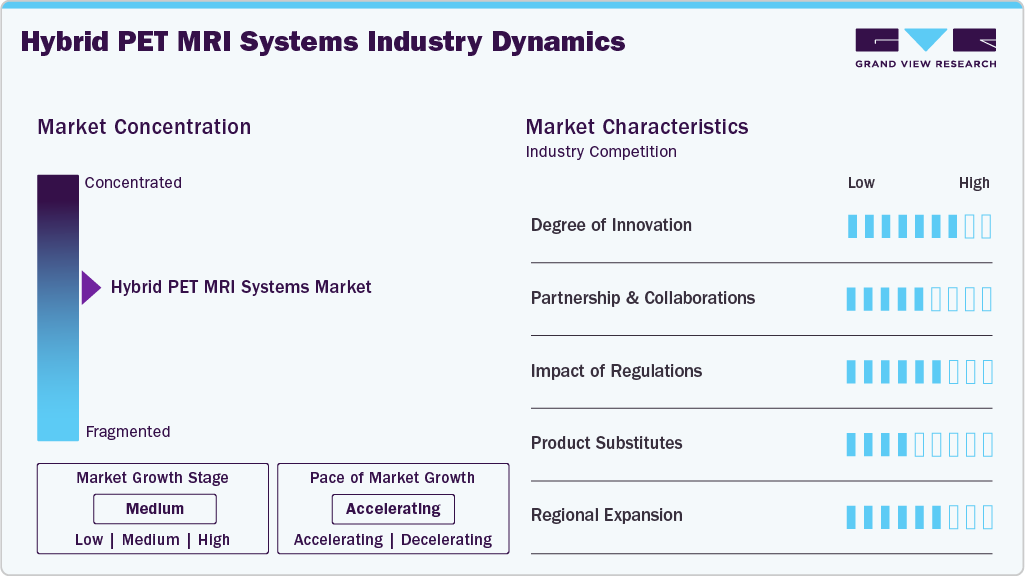
The hybrid PET MRI systems market is characterized by a relatively concentrated competitive landscape, with established medical-imaging manufacturers accounting for much of the clinical PET/MRI ecosystem, alongside specialized companies serving research and niche applications. The market operates across clinical and research pathways, with PET/MRI combining molecular and metabolic information from PET with MRI-based anatomical and soft-tissue characterization. The U.S. FDA classifies PET/MRI as a Class II medical device under product code OUO, with a 510(k) premarket pathway. The FDA classification page was updated on September 14, 2026.
The industry is characterized by continued innovation in PET detector technology, time-of-flight imaging, AI-enabled reconstruction, motion correction, attenuation correction, quantitative imaging, and MRI workflow optimization. Innovation is increasingly focused on improving image quality while reducing acquisition time and simplifying complex PET/MRI workflows. Manufacturers are also developing technologies that improve scanner usability and reduce infrastructure requirements. A notable development occurred in January 2026, when Siemens Healthineers received FDA clearance for Biograph One, a second-generation PET/MR scanner combining anatomical and functional imaging. The company highlighted AI-powered image reconstruction and simplified workflows, with applications including oncology and neurological diseases.
Innovation is also extending toward advanced quantitative PET imaging. In May 2026, GE HealthCare announced that its MIM KineticID software had become 510(k)-pending with the FDA, supporting dynamic PET workflows and kinetic modeling designed to evaluate tracer behavior over time.
 To learn more about this report, Download Free Sample Report
 Partnerships and collaborations are becoming increasingly important as PET/MRI requires coordination among imaging-equipment manufacturers, hospitals, academic institutions, nuclear medicine departments, radiologists, physicists, and research organizations. Collaboration supports clinical validation, radiotracer research, workflow development, technology evaluation, and expansion of PET/MRI applications.
Academic medical centers are particularly important because PET/MRI remains a specialized modality requiring substantial clinical expertise and infrastructure. Government procurement records also demonstrate continued investment in PET/MRI infrastructure. For example, in February 2025, China's government procurement platform reported a contract worth approximately RMB 8.0 million for renovation work associated with the PET/MR and SPECT/CT rooms at Huashan Hospital, Fudan University.
Regulation has a significant impact on the hybrid PET MRI systems market because PET/MRI systems combine two regulated imaging technologies and require compliance with medical-device, radiation-safety, MRI-safety, and quality-management requirements. In the U.S., the FDA classifies PET/MRI as a Class II device, with the 510(k) pathway applying to these systems. The FDA's guidance for MRI diagnostic devices also specifically applies to MRI components incorporated into dual-modality devices such as PET/MRI systems. A recent regulatory development occurred in February 2026, when the FDA's updated Quality Management System Regulation (QMSR) became effective. The regulation incorporates ISO 13485:2016 into the U.S. medical-device quality framework, affecting manufacturers' quality-management and compliance processes.
The regulatory environment also influences product modifications and post-market monitoring. FDA records updated in 2026 continue to list SIGNA PET/MR under the Class II PET/MRI classification, demonstrating ongoing regulatory oversight of commercially deployed systems.
The hybrid PET MRI systems market faces substitution from PET/CT, standalone MRI, standalone PET, SPECT/CT, and other conventional or hybrid diagnostic imaging modalities. PET/CT remains an important alternative because it combines metabolic information with anatomical imaging and has a substantially established clinical workflow. MRI can also substitute for PET/MRI when high-resolution soft-tissue characterization is required without molecular PET information.
Substitution varies according to disease, clinical objective, availability, cost, radiation considerations, and institutional capabilities. PET/MRI can provide advantages in selected applications requiring complementary molecular and soft-tissue information, particularly oncology, neurology, and pediatric imaging. However, high capital costs, longer examination workflows, radiotracer requirements, and specialized infrastructure can influence modality selection. The FDA describes PET/MRI as an integrated system capable of acquiring PET and MR images simultaneously or sequentially, with MRI data also used for PET attenuation correction.
Regional expansion in the market is being supported by increasing investment in advanced diagnostic infrastructure, modernization of hospital imaging departments, and expansion of PET, MRI, and nuclear medicine capabilities. In the U.S., GE HealthCare and Catholic Health announced a USD 500 million, 10-year partnership in July 2026, covering MR, PET, nuclear medicine, and AI-enabled imaging across multiple healthcare locations. In Australia, NSW Health reported in May 2026 that Nepean Hospital received advanced MRI, CT, and molecular-imaging equipment as part of a more than AUD 1 billion redevelopment, strengthening diagnostic capacity for oncology, cardiac, and neurological care. These investments demonstrate the broader expansion of the infrastructure supporting advanced hybrid imaging technologies.
Analyst Perspective
The hybrid PET MRI systems market is expected to witness steady growth, supported by increasing demand for advanced multimodal imaging, rising cancer burden, and expanding applications in oncology, neurology, and cardiology. From an analyst perspective, the market is evolving toward digital PET detectors, improved time-of-flight performance, AI-enabled image reconstruction, and enhanced motion and attenuation correction capabilities. Established players such as Siemens Healthineers, GE HealthCare, Philips, and United Imaging Healthcare are strengthening their portfolios through technological advancements and clinical applications.
Type Insights
The traditional PET-MRI systems segment dominated the market in 2025, accounting for 72.1% of overall market revenue. Its leading position is primarily attributed to the established clinical adoption of conventional PET-MRI platforms, broader availability across major hospitals and academic medical centers, and extensive use in oncology, neurology, and cardiovascular imaging. Traditional systems benefit from proven imaging performance, established clinical workflows, and a growing body of evidence supporting their diagnostic utility. In addition, established manufacturers such as Siemens Healthineers, GE HealthCare, and Philips have supported market penetration through advanced PET/MRI platforms, software integration, and technological improvements in image reconstruction, motion correction, and attenuation correction.
The helium-free PET-MRI systems segment is expected to witness steady growth, supported by increasing demand for simplified MRI infrastructure, reduced dependence on liquid helium, and more efficient installation and operating requirements. Helium-free magnet technologies can help healthcare facilities address challenges associated with helium supply, storage, and cooling infrastructure while potentially reducing system footprint and maintenance requirements. Growing investments in advanced diagnostic imaging, particularly across hospitals, academic medical centers, and specialized imaging facilities, are creating opportunities for adoption. In addition, continued technological advancements in compact magnet designs, system integration, and PET detector technologies are expected to improve the feasibility and commercial attractiveness of helium-free PET-MRI platforms over the forecast period.
Application Insights
The oncology segment dominated the hybrid PET MRI systems market in 2025, underpinned by the growing demand for accurate cancer detection, staging, treatment planning, and therapy-response assessment. PET/MRI combines PET-based metabolic and molecular information with MRI’s superior soft-tissue contrast, enabling comprehensive evaluation of primary tumors, lymph-node involvement, and metastatic disease. Increasing cancer incidence worldwide, along with the expanding use of precision oncology and molecular imaging, is strengthening demand for advanced multimodal diagnostic technologies. PET/MRI is particularly valuable for brain, head and neck, pelvic, pediatric, and other soft-tissue malignancies. Continued improvements in image reconstruction, motion correction, and quantitative imaging are further supporting oncology applications.
The neurology segment is expected to witness significant growth, driven by increasing demand for advanced brain imaging and growing clinical applications in neurodegenerative diseases, epilepsy, brain tumors, and dementia. PET/MRI enables simultaneous assessment of molecular, metabolic, structural, and functional changes, providing complementary information that can support disease characterization and treatment planning. Rising neurological disease burden and expanding research into biomarkers are further encouraging adoption across specialized hospitals and academic institutions. Technological advancements in high-resolution MRI, PET detectors, motion correction, and quantitative image analysis are improving diagnostic capabilities. Increasing clinical evidence and research activity are expected to further strengthen PET/MRI utilization in neurology.
End-use Insights
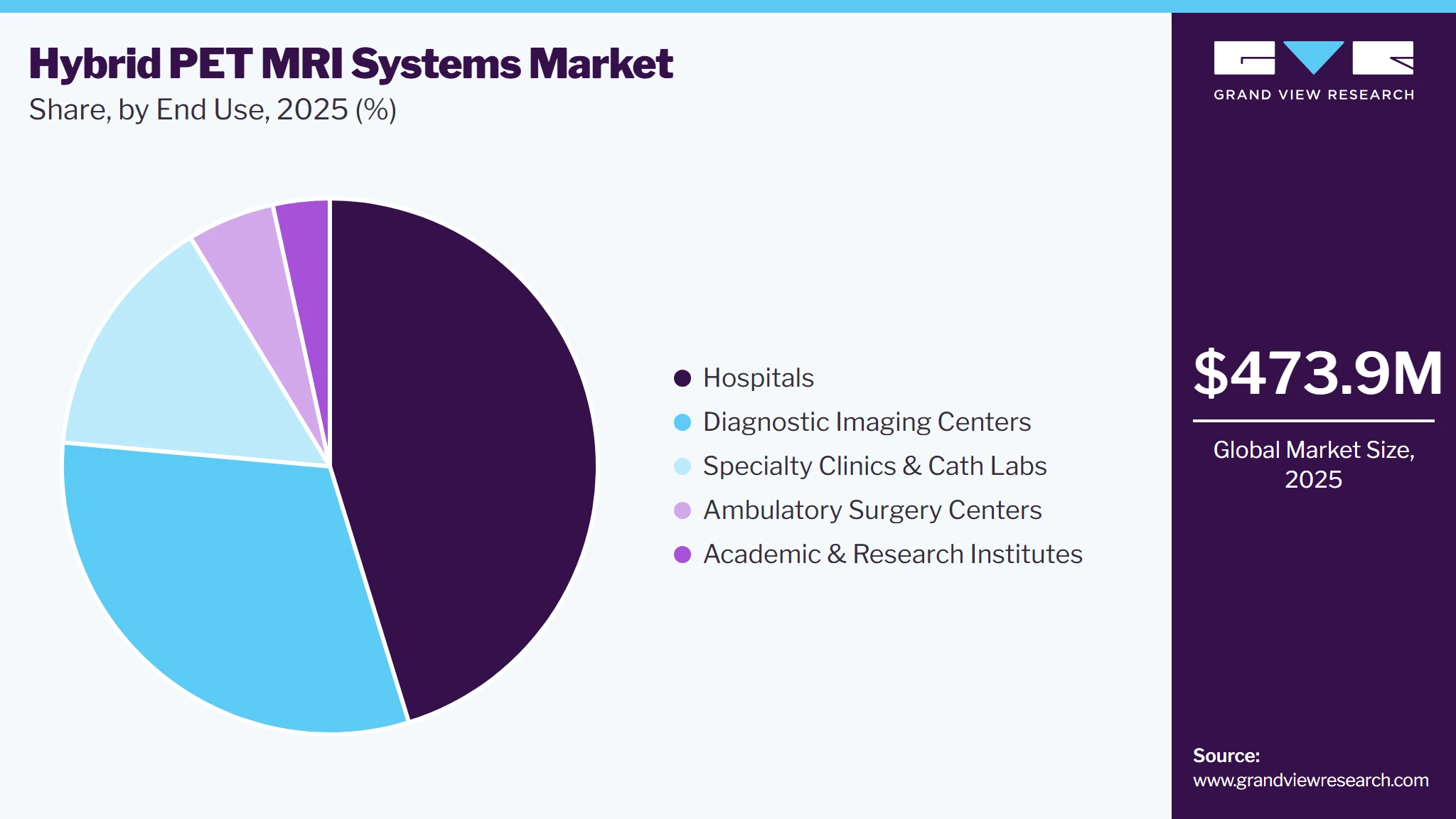
The hospitals segment held the largest revenue share of the hybrid PET MRI systems market in 2025, strenghtened by the availability of advanced diagnostic infrastructure, substantial capital investment capabilities, and access to multidisciplinary clinical expertise. Hospitals increasingly adopt PET/MRI systems for complex oncology, neurological, cardiovascular, and pediatric imaging applications requiring comprehensive anatomical and molecular information. In addition, tertiary-care and academic hospitals serve as major centers for advanced diagnostic procedures, clinical research, and technology evaluation, encouraging investments in sophisticated imaging platforms. Growing patient volumes, increasing emphasis on precision diagnosis, and technological advancements in PET/MRI systems are further supporting adoption across hospitals globally.
 To learn more about this report, Download Free Sample Report
 The diagnostic imaging centers segment is expected to witness the fastest growth over the forecast period, driven by the increasing demand for advanced outpatient diagnostic services, expansion of specialized imaging facilities, and growing adoption of multimodal imaging technologies. PET/MRI systems offer comprehensive anatomical and molecular information in a single examination, supporting applications across oncology, neurology, and other complex diagnostic areas. Rising healthcare expenditure, increasing patient preference for outpatient imaging, and investments in advanced diagnostic infrastructure are encouraging imaging centers to expand their technological capabilities. In addition, improvements in PET detectors, AI-assisted image reconstruction, motion correction, and workflow optimization are expected to enhance system efficiency and support wider adoption.
Regional Insights
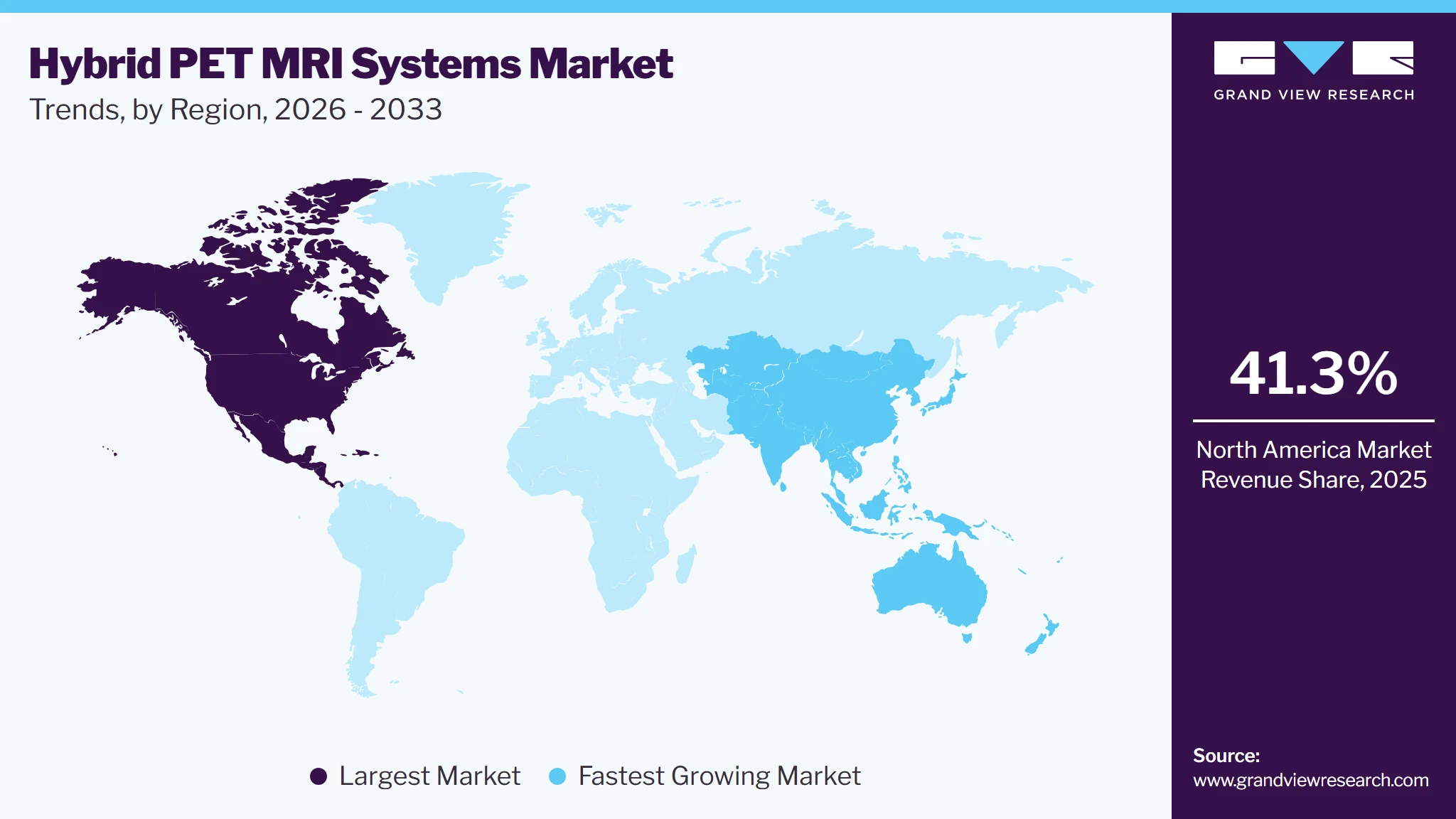
Thehybrid PET MRI systems industry in North Americaaccounted for 41.3% share of the global market in 2025, supported by advanced nuclear medicine and MRI infrastructure, high healthcare expenditure, established academic medical centers, and strong multimodal imaging research. In the U.S., the National Cancer Institute estimated 2.04 million new cancer cases in 2025, supporting demand for advanced oncology imaging. Canada is also characterized by a substantial cancer burden, with 254,800 new cancer cases projected for 2025, while approximately 42% of Canadians are expected to develop cancer during their lifetime. These factors support PET/MRI applications across oncology, neurology, and pediatric imaging.
 To learn more about this report, Download Free Sample Report
 U.S. Hybrid PET MRI Systems Market Trends
Thehybrid PET MRI systems industry in the U.S. is well-positioned due to the large installed base of advanced diagnostic imaging equipment, leading academic hospitals, and strong clinical research capabilities. PET/MRI applications continue to expand in oncology, neurology, and pediatric imaging, where MRI's superior soft-tissue characterization can complement PET's molecular information. A 2025 Radiographics publication specifically reviewed PET/MRI techniques, indications, and clinical implementation in pediatric patients, highlighting its relevance for reducing radiation exposure and improving soft-tissue assessment.
Europe Hybrid PET MRI Systems Market Trends
The hybrid PET MRI systems industry in Europe is supported by developed healthcare systems, established nuclear medicine departments, advanced MRI infrastructure, and increasing emphasis on precision diagnosis. Adoption varies across countries according to healthcare budgets, reimbursement policies, availability of radiotracers, and access to specialized imaging centers. Technological advancements, improved image reconstruction, integration of artificial intelligence, and increasing research activities are further supporting market expansion.
The UKhybrid PET MRI systems industryis characterized by an established NHS diagnostic-imaging infrastructure and increasing emphasis on advanced imaging for cancer and other complex diseases. PET/MRI remains a specialized modality, with adoption concentrated in major hospitals and academic centers. Continued research into PET-based quantitative imaging and radiation oncology is supporting the clinical evidence base for advanced PET applications.
The hybrid PET MRI systems industry in Germany benefits from a highly developed healthcare system, strong medical-technology capabilities, and extensive research infrastructure. Demand for hybrid imaging is supported by oncology and neurological applications, particularly at university hospitals and specialized imaging centers. The country's strong academic and research ecosystem also provides opportunities for PET/MRI development, clinical validation, and molecular-imaging research.
The Spain hybrid PET MRI systems industry is supported by established hospital-based nuclear medicine services, specialist radiology departments, and growing adoption of advanced multimodal imaging. PET/MRI remains concentrated in specialized centers because of its high capital requirements and complex workflow. Continued development of oncology imaging, neurological applications, and research programs is creating opportunities for further utilization of integrated PET/MRI systems.
Asia Pacific Hybrid PET MRI Systems Market Trends
The hybrid PET MRI systems industryin the Asia Pacific is expected to exhibit the fastest CAGR during the forecast period. The growth comes on the back of the prevalence of significant development opportunities due to expanding healthcare infrastructure, increasing cancer and neurological disease burden, and rising investment in advanced diagnostic imaging. China and Japan have developed substantial PET and MRI capabilities, while other markets are gradually increasing access to sophisticated molecular imaging. Government-supported healthcare investment and academic research are expected to support the adoption of hybrid imaging technologies.
The Chinahybrid PET MRI systems industryhas gained impetus from the expanding advanced imaging infrastructure and increasing research activity in PET/MR applications. A notable government-affiliated example is Beijing Xuanwu Hospital, which in September 2025 marked the 10th anniversary of its PET/MR installation with a symposium focused on brain function and molecular imaging. The event demonstrates the established use of PET/MR for neuroscience and molecular-imaging research in China.
The hybrid PET MRI systems industry in Japan has high hopes on advanced healthcare infrastructure, sophisticated diagnostic imaging capabilities, and established nuclear medicine services. PET imaging reimbursement and regulatory frameworks remain important considerations for market development. In August 2025, Japan's Central Social Insurance Medical Council discussed the need to improve reimbursement pathways for PET diagnostic agents, highlighting the importance of reimbursement and radiotracer availability for expanding PET-based diagnostic services.
Latin America Hybrid PET MRI Systems Market Trends
The hybrid PET MRI systems industry in Latin America is developing alongside improvements in diagnostic imaging infrastructure, cancer-care capacity, and access to nuclear medicine. For instance, Brazil represents an important market due to its relatively large healthcare systems and specialist medical centers. However, high equipment costs, radiotracer availability, reimbursement limitations, and concentration of advanced imaging services in major cities continue to influence PET/MRI adoption.
The Brazilhybrid PET MRI systems industryhas gained prominence due to the increasing utilization of PET-based imaging in oncology and the expansion of advanced diagnostic services. In May 2025, Brazil's Ministry of Health expanded the use of PET/CT within the Unified Health System (SUS) for staging patients with locally advanced esophageal carcinoma following inconclusive CT results. Although the policy concerns PET/CT rather than PET/MRI, it demonstrates increasing government-supported utilization of PET-based molecular imaging in cancer care and provides an infrastructure and clinical-use environment relevant to hybrid PET imaging.
Middle East & Africa Hybrid PET MRI Systems Market Trends
The hybrid PET MRI systems industry in the Middle East & Africa (MEA)has received a major boost from the healthcare infrastructure development, investment in advanced diagnostic centers, and growing demand for oncology and neurological imaging. Adoption remains concentrated in countries with relatively advanced healthcare systems and specialist hospitals. High capital expenditure, limited availability of specialized personnel, radiotracer logistics, and reimbursement constraints remain important considerations for wider PET/MRI deployment.
The Saudi Arabiahybrid PET MRI systems industry is supported by continued development of specialized healthcare infrastructure and investment in advanced diagnostic technologies. PET-based imaging is particularly relevant to the country's expanding cancer-diagnostic capabilities. The adoption of PET/MRI is expected to remain concentrated in major tertiary hospitals and specialized medical centers because of the technology's capital intensity, technical complexity, and requirement for multidisciplinary expertise.
Key Hybrid PET MRI Systems Company Insights
The hybrid PET MRI systems market is competitive, with key players including Siemens Healthineers, GE HealthCare, and Koninklijke Philips N.V. These companies are focusing on product innovation, advanced detector technologies, AI-enabled image reconstruction, improved motion and attenuation correction, and strategic collaborations to strengthen their market presence. Competition is centered on integrated PET/MRI platforms, digital PET technology, helium-free or dry-magnet solutions, improved imaging performance, and expansion across oncology, neurology, cardiovascular, and research applications. Established imaging manufacturers leverage broad healthcare portfolios and hospital networks, while specialized players emphasize preclinical, research, and niche molecular-imaging applications.
Key Hybrid PET MRI Systems Companies
The following key companies have been profiled for this study on the hybrid PET MRI systems market.
-
Siemens Healthineers
-
GE HealthCare
-
Koninklijke Philips N.V.
-
United Imaging Healthcare
-
Bruker Corporation
-
Mediso Ltd.
-
MR Solutions
-
Canon Medical Systems Corporation
-
Cubresa Inc.
-
Molecubes
Competitive Benchmarking
Category
Operating Strategies
Competitive Edge
Weakness
Established Players (Siemens Healthineers, GE HealthCare, Koninklijke Philips N.V., United Imaging Healthcare)
Established players focus on strengthening their positions in hybrid PET/MRI through integrated imaging platforms, technological innovation, clinical partnerships, and expansion of advanced PET and MRI capabilities. Their strategies include improving PET detector performance, time-of-flight capabilities, AI-enabled image reconstruction, motion correction, workflow automation, and applications across oncology, neurology, and cardiology. Siemens, GE HealthCare, Philips, and United Imaging have established positions in PET/MRI and broader molecular imaging through their extensive imaging portfolios and healthcare networks.
Strong global brand recognition, extensive MRI and molecular imaging expertise, broad product portfolios, established hospital relationships, regulatory experience, global distribution networks, and significant R&D capabilities provide competitive advantages. Their ability to integrate PET and MRI technologies with advanced software, AI, motion correction, and quantitative imaging supports differentiation in clinical and research applications.
High system acquisition and installation costs, complex infrastructure requirements, lengthy implementation processes, specialized technical expertise, and relatively limited PET/MRI adoption compared with established PET/CT workflows can constrain market penetration. High maintenance requirements and the need for dedicated facilities and trained personnel can also limit adoption among smaller hospitals and imaging centers. Siemens' Biograph mMR, for example, has a listed operating weight of 9 tons and minimum room requirement of 33 m², illustrating the infrastructure requirements associated with integrated PET/MRI systems.
Emerging Players (Bruker Corporation, Mediso Ltd., MR Solutions, Canon Medical Systems Corporation, Cubresa Inc., Molecubes)
Emerging and specialized players focus on developing differentiated PET/MRI platforms, preclinical imaging systems, brain and research-focused solutions, and advanced molecular imaging technologies. Their strategies emphasize specialized applications, detector innovation, compact or cryogen-free technologies, high-field imaging, research collaborations, and integration with advanced quantitative and AI-based imaging workflows. Companies such as Bruker, Mediso, MR Solutions, and Cubresa have established positions particularly within research and specialized molecular imaging applications.
Specialized technological expertise, focused R&D capabilities, differentiated PET/MR configurations, strong research-institution relationships, and customized solutions for preclinical, neurological, and molecular imaging applications provide competitive differentiation. Their focused portfolios can enable faster development of specialized technologies and solutions targeting specific research or clinical requirements.
Smaller commercial scale, narrower product portfolios, lower global distribution reach, limited large-scale hospital penetration, and comparatively lower brand recognition than major imaging-equipment manufacturers can restrict market expansion. Dependence on research funding, specialized applications, regulatory approvals, and highly trained personnel may further constrain broader commercialization. Some companies primarily address preclinical or research markets, limiting their direct exposure to the clinical whole-body PET/MRI market.
Recent Development
- In June 2026, St. Joseph’s Health Care London unveiled Canada’s first BIOGRAPH One PET/MR at the Lawson Research Institute. The system is expected to support research in oncology, stroke, neurological disorders, chronic pain, and other conditions, strengthening Canada’s advanced hybrid imaging and molecular imaging capabilities.
“This milestone reflects our team’s deep commitment to bringing one of the most advanced imaging technologies to Canada, Seeing BIOGRAPH One installed at Lawson is incredibly rewarding. It shows how innovation can directly support clinicians and researchers in delivering better care and driving new discoveries.”
- Head of MRI business, Siemens Healthineers Canada
“Collaboration is at the heart of what makes achievements like this possible, We’re proud to partner with St. Joseph’s and Lawson to support research that will expand our understanding of disease, including neurodegenerative diseases and Alzheimer’s disease, and ultimately improve patient outcomes across Canada.”
- PhD, head of research, innovation and scientific engagement, Siemens Healthineers Canada.
- In May 2026, United Imaging showcased its latest uPMR Zenith PET/MR system at SNMMI 2026, highlighting high PET sensitivity, advanced MR capabilities, real-time motion imaging, improved time-of-flight resolution, and whole-body imaging. The company also highlighted applications across oncology, neurology, drug development, and theranostics, supporting the expansion of advanced PET/MR technologies in the North American market.
Hybrid PET MRI Systems Market Report Scope
Report Attribute
Details
Market size in 2025
USD 473.9 million
Estimated market size in 2026
USD 485.8 million
Projected market size by 2033
USD 599.4 million
Growth rate
CAGR of 3.0% from 2026 to 2033
Base year for estimation
2025
Historical data
2021 - 2024
Forecast period
2026 - 2033
Quantitative units
Revenue in USD million, and CAGR from 2026 to 2033
Report coverage
Revenue forecast, company ranking, competitive landscape, growth factors, and trends
Segments covered
Type, application, end-use, region
Regional scope
North America; Europe; Asia Pacific; Latin America; MEA
Country scope
U.S.; Canada; Mexico; UK; Germany; France; Italy; Spain; Denmark; Sweden; Norway; Japan; China; India; Australia; Thailand; South Korea; Brazil; Argentina; South Africa; Saudi Arabia; UAE; Kuwait
Key companies profiled
Siemens Healthineers; GE HealthCare; Koninklijke Philips N.V.; United Imaging Healthcare; Bruker Corporation; Mediso Ltd.; MR Solutions; Canon Medical Systems Corporation; Cubresa Inc.; Molecubes
Customization scope
Free report customization (equivalent up to 8 analyst’s working days) with purchase. Addition or alteration to country, regional, and segment scope
Pricing and purchase options
Avail customized purchase options to meet your exact research needs. Explore purchase options
Global Hybrid PET MRI Systems Market Report Segmentation
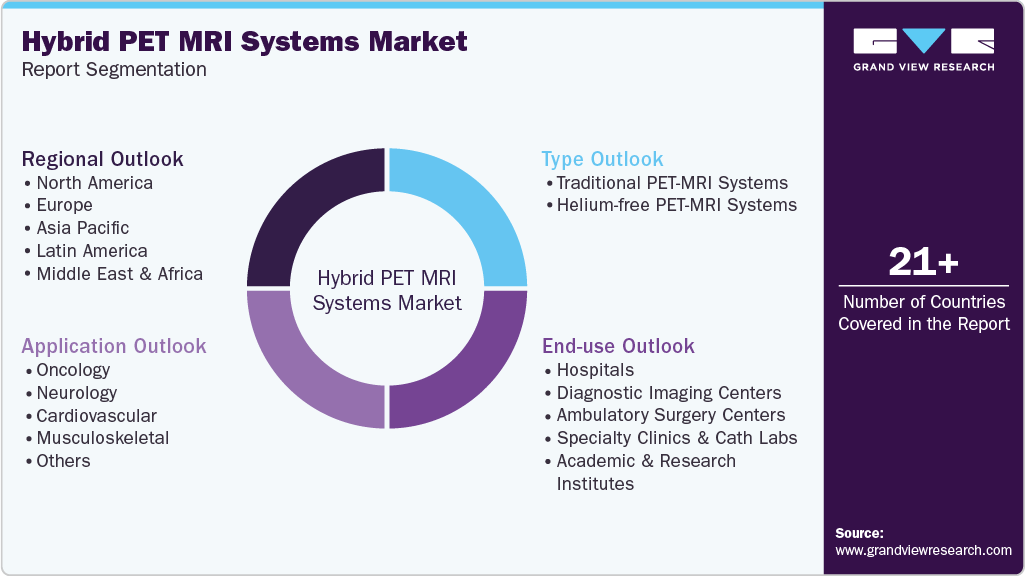
This report forecasts revenue growth at global, regional, and country levels and provides an analysis of the latest industry trends in each of the sub-segments from 2021 to 2033. For this study, Grand View Research has segmented the global hybrid PET MRI systems market report based on type, application, end-use, and region:
 To learn more about this report, Download Free Sample Report
 -
Type Outlook (Revenue, USD Million, 2021 - 2033)
-
Traditional PET-MRI systems
-
Helium-free PET-MRI systems
-
-
Application Outlook (Revenue, USD Million, 2021 - 2033)
-
Oncology
-
Neurology
-
Cardiovascular
-
Musculoskeletal
-
Others
-
-
End-use Outlook (Revenue, USD Million, 2021 - 2033)
-
Hospitals
-
Diagnostic Imaging Centers
-
Ambulatory Surgery Centers
-
Specialty Clinics & Cath Labs
-
Academic & Research Institutes
-
-
Regional Outlook (Revenue, USD Million, 2021 - 2033)
-
North America
-
U.S.
-
Canada
-
Mexico
-
-
Europe
-
UK
-
Germany
-
France
-
Italy
-
Spain
-
Denmark
-
Sweden
-
Norway
-
-
Asia Pacific
-
China
-
Japan
-
South Korea
-
India
-
Australia
-
Thailand
-
-
Latin America
-
Brazil
-
Argentina
-
-
MEA
-
Saudi Arabia
-
South Africa
-
UAE
-
Kuwait
-
-
Research Methodology
The hybrid PET MRI systems marketfigures in this report are based on a proven research process that combines executive interviews with secondary research from proprietary databases, company filings, and recognized regulatory and institutional sources. Market size is built through value-chain sizing-reconciling supply-side and demand-side estimates-and triangulated with bottom-up and top-down approaches. Every estimate passes multiple levels of expert validation before publication, with eachhybrid PET MRI systemssegment quantified using the revenue-capture definitions in the table below.
Segment Definition
Type
Revenue capture definition
Traditional PET-MRI Systems
Revenue generated from the sale, installation, and associated commercial deployment of conventional hybrid PET-MRI systems that integrate PET and MRI technologies within a single imaging platform. This includes hardware, integrated scanner configurations, acquisition systems, and manufacturer-provided system components sold to hospitals, imaging centers, academic institutions, and specialized healthcare facilities.
Helium-free PET-MRI Systems
Revenue generated from PET-MRI systems incorporating helium-free or sealed-helium MRI technology designed to reduce dependence on conventional liquid-helium infrastructure. Revenue includes complete integrated PET-MRI equipment, associated magnet and cooling technologies, installation, and commercially supplied system components. Helium-free MRI technologies can simplify installation and reduce helium-related operational requirements.
Application
Revenue capture definition
Oncology
Revenue generated from PET-MRI systems used for cancer detection, characterization, staging, treatment planning, therapy response assessment, recurrence monitoring, and whole-body tumor imaging. This includes applications involving prostate, brain, head and neck, liver, breast, colorectal, and other cancers where PET metabolic information is combined with MRI’s anatomical and soft-tissue imaging capabilities.
Neurology
Revenue generated from PET-MRI systems used for neurological and neuro-oncological imaging, including brain tumors, epilepsy, dementia, neurodegenerative disorders, and other central nervous system conditions. Revenue encompasses system utilization for simultaneous metabolic, molecular, anatomical, and functional brain assessment, particularly where MRI provides detailed soft-tissue characterization alongside PET tracer-based information.
Cardiovascular
Revenue generated from PET-MRI systems used for cardiovascular imaging, including assessment of myocardial inflammation, cardiac sarcoidosis, fibrosis, viability, and other cardiovascular conditions. The segment captures system use where PET provides metabolic or inflammatory information while MRI evaluates myocardial structure, function, tissue characteristics, and patterns of injury within an integrated examination.
Musculoskeletal
Revenue generated from PET-MRI systems used for imaging musculoskeletal disorders involving bones, joints, muscles, and soft tissues. Applications include evaluation of tumors, inflammatory conditions, infection, treatment response, and other abnormalities requiring combined metabolic and high-resolution anatomical information. Revenue includes system utilization across relevant clinical and specialized imaging examinations.
Others
Revenue generated from PET-MRI applications outside oncology, neurology, cardiovascular, and musculoskeletal imaging. This includes pediatric imaging, inflammatory diseases, gastrointestinal disorders, and other specialized or emerging applications. The segment captures system utilization for clinical and research examinations where combined molecular, functional, and anatomical information provides value beyond conventional imaging approaches.
End use
Revenue capture definition
Hospitals
Revenue generated from PET-MRI systems installed and operated within hospitals for routine clinical diagnosis, cancer staging, neurological assessment, cardiovascular imaging, treatment planning, and follow-up examinations. This includes systems purchased or leased by public and private hospitals, integrated healthcare networks, and tertiary or specialized medical institutions providing advanced imaging services.
Diagnostic Imaging Centers
Revenue generated from PET-MRI systems deployed in dedicated diagnostic imaging facilities that provide advanced molecular and anatomical imaging services to referred patients. Revenue includes system purchases and utilization associated with oncology, neurology, cardiovascular, and other diagnostic examinations performed as part of specialized outpatient imaging services.
Ambulatory Surgical Centers
Revenue generated from PET-MRI systems used within ambulatory and outpatient surgical facilities for selected preoperative, postoperative, diagnostic, or treatment-related imaging requirements. The segment captures commercially deployed systems and related imaging utilization in centers providing same-day or short-stay procedures, where advanced imaging may support patient evaluation and clinical decision-making.
Specialty Clinics & Cath Labs
Revenue generated from PET-MRI systems installed or utilized by specialized clinics and cardiovascular/interventional facilities for focused imaging applications. This includes neurological, oncology, cardiovascular, and other specialty examinations requiring integrated PET and MRI information. Revenue encompasses equipment deployment and associated system utilization within specialized clinical environments.
Academic & Research Institutes
Revenue generated from PET-MRI systems deployed by universities, academic medical centers, research institutes, and other scientific organizations for clinical research, translational studies, radiotracer development, disease investigation, and technology development. The segment includes commercially acquired systems and research-focused utilization of PET/MRI platforms for advanced molecular and multimodal imaging studies. Academic institutions represented a major share of early PET/MRI installations and research use.
Estimation Model
Section
Key Question
Process Steps
Data Sources
[01] Scope Definition
What exactly is included in the Hybrid PET MRI Systems Market?
- Define the market scope across integrated PET/MRI systems, including whole-body and dedicated systems.
- Segment the market by type, application, and end use.
- Define applications covered, including oncology, neurology, cardiology, and other clinical applications.
- Establish geographic and temporal scope.
Ophthalmology clinical literature, AAO, WHO, CDC, national health statistics, regulatory databases
[02] Build the Product Base
How many PET/MRI systems are installed or required, and what is the addressable equipment volume?
- Estimate the installed base and annual demand for PET/MRI systems by country, healthcare setting, and application.
- Determine the proportion of healthcare facilities with the infrastructure and clinical requirements to adopt hybrid PET/MRI.
- Estimate annual system procurement volume based on replacement cycles, new installations, and expansion of advanced imaging capacity.
- Allocate system demand across whole-body and dedicated PET/MRI configurations, where applicable.
National ophthalmology statistics, peer-reviewed epidemiology studies, hospital procedure volumes, CMS claims/utilization data
[03] Estimate Penetration
How widely are PET/MRI systems adopted, and what determines utilization and replacement demand?
- Estimate PET/MRI adoption among eligible hospitals, imaging centers, and academic/research institutions based on clinical demand and infrastructure availability.
- Determine utilization by application, including oncology, neurology, cardiology, and other indications.
- Assess the impact of reimbursement, capital expenditure requirements, installed PET/CT and MRI infrastructure, and availability of trained personnel.
- Evaluate shifts in adoption driven by technological advancements, improved image quality, simultaneous imaging capabilities, and increasing demand for advanced multimodal diagnostics.
Clinical guidelines, peer-reviewed ophthalmology studies, surgeon interviews, hospital/retina-center surveys, procedure databases
[04] Revenue Conversion
How does PET/MRI system demand translate into market revenue?
- Collect average selling prices for hybrid PET/MRI systems across key countries and healthcare settings.
- Calculate the revenue average per PET/MRI system based on configuration, specifications, and market.
- Incorporate associated revenue from installation, service contracts, upgrades, and related components where included within the market scope.
- Apply system volumes and country-specific ASPs to derive total market revenue.
CMS reimbursement and utilization data, national reimbursement schedules, hospital procurement data
Delivered Customizations
This report has been delivered with the following In-depth customizations
Client Request
Customization Delivered
Value Adds
Cross Segmentation Analysis
Conducted a detailed cross-segmentation analysis of the global hybrid PET MRI systems market by evaluating the interrelationship between system type, application, end use, and geography. The analysis assessed product adoption across simultaneous and sequential PET MRI systems, along with key applications including oncology, neurology, cardiology, and other clinical indications. The study further examined demand across hospitals, diagnostic imaging centers, academic and research institutes, and specialty clinics, identifying variations in system utilization, clinical requirements, and purchasing behavior across regions.
Enables stakeholders to identify high-value segment combinations, understand how clinical applications, system configurations, and end use settings influence technology adoption, and assess where specific PET MRI solutions are gaining traction.
Volume Analysis
Conducted a comprehensive procedure and installed-base volume analysis to assess the number of PET MRI examinations, installed systems, and annual system placements across major markets and segment categories. The assessment considered volumes by oncology, neurology, cardiology, and other applications, while evaluating factors such as patient throughput, scan frequency, replacement demand, equipment utilization, healthcare infrastructure, and research activity. Regional analysis incorporated hospital capacity, diagnostic imaging penetration, nuclear medicine infrastructure, reimbursement conditions, and investments in advanced medical imaging technologies to estimate market potential and future demand.
Provides stakeholders with a system- and procedure-level view of market demand, enabling them to distinguish growth driven by installed-base expansion from growth associated with examination volumes, replacement cycles, technology upgrades, and increased utilization. These insights support capacity planning, demand forecasting, resource allocation, and market-entry decisions.
PESTEL Analysis
Conducted a market-specific PESTEL analysis covering the political, economic, social, technological, environmental, and legal factors influencing the global hybrid PET MRI systems market. Political factors included government investments in advanced diagnostic imaging infrastructure, cancer-care programs, and research initiatives. Economic factors assessed equipment costs, healthcare expenditure, reimbursement, maintenance expenses, and affordability. Social factors evaluated the rising burden of cancer, neurological disorders, and cardiovascular diseases, as well as growing demand for accurate and non-invasive diagnostics. Technological factors examined integrated PET and MRI platforms, improved detector technologies, artificial intelligence, image reconstruction, and workflow optimization. Environmental and legal factors assessed radiation-safety requirements, energy consumption, equipment disposal, regulatory approvals, data protection, and clinical-use standards.
Enables stakeholders to understand the external macroeconomic, regulatory, technological, and industry forces influencing PET MRI system adoption across markets. The analysis supports the evaluation of healthcare infrastructure, investment requirements, regulatory readiness, technological opportunities, reimbursement conditions, competitive risks, and long-term market-entry potential.
Frequently Asked Questions About This Report
The global hybrid PET MRI systems market size was estimated at USD 473.9 million in 2025 and is expected to reach USD 485.8 million in 2026.
The global hybrid PET MRI systems market is expected to grow at a compound annual growth rate of 3.0% from 2026 to 2033 to reach USD 599.4 million by 2033.
North America dominated the global hybrid PET MRI systems market with a share of 41.3% in 2025.
The hybrid PET MRI systems market is driven by the rising prevalence of cancer and neurological disorders, growing demand for precise multimodal imaging, technological advancements, increasing research applications, and expanding investments in advanced diagnostic imaging infrastructure.
The key players in the Hybrid PET MRI Systems Market include Siemens Healthineers, GE HealthCare, Koninklijke Philips N.V., United Imaging Healthcare, Bruker Corporation, Mediso Ltd., MR Solutions, Canon Medical Systems Corporation, Cubresa Inc., and Molecubes.
Asia Pacific is the fastest-growing region over the forecast period.
By application, the oncology segment held a leading market share in 2025.
By type, the traditional PET-MRI systems segment held a leading market share of 72.1% in 2025.
About the Author(s)
Medical Devices Research Team
Healthcare · Medical DevicesThis report was authored by the medical devices research team at Grand View Research - comprising two research analysts, one senior research analyst, and one industry expert - with specialized expertise in the medical devices segment of the healthcare industry. All findings are based on proprietary healthcare databases, executive interviews, and regulatory analysis, subject to internal peer review prior to publication.
Last Updated:
Speak to Analyst

Customize this report to your needs - add regions, segments, or data points, with 20% free customization.
Or view our licence options:


ISO 9001:2015 & 27001:2022 Certified
We are GDPR and CCPA compliant! Your transaction & personal information is safe and secure. For more details, please read our privacy policy.


