
- Home
- »
- Biotechnology
- »
-
Induced Pluripotent Stem Cells Market Size Report, 2033GVR Report cover

Induced Pluripotent Stem Cells Market (2026 - 2033)
Size, Share & Trends Analysis Report By Derived Cell Type (Hepatocytes, Fibroblasts, Keratinocytes, Amniotic Cells, Others ), By Application (Drug Development, Tissue Engineering & Regenerative Medicine), By End Use, By Region, And Segment Forecasts
Market Size, 2025
$2.0BMarket Estimate, 2026
$2.2BMarket Forecast, 2033
$4.8BCAGR, 2026–2033
11.8%Induced Pluripotent Stem Cells Market Summary
The global induced pluripotent stem cells market size was valued at USD 2.0 billion in 2025 and is projected to grow from USD 2.2 billion in 2026 to USD 4.8 billion by 2033, at a CAGR of 11.8% from 2026 to 2033. North America dominated the market, accounting for a revenue share of 35.8% in 2025. The rising prevalence of chronic diseases, increasing research and development activities in stem cell therapies, and growing focus on personalized medicine drive the iPSC market growth.
 Source: Grand View Research, IR Documents, Primary Interviews, Paid DatabasesTo learn more about this report,
 Download Free Sample Report
 Key Market Trends & Insights
- By derived cell type: Fibroblasts segment held the highest market share of 30.5% in 2025.
- Based on application: Drug development segment held the highest market share in 2025.
- By end use: Pharmaceutical & biotechnology companies segment held the highest market revenue share of 59.9% in 2025.
Regional Insights
- Largest regional market: North America (35.8% revenue share, 2025)
- Fastest-growing regional market: Asia Pacific (highest CAGR, 2026-2033)
Market Size & Forecast
- Market Size in 2025: USD 2.0 Billion
- Estimated Market Size in 2026: USD 2.2 Billion
- Projected Market Size by 2033: USD 4.8 Billion
- CAGR (2026-2033): 11.8%
Three ways to get this report
Buy it, customize it, or ask a question.Ask an Analyst
Analyst response in 1 business day
- AccessReport author, directly
- Reply timeWithin 1 working day
- No sales callDirect answer only
- FormatEmail reply
- CostFree, no cost
Get the Full Report
What the study covers
- FormatsPDF · Excel · Dashboard
- Timeline2026–2033 annual, 2025 base
- Coverage20+ countries, 5 regions
- Companies10+ key players profiled
Customize the Report
20% free customization
- IncludeCountries, segments, points
- TailorTo your product definition
- ExtendDeeper competitor detail
- OrA fully bespoke study
- Turnaround5–10 working days
 To learn more about this report, Download Free Sample Report
 Market Dynamics
The induced pluripotent stem cells (iPSC) market is experiencing strong growth, driven by increasing adoption in disease modeling, drug discovery, toxicity testing, and personalized medicine research. Rising investments in stem cell research, expanding biopharmaceutical R&D activities, and growing collaborations between academic institutions and industry participants are supporting market expansion. Moreover, continuous technological advancements in cell reprogramming and characterization, along with increasing demand for advanced human cell-based models in preclinical research, are expected to sustain market growth over the forecast period.
The growing application of regenerative medicine is a major driver of the induced pluripotent stem cells (iPSC) market. iPSCs have the unique ability to differentiate into various specialized cell types, making them highly suitable for developing patient-specific cell therapies, tissue engineering, and regenerative treatments. Their broad therapeutic potential, coupled with the ability to overcome ethical concerns associated with embryonic stem cells, has accelerated their adoption in research and clinical development. Increasing investments in regenerative medicine and the expanding pipeline of cell-based therapies are further driving demand for iPSC technologies. This is further illustrated by advancements in clinical-grade iPSC development. For instance, in January 2025, the Abu Dhabi Stem Cells Center (ADSCC) announced the successful development of virus-free, clinical-grade induced pluripotent stem cells (iPSCs) using its proprietary GMP-compliant protocol. Developed for the first time in the Middle East, these iPSCs are intended for regenerative medicine applications, including the treatment of neurodegenerative diseases, diabetes, and other chronic conditions, supporting the expanding clinical potential of iPSC-based therapies.
Stringent process control and regulatory requirements remain key restraints for the induced pluripotent stem cells (iPSC) market. The production of iPSCs requires rigorous quality control to ensure genetic stability, pluripotency, sterility, and reproducibility throughout the manufacturing process. Variability in reprogramming methods and cell characterization further increases manufacturing complexity and extends product development timelines. In addition, regulatory agencies have established comprehensive requirements for Good Manufacturing Practice (GMP) compliance, safety assessment, and clinical validation of iPSC-derived products before commercialization. The need to meet evolving regulatory standards across different regions increases development costs and approval timelines, creating barriers for companies seeking to bring iPSC-based therapies to market.
Market Concentration & Characteristics
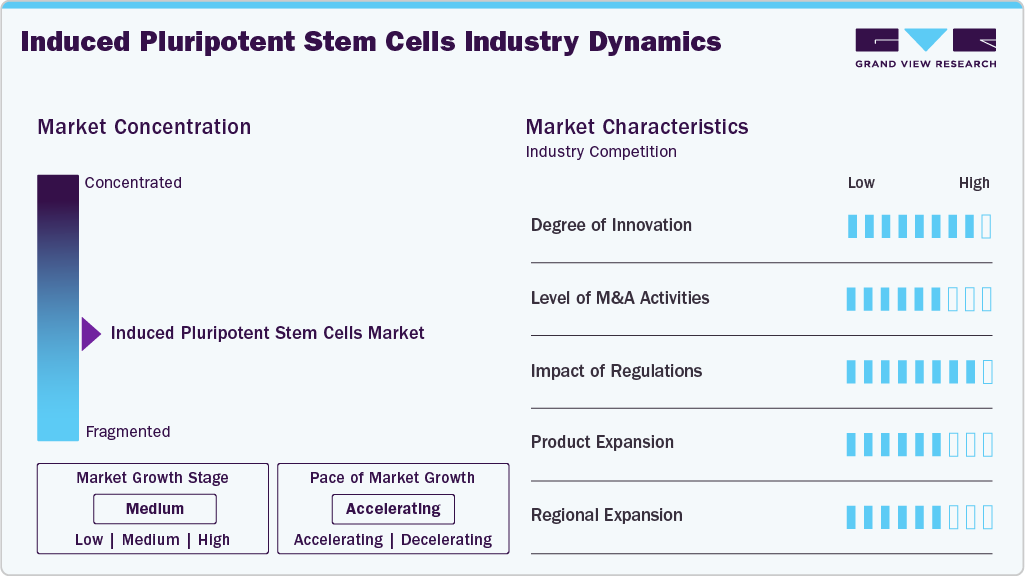
The induced pluripotent stem cells (iPSC) industry is characterized by a high degree of innovation, driven by continuous advancements in cell reprogramming technologies, genome editing, and scalable manufacturing processes. Innovations in generating clinical-grade, GMP-compliant iPSCs are accelerating their translational and therapeutic applications. For instance, in July 2024, Accelerated Biosciences and Pluristyx successfully developed clinical-grade iPSC lines from human trophoblast stem cells using proprietary mRNA reprogramming technology, highlighting ongoing progress in the development of high-quality stem cell platforms for regenerative medicine and advanced research.
The induced pluripotent stem cells industry is witnessing a moderate to high level of strategic partnerships and collaborations as companies aim to advance cell therapy platforms, enhance manufacturing capabilities, and accelerate clinical development. For instance, in September 2023, Eterna Therapeutics partnered with Lineage Cell Therapeutics to initiate the development of a hypoimmune iPSC line for neurology indications, strengthening efforts to develop immune-evasive, off-the-shelf cell therapies and supporting innovation in the iPSC market.
 To learn more about this report, Download Free Sample Report
 The regulatory impact on the induced pluripotent stem cells industry is significant. Regulatory authorities are focusing on establishing stringent guidelines for biosafety, contamination control, cell line authentication, and other factors. This compliance with regulatory standards represents significant challenges that may limit the growth of the market
The induced pluripotent stem cells market has witnessed moderate product expansion, driven by continuous advancements in iPSC-derived cell products, culture systems, and research tools. For instance, in September 2024, FUJIFILM Cellular Dynamics commercially launched its iCell Sensory Neurons, a human iPSC-derived cell model designed to support pain research, neuroscience, and drug discovery, thereby expanding its portfolio of iPSC-based research products.
The induced pluripotent stem cells market is witnessing a high level of regional expansion, indicating rapid growth and increasing market presence across different geographic regions. This expansion is driven by several factors, including the increased research and development focused on iPSCs for regenerative medicine, disease modeling, and drug discovery.
Analyst Perspective
The induced pluripotent stem cells (iPSC) market is expected to witness strong growth, driven by increasing applications in regenerative medicine, disease modeling, drug discovery, and cell & gene therapy research. Rising investments in stem cell research, expanding clinical development activities, and growing demand for patient-specific disease models are accelerating market expansion. Continuous advancements in iPSC reprogramming, differentiation, and genome editing technologies are improving research efficiency and therapeutic potential. As precision medicine gains momentum, market participants are focusing on scalable manufacturing, strategic collaborations, and innovative iPSC-based platforms to strengthen their competitive position and support long-term market growth.
Derived Cell Type Insights
The fibroblasts segment held the largest market share of 30.5% in 2025, owing to their high accessibility, robust reprogramming efficiency, and extensive use in induced pluripotent stem cell (iPSC) generation. Fibroblast-derived iPSCs are widely utilized in disease modeling, drug discovery, regenerative medicine, and cell therapy research. In addition, their therapeutic potential in wound healing and skin regeneration, supported by ongoing preclinical and translational research, is expected to continue driving segment growth.
The hepatocytes segment is expected to register the fastest CAGR over the forecast period, driven by the increasing adoption of iPSC-derived hepatocytes in drug discovery, hepatotoxicity testing, disease modeling, and regenerative medicine. Growing demand for physiologically relevant human liver models in pharmaceutical research, coupled with advancements in iPSC differentiation technologies, is expected to further support segment growth.
Application Insights
The drug development segment held the largest market share of 48.9% in 2025, owing to the global adoption of induced pluripotent stem cells (iPSCs) in disease modeling, target identification, drug screening, and toxicity assessment. iPSC-derived human cell models provide physiologically relevant platforms that improve preclinical drug evaluation, reduce reliance on animal models, and support the development of precision medicines, thereby driving segment growth.
The tissue engineering & regenerative medicine segment is expected to register a significant CAGR over the forecast period. driven by the increasing use of induced pluripotent stem cells (iPSCs) for tissue regeneration, cell replacement therapies, and personalized medicine. Their ability to differentiate into multiple cell types and generate patient-specific, immunocompatible tissues support applications in treating degenerative diseases and is expected to drive segment growth.
End use Insights
The pharmaceutical & biotechnology companies segment dominated the market with a share of 59.9% in 2025, owing to increasing investments in stem cell research, expanding R&D expenditure, and the growing integration of iPSC platforms into preclinical development workflows. The rising focus on accelerating therapeutic development, improving predictive drug evaluation, and strengthening cell therapy pipelines has further contributed to the segment's leading market position.
 To learn more about this report, Download Free Sample Report
 The academic & research institutes segment is projected to witness the fastest over the forecast period, owing to increasing government and institutional funding for stem cell research, expanding collaborative research programs, and growing efforts to advance fundamental studies in developmental biology and disease mechanisms. The rising establishment of dedicated stem cell research centers and increasing availability of research grants are further expected to drive segment growth.
Regional Insights
North America dominated the induced pluripotent stem cells industry, accounting for the largest revenue share of 35.8% in 2025, owing to the presence of a well-established regenerative medicine ecosystem, strong research funding, and increasing clinical translation of iPSC-based therapies. For instance, in May 2024, the California Institute for Regenerative Medicine (CIRM) awarded USD 53 million to support multiple clinical and translational stem cell research projects, including iPSC-based therapeutic programs, further strengthening regenerative medicine research and accelerating the development of iPSC-based therapies across the region.
 To learn more about this report, Download Free Sample Report
 U.S.Induced Pluripotent Stem Cells Market Trends
induced pluripotent stem cells industry in the U.S. is expected to grow over the forecast period due to increasing clinical translation of iPSC-based therapies, favorable funding for regenerative medicine, and the presence of leading biotechnology companies engaged in cell therapy development.
Europe Induced Pluripotent Stem Cells Market Trends
The induced pluripotent stem cells market in Europe was identified as a lucrative region in this industry, owing to strong academic research capabilities, supportive regulatory frameworks for advanced therapy medicinal products (ATMPs), and increasing public-private collaborations focused on stem cell technologies.
The UK induced pluripotent stem cells market held a significant share, attributed to expanding investments in advanced cell therapies, increasing translational research, and the presence of leading academic institutions specializing in stem cell biology.
The Germany induced pluripotent stem cells market is anticipated to grow significantly over the forecast period, supported by its strong biotechnology sector, advanced research infrastructure, and increasing investments in regenerative medicine and cell therapy. For instance, in April 2024, Merck KGaA announced an investment of more than EUR 300 million in a new Life Science Research Center at its Darmstadt headquarters, strengthening research capabilities in next-generation biologics and advanced therapeutic technologies, including applications supporting induced pluripotent stem cell research.
Asia Pacific Induced Pluripotent Stem Cells Market Trends
Asia-Pacific induced pluripotent stem cells industry is expected to grow at the fastest CAGR of 14.2% during the forecast period, owing to increasing government support for regenerative medicine, growing investments in stem cell manufacturing, and rising collaborations between academia and industry across the region.
The China induced pluripotent stem cells market is expected to witness significant growth over the forecast period, driven by increasing investments in stem cell biobanking, expanding clinical research activities, and supportive government initiatives promoting regenerative medicine. Favorable regulatory and policy support for stem cell research has further supported market development. In addition, the Ministry of Science and Technology has established four national stem cell banks across eastern, southern, and northern China, strengthening the country's research infrastructure and supporting the advancement and commercialization of iPSC-based technologies.
The induced pluripotent stem cells market in Japan is witnessing rapid growth, driven by its leadership in iPSC research, supportive regulatory environment for regenerative medicine, and increasing clinical translation of iPSC-based therapies. For instance, in July 2024, Kyoto University's Center for iPS Cell Research and Application (CiRA) announced that its Phase II clinical trial of bosutinib, identified through iPSC-based drug repurposing, achieved its primary endpoints for the treatment of amyotrophic lateral sclerosis (ALS), reinforcing Japan's leadership in advancing iPSC-based therapeutic development.
Latin America Induced Pluripotent Stem Cells Market Trends
The Latin America induced pluripotent stem cells market is expected to witness gradual growth over the forecast period, driven by increasing investments in regenerative medicine, expanding stem cell research capabilities, and growing collaborations between research institutions and healthcare organizations. For instance, in March 2024, Brazil's Fundação Oswaldo Cruz (Fiocruz) and Caring Cross announced a collaboration to establish local manufacturing capabilities for CAR-T cell and stem cell gene therapies, strengthening the region's advanced cell therapy infrastructure and supporting future adoption of iPSC-based technologies.
MEA Induced Pluripotent Stem Cells Market Trends
The induced pluripotent stem cells industry in MEA is expected to witness steady growth, driven by increasing investments in precision medicine, gradual expansion of regenerative medicine research, and improving healthcare infrastructure supporting advanced cellular therapies.
Key Induced Pluripotent Stem Cells Company Insights
The induced pluripotent stem cells market is characterized by the presence of several established biotechnology companies focused on advancing stem cell technologies, regenerative medicine, and cell therapy development. Key players such as FUJIFILM Cellular Dynamics, Inc., REPROCELL Inc., STEMCELL Technologies Inc., Takara Bio, Inc., Evotec SE, and Fate Therapeutics, Inc. maintain a strong market presence through extensive iPSC product portfolios, continuous investments in research and development, and strategic collaborations. Companies are increasingly strengthening their competitive position by expanding clinical-grade iPSC manufacturing capabilities, developing specialized cell models, and accelerating the commercialization of iPSC-based research tools and therapeutic platforms.
Key Induced Pluripotent Stem Cells Companies:
The following key companies have been profiled for this study on the induced pluripotent stem cells market.
-
REPROCELL Inc.
-
STEMCELL Technologies Inc.
-
Cellular Engineering Technologies Inc.
-
Takara Bio, Inc.
-
Axol Bioscience Ltd.
-
Fate Therapeutics, Inc.
-
FUJIFILM Cellular Dynamics, Inc.
-
Cynata Therapeutics Limited
-
Evotec SE
-
Astellas Pharma Inc.
Competitive Benchmarking
Category
Operating Strategies
Competitive Edge
Weakness
Established Players (REPROCELL Inc., STEMCELL Technologies Inc., Takara Bio, Inc., FUJIFILM Cellular Dynamics, Inc., etc.)
- Focus on expanding iPSC-based product portfolios, including cell lines, culture media, differentiation kits, and cell therapy pipelines for regenerative medicine and drug discovery.
- Strong expertise in iPSC technology platforms, established R&D capabilities, and broad collaborations with pharmaceutical, biotechnology, and academic institutions.
- High R&D costs and long clinical development timelines associated with iPSC-based therapeutics.
Emerging Players (Cellular Engineering Technologies Inc., Axol Bioscience Ltd., Cynata Therapeutics Limited)
- Focus on specialized iPSC-derived cell models, contract research services, and disease-specific applications for drug screening and preclinical research.
- Agile innovation and rapid development of application-specific cell models for disease modeling and toxicity testing.
- Greater dependence on research funding, collaborations, and successful commercialization of niche technologies.
Recent Developments
-
In July 2026, RoosterBio and Applied StemCell established a strategic partnership to develop and commercialize scalable iPSC-based bioprocess solutions by integrating GMP-compatible iPSC technologies with advanced media systems and manufacturing expertise, supporting efficient development and production of advanced cell therapies.
-
In July 2026, STEMCELL Technologies and CCRM partnered to expand access to matched GMP and RUO induced pluripotent stem cell (iPSC) lines for cell therapy development, enhancing availability of standardized cellular resources and supporting advancement of scalable regenerative medicine applications.
-
In May 2026, FUJIFILM Cellular Dynamics, Inc. launched a new induced pluripotent stem cell (iPSC) development and manufacturing facility in Madison, Wisconsin, expanding its production capacity and capabilities to support research-grade iPSC products, cell therapy development, and next-generation regenerative medicine applications.
Induced Pluripotent Stem Cells Market Report Scope
Report Attribute
Details
Market size in 2025
USD 2.0 billion
Estimated market size in 2026
USD 2.2 billion
Projected market size by 2033
USD 4.8 billion
Growth rate
CAGR of 11.8% from 2026 to 2033
Historical data
2021 - 2025
Forecast period
2026 - 2033
Quantitative units
Revenue in USD million/billion, and CAGR from 2026 to 2033
Report coverage
Revenue forecast, company ranking, competitive landscape, growth factors, and trends
Segments covered
Derived cell type, application, end use, and region
Regional scope
North America; Europe; Asia Pacific; Latin America; MEA
Country scope
U.S.; Canada; Mexico; UK; Germany; France; Italy; Spain; Norway; Denmark; Sweden; China; Japan; India; South Korea; Australia; Thailand; Brazil; Argentina; Saudi Arabia; South Africa; UAE; Kuwait
Key companies profiled
REPROCELL Inc.; STEMCELL Technologies Inc.; Cellular Engineering Technologies Inc.; Takara Bio, Inc.; Axol Bioscience Ltd.; Fate Therapeutics, Inc.; FUJIFILM Cellular Dynamics, Inc.; Cynata Therapeutics Limited; Evotec SE; Astellas Pharma Inc.
Customization scope
Free report customization (equivalent up to 8 analysts' working days) with purchase. Addition or alteration to country, regional & segment scope.
Pricing and purchase options
Avail customized purchase options to meet your exact research needs. Explore purchase options
Global Induced Pluripotent Stem Cells Market Report Segmentation
This report forecasts revenue growth and provides an analysis on the latest trends in each of the sub-segments from 2021 to 2033. For this report, Grand View Research has segmented the global induced pluripotent stem cells market on the basis of derived cell type, application, end use, and region:
 To learn more about this report, Download Free Sample Report
 -
Derived Cell Type Outlook (Revenue, USD Million, 2021 - 2033)
-
Hepatocytes
-
Fibroblasts
-
Keratinocytes
-
Amniotic Cells
-
Others
-
-
Application Outlook (Revenue, USD Million, 2021 - 2033)
-
Drug Development
-
Tissue Engineering & Regenerative Medicine
-
Neurology
-
Orthopedics
-
Oncology
-
Cardiovascular and Myocardial Infraction
-
Diabetes
-
Others
-
-
Toxicology Research
-
Disease Modeling
-
-
End use Outlook (Revenue, USD Million, 2021 - 2033)
-
Academic & Research Institutes
-
Pharmaceutical & Biotechnology Companies
-
Others
-
-
Regional Outlook (Revenue, USD Million, 2021 - 2033)
-
North America
-
U.S.
-
Canada
-
Mexico
-
-
Europe
-
UK
-
Germany
-
France
-
Italy
-
Spain
-
Denmark
-
Sweden
-
Norway
-
-
Asia Pacific
-
Japan
-
China
-
India
-
Australia
-
Thailand
-
South Korea
-
-
Latin America
-
Brazil
-
Argentina
-
-
Middle East and Africa (MEA)
-
South Africa
-
Saudi Arabia
-
UAE
-
Kuwait
-
-
Research Methodology
The induced pluripotent stem cells market figures in this report are based on a proven research process that combines executive interviews with secondary research from proprietary databases, company filings, and recognized regulatory and institutional sources. Market size is built through value-chain sizing - reconciling supply-side and demand-side estimates - and triangulated with bottom-up and top-down approaches. Every estimate passes multiple levels of expert validation before publication, with each induced pluripotent stem cells segment quantified using the revenue-capture definitions in the table below.
Segment Definition
Segment- Derived Cell Type
Revenue Capture Definition
Hepatocytes
Revenue generated from induced pluripotent stem cell (iPSC)-derived hepatocyte products used in drug screening, liver disease modeling, toxicity assessment, and regenerative medicine research. These cells provide human-relevant models for evaluating hepatic function, metabolism, and therapeutic responses.
Fibroblasts
This segment captures income from iPSC-derived fibroblast products utilized in cellular reprogramming studies, disease modeling, tissue engineering, wound healing research, and investigation of connective tissue-related disorders.
Keratinocytes
Market value in this category stems from iPSC-derived keratinocyte applications in skin biology research, dermatological disease modeling, cosmetic testing, and regenerative medicine approaches focused on epithelial tissue restoration.
Amniotic Cells
Revenue originates from iPSC-derived amniotic cell products used in developmental biology studies, regenerative medicine research, and specialized cell-based investigations requiring human developmental cell models.
Others
This segment reflects revenue generated from additional induced pluripotent stem cell (iPSC)-derived cell types beyond the major classified categories, including cardiomyocytes, neurons, skeletal muscle cells, and other specialized differentiated cell models. These cell types are utilized across disease modeling, drug discovery, toxicity testing, regenerative medicine, and advanced cellular research applications.
Segment- Application
Revenue Capture Definition
Drug Development
Revenue generated from the use of iPSC-based products and platforms in drug discovery and development workflows, including target identification, efficacy screening, disease modeling, and safety evaluation. These applications support therapeutic development across multiple disease areas, including neurological disorders, orthopedic conditions, oncology, cardiovascular diseases, and metabolic disorders such as diabetes.
Tissue Engineering & Regenerative Medicine
This segment captures income from iPSC applications in tissue repair, cell replacement therapies, organ regeneration, and development of engineered biological constructs. iPSC-derived cells are utilized to develop regenerative approaches for restoring damaged tissues and supporting advanced therapeutic strategies.
Toxicology Research
Market value in this category stems from iPSC-based models used for toxicity screening, safety assessment, and evaluation of drug-induced cellular responses. These human-derived models provide alternatives to traditional testing methods by enabling more predictive assessment of therapeutic compounds.
Disease Modeling
Revenue originates from iPSC-based disease modeling applications used to replicate human disease mechanisms, investigate pathological pathways, identify therapeutic targets, and evaluate potential treatments. These models are widely applied in research involving genetic disorders, complex diseases, and personalized medicine approaches.
Segment- End-use
Revenue Capture Definition
Academic & Research Institutes
Revenue generated from iPSC products and services utilized by universities, research centers, and scientific institutions conducting studies in developmental biology, regenerative medicine, disease mechanisms, and cellular research.
Pharmaceutical & Biotechnology Companies
This segment captures income from iPSC-based technologies adopted by pharmaceutical and biotechnology organizations for drug discovery, toxicity testing, therapeutic development, disease modeling, and advancement of cell-based treatments.
Others
Includes revenue from contract research organizations (CROs), hospitals, clinical research facilities, and other specialized users employing iPSC-derived products for research, testing, and translational medicine applications.
Estimation Model
Stage
Description
Top-Down Approach
Begin the market estimation using a top-down methodology by identifying the overall industry size and key market assumptions.
Parent Market
Analyze the parent market to determine the overall market size, industry trends, growth drivers, and relevant macroeconomic indicators that influence the target market.
Segmentation
Segment the parent market based on relevant categories such as product type, application, end user, technology, distribution channel, and geography to derive the target market size.
Forecasting
Forecast market values using historical trends, industry developments, adoption rates, technological advancements, regulatory landscape, and economic indicators to estimate future market growth.
Validation
Validate the estimated market size and forecasts through primary research, expert interviews, company analysis, secondary sources, and data triangulation to ensure accuracy and reliability.
Delivered Customizations
This report has been delivered with the following In-depth customizations
Client Request
Customization Delivered
Value Adds
Cross-Segmentation Analysis for iPSC Applications & End Users
Customized cross-analysis across applications (drug development, disease modeling, toxicology research, tissue engineering & regenerative medicine), and end users including pharmaceutical & biotechnology companies, academic & research institutes, and others. Includes adoption trends, revenue contribution, and emerging therapeutic focus areas by region.
Enables clients to identify the most commercially attractive application-end use combinations, evaluate high-growth therapeutic areas, optimize product positioning, and prioritize investments across research and clinical development workflows.
Competitive Benchmarking of iPSC Technology & Commercial Landscape
Comprehensive benchmarking of leading iPSC companies based on product portfolio, proprietary reprogramming technologies, differentiation capabilities, manufacturing scale, strategic collaborations, licensing activities, clinical pipeline focus, geographic presence, and commercialization strategies.
Helps clients evaluate competitive positioning, identify technology gaps and partnership opportunities, benchmark innovation strategies, and support licensing, investment, and market entry decisions.
Regional Demand & Research Ecosystem Assessment
Customized country-level assessment across North America, Europe, Asia Pacific, Latin America, and MEA covering stem cell research funding, regenerative medicine initiatives, regulatory landscape, clinical trial activity, biopharmaceutical R&D investments, and adoption of iPSC-based disease modeling and cell therapy research.
Supports identification of high-growth regional markets, prioritization of expansion opportunities, assessment of research ecosystem maturity, and alignment of commercialization strategies with country-specific funding and regulatory environments.
Frequently Asked Questions About This Report
Asia Pacific is the fastest-growing region over the forecast period.
The fibroblasts segment led with a 30.5% revenue share in 2025.
The drug development segment led with a 48.9% revenue share in 2025.
The pharmaceutical & biotechnology companies segment led with a 59.9% revenue share in 2025.
The global induced pluripotent stem cells market size was valued at USD 2.0 billion in 2025 and is estimated at USD 2.2 billion for 2026.
The global induced pluripotent stem cells market is expected to grow at a CAGR of 11.8% from 2026 to 2033, reaching USD 4.8 billion by 2033.
Some prominent players in the global induced pluripotent stem cells market include STEMCELL Technologies Inc., Cellular Engineering Technologies Inc., REPROCELL Inc., Takara Bio, Inc., Axol Bioscience Ltd., Fate Therapeutics, Inc., FUJIFILM Cellular Dynamics, Inc., Cynata Therapeutics Limited, Evotec SE, Astellas Pharma Inc.
The market for induced pluripotent stem cells (iPSCs) is driven by the increased use of stem cell therapies, a growing biotechnology industry with better investment opportunities, and an increase in the prevalence of chronic diseases. The wide range of clinical applications of induced pluripotent stem cells and new technological developments of iPSCs are additional drivers that are projected to fuel the expansion of the global induced pluripotent stem cells market.
North America dominated with a 35.8% revenue share in 2025.
About the Author(s)
Biotechnology Research Team
Healthcare · BiotechnologyThis report was authored by the biotechnology research team at Grand View Research - comprising two research analysts, one senior research analyst, and one industry expert - with specialized expertise in the biotechnology segment of the healthcare industry. All findings are based on proprietary healthcare databases, executive interviews, and regulatory analysis, subject to internal peer review prior to publication.
Last Updated:
Speak to Analyst

Customize this report to your needs - add regions, segments, or data points, with 20% free customization.
Or view our licence options:


ISO 9001:2015 & 27001:2022 Certified
We are GDPR and CCPA compliant! Your transaction & personal information is safe and secure. For more details, please read our privacy policy.


