
- Home
- »
- Advanced Interior Materials
- »
-
Industrial Furnace Market Size And Share Report, 2026-2033GVR Report cover

Industrial Furnace Market (2026 - 2033)
Size, Share & Trends Analysis Report By Product (Electric Arc Furnace, Blast Furnace), By Fuel, By Application, By Operation Rate (Batch-type Furnaces, Continuous Furnaces), By Throughput Rate, By End-use, By Region, And Segment Forecasts
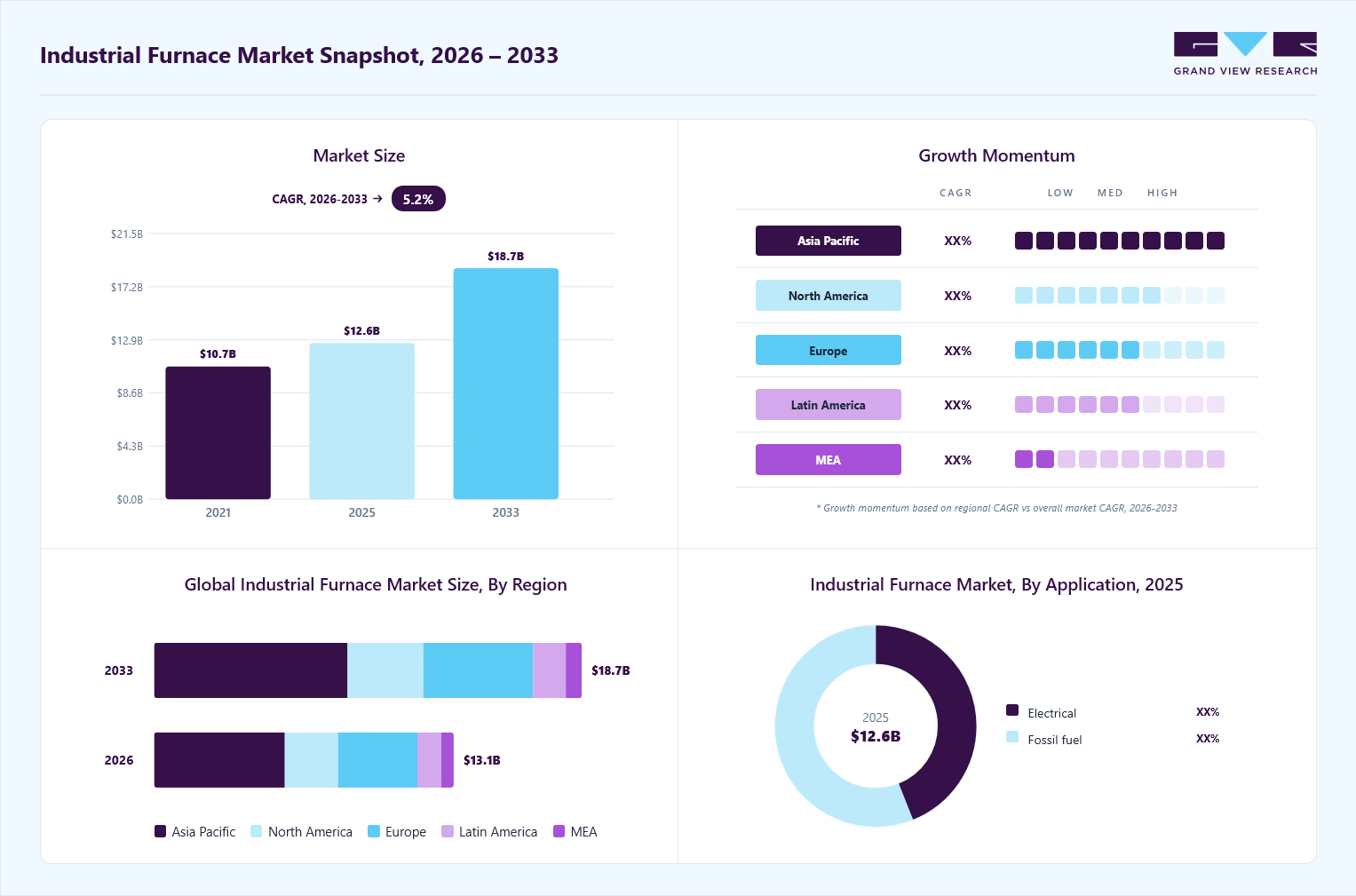
Market Size, 2025
$12.6BMarket Estimate, 2026
$13.1BMarket Forecast, 2033
$18.7BCAGR, 2026–2033
5.2%Industrial Furnace Market Summary
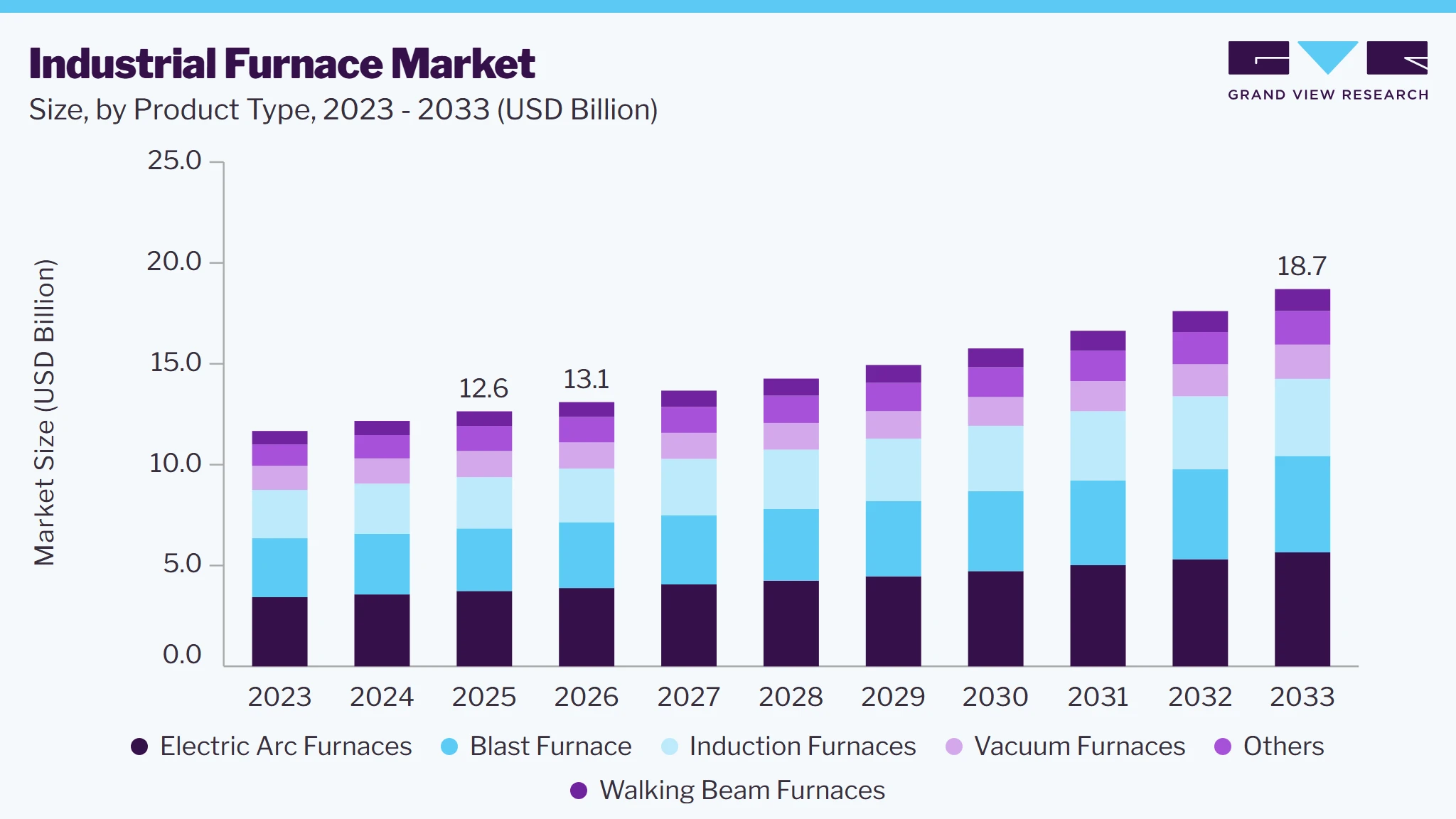
The global industrial furnace market size was valued at USD 12.6 billion in 2025 and is projected to grow from USD 13.1 billion in 2026 to USD 18.7 billion by 2033, growing at a CAGR of 5.2% from 2026 to 2033. The market in Asia Pacific dominated with a revenue share of 43.4% in 2025. The global industrial furnace industry is experiencing growth due to several factors, including the increasing demand for energy-efficient solutions and the rise of industrialization in developing countries.
 Source: Grand View Research, IR Documents, Primary Interviews, Paid DatabasesTo learn more about this report,
 Download Free Sample Report
Key Market Trends & Insights
- By fuel: Fossil fuel segment held the largest market share of 56.1% in 2025.
- By operation rate: Continuous furnaces segment accounted for the largest revenue share of 52.9% in 2025.
- By end use: Metallurgy and steel segment held the largest market share of 35.3% in 2025.
- By application: Forging segment led the market with the largest revenue share of 30.5% in 2025.
- By product type: Electric arc furnaces segment dominated the market, with a revenue share of 29.5% in 2025.
Regional Highlights
- Largest regional market: Asia Pacific (43.4% revenue share, 2025)
- By country: The China held the largest market share in Asia Pacific region in 2025.
Market Size & Forecast
- Market size in 2025: USD 12.6 Billion
- Estimated market size in 2026: USD 13.1 Billion
- Projected market size by 2033: USD 18.7 Billion
- CAGR (2026-2033): 5.2%
Three ways to get this report
Buy it, customize it, or ask a question.Ask an Analyst
Analyst response in 1 business day
- AccessReport author, directly
- Reply timeWithin 1 working day
- No sales callDirect answer only
- FormatEmail reply
- CostFree, no cost
Get the Full Report
What the study covers
- FormatsPDF · Excel · Dashboard
- Timeline2026–2033 annual, 2025 base
- Coverage20+ countries, 5 regions
- Companies10+ key players profiled
Customize the Report
20% free customization
- IncludeCountries, segments, points
- TailorTo your product definition
- ExtendDeeper competitor detail
- OrA fully bespoke study
- Turnaround5–10 working days
 To learn more about this report, Download Free Sample Report
The market benefits from the expansion of the renewable energy sector and the growing need for furnaces capable of handling diverse materials and processes. Technological advancements, including the development of more energy-efficient furnace designs and the integration of automation in industrial processes, are significantly driving market growth. Moreover, the rising demand for customized, high-performance furnaces tailored to specific industry requirements is further accelerating the expansion of the market.Market Dynamics
Industrial furnaces are high-temperature heating systems used to process, treat, melt, or heat materials in manufacturing industries. They are widely utilized in metal production, heat treatment, glass manufacturing, ceramics, chemicals, cement, and automotive applications where controlled heating is essential for product quality and process efficiency. The industrial furnace market is growing due to increasing industrialization, expansion of metal processing activities, and rising demand for energy-efficient manufacturing technologies. Industries are increasingly investing in advanced furnaces with automation, precise temperature control, and lower emissions to improve productivity and comply with environmental regulations. Growth in steel production, automotive manufacturing, aerospace components, and industrial infrastructure development is further driving demand for modern industrial furnace systems across global manufacturing sectors.
The industrial furnace market is primarily driven by increasing demand from metal processing and manufacturing industries. Industrial furnaces are essential for heat treatment, melting, forging, annealing, and other thermal processing applications used in steel, aluminum, automotive, aerospace, and machinery production. Rising industrialization and infrastructure development are increasing demand for processed metals and engineered components, creating greater need for advanced furnace systems. Manufacturers are adopting modern furnaces with improved temperature control, automation, and energy efficiency to enhance product quality and operational productivity. Expansion of automotive production, heavy machinery manufacturing, and industrial infrastructure projects is further supporting demand for industrial furnaces across global manufacturing sectors.
High capital investment and operating costs are a major restraint for the industrial furnace market. Industrial furnaces require substantial upfront expenditure for equipment purchase, installation, supporting infrastructure, and process integration. In addition, furnace operations involve significant energy consumption, maintenance expenses, and periodic replacement of refractory materials and critical components. Industries operating in cost-sensitive environments may delay equipment upgrades or investments in advanced furnace technologies due to budget limitations. Fluctuating fuel and electricity prices can further increase operating costs and impact profitability. Small and medium-sized manufacturers are particularly affected by these financial challenges, which can limit adoption of modern industrial furnace systems despite their efficiency and productivity benefits.
The growing adoption of energy-efficient and low-emission furnace technologies presents a significant opportunity for the industrial furnace market. Industries are increasingly focusing on reducing energy consumption, lowering carbon emissions, and complying with environmental regulations. This is driving demand for advanced furnace systems equipped with waste heat recovery, digital controls, improved insulation, and alternative fuel capabilities. Electrically heated and hybrid furnace technologies are gaining attention as manufacturers pursue sustainability goals and operational efficiency improvements. The integration of automation, predictive maintenance, and real-time monitoring systems is also creating opportunities for furnace modernization. These trends are expected to generate substantial growth opportunities for industrial furnace manufacturers and technology providers worldwide.
Market Concentration & Characteristics
The global industrial furnace industry is moderately consolidated, characterized by the presence of established multinational manufacturers alongside a range of regional and niche players. Major players focus on delivering high-performance, energy-efficient, and automation-compatible furnace systems for a wide spectrum of industrial applications, including metallurgy, automotive, ceramics, and chemical processing. Product innovation in the sector is largely driven by the demand for enhanced thermal efficiency, reduced operational costs, and integration with Industry 4.0 technologies. Automation, digital control systems, and data-driven process optimization are emerging as key differentiators among market leaders.
 To learn more about this report, Download Free Sample Report
Environmental regulations and energy efficiency mandates-especially in regions like the European Union, North America, and parts of Asia-are reshaping market dynamics. Policies aimed at lowering industrial emissions and encouraging sustainable production practices are prompting furnace manufacturers to shift towards low-emission combustion technologies and electric or hybrid furnace systems. As industries increasingly align with decarbonization goals, demand is rising for furnaces that support cleaner fuel alternatives and closed-loop thermal processes. However, market players face competitive pressure from alternative heating technologies such as induction and microwave heating. To maintain a competitive edge, leading manufacturers are investing in R&D, embracing smart monitoring solutions, and offering tailored solutions that balance thermal precision with environmental compliance.
Analyst Perspective
The industrial furnace market is witnessing steady growth, driven by increasing demand for heat treatment, melting, forging, and sintering processes across the steel, automotive, aerospace, electronics, and metal processing industries. A key market trend is the transition toward energy-efficient and low-emission furnace technologies as manufacturers seek to reduce operating costs and comply with increasingly stringent environmental regulations. Additionally, rapid industrialization and capacity expansion in emerging economies, particularly across Asia-Pacific, are creating substantial demand for new furnace installations. The growing adoption of electric, induction, and automated furnace systems, coupled with investments in digital monitoring and process optimization technologies, is expected to support long-term market growth.
Drivers, Opportunities & Restraints
As industries transition to more sustainable production methods, there is a rising demand for furnaces that can operate efficiently with alternative energy sources, such as biomass and solar power. The growing use of industrial furnaces in various sectors such as steel production, automotive, chemical manufacturing, and electronics is a primary contributing factor to market growth.
Restraints for the market include high installation and maintenance costs, which can deter smaller companies from adopting such equipment. The stringent environmental regulations regarding emissions and energy consumption are also factors limiting growth.
Opportunities for the market growth lie in the rising focus on sustainability and the development of eco-friendly furnace technologies. Governments and industries are increasingly investing in energy-efficient equipment that meets regulatory standards, which creates a demand for advanced furnace solutions. The growth of emerging industries, particularly in developing regions, presents significant opportunities for expansion in the industrial furnace sector.
Product Type Insights
Based on product type, the electric arc furnaces segment led the market with the largest revenue share of 29.5% in 2025. due to their ability to recycle scrap metal efficiently and lower emissions compared to traditional blast furnaces. As a result, EAFs have become the preferred choice in regions with stringent environmental regulations, particularly in North America and Europe. Their widespread adoption in steel production and metal recycling applications continues to strengthen their market position
The blast furnace segment is also witnessing steady growth, driven by its critical role in the large-scale production of iron and steel. Blast furnaces remain essential in heavy industries where high-volume, continuous output is required, such as metallurgy and the automotive sector. Additionally, ongoing advancements aimed at enhancing energy efficiency and reducing greenhouse gas emissions in blast furnace operations are further supporting their sustained relevance in the market.
Fuel Type Insights
Based on fuel, the fossil fuel segment led the market with the largest revenue share of 56.1% in 2025. Fossil fuel-powered furnaces continue to be widely used in energy-intensive industries such as steel production, glass manufacturing, and cement processing, where extremely high operating temperatures are essential. However, the growth potential of this segment is being increasingly challenged by stringent environmental regulations and rising concerns over carbon emissions. These factors are gradually encouraging a transition toward cleaner and more energy-efficient alternatives, which may moderate the long-term growth prospects of fossil fuel-based furnaces.
The electrical furnace segment is projected to witness robust growth over the forecast period. This growth is driven by their superior energy efficiency, reduced environmental impact, and versatility in handling a wide range of materials and processes. Electrical furnaces align well with the growing emphasis on sustainability and decarbonization in manufacturing sectors. Additionally, technological advancements in furnace design-such as enhanced temperature control, faster heating cycles, and integration with automation-are further propelling the adoption of electrical furnaces across industries.
Application Insights
Based on application, the forging segment led the market with the largest revenue share of 30.5% in 2025. Forging processes require furnaces that offer precise control over temperature, heat distribution, and thermal consistency, which are essential for producing high-strength metal components. The rising demand for durable and precision-engineered forged parts-especially in sectors such as automotive, aerospace, and defense-is a key driver of growth in this segment. As these industries continue to expand, the need for advanced forging furnaces capable of handling intensive thermal cycles and varied metal grades is expected to remain strong.
The heat treatment segment is experiencing significant growth, fueled by the increasing need to enhance the mechanical and structural properties of metals and alloys. Industries such as automotive, aerospace, machinery manufacturing, and toolmaking are placing greater emphasis on performance, durability, and reliability-attributes that rely heavily on effective heat treatment processes. This has led to rising adoption of specialized heat treatment furnaces, including those designed for annealing, tempering, carburizing, and quenching, to meet specific metallurgical requirements and performance standards.
Operation Rate Insights
Based on operation rate, the continuous furnaces segment led the market with the largest revenue share of 52.9% in 2025. Continuous furnaces are ideal for high-volume, continuous manufacturing processes, such as in the steel and glass industries. The need for efficient, uninterrupted production lines that offer consistent quality is driving the adoption of continuous furnace systems.
Batch-type furnaces are preferred in industries with low to medium production volumes that require high precision. The growing demand for customized heating processes in applications like heat treatment, forging, and sintering is driving the market for batch-type furnaces.
Throughput Rate Insights
Based on throughput rate, the above 50 Tons segment led the market with the largest revenue share of 47.4% in 2025. These high-capacity furnaces are widely used in large-scale manufacturing operations, particularly in sectors such as steel production, aluminum processing, and other heavy industries. Their ability to handle high production volumes efficiently, coupled with advancements in energy optimization technologies, is a key factor driving growth in this segment. As global demand for bulk metal processing continues to rise, the need for large-scale furnaces with enhanced throughput and reliability remains strong.
Furnaces with a 10 to 50 tons throughput are also gaining momentum, especially among mid-sized manufacturing operations across industries like automotive, steel, and chemicals. These furnaces offer a balanced solution between capacity, flexibility, and energy efficiency, making them ideal for companies seeking to scale up production while maintaining cost-effectiveness. The growing emphasis on process optimization and operational efficiency in these industries is expected to further support the growth of this segment over the forecast period.
End-use Insights
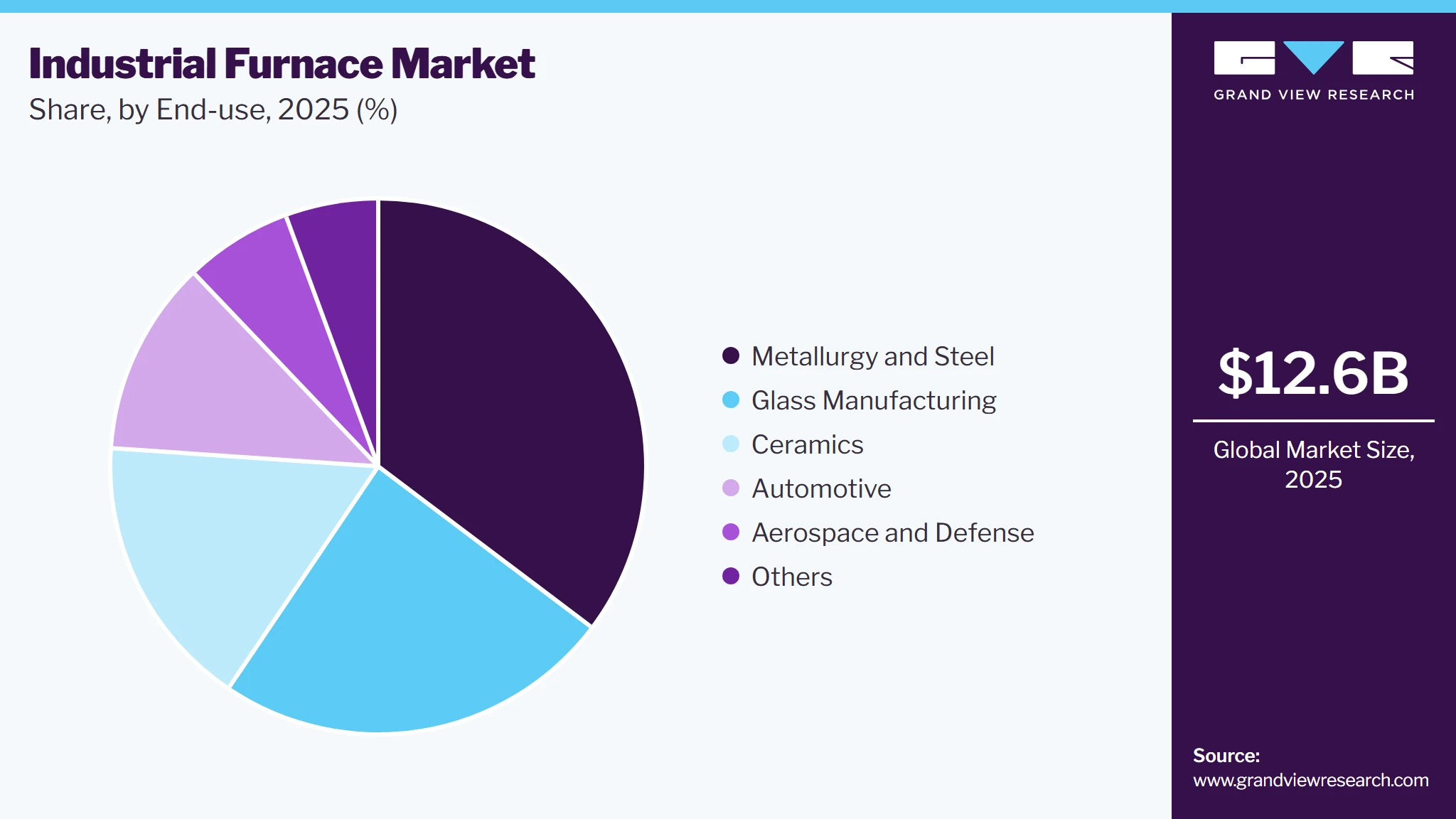
Based on end use, the metallurgy and steel segment led the market with the largest revenue share of 35.3% in 2025, due to increasing demand for steel production in industries such as Metallurgy and Steel, automotive, and infrastructure development. Technological advancements that allow for more efficient, energy-saving production methods are driving this market. Steel manufacturers are also under pressure to reduce emissions, prompting the adoption of more advanced, eco-friendly industrial furnace technologies.
 To learn more about this report, Download Free Sample Report
The ceramics segment is experiencing growth due to the increasing demand for ceramic products in the Metallurgy and Steel, electronics, and automotive industries. The need for precise temperature control in the production of ceramics and advanced materials is driving the market for high-quality furnaces that can meet these requirements.
Regional Insights
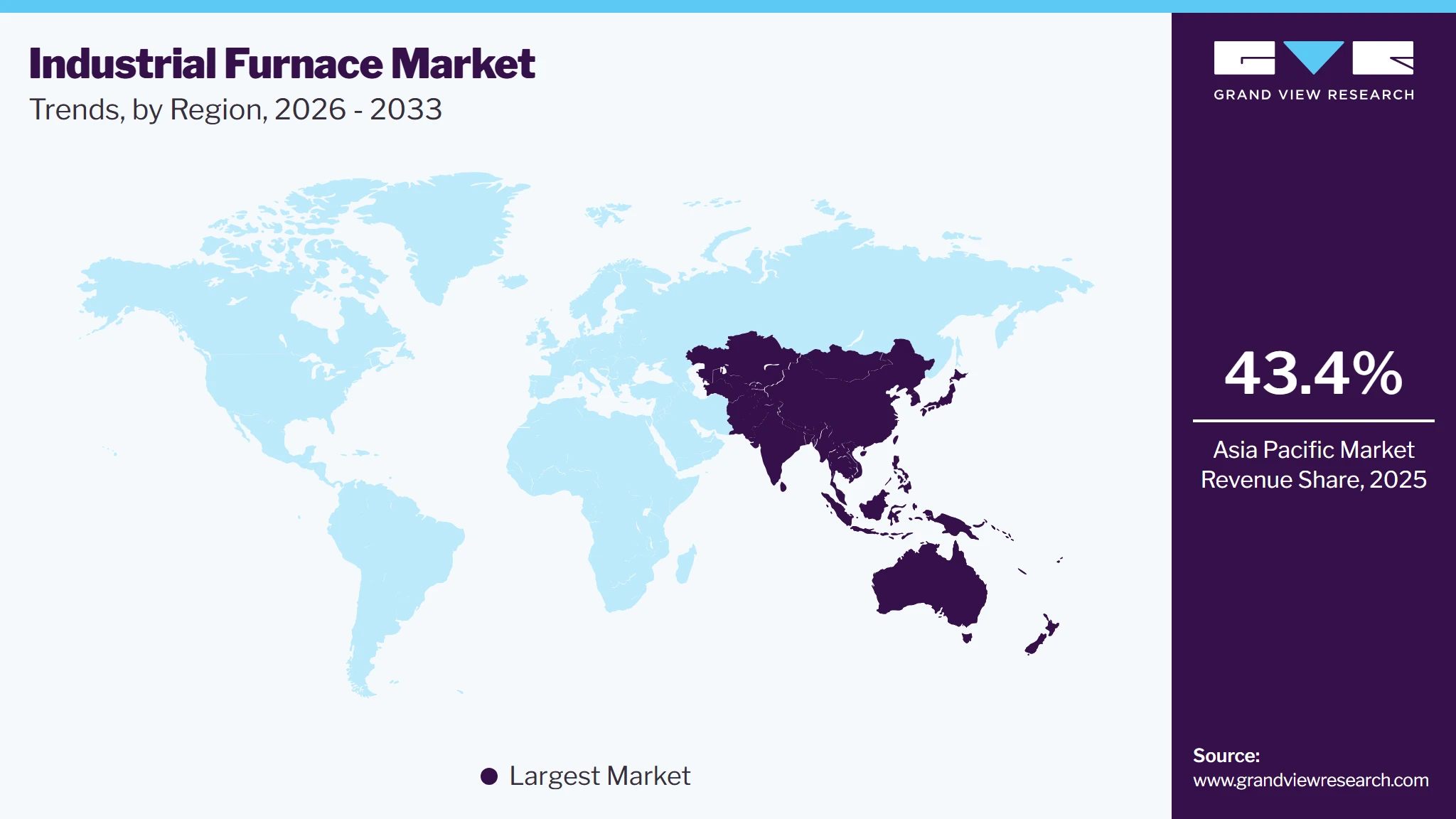
Asia Pacific dominated the industrial furnace market with the largest revenue share of 43.4% in 2025. The increasing demand for industrial furnaces in the steel, automotive, and electronics sectors, along with government initiatives supporting industrial growth, are key growth drivers in this region.
 To learn more about this report, Download Free Sample Report
China Industrial Furnace Market Trends
The industrial furnace market in the China held the largest share in the Asia Pacific region in 2025. Rapid industrialization in the country, particularly in steel, electronics, and automotive sectors, is driving the demand for industrial furnaces. The government’s investment in infrastructure, coupled with initiatives to promote energy efficiency and sustainable industrial practices, supports the growth of the furnace market.
The market in India is projected to grow at a CAGR of 5.4% over the forecast period driven by the growing demand for steel and automotive products, spurred by the country’s expanding manufacturing sector. Government initiatives aimed at improving industrial infrastructure and promoting energy-efficient technologies contribute to the growth of the furnace market.
North America Industrial Furnace Market Trends
In North America, the market is driven by the increasing demand for energy-efficient equipment, advancements in furnace technology, and a focus on reducing carbon emissions. Strong manufacturing industries such as steel, automotive, and electronics are further boosting the market.
The market in the U.S. is projected to expand at a CAGR of 4.4% over the forecast period driven by advancements in manufacturing technologies, a focus on energy efficiency, and the demand from key industries like steel, automotive, and aerospace. The increasing emphasis on reducing carbon emissions and complying with environmental regulations further boosts the adoption of advanced, eco-friendly furnace technologies.
Europe Industrial Furnace Market Trends
In Europe, the demand for industrial furnaces is driven by stringent environmental regulations and the need for advanced technology to meet sustainability goals. A shift toward automation and digitalization in the manufacturing industry is also fueling the demand for high-performance furnaces.
The industry in Spain is expected to grow at a rapid CAGR of 5.1% over the forecast period driven by the country's diverse industrial activities, particularly in sectors such as automotive, steel, and ceramics. The demand for non-electric industrial furnaces has shown a relatively stable trend, with production maintaining consistent levels in recent years.
The country’s market in France is expected to grow at a rapid CAGR of 4.6% over the forecast period driven by the increasing need for energy-efficient furnace solutions, especially in the automotive, steel, and energy sectors. France's focus on reducing industrial carbon footprints and integrating sustainable technologies is encouraging the use of high-performance furnaces across various industries.
Latin America Industrial Furnace Market Trends
In Latin America, the growth of the industrial furnace market is driven by the expansion of manufacturing industries and infrastructure development projects. Increasing demand from sectors such as mining, chemicals, and steel is contributing to market growth in this region.
The market in Argentina is projected to grow at a CAGR of 3.8% over the forecast period largely influenced by the expanding manufacturing sectors, including steel, chemicals, and agriculture. The demand for energy-efficient, cost-effective industrial furnaces is increasing as the country focuses on modernization and improving manufacturing efficiency.
Middle East & Africa Industrial Furnace Market Trends
In the Middle East and Africa, industrial furnace market growth is mainly attributed to the expanding oil and gas industry and infrastructure development. Investments in industrial facilities and the growing demand for steel and chemicals are creating opportunities for furnace manufacturers in this region.
The market in Saudi Arabia is projected to grow at a CAGR of 3.5% over the forecast period driven by the oil and gas sector’s demand for high-performance furnaces, along with the government’s significant investments in infrastructure and manufacturing. The push for modernization and the adoption of energy-efficient technologies in the industrial sector are key drivers.
Key Industrial Furnace Company Insights
Some of the key players operating in the market include SECO/WARWICK Group, and HeatTek, Inc. among others.
-
SECO/WARWICK Group is a global leader in the design and manufacturing of advanced heat treatment and thermal processing equipment, including a wide range of industrial furnaces. Headquartered in Poland, the company operates across major global markets with production facilities and service centers in the U.S., China, India, and Europe. SECO/WARWICK is known for its technological innovation and customized furnace solutions catering to industries such as automotive, aerospace, tool and die, and energy. Its extensive product portfolio includes vacuum furnaces, atmosphere furnaces, aluminum heat treatment systems, and induction heating equipment.
-
HeatTek, Inc. is a U.S.-based manufacturer specializing in custom industrial ovens and furnaces. Founded in 2000 and headquartered in Ixonia, Wisconsin, the company serves a diverse range of industries, including aerospace, automotive, electric motor manufacturing, and metal packaging.
Key Industrial Furnace Companies:
The following are the leading companies in the industrial furnace market. These companies collectively hold the largest market share and dictate industry trends.
- HeatTek Inc.
- PRECONS
- Carbolite Gero Ltd.
- Maharith Thermal Pvt. Ltd
- CAN-ENG Furnaces International Ltd.
- Lindberg/MPH Inc.
- DOWA THERMOTECH CO., LTD.
- Silcarb Recrystallized Private Limited
- Andritz AG
- Abbott Furnace Company
- NUTEC Bickley
- CEC
- SECO/WARWICK GROUP
- PVA TePla America
- ECM Group
Competitive Benchmarking
Operating Strategies
Competitive Edge
Weakness
Established Players (e.g., Andritz AG, SECO/WARWICK GROUP, Carbolite Gero Ltd., CAN-ENG Furnaces International Ltd., NUTEC Bickley)
- Expand global manufacturing and service networks through strategic partnerships, turnkey project execution, and long-term maintenance agreements.
- Invest in energy-efficient, low-emission, electric, hydrogen-compatible, and digitally controlled furnace technologies.
- Strengthen automation capabilities, process optimization solutions, and aftermarket service offerings.
- Strong brand recognition, extensive installed base, proven project execution capabilities, and long-standing customer relationships across steel, automotive, aerospace, glass, and industrial manufacturing sectors.
- Broad furnace portfolios, advanced engineering expertise, global distribution networks, and strong regulatory compliance capabilities provide significant competitive advantages.
- Higher manufacturing and operational costs due to large-scale operations and global service infrastructure.
- Longer product development cycles and slower decision-making processes.
- Greater exposure to fluctuations in industrial capital expenditure, steel production investments, and large-scale manufacturing project cycles.
Emerging & Regional Players (e.g., HeatTek Inc., Maharith Thermal Pvt. Ltd., Silcarb Recrystallized Private Limited, PVA TePla America, Abbott Furnace Company)
- Focus on niche thermal processing applications, customized furnace designs, compact systems, and regional industrial requirements.
- Compete through flexible pricing, localized service support, faster project delivery, and application-specific solutions.
- Emphasize energy-efficient designs and targeted expansion in underserved industrial markets.
- Greater operational flexibility and ability to customize furnace systems according to customer-specific requirements.
- Faster response to market opportunities, lower overhead costs, and strong local customer relationships.
- Ability to serve niche industrial applications where large multinational suppliers may have limited focus.
- Limited global presence, smaller manufacturing scale, and lower brand recognition compared to established competitors.
- Reduced financial resources for large research and development investments.
- Limited capability to execute large turnkey industrial projects and provide extensive global service and support networks.
Recent Developments
-
In August 2024, SECO/WARWICK Group announced a strategic expansion of its U.S. manufacturing footprint by relocating a portion of its vacuum furnace production and metallurgical laboratory from Poland to Crawford County, Pennsylvania. This move is aimed at enhancing operational efficiency, reducing lead times, and strengthening service responsiveness to better support the growing demands of its North American customer base.
-
In November 2024, ECM Group finalized the acquisition of Vacuum Service & Maintenance. Located in Italy, Vacuum SM specializes in maintaining industrial furnaces used for vacuum heat treatment and currently has around twelve employees. This acquisition will allow ECM Group to enhance its presence in Italy and reinforce its after-sales services for industrial furnaces. It will also enable the group to improve its responsiveness by being closer to its Italian clientele and better meeting their needs.
Industrial Furnace Market Report Scope
Report Attribute
Details
Market size in 2025
USD 12.6 billion
Estimated market size in 2026
USD 13.1 billion
Projected market size by 2033
USD 18.7 billion
Growth rate
CAGR of 5.2% from 2026 to 2033
Base year for estimation
2025
Historical data
2021 - 2024
Forecast period
2026 - 2033
Quantitative units
Revenue in USD million and CAGR from 2026 to 2033
Report coverage
Revenue forecast, company ranking, competitive landscape, growth factors, and trends
Segments covered
Product, fuel, application, operation rate, throughput rate, end-use, region
Regional scope
North America; Europe; Asia Pacific; Latin America; Middle East & Africa
Country scope
U.S.; Canada; Mexico; UK; Germany; France; Spain; Italy; China; Japan; India ; South Korea; Australia, Brazil; Argentina; Saudi Arabia; UAE; South Africa
Key companies profiled
HeatTek Inc.; PRECONS; Carbolite Gero Ltd.; Maharith Thermal Pvt. Ltd; CAN-ENG Furnaces International Ltd.; Lindberg/MPH Inc.; DOWA THERMOTECH CO.; LTD.; Silcarb Recrystallized Private Limited; Andritz AG; Abbott Furnace Company; NUTEC Bickley; CEC; SECO/WARWICK GROUP; PVA TePla America; ECM Group
Customization scope
Free report customization (equivalent up to 8 analysts' working days) with purchase. Addition or alteration to country, regional & segment scope.
Pricing and purchase options
Avail customized purchase options to meet your exact research needs. Explore purchase options
Global Industrial Furnace Market Report Segmentation
This report forecasts revenue growth at global, regional & country levels and provides an analysis on the industry trends in each of the sub-segments from 2021 to 2033. For this study, Grand View Research has segmented the global industrial furnace market on basis of product, fuel, application, throughput rate, operation rate, end-use, and region:
-
Product Outlook (Revenue, USD Million; 2021 - 2033)
-
Blast Furnace
-
Induction Furnace
-
Electric Arc Furnace
-
Vacuum Furnace
-
Walking Beam Furnace
-
Others
-
-
Fuel Outlook (Revenue, USD Million; 2021 - 2033)
-
Electrical
-
Fossil Fuel
-
-
Application Outlook (Revenue, USD Million; 2021 - 2033)
-
Forging
-
Heat Treatment
-
Melting
-
Sintering
-
Others
-
-
Throughput Rate (Revenue, USD Million; 2021 - 2033)
-
Upto 10 Tons
-
10 to 50 Tons
-
Above 50 Tons
-
-
Operation Rate Outlook (Revenue, USD Million; 2021 - 2033)
-
Batch-type Furnaces
-
Continuous Furnaces
-
-
End-use Outlook (Revenue, USD Million; 2021 - 2033)
-
Metallurgy and Steel
-
Glass Manufacturing
-
Ceramics
-
Automotive
-
Aerospace and Defense
-
Others
-
-
Regional Outlook (Revenue, USD Million; 2021 - 2033)
-
North America
-
U.S.
-
Canada
-
Mexico
-
-
Europe
-
UK
-
Germany
-
France
-
Spain
-
Italy
-
-
Asia Pacific
-
China
-
India
-
Japan
-
South Korea
-
Australia
-
-
Latin America
-
Brazil
-
Argentina
-
-
Middle East & Africa
-
Saudi Arabia
-
South Africa
-
UAE
-
-
Research Methodology
Segment Definition
Segment - Product
Revenue Capture Definition
Blast Furnace
Revenue is generated through the sale of blast furnaces used for large-scale ironmaking and primary steel production.
Induction Furnace
Revenue generated from induction furnaces utilizing electromagnetic induction for melting, heating, or alloying metals.
Electric Arc Furnace
Revenue generated from electric arc furnaces used for steelmaking and metal recycling applications.
Vacuum Furnace
Revenue is derived from vacuum furnace installations used for heat treatment, brazing, sintering, and specialized material processing applications.
Walking Beam Furnace
Revenue is generated through walking beam furnaces used for reheating steel slabs, billets, and blooms before rolling operations.
Others
This segment includes rotary, chamber, bell, pusher, and specialty furnaces used across diverse industrial applications.
Segment - Fuel Type
Revenue Capture Definition
Electrical
Revenue is generated through electric furnace systems used for precise, energy-efficient, and low-emission thermal processing applications.
Fossil Fuel
Revenue is captured through furnaces powered by natural gas, oil, coal, and other conventional fuels.
Segment - Throughput Rate
Revenue Capture Definition
Up to 10 Tons
Revenue is generated through compact industrial furnaces serving small-scale manufacturing, specialty metal processing, and precision thermal treatment applications.
10 to 50 Tons
Revenue is captured through medium-capacity furnace installations used in metal processing, foundries, and industrial manufacturing operations.
Above 50 Tons
Revenue is generated through large-capacity industrial furnaces deployed in integrated steel plants, large foundries, and heavy industrial facilities.
Segment - Operation Rate
Revenue Capture Definition
Batch-type Furnaces
Revenue is generated through furnaces designed for intermittent processing of materials in separate loads.
Continuous Furnaces
Revenue is captured through continuous furnace systems used for uninterrupted, high-volume thermal processing operations.
Segment - End-use
Revenue Capture Definition
Metallurgy and Steel
Revenue is generated through industrial furnaces used for melting, refining, reheating, and heat treatment operations in steel and metal production facilities.
Glass Manufacturing
Revenue is captured through furnaces used for melting raw materials and producing flat glass, container glass, and specialty glass products.
Ceramics
Revenue is generated through furnaces used for firing, sintering, and thermal processing of ceramic materials.
Automotive
Revenue is derived from furnaces used in forging, casting, heat treatment, and component manufacturing processes. Growth is supported by vehicle production, electric vehicle expansion, and demand for lightweight, high-performance automotive materials.
Aerospace and Defense
Revenue is generated through advanced furnace systems used for precision heat treatment and processing of aerospace alloys and defense-grade materials.
Others
This segment includes chemicals, machinery manufacturing, electronics, energy, and other industrial sectors.
Estimation Model
The Four-Layer Estimation Model
Each layer progressively refines the industrial manufacturing base through furnace adoption, utilization, replacement cycles, and purchasing demand assumptions to arrive at the total industrial furnace market revenue.
Thermal Processing Demand Layer
Furnace Utilization Layer
Capacity Expansion & Replacement Layer
Market Revenue Layer
Which industries generate demand for industrial furnaces?
Where are industrial furnaces deployed?
What drives annual furnace purchases?
How is market revenue calculated?
The estimation begins by identifying industries where high-temperature processing is integral to production. These include steel manufacturing, metal casting, automotive component production, aerospace materials processing, glass manufacturing, ceramics production, and chemical processing.
The industrial demand base is refined by assessing furnace utilization across specific manufacturing processes such as melting, forging, heat treatment, sintering, and reheating. Industries with continuous thermal operations generally exhibit higher furnace intensity than sectors requiring intermittent heating processes.
Annual equipment demand is estimated by evaluating new industrial projects, facility expansions, and manufacturing modernization investments. Replacement of aging furnaces and adoption of energy-efficient technologies are also considered to determine yearly demand for new installations and upgrades.
Revenue is estimated by aggregating sales across different furnace types, capacities, fuel sources, and end-use industries. The calculation also includes revenues from equipment installations, modernization projects, automation upgrades, and aftermarket services to determine total market value.
Delivered Customizations
This report has been delivered with the following In-depth customizations
CLIENT REQUEST
CUSTOMIZATION DELIVERED
VALUE ADDS
Regional Segmentation
Detailed regional analysis was conducted across North America, Europe, Asia Pacific, Latin America, and Middle East & Africa, including country-level assessment for key markets such as the U.S., Germany, China, India, Brazil, and Saudi Arabia. The study evaluated steel production activities, metal processing operations, automotive manufacturing, glass production, ceramics manufacturing, industrial infrastructure investments, and environmental regulations influencing industrial furnace adoption across regional markets.
Helped identify high-growth regional markets, country-specific opportunities, and evolving demand trends across metallurgy, automotive, glass, ceramics, and industrial manufacturing sectors.
Competitive Benchmarking
Comprehensive benchmarking was carried out for major market participants based on product portfolio, furnace technologies, regional presence, and distribution network strength. The assessment also compared mature and emerging players operating in the industrial furnace market.
Assisted clients in understanding competitor positioning, technology capabilities, and competitive gaps within the market.
Opportunity Assessment
In-depth opportunity assessment was conducted by analyzing steel industry expansion, foundry modernization projects, industrial automation adoption, growth in automotive and aerospace manufacturing, and increasing demand for energy-efficient thermal processing systems.
Enabled clients to identify high-growth investment areas, prioritize regional expansion strategies, and evaluate future revenue opportunities across steel manufacturing, metal processing, automotive, aerospace, glass, ceramics, and industrial production sectors.
Frequently Asked Questions About This Report
Key players include HeatTek Inc., PRECONS, Carbolite Gero Ltd., Maharith Thermal Pvt. Ltd, CAN-ENG Furnaces International Ltd., Lindberg/MPH Inc., DOWA THERMOTECH CO., LTD., Silcarb Recrystallized Private Limited, Andritz AG, Abbott Furnace Company, NUTEC Bickley, CEC, SECO/WARWICK GROUP, PVA TePla America, and ECM Group.
The industrial furnace market is primarily driven by the growing demand for energy-efficient and environmentally friendly furnaces, as industries aim to reduce energy consumption and emissions. Additionally, rapid industrialization in developing economies, particularly in sectors like automotive, construction, and manufacturing, is significantly boosting the need for advanced heat treatment solutions.
The global industrial furnace market size was valued at USD 12.6 billion in 2025 and is estimated at USD 13.1 billion for 2026.
The global industrial furnace market is expected to grow at a CAGR of 5.2% from 2026 to 2033, reaching USD 18.7 billion by 2033.
The fossil fuel segment led with a 56.1% revenue share in 2025.
The electric arc furnaces segment led the market with the largest revenue share of 29.5% in 2025.
The forging segment led the market with the largest revenue share of 30.5% in 2025.
The metallurgy and steel segment accounted for the largest revenue share of 35.3% in 2025.
The market in Asia Pacific dominated the global revenue share in 2025 accounting for 43.4% driven by rapid industrialization, infrastructure growth, and rising demand from automotive, steel, and electronics sectors. Countries like China, India, and South Korea are leading investments in advanced, energy-efficient manufacturing, positioning the region as a key global hub for industrial furnace production and deployment.
The continuous furnaces segment led with a 52.9% revenue share in 2025.
About the Author(s)
Advanced Interior Materials Research Team
Advanced Materials · Advanced Interior MaterialsThis report was authored by the advanced interior materials research team at Grand View Research - comprising two research analysts, one senior research analyst, and one industry expert - with specialized expertise in the advanced interior materials segment of the advanced materials industry. All findings are based on proprietary advanced materials databases, executive interviews, and regulatory analysis, subject to internal peer review prior to publication.
Last Updated:
Speak to Analyst

Customize this report to your needs - add regions, segments, or data points, with 20% free customization.
Or view our licence options:


ISO 9001:2015 & 27001:2022 Certified
We are GDPR and CCPA compliant! Your transaction & personal information is safe and secure. For more details, please read our privacy policy.


