
- Home
- »
- Next Generation Technologies
- »
-
Industrial Services Market Size & Share Report, 2026-2033GVR Report cover

Industrial Services Market (2026 - 2033)
Size, Share & Trends Analysis Report By Type (Installation & Commissioning, Operational Improvement & Maintenance), By Application (DCS, PLC, SCADA), By End-use, By Region, And Segment Forecasts
Market Size, 2025
$36.2BMarket Estimate, 2026
$38.3BMarket Forecast, 2033
$59.5BCAGR, 2026–2033
6.5%Industrial Services Market Summary
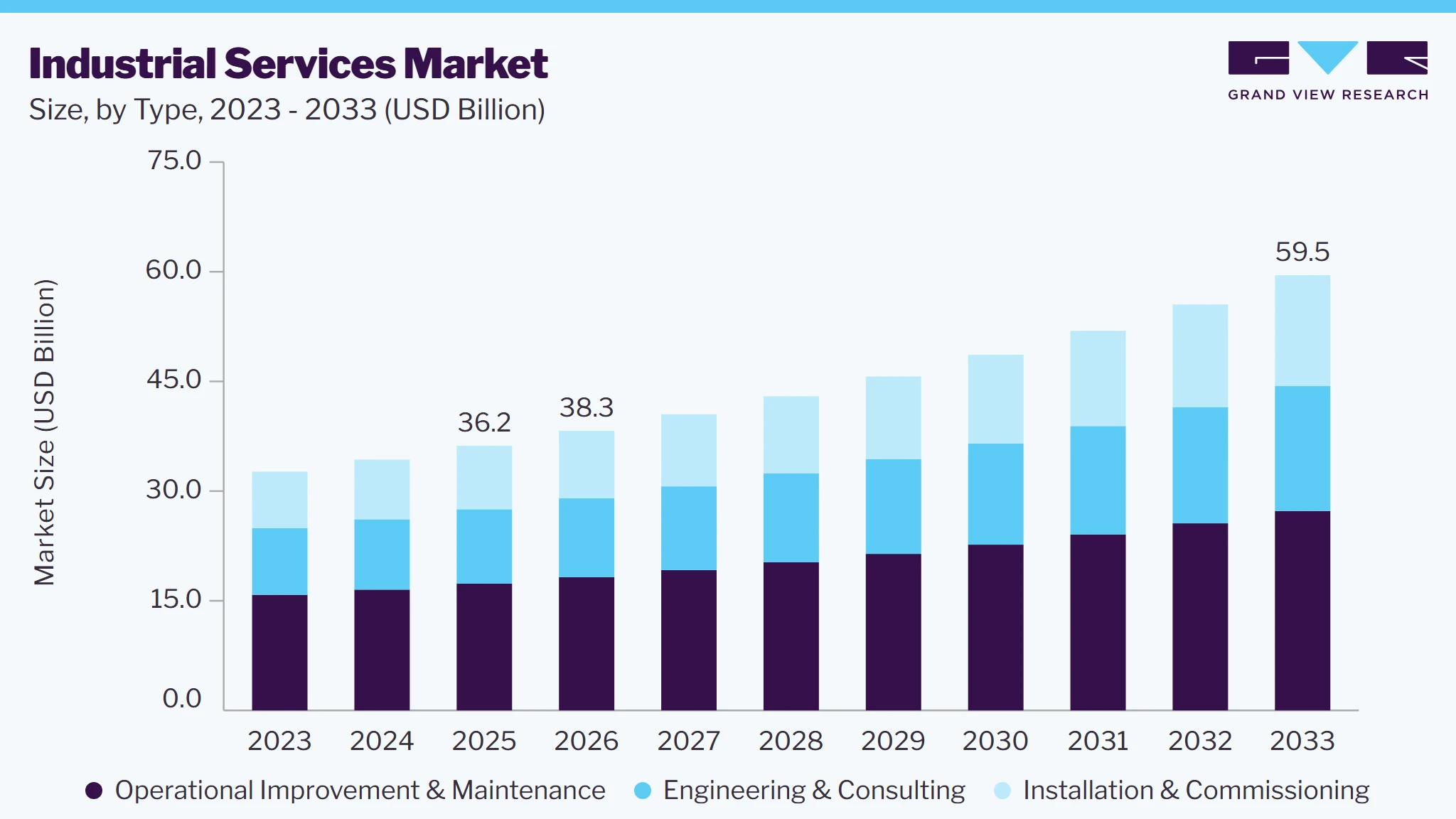
The global industrial services market size was valued at USD 36.2 billion in 2025 and is projected to grow from USD 38.3 billion in 2026 to USD 59.5 billion by 2033, at a CAGR of 6.5% from 2026 to 2033. North America dominated the global market, accounting for the largest revenue share of 30.9% in 2025. The industrial services market growth is primarily driven by increasing industrial automation and digitalization, rising demand for predictive maintenance enabled by IoT and AI, aging infrastructure requiring regular maintenance and modernization, and stricter environmental and workplace safety regulations.
 Source: Grand View Research, IR Documents, Primary Interviews, Paid DatabasesTo learn more about this report,
 Download Free Sample Report
Key Market Trends & Insights
- By product: Operational improvement & maintenance segment accounted for the largest market share of 47.9% in 2025.
- By application: Distributed control system (DCS) segment led the market with a share of 20.2% in 2025.
- By end use: Oil and gas segment dominated the market with a share of 28.4% in 2025.
Regional Highlights
- Largest regional market: North America (30.9% revenue share in 2025)
- Fastest growing regional market: Asia Pacific (highest CAGR 8.6%, 2026-2033)
- By Country: The U.S. held the largest market share in 2025
Market Size & Forecast
- Market size in 2025: USD 36.2 Billion
- Estimated market size in 2026: USD 38.3 Billion
- Projected market size by 2033: USD 59.5 Billion
- CAGR (2026-2033): 6.5%
Prism AI by Grand View Research Free to tryAsk a question about the industrial services marketTry asking✓Every figure cited from GVR research Prefer the report? Download free sample →This growth can be attributed to the rapid progress in industrial automation, IoT, and AI significantly boosting demand for sophisticated industrial services. Companies are increasingly integrating these technologies to improve operational efficiency, reduce downtime, and enhance productivity. This technological integration not only optimizes processes but also enables the development of more advanced and reliable industrial services.
 To learn more about this report, Download Free Sample Report
There is also a growing emphasis on predictive maintenance, which relies on data analytics and real-time monitoring to anticipate equipment failures and optimize maintenance schedules. The adoption of predictive maintenance solutions helps industries reduce operational costs and extend the lifespan of machinery, thus driving demand for these services. Increasing industrialization, especially in emerging economies, contributes to the expanding market. Regions such as Asia-Pacific are experiencing significant growth in manufacturing and production activities, leading to higher demand for industrial services. This industrial expansion in emerging markets is a key factor in overall market growth.
Stringent regulatory requirements also play a crucial role. Compliance with safety and environmental regulations necessitates regular maintenance and servicing of industrial equipment, ensuring a steady demand for industrial services to maintain compliance and avoid penalties. These regulatory pressures drive the need for ongoing maintenance and upgrades.
Industries are focusing on energy efficiency to reduce operational costs and meet sustainability goals. Industrial services that focus on energy audits, optimization, and efficient energy management are in high demand. This focus on energy efficiency aligns with broader environmental and economic objectives, further driving market growth.
Outsourcing trends are also influencing the global market, with companies increasingly outsourcing industrial services to specialized providers. This allows businesses to focus on their core competencies while leveraging the expertise of service providers for maintenance, repair, and operational support. The complexity of modern machinery, which requires specialized skills and knowledge, further drives demand for comprehensive industrial service solutions.
Market Dynamics
The industrial services market is experiencing robust growth, driven by the rapid expansion of manufacturing and energy sectors, and the growing adoption of outsourcing to specialized service providers to reduce costs and improve reliability. Additionally, the rising investments in smart factories, renewable energy, and industrial infrastructure across both developed and emerging economies are expected to drive the market growth in the coming years.
The growing adoption of predictive maintenance and industrial automation is a major driver of the industrial services market. Industrial facilities are deploying Industrial Internet of Things (IIoT) sensors, artificial intelligence (AI), machine learning, and advanced analytics to monitor equipment performance in real time and identify potential failures before they occur. This proactive maintenance approach reduces unplanned downtime, improves operational efficiency, and extends the service life of critical assets, resulting in significant cost savings.
Manufacturers are placing greater emphasis on maximizing productivity while minimizing maintenance expenses, creating strong demand for specialized industrial service providers. Digital service offerings, including remote monitoring, condition-based maintenance, and predictive diagnostics, are becoming integral to industrial operations. Growing investments in factory automation and connected production systems continue to strengthen the demand for advanced industrial services across manufacturing, energy, mining, and process industries.
The shortage of skilled technical professionals remains a major restraint for the industrial services market. Modern industrial equipment incorporates advanced automation, robotics, digital control systems, and intelligent software, requiring technicians with multidisciplinary expertise. Many organizations face difficulties in recruiting and retaining qualified personnel capable of installing, maintaining, and troubleshooting these increasingly complex systems.
Labor shortages increase service costs, extend maintenance schedules, and reduce operational efficiency for industrial facilities. Smaller service providers often experience greater challenges due to limited training resources and lower workforce retention. Continuous investment in technical education, certification programs, and workforce upskilling is becoming increasingly important to meet the evolving requirements of industrial operations.
The rapid expansion of renewable energy and smart infrastructure projects presents a significant opportunity for the industrial services market. New investments in solar power plants, wind farms, battery energy storage systems, hydrogen production facilities, and smart grids are generating sustained demand for installation, commissioning, inspection, maintenance, and lifecycle asset management services. These large-scale projects require continuous technical support throughout their operating life.
Government initiatives promoting clean energy, infrastructure modernization, and industrial digitalization are creating additional opportunities for industrial service providers. Companies offering predictive maintenance, remote asset monitoring, digital inspection, and integrated lifecycle management solutions are well-positioned to benefit from these investments. Rising adoption of sustainable industrial practices is expected to support long-term demand for specialized industrial services across global markets.
Market Concentration & Characteristics
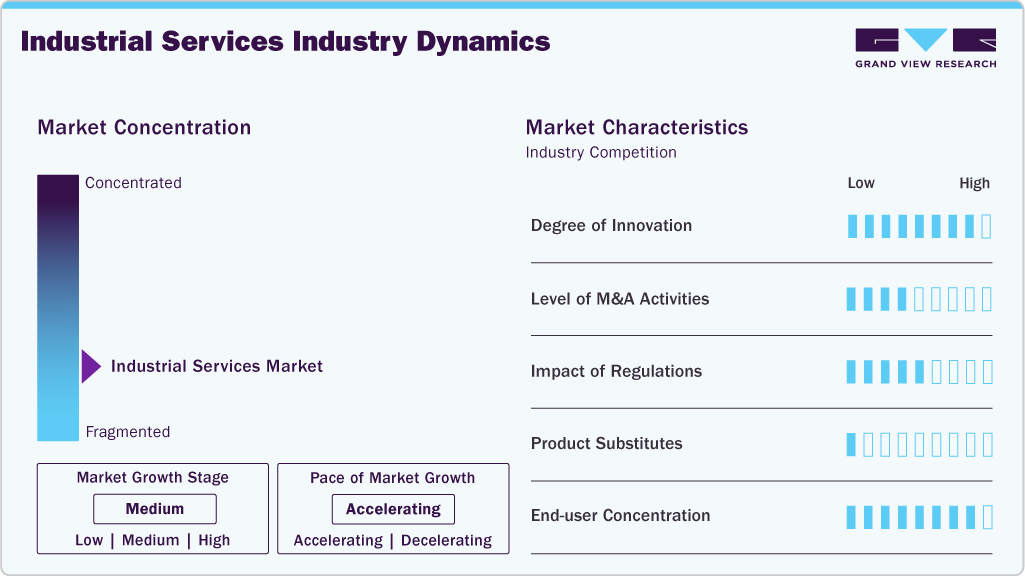
The industrial services market is moderately fragmented, comprising global engineering and industrial service providers, original equipment manufacturers (OEMs), specialized maintenance companies, and regional service contractors. The market is characterized by increasing adoption of digital maintenance solutions, Industrial Internet of Things (IIoT), predictive analytics, robotics, remote monitoring, and automation technologies that enhance asset reliability and operational efficiency. Strategic mergers, acquisitions, and partnerships remain moderate, enabling companies to expand service portfolios, strengthen regional presence, acquire digital capabilities, and provide integrated lifecycle management solutions.
 To learn more about this report, Download Free Sample Report
Regulatory influence is moderate to high, driven by occupational safety standards, environmental regulations, equipment inspection requirements, emissions compliance, and industry-specific quality certifications. Product substitution is low, as industrial services such as maintenance, inspection, repair, and asset management are essential for ensuring operational continuity, regulatory compliance, and equipment longevity. Demand is diversified across manufacturing, oil & gas, power generation, mining, chemicals, food & beverage, pharmaceuticals, and infrastructure sectors, supported by growing industrial automation, aging industrial assets, increasing outsourcing of maintenance activities, and investments in smart factories and sustainable industrial infrastructure.
Analyst Perspective
The industrial services market is experiencing strong structural growth, driven by increasing automation, adoption of predictive maintenance, aging infrastructure, and rising demand for operational efficiency. Growing investments in smart factories, digital asset management, and sustainable industrial solutions are accelerating the need for specialized engineering, maintenance, and lifecycle support services. Companies with advanced digital capabilities and integrated service offerings are well positioned to capture emerging opportunities.
Type Insights
Based on type, the operational improvement & maintenance segment dominated the market with the largest revenue share of 47.9% in 2025, due to its critical role in enhancing efficiency, reducing downtime, and prolonging equipment lifespan. Companies prioritize this segment to ensure optimal performance and compliance with regulatory standards, thereby driving demand. In addition, the growing complexity of industrial machinery necessitates specialized maintenance services, further bolstering this segment's dominance.
The installation & commissioning segment is anticipated to grow at the fastest CAGR of 7.3% from 2024 - 2030, due to the increasing adoption of advanced industrial equipment and automation technologies. This growth is driven by the need for expert services to ensure proper setup and integration of new systems, minimizing downtime and operational disruptions. In addition, the rise in new industrial projects and expansions, particularly in emerging economies, fuels demand for these specialized services.
Application Insights
Based on application, the distributed control system (DCS) dominated the market with the largest revenue share of 20.2% in 2025, due to its essential role in managing complex industrial processes with high reliability and precision. DCS systems are crucial for optimizing production efficiency, ensuring consistent product quality, and facilitating real-time monitoring and control. Their widespread adoption across various industries, including oil and gas, chemicals, and power generation, underscores their importance in maintaining seamless and efficient operations, thereby driving significant demand in the global market.
The manufacturing execution system (MES) segment is expected to grow at the fastest CAGR of 7.6% during the forecast period, because of its critical role in bridging the gap between enterprise-level planning and shop-floor operations. MES solutions enhance production efficiency, enable real-time tracking of manufacturing processes, and ensure higher quality control, making them indispensable for modern manufacturing environments. The increasing adoption of Industry 4.0 technologies and the need for greater operational transparency and agility drive the demand for MES. In addition, the push towards digital transformation and smart manufacturing in various industries further accelerates the growth of this segment.
End-use Insights
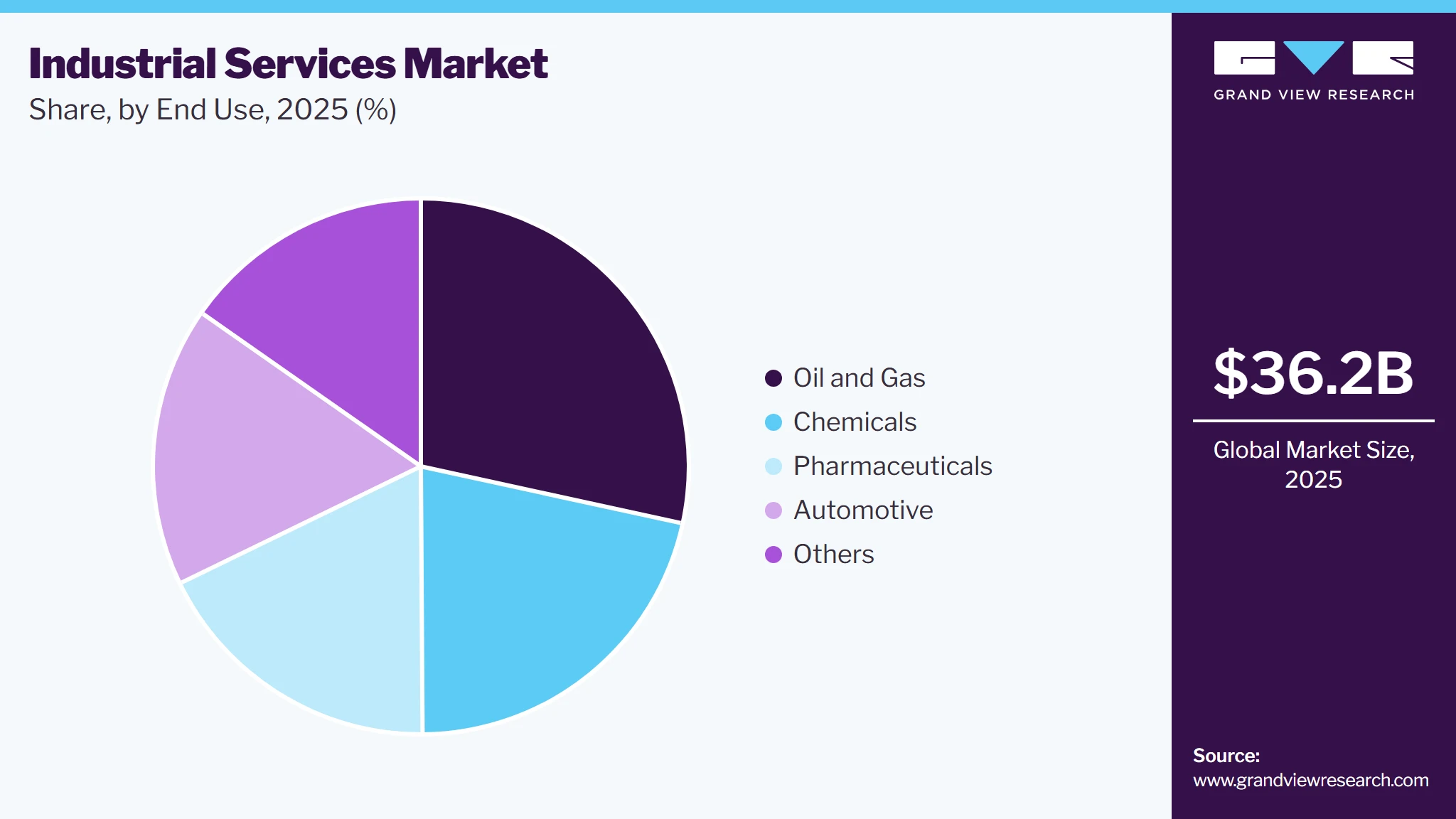
Based on end use, the oil and gas segment led the market with the largest revenue share of 28.4% in 2025. It is expected to maintain its dominance from 2024 to 2030, due to the sector's substantial reliance on industrial services for operational efficiency, safety, and regulatory compliance. The complexity and scale of oil and gas operations necessitate continuous maintenance, advanced monitoring, and specialized services to ensure optimal performance and minimize downtime. In addition, the ongoing investments in exploration and production activities, coupled with the adoption of advanced technologies, further drive demand for industrial services in this sector, solidifying its leading market position.
 To learn more about this report, Download Free Sample Report
The pharmaceuticals segment is anticipated to grow at the fastest CAGR of 7.1% from 2024-2030 due to the increasing demand for precision and compliance in drug manufacturing processes. The sector's stringent regulatory requirements necessitate comprehensive validation, maintenance, and calibration services to ensure product quality and safety. In addition, the rapid advancements in biotechnology and the rise in personalized medicine drive the need for specialized industrial services, further contributing to the segment's robust growth.
Regional Insights
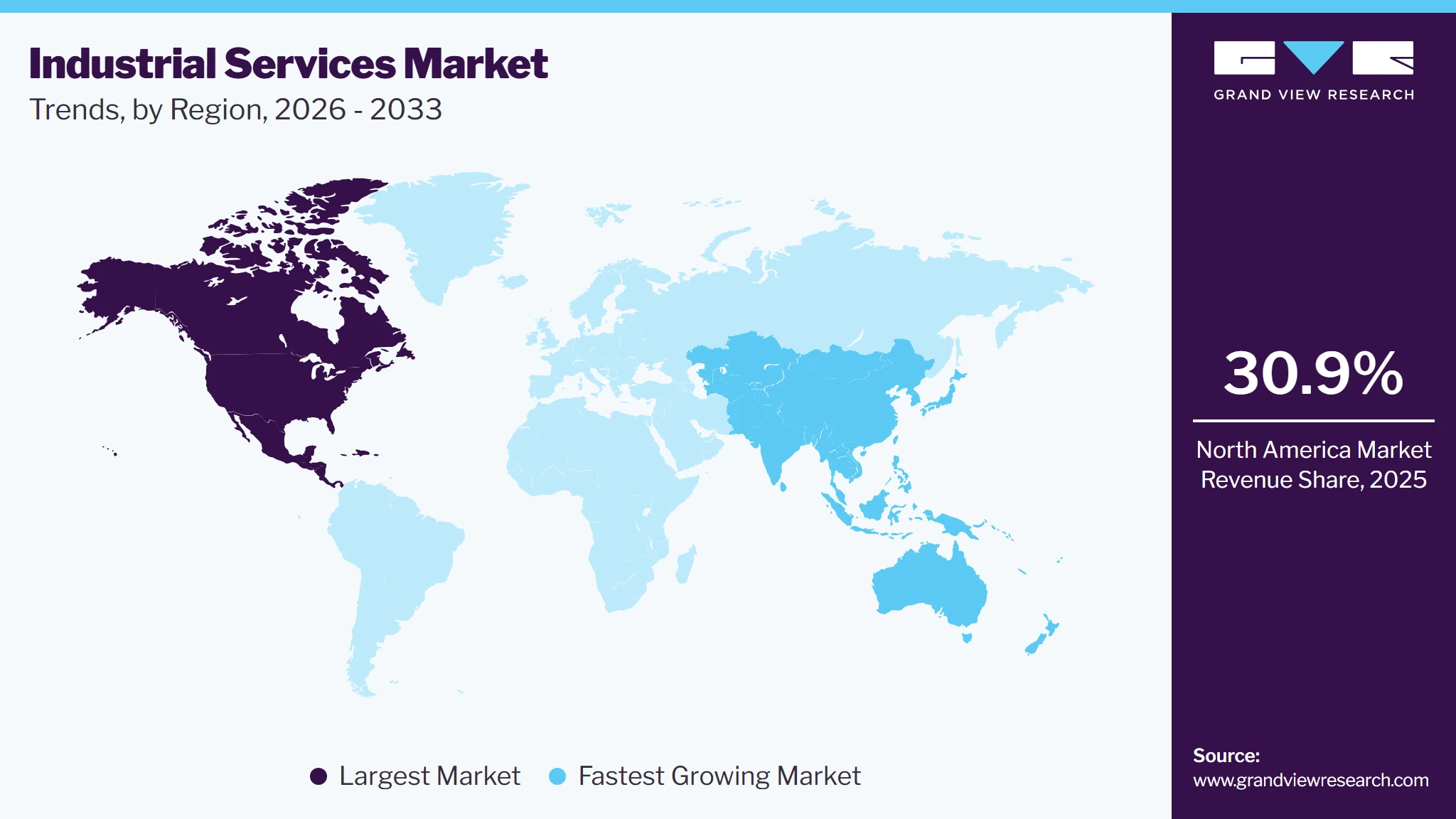
North America dominated the industrial services market, accounting for the largest revenue share of 30.9% in 2025, primarily due to its advanced industrial infrastructure and high level of technological adoption. The presence of key industries, including oil and gas, pharmaceuticals, and manufacturing, drives significant demand for industrial services. In addition, stringent regulatory standards and a strong emphasis on safety and efficiency compel companies to invest in maintenance and operational improvement services. The ongoing trend toward digital transformation and automation further solidifies North America's leading position in the global market.
 To learn more about this report, Download Free Sample Report
U.S. Industrial Services Market Trends
The industrial services market in the U.S. held the largest share in the North America region in 2025, due to its extensive industrial base and robust economic infrastructure. The presence of diverse industries, including manufacturing, oil and gas, and pharmaceuticals, drives significant demand for specialized services. In addition, the U.S. leads in technological innovation and adoption, facilitating advancements in automation and digital solutions. Strong regulatory frameworks and a focus on operational efficiency further compel companies to invest in comprehensive industrial services, reinforcing the dominant position in the market.
Asia Pacific Industrial Services Market Trends
The industrial services market in Asia Pacific is anticipated to grow at the fastest CAGR of 7.2% from 2024-2030, driven by rapid industrialization and increasing manufacturing activities in the region. The growing demand for advanced technologies and automation solutions is prompting businesses to seek comprehensive industrial services to enhance efficiency and productivity. In addition, government initiatives to support infrastructure development and investment in emerging economies are contributing to market growth.
Europe Industrial Services Market Trends
The industrial services market in Europe is characterized by growth driven by stringent regulatory standards and a strong focus on safety and sustainability. The region's commitment to reducing carbon emissions and promoting energy efficiency is leading industries to invest in advanced industrial services. In addition, the increasing adoption of automation and digital technologies is enhancing operational efficiency and productivity. The presence of well-established manufacturing sectors further supports the demand for comprehensive industrial services, ensuring continued market expansion.
Key Industrial Services Company Insights
Some of the key companies operating in the global market include ABB, and Siemens, among others.
-
ABB is a technology company that provides products and solutions across areas/applications such as electrification, robotics, automation, and motion. The company also offers the ABB Ability Marketplace portal, which provides clients and customers with access to more than 100 cloud-based digital applications. The company caters to industries such as aluminium, buildings and infrastructure, automobile, cement, chemical, data centres, food and beverage, marine, metals, life sciences, mining, power generation, pulp and paper, oil and gas, ports, printing, process automation, water, railway, solar power, and wind power. ABB operates through four segments, namely electrification, process automation, motion, and robotics & discrete automation. The electrification segment produces and markets electrical goods and solutions that help ensure the safe, intelligent, and long-lasting flow of electricity from the substation to the outlet. These products and services are provided through six operating divisions: smart power, distribution solutions, smart buildings, installation products, e-mobility, and power conversion
SKF and Metso Technologies are some of the emerging market companies in the target market.
- SKF provides products and solutions such as bearings and units, mechatronics systems, seals, services, as well as lubrication systems. The company conducts its business activities through two segments, namely Automotive and Industrial. Through the Automotive segment, the company manufactures cars, light and heavy trucks, buses, trailers, and two-wheelers with customized seals, bearings, and other related products. The company sells its automotive products through a network of over 10,000 distributors globally. SKF has a presence in over 130 countries across the globe, around 91 manufacturing units, and 15 technology centres. Light vehicles, industrial distribution, vehicle aftermarket, and heavy industries are the company’s largest customer industries in the Latin America region. SKF caters to industrial distribution, renewable energy, off-highway, heavy machinery industries, and light vehicles, trucks, and vehicle aftermarkets. The company focuses on reducing product failures and providing seamless integration of bearing performance. The company is listed on the Nasdaq Nordic (Stockholm Stock Exchange) under the ticker symbols SKF A and SKF B
Key Industrial Services Companies:
The following key companies have been profiled for this study on the industrial services market.
-
General Electric Company
-
ABB
-
Emerson Electric Co.
-
Honeywell International Inc.
-
Metso
-
Rockwell Automation
-
Samson
-
Schneider Electric
-
Siemens
-
SKF
-
John Wood Group PLC
Competitive Benchmarking
Category
Operating Strategies
Competitive Edge
Weakness
Established Players (Siemens AG, ABB, Schneider Electric, Honeywell International Inc., Emerson Electric Co., Rockwell Automation, General Electric Company)
- These companies focus on delivering integrated industrial services by combining automation platforms, digital software, engineering expertise, and lifecycle asset management.
- They continuously invest in Industrial Internet of Things (IIoT), artificial intelligence (AI), predictive maintenance, digital twins, cybersecurity, and remote monitoring solutions.
- The competitive edge of mature players lies in their extensive installed base of equipment, strong customer relationships, comprehensive service portfolios, global service infrastructure, and advanced digital capabilities.
- Long-term service agreements and the ability to provide end-to-end engineering, automation, maintenance, and optimization services enable these companies to maintain strong market positions.
- Large organizational structures and extensive legacy operations can slow the adoption of new technologies and reduce operational agility.
- High implementation costs, lengthy project execution cycles, and dependence on large industrial capital expenditure also create challenges.
Emerging & Specialized Players (Metso, SKF, Samson, John Wood Group PLC)
- These companies focus on specialized industrial services, including equipment maintenance, asset reliability, rotating equipment services, process optimization, engineering consulting, valve automation, and plant lifecycle support.
- Their operating strategies emphasize technical specialization, customized service offerings, predictive maintenance, condition monitoring, and industry-specific engineering expertise to improve operational performance and asset reliability.
- Emerging players gain a competitive advantage through deep technical expertise within specific industrial domains, strong aftermarket service capabilities, specialized engineering knowledge, and long-term customer relationships.
- Compared with diversified automation leaders, these companies often have narrower product portfolios and greater dependence on specific industries such as mining, oil & gas, or process manufacturing.
- Revenue can be affected by fluctuations in industrial production, commodity prices, and customer capital expenditure cycles.
Recent Developments
-
In June 2024, Honeywell launched its Battery Manufacturing Excellence Platform (Battery MXP), leveraging AI-powered software to optimize gigafactory operations from inception. This innovation aims to enhance battery cell yields, accelerate facility startups, and reduce material waste by 60% during the initial phases. By integrating AI and machine learning, Battery MXP detects and addresses quality issues proactively, enabling manufacturers to improve efficiency, cut production ramp-up times, and meet increasing demand for lithium-based batteries. This solution ensures real-time traceability of battery cells from raw materials to finished products, enhancing quality control and safety measures in gigafactories worldwide, supporting Honeywell's commitment to advancing industrial automation and meeting global electrification demands
-
In February 2023, ABB launched its latest ABB Ability Symphony Plus distributed control system (DCS), enhancing digital transformation in electricity generation and water industries. This release facilitates seamless access to a broader digital ecosystem and supports secure OPC UA connections to Edge and Cloud platforms without compromising core control functionalities. The update includes HTML5 web-based mobile operations for real-time access to critical data, promoting collaboration and maximizing plant uptime. These advancements aim to foster productivity, sustainability, and operational efficiency across industrial sectors
Industrial Services Market Report Scope
Report Attribute
Details
Market size in 2025
USD 36.2 billion
Estimated market size in 2026
USD 38.3 billion
Projected market size by 2033
USD 59.5 billion
Growth rate
CAGR of 6.5% from 2026 to 2033
Base year for estimation
2025
Historical data
2021 - 2024
Forecast period
2026 - 2033
Quantitative units
Revenue in USD million and CAGR from 2026 to 2033
Report coverage
Revenue forecast, company ranking, competitive landscape, growth factors, and trends
Segments covered
Product, application, end use, region
Regional scope
North America, Europe, Asia Pacific, Latin America, MEA
Country scope
U.S., Canada, Mexico, UK, Germany, France, China, Japan, India, South Korea, Australia, Brazil, South Africa, Saudi Arabia, UAE
Key companies profiled
General Electric Company; ABB; Emerson Electric Co.; Honeywell International Inc; Metso; Rockwell Automation; Samson; Schneider Electric; Siemens; SKF; John Wood Group PLC
Customization scope
Free report customization (equivalent up to 8 analysts' working days) with purchase. Addition or alteration to country, regional & segment scope.
Pricing and purchase options
Avail customized purchase options to meet your exact research needs. Explore purchase options
Global Industrial Services Market Report Segmentation
This report forecasts revenue growth at global, regional, and country levels and provides an analysis of the latest industry trends in each of the sub-segments from 2021 to 2033. For this study, Grand View Research has segmented the global industrial services market report based on type, application, end-use, and region.
-
Type Outlook (Revenue, USD Million, 2021 - 2033)
-
Engineering & Consulting
-
Installation & Commissioning
-
Operational Improvement & Maintenance
-
-
Application Outlook (Revenue, USD Million, 2021 - 2033)
-
Distributed Control System (DCS)
-
Programmable Controller Logic (PLC)
-
Supervisory Control and Data Acquisition (SCADA)
-
Electric Motors & Drives
-
Valves & Actuators
-
Manufacturing Execution System
-
Others
-
-
End Use Outlook (Revenue, USD Million, 2021 - 2033)
-
Oil and Gas
-
Chemicals
-
Automotive
-
Pharmaceuticals
-
Others
-
-
Regional Outlook (Revenue, USD Million, 2021 - 2033)
-
North America
-
U.S.
-
Canada
-
Mexico
-
-
Europe
-
UK
-
Germany
-
France
-
-
Asia Pacific
-
China
-
Japan
-
India
-
South Korea
-
Australia
-
-
Latin America
-
Brazil
-
-
Middle East and Africa (MEA)
-
KSA
-
UAE
-
South Africa
-
-
Research Methodology
The industrial services market figures in this report are based on a proven research process that combines executive interviews with secondary research from proprietary databases, company filings, and recognized regulatory and institutional sources. Market size is built through value-chain sizing - reconciling supply-side and demand-side estimates - and triangulated with bottom-up and top-down approaches. Every estimate passes multiple levels of expert validation before publication, with each industrial services segment quantified using the revenue-capture definitions in the table below.
Segment Definition
Segment - Product
Revenue capture definition
Engineering & Consulting
Revenue is generated through engineering design, process optimization, feasibility studies, system integration consulting, plant modernization planning, digital transformation consulting, compliance assessments, and project management services for industrial facilities.
Installation & Commissioning
Revenue is generated through equipment installation, system integration, plant commissioning, testing, calibration, startup support, electrical and mechanical installation, and validation services for new or upgraded industrial assets.
Operational Improvement & Maintenance
Revenue is generated through preventive, predictive, and corrective maintenance, asset performance management, inspection, repair, remote monitoring, reliability improvement, plant optimization, and lifecycle support contracts.
Segment - Application
Revenue capture definition
Distributed Control System (DCS)
Revenue is generated through the installation, integration, programming, maintenance, upgrades, cybersecurity, and lifecycle management of distributed control systems used in continuous process industries.
Programmable Logic Controller (PLC)
Revenue is generated through PLC programming, system integration, installation, troubleshooting, upgrades, maintenance, and technical support services for industrial automation systems.
Supervisory Control and Data Acquisition (SCADA)
Revenue is generated through SCADA system deployment, configuration, integration, remote monitoring, software upgrades, cybersecurity, maintenance, and operational support services.
Electric Motors & Drives
Revenue is generated through installation, commissioning, maintenance, repair, diagnostics, retrofitting, efficiency optimization, and replacement services for industrial motors and drive systems.
Valves & Actuators
Revenue is generated through inspection, calibration, maintenance, repair, installation, testing, retrofitting, and performance optimization services for industrial valves and actuator systems.
Manufacturing Execution System (MES)
Revenue is generated through MES implementation, software integration, customization, system upgrades, technical support, maintenance, training, and production optimization services.
Others
Revenue is generated through maintenance, repair, integration, inspection, commissioning, and optimization services for industrial equipment such as compressors, turbines, pumps, instrumentation, robotics, and other automation systems.
Segment - End Use
Revenue capture definition
Oil and Gas
Revenue is generated through maintenance, inspection, engineering, commissioning, shutdown management, asset integrity, automation support, and operational optimization services for upstream, midstream, and downstream facilities.
Chemicals
Revenue is generated through process optimization, equipment maintenance, plant turnaround services, automation integration, inspection, calibration, and regulatory compliance support for chemical manufacturing facilities.
Automotive
Revenue is generated through production line installation, robotics integration, predictive maintenance, equipment servicing, manufacturing automation, and plant optimization services for automotive manufacturing facilities.
Pharmaceuticals
Revenue is generated through equipment validation, cleanroom commissioning, automation services, preventive maintenance, calibration, regulatory compliance support, and facility lifecycle management for pharmaceutical manufacturing plants.
Others
Revenue is generated through engineering, maintenance, installation, inspection, automation, and asset management services across industries including food & beverage, mining, power generation, metals, pulp & paper, water treatment, and general manufacturing.
Estimation Model
Layer Name
Key Question
Description
Industrial Automation & Asset Enablement Layer
What technologies and infrastructure enable industrial services?
Represents the industrial equipment, automation technologies, and digital infrastructure that form the foundation of industrial services. Includes industrial control systems, sensors, Industrial Internet of Things (IIoT), robotics, electric motors and drives, valves and actuators, manufacturing execution systems (MES), distributed control systems (DCS), programmable logic controllers (PLC), SCADA platforms, predictive analytics, digital twins, and asset monitoring technologies that improve operational efficiency and equipment reliability.
Industrial Services & End-User Layer
Where are industrial services delivered and which industries generate demand?
Represents the industries and operational environments where industrial services create value. Key end users include oil & gas, chemicals, automotive, pharmaceuticals, power generation, mining, food & beverage, water & wastewater, metals, pulp & paper, and other manufacturing industries. Services support asset reliability, regulatory compliance, operational efficiency, production continuity, safety, and lifecycle performance across industrial facilities.
Service Delivery & Lifecycle Management Layer
How are industrial services delivered throughout the asset lifecycle?
Covers the full range of industrial service activities delivered across the equipment lifecycle. Includes engineering & consulting, installation & commissioning, preventive and predictive maintenance, inspection and testing, repair and overhaul, plant modernization, automation integration, remote monitoring, condition-based maintenance, shutdown and turnaround management, digital asset management, and operational improvement services that maximize asset availability and productivity.
Revenue Generation & Market Monetization Layer
How is revenue generated in the industrial services market?
Revenue is generated through engineering and consulting contracts, equipment installation and commissioning projects, preventive and predictive maintenance agreements, asset management contracts, inspection and repair services, automation integration projects, plant modernization initiatives, remote monitoring subscriptions, digital maintenance solutions, shutdown and turnaround services, lifecycle support agreements, and long-term service contracts with industrial operators across manufacturing, process industries, energy, and infrastructure sectors.
Delivered Customizations
This report has been delivered with the following In-depth customizations
CLIENT REQUEST
CUSTOMIZATION DELIVERED
VALUE ADDS
Market Sizing, Segmentation & Growth Opportunity Assessment
Assessed the global industrial services market size, historical trends, forecast growth outlook, and detailed segmentation by service type (engineering & consulting, installation & commissioning, operational improvement & maintenance), application (DCS, PLC, SCADA, electric motors & drives, valves & actuators, MES, and others), and end-use industries (oil & gas, chemicals, automotive, pharmaceuticals, and others).
Supports strategic decision-making by identifying high-growth service segments, emerging application areas, and industry-specific opportunities. Enables stakeholders to prioritize investments, optimize service portfolios, and develop targeted growth strategies aligned with industrial automation, digitalization, and asset optimization trends.
Competitive Landscape & Strategic Positioning Analysis
Evaluated key industrial service providers based on service portfolios, automation capabilities, digital solutions, maintenance expertise, engineering capabilities, geographic presence, partnerships, acquisitions, technological investments, and lifecycle support offerings. Analyzed established players and specialized service providers to assess competitive positioning, operational strategies, strengths, and market challenges.
Enables competitive benchmarking, identifies capability gaps, supports partnership and acquisition strategies, and helps companies enhance service differentiation. Provides insights into digital transformation initiatives, customer engagement models, and strategies required to strengthen market positioning in an evolving industrial landscape.
Regional Market Demand & Industrial Adoption Analysis
Analyzed regional market dynamics across North America, Europe, Asia Pacific, Latin America, and the Middle East & Africa by evaluating industrial automation adoption, manufacturing expansion, infrastructure investments, energy sector developments, regulatory requirements, and demand for predictive maintenance and asset management services.
Supports geographic expansion strategies by identifying high-potential markets, emerging industrial hubs, and sector-specific growth opportunities. Helps stakeholders optimize regional investments, develop localized service offerings, establish partnerships, and improve long-term market penetration.
Frequently Asked Questions About This Report
The operational improvement & maintenance segment accounted for the largest market share of 47.9% in 2025.
The distributed control system (DCS) segment led the market with a share of 20.2% in 2025.
The oil and gas segment dominated the market, accounting for 28.4% of the market in 2025.
Asia Pacific is expected to register the highest CAGR 8.6% from 2026 to 2033.
The global industrial services market size was valued at USD 36.2 billion in 2025 and is estimated at USD 38.3 billion in 2026.
The global industrial services market is expected to grow at a CAGR of 6.5% from 2026 to 2033, reaching USD 59.5 billion by 2033.
North America dominated with a 30.9% revenue share in 2025.
Some key players operating in the industrial services market include General Electric Company, ABB, Emerson Electric Co., Honeywell International Inc, Metso, Rockwell Automation, Samson, Schneider Electric, Siemens, SKF, and John Wood Group PLC.
Key factors driving market growth include the increasing demand for predictive maintenance, regulatory compliance, aging infrastructure, and focus on energy efficiency.
About the Author(s)
Next Generation Technologies Research Team
Technology · Next Generation TechnologiesThis report was authored by the next generation technologies research team at Grand View Research - comprising two research analysts, one senior research analyst, and one industry expert - with specialized expertise in the next generation technologies segment of the technology industry. All findings are based on proprietary technology databases, executive interviews, and regulatory analysis, subject to internal peer review prior to publication.
Last Updated:
Speak to Analyst

Customize this report to your needs - add regions, segments, or data points, with 20% free customization.
Or view our licence options:


ISO 9001:2015 & 27001:2022 Certified
We are GDPR and CCPA compliant! Your transaction & personal information is safe and secure. For more details, please read our privacy policy.


