
- Home
- »
- Healthcare IT
- »
-
Life Sciences Quality Management Software Market Report 2033GVR Report cover
![Life Sciences Quality Management Software Market (2026 - 2033)Report]()
Life Sciences Quality Management Software Market (2026 - 2033)
Size, Share & Trends Analysis Report By Deployment Mode (Web & Cloud-based, On-premise), By Application, By End-use, By Region (North America, Europe, Asia Pacific, Latin America, MEA), And Segment Forecasts
Market Size, 2025
$3.7BMarket Estimate, 2026
$4.1BMarket Forecast, 2033
$10.1BCAGR, 2026–2033
13.8%Life Sciences Quality Management Software Market Summary
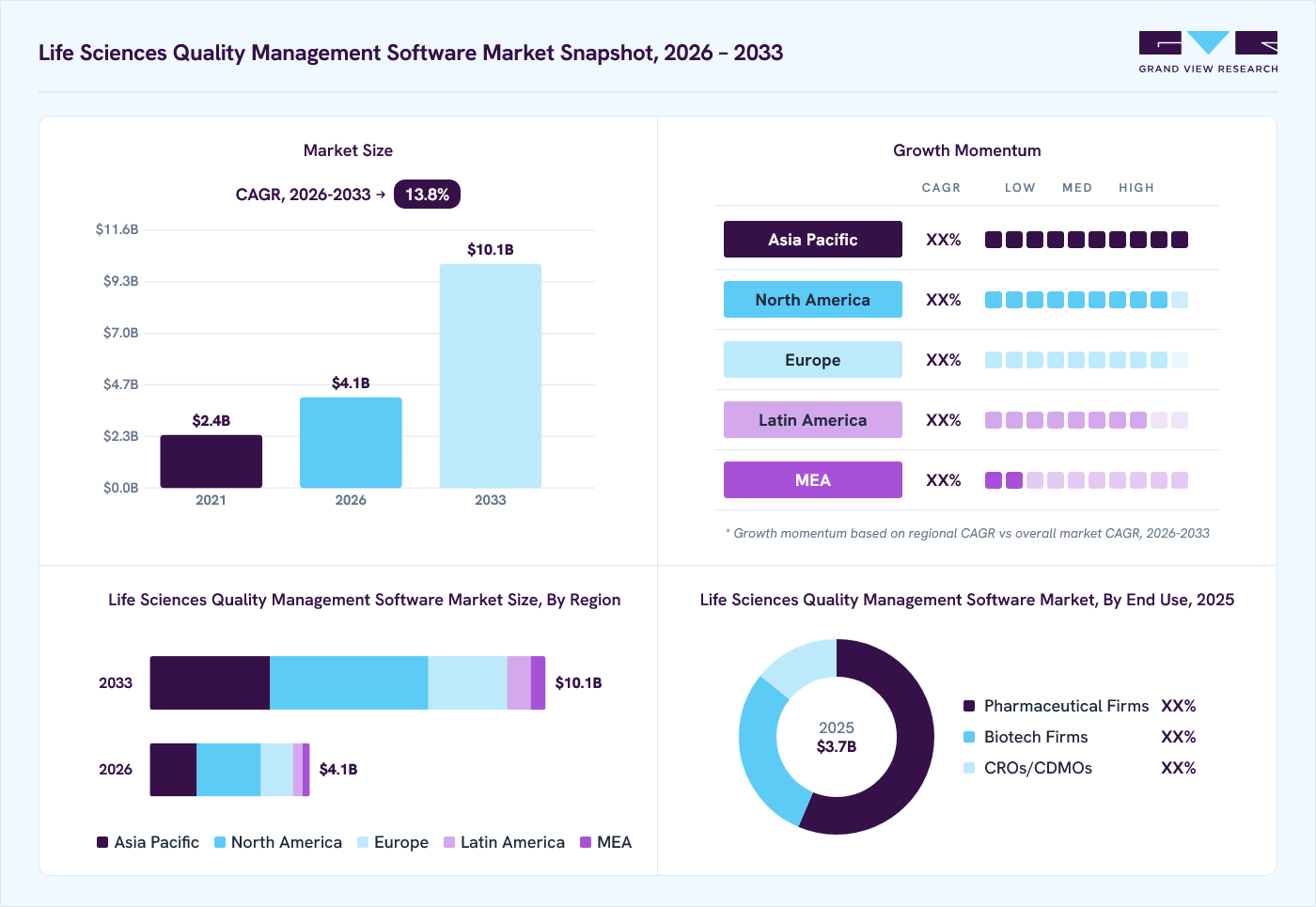
The global life sciences quality management software market size was valued at USD 3.7 billion in 2025 and is projected to grow from USD 4.1 billion in 2026 to USD 10.1 billion by 2033, at a CAGR of 13.8% from 2026 to 2033. North America dominated the market, accounting for the largest revenue share of 40.0% in 2025. Technological advancements and growing need to comply with regulatory guidelines are factors driving market growth.
Key Market Trends & Insights
- By application: Data management held the largest revenue share of 17.5% in 2025.
- By deployment mode: Cloud & web-based held the largest market share of 77.2% in 2025.
- By end use: Pharmaceutical firms held the largest market share of 56.4% in 2025.
Regional Highlights
- Largest regional market: North America (40.0% revenue share, 2025)
- Fastest-growing regional market: Asia Pacific (fastest CAGR, 2026-2033)
- By country: The U.S. held the largest share in 2025.
Market Size & Forecast
- Market size in 2025: USD 3.7 Billion
- Estimated market size in 2026: USD 4.1 Billion
- Projected market size by 2033: USD 10.1 Billion
- CAGR (2026-2033): 13.8%
In addition, the market is expected to expand due to the growing use of smart devices and the Internet of Things (IoT). The incorporation of the Six Sigma approach into life sciences Quality Management Software (QMS) is anticipated to open new opportunities for industrial expansion.
Market Dynamics
The life sciences quality management software market is primarily driven by the growing demand to comply with stringent regulatory guidelines. Organizations operating across pharmaceuticals, biotechnology, medical devices, and diagnostics are required to comply with regulations such as FDA 21 CFR Part 11, EU GMP Annex 11, GxP, ISO 13485, and ICH Q10 to ensure product quality, patient safety, and regulatory compliance. Life sciences quality management software enables organizations to automate quality processes, maintain comprehensive documentation, manage audit trails, and streamline compliance activities. These capabilities help manufacturers improve operational consistency while meeting evolving regulatory expectations across global markets.
Digital transformation is further accelerating market growth by replacing conventional paper-based quality systems with digital Enterprise Quality Management Software (eQMS). Life sciences organizations use eQMS to harmonize quality processes, centralize documentation, and improve cross-functional collaboration. Cloud-based quality management platforms provide real-time access to quality data, enabling faster decision-making, improved traceability, and enhanced operational efficiency. For instance, in December 2025, ETQ launched ETQ Reliance Go, a cloud-native electronic quality management system (EQMS) tailored for small- to mid-sized manufacturers. Moreover, integration with manufacturing execution systems (MES), laboratory information management systems (LIMS), enterprise resource planning (ERP), and regulatory management platforms further strengthens quality oversight throughout the product lifecycle.
Technological advancements, including artificial intelligence (AI), machine learning (ML), and advanced analytics, are also driving adoption across the life sciences industry. These technologies enable predictive quality management, automated deviation detection, risk assessment, and continuous process improvement while reducing manual intervention. AI-powered quality management solutions help organizations identify potential quality issues before they affect manufacturing or product performance, improving compliance and reducing operational risks. In June 2024, ComplianceQuest launched an AI-integrated Quality Management System for the life sciences industry in partnership with Salesforce. The Life Sciences Cloud platform is designed to enhance clinical trials, quality processes, and patient engagement, demonstrating the growing integration of AI into life sciences quality management software.
The life sciences industry operates within a highly regulated environment, creating significant challenges for organizations implementing Life Sciences Quality Management Software (LSQMS). These platforms must comply with a broad range of global regulatory requirements, including FDA 21 CFR Part 11, EU GMP Annex 11, GxP guidelines, ISO 13485, ICH Q10 Pharmaceutical Quality System, ISO 9001, and ALCOA+ data integrity principles, along with country-specific regulations governing pharmaceuticals, biotechnology, medical devices, and diagnostics. Compliance with these standards requires extensive software validation activities, including Installation Qualification (IQ), Operational Qualification (OQ), and Performance Qualification (PQ), before systems can be deployed for regulated quality processes. Organizations must also maintain comprehensive documentation, electronic records, audit trails, electronic signatures, deviation management, change control, and corrective and preventive action (CAPA) records to demonstrate regulatory compliance. The complexity of these requirements increases implementation timelines, validation efforts, and operational costs, particularly for multinational life sciences organizations operating across multiple regulatory jurisdictions. Any deficiencies in software validation, documentation, or data integrity controls may result in regulatory observations, warning letters, inspection findings, product recalls, or delays in regulatory approvals, making compliance a critical consideration during the selection, implementation, and lifecycle management of life sciences quality management software.
Market Concentration & Characteristics
The life sciences quality management software market experiences a high degree of innovation driven by technological advancements. Integrating artificial intelligence into QMS helps streamline manufacturing processes by automating repetitive tasks and reducing the risk of noncompliance. For instance, in July 2025, ValGenesis launched Smart GxP, the first AI-enabled platform to unify validation and process lifecycle management across life sciences. It combines the Validation Lifecycle Suite (VLS) and the Process Lifecycle Suite (PLS) to connect development, qualification, validation, and continued process verification in a single system.
“By embedding AI across a unified platform that spans product and process development, validation, cleaning, and continued process verification, we enable life sciences organisations to digitalise and streamline every lifecycle stage.
This integration eliminates data silos, accelerates tech transfer, and maintains consistent compliance and insight from lab to launch. With Smart GxP, companies can reduce risk, increase agility, and bring therapies to market faster and with greater confidence.”
-Dr Siva Samy, CEO and Chief Product Strategist at ValGenesis
The life sciences quality management software industry is experiencing a high level of merger and acquisition activity among several key players. This is due to the desire to gain a competitive advantage in the industry, enhance technological capabilities, and consolidate in a rapidly growing market. For instance, in April 2024, ABOUT Healthcare acquired AI analytics company Edgility to offer patient progression solutions with predictive and prescriptive analysis.

The impact of regulations is high, with various local regulatory bodies governing the market. Various regulatory authorities, such as the U.S. FDA, MHRA, and EMA, establish the criteria under which electronic records are considered trustworthy and reliable, equivalent to traditional paper records, thereby ensuring compliance and safeguarding product quality. For instance, in January 2024, the FDA introduced the Quality Management System Regulation (QMSR) to update the Current Good Manufacturing Practice (CGMP) standards for medical devices, aligning them with the Quality System (QS) regulation.
The industry is witnessing moderate product expansion, driven by an increasing customer base for quality management software. Firms are aligning with technology providers and consulting agencies to enhance their product offerings and expand market reach. For instance, in April 2024, Clarivate Plc, a provider of transformative intelligence, announced the acquisition of Global QMS, Inc., commonly known as Global Q. This company offers cloud-based solutions that help life sciences clients automate regulatory reporting and compliance management.
Analyst Perspective
The Life Sciences Quality Management Software market is evolving toward integrated digital quality ecosystems that improve regulatory compliance, operational efficiency, and product lifecycle management across pharmaceutical, biotechnology, medical device, and contract manufacturing organizations. Growing regulatory requirements and increasing adoption of cloud-based QMS platforms are accelerating market growth by enabling standardized quality processes, streamlined audits, and reduced compliance risks. The competitive landscape is driven by cloud-native platforms integrating quality management with manufacturing, laboratory, regulatory, and enterprise systems. Artificial intelligence, workflow automation, predictive quality analytics, and risk-based quality management are strengthening vendor differentiation, while scalable and interoperable solutions continue to support digital transformation across the life sciences industry.
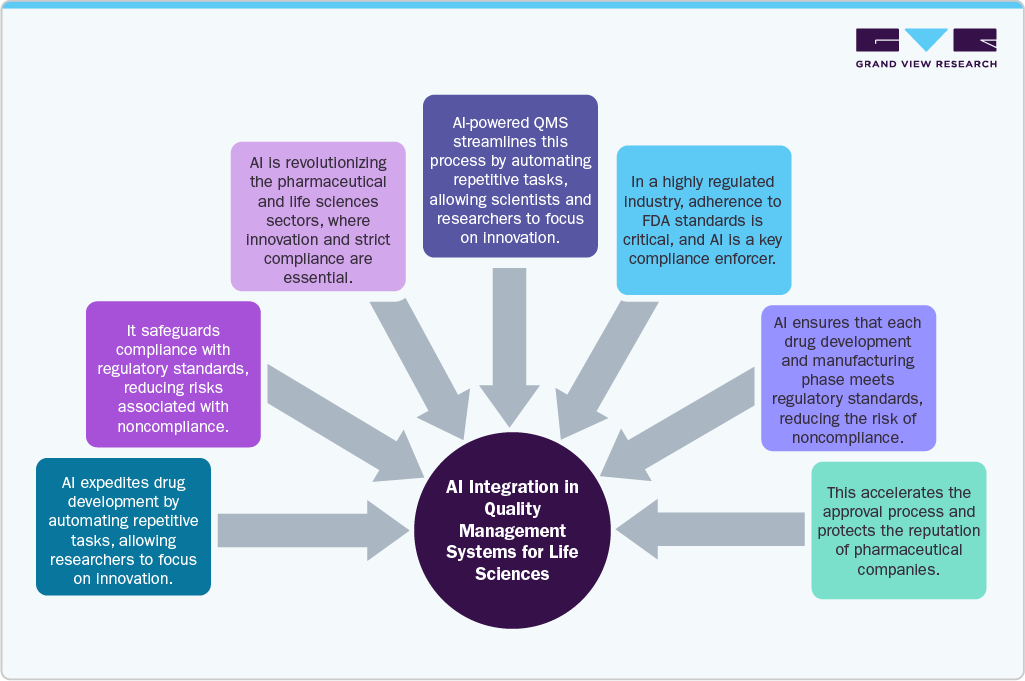
Case Study & Insights: AI Integrationin Quality Management Systems for Life Sciences
The case study from Qualityze highlights the transformative impact of AI on QMS across various industries, particularly in pharmaceuticals and life sciences.
Result:
The integration of AI into QMS is revolutionizing how companies manage quality control and assurance. By leveraging AI-driven insights, organizations can optimize their processes, improve customer satisfaction, and maintain compliance with regulatory standards. As industries continue to embrace these technologies, they set new benchmarks for excellence in quality management.
Application Insights
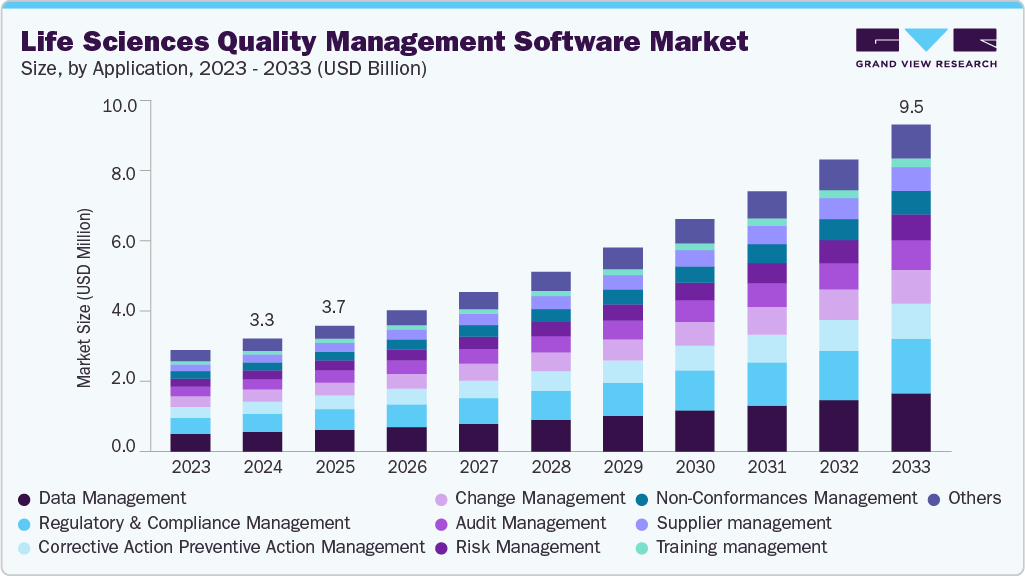
The data management segment dominated the life sciences quality management software industry in 2025, accounting for the largest revenue share of 17.5%. The rising volume of inconsistent healthcare data and the increased demand from regulatory organizations for reports that adhere to exacting quality standards are the main factors influencing this growth. Big Data is frequently used by the pharmaceutical industry. These companies employ data for a variety of tasks, such as analyzing clinical findings and assessing the efficacy of medications based on actual health outcomes.
The regulatory and compliance management segment is expected to grow at the fastest CAGR from 2026 to 2033. The segment's growth is attributed to the increasing complexity of regulatory requirements, the need for enhanced data integrity and traceability, and the growing emphasis on patient safety. As sciences companies face increased scrutiny regarding product quality and safety, they must adopt robust QMS that integrate regulatory compliance features. These systems facilitate real-time compliance status monitoring, streamline audit processes, and ensure proper documentation practices.
Deployment Mode Insights
The cloud & web-based segment held the largest market share of 77.2% in 2025 and is expected to register growth at the fastest CAGR during the forecast period. The adoption of web and cloud-based quality management software in the life sciences sector is transforming how organizations manage compliance and quality assurance processes. By leveraging these technologies, companies can enhance collaboration, ensure regulatory adherence, and ultimately deliver higher-quality products more efficiently. As industry continues to evolve, these systems will be integral in navigating the complexities of modern life sciences operations.
The on-premise segment is anticipated to grow at a significant CAGR from 2026 to 2033. On-premises life sciences QMS is designed to help organizations in the life sciences sector manage quality processes, ensure regulatory compliance, and enhance operational efficiency. These systems are installed locally on the organization's servers and require significant investment in hardware and maintenance. On-premises solutions are preferred by many healthcare entities due to their enhanced data security capabilities. These systems allow organizations to maintain control over sensitive data, minimizing the risk of breaches that could compromise patient safety and regulatory compliance.
End Use Insights
The pharmaceutical firms segment held the largest market share of 56.4% in 2025. QMS enables pharmaceutical companies to develop quality products, control suppliers, support data integrity, and maintain compliance. The adoption of standardized QMS procedures is increasing as pharmaceutical businesses expand globally. In addition, increasing expenses in drug manufacturing and the rising use of technology in the pharmaceutical industry are driving market growth.
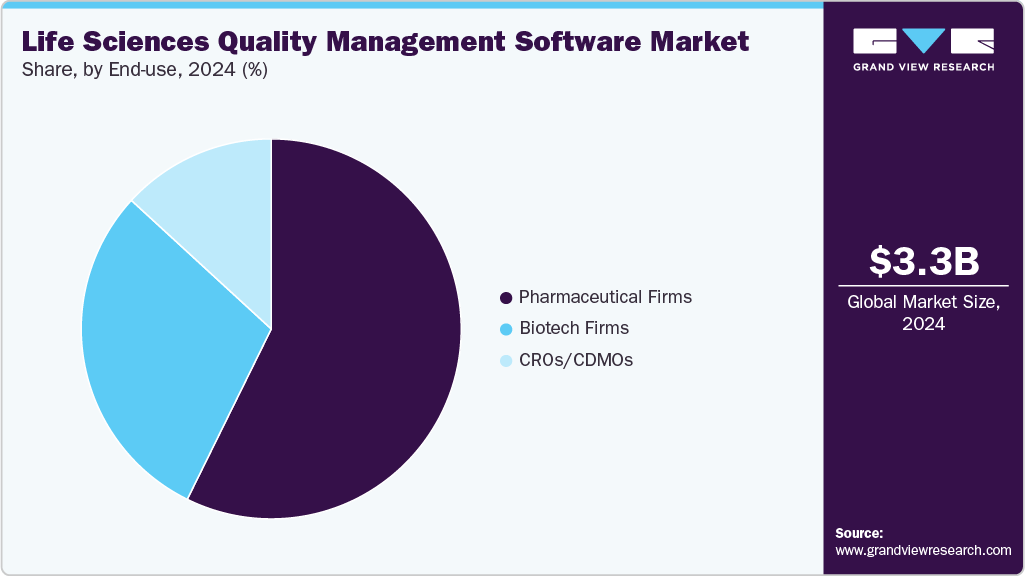
The biotech firms segment is expected to grow at the fastest CAGR over the forecast period. The need for regulatory compliance, enhanced efficiency, data-driven insights, improved collaboration, effective risk management, robust supplier relationships, increased customer satisfaction, and cost reductions drives the integration of QMS in biotechnology. These factors collectively contribute to a more streamlined operation that meets the challenges of a rapidly evolving industry landscape.
Regional Insights
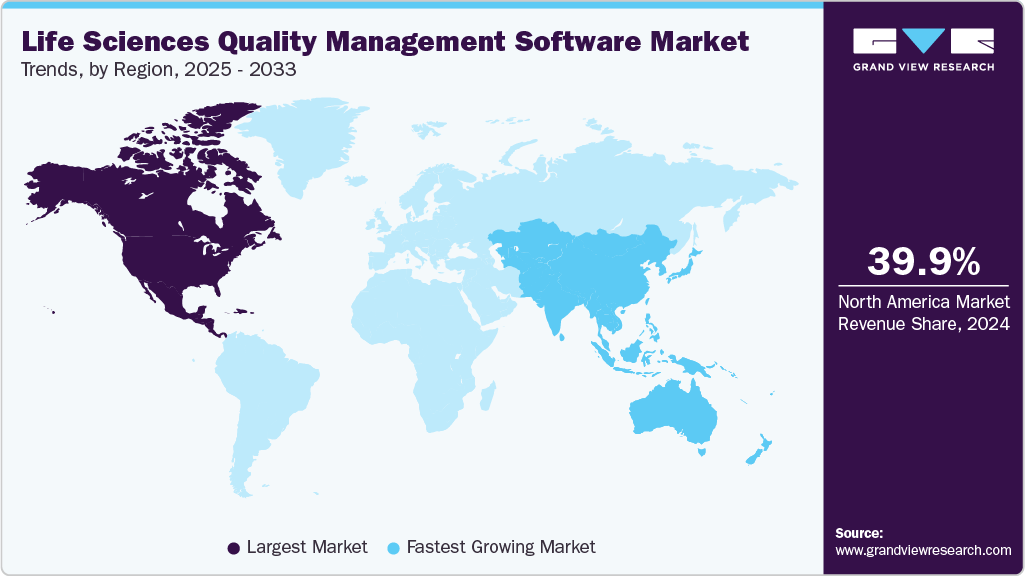
North America dominated the life sciences quality management software market with the largest revenue share of 40.0% in 2025. The life sciences quality management software (QMS) market in North America is evolving rapidly, driven by the need for stringent regulatory compliance and the increasing complexity of product development processes. Companies in the life sciences sector, including pharmaceuticals and biotechnology, seek to maintain high-quality standards while navigating regulations. These systems help organizations manage documentation, ensure product safety, and facilitate compliance across various stages of the product lifecycle.
U.S. Life Sciences Quality Management Software Market Trends
The U.S. life sciences quality management software industry is experiencing significant growth, driven by an increasing emphasis on regulatory compliance and the need for enhanced operational efficiency within the pharmaceutical, biotechnology, and medical device sectors. The necessity for a QMS arises from the complex regulatory landscape governing these industries, where adherence to standards such as Good Manufacturing Practices (GMP), ISO 13485, and Food and Drug Administration (FDA) regulations is critical.
Companies are increasingly adopting QMS solutions to streamline processes, ensure product quality, and mitigate the risks of non-compliance. For instance, in January 2023, Palantir Technologies launched a Quality Management System for life sciences to meet GxP requirements, integrated with its Foundry platform. The solution accelerates therapeutic launch processes, enables end-to-end clinical data analysis, and ensures compliance with 21 CFR Part 11, serving major pharmaceutical and contract research organizations.
Europe Life Sciences Quality Management Software Market Trends
The life sciences quality management software industry in Europe observed lucrative growth in 2025, driven by the growing requirement to comply with strict regulatory standards and the need for improved operational efficiency. As pharmaceutical and biotechnology firms strive to comply with strict regulations imposed by agencies such as the European Medicines Agency (EMA) and the FDA, the demand for robust QMS solutions has increased.
The life sciences quality management software market in the UK is expected to grow over the forecast period, owing to the increasing regulatory demands and a strong emphasis on quality assurance. Moreover, a stringent regulatory landscape has created a pressing need for effective quality management systems to streamline processes and reduce the risks of non-compliance.
The Germany life sciences quality management software market held the largest share of Europe in 2025. As pharmaceutical and biotechnology industries face stringent regulations from authorities such as the European Medicines Agency (EMA) and the Federal Institute for Drugs and Medical Devices (BfArM), organizations adopt QMS solutions to ensure product quality and safety. The growing emphasis on patient safety and risk management further emphasizes the necessity for effective quality management systems to streamline processes, enhance documentation, and facilitate audits.
Asia Pacific Life Sciences Quality Management Software Market Trends
The Asia Pacific life sciences quality management software industry is poised to grow at the fastest CAGR from 2026 to 2033 due to the increasing regulatory requirements imposed by health authorities, such as the U.S. Food and Drug Administration (FDA) and the European Medicines Agency (EMA). Moreover, rapid technological advancements, including cloud computing and artificial intelligence, have facilitated the development of more sophisticated QMS tools that enhance efficiency and data accuracy. For instance, in August 2025, Bio-Rad launched Unity Next Peer QC across Asia Pacific as a cloud-based QC data management platform. It offers on-demand peer reporting, error troubleshooting, and automated updates to help labs reduce reruns and streamline compliance reporting.
The life sciences quality management software market in Japan is expected to grow significantly over the forecast period. The increasing regulatory requirements and the need for enhanced operational efficiency within the pharmaceutical, biotechnology, and medical device sectors have significantly influenced the growth of life sciences QMS in Japan. As Japan continues to be a significant player in the global life sciences market, companies are increasingly adopting QMS solutions, thereby propelling market growth.
The China life sciences quality management software market held the largest revenue share in 2025. The growth of life sciences QMS in China has been significantly influenced by the rapid expansion of the pharmaceutical and biotechnology sectors, alongside increasing regulatory requirements. As China’s economy continues to evolve, the demand for high-quality healthcare products has surged, prompting companies to adopt advanced QMS solutions to ensure compliance with stringent regulations set forth by authorities such as the National Medical Products Administration (NMPA).
Latin America Life Sciences Quality Management Software Market Trends
The Latin America life sciences quality management software industry is anticipated to grow at a significant CAGR over the forecast period, driven by the increasing regulatory demands and the need for enhanced operational efficiency. As the life sciences sector in Latin America continues to evolve, the emphasis on quality management intensifies, further contributing to market growth.
Middle East and Africa Life Sciences Quality Management Software Market Trends
The Middle East and Africa life sciences quality management software industry is expected to grow at a significant CAGR over the forecast period. The market is characterized by a dynamic landscape driven by increasing regulatory requirements and the need for enhanced compliance in the pharmaceutical and biotechnology sectors. Governments across the region are implementing stricter regulations to ensure product safety and efficacy, leading to rising demand for robust QMS solutions.
Key Life Sciences Quality Management Software Company Insights
Key players in the life sciences quality management software market are undertaking initiatives to strengthen their market presence and expand the reach of their products and services. Strategies such as new product launches and partnerships are playing a key role in propelling the market growth.
Key Life Sciences Quality Management Software Companies
The following key companies have been profiled for this study of the life sciences quality management software market.
-
Dassault Systèmes
-
IQVIA (Pilgrim)
-
MasterControl Solutions, Inc.
-
AmpleLogic
-
Qualio - QMS for Life Sciences
-
QT9 Software
-
Sparta Systems- TrackWise (Honeywell International Inc.)
-
AssurX, Inc
-
ETQ, LLC (Hexagon)
-
Veeva Systems
-
Qualityze
-
Ideagen
Competitive Benchmarking
Category
Operating Strategies
Competitive Edge
Weakness
Established Players (Dassault Systèmes, IQVIA (Pilgrim), MasterControl Solutions, Sparta Systems-TrackWise (Honeywell), ETQ, LLC (Hexagon), Veeva Systems)
- Expand cloud-based quality management platforms through strategic acquisitions, partnerships with pharmaceutical, biotechnology, and medical device companies, and continuous product innovation. Invest in AI-enabled quality analytics, document management, CAPA, audit management, supplier quality, training management, and regulatory compliance capabilities while integrating QMS with ERP, MES, PLM, and LIMS platforms to strengthen enterprise-wide quality management.
- Strong global market presence, extensive life sciences customer base, and comprehensive QMS portfolios supporting GxP, FDA 21 CFR Part 11, EU GMP Annex 11, and ISO compliance. Robust regulatory expertise, validated cloud infrastructure, extensive implementation experience, and broad partner ecosystems enable enterprise-scale deployments across highly regulated life sciences organizations.
- High implementation costs, lengthy deployment timelines, and complex system configurations may challenge adoption among small and mid-sized life sciences companies. Legacy customer environments and highly customized enterprise deployments can increase upgrade complexity and ongoing maintenance requirements.
Emerging & Specialized Players (AmpleLogic, Qualio, QT9 Software, AssurX, Inc., Qualityze, Ideagen)
- Focus on cloud-native, configurable, and cost-effective QMS platforms tailored for pharmaceutical, biotechnology, medical device, and contract manufacturing organizations. Leverage rapid implementation, subscription-based pricing, low-code configuration, customer-centric product development, and AI-enabled workflow automation to expand market penetration among small and medium-sized enterprises.
- Greater agility in product development and the ability to rapidly introduce regulatory updates, configurable workflows, and user-friendly quality management solutions. Strong focus on ease of implementation, faster deployment, lower total cost of ownership, and flexible scalability enables effective adoption by growing life sciences organizations.
- Smaller global customer base, limited enterprise-scale implementation experience, and lower financial resources compared with established software vendors. Narrower product portfolios, fewer global service capabilities, and limited ecosystem integrations may restrict adoption among large multinational pharmaceutical and medical device companies.
Recent Developments
- In May 2026, Snowflake and Veeva collaborated to enable agentic AI across life sciences by connecting Veeva Vault data directly to the Snowflake AI Data Cloud. This allows clinical, safety, regulatory, quality, and commercial teams to run secure analytics and AI on unified, governed data.
- In January 2026, Matrix One acquired Simploud, a cloud-based QMS and LIMS provider, to expand its life-sciences software portfolio.
“Simploud’s acquisition reinforces our commitment to being the software partner of choice for life sciences organizations. By adding QMS and LIMS to our offering, we enable customers to manage essential processes within a unified software environment, reduce fragmentation, and support long-term operational excellence.”
- Louis Albert, CEO of Matrix One.
-
In January 2026, MasterControl launched its AI-powered SOP Analyzer, a tool that automatically validates standard operating procedures against regulatory requirements such as 21 CFR.
-
In May 2025, MasterControl received FedRAMP Moderate authorization for its Quality Excellence Gov (Qx Gov) solution, making it the first QMS to meet this federal cybersecurity standard.
"Achieving FedRAMP authorization is a powerful validation of our commitment to security, trust, and operational excellence in quality management. This milestone not only opens the door to deeper collaboration with federal agencies, but also reinforces our promise to all customers that their data is protected by the highest standards in the industry."
- Jon Beckstrand, CEO of MasterControl
- In August 2024, Honeywell launched Honeywell Quality Management Review (HQMR), a digital application for life sciences that streamlines and automates quality management review processes.
“This new solution helps transform the traditional QMR process into a more insightful and actionable practice, ensuring organizations adhere to regulatory guidelines with ease.”
-Martin Dowdall, Vice President and General Manager of connected life sciences at Honeywell
- In July 2024, QT9 Software launched QT9 QMS Version 16.0, which introduces two new modules and several enhancements to improve quality management processes.
"We value our customers and look to their interests when making product enhancements, This latest version of QT9 QMS reinforces our commitment to providing customers with a comprehensive, scalable quality management system that fully meets their needs."
- QT9 Software President Brant Engelhart.
-
In October 2023, Honeywell launched a new automation application to enhance product quality review processes for the life sciences industry. This software is designed to automate and streamline the Annual Product Quality Review (APQR) process, which is crucial for medical organizations to assess product quality and comply with regulatory requirements efficiently.
-
In July 2023, MasterControl entered into a partnership with Avendium to enhance quality and compliance management for life sciences organizations. This collaboration combines MasterControl's leadership in integrated quality management software with Avendium's expertise in vendor and supplier management.
-
In April 2023, Dot Compliance launched an innovative, ready-to-use AI-based eQMS for life sciences. This system utilizes ChatGPT and proprietary algorithms to optimize quality processes, automate tasks, and enhance compliance, allowing quality assurance professionals to focus on critical priorities.
"There is a wealth of untapped potential for innovation in quality management regarding compliance, and Dot Compliance has shown leadership in this space. Its ready-to-use AI capabilities via the eQMS accelerates our use of Dot Compliance's solution, and will drive internal discussions on the many ways we can use it, creating more spare time for our teams they would have used managing quality events, and a platform to gain knowledge and understanding of quality processes much faster,"
-Chairman and CEO of BioForum
Life Sciences Quality Management Software Market Report Scope
Report Attribute
Details
Market size in 2025
USD 3.7 billion
Estimated market size in 2026
USD 4.1 billion
Projected market size by 2033
USD 10.1 billion
Growth rate
CAGR of 13.8% from 2026 to 2033
Actual data
2021 - 2025
Forecast period
2026 - 2033
Quantitative units
Revenue in USD million/billion and CAGR from 2026 to 2033
Report coverage
Revenue forecast, company ranking, competitive landscape, growth factors, and trends
Segments covered
Application, deployment mode, end use, region
Regional scope
North America; Europe; Asia Pacific; Latin America; MEA
Country scope
U.S.; Canada; Mexico; Germany; UK; France; Italy; Spain; Denmark; Sweden; Norway; China; Japan; India; South Korea; Australia; Thailand; Brazil; Argentina; South Africa; Saudi Arabia; UAE; Kuwait
Key companies profiled
Dassault Systèmes; IQVIA (Pilgrim); MasterControl Solutions, Inc.; AmpleLogic; Qualio - QMS for Life Sciences; QT9 Software; Sparta Systems- TrackWise (Honeywell International Inc.); AssurX, Inc; ETQ, LLC (Hexagon); Veeva Systems; Qualityze; Ideagen
Customization scope
Free report customization (equivalent up to 8 analysts working days) with purchase. Addition or alteration to country, regional & segment scope.
Pricing and purchase options
Avail customized purchase options to meet your exact research needs. Explore purchase options
Global Life Sciences Quality Management Software Market Report Segmentation
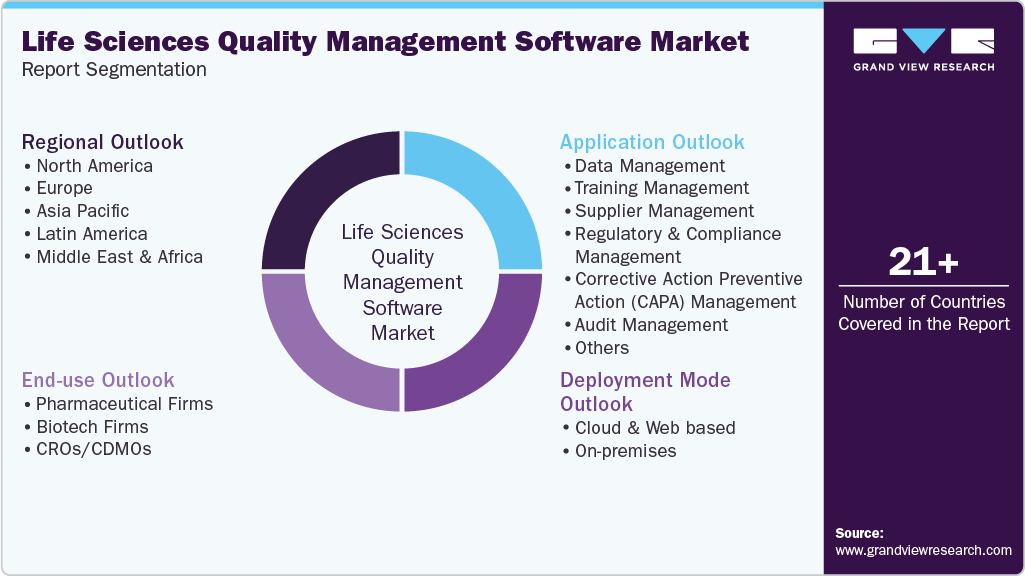
This report forecasts revenue growth at the global, regional & country levels and provides an analysis of the latest industry trends in each of the sub-segments from 2021 to 2033. For this study, Grand View Research has segmented the global life sciences quality management software market report based on application, deployment method, end use, and region:
-
Application Outlook (Revenue, USD Million/Billion, 2021 - 2033)
-
Data Management
-
Training management
-
Supplier management
-
Regulatory and Compliance Management
-
Corrective Action Preventive Action (CAPA) Management
-
Audit Management
-
Change Management
-
Non-Conformances Management
-
Inspection Management
-
Risk Management
-
Others
-
-
Deployment Mode Outlook (Revenue, USD Million/Billion, 2021 - 2033)
-
Cloud & Web based
-
On-premises
-
-
End Use Outlook (Revenue, USD Million/Billion, 2021 - 2033)
-
Pharmaceutical Firms
-
Biotech Firms
-
CROs/CDMOs
-
-
Regional Outlook (Revenue, USD Million/Billion, 2021 - 2033)
-
North America
-
U.S.
-
Canada
-
Mexico
-
-
Europe
-
Germany
-
UK
-
France
-
Italy
-
Spain
-
Denmark
-
Sweden
-
Norway
-
-
Asia Pacific
-
China
-
Japan
-
India
-
South Korea
-
Australia
-
Thailand
-
-
Latin America
-
Brazil
-
Argentina
-
-
MEA
-
South Africa
-
Saudi Arabia
-
UAE
-
Kuwait
-
-
Research Methodology
The life sciences quality management software market figures in this report are based on a proven research process that combines executive interviews with secondary research from proprietary databases, company filings, and recognized regulatory and institutional sources. Market size is built through value-chain sizing-reconciling supply-side and demand-side estimates-and triangulated with bottom-up and top-down approaches. Every estimate passes multiple levels of expert validation before publication, with each life sciences quality management software tags segment quantified using the revenue-capture definitions in the table below.
Segment Definition
Segment - Application
Revenue capture definition
Data Management
Software modules that capture, organize, store, secure, and manage quality-related data and documentation throughout the product lifecycle. These solutions ensure data integrity, traceability, version control, and compliance with regulations such as FDA 21 CFR Part 11, EU Annex 11, and GxP requirements.
Training Management
Quality management tools that administer employee training programs, competency assessments, certification tracking, and learning records to ensure personnel are qualified and compliant with regulatory and organizational quality standards.
Supplier Management
Software used to evaluate, qualify, monitor, and audit suppliers of raw materials, components, contract services, and manufacturing partners. These solutions help ensure supplier quality, regulatory compliance, and supply chain reliability.
Regulatory and Compliance Management
Solutions that support compliance with global regulatory requirements, quality standards, and industry guidelines by managing regulatory documentation, submissions, quality records, electronic signatures, validation activities, and compliance reporting.
Corrective Action Preventive Action (CAPA) Management
Software that identifies quality issues, investigates root causes, implements corrective and preventive actions, tracks progress, verifies effectiveness, and documents CAPA activities to support continuous quality improvement and regulatory compliance.
Audit Management
Software platforms that plan, schedule, execute, document, and monitor internal, supplier, and regulatory audits. These solutions manage audit findings, corrective actions, audit trails, and compliance reporting to ensure adherence to quality standards.
Change Management
Quality management modules that control and document changes to products, processes, equipment, software, documents, and manufacturing operations. These systems evaluate change impacts, facilitate approvals, maintain traceability, and ensure regulatory compliance.
Non-Conformances Management
Software used to identify, document, investigate, and resolve deviations, defects, product failures, and non-conforming materials or processes. These solutions support root cause analysis, corrective actions, and continuous quality improvement.
Inspection Management
Solutions that support planning, execution, documentation, and tracking of quality inspections for raw materials, in-process manufacturing, finished products, facilities, and equipment to ensure compliance with predefined quality standards and regulatory requirements.
Risk Management
Software designed to identify, assess, prioritize, monitor, and mitigate quality, operational, manufacturing, supplier, and regulatory risks throughout the product lifecycle using structured risk assessment methodologies such as FMEA and ICH Q9 principles.
Others
Includes additional quality management functions such as document control, complaint handling, deviation management, calibration management, equipment qualification, validation management, environmental health and safety (EHS), electronic batch record management, and quality analytics.
Segment - Deployment Mode
Revenue capture definition
Cloud & Web-based
Quality management software hosted on cloud infrastructure or accessed via web-based platforms. These solutions offer scalability, remote accessibility, automatic updates, lower infrastructure costs, multi-site collaboration, and simplified regulatory compliance management.
On-premises
Quality management software installed and maintained within an organization's own IT infrastructure. On-premises deployment provides greater control over system configuration, data security, customization, and regulatory validation while requiring dedicated internal IT resources.
Segment - End Use
Revenue capture definition
Pharmaceutical Firms
Pharmaceutical manufacturers that utilize quality management software to ensure compliance with Good Manufacturing Practices (GMP), manage product quality, oversee regulatory documentation, support inspections, and maintain quality throughout drug development and commercial manufacturing.
Biotech Firms
Biotechnology companies that deploy quality management software to manage research, clinical development, biologics manufacturing, quality assurance, regulatory compliance, laboratory operations, and product lifecycle quality management for biologics, cell therapies, gene therapies, and other advanced therapeutics.
CROs/CDMOs
Contract Research Organizations (CROs) and Contract Development and Manufacturing Organizations (CDMOs) that use quality management software to manage clinical research quality, manufacturing quality systems, regulatory compliance, client documentation, supplier oversight, and GxP-compliant operations across outsourced services.
Market-specific Research Models:
Consensus-Based Estimates & Forecasting
The life sciences quality management software market presents emerging to dominant opportunities, featuring global key players such as Dassault Systèmes; IQVIA (Pilgrim); MasterControl Solutions, Inc.; AmpleLogic; Qualio - QMS for Life Sciences; QT9 Software; Sparta Systems- TrackWise (Honeywell International Inc.); AssurX, Inc; ETQ, LLC (Hexagon); Veeva Systems; Qualityze; Ideagen. To ensure a holistic approach, the GVR research team adopted a comprehensive methodology, considering multiple companies worldwide and using various variables to improve data accuracy.
Our methodology included:
Model 1: Commodity Flow Analysis - For public players, annual reports were referenced. For private players, premium-paid data sources, such as S&P Global, Crunchbase, ZoomInfo, and RocketReach, were used to obtain the latest revenue insights.
Model 2: Parent Market Analysis
Model 3: Country-level Multivariate Analysis Assumptions
Model 4: Segment-level Multivariate Analysis Assumptions
Model 5: Life Sciences Quality Management Software Market CAGR Calculations
Model 1: Commodity Flow Analysis
Commodity flow analysis was employed to track the movement of life sciences quality management software through the value chain, from technology providers to end users. This analysis provided insights into demand generation points, intermediary roles, and ultimate consumption patterns.
Delivered Customizations
This report has been delivered with the following In-depth customizations
Client Request
Customization Delivered
Value Adds
Life Sciences Quality Management Software Adoption & Regulatory Compliance Analysis
Developed a tailored analysis of the global Life Sciences Quality Management Software (LMS) market focused on document management, CAPA, deviation management, change control, audit management, training management, supplier quality management, complaint handling, risk management, and quality event management. The study assessed adoption trends across pharmaceutical companies, biotechnology firms, medical device manufacturers, contract research organizations (CROs), contract development and manufacturing organizations (CDMOs), and laboratories while evaluating increasing regulatory scrutiny, digital quality transformation initiatives, and evolving emphasis on product quality and compliance driving market growth.
Enables stakeholders to understand evolving quality management requirements, identify high-growth QMS applications, assess compliance-driven investment opportunities, and evaluate the impact of digital quality systems on operational efficiency, regulatory readiness, product quality, and long-term business growth.
Quality Processes, Digital Validation & Compliance Management Assessment
Delivered a customized evaluation of Life Sciences CMS solutions across electronic document management, CAPA, non-conformance management, deviation tracking, audit readiness, supplier quality oversight, equipment calibration, employee training, and regulatory submission support. The analysis assessed cloud-based quality platforms, AI-enabled quality analytics, workflow automation, electronic signatures, validation requirements, data integrity standards, and compliance with GxP, FDA 21 CFR Part 11, EU Annex 11, and ISO quality standards. Additionally, it evaluated product innovation and implementation strategies from leading companies including Dassault Systèmes, IQVIA (Plym), MasterControl Solutions, AmpleLogic, Qualio, QT9 Software, Sparta Systems (Honeywell), AssurX, ETQ (Hexagon), Veeva Systems, Qualtrax, and Ideagen.
Provides actionable insights into commercially attractive software segments, emerging digital quality technologies, evolving regulatory requirements, and growth opportunities associated with automated compliance, inspection readiness, risk mitigation, accelerated product release, enhanced organizational efficiency, and continuous quality improvement across life sciences organizations.
Life Sciences Digital Infrastructure, Regulatory Environment & Competitive Landscape Assessment
Conducted a focused assessment of the Life Sciences QMS ecosystem, including cloud infrastructure, enterprise software integration, validation frameworks, cybersecurity, data governance, interoperability standards, regulatory compliance requirements, competitive positioning. The analysis evaluated implementation challenges, legacy system integration, software scalability, vendor capabilities, technology adoption barriers, quality culture transformation, and competitive differentiation initiatives among leading market participants such as Dassault Systèmes, IQVIA (Plym), MasterControl Solutions, Veeva Systems, ETQ (Hexagon), Sparta Systems (Honeywell), AssurX, Qualtrax, QT9 Software, Qualio, AmpleLogic, and Ideagen.
Supports strategic planning for digital quality transformation, software implementation, regulatory compliance modernization, technology investments, vendor selection, geographic expansion, and market entry strategies by identifying adoption drivers, operational challenges, compliance risks, revenue opportunities, infrastructure requirements, and competitive advantages across the global Life Sciences Quality Management Software value chain.
Frequently Asked Questions About This Report
North America dominated the life sciences quality management software market with a share of over 40.0% in 2025. This is attributable to the need for stringent compliance with regulatory standards and the increasing complexity of product development processes.
The global life sciences quality management software market is expected to grow at a CAGR of 13.8% from 2026 to 2033, reaching USD 10.1 billion by 2033.
The data management segment dominated the life sciences quality management software market and accounted for 17.5% revenue share in 2025.
The cloud & web-based segment held the largest market share of 77.2% in 2025 and is expected to register growth at the fastest CAGR during the forecast period.
Key factors driving the life sciences quality management software market growth include technological advancements in the life science industry and a growing need to comply with regulatory guidelines.
The pharmaceutical firm segment dominated the life sciences quality management software market and accounted for a more than 56.4% revenue share in 2025.
Some key players operating in the life sciences quality management software market include Dassault Systèmes; IQVIA (Pilgrim); MasterControl Solutions, Inc.; AmpleLogic; Qualio - QMS for Life Sciences; QT9 Software; Sparta Systems- TrackWise (Honeywell International Inc.); AssurX, Inc; ETQ, LLC (Hexagon); Veeva Systems; Qualityze; Ideagen
The global life sciences quality management software market size was valued at USD 3.7 billion in 2025 and is estimated at USD 4.1 billion for 2026.
About the Author(s)
Healthcare IT Research Team
Healthcare · Healthcare ITThis report was authored by the healthcare it research team at Grand View Research - comprising two research analysts, one senior research analyst, and one industry expert - with specialized expertise in the healthcare it segment of the healthcare industry. All findings are based on proprietary healthcare databases, executive interviews, and regulatory analysis, subject to internal peer review prior to publication.
Last Updated:
Speak to Analyst


Customize this report to your needs — add regions, segments, or data points, with 20% free customization.
Or view our licence options:


ISO 9001:2015 & 27001:2022 Certified
We are GDPR and CCPA compliant! Your transaction & personal information is safe and secure. For more details, please read our privacy policy.


