
- Home
- »
- Clothing, Footwear & Accessories
- »
-
Lingerie Market Size, Share And Growth Report, 2026-2033GVR Report cover

Lingerie Market (2026 - 2033)
Size, Share & Trends Analysis Report By Product (Briefs, Shapewear, Bras, Others), By Distribution Channel (Online, Offline), By Region (North America, Europe, Asia Pacific, Central & South America, Middle East & Africa), And Segment Forecasts
Market Size, 2025
$98.7BMarket Estimate, 2026
$103.5BMarket Forecast, 2033
$165.7BCAGR, 2026–2033
7.0%Lingerie Market Summary
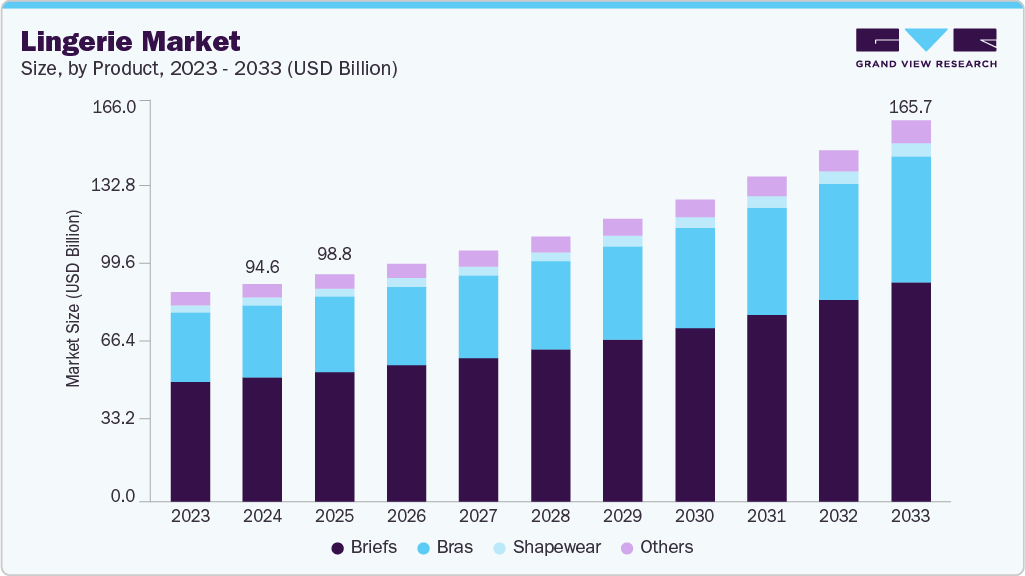
The global lingerie market size was estimated at USD 98.7 billion in 2025 and is projected to grow from USD 103.5 billion in 2026 to USD 165.7 billion by 2033, growing at a CAGR of 7.0% from 2026 to 2033, driven by rising body-positivity and inclusivity trends that boost demand for comfortable and diverse styles, along with e-commerce growth and social media marketing, which accelerate premiumization and global adoption. Asia Pacific dominated the lingerie market with the largest revenue share of 42.4% in 2025. A key global trend in the lingerie market is the shift toward comfort-first, wire-free, and multifunctional styles as consumers prioritize breathable, everyday options like bralettes and seamless fits over traditional push-up designs, driven by hybrid lifestyles and demand for practical essentials.
 Source: Grand View Research, IR Documents, Primary Interviews, Paid DatabasesTo learn more about this report,
 Download Free Sample Report
 Key Market Trends & Insights
- By product type: Briefs led the market with the largest revenue share of 57.0% in 2025.
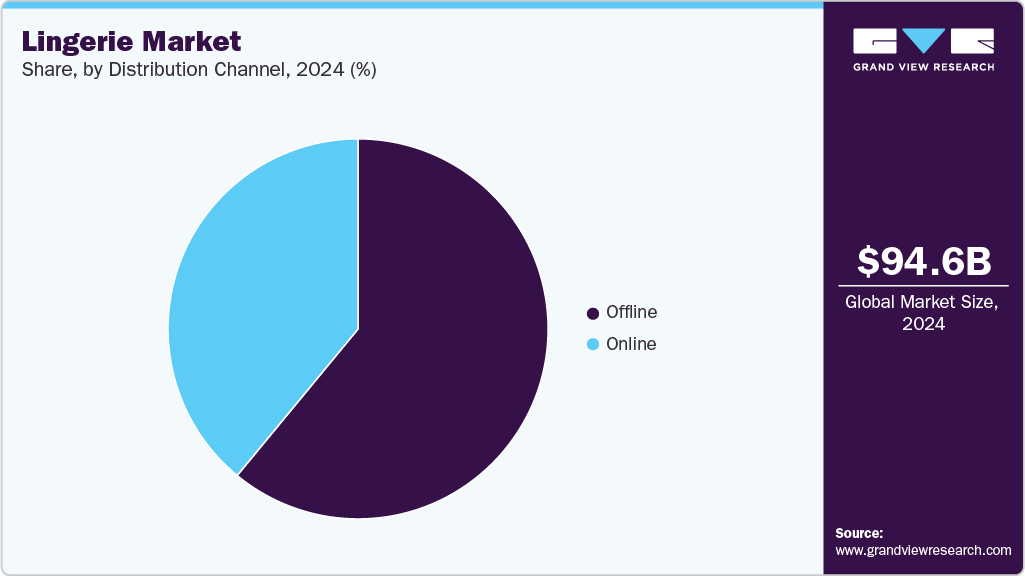
- By distribution channel: Offline sales led the market with the largest revenue share of 60.8% in 2025.
Regional Highlights
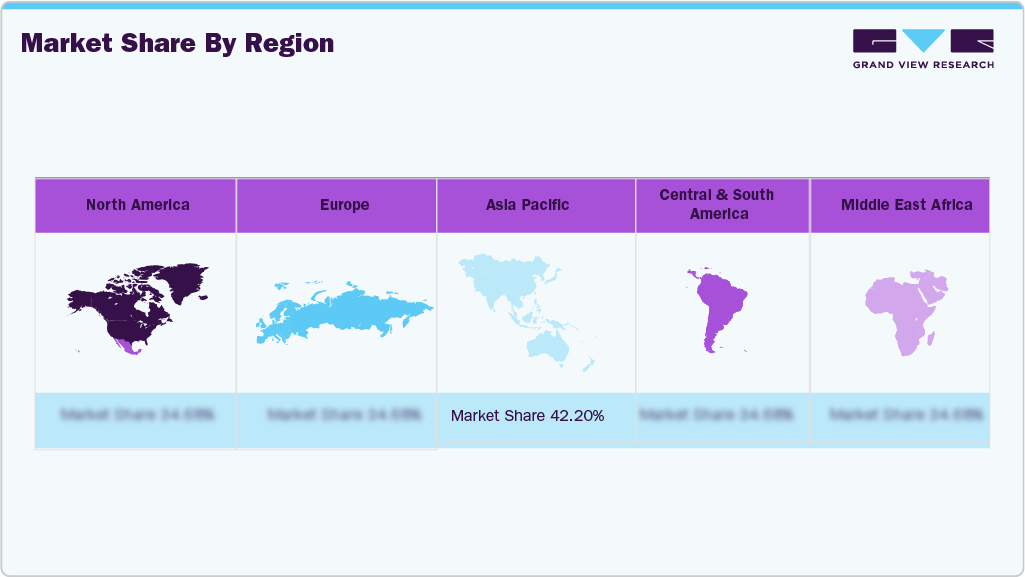
- Largest regional market: Asia Pacific (42.4% revenue share, 2025)
- By country: China held the largest revenue share in 2025.
Market Size & Forecast
- Market size in 2025: USD 98.7 Billion
- Estimated market size in 2026: USD 103.5 Billion
- Projected market size by 2033: USD 165.7 Billion
- CAGR (2026-2033): 7.0%
Three ways to get this report
Buy it, customize it, or ask a question.Ask an Analyst
Analyst response in 1 business day
- AccessReport author, directly
- Reply timeWithin 1 working day
- No sales callDirect answer only
- FormatEmail reply
- CostFree, no cost
Get the Full Report
What the study covers
- FormatsPDF · Excel · Dashboard
- Timeline2026–2033 annual, 2025 base
- Coverage20+ countries, 5 regions
- Companies10+ key players profiled
Customize the Report
20% free customization
- IncludeCountries, segments, points
- TailorTo your product definition
- ExtendDeeper competitor detail
- OrA fully bespoke study
- Turnaround5–10 working days
Growth in the global market is being driven by a functional shift in women’s wardrobes, where lingerie is no longer just an innerwear purchase but part of daily comfort and wellness. Post-pandemic lifestyle changes and hybrid work culture have fueled demand for wire-free, breathable, and stretch-fit bras that can be worn for long hours, replacing traditional push-up designs. Sales data from retail platforms like ASOS, Zalando, and Myntra show bralette and seamless categories growing faster than underwire bras, reflecting a real behavioral shift rather than a fashion cycle.Another major driver is the rise of size inclusivity and body realism, which are expanding the customer base globally. Instead of limited “S-M-L” options, brands now offer inclusive fits across band and cup combinations, including plus-size and petite segments. Retailers such as Savage X Fenty, Marks & Spencer, and H&M have scaled sizing ranges based on demand analytics, while AI-powered virtual fitting tech from companies like TrueFit and Fit Finder has reduced return rates by solving size mismatch issues, converting more shoppers online, and boosting lingerie revenue.
 To learn more about this report, Download Free Sample Report
 Another key factor driving the market growth is the premiumization of everyday lingerie, powered by social media discovery and brand storytelling. Consumers across middle-income countries are trading up from unbranded basics to branded mid-segment products offering better fabric, fit, and durability. In markets such as India, Brazil, and Southeast Asia, brands like Clovia, Zivame, and Hope Lingerie are monetizing aspirational buying through influencer try-on content, installment payments, and style education. This has turned lingerie from a low-involvement purchase into a lifestyle product, raising average selling prices and accelerating market growth.
Market Dynamics
The global lingerie market is undergoing a significant transformation as consumer purchasing behavior shifts from fashion-driven intimate wear toward comfort-focused, inclusive, and lifestyle-oriented products. Growth is being fueled by rising demand for wireless bras, shapewear, sports bras, maternity lingerie, and premium everyday essentials. The rapid expansion of e-commerce, social commerce, and direct-to-consumer (DTC) brands has enabled greater product accessibility and personalized shopping experiences. Additionally, increasing awareness of proper bra fitting, body positivity, and women's wellness is reshaping product development strategies across both premium and mass-market segments.
Consumer preferences have shifted significantly toward comfort-oriented lingerie, creating one of the strongest growth drivers for the market. The popularity of wireless bras, bralettes, seamless underwear, and lounge-focused intimate apparel has increased substantially, driven by hybrid work models, evolving fashion trends, and a growing emphasis on wellness and functionality. According to a February 2025 consumer study conducted by Marks & Spencer, 51% of women identified comfort as the most important factor when purchasing lingerie, ranking it above style and appearance. This shift in purchasing behavior has accelerated demand for products that prioritize comfort, breathability, and fit over traditional push-up or heavily structured designs.
Fluctuations in raw material prices remain a significant challenge for lingerie manufacturers. Key materials such as cotton, nylon, spandex, lace, and elastics have experienced periodic price volatility due to global supply chain disruptions, rising labor costs, geopolitical tensions, and inflationary pressures. These cost increases directly impact manufacturing expenses and profit margins.Furthermore, lingerie products often require specialized fabrics, trims, and precision manufacturing processes, making the industry more vulnerable to sourcing disruptions than standard apparel categories. Brands operating in price-sensitive markets face difficulties in passing increased costs on to consumers without affecting sales volumes. The challenge is particularly pronounced for mid-tier and mass-market manufacturers competing against low-cost private-label and fast-fashion alternatives.
One of the most attractive opportunities in the lingerie market is the rapid expansion of the premium and functional intimate-wear segments. Consumers are increasingly willing to invest in products that offer enhanced support, body contouring, moisture management, posture correction, and multifunctional use. This trend has driven strong growth in shapewear, seamless compression garments, nursing bras, period underwear, and performance lingerie.
Additionally, increasing awareness of sustainability is encouraging premium purchases of lingerie made from recycled fabrics, organic cotton, and environmentally responsible materials. As consumers seek higher-quality products with longer lifecycles and greater comfort, the premium and functional lingerie categories are expected to offer substantial growth opportunities for manufacturers and retailers over the forecast period.
Analyst Perspective
The lingerie market benefits from a rare combination of defensive and discretionary demand characteristics: briefs provide predictable replenishment-driven volume, while bras and shapewear drive margin expansion through premiumization and product innovation. As consumer preferences shift from fashion-centric purchases toward comfort, functionality, and fit, value creation is increasingly concentrated among brands that can command pricing power through product differentiation rather than scale alone. The long-term winners are likely to be those that convert a traditionally fragmented category into a repeat-purchase ecosystem, leveraging direct-to-consumer channels, fit technology, and brand loyalty to increase customer lifetime value in a market where replacement cycles are inherently recurring.
Consumer Insights
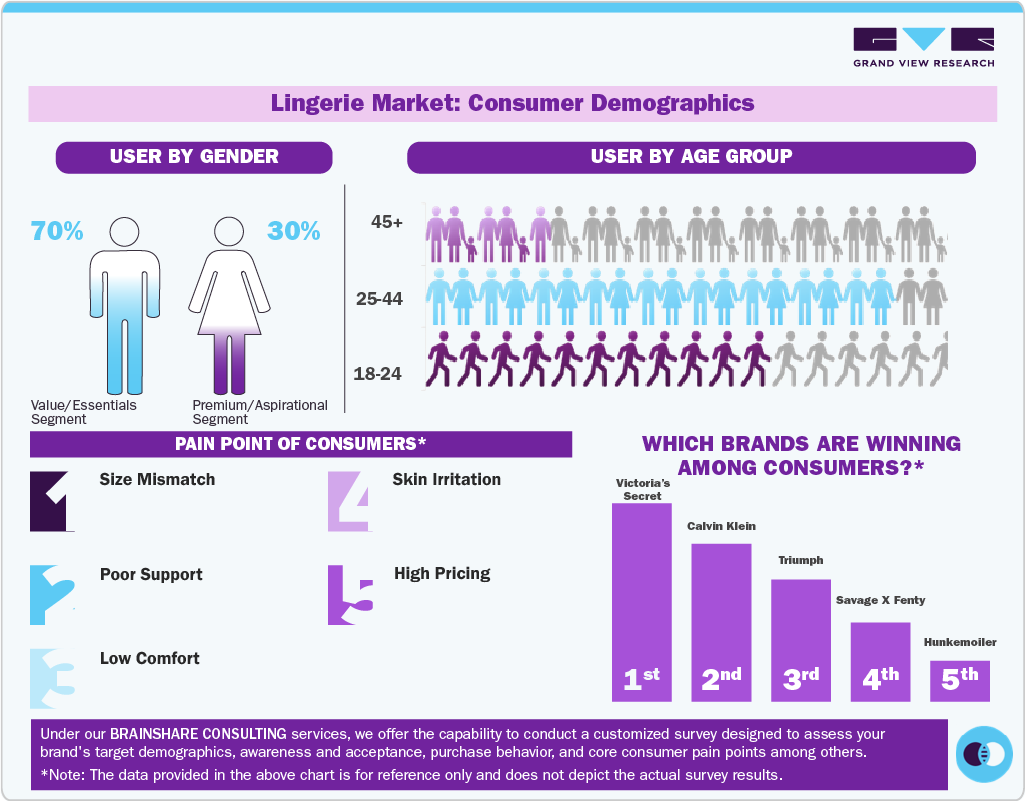
The global market for lingerie caters to both mass and premium consumers. About 70% of buyers in the value or essentials segment look for affordable, functional products. Meanwhile, 30% belong to the premium or aspirational segment and prioritize high-quality fabrics, designer labels, and exclusivity. This split illustrates a market where everyday comfort drives volume and premium products fuel revenue growth and brand distinction.
 To learn more about this report, Download Free Sample Report
 Age demographics significantly influence buying behavior. The 25-44 age group accounts for the largest share of the consumer base, at 50-55%. This group includes working professionals and young parents who value both comfort and style. Younger consumers, aged 18 to 24, represent 22 to 25% and are interested in trendy, fashionable lingerie. The 45-and-older segment accounts for 20 to 25% and focuses more on functional, supportive designs, often prioritizing fit and wellness over looks.
Consumers face persistent pain points that influence their buying decisions. Common pain points include size mismatches, inadequate support, low comfort, skin irritation, and high prices. Brands that tackle these challenges through inclusive sizing, improved fabric quality, and ergonomic designs tend to win repeat buyers and foster greater loyalty in a market increasingly influenced by real consumer needs rather than just looks.
In terms of brand preference, Victoria’s Secret, Calvin Klein, Triumph, Savage X Fenty, and Hunkemöller lead in global consumer awareness. These brands effectively combine comfort, style, and inclusivity while utilizing strong marketing, a notable social media presence, and collections that align with current trends. Their popularity shows that consumers now place a higher value on fit, versatility, and aspirational branding alongside traditional fashion appeal.
Product Insights
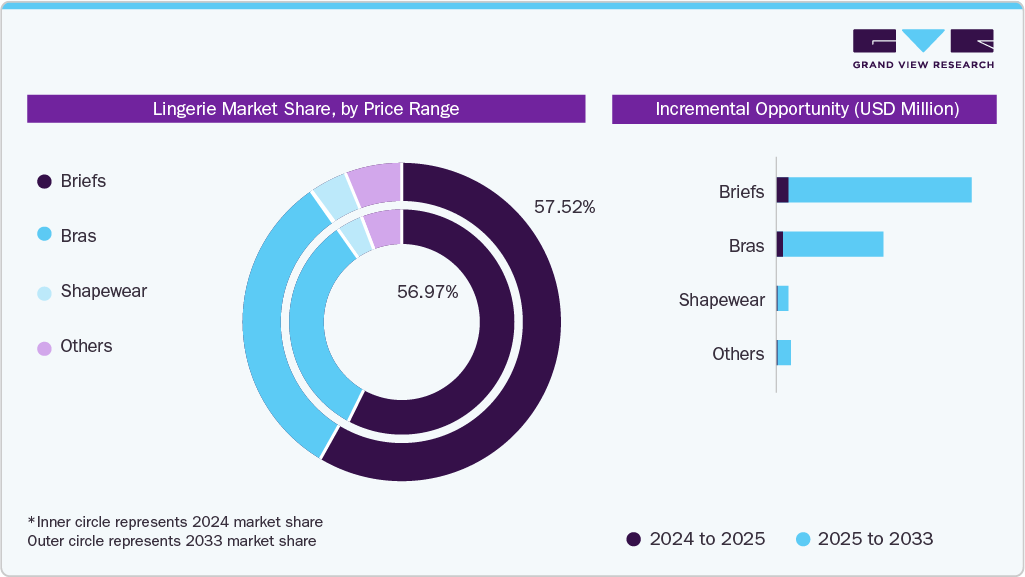
Based on product type, briefs led the market with the largest revenue share of 57.0% in 2025 and shapewear is anticipated to grow at the fastest CAGR over the forecast period, as they combine everyday comfort, versatile fit, and affordability, making them the go-to choice across age groups and markets. Unlike fashion-focused or premium designs, briefs suit daily wear, are easier to produce in multiple sizes, and appeal to both mass and premium consumers, driving consistent high sales globally.
 To learn more about this report, Download Free Sample Report
 Shapewear is anticipated to grow at a CAGR of 7.4% from 2026 to 2033, driven by rising body consciousness and demand for figure-enhancing, confidence-boosting apparel. Consumers increasingly prefer versatile, comfortable shapewear that can be worn under everyday or formal outfits, while social media trends and influencer promotions are driving global awareness and adoption.
Distribution Channel Insights
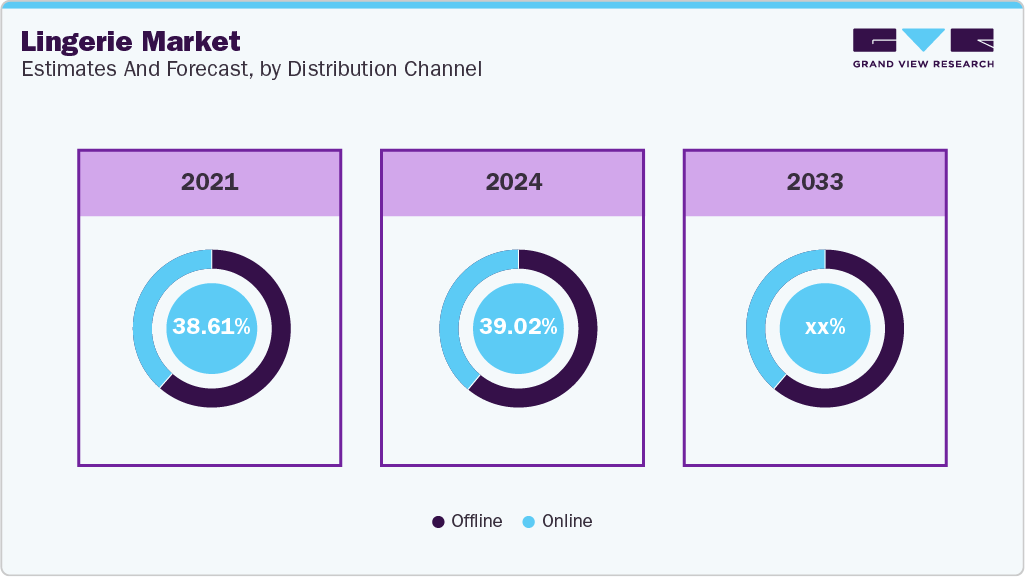
Based on distribution channel, the offline sales led the market with the largest revenue share of 60.8% in 2025. This can be attributed to the consistent consumer preference for in-person fitting, tactile experience, and immediate purchase, especially for items where comfort and fit are critical. Brick-and-mortar stores also offer personalized assistance, size guidance, and the ability to try multiple styles at once, making them the preferred choice for most buyers despite the rise of e-commerce. Brands like Victoria’s Secret and Marks & Spencer have leveraged this to boost sales and customer loyalty.
 To learn more about this report, Download Free Sample Report
 The sale of lingerie through the online channels is expected to grow at a CAGR of 7.1% from 2026 to 2033, driven by the convenience of home delivery, a wider variety, and digital personalization. E-commerce platforms like ASOS, Zivame, and Shein offer extensive size ranges, style filters, and virtual fitting tools, making it easier for consumers to explore and purchase lingerie without visiting a store. Social media marketing and influencer-led promotions further accelerate online adoption globally.
Regional Insights
Asia Pacific dominated the lingerie market, with the largest revenue share of 42.4% in 2025, largely due to younger, urban consumers blending traditional modesty with modern style, driving demand for hybrid products such as seamless bralettes, wireless lingerie, and shapewear suitable for both home and public wear. The lingerie market in China accounted for the largest share of the Asia Pacific region in 2025. In markets like China and India, fast-growing e-commerce platforms such as Myntra and Tmall are accelerating adoption by offering inclusive sizing and influencer-driven collections, making Asia a hotspot for both volume and innovation.
 To learn more about this report, Download Free Sample Report
 North America Lingerie Market Trends
The North America lingerie industry is projected to grow at a CAGR of 6.7% from 2026 to 2033, driven by increasing demand for comfort-focused and inclusive lingerie. Consumers are increasingly favoring wire-free bras, bralettes, and multifunctional intimates, while brands like Victoria’s Secret, Savage X Fenty, and ThirdLove leverage social media, subscription models, and virtual fitting tools to capture younger and diverse audiences, sustaining steady market growth.
 To learn more about this report, Download Free Sample Report
 The U.S. lingerie industry is expected to witness a significant CAGR from 2026 to 2033. This growth comes from lifestyle changes after the pandemic that favor comfort at home and self-expression. More consumers are opting for wire-free bras, bralettes, and athleisure-inspired lingerie. E-commerce leaders like Amazon, ThirdLove, and Savage X Fenty encourage this trend through virtual fitting, subscription models, and influencer-led campaigns. They cater to a diverse audience that promotes body positivity, which is distinctive in the U.S.
Key Lingerie Company Insights
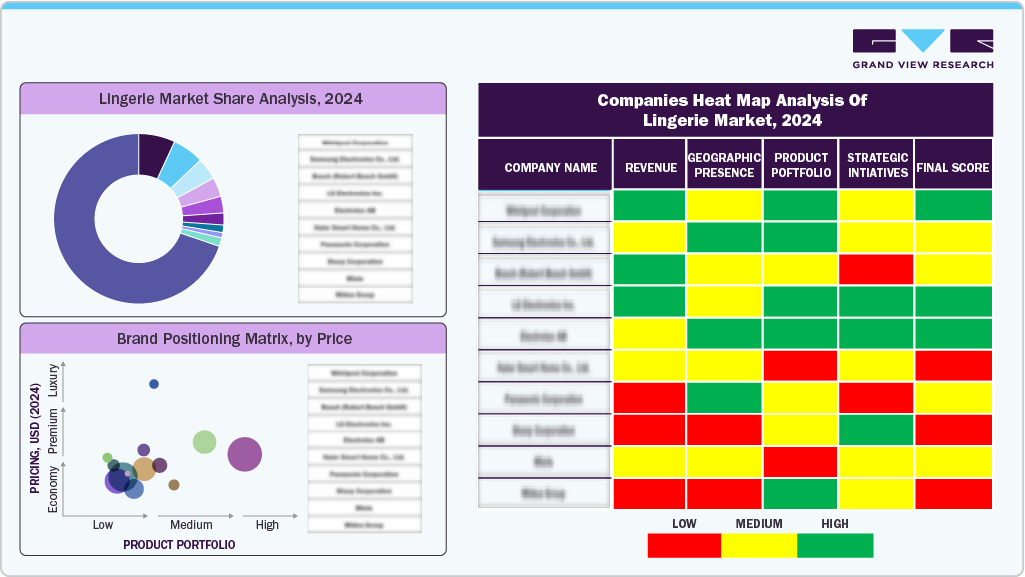
The global lingerie industry features a mix of established mid-tier brands, leading premium companies, and new challengers. Each of these groups contributes to growth in various segments. Established names such as Victoria’s Secret, Calvin Klein, and Triumph lead the mid-range segment by using their brand recognition, reliable fit, and stylish designs. Shapewear and designer lingerie from brands such as Savage X Fenty and La Perla appeal to consumers who want high-quality fabrics, skilled craftsmanship, and trendy styles. At the same time, regional leaders like Clovia in India and Zivame in Southeast Asia focus on budget-conscious and first-time buyers, increasing their presence in emerging markets and enhancing the overall global reach of lingerie.
 To learn more about this report, Download Free Sample Report
 Key Lingerie Companies:
The following key companies have been profiled for this study on the lingerie market.
-
Jockey International Inc.
-
Victoria’s Secret
-
Zivame
-
Gap, Inc.
-
Hanesbrands Inc.
-
Triumph International Ltd.
-
Hunkemöller
-
Bare Necessities
-
Calvin Klein
-
MAS Holdings
Recent Developments
-
In September 2025, Adore Me launched the new Soft Touch loungewear collection and debuted its first men's underwear line. The collection features over 100 comfortable styles for men and women, priced under USD 50 for VIP members, and is available online and soon at Macy’s, Nordstrom, and Target.
-
In August 2025, Wacoal unveiled its Autumn/Winter 2025 Lingerie Collection, a refined assortment that balances seasonal elegance with everyday practicality. The range introduced festive statement pieces and updated essentials, highlighted by luxurious lacework, rich seasonal tones, and fabrics crafted with sustainability in mind.
-
In July 2025, Victoria’s Secret introduced the Body by Victoria FlexFactor Bra, a breakthrough innovation designed with a flexible titanium underwire and adaptive memory foam for unmatched comfort and support. The line features a variety of inclusive sizes and styles, giving women options that balance movement, fit, and elegance.
Lingerie Market Report Scope
Report Attribute
Details
Market size value in 2025
USD 98.7 billion
Estimated Market Size in 2026
USD 103.5 billion
Projected market size by 2033
USD 165.7 billion
Growth rate
CAGR of 7.0% from 2026 to 2033
Base year for estimation
2025
Historical data
2021 - 2024
Forecast period
2026 - 2033
Quantitative units
Revenue in USD million/billion and CAGR from 2026 to 2033
Report coverage
Revenue forecast, company ranking, competitive landscape, growth factors, and trends
Segments covered
Product type, distribution channel, region
Regional scope
North America; Europe; Asia Pacific; Central & South America; Middle East & Africa
Country scope
U.S.; Canada; Mexico; Germany; UK; France; Italy; Spain; China; Japan; India; Australia; South Korea; Brazil; South Africa
Key companies profiled
Jockey International Inc.; Victoria’s Secret; Zivame; Gap, Inc.; Hanesbrands Inc.; Triumph International Ltd.; Hunkemöller; Bare Necessities; Calvin Klein; MAS Holdings
Customization scope
Free report customization (equivalent up to 8 analysts' working days) with purchase. Addition or alteration to country, regional & segment scope.
Pricing and purchase options
Avail customized purchase options to meet your exact research needs. Explore purchase options
Global Lingerie Market Report Segmentation
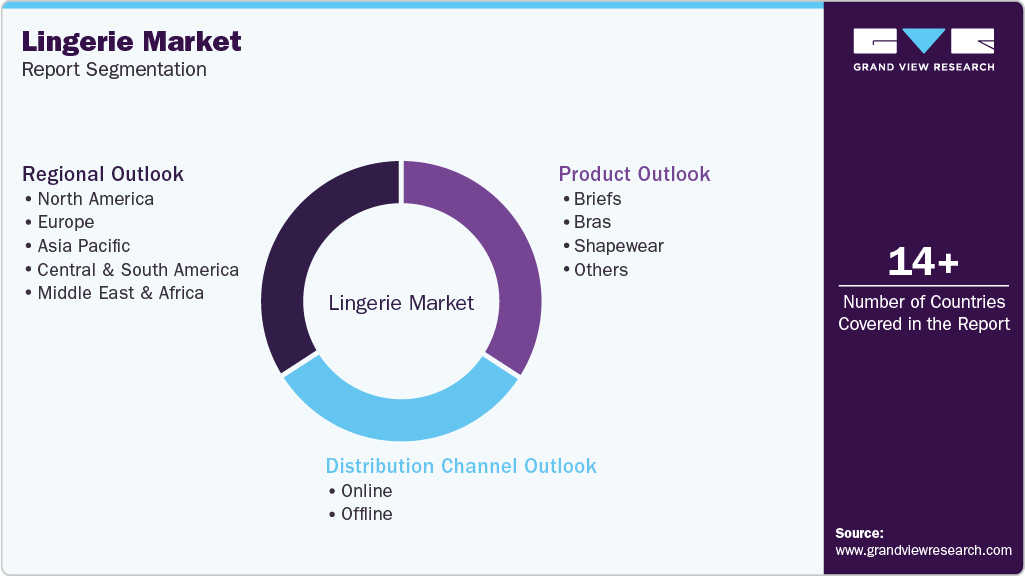
This report forecasts revenue growth at the global, regional, and country levels and provides an analysis of the latest industry trends and opportunities in each of the sub-segments from 2021 to 2033. For this study, Grand View Research has segmented the global lingerie market report based on product, distribution channel, and region:
 To learn more about this report, Download Free Sample Report
 -
Product Outlook (Revenue, USD Million, 2021 - 2033)
-
Briefs
-
Bras
-
Shapewear
-
Others
-
-
Distribution Channel (Revenue, USD Million, 2021 - 2033)
-
Online
-
Offline
-
-
Regional Outlook (Revenue, USD Million, 2021 - 2033)
-
North America
-
U.S.
-
Canada
-
Mexico
-
-
Europe
-
UK
-
Germany
-
France
-
Italy
-
Spain
-
-
Asia Pacific
-
China
-
Japan
-
India
-
Australia
-
South Korea
-
-
Central & South America
-
Brazil
-
-
Middle East & Africa
-
South Africa
-
-
Research Methodology
Segment Definition
Segment - Product Type
Revenue capture definition
Briefs
As the largest product type segment, revenue is primarily generated through recurring replacement purchases of everyday intimate wear, including panties, hipsters, bikinis, and seamless briefs.
Bras
Revenue generated by the sale of bras, a key segment of the lingerie industry, encompasses a wide range of products designed for support, coverage, shaping, comfort, and fashion.
Shapewear
Revenue is generated from the sale of compression and body-contouring garments designed to provide shaping, support, and smoothing.
Others
This segment captures revenue from sleepwear, camisoles, lingerie sets, bridal lingerie, loungewear, and intimate apparel accessories.
Estimation Model
Population Layer
Access Layer
Behavioural Layer
Monetisation Layer
Who forms the base consumer pool?
Who has access to organized lingerie retail?
Who actively purchases lingerie?
How much revenue is generated?
Total lingerie consumers, primarily women, with inclusion of male demand and gender-neutral intimate wear users, adjusted for income and urbanization levels.
Consumers with access to organized retail, e-commerce, and specialty lingerie channels across branded and unbranded segments.
Active buyers based on annual purchase frequency, replacement cycles, and category usage across briefs, bras, and shapewear, including premiumization trends.
Revenue derived by multiplying active buyers with average annual spend per consumer, including essential and premium product purchases across all lingerie categories.
Delivered Customizations
This report has been delivered with the following In-depth customizations
Client Request
Customization Delivered
Value Adds
Cross-Segment Market Structuring
Developed an integrated assessment of lingerie demand across product types (briefs, bras, shapewear, others), mapped against distribution channels (online vs offline), capturing revenue concentration, channel mix shifts, and product-level dependency on fit-led purchasing.
Enables visibility into how value pools differ across channels and product types, highlighting structurally online-accelerated categories and offline-dependent high-consideration segments.
Channel Migration and Omni-channel Behavior Analysis
Evaluated structural shift from offline-led purchase behavior toward online and omni-channel discovery-to-purchase journeys, with emphasis on product sensitivity to trial, returns, and repeat purchase cycles across lingerie categories.
Provides insights into clear channel-specific growth levers and friction points, particularly sizing sensitivity in bras versus high-repeat online penetration in briefs.
White Space Opportunity Analysis in Category Positioning
Identified underpenetrated positioning opportunities in the mid-premium segment between mass-market basics and luxury lingerie, where demand for affordable comfort innovation, inclusive sizing, and everyday functional wear is expanding but remains fragmented across players.
Supports investment and expansion strategies by identifying underserved markets, evaluating technology readiness, and strengthening long-term growth opportunities.
Frequently Asked Questions About This Report
The global lingerie market size was estimated at USD 98.7 billion in 2025 and is expected to reach USD 103.5 billion in 2026
The global lingerie market is expected to grow at a compound annual growth rate of 7.0% from 2026 to 2033 to reach USD 165.7 billion by 2033.
Briefs held the largest revenue share of 57.0% in 2025, and shapewear is the fastest growing product type segment.
The offline channel led with a 60.8% revenue share in 2025, while online channel is the fastest-growing segment.
Asia Pacific dominated with a 42.4% revenue share in 2025.
Asia Pacific is the fastest-growing region over the forecast period.
China led the Asia Pacific lingerie market in 2025.
Key factors that are driving the market growth include the increasing demand for comfort-focused and inclusive lingerie, body-positivity trends, the expansion of e-commerce and social commerce, and the growing demand for premium and functional intimate apparel.
Some key players operating in the lingerie market include Jockey International Inc., Victoria’s Secret, Zivame, Gap, Inc., Hanesbrands Inc., Triumph International Ltd., Hunkemöller, Bare Necessities, Calvin Klein, and MAS Holdings.
About the Author(s)
Clothing, Footwear & Accessories Research Team
Consumer Goods · Clothing, Footwear & AccessoriesThis report was authored by the clothing, footwear & accessories research team at Grand View Research - comprising two research analysts, one senior research analyst, and one industry expert - with specialized expertise in the clothing, footwear & accessories segment of the consumer goods industry. All findings are based on proprietary consumer goods databases, executive interviews, and regulatory analysis, subject to internal peer review prior to publication.
Last Updated:
Speak to Analyst

Customize this report to your needs - add regions, segments, or data points, with 20% free customization.
Or view our licence options:


ISO 9001:2015 & 27001:2022 Certified
We are GDPR and CCPA compliant! Your transaction & personal information is safe and secure. For more details, please read our privacy policy.


