
- Home
- »
- Consumer F&B
- »
-
Malted Milk Market Size, Share And Trends Report, 2033GVR Report cover

Malted Milk Market (2026 - 2033)
Size, Share & Trends Analysis Report By Source (Wheat, Barley), By Type (Liquid, Powder), By Region (North America, Europe, APAC, Latin America, MEA), And Segment Forecasts
Market Size, 2025
$8.1BMarket Estimate, 2026
$8.6BMarket Forecast, 2033
$13.2BCAGR, 2026–2033
6.3%Malted Milk Market Summary
The global malted milk market size was valued at USD 8.1 billion in 2025 and is projected to grow from USD 8.6 billion in 2026 to USD 13.2 billion by 2033, at a CAGR of 6.3% from 2026 to 2033. Asia Pacific dominated the market, accounting for a revenue share of 34.2% in 2025. Increasing consumer preference for nutritious and health-oriented beverages is a significant driver, as malted milk offers essential nutrients such as vitamins, minerals, and proteins.
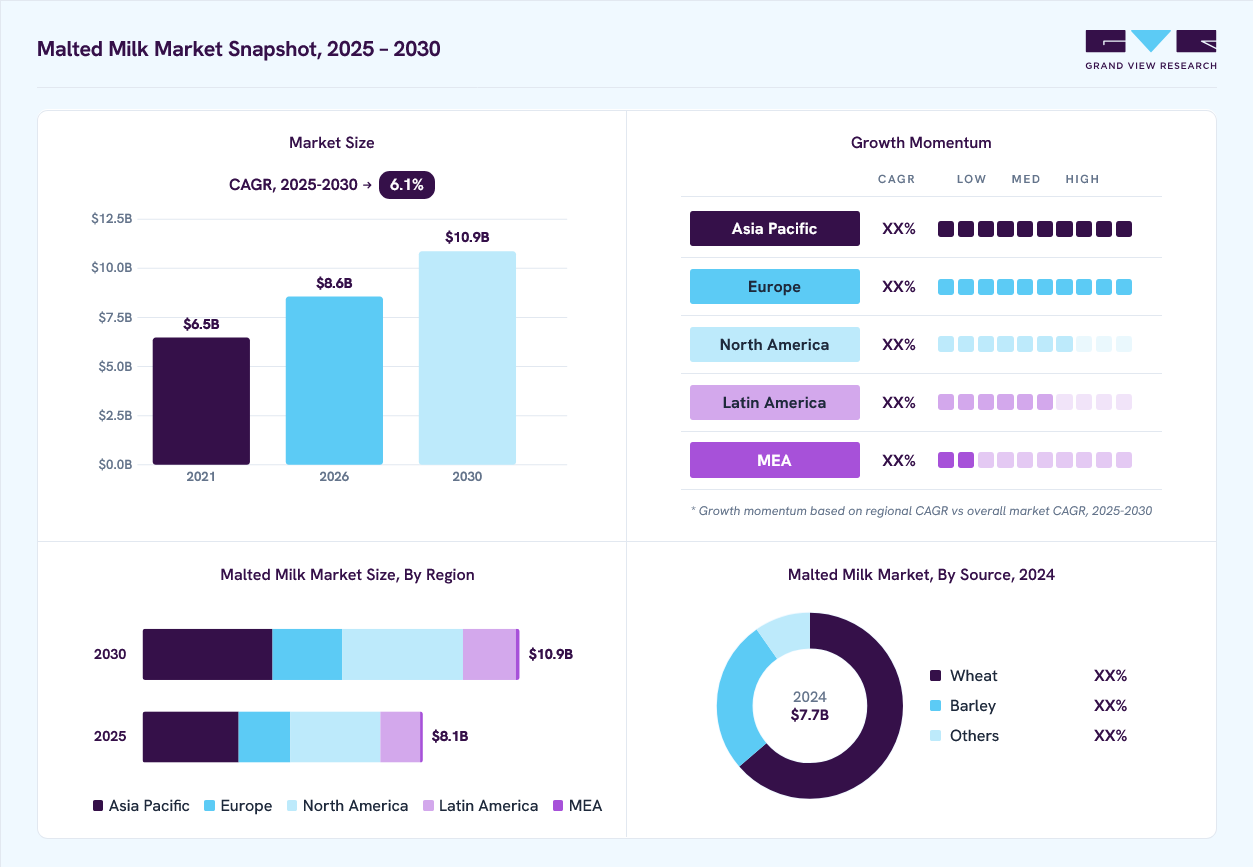 Source: Grand View Research, IR Documents, Primary Interviews, Paid DatabasesTo learn more about this report,
 Download Free Sample Report
Key Market Trends & Insights
- By source: Wheat segment led the market with the largest revenue share of 63.7% in 2025
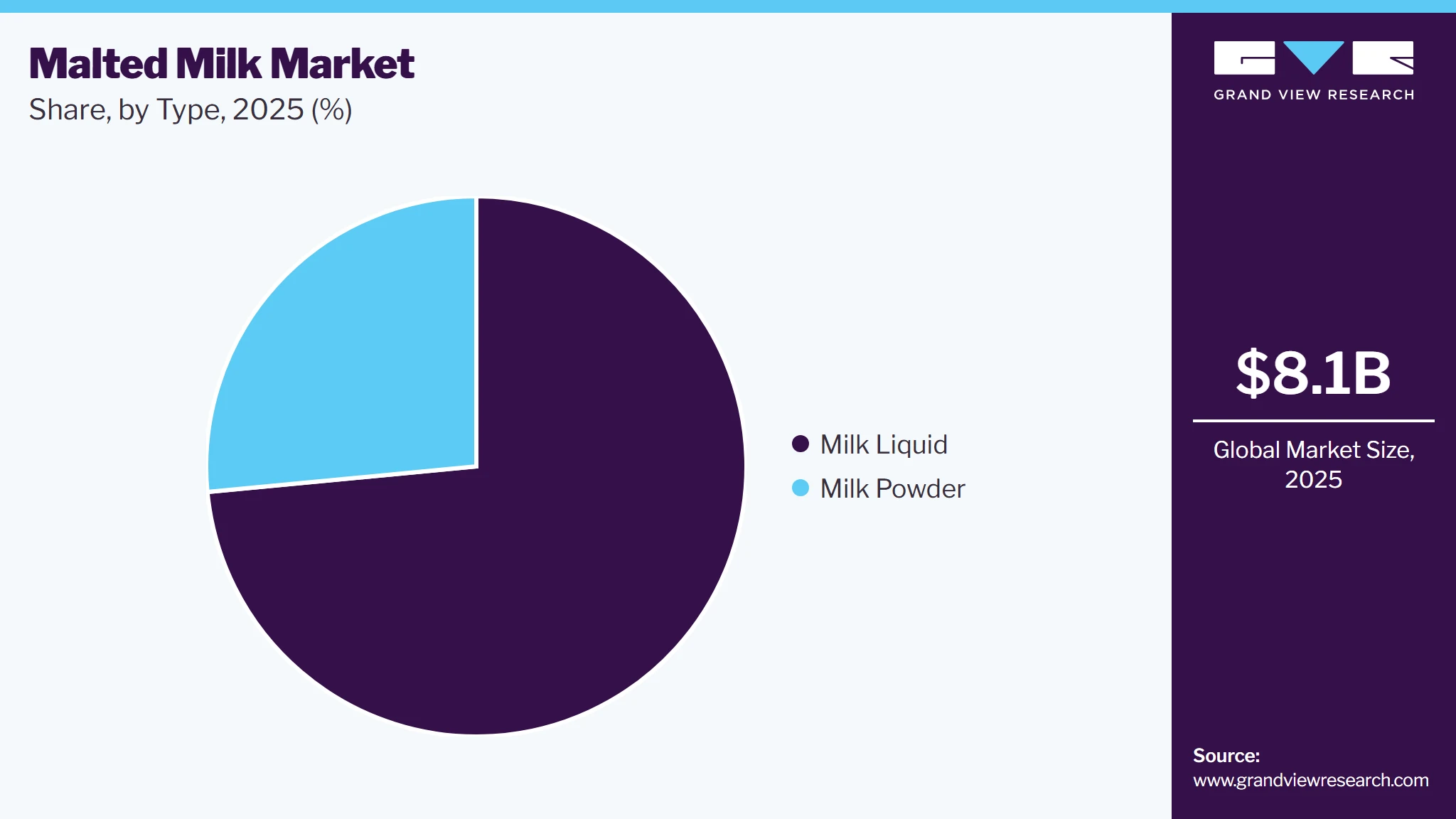
- By type: Milk liquid segment led the market with the largest revenue share of 73.5% in 2025.
Regional Highlights
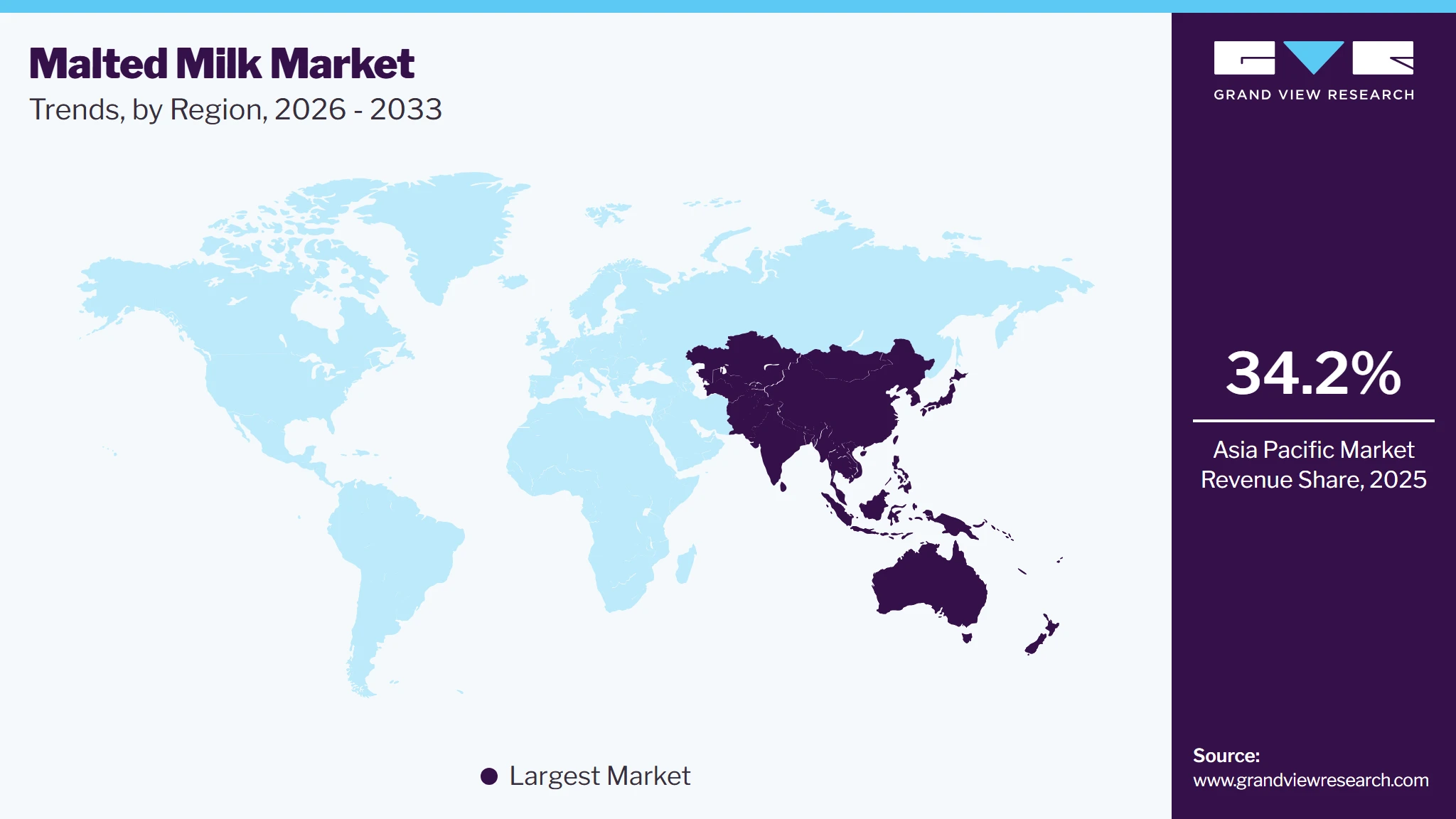
- Largest regional market: Asia Pacific (34.2% revenue share, 2025)
- By country: The U.S. held the largest market share in 2025.
Market Size & Forecast
- Market size in 2025: USD 8.1 Billion
- Estimated market size in 2026: USD 8.6 Billion
- Projected market size by 2033: USD 13.2 Billion
- CAGR (2026-2033): 6.3%
Prism AI by Grand View Research Free to tryAsk a question about the malted milk marketTry asking✓Every figure cited from GVR research Prefer the report? Download free sample →
Additionally, the rising disposable incomes and changing lifestyles are leading to a higher demand for convenient and ready-to-drink products. The growing popularity of malted milk as an ingredient in various recipes and desserts also contributes to market expansion. Furthermore, manufacturers' innovative product offerings and marketing strategies are attracting a broader consumer base, enhancing market growth prospects during the forecast period.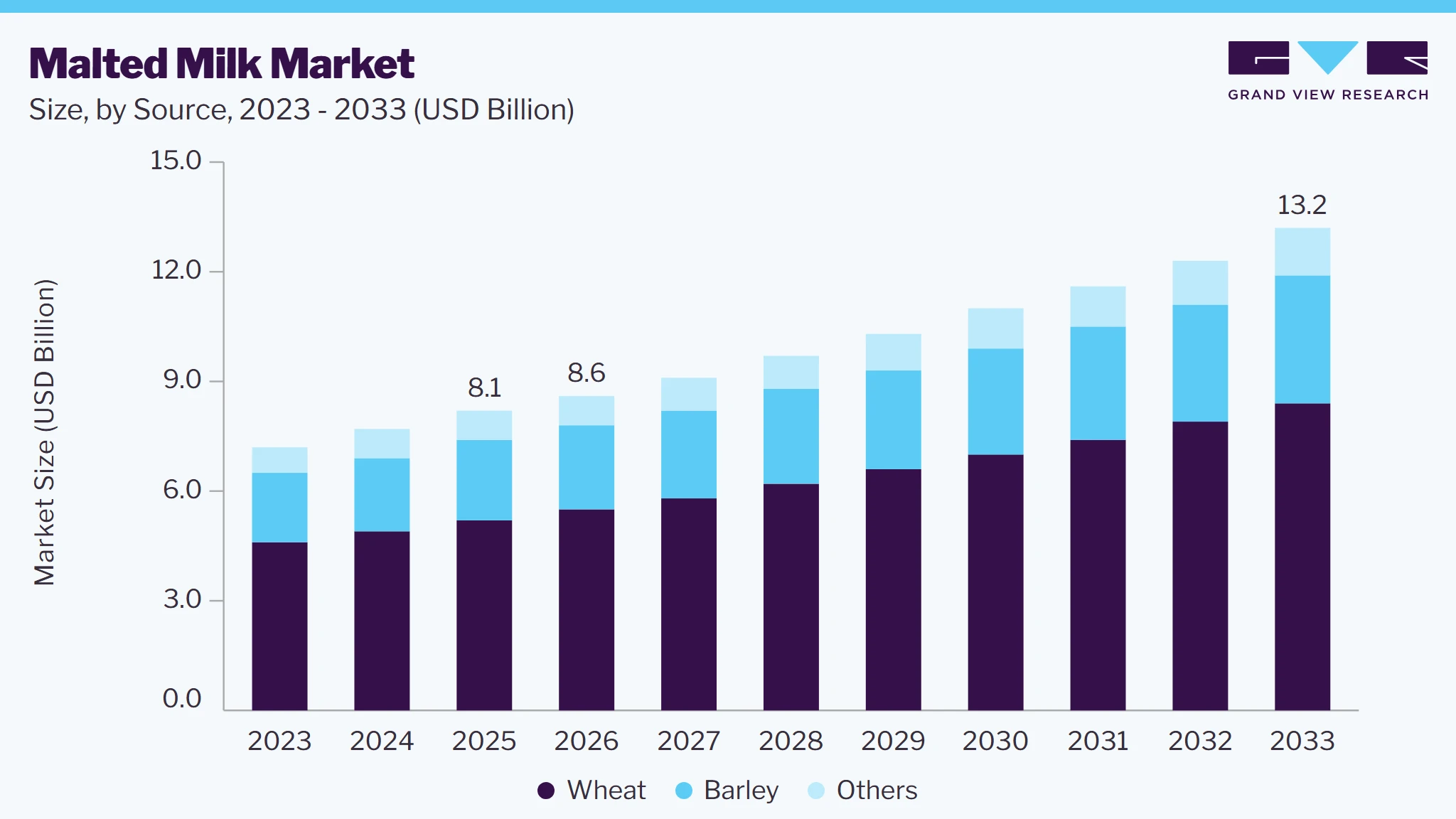 To learn more about this report, Download Free Sample Report
Rising awareness about a healthy lifestyle is the major factor in increasing product demand. In addition, manufacturers are focusing on using natural ingredients, which drives product sales. Increasing awareness about the various benefits of malted foods and drinks and high product consumption as a nutrition supplement will augment the market growth further. Changing food preferences, such as high demand for bite-sized snacks, due to hectic lifestyles, rapid urbanization, and industrialization will also positively impact market growth. Additionally, innovations in bite-sized snacks, such as baked products, including malted milk powder cookies, are expected to increase the demand.
Market Dynamics
The malted milk market is experiencing steady growth due to increasing consumer demand for nutritious beverages, functional food products, and convenient dietary supplements. Malted milk is produced by combining malted grains, primarily barley, with milk solids and other ingredients to create a nutrient-rich product commonly used in beverages, confectionery, bakery products, and nutritional formulations. Growing awareness of the importance of balanced nutrition, rising demand for fortified food products, and increasing consumption of convenient health drinks are contributing to market expansion. In addition, product innovations featuring protein enrichment, vitamin fortification, reduced sugar content, and flavored variants are attracting a broader consumer base and supporting market growth.
The increasing focus on health and nutrition is a major driver of the malted milk market. Consumers are actively seeking food and beverage products that provide essential nutrients, support energy levels, and contribute to overall wellness. Malted milk products are widely recognized for their content of carbohydrates, proteins, vitamins, and minerals, making them popular among children, adults, athletes, and aging populations.
Furthermore, growing awareness regarding nutritional deficiencies and preventive healthcare is encouraging consumers to incorporate fortified beverages and dietary supplements into their daily routines. The rising demand for convenient nutritional solutions, particularly among busy consumers and families, is further driving market growth. Moreover, increasing participation in sports and fitness activities is boosting demand for malted milk products that support energy replenishment and recovery.
The increasing popularity of plant-based beverages and changing dietary preferences remain significant restraints for the malted milk market. Consumers are increasingly adopting vegan, lactose-free, and dairy-free diets, leading to higher demand for alternatives such as oat milk, soy milk, almond milk, and other plant-based nutritional beverages. This trend may limit growth opportunities for traditional malted milk products containing dairy ingredients.
In addition, concerns regarding sugar content in certain malted milk formulations may affect consumer purchasing decisions. Health-conscious consumers are increasingly scrutinizing product labels and reducing consumption of beverages with high levels of added sugars. Fluctuations in the prices of key raw materials such as barley, milk solids, and sweeteners can also impact production costs and profit margins for manufacturers.
The growing demand for functional nutrition presents substantial opportunities for the malted milk market. Consumers are increasingly seeking products that offer benefits beyond basic nutrition, including immunity support, digestive health, muscle recovery, cognitive wellness, and healthy aging. This trend is encouraging manufacturers to develop malted milk products fortified with protein, vitamins, minerals, probiotics, omega-3 fatty acids, and other functional ingredients.
The clean-label movement is creating additional opportunities for products made with natural ingredients, reduced sugar formulations, organic certifications, and transparent labeling practices. Furthermore, advancements in food processing and formulation technologies are enabling manufacturers to improve taste, texture, nutritional profiles, and shelf stability. The rapid growth of e-commerce platforms, direct-to-consumer sales channels, and personalized nutrition solutions is expected to further expand market reach and support long-term growth in the malted milk market.
Analyst Perspective
The malted milk market continues to benefit from rising consumer interest in convenient nutritional beverages, fortified food products, and functional nutrition solutions. Traditionally associated with children's nutrition, malted milk is increasingly being positioned as a versatile ingredient for energy drinks, wellness beverages, sports nutrition products, and healthy snacks. Growing awareness of balanced nutrition, coupled with demand for products containing vitamins, minerals, and protein, is supporting category expansion across multiple age groups.
The market's strongest competitive moat will likely be built around nutritional credibility, brand trust, and product innovation. As consumers become more health-conscious and seek beverages that deliver both taste and functional benefits, manufacturers that successfully develop lower-sugar, fortified, and clean-label formulations will be best positioned to capture market share. Furthermore, the growing popularity of functional foods, on-the-go nutrition, and personalized wellness solutions is expected to create new opportunities for malted milk products. Companies capable of combining strong nutritional profiles, appealing flavors, and broad distribution capabilities are likely to emerge as long-term leaders in the global malted milk market.
Source Insights
Based on source, the wheat segment led the market with the largest revenue share of 63.7% in 2025. This dominance is primarily due to wheat's nutritional benefits and its versatile application in various malted milk products. Wheat-malted milk is rich in vitamins, minerals, and dietary fiber, making it a popular choice among health-conscious consumers. Its mild flavor and easy digestibility make it suitable for various age groups, from children to older people. The extensive use of wheat malted milk in beverages and culinary recipes also contributes to its leading position in the market. The continuous innovation and introduction of new wheat-based malted milk products further bolster its popularity and market share.
Barley is expected to grow at a significant CAGR of 5.9% over the forecast period. This growth is attributed to barley's nutritional advantages and increasing popularity among health-conscious consumers. Barley is rich in dietary fiber, vitamins, and minerals, making it a valuable ingredient for nutritious beverages and food products. Additionally, the rise in demand for natural and organic products has led to an increased interest in barley-based malted milk. The versatility of barley in various culinary applications, along with its distinctive flavor, also appeals to a broad consumer base. As manufacturers continue to innovate and introduce new barley-based products, the segment is poised for substantial growth in the coming years.
Type Insights
Based on type, the milk liquid segment led the market with the largest revenue share of 73.5% in 2025. Milk liquid malted milk products are rich in essential nutrients such as calcium, vitamins, and proteins, making them a popular choice for consumers of all ages. The convenience and ease of consumption of liquid malted milk also contribute to its popularity, as it can be quickly prepared and enjoyed as a beverage or added to various culinary recipes. Additionally, the availability of a wide range of flavors and fortified options further boosts the appeal and market share of milk liquid malted milk products.
 To learn more about this report, Download Free Sample Report
Milk powder is expected to grow at a significant CAGR over the forecast period. This growth is largely due to milk powder's versatility and convenience. Consumers appreciate the longer shelf life and easy storage of milk powder, which makes it a practical choice for households. It is also popular in various recipes and beverages, providing essential nutrients such as calcium, proteins, and vitamins. Additionally, the rising demand for fortified and instant malted milk drinks has spurred innovation in the milk powder segment, with manufacturers introducing new flavors and enhanced formulations.
Regional Insights
Asia Pacific dominated the malted milk market with the largest revenue share of 34.2% in 2025. This dominance is largely driven by the region's growing population and increasing disposable incomes, which have elevated the demand for nutritious and convenient food and beverage products. The cultural significance of malted milk drinks in countries like India, where they are commonly consumed as both health beverages and tasty treats, also plays a crucial role. Additionally, the expanding retail infrastructure and the rising influence of Western dietary trends have further propelled the popularity of malted milk in the region. Innovative product offerings and extensive marketing efforts by local and international brands have solidified the Asia Pacific region's leading position in the global malted milk industry.
 To learn more about this report, Download Free Sample Report
North America Malted Milk Market Trends
The North American malted milk industry held a considerable share in 2024. The region's well-developed retail infrastructure and the increasing availability of malted milk products in supermarkets, convenience stores, and online platforms contribute to market expansion. The influence of Western dietary habits and the growing inclination towards natural and organic products also play a significant role. Moreover, innovative product offerings and new flavors tailored to local tastes are attracting a broader consumer base, driving the market's growth in North America.
U.S. Malted Milk Market Trends
The malted milk market in the U.S. held the largest share in the North America region in 2025. Consumers' growing health awareness and preference for fortified products rich in vitamins and minerals significantly boost the market. Additionally, the rising trend of on-the-go lifestyles and the need for quick, healthy meal alternatives make malted milk popular. The presence of well-established brands and extensive marketing campaigns further drive the market's growth in the U.S., catering to diverse consumer preferences and enhancing product availability.
Europe Malted Milk Market Trends
Europe's malted milk industry is expected to grow at a significant CAGR of 6.2% over the forecast period. The increasing health consciousness among European consumers is boosting the demand for nutritious beverages, with malted milk being seen as a rich source of essential nutrients. The trend towards fortified and functional foods is particularly strong in this region. Secondly, the growing popularity of malted milk as an ingredient in various culinary applications, from baking to confectionery, is expanding its market reach. Additionally, well-established retail networks and the rising influence of organic and natural products encourage more consumers to opt for malted milk products. As manufacturers continue innovating with new flavors and formulations, the European malted milk industry is expected to grow robustly.
Key Malted Milk Company Insights
Some key companies in the malted milk market include Nestlé, Unilever, Briess Malt & Ingredients, Imperial Malts Ltd., SSP Private Limited, Family Cereal Sdn. Bhd, and others.
-
Briess offers a range of malted milk products, including Malted Milk Powder and Malted Milk Powder II, which are known for their rich, malty flavor and creamy mouthfeel. These products are made using high-quality malted barley and wheat flour, with no artificial additives, preservatives, colors, or flavors.
Key Malted Milk Companies:
The following key companies have been profiled for this study on the malted milk market.
-
Nestlé
-
Unilever
-
GSK plc
-
Briess Malt & Ingredients
-
Imperial Malts Ltd.
-
SSP Private Limited
-
Family Cereal Sdn. Bhd.
-
Muntons Plc
-
Food And Biotech Engineers India Private Limited
-
Insta Foods
Competitive Benchmarking
Category
Operating Strategies
Competitive Edge
Weakness
Established Players (Nestlé, Unilever, GSK plc, Briess Malt & Ingredients, Muntons Plc, SSP Private Limited)
- Expand malted milk product portfolios through fortified formulations, flavored variants, and functional nutrition offerings targeting children, adults, and elderly consumers
- Invest in brand development, nutritional research, distribution expansion, and product innovation to strengthen market penetration across retail, pharmacy, and e-commerce channels
- Strong brand recognition, extensive distribution networks, and significant expertise in nutrition and food ingredient manufacturing
- Large-scale production capabilities, established consumer trust, and diversified product portfolios support long-term market leadership
- Exposure to fluctuations in raw material prices, including barley, milk, and sweeteners, which can impact margins
- Increasing consumer concerns regarding sugar content and processed food ingredients may require continuous product reformulation
Emerging Players (Imperial Malts Ltd., Family Cereal Sdn. Bhd., Food And Biotech Engineers India Private Limited, Insta Foods)
- Focus on specialty malt-based formulations, customized nutritional products, and regional market expansion through affordable and targeted offerings
- Leverage product differentiation, local distribution networks, and flexible manufacturing capabilities to address specific consumer needs and emerging nutrition trends
- Greater agility in product innovation and ability to cater to niche consumer segments and regional preferences
- Strong flexibility in developing customized formulations for private-label, institutional, and specialty nutrition applications
- Limited brand visibility and marketing resources compared to multinational food and nutrition companies
- Smaller production scale and restricted distribution networks may limit market reach and growth potential
Malted Milk Market Report Scope
Report Attribute
Details
Market size in 2025
USD 8.1 billion
Estimated market size in 2026
USD 8.6 billion
Projected market size by 2033
USD 13.2 billion
Growth rate
CAGR of 6.3% from 2026 to 2033
Base year for estimation
2025
Historical data
2021 - 2024
Forecast period
2026 - 2033
Quantitative units
Revenue in USD million/billion and CAGR from 2026 to 2033
Report coverage
Revenue forecast, company ranking, competitive landscape, growth factors, and trends
Segments covered
Source, type, region
Regional scope
North America; Europe; Asia Pacific; Central & South America; Middle East & Africa
Country scope
U.S.; Canada; Mexico; Germany; UK; France; Italy; Spain; China; Japan; India; South Korea; Australia & New Zealand; Brazil; South Africa
Key companies profiled
Nestlé; Unilever; GSK plc; Briess Malt & Ingredients; Imperial Malts Ltd.; SSP Private Limited; Family Cereal Sdn. Bhd.; Muntons Plc; Food And Biotech Engineers India Private Limited; and Insta Foods.
Customization scope
Free report customization (equivalent up to 8 analysts' working days) with purchase. Addition or alteration to country, regional & segment scope.
Pricing and purchase options
Avail customized purchase options to meet your exact research needs. Explore purchase options
Global Malted Milk Market Report Segmentation
This report forecasts revenue growth at global, regional, and country levels and provides an analysis of the latest industry trends in each of the sub-segments from 2021 to 2033. For this study, Grand View Research has segmented the global malted milk market report based on source, type, and region:
 To learn more about this report, Download Free Sample Report
-
Source Outlook (Revenue, USD Billion, 2021 - 2033)
-
Wheat
-
Barley
-
Others
-
-
Type Outlook (Revenue, USD Billion, 2021 - 2033)
-
Milk Liquid
-
Milk Powder
-
-
Regional Outlook (Revenue, USD Billion, 2021 - 2033)
-
North America
-
U.S.
-
Canada
-
Mexico
-
-
Europe
-
UK
-
Germany
-
France
-
Italy
-
Spain
-
-
Asia Pacific
-
Japan
-
China
-
India
-
Australia & New Zealand
-
South Korea
-
-
Latin America
-
Brazil
-
-
Middle East and Africa (MEA)
-
South Africa
-
-
Research Methodology
The malted milk market figures in this report are based on a proven research process that combines executive interviews with secondary research from proprietary databases, company filings, and recognized regulatory and institutional sources. Market size is built through value-chain sizing - reconciling supply-side and demand-side estimates - and triangulated with bottom-up and top-down approaches. Every estimate passes multiple levels of expert validation before publication, with each malted milk segment quantified using the revenue-capture definitions in the table below.
Segment Definition
Segment - Source
Revenue capture definition
Wheat
This segment includes the sales of malted milk products derived primarily from wheat-based malt.
Barley
This segment includes the sales of malted milk products produced using barley-derived malt ingredients.
Others
This segment includes the sales of malted milk products sourced from alternative grains and ingredients.
Estimation Model
Layer
Guiding Question
Description
Nutritional Beverage Consumer Layer
Who consumes dairy-based and nutritional beverages?
Identify consumers of milk-based drinks, nutritional beverages, health drinks, and fortified food products across target markets. Analyze dietary habits, nutrition awareness, consumption of convenience beverages, and demand for functional food products to define the potential consumer pool for malted milk products.
Market Access Layer
Who can access malted milk products?
Apply region-specific availability through supermarkets, hypermarkets, convenience stores, pharmacies, specialty food retailers, and e-commerce platforms to the eligible consumer base. Consider distribution reach, product affordability, and retail penetration to estimate the addressable malted milk market.
Malted Milk Adoption Layer
Who actively purchases malted milk products?
Apply malted milk penetration rates and consumer preferences for nutritional beverages, fortified drinks, flavored milk products, and energy-supporting food products. Factor in demand from children, adolescents, working professionals, older adults, and health-conscious consumers seeking convenient nutritional solutions to convert the addressable market into active buyers.
Monetisation Layer
How much revenue is generated?
Multiply active malted milk consumers by average annual consumption frequency and spending per consumer. Add revenue contributions from retail stores, pharmacies, online channels, institutional sales, premium nutritional formulations, and value-added malt-based beverage products to estimate total market revenue.
Delivered Customizations
This report has been delivered with the following In-depth customizations
CLIENT REQUEST
CUSTOMIZATION DELIVERED
VALUE ADDS
Nutritional Beverage Trends & Consumer Preference Analysis
Conducted a focused analysis of malted milk consumption across powdered beverages, ready-to-drink products, nutritional supplements, flavored milk drinks, and infant and adult nutrition applications, covering changing dietary habits, comfort beverage consumption, and demand for nutrient-enriched products.
Helps stakeholders identify high-growth product categories, evaluate evolving consumer preferences, and assess commercialization opportunities in the nutritional beverage and dairy-based products market.
Health, Wellness & Functional Nutrition Trends
Evaluated adoption trends for fortified malted milk products containing vitamins, minerals, protein, calcium, and other functional ingredients, including consumer purchasing behavior, healthy aging trends, child nutrition awareness, immunity-focused consumption, and demand for convenient nutritional solutions.
Provides insights into emerging health and wellness trends, unmet consumer needs, and commercially attractive product segments to support product innovation, portfolio diversification, and brand positioning strategies.
Retail Expansion, Product Innovation & Market Opportunity Assessment
Assessed demand across supermarkets, hypermarkets, pharmacies, convenience stores, specialty nutrition retailers, online platforms, and foodservice channels, along with trends in flavor innovation, low-sugar formulations, plant-based alternatives, premium packaging, and functional beverage development.
Supports investment and expansion strategies by identifying high-potential distribution channels, evaluating consumer acceptance of innovative malted milk products, and strengthening long-term growth opportunities in the global nutritional beverages and dairy ingredients industry.
Frequently Asked Questions About This Report
The global malted milk market size was estimated at USD 8.1 billion in 2025 and is expected to reach USD 8.6 billion in 2026.
The global malted milk market is expected to grow at a compound annual growth rate of 6.3% from 2026 to 2033 to reach USD 13.2 billion by 2033.
Key factors that are driving the market growth include increasing consumer demand for nutritious beverages, functional food products, and convenient dietary supplements.
Based on type, the milk liquid segment led the market with the largest revenue share of 73.5% in 2025.
Asia Pacific dominated the malted milk market with the largest revenue share of 34.2% in 2025.
Based on source, the wheat segment led the market with the largest revenue share of 63.7% in 2025.
Some key players operating in the malted milk market include Nestlé; Unilever; GSK plc; Briess Malt & Ingredients; Imperial Malts Ltd.; SSP Private Limited; Family Cereal Sdn. Bhd.; Muntons Plc; Food And Biotech Engineers India Private Limited; and Insta Foods.
About the Author(s)
Consumer F&B Research Team
Consumer Goods · Consumer F&BThis report was authored by the consumer f&b research team at Grand View Research - comprising two research analysts, one senior research analyst, and one industry expert - with specialized expertise in the consumer f&b segment of the consumer goods industry. All findings are based on proprietary consumer goods databases, executive interviews, and regulatory analysis, subject to internal peer review prior to publication.
Last Updated:
Speak to Analyst

Customize this report to your needs - add regions, segments, or data points, with 20% free customization.
Or view our licence options:


ISO 9001:2015 & 27001:2022 Certified
We are GDPR and CCPA compliant! Your transaction & personal information is safe and secure. For more details, please read our privacy policy.


