
- Home
- »
- Medical Devices
- »
-
Medical Display Monitors Market Size Report, 2026-2033GVR Report cover

Medical Display Monitors Market (2026 - 2033)
Size, Share & Trends Analysis Report By Type (Diagnostic Display Monitors), By Resolution (Below 2 MP), By Panel Size, By Color Type, By Technology, By End User, By Region, And Segment Forecasts
Market Size, 2025
$2.8BMarket Estimate, 2026
$2.9BMarket Forecast, 2033
$4.0BCAGR, 2026–2033
4.6%Medical Display Monitors Market Summary
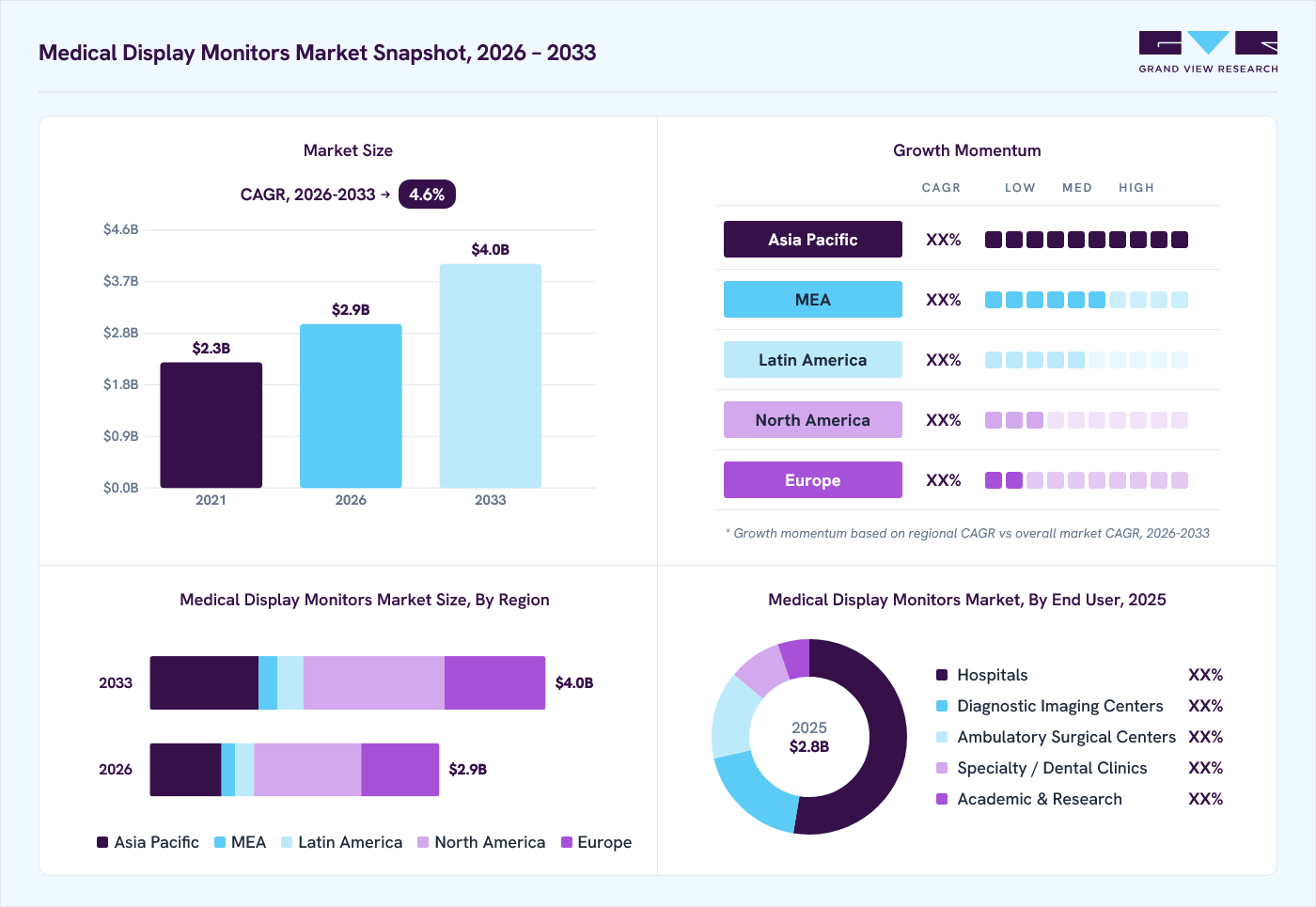
The global medical display monitors market size was valued at USD 2.8 billion in 2025 and is projected to grow from USD 2.9 billion in 2026 to USD 4.0 billion in 2033, at a CAGR of 4.6% from 2026 to 2033. North America held the largest revenue share of 37.2% in 2025. The growth of the medical display monitor industry is driven by the increasing adoption of digital imaging technologies, rising demand for accurate diagnostic interpretation, and continuous modernization of healthcare infrastructure.
 Source: Grand View Research, IR Documents, Primary Interviews, Paid DatabasesTo learn more about this report,
 Download Free Sample Report
Key Market Trends & Insights
- By type: Diagnostic display monitors held the largest revenue share of 36.1% in 2025.
- By resolution: 2-4 MP resolution held the largest revenue share of 35.6% in 2025.
- By panel size: 24"-27" panel size held the largest revenue share of 34.0% in 2025.
- By color type: Color displays held the largest revenue share of 84.7% in 2025.
- By technology: LED-backlit LCD technology held the largest revenue share of 78.0% in 2025.
- By end user: Hospitals held the largest revenue share of 52.6% in 2025.
Regional Highlights
- Largest regional market: North America (37.2% revenue share, 2025)
- Fastest-growing regional market: Asia Pacific (highest CAGR, 2026-2033)
- By country: The U.S. held the largest share in 2025
Market Size & Forecast
- Market size in 2025: USD 2.8 Billion
- Estimated market size in 2026: USD 2.9 Billion
- Projected market size by 2033: USD 4.0 Billion
- CAGR (2026-2033): 4.6%
Three ways to get this report
Buy it, customize it, or ask a question.Ask an Analyst
Analyst response in 1 business day
- AccessReport author, directly
- Reply timeWithin 1 working day
- No sales callDirect answer only
- FormatEmail reply
- CostFree, no cost
Get the Full Report
What the study covers
- FormatsPDF · Excel · Dashboard
- Timeline2026–2033 annual, 2025 base
- Coverage20+ countries, 5 regions
- Companies10+ key players profiled
Customize the Report
20% free customization
- IncludeCountries, segments, points
- TailorTo your product definition
- ExtendDeeper competitor detail
- OrA fully bespoke study
- Turnaround5–10 working days
Hospitals, diagnostic imaging centers, and specialty clinics are replacing conventional display systems with high-resolution medical-grade monitors that provide superior image clarity, color consistency, and brightness, enabling healthcare professionals to make more accurate clinical decisions. The growing volume of diagnostic imaging procedures, including X-rays, computed tomography (CT), magnetic resonance imaging (MRI), ultrasound, mammography, and digital pathology, has significantly increased the need for advanced display solutions capable of presenting detailed medical images with high precision. For instance, in November 2025, according to the OECD, the average across member countries reached 51 CT, MRI, and PET scanners per million population. The U.S. has 86 scanners per million. As healthcare providers continue to expand diagnostic imaging capabilities and prioritize accurate image interpretation, the demand for high-performance medical display monitors is expected to increase, supporting the sustained growth of the global medical display monitor market.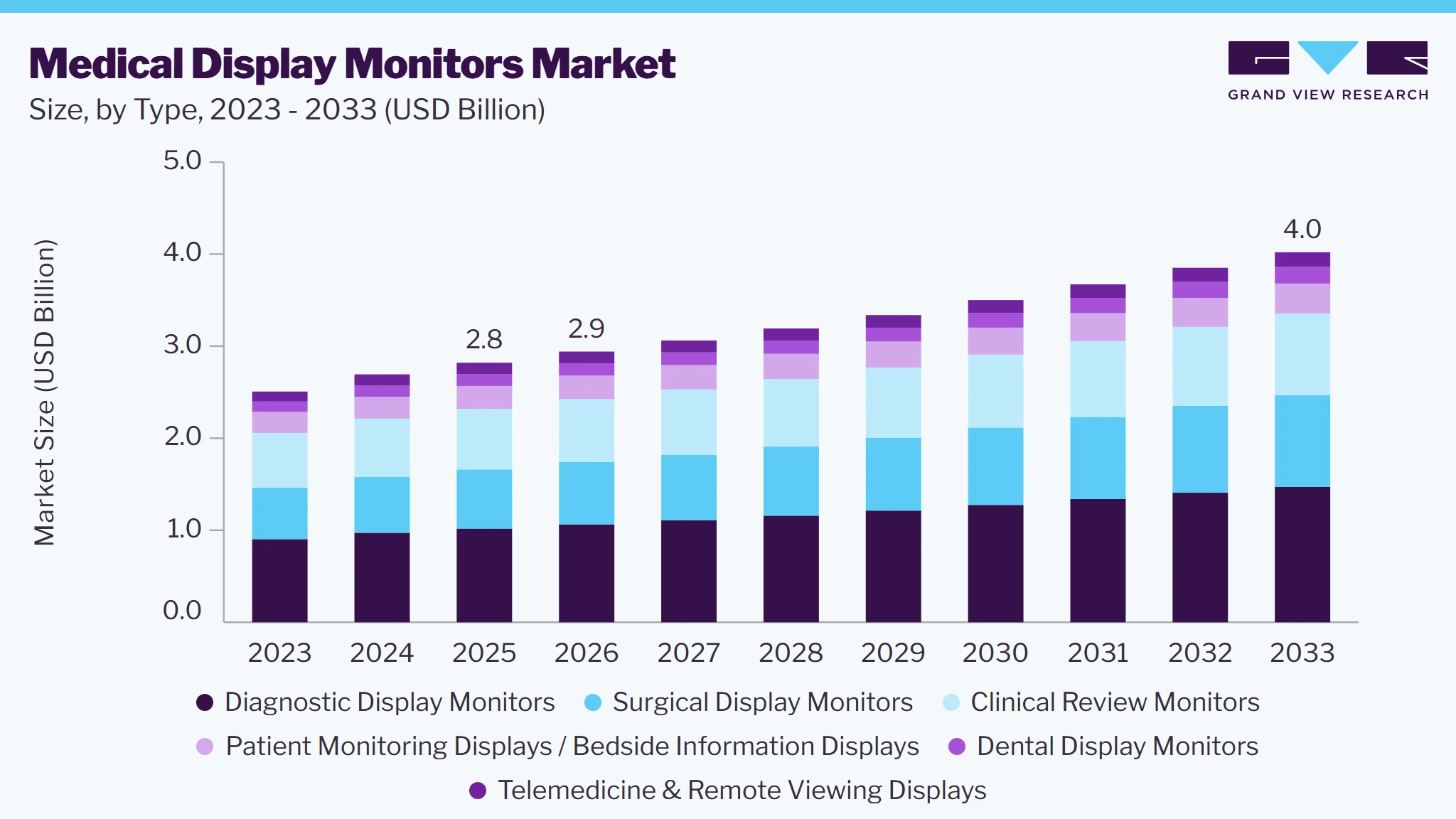 To learn more about this report, Download Free Sample Report
In addition, the expanding prevalence of chronic diseases such as cancer, cardiovascular disorders, neurological conditions, and orthopedic diseases has led to higher demand for diagnostic examinations, further supporting market growth. Healthcare providers are also investing in integrated digital operating rooms, picture archiving and communication systems (PACS), electronic health records (EHRs), and telemedicine platforms, all of which rely on high-performance medical display monitors for efficient clinical workflows. For instance, according to the WHO, approximately 20 million new cancer cases were diagnosed globally, with the number projected to increase to 35 million by 2050, significantly raising demand for diagnostic imaging procedures. Furthermore, the OECD Health at a Glance 2025 reported that the average availability of online digital health services increased from 79% in 2023 to 82% in 2024, reflecting continued adoption of electronic health records, telemedicine, and digital clinical workflows.
Technological advancements, including higher-resolution 4K and 8K displays, OLED technology, improved grayscale performance, enhanced calibration capabilities, and AI-enabled imaging applications, are further driving product adoption across radiology, pathology, surgery, and dental imaging. For instance, in September 2025, LG Electronics launched the 32HS710S, a 31.5-inch 4K surgical monitor designed to enhance operating room workflows through intelligent features such as preset picture modes, dedicated hotkeys, and instant screen mode switching. The monitor received U.S. FDA 510(k) clearance and offered a 4K IPS display with DICOM compliance, optical bonding, and a durable medical-grade design to support high-quality surgical imaging.
“In developing the 32HS710S, we concentrated on delivering practical workflow benefits for surgical teams - for whom time and focus are critical,” said YS Lee, head of the IT Business at the LG Media Entertainment Solution Company. “By incorporating automated screen settings, one-touch controls and reliable backup systems, we aim to provide tools that can help medical staff maintain focus on patient care.”
Market Dynamics
The increasing prevalence of chronic diseases such as cancer, cardiovascular diseases, neurological disorders, and orthopedic conditions is driving the demand for diagnostic imaging procedures worldwide. Early diagnosis and continuous disease monitoring require advanced imaging technologies, including CT, MRI, X-ray, ultrasound, mammography, and digital pathology. As the number of imaging examinations continues to grow, healthcare providers are investing in high-performance medical display monitors that deliver accurate image visualization, consistent brightness, and precise color reproduction. These monitors enable radiologists and clinicians to identify subtle abnormalities with greater confidence, improving diagnostic accuracy and patient outcomes.
The high acquisition and maintenance costs of medical-grade display monitors remain a significant challenge to market growth. Unlike commercial displays, medical monitors must comply with stringent regulatory standards, including DICOM calibration, high brightness, grayscale accuracy, and long-term image consistency to ensure reliable clinical diagnosis. They also require periodic quality assurance testing and calibration, increasing operational costs for healthcare providers. Smaller hospitals, outpatient clinics, and healthcare facilities in developing regions often face budget constraints, making it difficult to replace existing display systems or invest in premium diagnostic monitors.
The growing adoption of AI in medical imaging presents a significant opportunity for the medical display monitor market. AI-enabled software is being integrated into radiology workflows to assist in detecting abnormalities, prioritizing cases, and improving diagnostic efficiency. These applications require high-resolution, medical-grade display monitors capable of accurately presenting AI-generated annotations, heat maps, and detailed medical images. As hospitals and diagnostic imaging centers continue implementing AI-assisted radiology workstations, demand for advanced monitors with superior image quality, higher resolution, and precise calibration is expected to increase.
Market Concentration & Characteristics
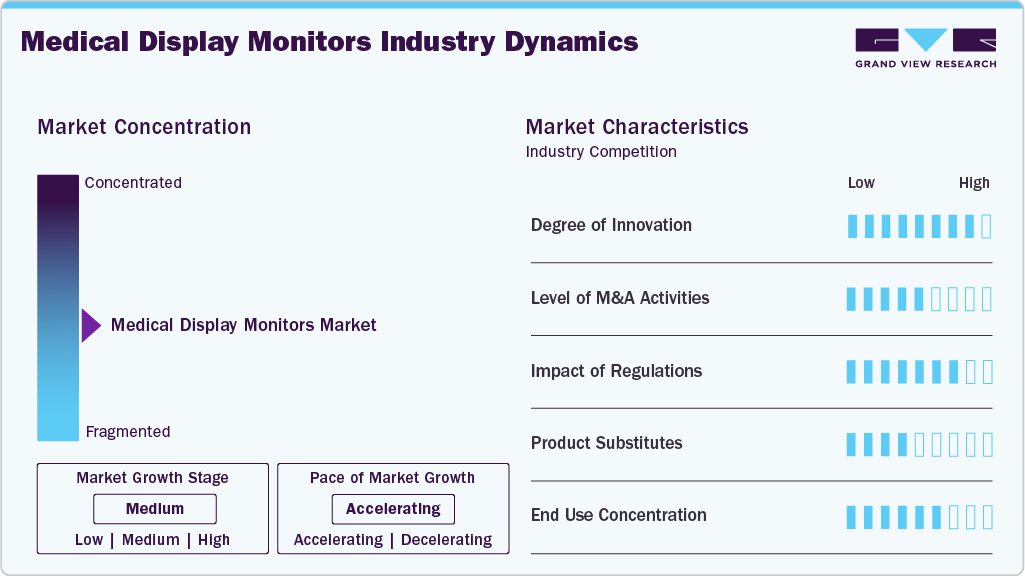
The medical display monitor market is witnessing a high degree of innovation due to continuous advancements in display resolution, color accuracy, AI integration, and calibration technologies. Manufacturers are developing medical-grade monitors with improved brightness, contrast, and image consistency to support precise diagnosis across radiology, pathology, mammography, and surgery. For instance, in August 2025, Sony expanded its medical display portfolio by introducing the LMD-27M1MD and LMD-43M1MD 4K Mini-LED surgical monitors, becoming the first medical monitors to receive VESA DisplayHDR 1000 certification. The new monitors deliver enhanced brightness, higher contrast, and improved visualization for minimally invasive and image-guided surgical procedures. Such innovations are expected to improve clinical efficiency and encourage healthcare providers to upgrade to advanced medical display systems.
The medical display monitor industry is experiencing a moderate level of mergers, acquisitions, and strategic collaborations as manufacturers seek to strengthen their product portfolios and expand their presence in the medical imaging ecosystem. Companies are partnering with medical imaging equipment manufacturers, AI software developers, and healthcare providers to integrate display technologies with digital radiology, pathology, and surgical workflows. In addition, strategic collaborations are helping manufacturers improve interoperability with Picture Archiving and Communication Systems (PACS), enterprise imaging platforms, and AI-assisted diagnostic software.
 To learn more about this report, Download Free Sample Report
Regulations have a high impact on the market because medical-grade displays must comply with strict quality, safety, and performance standards before they can be used for clinical diagnosis. Regulatory authorities such as the U.S. Food and Drug Administration (FDA), the European Union Medical Device Regulation (EU MDR), and the International Electrotechnical Commission (IEC) require manufacturers to ensure consistent luminance, grayscale accuracy, DICOM calibration, and long-term image stability.
The availability of substitutes in the medical display monitor market is low because commercial monitors cannot provide the image quality and regulatory compliance required for clinical diagnosis. Although standard displays are suitable for administrative work, patient registration, and general office applications, they lack the brightness stability, grayscale accuracy, DICOM calibration, and quality assurance required for interpreting diagnostic images.
End-use concentration in the medical display monitor industry is high, with hospitals, diagnostic imaging centers, ambulatory surgical centers, and specialty healthcare facilities representing the primary customer base. These organizations require medical-grade displays for radiology, pathology, mammography, endoscopy, and image-guided surgical procedures. The continued expansion of digital healthcare infrastructure, including PACS, electronic health records (EHRs), AI-assisted imaging platforms, and hybrid operating rooms, is further increasing demand from these end users.
Analyst Perspective
The medical display monitor market is driven by the increasing adoption of digital imaging technologies, rising volume of diagnostic imaging procedures, and growing demand for high-resolution displays in radiology, pathology, surgery, and other clinical applications. Market growth is further supported by expanding healthcare infrastructure, increasing investments in digital hospitals, growing implementation of picture archiving and communication systems (PACS), advancements in AI-assisted medical imaging, and the rising need for accurate visualization in minimally invasive and image-guided procedures.
Type Insights
The diagnostic display monitors segment dominated the medical display monitor market in 2025, accounting for 36.1% revenue share, due to its widespread use in diagnostic imaging applications that require high image accuracy and precision. These monitors are widely deployed across radiology, mammography, CT, MRI, ultrasound, and digital pathology departments, where accurate visualization is essential for clinical decision-making. The growing volume of diagnostic imaging procedures, increasing adoption of digital radiology systems, and expansion of picture archiving and communication systems have further strengthened demand for these displays. For instance, in October 2024, Barco introduced the Coronis OneLook diagnostic display solution, featuring a high-brightness display with integrated quality assurance and calibration technologies designed to improve workflow efficiency and support accurate interpretation across multiple imaging modalities. The introduction of advanced diagnostic display solutions continues to reinforce the segment's leadership in the global market.
Dirk Feyants, Executive VP of Diagnostic Imaging at Barco, says: “Coronis OneLook comes from the same team that developed our Coronis Uniti display, launched ten years ago and still considered one of the best monitors for radiology and breast imaging in the world. Thanks to its impressive performance, Coronis OneLook opens a new chapter in radiologist accuracy and efficiency.”
The surgical display monitors segment is expected to grow at the fastest CAGR over the forecast period, owing to the increasing adoption of minimally invasive and image-guided surgical procedures, growing investments in hybrid operating rooms, and rising demand for advanced visualization technologies during surgery. High-resolution surgical displays are widely used in operating room (OR) environments, endoscopy, laparoscopy, robotic-assisted surgery, and interventional procedures, where real-time image clarity and low-latency visualization are critical for clinical precision and patient safety. The increasing integration of 4K, 8K, HDR, and 3D display technologies, along with the expansion of hybrid ORs and robotic surgery platforms, is further driving market growth.
Resolution Insights
The 2-4 MP resolution segment dominated the medical display monitor industry in 2025, accounting for 35.6%, due to its widespread adoption across clinical review, general radiology, and routine diagnostic imaging applications. These displays provide an optimal balance between image quality, performance, and cost, making them a preferred choice for hospitals, diagnostic imaging centers, and outpatient healthcare facilities. They are commonly used for reviewing X-rays, ultrasound, CT scanners, and MRI studies, as well as electronic medical records and clinical workflows where ultra-high resolution is not required. In addition, the increasing digitalization of healthcare facilities, expanding implementation of picture archiving and communication systems, and growing demand for cost-effective medical-grade display solutions continue to drive adoption. Their versatility, compliance with medical imaging standards, and lower total cost of ownership have established 2-4 MP display monitors as the leading resolution segment.
The above 8 MP resolution segment is expected to grow at the fastest CAGR during the forecast period, owing to the increasing demand for ultra-high-resolution imaging in digital pathology, breast imaging, and advanced diagnostic applications. These displays enable healthcare professionals to visualize extremely fine anatomical details with exceptional clarity, reducing the need for image zooming and improving diagnostic confidence. The growing adoption of whole-slide imaging in digital pathology, increasing use of high-resolution mammography systems for breast cancer screening, and expanding implementation of AI-assisted diagnostic workflows are driving demand for displays exceeding 8 megapixels.
Panel Size Insights
The 24"-27" panel size segment dominated the market in 2025, accounting for 34.0%, owing to its broad compatibility with a wide range of diagnostic and clinical imaging workflows. These monitors provide sufficient screen space for high-quality image visualization while maintaining a compact footprint suitable for reading rooms, physician offices, and diagnostic workstations. Their widespread adoption is driven by the increasing number of diagnostic imaging procedures, expansion of hospital radiology departments, and growing replacement of legacy display systems with energy-efficient medical-grade monitors. Furthermore, healthcare providers prefer 24"-27" displays because they offer an ideal combination of image quality, ergonomic comfort, lower power consumption, and affordability, making them suitable for large-scale deployment across healthcare facilities.
The 27"-32" panel size segment is expected to grow at the fastest CAGR during the forecast period, owing to its ability to provide a larger viewing area while maintaining high image clarity, making it ideal for advanced diagnostic and multi-modality imaging applications. These monitors enable radiologists and clinicians to view multiple imaging studies, patient records, and comparison images simultaneously on a single screen, reducing the need for dual-monitor configurations and improving workflow efficiency. Their increasing adoption in digital pathology, mammography, CT, MRI, and interventional radiology is driven by the need for enhanced visualization of complex medical images and improved diagnostic accuracy. Furthermore, healthcare facilities are standardizing on 27"-32" displays for reporting workstations because they offer an optimal balance between screen size, ergonomic comfort, workspace efficiency, and cost, further accelerating the growth of this segment during the forecast period.
Color Type Insights
The color displays segment dominated the medical display monitor industry in 2025, accounting for 84.7%, due to their versatility and ability to support a broad range of medical imaging modalities requiring accurate color visualization. These displays are indispensable for digital pathology, endoscopy, minimally invasive surgery, ophthalmology, dermatology, nuclear medicine, and multimodality imaging, where faithful color reproduction is essential for clinical interpretation. In addition, many modern diagnostic workstations require color displays to simultaneously review grayscale medical images, 3D reconstructions, electronic medical records (EMRs), and PACS interfaces on a single monitor. Their capability to support both grayscale and color imaging applications has established color displays as the preferred choice across healthcare facilities.
The monochrome displays segment is expected to grow at a significant CAGR during the forecast period, owing to their optimized grayscale performance and superior luminance uniformity for dedicated diagnostic imaging applications. Unlike color displays, monochrome monitors allocate the entire pixel structure to grayscale rendering, enabling higher brightness, improved contrast, and more precise visualization of subtle image details. These characteristics make them particularly suitable for mammography, chest radiography, and general X-ray interpretation, where the detection of minute abnormalities is critical. Furthermore, increasing investments in breast imaging centers, expansion of national cancer screening programs, and growing demand for high-performance radiology workstations are expected to accelerate the adoption of monochrome medical display monitors during the forecast period.
Technology Insights
The LED-backlit LCD segment dominated the medical display monitor market in 2025, accounting for 78.0% revenue share, due to its widespread adoption across diagnostic imaging and clinical review applications. The technology is extensively used in radiology, mammography, pathology, and surgical imaging, offering high brightness (typically 600-1,200 cd/m²), stable luminance, and accurate grayscale and color performance. In addition, its lower acquisition cost compared with OLED and Mini-LED technologies has made LED-backlit LCD the preferred choice for large-scale deployments across hospitals and diagnostic imaging centers.
The OLED segment is expected to register the fastest CAGR during the forecast period, owing to the growing demand for superior image quality, high contrast ratios, true black levels, wide viewing angles, and faster response times in surgical visualization and diagnostic imaging. Increasing adoption of minimally invasive procedures, hybrid operating rooms, and advanced medical imaging systems is further accelerating the use of OLED medical display monitors across healthcare facilities.
End User Insights
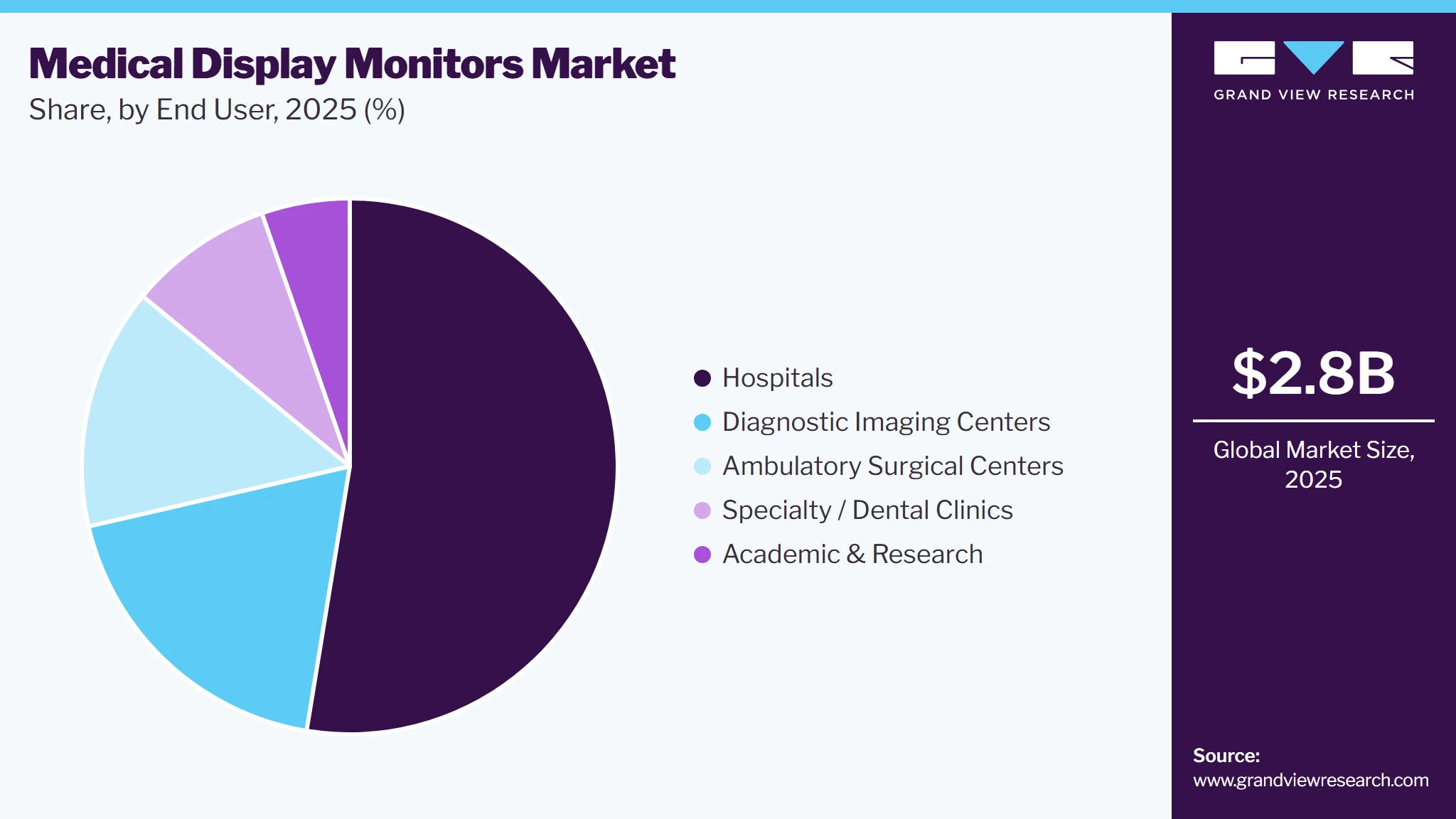
The hospitals end-user segment dominated the market in 2025, accounting for 52.6%, owing to the high concentration of diagnostic imaging departments, operating rooms, intensive care units (ICUs), and specialized clinical facilities requiring medical-grade display solutions. Hospitals perform a large volume of diagnostic imaging procedures, including X-ray, CT, MRI, ultrasound, mammography, and digital pathology, all of which depend on high-performance display monitors for accurate image interpretation and clinical decision-making. In addition, increasing investments in digital hospitals, picture archiving and communication systems (PACS), hybrid operating rooms, and advanced surgical visualization technologies continue to drive demand for medical displays. For instance, in May 2026, Canvys, a division of Richardson Electronics, expanded its 4K medical display platform by introducing a new 32-inch Ultra HD monitor designed for medical imaging, robotic-assisted surgery, diagnostics, and OEM clinical systems. The monitor features a scalable platform architecture, IEC 60601 compliance, and high color accuracy to support advanced hospital imaging workflows.
“With the addition of the 32-inch monitor, we are providing our customers with greater flexibility to scale their medical systems while maintaining a consistent platform architecture,” said Rainer Bornwasser, Vice President of Global Sales at Canvys. “Our close collaboration with leading medical OEMs ensures these solutions align with evolving clinical and system-level requirements.”
 To learn more about this report, Download Free Sample Report
The ambulatory surgical centers end-user segment is expected to grow at the fastest CAGR during the forecast period, owing to the increasing shift toward outpatient surgical procedures and the growing adoption of minimally invasive and image-guided interventions. ASCs are expanding their capabilities in specialties such as orthopedics, ophthalmology, gastroenterology, urology, gynecology, and cardiovascular interventions, all of which require high-performance surgical display monitors for real-time visualization. For instance, in June 2026, Philips introduced the IntelliVue Patient Monitor 6000 Series to provide an affordable, enterprise-grade patient monitoring solution for rural hospitals, ambulatory surgery centers, and other healthcare facilities. The new monitoring platform offered flexible measurement expansion, scalable connectivity, and advanced monitoring capabilities, enabling clinicians to effectively monitor patients across different acuity levels. As ambulatory surgical centers continue to modernize their operating rooms with advanced imaging and digital visualization technologies, demand for high-performance medical display monitors is expected to increase significantly, reinforcing the segment's strong growth trajectory over the forecast period.
“Every day, clinicians look to deliver the best possible care but face inefficiencies and challenges beyond their control,” said Ajay Parkhe, Business Leader, Hospital Patient Monitoring at Philips. “The PM 6000 Series helps ease pressure on healthcare organizations with flexible, high-quality patient monitoring in an affordable, scalable solution.”
Regional Insights
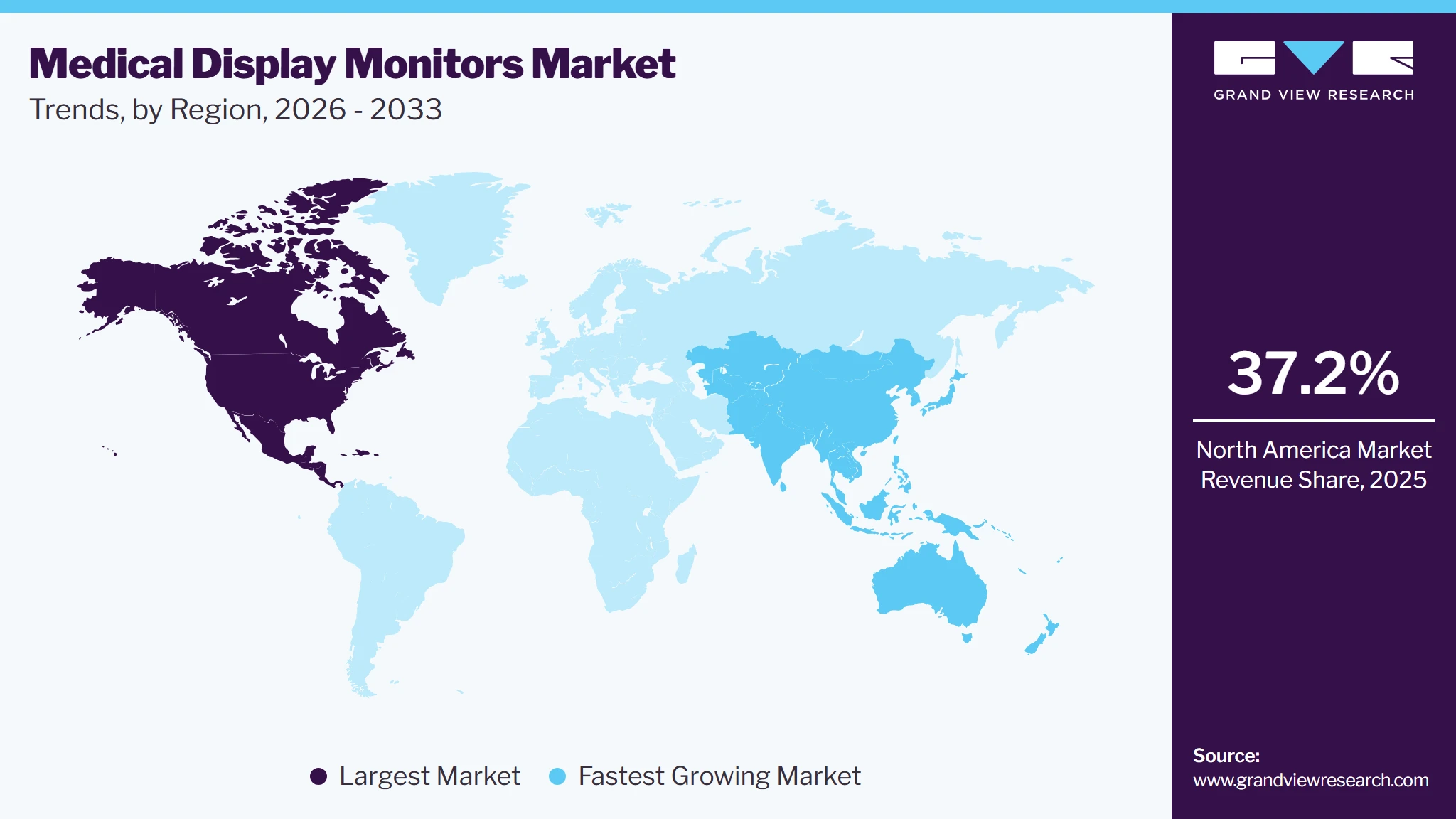
The North America medical display monitors market accounted for the largest revenue share of 37.2% in 2025 due to the region's advanced diagnostic imaging infrastructure, widespread adoption of digital healthcare technologies, and continuous investments in AI-enabled clinical workflows. The U.S., Canada, and Mexico have a high concentration of hospitals, academic medical centers, and diagnostic imaging facilities that regularly upgrade their imaging equipment to improve diagnostic accuracy and operational efficiency. The increasing adoption of digital pathology, enterprise imaging platforms, and image-guided surgical procedures is further supporting demand for high-resolution medical display monitors.
 To learn more about this report, Download Free Sample Report
U.S. Medical Display Monitors Market Trends
The U.S. medical display monitor industry’s growth is primarily driven by the rapid adoption of AI-enabled medical imaging solutions across healthcare facilities. The increasing integration of artificial intelligence into radiology workflows requires high-resolution diagnostic monitors capable of displaying AI-generated annotations and complex imaging datasets with high accuracy. For instance, in June 2026, Avatar Medical received FDA 510(k) clearance for Avatar Medical Vision, becoming the first software cleared for use with glasses-free 3D medical displays in the U.S. The platform enabled clinicians to process and review CT and MR images in immersive 3D across standard displays, autostereoscopic 3D systems, and virtual reality, supporting advanced surgical planning and clinical visualization. This advancement is accelerating demand for advanced medical display monitors that provide superior image quality, enhanced depth visualization, and seamless compatibility with AI-driven imaging technologies, supporting more accurate diagnosis and improved clinical decision-making across U.S. healthcare facilities.
“For too long, physicians have been making three-dimensional decisions from two-dimensional images,” said Xavier Wartelle, Chief Executive Officer, Avatar Medical. “At Avatar Medical, we’ve made deliberate technology choices to change that, prioritizing glasses-free, shared visualization so physicians and patients can look at anatomy together. When that happens, the conversation becomes clearer, more natural, and ultimately more meaningful.”
Europe Medical Display Monitors Market Trends
The Europe medical display monitor industry is expected to witness steady growth due to the increasing implementation of digital health programs and the modernization of hospital infrastructure across Germany, France, Italy, the UK, the Netherlands, and Nordic countries. Healthcare providers are investing in integrated imaging platforms, electronic medical records, and digital operating rooms to improve clinical efficiency. In addition, strict regulatory requirements under the European Union Medical Device Regulation (EU MDR) are encouraging healthcare facilities to replace aging display systems with certified medical-grade monitors that meet updated performance and safety standards.
The Germany medical display monitor market is driven by the country's strong diagnostic imaging capacity and high availability of advanced imaging equipment. Germany has one of the highest numbers of MRI and CT scanners per capita in Europe, creating sustained demand for diagnostic workstations equipped with high-resolution medical display monitors. The continuous expansion of radiology services and increasing use of minimally invasive procedures are further supporting market growth. For instance, in November 2025, according to the OECD, there are 74 CT scanners, MRI units, and PET scanners per million population in Germany (OECD average 51).
Asia Pacific Medical Display Monitors Market Trends
The Asia Pacific medical display monitor industry is projected to grow at the fastest CAGR during the forecast period, owing to rapid healthcare infrastructure development, increasing government investment in digital hospitals, and rising installation of diagnostic imaging equipment. Countries including China, India, Japan, South Korea, and Australia are expanding their diagnostic imaging capacity to address growing healthcare needs. The increasing number of hospitals, diagnostic imaging centers, and ambulatory surgical facilities is driving demand for medical-grade display monitors across the region. For instance, in February 2026, the Government of India highlighted that AI-powered diagnostics, telemedicine, and surveillance tools were integrated into healthcare delivery under the IndiaAI Mission launched in 2024. It stated that these technologies improved public health programs, supported large-scale telemedicine consultations, and enhanced disease screening for conditions such as TB and diabetic retinopathy. The initiative was presented as part of India’s broader goal of achieving Universal Health Coverage and Viksit Bharat by 2047. Therefore, the continued adoption of AI-enabled healthcare technologies, expansion of digital healthcare infrastructure, and growing investments in advanced diagnostic systems are expected to accelerate demand for high-performance medical display monitors across the Asia Pacific region throughout the forecast period.
The China medical display monitor market is driven by government initiatives to modernize public hospitals and expand digital healthcare infrastructure. Investments in smart hospitals, medical imaging systems, and AI-assisted diagnostic technologies are increasing the adoption of high-performance medical display monitors. The rapid expansion of tertiary hospitals and diagnostic imaging departments is also creating strong demand for advanced visualization solutions.
Latin America Medical Display Monitors Market Trends
The Latin America medical display monitor industry is anticipated to grow steadily due to increasing investment in diagnostic imaging services and improving access to specialized healthcare. Countries such as Brazil and Argentina are expanding public and private healthcare infrastructure while increasing the availability of advanced imaging modalities. The growing burden of chronic diseases and rising demand for early diagnosis are encouraging healthcare providers to upgrade imaging workstations with certified medical display monitors.
MEA Medical Display Monitors Market Trends
The Middle East & Africa medical display monitor industry is expected to witness considerable growth over the forecast period, due to ongoing healthcare modernization programs and increasing investment in advanced hospital infrastructure. Countries such as Saudi Arabia, the UAE, Qatar, and South Africa are expanding specialized hospitals and diagnostic imaging centers as part of their national healthcare transformation initiatives. The adoption of digital radiology, telemedicine, and image-guided surgical technologies is increasing the need for high-quality medical display monitors across the region.
Key Medical Display Monitors Company Insights
Some of the key companies in the medical display monitor market include Barco NV; EIZO Corporation; Sony Group Corporation; LG Electronics Inc.; Novanta Inc. (NDS Surgical Imaging); JVCKENWOOD Corporation; Advantech Co., Ltd.; FSN Medical Technologies; BenQ Medical Technology Corp.; and Double Black Imaging. Organizations are focusing on increasing customer base to gain a competitive edge in the industry. Therefore, key players are taking several strategic initiatives, such as mergers and acquisitions, and partnerships with other major companies.
Key Medical Display Monitors Companies
The following key companies have been profiled for this study of the medical display monitor market.
-
Barco NV
-
EIZO Corporation
-
Sony Group Corporation
-
LG Electronics Inc.
-
Novanta Inc. (NDS Surgical Imaging)
-
JVCKENWOOD Corporation
-
Advantech Co., Ltd.
-
FSN Medical Technologies
-
BenQ Medical Technology Corp.
-
Double Black Imaging
-
Shenzhen Jusha Medical Technology Co., Ltd.
-
Shenzhen Beacon Display Technology Co., Ltd.
-
COJE Co., Ltd.
-
Dell Technologies
Competitive Benchmarking
Operating Strategies
Competitive Edge
Weaknesses
Established Players (Barco NV, EIZO Corporation, Sony Group Corporation, LG Electronics Inc.)
- Invest heavily in R&D to develop high-resolution diagnostic displays, surgical imaging monitors, digital pathology displays, AI-enabled visualization technologies, and advanced color calibration solutions.
- Expand global presence through strategic collaborations with hospitals, diagnostic imaging centers, OEM partners, PACS providers, and healthcare distributors.
- Strong global brand recognition, extensive product portfolios, and established relationships with healthcare providers and medical device manufacturers.
- Advanced display technologies, broad regulatory compliance, strong after-sales support, and worldwide distribution networks enable leadership.
- High R&D expenditure, continuous technology upgrades, and stringent regulatory compliance increase operational costs.
- Premium pricing, lengthy product validation cycles, and dependence on hospital capital expenditure can limit growth in price-sensitive and developing markets.
Emerging Players (FSN Medical Technologies, BenQ Medical Technology Corp., Double Black Imaging)
- Focus on cost-effective medical display monitors, customized display solutions, regional manufacturing, and rapid product development for diagnostic and surgical applications.
- Strengthening market presence through partnerships with regional distributors, hospitals, imaging centers, and OEM manufacturers while expanding regulatory approvals into international markets.
- Competitive pricing, operational flexibility, and faster response to regional customer requirements.
- Specialized product offerings, customization capabilities, and growing relationships with local healthcare providers support expansion in emerging markets and selected international regions.
- Limited global brand recognition, smaller international distribution networks, and comparatively lower investment capacity for advanced R&D and global marketing.
- Expanding into highly regulated markets requires significant time, certification efforts, and financial resources, slowing international growth.
Recent Developments
-
In June 2026, Olympus Corporation launched new 4K LCD monitors for its endoscopy systems to enhance image clarity and improve visualization during endoscopic procedures. The monitors were designed to reduce glare and reflections, supporting more accurate diagnosis and treatment while contributing to better patient outcomes.
“The introduction of these new 4K LCD monitors marks an important step in strengthening Olympus’ endoscopy imaging portfolio. Building on our existing OEV monitors, this launch expands available size options and enhances visibility, enabling us to deliver more comprehensive solutions across a wide range of clinical settings,” said Keith Boettiger, Executive Officer and Gastrointestinal Solutions Division Head, Olympus Corporation. “Through this launch, we reaffirm our commitment to delivering innovative technologies that support healthcare professionals and advance endoscopy‑enabled care worldwide.”
-
In June 2026, Smith+Nephew launched the next-generation LEAF Patient Monitoring System in the U.S., a data-driven pressure injury prevention platform designed to help healthcare providers reduce hospital-acquired pressure injuries (HAPIs). The system used a wearable sensor to monitor patient mobility and provide real-time turn status updates, improving workflow efficiency, protocol adherence, and patient care outcomes while addressing the clinical and economic burden of HAPIs.
-
In April 2026, EIZO Corporation launched the CuratOR EX3245H, its first 32-inch 4K UHD medical monitor featuring a Mini LED backlight for endoscopy, microsurgery, and robot-assisted procedures. The monitor delivered up to 1,900 cd/m² peak brightness, a 1,000,000:1 contrast ratio, and over 2,000 local dimming zones, providing enhanced image clarity and stable luminance for surgical visualization.
-
In April 2026, Nihon Kohden India launched the Life Scope E7 (BSM-5700 series), an advanced multi-parameter patient monitor designed for critical care, emergency, operating room, and general ward settings, following CDSCO import license approval in February 2026. The monitor was introduced in India as its first South Asian market entry and featured 12.1-inch and 15.6-inch touchscreen display options, along with extensive patient trend, waveform, and alarm history storage capabilities.
Yuya Kawabata, Managing Director, Nihon Kohden India said: “The Life Scope E7 has been developed with a clear design intent - compact form, ease of use, and uncompromising reliability for clinicians working under pressure. As India’s healthcare system continues to scale and modernise, the need for monitoring platforms that are technically precise, adaptable across departments, and capable of supporting digital health infrastructure is only growing. We are proud to bring this globally proven platform to Indian hospitals and to contribute to better patient outcomes in critical care.”
-
In November 2025, ASUS Healthcare unveiled its latest medical imaging and AI solutions at MEDICA 2025, including the EU MDR-certified MH series clinical displays and the MA2482A 8MP medical display for mammography. The new solutions were introduced to improve diagnostic imaging accuracy, support clinical workflows, and enhance hospital efficiency through advanced display and calibration technologies.
-
In July 2025, Sony introduced two new advanced medical monitors, the 27-inch LMD-27M1MD and 43-inch LMD-43M1MD-expanding its medical display portfolio alongside the previously launched 32-inch LMD-32M1MD. The new monitors featured Mini-LED technology, 4K resolution, up to 2250 cd/m² peak brightness, a 1,000,000:1 contrast ratio, and became the first medical monitors to receive VESA DisplayHDR 1000 certification, delivering enhanced image clarity and diagnostic precision for healthcare professionals.
"At Sony, we are committed to advancing medical technology that enhances the capabilities of healthcare professionals," said Claire Bregeon, Head of Marketing, Healthcare Solutions Europe. "Our new line of medical monitors not only meets the highest standards of visual performance but also reflects our dedication to sustainability and innovation in the medical field."
Medical Display Monitors Market Report Scope
Report Attribute
Details
Market size in 2025
USD 2.8 billion
Estimated market size in 2026
USD 2.9 billion
Projected market size by 2033
USD 4.0 billion
Growth rate
CAGR of 4.6% from 2026 to 2033
Base year for estimation
2025
Actual estimates/Historical data
2021 - 2024
Forecast period
2026 - 2033
Market representation
Revenue in USD million/billion and CAGR from 2026 to 2033
Segments covered
Type, resolution, panel size, color type, technology, end user, region
Regional scope
North America; Europe; Asia Pacific; Latin America; Middle East & Africa
Country scope
U.S.; Canada; Mexico; UK; Germany; France; Italy; Spain; Denmark; Sweden; Norway; Japan; China; India; Thailand; Australia; South Korea; Brazil; Argentina; South Africa; Saudi Arabia; UAE; Kuwait
Key companies profiled
Barco NV; EIZO Corporation; Sony Group Corporation; LG Electronics Inc.; Novanta Inc. (NDS Surgical Imaging); JVCKENWOOD Corporation; Advantech Co., Ltd.; FSN Medical Technologies; BenQ Medical Technology Corp.; Double Black Imaging; Shenzhen Jusha Medical Technology Co., Ltd.; Shenzhen Beacon Display Technology Co., Ltd.; Dell Technologies; COJE Co., Ltd.
Customization scope
Free report customization (equivalent up to 8 analyst’s working days) with purchase. Addition or alteration to country, regional & segment scope
Pricing and purchase options
Avail customized purchase options to meet your exact research needs. Explore purchase options
Global Medical Display Monitors Market Report Segmentation
This report forecasts revenue growth at the global, regional & country levels and provides an analysis of the latest industry trends in each of the sub-segments from 2021 to 2033. For this study, Grand View Research has segmented the global medical display monitors market report based on type, resolution, panel size, color type, technology, end user, and region:
-
Type Outlook (Revenue, USD Million/Billion, 2021 - 2033)
-
Diagnostic Display Monitors
-
Radiology Displays
-
Mammography Displays
-
Pathology Displays
-
Multi-modality Diagnostic Displays
-
-
Surgical Display Monitors
-
Operating Room (OR) Displays
-
Endoscopy Displays
-
Hybrid OR / Interventional Displays
-
Robotic Surgery Displays
-
-
Clinical Review Monitors
-
Dental Display Monitors
-
Patient Monitoring Displays / Bedside Information Displays
-
Telemedicine & Remote Viewing Displays
-
-
Resolution Outlook (Revenue, USD Million/Billion, 2021 - 2033)
-
Below 2 MP
-
2-4 MP
-
5-8 MP
-
Above 8 MP
-
-
Panel Size Outlook (Revenue, USD Million/Billion, 2021 - 2033)
-
Below 24"
-
24"-27"
-
27"-32"
-
Above 32"
-
-
Color Type Outlook (Revenue, USD Million/Billion, 2021 - 2033)
-
Color Displays
-
Monochrome Displays
-
-
Technology Outlook (Revenue, USD Million/Billion, 2021 - 2033)
-
LCD (Traditional CCFL)
-
LED-backlit LCD
-
OLED
-
Mini-LED
-
-
End User Outlook (Revenue, USD Million/Billion, 2021 - 2033)
-
Hospitals
-
Diagnostic Imaging Centers
-
Ambulatory Surgical Centers
-
Specialty / Dental Clinics
-
Academic & Research
-
-
Regional Outlook (Revenue, USD Million/Billion, 2021 - 2033)
-
North America
-
U.S.
-
Canada
-
Mexico
-
-
Europe
-
UK
-
Germany
-
France
-
Italy
-
Spain
-
Denmark
-
Sweden
-
Norway
-
-
Asia Pacific
-
Japan
-
China
-
India
-
Thailand
-
Australia
-
South Korea
-
-
Latin America
-
Brazil
-
Argentina
-
-
Middle East & Africa
-
South Africa
-
Saudi Arabia
-
UAE
-
Kuwait
-
-
Research Methodology
The medical display monitors market figures in this report are based on a proven research process that combines executive interviews with secondary research from proprietary databases, company filings, and recognized regulatory and institutional sources. Market size is built through value-chain sizing-reconciling supply-side and demand-side estimates-and triangulated with bottom-up and top-down approaches. Every estimate passes multiple levels of expert validation before publication, with each medical display monitors segment quantified using the revenue-capture definitions in the table below.
Segment Definition
Segment - Type
Revenue capture definition
Diagnostic Display Monitors
Revenue is generated from the sale of high-resolution medical-grade monitors used for interpreting diagnostic images such as X-rays, CT, MRI, mammography, ultrasound, and digital pathology. Revenue also includes multi-monitor configurations, integrated calibration software, and related accessories supplied to hospitals, diagnostic imaging centers, and specialty clinics.
Surgical Display Monitors
Revenue is generated from the sale of medical-grade displays used in operating rooms and minimally invasive surgical procedures, including endoscopy, laparoscopy, robotic-assisted surgery, and hybrid operating rooms.
Clinical Review Monitors
Revenue is generated from the sale of medical displays used by physicians and clinicians for reviewing patient images, electronic medical records (EMRs), and clinical information. Revenue includes monitors installed in outpatient departments, hospital wards, consultation rooms, and specialty clinics for non-diagnostic image review.
Dental Display Monitors
Revenue is generated from the sale of medical-grade monitors used in dental clinics and oral healthcare facilities for reviewing digital dental X-rays, CBCT scans, intraoral images, treatment planning, and patient education.
Patient Monitoring Displays / Bedside Information Displays
Revenue is generated from the sale of bedside and patient monitoring displays used to visualize vital signs, physiological parameters, and clinical information in intensive care units (ICUs), emergency departments, operating rooms, and general hospital wards.
Telemedicine & Remote Viewing Displays
Revenue is generated from the sale of display monitors designed for telemedicine consultations, remote diagnosis, virtual care, multidisciplinary case reviews, and teleradiology applications. Revenue includes monitors deployed in hospitals, remote healthcare facilities, telehealth centers, and home-based clinical environments that support secure digital collaboration and remote image visualization.
Estimation Model
Layer Name
Description
Bottom-Up Estimation
The market is estimated by analyzing the annual volume of diagnostic imaging, image-guided surgical, and clinical visualization procedures performed across hospitals, diagnostic imaging centers, ambulatory surgical centers (ASCs), and specialty clinics at the country, regional, and global levels. The assessment incorporates the utilization of diagnostic display monitors, surgical display monitors, clinical review monitors, and digital pathology displays.
Top-Down Approach
The market estimation begins with an assessment of the global medical imaging equipment and healthcare IT market, followed by evaluating the share contributed by medical display monitors through secondary research and expert validation. The analysis considers key market indicators such as the volume of diagnostic imaging procedures, expansion of digital hospitals, adoption of PACS, growth in minimally invasive and image-guided surgeries.
Supply-Side Analysis
The analysis considers production capacity, annual shipments of medical display monitors, product portfolio diversification (diagnostic, surgical, clinical review, dental, and digital pathology displays), manufacturing facilities, average selling prices, regulatory approvals, and regional distribution networks. In addition, factors such as strategic partnerships with hospitals, diagnostic imaging equipment manufacturers, and healthcare distributors, and product launches are considered.
Delivered Customizations
This report has been delivered with the following In-depth customizations
Client Request
Customization Delivered
Value Adds
Medical Display Monitor Market Segmentation & Product Portfolio Analysis
Conducted a comprehensive assessment of the medical display monitor market across diagnostic, surgical, clinical review, dental, patient monitoring, and telemedicine display categories. Evaluated adoption by resolution (below 2 MP to above 8 MP), panel size, display technology, and color type (color and monochrome). The analysis also assessed product utilization across radiology, mammography, digital pathology, operating rooms, endoscopy, and clinical review applications, while identifying trends in display performance, image quality, and purchasing preferences.
Helps stakeholders identify high-growth product segments, understand technology adoption trends, evaluate application-wise demand, and optimize product portfolios based on evolving clinical imaging requirements and customer preferences.
End-user Adoption & Procurement Landscape Analysis
Analyzed the adoption of medical display monitors across hospitals, diagnostic imaging centers, ASCs, specialty and dental clinics, and academic & research institutes. Assessed procurement practices, purchasing criteria, monitor replacement cycles, quality assurance and calibration requirements, integration with PACS and imaging modalities, and the influence of diagnostic imaging volumes and healthcare digitalization on purchasing decisions. The study also evaluated regional demand patterns and infrastructure investments driving product adoption.
Enables manufacturers to strengthen commercial strategies, identify high-demand end-user segments, optimize distribution channels, improve procurement planning, and expand market penetration across developed and emerging healthcare markets.
Product Positioning, Technology Benchmarking & Manufacturer Competitiveness Assessment
Evaluated leading medical display monitor manufacturers based on product portfolio breadth, display resolution, color accuracy, brightness uniformity, DICOM compliance, integrated calibration technologies, manufacturing capabilities, geographic presence, pricing strategies, regulatory compliance, and distribution network. The assessment also analyzed recent product launches, AI-enabled visualisation technologies, portfolio expansion initiatives, strategic partnerships, and competitive differentiation across diagnostic and surgical imaging applications.
Supports competitive benchmarking, identifies technology and product development opportunities, enables portfolio differentiation, strengthens go-to-market strategies, and helps companies enhance their competitive positioning through continuous innovation, operational excellence, and expansion into high-growth healthcare markets.
Frequently Asked Questions About This Report
Key players include Barco NV, EIZO Corporation, Sony Group Corporation, LG Electronics Inc., Novanta Inc. (NDS Surgical Imaging), JVCKENWOOD Corporation, Advantech Co., Ltd., FSN Medical Technologies, BenQ Medical Technology Corp., Double Black Imaging, Shenzhen Jusha Medical Technology Co., Ltd., Shenzhen Beacon Display Technology Co., Ltd., Dell Technologies, and COJE Co., Ltd.
The global medical display monitor market size was valued at USD 2.8 billion in 2025 and is estimated at USD 2.9 billion in 2026.
The global medical display monitor market is expected to grow at a CAGR of 4.6% from 2026 to 2033, reaching USD 4.0 billion by 2033.
Diagnostic Display Monitors accounted for the largest medical display monitor market share of 36.1% in 2025.
The 2–4 MP segment dominated the wound dressing market with a market share of 35.6% in 2025.
The 24"–27" segment dominated the wound dressing market with a market share of 34.0% in 2025.
The color displays segment dominated the wound dressing market with a market share of 84.7% in 2025.
The LED-backlit LCD segment dominated the wound dressing market with a market share of 78.0% in 2025.
North America dominated the medical display monitor market with the largest revenue share of 37.2% in 2025.
Key factors include the increasing adoption of digital imaging technologies, rising demand for high-resolution diagnostic displays in radiology and pathology, and the growing volume of imaging procedures worldwide.
About the Author(s)
Medical Devices Research Team
Healthcare · Medical DevicesThis report was authored by the medical devices research team at Grand View Research - comprising two research analysts, one senior research analyst, and one industry expert - with specialized expertise in the medical devices segment of the healthcare industry. All findings are based on proprietary healthcare databases, executive interviews, and regulatory analysis, subject to internal peer review prior to publication.
Last Updated:
Speak to Analyst

Customize this report to your needs - add regions, segments, or data points, with 20% free customization.
Or view our licence options:


ISO 9001:2015 & 27001:2022 Certified
We are GDPR and CCPA compliant! Your transaction & personal information is safe and secure. For more details, please read our privacy policy.


