
- Home
- »
- Animal Health
- »
-
Medicated Animal Feed Additives Market Size Report, 2033GVR Report cover

Medicated Animal Feed Additives Market (2026 - 2033)
Size, Share & Trends Analysis Report By Animal, By Product, By Formulation (Feed, Supplements), By Application, By Route of Administration, By Sales Channel, By Region, And Segment Forecasts
Market Size, 2025
$4.8BMarket Estimate, 2026
$5.2BMarket Forecast, 2033
$10.1BCAGR, 2026–2033
9.9%Medicated Animal Feed Additives Market Summary
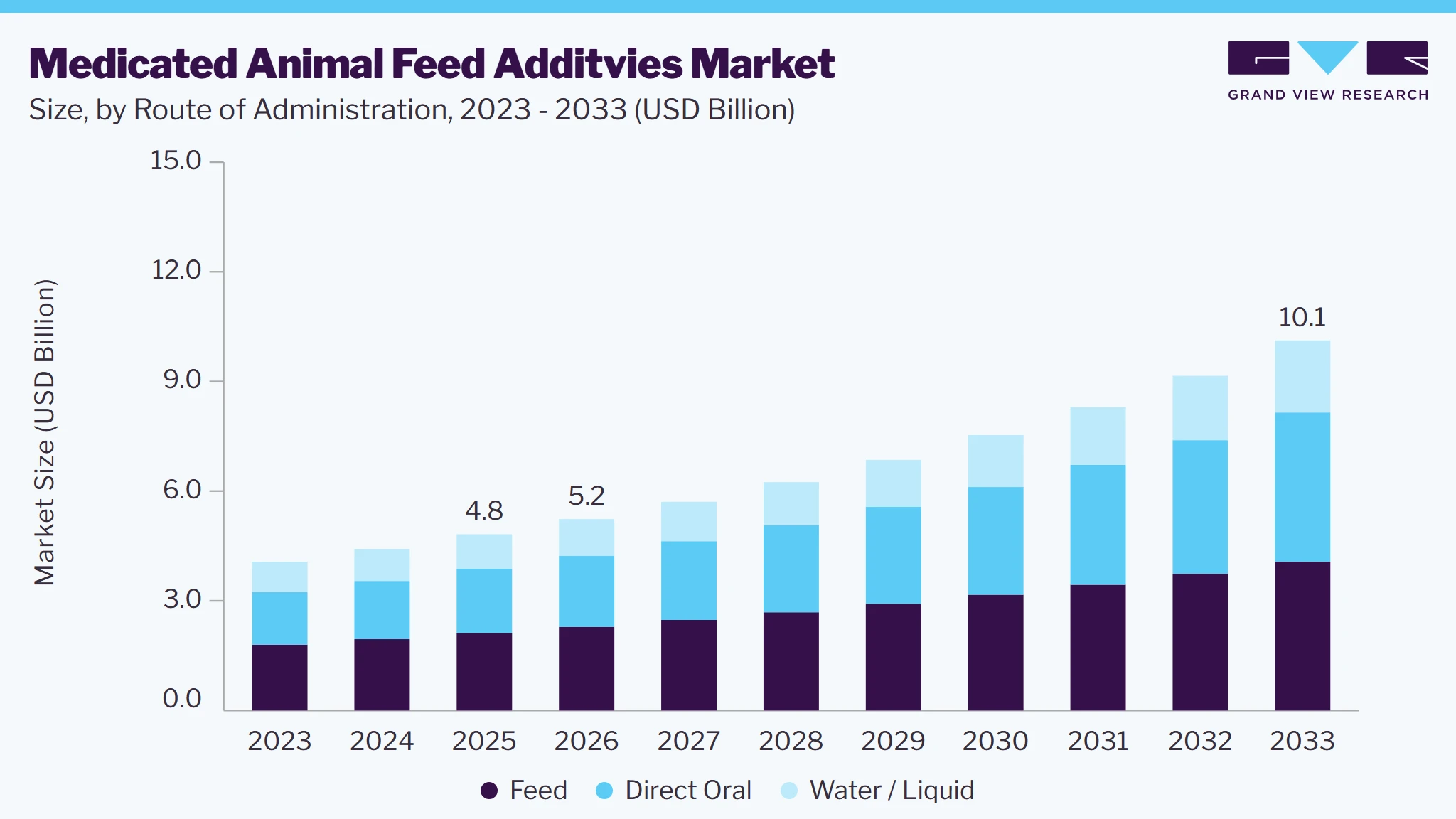
The global medicated animal feed additives market size was valued at USD 4.8 billion in 2025 and is projected to grow from USD 5.2 billion in 2026 to USD 10.1 billion by 2033, at a CAGR of 9.9% from 2026 to 2033. North America dominated the market, accounting for the revenue share of 33.8% in 2025. The market is primarily driven by key factors such as rising prevalence of animal infectious and parasitic diseases across commercial production systems, growing demand for preventive animal health and disease management, expansion of commercial livestock and poultry production, and increasing adoption of gut health, microbiome, and functional feed solutions.
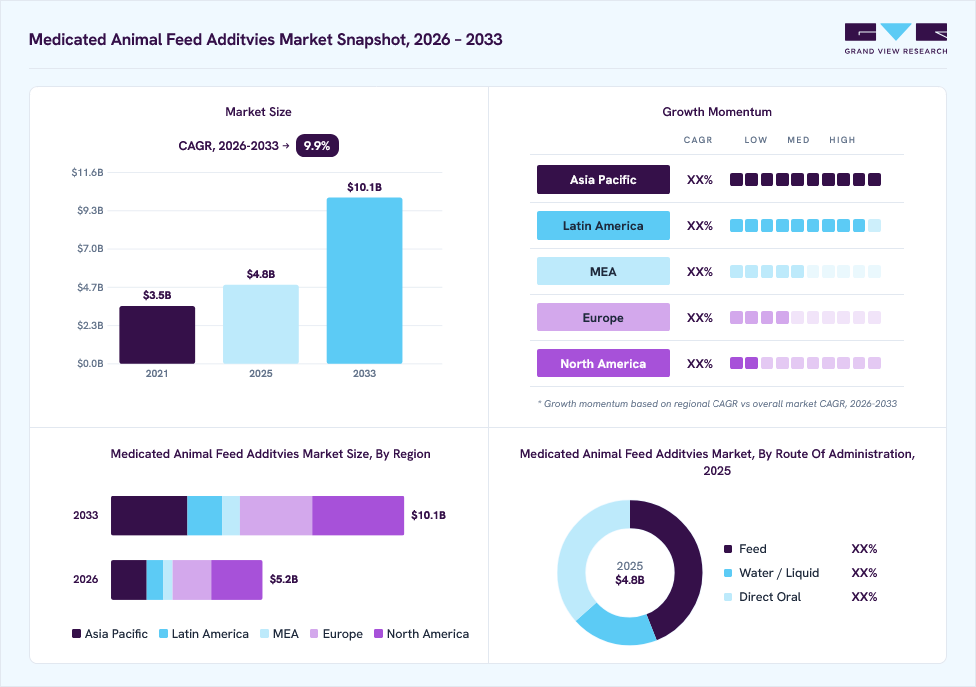 Source: Grand View Research, IR Documents, Primary Interviews, Paid DatabasesTo learn more about this report,
 Download Free Sample Report
 Key Market Trends & Insights
- By animal: Production animal segment led the market with the largest revenue share of 67.7% in 2025.
- By product: Vitamins & minerals segment led the market with the largest revenue share of 26.9% in 2025.
- By formulation: Medicated supplements segment is expected to grow at the fastest rate over the forecast period.
- By application: Infectious diseases & disease control segment led the market with the largest revenue share of 23.1% in 2025.
- By route of administration: Direct oral segment is expected to grow at the fastest rate over the forecast period.
- Based on sales channel: E-commerce segment is expected to grow at the fastest rate over the forecast period.
Regional Highlights
- Largest regional market: North America (33.8% revenue share, 2025)
- Fastest-growing regional market: Asia Pacific (highest CAGR, 2026-2033)
- By country: The U.S. held the largest market share in 2025.
Market Size & Forecast
- Market size in 2025: USD 4.8 Billion
- Estimated market size in 2026: USD 5.2 Billion
- 2033 Projected Market Size: USD 10.1 Billion
- CAGR (2026-2033): 9.9%
Three ways to get this report
Buy it, customize it, or ask a question.Ask an Analyst
A direct answer, usually in 1 working day
- AccessReport author, directly
- Reply timeWithin 1 working day
- No sales callDirect answer only
- FormatEmail reply
- CostFree, no cost
Get the Full Report
What the study covers
- FormatsPDF · Excel · Dashboard
- Timeline2026–2033 annual, 2025 base
- Coverage20+ countries, 5 regions
- Companies10+ key players profiled
Customize the Report
20% free customization
- IncludeCountries, segments, points
- TailorTo your product definition
- ExtendDeeper competitor detail
- OrA fully bespoke study
- Turnaround5–10 working days
 To learn more about this report, Download Free Sample Report
 Market Dynamics
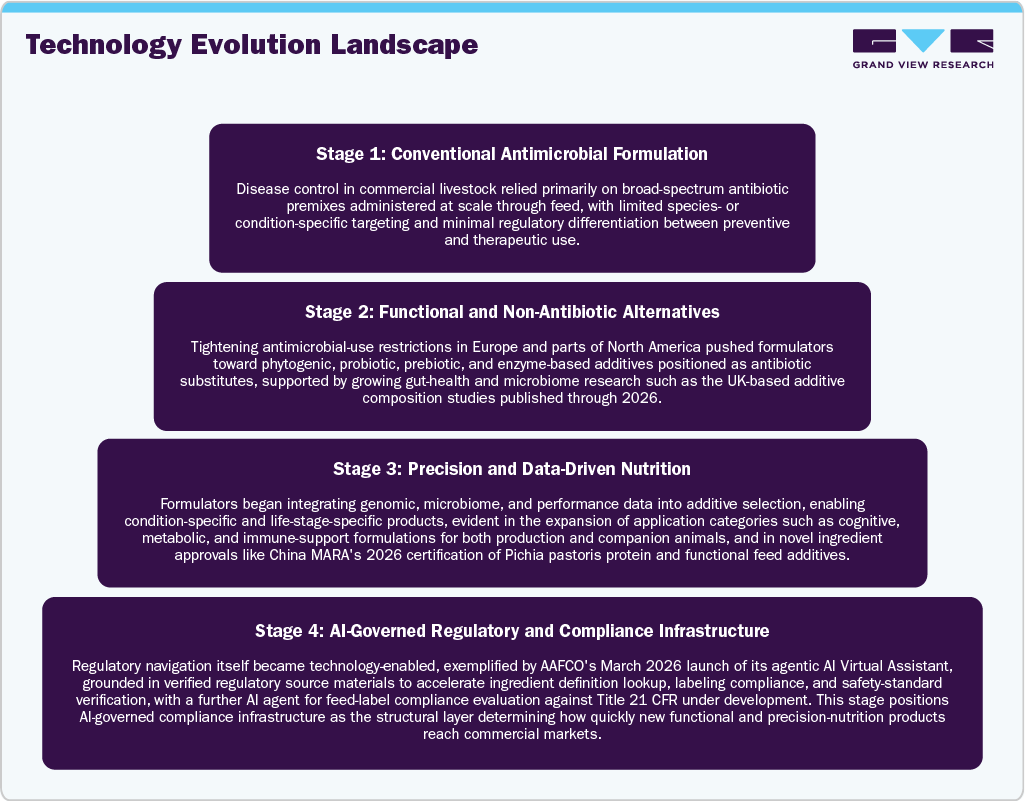
The medicated animal feed additives market is shifting from disease treatment toward integrated prevention, gut health, immune resilience, and targeted nutritional support across production and companion animals. Disease pressure across livestock and poultry continues to sustain demand for oral health interventions, while tighter antibiotic stewardship is directing investment toward probiotics, phytogenics, enzymes, vitamins, minerals, and other functional products. In companion animals, palatable oral formats and condition-specific supplements are broadening demand beyond conventional feed applications. Regulatory scrutiny is simultaneously raising requirements for formulation, documentation, and market entry, favoring suppliers with stronger compliance capabilities and technical evidence. The industry is therefore moving toward differentiated, health-focused formulations, with growth increasingly concentrated in products that combine measurable animal-health outcomes with practical feed, water, or direct-oral delivery.
Growing demand for preventive animal health and disease management is expanding the addressable use of medicated feed additives as producers prioritize herd and flock health before disease conditions escalate. Commercial livestock and poultry operations face persistent infectious, parasitic, gastrointestinal, and production-related health challenges, creating demand for products that support disease control, immune function, digestion, and resilience through routine oral administration. This demand favors feed-based and water-delivered solutions because they can be incorporated into established farm management practices and applied across groups of animals.
The shift toward preventive programs also broadens demand for probiotics, prebiotics, phytogenics, vitamins and minerals, feed enzymes, and other functional products alongside antibiotics and antimicrobials. For suppliers, the competitive advantage is shifting toward formulations that demonstrate clear health and productivity outcomes while meeting the operational requirements of commercial producers. This positions preventive health portfolios as a key growth pathway across organized livestock and poultry production systems.
Stringent regulatory requirements for medicated feed additives constrain market expansion by increasing the technical, documentation, safety, and compliance requirements associated with product registration and commercialization. Requirements governing active ingredients, permitted uses, dosage, residues, manufacturing quality, labeling, and claims differ across major markets, creating additional complexity for suppliers operating across multiple geographies. Antibiotic-related controls further increase scrutiny of products positioned for disease prevention or treatment, raising the importance of regulatory evidence and responsible-use frameworks.
These requirements can extend development timelines and increase commercialization costs, particularly for smaller manufacturers seeking entry into regulated markets. The impact is greater for products with novel active ingredients or health claims that require extensive substantiation. Established animal-health and feed-additive suppliers therefore hold an advantage through regulatory capabilities, established product portfolios, and market-specific compliance infrastructure, while smaller entrants face higher barriers to achieving broad geographic distribution.
The increasing adoption of precision nutrition and data-driven animal health management creates an opportunity to shift medicated feed additives from broad, population-level use toward more targeted health interventions. Digital monitoring systems, farm-management platforms, animal performance data, and diagnostic information can improve identification of nutritional gaps, disease risk, digestive disturbances, and changes in animal performance. This creates scope for suppliers to develop formulations and dosing strategies aligned with specific species, production stages, health conditions, and farm-level requirements.
Integration with precision feeding systems can further support more controlled delivery through feed or water, reducing unnecessary product use while improving consistency of administration. The opportunity is particularly relevant to organized livestock and poultry producers seeking measurable improvements in feed efficiency, health outcomes, and production economics. Suppliers that combine functional ingredients with data-enabled advisory services can differentiate beyond product composition, creating higher-value solutions and stronger relationships with commercial producers.
 To learn more about this report, Download Free Sample Report
 Market Concentration & Characteristics
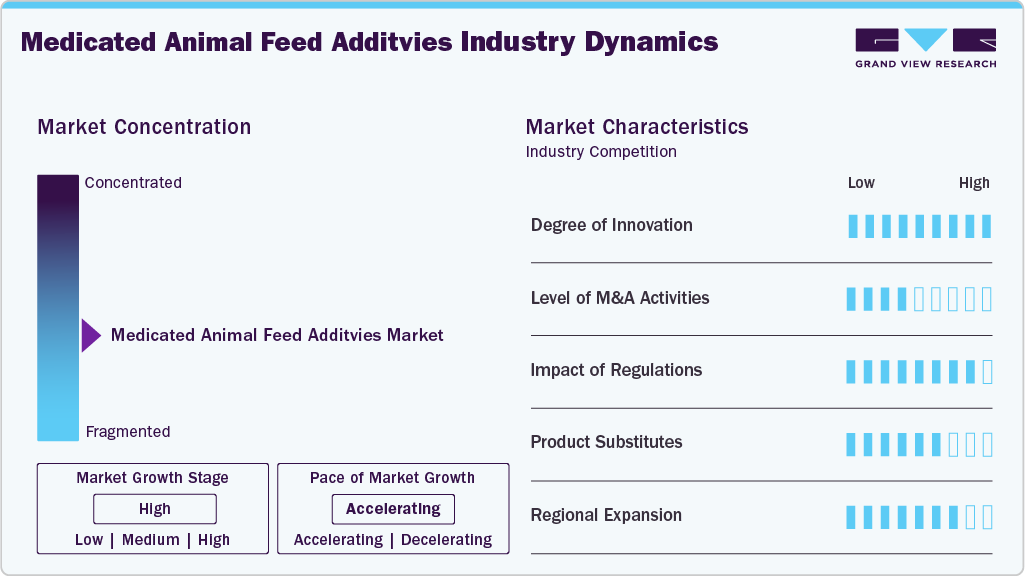
The industry is moderately fragmented, with multinational animal-health and nutrition companies competing alongside specialized feed-additive manufacturers and regional suppliers. Large players benefit from broad portfolios, regulatory capabilities, and established distribution networks, while smaller firms compete through formulation specialization and local expertise. This structure sustains competitive intensity and creates scope for consolidation.
Innovation has a high impact, as suppliers increasingly develop probiotics, phytogenics, microbiome-focused formulations, precision nutrition, and differentiated delivery formats. Product differentiation is shifting toward measurable health outcomes and reduced antimicrobial dependence, favoring companies with formulation capabilities, clinical validation, and regulatory expertise. This creates stronger entry opportunities for specialized innovators.
 To learn more about this report, Download Free Sample Report
 M&A activity has a moderate impact, with acquisitions supporting portfolio diversification, geographic expansion, formulation capabilities, and access to specialized animal-health technologies. Larger companies can accelerate entry into functional feed additives and companion-animal supplements through targeted transactions, while smaller innovators gain distribution and regulatory capabilities, increasing competitive pressure across established categories.
Regulations have a high impact because product approvals, permitted health claims, antimicrobial restrictions, manufacturing standards, and residue requirements directly influence commercialization. Stricter antimicrobial stewardship increases compliance complexity for conventional products while creating opportunities for probiotics, phytogenics, and microbiome-based alternatives. Companies with established regulatory infrastructure therefore gain an entry advantage.
Product substitutes have a moderate impact, as vaccines, injectables, standalone veterinary medicines, nutritional supplements, and non-medicated feed additives compete for animal-health spending. Substitution pressure is higher where preventive or functional solutions can address similar outcomes, while prescription therapies retain stronger positioning for targeted disease treatment, limiting substitution across specialized applications.
Regional expansion has a high impact, supported by livestock intensification, companion-animal ownership, disease-control priorities, and developing veterinary infrastructure. Suppliers can capture incremental demand by entering underpenetrated countries, but regulatory registration, local distribution, formulation adaptation, and channel relationships determine execution. Companies with established regional partnerships are positioned to scale faster.
Analyst Perspective
The market has entered a phase in which regulatory constraints, rather than demand growth, dictate competitive positioning across the animal health sector. Tightening antimicrobial restrictions in Europe and North America are shrinking the base for conventional antibiotic premixes. This pressure forces incumbents to reallocate R&D toward phytogenic, probiotic, and enzyme-based substitutes. Formulators with existing regulatory infrastructure and functional pipelines, such as Kemin Industries and Huvepharma. hold an edge over legacy-weighted peers. Simultaneously, companion-animal categories are rapidly adopting production-animal formulation expertise, allowing functional-ingredient entrants like Host Defense to capture market share before majors adjust. The main strategic question is whether incumbents can rebalance their product mix before regulatory deadlines expire. Otherwise, specialized entrants risk capturing the functional-substitute transition outright, particularly in markets like China that are accelerating approval pathways.
Animal Insights
The production animals segment accounted for the largest market share of 67.7% in 2025. The segment spans bovine, swine, poultry, ovine and caprine, and other commercially raised species. Growth is driven by intensive livestock production, recurring infectious and parasitic disease risks, and preventive health programs. Large-scale producers increasingly prioritize scalable health interventions that can be administered across herds and flocks, supporting recurring procurement volumes. This positions production-animal applications as the primary revenue base, although companion-animal applications are positioned for faster expansion.
The companion animals segment is anticipated to grow at the fastest CAGR over the forecast period. The segment spans canine, feline, equine, and other specialty pets. Growth is driven by rising pet healthcare expenditure, greater preventive-care adoption, humanization of pets, and demand for condition-specific oral supplements. Palatable formats and individualized formulations are expanding acceptance among pet owners and veterinarians. This creates stronger premiumization opportunities for suppliers, particularly across digestive, mobility, immune, behavioral, and cognitive health applications.
Product Insights
The vitamins & minerals segment dominated the market in 2025 with a share of 26.9%. Segment growth is driven by widespread use for nutritional correction, physiological support, immunity, and disease-management programs across multiple animal categories. Broad applicability and established formulation familiarity support consistent purchasing among farms, veterinarians, and pet owners. The category benefits from its compatibility with feed and supplement formats, enabling manufacturers to serve diverse species through relatively standardized formulations. However, specialized functional products are positioned to capture faster incremental demand.
The phytogenics segment is anticipated to grow at the fastest CAGR over the forecast period. Growth is driven by increasing demand for botanical extracts, essential oils, and plant-derived compounds supporting gut function, immunity, feed intake, resilience, and overall animal performance. Increasing scrutiny of antimicrobial usage is creating additional commercial space for phytogenic alternatives and complementary solutions. Suppliers with formulation expertise and substantiated efficacy claims are positioned to differentiate more effectively, particularly among producers seeking preventive health strategies with broader functional benefits.
Formulation Insights
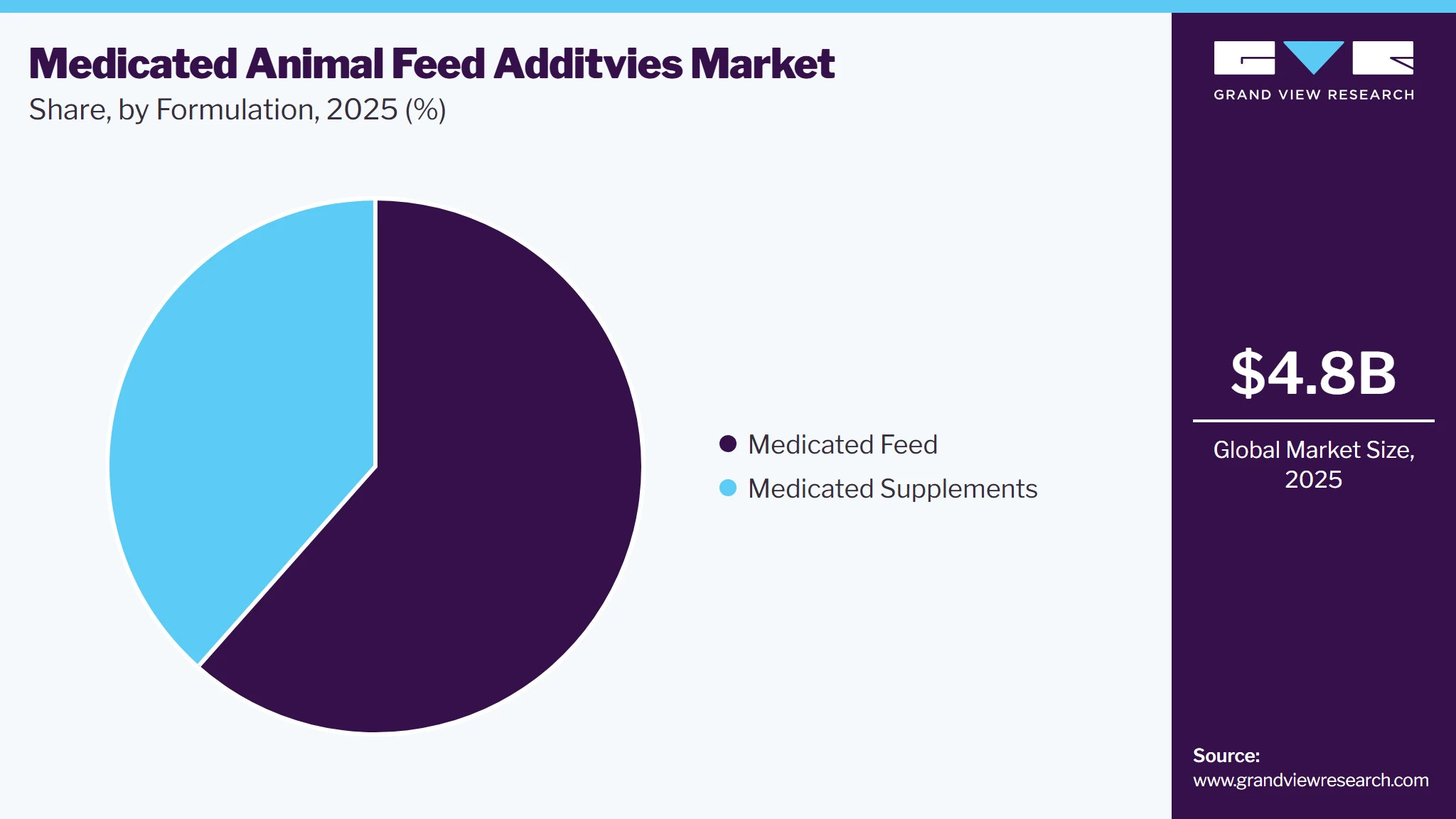
The medicated feed segment dominated the market with share of over 61.5% in 2025. This segment spans feed premixes, complete feed, supplemental and concentrate feed, and other feed-applied products. Growth is driven by efficient herd-level administration, established feeding workflows, and demand for scalable disease-management programs among commercial producers. Feed-based delivery reduces individual dosing requirements and supports treatment across large animal populations. This structural advantage sustains the segment's leading position, particularly among integrated livestock and poultry operators.
 To learn more about this report, Download Free Sample Report
 The medicated supplements segment is expected to grow with highest CAGR over the forecast period. This segment spans chewables and soft chews, tablets and capsules, powders and granules, liquids, and specialized oral formats. Growth is driven by increasing companion-animal healthcare spending, personalization of supplementation, improved palatability, and convenience of administration. Individualized dosing also supports products targeting specific health conditions and life stages. These characteristics favor higher-value formulations and create attractive opportunities for brands with differentiated delivery formats and strong consumer engagement.
Application Insights
The infectious diseases & disease control segment accounted for the largest market share of 23.1% in 2025. The segment spans antibacterial, antimicrobial, anticoccidial, and other infectious-disease applications. Demand is driven by persistent pathogen exposure, herd-level productivity risks, and continued need for targeted disease-control protocols. Commercial producers prioritize interventions that limit mortality, morbidity, and productivity losses across large animal populations. This sustains recurring demand, although antimicrobial stewardship is gradually increasing the strategic importance of alternative preventive and functional solutions.
The behavioral, neurological & stress management segment is the fastest-growing, with the highest CAGR over the forecast period. Growth is driven by rising attention to anxiety, cognition, stress, and age-related neurological needs in companion animals. Product launches focused on functional mushrooms and canine cognitive health are broadening nutritional intervention into brain-health applications. Increasing pet humanization is strengthening willingness to purchase specialized solutions for behavioral and cognitive conditions, positioning this application for premium pricing and accelerated innovation across canine and other aging companion-animal categories.
Route of Administration Insights
The feed segment accounted for the largest market share of 43.9% in 2025. The route spans products delivered through complete feed, premixes, concentrates, supplements, blocks, and other feed vehicles. Its scale is driven by efficient herd-level dosing and integration with established feeding systems across commercial production. Feed administration also simplifies procurement and routine delivery for large operators managing substantial animal populations. This supports continued dominance among production animals, where operational efficiency remains a primary purchasing consideration.
The direct oral segment is the fastest-growing, with the highest CAGR over the forecast period. Growth is driven by individualized dosing, rising companion-animal healthcare expenditure, and demand for convenient tablets, capsules, chews, pastes, liquids, and other oral formats. Direct administration gives veterinarians and owners greater control over dosage and product selection. Increasing specialization around condition-specific and life-stage formulations further supports adoption. This positions direct oral delivery to gain share as companion-animal healthcare becomes more personalized and premium-oriented.
Sales Channel Insights
The direct & institutional sales segment accounted for the largest market share of 43.9% in 2025. The channel spans direct farm sales, key-account relationships, integrated producer contracts, and institutional procurement. Its scale is driven by bulk purchasing, recurring supply agreements, and centralized procurement among large livestock, poultry, and veterinary organizations. Direct relationships also facilitate technical support and product customization, strengthening supplier retention. This positions the channel as the primary route for high-volume production-animal applications.
The e-commerce segment is the fastest-growing, with the highest CAGR over the forecast period. Growth is driven by wider digital purchasing, convenience, subscription models, and increasing access to specialized companion-animal supplements. Online channels improve product discoverability while allowing brands to communicate formulation benefits directly to pet owners. Digital purchasing also supports recurring replenishment of chronic-care and preventive products. These characteristics favor differentiated brands with strong consumer engagement, transparent product positioning, and formulations suited to direct-to-consumer purchasing.
Regional Insights
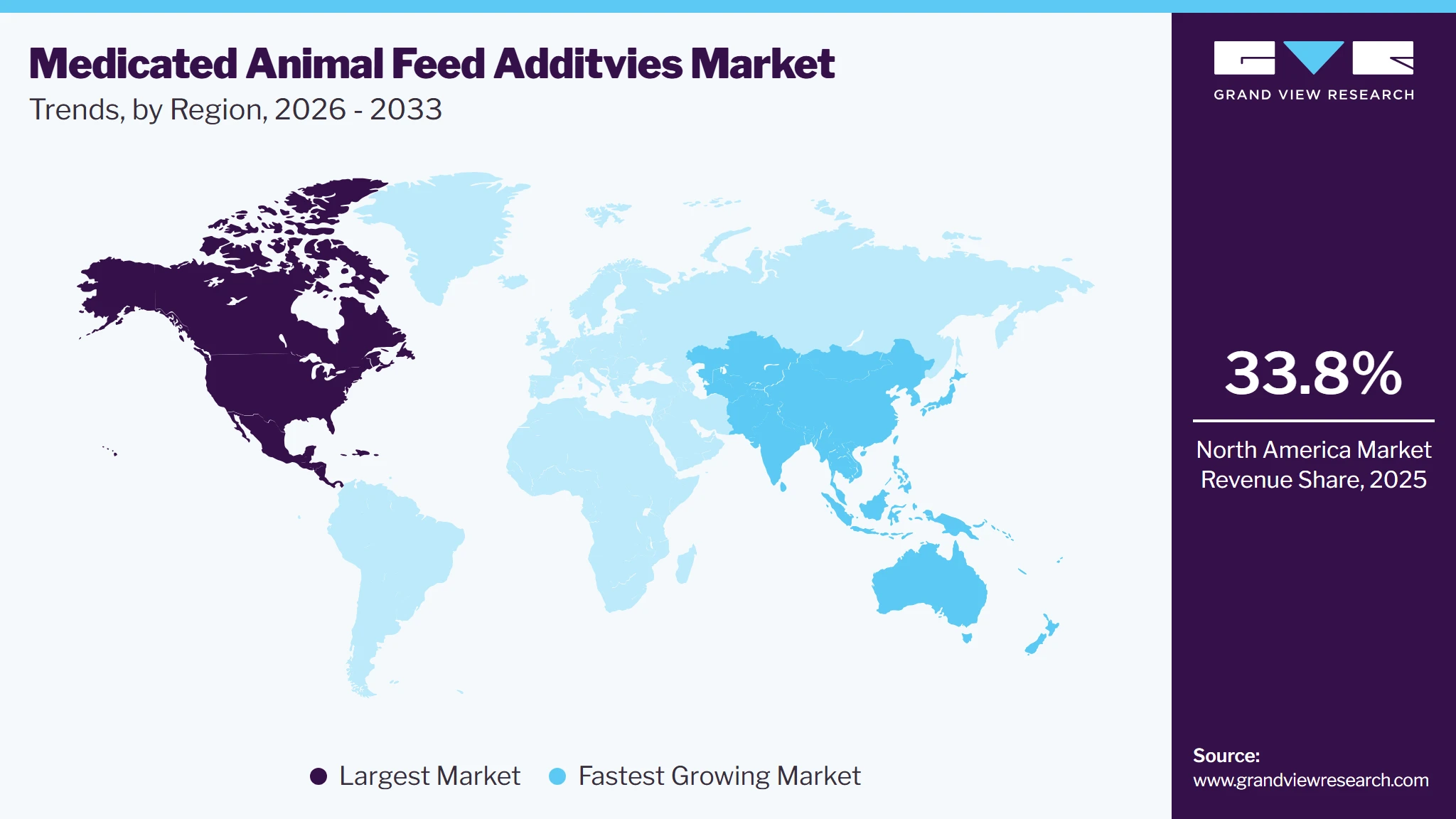
North America held the largest revenue share of 33.8% in 2025, driven by the scale of the region's integrated beef, dairy, and poultry production systems, which concentrate purchasing power among a small number of large feed formulators and integrators capable of specifying medicated additives at volume. The region's veterinary feed directive framework has pushed antibiotic-use decisions toward veterinarian oversight, which favors formulators with regulatory documentation infrastructure already in place. This positions established multinational suppliers such as Elanco and Phibro Animal Health, both headquartered domestically, to defend share against smaller entrants that lack the compliance systems required to sell into VFD-governed channels.
 To learn more about this report, Download Free Sample Report
 U.S. Medicated Animal Feed Additives Market Trends
The medicated animal feed additives market in the U.S. held the largest share in the North America region in 2025, driven by the concentration of cattle feeding and swine finishing operations in a handful of production-dense states, where feedlot and integrator scale allows medicated premixes and complete feed to be specified centrally rather than negotiated farm by farm. FDA enforcement of veterinarian oversight for medically important antimicrobials has raised the compliance bar for market entry, which favors incumbents already integrated into feedlot supply chains. The Texas feed-based ivermectin filing pending FDA review in July 2026 signals continued regulatory tightening around administration route, a structural factor that will keep institutional and direct sales channels dominant over fragmented retail distribution.
The Mexico medicated animal feed additives market is estimated to grow at the fastest CAGR during the forecast period, driven by continued expansion of export-oriented poultry and swine production aimed at U.S. and regional demand, which is drawing commercial operators toward medicated feed premixes as a lower-cost disease-control lever than expanded veterinary staffing. Rising integration of independent producers into contract-farming structures run by larger processors is concentrating additive purchasing decisions at the integrator level rather than the individual farm level. This favors distributors and wholesalers with cross-border logistics capability over veterinary and specialty retail channels, since integrators buy centrally and at volume rather than through dispersed retail points.
Europe Medicated Animal Feed Additives Market Trends
The Europe medicated animal feed additives market is witnessing steady growth, driven by regulatory pressure under the EU's phased restrictions on prophylactic antibiotic use, which is redirecting formulator investment toward phytogenic, probiotic, and enzyme-based alternatives positioned as disease-control substitutes rather than treatments. Organized dairy and swine operators in Germany, France, and the Benelux corridor are the primary adopters, since their scale justifies the higher per-unit cost of non-antibiotic formulations relative to smallholder operations. The compliance burden of the region's evolving feed-additives regulatory affairs, flagged as a 2026 area of continued change, favors formulators with dedicated regulatory-affairs functions, a structural advantage held by Boehringer Ingelheim Animal Health and Nutreco over smaller regional players.
The medicated animal feed additives market in UK held the largest share in 2025 fueled by the country's early and comparatively strict post-Brexit stance on antimicrobial stewardship in livestock, which has pushed commercial cattle and poultry operators toward phytogenic and functional feed additives ahead of continental peers still calibrating national implementation of EU-aligned rules. A domestic research base actively publishing on additive composition and functional feed formulation, evident in ongoing UK academic work comparing plant-based and animal-origin additive loads, is feeding product differentiation claims that specialty formulators can use competitively against genericized antibiotic premixes. This favors suppliers positioned in functional and phytogenic categories over legacy antimicrobial-only product lines.
The Sweden medicated animal feed additives market is expected to grow at the fastest rate over the forecast period. The market is driven by long-standing national restriction on antibiotic growth promoters, a policy stance that predates EU-wide rules by decades and has already normalized probiotic, phytogenic, and enzyme-based feed additives as the default disease-management approach among Swedish dairy and swine producers. This early-adopter base gives formulators with functional and microbiome-based product lines a proven domestic reference market to cite when expanding into slower-moving EU states. The structural effect is that Swedish demand growth is running ahead of the region not because of a new regulatory shift, but because the market has fewer legacy antibiotic-dependent operators left to convert.
Asia Pacific Medicated Animal Feed Additives Market Trends
Asia Pacific is expected to grow at the fastest CAGR over the forecast period, driven by the scale of poultry and swine production expansion across the region's commercial farming base, paired with governments actively formalizing feed-additive approval pathways rather than leaving the category under legacy agricultural rules. China's Ministry of Agriculture and Rural Affairs certifying new domestic and imported feed products through 2026 is lowering the time-to-market for formulators, which is drawing multinational suppliers to prioritize regulatory filings in the region ahead of slower-moving markets elsewhere. This positions companies with dedicated Asia-Pacific regulatory teams, rather than those relying on a single global filing strategy, to capture share as approval volume accelerates.
The China medicated animal feed additives market held the largest share in Asia Pacific in 2025, driven by the Ministry of Agriculture and Rural Affairs' active expansion of certified feed products, including approval of 233 imported feed products in May 2026 and certification of Pichia pastoris protein alongside five new additives in June 2026, which is opening the domestic market to international formulators faster than in prior years. This regulatory formalization is concentrating near-term opportunity among multinational suppliers with the registration capacity to move through MARA's approval queue, positioning early filers to establish channel relationships with China's large-scale poultry and swine integrators before slower entrants can compete on price alone.
India medicated animal feed additives market is estimated to grow at the fastest growth rate over the forecast period, driven by the rapid formalization of the country's pet-supplement retail base, evident in 2026 commentary noting that most Indian pet supplements are still sold through activity-specific and direct-to-consumer online channels rather than veterinary retail. This channel structure is drawing domestic and international entrants toward e-commerce and direct sales models ahead of building out brick-and-mortar veterinary distribution, a sequencing that favors digitally native suppliers such as emerging domestic brands like Unleash Wellness over legacy players whose go-to-market depends on physical veterinary and specialty retail penetration.
Latin America Medicated Animal Feed Additives Market Trends
The Latin America medicated animal feed additives market is expected to grow significantly during the forecast period, driven by the region's position as a major global exporter of beef and poultry, which requires commercial producers to meet importing-country residue and disease-control standards that make medicated feed additives a compliance necessity rather than a discretionary input. Export-oriented integrators are consolidating purchasing decisions at the processor level, concentrating demand among distributors capable of servicing large contract-farming networks. This structural export dependence gives multinational suppliers with established Latin American distribution, rather than purely domestic formulators, the edge in capturing volume tied to compliance-driven rather than discretionary demand.
Brazil medicated animal feed additives market held the largest share in Latin America in 2025, driven by the scale of its export-oriented poultry and cattle production base, where compliance with importing markets' residue and antimicrobial-use standards has made medicated feed additives, particularly antiparasitic and gut-health formulations, a standard input across large integrated operations rather than an optional one. Brazilian processors' reliance on centralized feed formulation across contract-grower networks concentrates additive purchasing at the integrator level, favoring suppliers with direct and institutional sales relationships over those dependent on fragmented veterinary retail. This structural buying pattern positions Brazil's largest integrators as the primary gatekeepers determining which formulators gain regional scale.
Middle East & Africa Medicated Animal Feed Additives Market Trends
The Middle East & Africa medicated animal feed additives market is witnessing steady growth, driven by Gulf states' continued investment in domestic poultry and dairy self-sufficiency programs, which require medicated feed additives to manage disease risk in newly established commercial operations built in climates with limited natural disease-control precedent. South Africa's more established commercial livestock base contrasts with the Gulf's greenfield production model, creating two distinct demand drivers within the same region, mature disease-management replacement demand in the south and new-build compliance demand in the Gulf. This split favors suppliers able to serve both an established distribution market and newly forming institutional buyer relationships simultaneously.
The South Africa medicated animal feed additives market held the largest share in Middle East & Africa in 2025, driven by the relative maturity of its commercial cattle, poultry, and swine sectors compared to Gulf state operations still in build-out phase, giving South African producers an established base of veterinary and specialty retail infrastructure through which medicated feed additives are routinely distributed. This existing distribution network gives incumbent suppliers with regional veterinary retail relationships a durable advantage over new entrants that would otherwise need to build channel access from scratch, a barrier that keeps South Africa's share concentrated among already-established animal-health distributors rather than open to rapid share capture by newcomers.
Key Medicated Animal Feed Additives Company Insights
The global medicated animal feed additives market is fairly competitive, with share split across diversified animal-health majors, feed integrators, and specialized formulators. Companies pursue product development toward phytogenic and microbiome-based alternatives as antibiotic restrictions tighten, extend into companion animal categories, as with Virbac's 2025 medicated cat feed launch, and prioritize regulatory filings in markets such as China to secure early integrator access.
Key Medicated Animal Feed Additives Companies
The following key companies have been profiled for this study on the medicated animal feed additives market.
-
Elanco Animal Health
-
Boehringer Ingelheim Animal Health
-
Virbac
-
Phibro Animal Health
-
ADM
-
Cargill
-
Nutreco
-
Merck & Co., Inc.
-
Kemin Industries
-
Ceva Santé Animale
-
Dechra
-
Vetoquinol
-
Huvepharma
Competitive Benchmarking
Category
Operating Strategies
Competitive Edge
Weakness
Established Global Leaders(Elanco Animal Health; Boehringer Ingelheim Animal Health; Merck & Co., Inc.; ADM; Cargill; Virbac)
- Pursue portfolio breadth across production and companion animal categories, extending medicated feed premixes and antimicrobial lines into direct-oral supplement formats while integrating feed-manufacturing scale with animal-health formulation expertise. Capability-driven expansion into functional and phytogenic categories runs alongside legacy antimicrobial lines, positioning these companies to carry disease-control expertise, built originally in production animals, into faster-growing companion animal categories. Virbac's medicated cat feed launch in September 2025 signals this cross-category extension in practice. Regulatory-affairs investment is pursued proactively as antimicrobial stewardship rules tighten across North America and Europe.
- Scale across production and companion categories, and in the case of ADM and Cargill across the feed-manufacturing layer itself, allows amortization of regulatory-affairs infrastructure and distribution networks across a wider product base than single-category competitors. Established veterinary, institutional, and direct feed-channel relationships enable faster adoption of new medicated formulations, positioning this group to defend share against category entrants in the largest production animal markets, including North America and China.
- Breadth across species, categories, and channels increases organizational complexity and slows prioritization of any single product line. Heavier legacy exposure to antimicrobial and conventional feed-channel products leaves this group more directly affected by antibiotic-use restrictions and companion-category channel gaps (veterinary and specialty retail, e-commerce) than competitors purpose-built around functional or direct-to-consumer categories.
Emerging/Specialized and Technology-Focused Players(Kemin Industries; Phibro Animal Health; Huvepharma; Nutreco; Dechra; Vetoquinol; Ceva Santé Animale)
- Concentrate on defined product or species categories, phytogenics, feed enzymes, antimicrobial alternatives, or companion animal specialty lines, rather than pursuing multi-species, multi-channel scale. Invest R&D into microbiome-based, functional, and companion-focused technologies, and pursue regional regulatory filings aggressively in markets formalizing approval pathways, positioning for early share as China's MARA and comparable authorities expand certified-product lists through 2026.
- Focused technical expertise enables faster development cycles for non-antibiotic alternatives and specialty companion formulations than diversified competitors managing broader portfolios, a direct advantage as antibiotic-use restrictions in Europe push demand toward functional substitutes. Category concentration allows quicker response to regulatory approval windows and emerging application areas, such as cognitive and gut-health formulations, ahead of competitors with wider filing priorities.
- Narrower category or species focus limits cross-selling relative to diversified leaders capable of bundling antimicrobial, nutritional, and functional lines into a single institutional account. Smaller commercial and distribution scale increases dependence on distributor, wholesaler, and veterinary retail relationships to reach production animal accounts, a margin layer that vertically integrated feed-and-animal-health leaders avoid.
Recent Developments
-
In August 2026, Host Defense launched Immune & Whole-Body Support, a functional mushroom powder supplement for dogs and cats built on mushroom mycelium from Lion's Mane, Reishi, Turkey Tail, Chaga, and Maitake, formulated to support immune function, cellular health, and overall wellness. The launch extends the company's decades of human-focused mycological supplement work into a companion animal direct-oral format, signaling functional mushroom ingredients moving into mainstream pet wellness distribution.
-
In March 2026, the Association of American Feed Control Officials (AAFCO) launched the AAFCO Virtual Assistant, an AI-based regulatory tool built on SWARM Engineering's platform to give manufacturers and regulators faster access to ingredient definitions, labeling requirements, and safety standards drawn from AAFCO's Official Publication. The tool signals a shift toward AI-assisted regulatory navigation in the U.S. animal feed industry, with a further AI compliance agent for label review under development following AAFCO's related RFP process.
Medicated Animal Feed Additives Market Report Scope
Report Attribute
Details
Market size in 2025
USD 4.8 billion
Estimated market size in 2026
USD 5.2 billion
Projected market size by 2033
USD 10.1 billion
Growth rate
CAGR of 9.9 % from 2026 to 2033
Actual data
2021 - 2025
Forecast period
2026 - 2033
Quantitative units
Revenue in USD Million/billion and CAGR from 2026 to 2033
Report coverage
Revenue forecast, company ranking, competitive landscape, growth factors, and trends
Segments covered
Animal, product, formulation, application, route of administration, sales channel, region
Regional scope
North America; Europe; Asia Pacific; Latin America; MEA
Country scope
U.S.; Canada; Mexico; UK; Germany; France; Italy; Spain; Denmark; Sweden; Norway; Japan; China; India; Thailand; South Korea; Australia; Brazil; Argentina; South Africa; UAE; Saudi Arabia; Kuwait; Qatar; Oman
Key companies profiled
Elanco Animal Health; Boehringer Ingelheim Animal Health; Virbac; Phibro Animal Health; ADM; Cargill; Nutreco; Merck & Co., Inc.; Kemin Industries; Ceva Santé Animale; Dechra; Vetoquinol; Huvepharma
Customization scope
Free report customization (equivalent up to 8 analysts working days) with purchase. Addition or alteration to country, regional & segment scope.
Pricing and purchase options
Avail customized purchase options to meet your exact research needs. Explore purchase options
Global Medicated Animal Feed Additives Market Report Segmentation
This report forecasts revenue growth at global, regional, and country levels and provides an analysis of the latest industry trends in each of the sub-segments from 2021 to 2033. For this study, Grand View Research has segmented the global medicated animal feed additives market report based on Animal, product, formulation, application, route of administration, sales channel, and region.
-
Animal Outlook (Revenue, USD Million, 2021 - 2033)
-
Production Animals
-
Bovine
-
Swine
-
Poultry
-
Ovine & Caprine
-
Others
-
-
Companion Animals
-
Canine
-
Feline
-
Equine
-
Others
-
-
-
Product Outlook (Revenue, USD Million, 2021 - 2033)
-
Vitamins & Minerals
-
Probiotics & Prebiotics
-
Antibiotics & Antimicrobials
-
Amino Acids, Proteins & Peptides
-
Feed Enzymes
-
Phytogenics
-
Other Products
-
-
Formulation Outlook (Revenue, USD Million, 2021 - 2033)
-
Medicated Feed
-
Feed Premixes
-
Complete Feed
-
Supplemental & Concentrate Feed
-
Other Medicated Feed Products
-
-
Medicated Supplements
-
Chewables & Soft Chews
-
Tablets & Capsules
-
Powders & Granules
-
Liquids
-
Others Medicated Supplements
-
-
-
Application Outlook (Revenue, USD Million, 2021 - 2033)
-
Infectious Diseases & Disease Control
-
Parasitic Diseases & Control
-
Gastrointestinal & Digestive Health
-
Joint, Bone & Mobility Health
-
Skin, Coat & Dermatological Health
-
Behavioral, Neurological & Stress Management
-
Immune Health & Disease Resistance
-
Other Applications
-
-
Route of Administration Outlook (Revenue, USD Million, 2021 - 2033)
-
Feed
-
Water / Liquid
-
Direct Oral
-
-
Sales Channel Outlook (Revenue, USD Million, 2021 - 2033)
-
Direct & Institutional Sales
-
Distributors & Wholesalers
-
Veterinary & Specialty Retail
-
E-commerce
-
Other Channels
-
-
Regional Outlook (Revenue, USD Million, 2021 - 2033)
-
North America
-
U.S.
-
Canada
-
Mexico
-
-
Europe
-
UK
-
Germany
-
France
-
Italy
-
Spain
-
Denmark
-
Sweden
-
Norway
-
-
Asia Pacific
-
Japan
-
China
-
India
-
Australia
-
Thailand
-
South Korea
-
-
Latin America
-
Brazil
-
Argentina
-
-
Middle East & Africa
-
South Africa
-
UAE
-
Saudi Arabia
-
Kuwait
-
Qatar
-
Oman
-
-
Research Methodology
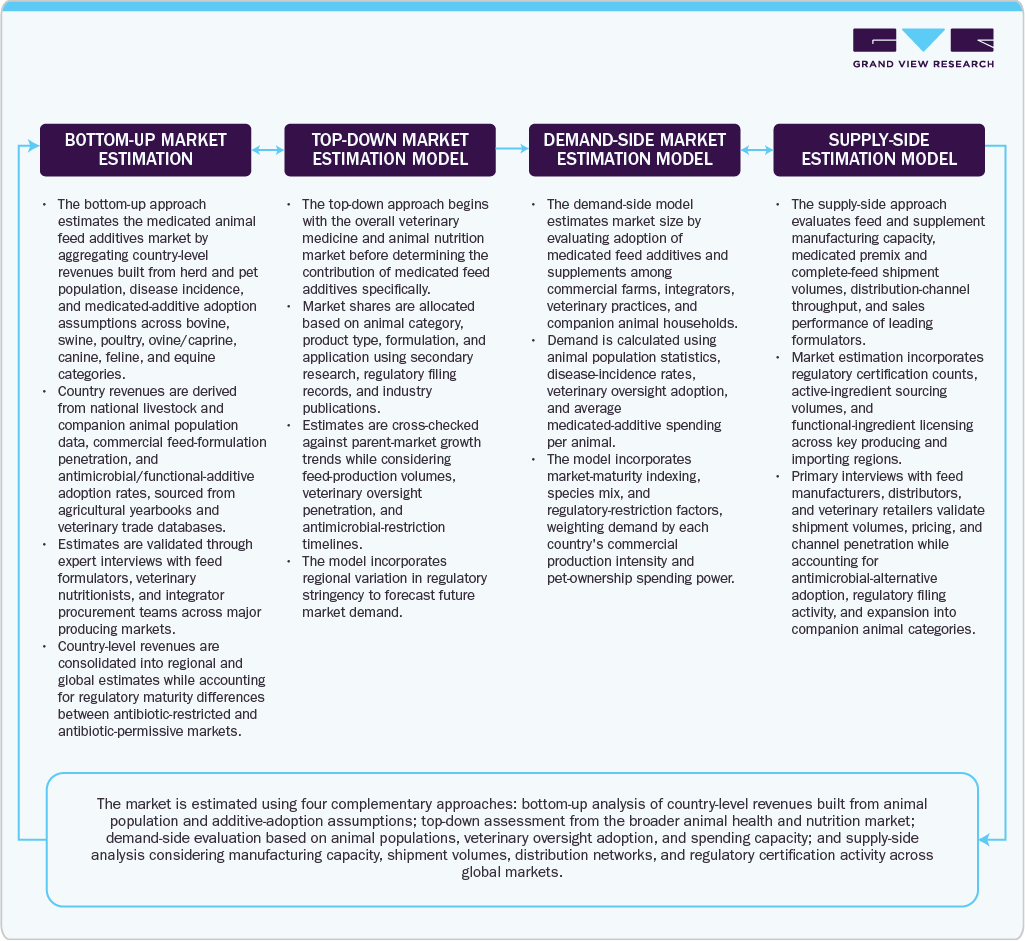
The medicated animal feed additives market figures in this report are based on a proven research process that combines executive interviews with secondary research from proprietary databases, company filings, and recognized regulatory and institutional sources. Market size is built through value-chain sizing-reconciling supply-side and demand-side estimates-and triangulated with bottom-up and top-down approaches. Every estimate passes multiple levels of expert validation before publication, with each medicated animal feed additives segment quantified using the revenue-capture definitions in the table below.
Segment Definition
Segment
Sub-segment
Definition
Medicated Animal Feed Additives Market
The market captures revenue generated from animal feed additives and medicated/health-focused animal supplements formulated to support, prevent, control, or manage animal health and physiological conditions across production animals and companion animals. It covers qualifying products containing pharmaceutical, functional, nutritional, microbial, botanical, or other active ingredients that are incorporated into feed or delivered orally through feed, drinking water/liquid, or direct oral administration, across defined feed and supplement formulations.
Production Animals
Production Animals
The segment captures revenue generated from medicated feed additives and medicated supplements used in animals primarily raised for commercial production of meat, milk, eggs, fiber, or other agricultural outputs. These products are generally used to maintain animal health, manage disease, improve resilience, or support production performance within commercial farming systems.
Production Animals
Bovine
The segment captures revenue generated from medicated feed additives and medicated supplements used in buffalo, cattle across beef, dairy, breeding, growing, and other production systems. Products may be used for disease management, gastrointestinal health, parasite control, immune support, nutritional support, and other animal-health applications.
Production Animals
Swine
The segment captures revenue generated from medicated feed additives and medicated supplements used for pigs throughout breeding, nursery, growing, and finishing stages. Products may address infectious disease, gastrointestinal health, parasite control, immune support, and other production-related health requirements.
Production Animals
Poultry
The segment captures revenue generated from medicated feed additives and medicated supplements used in commercially raised birds for meat, egg, breeding, or other agricultural production. Products may be used for disease prevention/control, parasite management, gut health, immunity, and production-related health requirements.
Production Animals
Ovine & Caprine
The segment captures revenue generated from medicated feed additives and medicated supplements used in sheep and goats raised for meat, milk, fiber, breeding, or other commercial production purposes.
Production Animals
Others
The segment captures revenue generated from medicated feed additives and medicated supplements used in animal species that are not separately represented within the core bovine, swine, poultry, or ovine/caprine categories.
Companion Animals
Companion Animals
The segment captures revenue generated from medicated feed additives and medicated supplements intended primarily for animals kept as household companions, pets, or for recreational purposes rather than commercial food production. Products may address nutritional, preventive, therapeutic, behavioral, digestive, mobility, skin, immune, and other health requirements.
Companion Animals
Canine
The segment captures revenue generated from medicated feed additives and medicated supplements formulated for dogs across different breeds, sizes, ages, life stages, and health conditions.
Companion Animals
Feline
The segment captures revenue generated from medicated feed additives and medicated supplements formulated for domestic cats across kitten, adult, senior, and other life stages. Products may address digestive, urinary, renal, immune, skin, mobility, nutritional, and other health requirements.
Companion Animals
Equine
The segment captures revenue generated from medicated feed additives and medicated supplements intended for horses and other domesticated equids used for companionship, recreation, sport, breeding, or working purposes.
Companion Animals
Others - Companion Animals
The segment captures revenue generated from medicated feed additives and medicated supplements intended for companion and specialty animals other than dogs, cats, and equines.
Product
Vitamins & Minerals
The segment captures revenue generated from medicated or health-focused products containing vitamins, minerals, or combinations thereof intended to address nutritional deficiencies, support physiological functions, maintain health, or complement disease-management programs in animals.
Product
Probiotics & Prebiotics
The segment captures revenue generated from products containing beneficial microorganisms, prebiotic substrates, or combinations designed to support gastrointestinal function, microbial balance, digestion, immunity, and overall animal health.
Product
Antibiotics & Antimicrobials
The segment captures revenue generated from products containing antibiotic or antimicrobial active ingredients intended to prevent, control, manage, or treat bacterial and other susceptible infectious conditions in animals.
Product
Amino Acids, Proteins & Peptides
The segment captures revenue from products containing amino acids, proteins, peptides, or related bioactive compounds that support animal growth, tissue development, metabolism, recovery, nutritional status, and physiological functions.
Product
Feed Enzymes
The segment captures revenue from enzyme-based products incorporated into animal feed or administered via appropriate oral routes to improve nutrient availability, feed digestibility, feed efficiency, and gastrointestinal utilization.
Product
Phytogenics
The segment captures revenue generated from products containing plant-derived compounds, botanical extracts, essential oils, herbs, or other phytogenic ingredients intended to support animal health, gut function, immunity, feed intake, performance, or resilience.
Product
Other Products
The segment captures revenue generated from qualifying medicated or health-focused animal feed additives and supplements that do not fall within the six separately defined product categories.
Formulation
Medicated Feed - Feed Premixes
The segment captures revenue from concentrated medicated formulations containing active pharmaceutical or health-support ingredients intended to be mixed into animal feed before consumption.
Formulation
Medicated Feed - Complete Feed
The segment captures revenue generated from finished animal feed products containing medicated or qualifying health-focused ingredients and formulated to provide the animal with its complete or primary dietary ration.
Formulation
Medicated Feed - Supplemental & Concentrate Feed
The segment captures revenue generated from medicated or health-focused supplementary and concentrated feed products intended to be provided alongside or mixed with an animal's primary ration.
Formulation
Other Medicated Feed Products
The segment captures revenue generated from specialized medicated feed-applied products that do not fit specifically into premixes, complete feeds, or supplemental/concentrate feeds.
Formulation
Medicated Supplements - Chewables & Soft Chews
The segment captures revenue generated from medicated or health-focused chewable products designed to be consumed orally as a palatable solid dosage or supplement format, particularly for companion animals.
Formulation
Medicated Supplements - Tablets & Capsules
The segment captures revenue generated from solid oral medicated or health-focused supplement products supplied in tablet or capsule form for direct animal consumption.
Formulation
Medicated Supplements - Powders & Granules
The segment captures revenue generated from dry medicated or health-focused supplement formulations supplied as powders or granules for mixing with feed, water, or direct oral administration.
Formulation
Medicated Supplements - Liquids
The segment captures revenue generated from liquid medicated or health-focused supplement formulations intended for oral administration through drinking water, feed, milk, or direct oral dosing.
Formulation
Medicated Supplements - Others
The segment captures revenue generated from medicated or health-focused supplement products supplied in specialized oral formats that are not classified as chewables, tablets/capsules, powders/granules, or liquids.
Application
Infectious Diseases & Disease Control
The segment captures revenue generated from products intended to prevent, control, manage, or treat infectious diseases and disease conditions caused by bacterial, viral, fungal, protozoal, or other pathogenic organisms.
Application
Parasitic Diseases & Control
The segment captures revenue generated from products intended to prevent, control, reduce, or treat parasitic infections and infestations affecting animals.
Application
Gastrointestinal & Digestive Health
The segment captures revenue generated from products intended to maintain, restore, or improve gastrointestinal function, digestion, intestinal integrity, nutrient utilization, and microbial balance in animals.
Application
Joint, Bone & Mobility Health
The segment captures revenue generated from products intended to support bone strength, joint function, cartilage health, mobility, musculoskeletal function, and management of mobility-related conditions.
Application
Skin, Coat & Dermatological Health
The segment captures revenue generated from products intended to support skin integrity, coat quality, hair health, dermatological function, or management of skin-related health conditions.
Application
Behavioral, Neurological & Stress Management
The segment captures revenue generated from products intended to support behavioral health, neurological function, cognitive function, stress response, anxiety management, or calming in animals.
Application
Immune Health & Disease Resistance
The segment captures revenue generated from products intended to support normal immune-system function and enhance an animal's natural ability to respond to physiological stressors or resist disease.
Application
Other Applications
The segment captures revenue from products addressing animal-health conditions and physiological needs not represented in the major disease, digestive, mobility, dermatological, behavioral, or immune-health categories.
Route of Administration
Feed
The segment captures revenue generated from products administered orally to production or companion animals by incorporating, mixing, coating, top-dressing, or otherwise delivering the product through feed that is subsequently consumed by the animal. The defining characteristic is that the feed serves as the primary delivery vehicle for the product.
Route of Administration
Water / Liquid
The segment captures revenue generated from products administered orally to production or companion animals via drinking water or another consumable liquid vehicle, in which the water/liquid is the primary mechanism by which the animal receives the product.
Route of Administration
Direct Oral
The segment captures revenue generated from products administered orally by delivering the product directly into or to the animal's mouth, without feed or drinking water serving as the primary delivery vehicle. This route is particularly relevant to companion animals but also applies to production animals receiving individually dosed oral products.
Sales Channel
Direct & Institutional Sales
The segment captures revenue generated from products sold directly by manufacturers or suppliers to commercial farms, integrated livestock and poultry producers, veterinary institutions, large animal-health organizations, and other institutional customers.
Sales Channel
Distributors & Wholesalers
The segment captures revenue generated from products sold through intermediaries that purchase and redistribute animal-health, veterinary, feed, or agricultural products to downstream customers.
Sales Channel
Veterinary & Specialty Retail
The segment captures revenue generated from products sold through veterinary practices, animal hospitals, veterinary pharmacies, specialty pet stores, agricultural stores, and other specialized animal-health retail outlets.
Sales Channel
E-commerce
The segment captures revenue generated from products sold through online channels, including manufacturer websites, digital marketplaces, online veterinary pharmacies, and specialized animal-health e-commerce platforms.
Sales Channel
Other Channels
The segment captures revenue generated from products sold through channels that are not separately represented by direct/institutional, distributor/wholesaler, veterinary/specialty retail, or e-commerce channels.
Estimation Model
 To learn more about this report, Download Free Sample Report
 Delivered Customizations
This report has been delivered with the following In-depth customizations
Client Request
Customization Delivered
Value Adds
Market Intelligence & Stakeholder GTM Study: North America Medicated Feed Additives (Bovine, Swine, Poultry)
Detailed evaluation of integrated U.S. and Canadian cattle feedlots, swine and poultry integrators, veterinary feed directive-authorized distributors, and institutional buyers. Covers procurement behavior, antimicrobial-alternative adoption maturity, VFD compliance dependency, and unmet demand for phytogenic and probiotic formulations across large-scale and mid-tier commercial operations. Includes stakeholder prioritization scoring and a phased market-entry roadmap.
This supports market-entry sequencing, identifies priority integrator segments for early engagement, strengthens positioning against antibiotic-dependent incumbents, and enables development of a phased go-to-market strategy aligned with feedlot procurement cycles and regulatory compliance deadlines.
Regulatory & Trade-Flow Assessment: Medicated Feed Additive Import Corridors
In-depth assessment of feed-additive import tariff structures, veterinary drug residue thresholds, medicated versus non-medicated classification rules, and antimicrobial registration requirements across key destination markets. Includes country-level regulatory scoring, comparative approval-timeline analysis by product category (antibiotics, phytogenics, enzymes), and identification of regulatory bottlenecks affecting time-to-market for new entrants.
It helps organizations select the optimal product category and formulation format for market entry, anticipate regulatory approval timelines such as MARA or FDA review cycles, minimize compliance risk, and structure distributor partnerships that navigate antimicrobial restrictions more efficiently than direct market entry alone.
Competitive Benchmarking: Global Medicated Feed Additive Suppliers in Emerging Asia-Pacific Markets
Delivered detailed competitive profiling of established and emerging feed additive suppliers active or expanding into Asia-Pacific markets, covering species focus, product-category portfolio depth (antibiotics, phytogenics, probiotics, enzymes), regulatory filing capabilities, distribution partnerships, pricing positioning, and recent product launch or certification activity. Includes SWOT analysis, operating-strategy benchmarking, and identification of white-space opportunities by application and formulation tier.
This enables clients to identify competitive gaps in the Asia-Pacific feed additive landscape, evaluate distributor or integrator partnership opportunities, benchmark pricing and regulatory-filing positioning against incumbents, and formulate differentiated market-entry strategies supported by region-specific competitive intelligence.
Frequently Asked Questions About This Report
The global medicated animal additives market size was valued at USD 4.8 billion in 2025 and is estimated at USD 5.2 billion for 2026.
The global medicated animal additives market is expected to grow at a CAGR of 9.9% from 2026 to 2033, reaching USD 10.1 billion by 2033
Key factors include rising prevalence of animal infectious and parasitic diseases across commercial production systems, growing demand for preventive animal health and disease management, expansion of commercial livestock and poultry production, and increasing adoption of gut health, microbiome, and functional feed solutions.
North America medicated animal feed additives market held the largest share of 33.8% of the global market in 2025.
Asia Pacific is expected to grow at the fastest CAGR over the forecast period
The vitamins & minerals segment led the market with the largest revenue share of 26.9% in 2025.
The medicated supplements segment is expected to grow at the fastest rate over the forecast period.
The infectious diseases & disease control segment led the market with the largest revenue share of 23.1% in 2025
Key players include Elanco Animal Health, Boehringer Ingelheim Animal Health, Virbac, Phibro Animal Health, ADM, Cargill, Nutreco, Merck & Co., Inc., Kemin Industries, Ceva Santé Animale, Dechra, Vetoquinol, and Huvepharma
About the Author(s)
Animal Health Research Team
Industry · Animal HealthThis report was authored by the animal health research team at Grand View Research - comprising two research analysts, one senior research analyst, and one industry expert - with specialized expertise in the animal health segment of the industry industry. All findings are based on proprietary industry databases, executive interviews, and regulatory analysis, subject to internal peer review prior to publication.
Last Updated:
Speak to Analyst

Customize this report to your needs - add regions, segments, or data points, with 20% free customization.
Or view our licence options:


ISO 9001:2015 & 27001:2022 Certified
We are GDPR and CCPA compliant! Your transaction & personal information is safe and secure. For more details, please read our privacy policy.


