
- Home
- »
- Clinical Diagnostics
- »
-
Microfluidics-based In Vitro Diagnostics Market Report, 2033GVR Report cover

Microfluidics-based In Vitro Diagnostics Market (2026 - 2033)
Size, Share & Trends Analysis Report By Product (Instruments, Consumables, Software & Services), By Technology, By Application, By End-use, By Region, And Segment Forecasts
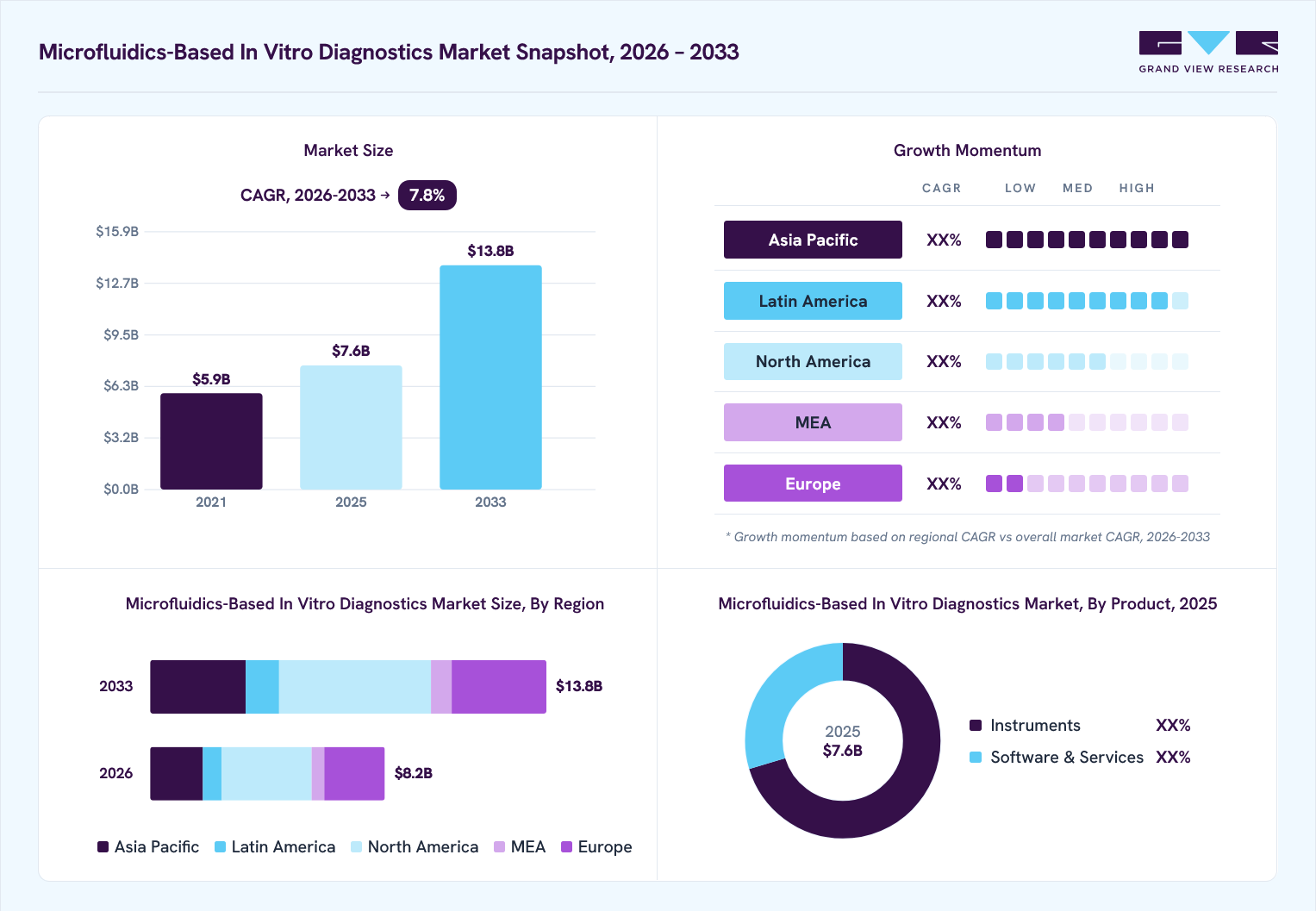
Market Size, 2025
$7.6BMarket Estimate, 2026
$8.2BMarket Forecast, 2033
$13.8BCAGR, 2026–2033
7.8%Microfluidics-based In Vitro Diagnostics Market Summary
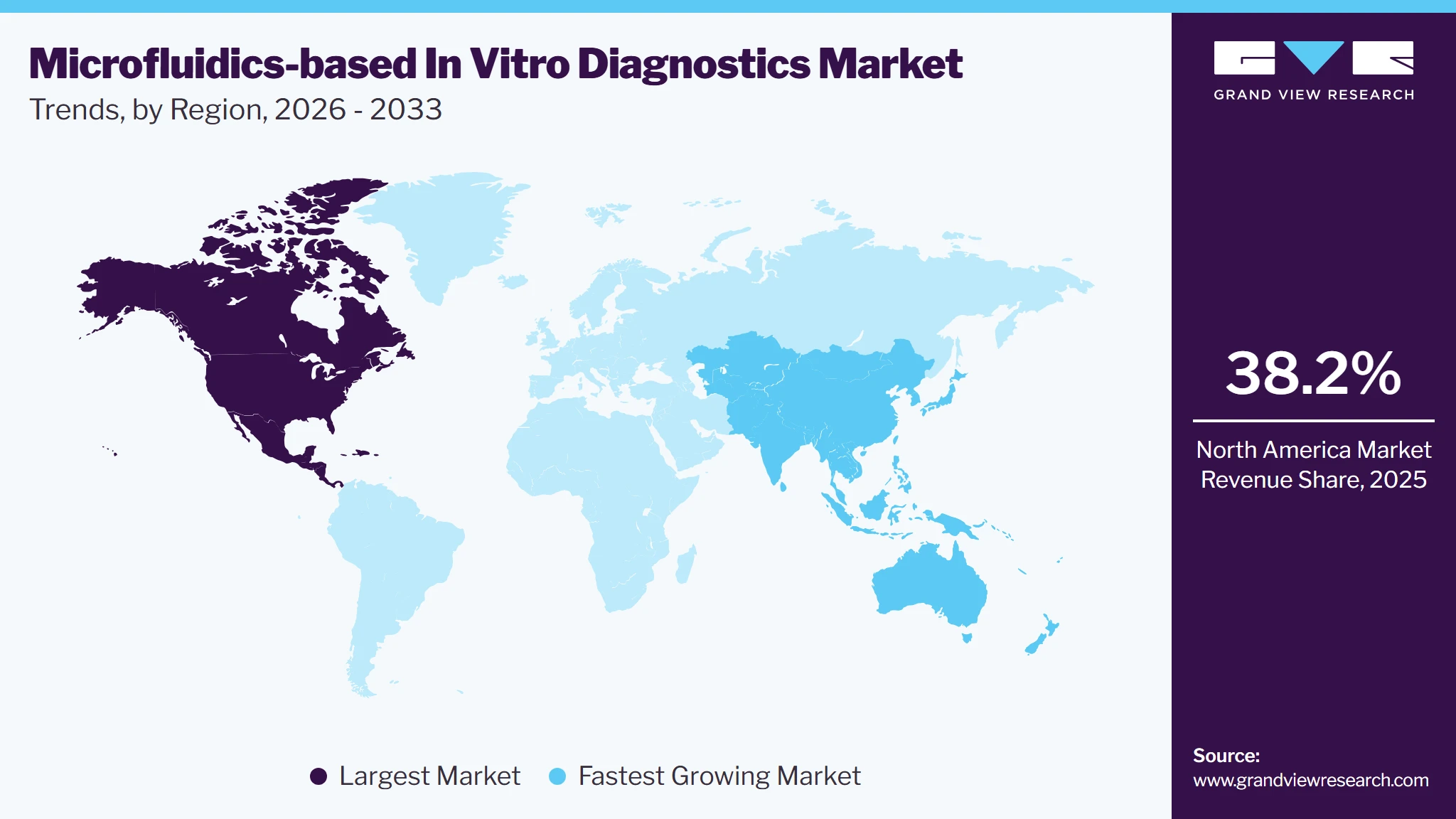
The global microfluidics-based in vitro diagnostics market size was valued at USD 7.6 billion in 2025 and is projected to grow from USD 8.2 billion in 2026 to USD 13.8 billion by 2033, at a CAGR of 7.8% from 2026 to 2033. North America dominated the market, accounting for the largest revenue share of 38.2% in 2025. Market growth is primarily driven by the expansion of point-of-care testing, adoption of integrated cartridge-based workflows, demand for rapid molecular diagnostics, and increasing use of decentralized testing systems.
 Source: Grand View Research, IR Documents, Primary Interviews, Paid DatabasesTo learn more about this report,
 Download Free Sample Report
Key Market Trends & Insights
- By technology: Molecular Diagnostics segment led the market with the largest revenue share of 41.6% in 2025.
- By application: Infectious Disease segment led the market with the largest revenue share of 23.5% in 2025.
- By product: Consumables segment led the market with the largest revenue share of 74.0% in 2025.
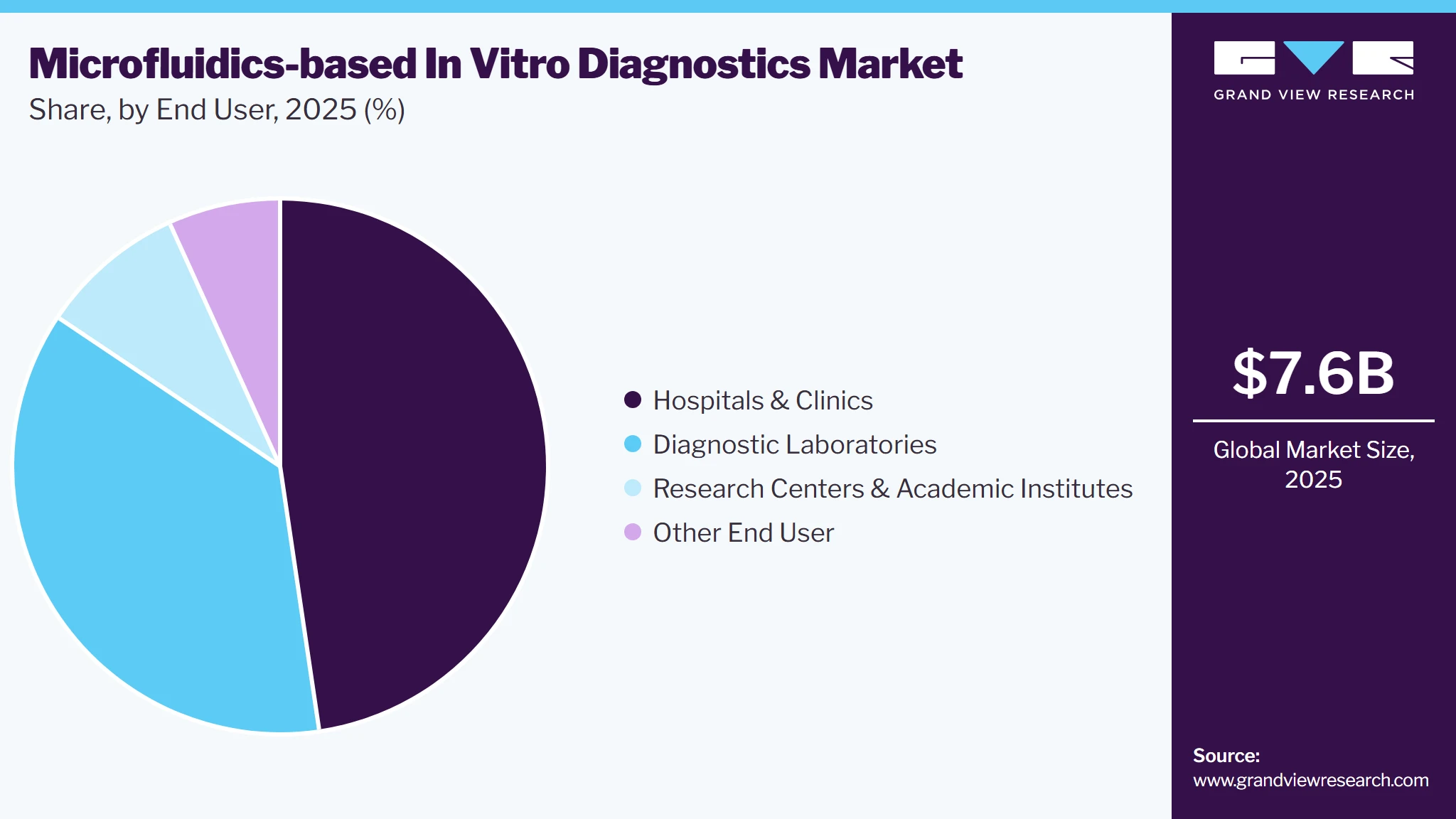
- By end use: Hospitals and Clinics segment led the market with the largest revenue share of 47.7% in 2025.
Regional Highlights
- Largest regional market: North America (38.2% revenue share, 2025)
- Fastest-growing regional market: Asia Pacific (highest CAGR, 2026-2033)
- By country: The U.S. held the largest market share in 2025.
Market Size & Forecast
- Market size in 2025: USD 7.6 Billion
- Estimated market size in 2026: USD 8.2 Billion
- Projected market size by 2033: USD 13.8 Billion
- CAGR (2026-2033): 7.8%
Prism AI by Grand View Research Free to tryAsk a question about the microfluidics-based in vitro diagnostics marketTry asking✓Every figure cited from GVR research Prefer the report? Download free sample →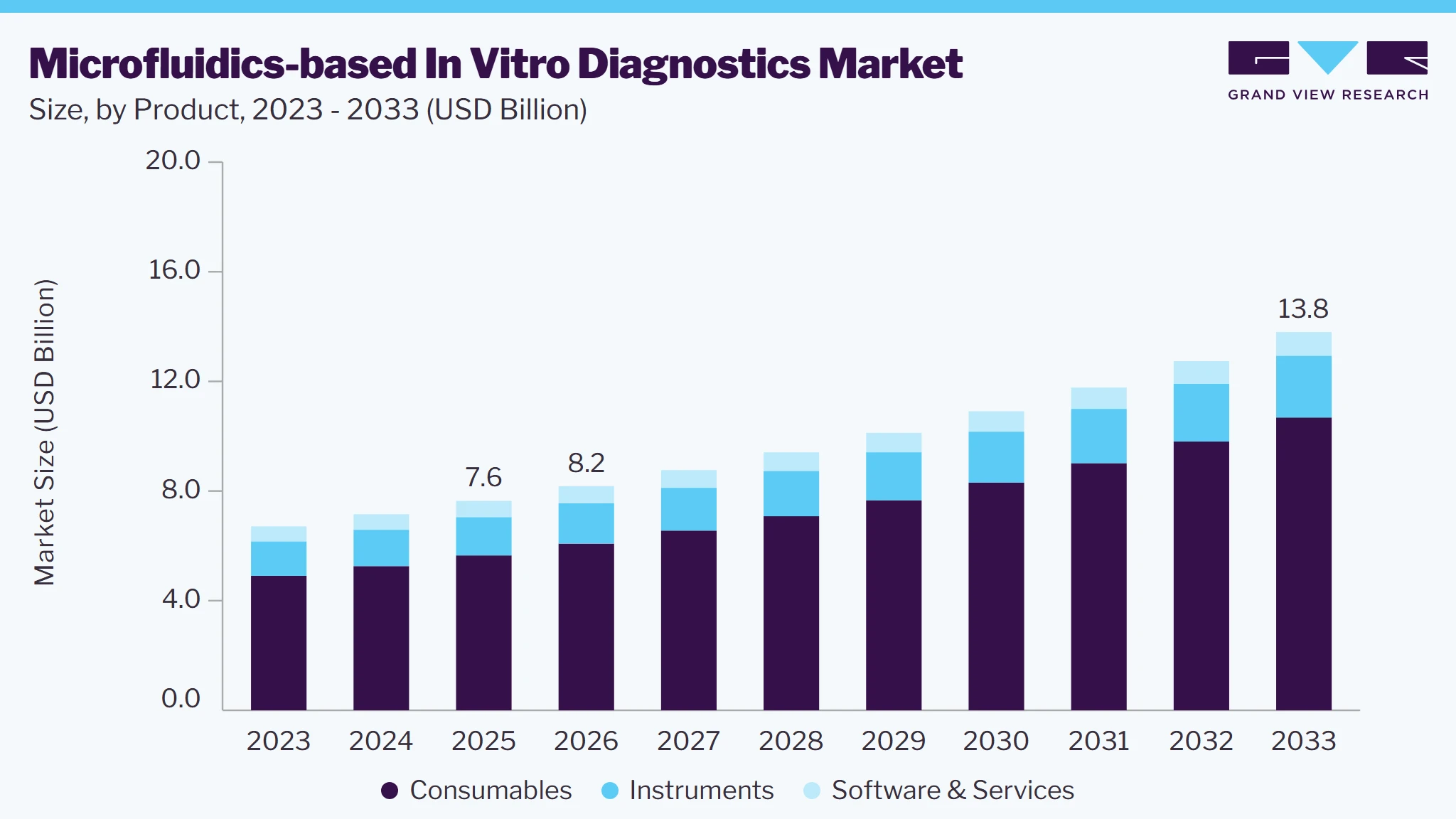 To learn more about this report, Download Free Sample Report
Market Dynamics
The expansion of point-of-care testing is a point-of-care adoption driver for the microfluidics-based in vitro diagnostics (IVD) market. Microfluidic platforms integrate sample handling and assay steps within compact cartridges, enabling testing near patients and reducing reliance on centralized laboratory workflows. Faster result availability can support timely clinical decisions, while portable systems may extend diagnostic access to settings with limited laboratory infrastructure. The scale of unmet need reinforces this opportunity: the World Health Organization estimates that 47% of the global population has little or no access to safe, affordable, quality-assured diagnostic services. Although this statistic covers diagnostic services overall rather than microfluidic tests specifically, it underscores the potential for accessible, decentralized diagnostic technologies to support market growth.
On September, 2026, bioMérieux announced the launch of its SPINCHIP point-of-care platform and first assay, SPINCHIP hs-cTnI, which measures high-sensitivity cardiac troponin I. The company stated that the test uses a finger-prick blood sample, delivers results in approximately 10 minutes, and would initially be available in Europe. The platform is based on SpinChip’s microfluidic technology and nanotechnology-based cartridge assays, as described in the January, 2025 acquisition announcement. The launch demonstrates the application of microfluidics to acute-care testing and extends bioMérieux’s point-of-care portfolio. SPINCHIP was also covered in the earlier development table. Status: launch announced, with initial European availability specified by the company.
Stringent regulatory requirements restrain the growth of the microfluidics-based IVD market. Microfluidic IVDs integrate fluid handling, assay chemistry, and detection within compact cartridges or instruments, requiring manufacturers to demonstrate reliable performance for the complete system. In the U.S., the FDA’s 510(k) pathway requires evidence of substantial equivalence to a legally marketed predicate device. FDA guidance evaluates analytical performance characteristics, including bias, imprecision, sensitivity, and specificity. These requirements are intended to protect patients and ensure that test results are analytically reliable and clinically appropriate. For microfluidic systems, the assessment may cover the interaction between disposable cartridges, instruments, reagents, software, and specimen handling. Consequently, regulatory review can become complex when several components are developed as one diagnostic platform for commercialization.
Generating the technical, analytical, and clinical evidence required for regulatory submissions can increase development costs and extend commercialization timelines. The burden is particularly significant for innovative microfluidic platforms with limited predicate-device history or integrated hardware and software components. Additional requirements related to manufacturing quality, labeling, performance validation, and post-market compliance can further increase operational complexity. However, stringent regulatory pathways may delay product launches, limit investment in early-stage platforms, and slow adoption across clinical laboratories and point-of-care settings. For smaller developers, these obligations may require specialized regulatory expertise, larger validation programs, and financial resources before market entry. Delays in obtaining clearance can also reduce first-mover advantages and postpone revenue generation. Thus, regulatory complexity remains a material restraint on innovation and commercialization.
Expansion of decentralized point-of-care testing represents an access-led growth opportunity for the microfluidics-based IVD market. Microfluidic platforms can integrate sample preparation, fluid handling, analysis, and result generation within compact systems, enabling selected tests to be performed closer to patients. This model can reduce dependence on centralized laboratories and support testing in primary-care centers, rural facilities, and other resource-constrained settings. The World Health Organization estimates that 47% of the global population lacks access to safe, affordable, quality-assured diagnostic services. Although this statistic covers diagnostic services generally, it highlights the unmet need that portable microfluidic IVD platforms may address. Market realization will depend on regulatory clearance, clinical validation, affordability, manufacturing scalability, and integration into healthcare workflows.
In September 2, 2026, India’s NITI Aayog Frontier Tech Hub described the portable CBC analyzer developed by Adsys, which combines a microfluidic slide, optical imaging, and computer-vision AI. The device is designed to process approximately 0.015 mL of finger-prick blood and generate CBC results in about 10 minutes for decentralized settings, including primary-care facilities. The report stated that approximately ₹3.4 crore had been deployed toward development through investments, grants, and personal funds. The development validates innovation aimed at decentralized microfluidic diagnostics, while commercial adoption remains unconfirmed.
Market Concentration & Characteristics
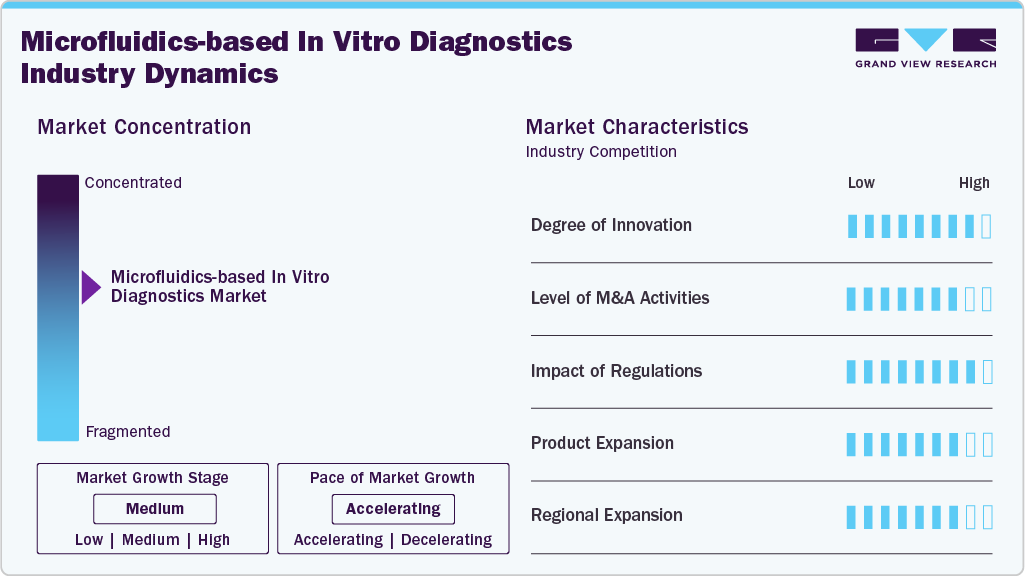
The microfluidics-based in vitro diagnostics market demonstrates a high degree of innovation, driven by integrated lab-on-chip workflows, rapid antimicrobial susceptibility testing, and low-cost diagnostic formats. Microfluidic IVD platforms increasingly combine sample processing, fluid control, sensing, and result generation within compact devices, reducing dependence on centralized laboratories and specialized personnel. Innovation is also advancing through screen-printed electrodes, miniaturized biosensors, rapid bacterial analysis, and designs suitable for resource-constrained healthcare settings. For instance, in August 2025, researchers at the Indian Institute of Technology Madras developed ε-µD, an affordable microfluidic device for determining whether bacteria are susceptible or resistant to antibiotics. The device uses screen-printed carbon electrodes embedded in a microfluidic chip and is designed for deployment in smaller clinics and rural healthcare centers. Status: research-stage device; regulatory approval and commercial availability were not reported.
The market demonstrates a moderate level of M&A activity. Transactions remain selective because microfluidic IVD platforms require specialized assay development, cartridge manufacturing, clinical validation, and regulatory expertise. Established diagnostic companies pursue acquisitions to obtain proprietary point-of-care technologies, expand assay portfolios, and accelerate commercialization. For instance, in January 2025, bioMérieux announced an agreement to acquire SpinChip Diagnostics at a total enterprise value of €138 million, equivalent to NOK 1.624 billion. The agreement provided for 100% ownership, while the expected cash outlay was approximately €111 million, reflecting bioMérieux’s existing minority stake. SpinChip’s platform combines microfluidics with nanotechnology-based cartridge assays for rapid immunoassay testing.
 To learn more about this report, Download Free Sample Report
Regulations have a significant impact on the microfluidics-based in vitro diagnostics industry. Microfluidic IVDs must satisfy requirements related to analytical performance, clinical validity, manufacturing quality, labeling, and post-market surveillance. In the U.S., the FDA applies risk-based pathways, including 510(k), De Novo classification, and premarket approval, according to the device’s characteristics and intended use. For instance, in July 2025, the U.S. FDA issued a substantially equivalent decision for iLine Microsystems’ microINR System under 510(k) K251564. The Class II point-of-care device uses microfluidic technology, machine-vision detection, a disposable test strip, and capillary whole blood for INR measurement. The decision demonstrates how regulatory clearance influences product design, validation requirements, documentation, commercialization timelines, and market access for microfluidic diagnostic systems.
Product expansion is strengthening the microfluidics-based in vitro diagnostics market. Companies are extending microfluidic technologies into infectious-disease workflows by combining compact platforms, automated sample handling, rapid analysis, and digital interpretation. These developments broaden the application base beyond conventional laboratory workflows and support faster testing near patients. For instance, in November 2025, Zynnon announced Bactify, a diagnostic platform designed to detect microbial pathogens directly from positive blood cultures. The company described the platform as using proprietary gas microfluidics and AI-based pathogen detection to support results within hours rather than days. Zynnon planned demonstrations at MEDICA 2025.
Regional expansion is broadening the global footprint of the Microfluidics-Based In Vitro Diagnostics Market. Companies and research organizations are using cross-border partnerships, local validation programs, and regional commercialization structures to adapt microfluidic platforms to different healthcare systems. These strategies can strengthen technology transfer, expand clinical development networks, and support future market entry beyond developers’ home markets. In October 2025 strategic alliance between Molomix Bioscience, SiGENEX, and Cardiff University’s School of Medicine in Wales. The collaboration involved SiGENEX’s AI-driven digital microfluidics platform and covered automated gene sequencing and molecular analysis for clinical diagnostics and translational research.
Analyst Perspective
The global microfluidics-based IVD market is expected to witness strong growth over the forecast period, supported by rising point-of-care adoption and continuing platform innovation. Microfluidic technologies are improving diagnostic workflows by integrating sample preparation, fluid handling, assay processing, detection, and digital reporting within compact systems. These capabilities are expanding the use of rapid testing across emergency departments, primary-care facilities, decentralized laboratories, and other near-patient settings. Selective M&A activity is enabling established IVD companies to access specialized platforms, while product development across molecular, immunoassay, infectious-disease, and hematology applications is broadening the market’s addressable base. Regulatory requirements, manufacturing scalability, reimbursement, and clinical validation will influence commercialization speed. Overall, innovation and decentralized testing are expected to accelerate, although market expansion will remain dependent on evidence generation, affordability, and healthcare-system integration.
Product Insights
The consumables segment accounted for the largest share of 74.0% in 2025. This position reflects recurring demand for disposable cartridges, reagent packs, reaction chambers, sample-preparation components, and integrated fluidic modules used in microfluidic workflows. Consumables capture repeat revenue as each test requires a new assay-specific cartridge or reagent set, while closed designs reduce contamination risk and simplify operation at the point of care. For instance, in February 2025, CytoChip’s CitoCBC System received U.S. FDA 510(k) clearance for use with a disposable microfluidic cartridge containing integrated fluidics and reagents for automated complete blood count testing. The development demonstrates how cartridge-based consumables support decentralized testing and strengthen recurring revenue across the market.
The Instruments segment is expected to grow at a CAGR of 6.2% over the forecast period, presenting a lucrative opportunity as laboratories and point-of-care facilities invest in automated analyzers compatible with microfluidic cartridges. Demand is supported by integrated sample-to-answer workflows, random-access testing, touchscreen operation, software connectivity, and the ability to expand assay menus without substantially increasing laboratory infrastructure. For instance, in July 2026, Cepheid announced the third-generation GeneXpert System, designed to support high-plex molecular panels, rapid time-to-result, and additional sample-to-answer applications while preserving established laboratory workflows. The compact four-module configuration was scheduled to begin shipping to U.S. customers in the following months; however, the system remained in development and had not been reviewed by a regulatory authority at the time of announcement. This instrument expansion supports continued modernization of microfluidic IVD platforms..
Technology Type
The molecular diagnostics segment dominated the market in 2025. Microfluidic molecular systems integrate sample preparation, nucleic-acid amplification, multiplex detection, and result interpretation in compact cartridges. These capabilities support rapid pathogen identification, lower manual intervention, reduced sample volumes, and testing in decentralized laboratories. For instance, in February 2025, researchers at the Chinese Academy of Sciences reported a point-of-care system based on microfluidic CRISPR-Dx technology that improved the speed, sensitivity, and multiplexing capability of pathogen detection. The development demonstrates continued advancement in integrated molecular workflows and reinforces molecular diagnostics as the largest technology segment. Broader use of rapid molecular testing is expected to remain a central contributor to overall market expansion..
The hematology and cellular analysis segment is expected to grow at the fastest CAGR over the forecast period. Growth is supported by demand for compact complete blood-count systems, automated cell imaging, low-volume sampling, and near-patient hematology testing in physician offices and decentralized clinics. Microfluidic architectures enable controlled cell handling, imaging, and classification while reducing instrument footprint and operator requirements. For instance, in January 2026, DNV announced a partnership with Noul to support IVDR certification of the miLab BCM cartridge for blood-cell analysis. The platform combines integrated sample preparation, digital imaging, and artificial-intelligence analysis for point-of-care use. This regulatory collaboration supports wider clinical deployment of microfluidic hematology systems and strengthens the segment’s growth outlook.
Application Insights
The infectious disease segment held the largest share in 2025. Infectious-disease testing requires rapid and reliable results because early pathogen identification supports timely treatment, infection control, and antimicrobial-stewardship decisions. Microfluidic platforms can combine extraction, amplification, multiplex detection, and result interpretation in closed cartridges suitable for respiratory, bloodstream, tuberculosis, and antimicrobial-resistance testing. For instance, in October 2025, Grand Challenges awarded support for an IIT Kharagpur project developing a nanomaterial-integrated microfluidic membrane for point-of-care tuberculosis diagnostics. The project focuses on improving Mycobacterium tuberculosis lysis and DNA purification from patient samples. Such developments demonstrate how microfluidics can address infectious-disease testing needs in resource-constrained settings and contribute to sustained market growth.
The Oncology segment is expected to grow at the fastest CAGR over the forecast period. Expansion is supported by increasing use of biomarker testing, companion diagnostics, molecular profiling, and rapid treatment stratification. Cartridge-based microfluidic workflows can standardize tissue processing, nucleic-acid analysis, and result generation while reducing hands-on procedures. For instance, in September 2025, Biocartis received U.S. FDA approval for the Idylla CDx MSI Test, a fully automated cartridge-based companion diagnostic for identifying microsatellite-instability-high colorectal-cancer patients who may benefit from nivolumab-based treatment. The approval demonstrates how integrated cartridge diagnostics can support precision-oncology decisions and expand access to actionable biomarker information. Continued adoption of automated oncology testing is expected to accelerate application-level market growth.
End Use Insights
The hospitals and clinics segment led the market in 2025. Hospitals and clinics remain major users because they require rapid testing for emergency care, infectious diseases, hematology, cardiac assessment, and treatment monitoring. Microfluidic systems support these workflows through small sample requirements, simplified operation, rapid turnaround, and testing close to the patient. For instance, in September 2025, Noul announced FDA registration for its miLab Cartridge CER, a cervical-cancer diagnostic cartridge that integrates sample preparation, imaging, and analysis. The product supports near-patient diagnostic workflows and illustrates how compact cartridge systems can extend advanced testing beyond centralized laboratories. Increasing demand for rapid clinical decisions is expected to sustain hospital and clinic adoption.
 To learn more about this report, Download Free Sample Report
The Research Centers and Academic Institutes segment is expected to grow at the fastest CAGR over the forecast period. Academic and research institutions are adopting microfluidic platforms to develop multiplex assays, evaluate biomarkers, optimize sample-to-answer workflows, and translate prototypes into clinically usable diagnostic products. These institutions also provide the engineering, assay-development, and clinical-validation capabilities required for complex microfluidic systems. For instance, in November 2025, the Indian Council of Medical Research published selected projects under its Intramural MedTech Development Grant, including integrated microfluidic devices for multiplex dengue detection, respiratory-pathogen testing, and high-priority-virus point-of-care kits. The program strengthens the research pipeline for microfluidic IVD innovation and may support future commercialization across infectious-disease and decentralized diagnostic applications.
Regional Insights
North America dominated the global microfluidics-based in vitro diagnostics market and accounted for the largest revenue share in 2025. Growth is supported by advanced laboratory infrastructure, high adoption of point-of-care testing, and demand for rapid sepsis, respiratory, and molecular diagnostics. The WHO estimated 350,000 tuberculosis cases in the Region of the Americas in 2024, equivalent to 33 cases per 100,000 population, sustaining demand for accessible infectious-disease testing. For instance, in August 2026, the CDC reported that its 2025 NHSN survey covered 5,430 U.S. acute-care and critical-access hospitals and found continued improvement in sepsis-program implementation. These conditions support continued adoption of compact, automated microfluidic systems across hospitals, urgent-care facilities, and decentralized laboratories.
 To learn more about this report, Download Free Sample Report
U.S. Microfluidics-based In Vitro Diagnostics Market Trends
The U.S. accounted for the largest share of the North America market, driven by high sepsis burden and strong FDA-supported innovation in point-of-care diagnostics. The CDC reports that approximately 1.7 million U.S. adults develop sepsis annually, with at least 350,000 dying during hospitalization or being discharged to hospice. For instance, in January 2025, the FDA issued draft guidance for validating IVDs for emerging pathogens during applicable public-health emergencies. The guidance strengthens a structured pathway for rapidly developing and evaluating new tests, supporting investment in multiplex molecular assays, cartridge-based workflows, and connected point-of-care platforms while maintaining analytical and clinical validation standards.
Europe Microfluidics-based In Vitro Diagnostics Market Trends
Europe represents a significant market, supported by mature healthcare systems, EU-wide diagnostic programs, and demand for earlier infectious-disease detection. WHO/Europe estimated that 204,000 people developed tuberculosis in the European Region in 2024, while approximately one in five cases remained undiagnosed or unreported. For instance, in June 2025, the European Commission’s Medical Device Coordination Group published MDCG 2025-5, providing questions and answers on performance studies under the EU In Vitro Diagnostic Medical Devices Regulation. The guidance supports more consistent clinical-performance planning and regulatory interpretation, improving manufacturers’ ability to commercialize microfluidic IVDs across EU member states..
The UK microfluidics-based in vitro diagnostics market is supported by NHS diagnostic modernization, community-testing priorities, and regulatory reforms aimed at improving access to innovative devices. England recorded 5,480 tuberculosis notifications in 2024, corresponding to 9.5 cases per 100,000 population, according to the UK Chief Medical Officer’s 2025 report. For instance, in December 2025, the Medicines and Healthcare products Regulatory Agency published an IVD roadmap covering regulatory support for innovative technologies, regulatory science, and pandemic preparedness. The roadmap is intended to accelerate development and access to innovative diagnostics, strengthening opportunities for microfluidic platforms in primary care, community laboratories, and near-patient NHS services.
The Germany microfluidics-based in vitro diagnostics market is expected to represent significant growth, driven by high hospital-acquired infection activity, advanced clinical infrastructure, and increasing emphasis on rapid sepsis recognition. Germany records at least 279,000 sepsis cases annually, according to the Robert Koch Institute’s September 2026 public-health communication. For instance, in September 2026, the Robert Koch Institute highlighted sepsis prevention, infection control, vaccination, and appropriate antibiotic use as national priorities. These priorities strengthen demand for rapid decentralized testing that can support earlier clinical decisions, antimicrobial stewardship, and hospital infection-management programs. Germany’s integration within the EU IVDR framework further supports standardized performance and quality requirements for microfluidic diagnostic systems.
Asia Pacific Microfluidics-based In Vitro Diagnostics Market Trends
Asia Pacific is expected to register strong growth in the market, driven by high infectious-disease burdens, expanding primary-care networks, and public investment in decentralized diagnostics. WHO estimated 3.68 million tuberculosis cases in South-East Asia and 2.91 million cases in the Western Pacific Region during 2024. For instance, in September 2025, India’s CDSCO and ICMR released standardized performance-evaluation protocols for high-risk infectious-disease IVDs and launched an IVD-kit validation portal. This policy development improves the evidence-generation pathway for diagnostic manufacturers and supports regional adoption of compact molecular, hematology, and antimicrobial-resistance testing platforms in hospitals, clinics, and lower-resource settings.
The China microfluidics-based in vitro diagnostics market represents a high-potential growth opportunity, driven by national disease-control programs, expanding laboratory capacity, and demand for faster screening in rural and community settings. China’s tuberculosis incidence declined from 55 cases per 100,000 population in 2021 to 49 cases per 100,000 in 2024, while tuberculosis preventive treatment reached 87,034 individuals in 2024. For instance, China’s National Tuberculosis Prevention and Control Plan established priorities for expanded screening, standardized reporting, and preventive treatment. These priorities are increasing the need for low-volume, rapid, and digitally connected IVD systems capable of decentralized infectious-disease testing. Microfluidic platforms are well positioned to support provincial hospitals, community clinics, and rural screening programs requiring compact workflows and limited laboratory infrastructure.
The Japan microfluidics-based in vitro diagnostics market is supported by a substantial infectious-disease burden, national screening programs, and increasing domestic diagnostic-manufacturing capabilities. India accounted for approximately 26% of global incident tuberculosis cases in 2024, according to the WHO Global Tuberculosis Report 2025. For instance, in September 2025, CDSCO and ICMR released standardized performance-evaluation protocols and launched an IVD-kit validation portal for high-risk infectious diseases. The initiative strengthens consistency in analytical and clinical evaluation, helping developers transition microfluidic assays from laboratory research toward regulated clinical use. It also complements India’s objective of expanding affordable, locally manufactured diagnostics for public hospitals, primary-care centers, rural laboratories, and community-based disease-control programs.
The Japan Microfluidics-Based In Vitro Diagnostics Market is an important market, benefiting from an aging population, established laboratory-quality systems, and demand for efficient testing across hospitals and community settings. Japan recorded a tuberculosis incidence rate of approximately 9.8 cases per 100,000 population in 2024, according to WHO country data. For instance, in October 2025, Japan’s Pharmaceuticals and Medical Devices Agency issued a notification addressing product-switching timelines following partial approval or certification amendments for IVDs and regenerative products. The clarification provides manufacturers with greater operational direction when implementing post-approval changes to microfluidic cartridges, analyzers, software, or assay configurations. This regulatory structure supports controlled product updates while improving market continuity for advanced microfluidic diagnostic systems.
Latin America Microfluidics-based In Vitro Diagnostics Market Trends
Latin America an emerging market, reflecting uneven laboratory access, persistent infectious-disease testing needs, and regional pooled-procurement mechanisms. PAHO reported that three IVD technologies for malaria, tuberculosis, and metastatic adrenal-cortex carcinoma were evaluated for possible inclusion in its Strategic Fund during January and February 2025. The assessment considered efficacy, safety, scientific evidence, and cost-effectiveness before potential regional procurement. This mechanism can improve affordability and availability by aggregating demand across participating countries and applying common quality requirements. For validated microfluidic manufacturers, the Strategic Fund provides a potential route into public laboratories, primary-care facilities, and decentralized testing programs, particularly where compact systems can reduce dependence on centralized laboratory infrastructure.
Middle East & Africa Microfluidics-based In Vitro Diagnostics Market Trends
The Middle East & Africa market is expected to develop gradually, supported by high infectious-disease burdens, laboratory-capacity expansion, and international initiatives focused on diagnostic access. WHO estimated 2.62 million tuberculosis cases in the African Region and 920,000 cases in the Eastern Mediterranean Region during 2024. In March 2026, WHO’s Eastern Mediterranean Regional Office called for intensified action to close tuberculosis detection gaps and reported that approximately one-third of regional cases remained undetected. The initiative reinforces the need for portable, affordable, and low-infrastructure diagnostic systems that can improve case finding in peripheral hospitals, mobile clinics, and underserved communities. Microfluidic platforms may benefit from these priorities because they combine small sample volumes, simplified workflows, and rapid results in resource-constrained settings.
Key Microfluidics-Based In Vitro Diagnostics Company Insights
The Market includes diversified IVD companies with point-of-care portfolios and specialized manufacturers developing microfluidic analyzers, cartridges, and decentralized testing solutions. Key participants include Abbott; F. Hoffmann-La Roche Ltd.; Cepheid (Danaher Corporation); bioMérieux; QIAGEN; Siemens Healthineers AG; QuidelOrtho Corporation; Bosch Healthcare Solutions GmbH; NanoEntek; AgnitioST; iLine Microsystems S.L.; and Shenzhen Micropoint Biotechnologies Co., Ltd., along with other prominent players. Companies are strengthening their competitive positions through integrated sample-to-answer systems, cartridge-based molecular diagnostics, compact hematology and clinical-chemistry analyzers, rapid immunoassays, digital connectivity, and near-patient testing capabilities. Competitive differentiation is increasingly based on analytical performance, turnaround time, assay-menu expansion, automation, regulatory clearances, manufacturing scalability, and distribution partnerships. Continued investment in decentralized testing and platform interoperability is expected to intensify competition across the market.
Key Microfluidics-based In Vitro Diagnostics Market Companies:
The following key companies have been profiled for this study on the microfluidics-based in vitro diagnostics market.
-
Abbott
-
F. Hoffmann-La Roche Ltd.
-
Cepheid (Danaher Corporation)
-
BIOMÉRIEUX
-
QIAGEN
-
Siemens Healthineers AG
-
QuidelOrtho Corporation
-
Bosch Healthcare Solutions GmbH
-
Nanoentek
-
AgnitioST
-
iLine Microsystems S.L.
-
Shenzhen Micropoint Biotechnologies Co., Ltd.
-
Other Prominent Players
Competitive Benchmarking
Operating Strategies
Competitive Edge
Weaknesses
Mature Players: F. Hoffmann-La Roche Ltd
- Expand microfluidic-enabled molecular, immunoassay, and near-patient diagnostic portfolios.
- Integrate sample preparation, amplification, detection, and result interpretation into automated cartridge-based workflows.
- Invest in regulatory approvals, clinical validation, and menu expansion across infectious disease, oncology, and acute-care testing.
- Strengthen digital connectivity, laboratory information-system integration, and decentralized testing capabilities.
- Use established global manufacturing, distribution, and service networks to support geographic expansion.
- Strong global brand recognition and broad IVD market presence.
- Advanced molecular diagnostics, immunoassay, and automation capabilities.
- Established regulatory, clinical-validation, and commercialization expertise.
- Broad customer base across hospitals, laboratories, and point-of-care facilities.
- Significant research and development resources and global distribution infrastructure.
- Higher instrument, cartridge, and service costs than smaller or regional competitors.
- Dependence on regulatory approvals, reimbursement coverage, and healthcare procurement cycles.
- Some advanced systems may require trained operators, infrastructure, and connectivity support.
- Longer development and clinical-validation timelines for integrated platforms.
- Exposure to competition from lower-cost manufacturers and specialized microfluidic startups.
Emerging Players: NanoEntek Co., Ltd.
- Develop compact, cartridge-based microfluidic immunoassay and hematology systems for near-patient testing.
- Expand assay menus across infectious disease, cardiac, metabolic, and inflammatory biomarkers.
- Target physician offices, urgent-care facilities, pharmacies, and decentralized laboratories.
- Pursue regulatory registrations and distribution partnerships in international markets.
- Improve manufacturing scale and cost efficiency to support wider adoption..
- Specialized focus on compact point-of-care diagnostic platforms.
- Simplified workflows requiring limited laboratory infrastructure.
- Small footprint and rapid turnaround suitable for decentralized settings.
- Flexibility to address regional testing requirements and emerging clinical applications.
- Potential for platform-based recurring revenue through proprietary cartridges and reagents.
- Smaller commercial scale and financial resources than multinational IVD companies.
- Lower global brand recognition and narrower distribution reach.
- Dependence on regulatory clearances and channel partners for market expansion.
- Relatively limited assay breadth compared with established full-menu providers.
- Greater sensitivity to manufacturing, supply-chain, reimbursement, and adoption constraints.
Recent Developments
-
February 2025, The U.S. FDA granted 510(k) clearance to CytoChip’s CitoCBC System, an automated hematology analyzer using a disposable microfluidic cartridge for complete blood-count and five-part differential testing. The clearance supports decentralized hematology testing by integrating fluid handling, reagents, cell analysis, and result generation within a compact point-of-care system.
-
February 2025, Researchers developed Lift-CM, a point-of-care molecular diagnostic system based on microfluidic CRISPR-Dx technology. The platform improves pathogen-detection sensitivity, speed, and multiplexing capability while reducing workflow complexity. The development demonstrates continued innovation in microfluidic molecular diagnostics for rapid infectious-disease testing outside conventional centralized laboratories..
-
November 2025, ICMR selected MedTech development projects involving integrated microfluidic devices for multiplex dengue detection, respiratory-pathogen testing, and rapid detection of high-priority viruses. The projects target handheld or point-of-care formats and strengthen the academic pipeline for low-cost, multiplex microfluidic IVD systems intended for decentralized clinical and public-health applications.
-
June 2026, DABOM announced a collaborative development involving a self-contained diagnostic cartridge that integrates heating and electrochemical sensing for automated sample-to-answer molecular testing. Cartridge-based architecture is designed to reduce laboratory infrastructure requirements and support point-of-care applications, demonstrating continued expansion of integrated microfluidic diagnostic workflows toward decentralized infectious-disease testing.
Microfluidics-based In Vitro Diagnostics Market Report Scope
Report Attribute
Details
Market size in 2025
USD 7.6 billion
Estimated market size in 2026
USD 8.2 billion
Projected market size by 2033
USD 13.8 billion
Growth rate
CAGR of 7.8% from 2026 to 2033
Actual data
2021 - 2025
Forecast period
2026 - 2033
Quantitative units
Revenue in USD million and CAGR from 2026 to 2033
Report coverage
Revenue forecast, company ranking, competitive landscape, growth factors, and trends
Segments covered
Product, technology, application, end use, region
Regional scope
North America; Europe; Asia Pacific; Latin America; MEA
Country scope
U.S.; Canada; Mexico; UK; Germany; France; Italy; Spain; Norway; Denmark; Sweden; China; Japan; India; Australia; Thailand; South Korea; Brazil; Argentina; South Africa; Saudi Arabia; UAE; Kuwait
Key companies profiled
Abbott; F. Hoffmann-La Roche Ltd.; Cepheid (Danaher Corporation); bioMérieux; QIAGEN; Siemens Healthineers AG; QuidelOrtho Corporation; Bosch Healthcare Solutions GmbH; NanoEntek; AgnitioST; iLine Microsystems S.L.; Shenzhen Micropoint Biotechnologies Co., Ltd.; and other prominent players.
Customization scope
Free report customization (equivalent up to 8 analyst working days) with purchase. Addition or alteration to country, regional & segment scope.
Pricing and purchase options
Avail customized purchase options to meet your exact research needs. Explore purchase options
Global Microfluidics-Based In Vitro Diagnostics Market Report Segmentation
This report forecasts revenue growth at country levels and provides an analysis on the latest industry trends and opportunities in each of the sub-segments from 2021 to 2033. For the purpose of this study, Grand View Research has segmented the microfluidics-based in vitro diagnostics market report on the basis of product, technology, application, end use and region.
-
Product Outlook (Revenue, USD Million, 2021 - 2033)
-
Instruments
-
Consumables
-
Software & Services
-
-
Technology Outlook (Revenue, USD Million, 2021 - 2033)
-
Molecular Diagnostics
-
Immunoassays
-
Clinical Chemistry and Blood Gas Testing
-
Hematology and Cellular Analysis
-
Other Technologies
-
-
Application Outlook (Revenue, USD Million, 2021 - 2033)
-
Infectious Disease
-
Oncology
-
Cardiovascular Disease
-
Reproductive Health and Pregnancy
-
Metabolic, Endocrine, and Organ Function Testing
-
Genetic Disorder Testing
-
Other Application
-
-
End Use Outlook (Revenue, USD Million, 2021 - 2033)
-
Hospitals & Clinics
-
Diagnostic Laboratories
-
Research Centers and Academic Institutes
-
Other End Uses
-
-
Regional Outlook (Revenue, USD Million; 2021 - 2033)
-
North America
-
U.S.
-
Canada
-
Mexico
-
-
Europe
-
UK
-
Germany
-
France
-
Italy
-
Spain
-
Norway
-
Denmark
-
Sweden
-
-
Asia Pacific
-
Japan
-
China
-
India
-
Australia
-
South Korea
-
Thailand
-
-
Latin America
-
Brazil
-
Argentina
-
-
Middle East & Africa
-
South Africa
-
Saudi Arabia
-
UAE
-
Kuwait
-
-
Research Methodology
The microfluidics-based in vitro diagnostics market figures in this report are based on a proven research process that combines executive interviews with secondary research from proprietary databases, company filings, and recognized regulatory and institutional sources. Market size is built through value-chain sizing by reconciling supply-side and demand-side estimates and is triangulated using bottom-up and top-down approaches. Every estimate passes multiple levels of expert validation, with each microfluidics-based in vitro diagnostics segment quantified using the revenue-capture definitions presented in the table below.
Segment Definition
Product
Revenue capture definition
Instruments
Reusable analyzers, readers, sample-processing units, and essential hardware dedicated to qualifying microfluidic IVD tests. Revenue flows from instrument sales or leases; disposable cartridges, general laboratory equipment, software, and maintenance are excluded.
Consumables
Single-use or replenishable cartridges, chips, discs, integrated reagents, calibrators, controls, and processing components required for eligible microfluidic tests. Revenue is primarily captured through recurring assay-consumable purchases; reusable hardware and generic collection supplies are excluded.
Software & Services
Separately billed platform software, connectivity, result-management licenses, maintenance, calibration, repairs, and technical support associated with eligible microfluidic IVD systems. Revenue accrues from subscription, licensing, and service fees; bundled charges are excluded.
Technology
Revenue capture definition
Molecular Diagnostics
Microfluidic clinical assays detecting or characterizing nucleic acids through PCR, isothermal amplification, hybridization, or qualifying sequencing. Revenue is captured through molecular test cartridges, reagents, and associated instruments; research-only and non-microfluidic systems are excluded.
Immunoassays
Microfluidic assays using antigen-antibody binding to measure antigens, antibodies, proteins, or biomarkers through fluorescence, chemiluminescence, enzyme-linked, or comparable detection. Revenue comes from immunoassay cartridges, reagents, and dedicated analyzers; non-immunological tests are excluded.
Clinical Chemistry and Blood Gas Testing
Microfluidic, non-immunological measurement of glucose, lactate, creatinine, urea, electrolytes, pH, pCO₂, pO₂, and related biochemical parameters. Revenue is realized through chemistry cartridges, panels, and analyzers; cellular, molecular, and coagulation tests are excluded.
Hematology and Cellular Analysis
Microfluidic clinical examination of cells through enumeration, differentiation, morphology, imaging, focusing, or separation, including CBC and leukocyte differentials. Revenue derives from cellular-analysis cartridges and instruments; clotting, chemistry, microbial-growth, and research cell-sorting products are excluded.
Other Technologies
Qualifying microfluidic clinical methods outside molecular diagnostics, immunoassays, chemistry/blood gas, and cellular analysis, including functional coagulation and validated phenotypic susceptibility testing. Revenue is captured from eligible test kits and systems after product-level clinical verification.
Application
Revenue capture definition
Infectious Disease
Microfluidic tests detecting, identifying, monitoring, or characterizing infectious agents and clinically relevant antimicrobial susceptibility. Revenue flows from pathogen-specific cartridges, panels, reagents, and analyzers; nonclinical, environmental, and general inflammatory testing is excluded.
Oncology
Microfluidic diagnostics intended for cancer detection, characterization, risk assessment, treatment selection, monitoring, companion diagnostics, or hereditary cancer predisposition. Revenue is captured through oncology-specific assays and platforms; general tests used incidentally in cancer patients are excluded.
Cardiovascular Disease
Microfluidic testing specifically assessing cardiac or vascular disease, including troponins, BNP/NT-proBNP, and acute cardiac injury or heart-failure biomarkers. Revenue comes from cardiac-specific assays, cartridges, and analyzers; routine metabolic and general coagulation tests are excluded.
Reproductive Health and Pregnancy
Microfluidic tests assessing pregnancy, fertility, reproductive hormones, preeclampsia, or diagnostic semen characteristics. Revenue is derived from pregnancy, fertility, and reproductive-health test products; STI, inherited-disease, and fetal genetic testing are excluded.
Metabolic, Endocrine, and Organ Function Testing
Microfluidic assessment of metabolic status, non-reproductive endocrine function, organ performance, electrolytes, acid-base balance, and blood gases. Revenue is captured through biochemical monitoring assays and analyzers; oncology, cardiac-specific, fertility, and inherited-disease tests are excluded.
Genetic Disorder Testing
Microfluidic clinical testing for non-oncological inherited disorders, chromosomal abnormalities, carrier status, and qualifying prenatal or neonatal conditions. Revenue accrues from genetic assay cartridges, reagents, and instruments; hereditary cancer, pathogen, ancestry, and research genomics are excluded.
Other Applications
Eligible human clinical microfluidic diagnostic uses outside the named application categories, including allergy, therapeutic-drug monitoring, toxicology, autoimmune testing, anticoagulation, and residual hematology. Revenue is recognized from qualifying application-specific products after exclusions are applied.
End Use
Revenue capture definition
Hospitals and Clinics
Hospital-owned laboratories, emergency departments, intensive-care units, outpatient facilities, physician offices, urgent-care centers, and specialist clinics operating eligible microfluidic IVD products. Revenue is captured through institutional purchases, leases, and test consumables; independent laboratories are excluded.
Diagnostic Laboratories
Independent clinical, reference, commercial, specialty molecular, and pathology laboratories performing eligible microfluidic tests on human specimens for diagnostic reporting. Revenue flows from laboratory platform purchases, reagents, cartridges, and testing services; hospital-owned laboratories are excluded.
Research Centers and Academic Institutes
Separately organized academic or research institutions purchasing eligible commercial IVD products for documented clinical diagnostic reporting. Revenue is captured through qualifying product sales; research-only, teaching, investigational, and organ-on-chip purchases are excluded.
Other End Users
Eligible operators outside hospitals, clinics, independent laboratories, and separately classified academic institutions, including standalone blood banks, public-health laboratories, transfusion centers, and home-testing users. Revenue derives from qualifying institutional or self-testing product purchases; distributors are excluded.
Estimation Model
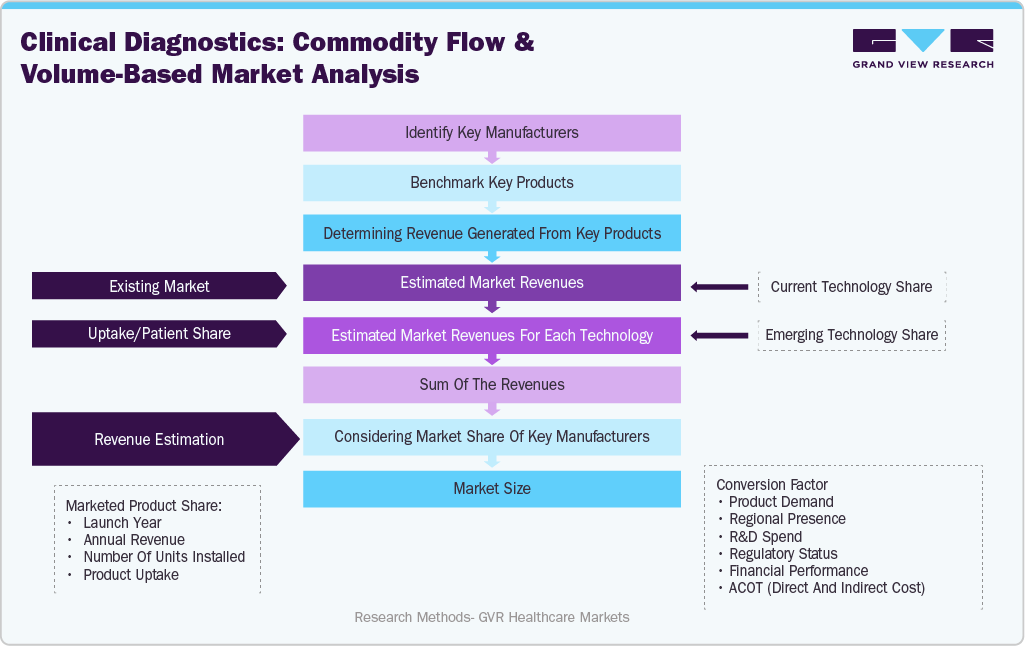
The microfluidics-based in vitro diagnostics market was estimated by identifying key manufacturers, benchmarking their principal microfluidic diagnostic products, and determining the revenue generated by these products. Existing market values and uptake or patient-share indicators were used to estimate revenues for each technology category. The resulting technology-level revenues were summed to establish the preliminary market revenue, which was then cross-checked against revenue estimates and the market shares of key manufacturers to derive the overall market size.
 To learn more about this report, Download Free Sample Report
Delivered Customizations
This report has been delivered with the following In-depth customizations
CLIENT REQUEST
CUSTOMIZATION DELIVERED
VALUE ADDS
Microfluidics-Based In Vitro Diagnostics Market Competitive Landscape & Technology Assessment
Assessed the competitive landscape across microfluidic molecular diagnostics, immunoassays, clinical chemistry, hematology and cellular analysis, and other microfluidic IVD technologies. Evaluated key manufacturers based on platform architecture, cartridge design, assay coverage, sample volume, turnaround time, automation, regulatory approvals, point-of-care capabilities, partnerships, and geographic presence.
Enables the client to benchmark leading microfluidic IVD companies, compare platform differentiation, identify high-potential technologies, and evaluate competitive positioning across centralized laboratories, hospitals, clinics, and decentralized testing environments..
Microfluidic Platform and Product Benchmarking Analysis
Conducted comparative benchmarking of microfluidic analyzers, disposable cartridges, integrated sample-preparation systems, molecular assays, immunoassays, hematology platforms, and clinical chemistry solutions. Assessed fluid-handling architecture, detection methodology, sample compatibility, throughput, turnaround time, assay menu, automation level, connectivity, intended-use setting, and regulatory status..
Helps the client identify product and technology gaps, compare platform performance and workflow efficiency, assess recurring consumables opportunities, and prioritize investments across cartridge-based, sample-to-answer, multiplex, and point-of-care diagnostic solutions.
Microfluidics-Based IVD Commercialization & Market-Entry Assessment
Assessed commercialization strategies, regulatory pathways, manufacturing requirements, distribution models, reimbursement conditions, adoption barriers, and market-access considerations across North America, Europe, Asia Pacific, Latin America, and the Middle East & Africa. Evaluated adoption across hospitals, diagnostic laboratories, physician offices, urgent-care facilities, community clinics, and other decentralized settings
Supports market-entry and expansion planning by identifying high-potential regions and end users, evaluating regulatory and infrastructure requirements, assessing demand for decentralized testing, and developing commercialization strategies for microfluidic analyzers, cartridges, reagents, and integrated diagnostic platforms..
About the Author(s)
Clinical Diagnostics Research Team
Healthcare · Clinical DiagnosticsThis report was authored by the clinical diagnostics research team at Grand View Research - comprising two research analysts, one senior research analyst, and one industry expert - with specialized expertise in the clinical diagnostics segment of the healthcare industry. All findings are based on proprietary healthcare databases, executive interviews, and regulatory analysis, subject to internal peer review prior to publication.
Last Updated:
Speak to Analyst

Customize this report to your needs - add regions, segments, or data points, with 20% free customization.
Or view our licence options:


ISO 9001:2015 & 27001:2022 Certified
We are GDPR and CCPA compliant! Your transaction & personal information is safe and secure. For more details, please read our privacy policy.


