Middle East Poly-L-Lactic Acid Filler Market Summary
The Middle East poly-l-lactic acid fillers market size was estimated at USD 7.23 million in 2024 and is projected to reach USD 9.71 million by 2033, growing at a CAGR of 3.21% from 2025 to 2033. The growth is attributed to rising disposable incomes, an aging population, and medical tourism.
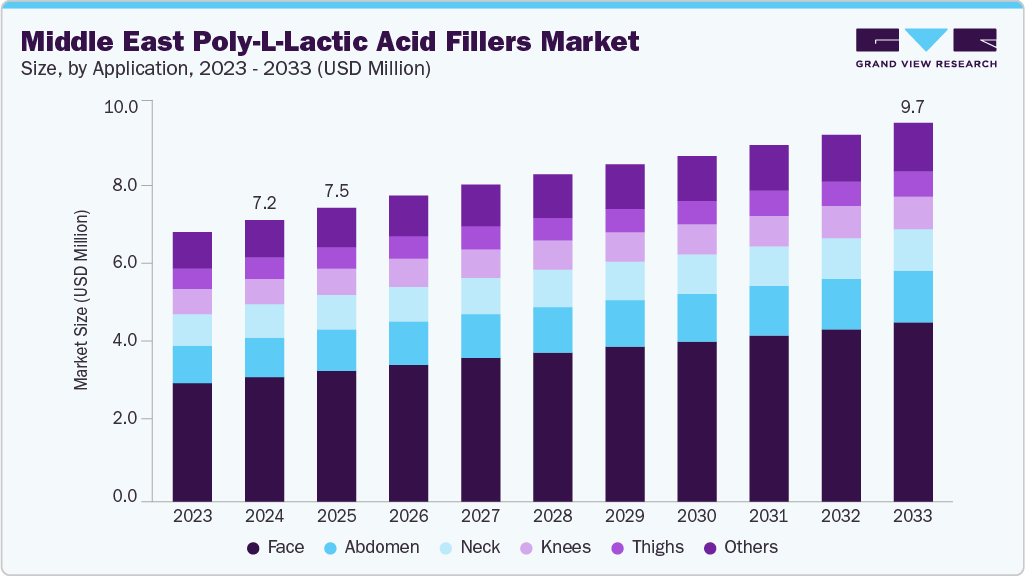
In addition, the rising preference for non-surgical and minimallyinvasive aesthetic treatments in the Middle East has rapidly increased the demand for injectable fillers, specifically for poly‑l‑lactic acid (PLLA) fillers. Dermal fillers are increasingly popular, particularly in countries like the UAE, where patients favornatural-looking enhancements and advanced techniques such as fat grafting are gaining traction.
As the overall demand for injectable fillers continues to rise, the adoption of PLLA fillers is also increasing across key markets. According to the International Society of Aesthetic Plastic Surgery (ISAPS), 3,520 PLLA procedures were performed in the UAE out of 154,304 total injectables. In comparison, Saudi Arabia recorded 1,012 PLLA procedures out of 50,732 total injectables.
The growth of healthcare infrastructure in the Middle East has boosted the poly-l-lactic acid fillers market. As hospitals and aesthetic clinics expand and modernize, access to advanced treatments improves, making PLLA fillers more available to patients seeking minimally invasive cosmetic options. In Dubai, clinics like Al Biraa Clinic and SKIN provide various collagen stimulator injection fillers, including PLLA, designed to target specific skin issues and promote collagen production.
Supporting this, the growing number of skilled healthcare professionals specializing in injectable procedures across the Middle East has significantly bolstered the PLLA filler market. This increase in trained practitioners ensures that treatments are safe and effective and makes PLLA fillers more widely accessible to a broader patient base, supporting the region’s expanding demand for minimally invasive aesthetic solutions.
The International Society of Aesthetic Plastic Surgery (ISAPS) has revealed that numerous medical practitioners in the Middle East perform cosmetic procedures, using PLLA fillers. This trajectory indicates that patients in the area are leaning towards less invasive injectable treatments and that the injectable market is picking up due to the demand for that filler type.
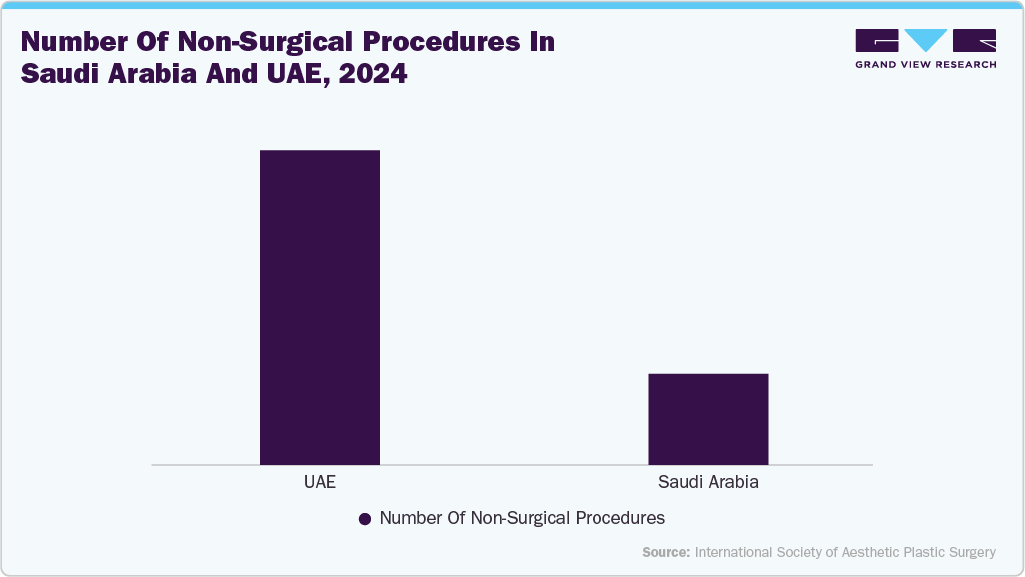
Rising disposable incomes in countries like the UAE and Saudi Arabia drive higher demand for facial injectables, including PLLA fillers such as Sculptra. The UAE is projected to see a 13% net increase in spending intentions for 2025, the highest globally, with high-income consumers leading this growth. In Saudi Arabia, consumers maintain strong spending habits, and younger demographics (18-34) are increasingly allocating their spending to experiences and aesthetic treatments. Better financial capability and evolving consumer preferences are accelerating the region's adoption of non-surgical cosmetic procedures.
Market Concentration & Characteristics
The Middle East poly-l-lactic acid fillers industry is experiencing substantial growth fueled by the increasing demand for non-invasive procedures, technological advancements, a rising aging population, and a preference for minimally invasive procedures. Galderma is leading the way in this growth and recently showcased its leadership at the Aesthetic and Anti-Aging Medicine World Congress (AMWC) Dubai 2025, presenting data on the scientific review of poly‑L‑lactic acid (PLLA) fillers. The presented studies reviewed the safety and efficacy of the combination of PLLA and hyaluronic acid fillers for restoring facial fullness after weight loss and the regenerative aesthetic effects of PLLA treatments in promoting collagen production and improving skin quality. The development highlights the increasing adoption, clinical data on safety and efficacy, and increased preference for PLLA fillers in the Middle East, all in response to the changing needs of patients and the rising demand for of Poly-l-lactic acid fillers market.
One of the recent advancements of PLLA injections is the improved particle formulations alongside the novel techniques, allowing for excellent safety, precision, and overall treatment outcomes. In contrast to the traditional hyaluronic acid fillers, PLLA facilitates collagen formation gradually, resulting in a more natural and long-lasting effect, which is why practitioners and patients find it very attractive. Clinics in the area are progressively adopting these advanced formulations; in most cases, they also use them with other technologies. Such innovations are anticipated to make the broader acceptance of these formulations among aesthetic practices, thereby delivering a rejuvenation solution that is natural, long-lasting, and effective for the patients. Despite the market being behind Europe and North America, consumers' desire to spend money on high-quality and scientifically-proven treatments is building a market that permits product differentiation, technological advancement, and new clinical applications.
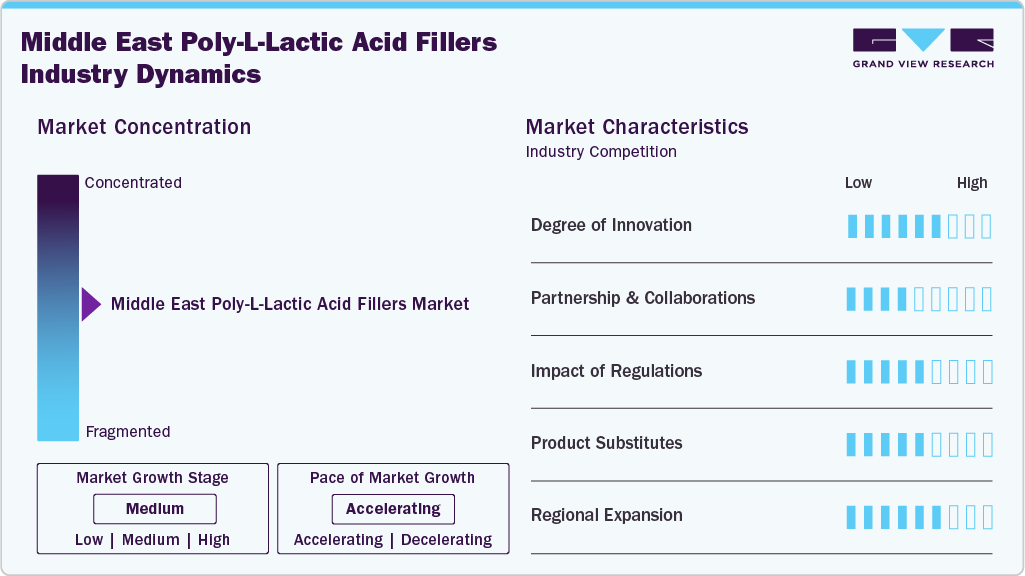
The Middle East poly-l-lactic acid fillers industry has witnessed moderate but steady growth through mergers & acquisitions, reflecting the region’s growing attractiveness to global and regional players. While large-scale deals are still relatively rare compared to mature markets in North America or Europe, strategic acquisitions by established aesthetics and dermatology companies are helping expand product portfolios, distribution networks, and clinical expertise. For instance, Galderma Arabia partners with Saudi Arabian healthcare professionals by providing continuous training programs and assisting in using its injectable aesthetic products, including Sculptra, a Poly-L-lactic acid (PLLA) filler. The initiative represents Galderma's dedication to advancing dermatological care quality and improving access to advanced aesthetic treatments in the region.
Regulations significantly impact the Middle East poly-l-lactic acid fillers industry. Stringent approval processes and compliance requirements can slow the introduction of new products. Still, they also ensure higher quality and efficacy standards, building trust among practitioners and patients. Differences across countries regarding registration timelines, clinical trial requirements, and import restrictions create a fragmented regulatory landscape. The Dubai Health Authority (DHA) and MOHAP enforce strict standards, ensuring only licensed professionals administer PLLA injectables like Sculptra and that all products meet safety and quality requirements. These measures reduce the risk of unsafe products while promoting trust and innovation in the region’s healthcare system.
The Middle East poly-l-lactic acid fillers industry faces moderate competition from various substitutes, mainly hyaluronic acid (HA) fillers, calcium hydroxylapatite injectables, and energy-based skin rejuvenation treatments. HA fillers are particularly prominent due to their quick results, reversibility, and strong brand recognition among clinicians and patients. Nonetheless, as awareness increases about collagen-stimulating injectables, PLLA fillers are establishing a distinct position among consumers who prefer gradual, natural-looking outcomes with longer-lasting effects. Non-injectable options like radiofrequency and ultrasound skin tightening systems also attract patients who favor non-invasive procedures. Although substitutes are formidable competitors, the regenerative advantages and durability of PLLA fillers help maintain their importance and appeal in a results-oriented aesthetic market.
PLLA fillers have grown rapidly in the Middle East region, with the UAE and Saudi Arabia leading the way. Galderma has been actively marketing Sculptra by attending conferences such as AMWC Dubai 2025, where it presented its ability to restore facial volume and stimulate collagen. Healthcare infrastructure improvements, increased patient awareness, and demand for safe, long-lasting, and effective PLLA-based treatments fuel all this growth.
Application Insights
The face segment led the market with the largest revenue share of 44.2% in 2024 and is anticipated to grow at the fastest CAGR over the forecast period. A facial PLLA injectable gradually restores facial volume and smooths wrinkles by stimulating natural collagen production, providing subtle, long-lasting, and natural-looking results. Its popularity is particularly strong in Dubai, where high aesthetic awareness and demand for minimally invasive treatments drive adoption. The influence of social media, celebrity endorsements, and the desire for customizable facial enhancements are further accelerating growth. The combination of safety, effectiveness, and natural results is expected to reinforce the dominance of facial PLLA fillers in the region in the coming years.
The abdomen segment is expected to grow at a significant CAGR during the forecast period. Abdominal skin laxity, often caused by aging, pregnancy, or weight loss, has increased demand for non-surgical rejuvenation. PLLA-based collagen stimulators offer a safe, convenient alternative for individuals with mild-to-moderate sagging, dimpling, or cellulite. Advanced formulations like Lanluma have extended PLLA applications beyond the face, delivering long-lasting results with minimal side effects. Growing consumer awareness and technological advancements are driving the expansion of PLLA fillers for abdominal treatments, meeting rising demand for minimally invasive body contouring.
End Use Insights
The cosmetic surgery centers segment led the market with the largest revenue share of 58.5% in 2024. With a growing number of patients in the Middle East seeking minimally invasive alternatives to traditional surgery, cosmetic surgery centers are increasingly offering PLLA filler treatments. These centers, equipped with advanced technologies and skilled professionals, can safely and effectively administer PLLA injections. Continuous improvements in product formulations and injection techniques enhance treatment safety, efficacy, and patient satisfaction. In addition, strategic initiatives by key market players are expected to drive further the growth of PLLA filler adoption in the region.
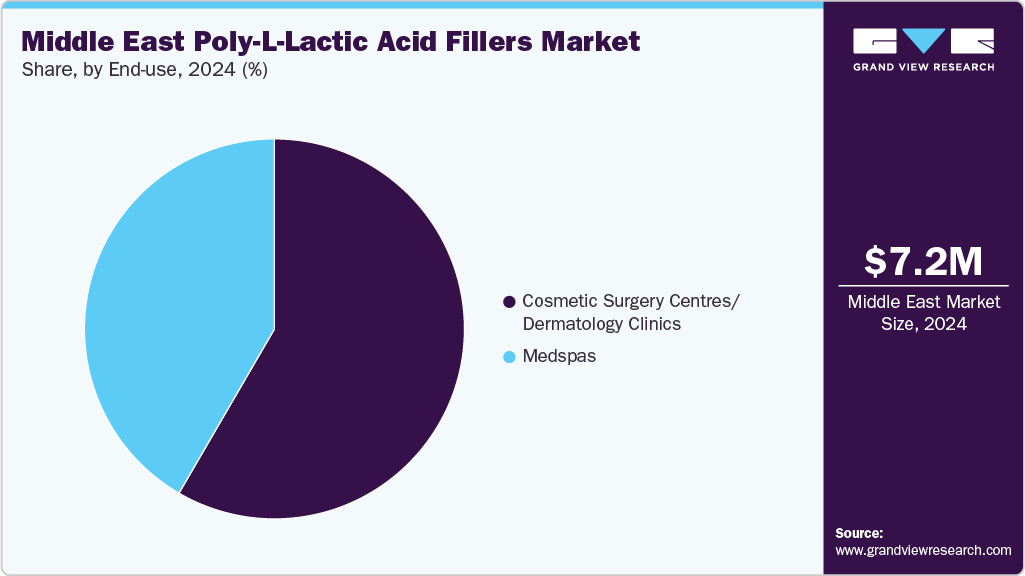
The medspas segment is anticipated to grow at the fastest CAGR during the forecast period. Rising consumer confidence in the safety and effectiveness of non-invasive treatments, along with improved regulatory standards and advanced injection techniques, is driving the popularity of Medspas. These facilities provide a unique blend of medical expertise and spa-like experiences, catering to clients seeking personalized, comprehensive beauty and wellness approaches. By offering a wide range of non-surgical cosmetic procedures, Medspas attract individuals looking for rejuvenation and aesthetic enhancement without the recovery time associated with surgery.
Country Insights
Saudi Arabia dominated the poly-l-lactic acid fillers market with the largest revenue share of 32.59% in 2024, particularly facial injectables and dermal fillers. This growth is driven by increasing disposable income, as per “Income and Expenditure: Saudi Arabia” posted in September 2025. Over 2024–2029, per capita disposable income is forecast to grow by 6.3%, enabling more individuals to invest in aesthetic enhancements. Cities like Riyadh are leading the adoption of non-surgical procedures, with the increasing popularity of fillers and other facial injectables. This trend is fueled by minimal downtime, lower risk than surgical alternatives, and heightened awareness of cosmetic treatments. As consumer spending power continues to rise, the market for non-surgical cosmetic procedures in Saudi Arabia is expected to expand steadily, reflecting a shift in lifestyle preferences and beauty standards. According to the International Society of Aesthetic Plastic Surgery (ISAPS), in Saudi Arabia total of 1,012 Poly-l-lactic acid fillers were performed in the year 2024
The poly-l-lactic acid fillers market in Qatar is growing due to rising demand for minimally invasive aesthetic treatments and increasing healthcare infrastructure. Clinics such as Nu Yu MediSpa and SILKOR Qatar offer PLLA-based treatments like Sculptra to restore facial volume, stimulate collagen production, and provide natural-looking rejuvenation. The growing awareness of advanced cosmetic procedures, combined with the availability of skilled professionals and state-of-the-art technologies, is driving the adoption of PLLA fillers. To meet the demand for safe, effective, and long-lasting non-surgical aesthetic solutions, these clinics are critical in expanding access to PLLA treatments across Qatar.
The Oman poly-l-lactic acid fillers market has been on an upward trend due to the popularity of facial injectables and the continuous development of the healthcare sector. Sculptra treatments are offered by clinics such as Enfield Royal Clinics Muscat. These treatments involve using PLLA to stimulate new collagen production and revitalize the face. In addition, an array of cosmetic surgeries, including those utilizing PLLA, is available at Aster Hospital in Muscat, thus revealing the country's commitment to the progression of aesthetic healthcare. The mentioned trends imply that the PLLA fillers market in Oman is set to experience a strong growth phase, as the demand for non-surgical aesthetic solutions continues to escalate.
The poly-l-lactic acid fillers market in UAE is anticipated to grow at a significant CAGR during the forecast period. There is a rise in facial injectables in the UAE, with cities like Dubai emerging as the fastest adopters of non-surgical cosmetic procedures. One of the driving factors is medical tourism in the UAE. Medical tourism in Dubai has expanded rapidly, positioning the city as a global hub for aesthetic treatments due to its world-class facilities, internationally qualified specialists, and strict regulatory standards enforced by the Dubai Health Authority. Luxury, safety, and advanced technology have attracted patients worldwide seeking facial rejuvenation and minimally invasive procedures. Among these, poly-l-lactic acid (PLLA) fillers such as Sculptra are gaining significant popularity. Sculptra addresses common signs of aging by stimulating collagen production, restoring facial volume, and providing smoother, natural-looking skin over time. Its gradual and long-lasting results make it a preferred choice for individuals seeking subtle facial enhancement without invasive surgery. As medical tourism grows and awareness of innovative treatments increases, the demand for Sculptra in Dubai will continue rising steadily.
The Kuwait poly-l-lactic acid fillers market is experiencing a rise in facial injectables, largely driven by the influence of social media platforms like Instagram and TikTok.Social media has fueled awareness and interest in facial injectables, making procedures like dermal fillers and Botox increasingly popular among young adults. Online trends, influencer endorsements, and shared experiences have accelerated the adoption of these treatments in Kuwait. This trend highlights the growing role of social media in driving cosmetic surgery demand in Kuwait and underscores the need for ethical marketing and digital health literacy.
Key Middle East Poly-L-Lactic Acid Fillers Company Insights
Leading players such as Galderma, Sinclair Pharma, and GANA RND are propelling the growth of the poly-l-lactic acid fillers market in the Middle East. These companies leverage advanced technologies, innovative formulations, and targeted marketing to enhance product efficacy and appeal. Their strategic expansions and strong distribution networks are boosting accessibility, meeting rising consumer demand for minimally invasive aesthetic treatments, and solidifying their competitive presence in the region’s rapidly evolving beauty and wellness sector.
Key Middle East Poly-L-Lactic Acid Fillers Companies:
- Galderma
- Sinclair Pharma
- Halomed Group
- Hamdarman
- Devolux
- EPRUI Biotech
- HUK Aesthetics
- Laboratories Hyamed SA
- Rimless Industry Co., Ltd.
- LINKUS GLOBAL Co., Ltd.
Recent Developments
-
In April 2023, Galderma received FDA approval to use Sculptra (PLLA-SCA) to correct fine lines and wrinkles in the full cheek area. Before this, Sculptra had been used for volume loss/HIV-associated facial lipoatrophy etc., but this was a new indication/expansion specifically for cheek wrinkles.
-
In February 2023, DUBIMED was selected as the exclusive distributor for Galderma’s aesthetic portfolio in the United Arab Emirates. This marked a significant milestone in strengthening the brand’s regional presence. DUBIMED covers Galderma’s full range of aesthetic solutions, including the Sculptra (Poly-L-lactic acid filler) and other injectable and skincare products.
Middle East Poly-L-Lactic Acid Fillers Market Report Scope
|
Report Attribute
|
Details
|
|
Market size value in 2025
|
USD 7.54 million
|
|
Revenue forecast in 2033
|
USD 9.71 million
|
|
Growth rate
|
CAGR of 3.21% from 2025 to 2033
|
|
Base year for estimation
|
2024
|
|
Historical data
|
2021 - 2023
|
|
Forecast period
|
2025 - 2033
|
|
Quantitative units
|
Revenue in USD million/billion and CAGR from 2025 to 2033
|
|
Report coverage
|
Revenue forecast, company ranking, competitive landscape, growth factors, and trends
|
|
Segments covered
|
Application, end use, country
|
|
Regional scope
|
Middle East
|
|
Country scope
|
Qatar; Oman; Saudi Arabia; UAE; Kuwait;
|
|
Key companies profiled
|
Galderma; Sinclair Pharma; Halomed Group; Hamdarman; Devolux; EPRUI Biotech; HUK Aesthetics; Laboratories Hyamed SA; Rimless Industry Co., Ltd.; LINKUS GLOBAL Co., Ltd.
|
|
Customization scope
|
Free report customization (equivalent to 8 analysts working days) with purchase. Addition or alteration to the segment scope.
|
|
Pricing and purchase options
|
Avail customized purchase options to meet your exact research needs. Explore purchase options
|
Middle East Poly-L-Lactic Acid Fillers Market Report Segmentation
This report forecasts revenue growth at country levels and analyzes the latest industry trends in each sub-segment from 2021 to 2033. For this study, Grand View Research has segmented the Middle East poly-l-lactic acid fillers market report based on end use, application, country:
-
Application Outlook (Revenue, USD Million, 2021 - 2033)
-
Face
-
Neck
-
Abdomen
-
Knees
-
Thighs
-
Others
-
End Use Outlook (Revenue, USD Million, 2021 - 2033)
-
Country Outlook (Revenue, USD Million, 2021 - 2033)
-
Saudi Arabia
-
UAE
-
Kuwait
-
Qatar
-
Oman

 Download Sample Report
















