Middle East Veterinary Hospital Market Summary
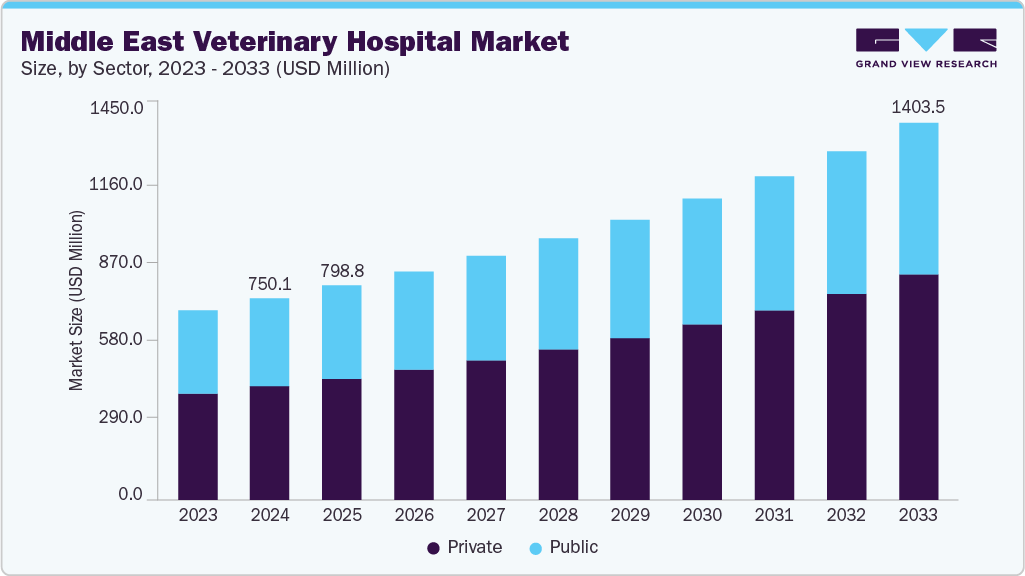
The Middle East veterinary hospital market size was estimated at USD 750.11 million in 2024 and is projected to reach at USD 1.40 billion by 2033, growing at a CAGR of 7.30% from 2025 to 2033. Some of the factors driving the market growth are rising pet ownership and urbanization, government initiatives, technological integration and specialty care expansion, and increasing investment and public-private partnerships (PPP).
Key Market Trends & Insights
- On the basis of country, Saudi Arabia captured the largest market share with 42.17% in 2024.
- Based on animal, the companion animals segment dominated the market with the share of 64.54% in 2024.
- On the basis of type, the surgery segment expected to grow at the highest CAGR of 8.12% during the forecasted period.
- On the basis of sector, the private segment expected to grow at the considerable CAGR during the forecasted period.
Market Size & Forecast
- 2024 Market Size: USD 750.11 Million
- 2033 Projected Market Size: USD 1.40 Billion
- CAGR (2025-2033): 7.30%
Technological advancement is emerging as one of the most transformative drivers of the Middle East veterinary hospitals market, reshaping both the quality and accessibility of animal healthcare. Historically, basic treatment and preventive care were the primary objectives of veterinary services in the region. However, modernization is increasing due to expanding pet ownership, greater consumer demands, and the influence of international veterinary standards. Veterinary hospitals in countries such as the UAE, Saudi Arabia, and Kuwait are actively leading investments in advanced diagnostic and surgical technologies, digital tools, and specialized clinical services to set new standards in outcomes and operational efficiency.
The use of digital health technologies has increased in recent years. Hospitals are increasingly utilizing digital imaging technologies and electronic medical records (EMRs) to enable faster data sharing, continuity of care, and more precise diagnostics. Leading hospitals now have access to diagnostic imaging instruments, including CT scanners, ultrasound systems, and endoscopic units, which enable accurate internal evaluations and minimally invasive operations. For instance, the UAE recently witnessed the first minimally invasive cardiac surgery performed on pets, marking a significant milestone in regional veterinary innovation. These developments highlight the increasing adoption of advanced medical technology in animal healthcare, bridging the quality gaps that previously existed between local and Western standards.
Telemedicine and AI-enabled diagnostics represent transformative growth vectors, particularly within the region’s urban veterinary hospital chains. Notably, the partnership between Sylvester AI and Nova Vet Family introduced artificial intelligence for feline pain detection across the Middle East and North Africa, signifying the market’s growing commitment to predictive, data-driven care. These technologies significantly enhance diagnostic accuracy, facilitating early disease detection and effective pain management to deliver superior patient outcomes.
The rise of specialty and referral hospitals is also a defining trend. Multispecialty centers offering a range of services, including orthopedics, cardiology, dermatology, dentistry, and exotic animal care, are expanding across the region. Facilities such as Modern Vet in Dubai and Salam Veterinary Group in Saudi Arabia exemplify this shift, offering 24-hour advanced surgical and emergency services. These hospitals are staffed with specialized veterinarians trained internationally, further elevating regional expertise.
However, technological adoption remains concentrated in wealthier, urbanized markets due to both significant capital requirements and the demand for highly skilled personnel. As governments and leading investors increasingly prioritize modernization of the veterinary sector, exemplified by initiatives such as Saudi Vision 2030 and the UAE’s stringent animal welfare reforms, the diffusion of advanced technology and specialized care across the region is poised to accelerate. This transformation unequivocally positions the Middle East veterinary hospital market toward enhanced clinical sophistication, operational efficiency, and sustained growth.
Middle East Veterinary Hospitals Database
This database provides a comprehensive compilation of veterinary hospitals across Saudi Arabia, the UAE, Kuwait, Qatar, and Oman. Each entry is systematically categorized by Hospital Name, Website, Country, City, and Contact Information (including email and phone number). The dataset includes over 500 entries, offering a detailed overview of the region’s veterinary healthcare infrastructure. Below is a sample excerpt from the database:
|
Sr. No.
|
Name
|
Website Link
|
Country
|
City
|
Email
|
Contact Number
|
|
1
|
Ideal pet veterinary Clinic
|
https://idealpet.vetpms.com/
|
Saudi Arabia
|
Riyadh
|
customercare@ipcvetk
|
-
|
|
2
|
Zabeel Veterinary Hospital
|
https://zabeelvet.com/
|
UAE
|
Dubai
|
[email protected]
|
-
|
|
3
|
Sofa-Vet
|
https://sofavet.com/
|
Qatar
|
Doha
|
[email protected]
|
-
|
|
4
|
Capital Veterinary Centre L.L.C
|
https://vetoman.com/
|
Oman
|
Ruwi
|
[email protected]
|
-
|
Market Concentration & Characteristics
The Middle East veterinary hospital market demonstrates moderate concentration, with leading organizations such as Salam Veterinary Group (Saudi Arabia) and Modern Vet (UAE) setting benchmarks in multispecialty and premium services. Across the region, the landscape is characterized by numerous small independent clinics and a select number of urban hospital chains, underscoring the nascent stage of consolidation. Concentration levels are most pronounced in the UAE and Saudi Arabia, in contrast to the more fragmented, locally operated markets of Kuwait, Oman, and Qatar.
Prominent initiatives, such as Sylvester AI's September 2025 collaboration with Nova Vet Family for implementing AI-powered feline pain detection, demonstrate the industry's noticeable increase in innovation. This technique sets the standard for both animal welfare and diagnostic precision by utilizing visual analysis and machine learning to assess pain in real-time. These developments signify a decisive regional shift toward smart, data-driven veterinary care within advanced private hospital networks.
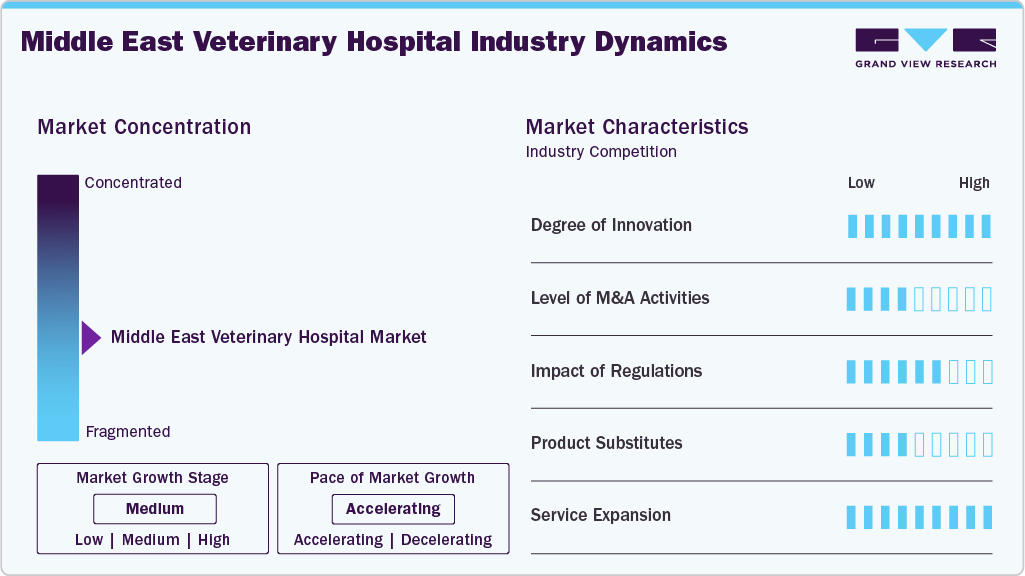
The level of M&A activity in the industry is moderate. Service providers from urban areas such as the UAE are demonstrating strategic consolidation and investment in the market. For instance, in January 2025, ARENA Veterinary Holding acquired Star Veterinary Clinics, a full-service pet hospital with two key locations in Dubai.
Regulations in the industry have a moderate to significant impact, shaping service quality, licensing requirements, and animal welfare standards. Oversight by national ministries of agriculture and environment ensures disease control and professional compliance, though standardization levels vary by country. As governments strengthen frameworks under initiatives such as Saudi Arabia’s Vision 2030 and animal welfare laws, regulatory harmonization is expected to gradually improve, promoting greater trust and investment in veterinary healthcare infrastructure.
Service substitutes include small independent veterinary clinics, mobile veterinary services, and teleconsultation platforms that provide basic checkups and preventive care at lower costs. In rural or remote areas, government-run animal health centers and livestock extension programs also act as substitutes by offering essential treatment and vaccination services. In addition, the growing use of pet wellness apps and home care services provides convenient alternatives to full hospital visits for non-critical cases.
Service expansion is driven by the marked increase in pet ownership, intensifying urban demand, and rapid technological modernization. Hospitals strategically broaden their offerings beyond routine care to provide advanced diagnostics, surgery, dental care, rehabilitation, and emergency services. Leading facilities are actively integrating telemedicine, home visits, grooming, and preventive wellness programs, thereby enhancing client convenience and engagement. The rise of multispecialty and referral centers across major GCC cities emphatically signals a decisive shift toward comprehensive, full-service veterinary ecosystems in the region.
Animal Insights
Companion animals represented the largest segment in the Middle East veterinary hospital market with a revenue share of 64.5% in 2024 and are expected to grow at the fastest rate over the forecast period, due to rising pet ownership among urban and expatriate populations, as well as increasing disposable incomes and awareness of pet health and wellness. The growing availability of advanced diagnostic, preventive, and specialty care services in urban hospitals further fuels demand for these services. In addition, evolving cultural attitudes toward pets as family members are driving higher spending on veterinary and lifestyle care across the region.
The livestock segment is the second largest, due to the region’s strong focus on food security, livestock productivity, and disease control. Governments in countries such as Saudi Arabia and the UAE are heavily investing in modernizing animal husbandry and veterinary infrastructure to safeguard meat, dairy, and poultry production. In addition, the need for veterinary diagnostics, vaccinations, and herd health management continues to rise due to the frequency of endemic and transboundary diseases such as FMD and brucellosis, which supports the segment's continued prominence.
Type Insights
The medicine segment is the largest in the Middle East veterinary hospital market with a revenue share of about 47% in 2024. The segment is driven by the rising prevalence of infectious and chronic diseases among both companion and livestock animals. The region’s hot climate and high density of imported pets increase susceptibility to parasitic, dermatological, and metabolic disorders, particularly in urban centers such as Dubai, Riyadh, and Kuwait City. Government-led vaccination drives, as well as increased pet longevity, have also boosted demand for long-term pharmacological management of conditions such as arthritis, diabetes, and cardiovascular issues. In livestock, the emphasis on disease prevention and herd health to maintain food security further supports steady demand for veterinary medicine.
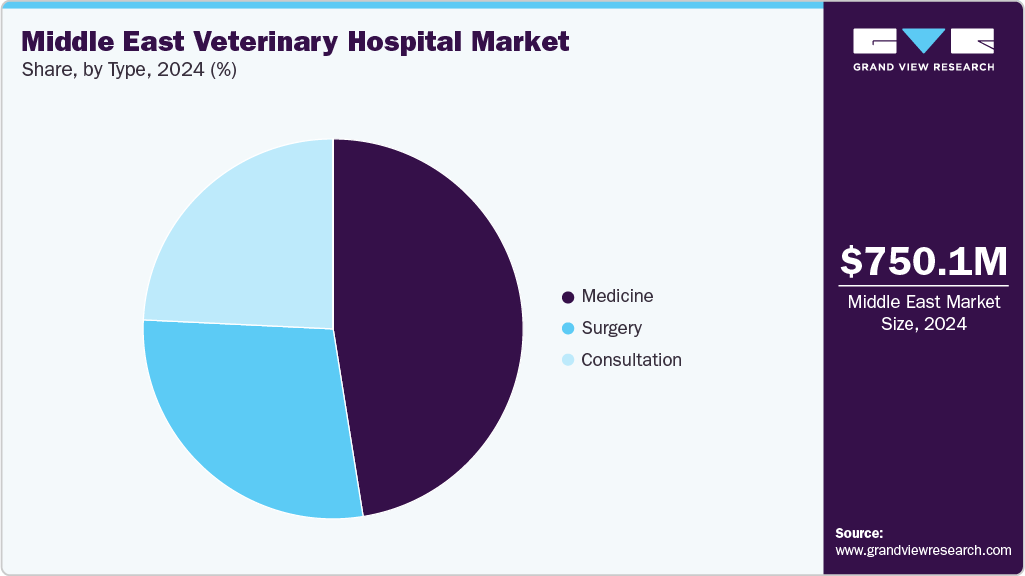
The surgery segment is the fastest-growing in the Middle East veterinary hospital market over the forecast period. This growth is driven by the adoption of advanced surgical technologies and growing access to specialty hospitals in Middle Eastern countries. Facilities in the UAE and Saudi Arabia now offer minimally invasive and orthopaedic procedures, supported by innovations such as digital imaging, laser surgery, and 3D modelling. Rising pet ownership and greater awareness of animal welfare are increasing the acceptance of elective and emergency surgeries. In livestock, surgical demand is expanding for reproductive procedures, trauma care, and productivity-related treatments, reflecting the modernization of regional animal production and healthcare systems.
Sector Insights
The private segment is the largest in the Middle East veterinary hospital market, accounting for about 60% of the market share in 2024 and demonstrating the fastest growth rate from 2025 to 2033. This expansion is due to rising disposable incomes, urbanization, and a growing preference for premium pet healthcare. Facilities in nations such as Saudi Arabia and the United Arab Emirates are increasingly outfitted with telemedicine, AI-assisted tools, and sophisticated diagnostics, providing specialized and 24-hour services. The fastest-growing industry in GCC markets is private healthcare, driven by the rise of private hospital chains and collaborations with foreign investors.
The public veterinary segment remains essential, primarily focusing on livestock disease control, vaccination programs, and food safety initiatives. Managed by ministries of agriculture and environment, public facilities play a crucial role in rural outreach and epidemic management, especially in Saudi Arabia, Oman, and Qatar. However, limited funding and infrastructure compared to private hospitals restrict their service range for companion animals, leading to a gradual shift toward privatized, technology-driven veterinary healthcare in the region.
Country Insights
Saudi Arabia Veterinary Hospital Market Trends
The Saudi Arabia veterinary hospital market dominated the region with a market share of 42.17% in 2024. The country is primarily driven by the government’s Vision 2030 initiative, which emphasizes improved animal health, welfare, and food security. The modernization of the livestock sector, along with the expansion of multispecialty and technologically equipped veterinary hospitals, is enhancing service quality and access to veterinary care. In addition, regulatory support, workforce development, and the integration of telemedicine and preventive care services are strengthening the country’s veterinary healthcare ecosystem and driving sustained market growth.
Kuwait Veterinary Hospital Market Trends
The veterinary hospitals market in Kuwait is expanding steadily, driven by government initiatives on animal welfare, strong regulatory emphasis on zoonotic disease prevention, and growing investments in veterinary infrastructure. The focus on food safety and livestock productivity has accelerated demand for advanced diagnostics, preventive services, and regulated animal healthcare within the agricultural sector. In addition, the expansion of private veterinary networks and the emergence of specialized and multispecies hospitals equipped with modern diagnostics and surgical facilities have elevated the standard of care. Collaboration with international veterinary organizations, as well as the adoption of telemedicine and preventive health programs, are further enhancing service accessibility and quality, positioning Kuwait’s veterinary sector for sustained growth.
Key Middle East Veterinary Hospital Company Insights
Key providers such as Salam Veterinary Hospital, Zabeel Veterinary Hospital, The Veterinary Referral Centre (TVRC), Equine Veterinary Medical Centre (EVMC), and British Vet hold a considerable share of the Middle East veterinary hospital sector landscape. Their market presence is supported by advanced diagnostic infrastructure, multispecialty services, and international collaborations that align with regional animal welfare and biosecurity goals. Competitive strength is further enhanced by investments in digital health platforms, specialized surgical units, and the integration of telemedicine. However, the market landscape is increasingly dynamic, with emerging local chains and private clinics offering cost-effective, customized services, while regulatory harmonization, workforce gaps, and R&D costs continue to shape competition across the Gulf veterinary healthcare ecosystem.
Key Middle East Veterinary Hospital Companies:
- Salam Veterinary Hospital
- Animal Pulse Hospital
- Zabeel Veterinary Hospital
- British Vet
- International Veterinary Hospital
- Royal Animal Hospital
- The Veterinary Surgery
- First Vet
- The Veterinary Referral Centre (TVRC)
- Equine Veterinary Medical Centre (EVMC)
Recent Developments
-
In September 2025, The Arabian Leopard Fund in collaboration with the Environment Authority of Oman launched a mobile veterinary clinic equipped with advanced tools and dedicated wildlife teams to provide emergency care for the critically endangered Arabian leopard in the mountainous Dhofar governorate.
-
In August 2025, The Thumbay Group launched its first veterinary clinic in Muweilah, Sharjah, as part of its wider ambition to build a full veterinary ecosystem in the UAE-including laboratories, pharmacies, and farms for small and large animals.
Middle East Veterinary Hospital Market Report Scope
|
Report Attribute
|
Details
|
|
Market size value in 2025
|
USD 798.79 million
|
|
Revenue forecast in 2033
|
USD 1.40 billion
|
|
Growth rate
|
CAGR of 7.30% from 2025 to 2033
|
|
Historical period
|
2021 - 2023
|
|
Actual data
|
2024
|
|
Forecast period
|
2025 - 2033
|
|
Quantitative units
|
Revenue in USD million/billion and CAGR from 2025 to 2033
|
|
Report coverage
|
Revenue forecast, company ranking, competitive landscape, growth factors, and trends
|
|
Segments covered
|
Animal, type, sector, and country
|
|
Regional scope
|
Middle East
|
|
Country scope
|
Saudi Arabia; UAE; Kuwait; Qatar; Oman
|
|
Key companies profiled
|
Salam Veterinary Hospital; Animal Pulse Hospital; Zabeel Veterinary Hospital; British Vet; International Veterinary Hospital; Royal Animal Hospital; The Veterinary Surgery; First Vet; The Veterinary Referral Centre (TVRC); Equine Veterinary Medical Centre (EVMC)
|
|
Customization scope
|
Free report customization (equivalent up to 8 analysts working days) with purchase. Addition or alteration to country, regional & segment scope.
|
|
Pricing and purchase options
|
Avail customized purchase options to meet your exact research needs. Explore purchase options
|
Middle East Veterinary Hospital Market Report Segmentation
This report forecasts revenue growth at regional, and country levels and provides an analysis of the latest industry trends in each of the sub-segments from 2021 to 2033. For this study, Grand View Research has segmented the Middle East veterinary hospital market report based on animal, type, sector, and country:
-
Animal Outlook (Revenue, USD Billion, 2021 - 2033)
-
Companion Animals
-
Farm Animals
-
Type Outlook (Revenue, USD Billion, 2021 - 2033)
-
Surgery
-
Medicine
-
Consultation
-
Sector Outlook (Revenue, USD Billion, 2021 - 2033)
-
Country Outlook (Revenue, USD Billion, 2021 - 2033)
-
Saudi Arabia
-
UAE
-
Kuwait
-
Qatar
-
Oman

 Download Sample Report