
- Home
- »
- Biotechnology
- »
-
Mutational Analysis Market Size & Share Report, 2026-2033GVR Report cover

Mutational Analysis Market (2026 - 2033)
Size, Share & Trends Analysis Report By Mutation Type (SNVs/Point Mutations, Indels, Copy Number Variants, Structural Variants, Repeat Expansions), By Technology, By Product & Service, By End Use, By Region, And Segment Forecasts
Market Size, 2025
$2.0BMarket Estimate, 2026
$2.4BMarket Forecast, 2033
$7.5BCAGR, 2026–2033
17.9%Mutational Analysis Market Summary
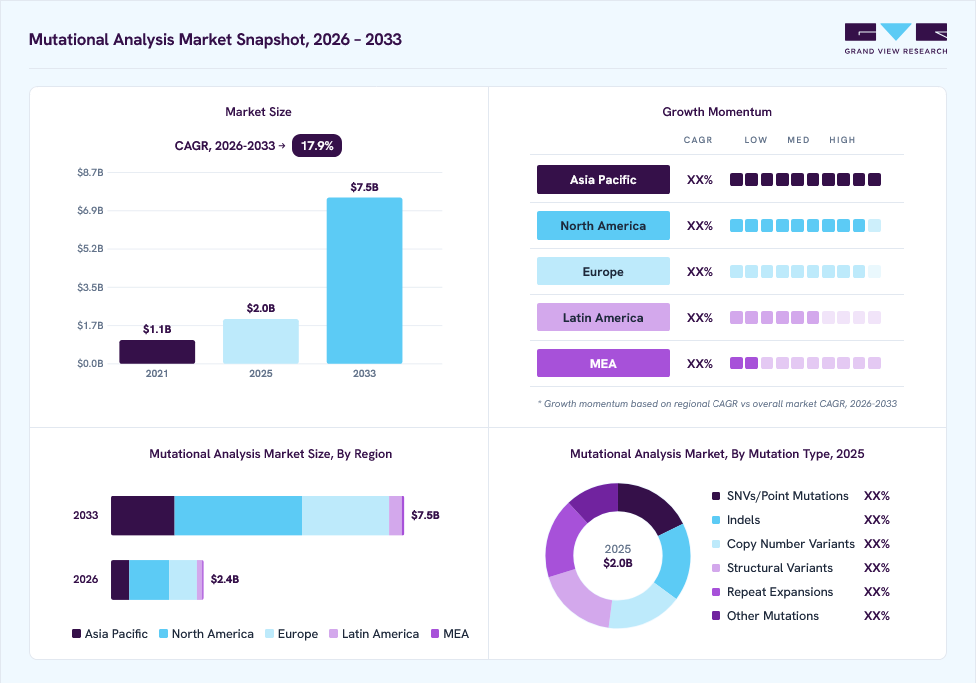
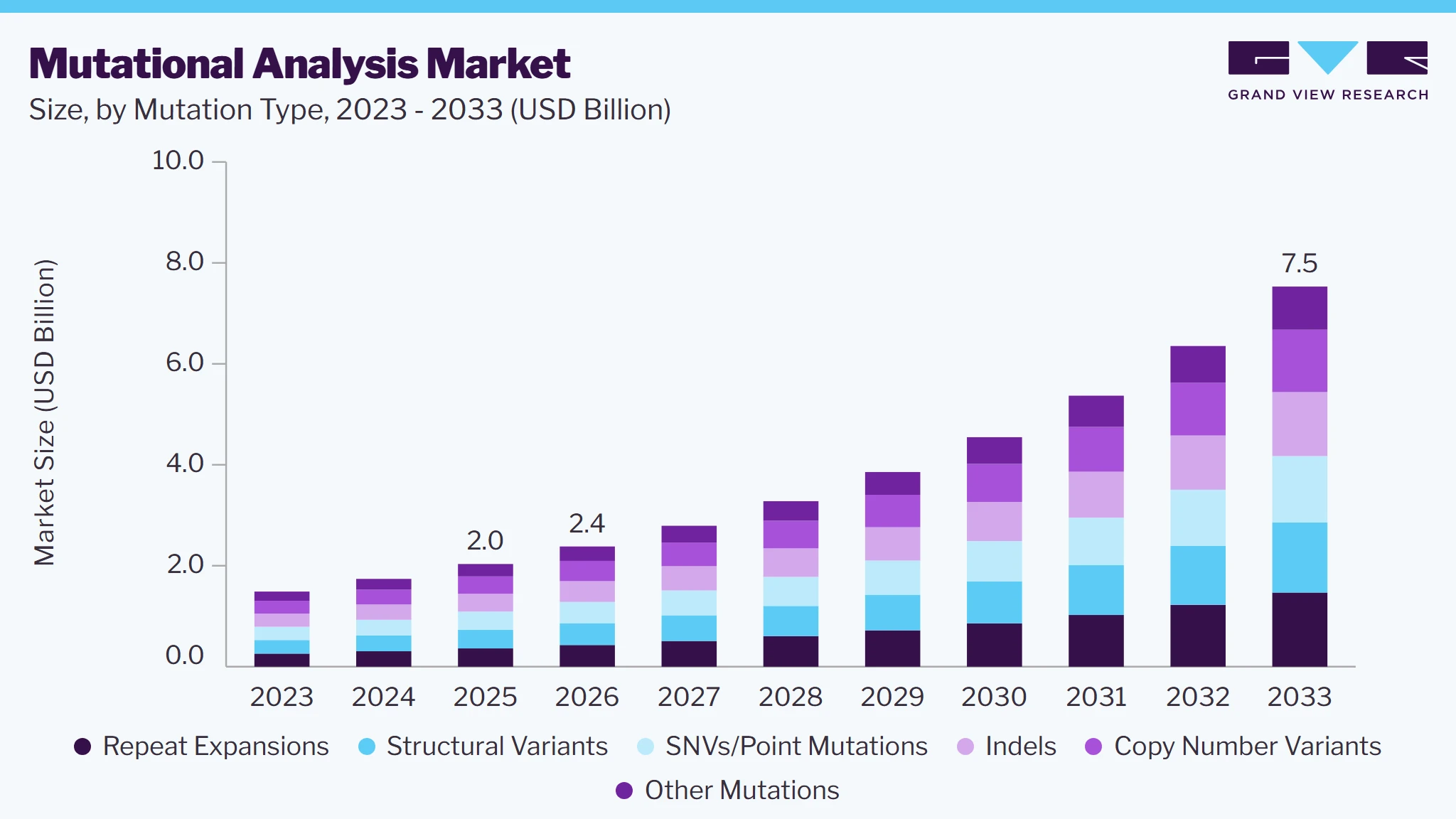
The global mutational analysis market size was valued at USD 2.0 billion in 2025 and is projected to grow from USD 2.4 billion in 2026 to USD 7.5 billion by 2033, at a CAGR of 17.9% from 2026 to 2033. North America dominated the market, accounting for a revenue share of 42.8% in 2025. The market growth is driven by increasing adoption of next-generation sequencing and molecular profiling technologies, growing demand for precision medicine, and expanding applications of mutational analysis in cancer genomics, inherited disease diagnosis, and drug development.
 Source: Grand View Research, IR Documents, Primary Interviews, Paid DatabasesTo learn more about this report,
 Download Free Sample Report
 Key Market Trends & Insights
- By mutation type: Structural variants segment held the highest market share of 18.2% in 2025.
- Based on technology: Sequencing based segment held the highest market share of 26.0% in 2025.
- Based on product & service: Consumables & reagents segment held the highest market share of 17.8% in 2025.
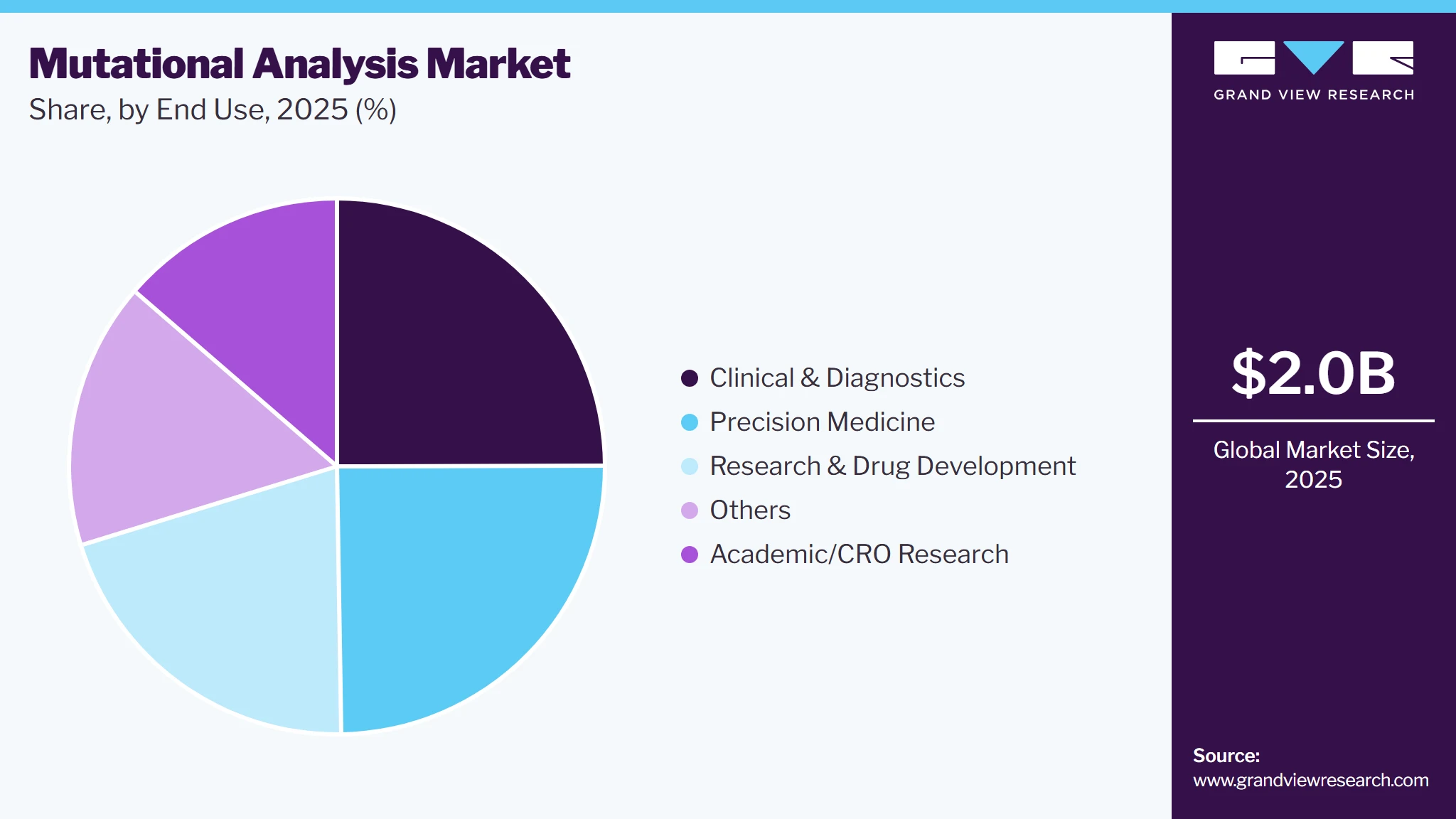
- By end use: Clinical & diagnostics segment held the highest market revenue share of 25.0% in 2025.
Regional Highlights
- Largest regional market: North America (42.8% revenue share in 2025)
- Fastest growing regional market: Asia Pacific (highest CAGR, 2026-2033)
- By Country: The U.S. held the largest market share in 2025
Market Size & Forecast
- Market Size in 2025: USD 2.0 Billion
- Estimated Market Size in 2026: USD 2.4 Billion
- Projected Market Size by 2033: USD 7.5 Billion
- CAGR (2026-2033): 17.9%
Three ways to get this report
Buy it, customize it, or ask a question.Ask an Analyst
A direct answer, usually in 1 working day
- AccessReport author, directly
- Reply timeWithin 1 working day
- No sales callDirect answer only
- FormatEmail reply
- CostFree, no cost
Get the Full Report
What the study covers
- FormatsPDF · Excel · Dashboard
- Timeline2026–2033 annual, 2025 base
- Coverage20+ countries, 5 regions
- Companies10+ key players profiled
Customize the Report
20% free customization
- IncludeCountries, segments, points
- TailorTo your product definition
- ExtendDeeper competitor detail
- OrA fully bespoke study
- Turnaround5–10 working days
 To learn more about this report, Download Free Sample Report
 Market Dynamics
The mutational analysis market is witnessing significant growth, driven by increasing demand for identifying and characterizing genetic mutations across cancer research, precision medicine, genetic testing, and drug development. Growing adoption of next-generation sequencing and other genomic technologies is enabling the detection of single-nucleotide variants, insertions and deletions, copy-number alterations, and other genomic changes with greater sensitivity and scale. In addition, expanding use of mutation analysis for tumor profiling, treatment selection, disease progression, and biomarker discovery is supporting market growth.
The mutational analysis industry is being driven by increasing demand for comprehensive detection of genomic mutations, owing to the growing use of next-generation sequencing in precision medicine and oncology. These technologies enable the identification of multiple genomic alterations, including single-nucleotide variants, insertions and deletions, copy-number variations, and gene rearrangements. For instance, in August 2025, Twist Bioscience launched its Oncology DNA Comprehensive Genomic Profiling Panel covering 562 genes and enabling detection of multiple genomic alterations, along with tumor mutational burden and microsatellite instability. Moreover, the availability of comprehensive genomic profiling panels supports broader mutation analysis in oncology.
“We designed this panel to break the status quo in genomic profiling by offering laboratories a powerful alternative to locked, one-size-fits-all solutions With our customizable content, flexible workflow, and compatibility with multiple sequencing platforms, Twist’s Oncology DNA CGP Panel puts scientific control back in the hands of researchers and clinicians, particularly for those who need a more cost-effective solution compared to existing CGP products or a more efficient option than smaller panels.”
-Emily M. Leproust, Ph.D., CEO and co-founder of Twist Bioscience.
High costs and uneven reimbursement for mutation and genomic testing may restrain the mutational analysis market by limiting access to comprehensive genomic profiling across healthcare settings. According to an article published in Oncology and Therapy in February 2026, limited reimbursement, lack of standardization, and varying guidance have contributed to inconsistent adoption of genomic testing across geographies. These financial and reimbursement challenges may limit the broader use of mutational analysis in routine clinical practice.
The expansion of mutational analysis into noncoding genetic variants is creating opportunities for the mutational analysis market by enabling the identification of potentially pathogenic variants in regulatory regions that may contribute to genetic diseases. For instance, in May 2025, Illumina introduced PromoterAI, an AI-based algorithm designed to identify potentially pathogenic regulatory variants in noncoding regions of the genome to support rare disease diagnosis. In addition, the development of technologies for analyzing previously difficult-to-interpret noncoding variants can expand the scope of mutational analysis in genetic testing and rare disease research.
"Illumina is breaking new ground with this AI technology. Combined with whole-genome sequencing, we believe PromoterAI holds the power to improve the rate of rare disease diagnosis by identifying previously overlooked variants in the noncoding genome. One of the challenges of searching for the genetic causes of rare disease is that, even if the protein-coding sequence of a gene is free from variants, mutations in that gene's promoter region can prevent it from being properly expressed."
-Kyle Farh, MD, PhD, vice president, distinguished scientist, and head of the Illumina Artificial Intelligence Lab.
Market Concentration & Characteristics
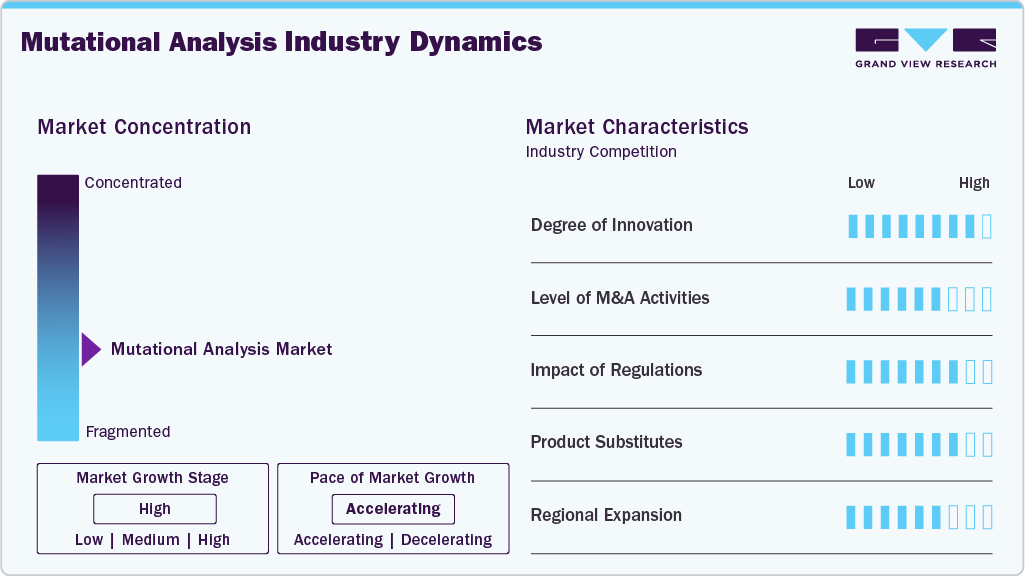
The degree of innovation in the mutational analysis market is high, driven by advances in highly sensitive mutation detection, CRISPR-based analysis, and amplification-free molecular assays. According to an article published in Analytical Chemistry in August 2025, researchers developed a lanthanide metal-organic framework-integrated CRISPR-Cas12a platform for amplification-free detection of gene mutations, enabling sensitive and specific mutational analysis without conventional nucleic-acid amplification. This approach enhances the sensitivity and specificity of mutation analysis and supports the development of advanced molecular analysis applications.
The mutational analysis market is witnessing moderate M&A activity, as companies strengthen sequencing-based mutation detection and mutagenesis testing capabilities. For instance, in February 2026, Scantox acquired the nonclinical genomic safety business of TwinStrand Biosciences through a technology transfer and license agreement, gaining exclusive global rights to provide DuplexSeq Mutagenesis Assays and related nonclinical genomics safety services. Moreover, the technology uses error-corrected next-generation sequencing to directly quantify ultra-rare mutations, strengthening Scantox’s mutation analysis capabilities for genetic toxicology, carcinogenicity evaluation, and gene-editing safety applications.
 To learn more about this report, Download Free Sample Report
 “DuplexSeq brings unprecedented sensitivity and accuracy to genetic toxicology—enabling higher-quality decision data than has been available before. It builds naturally on our Big Blue leadership and positions us to drive the modernization of the field, from standalone genetic toxicology testing today toward embedded genomic safety endpoints in broader toxicology studies tomorrow.”
- Jeanet Løgsted, CEO of Scantox Group
The mutational analysis market is increasingly influenced by regulatory guidelines governing genetic mutation detection and characterization. For instance, in April 2026, the U.S. FDA issued draft guidance on genome-editing safety assessment using next-generation sequencing, providing recommendations for sequencing strategies, analysis, and reporting. The guidance supports greater standardization and reliability of sequencing-based mutational analysis in genome-editing applications.
The mutational analysis market is witnessing product type expansion through the introduction of assays designed to detect a broader range of clinically relevant genetic mutations. For instance, in April 2025, Biocartis launched the Idylla POLE-POLD1 Mutation Assay, a fully automated PCR-based assay designed to detect 17 POLE and one POLD1 point mutations in a single cartridge. This launch expanded mutation-analysis solutions for rapid molecular profiling in endometrial cancer research.
“The Idylla POLE-POLD1 Mutation Assay has the potential to provide an on-demand, fast, and accurate solution, making molecular testing in endometrial cancer samples easier and more accessible than ever,”
-Sigurd F Lax, professor and head of the Department of Pathology, General Hospital Graz II in Linz, Austria
The mutational analysis market is witnessing regional expansion as companies extend the availability of mutation-analysis technologies into new geographic markets. For instance, in July 2025, Biotype entered into an exclusive distribution partnership with 3i Molecular Solutions & Healthcare Services for the Indian market for its QPCR POLE Mutation Analysis Kit. This partnership expanded access to Biotype’s mutation-analysis solution in India and strengthened the company’s presence in the country’s molecular testing market.
Analyst Perspective
The mutational analysis market is expected to witness high growth, driven by increasing demand for accurate identification and characterization of genetic mutations in cancer and inherited disorders. Growing adoption of mutational analysis in precision medicine, molecular diagnostics, biomarker discovery, and drug development is supporting market expansion. Advancements in next-generation sequencing, PCR-based technologies, and targeted sequencing are improving the sensitivity, accuracy, and efficiency of mutation detection. In addition, market participants are focusing on expanding sequencing capabilities, developing targeted mutation panels, and introducing integrated analysis solutions to address the growing demand for comprehensive genetic profiling across clinical research and diagnostic applications.
Mutation Type Insights
The structural variants segment accounted for the largest revenue share, over 18.2% in 2025, supported by increasing adoption of advanced technologies for detecting complex genomic alterations. For instance, in August 2025, Bionano Genomics released Bionano Solve 3.8.3, which expanded its background structural variant database by 18% and improved sensitivity, specificity, and resolution for SV detection. Moreover, this development highlights advancements in accurate structural variant analysis.
“We are excited for these pivotal updates to VIA and Solve software to reach the market. They can enhance the ease of use and speed to interpretation for hematological malignancies and now extend these capabilities to applications for constitutional genetic disorders. In addition, these upgrades are expected to improve performance overall and accelerate analysis on the Stratys Compute hardware. I’m proud of the team for these developments and I believe they show Bionano is continuing its rich tradition of innovation in cytogenomics,”
-Dr. Erik Holmlin, Bionano’s president & chief executive officer.
The repeat expansion segment is expected to register the fastest CAGR during 2026-2033, driven by rising need for accurate detection and sizing of pathogenic repeat expansions associated with genetic and neuromuscular disorders. For instance, in April 2025, Bionano Genomics announced a publication demonstrating the use of optical genome mapping (OGM) to detect and size large repeat expansions in the DMPK, CNBP, and RFC1 genes, achieving 98.8% detection accuracy across 85 subjects. Moreover, this development highlights the growing adoption of advanced genomic technologies for repeat expansion analysis.
“Repeat expansions are a clinically relevant class of structural variations (SVs). Their size, stability and variability make them challenging to analyze using conventional methods such as PCR, Southern blotting and next-generation sequencing (NGS). LRS may be useful, but LRS can be too costly for routine use. This study demonstrates how can OGM address a critical limitation in genome analysis and lays the foundation for researchers around the world to broaden their scope of OGM use in research to include this class of SVs, which we believe may pave the way for future development of better diagnostics and therapeutics for genetic diseases like repeat expansion disorders.”
-Erik Holmlin, president and CEO of Bionano
Technology Insights
The sequencing-based segment dominated the market with a share of 26.0% in 2025, supported by increasing adoption of next-generation sequencing technologies for comprehensive detection and characterization of genomic mutations. Sequencing-based methods enable identification of multiple mutation types, including SNVs, MNVs, and insertions/deletions, across numerous genomic regions in a single analysis. For instance, in January 2025, Tempus AI launched its FDA-approved xT CDx test, a 648-gene next-generation sequencing-based assay designed to detect genomic alterations, including SNVs, MNVs, and insertions/deletions in solid tumors. Moreover, the launch highlights the growing application of sequencing-based technologies in mutational analysis.
"We are thrilled to broadly introduce our xT CDx test, which combines the trusted performance our clinicians rely on, now with FDA approval. Tempus has an unwavering commitment to providing high quality and robust assays so clinicians have the most comprehensive and actionable insights in a timely manner. This is consistent with the goal of improving the outcomes for all of their patients, and we look forward to providing xT CDx nationally to make that possible."
- Ezra Cohen, MD, Chief Medical Officer of Oncology at Tempus
The CRISPR-based segment is expected to register the fastest CAGR during 2026-2033, driven by high specificity and sensitivity of CRISPR technologies for targeted mutation detection. These methods enable selective recognition of specific nucleotide alterations, supporting applications in genetic mutation screening and molecular diagnostics. According to an article published in Analytical Chemistry in July 2025, researchers developed the SPARC CRISPR platform, which combines Cas12a and Cas13a for SNV identification and mutation confirmation and demonstrated detection of clinically significant hepatitis B virus resistance mutations. This development highlights the growing application of CRISPR-based technologies in mutational analysis.
Product & Service Insights
The consumables & reagents segment accounted for approximately 27.8% of the product & service segment in 2025, making it the leading application segment, mainly due to continuous requirement for mutation detection kits, amplification reagents, probes, enzymes, and other consumables used across molecular testing workflows. These products support the identification and quantification of specific genomic alterations and are widely used in oncology, genetic testing, and precision medicine. For instance, in April 2024, Bio-Rad Laboratories launched the ddPLEX ESR1 Mutation Detection Kit, an ultrasensitive multiplexed digital PCR assay designed for breast cancer mutation detection. In addition, this launch highlights the continued development of specialized consumables and reagents for sensitive and targeted mutation analysis.
“With the ddPLEX ESR1 Mutation Detection Kit, our customers can achieve new levels of sensitivity and multiplexing without compromising throughput. This launch reflects our ongoing menu expansion in oncology and our commitment to providing oncology researchers with technologies that enable everything from biomarker discovery to clinical trials that support improvements in patient monitoring.”
- Stephen Kulisch, vice president of marketing for Bio-Rad’s Digital Biology Group
Software & bioinformatics segment is projected to register the fastest CAGR during 2026-2033, driven by increasing use of computational tools for variant calling and genomic data analysis. These solutions enable efficient identification of genetic alterations from sequencing data and support oncology and other genomic research applications. For instance, in May 2025, Illumina launched DRAGEN v4.4 software with new oncology applications for somatic variant analysis, including SNV, structural variant, and copy number alteration detection. Moreover, the development highlights the growing adoption of specialized bioinformatics software for genomic mutation analysis.
"DRAGEN has pushed the limits in what is possible in complex genomic data analysis, while making bioinformatics more accessible and easier to use. With DRAGEN v4.4 we make bioinformatics even easier for complex oncology workflows and multiomics analysis. With out-of-the-box oncology applications, customers can set up their clinical research tests with a fraction of the effort typically required and obtain meaningful insights in record time."
- Rami Mehio, head of Global Software and Informatics at Illumina
End Use Insights
Clinical & diagnostics segment accounted for approximately 25.0% share in 2025 making it a leading cell type segment. Growth is driven by increasing use of molecular and genomic testing for mutation detection and characterization. For instance, in March 2026, Integrated DNA Technologies launched its first in vitro diagnostic NGS assays, Archer FUSIONPlex-HT Dx and Archer VARIANTPlex-HT Dx, for oncology workflows in the U.S. and select European countries. The assays enable targeted DNA and RNA sequencing for detecting genomic variants and fusions in clinical laboratories, supporting the adoption of NGS-based mutational analysis in clinical diagnostics.
“At IDT, we believe that precision diagnostics should be as reliable as they are innovative. This launch reflects our commitment to supporting clinical labs with trusted solutions that combine innovative technology, ease-of-use, and regulatory assurance, so clinicians can focus on their mission-critical work to find the right answers across the expanding biomarker landscape.”
-Ajay Gannerkote, president, IDT
 To learn more about this report, Download Free Sample Report
 Precision medicine segment is projected to witness the fastest CAGR during 2026–2033, supported by increasing use of genomic mutation analysis to identify actionable variants and guide individualized treatment decisions. Moreover, advances in genomic sequencing and molecular diagnostics are improving mutation profiling for targeted therapy selection and personalized disease management, supporting the adoption of mutational analysis in precision medicine.
Regional Insights
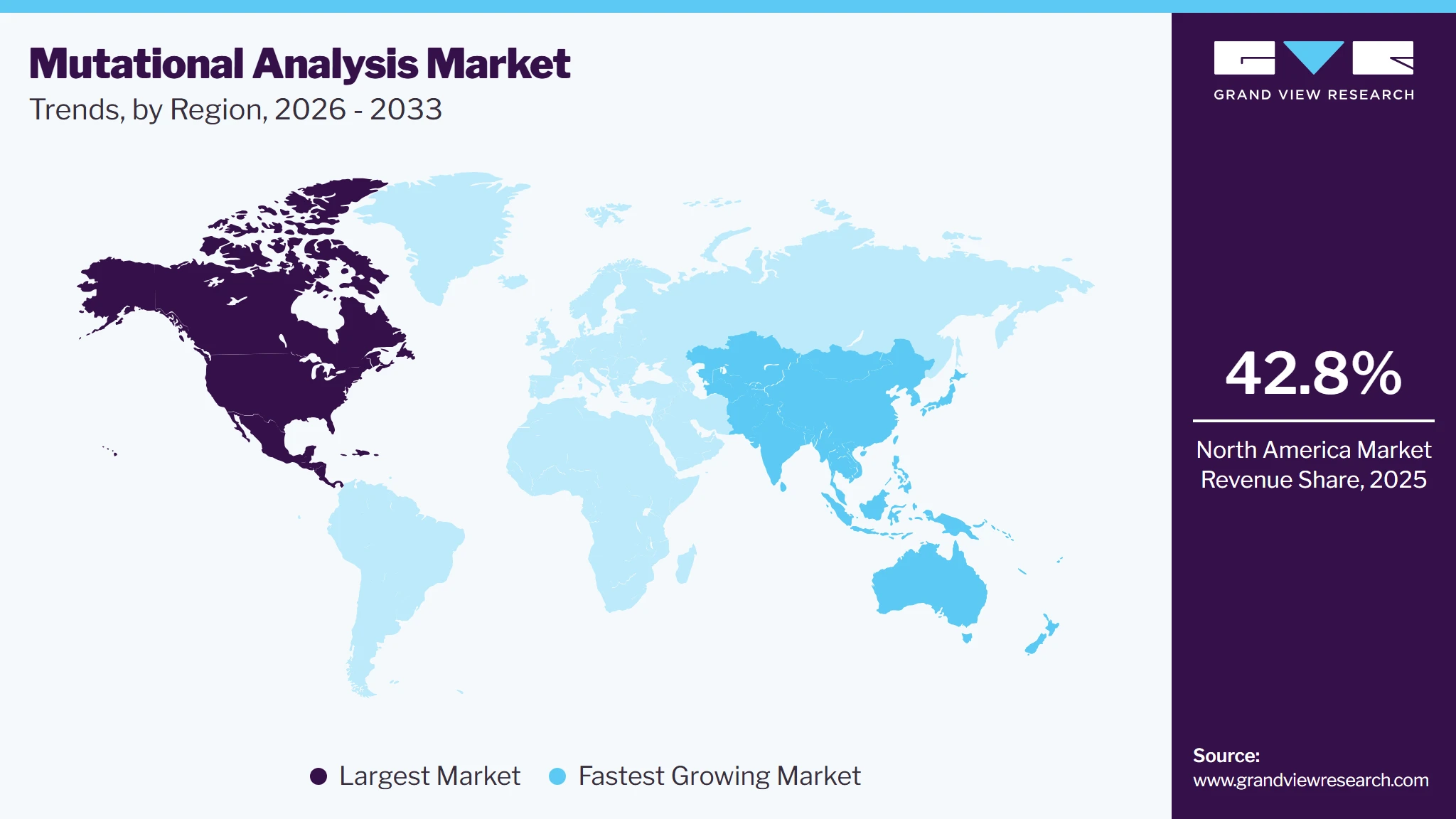
North America dominated the mutational analysis market accounting for the largest revenue share of 42.8% in 2025, driven by increasing use of mutation profiling in precision oncology, targeted therapy selection, and molecular diagnostics. Moreover, growing adoption of next-generation sequencing and high-sensitivity molecular methods is enabling detection of low-frequency mutations, while the expanding use of comprehensive genomic profiling is increasing the need to identify actionable genetic alterations across multiple cancer types.
 To learn more about this report, Download Free Sample Report
 U.S. Mutational Analysis Market Trends
The U.S. mutational analysis market is expected to grow over the forecast period, supported by advanced sequencing infrastructure, extensive molecular diagnostics capabilities, and rapid adoption of NGS-based testing. For instance, in July 2025, the FDA approved the Oncomine Dx Express Test, an NGS-based assay capable of detecting substitutions, insertions, deletions, copy-number variants, and gene fusions in solid tumors. This approval expands the availability of multiplexed mutation detection for clinical applications and reinforces the adoption of advanced molecular analysis technologies.
Europe Mutational Analysis Market Trends
Europe mutational analysis market is anticipated to grow significantly over the forecast period, supported by the adoption of advanced sequencing technologies for high-sensitivity mutation detection and genetic toxicology. For instance, in August 2026, Toxys and Mutagentech expanded their collaboration to make single-molecule mutation sequencing (SMM-seq) available through contract research services in Europe, enabling highly sensitive detection of DNA mutations and analysis of mutation frequencies and spectra. In addition, the collaboration expands access to advanced mutation-analysis technology for pharmaceutical, chemical, and consumer-product development.
"By adding SMM-seq to our portfolio, we can offer one of the most advanced mutation analysis technologies currently available."
-Giel Hendriks, CEO of Toxys
The UK mutational analysis industry is expected to grow over the forecast period, driven by the increasing use of molecular testing for disease characterization and treatment selection. For instance, in March 2025, Invivoscribe announced the registration of its LeukoStrat CDx FLT3 Mutation Assay in the UK, with the assay receiving registration from the MHRA for accurate detection of FLT3 mutations in acute myeloid leukemia. This registration expands access to a dedicated mutation-analysis assay for identifying actionable FLT3 alterations and supporting treatment decisions.
The mutational analysis market in Germany is anticipated to grow significantly over the forecast period, supported by the country’s strong molecular diagnostics and precision-oncology capabilities. For instance, in September 2024, Germany-based BIOTYPE launched the MODAPLEX NRAS Mutation Kit, designed to detect 15 critical NRAS driver mutations within four hours. The launch strengthens rapid mutation-analysis capabilities for advanced colorectal cancer and supports molecular profiling for treatment decisions.
Asia Pacific Mutational Analysis Market Trends
Asia Pacific is expected to grow at the fastest CAGR of 19.5% during the forecast period, supported by expanding molecular diagnostics and greater adoption of targeted genetic testing in oncology. For instance, in March 2026, Australia’s Therapeutic Goods Administration registered the Idylla EGFR Mutation Test, a Class III IVD manufactured by Biocartis and sponsored by Abacus dx, enabling mutation testing in the Australian market. Moreover, this registration expands access to dedicated molecular mutation-analysis testing in APAC.
China’s mutational analysis market is expected to grow over the forecast period, supported by by the expansion of molecular diagnostics and increasing adoption of multiplex genetic testing in oncology. For instance, in May 2026, Amoy Diagnostics received NMPA approval in China for its AmoyDx Pan Lung Cancer PCR Panel, with RET gene-fusion detection approved as a companion diagnostic for selpercatinib. Moreover, the panel enables simultaneous detection of alterations in 11 key driver genes, including EGFR, ALK, ROS1, KRAS, BRAF, HER2, RET, MET, and NTRK1/2/3, thereby expanding multiplex mutation-analysis capabilities for targeted treatment selection in non-small cell lung cancer.
Japan’s mutational analysis market is witnessing rapid growth driven by expansion of precision oncology and adoption of advanced molecular diagnostic technologies. For instance, in April 2026, Riken Genesis, Amoy Diagnostics, and Precision Medicine Asia announced Japanese approval of the AmoyDx Pan Lung Cancer PCR Panel as a drug-agnostic companion diagnostic for EGFR-targeted therapies. Moreover, the real-time PCR panel detects multiple clinically relevant gene mutations and fusions, including EGFR, BRAF, MET, KRAS, and RET alterations, thereby expanding mutation-analysis capabilities for treatment selection in non-small cell lung cancer.
Latin America Mutational Analysis Market Trends
The Latin America mutational analysis industry is expected to grow steadily over the forecast period, supported by increasing adoption of molecular diagnostics and growing implementation of genomic testing in oncology. The rising use of next-generation sequencing (NGS), targeted mutation testing, and biomarker analysis for cancer diagnosis and treatment selection is expected to support market growth across the region. In addition, increasing efforts to integrate precision oncology into healthcare systems are likely to create further demand for mutation analysis technologies.
MEA Mutational Analysis Market Trends
The Middle East & Africa mutational analysis market is growing steadily, supported by supported by increasing access to advanced molecular diagnostics and precision-oncology testing. For instance, in January 2024, Hikma Pharmaceuticals and Guardant Health entered into an exclusive agreement to commercialize liquid- and tissue-biopsy tests for tumor mutation profiling across solid cancers in the Middle East and North Africa. Moreover, the agreement expands regional access to Guardant360 and Guardant360 TissueNext comprehensive genomic profiling tests for mutation analysis and treatment selection.
“Our partnership with Guardant Health adds next-generation sequencing diagnostics that can potentially transform cancer care in MENA bringing hope to patients facing this challenging journey. We are excited to partner with Guardant Health, as their offering can help patients at all stages of the disease – from screening to monitoring cancer recurrence to guiding treatment decisions. As a leading healthcare company in MENA with a robust oncology portfolio encompassing generics, biologics, immunotherapy, and cutting-edge innovations, Hikma is committed to advancing precision medicine for improved treatment outcomes in patients with cancer."
-Mazen Darwazah, Hikma’s Executive Vice Chairman and President of MENA
Key Mutational Analysis Company Insights
The mutational analysis industry is highly competitive, with key players focusing on sequencing technologies, PCR-based assays, digital PCR, next-generation sequencing (NGS), genotyping, bioinformatics, and integrated mutation detection solutions. Companies are strengthening their market position through product launches, technological advancements, strategic collaborations, and expansion of molecular analysis capabilities. Moreover, competitive positioning depends on product offerings, technological capabilities, accuracy, geographic presence, customer base, and applications across cancer research, clinical diagnostics, genetic disorders, precision medicine, drug discovery, and biomarker identification.
Key Mutational Analysis Companies
The following key companies have been profiled for this study on the mutational analysis market:
-
Thermo Fisher Scientific Inc.
-
Illumina, Inc
-
F. Hoffmann-La Roche Ltd
-
QIAGEN
-
Agilent Technologies, Inc.
-
Bio-Rad Laboratories, Inc.
-
Oxford Nanopore Technologies plc.
-
PacBio
-
Takara Bio Inc.
-
Revvity
Competitive Benchmarking
Category
Operating Strategies
Competitive Edge
Weakness
Established Players (Thermo Fisher Scientific Inc.; Illumina, Inc.; F. Hoffmann-La Roche Ltd; QIAGEN; Agilent Technologies, Inc.)
Expanding mutation analysis through NGS, PCR, molecular diagnostics, reagents, software, and integrated genomic solutions; focusing on R&D and strategic collaborations.
Broad portfolios, strong technology capabilities, established customer bases, global presence, and integrated genomic solutions.
High R&D costs, complex workflow integration, infrastructure requirements, and intense competition.
Emerging Players (Bio-Rad Laboratories, Inc.; Oxford Nanopore Technologies plc.; PacBio; Takara Bio Inc.; Revvity)
Expanding sequencing, digital PCR, molecular biology, sample preparation, and genomic analysis solutions through product development and partnerships.
Specialized technologies, differentiated products, strong research capabilities, and growing presence in genomics.
Narrower market reach in some segments, high equipment costs, workflow integration challenges, and competition from established players.
Recent Developments:
- In July 2025, Thermo Fisher Scientific Inc. introduced the Oncomine Comprehensive Assay Plus on the Ion Torrent Genexus System, an NGS-based genomic profiling solution covering 517 genes. The assay enables detection of single-nucleotide variants, insertions and deletions, copy number variations, and gene fusions, strengthening applications in mutation analysis and precision oncology research.
“In recent years, new genomic insights have played an essential role in advancing our understanding of human health and driving novel drug development The addition of the Oncomine Comprehensive Assay Plus on the Genexus System brings the benefits of rapid CGP to more labs, empowering researchers to leverage more comprehensive results at a much faster pace and accelerate what could be life-saving research.”
-Kathy Davy, president of Clinical Next Generation Sequencing at Thermo Fisher Scientific.
- In June 2025, QIAGEN announced a collaboration with Incyte to develop a multimodal NGS-based companion diagnostic panel for detecting clinically relevant gene alterations, initially focusing on mutant CALR in myeloproliferative neoplasms. The collaboration strengthens QIAGEN’s mutation analysis and companion diagnostic capabilities in hematological cancer applications.
“Together with Incyte we are building a multimodal companion diagnostic using a powerful technology like next-generation sequencing to facilitate highly accurate testing for several blood cancer genes at once. This new partnership strengthens our role in offering companion diagnostics for the growing number of biomarkers being discovered in onco-hematology and maximizing the clinical utility of the diagnostic for payor and patient benefit, thus supporting the work of innovative, science-driven companies like Incyte to improve patient outcomes.”
- Jonathan Arnold, Vice President and Head of Partnering for Precision Diagnostics at QIAGEN
- In September 2024, QIAGEN expanded its QIAcuity digital PCR portfolio with the launch of more than 100 new assays, including dPCR LNA Mutation Assays designed to investigate cancer-relevant mutations and copy-number variations. The expansion strengthened QIAcuity’s mutation-analysis capabilities across applications such as colorectal cancer, sarcoma, and thyroid cancer research.
“This important expansion of the menu for QIAcuity digital PCR underscores how QIAGEN is addressing the urgent needs of our customers for new solutions to help use this powerful technology in research and applied testing applications QIAcuity is proving to be a valuable tool for a broad range of applications requiring accurate and sensitive detection of genetic targets, driving the development of new multiplexed assay capabilities. Our efforts won’t stop here as we look to further expand QIAcuity into clinical and biopharma applications as well as new areas of Life Sciences research.”
-Nitin Sood, Senior Vice President, Head of the Life Sciences Business Area at QIAGEN.
Mutational Analysis Market Report Scope Table
Report Attribute
Details
Market size in 2025
USD 2.0 billion
Estimated market size in 2026
USD 2.4 billion
Projected market size by 2033
USD 7.5 billion
Growth rate
CAGR of 17.9% from 2026 to 2033
Historical data
2021 – 2025
Forecast period
2026 – 2033
Quantitative units
Revenue in USD million/billion, and CAGR from 2026 to 2033
Report coverage
Revenue forecast, company ranking, competitive landscape, growth factors, and trends
Segments covered
Mutation type, technology, product & service, end use, and region
Regional scope
North America; Europe; Asia Pacific; Latin America; MEA
Country scope
U.S.; Canada; Mexico; UK; Germany; France; Italy; Spain; Norway; Denmark; Sweden; China; Japan; India; South Korea; Australia; Thailand; Brazil; Argentina; Saudi Arabia; South Africa; UAE; Kuwait
Key companies profiled
Thermo Fisher Scientific Inc.; Illumina, Inc; F. Hoffmann-La Roche Ltd; QIAGEN; Agilent Technologies, Inc.; Bio-Rad Laboratories, Inc.; Oxford Nanopore Technologies plc.; PacBio; Takara Bio Inc.; Revvity
Customization scope
Free report customization (equivalent up to 8 analysts' working days) with purchase. Addition or alteration to country, regional & segment scope.
Pricing and purchase options
Avail customized purchase options to meet your exact research needs. Explore purchase options
Global Mutational Analysis Market Report Segmentation
This report forecasts revenue growth and provides an analysis on the latest trends in each of the sub-segments from 2021 to 2033. For this report, Grand View Research has segmented the global mutational analysis market on the basis of mutation type, technology, product & service, end use, and region.
-
Mutation Type Outlook (Revenue, USD Million, 2021-2033)
-
SNVs/Point Mutations
-
Indels
-
Copy Number Variants
-
Structural Variants
-
Repeat Expansions
-
Other Mutations
-
-
Technology Outlook (Revenue, USD Million, 2021-2033)
-
Sequencing-based
-
PCR-based
-
Microarray-based
-
CRISPR-based
-
Other Molecular Methods
-
-
Product & Service Outlook (Revenue, USD Million, 2021-2033)
-
Instruments & Equipment
-
Consumables & Reagents
-
Software & Bioinformatics
-
Testing & Analytical Services
-
-
End Use Outlook (Revenue, USD Million, 2021-2033)
-
Clinical & Diagnostics
-
Precision Medicine
-
Research & Drug Development
-
Academic/CRO Research
-
Others
-
-
Regional Outlook (Revenue, USD Million, 2021-2033)
-
North America
-
U.S.
-
Canada
-
Mexico
-
-
Europe
-
UK
-
Germany
-
France
-
Italy
-
Spain
-
Denmark
-
Sweden
-
Norway
-
-
Asia Pacific
-
Japan
-
China
-
India
-
Australia
-
Thailand
-
South Korea
-
-
Latin America
-
Brazil
-
Argentina
-
-
Middle East and Africa (MEA)
-
South Africa
-
Saudi Arabia
-
UAE
-
Kuwait
-
-
Research Methodology
The mutational analysis market figures in this report are based on a proven research process that combines executive interviews with secondary research from proprietary databases, company filings, and recognized regulatory and institutional sources. Market size is built through value-chain sizing—reconciling supply-side and demand-side estimates—and triangulated with bottom-up and top-down approaches. Every estimate passes multiple levels of expert validation before publication, with each mutational analysis segment quantified using the revenue-capture definitions in the table below.
Segment Definition
Segment- Mutation Type
Revenue Capture Definition
SNVs/Point Mutations
Revenue generated from technologies, products, and services used to identify single-nucleotide variants and point mutations involving changes to individual DNA bases across clinical, research, and drug-development applications.
Indels
This segment captures income from mutation analysis solutions used to detect small insertions and deletions in DNA sequences, supporting genetic disease analysis, molecular diagnostics, and research applications.
Copy Number Variants
Market value in this category stems from products and services used to identify gains or losses of DNA segments, including deletions and duplications, for genomic characterization and disease research.
Structural Variants
Revenue generated from mutation analysis solutions used to detect large-scale genomic alterations, including structural insertions and deletions, inversions, translocations, and other chromosomal rearrangements.
Repeat Expansions
This segment captures income from analytical technologies used to identify abnormal expansions of repetitive DNA sequences associated with inherited and neurological disorders and other genetic conditions.
Other Mutations
Market value in this category stems from analysis of mutation types not classified as SNVs/point mutations, indels, copy number variants, structural variants, or repeat expansions.
Segment- Technology
Revenue Capture Definition
Sequencing-based
Revenue generated from sequencing-based technologies used to identify and characterize genomic mutations through determination and comparison of DNA sequence information.
PCR-based
This segment captures income from PCR-based technologies, including conventional, quantitative, digital, and allele-specific PCR approaches, used for targeted mutation detection and validation.
Microarray-based
Market value in this category stems from microarray technologies used to analyze genomic alterations through hybridization-based detection of sequence variations, copy number changes, and other genetic abnormalities.
CRISPR-based
Revenue generated from CRISPR-based technologies used for targeted mutation detection, validation, and functional assessment of genetic variants and mutation-associated phenotypes.
Other Molecular Methods
This segment captures income from molecular techniques used for mutation analysis that do not fall under sequencing, PCR, microarray, or CRISPR-based methods.
Segment- Product & Service
Revenue Capture Definition
Instruments & Equipment
Market value in this category stems from instruments and equipment used for mutation detection and analysis, including sequencing platforms, PCR systems, microarray scanners, and other laboratory analysis equipment.
Consumables & Reagents
Revenue generated from consumables and reagents used in mutation analysis workflows, including primers, probes, enzymes, nucleotides, reaction mixes, assay kits, and sample-preparation materials.
Software & Bioinformatics
This segment captures income from software and bioinformatics solutions used for sequence analysis, variant calling, annotation, interpretation, visualization, and management of mutation-related genomic data.
Testing & Analytical Services
Market value in this category stems from outsourced mutation analysis services, including sample processing, molecular testing, sequencing, variant detection, interpretation, validation, and analytical reporting.
Segment- End Use
Revenue Capture Definition
Clinical & Diagnostics
Revenue generated from mutation analysis products and services used for disease diagnosis, genetic testing, molecular profiling, hereditary disease assessment, and clinical decision support.
Precision Medicine
This segment captures income from mutation analysis technologies used to identify genomic alterations for patient stratification, treatment selection, therapeutic response assessment, and mutation-guided personalized care.
Research & Drug Development
Market value in this category stems from mutation analysis solutions used in genomic research, target discovery, biomarker identification, drug development, disease modeling, and evaluation of therapeutic responses.
Academic/CRO Research
Revenue generated from mutation analysis products and services used by academic institutions and CROs for genomic studies, assay development, translational research, and outsourced molecular analysis.
Others
This segment captures income from mutation analysis applications and end users not classified under clinical and diagnostics, precision medicine, research and drug development, or academic/CRO research.
Delivered Customizations
This report has been delivered with the following In-depth customizations
Client Request
Customization Delivered
Value Adds
Mutation Testing Cost & Turnaround Assessment
Assessment of testing costs, processing time, sample-to-result timelines, and major cost drivers for selected mutation analysis methods.
Help clients benchmark testing economics and identify opportunities to improve cost and turnaround performance.
Mutation Interpretation & Reporting Assessment
Detailed assessment of variant interpretation, classification, reporting practices, and data requirements for selected research or clinical use cases.
Help clients understand interpretation challenges and identify opportunities for improved reporting and analytical solutions.
Sample & Specimen Requirement Assessment
Assessment of sample types, sample quality requirements, storage conditions, input quantities, and handling considerations for selected mutational analysis workflows.
Help clients understand pre-analytical requirements and identify opportunities to improve sample handling and testing workflows.
Frequently Asked Questions About This Report
The global mutational analysis market size was valued at USD 2.0 billion in 2025 and is estimated at USD 2.4 billion for 2026.
The global mutational analysis market is expected to grow at a CAGR of 17.9% from 2026 to 2033, reaching USD 7.5 billion.
The market growth is driven by increasing adoption of next-generation sequencing and molecular profiling technologies, growing demand for precision medicine, and expanding applications of mutational analysis in cancer genomics, inherited disease diagnosis, and drug development.
North America dominated with a 42.8% revenue share in 2025.
Asia Pacific is the fastest-growing region over the forecast period.
The structural variants segment led with 18.2% revenue share in 2025, while repeat expansions is the fastest-growing segment.
Sequencing based segment held the largest revenue share in 2025, while CRISPR-based is the fastest-growing segment.
Consumables and reagents segment held the largest share (over 27.8%) in 2025 and software & bioinformatics is the fastest-growing segment.
Key players include Thermo Fisher Scientific Inc., Illumina, Inc, F. Hoffmann-La Roche Ltd, QIAGEN, Agilent Technologies, Inc., Bio-Rad Laboratories, Inc., Oxford Nanopore Technologies plc., PacBio, Takara Bio Inc., and Revvity.
About the Author(s)
Biotechnology Research Team
Healthcare · BiotechnologyThis report was authored by the biotechnology research team at Grand View Research - comprising two research analysts, one senior research analyst, and one industry expert - with specialized expertise in the biotechnology segment of the healthcare industry. All findings are based on proprietary healthcare databases, executive interviews, and regulatory analysis, subject to internal peer review prior to publication.
Last Updated:
Speak to Analyst

Customize this report to your needs - add regions, segments, or data points, with 20% free customization.
Or view our licence options:


ISO 9001:2015 & 27001:2022 Certified
We are GDPR and CCPA compliant! Your transaction & personal information is safe and secure. For more details, please read our privacy policy.


