
- Home
- »
- Medical Devices
- »
-
Myopia And Presbyopia Treatment Market Report, 2026-2033GVR Report cover

Myopia And Presbyopia Treatment Market (2026 - 2033)
Size, Share & Trends Analysis Report By Myopia (Corrective, Surgical, Drugs), By Presbyopia (Prescription lenses, Contact lenses, Intraocular lenses, Refractive surgery), By Region, And Segment Forecasts
Market Size, 2025
$21.8BMarket Estimate, 2026
$23.7BMarket Forecast, 2033
$45.4BCAGR, 2026–2033
9.7%Myopia And Presbyopia Treatment Market Summary
The global myopia and presbyopia treatment market size was valued at USD 21.8 billion in 2025 and is projected to grow from USD 23.7 billion in 2026 to USD 45.4 billion by 2033, at a CAGR of 9.7% from 2026 to 2033. The market in North America dominated with a revenue share of 40.7% in 2025. The myopia and presbyopia treatment market is experiencing steady growth, driven by the rising global burden of vision disorders, increasing screen time, aging populations, and growing awareness of eye health.
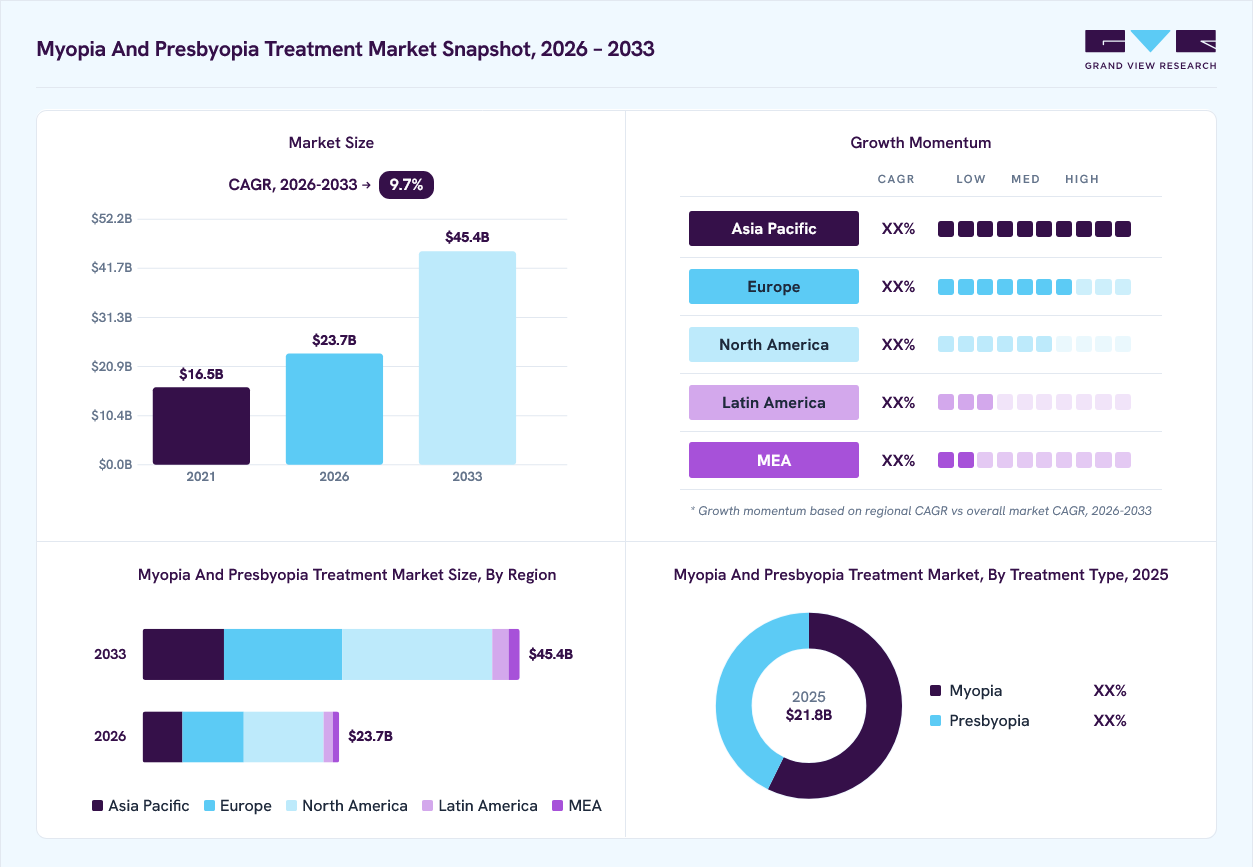 Source: Grand View Research, IR Documents, Primary Interviews, Paid DatabasesTo learn more about this report,
 Download Free Sample Report
 Key Market Trends & Insights
- By myopia treatment: Corrective segment held the largest market share of 37.3% in 2025.
- By presbyopia treatment: Prescription lenses segment held the largest market share in 2025.
Regional Highlights
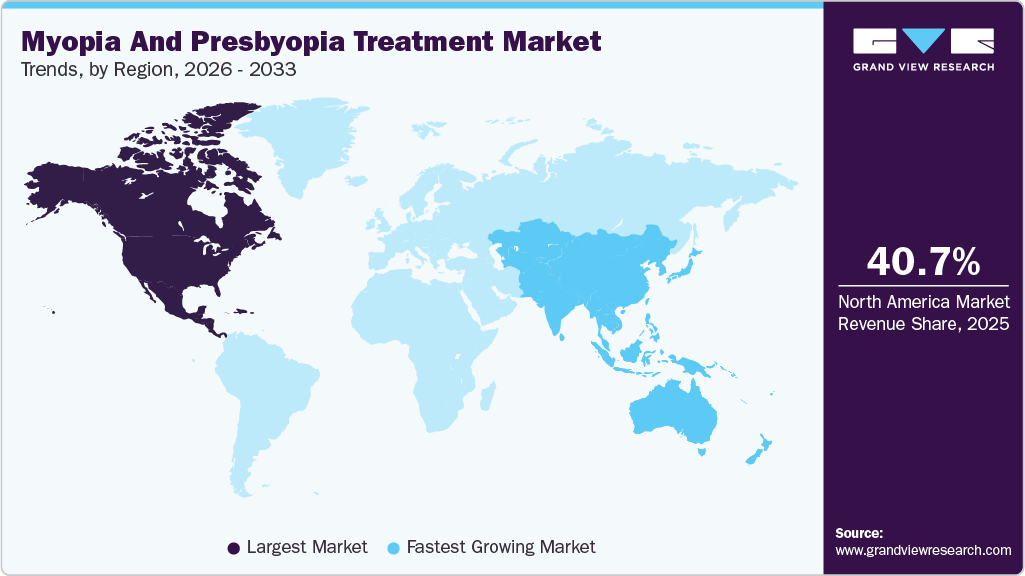
- Largest regional market: North America (40.7% revenue share, 2025)
- Fastest-growing regional market: Asia Pacific (highest CAGR, 2026-2033)
- By country: China held the largest market share in 2025
Market Size & Forecast
- Market size in 2025: USD 21.8 Billion
- Estimated market size in 2026: USD 23.7 Billion
- Projected market size by 2033: USD 45.4 Billion
- CAGR (2026-2033): 9.7%
Three ways to get this report
Buy it, customize it, or ask a question.Ask an Analyst
Analyst response in 1 business day
- AccessReport author, directly
- Reply timeWithin 1 working day
- No sales callDirect answer only
- FormatEmail reply
- CostFree, no cost
Get the Full Report
What the study covers
- FormatsPDF · Excel · Dashboard
- Timeline2026–2033 annual, 2025 base
- Coverage20+ countries, 5 regions
- Companies10+ key players profiled
Customize the Report
20% free customization
- IncludeCountries, segments, points
- TailorTo your product definition
- ExtendDeeper competitor detail
- OrA fully bespoke study
- Turnaround5–10 working days
Lifestyle changes such as prolonged digital device usage and reduced outdoor activity are significantly contributing to the increase in refractive errors, especially among children and working adults. According to the World Health Organization, at least 2.2 billion people globally have a vision impairment or blindness, with a large proportion being preventable or treatable. These factors, combined with improved access to eye care services and technological advancements, are accelerating demand for effective treatment solutions.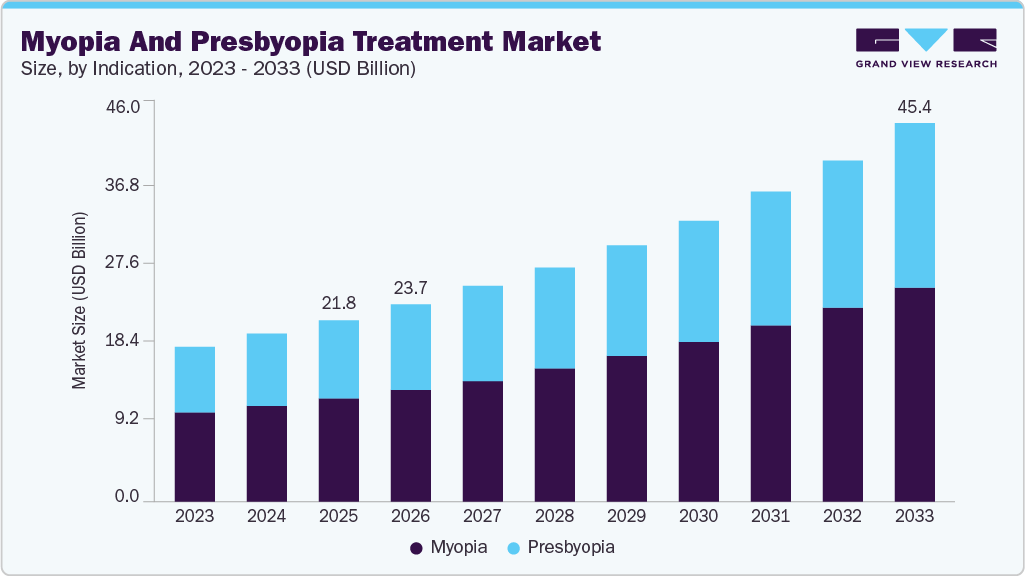 To learn more about this report, Download Free Sample Report
 Myopia (nearsightedness) is a condition where distant objects appear blurred due to elongation of the eyeball or improper focusing of light on the retina. It is increasingly common among children and young adults. Presbyopia, on the other hand, is an age-related condition that typically affects individuals over 40 and is caused by the gradual loss of the eye’s ability to focus on nearby objects. Both conditions require vision correction through glasses, contact lenses, surgery, or emerging pharmacological treatments. The increasing prevalence of these conditions is creating sustained demand for a wide range of treatment options.
One of the key drivers of market growth is the rapid increase in the prevalence of myopia worldwide. A recent global analysis published in the British Journal of Ophthalmology and reported by The Guardian in September 2024 highlights that myopia cases are increasing rapidly worldwide, with projections suggesting that over 740 million children and teenagers could be affected by 2050, and global prevalence may reach nearly 40% among young populations. This surge is particularly evident in Asia Pacific countries, where urbanization, education patterns, and digital lifestyles are contributing to the early onset and progression of myopia. As a result, there is a growing demand for myopia management solutions such as specialty lenses, orthokeratology, and low-dose atropine therapy.
Another significant growth factor is the expanding aging population, which directly increases the prevalence of presbyopia. According to the United Nations, the global population aged 65 years and above is expected to double by 2080, reaching over 2.2 billion. This demographic shift is driving demand for presbyopia treatments such as progressive lenses, multifocal contact lenses, and newly developed eye drops that improve near vision without the need for corrective eyewear. Technological advancements are also playing a crucial role in market expansion. Innovations in lens design, such as defocus-incorporated multiple-segment (DIMS) lenses and extended-depth-of-focus lenses, are improving treatment effectiveness. Additionally, the introduction of pharmacological treatments, including FDA-approved eye drops for presbyopia, is expanding non-invasive treatment options. Digital tools and AI-based diagnostics are further enhancing early detection and personalized treatment planning, improving patient outcomes.
Furthermore, increasing awareness initiatives and collaborations among healthcare providers, governments, and private organizations are supporting the adoption of early diagnosis and treatment. For instance, organizations like EssilorLuxottica run awareness campaigns such as “Eye Mitra” in India, which trains local entrepreneurs to provide basic eye care services in rural and semi-urban areas. This expands access to vision screening and affordable corrective lenses, thereby supporting market growth by improving accessibility. Programs promoting regular eye examinations and school-based vision screening are helping identify refractive errors at an early stage. Overall, the convergence of rising disease prevalence, demographic shifts, and continuous innovation is expected to drive sustained growth in the myopia and presbyopia treatment market.
Market Concentration & Characteristics
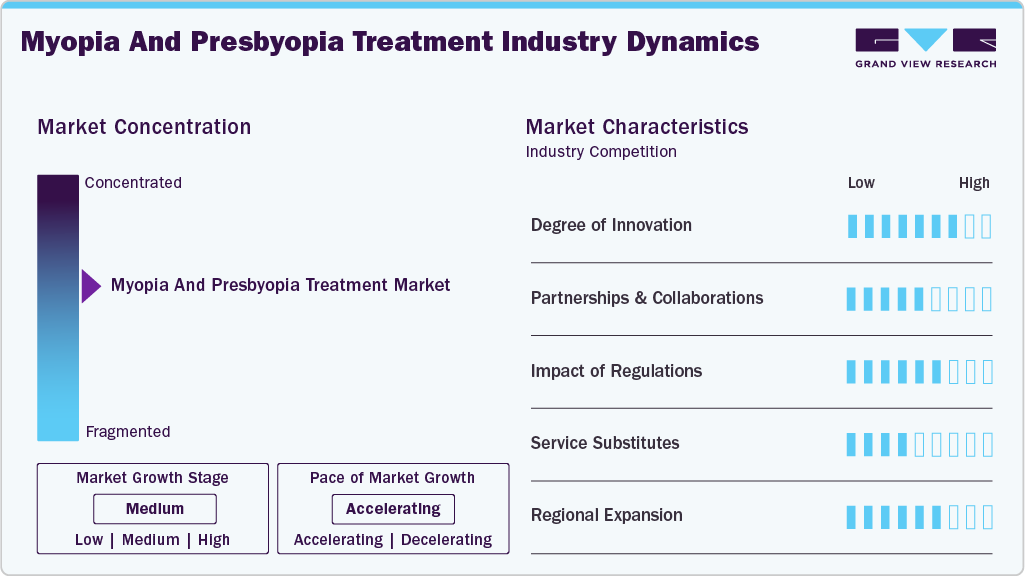
The myopia and presbyopia treatment market is moderately concentrated, with leading companies such as Johnson & Johnson Vision, Alcon, and Bausch + Lomb holding significant shares of the market. These players offer a wide range of advanced vision correction solutions, including daily and extended-wear contact lenses, multifocal and toric lenses, orthokeratology lenses, refractive surgical options, and pharmaceutical treatments such as atropine eye drops, enabling improved visual acuity, enhanced comfort, and better quality of life. The market is continuously evolving due to technological advancements in lens materials, drug delivery systems, and digital eye care solutions, as well as the increasing integration of myopia management strategies. In addition, the rising prevalence of refractive errors, growing screen exposure, an aging population, and greater awareness of early diagnosis and treatment are driving market growth and encouraging new entrants to introduce innovative, patient-specific vision care solutions.
The myopia and presbyopia treatment market is witnessing rapid innovation driven by advancements in digital health, smart optics, and precision ophthalmology. Emerging technologies such as AI-powered diagnostic platforms, adaptive lenses, and wearable vision correction devices are transforming traditional treatment approaches by enabling personalized, real-time vision correction and improved patient outcomes. Innovations in smart glasses and connected eyewear are enhancing user experience through features such as auto-focus adjustment, behavioral tracking, and compliance monitoring, thereby supporting effective long-term management of refractive errors. For instance, in November 2025, EssilorLuxottica introduced Stellest 2.0 lenses and smart glasses that integrate optical innovation with digital tracking capabilities to monitor wearing patterns and improve myopia management outcomes.
 To learn more about this report, Download Free Sample Report
 Partnerships and collaborations play a crucial role in the myopia and presbyopia treatment market, enabling companies to leverage advanced optical technologies, clinical expertise, and digital health capabilities to enhance treatment outcomes and expand patient access. Industry players are increasingly collaborating with eye care providers, research institutions, and technology firms to accelerate innovation in areas such as myopia management solutions, smart eyewear, and personalized vision care. These collaborations also support large-scale awareness campaigns, early diagnosis initiatives, and the development of integrated treatment ecosystems, thereby strengthening market penetration and long-term adoption. For instance, in April 2025, Vista Eye Specialist entered into a strategic collaboration with EssilorLuxottica to combat childhood myopia in Malaysia. The partnership combines clinical screening capabilities with advanced optical solutions, along with nationwide awareness campaigns, digital education programs, and community outreach initiatives to improve early detection and management of myopia.
Regulatory approval plays a critical role in shaping the myopia and presbyopia treatment market by ensuring that vision correction solutions meet stringent safety, efficacy, and quality standards before commercialization. Regulatory authorities such as the U.S. Food and Drug Administration (FDA), the European Medicines Agency (EMA), and other national health agencies classify contact lenses, ophthalmic drugs, and spectacle lenses as medical devices or combination products, which require robust clinical evidence, biocompatibility testing, and long-term safety validation. Compliance with these frameworks enhances trust among ophthalmologists, optometrists, and patients, while also facilitating reimbursement pathways and global market access. Recent regulatory approvals highlight the increasing pace of innovation in this market. For instance, in September 2025, the FDA authorized Essilor Stellest eyeglass lenses the first spectacle lenses clinically proven to slow myopia progression in children, demonstrating a significant reduction in disease progression in clinical studies.
Product substitutes in the myopia and presbyopia treatment market include a wide range of vision correction options such as prescription eyeglasses and emerging pharmacological therapies. For individuals with mild refractive errors, standard single-vision eyeglasses are commonly preferred due to affordability, accessibility, and ease of use. In presbyopia, ready-made reading glasses act as a convenient substitute for customized progressive or multifocal lenses, particularly in early-stage conditions.
Regional expansion in the market is accelerating across major global regions, driven by the rising prevalence of increasing awareness of early vision care, refractive errors, and improvements in ophthalmic infrastructure. Market players are actively expanding their geographical footprint through strategic partnerships, the establishment of specialized eye care centers, and targeted product launches to improve accessibility and patient outcomes. Emerging economies in the Asia-Pacific, particularly India and China, are becoming key focus regions due to large patient pools and growing adoption of advanced vision correction solutions.
Myopia Treatment Insights
The corrective segment dominated the market in 2025 and accounted for the largest share of 37.3% of the overall myopia treatment revenue. The growth is attributed to the continuous innovation in optical technologies and the increasing adoption of non-invasive vision correction solutions. Advanced spectacle lenses and contact lenses designed for myopia control are gaining traction as they not only correct vision but also slow disease progression. For instance, in 2024, the U.S. FDA approved Essilor’s Stellest lenses, which use highly aspherical lenslet (HAL) technology, similar to defocus-based designs, to reduce myopia progression in children. Clinical data cited in The Associated Press reports indicate that these lenses can slow myopia progression by up to 70% over two years, making them a preferred corrective solution for pediatric patients. Additionally, soft contact lenses such as MiSight continue to see strong adoption due to their dual function of vision correction and myopia management. Increasing awareness among parents and eye care professionals about early intervention, along with the growing availability on e-commerce platforms and in optical retail chains, is further accelerating demand.
The surgical segment is expected to witness the second fastest CAGR of 9.9% over the forecast period. The growth is attributed to a growing preference for permanent or long-term vision correction solutions, supported by ongoing technological advancements and strong clinical outcomes. Procedures such as LASIK, SMILE (Small Incision Lenticule Extraction), PRK, and implantable collamer lenses (ICL) are gaining traction as they reduce dependency on spectacles and contact lenses while offering faster recovery and improved visual precision. Recent advancements in laser technologies are enabling highly personalized treatments with superior visual outcomes, with some patients achieving better-than-20/20 vision shortly after surgery. The growing adoption of minimally invasive techniques is another key factor driving segment growth. According the an article published in EyeWorld in 2025, SMILE is increasingly preferred for its flapless design, smaller incision size, and lower risk of dry eye complications. Clinical insights indicate improved refractive stability and reduced corneal nerve disruption, enhancing patient comfort and long-term outcomes. These factors collectively drive the growth of the segment.
Presbyopia Treatment Insights
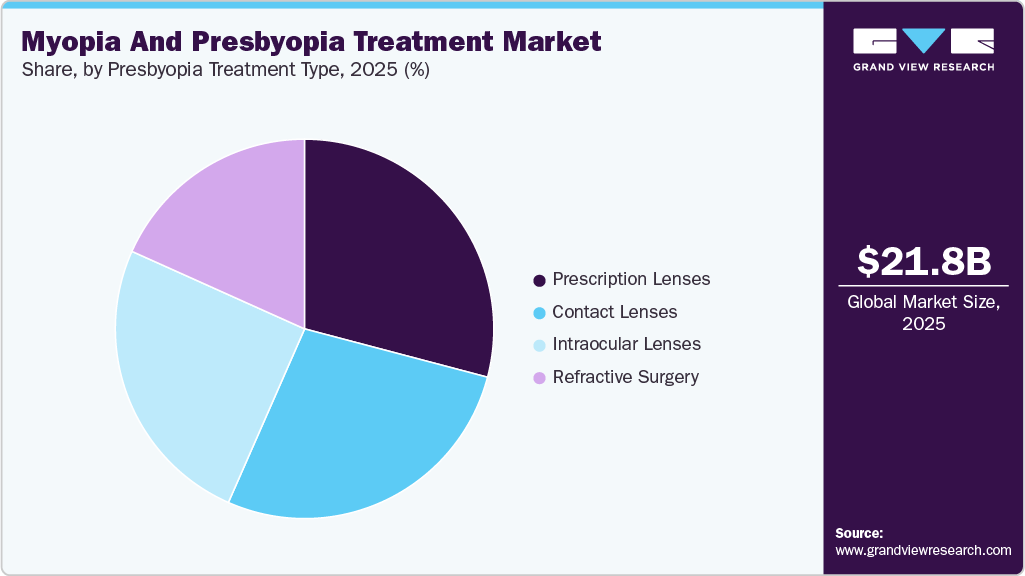
The prescription lenses segment dominated the market and held the largest revenue share in 2025. The growth is primarily attributed to the high global prevalence of the condition and the widespread acceptance of non-invasive vision correction methods. According to the article published by the National Library of Medicine in June 2025, presbyopia affects nearly all individuals over the age of 40, making it one of the most common age-related vision conditions worldwide. As a result, there is a consistent and growing demand for corrective solutions such as reading glasses, bifocal lenses, and progressive addition lenses, which remain the first-line treatment option due to their affordability, ease of use, and immediate effectiveness. The key market players are increasingly focusing on developing advanced products to fulfill the market demand, which drives the growth of the market. For instance, in April 2025, EssilorLuxottica introduced the Varilux Physio Extensee progressive lens, marking a significant advancement in presbyopia correction by enhancing visual precision and wearer comfort through improved lens design and personalization.
 To learn more about this report, Download Free Sample Report
 The intraocular lenses segment is expected to witness the fastest CAGR over the forecast period. The intraocular lenses (IOLs) treatment segment is witnessing increased demand for presbyopia treatment due to its ability to provide long-term, surgery-based vision correction with improved functional outcomes. Presbyopia-correcting IOLs such as multifocal, trifocal, and extended depth-of-focus (EDOF) lenses are increasingly preferred as they restore near, intermediate, and distance vision simultaneously, significantly reducing dependence on spectacles. Clinical evidence shows that these lenses improve both near and distance visual acuity and enhance spectacle independence compared with conventional monofocal lenses. This aligns with growing patient expectations for “complete vision correction,” especially among aging populations, where the natural lens loses accommodative ability after age 40, making surgical intervention more attractive. These factors highlight the growing demand for these lenses in the global myopia and presbyopia treatment market.
Regional Insights
North America myopia and presbyopia treatment market accounted for the largest revenue share of 40.7% in 2025. The growth is primarily driven by a substantial, growing patient pool, an aging population, and rising rates of lifestyle-related vision disorders. The region also has a large base of individuals requiring vision correction over 150 million in the U.S. alone supported by advanced diagnostic infrastructure and widespread access to optometric care. Demand is further accelerating due to increasing digital device usage, which contributes to the earlier onset of myopia, particularly among younger populations, alongside a steadily aging population that drives presbyopia treatment uptake. Demand is further accelerating due to increasing digital device usage, which contributes to the earlier onset of myopia, particularly among younger populations, alongside a steadily aging population that drives presbyopia treatment uptake. Recent developments such as the growing adoption of innovative therapies including specialty contact lenses, refractive surgeries, and emerging pharmaceutical options like presbyopia-correcting eye drops, reflect strong technological advancement and patient awareness in the region.
 To learn more about this report, Download Free Sample Report
 U.S. Myopia And Presbyopia Treatment Market Trends
The U.S. myopia and presbyopia treatment market is experiencing steady growth. In the U.S., myopia prevalence has risen significantly over time, reaching over 40% among adults in recent estimates, reflecting long-term shifts toward screen-intensive lifestyles and reduced outdoor activity. At the same time, presbyopia affects a large proportion of the adult population, with studies indicating that approximately 83-89% of individuals aged 45 and older in the U.S. experience the condition, underscoring the strong age-related demand for near-vision correction solutions. This creates the increased demand for myopia and presbyopia treatments in the country and contributes to the market growth.
Europe Myopia And Presbyopia Treatment Market Trends
The Europe myopia and presbyopia treatment market is being reshaped by a combination of high disease prevalence, aging demographics, and increasing adoption of advanced vision correction technologies. Across Europe, refractive errors affect a substantial portion of the population, with studies estimating that over half of adults require some form of vision correction. More recent analyses indicate that myopia prevalence averages around 23-30% across European countries, with some nations such as Sweden and Germany reporting rates exceeding 40%, highlighting a strong and growing patient base for corrective treatments. This rising burden is closely linked to lifestyle changes, including increased screen exposure and reduced outdoor activity, particularly among children and adolescents, which is accelerating demand for early-stage myopia management solutions such as orthokeratology lenses and atropine therapies. This highlights the increased demand for myopia and presbyopia treatments in the region.
The UK myopia and presbyopia treatment market is steadily growing. In the UK, demand for treatments addressing myopia and presbyopia is rising due to a noticeable increase in refractive errors among both children and adults, coupled with growing clinical awareness of early intervention. Studies show that the proportion of children and adolescents needing corrective lenses for myopia has increased over the past decade, with evaluations at major eye centers showing a meaningful uptick in prescriptions for myopia in urban pediatric populations. This trend mirrors broader global patterns in which visual impairment due to uncorrected refractive error is a major health concern, prompting enhanced screening and corrective care strategies. The prevalence of refractive errors increases with age and correlates with lifestyle patterns such as screen use and educational demands, driving families to seek corrective solutions earlier in life.
The Germany myopia and presbyopia treatment market is steadily growing. The market is shaped by a public health emphasis on early detection and preventive eye care, coupled with a rising prevalence of refractive errors as children age. European studies indicate that clinically significant refractive error, requiring vision correction, affects a sizable proportion of the pediatric population, and that myopia prevalence steadily increases with age into adolescence. At the same time, with demographic aging, presbyopia is becoming more common among the adult population, reinforcing demand for clinical services such as prescription lenses and surgical interventions. These epidemiological and demographic trends are driving increased utilization of optical services and reinforcing the role of structured eye health programs in Germany.
Asia Pacific Myopia And Presbyopia Treatment Market Trends
Myopia and presbyopia treatments are gaining traction in the Asia Pacific region. The growth is attributed to an exceptionally high and still rising burden of refractive errors, combined with demographic and lifestyle shifts. The region has some of the highest myopia prevalence rates globally, with studies showing that in countries such as China, South Korea, Singapore, and Taiwan, myopia affects a majority of children and adolescents, often exceeding 50-80% in school-age populations. Recent global research further highlights that myopia prevalence continues to surge, particularly in urban Asia-Pacific populations, with projections indicating substantial increases among younger age groups due to digital lifestyles and post-pandemic behavioral changes. This early-onset and rapid progression of myopia is significantly boosting demand for advanced interventions such as orthokeratology lenses, atropine eye drops, and myopia-control contact lenses across the region.
The China myopia and presbyopia treatment market benefits from some of the highest recorded prevalence rates of myopia, especially among children and young adults. Moreover, China’s rapidly aging population is expanding the cohort of individuals experiencing presbyopia, increasing the need for optical correction and surgical options suited to age‑related near vision decline. Governmental eye health initiatives and awareness campaigns reflect concern about these trends, with an increasing focus on school‑based eye examinations and community optometry services. These factors collectively drive the market growth across the country and contribute to the global myopia and presbyopia treatment market growth.
The India myopia and presbyopia treatment market is driven by significant demographic pressures and high incidence rates in specific regions, coupled with socioeconomic factors that impact access and awareness. Community studies in parts of India have revealed a surprisingly high incidence of age‑related presbyopia, with half or more of adults in longitudinal research developing near‑vision problems over time. This has important implications for workforce productivity and quality of life, driving increased uptake of both basic corrective options, such as spectacles, and clinical interventions. For younger populations, data from global and regional assessments show that refractive errors are common across diverse Indian settings and that rising educational attainment and digital device use are prompting earlier detection and correction of myopia. Efforts by eye health programs and NGOs to expand screening and access to optical care are helping meet this growing demand.
Latin America Myopia And Presbyopia Treatment Market Trends
The region is an emerging market for myopia and presbyopia treatment due to the rising burden of uncorrected refractive errors, changing lifestyles, and improving access to eye care services. Epidemiological evidence shows that refractive errors already affect millions across the region. Around 7.2 million people suffer from vision impairment linked to uncorrected refractive errors, with countries such as Ecuador reporting nearly 30% of visual impairment cases due to these conditions. At the same time, myopia prevalence is increasing among younger populations, with a systematic review estimating 8.6% prevalence among children and adolescents, alongside wide variability across countries. This growing base of patients is being further amplified by urbanization and lifestyle shifts, particularly increased screen exposure, reduced outdoor activity, and prolonged near-work tasks which are strongly associated with the development and progression of myopia across Latin American populations.
The Brazil myopia and presbyopia treatment market is growing. The growth is supported by changes in urban lifestyles and growing recognition of refractive errors as a key public health concern. Rising screen use and reduced outdoor activity, particularly among school‑age children, are consistent with observed trends in growing myopia prevalence. Brazil also has a significant adult population transitioning into presbyopia due to aging. These demographic and lifestyle factors contribute to an increase in the number of individuals seeking eye examinations, corrective lenses, and clinical care for visual impairments. Increased public awareness campaigns and broader availability of optometric services have led to improved detection rates, thereby raising treatment demand.
Middle East & Africa Myopia And Presbyopia Treatment Market Trends
The Middle East and Africa (MEA) myopia and presbyopia treatment market is growing steadily, owing to a combination of rising prevalence of refractive errors, demographic transitions, and improving access to eye care services. Epidemiological studies indicate that refractive errors are already a significant public health concern across the region. In the Middle East, myopia prevalence rises sharply with age, reaching around 30% or more in adults, highlighting a large and growing patient base requiring corrective interventions. At the same time, global estimates indicate that a substantial number of presbyopia cases are concentrated in African subregions, reflecting a significant unmet need for near-vision correction solutions such as reading glasses and multifocal lenses.
The myopia and presbyopia treatment market in Saudi Arabia is experiencing notable growth, supported by a combination of lifestyle and healthcare accessibility factors characteristic of Middle Eastern populations. As with global trends, sedentary lifestyles and extensive near‑focused activities are linked with increases in myopia risk, particularly among children and young adults. At the same time, rapid economic development has expanded general healthcare infrastructure, enabling more widespread access to eye care services and optical correction across age groups. Public health awareness campaigns and the expansion of private eye care provision are further elevating service utilization for refractive error management in the country.
Key Myopia And Presbyopia Treatment Company Insight
The myopia and presbyopia treatment market is highly competitive, with several key players. Major market players in the myopia and presbyopia treatment market are increasingly focusing on expanding their geographic footprint to tap into high-growth regions with rising rates of vision disorders. Companies are forming strategic partnerships with eye care providers and optical retailers to enhance patients' access to advanced treatment options, including specialty contact lenses, refractive surgeries, and pharmaceutical therapies.
Key Myopia And Presbyopia Treatment Companies:
The following key companies have been profiled for this study on the myopia and presbyopia treatment market.
-
Ziemer Ophthalmic Systems AG
-
NIDEK CO., LTD.
-
Johnson & Johnson Vision
-
Essilor Ltd.
-
Zeiss International
-
ALCON VISION LLC
-
Bausch & Lomb Incorporated
-
Haag-Streit UK
-
Topcon Corporation
Recent Development
-
In January 2026, the U.S. Food and Drug Administration approved YUVEZZI, a dual-action eye drop developed by Tenpoint Therapeutics for the treatment of presbyopia. The product combines two active ingredients to improve near vision and offers a non-invasive alternative to glasses, contact lenses, or surgery.
-
In January 2026, the U.S. FDA approved the Deseyne Extended Depth of Focus (EDOF) daily disposable contact lenses, marking the first contact lens of its kind designed to provide continuous.
-
On September 25, 2025, the U.S. Food and Drug Administration approved Essilor Stellest as the first spectacle lens in the U.S. designed to both correct myopia and slow its progression in children. The lens uses advanced optical technology to reduce myopia progression and provides a non-invasive alternative to contact lenses and other treatment options.
-
In July 2025, the U.S. Food and Drug Administration approved VIZZ (aceclidine ophthalmic solution) as a new treatment for presbyopia, marking the first aceclidine-based eye drop for improving near vision in adults. The therapy offers a once-daily, non-invasive option that helps enhance near vision for several hours, reducing dependence on reading glasses.
Myopia And Presbyopia Treatment Market Report Scope
Report Attribute
Details
Market size in 2025
USD 21.8 billion
Estimated market size in 2026
USD 23.7 billion
Projected market size by 2033
USD 45.4 billion
Growth rate
CAGR of 9.7% from 2026 to 2033
Base year for estimation
2025
Historical data
2021 - 2024
Forecast period
2026 - 2033
Quantitative units
Revenue in USD million and CAGR from 2026 to 2033
Report coverage
Revenue forecast, company ranking, competitive landscape, growth factors, and trends
Segments covered
Myopia treatment type, presbyopia treatment type, and region
Regional scope
North America; Europe; Asia Pacific; Latin America; MEA
Country scope
U.S.; Canada; Mexico; UK; Germany; France; Italy; Spain; Denmark; Sweden; Norway; Japan; China; India; Australia; Thailand; South Korea; Brazil; Argentina; Colombia; South Africa; Saudi Arabia; UAE; Kuwait
Key companies profiled
Ziemer Ophthalmic Systems AG; NIDEK CO., LTD.; Johnson & Johnson Vision; Essilor Ltd.; Zeiss International; ALCON VISION LLC; Bausch & Lomb Incorporated; Haag-Streit UK; Topcon Corporation
Customization scope
Free report customization (equivalent to 8 analyst working days) with purchase. Addition or alteration to the country, regional, and segment scope
Pricing and purchase options
Avail customized purchase options to meet your exact research needs. Explore purchase options
Global Myopia And Presbyopia Treatment Market Report Segmentation
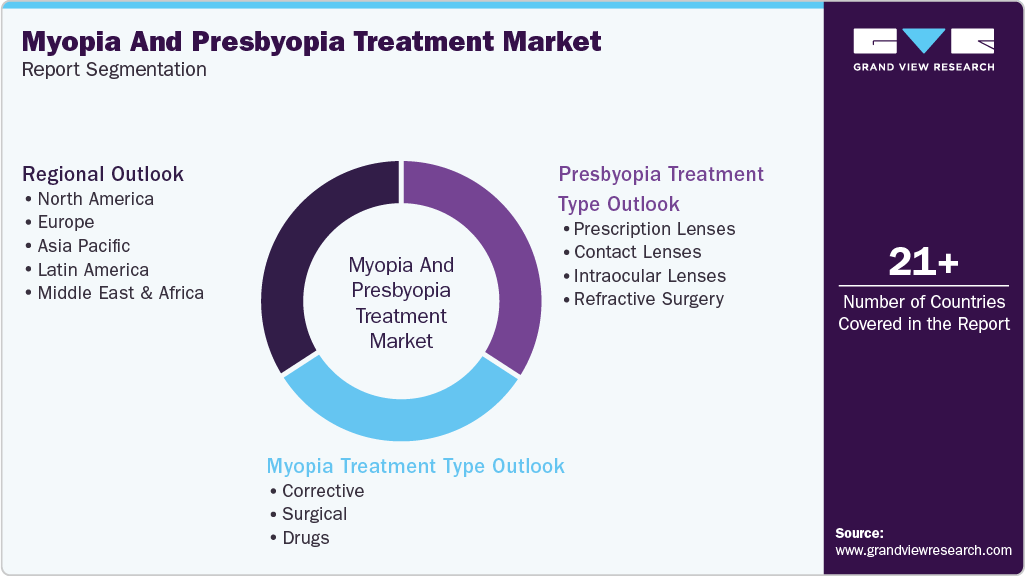
This report forecasts revenue growth at the global, regional, and country levels and provides an analysis of the latest industry trends across each sub-segment from 2021 to 2033. For the purpose of this study, Grand View Research has segmented the global myopia and presbyopia treatment market report based on myopia treatment type, presbyopia treatment type, and region:
 To learn more about this report, Download Free Sample Report
 -
Myopia Treatment Type Outlook (Revenue, USD Unit, 2021 - 2033)
-
Corrective
-
Prescription lenses
-
Single
-
Bifocal
-
Trifocal
-
Others
-
-
Contact lenses
-
-
Surgical
-
Drugs
-
-
Presbyopia Treatment Type Outlook (Revenue, USD Unit, 2021 - 2033)
-
Prescription Lenses
-
Reading Glasses
-
Bifocals
-
Trifocals
-
Progressive Multifocals
-
Office Progressives
-
-
Contact Lenses
-
Bifocal
-
Multifocal
-
Monovision
-
Modified Monovision
-
-
Intraocular Lenses
-
Refractive Surgery
-
-
Region Outlook (Revenue, USD Unit, 2021 - 2033)
-
North America
-
U.S.
-
Canada
-
Mexico
-
-
Europe
-
UK
-
Germany
-
France
-
Italy
-
Spain
-
Norway
-
Denmark
-
Sweden
-
-
Asia Pacific
-
China
-
Japan
-
South Korea
-
Thailand
-
Australia
-
India
-
-
Latin America
-
Brazil
-
Argentina
-
Colombia
-
-
MEA
-
South Africa
-
Saudi Arabia
-
UAE
-
Kuwait
-
-
Frequently Asked Questions About This Report
Some key players operating in myopia and presbyopia treatment market include Ziemer Ophthalmic Systems AG, NIDEK CO., LTD., Johnson & Johnson Vision, Essilor Ltd., Zeiss International, ALCON VISION LLC, Bausch & Lomb Incorporated, Haag-Streit UK, and Topcon Corporation.
Key factors that are driving myopia and presbyopia treatment market growth include the growing prevalence of eye-related disorders, growing awareness programs for myopia and presbyopia, and the growing number of product launches for the treatment of myopia and presbyopia.
The global myopia and presbyopia treatment market size was valued at USD 21.8 billion in 2025 and is expected to reach USD 23.7 billion in 2026.
North America dominated myopia and presbyopia treatment market with a share of 40.7% in 2025. This is attributable to the increasing prevalence of myopia and presbyopia in the U.S. and the adoption of innovative products for its treatment in the region.
The global myopia and presbyopia treatment market is expected to grow at a compound annual growth rate of 9.7% from 2026 to 2033, reaching USD 45.4 billion by 2033.
About the Author(s)
Medical Devices Research Team
Healthcare · Medical DevicesThis report was authored by the medical devices research team at Grand View Research - comprising two research analysts, one senior research analyst, and one industry expert - with specialized expertise in the medical devices segment of the healthcare industry. All findings are based on proprietary healthcare databases, executive interviews, and regulatory analysis, subject to internal peer review prior to publication.
Last Updated:
Speak to Analyst

Customize this report to your needs - add regions, segments, or data points, with 20% free customization.
Or view our licence options:


ISO 9001:2015 & 27001:2022 Certified
We are GDPR and CCPA compliant! Your transaction & personal information is safe and secure. For more details, please read our privacy policy.


