
- Home
- »
- Homecare & Decor
- »
-
North America Healthcare Disinfectant Wipes Market Report, 2033GVR Report cover

North America Healthcare Disinfectant Wipes Market (2026 - 2033)
Size, Share & Trends Analysis Report By Product, By Pack Format, By Wipe Count Per Pack, By Facility Type, By Country, And Segment Forecasts
Market Size, 2025
$667.3MMarket Estimate, 2026
$704.2MMarket Forecast, 2033
$1,026.5MCAGR, 2026–2033
5.5%North America Healthcare Disinfectant Wipes Market Summary
The North America healthcare disinfectant wipes market size was valued at USD 667.3 million in 2025 and is projected to grow from USD 704.2 million in 2026 to USD 1,026.5 million by 2033, at a CAGR of 5.5% from 2026 to 2033. The market growth is driven by the increasing emphasis on healthcare-associated infection (HAI) prevention, stringent infection control regulations, growing adoption of ready-to-use disinfectants across healthcare facilities, rising demand for faster-acting, broad-spectrum disinfectant chemistries, and continuous innovation in sustainable, high-performance wipe technologies.
Key Market Trends & Insights
- The U.S. accounted for the largest share of the North America healthcare disinfectant wipes market, contributing 88.2% of total revenue in 2025.
- By product: Quaternary Ammonium Compounds (Quats) healthcare disinfectant wipes dominated the regional market with a 34.9% revenue share in 2025.
- By pack format: Canister/tub (rigid dispenser) held the largest market share, accounting for 54.0% of regional revenue in 2025.
- By wipe count per pack: 101 to 150 wipes emerged as the leading wipe count per pack, capturing 32.7% of the regional market in 2025.
- By facility type: Hospitals are the dominating facility type where disinfectant wipes are widely used, accounting for 46.5% in 2025.
Market Size & Forecast
- Market Size in 2025: USD 667.3 Million
- Estimated Market Size in 2026: USD 704.2 Million
- Projected Market Size by 2033: USD 1,026.5 Million
- CAGR (2026–2033): 5.5%
Prism AI by Grand View Research Free to tryAsk a question about the north america healthcare disinfectant wipes market✓Every figure cited from GVR research Prefer the report? Download free sample →
The North America healthcare disinfectant wipes industry is witnessing steady growth as healthcare providers intensify environmental cleaning protocols to reduce the transmission of healthcare-associated infections (HAIs) and multidrug-resistant organisms (MDROs). Hospitals, ambulatory surgery centers, long-term care facilities, and outpatient clinics are increasingly adopting pre-saturated disinfectant wipes because they offer standardized disinfectant dosing, shorter contact times, improved workflow efficiency, and reduced cross-contamination compared to reusable cloth-based cleaning systems. The growing prevalence of pathogens such as Candida auris, Clostridioides difficile (C. difficile), methicillin-resistant Staphylococcus aureus (MRSA), and vancomycin-resistant enterococci (VRE) has further accelerated the use of EPA-registered disinfectant wipes capable of meeting stringent infection prevention requirements. Additionally, increasing procedural volumes and higher patient throughput across healthcare settings continue to drive routine consumption of surface disinfectant wipes.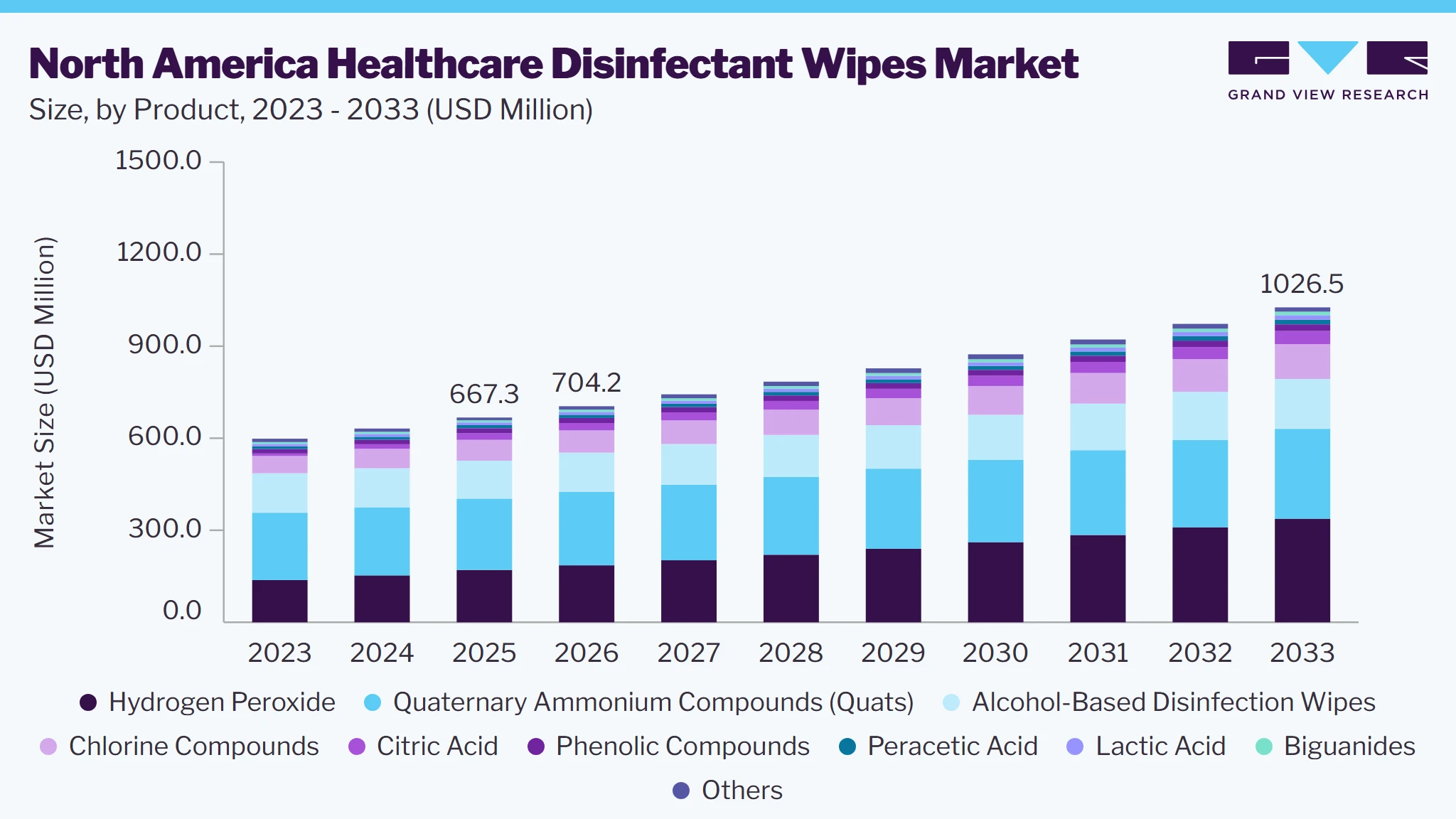 Source: Grand View Research, IR Documents, Primary Interviews, Paid DatabasesTo learn more about this report,
 Download Free Sample Report
The market is also benefiting from continuous innovation in disinfectant chemistries and wipe substrates. Manufacturers are increasingly introducing accelerated hydrogen peroxide, improved alcohol-based, and next-generation quaternary ammonium formulations that provide broader antimicrobial efficacy, shorter kill times, reduced residue, and enhanced compatibility with sensitive medical equipment. At the same time, healthcare systems are seeking products that combine infection prevention with sustainability goals, encouraging the commercialization of biodegradable, plastic-free, and refill-compatible disinfectant wipe solutions. Product development is increasingly focused on balancing clinical efficacy, user safety, equipment compatibility, and environmental performance, enabling suppliers to differentiate their offerings in a highly regulated market.
Another significant trend shaping the market is the expansion of outpatient healthcare services and the digitalization of infection prevention practices. The rapid growth of ambulatory surgery centers, urgent care clinics, dialysis centers, and physician offices has increased demand for convenient, ready-to-use disinfectant wipes that enable rapid room turnover between patients without disrupting clinical workflows. Simultaneously, healthcare organizations are strengthening compliance with standardized cleaning protocols through environmental monitoring programs, staff training, and infection prevention audits, resulting in more consistent use of disinfectant wipes across care settings. As healthcare providers continue to prioritize patient safety, regulatory compliance, and operational efficiency, disinfectant wipes are evolving from routine cleaning supplies into essential components of comprehensive infection prevention and environmental hygiene strategies.
Market Dynamics
The increasing focus on reducing healthcare-associated infections (HAIs) across hospitals, ambulatory surgical centers, and long-term care facilities is a major driver of the North America healthcare disinfectant wipes market. Healthcare facilities are strengthening environmental cleaning protocols in response to persistent threats from multidrug-resistant organisms (MDROs), Candida auris, Clostridioides difficile (C. diff), and emerging viral pathogens. In the U.S., the Centers for Disease Control and Prevention (CDC) estimates that approximately 1 in 31 hospitalized patients acquires at least one healthcare-associated infection on any given day, while HAIs affect nearly 687,000 patients annually in U.S. acute care hospitals, contributing to around 72,000 in-hospital deaths.
These infection risks have accelerated the routine use of EPA-registered, ready-to-use disinfectant wipes that provide standardized dosing, rapid contact times, and compatibility with high-touch surfaces and medical equipment. Furthermore, evolving CDC infection prevention guidance and increasing adoption of disinfectants effective against Candida auris (EPA List P) and C. difficile spores are encouraging healthcare providers to replace reusable cloth-based cleaning systems with single-use disinfectant wipes, supporting sustained market growth across North America.
Growing environmental concerns regarding single-use plastic waste and stricter sustainability targets are restraining the North America healthcare disinfectant wipes market. Most conventional healthcare disinfectant wipes are manufactured using synthetic nonwoven materials such as polypropylene and polyester, which generate significant medical and plastic waste after single use. Large healthcare systems across the U.S. and Canada are increasingly incorporating environmental sustainability criteria into procurement decisions, encouraging suppliers to develop biodegradable substrates and lower-impact formulations. At the same time, healthcare facilities must balance infection prevention requirements with waste reduction goals, creating additional pressure on manufacturers to redesign products without compromising disinfectant efficacy or regulatory compliance.
While companies such as Ecolab and Clorox Healthcare have introduced plastic-free or biodegradable wipe technologies, these products generally involve higher production costs and more complex manufacturing processes. The transition toward sustainable materials, coupled with evolving environmental regulations and hospital sustainability commitments, is increasing compliance costs and limiting the widespread adoption of conventional disinfectant wipes across North America.
Analyst Perspective
The North America healthcare disinfectant wipes market is being driven by the transition toward faster-contact-time, broad-spectrum disinfectant formulations that improve clinical workflow while meeting increasingly stringent infection prevention protocols. Hospitals are replacing legacy quat-based products with hydrogen peroxide, alcohol, and other advanced chemistries that demonstrate efficacy against emerging pathogens such as Candida auris and Clostridioides difficile. Sustainability is also influencing procurement decisions, with healthcare providers evaluating plastic-free and biodegradable wipe substrates that do not compromise disinfectant performance. In parallel, the expansion of outpatient care and stricter environmental hygiene standards are boosting wipe consumption beyond acute-care hospitals, while manufacturers are differentiating themselves through EPA registrations, material compatibility, and workflow-efficient packaging formats.
Product Insights
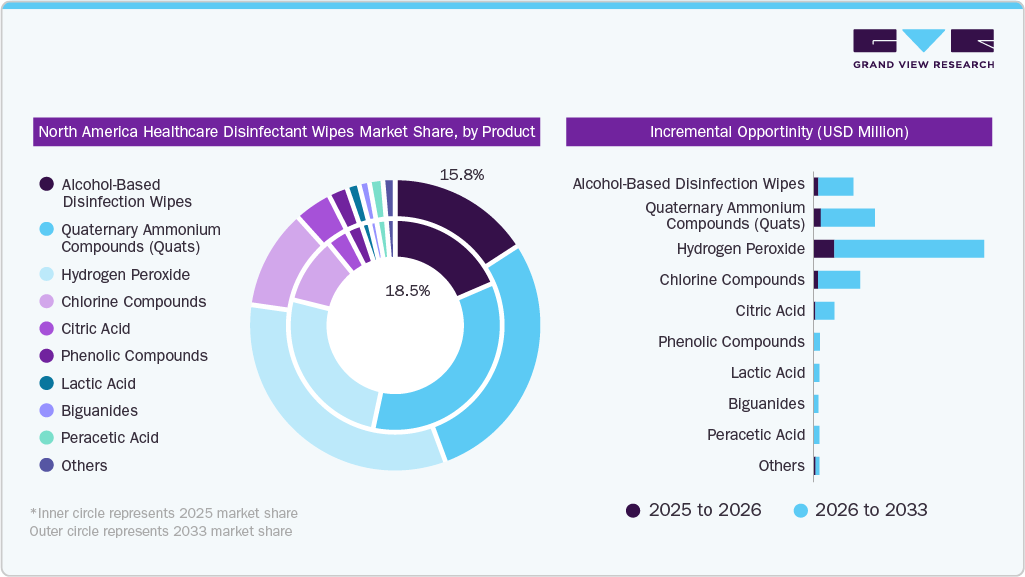
Quaternary Ammonium Compounds (Quats) healthcare disinfectant wipes dominated the North America healthcare disinfectant wipes market, accounting for the largest revenue share of 34.9% in 2025, driven by their broad-spectrum antimicrobial efficacy, material compatibility, and cost-effectiveness across routine healthcare disinfection applications. Quat-based wipes are widely used to clean high-touch environmental surfaces, patient rooms, nursing stations, outpatient clinics, and non-critical medical equipment, where frequent disinfection is required without causing corrosion or damage to sensitive materials. Their widespread EPA registrations, favorable contact times, and compatibility with plastics, stainless steel, and electronic equipment have made them the preferred choice for daily environmental cleaning in hospitals and long-term care facilities. In addition, their long-established inclusion in hospital infection prevention protocols and extensive product availability from leading manufacturers continue to support their dominant market position.
 To learn more about this report, Download Free Sample Report
The hydrogen peroxide segment is expected to grow at the fastest CAGR of 8.9% from 2026 to 2033, driven by the increasing shift toward next-generation disinfectant chemistries with improved efficacy against emerging pathogens and better environmental profiles. Accelerated hydrogen peroxide (AHP)-based wipes offer rapid kill times against bacteria, viruses, fungi, and difficult pathogens such as Candida auris, while leaving minimal residue compared with conventional quat formulations. Growing concerns about disinfectant residue, occupational safety, and environmental sustainability are prompting healthcare facilities to transition to hydrogen peroxide-based wipes for routine environmental cleaning.
Pack Format Insights
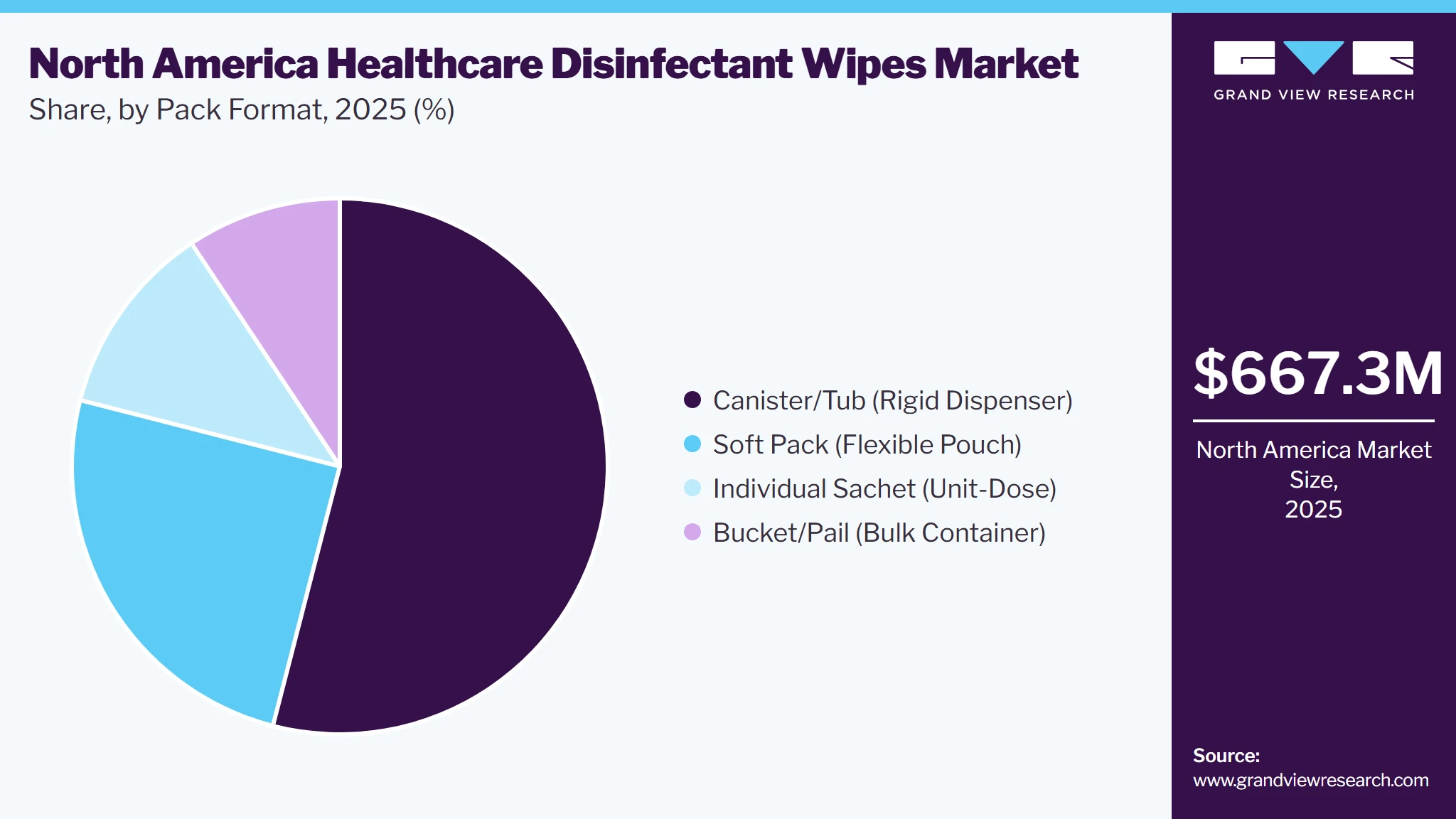
Canister/tub (rigid dispenser) healthcare disinfectant wipes dominated the North America healthcare disinfectant wipes industry, accounting for the largest revenue share of 54.0% in 2025,primarily due to their convenience, contamination control, and suitability for high-frequency use in healthcare settings. These dispensers enable one-handed dispensing while minimizing wipe drying and cross-contamination, making them ideal for placement in patient rooms, nursing stations, operating rooms, and diagnostic laboratories. Their compatibility with infection prevention workflows, ease of storage, and availability in multiple wipe counts have made canister formats the standard packaging choice across hospitals and outpatient facilities.
 To learn more about this report, Download Free Sample Report
The bucket/pail (bulk container) segment is projected to grow at the fastest CAGR of 6.8% from 2026 to 2033. The segment growth is driven by increasing demand from large healthcare facilities seeking operational efficiency and lower per-wipe costs. Bulk containers are widely adopted in hospitals, healthcare networks, and environmental services departments where high volumes of disinfectant wipes are consumed daily. Their larger capacities reduce replacement frequency, improve inventory management, and lower packaging waste relative to multiple smaller canisters.
Wipe Count per Pack Insights
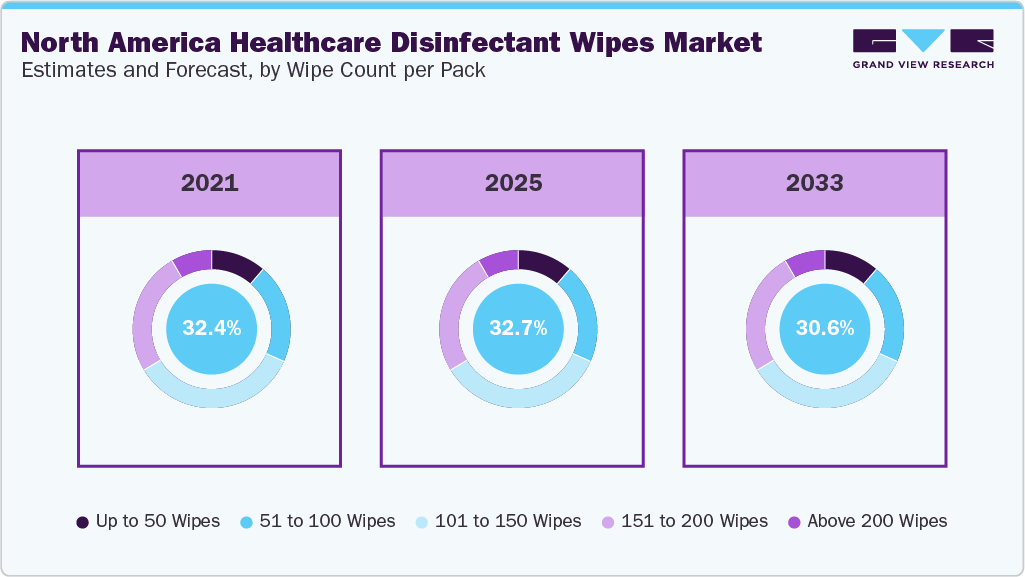
The 101 to 150 wipes segment accounted for the largest revenue share of 32.7% in 2025, as this pack size provides the optimal balance between product longevity, ease of handling, and disinfectant stability in healthcare environments. Hospitals, outpatient clinics, and physician offices widely prefer this configuration because it supports frequent daily disinfection without requiring constant replacement, while minimizing the risk of wipes drying out after prolonged opening. The format is well-suited for patient rooms, nursing stations, and mobile cleaning carts where moderate-to-high consumption occurs throughout the day. Additionally, leading manufacturers have standardized many of their flagship disinfectant wipe products in the 100–150 wipe range, making it the most commonly procured pack size through healthcare distribution channels and group purchasing organizations (GPOs).
 To learn more about this report, Download Free Sample Report
The 151 to 200 wipes segment is expected to grow at the fastest CAGR of 7.7% from 2026 to 2033. The segment growth is driven by healthcare providers' efforts to improve operational efficiency and reduce the total cost of consumables. Larger wipe-count packs reduce replacement frequency, lower packaging costs per wipe, and support uninterrupted cleaning workflows in high-traffic environments such as emergency departments, intensive care units, surgical suites, and environmental services departments. The growing emphasis on centralized procurement, bulk purchasing agreements, and inventory optimization across integrated healthcare systems is further accelerating demand for higher-capacity packs.
Facility Type Insights
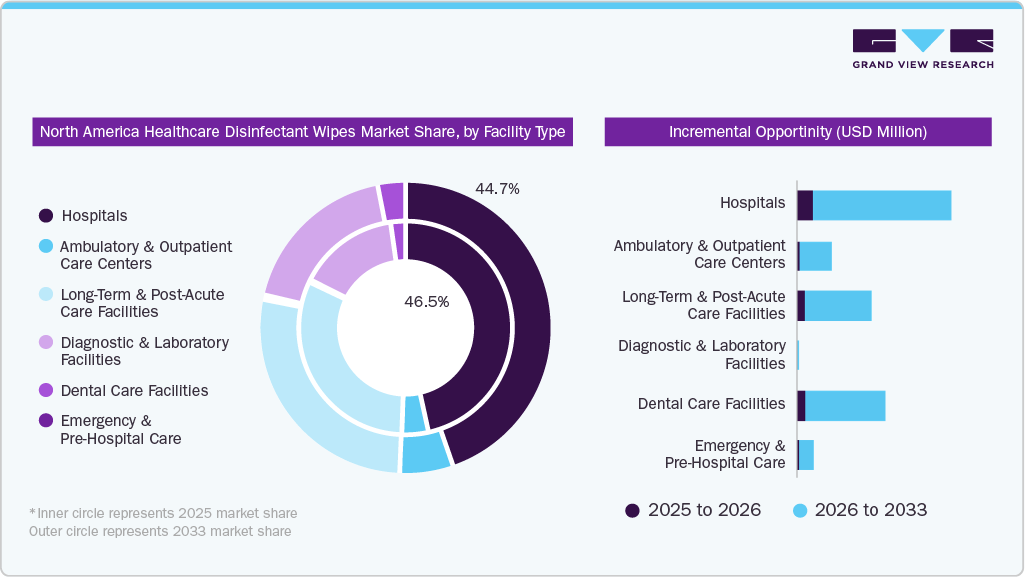
The hospitals segment dominated the North America healthcare disinfectant wipes industry, accounting for the largest revenue share of 46.5% in 2025, owing to their high patient volumes, stringent infection prevention requirements, and continuous need for environmental and medical equipment disinfection. Acute care hospitals consume large quantities of disinfectant wipes across patient rooms, operating theatres, intensive care units, emergency departments, diagnostic imaging suites, and high-touch common areas to reduce the risk of healthcare-associated infections (HAIs). The growing prevalence of multidrug-resistant organisms (MDROs), Candida auris, and Clostridioides difficile has further increased the frequency of surface disinfection, reinforcing demand for EPA-registered healthcare disinfectant wipes with rapid contact times.
 To learn more about this report, Download Free Sample Report
The ambulatory & outpatient care centers segment is expected to grow at the fastest CAGR of 10.7% from 2026 to 2033. The segment growth is driven by the rapid shift of healthcare services from inpatient hospitals to lower-cost outpatient settings. The expansion of ambulatory surgery centers (ASCs), urgent care clinics, dialysis centers, specialty clinics, and physician offices has significantly increased the need for fast, ready-to-use surface disinfection between patient visits. Unlike hospitals, these facilities require rapid room turnover and minimal workflow disruption, making pre-saturated disinfectant wipes the preferred solution over liquid disinfectants.
Country Insights
The North America healthcare disinfectant wipes market’s growth is driven by stringent infection prevention standards, high healthcare expenditure, and widespread adoption of ready-to-use surface disinfectants across hospitals, ambulatory care centers, long-term care facilities, and diagnostic laboratories. The region benefits from well-established regulatory frameworks led by the U.S. Environmental Protection Agency (EPA) and Health Canada, which promote the use of registered disinfectant products with proven efficacy against healthcare-associated pathogens. Growing concerns surrounding Candida auris, Clostridioides difficile (C. diff), and other multidrug-resistant organisms (MDROs), coupled with increasing demand for faster contact times, low-residue chemistries, and sustainable wipe substrates, continue to drive product innovation. The strong presence of major manufacturers such as PDI, Clorox Healthcare, Ecolab, STERIS, Kimberly-Clark Professional, and Diversey further reinforces North America's leadership in the market.
U.S. Healthcare Disinfectant Wipes Market Trends
The U.S. dominated the North America healthcare disinfectant wipes industry with an 88.2% revenue share in 2025, supported by its extensive healthcare infrastructure, high procedural volumes, and stringent infection control requirements across acute care hospitals and outpatient facilities. Increasing emphasis on preventing healthcare-associated infections (HAIs), coupled with CDC guidance for pathogens such as Candida auris and Clostridioides difficile, has accelerated the adoption of EPA-registered disinfectant wipes with broad-spectrum efficacy and shorter contact times. The market is further supported by strong purchasing activity through group purchasing organizations (GPOs), continuous product innovation in accelerated hydrogen peroxide and biodegradable wipe technologies, and the presence of leading domestic manufacturers.
Canada Healthcare Disinfectant Wipes Market Trends
The Canada healthcare disinfectant wipes market is projected to grow at a CAGR of 5.8% from 2026 to 2033, driven by increasing investments in infection prevention across hospitals, long-term care facilities, and community healthcare settings. Rising awareness of healthcare-associated infections, particularly following enhanced infection control practices adopted in recent years, is encouraging healthcare providers to transition toward high-performance disinfectant wipes with improved efficacy and environmental profiles. Health Canada's regulatory oversight, along with the growing procurement of environmentally preferable healthcare products, is accelerating the adoption of hydrogen peroxide-based, plastic-free disinfectant wipes.
Key North America Healthcare Disinfectant Wipes Company Insights
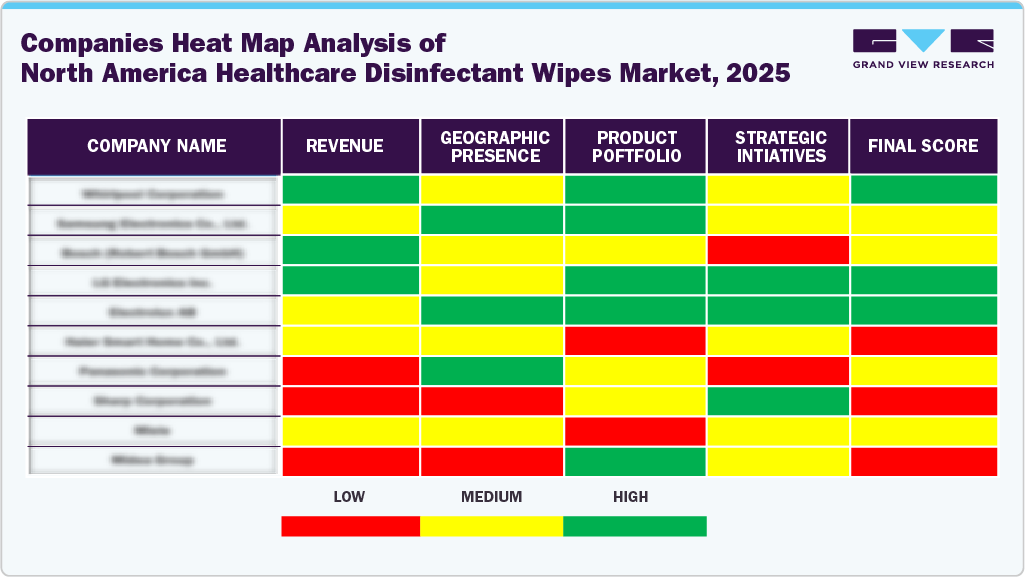
The North America healthcare disinfectant wipes market is characterized by a moderately consolidated competitive landscape, with leading multinational infection prevention companies competing alongside specialized healthcare disinfectant manufacturers. Competition is primarily centered on disinfectant efficacy, EPA and Health Canada regulatory approvals, contact time, compatibility with sensitive medical equipment, sustainability, product portfolio breadth, and healthcare distribution networks. Companies are increasingly investing in accelerated hydrogen peroxide formulations, biodegradable wipe substrates, refill systems, and pathogen-specific claims (including Candida auris and Clostridioides difficile) to strengthen their competitive position across hospitals, ambulatory care centers, and long-term care facilities.
-
Hospital-Grade Surface Disinfection & Infection Prevention Specialists: Companies such as PDI, Inc. (Professional Disposables International), Metrex Research, Contec Incorporated, and Virox Technologies Inc. are recognized as leading specialists in healthcare surface disinfection. These companies compete through extensive portfolios of EPA-registered hospital disinfectant wipes designed for operating rooms, intensive care units, laboratories, cleanrooms, and patient care environments. Their competitive advantage is driven by broad-spectrum antimicrobial efficacy, rapid contact times, compatibility with medical devices, and continuous product innovation targeting emerging pathogens.
-
Integrated Healthcare & Hygiene Solution Providers: Companies including Ecolab Inc., Diversey, GOJO Industries, Kimberly-Clark Corporation, and Medline leverage comprehensive infection prevention portfolios that combine disinfectant wipes with hand hygiene products, environmental cleaning solutions, medical consumables, and infection control services. These companies benefit from long-standing relationships with hospitals and integrated healthcare systems, extensive direct sales and distribution networks, and the ability to offer bundled infection prevention solutions. Increasing investments in environmentally sustainable formulations, refillable dispensing systems, and digital compliance solutions further strengthen their competitive positioning.
-
Broad-Spectrum Cleaning & Consumer Healthcare Brands: The Clorox Company maintains a strong presence in the healthcare disinfectant wipes market through its Clorox Healthcare product portfolio, offering EPA-registered disinfectant wipes specifically developed for healthcare environments. The company differentiates itself through broad pathogen efficacy claims, including sporicidal and hydrogen peroxide-based technologies, extensive healthcare distribution, and continuous innovation focused on faster contact times, improved material compatibility, and reduced environmental impact. Alongside specialized healthcare manufacturers, Clorox continues to expand its portfolio to meet evolving infection prevention standards and sustainability requirements across North American healthcare facilities.
 To learn more about this report, Download Free Sample Report
Key North America Healthcare Disinfectant Wipes Companies
-
Metrex Research
-
Virox Technologies Inc.
-
Ecolab Inc.
-
The Clorox Company
-
Medline
-
Kimberly-Clark Corporation
-
PDI, Inc. (Professional Disposables International)
-
Diversey
-
GOJO Industries
-
Contec Incorporated
Recent Developments
-
In June 2026, Clorox Healthcare launched two new disinfecting solutions to strengthen infection prevention in healthcare facilities: Quat Alcohol Disinfecting Wipes with a 1-minute contact time and 40% less alcohol, and HyperOxi Disinfecting Wipes, its first bleach-free sporicidal wipes. The innovations are designed to improve compliance, streamline cleaning workflows, and enhance protection against emerging pathogens.
-
In October 2025, Metrex launched CaviCide™ HP, a ready-to-use hydrogen peroxide-based liquid surface disinfectant for healthcare environments. The product provides broad-spectrum disinfection against 70 labeled pathogens with a one-minute contact time. Free of bleach and alcohol, it requires no dilution and features a low-toxicity formulation, strengthening Metrex's environmentally conscious infection prevention portfolio.
-
In August 2025, Metrex entered a strategic partnership with the Association for Professionals in Infection Control and Epidemiology (APIC) as a Visionary Strategic Partner. The collaboration strengthens engagement with APIC's network of more than 15,000 infection prevention professionals, supporting education, research, innovation, and advocacy while advancing infection prevention practices and improving healthcare safety worldwide.
-
In May 2025, CloroxPro entered a partnership with Vizient to supply a broad portfolio of cleaning and disinfection solutions, including Clorox Healthcare disinfectant wipes, to healthcare providers across the U.S. The agreement expands access to infection prevention products, helping hospitals strengthen environmental hygiene and reduce the risk of healthcare-associated infections.
-
In July, 2024, Ecolab launched Disinfectant 1 Wipe, the first EPA-registered 100% plastic-free, wood pulp-based hospital disinfectant wipe. Designed for healthcare facilities, the readily degradable wipe provides one-minute disinfection against over 40 pathogens, kills SARS-CoV-2 in 30 seconds, and supports sustainability by reducing plastic waste and lowering overall wipe usage compared with conventional alcohol-based disinfectant wipes.
North America Healthcare Disinfectant Wipes Market Report Scope
Report Attribute
Details
Market size in 2025
USD 667.3 million
Estimated market size in 2026
USD 704.2 million
Projected market size by 2033
USD 1,026.5 million
Growth Rate
CAGR of 5.5% from 2026 to 2033
Base year estimation
2025
Actuals
2021 - 2024
Forecast period
2026 - 2033
Quantitative units
Revenue in USD million and CAGR from 2026 to 2033
Report coverage
Revenue forecast, company ranking, competitive landscape, growth factors, and trends
Segments covered
Product, pack format, wipe count per pack, facility type, region
Regional scope
North America
Country scope
U.S.; Canada
Key companies profiled
Metrex Research; Virox Technologies Inc.; Ecolab Inc.; The Clorox Company; Medline; Kimberly-Clark Corporation; PDI, Inc. (Professional Disposables International); Diversey; GOJO Industries; Contec Incorporated
Customization scope
Free report customization (equivalent up to 8 analysts’ working days) with purchase. Addition or alteration to country, regional & segment scope.
Pricing and purchase options
Avail customized purchase options to meet your exact research needs. Explore purchase options
North America Healthcare Disinfectant Wipes Market Report Segmentation
This report forecasts revenue growth at the regional & country levels and provides an analysis of the latest trends and opportunities in each of the sub-segments from 2026 to 2033. For this study, Grand View Research has segmented the North America healthcare disinfectant wipes market report based on product, pack format, wipe count per pack, facility type, and region:
-
Product Outlook (Revenue, USD Million, 2021 - 2033)
-
Alcohol-Based Disinfection Wipes
-
Quaternary Ammonium Compounds (Quats)
-
Hydrogen Peroxide
-
Chlorine Compounds
-
Citric Acid
-
Phenolic Compounds
-
Lactic Acid
-
Biguanides
-
Peracetic Acid
-
Others
-
-
Pack Format Outlook (Revenue, USD Million, 2021 - 2033)
-
Soft Pack (Flexible Pouch)
-
Canister/Tub (Rigid Dispenser)
-
Bucket/Pail (Bulk Container)
-
Individual Sachet (Unit-Dose)
-
-
Wipe Count per Pack Outlook (Revenue, USD Million, 2021 - 2033)
-
Up to 50 Wipes
-
51 to 100 Wipes
-
101 to 150 Wipes
-
151 to 200 Wipes
-
Above 200 Wipes
-
-
Facility Type Outlook (Revenue, USD Million, 2021 - 2033)
-
Hospitals
-
Ambulatory & Outpatient Care Centers
-
Long-Term & Post-Acute Care Facilities
-
Diagnostic & Laboratory Facilities
-
Dental Care Facilities
-
Emergency & Pre-Hospital Care
-
-
Regional Outlook (Revenue, USD Million, 2021 - 2033)
-
North America
-
U.S.
-
Canada
-
-
Research Methodology
The North America healthcare disinfectant wipes market figures in this report are based on a proven research process that combines executive interviews with secondary research from proprietary databases, company filings, and recognized regulatory and institutional sources. Market size is built through value-chain sizing-reconciling supply-side and demand-side estimates-and triangulated with bottom-up and top-down approaches. Every estimate passes multiple levels of expert validation before publication, with each North America healthcare disinfectant wipes segment quantified using the revenue-capture definitions in the table below.
Segment Definition
Segment - Product
Revenue capture definition
Alcohol-Based Disinfection Wipes
It covers pre-moistened healthcare disinfectant wipes formulated with ethanol, isopropyl alcohol, or alcohol blends for hard, non-porous surface disinfection across healthcare facilities in the U.S. and Canada. Includes ready-to-use wipes supplied in various pack formats for routine environmental cleaning, medical equipment surface disinfection, and infection prevention applications.
Quaternary Ammonium Compounds (Quats)
The scope includes disinfectant wipes containing quaternary ammonium compounds as the primary active ingredient for cleaning and disinfecting environmental and non-critical medical device surfaces. Includes healthcare-grade wipes marketed for hospitals, outpatient centers, long-term care facilities, laboratories, and other professional healthcare environments throughout the U.S. and Canada.
Hydrogen Peroxide
Covers accelerated hydrogen peroxide and hydrogen peroxide-based disinfectant wipes intended for healthcare surface disinfection. Includes wipes designed for routine cleaning and intermediate-level disinfection of patient-care areas, medical equipment surfaces, and clinical environments, supplied by healthcare infection prevention manufacturers operating in the U.S. and Canadian markets.
Chlorine Compounds
Covers sodium hypochlorite and other chlorine-based disinfectant wipes intended for healthcare environmental hygiene and high-risk surface disinfection. Includes ready-to-use wipes used on hard, non-porous surfaces in hospitals, laboratories, emergency departments, and isolation areas across healthcare facilities in the U.S. and Canada.
Citric Acid
Covers disinfectant wipes formulated with citric acid as the primary antimicrobial active ingredient for healthcare surface disinfection. Includes professional-use wipes intended for cleaning and disinfecting patient-care surfaces, medical equipment exteriors, and healthcare environments, marketed through institutional healthcare channels in the U.S. and Canadian markets.
Phenolic Compounds
Covers phenolic disinfectant wipes formulated for healthcare environmental surface disinfection and infection prevention. Includes ready-to-use wipes intended for non-critical healthcare surfaces in hospitals, laboratories, and institutional healthcare settings, supplied through professional healthcare distribution networks across the U.S. and Canada.
Lactic Acid
Covers healthcare disinfectant wipes containing lactic acid as the active antimicrobial ingredient for hard surface disinfection. Includes professional-grade wipes used for environmental cleaning, patient-care surface disinfection, and medical equipment exterior cleaning across hospitals, clinics, and other healthcare facilities in the U.S. and Canada.
Biguanides
Covers disinfectant wipes formulated with biguanide-based antimicrobial agents, including chlorhexidine-containing formulations where marketed as healthcare disinfectant wipes. Includes ready-to-use wipes intended for healthcare environmental hygiene, surface disinfection, and institutional infection prevention applications supplied across the U.S. and Canadian healthcare sectors.
Peracetic Acid
Covers healthcare disinfectant wipes containing peracetic acid or peracetic acid-based formulations for high-level surface disinfection applications. Includes professional wipes intended for hard surface decontamination in hospitals, laboratories, and specialized healthcare settings where compatible peracetic acid disinfectant wipe products are commercially available in North America.
Others
Covers healthcare disinfectant wipes formulated with alternative active chemistries not classified under the listed categories, including combination formulations and emerging antimicrobial technologies. Includes ready-to-use professional disinfectant wipes supplied for healthcare environmental surface disinfection across hospitals, clinics, laboratories, and other healthcare facilities in the U.S. and Canada.
Segment – Pack Format
Revenue capture definition
Soft Pack (Flexible Pouch)
Covers healthcare disinfectant wipes supplied in resealable flexible pouch packaging for professional healthcare use. Includes refill packs and portable soft packaging formats containing pre-moistened disinfectant wipes intended for hospitals, clinics, laboratories, ambulatory care centers, and other institutional healthcare facilities across the U.S. and Canada.
Canister/Tub (Rigid Dispenser)
Covers healthcare disinfectant wipes packaged in rigid canisters, tubs, or dispensing containers for routine institutional use. Includes countertop and wall-mounted compatible dispensing formats widely supplied to hospitals, outpatient facilities, laboratories, dental clinics, and long-term care facilities throughout the U.S. and Canadian healthcare markets.
Bucket/Pail (Bulk Container)
Covers bulk healthcare disinfectant wipes supplied in buckets and pails designed for high-volume institutional consumption. Includes refillable and disposable bulk dispensing systems used for continuous surface disinfection across hospitals, large healthcare campuses, emergency departments, and other high-usage healthcare environments in the U.S. and Canada.
Individual Sachet (Unit-Dose)
Covers individually packaged healthcare disinfectant wipes sealed in single-use sachets for point-of-care and portable applications. Includes sterile and non-sterile professional healthcare wipes distributed for hospitals, ambulatory care, emergency medical services, laboratories, and mobile healthcare settings across the U.S. and Canadian markets.
Segment – Wipe Count per Pack
Revenue capture definition
Up to 50 Wipes
Covers healthcare disinfectant wipe packs containing up to 50 pre-moistened wipes per package. Includes compact pack sizes supplied in soft packs, canisters, or sachets for routine healthcare surface disinfection, mobile healthcare applications, and lower-volume institutional usage across the U.S. and Canada.
51 to 100 Wipes
Covers healthcare disinfectant wipe packages containing between 51 and 100 wipes per pack. Includes standard professional healthcare packaging widely supplied to hospitals, outpatient facilities, dental clinics, laboratories, and physician offices for routine environmental surface disinfection throughout the U.S. and Canadian markets.
101 to 150 Wipes
Covers healthcare disinfectant wipe packs containing 101 to 150 pre-moistened wipes for medium-to-high volume institutional usage. Includes professional canisters, tubs, and bulk dispensing formats supplied to hospitals, long-term care facilities, and healthcare organizations across the U.S. and Canada.
151 to 200 Wipes
Covers healthcare disinfectant wipe packaging containing 151 to 200 wipes per container for continuous professional use. Includes high-capacity dispensing formats intended for hospitals, laboratories, emergency departments, and other healthcare facilities requiring frequent environmental surface disinfection throughout the U.S. and Canadian healthcare markets.
Above 200 Wipes
Covers healthcare disinfectant wipe packs containing more than 200 wipes per package or bulk dispensing unit. Includes large-capacity refill systems, buckets, and institutional containers supplied for high-volume healthcare environments, centralized environmental services departments, and major healthcare facilities across the U.S. and Canada.
Segment – Facility Type
Revenue capture definition
Hospitals
It includes healthcare disinfectant wipes procured and used across public, private, academic, specialty, and community hospitals in the U.S. and Canada. Includes wipes used for environmental surface disinfection, patient-care areas, operating rooms, intensive care units, emergency departments, and non-critical medical equipment surfaces.
Ambulatory & Outpatient Care Centers
It covers healthcare disinfectant wipes utilized across ambulatory surgery centers, outpatient clinics, physician offices, urgent care centers, specialty clinics, and day-care medical facilities. Includes professional disinfectant wipes used for routine environmental cleaning and surface disinfection across ambulatory healthcare settings in the U.S. and Canada.
Long-Term & Post-Acute Care Facilities
The scope includes healthcare disinfectant wipes used in nursing homes, skilled nursing facilities, rehabilitation centers, assisted living facilities, and other post-acute healthcare institutions. Includes professional wipes used for routine environmental hygiene, resident-care surfaces, shared equipment, and infection prevention applications across the U.S. and Canada.
Diagnostic & Laboratory Facilities
It covers healthcare disinfectant wipes used across clinical laboratories, pathology laboratories, diagnostic imaging centers, blood collection facilities, and testing laboratories. Includes professional wipes intended for routine cleaning and disinfection of laboratory workstations, equipment exteriors, sample handling areas, and healthcare surfaces in the U.S. and Canada.
Dental Care Facilities
Covers healthcare disinfectant wipes supplied to dental clinics, dental hospitals, orthodontic practices, oral surgery centers, and other dental care providers. Includes professional disinfectant wipes used for treatment rooms, dental chairs, countertops, equipment exteriors, and other environmental surfaces across the U.S. and Canadian dental healthcare sector.
Emergency & Pre-Hospital Care
Healthcare disinfectant wipes used in emergency medical services, ambulance services, mobile healthcare units, first-response organizations, and emergency care settings. Includes professional wipes used for cleaning and disinfecting patient transport equipment, medical devices, and environmental surfaces throughout emergency healthcare operations in the U.S. and Canada.
Estimation Model
Each layer progressively narrows the population pool and applies a conversion rate to arrive at addressable revenue.
Layer Name
Key Question
Description / Methodology
Healthcare Facility Universe Layer
Which healthcare facilities require disinfectant wipes?
Start with the total number of hospitals, ambulatory surgical centers (ASCs), physician offices, diagnostic laboratories, long-term care facilities, dialysis centers, and outpatient clinics across the U.S. and Canada. Apply facility eligibility based on infection prevention requirements to establish the total addressable healthcare infrastructure.
Disinfectant Opportunity Layer
Where are disinfectant wipes routinely used?
Estimate the number of patient rooms, hospital beds, operating rooms, examination rooms, ICU beds, emergency departments, diagnostic equipment, and other high-touch surfaces requiring routine disinfection. Apply cleaning frequency based on infection prevention protocols and healthcare workload to determine potential wipe consumption.
Product Adoption & Consumption Layer
How many healthcare disinfectant wipes are actually consumed?
Apply penetration of pre-saturated disinfectant wipes versus alternative disinfectants (liquids, sprays, reusable cloth systems), along with wipes consumed per bed, procedure, patient encounter, or surface cleaning event. Incorporate adoption across hospitals, ASCs, long-term care facilities, and outpatient settings to estimate annual wipe consumption.
Monetisation Layer
How much revenue is generated?
Multiply annual wipe consumption by blended ASPs across alcohol-based, quaternary ammonium, hydrogen peroxide, chlorine-based, and specialty sporicidal wipes. Include revenues from multiple packaging formats (canisters, soft packs, refill packs, buckets) supplied through GPOs, distributors, and direct institutional procurement.
Delivered Customizations
This report has been delivered with the following In-depth customizations
Client Request
Customization Delivered
Value Adds
Healthcare Facility & Infection Prevention Demand Mapping
Comprehensive assessment of disinfectant wipe consumption across acute care hospitals, ambulatory surgery centers (ASCs), physician clinics, dental practices, long-term care facilities, diagnostic laboratories, and emergency medical services (EMS) across the U.S. and Canada. The study evaluates wipe usage by department (ICU, operating rooms, emergency departments, patient rooms, outpatient clinics, etc.), cleaning frequency, high-touch surface protocols, and procurement patterns.
Identifies the healthcare settings with the highest consumption intensity and replacement demand, enabling suppliers to prioritize high-value customer segments. The analysis also highlights facility-specific purchasing criteria, contract opportunities, and product adoption patterns based on infection prevention requirements.
Regulatory Compliance & Infection Control Landscape Analysis
In-depth evaluation of the regulatory environment governing healthcare disinfectant wipes across North America, including EPA registration requirements, Health Canada regulations, hospital infection prevention guidelines, emerging pathogen claims, environmental sustainability initiatives, and evolving procurement specifications within healthcare systems.
Helps manufacturers align product development and commercialization strategies with current regulatory expectations while identifying future compliance requirements. The customization also assesses how evolving infection prevention protocols and environmental regulations influence purchasing decisions across healthcare providers.
Healthcare Procurement & Distribution Channel Analysis
Comprehensive analysis of procurement models across Group Purchasing Organizations (GPOs), Integrated Delivery Networks (IDNs), hospital direct contracts, medical distributors, e-procurement platforms, and specialty healthcare suppliers. The study examines purchasing cycles, contract structures, pricing mechanisms, private-label penetration, and distributor market share across the U.S. and Canada.
Provides actionable insights into the most influential procurement channels, enabling manufacturers to optimize go-to-market strategies and strengthen relationships with key purchasing organizations. It also identifies opportunities to expand market presence through strategic distribution partnerships and contract wins.
Frequently Asked Questions About This Report
The North America healthcare disinfectant wipes market size was valued at USD 667.3 million in 2025 and is estimated at USD 704.2 million in 2026.
The North America healthcare disinfectant wipes market is expected to grow at a CAGR of 5.5% from 2026 to 2033, reaching USD 1,026.5 million by 2033.
The Quaternary Ammonium Compounds (Quats) segment led the market with a 34.9% revenue share in 2025, while the Hydrogen Peroxide segment is projected to be the fastest-growing product segment.
The U.S. dominated the market with a 88.2% revenue share in 2025.
Canada is the fastest-growing country market over the forecast period.
Key factors include stringent infection prevention and control protocols in healthcare facilities, rising incidence of healthcare-associated infections (HAIs), increasing regulatory emphasis on surface disinfection, growing adoption of ready-to-use disinfectant wipes for operational efficiency, and rising demand for broad-spectrum disinfectants effective against emerging pathogens.
Key players include Metrex Research; Virox Technologies Inc.; Ecolab Inc.; The Clorox Company; Medline; Kimberly-Clark Corporation; PDI, Inc. (Professional Disposables International); Diversey; GOJO Industries; and Contec Incorporated.
The hospitals segment held the largest revenue share of 46.5% in 2025, while Dental Care Facilities are expected to witness the fastest growth during the forecast period.
The canister/tub (rigid dispenser) segment held the largest share of 54.0% in 2025 and is expected to remain the dominant pack format throughout the forecast period.
About the Author(s)
Homecare & Decor Research Team
Consumer Goods · Homecare & DecorThis report was authored by the homecare & decor research team at Grand View Research - comprising two research analysts, one senior research analyst, and one industry expert - with specialized expertise in the homecare & decor segment of the consumer goods industry. All findings are based on proprietary consumer goods databases, executive interviews, and regulatory analysis, subject to internal peer review prior to publication.
Last Updated:
Speak to Analyst

Customize this report to your needs - add regions, segments, or data points, with 20% free customization.
Or view our licence options:


ISO 9001:2015 & 27001:2022 Certified
We are GDPR and CCPA compliant! Your transaction & personal information is safe and secure. For more details, please read our privacy policy.


