
- Home
- »
- Medical Devices
- »
-
North America Mobile And Fixed Medical Imaging Services Market, 2030GVR Report cover
![North America Mobile And Fixed Medical Imaging Services Market Size, Share & Trends Report]()
North America Mobile And Fixed Medical Imaging Services Market (2025 - 2030) Size, Share & Trends Analysis Report By Technology (Mobile & Interim Imaging Services, Fixed Radiology Services), By Application, By End Use, By Country, And Segment Forecasts
- Report ID: GVR-4-68040-559-8
- Number of Report Pages: 175
- Format: PDF
- Historical Range: 2018 - 2024
- Forecast Period: 2025 - 2030
- Industry: Healthcare
- Report Summary
- Table of Contents
- Segmentation
- Methodology
- Download FREE Sample
-
 Download Sample Report
Market Size & Trends
The North America mobile and fixed medical imaging services market size was estimated at USD 109.1 billion in 2024 and is projected to grow at a CAGR of 1.89% from 2025 to 2030. The increasing prevalence of chronic diseases such as cardiovascular diseases, diabetes, and respiratory conditions affects the market's growth. With these diseases requiring ongoing monitoring, diagnostics, and management, mobile imaging services offer a cost-effective, efficient, and convenient solution for patients and healthcare providers. Advanced imaging technologies such as MRI, CT, and PET scans are crucial tools in diagnosing and monitoring chronic conditions, and mobile units ensure that access is extended beyond urban centers into rural and underserved regions.
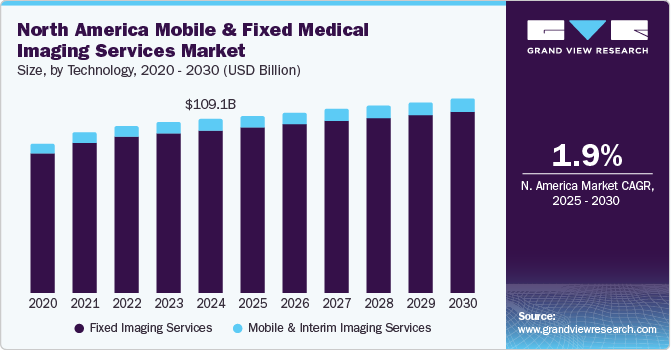
The increasing occurrence of chronic diseases such as cancer, cardiovascular illnesses, diabetes, and respiratory conditions is driving up the demand for both mobile and fixed imaging services across North America. For instance, as of 2023, the American Lung Association has reported that around 15.4 million adults in the U.S. are diagnosed with chronic obstructive pulmonary disease (COPD), while nearly 34.7 million adults have chronic lung disease. Furthermore, the CDC indicates that coronary artery disease (CAD) is the most prevalent heart disease in the U.S., impacting about 1 in 20 adults aged 20 and older.
Advanced imaging technologies, including MRI, CT, and PET scans, play a vital role in diagnosing and monitoring chronic illnesses, while mobile units expand access to rural and underserved areas beyond urban centers. The escalating disease burden increases hospital imaging volumes, prompting providers to explore alternative strategies that minimize wait times and enhance patient flow. Mobile imaging services help bridge this gap by providing timely diagnostics directly in physicians’ offices, nursing homes, or community clinics. As the prevalence of chronic diseases continues to grow, the healthcare system's dependence on flexible and scalable diagnostic solutions such as mobile imaging is expected to rise.
For example, the American Cancer Society projects around 2,041,910 new cancer cases in the U.S. for 2025, with about 618,120 deaths related to cancer. In a similar vein, the Canadian Cancer Society anticipates approximately 247,100 new cancer cases in Canada in 2025, along with an estimated 88,100 deaths from the illness. Cancer has become a significant healthcare burden and a leading cause of death in the U.S. Thus, with the increase in preventive and diagnostic cancer surgeries, the demand for imaging services is expected to witness significant growth.
Number of Cancer Cases in Men and Women from 2022 to 2030
Countries
New Cancer Cases in Men
New Cancer Cases in Women
2022
2030
2022
2030
U.S.
1,283,898
1,530,329
1,096,291
1,261,423
Canada
153,660
190,337
138,438
164,048
Source: International Agency for Research on Cancer (IARC), GVR Analysis
In addition, the swiftly aging population in North America significantly contributes to the increased adoption of mobile and fixed imaging services. Older adults are especially susceptible to various chronic diseases and age-related health issues, necessitating frequent diagnostic imaging for early detection and ongoing monitoring. The Population Reference Bureau (PRB) projects that in the U.S., the number of people aged 65 and older will rise from 58 million in 2022 to 82 million by 2050, marking a 47% increase. This age group’s proportion of the overall population is anticipated to grow from 17% to 23%.
In Canada, the population aged 65 and older was 7,820,121 in 2024, representing 18.9% of the national total. This demographic frequently encounters obstacles in accessing conventional hospital-based imaging services due to limited mobility, transportation issues, or cognitive challenges. Mobile imaging units effectively alleviate these barriers by delivering critical diagnostic services directly to long-term care facilities, retirement communities, and individual homes. This approach enhances patient comfort and convenience, lightens the load on hospital resources, and minimizes unnecessary hospital visits, significantly boosting the demand for mobile and fixed imaging services in the region, thereby propelling market growth.
The increasing emphasis on patient-centric care models significantly drives the demand for point-of-care and home-based healthcare services across North America. This demand is influenced considerably by rising healthcare costs and the need to reduce hospital stays. As healthcare systems increase focus on cost-efficiency and improved patient satisfaction, mobile and fixed imaging services are witnessing an increase in demand. These services deliver a wide range of diagnostic imaging, such as X-rays, ultrasounds, and even advanced modalities such as CT, directly to patients in outpatient clinics, long-term care centers, or at home.
Market Concentration & Characteristics
The North American mobile & fixed medical imaging services market exhibits moderate industry concentration, with several key players dominating the market. Initiatives to raise awareness and knowledge about skin conditions and early diagnosis further stimulate market growth.
The North American mobile and fixed medical imaging services industry is characterized by high innovation. Notable innovations have included portable imaging devices, such as compact MRI and ultrasound machines, and the integration of AI imaging software. The shift from 2D to 3D and 4D imaging technologies has further revolutionized the field, offering more detailed and accurate surgical planning and diagnosis visualizations.
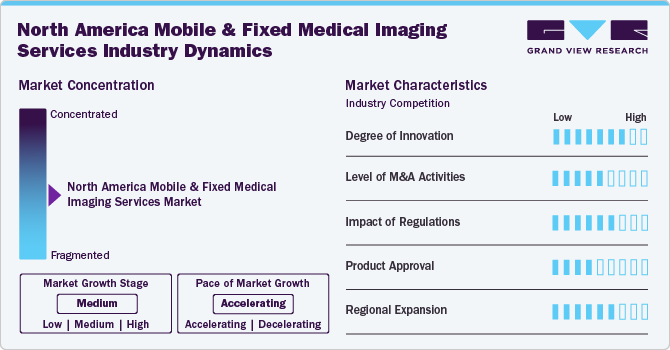
Regulatory frameworks significantly influence the North American mobile and fixed medical imaging services industry, as most regions classify these products as medical devices. Compliance with regulatory requirements, such as US FDA guidelines or EU CE marking, is imperative for market entry and consumer trust. These regulations govern various aspects, including product design, manufacturing processes, and post-market surveillance, influencing product development timelines and market access. Evolving regulatory landscapes necessitate continuous monitoring and adaptation by industry players to ensure compliance and navigate market dynamics effectively.
Mergers and acquisitions in the North American mobile & fixed medical imaging services industry are rising due to the need for research and development, reflecting the industry's dynamic nature. Companies engage in mergers and acquisitions to expand their product portfolio, enter new markets, acquire cutting-edge technologies, and achieve economies of scale. Such acquisitions aim to expand portfolios, gain AI capabilities, or access new markets. There is a consistent interest in traditional and medical device players and tech companies looking to enter the digital health and diagnostics space.
The North American mobile and fixed medical imaging services industry faces competition from traditional and emerging imaging methods. The rise of point-of-care (POC) imaging devices, such as portable ultrasound and low-field MRI systems, enables bedside diagnostics in emergency rooms, intensive care units, and even home settings. These compact devices, often integrated with cloud-based platforms, facilitate real-time image sharing and remote consultations, reducing the reliance on traditional imaging centers.
The North America mobile & fixed medical imaging services industry is expanding regionally, with the U.S. and Canada leading in adoption due to advanced healthcare infrastructure, higher awareness, and regulatory clarity. In April 2025, Probo Medical announced a partnership with GE HealthCare to distribute advanced ultrasound machines, including the Vivid, LOGIQ, Versana, Venue, and Vscan Air lines. This collaboration enhances Probo's efforts to provide high-quality medical imaging technology and support for healthcare professionals nationwide.
Technology Insights
The fixed radiology services segment accounted for the largest market share of 93.8% in 2024. Fixed imaging services refer to stationary systems installed in healthcare facilities such as hospitals, outpatient clinics, and specialized imaging centers. These services include diagnostic technologies such as MRI, CT, X-ray, ultrasound, and nuclear medicine systems. These provide detailed images of the body’s internal structures to detect, diagnose, and treat various medical conditions. Fixed imaging systems are often considered a cornerstone of modern healthcare because they deliver high-resolution, accurate, and reliable diagnostic results. These systems remain essential for providing comprehensive and advanced care, supporting various clinical needs, and facilitating complex procedures.
The mobile & interim imaging services segment is expected to grow at the fastest CAGR of 3.22% over the forecast period. Mobile imaging services include fully equipped, furnished, and climate-controlled trailers that offer customizable radiology solutions. Interim imaging services are typically set up at a healthcare facility temporarily, particularly during periods of construction or renovation. In recent years, the demand for mobile medical imaging services has surged significantly, fueled by their potential to enhance patient outcomes and convenient portability. The increasing number of medical imaging procedures is also a major factor driving market growth.
Application Insights
The orthopedics segment accounted for the largest share, 21.2%, of the North American mobile and fixed medical imaging services market 2024. Diagnostic imaging is essential for understanding, diagnosing, and treating musculoskeletal issues. It helps orthopedic specialists accurately identify fractures and evaluate soft tissue injuries using advanced imaging technologies, which offer comprehensive insights for tailored treatment plans. Mobile and fixed medical imaging services are vital in orthopedic care across North America, helping diagnose and monitor conditions such as fractures, joint disorders, spinal injuries, and diseases such as osteoarthritis. These systems are prevalent in hospitals and clinics, delivering quality images and various techniques.
These systems are key for complex surgeries, sports injury evaluations, and chronic condition management. For instance, in March 2025, Orthoscan, a division of Ziehm-Orthoscan, Inc., launched VERSA, a mini C-arm for clinical imaging, debuting at the American Academy of Orthopaedic Surgeons (AAOS) annual meeting. This device has a touchscreen interface, 180° rotations, and a compact form factor, which improves mobility, workflow efficiency, and imaging comfort in extremity and small-joint procedures.
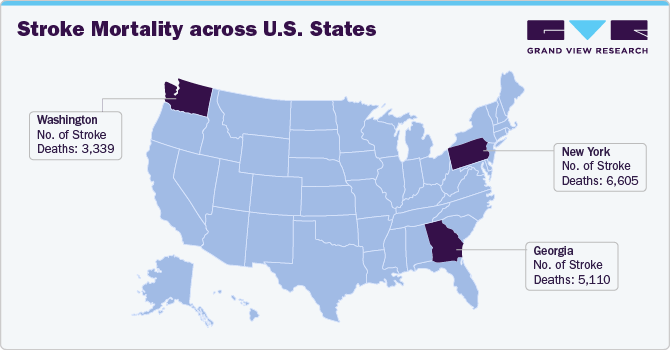
The neurology segment is expected to grow significantly over the forecast period. In neurology, medical imaging is essential for diagnosing and managing conditions such as stroke, epilepsy, brain tumors, multiple sclerosis, and neurodegenerative diseases such as Alzheimer’s and Parkinson’s. Mobile and fixed medical imaging services are integral to delivering timely and accurate neurological care in the U.S. and Canada. Fixed imaging systems are commonly used in hospitals, tertiary care centers, neurology clinics, and academic hospitals. These institutions provide various neuroimaging capabilities such as 3T MRI, functional MRI (fMRI), diffusion tensor imaging (DTI), and PET scans with specialized tracers.
End Use Insights
The hospitals segment held the largest share in the North America mobile & fixed medical imaging services market. Hospitals act as hubs for comprehensive diagnostic care, seamlessly integrating fixed modalities-such as high-field MRI, PET/CT, and interventional fluoroscopy with mobile units that bring point-of-care X-ray, CT, and ultrasound directly to inpatient wards, emergency departments, and satellite clinics. Their in-house imaging departments, staffed by specialized radiologists, technologists, and support teams, facilitate rapid scheduling, centralized workflow management, and cross-disciplinary collaboration. Moreover, ongoing investments in digital radiography, AI-enhanced image analysis, and mobile imaging fleets expand hospitals’ capacity to deliver timely, high-quality diagnostics across urban centers and outreach locations, reinforcing their dominant position in the regional market.
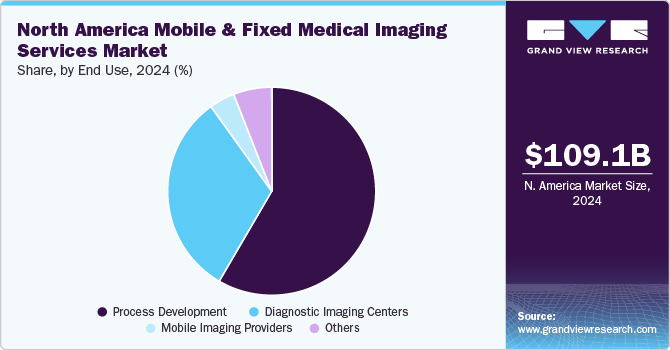
The mobile imaging providers market is expected to grow significantly during the forecast period. Mobile imaging providers are a critical component of the medical imaging ecosystem, which delivers flexible, on-demand diagnostic services that bridge gaps in access to care. These providers operate fleets of mobile units equipped with advanced imaging modalities such as digital X-rays, ultrasound, CT, MRI, PET/CT, and mammography, offering both scheduled and emergency services across various healthcare settings, such as rural hospitals, long-term care facilities, outpatient clinics, correctional institutions, and corporate health programs.
Country Insights
U.S. Mobile & Fixed Medical Imaging Services Market Trends
The mobile & fixed medical imaging services market in the U.S. held a significant share of 93.8% of North America's mobile & fixed medical imaging services market in 2024, driven by factors such as the rising incidence of chronic diseases and technological advancements. Innovations such as high-resolution imaging, AI integration, 3D visualization, optical coherence tomography, digital photography, and high-frequency ultrasound have enhanced dermatologists’ diagnostic capabilities. For instance, in April 2024, researchers from Stanford Medicine discovered that artificial intelligence, particularly deep learning-based computer algorithms, improves the accuracy of skin cancer diagnoses among healthcare professionals.
Canada Mobile & Fixed Medical Imaging Services Market Trends
The mobile & fixed medical imaging services market in Canada held a significant share of North America's mobile & fixed medical imaging services market in 2024, driven by an aging population, increasing prevalence of chronic conditions, increasing awareness regarding early detection, and a heightened focus on early detection. Technological advancements further shape Canada's mobile and fixed medical imaging services market. These technological advancements include artificial intelligence (AI), cloud-based platforms, and enhanced imaging modalities. Canada has seen several strategic movements, such as expanding Canada Diagnostic Centres (CDC) through acquiring Guardian Radiology and the Ultrasound Centre. These acquisitions have expanded CDC’s presence in Saskatchewan, Alberta, and British Columbia, strengthening its position in the medical imaging sector.
Key North America Mobile And Fixed Medical Imaging Services Company Insights
The North American mobile and fixed medical imaging services market is highly competitive. Key players such as RAYUS Radiology, Probo Medical, DMS Health, RadNet, Inc., and Shared Medical Services hold significant positions.
Leading companies are pursuing a mix of organic and inorganic strategies, including new product development, partnerships, acquisitions, mergers, and regional growth, to address the unmet demands of their customers.
Key North America Mobile And Fixed Medical Services Companies:
- RAYUS Radiology
- DMS Health Technologies
- TridentCare
- Akumin Inc.
- RadNet, Inc.
- Shared Medical Services (SMS)
- Christie Innomed
- Promed Medical Imaging
- Probo Medical
- Catalyst MedTech
- Heritage Imaging
- Shared Imaging
Recent Developments
-
In February 2025, TridentCare joined Southwestern Health Resources’ preferred provider network to offer portable diagnostic services to over 790,000 patients across North Texas. TridentCare will provide in-home X-ray and ultrasound services, enhancing care access, efficiency, and patient outcomes within SWHR’s accountable care organization.
-
In November 2024, Shared Medical Services and Nebraska Medicine collaborated to launch the first Mobile Philips MR 5300 BlueSeal in the U.S., featuring helium-free technology. This innovation enhances access to advanced MRI diagnostics, improves patient capacity, and streamlines operations while maintaining high-quality imaging standards
-
In November 2024, Akumin Inc. and United Imaging formed a multi-year strategic alliance to enhance imaging services. This partnership aims to integrate advanced imaging technologies across multiple modalities, improving patient care and operational efficiency in healthcare facilities.
-
In April 2024, Rayus Radiology partnered with an AI startup to launch a nationwide whole-body MRI service. This initiative aims to enhance diagnostic capabilities and accessibility for patients across the U.S., leveraging advanced technology to improve healthcare outcomes.
North America Mobile & Fixed Medical Imaging Services Market Report Scope
Report Attribute
Details
Market size value in 2025
USD 111.1 billion
Revenue forecast in 2030
USD 122.1 billion
Growth rate
CAGR of 1.89% from 2025 to 2030
Actual data
2018 - 2024
Forecast period
2025 - 2030
Quantitative units
Revenue in USD million/billion, and CAGR from 2025 to 2030
Report coverage
Revenue forecast, company ranking, competitive landscape, growth factors, and trends
Segments covered
Technology, application, end use, country
Regional scope
North America
Country scope
U.S.; Canada
Key companies profiled
RAYUS Radiology; DMS Health Technologies; TridentCare; Akumin Inc.; RadNet, Inc.; Shared Medical Services (SMS); Christie Innomed; Promed Medical Imaging; Probo Medical; Catalyst MedTech; Heritage Imaging; Shared Imaging
Customization scope
Free report customization (equivalent up to 8 analysts working days) with purchase. Addition or alteration to country, regional & segment scope.
Pricing and purchase options
Avail customized purchase options to meet your exact research needs. Explore purchase options
North America Mobile And Fixed Medical Imaging Services Market Report Segmentation
This report forecasts country-level revenue growth and analyzes the latest industry trends and opportunities in each sub-segment from 2018 to 2030. For the purpose of this study, Grand View Research has segmented the North America mobile & fixed medical imaging services market report on the basis of technology, application, end use and country:
-
Technology Outlook (Revenue, USD Million, 2018 - 2030)
-
Mobile & Interim Imaging Services
-
Magnetic Resonance Imaging (MRI)
-
Positron Emission Tomography - Computed Tomography (PET/CT)
-
Catheterization & Angiography (Cath/Angio)
-
Nuclear Medicine
-
Bone Density (DEXA Scan)
-
Ultrasound
-
Mammography (2D & 3D)
-
-
Fixed Radiology Services
-
MRI (Open & Closed Systems)
-
CT (High-, Mid-, Low-end Cone Beam)
-
X-ray (Radiography & Fluoroscopy)
-
Mammography (Fixed)
-
Ultrasound (Handheld, Compact, Cart-based)
-
Nuclear Imaging (SPECT, PET)
-
-
-
Application Outlook (Revenue, USD Million 2018 - 2030)
-
Cardiology
-
Oncology
-
Neurology
-
Orthopedics
-
Gastroenterology
-
Gynecology
-
Other Applications
-
-
End Use Outlook (Revenue, USD Million 2018 - 2030)
-
Hospitals
-
Diagnostic Imaging Centers
-
Mobile Imaging Providers
-
Others
-
-
Region Outlook (Revenue, USD Million, 2018 - 2030)
-
North America
-
U.S.
-
Canada
-
-
Frequently Asked Questions About This Report
b. The North America mobile & fixed medical imaging services market size was estimated at USD 109.1 billion in 2024 and is expected to reach USD 111.1 billion in 2025.
b. The North America mobile & fixed medical imaging services market is expected to grow at a compound annual growth rate of 1.9% from 2025 to 2030 to reach USD 122.1 billion by 2030.
b. The fixed radiology services segment led the North America mobile & fixed medical imaging services market in 2024 with a 93.8% share, driven by rising demand for non-invasive diagnostics. Technological advancements and increased use in orthopedics further supported its dominance.
b. Some key players operating in the North America mobile & fixed medical imaging services market include RAYUS Radiology, DMS Health Technologies, TridentCare, Akumin Inc., RadNet, Inc., Shared Medical Services (SMS), Christie Innomed, Promed Medical Imaging, Probo Medical, Catalyst MedTech, Heritage Imaging, Shared Imaging
b. Key factors driving the North America mobile & fixed medical imaging services market growth include increasing demand for early diagnosis and technological advancements in imaging equipment. Additionally, the aging population and rise in chronic diseases further contribute to the market's expansion.

Share this report with your colleague or friend.
Need a Tailored Report?
Customize this report to your needs — add regions, segments, or data points, with 20% free customization.


ISO 9001:2015 & 27001:2022 Certified
We are GDPR and CCPA compliant! Your transaction & personal information is safe and secure. For more details, please read our privacy policy.
Trusted market insights - try a free sample
See how our reports are structured and why industry leaders rely on Grand View Research. Get a free sample or ask us to tailor this report to your needs.













