
- Home
- »
- Medical Devices
- »
-
Oligonucleotide Contract Manufacturing Market Report, 2033GVR Report cover

Oligonucleotide Contract Manufacturing Market (2026 - 2033)
Size, Share & Trends Analysis Report By Type (Antisense Oligonucleotides, Small Interfering RNA), By Service (API Manufacturing, Finished Drug Products Manufacturing), By Workflow, By Application, By End-use, By Region, And Segment Forecasts
Market Size, 2025
$659.7MMarket Estimate, 2026
$749.8MMarket Forecast, 2033
$1,964.1MCAGR, 2026–2033
14.7%Oligonucleotide Contract Manufacturing Market Summary
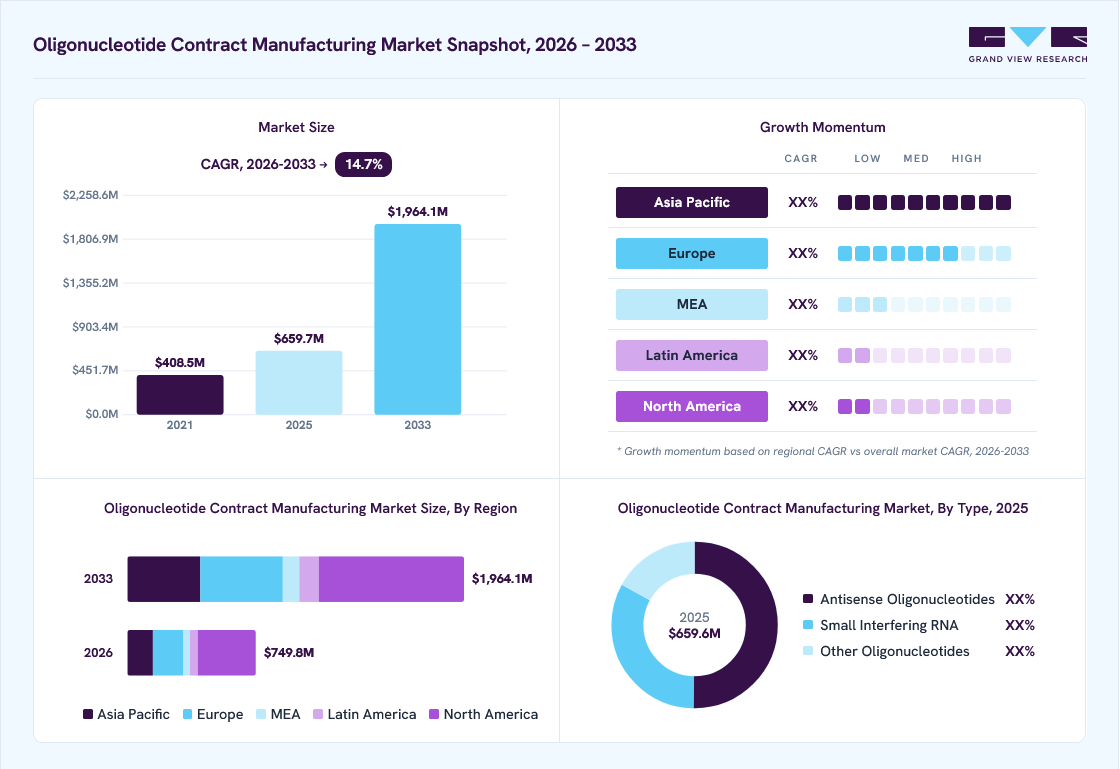
The global oligonucleotide contract manufacturing market size was valued at USD 659.7 million in 2025 and is projected to grow from USD 749.8 million in 2026 to USD 1,964.1 million by 2033, at a CAGR of 14.7% from 2026 to 2033. North America dominated the market, accounting for a revenue share of 45.5% in 2025. The market is driven by expanding therapeutic oligonucleotide pipelines, increasing adoption of outsourcing, rising demand for chemically modified sequences, growing molecular diagnostic applications, and increasing research requirements for customized oligonucleotides.
 Source: Grand View Research, IR Documents, Primary Interviews, Paid DatabasesTo learn more about this report,
 Download Free Sample Report
Key Market Trends & Insights
- By type: Antisense oligonucleotides segment led the market with the largest revenue share of 50.1% in 2025.
- By service: API manufacturing segment led the market with the largest revenue share of 54.8% in 2025.
- By workflow: Commercial segment led the market with the largest revenue share of 69.5% in 2025.
- By application: Therapeutic segment led the market with the largest revenue share of 72.9% in 2025.
- By end use: Pharmaceutical and biopharmaceutical companies segment led the market with the largest revenue share of 80.3% in 2025.
Regional Highlights
- Largest regional market: North America (45.5% revenue share, 2025)
- Fastest-growing regional market: Asia Pacific (highest CAGR, 2026-2033)
- By country: The U.S. held the largest market share in 2025
Market Size & Forecast
- Market size in 2025 : USD 659.7 Million
- Estimated market size in 2026: USD 749.8 Million
- Projected market size by 2033 : USD 1,964.1 Million
- CAGR (2026-2033): 14.7%
Prism AI by Grand View Research Free to tryAsk a question about the oligonucleotide contract manufacturing marketTry asking✓Every figure cited from GVR research Prefer the report? Download free sample →
Currently, most pharmaceutical and biotechnology companies are engaging specialized manufacturers to access synthesis expertise, qualified infrastructure, and flexible production capacity. Besides, clinical progression creates requirements for larger batches and consistent supply. In addition, diagnostic developers and research institutions require customized primers, probes, and labeled sequences, broadening manufacturing demand across applications with distinct quality specifications and purchasing patterns. These factors are expected to drive market growth.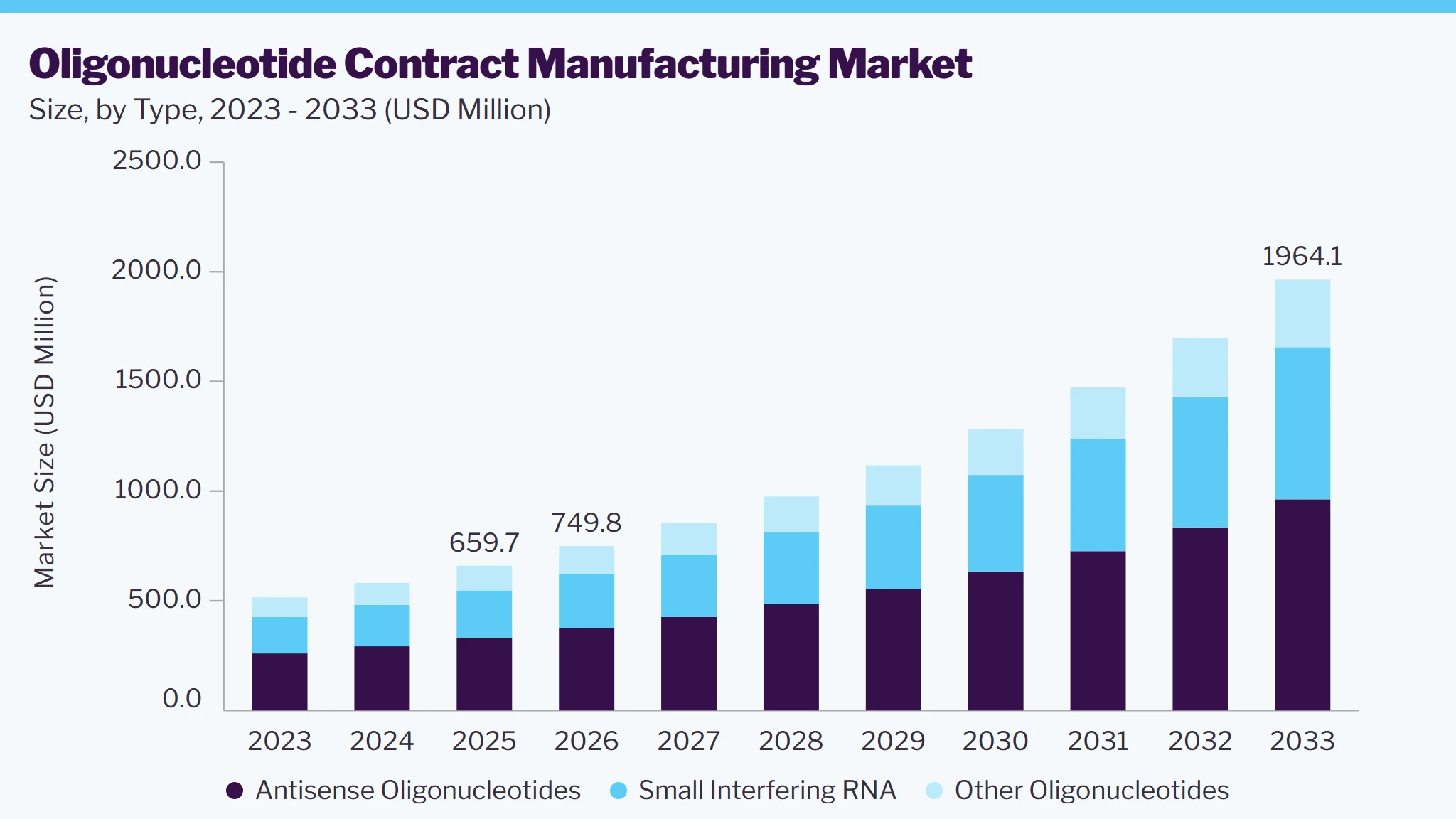 To learn more about this report, Download Free Sample Report
The oligonucleotide contract manufacturing market encompasses outsourced production of antisense oligonucleotides, small interfering RNA, and other sequences for therapeutic, research, and diagnostic use. Besides, the market dynamics reflect the interaction between specialized customer requirements, manufacturing complexity, and available supplier capabilities. High material costs, purification losses, and analytical requirements constrain manufacturing economics. Moreover, maintaining purity during scale-up requires process controls and reproducible downstream operations. Oligonucleotide conjugates present opportunities for providers combining complementary synthesis, linker chemistry, and conjugation capabilities.
In addition, technological advancements focus on automated synthesis, enzymatic and hybrid processing, advanced purification, conjugation methods, and analytical characterization. Automated platforms improve control over reaction conditions and reagent delivery, while alternative synthesis approaches offer processing options for selected sequences. Furthermore, chromatography optimization and complementary analytical techniques support impurity separation, sequence confirmation, and consistent product specifications. Their practical value depends on compatibility with the intended chemistry, production scale, and quality requirements.
Moreover, the competitive scenario comprises specialized oligonucleotide manufacturers and diversified pharmaceutical service providers. Established participants differentiate through technical experience, qualified capacity, analytical expertise, and dependable supply, while expanding providers invest in dedicated infrastructure and specialized personnel. Competition centers on complex chemistry capabilities, process reproducibility, production flexibility, and coordinated services. Besides, customer qualification and effective technology transfer influence supplier selection. Partnerships, capacity expansion, and service integration strengthen positioning when supported by demonstrated manufacturing performance and customer requirements. Thus, such factors are expected to drive the market growth.
Market Dynamics
The market is driven by expanding demand for therapeutic oligonucleotides, including antisense oligonucleotides, small interfering RNA, and other sequences designed to modulate gene expression. The progression of these programs creates manufacturing requirements involving complex sequences, chemical modifications, and defined quality specifications. Specialized contract manufacturers address these needs through synthesis equipment, purification platforms, and analytical expertise, providing customers with access to qualified production capabilities across development stages.
Besides, outsourcing enables pharmaceutical and biotechnology companies to obtain clinical and commercial supplies while maintaining flexibility in manufacturing arrangements. In addition, contract manufacturers support changing batch requirements through scalable processes, coordinated scheduling, and established quality systems. These capabilities allow customers to align manufacturing activities with therapeutic development milestones and anticipated supply requirements.
Moreover, continuity between production stages strengthens demand for partners offering effective technology transfer, reproducible processing, and dependable delivery. Manufacturers with complementary synthesis, purification, and characterization capabilities can support product requirements within coordinated supply arrangements. Furthermore, expertise in modified oligonucleotides and conjugated formats broadens the scope of outsourced manufacturing. Providers combining technical specialization with production flexibility are positioned to establish enduring customer relationships and support therapeutic programs from investigational supply through routine commercial manufacturing.
High manufacturing costs constrain the oligonucleotide contract manufacturing market because production combines specialized starting materials, repeated synthesis cycles, purification, and analytical testing. Sequence length, nucleotide modifications, and conjugation requirements influence material consumption and processing complexity. Besides, incomplete reactions and product losses can reduce recoverable output, increasing the resources required to obtain material that meets specifications. Purification further adds expense through chromatography media, solvents, equipment time, and associated handling requirements. These pressures are particularly relevant for complex sequences and smaller batches, where fixed manufacturing activities are distributed across limited quantities. In addition, among the outsourcing customers, these cost structures affect quotation comparisons, procurement budgets, and decisions concerning batch size or supplier selection. Differences in purity requirements, testing scope, and deliverables can also make apparently similar quotations difficult to compare. Customers therefore require clearly defined specifications and commercial inclusions before evaluating manufacturing economics.
Furthermore, for suppliers, cost reduction must preserve product quality and process consistency. Improving coupling efficiency, material utilization, purification recovery, and production scheduling can help manage expenditure. However, specialized infrastructure and technical personnel remain necessary, limiting the extent to which manufacturers can reduce prices without affecting operational sustainability or their ability to support demanding customer programs consistently over time.
Specialized manufacturing of oligonucleotide conjugates presents an opportunity for contract manufacturers combining expertise in oligonucleotide synthesis, linker chemistry, and conjugation. These constructs incorporate targeting ligands, peptides, antibodies, or other molecular structures, creating requirements for coordinated component production and product characterization. Manufacturers offering complementary capabilities can differentiate through component compatibility assessment, controlled conjugation, purification, and impurity identification.
Besides, developers seeking streamlined outsourcing arrangements create opportunities for providers capable of coordinating multiple manufacturing stages. Integrated services can simplify technology transfer, production scheduling, and communication while establishing clear accountability for material quality. In addition, specialized partnerships enable manufacturers to broaden their service coverage by connecting complementary technical capabilities within a coordinated supply arrangement.
Moreover, expertise in chemically modified sequences and diverse conjugation chemistry allows suppliers to address product-specific requirements across investigational and commercial programs. Analytical capabilities further strengthen this positioning by supporting molecular identity, conjugation consistency, and reproducible quality. Furthermore, aligning manufacturing infrastructure with defined customer specifications can support efficient execution across different constructs and production scales. Providers combining technical specialization, analytical depth, and dependable delivery are positioned to establish long-term partnerships and strengthen their participation in complex oligonucleotide manufacturing contracts.
Maintaining consistent purity during production scale-up remains a key challenge in the oligonucleotide contract manufacturing market. Target sequences can closely resemble impurities formed during synthesis and subsequent processing, complicating separation and characterization. Differences in sequence length, chemical modifications, and molecular structure may require complementary purification and analytical methods. As batch quantities increase, manufacturers must preserve separation performance while managing equipment capacity, processing time, solvent consumption, and product recovery. Consequently, downstream purification can constrain output even where sufficient synthesis capacity is available.
Addressing these requirements demands close coordination between upstream process controls, purification conditions, and analytical characterization. Scale transitions introduce changes in loading, flow distribution, mixing, and material handling that can affect process reproducibility. Manufacturers must establish that production adjustments consistently deliver material meeting agreed specifications.
Moreover, variability in purity can delay customer acceptance, require additional investigations, and disrupt supply schedules. Suppliers therefore need effective impurity monitoring, documented process controls, and analytical methods capable of distinguishing closely related species. The operational challenge is to achieve the required purity without excessive product loss or processing time. Balancing these factors is essential to prevent downstream bottlenecks and maintain dependable execution across successive batches and manufacturing scales.
Market Concentration & Characteristics
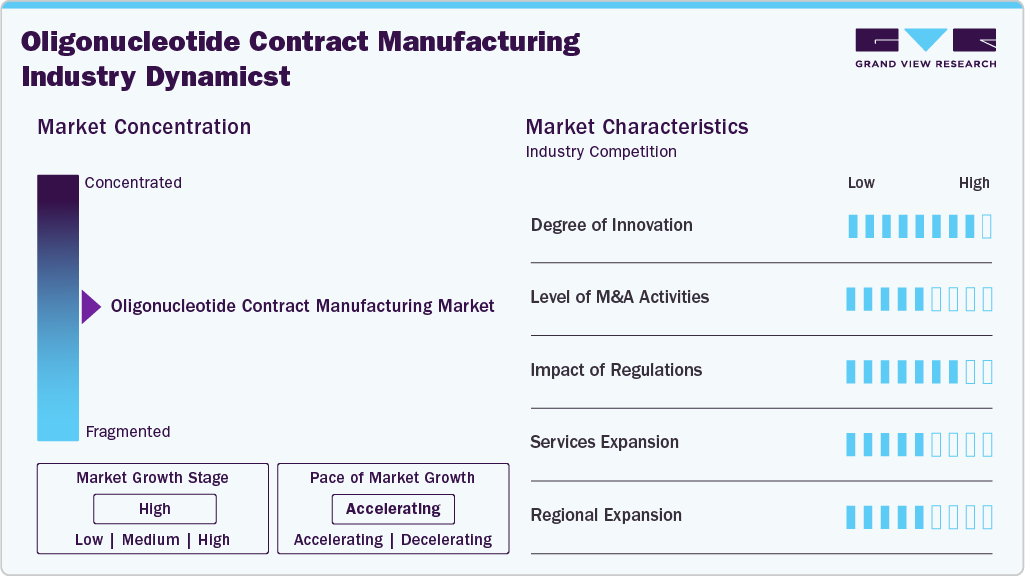
The oligonucleotide contract manufacturing market is characterized by demand for specialized synthesis capabilities, effective impurity control, and reliable clinical and commercial supply. Manufacturers differentiate through production technologies, analytical expertise, service integration, and qualified manufacturing infrastructure serving therapeutic, research, and diagnostic applications.
Manufacturers adopt automated synthesis, improved purification methods, and advanced analytical technologies to address complex oligonucleotide manufacturing requirements. Chemical, enzymatic, and combined synthesis approaches offer different processing options depending on sequence characteristics and production needs. Innovations in conjugation and modified nucleotide incorporation support specialized products. Their competitive value depends on demonstrated improvements in sequence integrity, purity, yield, material consumption, and process reproducibility at the required scale.
 To learn more about this report, Download Free Sample Report
Acquisitions and strategic partnerships provide routes to specialized synthesis technologies, analytical expertise, qualified facilities, and complementary customer relationships. Combining oligonucleotide API manufacturing with conjugation, formulation, or finished drug product capabilities can strengthen service integration. Transactions may also broaden geographic coverage and sourcing options. Successful integration requires compatible quality systems, retention of technical personnel, and effective coordination of manufacturing processes across participating facilities.
Quality and regulatory requirements vary according to whether oligonucleotides are intended for therapeutic, research, or diagnostic use. Therapeutic manufacturing places particular emphasis on impurity characterization, analytical controls, raw material traceability, and consistent batch quality. Diagnostic components require controls appropriate to their intended application and customer specifications. Facility qualification, process documentation, and change management influence supplier acceptance, making application-specific quality systems important throughout manufacturing and supply.
Manufacturers are broadening their offerings across oligonucleotide synthesis, purification, conjugation, associated testing, finished drug product manufacturing, packaging, and regulatory support. Connected services facilitate coordination between production stages and reduce the number of supplier interfaces managed by customers. Research and diagnostic customers may additionally require labeling, customized formulations, and specific delivery formats. Standalone discovery, sequence design, and development services remain separate from the defined contract manufacturing scope.
Manufacturers expand their geographic presence to improve customer access, diversify production locations, and provide alternative supply arrangements. Location decisions depend on skilled personnel, raw material availability, quality infrastructure, and access to specialized purification and analytical capabilities. Additional facilities must demonstrate process reproducibility and meet relevant qualification requirements before supporting customer programs. Regional expansion is most effective when production capabilities and operating readiness align with confirmed customer requirements and appropriate manufacturing scales.
Analyst Perspective
The oligonucleotide contract manufacturing market presents growth opportunities for providers offering scalable production, specialized technical expertise, consistent quality, regulatory compliance, and reliable supply. Demand is driven by therapeutic applications, including antisense oligonucleotides, small interfering RNA, and conjugated modalities, alongside research and diagnostic applications. Market growth depends on clinical progress, commercialization timelines, dosing requirements, and outsourcing strategies. Manufacturers must manage complex modifications, control impurities, and maintain process reproducibility as production volumes increase. Strategic capacity investments aligned with validated demand and purification capabilities can improve yields, operational efficiency, and supply continuity. Providers that deliver dependable services and maintain technical differentiation will be better positioned to strengthen customer relationships, secure repeat contracts, and achieve sustainable revenue growth.
Impact of U.S. Tariffs on the Global Oligonucleotide Contract Manufacturing Market
U.S. tariffs can influence oligonucleotide contract manufacturing through changes in import costs, supplier selection, and production allocation. Their applicability depends on product classification, origin, pharmaceutical status, and available exemptions or preferential arrangements. Current pharmaceutical tariff measures cover certain patented products and associated ingredients, making product-specific assessment essential before estimating exposure. Therapeutic APIs, research oligonucleotides, diagnostic components, and manufacturing inputs should therefore be evaluated separately.
For affected imports, additional duties may increase land costs and prompt customers to reassess quotations, inventory policies, and contractual responsibility for customs charges. Manufacturers may face requests for cost sharing, alternative sources, or revised delivery arrangements. These effects represent potential commercial responses rather than uniform outcomes across suppliers.
Tariff exposure may also strengthen interest in U.S. manufacturing capacity and geographically diversified supply networks. However, transferring oligonucleotide production requires technical assessment, supplier qualification, process comparability, and appropriate documentation, limiting immediate substitution. Besides, international manufacturers can respond by clarifying origin documentation, reviewing supply agreements, and evaluating qualified production alternatives. Procurement decisions should compare total delivered cost alongside quality, capacity availability, and supply continuity. Thus, tariffs may reshape sourcing preferences, while technical suitability and reliable execution remain central to manufacturing partner selection.
Technological Advancements
 To learn more about this report, Download Free Sample Report
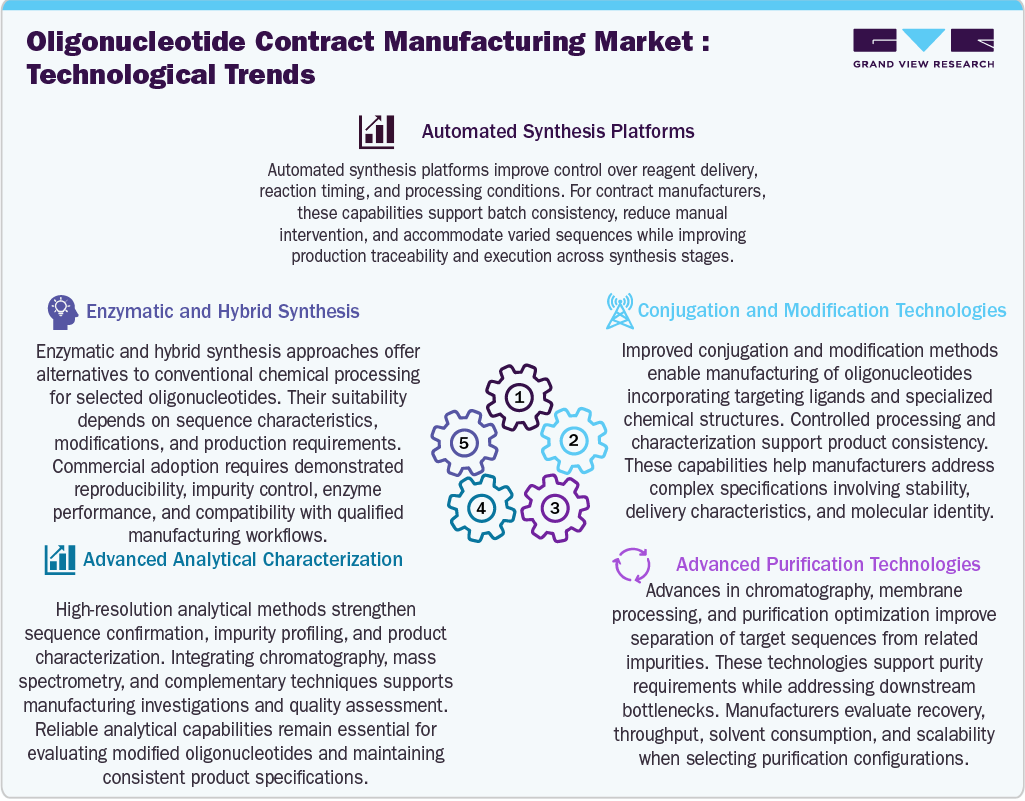
Technological advancements in oligonucleotide contract manufacturing focus on improving synthesis control, purification efficiency, product characterization, and compatibility with complex molecular structures. Automated synthesis platforms provide precise control over reagent delivery, reaction timing, and processing conditions, supporting batch reproducibility and reducing manual intervention. These capabilities also strengthen production traceability across varied sequences and manufacturing scales. Enzymatic and hybrid synthesis approaches offer alternative processing routes for selected oligonucleotides, with adoption dependent on sequence compatibility, modification requirements, enzyme performance, and demonstrated manufacturing consistency.
Advanced purification technologies, including optimized chromatography and membrane processing, support the separation of target sequences from closely related impurities while addressing recovery, throughput, and solvent consumption. Improvements in conjugation and chemical modification methods enable manufacturers to accommodate targeting ligands and specialized structures, requiring controlled processing to maintain molecular identity and product consistency.
Advanced analytical characterization complements these developments through high-resolution chromatography, mass spectrometry, and other techniques that support sequence confirmation and impurity profiling. Together, these technologies expand the technical capabilities available to outsourcing customers. Their practical value depends on successful integration into qualified workflows and measurable improvements in yield, purity, reproducibility, and manufacturing efficiency across therapeutic, research, and diagnostic oligonucleotide applications.
Pricing Model Analysis
 To learn more about this report, Download Free Sample Report
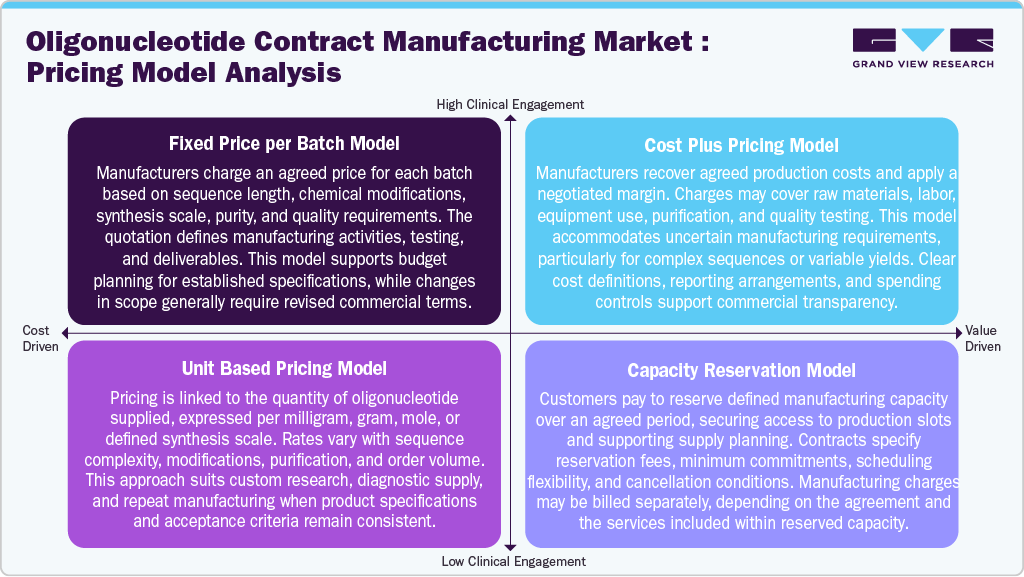
Pricing structures in the oligonucleotide contract manufacturing market reflect product complexity, production scale, process maturity, and supply requirements. Fixed batch pricing establishes an agreed charge for a defined manufacturing scope, incorporating sequence characteristics, chemical modifications, purification, and quality testing. This structure provides expenditure visibility when specifications and deliverables are clearly established, with scope changes subject to commercial revision. Unit-based pricing links charges to supplied quantities, typically measured by mass, molar quantity, or synthesis scale, enabling procurement comparisons across consistent specifications and repeat orders. Volume commitments may support negotiated pricing adjustments.
Cost-plus arrangements accommodate manufacturing assignments involving uncertain yields, variable material consumption, or complex processing by combining agreed production expenses with a negotiated margin. Their effectiveness depends on transparent cost allocation and reporting. Capacity reservation agreements provide access to designated production availability in exchange for financial commitments, with terms covering scheduling, minimum volumes, cancellation provisions, and reservation fees. Manufacturing charges may remain separate. Across these models, quotation comparability depends on clearly defined inclusions for analytical testing, packaging, regulatory support, and raw materials. Evaluating these components alongside quality requirements and supply obligations supports informed supplier negotiations and alignment between procurement expenditure and manufacturing needs.
Type Insights
Based on type, the antisense oligonucleotides segment led the market with the largest revenue share of 50.1% in 2025. The segment is driven by using antisense sequences to regulate gene expression and modify RNA processing. Manufacturing requires precise sequence assembly, chemical modification, purification, and characterization of product-related impurities. These requirements encourage pharmaceutical developers to engage specialized contract manufacturers with established synthesis platforms and analytical expertise. Outsourcing is particularly relevant for programs requiring modified backbones, complex sequences, and stringent purity specifications. Supplier selection emphasizes process reproducibility, technical experience, and reliable clinical and commercial supply.
On the other hand, the small interfering RNA segment is projected to grow at a significant CAGR during the forecast period. The segment is driven by its application in targeted gene silencing. Manufacturing involves the synthesis and purification of complementary RNA strands, followed by duplex formation and conjugation where required. Modified nucleotides and delivery-enhancing structures introduce additional processing and analytical requirements. Contract manufacturers support developers through specialized synthesis, impurity characterization, and production scale-up. The segment’s outsourcing requirements are shaped by sequence complexity, conjugation chemistry, and product specifications. Expertise in maintaining strand identity, duplex integrity, and batch consistency remains central to supplier qualification for therapeutic siRNA programs.
Service Insights
Based on service, the API manufacturing segment led the market with the largest revenue share of 54.8% in 2025. The segment encompasses synthesis, deprotection of oligonucleotides, purification, isolation, and associated quality testing of therapeutic oligonucleotide drug substances. Besides, manufacturing complexity varies according to sequence length, backbone chemistry, nucleotide modifications, and conjugation requirements. Specialized equipment and analytical methods are necessary to distinguish the intended sequence from closely related impurities. Pharmaceutical companies outsource these activities to access established technical capabilities and qualified infrastructure. Process reproducibility, purification efficiency, and compliance with customer specifications are key considerations in selecting manufacturing partners.
The finished drug products manufacturing segment is anticipated to register the fastest growth during the forecast period. The segment is supported by formulation and dosage preparation requirements for oligonucleotide therapeutics. Services may include solution preparation, sterile filtration where suitable, aseptic filling, lyophilization, and incorporation into delivery systems. Product characteristics influence excipient selection, container compatibility, stability assessment, and handling conditions. Contract manufacturers provide specialized facilities and technical expertise to translate drug substances into products suitable for administration. Coordination between API production and finished dosage manufacturing helps maintain material quality and scheduling continuity. Formulation expertise and aseptic processing capabilities are important supplier selection criteria.
Workflow Insights
Based on workflow, commercial accounted for the largest share of the oligonucleotide contract manufacturing market. Commercial production requires validated processes, established specifications, consistent batch quality, and dependable supply arrangements. Manufacturing schedules are determined by product demand, dosing requirements, inventory policies, and shelf-life considerations. Contract manufacturers support routine production through qualified infrastructure, controlled processing, release testing, and documented quality systems. Customers place particular emphasis on process consistency, change management, and continuity of supply. Long-term manufacturing relationships also require coordination across raw material procurement, production planning, and quality assurance to maintain reliable availability throughout the product lifecycle.
On the other hand, the clinical segment is projected to grow at a significant CAGR duringthe forecast period. The segment is driven by the investigational oligonucleotide programs requiring materials for human studies. Manufacturing requirements evolve across clinical phases as batch quantities, formulations, and analytical specifications are refined. Contract manufacturers provide clinical-grade APIs, finished dosage forms, associated testing, and trial-specific packaging services. Flexible production arrangements are important because study designs, enrollment schedules, and material requirements may change during development. Technical expertise in complex sequences and modifications supports the preparation of suitable investigational supplies. Supplier qualification emphasizes phase-appropriate quality systems, documentation, responsive scheduling, and effective technology transfer between production scales.
Application Insights
Based on application, therapeutic accounted for the largest share of the oligonucleotide contract manufacturing market. The segment covers oligonucleotides intended for disease treatment or prevention, including antisense sequences, small interfering RNA, and other therapeutic formats. Manufacturing requirements are influenced by chemical structure, intended route of administration, purity specifications, and delivery characteristics. Specialized synthesis, purification, and analytical characterization are essential to establish product identity and consistency. Pharmaceutical developers engage contract manufacturers to access these capabilities across clinical and commercial production. Experience with modified sequences, conjugation, impurity control, and appropriate quality systems remains important in evaluating therapeutic manufacturing partners.
On the other hand, the research segment is projected to grow at a significant CAGR duringthe forecast period. The segment is driven by custom oligonucleotide requirements across molecular biology and preclinical investigation. Applications include gene expression studies, target validation, assay development, and gene-editing research. Customers require diverse sequences, chemical modifications, labels, purity grades, and delivery formats according to experimental objectives. Contract synthesis providers accommodate these specifications through flexible production and purification services. Research orders often involve smaller quantities and frequent sequence changes, making turnaround time and technical support important purchasing considerations. Sequence accuracy, product consistency, and clear analytical documentation support reproducible experiments and recurring supplier relationships.
End Use Insights
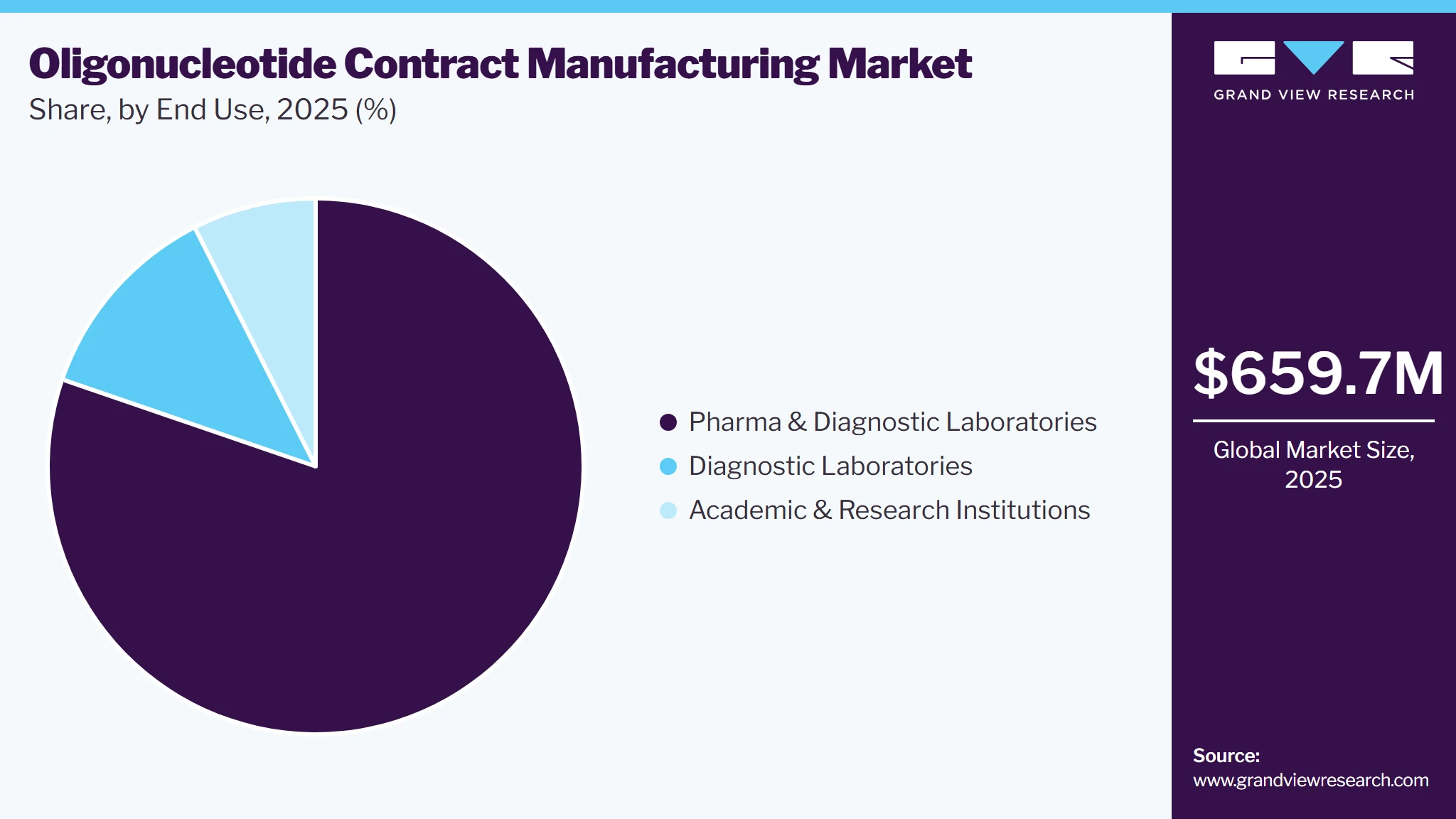
Based on end use, the pharmaceutical and biopharmaceutical companies segment led the market with the largest revenue share of 80.3% in 2025. These organizations require outsourced production for research programs, clinical development, and commercial therapeutic supply. Manufacturing needs vary according to modality, sequence complexity, development stage, and internal infrastructure. Contract manufacturers provide access to specialized synthesis technologies, purification platforms, and analytical capabilities that may be unavailable within customer facilities. Partner selection emphasizes technical compatibility, quality systems, production flexibility, and dependable delivery. Effective coordination of specifications, technology transfer, and manufacturing documentation supports continuity as products advance through development and enter routine supply.
 To learn more about this report, Download Free Sample Report
The diagnostic laboratories segment is anticipated to register the fastest growth during the forecast period due to growing manufacturing requirements for primers, probes, and other oligonucleotide assay components. Diagnostic developers require consistent sequence identity, labeling performance, purity, and traceability to maintain assay reliability. Outsourced services may include synthesis, purification, modification, formulation, and customized packaging. Specifications differ according to assay design, testing platform, and intended use, requiring close coordination between customers and manufacturers. Batch consistency and controlled manufacturing processes are particularly important for recurring component supply. Suppliers offering technical customization, appropriate documentation, and dependable fulfillment support diagnostic product development and routine production.
Regional Insights
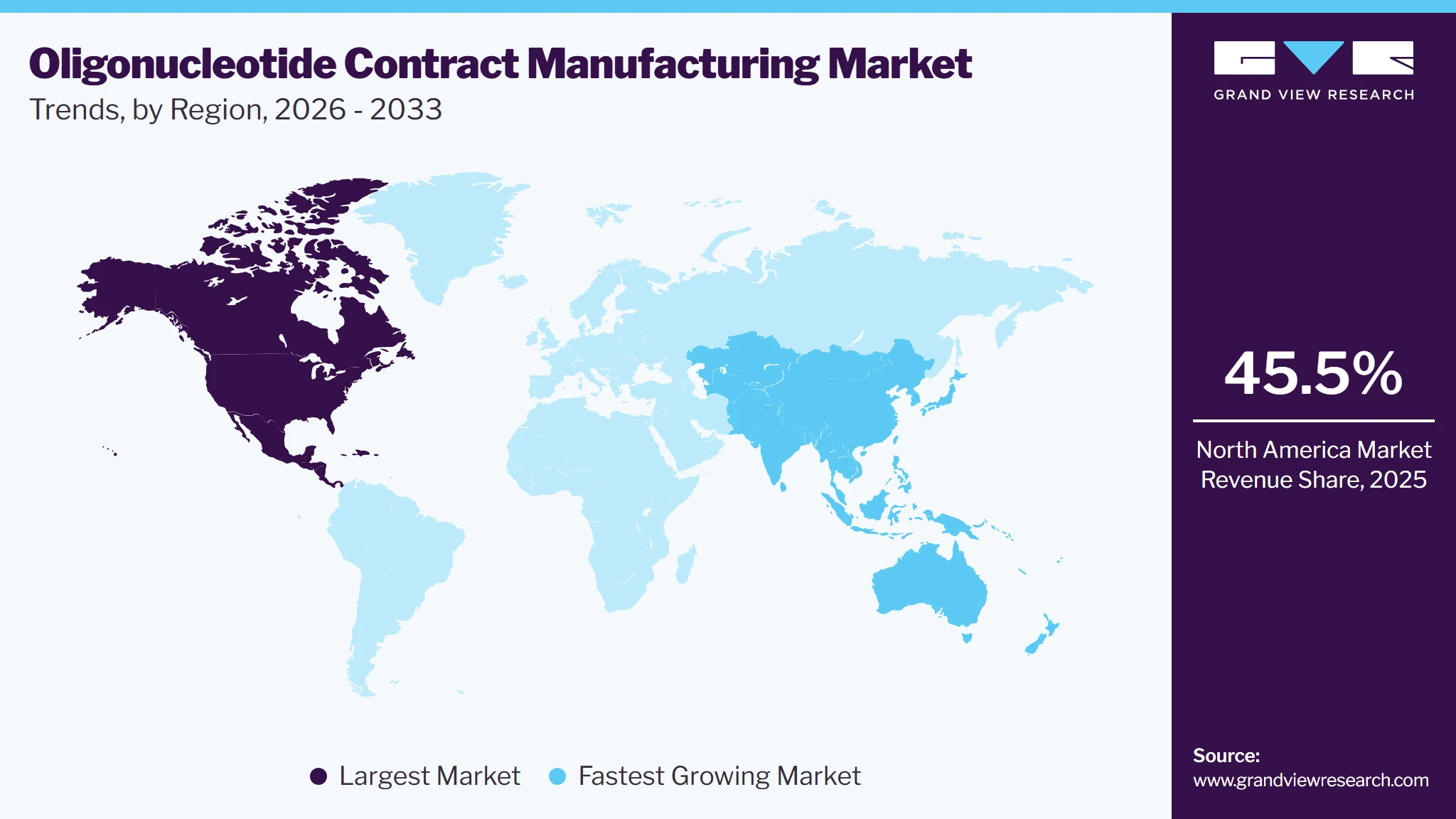
North America dominated the oligonucleotide contract manufacturing market with the largest revenue share of 45.5% in 2025. The market is driven by established manufacturing infrastructure, specialized suppliers, and demand across therapeutic, research, and diagnostic applications. Capabilities in complex synthesis, purification, and analytical characterization support outsourced clinical and commercial production. In addition, therapeutic pipeline progression creates requirements for flexible batch sizes and consistent product quality. Moreover, suppliers offer coordinated technology transfer and dependable delivery support continuity across manufacturing stages. The region’s competitive position reflects the availability of qualified infrastructure and technical expertise suited to complex oligonucleotide specifications.
 To learn more about this report, Download Free Sample Report
U.S. Oligonucleotide Contract Manufacturing Market Trends
The oligonucleotide contract manufacturing market in the U.S. held the largest share of the North American market in 2025. Growth is attributed to specialized manufacturing infrastructure and suppliers serving therapeutic APIs, research oligonucleotides, and diagnostic components. These capabilities enable customers to outsource technically demanding synthesis, purification, and analytical activities. In addition, clinical progression introduces requirements for reproducible processes and scalable production. Moreover, established quality systems and effective technology transfer support continuity between clinical and commercial manufacturing. Supplier selection emphasizes technical compatibility, impurity control, production flexibility, and reliable delivery across programs with different sequence characteristics and quality specifications.
The oligonucleotide contract manufacturing market in Canada is expected to grow steadily over the forecast period. The market is driven by nucleic acid research, biotechnology activity, and requirements for customized synthesis. Investment in the broader life sciences ecosystem provides a foundation for research supply, diagnostic components, and therapeutic manufacturing partnerships. In addition, investigational programs create opportunities for specialized production and analytical support. Moreover, relationships with international manufacturers provide access to complex modifications and production scales suited to customer requirements. Market development reflects the conversion of funded projects into manufacturing assignments and the qualification of suppliers against application-specific specifications.
Europe Oligonucleotide Contract Manufacturing Market Trends
Europe accounted for a significant share of the global oligonucleotide contract manufacturing market in 2025. The market is driven by specialized suppliers offering synthesis, purification, chemical modification, and analytical characterization across therapeutic, research, and diagnostic applications. Established technical infrastructure supports outsourcing requirements involving complex sequences and demanding quality specifications. In addition, clinical programs and commercial products require manufacturing continuity across different production scales. Moreover, recurring diagnostic supply agreements support demand for consistent component quality and reliable fulfillment. The region’s competitive position reflects technical specialization, qualified facilities, and coordinated manufacturing services that accommodate diverse customer requirements.
The oligonucleotide contract manufacturing market in Germany held the largest share of the European market in 2025. Growth is attributed to specialized production infrastructure and expertise in nucleic acid synthesis, purification, and analytical testing. These capabilities support participation in therapeutic programs and diagnostic supply contracts requiring detailed product characterization. In addition, established quality systems facilitate customer qualification and manufacturing documentation. Moreover, expertise in impurity control and process reproducibility supports technically demanding sequences and modified structures. The country’s supplier base addresses varying production requirements through coordinated synthesis and downstream processing, with manufacturing suitability assessed against product specifications and supply commitments.
The UK oligonucleotide contract manufacturing market is expected to grow significantly over the forecast period. The market is driven by research initiatives advancing nucleic acid therapies and individualized treatments. Collaboration between academic institutions, biotechnology developers, and specialized manufacturers supports requirements for modified sequences and clinical supplies. In addition, investigational programs require analytical characterization, flexible batch production, and appropriate manufacturing documentation. Moreover, suppliers accommodating complex specifications and changing study requirements support the transition from research materials to clinical-grade supply. Technical collaboration and phase-appropriate quality systems remain important features of outsourcing arrangements across the country’s therapeutic research and development ecosystem.
Asia Pacific Oligonucleotide Contract Manufacturing Market Trends
Asia Pacific is projected to register the fastest CAGR during the forecast period. Growth is attributed to specialized manufacturing capabilities across China, Japan, and South Korea, serving domestic and international customers. Suppliers offer services ranging from custom synthesis to clinical and commercial production. In addition, expertise in modified sequences, conjugation, and purification supports participation in complex manufacturing assignments. Moreover, integrated drug substance and drug product capabilities provide options for customers seeking coordinated outsourcing arrangements. The region’s competitive position reflects technical specialization, scalable infrastructure, and quality consistency, while customer qualification and dependable execution support long-term manufacturing relationships.
The oligonucleotide contract manufacturing market in China is driven by suppliers offering integrated synthesis, purification, analytical testing, and drug product manufacturing. These platforms address customer requirements for coordinated processing and continuity across production stages. In addition, capabilities in complex modifications and conjugation support specialized therapeutic manufacturing assignments. Moreover, production flexibility and effective technology transfer facilitate the transition between different batch scales. Customer qualification emphasizes reproducible quality, analytical characterization, and dependable delivery. The market’s manufacturing proposition centers on the ability to coordinate technical activities within established production networks while meeting product-specific requirements for purity, documentation, and supply consistency.
The oligonucleotide contract manufacturing market in Japan is driven by specialized synthesis technologies and established pharmaceutical manufacturing expertise. Different synthesis approaches enable suppliers to tailor processes to sequence characteristics, quality specifications, and production volumes. In addition, capabilities in modified oligonucleotides and conjugated formats support specialized outsourcing requirements. Moreover, integration of synthesis, purification, and analytical characterization provides technical continuity across manufacturing activities. Growth is attributed to demand for qualified production support across research and therapeutic applications. Suppliers differentiate through technology selection, impurity control, process reproducibility, and dependable delivery, aligning manufacturing approaches with customer specifications and required production scales.
The oligonucleotide contract manufacturing market in India is driven by custom synthesis requirements, specialized chemistry capabilities, and pharmaceutical outsourcing relationships. Suppliers address research applications and selected manufacturing assignments involving modified sequences and customized purification. In addition, expertise in nucleoside chemistry and analytical characterization provides a foundation for broader technical participation. Moreover, investment in qualified infrastructure and specialized personnel supports the development of application-specific manufacturing capabilities. Customer qualification centers on demonstrated process reproducibility, impurity control, and appropriate quality systems. The market’s development reflects the alignment of technical capabilities with defined product requirements, supported by responsive service and dependable delivery.
Latin America Oligonucleotide Contract Manufacturing Market Trends
The oligonucleotide contract manufacturing market in Latin America is expected to witness significant growth over the forecast period. The market is driven by outsourcing requirements across research, diagnostic, and selected therapeutic applications. Laboratories and biotechnology organizations procure custom primers, probes, modified sequences, and investigational materials according to project specifications. In addition, international supply agreements provide access to specialized chemistries and appropriate quality grades. Moreover, local commercial partnerships support technical communication and order fulfillment. Market development is associated with funded research, diagnostic procurement, and supplier qualification, with service requirements emphasizing consistent specifications, analytical documentation, and dependable delivery.
The oligonucleotide contract manufacturing market in Brazil is driven by requirements for custom research synthesis and diagnostic component supply. Laboratories, academic institutions, biotechnology companies, and assay developers represent customers for primers, probes, labeled sequences, and modified oligonucleotides. In addition, partnerships with specialized manufacturers provide access to complex synthesis capabilities and application-specific quality standards. Moreover, technical support and customized delivery formats help suppliers address different purchasing requirements. Growth is attributed to opportunities across experimental research and assay production. Supplier selection emphasizes sequence accuracy, batch consistency, specification compliance, and reliable fulfillment, supporting recurring supply arrangements aligned with customer workflows.
Middle East & Africa Oligonucleotide Contract Manufacturing Market Trends
The Middle East and Africa oligonucleotide contract manufacturing market is projected to grow steadily over the forecast period. The market is driven by opportunities associated with genomics, precision medicine, and nucleic acid research. These activities create potential procurement requirements for custom sequences, diagnostic probes, and therapeutic research materials. In addition, international manufacturing partnerships provide access to specialized synthesis and analytical capabilities. Moreover, technical assistance and application-specific documentation support customer qualification and purchasing decisions. Market development is linked to funded programs and manufacturing assignments, with suppliers differentiating through quality consistency, responsive communication, and dependable delivery across regional customer groups.
The UAE oligonucleotide contract manufacturing market is supported by opportunities associated with genomics research and precision medicine initiatives. Growth is attributed to potential requirements for custom primers, probes, and specialized sequences among laboratories, research organizations, and biotechnology customers. In addition, international manufacturing partnerships provide access to technical capabilities suited to varied product specifications. Moreover, local customer relationships facilitate communication, procurement coordination, and technical support. The market’s development is linked to project funding, supplier agreements, and application-specific purchasing requirements. Providers offering documented quality, customized synthesis, and dependable fulfillment are positioned to address these requirements through coordinated international supply arrangements.
Key Oligonucleotide Contract Manufacturing Company Insights
The key players operating across the market are adopting strategic initiatives such as service launches, mergers & acquisitions, partnerships & agreements, and expansions to gain a competitive edge in the market. For instance, in October 2026, ST Pharm secured a contract with an undisclosed U.S.-based biotechnology company to manufacture APIs for an investigational oligonucleotide therapy targeting severe hypertriglyceridaemia. The company disclosed the agreement in a regulatory filing.
Key Oligonucleotide Contract Manufacturing Companies
The following key companies have been profiled for this study on the oligonucleotide contract manufacturing market.
-
Agilent Technologies, Inc.
-
Nitto Denko Avecia Inc.
-
ST Pharm Co., Ltd.
-
Bachem Holding AG
-
WuXi AppTec (WuXi TIDES)
-
BioSpring GmbH
-
Axolabs (LGC Group)
-
CordenPharma
-
Ajinomoto Bio-Pharma Services
-
EUROAPI
-
Asymchem Laboratories
-
Kaneka Eurogentec S.A.
-
Thermo Fisher Scientific Inc.
-
Integrated DNA Technologies, Inc. (IDT)
-
TriLink BioTechnologies
Competitive Benchmarking
Company
Operating Strategies
Competitive Edge
Weakness
Established Players - Agilent Technologies, Inc., Nitto Denko Avecia Inc., ST Pharm Co., Ltd., BioSpring GmbH
- Expand oligonucleotide synthesis and purification capabilities while strengthening clinical and commercial supply relationships. Investment priorities include process automation, analytical characterization, impurity control, and manufacturing reliability. Providers seek contracts that support capacity utilization and predictable revenue. Specialized chemistry capabilities and production infrastructure address customer requirements across antisense oligonucleotides, small interfering RNA, and modified sequences, with integration varying across individual service providers.
- Established oligonucleotide manufacturing experience, specialized infrastructure, and customer relationships support demanding programs and recurring commercial supply. Expertise in synthesis, purification, and analytical testing facilitates reproducible quality and production scalability. Regulatory experience and demonstrated execution strengthen supplier qualification. Manufacturing scale and investment capacity can accommodate larger requirements, although supported chemistries, geographic coverage, and finished drug product capabilities differ across individual manufacturers.
- Substantial infrastructure commitments expose providers to utilization and investment recovery risks when clinical programs fail or commercial demand underperforms. Complex synthesis and purification requirements can constrain throughput and raise costs. Large customer contracts may reduce scheduling flexibility, while operations require coordinated quality systems. These are potential operating challenges requiring assessment rather than confirmed weaknesses across every company within this group.
Emerging Players - Bachem Holding AG, CordenPharma, Asymchem Laboratories, EUROAPI
- Broaden oligonucleotide manufacturing offerings through investments in synthesis equipment, purification infrastructure, analytical capabilities, and specialized personnel. Strategies focus on translating complementary pharmaceutical manufacturing expertise into customer contracts, supporting technology transfer, and expanding production scales. Providers may differentiate through complex modifications, conjugation expertise, integrated services, and customer engagement, with investment priorities reflecting existing capabilities, targeted applications, and anticipated clinical or commercial demand.
- Complementary expertise in complex chemistry, pharmaceutical quality systems, and manufacturing operations provides a foundation for expanding oligonucleotide services. Existing customer networks and infrastructure can facilitate business development and operational integration. Capabilities spanning peptides, conjugates, or finished drug products may support differentiated offerings. Competitive advantages depend on demonstrated oligonucleotide expertise, qualified capacity, successful technology transfer, and consistent execution against customer requirements.
- Expansion requires customer qualification, technical validation, and sufficient contract volumes to justify investment. Broader pharmaceutical manufacturing experience does not automatically establish proficiency in oligonucleotide synthesis, impurity control, purification, or commercial production. Providers may face recruitment challenges, production ramp-up costs, and competing capital priorities. Competitiveness therefore depends on demonstrated performance, customer acceptance, and reliable delivery within the specific oligonucleotide services offered.
Recent Developments
-
In October 2026, Agilent Technologies Inc. announced additional laboratory capacity in Boulder, Colorado, to advance manufacturing processes for therapeutic oligonucleotides. The expansion initially focuses on enzymatic ligation, supporting the evaluation and scale-up of processes that assemble shorter oligonucleotide fragments into longer molecules.
-
In July 2025, BioSpring announced the expansion of its manufacturing facility in Offenbach, Germany, designed for metric-ton-scale production of nucleic acid APIs. The project expands planned GMP capacity for clinical and commercial supply.
-
In June 2026, BioSpring and Luxna Biotech announced the expansion of their manufacturing collaboration to include Luxna’s GuNA amidites within BioSpring’s oligonucleotide services, broadening access to specialized modified oligonucleotide chemistries.
Oligonucleotide Contract Manufacturing Market Report Scope
Report Attribute
Details
Market size in 2025
USD 659.7 million
Estimated market size in 2026
USD 749.8 million
Projected market size by 2033
USD 1,964.1 million
Growth Rate
CAGR of 14.7% from 2026 to 2033
Actual Data
2021 - 2025
Forecast period
2026 - 2033
Quantitative units
Revenue in USD million and CAGR from 2026 to 2033
Report coverage
Revenue forecast, company ranking, competitive landscape, growth factors, and trends
Segments covered
Type, services, workflow, application, end use, region
Regional scope
North America, Europe, Asia Pacific, Latin America, MEA
Country scope
U.S., Canada, Mexico, UK, Germany, France, Italy, Spain, Denmark, Sweden, Norway, China, India, Japan, Australia, South Korea, Thailand, Brazil, Argentina, South Africa, UAE, Saudi Arabia, Kuwait, Qatar, Oman
Key companies profiled
Agilent Technologies, Inc., Nitto Denko Avecia Inc., ST Pharm Co., Ltd., Bachem Holding AG, WuXi AppTec (WuXi TIDES), BioSpring GmbH, Axolabs (LGC Group), CordenPharma, Ajinomoto Bio-Pharma Services, EUROAPI, Asymchem Laboratories, Kaneka Eurogentec S.A., Thermo Fisher Scientific Inc., Integrated DNA Technologies, Inc. (IDT), TriLink BioTechnologies
Customization scope
Free report customization (equivalent up to 8 analysts working days) with purchase. Addition or alteration to country, regional & segment scope.
Pricing and purchase options
Avail customized purchase options to meet your exact research needs. Explore purchase options
Global Oligonucleotide Contract Manufacturing Market Report Segmentation
This report forecasts revenue growth at global, regional, and country levels and provides an analysis of the latest industry trends in each of the sub-segments from 2021 to 2033. For this study, Grand View Research has segmented the global oligonucleotide contract manufacturing market report based on type, service, workflow, application, end use, and region.
-
Type Outlook (Revenue, USD Million, 2021 - 2033)
-
Antisense Oligonucleotides
-
Small Interfering RNA
-
Other Oligonucleotides
-
-
Service Outlook (Revenue, USD Million, 2021 - 2033)
-
API Manufacturing
-
Finished Drug Products Manufacturing
-
Packaging and Labeling
-
Regulatory Affairs
-
Others
-
-
Workflow Outlook (Revenue, USD Million, 2021 - 2033)
-
Clinical
-
Commercial
-
-
Application Outlook (Revenue, USD Million, 2021 - 2033)
-
Therapeutic
-
Research
-
Diagnostic
-
-
End Use Outlook (Revenue, USD Million, 2021 - 2033)
-
Pharmaceutical & Biotechnology Companies
-
Diagnostic Laboratories
-
Academic & Research Institutions
-
-
Regional Outlook (Revenue, USD Million, 2021 - 2033)
-
North America
-
U.S.
-
Canada
-
Mexico
-
-
Europe
-
UK
-
Germany
-
France
-
Italy
-
Spain
-
Denmark
-
Sweden
-
Norway
-
-
Asia Pacific
-
China
-
India
-
Japan
-
Australia
-
South Korea
-
Thailand
-
-
Latin America
-
Brazil
-
Argentina
-
-
Middle East & Africa
-
South Africa
-
UAE
-
Saudi Arabia
-
Kuwait
-
Qatar
-
Oman
-
-
Research Methodology
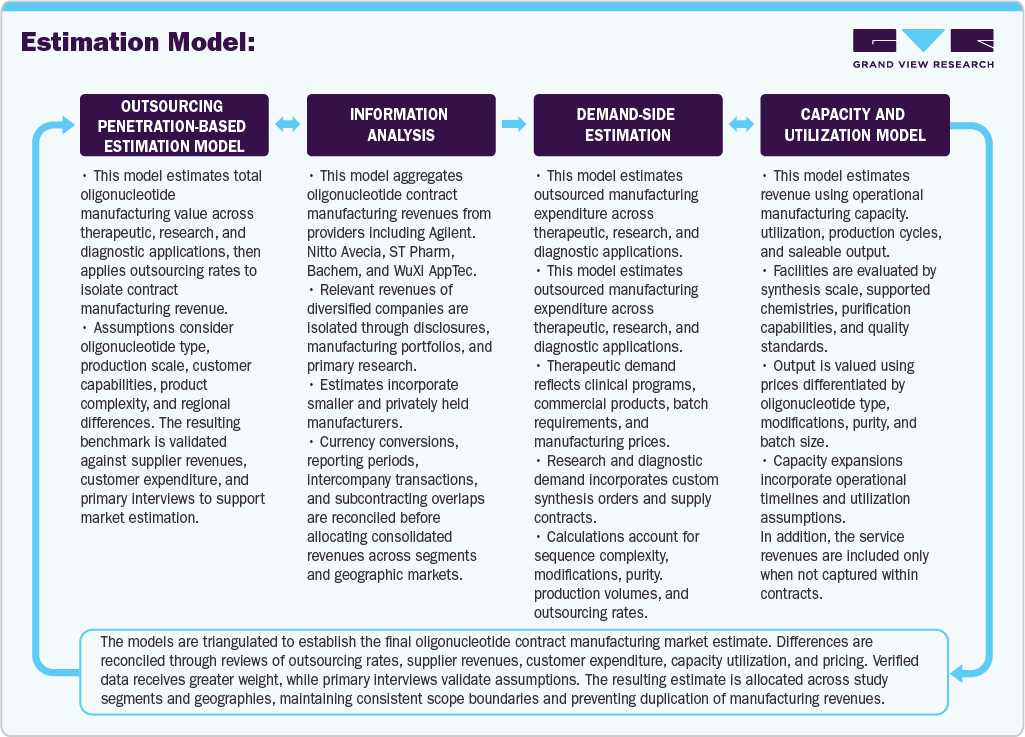
The oligonucleotide contract manufacturing market figures in this report are based on a proven research process that combines executive interviews with secondary research from proprietary databases, company filings, and recognized regulatory and institutional sources. Market size is built through value-chain sizing-reconciling supply-side and demand-side estimates-and triangulated with bottom-up and top-down approaches. Every estimate passes multiple levels of expert validation before publication, with each oligonucleotide contract manufacturing segment quantified using the revenue-capture definitions in the table below.
Segment Definition
Type
Definition
Antisense Oligonucleotides
The segment captures revenue generated by providing contract manufacturing services for antisense oligonucleotides designed to bind complementary RNA sequences and modulate gene expression or RNA processing. Services include synthesis, purification, associated quality testing, and supply of antisense oligonucleotide APIs and finished drug products, where included within the study scope.
Small Interfering RNA
The segment captures revenue generated by providing contract manufacturing services for small interfering RNA molecules designed to silence target genes through RNA interference. Services include strand synthesis, purification, duplex formation, conjugation where required, associated quality testing, and supply of siRNA APIs and finished drug products, where included within the study scope.
Other Oligonucleotides
The segment captures revenue generated by providing contract manufacturing services for oligonucleotides other than antisense oligonucleotides and small interfering RNA. The segment includes aptamers, primers, probes, guide RNA, and other specialty oligonucleotides, covering synthesis, purification, modification, associated quality testing, and supply for therapeutic, research, or diagnostic applications.
Services
Definition
API Manufacturing
The segment captures revenue generated by providing contract manufacturing services for oligonucleotide active pharmaceutical ingredients intended for therapeutic use. Services include synthesis, cleavage and deprotection, purification, conjugation or duplex formation where required, isolation, and associated quality testing for clinical or commercial supply.
Finished Drug Products Manufacturing
The segment captures revenue generated by providing contract manufacturing services that convert oligonucleotide APIs into finished pharmaceutical dosage forms. Services include formulation, preparation of delivery systems where required, sterile filtration where applicable, aseptic filling, lyophilization, and associated quality testing for clinical or commercial supply.
Packaging and Labeling
The segment captures revenue generated by providing packaging and labeling services for oligonucleotide APIs, finished drug products, and research or diagnostic oligonucleotide preparations. Services include primary and secondary packaging, container labeling, serialization where applicable, and preparation of packaged supplies according to customer specifications.
Regulatory Affairs
The segment captures revenue generated by providing manufacturing-related regulatory affairs services for oligonucleotide products. Services include preparation and maintenance of chemistry, manufacturing, and controls documentation, support for regulatory submissions, responses to manufacturing-related authority queries, and documentation supporting product quality and manufacturing compliance.
Others
The segment captures revenue generated by providing other oligonucleotide contract manufacturing services not classified under API manufacturing, finished drug products manufacturing, packaging and labeling, or regulatory affairs. Services include custom synthesis of research and diagnostic oligonucleotides, separately billed analytical and stability testing, and specialized storage or distribution, where included within the study scope.
Workflow
Definition
Clinical
The segment captures revenue generated by providing contract manufacturing services for oligonucleotide products intended for use in human clinical trials. Services include manufacture and supply of clinical-grade APIs and finished drug products, associated quality testing, and packaging and labeling for investigational use.
Commercial
The segment captures revenue generated by providing contract manufacturing services for oligonucleotide products intended for routine market supply. Services include commercial-scale production of therapeutic APIs and finished drug products, as well as research and diagnostic oligonucleotides supplied under commercial manufacturing arrangements, with associated quality testing, packaging, and labeling.
Application
Definition
Therapeutic
The segment captures revenue generated by providing contract manufacturing services for oligonucleotides intended for disease treatment or prevention. Services include synthesis, purification, associated quality testing, and clinical or commercial supply of therapeutic oligonucleotide APIs and finished drug products, where included within the study scope.
Research
The segment captures revenue generated by providing contract manufacturing services for oligonucleotides intended for research use. Services include custom synthesis, purification, modification, associated quality testing, and supply of primers, probes, guide RNA, and other oligonucleotides used in molecular biology, gene expression studies, target validation, and preclinical research.
Diagnostic
The segment captures revenue generated by providing contract manufacturing services for oligonucleotides intended for diagnostic assays and testing products. Services include custom synthesis, purification, labeling, associated quality testing, and supply of primers, probes, and other oligonucleotide components used in molecular diagnostic assays and kits.
End Use
Definition
Pharmaceutical & Biotechnology Companies
The segment captures revenue generated by providing oligonucleotide contract manufacturing services to pharmaceutical and biotechnology companies. Services include production, purification, associated quality testing, and supply of oligonucleotides supporting research programs, clinical development, and commercial products.
Diagnostic Laboratories
The segment captures revenue generated by providing oligonucleotide contract manufacturing services to diagnostic laboratories. Services include custom synthesis, purification, modification, associated quality testing, and supply of oligonucleotide primers, probes, and related components used in laboratory diagnostic assays and testing workflows.
Academic & Research Institutions
The segment captures revenue generated by providing oligonucleotide contract manufacturing services to universities, academic laboratories, and research institutions. Services include custom synthesis, purification, modification, associated quality testing, and supply of oligonucleotides for basic research, translational studies, and experimental applications.
Estimation Model
 To learn more about this report, Download Free Sample Report
Delivered Customizations
This report has been delivered with the following In-depth customizations
Client Request
Customization Delivered
Value Adds
Complex Oligonucleotide and Conjugate Manufacturing Assessment
Evaluates contract manufacturing capabilities for chemically modified oligonucleotides, GalNAc conjugates, antibody-oligonucleotide conjugates, aptamers, and other complex constructs. Assesses synthesis compatibility, conjugation expertise, purification requirements, impurity characterization, analytical capabilities, and scale readiness. Maps suppliers against selected product specifications and identifies manufacturing constraints, technology access requirements, and potential partners, subject to available technical disclosures and validation through targeted discussions with industry participants.
Helps clients identify manufacturers capable of supporting complex oligonucleotide programs and prioritize technologies aligned with pipeline requirements. Supports partner screening, capability investment, and outsourcing decisions. Clarifies potential risks associated with conjugation, impurity control, analytical characterization, and scale transition. Enables differentiation through specialized manufacturing services while improving alignment between product complexity, supplier expertise, project timelines, and anticipated clinical or commercial requirements.
Clinical to Commercial Manufacturing Transition Assessment
Examines manufacturing requirements as oligonucleotide programs advance from clinical supply to commercial production. Evaluates batch scalability, process reproducibility, technology transfer, analytical method transfer, validation readiness, supply continuity, and manufacturing documentation. Compares supplier capabilities across development stages and identifies potential transition bottlenecks. Includes assessment of capacity reservation arrangements, secondary suppliers, and commercial supply planning for selected programs within the agreed scope.
Supports early identification of manufacturing risks that could delay commercialization or disrupt product supply. Helps clients select partners with suitable scale, technical capabilities, and commercial readiness. Informs technology transfer planning, supplier diversification, capacity commitments, and manufacturing timelines. Enables clearer assessment of whether existing clinical suppliers can support future demand or whether alternative manufacturing arrangements should be established before product launch.
Research and Diagnostic Oligonucleotide OEM Opportunity Mapping
Assesses outsourced manufacturing opportunities for custom primers, probes, labeled oligonucleotides, and other research or diagnostic components. Evaluates customer specifications, order patterns, quality requirements, customization needs, packaging formats, and supply agreements. Maps demand across diagnostic laboratories, assay developers, biotechnology companies, and academic institutions. Identifies opportunities in OEM manufacturing, private labeling, and recurring supply contracts across selected customer groups and geographic markets.
Helps clients diversify beyond therapeutic manufacturing and identify recurring opportunities in research and diagnostic supply. Supports customer segmentation, account targeting, service design, and commercial partnerships. Highlights requirements for consistent quality, customization, delivery reliability, and documentation. Enables manufacturers to align production capabilities, order fulfillment, and pricing structures with customer purchasing patterns while developing differentiated offerings for selected research and diagnostic applications.
Manufacturing and Contract Structure Benchmarking
Benchmarks oligonucleotide manufacturing quotations and contract structures by sequence length, chemical modifications, purity, batch size, quality grade, and production stage. Separates manufacturing charges from analytical testing, packaging, regulatory support, and other fees. Evaluates minimum order requirements, volume discounts, capacity reservation charges, cancellation terms, and raw material pass through mechanisms, subject to quotation availability and primary research within the agreed scope.
Supports procurement negotiations, manufacturing budget development, and supplier quotation comparisons. Helps clients understand cost differences attributable to product specifications, production scale, and service inclusions. Identifies opportunities for contract consolidation, volume commitments, and clearer fee structures. Enables informed assessment of total outsourced manufacturing expenditure and reduces the risk of comparing quotations with inconsistent assumptions, quality standards, deliverables, or commercial supply obligations.
About the Author(s)
Medical Devices Research Team
Healthcare · Medical DevicesThis report was authored by the medical devices research team at Grand View Research - comprising two research analysts, one senior research analyst, and one industry expert - with specialized expertise in the medical devices segment of the healthcare industry. All findings are based on proprietary healthcare databases, executive interviews, and regulatory analysis, subject to internal peer review prior to publication.
Last Updated:
Speak to Analyst

Customize this report to your needs - add regions, segments, or data points, with 20% free customization.
Or view our licence options:


ISO 9001:2015 & 27001:2022 Certified
We are GDPR and CCPA compliant! Your transaction & personal information is safe and secure. For more details, please read our privacy policy.


