
- Home
- »
- Medical Devices
- »
-
Orthodontic Supplies Market Size & Share Report 2026-2033GVR Report cover

Orthodontic Supplies Market (2026 - 2033)
Size, Share & Trends Analysis Report By Product (Orthodontic Equipment, Orthodontic Consumables), By Patient Group (Children, Teenagers), By End-use (Orthodontic Clinics), By Distribution Channel, By Region, And Segment Forecasts
Market Size, 2025
$9.6BMarket Estimate, 2026
$10.2BMarket Forecast, 2033
$17.2BCAGR, 2026–2033
7.7%Orthodontic Supplies Market Summary
The global orthodontic supplies market size was valued at USD 9.6 billion in 2025 and is projected to grow from USD 10.2 billion in 2026 to USD 17.2 billion by 2033, at a CAGR of 7.7% from 2026 to 2033. North America dominated the market, accounting for the largest revenue share of 37.4% in 2025. The global market for orthodontic supplies is driven by the rising prevalence of malocclusion and other dental alignment disorders, increasing awareness of oral health, and growing demand for aesthetically pleasing orthodontic treatments across all age groups.
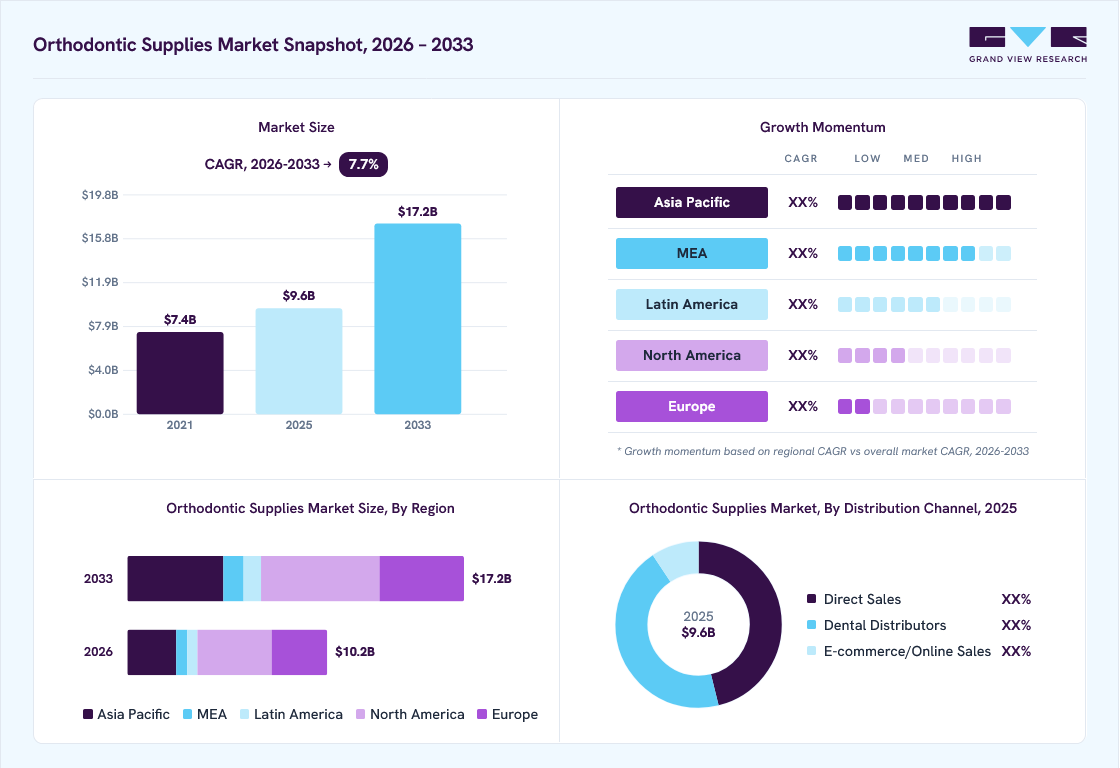 Source: Grand View Research, IR Documents, Primary Interviews, Paid DatabasesTo learn more about this report,
 Download Free Sample Report
Key Market Trends & Insights
- By product: The orthodontic consumables segment led the market with the largest revenue share of 86.5% in 2025.
- By patient group: The teenagers segment led the market with the largest revenue share of 54.5% in 2025.
- By end-use: The orthodontic clinics segment led the market with the largest revenue share of 62.5% in 2025.
- By distribution channel: The direct sales segment led the market with the largest revenue share of 46.1% in 2025.
Regional Highlights:
- Largest regional market in 2025: North America (37.4% revenue share, 2025)
- Fastest-growing regional market: Asia Pacific (highest CAGR, 2026 - 2033)
- By country: The U.S. held the largest share in 2025.
Market Size & Forecast
- Market Size in 2025: USD 9.6 Billion
- Estimated Market Size in 2026: USD 10.2 Billion
- 2033 Projected Market Size: USD 17.2 Billion
- CAGR (2026-2033): 7.7%
Prism AI by Grand View Research Free to tryAsk a question about the orthodontic supplies marketTry asking✓Every figure cited from GVR research Prefer the report? Download free sample →
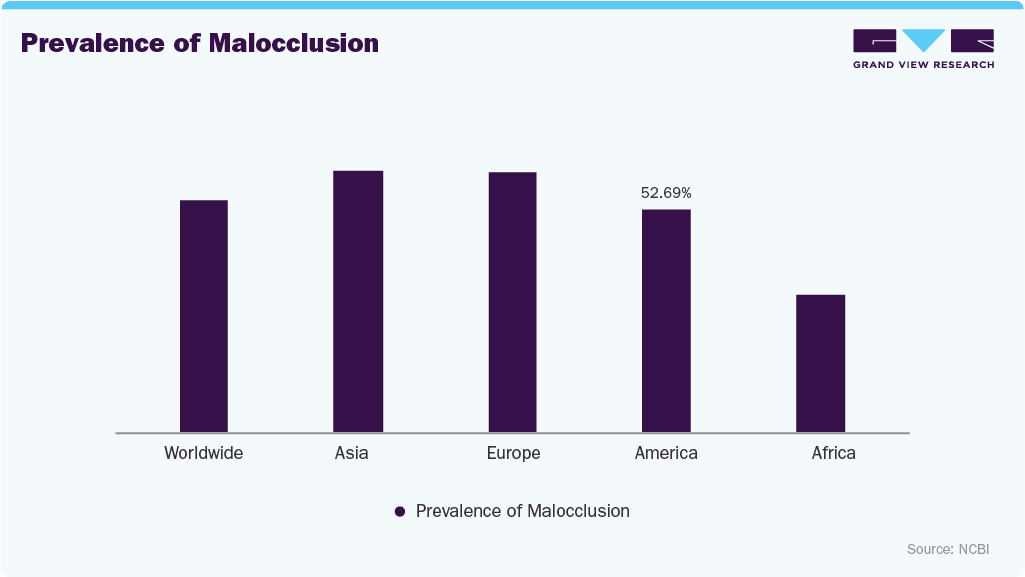
Patients are seeking early orthodontic intervention to improve both dental function and facial aesthetics, leading to higher adoption of braces, clear aligners, archwires, brackets, and other orthodontic consumables. The rising prevalence of malocclusion and dental misalignment is significantly contributing to the growth of the orthodontic supplies industry by increasing the need for corrective dental treatments. Malocclusion conditions, including overcrowding, spacing issues, overbite, underbite, crossbite, and improper tooth alignment, affect oral function and can lead to complications such as difficulty in chewing, speech problems, and challenges in maintaining proper oral hygiene. As the occurrence of these conditions increases across pediatric, adolescent, and adult populations, the demand for orthodontic interventions continues to expand. The growing number of patients requiring correction of irregular tooth positioning is driving demand for orthodontic supplies such as brackets, archwires, aligners, elastics, and retainers. In addition, the prolonged treatment required for complex dental misalignments creates recurring demand for orthodontic consumables throughout the treatment cycle.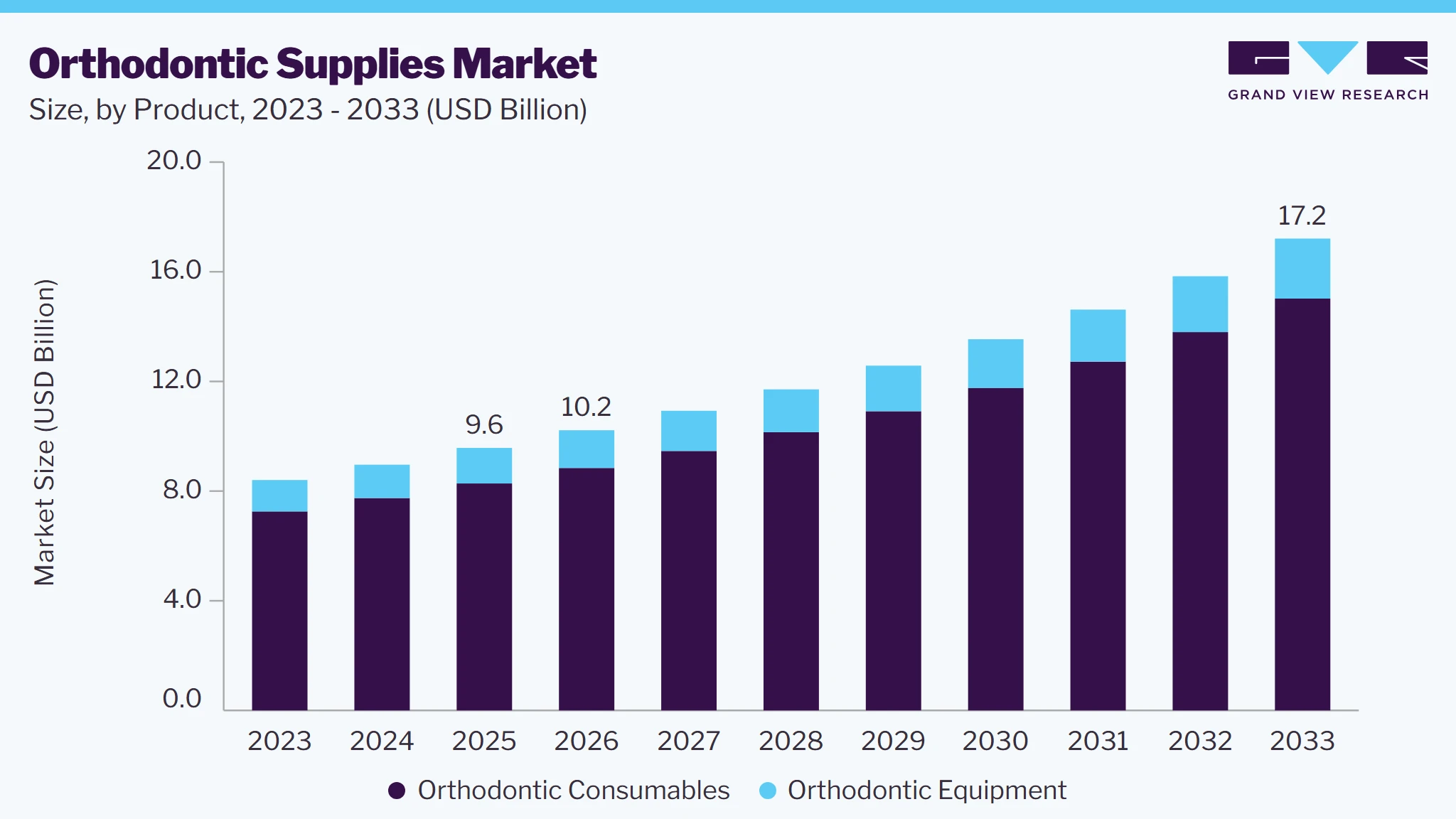 To learn more about this report, Download Free Sample Report
For instance, a systematic review titled "Prevalence of Malocclusion Traits in Primary Dentition," published in NCBI in July 2024, evaluated 47 epidemiological studies involving preschool-aged children worldwide. The study estimated that the global prevalence of malocclusion in the primary dentition is approximately 54%, with regional prevalence ranging from 28.4% to 83.9%, and more than half of the included studies reported rates above 50%. Increased overjet and deep overbite were identified as the most common malocclusion traits, highlighting the substantial burden of early dental misalignment and the growing need for timely orthodontic interventions.
 To learn more about this report, Download Free Sample Report
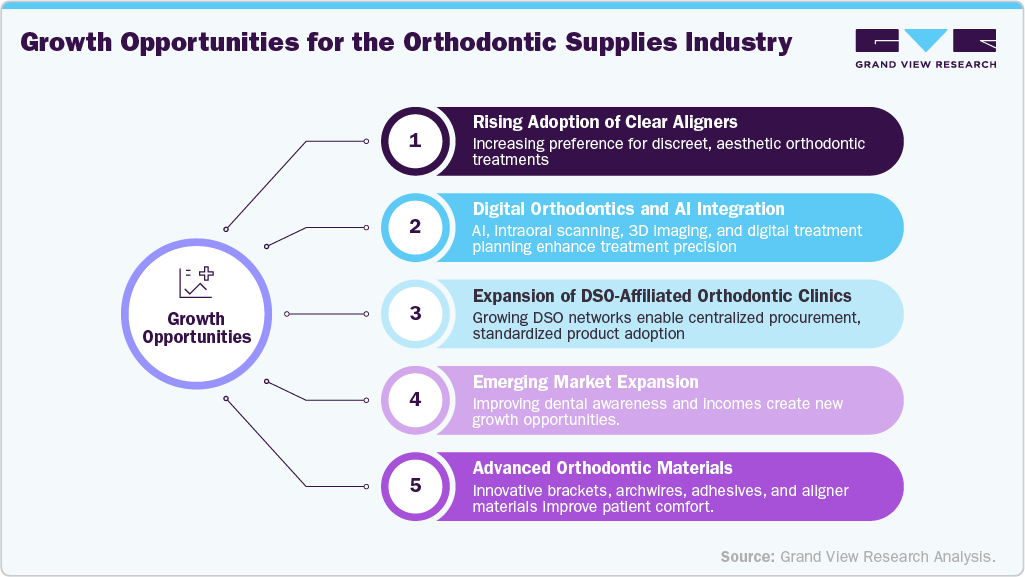
The rising demand for aesthetic orthodontic treatments is significantly driving growth in the orthodontic supplies industry, as patients seek solutions that improve dental alignment while maintaining a natural appearance. Aesthetic orthodontic treatments focus on offering less noticeable alternatives to conventional metal braces, thereby increasing adoption of options such as clear aligners, ceramic braces, and tooth-colored orthodontic components. The growing preference for discreet treatment options among adults and younger patients has increased acceptance of cosmetic orthodontic procedures, leading to greater use of aesthetic orthodontic supplies. The demand for customized, visually appealing orthodontic solutions has prompted dental professionals to adopt advanced materials and products that enhance patient comfort and treatment outcomes.
For instance, according to the study published by the National Library of Medicine in 2024, for the assessment of patients' knowledge and preferences for the use of orthodontic aligners, the study reported that 80% of participants showed higher acceptance toward orthodontic aligners when different appliance options were presented, with 68% identifying aesthetics as an important factor influencing their choice of orthodontic appliance.
The expansion of dental education and orthodontic training programs worldwide is driving growth in the market by increasing the availability of trained dental professionals who can provide orthodontic treatments. The growing number of dental schools, postgraduate orthodontic programs, and continuing education initiatives is improving the skill base of dentists and orthodontists, enabling more professionals to diagnose and manage orthodontic conditions. As more practitioners gain expertise in advanced orthodontic techniques, the adoption of orthodontic procedures increases, creating higher demand for essential supplies such as brackets, archwires, aligners, elastics, bonding materials, and other orthodontic consumables. Training programs also expose dental professionals to newer technologies, including digital orthodontic workflows, clear aligner systems, and customized treatment solutions, encouraging the integration of advanced orthodontic products into clinical practice.
According to data published by the Commission on Dental Accreditation (CODA) in 2025 Annual Report, enrollment numbers for dental education programs for 2024-2025 are shown in the following table.
Enrollment Numbers in Dental Education Programs, 2024-2025
Dental Education Area
Total Enrollment
Enrollment Change from 2023-2024
Number of Accredited Programs
Predoctoral
27,920
838
73
International
1,058
364
2
Advanced Education
7,492
85
772
Advanced Education in General Dentistry
968
42
94
Dental Anesthesiology
85
2
9
Dental Public Health
47
-7
15
Endodontics
490
10
56
General Practice Residency
1,141
-14
166
Oral and Maxillofacial Pathology
46
-3
15
Oral and Maxillofacial Radiology
55
2
9
Oral and Maxillofacial Surgery
1,285
20
101
Clinical Fellowship in Oral and Maxillofacial Surgery
14
-1
11
Orthodontics and Dentofacial Orthopedics
Upgrade the report license to gain access to the complete analysis.
Clinical Fellowship in Orthodontics
Oral Medicine
Orofacial Pain
Pediatric Dentistry
Periodontics
Prosthodontics
Maxillofacial Prosthetics
Combined Prosthodontics/Maxillofacial Prosthetics
Combined Orthodontics/Periodontics
Allied Education
Dental Hygiene
Dental Assisting
Dental Laboratory Technology
Dental Therapy
Total
Source: CODA
Market Dynamics
The market for orthodontic supplies is growing due to increasing demand for orthodontic treatments, rising prevalence of dental alignment disorders, and advancements in orthodontic technology. The increasing prevalence of malocclusion, overcrowding, spacing issues, and other dental irregularities is driving demand for corrective orthodontic procedures and products, including brackets, archwires, aligners, retainers, and orthodontic accessories. The growing preference for aesthetic orthodontic treatments, including clear aligners and ceramic braces, is further influencing treatment choices as patients seek discreet solutions that improve appearance during treatment.
The growing awareness of oral health and preventive dental care is contributing to the expansion of the market by encouraging individuals to seek timely diagnosis and treatment for dental alignment issues. Increased understanding of the importance of maintaining proper oral hygiene and preventing long-term dental complications has led to greater acceptance of orthodontic evaluations and corrective procedures. Preventive dental visits and routine oral examinations enable earlier identification of conditions such as malocclusion, overcrowding, and improper tooth alignment, resulting in more patients undergoing orthodontic treatment.
According to the World Health Organization (WHO) Oral Health Fact Sheet published in 2025, oral diseases affect nearly 3.7 billion people worldwide, emphasizing the continued need for preventive care, early detection, and improved access to dental services. The WHO also highlighted that most oral health conditions are largely preventable when identified and managed early through regular oral hygiene practices and timely dental care.
The high cost of orthodontic treatments and supplies is a significant factor limiting the growth of the market by reducing accessibility among cost-sensitive patient groups. Orthodontic procedures often require prolonged treatment periods, multiple clinical visits, and specialized products such as brackets, archwires, clear aligners, retainers, and customized orthodontic appliances, which collectively increase overall treatment costs. Advanced aesthetic solutions, including clear aligners and ceramic braces, generally incur higher costs due to customized manufacturing processes, digital treatment planning, and specialized materials. In many countries, orthodontic treatments are considered elective dental procedures and receive limited insurance reimbursement, resulting in substantial out-of-pocket expenses for patients.
The expansion of digital orthodontics and advanced treatment workflows presents a significant opportunity for the growth of the market by improving treatment accuracy, customization, and clinical efficiency. The adoption of digital technologies such as intraoral scanners, 3D imaging, computer-aided design and manufacturing (CAD/CAM), and 3D printing is transforming traditional orthodontic practices by enabling precise diagnosis, virtual treatment planning, and production of customized orthodontic appliances. These technologies are increasing the adoption of digital orthodontic solutions, including clear aligners, patient-specific brackets, retainers, and customized orthodontic components. Digital workflows also reduce treatment-planning time, enhance communication between orthodontists and patients, and improve treatment predictability, thereby encouraging more dental professionals to integrate advanced orthodontic systems into their practices.
 To learn more about this report, Download Free Sample Report
Market Concentration & Characteristics
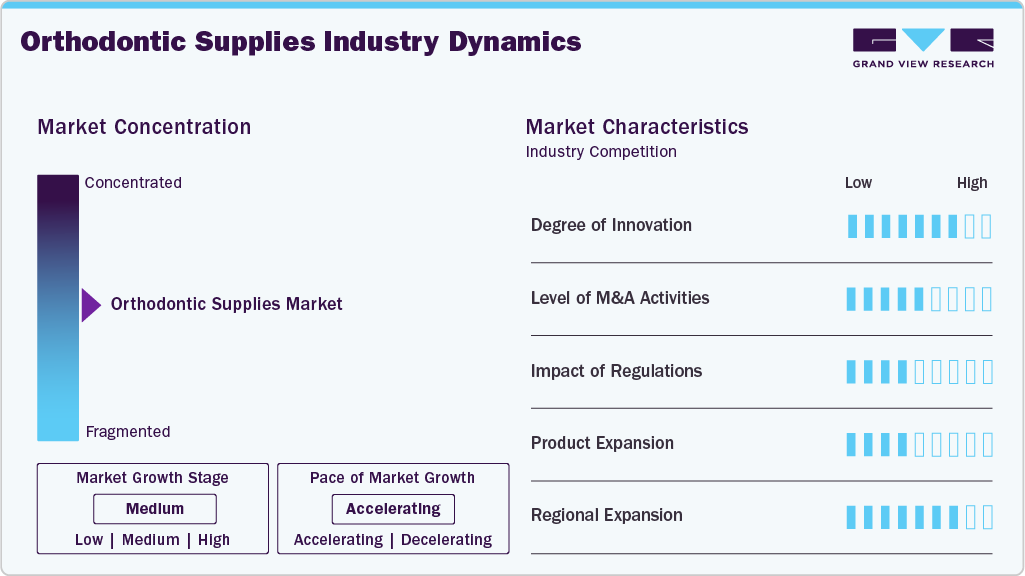
The orthodontic supplies industry is characterized by continuous technological innovation, increasing product customization, and growing demand for aesthetic and patient-friendly treatment solutions. The market includes a wide range of products such as brackets, archwires, clear aligners, retainers, orthodontic adhesives, elastics, and other accessories used across various orthodontic procedures. A key characteristic of the market is the shift from conventional orthodontic systems toward advanced solutions that improve treatment efficiency, comfort, and visual appeal. The growing adoption of digital orthodontic workflows, including intraoral scanning, 3D printing, and computer-assisted treatment planning, is transforming product development and enabling customized orthodontic solutions based on individual patient requirements.
The market demonstrates a high degree of innovation, driven by continuous advancements in materials, digital technologies, and customized treatment solutions. Manufacturers are focusing on developing products that improve treatment efficiency, patient comfort, and aesthetic outcomes. Innovations in materials, self-ligating brackets, advanced archwires, and low-profile orthodontic appliances are enabling more comfortable and discreet treatment experiences compared with traditional orthodontic systems. The integration of digital orthodontic technologies, including intraoral scanning, 3D imaging, CAD/CAM-based appliance manufacturing, and artificial intelligence-assisted treatment planning, is further transforming orthodontic workflows by enabling personalized treatment designs and improved clinical accuracy.
 To learn more about this report, Download Free Sample Report
In March 2025, OrthoFX announced the launch of its next-generation clear aligner portfolio, featuring advanced proprietary polymer technology designed to improve treatment predictability, patient comfort, and compliance. The company introduced its latest aligner systems, including AirFlex, FXBright, and FXClear, through its updated product platform.
Merger and acquisition (M&A) activities in the market are primarily driven by companies seeking to expand their orthodontic product portfolios, strengthen digital orthodontic capabilities, and enhance their global presence. Leading dental and orthodontic companies are focusing on strategic acquisitions and collaborations involving clear aligner technologies, digital treatment planning platforms, intraoral scanning solutions, orthodontic materials, and 3D printing technologies. These transactions allow companies to integrate advanced technologies, improve product offerings, and develop comprehensive digital orthodontic ecosystems. In addition, companies are pursuing acquisitions to access emerging markets, expand distribution networks, and accelerate innovation in personalized orthodontic treatments.
In July 2025, Mikrona Group AG, a Swiss provider of orthodontic and digital dentistry solutions, acquired FTC Frey Trading & Consulting Sàrl and its affiliated dental training platform MyDentalExpert Sàrl. The acquisition expanded Mikrona Group’s capabilities in orthodontics, dental technology, and professional education by integrating FTC Dental’s portfolio of specialized dental products and training solutions. The transaction strengthened the company’s position in delivering advanced orthodontic and dental solutions, including digital dentistry workflows and practitioner-focused education programs.
Regulatory frameworks significantly impact the market by ensuring the safety, quality, and effectiveness of orthodontic products used in clinical practice. Orthodontic supplies, including brackets, archwires, clear aligners, retainers, orthodontic adhesives, and digital orthodontic systems, must comply with stringent requirements related to material safety, manufacturing processes, performance validation, and product labeling. Regulatory agencies such as the U.S. Food and Drug Administration (FDA), the European Medicines Agency (EMA), and European regulatory authorities under the Medical Device Regulation (MDR), as well as other national health authorities, establish guidelines that manufacturers must follow before commercializing orthodontic products. These regulations encourage companies to invest in quality management systems, clinical evaluations, and product testing to ensure patient safety and treatment reliability.
The market serves a diverse range of end uses, including orthodontic clinics, dental hospitals, academic and research institutions, and dental laboratories. Orthodontic clinics represent a major user segment due to the high volume of corrective procedures performed using products such as brackets, archwires, clear aligners, retainers, and orthodontic accessories. The increasing number of patients seeking orthodontic treatments for dental alignment correction and aesthetic improvements is driving higher consumption of orthodontic supplies among specialized orthodontic practices.
Analyst Perspective
The orthodontic supplies market is highly competitive and continuously evolving, driven by the increasing adoption of aesthetic orthodontic treatments, digital dentistry, and customized treatment solutions. Leading manufacturers compete through innovations in clear aligners, orthodontic brackets, archwires, retainers, and digital treatment-planning platforms, while leveraging strong brand recognition and extensive distribution networks. Emerging manufacturers are strengthening their market presence by offering cost-effective orthodontic products in developing economies where access to orthodontic care is expanding. Companies are also focusing on advanced materials, AI-assisted treatment planning, intraoral scanning, and 3D printing technologies to improve treatment precision, workflow efficiency, and patient outcomes.
Product Insights
The orthodontic consumables segment dominated the market with the largest share of 86.5% in 2025 and is anticipated to register the fastest CAGR over the forecast period. The segment growth is driven by the increasing volume of orthodontic treatments and the growing demand for both fixed and removable orthodontic solutions. The increasing adoption of clear aligners and retainers, particularly among adults seeking discreet treatment options, is expected to support segment growth. For instance, in January 2025, a report published in the British Dental Journal noted that more than 70% of orthodontists surveyed by the British Orthodontic Society reported an increase in adults seeking orthodontic treatment over the previous three years. The survey also highlighted clear aligners as one of the most important developments in orthodontics, reflecting the growing preference for aesthetic and discreet treatment options among adult patients.
The orthodontic equipment segment is expected to grow significantly over the forecast period. The segment's dominance can be attributed to the increasing adoption of advanced technologies that support accurate diagnosis, treatment planning, and efficient orthodontic procedures. Growing demand for intraoral scanners, CBCT and digital X-ray imaging systems, 3D printers, CAD/CAM and digital treatment planning software, and robotic wire-bending systems are contributing to segment expansion. The transition from conventional orthodontic workflows toward digitally integrated treatment approaches has encouraged orthodontic clinics and dental practices to invest in advanced equipment and technologies.
Patient Group Insights
Based on patient group, the teenagers segment led the market with the largest revenue share of 54.5% in 2025. The segment's dominance is supported by the substantial orthodontic treatment need among adolescents. For instance, in December 2024, a cross-sectional study of 450 adolescents aged 10-13 years in Bhubaneswar, India, found that 42.67% had a definite need for orthodontic treatment based on the Dental Health Component of the Index of Orthodontic Treatment Need (IOTN). These findings highlight the significant underlying treatment demand among adolescents, supporting continued consumption of brackets, archwires, ligatures, elastics, adhesives, and other orthodontic supplies.
The adults segment is expected to grow at the fastest CAGR over the forecast period. This growth is being driven by increasing demand for aesthetic and discreet orthodontic treatment, rising awareness of oral aesthetics, and greater availability of clear aligners and ceramic brackets. Supporting this trend, the American Association of Orthodontists (AAO) reported in 2025 that approximately one in three orthodontic patients is an adult, while its 2025 Economics of Orthodontics and Patient Census Survey estimated approximately 1.91 million adults were undergoing orthodontic treatment in the U.S. among AAO members in 2024, up from 1.64 million in 2022. In addition, the 2023 report on British Orthodontic Society survey findings noted that more than 70% of orthodontists reported an increase in adults seeking orthodontic treatment over the preceding three years. The growing preference for less visible treatment options, including clear aligners, is expected to further support demand for adult orthodontic products.
End-use Insights
Based on end use, the orthodontic clinics segment led the market with the largest revenue share of 62.5% in 2025. The segment's dominance is attributed to the high concentration of orthodontic treatment procedures performed in specialized orthodontic practices, including DSO-affiliated clinics and private clinics. These facilities represent major purchasing points for orthodontic equipment, instruments, and consumables such as brackets, archwires, ligatures, clear aligners, and retainers. The increasing number of orthodontic practices, growing patient volumes, and rising adoption of digital orthodontic technologies are further supporting segment growth. In addition, DSO-affiliated clinics benefit from centralized procurement and standardized product selection across multiple locations, while private clinics continue to drive demand through personalized treatment services and investments in advanced orthodontic equipment and digital workflows.
The hospitals segment is anticipated to witness a significant CAGR over the forecast period, driven by the increasing availability of specialized orthodontic services within hospital-based dental and maxillofacial departments, rising patient volumes, and growing investments in advanced diagnostic and digital orthodontic technologies. Hospitals are adopting intraoral scanners, CBCT and digital imaging systems, 3D printing, and computer-aided treatment planning to support comprehensive orthodontic diagnosis and treatment. In addition, hospitals serve patients requiring complex orthodontic and multidisciplinary care, including cases associated with craniofacial anomalies and other specialized conditions.
Distribution Channel Insights
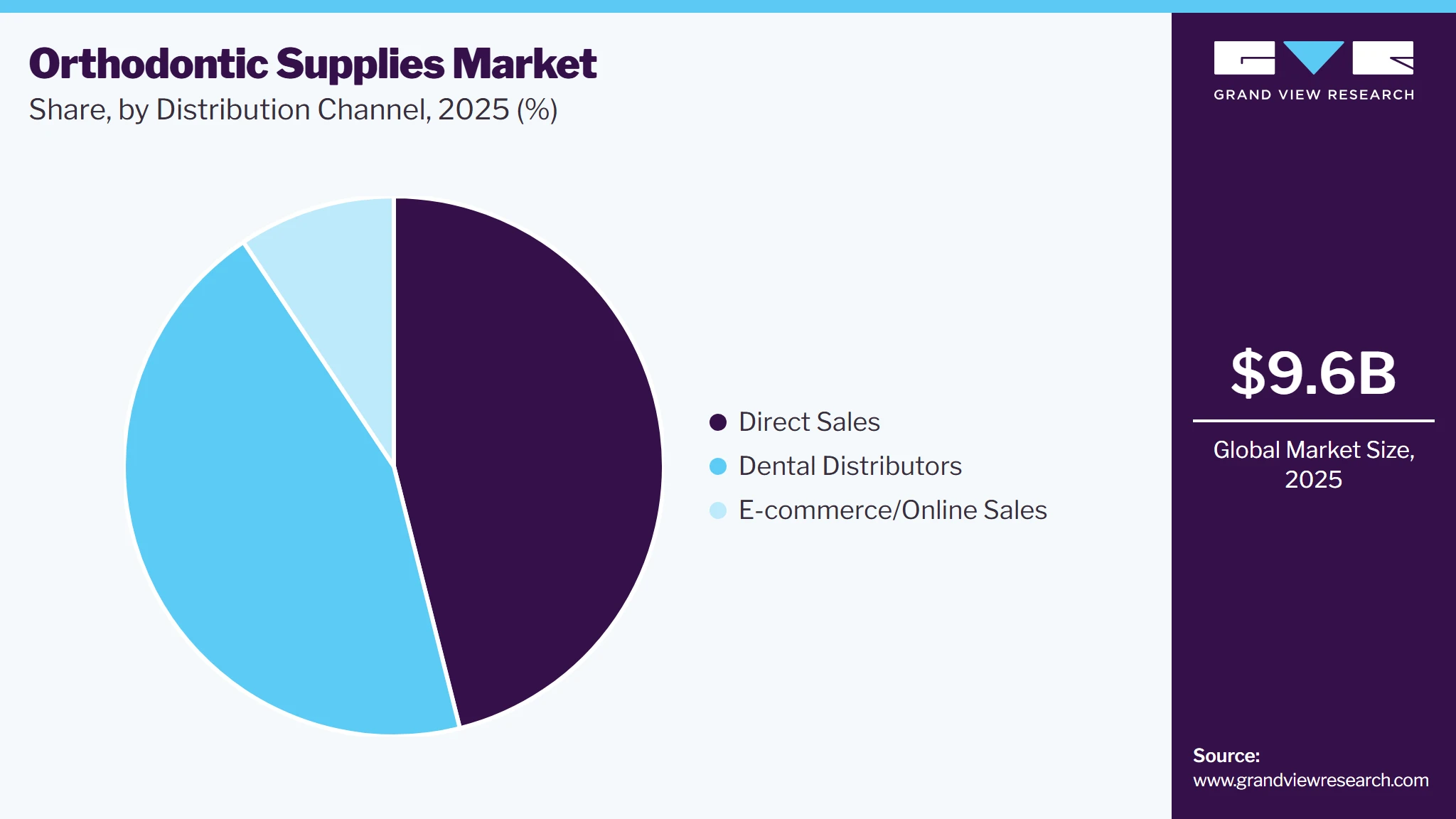
Based on distribution channel, the direct sales segment led the market with the largest revenue share of 46.1% in 2025. The segment's dominance is supported by the preference of orthodontic practices and healthcare providers for direct relationships with manufacturers, particularly for specialized products and technology-enabled solutions. For instance, in July 2026, Align Technology hosted the 2026 Invisalign Ortho Summit, bringing together orthodontic professionals to showcase its vision for connected digital orthodontics and highlight advancements across its Invisalign and digital orthodontic ecosystem. Such direct engagement with orthodontists enables manufacturers to provide product education, demonstrate new technologies, strengthen professional relationships, and encourage adoption of their solutions. These activities further support direct manufacturer-to-clinician engagement as an important distribution approach in the orthodontic supplies industry.
 To learn more about this report, Download Free Sample Report
The E-commerce/ online sales segment is anticipated to witness the fastest CAGR over the forecast period, driven by the increasing digitalization of dental and orthodontic product procurement, growing preference for convenient online ordering, and expanding availability of orthodontic products through specialized dental e-commerce platforms. Online channels enable orthodontic clinics and private practices to conveniently compare product specifications, brands, and prices and place orders without relying solely on traditional distributor networks. The increasing penetration of digital commerce among healthcare professionals, improved logistics infrastructure, and broader availability of orthodontic consumables such as brackets, archwires, ligatures, elastics, adhesives, and retainers are expected to further support channel expansion.
Regional Insights
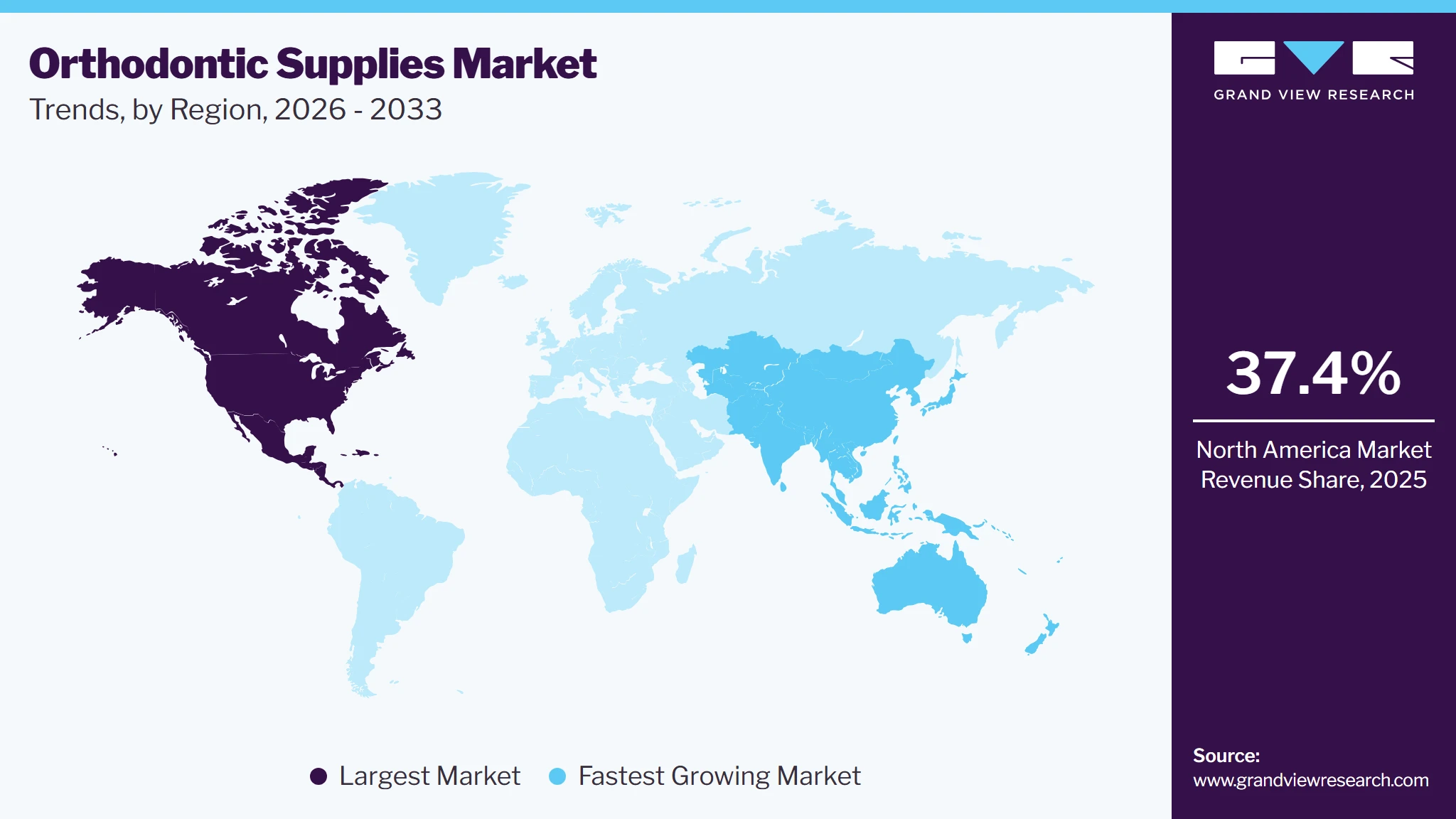
North America orthodontic supplies market dominated with the largest revenue share of 37.4% in 2025, driven by the rising adoption of aesthetic dental solutions and a strong presence of advanced dental care infrastructure. The region has witnessed greater acceptance of orthodontic procedures among both younger and adult populations, driven by growing awareness of dental aesthetics, improved oral health practices, and a desire for a better-looking smile. The growing preference for clear aligners and other minimally visible orthodontic solutions is driving greater adoption of advanced orthodontic supplies across dental clinics and orthodontic practices. In addition, the widespread availability of digital dentistry technologies, including intraoral scanners, 3D imaging, CAD/CAM systems, and digitally customized orthodontic appliances, is supporting the transition toward more precise and personalized treatment approaches.
 To learn more about this report, Download Free Sample Report
U.S. Orthodontic Supplies Market Trends
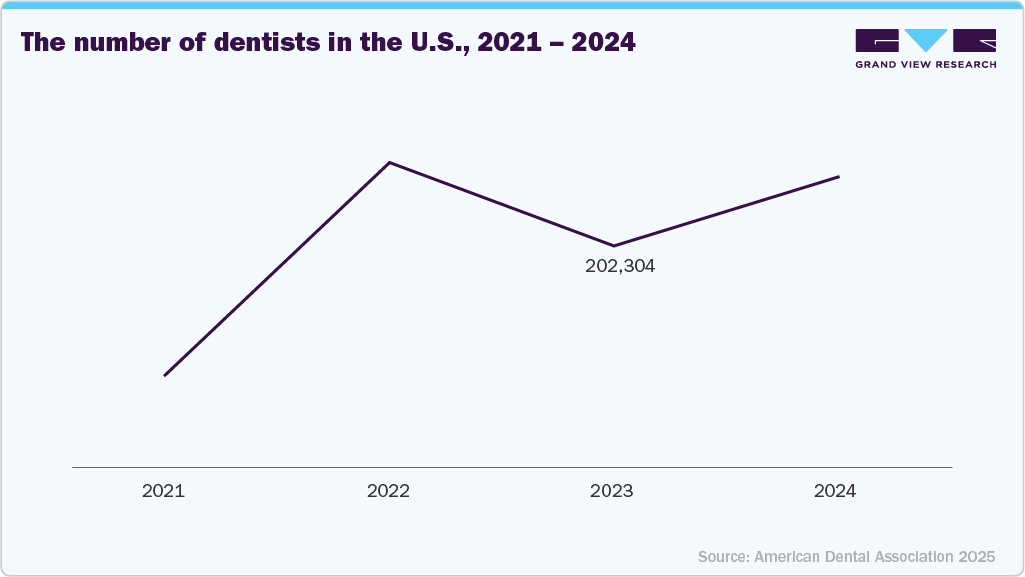
The U.S. orthodontic supplies market is growing due to the increasing demand for orthodontic treatments, rising preference for aesthetic dental solutions, and the expansion of advanced dental care infrastructure. The country has a well-established network of dental clinics, orthodontic practices, and trained dental professionals, which supports higher adoption of orthodontic products such as brackets, archwires, clear aligners, retainers, and other accessories. The rising number of dentists and orthodontic specialists in the U.S. is improving access to orthodontic care and increasing the capacity to diagnose and treat dental alignment conditions. According to the American Dental Association, the U.S. continues to maintain a large and expanding dental workforce, supporting broader availability of dental services and orthodontic procedures. In addition, growing awareness of oral health, increasing demand for smile aesthetics, and higher acceptance of orthodontic treatments among adults are contributing to market expansion.
 To learn more about this report, Download Free Sample Report
Europe Orthodontic Supplies Market Trends
The orthodontic supplies market in Europe is expanding due to the increasing focus on advanced dental care, rising demand for personalized orthodontic solutions, and improving accessibility to specialized dental services. The region has experienced a shift toward more patient-centric orthodontic treatments, with individuals seeking solutions that offer improved aesthetics, comfort, and shorter treatment experiences. The growing adoption of digital dentistry across European dental practices is reshaping orthodontic workflows by enabling precise treatment planning, customized appliance manufacturing, and efficient monitoring of treatment progress. In addition, the presence of established dental technology companies and strong research capabilities in countries such as Germany, the UK, and France is supporting continuous innovation in orthodontic materials and devices. The increasing integration of orthodontic care within private dental practices and the expansion of dental service networks are improving the availability of treatment options across the region.
The orthodontic supplies market in the UK is growing due to rising awareness of oral health, increasing demand for orthodontic treatments, and greater emphasis on maintaining proper dental alignment and long-term oral hygiene. Growing public awareness of the importance of preventive dental care is encouraging individuals to seek regular dental evaluations, enabling earlier identification of orthodontic conditions such as malocclusion, overcrowding, and misalignment. The growing focus on improving oral health outcomes among children, adolescents, and adults is contributing to greater adoption of orthodontic procedures and rising demand for products such as braces, clear aligners, retainers, and other orthodontic accessories. The UK’s well-established dental care system, supported by a strong network of dental practices and orthodontic specialists, is improving access to corrective dental treatments. In addition, rising interest in aesthetic dental solutions is driving the adoption of clear aligners and ceramic orthodontic appliances among patients seeking less-visible treatment options.
Oral Health Indicator
Latest Data
Adults with untreated tooth decay
41% of adults in the UK have untreated tooth decay, indicating a significant burden of dental disease and continued need for preventive and corrective dental care.
Tooth decay among children
23.7% of five-year-old children in England have obvious tooth decay, highlighting the importance of early dental assessment and oral health management.
Childhood dental hospital admissions
31,165 children and young people under 19 were admitted for the extraction of decayed teeth during 2022-23, reflecting the impact of untreated dental conditions.
Adults retaining functional dentition
84% of adults in England retain at least 21 natural teeth, demonstrating increased focus on maintaining oral function through preventive dental care.
Adults practicing regular oral hygiene
77% of adults brush their teeth at least twice daily, showing growing awareness of oral health maintenance.
Adults using fluoride toothpaste
80% of adults use fluoride toothpaste, supporting preventive oral healthcare practices.
Source: Oral Health Foundation 2025
Germany orthodontic supplies market is growing due to the country’s advanced dental healthcare infrastructure, increasing demand for orthodontic treatments, and strong adoption of digital dental technologies. Germany has one of the most developed dental care systems in Europe, supported by a large network of dental practices, orthodontic specialists, and advanced dental laboratories, which contributes to higher utilization of orthodontic supplies. The increasing focus on oral health, preventive dental care, and early diagnosis of dental alignment issues is encouraging more patients to undergo orthodontic evaluations and corrective procedures. In addition, the rising demand for aesthetic orthodontic solutions, including clear aligners and ceramic braces, is influencing treatment preferences among both younger and adult populations.
Asia Pacific Orthodontic Supplies Market Trends
The orthodontic supplies market in Asia Pacific is growing due to rising awareness of oral health, improved access to dental care, and increasing demand for corrective and aesthetic dental treatments. The region is witnessing a gradual shift toward preventive dental practices, encouraging earlier identification of orthodontic conditions and greater acceptance of orthodontic procedures among children, adolescents, and adults. Growing urbanization, rising disposable incomes, and changing lifestyle preferences are increasing individuals' willingness to invest in dental aesthetics and advanced orthodontic solutions. Countries across the region are experiencing increased adoption of clear aligners, ceramic braces, and other aesthetic orthodontic products as patients seek more comfortable, less noticeable treatment options. In addition, the expansion of private dental clinics, dental chains, and specialized orthodontic centers is improving access to treatment and supporting higher consumption of orthodontic supplies.
The orthodontic supplies market in India is growing due to rising awareness of oral health, increasing demand for aesthetic dental treatments, and improved access to specialized dental care services. The growing prevalence of malocclusion and dental alignment issues among children and adults is increasing the need for orthodontic evaluation and corrective procedures, driving demand for products such as brackets, archwires, clear aligners, retainers, and other orthodontic accessories. Rising disposable incomes, urbanization, and changing perceptions toward dental aesthetics are encouraging more individuals to seek orthodontic treatments, particularly aesthetic solutions such as clear aligners and ceramic braces. The expansion of private dental clinics, multi-specialty dental centers, and organized dental chains is improving the availability of orthodontic services across urban and semi-urban areas.
According to a 2025 study published in the Asia Pacific Journal of Surgical Advances, a cross-sectional study was conducted on 150 schoolchildren aged 6-15 years in Faridpur, including 69 boys and 81 girls from both urban and rural areas. Data were collected through clinical examination based on Angle's classification.
Prevalence and Distribution of Malocclusion Traits Among Children
Malocclusion Parameter
Percentage (%)
Overall Malocclusion Prevalence
63.33%
Normal Occlusion
36.67%
Malocclusion in Girls
64.20%
Malocclusion in Boys
62.32%
Class I Malocclusion
60.67%
Class II Malocclusion
29.33%
Class III Malocclusion
10.00%
Increased Overbite
57.33%
Dental Crowding
53.33%
Increased Overjet
29.33%
Spacing
27.33%
Crossbite
11.33%
Open Bite
5.33%
Source: Asia Pacific Journal of Surgical Advances 2025
Japan orthodontic supplies marketis expanding due to shifting patient preferences, a growing emphasis on preventive oral care, and the increasing role of orthodontics in improving both dental function and appearance. Japanese patients are showing greater interest in orthodontic treatments that provide improved aesthetics, comfort, and convenience, leading to higher demand for advanced solutions such as clear aligners, aesthetic brackets, and customized orthodontic appliances. The country’s high standards for healthcare quality and precision-based medical practices are encouraging dental professionals to adopt advanced orthodontic materials and digitally supported treatment approaches. In addition, the increasing focus on maintaining oral health among the aging population is creating opportunities for orthodontic care providers, as proper dental alignment and tooth preservation become important aspects of long-term oral health management.
Latin America Orthodontic Supplies Market Trends
The orthodontic supplies market in Latin America is growing due to the gradual transformation of dental care systems, increasing private-sector investment in dentistry, and rising patient interest in improving dental appearance and function. The region is witnessing a shift from basic restorative dental care toward more specialized treatments, including orthodontic correction for malocclusion, overcrowding, and bite-related conditions. Growing middle-class populations and improved access to financing options for elective dental procedures are encouraging more individuals to consider orthodontic treatments that were previously viewed as unaffordable or non-essential. In addition, dental tourism in countries such as Brazil and Argentina is supporting demand for orthodontic services by attracting both domestic and international patients seeking cost-effective dental treatments.
Middle East and Africa Orthodontic Supplies Market Trends
The orthodontic supplies market in the Middle East & Africa is growing due to increasing investment in dental modernization, evolving patient expectations, and a gradual shift toward advanced orthodontic procedures. In the Middle East, countries are expanding their healthcare capabilities by establishing specialized dental centers, premium dental clinics, and technology-driven practices, thereby increasing the availability of orthodontic treatments for both local and international patients. The growing demand for cosmetic dentistry, driven by rising awareness of smile aesthetics and personal appearance, is encouraging the adoption of advanced orthodontic solutions, such as invisible aligners and aesthetic brackets.
Key Orthodontic Supplies Company Insights
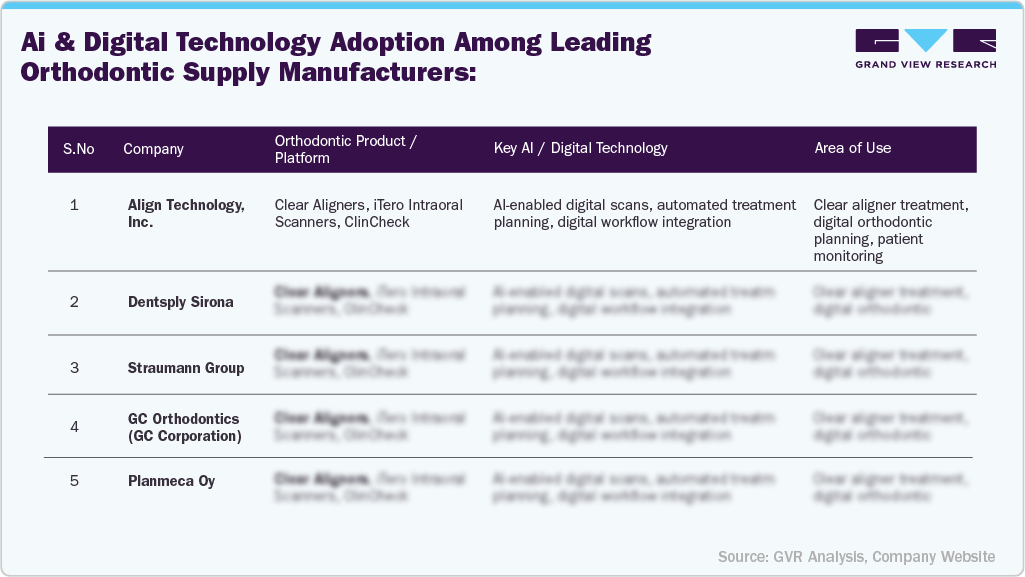
The orthodontic supplies industry includes global dental technology companies, specialized orthodontic manufacturers, and regional suppliers that offer a wide range of products, including clear aligners, brackets, archwires, retainers, adhesives, and digital orthodontic solutions. Companies with strong technological capabilities, broad product portfolios, and established relationships with orthodontic professionals hold a significant position in the market. Competitive positioning is largely influenced by continuous innovation, product quality, clinical performance, distribution capabilities, and the ability to provide integrated orthodontic solutions.
 To learn more about this report, Download Free Sample Report
Key Orthodontic Supplies Companies
The following key companies have been profiled for this study on the orthodontic supplies market.
-
Align Technology, Inc.
-
Envista Holdings Corporation (Ormco Corporation)
-
Solventum Corporation
-
Dentsply Sirona
-
Straumann Group
-
G&H Orthodontics (Altaris Capital Partners LLC)
-
American Orthodontics
-
DENTAURUM GmbH & Co. KG
-
Leone S.p.A.
-
Forestadent (Bernhard Förster GmbH)
-
GC Orthodontics (GC Corporation)
-
Rocky Mountain Orthodontics
-
TP Orthodontics, Inc.
-
Reliance Orthodontic Products, Inc.
-
SIA Orthodontic Manufacturer Srl
-
Angelalign Technology Inc.
-
Formlabs
-
Planmeca Oy
-
Medit Corporation (MBK Partners)
-
Scheu-Dental GmbH (Armira)
-
Smartee Dentech
-
Ultradent Products, Inc. (Mitsui Chemicals)
Competitive Benchmarking
Category
Operating Strategies
Competitive Edge
Weakness
Established Players (Align Technology, Inc., Envista Holdings Corporation)
- Focus on expanding digital orthodontic ecosystems by integrating aligners, scanners, software platforms, and integrated treatment-planning solutions to improve clinical efficiency.
- Strengthen product portfolios through continuous innovation in brackets, archwires, instruments, adhesives, and advanced orthodontic consumables for practitioners.
- Product innovation, digital transformation, pricing strategies, clinical outcomes, and strong relationships with orthodontic professionals worldwide drive competition.
- Companies compete across fixed appliances, clear aligners, digital equipment, orthodontic instruments, and customized treatment workflow solutions.
- High dependence on premium-priced products limits adoption among cost-sensitive customers and emerging healthcare markets with affordability concerns.
- Complex regulatory requirements across countries increase product approval timelines and operational challenges for global orthodontic manufacturers.
Emerging Players (SIA Orthodontic Manufacturer Srl, Angelalign Technology Inc., Formlabs, Planmeca Oy)
- Focus on niche orthodontic segments by offering cost-effective products, customized solutions, and specialized technologies targeting underserved customer groups.
- Leverage digital technologies, automation, and online platforms to improve accessibility, treatment workflows, and customer engagement.
- Emerging companies compete through affordable pricing, rapid innovation, digital-first approaches, and personalized orthodontic treatment solutions.
- New entrants are increasing competition in clear aligners, digital scanning, and orthodontic software-enabled treatment planning.
- Limited brand recognition relative to established companies reduces trust among orthodontists and other dental healthcare providers.
- Smaller distribution networks restrict global market penetration and access to large healthcare systems.
Recent Developments
-
In October 2025, Dentsply Sirona highlighted the clinical benefits of its SureSmile Robotically Bent Wires, an advanced orthodontic archwire solution that combines digital treatment planning with robotic precision manufacturing. The technology is designed to overcome limitations associated with traditional straight-wire orthodontic approaches, which often require manual wire bending and additional chairside adjustments during treatment. SureSmile robotically bent wires provide customized wire shapes based on individual patient treatment plans and are compatible with a wide range of orthodontic cases, including Class I, Class II, Class III, deep bites, open bites, crossbites, and interdisciplinary surgical cases.
-
In July 2025, Align Technology announced the commercial availability of the Invisalign System with mandibular advancement featuring occlusal blocks in India. The new solution was designed to address Class II skeletal and dental malocclusions in growing patients by combining mandibular advancement with simultaneous teeth alignment through an integrated clear aligner approach.
-
In April 2025, OrthoFX showcased its Rescue aligner innovation at the American Association of Orthodontists (AAO) 2025 conference held in Philadelphia, highlighting a solution designed to address treatment deviations and reduce delays associated with midcourse corrections in clear aligner therapy. The Rescue aligner system uses FXOnTrack, an AI-driven remote-monitoring solution, to identify off-track treatments and enable orthodontists to approve corrective aligners for direct delivery to patients.
Orthodontic Supplies Market Report Scope
Report Attribute
Details
Market size value in 2025
USD 9.6 billion
Market size value in 2026
USD 10.2 billion
Revenue forecast in 2033
USD 17.2 billion
Growth rate
CAGR of 7.7% from 2026 to 2033
Base year for estimation
2025
Historical data
2021 - 2024
Forecast period
2026 - 2033
Quantitative units
Revenue in USD billion and CAGR from 2026 to 2033
Report coverage
Revenue forecast, company ranking, competitive landscape, growth factors, and trends
Segments covered
Product, patient group, end-use, distribution channel, region
Regional scope
North America; Europe; Asia Pacific; Latin America; MEA
Country scope
U.S.; Canada; Mexico; Germany; UK; France; Italy; Spain; Norway; Denmark; Sweden; China; Japan; India; South Korea; Australia; Thailand; Brazil; Argentina; Saudi Arabia; South Africa; UAE; Kuwait
Key companies profiled
Align Technology, Inc.; Envista Holdings Corporation (Ormco Corporation); Solventum Corporation; Dentsply Sirona; Straumann Group; G&H Orthodontics (Altaris Capital Partners LLC); American Orthodontics; DENTAURUM GmbH & Co. KG; Leone S.p.A.; Forestadent (Bernhard Förster GmbH); GC Orthodontics (GC Corporation); Rocky Mountain Orthodontics; TP Orthodontics, Inc.; Reliance Orthodontic Products, Inc.; SIA Orthodontic Manufacturer Srl; Angelalign Technology Inc.; Formlabs; Planmeca Oy; Medit Corporation (MBK Partners); Scheu-Dental GmbH (Armira); Smartee Dentech; Ultradent Products, Inc. (Mitsui Chemicals); among others
Customization scope
Free report customization (equivalent up to 8 analysts' working days) with purchase. Addition or alteration to country, regional & segment scope.
Pricing and purchase options
Avail customized purchase options to meet your exact research needs. Explore purchase options
Global Orthodontic Supplies Market Report Segmentation
This report forecasts revenue growth at the regional and country levels and provides an analysis of the latest industry trends across each sub-segment from 2021 to 2033. For this study, Grand View Research has segmented the orthodontic supplies market report based on product, patient group, end-use, distribution channel, and region:
-
Product Outlook (Revenue, USD Billion, 2021 - 2033)
-
Orthodontic Equipment
-
Orthodontic Instruments
-
Orthodontic Pliers
-
Ligature Cutters
-
Bracket Positioning Instruments
-
Distal End Cutters
-
Debonding Instruments
-
Ligature Guns
-
Other Orthodontic Instruments
-
-
Digital & Diagnostic Equipment
-
Intraoral Scanners
-
CBCT & Digital X-ray Imaging Systems
-
3D Printers
-
CAD/CAM & Digital Treatment Planning Software
-
Robotic Wire-Bending Systems
-
-
-
Orthodontic Consumables
-
Fixed Appliance Consumables
-
Brackets
-
By Material
-
Metal Brackets
-
Aesthetic Brackets
-
-
By Mechanism
-
Ligating Brackets
-
Self-Ligating Brackets
-
-
-
Archwires
-
Nickel Titanium (NiTi) Archwires
-
Stainless Steel Archwires
-
Beta Titanium (TMA) Archwires
-
Other Archwires
-
-
Buccal Tubes & Bands
-
Ligatures
-
Elastomeric Ligatures
-
Stainless Steel Ligatures
-
-
Elastics & Power Chains
-
Adhesives & Bonding Agents
-
Separators & Spacers
-
Indirect Bonding Trays
-
-
Anchorage Systems
-
Temporary Anchorage Devices (TADs/Miniscrews)
-
Headgear
-
Transpalatal Arch (TPA)
-
Nance Appliance
-
Lip Bumper
-
Other Anchorage Appliances
-
-
Removable Orthodontic Consumables
-
Clear Aligners
-
Retainers
-
Others
-
-
-
-
Patient Group Outlook (Revenue, USD Billion, 2021 - 2033)
-
Children
-
Teenagers
-
Adults
-
-
End-use Outlook (Revenue, USD Billion, 2021 - 2033)
-
Orthodontic Clinics
-
DSO-Affiliated Clinics
-
Private Clinics
-
-
Hospitals
-
Academic & Research Institutes
-
-
Distribution Channel Outlook (Revenue, USD Billion, 2021 - 2033)
-
Direct Sales
-
Dental Distributors
-
E-commerce/ Online Sales
-
-
Regional Outlook (Revenue, USD Billion, 2021 - 2033)
-
North America
-
U.S.
-
Canada
-
Mexico
-
-
Europe
-
UK
-
Germany
-
France
-
Italy
-
Spain
-
Denmark
-
Sweden
-
Norway
-
-
Asia Pacific
-
Japan
-
China
-
India
-
Thailand
-
Australia
-
South Korea
-
-
Latin America
-
Brazil
-
Argentina
-
-
Middle East & Africa
-
South Africa
-
Saudi Arabia
-
UAE
-
Kuwait
-
-
Research Methodology
The orthodontic supplies market figures in this report are based on a proven research process that combines executive interviews with secondary research from proprietary databases, company filings, and recognized regulatory and institutional sources. Market size is built through value-chain sizing-reconciling supply-side and demand-side estimates-and triangulated with bottom-up and top-down approaches. Every estimate passes multiple levels of expert validation before publication, with each orthodontic supplies segment quantified using the revenue-capture definitions in the table below.
Segment Definition
Segment - Product
Revenue capture definition
Orthodontic Equipment
Revenue generated from the sale of durable orthodontic equipment and digital/diagnostic systems used for orthodontic diagnosis, treatment planning, and clinical procedures. This includes orthodontic instruments and equipment, intraoral scanners, CBCT and digital X-ray imaging systems, 3D printers, CAD/CAM and digital treatment planning software, and robotic wire-bending systems.
Orthodontic Consumables
Revenue generated from the sale of disposable or regularly replaced orthodontic products used during orthodontic treatment. This includes fixed appliance consumables such as brackets, archwires, buccal tubes and bands, ligatures, elastics and power chains, adhesives and bonding agents, separators and spacers, and indirect bonding trays; anchorage systems such as TADs/miniscrews and other appliances; and removable orthodontic consumables such as clear aligners and retainers.
Estimation Model
Approach
Description
Bottom-Up Estimation
The market is estimated by analyzing the annual volume of orthodontic procedures and treatment cases across orthodontic clinics/practices, DSO-affiliated clinics, private clinics, hospitals, and academic & research institutes at the country, regional, and global levels. The assessment incorporates the utilization of orthodontic equipment, instruments, fixed appliance consumables, anchorage... [text truncated in source image]
Top-Down Approach
The market estimation begins with an assessment of the global dental equipment, dental consumables, and digital dentistry markets, followed by evaluating the share contributed by orthodontic supplies through secondary research and expert validation. The analysis considers key market indicators such as the number of orthodontic treatment cases, prevalence of malocclusion, and... [text truncated in source image]
Supply-Side Analysis
The analysis considers manufacturers' production capacity, annual product shipments, product portfolio diversification across orthodontic equipment, instruments, fixed appliance consumables, anchorage systems, and removable orthodontic consumables. The assessment also evaluates manufacturing facilities, average selling prices, regulatory approvals, distribution networks, and regional... [text truncated in source image]
Delivered Customizations
This report has been delivered with the following In-depth customizations
Client Request
Customization Delivered
Value Adds
Orthodontic Supplies Product Portfolio & Segment Analysis
Conducted a comprehensive assessment of the orthodontic supplies product portfolio, covering orthodontic equipment, orthodontic instruments, digital and diagnostic equipment, and orthodontic consumables. The analysis examined key product categories, including orthodontic pliers, ligature cutters, bracket positioning instruments, distal end cutters, debonding instruments, intraoral scanners, CBCT and digital X-ray imaging systems, 3D printers, CAD/CAM and digital treatment planning software.
Helps stakeholders identify high-growth product segments, assess demand across traditional and digital orthodontic workflows, understand product-level adoption trends, and optimize portfolios based on evolving clinical requirements, technological advancements, and orthodontist preferences.
Product-Level Segmentation & Technology Adoption Analysis
Evaluated product adoption across key orthodontic technologies and consumable categories, including metal and aesthetic brackets, conventional and self-ligating brackets, NiTi, stainless steel, and beta titanium archwires, elastomeric and stainless steel ligatures, TADs/miniscrews, clear aligners, and retainers. The study also assessed the growing adoption of intraoral scanners, CBCT and digital X-ray imaging, 3D printing, CAD/CAM treatment planning, and robotic wire-bending systems, highlighting the transition toward digitally integrated orthodontic workflows.
Enables manufacturers to identify technology-driven growth opportunities, prioritize R&D investments, evaluate product substitution trends, and align product development strategies with the increasing adoption of digital orthodontics and minimally invasive treatment approaches.
Innovation & Digital Orthodontics Opportunity Assessment
Assessed emerging innovation trends across digital and diagnostic equipment and orthodontic consumables, including AI-enabled treatment planning, digital impressions, 3D-printed orthodontic appliances, CAD/CAM workflows, robotic wire bending, digitally designed clear aligners and retainers, and advanced bracket and archwire technologies. The analysis evaluated the impact of these innovations on traditional orthodontic workflows and product demand... [text truncated in source image]
Helps stakeholders identify emerging technology opportunities, anticipate shifts in product demand, prioritize innovation pipelines, and develop strategies to capitalize on the increasing convergence of orthodontic supplies, digital dentistry, artificial intelligence, and 3D printing technologies.
Frequently Asked Questions About This Report
Key factors include the rising prevalence of malocclusion and other dental alignment disorders, increasing awareness of oral health, and growing demand for aesthetically pleasing orthodontic treatments across all age groups.
North America dominated the market, accounting for the largest revenue share of 37.4% in 2025.
Asia Pacific is the fastest-growing region over the forecast period.
The global orthodontic supplies market size was valued at USD 9.6 billion in 2025 and is projected to reach USD 10.2 billion for 2026.
The global orthodontic supplies market is expected to grow at a CAGR of 7.7% from 2026 to 2033, reaching USD 17.2 billion by 2033.
The orthodontic consumables segment held the largest share of 86.5% in 2025 and is the fastest growing segment.
The teenagers held the largest share of 54.5% in 2025, while adults is the fastest growing segment.
The orthodontic clinics held the largest share of 62.5% in 2025, while hospitals is the fastest growing segment.
Key players include Align Technology, Inc., Envista Holdings Corporation (Ormco Corporation), Solventum Corporation, Dentsply Sirona, Straumann Group, G&H Orthodontics (Altaris Capital Partners LLC), American Orthodontics, DENTAURUM GmbH & Co. KG, Leone S.p.A., Forestadent (Bernhard Förster GmbH), GC Orthodontics (GC Corporation), Rocky Mountain Orthodontics, TP Orthodontics, Inc., Reliance Orthodontic Products, Inc., SIA Orthodontic Manufacturer Srl, Angelalign Technology Inc., Formlabs, Planmeca Oy, Medit Corporation (MBK Partners), Scheu-Dental GmbH (Armira), Smartee Dentech, Ultradent Products, Inc. (Mitsui Chemicals), among others.
About the Author(s)
Medical Devices Research Team
Healthcare · Medical DevicesThis report was authored by the medical devices research team at Grand View Research - comprising two research analysts, one senior research analyst, and one industry expert - with specialized expertise in the medical devices segment of the healthcare industry. All findings are based on proprietary healthcare databases, executive interviews, and regulatory analysis, subject to internal peer review prior to publication.
Last Updated:
Speak to Analyst

Customize this report to your needs - add regions, segments, or data points, with 20% free customization.
Or view our licence options:


ISO 9001:2015 & 27001:2022 Certified
We are GDPR and CCPA compliant! Your transaction & personal information is safe and secure. For more details, please read our privacy policy.


