
- Home
- »
- Medical Devices
- »
-
Pharmaceutical Contract Development And Manufacturing Organization Market Report 2033GVR Report cover

Pharmaceutical Contract Development And Manufacturing Organization Market (2026 - 2033) Size, Share & Trends Analysis Report By Type (Small Molecule, Large Molecule), By Product, By Service, By Workflow, By Therapeutic Area, By End Use, By Region, And Segment Forecasts
Market Size, 2025
$166.0BMarket Estimate, 2026
$177.6BMarket Forecast, 2033
$293.6BCAGR, 2026–2033
7.4%Pharmaceutical CDMO Market Summary
The global pharmaceutical contract development and manufacturing organization market size was valued at USD 166.0 billion in 2025 and is projected to grow from USD 177.6 billion in 2026 to reach USD 293.6 billion by 2033, growing at a CAGR of 7.4% from 2026 to 2033. The Asia Pacific pharmaceutical contract development and manufacturing organization market held the largest share, 38.2%, of the global market in 2025. Growth in the market can be attributed to the rising investments by CDMOs to expand new drug development and the increasing demand for novel therapies.
 Source: Grand View Research, IR Documents, Primary Interviews, Paid DatabasesTo learn more about this report,
 Download Free Sample Report
 Key Market Trends & Insights
- The pharmaceutical CDMO in China is expected to grow significantly over the forecast period.
- Based on workflow, the commercial segment held the highest market share in 2025.
- By type, the small molecule segment led the market with the largest revenue share of 65.3% in 2025.
- Based on product, the API segment led the market with the largest revenue share in 2025.
- By service, the contract manufacturing segment led the market with the largest revenue share in 2025.
Market Size & Forecast
- 2025 Market Size: USD 166.0 Billion
- 2033 Projected Market Size: USD 293.6 Billion
- CAGR (2026-2033): 7.4%
- Asia Pacific: Largest market in 2025
Three ways to get this report
Buy it, customize it, or ask a question.Ask an Analyst
Analyst response in 1 business day
- AccessReport author, directly
- Reply timeWithin 1 working day
- No sales callDirect answer only
- FormatEmail reply
- CostFree, no cost
Get the Full Report
What the study covers
- FormatsPDF · Excel · Dashboard
- Timeline2026–2033 annual, 2025 base
- Coverage20+ countries, 5 regions
- Companies10+ key players profiled
Customize the Report
20% free customization
- IncludeCountries, segments, points
- TailorTo your product definition
- ExtendDeeper competitor detail
- OrA fully bespoke study
- Turnaround5–10 working days
In addition, growing investments in pharmaceutical R&D, rising demand for genetic drugs, and the increasing prevalence of cancer & age-related disorders, coupled with the increasing need for advanced therapeutics, are key factors driving market growth.The pharmaceutical industry is experiencing a significant shift from traditional small molecules to biopharmaceuticals. This includes monoclonal antibodies, vaccines, recombinant proteins, and other therapies such as mRNA treatments. In addition, this shift is driven by the growing prevalence of chronic diseases, an aging global population, and the increasing access to targeted therapies that tend to provide better efficacy and fewer side effects than conventional treatments.
 To learn more about this report, Download Free Sample Report
 According to the data published by IQVIA in January 2024, the global medicine spending at list prices is anticipated to rise by 38% between 2024 and 2028, with biologics accounting for more than 40% of that growth, reflecting their central role in the treatments. Regulators such as the U.S. FDA continue to clear record numbers of innovative biologics, approving 50 novel drugs in 2024, of which a significant proportion were advanced biologics and specialty medicines, supported by a 74% first-cycle approval rate that accelerates patient access. Also, biopharmaceuticals represent over half of the late-stage pipeline, and categories such as GLP-1 agonists for diabetes and obesity, cell and gene therapies for rare diseases, and monoclonal antibody-based cancer therapies are shaping demand trajectories. Therefore, CDMOs play an essential role in this environment, since antibody as well as biologics production requires complex infrastructure, such as single-use bioreactors, continuous bioprocessing systems, and high-level cold-chain logistics, all of which demand expertise and substantial capital investment thereby impacting both antibody contract manufacturing market and biologics contract manufacturing market
Moreover, within the overall pharmaceutical market, the high growth sectors like the antibody discovery market and antibodies market are growing as well as manufacturing segments, which include the ADC antibody drug conjugates CDMO market, peptide and oligonucleotide CDMO market, and peptide CDMO market are expanding significantly, which in turn boost the demand for discovery and manufacturing services in the industry. These highly specialized areas represent technical niches and a shift toward more complicated outsourcing in the area of biologics and advanced therapies.
Market Dynamics
The trend towards outsourcing research, development, and drug manufacturing has become a major factor driving the pharmaceutical contract development and manufacturing organizations market. Outsourcing activities related to API production, formulation development, analytical testing, and large-scale production are being used to reduce costs and make the process more flexible. For instance, in May 2026, Catalent formed a strategic alliance with Elpida Therapeutics to manufacture late-phase AAV gene therapy, highlighting the growing need for outsourcing in specialist biologics and gene therapy manufacturing. Similarly, in March 2026, Lonza extended its long-term commercial manufacturing agreement with Genetix Biotherapeutics to manufacture ZYNTEGLO gene therapy, meeting growing demand from commercial sources. In addition, specialized production capabilities are needed to handle the increased complexity of biologics, highly potent APIs, cell-based treatments, and personalized medicines, which most pharmaceutical organizations lack in-house. Outsourcing helps save time and avoid the cost of building facilities and implementing regulatory processes. Moreover, large pharmaceutical organizations are more focused on their core strengths, such as drug discovery and commercialization, and thus depend on contract services for development and manufacturing, thereby impacting the biologics contract manufacturing market. Similarly, smaller and mid-sized biotech companies with limited manufacturing facilities within their own organizations are increasingly forming strategic collaborations with CDMOs to meet their manufacturing needs at various stages. Moreover, increased demands for end-to-end outsourcing services from drug discovery to manufacturing are helping to foster longer-term relationships between pharmaceutical companies and CDMOs worldwide.
The constraints faced by the pharmaceutical CDMO market include compliance concerns arising from third-party pharmaceutical manufacturing processes. Data integrity, manufacturing deviations, inadequate documentation, and other compliance-related issues arise when pharmaceutical companies partner with third-party organizations to conduct outsourced manufacturing. There have been many instances in which regulatory agencies, such as the U.S. FDA and EMA, have conducted inspections of outsourced manufacturing sites and issued warning letters, import alerts, and production holds for facilities that fail to comply with required standards. For instance, in November 2025, the United States Food and Drug Administration sent a warning letter to the Catalent Indiana facility after an investigation found contamination, poor quality control, and failures of current good manufacturing practices in sterile drug manufacturing.
The pharmaceutical CDMO market is experiencing new growth opportunities driven by rising demand for outsourcing across drug development and production stages. Besides, expanding pipelines of innovative small molecules, biologics, and advanced therapies creates new opportunities for CDMOs to offer integrated end-to-end services in several pharmaceutical CDMO markets including antibody contract manufacturing market, peptide CDMO market and peptide and oligonucleotide CDMO market, among others. Moreover, companies in the healthcare industry increasingly rely on CDMOs to provide expertise in formulation, analytical testing, scale-up, and commercial manufacturing while optimizing cost and accelerating time-to-market. Besides, the market offers more opportunities, particularly in small-molecule manufacturing, biologics manufacturing, sterile injectables, and highly potent active pharmaceutical ingredients (HPAPIs), where specialized infrastructure and regulatory expertise are required for production processes. Further, emerging markets present new growth avenues as pharmaceutical companies seek to establish efficient supply chains and expand access to affordable medicines. In addition, the trend of personalized and orphan drugs is boosting the need for flexible manufacturing models that CDMOs can provide. Furthermore, growing strategic partnerships, capacity expansion, and compliance with evolving regulatory frameworks are expected to drive the market growth. Thus, the market is expected to witness growth opportunities that demonstrate technological competence and global reach, as well as further support for both large pharmaceutical companies and emerging biopharma innovators.
Market Concentration & Characteristics
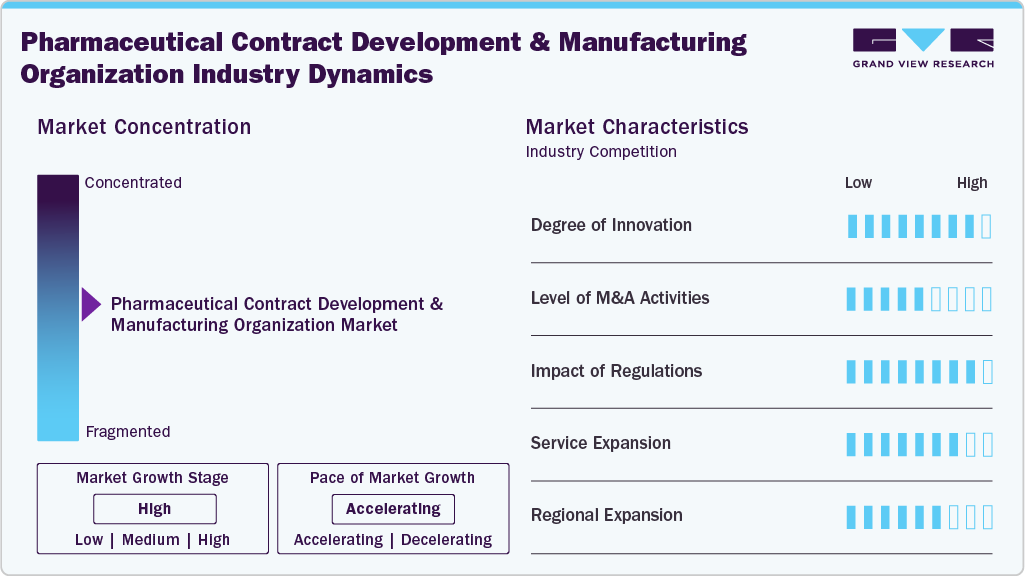
The pharmaceutical contract development and manufacturing organization market is at a moderate growth stage, with growth accelerating. The market is characterized by the degree of innovation, level of M&A activities, regulatory impact, service expansion, and regional expansion.
Continuous improvements in process development, biologics manufacturing, and advanced formulations fuel innovation in pharmaceutical CDMOs. Besides, companies are investing in technologies, flexible manufacturing systems, and specialized capabilities to meet the rising demand for complex therapies. In addition, integrated service models and customized solutions drive innovations. These efforts strengthen client trust, minimize timelines, and enhance competitiveness, positioning CDMOs as vital partners in the evolving pharmaceutical landscape.
 To learn more about this report, Download Free Sample Report
 Mergers and acquisitions are transforming the pharmaceutical CDMO market. It allows CDMOs to provide comprehensive, integrated services and enhances their ability to compete with larger industry players. Such activities highlight the rising demand, the competitive landscape, and the critical need to scale and enhance capabilities.
Regulatory frameworks impact CDMO operations by ensuring compliance with testing, manufacturing, and supply chain practices. The stringent requirements and compliance demands can lead to increased costs for CDMOs that are well-prepared to stand out from the competition, attract multinational clients, and build long-term partnerships rooted in reliability and trust.
Pharmaceutical CDMOs are broadening their portfolios to meet client needs across the drug lifecycle. This includes formulation, production of clinical trial materials, packaging, and commercial-scale manufacturing. Besides, demand for biologics, sterile injectables, and high-potency APIs drives the market expansion. Comprehensive, end-to-end solutions allow CDMOs to strengthen partnerships, capture larger market share, and position themselves as one-stop providers.
Regional expansion is a key growth strategy for pharmaceutical CDMOs seeking proximity to clients and new markets. Companies are establishing facilities in Asia-Pacific, Latin America, and the Middle East to leverage cost advantages and growing demand. This approach supports supply chains, enhances regulatory compliance, and provides access to emerging opportunities while diversifying revenue sources and strengthening global competitiveness.
Impact of U.S. Tariffs on the Global Pharmaceutical CDMO Market
U.S. tariffs on pharmaceutical products have affected the global CDMO market by increasing the costs of raw materials and intermediates. Besides, the tariffs have increased the production expenses for CDMOs that depend on imported ingredients, particularly APIs and excipients from countries like China and India. Besides, cost pressures on CDMOs to increase their fees, which compromise their competitiveness in the market, further create new challenges. In addition, due to supply chain disruptions, the pharmaceutical industry is exploring alternative sourcing strategies and diversifying suppliers across regions to mitigate risks. However, these tariffs have created an opportunity for domestic CDMOs in the U.S., as established pharmaceutical companies are increasingly inclined to collaborate with local manufacturers that can provide compliance, quality, and supply chain services. Moreover, CDMOs are expanding their regional presence by forming strategic partnerships to navigate these cost-related challenges. Thus, U.S. tariffs have changed the dynamics of the pharmaceutical CDMO market, underscoring the need for greater supply chain resilience and highlighting the importance of geographic flexibility and operational efficiency.
Technological Advancements
 To learn more about this report, Download Free Sample Report
 Technological advancements in pharmaceutical CDMO are expected to drive the market with continuous manufacturing as it is increasingly preferred over traditional batch processes for quality, scalability, and cost reductions. Further, analytical techniques enable precise characterization of the pharmaceutical products. In addition, the adoption of single-use bioprocessing systems is rising due to their potential to lower contamination risks, minimize cleaning requirements, and support the production of small-batch or personalized medicines. Moreover, automation & robotics drive productivity by reducing human error, increasing throughput, and streamlining tasks such as packaging, inspection, and sample handling. In addition, digitalization & integrated data platforms offer real-time monitoring, predictive maintenance, and enhanced transparency throughout the development and manufacturing lifecycle. Hence, these innovations are expected to provide high-quality, flexible, and cost-effective solutions, further supporting the pharmaceutical companies to accelerate drug development and commercial supply.
 To learn more about this report, Download Free Sample Report
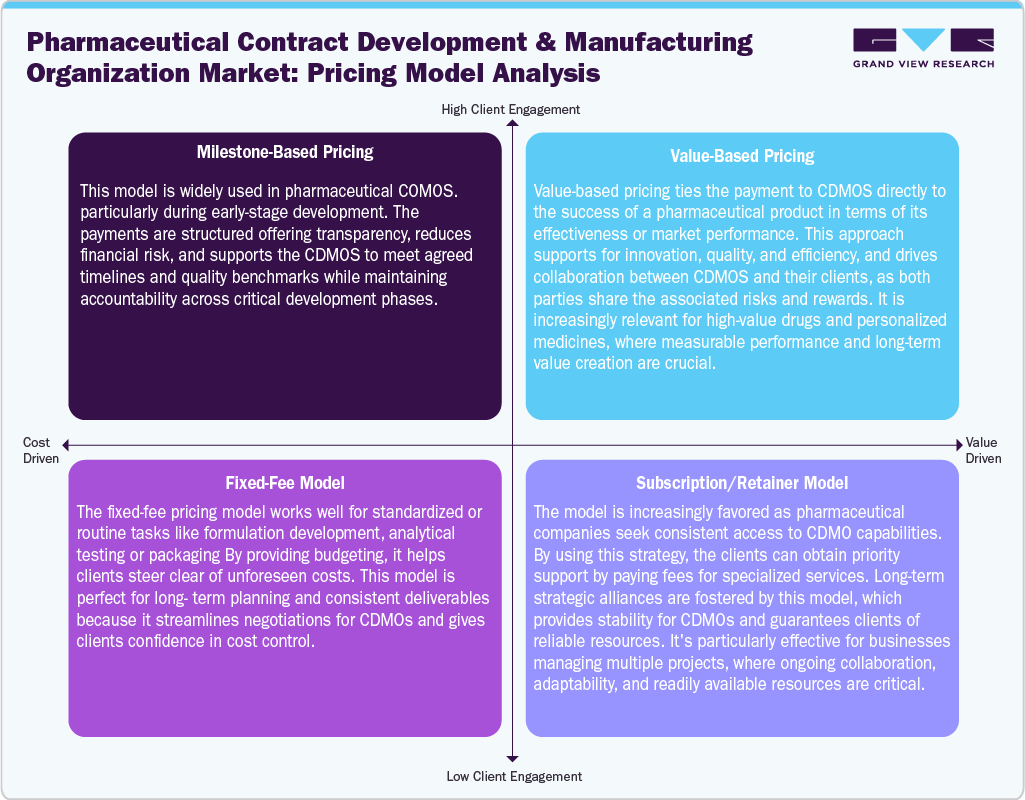
 Market pricing models are crucial for client expectations. For instance, milestone-based pricing ties payments to deliverables for transparency and aligns with the development progress. In addition, the value-based pricing links fees to therapeutic or commercial success, promoting efficiency outcomes. The fixed-fee model provides predetermined costs, enabling reliable budgeting and long-term planning. Moreover, subscription models are becoming popular, allowing clients to continuously access CDMO expertise, capacity, and priority services through recurring fees. Thus, these models highlight the demand for flexible agreements, enabling CDMOs to cater to varying drug development and manufacturing needs while encouraging stronger, long-term partnerships.
Type Insights
On the basis of the type segment, in 2025, the small molecule segment held the largest market share in the market, accounting for a revenue share of 65.3%. Small molecule drug development remains crucial for pharmaceutical CDMOs. CDMOs offer services such as process chemistry, formulation, scale-up, and commercial manufacturing for drug production. Besides, with the growing demand for generics, therapies, and cost-effective production, CDMOs significantly optimize the processes, ensuring compliance with regulatory standards. Their ability to deliver comprehensive solutions enables pharmaceutical companies to accelerate time-to-market and effectively manage complex global supply chains. In addition, CDMOs are investing in continuous manufacturing and high-potency capabilities to position themselves as strategic partners in the competitive, cost-sensitive landscape of small-molecule development and commercialization.
The large molecule segment is expected to grow significantly during the forecast period. Large molecules include biologics, monoclonal antibodies, and cell and gene therapies. With the growing demand from antibodies market and antibody discovery market, CDMOs increasingly focus on providing specialized expertise to support clinical and commercial supply. The range of services offered by the market players includes advanced facilities for fermentation, purification, and operations, enabling clients to manage complex production. Moreover, growing investments and modular facilities enhance pharmaceutical scalability and production capacity. Furthermore, the faster growth of ADC antibody drug conjugates CDMO market acts as one of the key drivers for the growth of large molecule segment as many companies seek assistance from external service providers when dealing with complicated processes of biological drug incorporation and potent drug loading. Thus, CDMOs are preferred as critical partners due to the growing demand for biology and the advanced therapy market.
Product Insights
On the basis of product, the API segment dominated the market with the largest revenue share in 2025. The segment growth can be attributed to the highly competitive drug development and growing demand for end-to-end contract development & manufacturing organization (CDMO) services. In addition, growing advances in API manufacturing and the growth of the biopharmaceutical sector are some of the key factors propelling segment growth. Moreover, an increasing prevalence of chronic diseases, such as cardiovascular diseases and cancer, is anticipated to boost the market over the forecast period.
The drug product segment is expected to grow significantly during the forecast period. The robust demand for drug products, such as oral solid dose, semisolid dose, liquid dose, and others, is expected to drive the segment over the forecast period. Among drug products, oral solid doses (capsules, tablets, powders, solid & liquid sachets, granules, orally dispersible films, & others) are largely divided into solid & liquid oral dosage forms. Liquid oral dosage forms and semisolids are present as suspensions, syrups, solutions, dispersions, softgels, etc. Furthermore, the growing R&D pipeline and burden of chronic and infectious diseases are expected to impact the market positively. The growing burden of diseases is expected to increase the interest of pharmaceutical companies in developing new drugs, fueling CDMO requirements.
Service Insights
On the basis of service, the contract manufacturing segment accounted for the largest share in 2025 during the forecast period. The manufacturing supports pharmaceutical companies to enhance their production capacity, cost savings, & operational flexibility. These services cover small- and large-scale manufacturing of APIs, intermediates, and finished dosage forms. By outsourcing manufacturing, pharmaceutical companies reduce capital investments in facilities and gain access to advanced technologies maintained by CDMOs. In addition, CDMOs help manage supply chain complexity while meeting global regulatory standards. Besides, the ability to deliver high-quality, scalable, and compliant manufacturing solutions positions CDMOs as key partners, particularly as demand grows for biologics, sterile injectable, and other specialized therapies worldwide.
The contract development segment is expected to grow significantly during the forecast period. The services offered by CDMOs support early-stage drug formulation, process development, analytical method validation, and scale-up. Besides, it helps reduce development timelines and provides pharmaceutical companies with specialized expertise that may not be in-house. In addition, CDMOs add value by optimizing processes, ensuring regulatory readiness, and enabling a smooth transition into manufacturing. Moreover, their integrated approach, which combines development with downstream production capabilities, strengthens client partnerships and creates efficiencies, making them vital contributors to successful drug development programs.
Workflow Insights
On the basis of workflow, the commercial segment dominated the market with the largest revenue share in 2025. The segment is driven by robust demand for pharmaceutical products, including biologics, sterile injectable, and highly potent active pharmaceutical ingredients (APIs). Other factors contributing to segment growth include rising global outsourcing trends and an expanding product pipeline. Besides, most pharmaceutical companies currently rely on the expertise and infrastructure of Contract Development and Manufacturing Organizations (CDMOs), allowing them to save time and reduce costs while focusing on launching new products and navigating complex formulations and strict regulatory standards. Such factors are expected to drive segment growth.
On the other hand, the clinical segment is projected to grow at a significant CAGR duringthe forecast period. The segment growth is primarily attributed to a highly competitive drug development landscape, an increasing demand for end-to-end global services, rising clinical trial volumes, and the growing complexity of therapies. Most companies face surging drug development costs and stringent timelines, leading to an increased need for partnerships to mitigate operational costs while ensuring compliance across diverse regulatory environments. Moreover, the necessity for risk mitigation, especially related to patient recruitment delays and supply chain continuity, has increased the reliance on CDMOs that provide comprehensive clinical workflow solutions. This has led to a rising demand for flexible outsourcing models that can effectively support global research and development (R&D) pipelines, which is expected to drive segment growth.
Therapeutic Area Insights
On the basis of therapeutic area, the oncology segment accounted for the largest share in 2025 during the forecast period. The segment's market is likely to expand with the rising development of oncology drugs, growing preclinical research to clinical trial material supply & commercial manufacturing, and increasing cancer cases globally. For instance, the Cancer Atlas mentioned that the number of cancer cases is expected to reach 29 million globally by 2040. This is expected to drive the need for new oncology drugs across the globe, further contributing to market growth. In addition, for oncology drug development, most pharmaceutical CDMO companies offer a range of expertise, including high-potency active pharmaceutical ingredient (HPAPI) synthesis, biologics & cell therapy production, and advanced formulation techniques for targeted treatment delivery. By ensuring regulatory compliance, CDMOs support oncology companies in achieving faster market entry and increased cost efficiency, further contributing to market growth.
The autoimmune diseases segment is expected to grow significantly during the forecast period. In autoimmune/inflammation, the immune system mistakenly targets healthy cells & tissues; these diseases affect approximately 1 in 10 individuals. Among autoimmune conditions like Rheumatoid Arthritis (RA), Multiple Sclerosis (MS), lupus, and type 1 diabetes, a shared aspect is the immune system’s malfunction. The misdirected immune response in autoimmune disease leads to persistent inflammation and harm to various organs & systems. Hence, CDMO represents a key milestone in developing new devices and drugs for autoimmune diseases. Moreover, the ongoing innovative approaches for autoimmune diseases drug development is expected to drive the segment growth. For instance, in January 2025, ImmuPharma PLC mentioned innovative advancements in its preclinical research program focused on P140 and the pathogenesis of autoimmune diseases. This discovery is conducted by the company’s R&D subsidiary ImmuPharma Biotech, which has yielded compelling data that provides novel insights into autoimmune disease mechanisms. Such factors are expected to drive the market.
End Use Insights
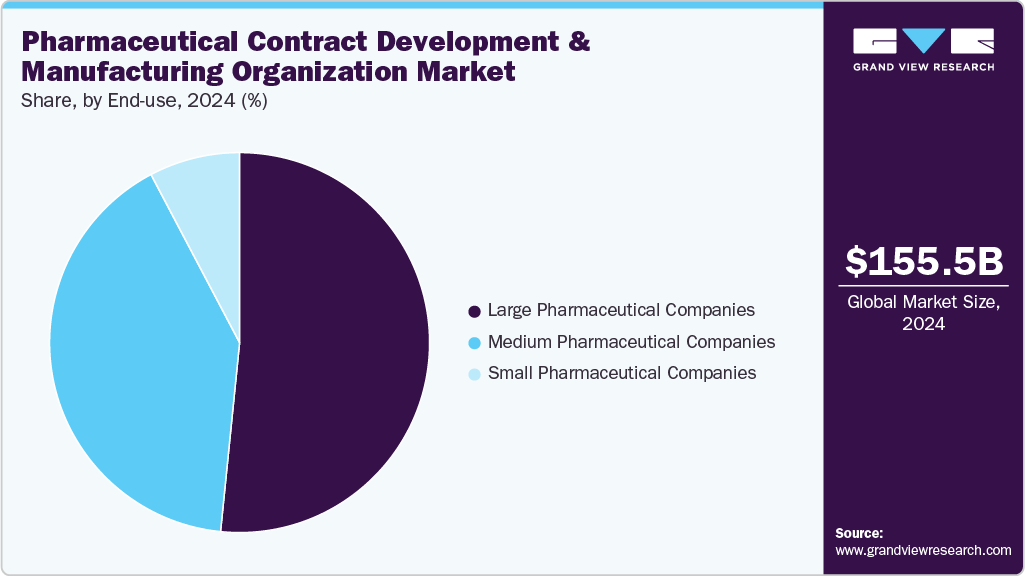
On the basis of end use, the large pharmaceutical companies segment accounted for the largest share in 2025 during the forecast period. Large pharmaceutical companies partner with CDMOs to enhance flexibility, reduce costs, and expand manufacturing capacity. While these companies often have in-house resources, outsourcing enables access to specialized capabilities, such as biologics production or high-potency drug handling. Besides, CDMOs add value by ensuring regulatory compliance, shortening timelines, and supporting complex supply chains. This collaboration strengthens efficiency and allows large companies to focus resources on innovation and commercialization strategies.
 To learn more about this report, Download Free Sample Report
 The small pharmaceutical companies segment is expected to grow at a specific CAGR during the forecast period, driven by the growing presence of biotech startups and specialty drug companies with limited manufacturing capabilities. Such companies often seek outsourced drug development services, analytical testing, clinical manufacturing, and commercial manufacturing from CDMOs to minimize costs and speed up commercialization. The increase in outsourcing, driven by specialization in areas such as biologics, orphan drugs, and personalized medicines, is driving demand for CDMO services. Additionally, most small pharmaceutical companies have adopted an asset-light approach to their operations, leading to higher outsourcing among small pharma companies than among large pharmaceutical companies. These factors are collectively expected to drive the segment growth.
Regional Insights
North America pharmaceutical CDMO market is expected to grow at a significant CAGR over the forecast period. The market growth is attributed to growing investments in R&D of new drugs by pharmaceutical companies, which boosts the demand for pharmaceutical contract development and manufacturing services. In addition, pharmaceutical companies across the U.S. and Canada are creating a constant stream of novel projects that require external expertise in formulation, scale-up, and advanced manufacturing. Instead of managing every stage internally, many sponsors are collaborating with CDMOs that provide flexible capacity, specialized technologies, and faster development timelines. This trend shows that outsourcing is becoming a strategic enabler rather than a cost-saving measure. Such factors are expected to drive the market.
U.S. Pharmaceutical CDMO Market Trends
The pharmaceutical contract development and manufacturing organization market in the U.S. accounted for the highest market share in the North America market. The U.S. pharmaceutical CDMO market is driven by a robust biopharmaceutical pipeline, the high prevalence of chronic diseases, and increasing outsourcing among major drug developers. Companies in the U.S. leverage advanced technologies and regulatory know-how while providing extensive capabilities in formulation, clinical trial supply, and commercial manufacturing. In addition, rising demand for biologics, cell and gene therapies, and high-potency drugs further enhances the importance of CDMOs in the industry. In addition, strategic partnerships, capacity expansion, and investments are expected to support the market's growth.
The Canada pharmaceutical contract development and manufacturing organization market is expected to grow at a significant CAGR during the forecast period. Canada’s pharmaceutical CDMO market is experiencing steady growth, driven by government support for life sciences, expanding clinical research, and increasing demand for biopharmaceuticals. In addition, Canadian CDMOs are recognized for their quality manufacturing, adherence to regulatory standards, and specialization in sterile injectables and biologics. Moreover, rising investments in R&D are expected to drive cost-effective and high-quality drug production for global pharmaceutical and biotechnology companies. Such factors are expected to drive the market.
Europe Pharmaceutical CDMO Market Trends:
Europe's pharmaceutical CDMO market is evolving due to the regulatory framework, proximity to major pharma headquarters, and a skilled scientific workforce. The growing complexity of drug molecules, particularly biologics, cell and gene therapies, and high-potency APIs, is encouraging pharmaceutical companies to rely on CDMOs with specialized capabilities rather than expanding in-house infrastructure. In addition, emphasis on sterile injectables, parenteral drugs, and advanced formulation technologies has led to expansions across European countries. Besides, this trend is also supported by government policies encouraging domestic manufacturing of critical medicines, particularly in the EU, where supply security has become a key healthcare priority.
Furthermore, established companies such as Lonza, Recipharm, Siegfried, and Eurofins are expanding their service portfolios through acquisitions of niche technology providers, while mid-sized CDMOs are scaling capacity to attract biologics and advanced therapy projects. In turn, this outsourcing approach has strengthened long-term partnerships between European CDMOs and global pharmaceutical innovators, positioning the developing region across the globe for contract development and manufacturing landscape.
The pharmaceutical contract development and manufacturing organization market in Germany held the highest share in 2025. Germany is a leading European hub for pharmaceutical CDMOs driven by the presence of advanced technology infrastructure and a highly skilled workforce. Besides, CDMOs in the country are specializing in high-quality manufacturing of APIs, biologics, and advanced formulations, meeting strict EU regulatory standards. In addition, with growing focus on complex therapies and personalized medicines, CDMOs in Germany are investing in innovation and flexible capacity. Collaborations with global pharmaceutical companies and proximity to major European markets strengthen their role. The country’s emphasis on quality, efficiency, and compliance positions German CDMOs as reliable partners in global drug development and manufacturing.
The UK pharmaceutical contract development and manufacturing organization market is expected to grow significantly over the forecast period. The market is driven by increased R&D activities, expanding biomanufacturing capabilities, and regulatory environments. Besides, CDMOs offer specialized knowledge in small molecules, biologics, and innovative formulations, excelling particularly in early-stage development and the supply of clinical trial materials. In addition, the market is fueled by collaborations & government backing for life sciences. Thus, as the demand for personalized medicines increases, UK-based CDMOs are broadening their service offerings, reinforcing their roles as essential partners for domestic and international pharmaceutical companies needing high-quality, compliant solutions.
Asia Pacific Pharmaceutical CDMO Market Trends
Asia Pacific dominated the global pharmaceutical contract development and manufacturing organization market in 2025, holding a revenue share of 38.2%.The market has become a critical hub for global drug development and manufacturing driven by its cost-efficient production capabilities, growing scientific expertise, and rising local demand for innovative medicines. Besides, the region benefits from a favorable cost structure for raw materials, labor, and large-scale facilities, attracting multinational pharmaceutical companies to shift portions of their supply chain to APAC. Increasing investments in biologics and biosimilars, coupled with government initiatives to strengthen domestic manufacturing, are also fueling expansion in high-value CDMO services. Local biotech innovation, particularly in China and South Korea, has further created opportunities for CDMOs to provide integrated services spanning preclinical development to commercial supply.
 To learn more about this report, Download Free Sample Report
 The pharmaceutical CDMO market in China is rapidly growing due to cost benefits, increasing domestic needs, and global outsourcing trends. These organizations offer various services, including small molecule APIs, biologics, and large-scale production, backed by significant investments in technology. Supported by the government, China is becoming a key player in global outsourcing, but compliance with regulatory and quality standards is essential for international collaborations. Chinese CDMOs are enhancing their role in global drug manufacturing by leveraging competitive pricing and improving advanced therapy expertise.
The pharmaceutical CDMO market in Japan is driven by the presence of an established pharmaceutical industry, robust regulatory standards, and a rising demand for biologics and specialty drugs. Japanese CDMOs emphasize high-quality production, formulation, and the provision of clinical trial supplies, supported by advanced infrastructure and expertise. Moreover, strategic partnerships with multinational companies and collaborations with research institutes drive innovations.
India pharmaceutical contract development and manufacturing organization market is experiencing rapid expansion, attributed to low costs, the availability of industry experts, and the presence of WHO-cGMP-compliant facilities. Furthermore, some of the key players in India's pharmaceutical contract development and manufacturing services are Wuxi AppTec, Charles River Laboratories International, Inc., IQVIA, Recipharm AB, and Catalent, Inc. Local players include Dr. Reddy's Laboratories, Cadila Healthcare Limited, and Cipla Ltd. Several CMOs & CROs operating in India have expanded their facilities to meet the growing demand for pharmaceuticals.
Latin America Pharmaceutical CDMO Market Trends
The pharmaceutical contract development and manufacturing organization market in the Latin America region is expected to witness significant growth over the estimated time period. The market in the region is fueled by rising demand for cost-effective drug development and manufacturing solutions, coupled with the growing presence of multinational pharmaceutical companies. Besides, countries such as Brazil are emerging as attractive outsourcing destinations due to their large patient populations, expanding healthcare infrastructure, and competitive operating costs compared to North America and Europe. In addition, the growing demand for generic drugs & biosimilars is accelerating the reliance on CDMOs, as regional governments encourage affordable treatment access through local production. In parallel, the rise in chronic diseases such as diabetes, cancer, and cardiovascular conditions is driving drug innovation pipelines, creating opportunities for CDMOs to provide formulation development, scale-up, and commercial manufacturing support.
Brazil pharmaceutical contract development and manufacturing organization market is driven by robust growth and development in biologics, and the rising pharmaceutical market is expected to boost pharmaceutical CDMO in the country. Moreover, the demand for pharmaceutical CDMO in the country is growing as consumers increasingly seek effective pharmaceutical formulations due to the growing burden of diseases. The rising competition for drug development and approval is anticipated to increase the requirement for pharmaceutical CDMO.
Middle East & Africa Pharmaceutical CDMO Market Trends
The pharmaceutical CDMO market in the MEA region is gaining traction due to growing demand for new therapies and affordable generics, which is encouraging partnerships between multinational drug makers and regional CDMOs. Cost efficiency, coupled with improving regulatory frameworks, enables global sponsors to outsource formulation development, packaging, and manufacturing activities to the region. In addition, growing investment in sterile injectables and biosimilars production, alongside expanding clinical trial activities, further reinforces CDMO demand across MEA. Such factors are expected to drive the market over the estimated time period.
The UAE pharmaceutical contract development and manufacturing organization market is experiencing growth driven by the rising prevalence of several chronic diseases, increasing investments in complex biologic molecules development, a supportive regulatory environment, the entry of new market players, and growing year-on-year investments of foreign pharmaceutical companies & CDMOs. Moreover, the market is fueled by domestic players who expand their pharmaceutical production capacities & geographical presence through various strategies. Such factors support the country's production of pharmaceutical products.
Key Pharmaceutical CDMO Company Insights
The key players operating across the market are adopting strategic initiatives such as service launches, mergers & acquisitions, partnerships & agreements, and expansions to gain a competitive edge in the market. For instance, in June 2025, Samsung Biologics launched Samsung Organoids, an advanced drug screening service providing clinically relevant organoid-based insights to accelerate preclinical research, drug discovery, biomarker identification, and candidate selection for clients worldwide. Similarly, in June 2025, Recipharm launched new Blow-Fill-Seal (BFS) development contracts, reinforcing leadership as the only CDMO with BFS for biologics and small molecules, offering 90% API savings and scalable solutions from clinical to commercial.
Key Pharmaceutical CDMO Companies:
The following key companies have been profiled for this study on the pharmaceutical contract development and manufacturing organization market
-
Thermo Fisher Scientific, Inc
-
Lonza
-
Recipharm AB
-
Catalent, Inc
-
WuXi AppTec, Inc
-
Samsung Biologics
-
Piramal Pharma Solutions
-
Siegfried Holding AG
-
Corden Pharma International
-
Cambrex Corporation
-
Vetter Pharma
-
Delpharm
-
Jubilant Pharmova / HollisterStier
-
Eurofins CDMO
-
Almac Pharma Services
Competitive Benchmarking
Operating Strategies
Competitive Edge
Weaknesses
Mature Players: Thermo Fisher Scientific
- The mature players in the market emphasize developing capabilities in drug development, biologics manufacturing, sterile fill finish, and manufacturing services.
- These include having regulatory-compliant infrastructures, advanced manufacturing technologies, strategic acquisitions, and global expansion.
- The mature players have the capability to manufacture products in large volumes with regulatory approvals globally and a portfolio of diversified services.
- These organizations enjoy competitive advantages by having end-to-end outsourcing capabilities and strong quality management systems, experience with biologics, and long-term pharmaceutical outsourcing partnerships.
.
- Regulatory compliance costs, sophisticated manufacturing operations, and costs incurred from maintaining facilities around the globe might pose a threat to the profit margins of mature CDMO players.
- Slow operations and decision-making, as well as heavy reliance on large-scale commercial deals, pose risks for emerging players when the markets experience volatility.
Emerging Players: Corden Pharma
- The emerging players employ flexible, focused strategies, with an emphasis on highly potent APIs, biologics, cell and gene therapy, and small-volume clinical manufacturing.
- These players seek to develop additional capabilities like flexibility, efficiency, having fast turnaround times, and expanding regionally.
- The emerging players benefit from operational flexibility, technical expertise in focused niches, and the adoption of advanced manufacturing technologies at a faster rate.
- Being operationally lean helps emerging players compete effectively with the larger multinational competitors.
- Limited capabilities due to small manufacturing capacity, lack of experience in dealing with regulations, shortage of funds, and the absence of a broad footprint in the global market are major weaknesses for emerging players.
Recent Developments
-
In April 2025, Thermo Fisher launched an enhanced CHO K-1 cell line, reducing IND timelines from 13 to nine months, boosting protein expression, and accelerating biologics development with integrated CDMO, CRO, and bioprocessing solutions.
-
In August 2025, Polpharma Biologics and Fresenius Kabi launched a global licensing deal for PB016, a proposed vedolizumab biosimilar, with Polpharma leading development/manufacturing and Fresenius Kabi handling global commercialization, excluding MENA.
Pharmaceutical CDMO Market Report Scope
Report Attribute
Details
Market size value in 2025
USD 166.0 billion
Market size value in 2026
USD 177.6 billion
Revenue forecast in 2033
USD 293.6 billion
Growth rate
CAGR of 7.4% from 2026 to 2033
Actual data
2021 - 2024
Forecast period
2026 - 2033
Quantitative units
Revenue in USD million/billion and CAGR from 2026 to 2033
Report coverage
Revenue forecast, company ranking, competitive landscape, growth factors, and trends
Segments covered
Type, product, service, workflow, therapeutic area, end use, region
Regional scope
North America; Europe; Asia Pacific; Latin America; MEA
Country scope
U.S.; Canada; Mexico; UK; Germany; France; Italy; Spain; Denmark; Sweden; Norway; China; India; Japan; Australia; South Korea; Thailand; Brazil; Argentina; South Africa; UAE; Saudi Arabia; Kuwait; Qatar; Oman
Key companies profiled
Thermo Fisher Scientific, Inc; Lonza; Recipharm AB; Catalent, Inc; WuXi AppTec, Inc; Samsung Biologics; Piramal Pharma Solutions; Siegfried Holding AG; Corden Pharma International; Cambrex Corporation; Vetter Pharma; Delpharm; Jubilant Pharmova / HollisterStier; Eurofins CDMO; Almac Pharma Services
Customization scope
Free report customization (equivalent up to 8 analysts working days) with purchase. Addition or alteration to country, regional & segment scope.
Pricing and purchase options
Avail customized purchase options to meet your exact research needs. Explore purchase options
Global Pharmaceutical CDMO Market Report Segmentation
This report forecasts revenue growth at global, regional, and country levels and provides an analysis of the latest industry trends in each of the sub-segments from 2021 to 2033. For this study, Grand View Research has segmented the global pharmaceutical contract development and manufacturing organization market report based on type, product, service, workflow, therapeutic area, end use, and region.
-
Type Outlook (Revenue, USD Million, 2021 - 2033)
-
Small Molecule
-
Branded
-
Generic
-
-
Large Molecule
-
Biologics
-
Biosimilar
-
-
-
Product Outlook (Revenue, USD Million, 2021 - 2033)
-
API
-
Traditional Active Pharmaceutical Ingredient (Traditional API)
-
Highly Potent Active Pharmaceutical Ingredient (HP-API)
-
Biologics
-
Others
-
-
Drug Product
-
Oral solid dose
-
Semi-solid dose
-
Liquid dose
-
Others
-
-
-
Service Outlook (Revenue, USD Million, 2021 - 2033)
-
Contract Development
-
Pre-formulation & Formulation Development Services
-
Process Development & Optimization
-
Analytical Testing & Method Validation
-
Scale-up & Tech Transfer
-
-
Contract Manufacturing
-
API Manufacturing
-
Finished Drug Products Manufacturing
-
-
Packaging and Labeling
-
Regulatory Affairs
-
Others
-
-
Workflow Outlook (Revenue, USD Million, 2021 - 2033)
-
Clinical
-
Commercial
-
-
Therapeutic Area Outlook (Revenue, USD Million, 2021 - 2033)
-
Oncology
-
Infectious Diseases
-
Neurological Disorders
-
Cardiovascular Disease
-
Metabolic Disorders
-
Autoimmune Diseases
-
Respiratory Diseases
-
Ophthalmology
-
Gastrointestinal Disorders
-
Orthopedic Diseases
-
Dental Diseases
-
Others
-
-
End Use Outlook (Revenue, USD Million, 2021 - 2033)
-
Small Pharmaceutical Companies
-
Medium Pharmaceutical Companies
-
Large Pharmaceutical Companies
-
-
Regional Outlook (Revenue, USD Million, 2021 - 2033)
-
North America
-
U.S.
-
Canada
-
Mexico
-
-
Europe
-
UK
-
Germany
-
France
-
Italy
-
Spain
-
Denmark
-
Sweden
-
Norway
-
-
Asia Pacific
-
China
-
India
-
Japan
-
Australia
-
South Korea
-
Thailand
-
-
Latin America
-
Brazil
-
Argentina
-
-
Middle East & Africa
-
South Africa
-
UAE
-
Saudi Arabia
-
Kuwait
-
Qatar
-
Oman
-
-
Delivered Customizations
This report has been delivered with the following In-depth customizations
Client Request
Customization Delivered
Value Adds
Global Pharmaceutical CDMO Outsourcing Trends & Manufacturing Capacity Assessment
Developed an assessment of the global Pharmaceutical Contract Development And Manufacturing Organization market focused on outsourcing trends across API manufacturing, biologics production, sterile fill finish operations, and commercial drug product manufacturing. The study evaluated pharmaceutical outsourcing strategies, manufacturing capacity expansion, supply chain diversification initiatives, regulatory compliance requirements, and operational challenges associated with complex drug development and commercial manufacturing across key global markets.
Enables stakeholders to understand evolving outsourcing patterns, identify high growth manufacturing segments, assess regulatory and operational risks, and evaluate long term competitiveness linked to advanced pharmaceutical manufacturing capabilities and global supply chain expansion.
Biologics, Specialty Therapeutics, & Advanced Therapy Manufacturing Analysis
Delivered a focused evaluation of outsourcing demand trends across biologics, biosimilars, monoclonal antibodies, antibody drug conjugates, highly potent APIs, and cell and gene therapy manufacturing. The assessment included analysis of biotechnology funding activity, clinical pipeline expansion, specialized manufacturing requirements, and increasing demand for integrated development and commercial scale production services.
Provides actionable insights into emerging outsourcing opportunities, niche therapeutic manufacturing demand, and strategic growth areas for CDMOs supporting biologics, precision medicine, and specialty pharmaceutical commercialization globally.
Advanced Pharmaceutical Manufacturing Technologies & Digitalization Opportunity Assessment
Conducted an analysis of advanced manufacturing adoption across the global pharmaceutical CDMO market, including continuous manufacturing systems, single use bioreactors, automated aseptic processing, digital bioprocessing technologies, and smart manufacturing integration. The study also assessed investments in high potency API facilities, modular biologics infrastructure, cold chain logistics readiness, and advanced quality management systems supporting operational efficiency and rapid scale up capabilities.
Supports strategic investment planning for advanced pharmaceutical manufacturing technologies by identifying underserved production capabilities, operational modernization opportunities, specialized service gaps, and revenue potential associated with next generation drug manufacturing and global supply chain optimization.
Frequently Asked Questions About This Report
The global pharmaceutical contract development and manufacturing organization market is expected to grow at a CAGR of 7.4% from 2026 to 2033, reaching USD 293.6 billion.
Key factors include rising investments by CDMOs to expand new drug development and the increasing demand for novel therapies, a significant shift from traditional small molecules to biopharmaceuticals, and growing investments in pharmaceutical R&D.
Asia Pacific dominated with a 38.2% revenue share in 2025.
Asia Pacific is also the fastest-growing region over the forecast period.
The contract manufacturing segment led with a 59.7% revenue share in 2025 and is also the fastest-growing service segment.
The small molecule segment led with a 65.3% revenue share in 2025, while the large molecule is the fastest-growing segment.
The oncology segment held the largest revenue share of 22.8% in 2025 and is also the fastest-growing service segment.
Key players include Thermo Fisher Scientific, Inc, Lonza, Recipharm AB, Catalent, Inc, WuXi AppTec, Inc, Samsung Biologics, Piramal Pharma Solutions, Siegfried Holding AG, Corden Pharma International, Cambrex Corporation, Vetter Pharma, Delpharm, Jubilant Pharmova / HollisterStier, Eurofins CDMO, and Almac Pharma Services, among others.
The global pharmaceutical contract development and manufacturing organization market size was valued at USD 166.0 billion in 2025 and is estimated at USD 177.6 billion for 2026.
About the Author(s)
Medical Devices Research Team
Healthcare · Medical DevicesThis report was authored by the medical devices research team at Grand View Research - comprising two research analysts, one senior research analyst, and one industry expert - with specialized expertise in the medical devices segment of the healthcare industry. All findings are based on proprietary healthcare databases, executive interviews, and regulatory analysis, subject to internal peer review prior to publication.
Last Updated:
Speak to Analyst

Customize this report to your needs - add regions, segments, or data points, with 20% free customization.
Or view our licence options:


ISO 9001:2015 & 27001:2022 Certified
We are GDPR and CCPA compliant! Your transaction & personal information is safe and secure. For more details, please read our privacy policy.


