
- Home
- »
- Clothing, Footwear & Accessories
- »
-
PVC Footwear Market Size, Growth Report, 2026-2033GVR Report cover

PVC Footwear Market (2026 - 2033)
Size, Share & Trends Analysis Report By Product (Shoes, Flip Flops), By Distribution Channel (Offline, Online), By Region, And Segment Forecasts
Market Size, 2025
$74.6BMarket Estimate, 2026
$78.4BMarket Forecast, 2033
$112.3BCAGR, 2026–2033
5.0%PVC Footwear Market Summary
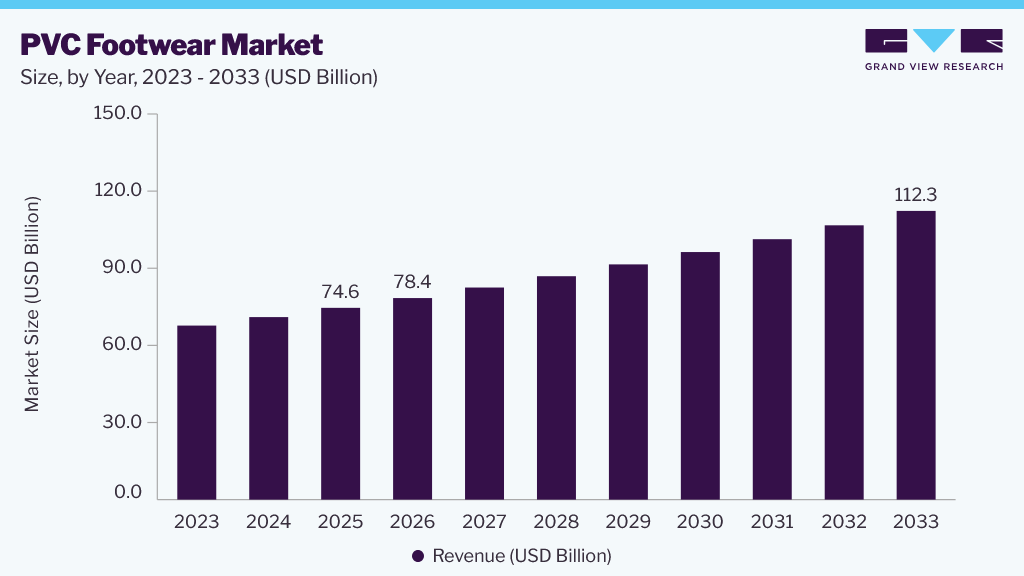
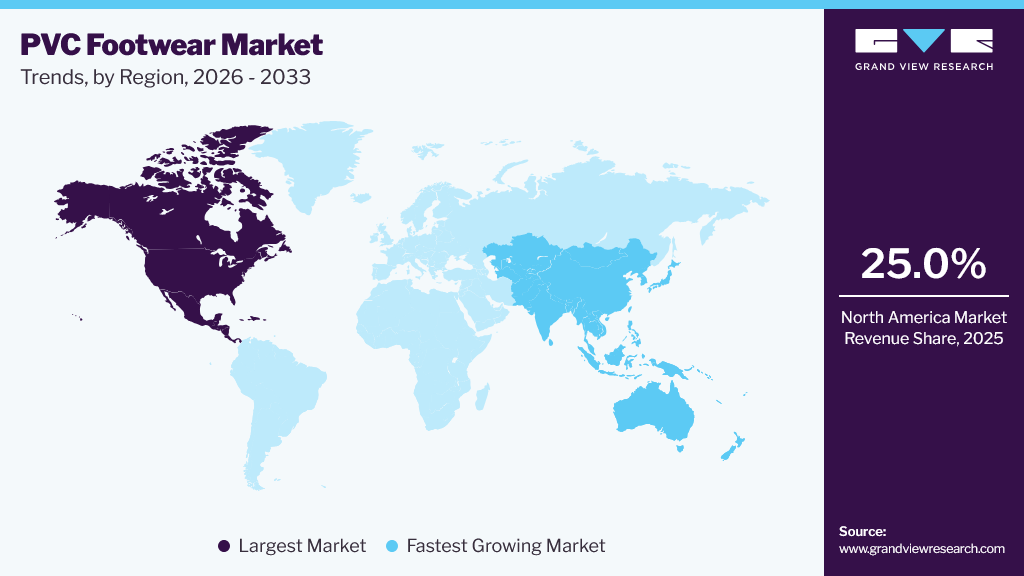
The global PVC footwear market size was valued at USD 74.6 billion in 2025 and is projected to grow from USD 78.4 billion in 2026 to USD 112.3 billion by 2033, at a CAGR of 5.0% from 2026 to 2033. North America dominated the global market with the largest revenue share of approximately 25.0% in 2025. Durability and versatility are key drivers shaping the global market, influencing consumer preferences, manufacturing practices, and market trends.
Key Market Trends & Insights
- By product: Shoe segment held the largest market share of around 45.0% in 2025.
- By distribution channel: Offline segment held the largest market share of over 75.0% in 2025.
Regional Highlights
- Largest regional market: North America (25.0% revenue share, 2025)
- Fastest-growing regional market: Asia Pacific (highest CAGR, 2026-2033)
Market Size & Forecast
- Market size in 2025: USD 74.6 Billion
- Estimated market size in 2026: USD 78.4 Billion
- Projected market size by 2033: USD 112.3 Billion
- CAGR (2026-2033): 5.0%
Prism AI by Grand View Research Free to tryAsk a question about the PVC footwear marketTry asking✓Every figure cited from GVR research Prefer the report? Download free sample →Polyvinyl chloride (PVC) is a synthetic material known for its strength, resistance, and adaptability. PVC is a strong, durable material that withstands wear and tear, making it ideal for various applications. Its durability, resistance to water, chemicals, abrasion, and weathering make it suitable for footwear used in harsh environments, such as construction sites or factories. In addition, PVC shoes are more resistant to chemicals than other types of shoes, making them a preferred choice for individuals working in the chemical industry.
 Source: Grand View Research, IR Documents, Primary Interviews, Paid DatabasesTo learn more about this report,
 Download Free Sample Report
PVC can be molded into various styles, ranging from casual sneakers to formal shoes, allowing manufacturers to cater to diverse consumer preferences and fashion trends. The wide selection of designs, colors, and finishes available ensures that consumers can find footwear that matches their individual style and needs.
PVC shoes are also ideal for outdoor activities and adventure sports. As these activities gain popularity, there is an increasing demand for footwear that can withstand rugged terrains, harsh weather, and prolonged use. Due to their durability and resistance to water and abrasion, PVC shoes are a reliable choice for outdoor enthusiasts, including hikers, campers, and athletes. Whether trekking through muddy trails, braving severe climates, or participating in water sports, PVC shoes provide the necessary durability and protection for these challenging environments.
With the rising demand for footwear that can withstand harsh conditions and cater to diverse consumer preferences, the PVC footwear industry is expected to grow during the forecast period. Additionally, e-commerce retail channels significantly contribute to the distribution of PVC shoes, generating substantial market revenue.
These channels allow consumers to browse a wide range of fashionable and designer shoes in one place, eliminating the need to visit multiple retail stores. The e-commerce retail sector is expected to experience substantial growth in the coming years due to rising consumer spending, a growing population, and increased internet access. The introduction of mobile shopping apps and the availability of safe and convenient payment gateways contribute to the overall growth of the online retail industry. Online shopping blogs by independent bloggers and popular social media platforms, such as Pinterest and Instagram, have a significant influence on footwear trends and are expected to positively impact the market growth as well.
According to Shopify’s Global Commerce Trends and Consumer Behavior insights for 2025, the rapid expansion of mobile commerce and integrated digital payment systems has significantly strengthened online retail adoption, particularly in the fashion and footwear categories. The report highlights that social media platforms such as Instagram and TikTok influence purchasing decisions through creator-led content and product discovery, driving higher conversion rates for value-oriented products such as casual and utility footwear. It further notes that improved checkout systems, including digital wallets and one-click payments, are reducing friction in online purchases, thereby supporting sustained growth in e-commerce footwear sales.
The e-commerce space has witnessed notable developments, with several online retailers, such as po-zu.com, greensole.com, and solerebels.com, focusing on offering sustainable shoes, including recycled PVC-based footwear. Prominent sustainable brands such as Allbirds, Nisolo, Sézane, The Root Collective, ABLE, and Native Shoes have successfully generated a significant share of their revenue through e-commerce websites. This strategic approach not only helps reduce capital expenditure but also expands their customer base. Furthermore, a growing number of vendors are listing their products on popular e-commerce third-party platforms, including Amazon. These developments in the e-commerce space enhance the visibility of PVC-manufactured products, thereby driving market growth over the forecast period.
Analyst Perspective
The PVC footwear industry is growing steadily as more people, especially in developing countries, look for affordable, durable, and water-resistant footwear for daily use. Demand is also increasing because PVC shoes are widely used in budget and utility segments, especially during rainy seasons and in rural and semi-urban areas. At the same time, online shopping and social media trends are making it easier for consumers to discover and buy different footwear styles, which is supporting market growth. However, the market also faces challenges, including concerns about plastic waste, volatility in raw material prices, and stricter environmental regulations. Despite this, new recycling methods and the use of many eco-friendly PVC materials are creating fresh opportunities. Companies that focus on low-cost production, better comfort, and more sustainable materials are expected to perform well in the coming years.
Product Insights
The shoe segment led the market with the largest revenue share of around 45.0% in 2025. PVC is known for its durability, water resistance, and low cost, making it a popular choice for various types of footwear. PVC Shoes come in different styles and designs, making them popular among consumers. Footwear manufactured with PVC as a raw material is water-resistant, making it suitable for rainy or wet conditions. It protects from moisture, keeping the feet dry and comfortable. PVC shoes are highly durable and long-lasting, making them ideal for everyday use and outdoor activities. The material is abrasion-resistant and can withstand rough terrain. This makes it suitable for hiking or work environments that require sturdy shoes. In addition, PVC shoes are easy to clean and maintain. PVC shoes are also affordable and an attractive option for those seeking cost-effective shoes without compromising functionality.
The flip-flops segment is anticipated to grow at the fastest CAGR over the forecast period. PVC flip-flops are a popular choice of footwear, especially during warm weather or casual occasions. These flip-flops are made from PVC, a synthetic plastic material known for its durability and water resistance. PVC flip-flops are lightweight and comfortable. They can withstand exposure to moisture without being damaged. The water-resistant properties of PVC make flip-flops an excellent choice for beach trips, poolside lounging, or any activity involving water. They are available in a wide range of colors, styles, and designs. They often feature a textured sole for better grip and stability. The straps of PVC flip-flops can be simple and minimalist or adorned with decorative elements such as patterns, logos, or embellishments, catering to different fashion preferences. These factors contribute largely to the surge in demand for PVC flip-flops, and this trend is anticipated to continue over the forecast period.
Distribution Channel Insights
The offline segment led the market with the largest revenue share of over 75.0% in 2025. PVC footwear is commonly sold in physical retail stores, including shoe, department, discount, and specialty stores. These stores stock a range of PVC shoe brands and styles, allowing customers to try on and purchase the shoes in person. Wholesalers and distributors play a significant role in the offline distribution of PVC footwear. They purchase bulk quantities of PVC footwear directly from manufacturers and then distribute them to retail stores. Wholesalers act as intermediaries, enabling retailers to access a wide variety of PVC footwear options for their inventory. Retailers receive printed catalogs or brochures from some PVC shoe brands. These resources include the latest examples of the various footwear designs, styles, and features. Retailers can browse these catalogs and place orders directly with the manufacturer or the brand's authorized representative.
The online segment is expected to grow at the fastest CAGR over the forecast period. Online marketplaces, such as Amazon, eBay, and Alibaba, along with several regional e-commerce players, feature a wide range of PVC footwear options. These platforms provide a convenient way for manufacturers, retailers, and consumers to connect and facilitate transactions. PVC footwear brands often maintain dedicated websites showcasing their product ranges. These websites typically feature an integrated online store, allowing customers to browse and purchase PVC footwear directly from the brand's collection.
Regional Insights
North America dominated the global PVC footwear market with the largest revenue share of 25.0% in 2025. In North America, the footwear industry has embraced PVC as a trendy material, leading to stylish designs and collaborations with popular brands. According to a 2026 fashion trend report by Cosmopolitan, transparent and PVC-based footwear styles are gaining renewed popularity in North America, driven by their modern aesthetic and styling versatility. The report highlights that transparent shoes made with PVC materials are being reintroduced in seasonal collections and designer collaborations, reflecting a broader trend of fashion brands revisiting nostalgic materials with updated, fashion-forward designs. This resurgence is further supported by celebrity styling and runway influence, where PVC footwear is increasingly positioned as a statement fashion item in contemporary streetwear and luxury-inspired collections.
 To learn more about this report, Download Free Sample Report
Easy maintenance and affordability have boosted the penetration of PVC shoes, especially in urban areas and among younger demographics. PVC footwear, including flip-flops, work boots, and Crocs, is increasingly accepted among the population in North America. Many individuals are embracing trendy and eye-catching flip-flops and shoes as a fashion statement. PVC footwear, such as flip-flops, is widely popular in the warm coastal regions of the southern U.S. states, including Florida, Hawaii, and California. These products are ideal for hanging out at the beach because of their casual, breathable nature.
Asia Pacific PVC Footwear Market Trends
The PVC footwear market in the Asia Pacific is anticipated to grow at the fastest CAGR over the forecast period. Many Asian countries, including India, China, and Japan, have vibrant outdoor cultures, with people engaging in activities such as beach outings, hiking, and casual gatherings. Products such as PVC sandals and flip-flops provide comfort and practicality for these activities. PVC footwear is generally more budget-friendly than footwear made from other materials, such as leather or high-end synthetic fabrics. This makes it affordable to consumers across different income levels, including those with lower disposable incomes.
Asian consumers appreciate the value for money that PVC shoes provide. They can purchase multiple pairs of PVC shoes for the same budget as a single pair made from expensive materials. This allows individuals to exercise various options without straining their budgets. The cost-effectiveness of PVC shoes makes them an ideal choice for the Asian population seeking reliable, affordable options that withstand daily wear and tear. According to a YouGov Global Consumer Footwear Survey, a significant share of respondents across emerging economies indicated a strong preference for affordable, durable, and easy-to-maintain footwear for daily use. The survey highlighted that consumers in countries such as India are extremely price-sensitive when selecting footwear, which indirectly supports demand for synthetic and PVC-based footwear in the mass-market and utility segments. It further noted that footwear remains a frequently purchased category across age groups, driven by practical usage needs and growing retail accessibility.
Key PVC Footwear Company Insights
Key players in the global PVC footwear industry are undertaking several strategic initiatives to increase their presence and maintain a competitive edge. These initiatives include partnerships, mergers and acquisitions, product launches, technological advancements, and global expansion. By pursuing these growth strategies, companies are strengthening their regional presence, expanding production capacities, improving product offerings, and entering the global markets.
Key PVC Footwear Companies
The following key companies have been profiled for this study on the global PVC footwear market:
-
Grendene S.A.
-
Dr. Martens plc
-
Bata Corporation
-
Lemon Jelly (Procalcado S.A.)
-
Okabashi Brands, Inc.
-
Decathlon S.A.
-
VKC Group
-
Liberty Shoes Ltd.
-
Khadim India Ltd.
-
Ajanta Shoes Pvt. Ltd.
Recent Developments
-
In October 2025, Far Eastern New Country (FENC) expanded its sustainable footwear materials portfolio to include recycled thermoplastic polyester elastomer (rTPEE) for footwear midsoles, reducing its dependence on conventional petroleum-based synthetic materials used in shoe construction.
-
In May 2025, VKC Group launched ‘Go Planet-D by Debongo’, a 100% recyclable footwear line, introducing a closed-loop system where used footwear can be returned and recycled into new products. The initiative directly targets mass-market synthetic footwear, including PVC-based categories commonly used in utility and monsoon shoes.
-
In May 2025, Bata India announced manufacturing capacity upgrades and automation at its footwear production facilities, improving output efficiency in mass-market footwear categories that rely heavily on synthetic materials such as PVC and PU.
PVC Footwear Market Report Scope
Report Attribute
Details
Market size in 2025
USD 74.6 billion
Estimated market size in 2026
USD 78.4 billion
Projected market size by 2033
USD 112.3 billion
Growth rate
CAGR of 5.0% from 2026 to 2033
Base year for estimation
2025
Historical data
2021 – 2024
Forecast period
2026 – 2033
Quantitative units
Revenue in USD million/billion, and CAGR from 2026 to 2033
Report coverage
Revenue forecast, company ranking, competitive landscape, growth factors, and trends
Segments covered
Product, distribution channel, region
Regional scope
North America; Europe; Asia Pacific; Central & South America; Middle East & Africa
Country scope
U.S.; Canada; Mexico; UK; Germany; France; Italy; Spain; China; Japan; India; South Korea; Australia & New Zealand; Brazil; South Africa
Key companies profiled
Grendene S.A.; Dr. Martens plc; Bata Corporation; Lemon Jelly (Procalcado S.A.); Okabashi Brands, Inc.; Decathlon S.A.; VKC Group; Liberty Shoes Ltd.; Khadim India Ltd.; Ajanta Shoes Pvt. Ltd.
Customization scope
Free report customization (equivalent to up to 8 analyst working days) with purchase. Addition or alteration to country, regional & segment scope.
Pricing and purchase options
Avail of customized purchase options to meet your exact research needs. Explore purchase options
Global PVC Footwear Market Report Segmentation
This report forecasts growth at the global, regional, and country levels and provides an analysis of the latest trends in each sub-segment from 2021 to 2033. For this study, Grand View Research has segmented the global PVC footwear market report based on product, distribution channel, and region:
- Product Outlook (Revenue, USD Billion, 2021 - 2033)
- Shoes
- Flip Flops
- Others
- Distribution Channel Outlook (Revenue, USD Billion, 2021 - 2033)
- Offline
- Online
- Regional Outlook (Revenue, USD Billion, 2021 - 2033)
- North America
- U.S.
- Canada
- Mexico
- Europe
- UK
- Germany
- France
- Italy
- Spain
- Asia Pacific
- China
- Japan
- India
- South Korea
- Australia & New Zealand
- Central & South America
- Brazil
- Middle East & Africa
- South Africa
- North America
Frequently Asked Questions About This Report
The global PVC footwear market size was valued at USD 74.6 billion in 2025 and is estimated at USD 78.4 billion for 2026.
The global PVC footwear market is expected to grow at a CAGR of 5.0% from 2026 to 2033, reaching USD 112.3 billion.
Asia Pacific is expected to witness a significant CAGR over the forecast period from 2026 to 2033.
The shoe segment accounted for the largest market revenue share, at around 45.0%, in 2025.
Key players in the market include Grendene S.A., Dr. Martens plc, Bata Corporation, Lemon Jelly (Procalcado S.A.), Okabashi Brands, Inc., Decathlon S.A., VKC Group, Liberty Shoes Ltd., Khadim India Ltd., Ajanta Shoes Pvt. Ltd., and others.
About the Author(s)
Clothing, Footwear & Accessories Research Team
Consumer Goods · Clothing, Footwear & AccessoriesThis report was authored by the clothing, footwear & accessories research team at Grand View Research - comprising two research analysts, one senior research analyst, and one industry expert - with specialized expertise in the clothing, footwear & accessories segment of the consumer goods industry. All findings are based on proprietary consumer goods databases, executive interviews, and regulatory analysis, subject to internal peer review prior to publication.
Last Updated:
Speak to Analyst

Customize this report to your needs - add regions, segments, or data points, with 20% free customization.
Or view our licence options:


ISO 9001:2015 & 27001:2022 Certified
We are GDPR and CCPA compliant! Your transaction & personal information is safe and secure. For more details, please read our privacy policy.


