
- Home
- »
- Medical Devices
- »
-
Recombinant Vaccine Contract Manufacturing Market Report 2033GVR Report cover

Recombinant Vaccine Contract Manufacturing Market (2026 - 2033)
Size, Share & Trends Analysis Report By Vaccine Type, By Service, By Expression Platform, By Workflow, By Therapeutic Area, By End Use, By Region, And Segment Forecasts
Market Size, 2025
$2.7BMarket Estimate, 2026
$2.9BMarket Forecast, 2033
$6.0BCAGR, 2026–2033
10.8%Recombinant Vaccine Contract Manufacturing Market Summary
The global recombinant vaccine contract manufacturing market size was valued at USD 2.7 billion in 2025 and is projected to grow from USD 2.9 billion in 2026 to USD 6.0 billion by 2033, at a CAGR of 10.8% from 2026 to 2033. North America dominated the market, accounting for the largest revenue share of 43.7% in 2025. Market growth is driven by expanding vaccine pipelines, rising adoption of outsourcing, increasing manufacturing complexity, and demand for flexible production capacity.
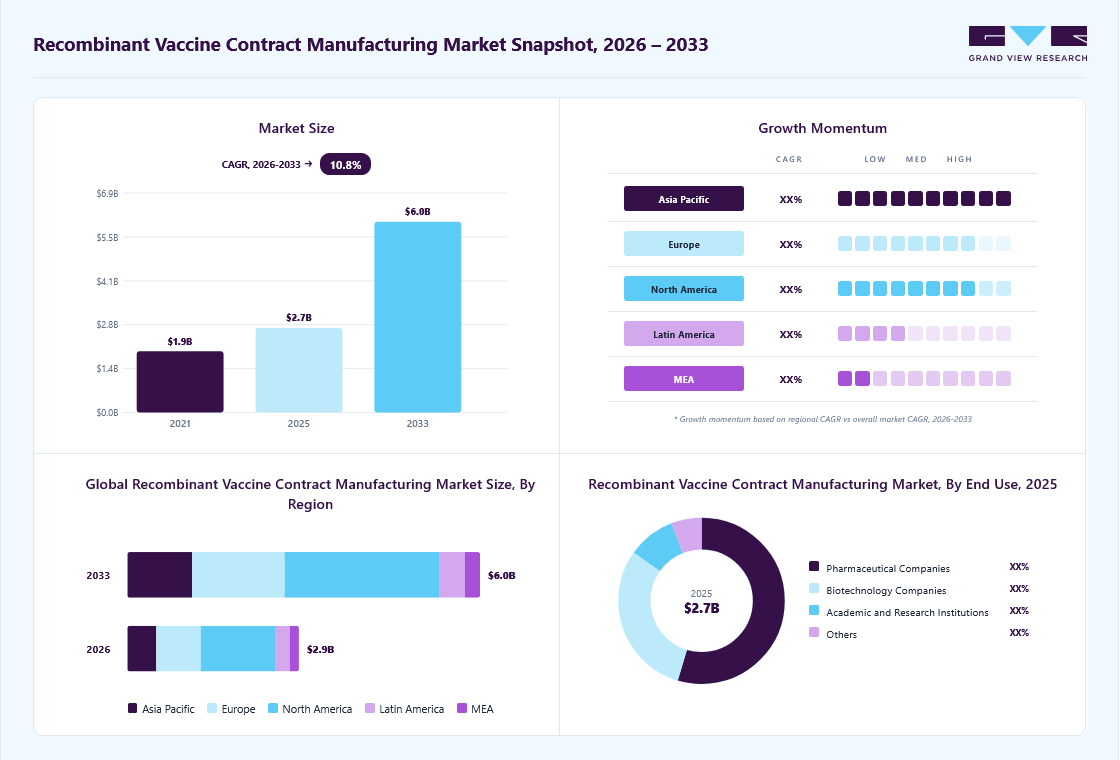 Source: Grand View Research, IR Documents, Primary Interviews, Paid DatabasesTo learn more about this report,
 Download Free Sample Report
 Key Market Trends & Insights
- By vaccine type: The recombinant protein/subunit vaccines segment held the largest market share of 47.3% in 2025.
- By service: The API manufacturing segment held the largest market share of 62.1% in 2025.
- By expression platform: The mammalian cell expression segment held the highest market share in 2025.
- By workflow: The commercial segment held the highest market share in 2025 and is expected to grow at the fastest CAGR over the forecast period.
- By therapeutic area: The infectious diseases segment held the highest market share in 2025.
- By end use: The pharmaceutical companies held the highest market share in 2025.
Regional Highlights
- Largest regional market: North America (43.7% revenue share, 2025)
- Fastest-growing regional market: Asia Pacific (highest CAGR, 2026-2033)
- By country: The U.S. held the largest market share in 2025
Market Size & Forecast
- Market size in 2025: USD 2.7 Billion
- Estimated market size in 2026: USD 2.9 Billion
- Projected market size by 2033: USD 6.0 Billion
- CAGR (2026-2033): 10.8%
Three ways to get this report
Buy it, customize it, or ask a question.Ask an Analyst
A direct answer, usually in 1 working day
- AccessReport author, directly
- Reply timeWithin 1 working day
- No sales callDirect answer only
- FormatEmail reply
- CostFree, no cost
Get the Full Report
What the study covers
- FormatsPDF · Excel · Dashboard
- Timeline2026–2033 annual, 2025 base
- Coverage20+ countries, 5 regions
- Companies10+ key players profiled
Customize the Report
20% free customization
- IncludeCountries, segments, points
- TailorTo your product definition
- ExtendDeeper competitor detail
- OrA fully bespoke study
- Turnaround5–10 working days
Pharmaceutical and biotechnology companies are developing recombinant proteins, virus-like particles, viral vectors, DNA, and mRNA-enabled vaccines across infectious diseases and oncology. These platforms require specialized expression systems, cell-line development, upstream processing, purification, formulation, analytical testing, and GMP-compliant production. Thus, contract manufacturers provide these capabilities without requiring developers to invest in dedicated facilities, equipment, and technical personnel, a trend expected to drive market growth.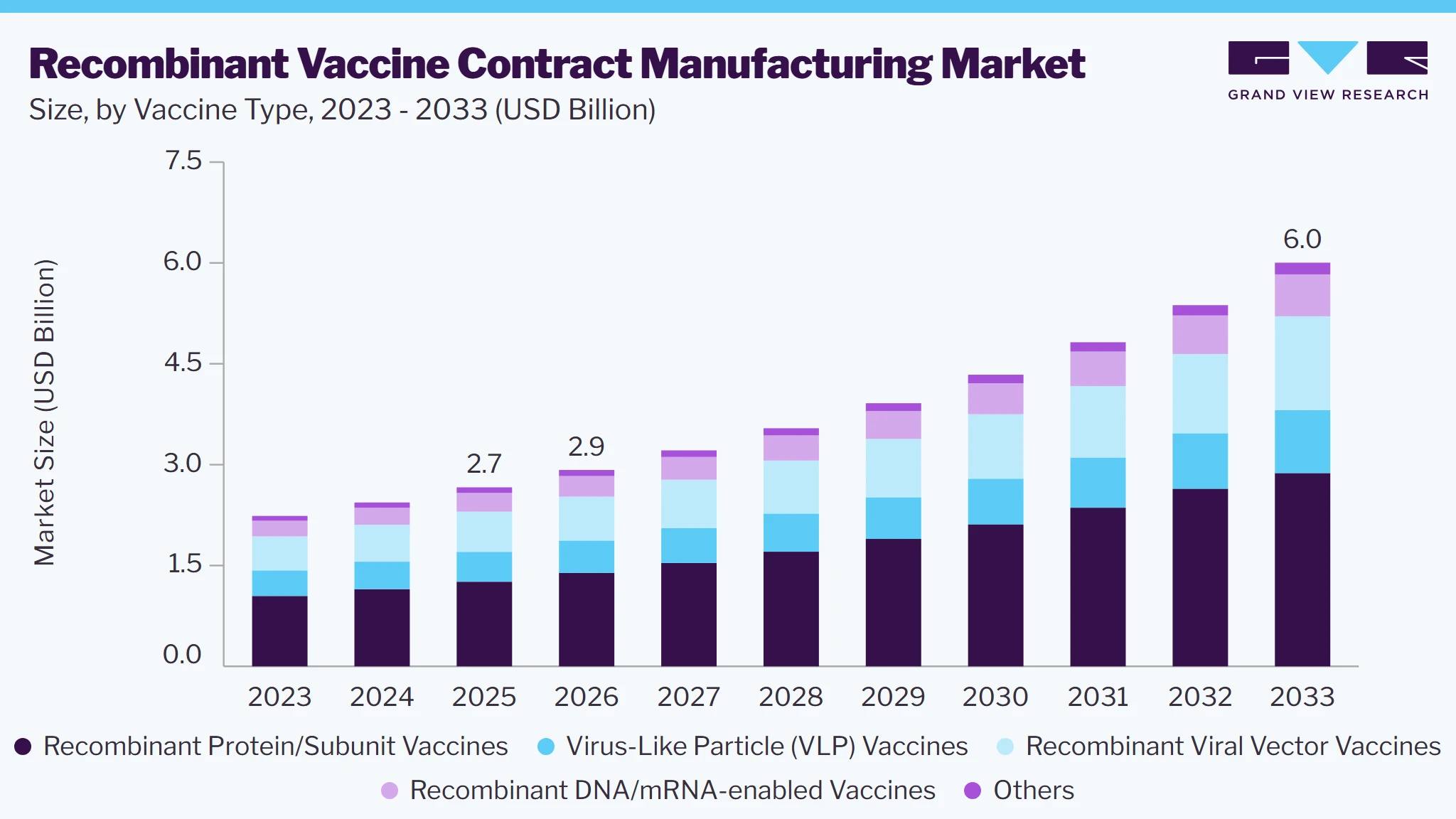 To learn more about this report, Download Free Sample Report
 CDMOs are fueling vaccine production by providing scalable infrastructure across clinical and commercial stages. Flexible bioreactors, single-use systems, modular manufacturing suites, and multiproduct facilities enable sponsors to begin with small clinical batches and increase production as candidates progress toward commercialization. Integrated providers also connect process development, drug-substance manufacturing, fill-finish, stability testing, packaging, and regulatory support. This reduces technology-transfer requirements, shortens development timelines, improves quality oversight, and lowers execution risks. Contract manufacturers also support technology transfer from laboratories to production facilities, helping developers convert experimental processes into validated, reproducible commercial operations.
Growing participation by emerging biotechnology companies further strengthens outsourcing demand, as these developers often lack internal manufacturing capacity and regulatory experience. Government investments in pandemic preparedness, vaccine localization, and supply-chain resilience are also generating opportunities for domestic and regional CDMOs. Pharmaceutical companies are increasingly diversifying their manufacturing networks to reduce dependence on individual sites and secure capacity during demand surges, further contributing to market growth.
Technological advances in engineered cell lines, high-density culture, continuous processing, automation, advanced chromatography, and real-time process monitoring are improving antigen yields and batch consistency. CDMOs spread the cost of these technologies across multiple clients, making advanced manufacturing more accessible. Consequently, contract manufacturing is expanding vaccine production by reducing capital barriers, providing specialized expertise, accelerating scale-up, improving supply flexibility, and enabling developers to advance more candidates from research through commercial supply.
Market Dynamics
The growing demand for flexible and scalable manufacturing capacity is a key market driver. Vaccine demand can change substantially according to clinical outcomes, regulatory approvals, infectious disease outbreaks, government procurement programs, and geographic expansion. Consequently, vaccine developers require manufacturing partners capable of adjusting production volumes without creating underutilized internal infrastructure or delaying product supply.
CDMOs address this requirement through modular facilities, single-use bioreactors, multiproduct production suites, and adaptable microbial, mammalian, insect cell, and viral vector platforms. These capabilities allow manufacturers to support small clinical batches, scale production following successful trials, and transition programs into commercial manufacturing. Flexible facilities also reduce cleaning requirements, shorten changeover periods, and enable CDMOs to manage multiple client programs efficiently.
The demand is strengthened by government initiatives promoting pandemic preparedness, vaccine localization, and regional supply security. Pharmaceutical and biotechnology companies are diversifying manufacturing networks to reduce dependence on individual facilities and strengthen business continuity. This trend encourages partnerships with CDMOs operating across multiple geographic locations. Providers offering rapid technology transfer, reserved capacity, integrated drug-substance and fill-finish services, and reliable scale-up capabilities are therefore gaining preference. The need to respond quickly to changing vaccine requirements is expected to sustain demand for flexible contract manufacturing services.
Limited availability of specialized manufacturing capacity and persistent supply chain constraints represent major market restraints. Recombinant vaccines require platform-specific infrastructure, trained personnel, validated production suites, advanced purification systems, and specialized analytical capabilities. Only a limited number of CDMOs can support complex vaccine programs from process development through commercial manufacturing while meeting stringent regulatory requirements.
High demand for qualified facilities can create scheduling constraints, extended project-start timelines, and competition for manufacturing slots. Smaller biotechnology companies may face difficulty securing capacity because established CDMOs often prioritize late-stage programs, larger contracts, or clients with predictable commercial volumes. Capacity shortages can delay technology transfer, clinical-batch production, process validation, and product launches.
The market also depends on globally sourced single-use assemblies, chromatography resins, cell-culture media, filters, specialized enzymes, plasmids, packaging components, and analytical reagents. Supplier concentration, transportation disruptions, trade restrictions, and long qualification timelines can interrupt manufacturing schedules and increase input costs. Alternative materials cannot be introduced quickly because they may require comparability testing, validation, and regulatory approval. Consequently, CDMOs must maintain strategic inventories and maintain relationships with multiple qualified suppliers, thereby increasing working capital requirements. These capacity and supply-chain limitations can raise project costs, extend development timelines, and restrict access to contract manufacturing services.
Market Concentration & Characteristics
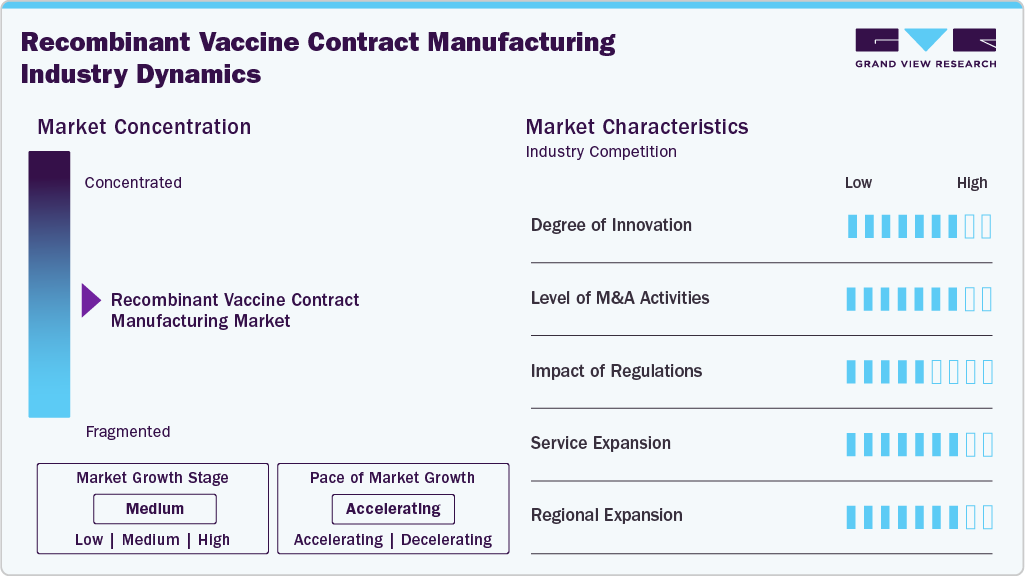
The recombinant vaccine contract manufacturing industry is in a medium-growth stage, with growth accelerating. The market is characterized by increasing outsourcing of vaccine development and manufacturing, service expansion, technological advancements, regulatory requirements, strategic collaborations, and regional capacity expansion.
The market demonstrates a high degree of innovation, supported by advances in recombinant expression systems, cell-line engineering, process intensification, purification, and analytical characterization. High-throughput process development, single-use bioreactors, automated bioprocessing, process analytical technology, and advanced chromatography are improving yield, consistency, and scalability. Innovation is also occurring across microbial, mammalian, insect-cell, plant-based, VLP, and viral-vector platforms. CDMOs investing in modular facilities, continuous processing, digital monitoring, and platform-based manufacturing are positioned to reduce development timelines and address increasingly complex vaccine candidates.
 To learn more about this report, Download Free Sample Report
 Regulatory requirements have a significant impact on market structure, operating costs, and CDMO selection. Agencies such as the FDA, EMA, and other national authorities require compliance with GMP standards covering process validation, sterility, purity, potency, identity, batch consistency, and product characterization. Recombinant vaccines also require control of host-cell impurities, residual DNA, adventitious agents, and platform-specific safety risks. These requirements increase demand for CDMOs with validated facilities, robust quality systems, regulatory inspection experience, comprehensive analytical capabilities, and expertise in supporting clinical submissions, technology transfers, and commercial manufacturing approvals.
M&A activity in the market remains moderate but strategically important, particularly within the broader biologics and vaccine CDMO industry. Acquisitions enable manufacturers to gain specialized expression platforms, aseptic fill-finish capacity, analytical capabilities, commercial-scale infrastructure, and access to new geographic markets. Consolidation also supports the creation of integrated service models linking process development, drug-substance manufacturing, and finished-product production. M&A activity is expected to continue as established CDMOs seek to address platform gaps, expand regional capacity, secure technical expertise, and strengthen their positioning across clinical and commercial recombinant vaccine programs.
Service expansion is a major competitive strategy, as clients increasingly prefer fewer manufacturing partners throughout the vaccine-development lifecycle. CDMOs are broadening their offerings to include construct design, cell-line or strain development, cell banking, upstream and downstream process development, antigen purification, formulation, analytical testing, technology transfer, GMP manufacturing, fill-finish, stability studies, packaging, and regulatory support. Integrated services help reduce handoffs, comparability risks, and development timelines. Providers are also adding flexible clinical-scale capacity and commercial-scale production to support emerging biotechnology companies and established pharmaceutical manufacturers.
Regional expansion is increasing as governments and vaccine developers prioritize localized manufacturing, supply security, and reduced dependence on concentrated production networks. North America remains the leading market owing to its mature biotechnology sector, advanced GMP infrastructure, and high outsourcing penetration. Europe benefits from established vaccine expertise, stringent quality standards, and public investment in preparedness capacity. Asia Pacific is recording the strongest expansion, driven by competitive operating costs, growing biologics capabilities, and supportive industrial policies. Emerging investments in Latin America and the Middle East are creating additional opportunities for technology transfer and fill-finish services.
Analyst Perspective
The market is transitioning from capacity-based outsourcing toward strategic, end-to-end CDMO partnerships. Market growth is supported by expanding pipelines for recombinant protein, virus-like particle, viral vector, and nucleic acid vaccines. Sponsors increasingly require integrated services that cover expression system development, process optimization, scale-up, GMP manufacturing, analytical testing, and fill-finish. Commercial manufacturing remains the principal revenue contributor owing to process validation requirements and recurring supply agreements. Mammalian expression systems lead complex antigen production, while microbial platforms offer cost and scalability advantages. Platform flexibility, regulatory compliance, batch consistency, and technology-transfer expertise are becoming critical CDMO selection criteria. However, limited specialized capacity, complex purification processes, and high development costs can affect project timelines. Asia Pacific is gaining prominence through capacity expansion, competitive production costs, and vaccine localization initiatives. CDMOs combining technical expertise, scalable infrastructure, and reliable end-to-end execution are best positioned to capture future market opportunities.
Opportunity Analysis
The market presents opportunities as pharmaceutical and biotechnology companies increasingly outsource development and production activities. Expanding pipelines for recombinant protein, virus-like particle, viral vector, DNA, and mRNA-enabled vaccines are driving demand for expression system development, process optimization, analytical characterization, GMP manufacturing, and fill-finish services. CDMOs offering integrated development-to-commercialization support can capture greater project value while reducing technology-transfer risks for sponsors.
Emerging biotechnology companies represent an opportunity because many possess innovative vaccine candidates but lack internal manufacturing infrastructure, regulatory expertise, and commercial-scale capacity. Flexible clinical-scale facilities, modular production suites, and milestone-based commercial models can help CDMOs serve these capital-constrained developers. Asia Pacific, Latin America, and the Middle East offer growth potential as governments prioritize vaccine localization, supply security, and pandemic preparedness. Technology-transfer partnerships and regional manufacturing networks can enable CDMOs to access these developing markets.
Plant-based expression, continuous bioprocessing, single-use systems, automation, and advanced purification technologies create opportunities for differentiation. CDMOs capable of supporting multiple expression platforms and rapidly switching between products can address diverse client requirements. Providers combining scalable capacity, strong regulatory compliance, advanced analytics, and reliable commercial supply are expected to secure long-term agreements and strengthen their competitive position as global recombinant vaccine outsourcing continues to expand. These factors are expected to drive the market growth.
Challenges Analysis
The market faces challenges related to high production complexity, limited specialized capacity, regulatory uncertainty, and supply-chain vulnerability. Manufacturing requires validated expression systems, advanced purification, extensive analytical characterization, and strict GMP controls, increasing development costs and timelines. Shortages of skilled personnel and qualified facilities can delay technology transfer and clinical production. Dependence on specialized raw materials, single-use components, chromatography resins, and analytical reagents creates procurement risks. Inconsistent yields, batch failures, scale-up difficulties, and changing regulatory requirements further affect project economics. Smaller biotechnology companies may also struggle to secure capacity and finance commercial-scale manufacturing commitments from CDMO providers.
Impact of U.S. Tariffs on the Recombinant Vaccine Contract Manufacturing Market
U.S. tariffs can affect the market primarily through higher costs for imported bioprocessing equipment, single-use assemblies, filtration systems, chromatography resins, analytical instruments, specialized chemicals, and packaging materials. Because recombinant vaccine production depends on globally sourced, highly qualified inputs, tariff-related cost increases may raise project quotations, compress CDMO margins, and extend procurement timelines. Smaller manufacturers and early-stage vaccine developers may face greater pressure because they have limited purchasing leverage and less flexibility to absorb additional costs.
Tariff uncertainty can also influence manufacturing-location decisions. Vaccine developers may prioritize U.S.-based CDMOs, regional suppliers, and localized inventories to reduce exposure to cross-border duties and supply interruptions. This shift could support domestic capacity expansion, technology transfer, and supplier qualification, particularly for recombinant protein, viral vector, VLP, and nucleic acid platforms. However, rapid localization may increase capital expenditure and require additional validation before alternative materials or suppliers can enter regulated processes.
Global CDMOs are therefore expected to diversify procurement, negotiate long-term supply contracts, maintain strategic inventories, and distribute production across regional networks. Overall, tariffs may strengthen U.S. manufacturing investment, but they can also increase production costs, complicate supply planning, and affect the affordability and timeliness of delivery of recombinant vaccine programs across global healthcare markets.
Technological Advancements
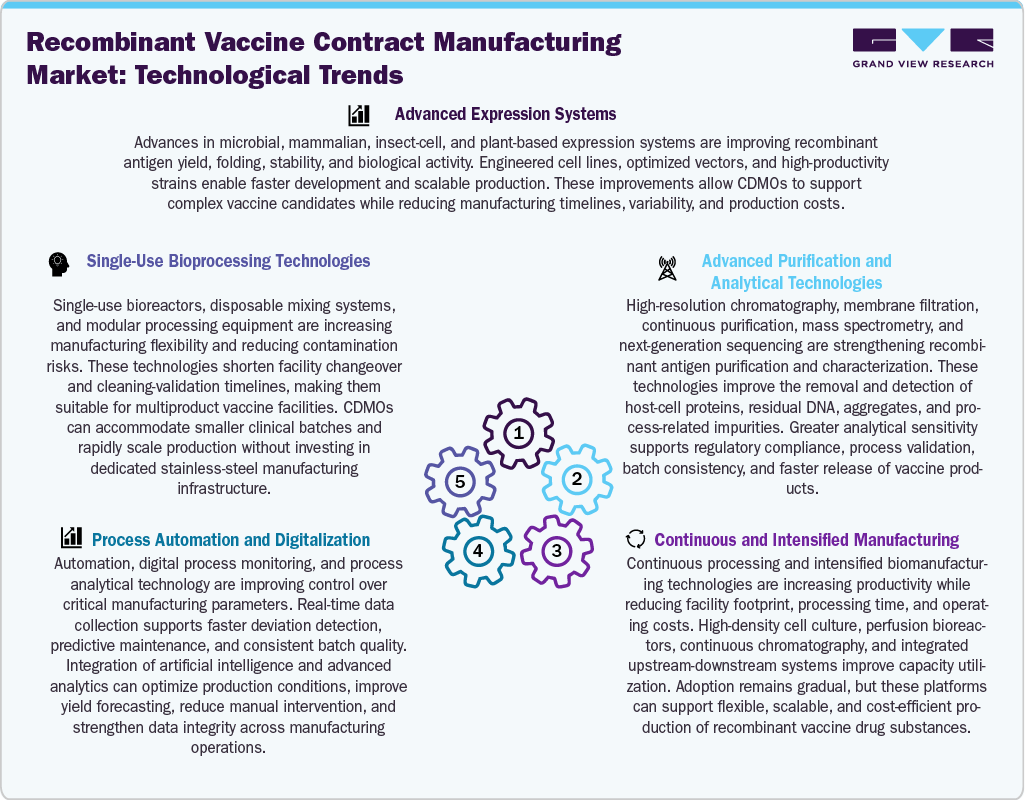
Technological advancements are transforming the market by improving development speed, process efficiency, scalability, and product consistency. Advanced microbial, mammalian, insect-cell, and plant-based expression systems are increasing antigen yields and enabling the production of complex vaccine constructs. Engineered cell lines and optimized vectors are further improving batch reproducibility and shortening development timelines. Single-use bioreactors and modular manufacturing systems enable CDMOs to manage multiple vaccine programs while reducing cleaning requirements, cross-contamination risks, and facility changeover time. Process automation, artificial intelligence, digital monitoring, and process analytical technology provide real-time control over critical manufacturing parameters and support faster deviation management.
 To learn more about this report, Download Free Sample Report
 Advanced chromatography, membrane filtration, mass spectrometry, and next-generation sequencing enable efficient purification and detailed antigen characterization. Continuous processing, perfusion culture, and integrated upstream and downstream operations can further increase productivity while reducing manufacturing footprints and operating costs. Collectively, these technologies enable CDMOs to deliver flexible, scalable, and integrated manufacturing services. Companies that combine advanced expression platforms, automated process control, sensitive analytical technologies, and adaptable production infrastructure are expected to gain a competitive advantage in supporting clinical and commercial recombinant vaccine programs.
Pricing Model Analysis
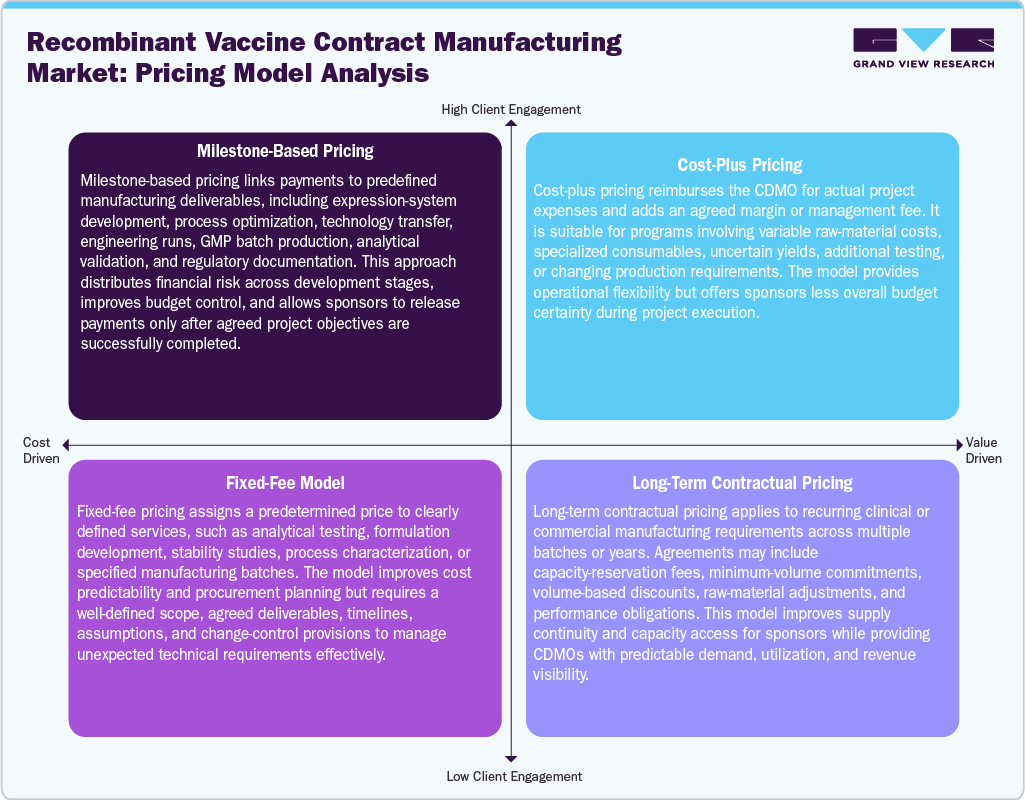
Pricing in the market varies according to vaccine platform, development stage, process complexity, batch size, manufacturing scale, containment requirements, and analytical scope. Milestone-based pricing is commonly used for programs progressing through sequential stages, including expression system development, process optimization, technology transfer, engineering runs, GMP batch production, validation, and analytical testing. Payments are linked to predefined technical deliverables, enabling sponsors to manage development risk while allowing CDMOs to recover costs as programs advance from early development to clinical and commercial manufacturing.
 To learn more about this report, Download Free Sample Report
 Fixed-fee pricing is generally used for clearly defined services such as analytical testing, formulation studies, stability testing, process characterization, and specified manufacturing batches. Time-and-materials pricing is more suitable for early-stage programs where development requirements may evolve during process optimization. Cost-plus models are used when projects involve variable raw material requirements, specialized consumables, additional testing, or uncertain production yields. Long-term manufacturing and supply agreements are used for recurring clinical or commercial batches and may include capacity reservation fees, minimum volume commitments, and volume-based discounts. These models provide commercial flexibility while allowing CDMOs to manage technical complexity, capacity utilization, and manufacturing risk.
Vaccine Type Insights
The recombinant protein/subunit vaccines segment led the market, accounting for the largest revenue share of 47.3% in 2025. Segment growth is driven by established commercial use, a favorable safety profile, and the broad applicability of recombinant antigens across infectious disease programs. Manufacturing requires specialized expression systems, high-yield fermentation or cell culture, downstream purification, protein characterization, formulation, and GMP compliance. The increasing development of multivalent and adjuvanted protein vaccines is further increasing process complexity. Thus, pharmaceutical and biotechnology companies increasingly outsource production to CDMOs offering scalable, integrated development and commercial manufacturing capabilities.
The recombinant viral vector vaccines segment is expected to grow at the fastest CAGR over the forecast period. Segment growth is driven by expanding research into engineered viral vectors for prophylactic and therapeutic vaccine delivery, supported by advances in vector design, cell line engineering, and genetic modification technologies. Manufacturing these vaccines requires specialized cell culture, viral propagation, purification, potency testing, biosafety controls, and GMP-compliant facilities. High technical complexity, stringent containment requirements, and limited internal production capabilities encourage developers to engage specialized CDMOs. Increasing applications in infectious diseases and therapeutic oncology vaccines are expected to strengthen demand for outsourcing.
Service Insights
The API manufacturing segment led the market with the largest revenue share of 62.1% in 2025 and is estimated to grow at the fastest CAGR over the forecast period. The segment growth is driven by increasing demand for scalable production of recombinant antigens, viral vectors, VLPs, plasmid DNA, and other vaccine drug substances. API manufacturing requires substantial investment in expression platforms, bioreactors, purification systems, process validation, and quality-control infrastructure. Pharmaceutical and biotechnology companies increasingly outsource these activities to access specialized capacity, reduce capital expenditure, improve production efficiency, and manage complex technology transfers from clinical development to commercial manufacturing.
The finished drug products manufacturing segment is expected to grow significantly over the forecast period. Segment growth is driven by rising demand for formulation, sterile filtration, aseptic filling, lyophilization, packaging, and batch release services. Recombinant vaccines frequently require specialized adjuvant incorporation, cold-chain conditions, and sensitive handling to preserve antigen stability and biological activity. Increasing numbers of candidates advancing into late-stage development and commercialization are generating additional fill-finish requirements. Developers increasingly prefer integrated CDMOs that connect drug-substance production with finished-product manufacturing, thereby reducing technology-transfer risks, shortening supply timelines, and improving quality oversight throughout the manufacturing lifecycle.
Expression Platform Insights
The mammalian cell expression segment held the highest market share of 41.2% in 2025. Segment growth is attributed to mammalian systems' ability to produce structurally complex antigens with appropriate folding, glycosylation, and other post-translational modifications. These characteristics are essential for maintaining antigen functionality and immunogenicity in several recombinant vaccines. Advances in cell-line engineering, serum-free media, single-use bioreactors, and high-density processing are improving productivity and scalability. Demand for specialized development, purification, analytical characterization, and GMP manufacturing capabilities continues to support outsourcing to experienced mammalian biologics CMOs.
The plant-based expression segment is expected to grow at the fastest CAGR over the forecast period, driven by increasing interest in alternative, scalable recombinant antigen production systems. Plant-based platforms can potentially offer lower infrastructure requirements, rapid production cycles, flexible scale-up, and reduced contamination risks from human pathogens. Advances in transient expression, molecular farming, vector engineering, and downstream purification are improving antigen yield and consistency. Growing research into plant-derived protein and VLP vaccines is creating new outsourcing opportunities. However, regulatory standardization and commercial validation remain important considerations influencing the broader adoption of specialized plant-based CMO services.
Workflow Insights
The commercial segment led the market with the largest revenue share of 62.3% in 2025 and is expected to grow at the fastest CAGR over the forecast period. The segment's growth is due to rising demand for validated, large-scale manufacturing and for the continuous supply of approved recombinant vaccines. Commercial production requires process validation, performance qualification, batch consistency, quality-control testing, regulatory documentation, stability monitoring, and reliable fill-finish operations. Vaccine developers increasingly secure long-term CDMO agreements to ensure capacity availability and supply continuity. Geographic market expansion and rising immunization demand are further increasing requirements for scalable manufacturing infrastructure and multi-regional regulatory compliance.
The clinical segment is expected to grow significantly over the forecast period. The segment growth is driven by the increasing number of recombinant vaccine candidates progressing through preclinical and Phase I–III development. Clinical-stage programs require expression system selection, process development, technology transfer, GMP batch production, analytical method validation, stability assessment, and clinical packaging. Manufacturing volumes and technical requirements frequently change as candidates advance, creating demand for flexible CDMO capacity. Emerging biotechnology companies with limited infrastructure represent a major customer group. Outsourcing enables these companies to accelerate development timelines, conserve capital, and obtain the manufacturing documentation required for regulatory submissions and clinical progression.
Therapeutic Area Insights
The infectious diseases segment led the market with the largest revenue share of 69.5% in 2025. The segment is driven by extensive use of recombinant technologies in vaccines targeting viral, bacterial, and parasitic pathogens. Persistent disease burdens, emerging infections, expansion of vaccination programs, and pandemic-preparedness initiatives continue to drive demand for vaccine development and manufacturing. Recombinant infectious-disease vaccines require scalable antigen expression, purification, formulation, potency testing, and GMP production. Government funding, global procurement initiatives, and pharmaceutical pipeline expansion are consequently creating sustained opportunities for CDMOs supporting both clinical development and large-volume commercial supply.
The oncology segment is expected to grow at the fastest CAGR over the forecast period, driven by increasing investment in therapeutic cancer vaccines, neoantigen platforms, and tumor-associated antigen technologies. Personalized vaccine approaches require flexible, small-batch manufacturing, rapid turnaround, advanced analytical testing, and patient-specific supply-chain coordination. Developments in recombinant protein engineering, viral vectors, DNA and mRNA platforms, and immune-response profiling are broadening oncology vaccine pipelines. Because these programs involve complex manufacturing and evolving regulatory requirements, biotechnology companies increasingly rely on specialized CDMOs for process development, clinical production, quality testing, formulation, and scale-up support.
End Use Insights
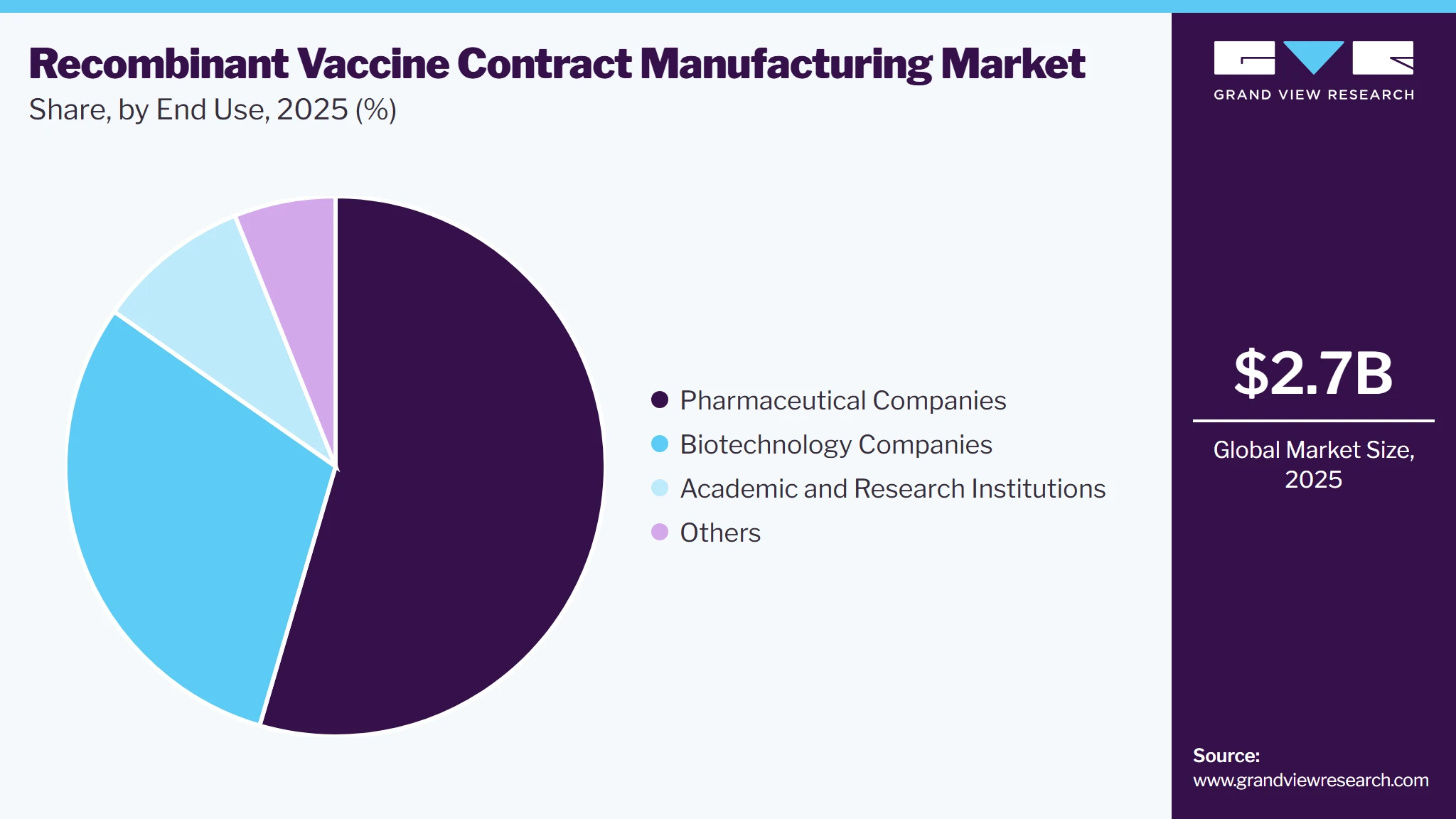
The pharmaceutical companies segment led the market with the largest revenue share of 54.5% in 2025. This segment is driven by extensive recombinant vaccine pipelines, commercial-scale production requirements, and increasing reliance on external manufacturing capacity. Pharmaceutical companies engage CDMOs for cell-line and process development, technology transfer, drug-substance production, analytical testing, formulation, and fill-finish services. Outsourcing reduces capital investment, provides access to specialized platforms, and improves capacity flexibility across multiple programs. Long-term manufacturing agreements and supply chain diversification strategies are further supporting CDMO adoption among large- and mid-sized pharmaceutical companies operating across global vaccine markets.
 To learn more about this report, Download Free Sample Report
 The biotechnology companies segment is expected to witness the fastest growth over the forecast period. The segment is driven by the growing number of emerging developers advancing recombinant protein, VLP, viral vector, and nucleic acid vaccine candidates. These companies often have strong research capabilities but limited internal GMP infrastructure, commercial-scale capacity, and regulatory manufacturing expertise. Engaging CDMOs provides access to expression system development, process optimization, clinical batch production, analytical testing, technology transfer, and regulatory documentation. Funding pressures and the need to achieve development milestones rapidly further encourage asset-light operating models, strengthening demand for flexible, specialized, and integrated contract manufacturing services.
Regional Insights
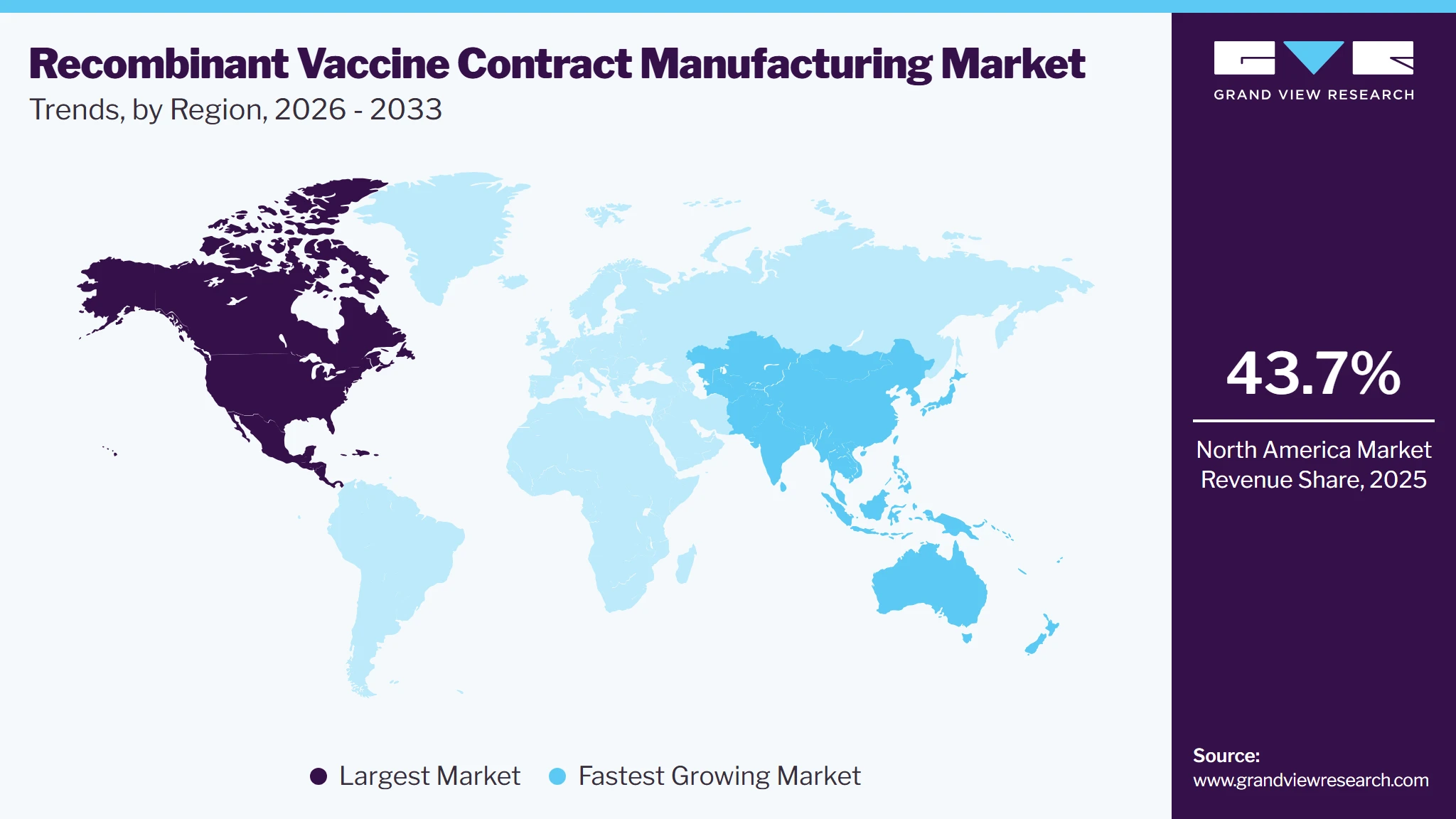
North America accounted for the largest market share of 43.7% in 2025. The regional growth is attributed to high outsourcing penetration, a mature biotechnology ecosystem, and the presence of large-scale biologics CDMOs. Growth is driven by expanding pipelines for recombinant proteins, VLPs, viral vectors, and nucleic acid vaccines. Federal funding for pandemic preparedness and supply-chain security is accelerating domestic capacity additions. Furthermore, strong regulatory expertise, advanced bioprocessing infrastructure, and rising demand for integrated drug-substance and fill-finish services support regional market expansion.
 To learn more about this report, Download Free Sample Report
 U.S. Recombinant Vaccine Contract Manufacturing Market Trends
The recombinant vaccine contract manufacturing market in the U.S. is driven by its clinical pipeline, high R&D expenditure, and strong outsourcing among emerging biotechnology companies. Developers increasingly engage CDMOs for expression-system development, process optimization, clinical-batch production, scale-up, and commercial supply. Government measures promoting domestic biomanufacturing and pandemic preparedness are stimulating investment in capacity. Moreover, established FDA-compliant infrastructure and the presence of integrated service providers strengthen the country’s position as a major recombinant vaccine manufacturing hub.
Europe Recombinant Vaccine Contract Manufacturing Market Trends
The recombinant vaccine contract manufacturing market in Europe is supported by its established biopharmaceutical industry and extensive vaccine-development capabilities. Regional demand is driven by growing outsourcing, stringent quality requirements, and policy initiatives aimed at improving vaccine self-sufficiency. CDMOs are expanding microbial, mammalian, insect cell, and viral vector manufacturing platforms to support increasingly diverse pipelines. In addition, EU-backed pandemic preparedness programs, advanced regulatory expertise, and rising demand for integrated development, analytical testing, drug-substance production, and fill-finish services are expected to support sustained market growth.
The UK recombinant vaccine contract manufacturing marketheld a significant share in 2025. The country’s market growth is driven by a well-developed biotechnology ecosystem and a strong academic research base. Market expansion is driven by an increasing number of early-stage vaccine programs requiring external process development, analytical characterization, and GMP clinical manufacturing. Government investment in pandemic preparedness and domestic production capacity is strengthening the supply environment. In addition, collaboration among universities, biotechnology companies, public health agencies, and CDMOs facilitates technology transfer and commercialization, supporting demand for recombinant protein, viral vector, VLP, and nucleic acid vaccine platforms.
The recombinant vaccine contract manufacturing market in Germany is supported by the country’s advanced biopharmaceutical infrastructure, experienced technical workforce, and concentration of specialized biologics manufacturers. Increasing demand for EMA-compliant clinical and commercial production is encouraging investments in flexible manufacturing capacity. Germany’s expertise in microbial fermentation, mammalian cell processing, viral vector production, and aseptic filling strengthens its competitive position. Furthermore, collaboration among pharmaceutical companies, research institutions, technology providers, and CDMOs supports process innovation, technology transfer, and the commercialization of recombinant vaccines.
Asia Pacific Recombinant Vaccine Contract Manufacturing Market Trends
The recombinant vaccine contract manufacturing market in the Asia Pacific is projected to grow at the highest CAGR over the forecast period. The market growth is attributed to competitive manufacturing costs, expanding biologics infrastructure, increasing vaccine demand, and supportive localization policies. China, India, South Korea, Japan, and Australia are strengthening clinical and commercial manufacturing capacity across multiple expression platforms. Global developers are also diversifying supply chains by engaging regional CDMOs. Improving GMP compliance, increasing technical expertise, and expanding domestic vaccine pipelines are expected to accelerate outsourcing and the adoption of integrated services across the region.
Japan recombinant vaccine contract manufacturing market is witnessing significant growth over the forecast period. The growth is supported by government efforts to strengthen domestic vaccine security, following a history of dependence on overseas supply. Pharmaceutical companies are increasingly outsourcing specialized process development, scale-up, analytical testing, and aseptic manufacturing activities to improve development efficiency. The country’s advanced biotechnology capabilities, rigorous quality standards, and established pharmaceutical sector support high-value manufacturing services. Furthermore, public-private collaboration and investments in flexible vaccine platforms are expected to expand opportunities for clinical and commercial manufacturing.
The recombinant vaccine contract manufacturing market in China is expected to grow over the forecast period. The growth is driven by rising biotechnology investment, an expanding domestic vaccine pipeline, and increasing demand for commercial-scale biologics production. Chinese CDMOs are expanding their mammalian, microbial, viral vector, and nucleic acid manufacturing capabilities to serve domestic and international developers. Government support for pharmaceutical innovation and supply security is further accelerating capacity expansion. Competitive production economics, improving quality standards, and greater availability of integrated development-to-commercialization services are strengthening China’s position in the global outsourcing landscape.
India recombinant vaccine contract manufacturing market is experiencing considerable growth due to the country’s established vaccine production base, cost-efficient operations, and expanding biotechnology capabilities. The country’s experience in supplying vaccines to global procurement programs provides a strong foundation for commercial manufacturing. Increasing investment in recombinant protein, VLP, viral-vector, and DNA vaccine platforms is broadening the addressable market. Government manufacturing incentives, improving GMP compliance, and rising outsourcing from global developers are expected to strengthen demand for process development, drug-substance production, analytical testing, formulation, and fill-finish services.
Latin America Recombinant Vaccine Contract Manufacturing Market Trends
The recombinant vaccine contract manufacturing market in Latin America is gaining traction as governments prioritize vaccine self-sufficiency and reduced dependence on imports. Brazil, Mexico, and Argentina account for the majority of regional opportunities owing to their established pharmaceutical infrastructure and public-sector vaccine institutions. Technology-transfer agreements with international developers are strengthening local manufacturing expertise. High infectious-disease burdens and expanding immunization programs further support market demand. However, limited specialized capacity and uneven regulatory maturity create opportunities for CDMOs offering scalable GMP manufacturing, analytical development, fill-finish, and regional commercialization support.
Brazil recombinant vaccine contract manufacturing market represents a leading opportunity within Latin America, supported by a sizeable pharmaceutical market, established public vaccine institutions, and continued government emphasis on localized production. Technology-transfer programs and partnerships with multinational developers are expanding domestic expertise in recombinant antigen production, formulation, and fill-finish. Large immunization requirements and persistent infectious disease risks provide sustained visibility into demand. Moreover, investments in biologics infrastructure and manufacturing modernization are creating opportunities for CDMOs to support clinical development and commercial-scale supply.
Middle East & Africa Recombinant Vaccine Contract Manufacturing Market Trends
The recombinant vaccine contract manufacturing market in MEA is gradually expanding, driven by pharmaceutical localization programs, vaccine-security priorities, population expansion, and persistent infectious disease burdens. Saudi Arabia, the UAE, and South Africa are emerging as principal investment destinations owing to government-backed biotechnology strategies and improving manufacturing infrastructure. Partnerships with global vaccine companies are facilitating technology transfer and workforce development. Nevertheless, limited specialized capacity and fragmented regulatory systems may constrain growth while creating opportunities for integrated international CDMOs.
The UAE recombinant vaccine contract manufacturing market is emerging due to strategic growth opportunities within the Middle East. Expansion is supported by government-led pharmaceutical localization, healthcare diversification, and investment in advanced life-science infrastructure. The country’s logistics capabilities and access to regional markets strengthen its potential as a vaccine manufacturing and distribution hub. Partnerships with international developers are expected to facilitate technology transfer and capability development. In addition, pandemic preparedness initiatives and evolving regulatory frameworks are likely to support demand for clinical manufacturing, fill-finish, cold-chain management, and commercial supply services.
Key Recombinant Vaccine Contract Manufacturing Company Insights
Market players are undertaking various strategic initiatives, such as new product launches, collaborations, partnerships, and mergers & acquisitions, to strengthen their service offerings and gain a competitive advantage. For instance, in April 2025, FUJIFILM Diosynth Biotechnologies announced a 10-year manufacturing supply agreement valued at more than USD 3 billion with Regeneron Pharmaceuticals for U.S.-based biologics production at its Holly Springs, North Carolina facility. The agreement expands large-scale manufacturing capacity and strengthens the company’s broader biologics and vaccine CDMO infrastructure.
Key Recombinant Vaccine Contract Manufacturing Companies
The following key companies have been profiled for this study on the recombinant vaccine contract manufacturing market:
-
FUJIFILM Diosynth Biotechnologies
-
WuXi Biologics
-
IDT Biologika
-
Lonza
-
Thermo Fisher Scientific (Patheon)
-
AGC Biologics
-
KBI Biopharma
-
Ajinomoto Bio-Pharma Services
-
Northway Biotech
-
Batavia Biosciences
-
Recipharm
-
3P Biopharmaceuticals
-
Biofabri
-
Biological E. Limited
-
SK bioscience
Competitive Benchmarking
Category
Operating Strategies
Competitive Edge
Weakness
Established Players (FUJIFILM Diosynth Biotechnologies; WuXi Biologics; IDT Biologika; Lonza; Thermo Fisher Scientific (Patheon); AGC Biologics; KBI Biopharma; Ajinomoto Bio-Pharma Services; Recipharm; SK bioscience)
Established players offer integrated services spanning expression-system development, process optimization, technology transfer, GMP manufacturing, analytical testing, formulation, and fill-finish. Their strategies emphasize capacity expansion, flexible biomanufacturing technologies, geographic diversification, strategic partnerships, and long-term supply agreements supporting recombinant vaccine programs from early development through validation, commercialization, and global market supply.
These companies possess extensive GMP infrastructure, global manufacturing networks, established regulatory records, and multidisciplinary technical expertise. Their experience across microbial, mammalian, insect-cell, recombinant protein, VLP, and viral-vector platforms enables scalable production, reliable technology transfer, consistent quality, regulatory compliance, and integrated development-to-commercialization support for complex recombinant vaccine programs worldwide.
Large facility networks and broad service portfolios create high fixed costs, operational complexity, and capacity-allocation challenges. Established CDMOs may have higher pricing, longer onboarding periods, and less flexibility for small or customized projects. Their preference for larger contracts can also reduce accessibility for early-stage biotechnology companies with limited funding or production requirements.
Emerging Players (Northway Biotech; Batavia Biosciences; 3P Biopharmaceuticals; Biofabri; Biological E. Limited)
Emerging players emphasize specialized recombinant vaccine capabilities, flexible execution, and targeted manufacturing services. Their strategies include expanding GMP capacity, improving microbial and mammalian expression platforms, strengthening process-development expertise, and forming partnerships with biotechnology companies, research institutions, and public-health organizations to advance vaccine candidates through preclinical, clinical, and early commercial development.
Emerging companies benefit from flexible operating models, focused technical expertise, faster decision-making, and greater service customization. Their specialized platforms support recombinant antigen production, purification, analytical development, technology transfer, and clinical manufacturing. Closer client engagement and competitive pricing make them attractive partners for early-stage biotechnology companies and technically specialized vaccine programs.
Emerging players generally have limited manufacturing scale, geographic presence, financial resources, and commercial production capacity compared with established CDMOs. Smaller networks may restrict high-volume supply, while shorter regulatory histories can affect client confidence. These limitations create challenges when pursuing multinational contracts, late-stage programs, and complex vaccine commercialization across multiple regulatory jurisdictions.
Recent Developments:
-
In March 2026, IDT Biologika and SK Bioscience signed a contract to develop and manufacture an updated Zaire Ebola vaccine. SK Bioscience will manufacture the drug substance, while IDT Biologika will provide drug-product development and manufacturing services. The program is supported by approximately USD 30 million from CEPI and aims to improve manufacturing yield, thermostability, accessibility, and supply reliability.
-
In September 2025, Thermo Fisher Scientific (Patheon) entered into a 15-year commercial manufacturing and supply agreement with Vaxcyte. Patheon will formulate, fill, inspect, package, label, test, manufacture, and supply Vaxcyte’s drug product at its Greenville, North Carolina, facility, strengthening its long-term vaccine manufacturing capacity.
-
In June 2025, WuXi Biologics announced a strategic collaboration with Virogen Biotechnology to provide technology transfer, process validation, and commercial manufacturing of drug substance and drug product for Virogen’s VG712 program. The agreement expands WuXi Biologics’ integrated development and manufacturing services for complex biologics.
Recombinant Vaccine Contract Manufacturing Market Report Scope
Report Attribute
Details
Market size in 2025
USD 2.7 billion
Estimated market size in 2026
USD 2.9 billion
Projected market size by 2033
USD 6.0 billion
Growth rate
CAGR of 10.8% from 2026 to 2033
Historical data
2021 - 2025
Forecast period
2026 - 2033
Quantitative units
Revenue in USD billion and CAGR from 2026 to 2033
Report coverage
Revenue forecast, company ranking, competitive landscape, growth factors, and trends
Segments covered
Vaccine type, service, expression platform, workflow, therapeutic area, end use, region
Regional scope
North America; Europe; Asia Pacific; Latin America; MEA
Country scope
U.S.; Canada; Mexico; UK; Germany; France; Italy; Spain; Denmark; Sweden; Norway; China; India; Japan; Australia; Thailand; South Korea; Brazil; Argentina; Saudi Arabia; UAE; South Africa; Kuwait; Oman; Qatar
Key companies profiled
FUJIFILM Diosynth Biotechnologies; WuXi Biologics; IDT Biologika; Lonza
Thermo Fisher Scientific (Patheon); AGC Biologics; KBI Biopharma; Ajinomoto Bio-Pharma Services; Northway Biotech; Batavia Biosciences; Recipharm; 3P Biopharmaceuticals; Biofabri; Biological E. Limited; SK bioscience
Customization scope
Free report customization (equivalent up to 8 analysts' working days) with purchase. Addition or alteration to country, regional & segment scope.
Pricing and purchase options
Avail customized purchase options to meet your exact research needs. Explore purchase options
Global Recombinant Vaccine Contract Manufacturing Market Report Segmentation
This report forecasts revenue growth at a country level and provides an analysis of the latest industry trends in each of the sub-segments from 2021 to 2033. For this study, Grand View Research has segmented the global recombinant vaccine contract manufacturing market report based on vaccine type, service, expression platform, workflow, therapeutic area, end use, and region:
-
Vaccine Type Outlook (Revenue, USD Million, 2021 – 2033)
-
Recombinant Protein/Subunit Vaccines
-
Virus-Like Particle (VLP) Vaccines
-
Recombinant Viral Vector Vaccines
-
Recombinant DNA/mRNA-Enabled Vaccines
-
Others
-
-
Service Outlook (Revenue, USD Million, 2021 – 2033)
-
API Manufacturing
-
Finished Drug Products Manufacturing
-
-
Expression Platform Outlook (Revenue, USD Million, 2021 - 2033)
-
Mammalian Cell Expression
-
Microbial Expression
-
Cell-Based Expression
-
Plant-Based Expression
-
Others
-
-
Workflow (Revenue, USD Million, 2021 - 2033)
-
Clinical
-
Commercial
-
-
Therapeutic Area (Revenue, USD Million, 2021 - 2033)
-
Infectious Diseases
-
Oncology
-
Neurological Disorders
-
Other Applications
-
-
End Use Outlook (Revenue, USD Million, 2021 - 2033)
-
Pharmaceutical Companies
-
Biotechnology Companies
-
Academic and Research Institutions
-
Others
-
-
Regional Outlook (Revenue, USD Million, 2021 - 2033)
-
North America
-
U.S.
-
Canada
-
Mexico
-
-
Europe
-
UK
-
Germany
-
France
-
Italy
-
Spain
-
Sweden
-
Norway
-
Denmark
-
-
Asia Pacific
-
Japan
-
China
-
India
-
South Korea
-
Australia
-
Thailand
-
-
Latin America
-
Brazil
-
Argentina
-
-
Middle East & Africa
-
South Africa
-
Saudi Arabia
-
UAE
-
Kuwait
-
Oman
-
Qatar
-
-
Research Methodology
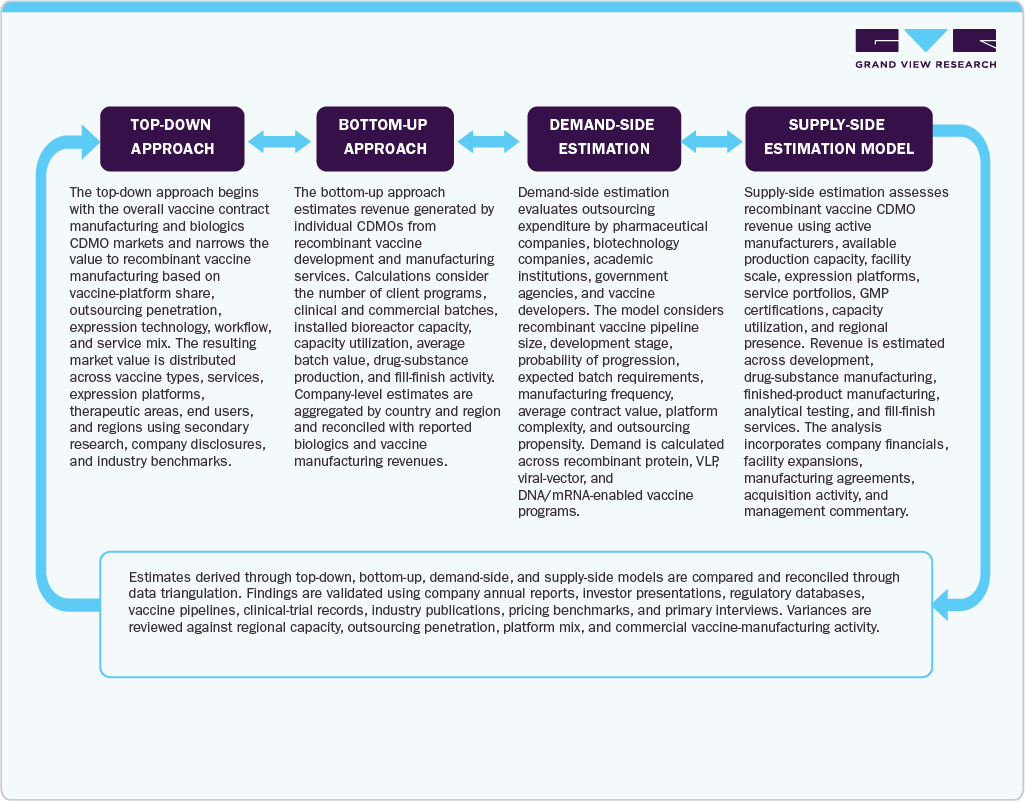
The recombinant vaccine contract manufacturing market figures in this report are based on a proven research process that combines executive interviews with secondary research from proprietary databases, company filings, and recognized regulatory and institutional sources. Market size is built through value-chain sizing—reconciling supply-side and demand-side estimates—and triangulated with bottom-up and top-down approaches. Every estimate passes multiple levels of expert validation before publication, with each recombinant vaccine contract manufacturing segment quantified using the revenue-capture definitions in the table below.
Segment Definition
Vaccine Type Segment
Definition
Recombinant Protein/Subunit Vaccines
The segment captures revenue generated by providing contract manufacturing services for recombinant protein/subunit vaccines to end users. It includes cell-line and expression-system development, recombinant antigen production using bacterial, yeast, insect, or mammalian cells, upstream and downstream processing, protein purification, formulation development, adjuvant incorporation, analytical testing, process validation, scale-up, and commercial manufacturing.
Virus-Like Particle (VLP) Vaccines
The segment captures revenue generated by providing contract manufacturing services for virus-like particle vaccines to end users. It includes expression-vector and host-system development, production and assembly of viral structural proteins into non-infectious particles, cell culture or fermentation, harvesting, purification, particle characterization, formulation, adjuvant incorporation, analytical testing, process validation, scale-up, and commercial manufacturing.
Recombinant Viral Vector Vaccines
The segment captures revenue generated by providing contract manufacturing services for vaccines that use genetically engineered viral vectors to deliver target antigens. It includes vector design, cell-bank development, viral seed preparation, cell culture, vector propagation, harvesting, purification, concentration, formulation, potency and infectivity testing, biosafety testing, process validation, scale-up, fill-finish, and commercial manufacturing.
Recombinant DNA/mRNA-Enabled Vaccines
The segment captures revenue generated by providing contract manufacturing services for recombinant DNA and mRNA-enabled vaccines to end users. It includes plasmid design and production, microbial fermentation, DNA purification, template preparation, in-vitro transcription, mRNA purification, lipid nanoparticle formulation, encapsulation, analytical testing, sterile processing, process validation, scale-up, fill-finish, and commercial manufacturing.
Others
The segment captures revenue generated by providing contract manufacturing services for other recombinant vaccine types not classified under recombinant protein/subunit, VLP, viral vector, or DNA/mRNA-enabled vaccines. It includes recombinant peptide vaccines, bacterial-vector vaccines, synthetic antigen constructs, nucleic-acid–protein combinations, emerging delivery platforms, process development, analytical testing, formulation, scale-up, and GMP manufacturing.
Service Segment
Definition
API Manufacturing
The segment captures revenue generated from contract manufacturing of active vaccine ingredients or drug substances used in recombinant vaccines. It includes cell-line, vector, seed, and cell-bank development; fermentation or cell culture; recombinant antigen or vector production; harvesting; downstream purification; concentration; bulk formulation; analytical testing; process characterization; validation; scale-up; and GMP drug-substance manufacturing.
Finished Drug Products Manufacturing
The segment captures revenue generated from converting recombinant vaccine drug substances into finished, patient-ready dosage forms. It includes formulation, adjuvant blending, buffer exchange, lipid nanoparticle encapsulation, where applicable, sterile filtration, aseptic filling, lyophilization, vial or prefilled-syringe filling, labeling, packaging, visual inspection, release testing, stability studies, serialization, and commercial supply.
Expression Platform Segment
Definition
Mammalian Cell Expression
The segment captures revenue generated from recombinant vaccine contract manufacturing using mammalian cells as the antigen or vector-production platform. It includes cell-line development, master and working cell-bank preparation, media optimization, adherent or suspension cell culture, bioreactor production, harvesting, purification, viral clearance, protein characterization, process validation, scale-up, and GMP manufacturing.
Microbial Expression
The segment captures revenue generated from recombinant vaccine contract manufacturing using microbial expression systems, primarily bacteria and yeast. It includes strain and vector development, microbial cell banking, fermentation, media and induction optimization, cell harvesting, lysis where required, inclusion-body processing, protein refolding, purification, impurity removal, analytical testing, process validation, scale-up, and GMP manufacturing.
Cell-Based Expression
The segment captures revenue generated from recombinant vaccine contract manufacturing using non-mammalian eukaryotic cell-based platforms, primarily insect and avian cells. It includes host-cell and vector development, baculovirus or comparable expression systems, cell banking, cell-culture optimization, antigen or VLP production, harvesting, purification, characterization, process validation, scale-up, and clinical or commercial manufacturing.
Plant-Based Expression
The segment captures revenue generated from recombinant vaccine contract manufacturing using whole plants, plant cells, or plant-derived transient expression systems. It includes genetic construct development, plant transformation or infiltration, cultivation, biomass harvesting, antigen extraction, clarification, purification, characterization, formulation, analytical testing, process validation, scale-up, and GMP manufacturing.
Others
The segment captures revenue generated from recombinant vaccine contract manufacturing using expression platforms not covered under mammalian, microbial, cell-based, or plant-based systems. It includes cell-free protein synthesis, transgenic animal systems, algal platforms, synthetic biology-based systems, and other emerging hosts, along with process development, purification, analytical characterization, scale-up, and GMP manufacturing.
Workflow Segment
Definition
Clinical
The segment captures revenue generated from contract manufacturing services supporting recombinant vaccine candidates during preclinical and Phase I–III clinical development. It includes process development, technology transfer, non-GMP engineering batches, GMP clinical-batch manufacturing, formulation, analytical-method development, stability studies, comparability testing, clinical packaging, labeling, documentation, batch release, and regulatory submission support.
Commercial
The segment captures revenue generated from contract manufacturing services for approved recombinant vaccines intended for routine market supply. It includes process validation, performance-qualification batches, large-scale drug-substance and drug-product manufacturing, aseptic fill-finish, quality-control and release testing, packaging, serialization, stability monitoring, inventory management, lifecycle management, regulatory compliance, and continuous commercial supply.
Therapeutic Area Segment
Definition
Infectious Diseases
The segment captures revenue generated from contract manufacturing services for recombinant vaccines developed to prevent or treat infectious diseases. It includes vaccines targeting viral, bacterial, parasitic, and fungal pathogens, such as hepatitis, human papillomavirus, influenza, COVID-19, respiratory syncytial virus, malaria, shingles, and other communicable diseases, across clinical and commercial manufacturing stages.
Oncology
The segment captures revenue generated from contract manufacturing services for recombinant vaccines designed to prevent or treat cancer. It includes shared-antigen and neoantigen vaccines, recombinant protein and peptide vaccines, viral vector-based cancer vaccines, DNA and mRNA cancer vaccines, personalized vaccine production, analytical testing, formulation, clinical-batch manufacturing, and commercial-scale production.
Neurological Disorders
The segment captures revenue generated from contract manufacturing services for recombinant vaccines intended to prevent or treat neurological and neurodegenerative disorders. It includes therapeutic vaccine candidates targeting pathological proteins or disease-associated antigens in conditions such as Alzheimer’s disease, Parkinson’s disease, multiple sclerosis, and other central nervous system disorders, including development, testing, and GMP manufacturing.
Other Applications
The segment captures revenue generated from contract manufacturing services for recombinant vaccines used in therapeutic areas outside infectious diseases, oncology, and neurological disorders. It includes vaccines for autoimmune, allergic, cardiovascular, metabolic, and substance-use disorders, as well as veterinary and other emerging applications, covering process development, formulation, analytical testing, clinical manufacturing, and commercial production.
End Use Segment
Definition
Pharmaceutical Companies
The segment captures revenue generated by providing recombinant vaccine contract manufacturing services to established pharmaceutical companies. It includes development and commercial production outsourced by large and mid-sized manufacturers seeking specialized capacity, technology transfer, recombinant antigen or vector production, analytical testing, formulation, fill-finish, regulatory support, supply-chain management, and lifecycle manufacturing.
Biotechnology Companies
The segment captures revenue generated by providing recombinant vaccine contract manufacturing services to biotechnology companies. It includes early-stage, clinical-stage, and commercial biotechnology developers requiring external expertise in expression-system development, process optimization, scale-up, GMP clinical manufacturing, analytical testing, formulation, technology transfer, regulatory documentation, fill-finish, and commercial supply.
Academic and Research Institutions
The segment captures revenue generated by providing recombinant vaccine development and manufacturing services to universities, research institutes, hospitals, government laboratories, and nonprofit research organizations. It includes feasibility studies, antigen and construct development, pilot-scale production, process optimization, analytical characterization, technology transfer, preclinical material production, and GMP manufacturing for investigator-led clinical programs.
Others
The segment captures revenue generated by providing recombinant vaccine contract manufacturing services to end users not classified as pharmaceutical companies, biotechnology companies, or academic and research institutions. It includes government agencies, public-health organizations, nonprofit foundations, product-development partnerships, veterinary healthcare companies, and defense organizations procuring development, scale-up, clinical manufacturing, stockpiling, fill-finish, or commercial supply services.
Estimation Model
 To learn more about this report, Download Free Sample Report
 Delivered Customizations
This report has been delivered with the following In-depth customizations
Client Request
Customization Delivered
Value Adds
Extensive Segmentation & Cross-Segmentation Analysis
The study can be customized to provide deeper segmentation and cross-analysis by vaccine type, service, expression platform, workflow, therapeutic area, and end use. This may include recombinant protein/subunit, VLP, viral vector, and DNA/mRNA-enabled vaccines across mammalian, microbial, insect cell, plant-based, and emerging expression platforms.
Enables granular opportunity assessment, identifies high-growth vaccine–platform combinations, and supports prioritization of target manufacturing services for CDMOs, vaccine developers, pharmaceutical companies, and investors.
Regional Extension & Opportunity Mapping
The report can include country-level or subregional analysis across North America, Europe, Asia Pacific, Latin America, and the Middle East & Africa. This may cover vaccine pipelines, CDMO capacity, GMP infrastructure, outsourcing penetration, government localization initiatives, regulatory conditions, and demand for clinical and commercial manufacturing.
Supports geographic expansion planning, facility location assessment, regional demand mapping, capacity investment decisions, and the identification of underserved countries with strong potential for recombinant vaccine outsourcing.
Market Entry Strategy & Competitive Dynamics
The study can assess entry opportunities for CMOs, vaccine manufacturers, and technology providers by evaluating unmet capacity needs, pricing models, regulatory expectations, service gaps, technology requirements, and competitive intensity. Companies may be benchmarked by expression platforms, scale, development stage, geographic presence, quality systems, capacity, and strategic partnerships.
Helps assess market attractiveness, competitive positioning, partnership or acquisition opportunities, pricing feasibility, technology requirements, and go-to-market strategies for new entrants and expanding service providers.
Volume Analysis & Emerging Trend Assessment
The customization can include volume-based indicators such as clinical and commercial batches manufactured, installed bioreactor capacity, annual vaccine doses, pipeline size, technology-transfer activity, and fill-finish volumes. Emerging trends may cover single-use systems, continuous processing, modular facilities, platform manufacturing, process automation, and thermostable formulations.
Provides demand validation beyond revenue estimates, strengthens forecast reliability, identifies capacity constraints, and highlights emerging technologies and service areas expected to gain traction during the forecast period.
Frequently Asked Questions About This Report
The global recombinant vaccine contract manufacturing market is projected to reach USD 6.0 billion by 2033, growing at a CAGR of 10.8% from 2026 to 2033.
North America dominated with a 43.7% revenue share in 2025.
Key factors that are driving the recombinant vaccine contract manufacturing market growth include expanding vaccine pipelines, rising outsourcing adoption, increasing manufacturing complexity, and demand for flexible production capacity. Besides, pharmaceutical and biotechnology companies are developing recombinant protein, virus-like particle, viral-vector, DNA, and mRNA-enabled vaccines across infectious diseases and oncology. These platforms require specialized expression systems, cell-line development, upstream processing, purification, formulation, analytical testing, and GMP-compliant production.
Key players include FUJIFILM Diosynth Biotechnologies, WuXi Biologics, IDT Biologika, Lonza, Thermo Fisher Scientific (Patheon), AGC Biologics, KBI Biopharma, Ajinomoto Bio-Pharma Services, Recipharm, SK bioscience, Northway Biotech, Batavia Biosciences, 3P Biopharmaceuticals, Biofabri, and Biological E. Limited, among others.
The global recombinant vaccine contract manufacturing market size was valued at USD 2.7 billion in 2025 and is estimated at USD 2.9 billion by 2026.
The recombinant protein/subunit vaccines segment dominated the recombinant vaccine contract manufacturing market accounted for the largest revenue share of 47.3% in 2025.
The API manufacturing held the largest revenue share of 62.1% in 2025, while finished drug products manufacturing is the fastest-growing area.
The mammalian cell expression held the largest revenue share in 2025, while plant-based expression is the fastest-growing area.
The commercial segment dominated the recombinant vaccine contract manufacturing market accounted for the largest revenue share of 62.3% in 2025.
Asia Pacific is the fastest-growing region over the forecast period.
About the Author(s)
Medical Devices Research Team
Healthcare · Medical DevicesThis report was authored by the medical devices research team at Grand View Research - comprising two research analysts, one senior research analyst, and one industry expert - with specialized expertise in the medical devices segment of the healthcare industry. All findings are based on proprietary healthcare databases, executive interviews, and regulatory analysis, subject to internal peer review prior to publication.
Last Updated:
Speak to Analyst

Customize this report to your needs - add regions, segments, or data points, with 20% free customization.
Or view our licence options:


ISO 9001:2015 & 27001:2022 Certified
We are GDPR and CCPA compliant! Your transaction & personal information is safe and secure. For more details, please read our privacy policy.


