
- Home
- »
- Medical Devices
- »
-
Refurbished Medical Equipment Market Report, 2026-2033GVR Report cover

Refurbished Medical Equipment Market (2026 - 2033)
Size, Share & Trends Analysis Report By Product (Medical Imaging Equipment, Operating Room & Surgical Equipment), By Refurbishment Provider, By End Use (Hospitals, Ambulatory Surgical Centers), By Region, And Segment Forecasts
Market Size, 2025
$21.3BMarket Estimate, 2026
$23.6BMarket Forecast, 2033
$50.0BCAGR, 2026–2033
11.3%Refurbished Medical Equipment Market Summary
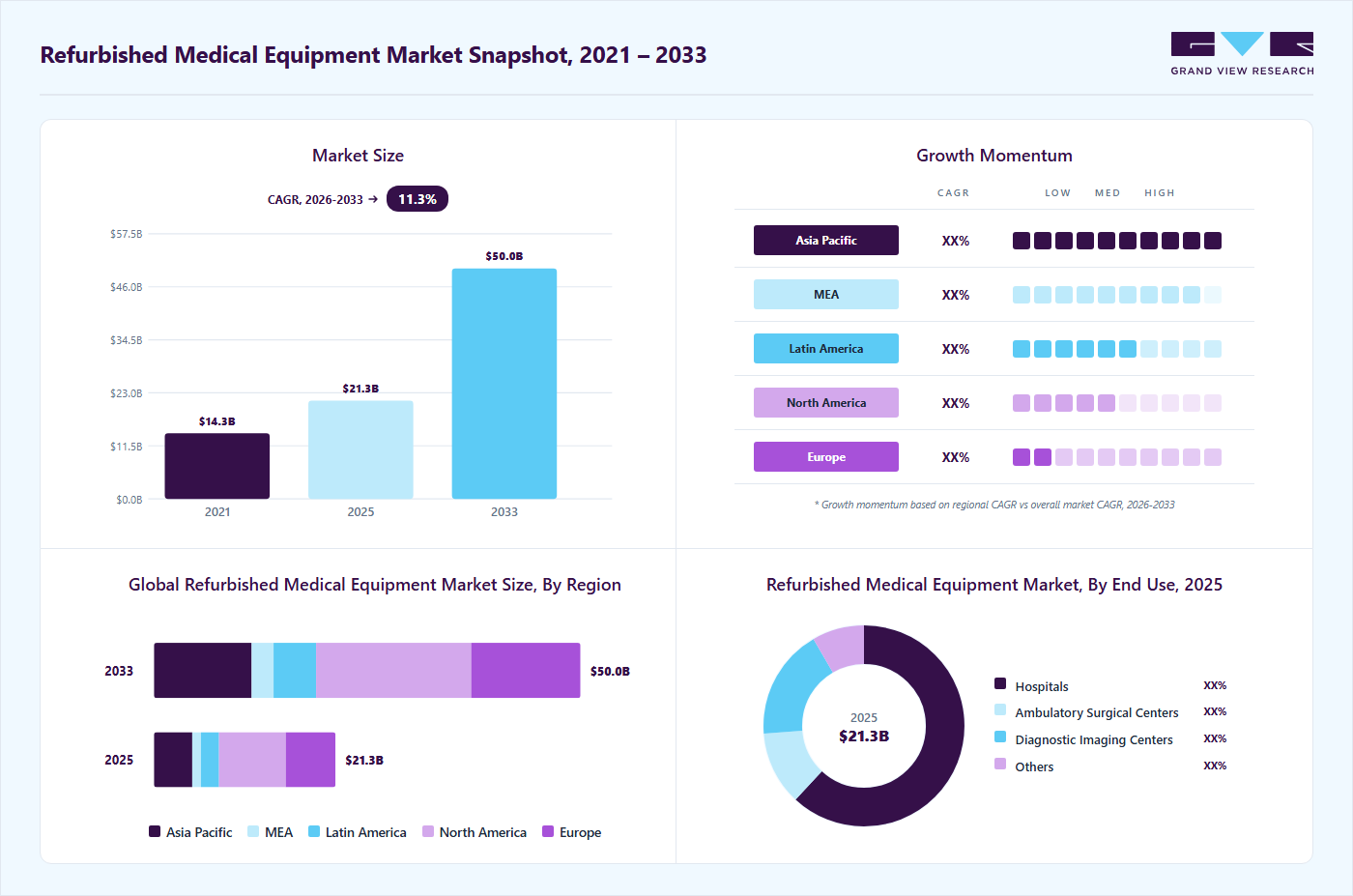
The global refurbished medical equipment market size was valued at USD 21.3 billion in 2025 and is projected to grow from USD 23.6 billion in 2026 to USD 50.0 billion by 2033, at a CAGR of 11.3% from 2026 to 2033. The market in North America dominated with a revenue share of 36.7% in 2025. This is attributed to the rising healthcare costs, which are pushing hospitals, clinics, and diagnostic centers to seek cost-effective alternatives to new devices without compromising quality or performance.
 Source: Grand View Research, IR Documents, Primary Interviews, Paid DatabasesTo learn more about this report,
 Download Free Sample Report
 Key Market Trends & Insights
- By product: Medical imaging equipment segment held the largest revenue share in 2025.
- By refurbishment provider: OEM-certified refurbishers segment held the largest revenue share in 2025
- By end use: Hospitals segment held a significant share of 61.82% in 2025
Regional Highlights
- Largest regional market: North America (36.7% revenue share, 2025)
- By country: The U.S. held the largest market share in 2025.
Market Size & Forecast
- Market size in 2025: USD 21.3 billion
- Estimated market size in 2026: USD 23.6 billion
- Projected market size by 2033: USD 50.0 billion
- CAGR (2026-2033): 11.3%
Three ways to get this report
Buy it, customize it, or ask a question.Ask an Analyst
Analyst response in 1 business day
- AccessReport author, directly
- Reply timeWithin 1 working day
- No sales callDirect answer only
- FormatEmail reply
- CostFree, no cost
Get the Full Report
What the study covers
- FormatsPDF · Excel · Dashboard
- Timeline2026–2033 annual, 2025 base
- Coverage20+ countries, 5 regions
- Companies10+ key players profiled
Customize the Report
20% free customization
- IncludeCountries, segments, points
- TailorTo your product definition
- ExtendDeeper competitor detail
- OrA fully bespoke study
- Turnaround5–10 working days
Moreover, increasing demand for advanced medical technologies in rural and underserved regions also fuels adoption, as refurbishment allows redistribution of high-quality equipment to these areas. In addition, environmental sustainability concerns and regulatory support for reuse are further encouraging refurbishment, reducing electronic waste and maximizing the lifecycle of devices.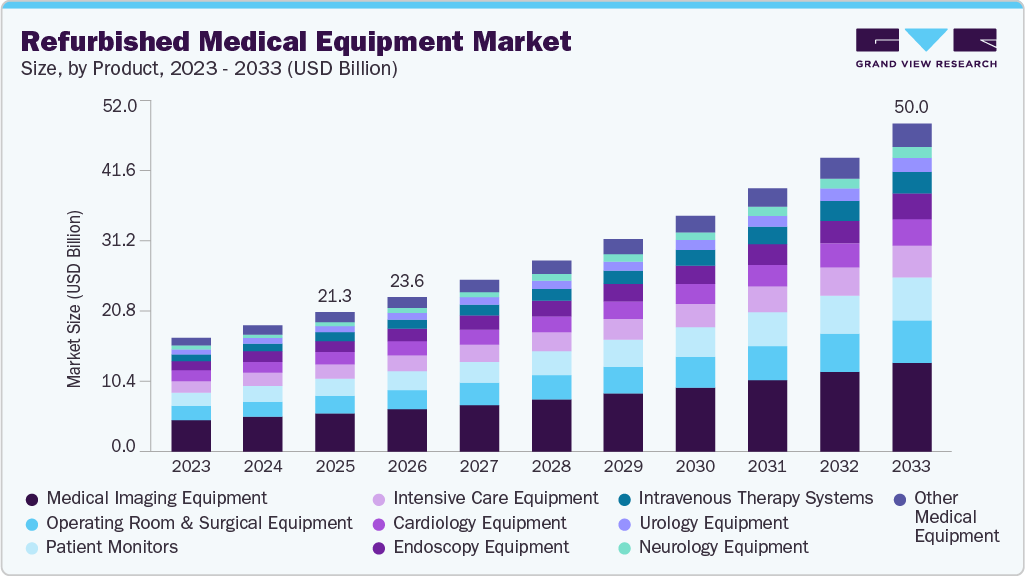 To learn more about this report, Download Free Sample Report
 Increasing need to reduce medical waste in healthcare settings
The healthcare industry produces a sizable amount of medical waste each year, with reusable medical equipment and supplies being needlessly disposed of in landfills or burned as a result of single use labeling by manufacturers. The primary objective of the healthcare sector is compromised by this practice, which has been connected to threats to the environment and public health. For instance, as per the article published by AMDR in February 2023, hospitals contributed to the loss of 388,000 disability-adjusted life years in 2018 due to pollution-related factors. In addition, as per World Health Organizatio (WHO) study, climate change is projected to cause an estimated direct damage cost of USD 4 billion per year to health by 2030. These statistics highlight the significant impact of environmental factors on public health and the associated economic costs.
Hospitals, clinics, and diagnostic centers face growing pressure to adopt sustainable practices. Medical waste disposal is costly and has significant environmental implications, with discarded devices and machinery contributing to landfill volumes and potential biohazard risks. By extending the lifecycle of medical devices through refurbishment restoring them to original manufacturer specifications, healthcare providers can minimize the volume of discarded equipment, reduce procurement costs, and align with green initiatives. Furthermore, government regulations, accreditation requirements, and corporate social responsibility (CSR) goals are prompting healthcare organizations to explore eco-friendly procurement options, making refurbished equipment an attractive solution that combines sustainability with cost efficiency.
Medical Waste Reduction through Refurbished Equipment:
Instance
Description
Impact
Hospital Reuse Program
A large urban hospital replaced single-use diagnostic devices with refurbished units, extending usage by 5-7 years.
Reduced annual equipment waste by 20%.
NGO Equipment Donation
Non-profits collected retired medical devices from U.S. hospitals, refurbished them, and shipped them to rural clinics in Africa.
Preventing hundreds of devices from entering waste streams while improving healthcare access.
OEM Trade-In Programs
Original Equipment Manufacturers (OEMs) offered trade-in and refurbishment incentives for imaging systems.
Reduced disposal volumes by recycling core components and extending machine life.
Green Healthcare Initiatives
A regional health authority launched a refurbished equipment procurement policy.
Achieved a 15% reduction in overall medical waste output in three years.
Source: National Library of Medicine
Cost Savings and Budget Optimization in Healthcare Facilities
Cost savings and budget optimization are key drivers fueling the growth of the market, as healthcare facilities face increasing financial pressure to deliver high-quality care while controlling capital expenditure. As per Ultrasound Solutions Corp. refurbished equipment offers significant cost advantages often 30-70% lower than new devices allowing hospitals, clinics, and diagnostic centers to upgrade or expand their technology base without large upfront investments. This is particularly attractive for small hospitals, ambulatory centers, and facilities in budget-constrained or price-sensitive markets, where access to advanced imaging, monitoring, and surgical equipment is essential but financially challenging. In January 2023, Apollo Hospitals, Chennai, significantly reduce costs by saving over USD 40,000 by repurposing and repairing old or retired medical devices instead of discarding them. Instead of allowing outdated equipment to be discarded, the facility restored these devices for training and internal applications, prolonging their lifespan and preventing the significant cost of purchasing new equipment.
By opting for certified refurbished devices that meet regulatory and performance standards, healthcare providers are able to optimize budgets, extend equipment life cycles, and reallocate savings toward staffing, infrastructure improvements, and patient care, thereby accelerating demand for refurbished medical equipment.
Tax Benefits Encouraging the Purchase of Pre-owned Medical Devices
Tax benefits encouraging the purchase of pre-owned medical devices serve as a significant driver for the industry. Governments and regulatory bodies in several regions offer tax incentives, deductions, or depreciation advantages to healthcare providers who invest in certified refurbished equipment.
For instance: Section 179 tax deduction
It is a powerful financial incentive launched in August 2025 that enables healthcare organizations to deduct the entire purchase price of qualifying medical equipment and software in the year it is acquired, instead of spreading the cost over several years through depreciation. This provision provides an immediate tax benefit, freeing up cash flow that can be reinvested into patient care, staffing, and operational improvements.
-
For healthcare facilities, this incentive applies to a wide range of assets, including diagnostic machines (such as ultrasounds and EKG devices), imaging equipment (X-ray, MRI, CT scanners), patient monitoring systems, surgical and examination tools, office technology, and even office furniture. Importantly, the equipment can be either new or pre-owned, as long as it is new to the healthcare facility and used primarily for healthcare purposes.
-
For the 2025 tax year, healthcare organizations can deduct up to USD 2.5 million under this Section, with the deduction phasing out once total equipment purchases exceed USD 4 million. In addition, bonus depreciation allows for 100% of the cost of qualifying equipment acquired and placed into service after January 2025 to be immediately.
-
Timing is critical, as the equipment must be purchased, delivered, installed, and operational by December 2025, to qualify for the deduction. By leveraging Section 179, healthcare organizations, especially small to mid-sized practices, strategically upgrade or expand their medical equipment while significantly lowering their tax liability, ultimately supporting improved care delivery and operational efficiency.
These financial benefits reduce the overall cost of acquisition, making pre-owned devices a more attractive option compared to brand-new equipment, especially for budget-conscious hospitals, clinics, and diagnostic centers. As a result, healthcare facilities upgrade or expand their medical infrastructure without straining capital budgets, thereby boosting demand for refurbished medical devices and supporting the growth of this market segment.
Upgrades in Imaging Systems to Support AI Integration
Upgrades in imaging systems to support AI integration are emerging as a key driver for the refurbished medical equipment industry. As healthcare providers increasingly adopt artificial intelligence for diagnostics, image analysis, and treatment planning, there is a growing demand for advanced imaging modalities, such as MRI, CT, and X-ray systems, that are compatible with AI-enabled software. Philips announced an AI‑enabled Elevate Platform upgrade for its EPIQ Elite ultrasound imaging system, unveiled at UltraFest in April 2025 in India. This new software release integrates advanced artificial intelligence and automation to help clinicians work more efficiently and make confident, timely diagnostic decisions across a wide range of patients.
However, the high cost of new, AI-ready equipment can be prohibitive, especially for smaller clinics or budget-constrained hospitals. Refurbished medical equipment offers a cost-effective alternative, allowing healthcare facilities to access upgraded imaging systems with enhanced capabilities at a fraction of the price. This trend promotes wider adoption of AI in healthcare and fuels the demand for used medical equipment market, positioning it as a strategic solution for modern, technology-driven medical care.
Growth of Digital and Online Auction Marketplaces for Medical Equipment
The growth of digital and online auction marketplaces for medical equipment is a key driver for the refurbished medical equipment industry, as these platforms significantly improve accessibility, price transparency, and transaction efficiency. Online marketplaces connect hospitals, clinics, diagnostic centers, and refurbishers directly, enabling healthcare providers especially small and mid-sized facilities to source cost-effective refurbished devices with verified quality, service histories, and warranties. Digital platforms also expand the geographic reach of refurbished equipment suppliers, facilitating cross-border trade and faster inventory turnover. REMMA, a European digital marketplace launched in October 2023, specializes in the online buying and selling of verified and partly guaranteed second-hand and refurbished medical equipment. The platform was created to offer professional and trustworthy e-commerce experience similar to buying new equipment, with clear specifications, detailed product information, professional photos, and regulatory compliance integrated into the sales process.
In addition, auction-based pricing models help optimize asset recovery from decommissioned equipment, encouraging healthcare facilities to resell used devices instead than discard them. This ecosystem supports circular healthcare practices, lowers capital expenditure, and accelerates adoption of refurbished medical equipment across emerging and cost-sensitive healthcare markets.
Market Dynamics
Tax benefits that encourage the purchase of pre-owned medical devices are a significant driver of the industry. Governments and regulatory bodies in several regions offer tax incentives, deductions, or depreciation advantages to healthcare providers who invest in certified refurbished equipment.
For Instance: Section 179 Tax Deduction:
It is a powerful financial incentive launched in August 2025 that enables healthcare organizations to deduct the full purchase price of qualifying medical equipment and software in the year of acquisition, rather than spreading the cost over several years through depreciation. This provision provides an immediate tax benefit, freeing up cash flow for reinvestment in patient care, staffing, and operational improvements.
•For healthcare facilities, this incentive applies to a wide range of assets, including diagnostic machines (such as ultrasounds and EKG devices), imaging equipment (X-ray, MRI, CT scanners), patient monitoring systems, surgical and examination tools, office technology, and even office furniture. Importantly, the equipment can be either new or pre-owned, as long as it is new to the healthcare facility and used primarily for healthcare purposes.
•For the 2025 tax year, healthcare organizations can deduct up to USD 2.5 million under this Section, with the deduction phasing out once total equipment purchases exceed USD 4 million. In addition, bonus depreciation allows for 100% of the cost of qualifying equipment acquired and placed into service after January 2025 to be immediately.
•Timing is critical, as the equipment must be purchased, delivered, installed, and operational by December 2025, to qualify for the deduction. By leveraging Section 179, healthcare organizations, especially small to mid-sized practices, strategically upgrade or expand their medical equipment while significantly lowering their tax liability, ultimately supporting improved care delivery and operational efficiency.
These financial benefits reduce the overall acquisition cost, making pre-owned devices a more attractive option than brand-new equipment, especially for budget-conscious hospitals, clinics, and diagnostic centers. As a result, healthcare facilities upgrade or expand their medical infrastructure without straining capital budgets, thereby boosting demand for refurbished medical devices.
One of the primary restraints limiting the growth of the market is the ongoing concern regarding product quality, equipment reliability, and compliance with evolving regulatory standards. Although refurbished systems provide a cost-effective alternative to new medical devices, many hospitals, diagnostic centers, and healthcare providers remain cautious about adopting them due to concerns about equipment performance consistency, patient safety risks, limited remaining product lifespan, and inadequate refurbishment practices by uncertified vendors.
Healthcare facilities, particularly large hospitals and premium care institutions, often prioritize technologically advanced and manufacturer-certified equipment to minimize operational downtime and clinical risks. Refurbished devices may sometimes face skepticism regarding calibration accuracy, software compatibility, imaging quality, and availability of replacement parts, especially for complex systems such as MRI scanners, CT systems, ultrasound devices, and surgical imaging platforms. In addition, differences in refurbishment standards across countries and vendors create inconsistencies in quality assurance processes, making procurement decisions more challenging for buyers.
Regulatory scrutiny has also intensified in several markets. Authorities such as the U.S. FDA and the European Union Medical Device Regulation (EU MDR) require stricter documentation, traceability, cybersecurity compliance, and post-market surveillance for medical devices, including refurbished systems. Smaller refurbishers often struggle to meet these requirements, increasing concerns regarding legal liabilities and maintenance reliability.
For instance, in Europe, the implementation of the EU MDR framework significantly increased compliance obligations for medical device distributors and refurbishers, leading to operational challenges for several small-scale refurbishment providers. Similarly, healthcare providers in the United States increasingly prefer OEM-certified refurbished systems due to concerns about unauthorized refurbishment practices and the lack of standardized servicing protocols.
Refurbished medical equipment offers healthcare facilities access to technologically advanced imaging systems, patient monitoring devices, surgical equipment, and diagnostic platforms at significantly lower costs than new equipment, often 30%–60% lower. This affordability is enabling healthcare providers with limited capital budgets to expand diagnostic and treatment capabilities while maintaining operational efficiency.
The opportunity is becoming increasingly significant due to rising healthcare demand, expanding patient populations, and increasing pressure on healthcare systems to optimize spending without compromising clinical quality. Many hospitals are prioritizing refurbished CT scanners, MRI systems, ultrasound devices, anesthesia machines, and surgical imaging systems to improve healthcare accessibility in rural and underserved regions. In addition, the growing shift toward value-based healthcare and sustainability initiatives is encouraging providers to adopt refurbished systems that extend equipment lifecycle and reduce electronic waste.
Major OEMs such as GE HealthCare, Siemens Healthineers, and Philips have expanded their certified refurbishment programs to address the growing global demand for lower-cost medical technologies. For instance, OEM-certified refurbishment initiatives now include quality assurance, software upgrades, installation support, and warranty coverage comparable to new systems, improving buyer confidence and accelerating adoption.
As medical technology rapidly advances, OEMs frequently phase out legacy systems and prioritize support for newly launched products. This creates difficulties for refurbishers and healthcare facilities that continue to use older refurbished equipment, particularly in maintaining long-term operational efficiency and compliance with updated clinical standards.
The challenge is especially critical for advanced imaging systems, diagnostic platforms, and surgical equipment that require specialized components, periodic software upgrades, calibration tools, and proprietary servicing. In many cases, independent refurbishers face difficulties sourcing authentic replacement parts, leading to dependence on third-party components that may affect equipment performance, reliability, and patient safety. In addition, the lack of software compatibility updates for older systems can restrict integration with newer hospital IT infrastructure, electronic health record (EHR) systems, and AI-enabled diagnostic workflows.
For instance, healthcare providers using refurbished CT scanners, MRI systems, and ultrasound devices often encounter delays in maintenance due to shortages of OEM-certified components or discontinued software support. In some emerging markets, hospitals relying on aging, refurbished imaging equipment have reported extended downtime and higher service costs because replacement parts are no longer manufactured or must be imported from international suppliers.
Market Characteristics & Concentration
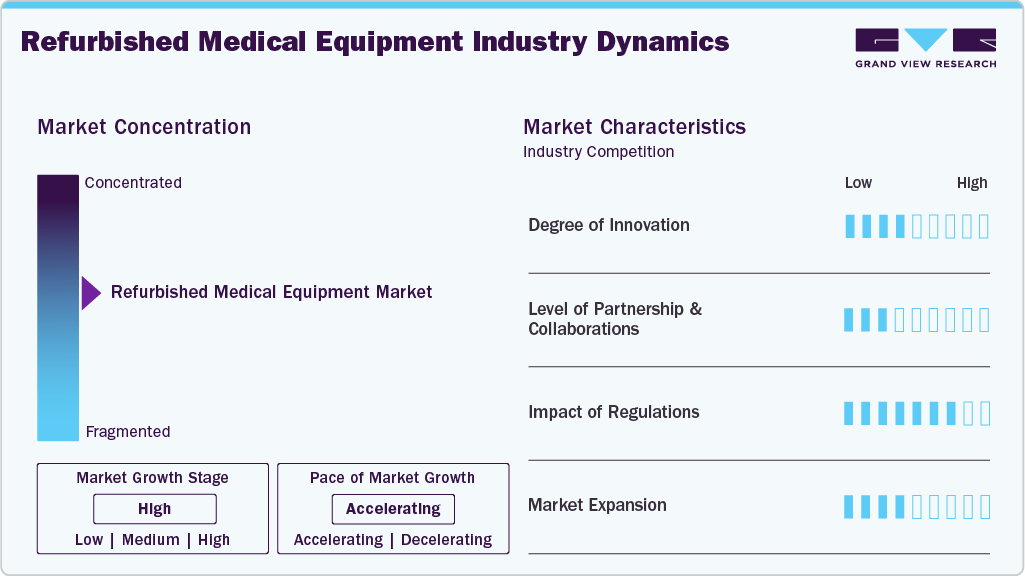
The chart below represents the relationship between industry concentration, industry characteristics, and industry participants. There is a moderate degree of innovation, moderate level of partnership & collaboration activities, high impact of regulations, and moderate expansion of industry.
The industry is experiencing a high degree of innovation. For instance, in April 2024, GE HealthCare announced the launch of a new refurbishing unit in Bangladesh dedicated to its A1-Sure refurbished ultrasound systems, marking a strategic expansion of its refurbishment efforts in emerging markets.
 To learn more about this report, Download Free Sample Report
 Chaitanya Sarawate, President and CEO, GE HealthCare South Asia said:
“Bangladesh is one of the key markets for us in South Asia and our launch of the A1 - Sure unit is a strategic move towards building a resilient healthcare system in the country. The venture aligns with the goal of enabling wider access to quality care, enhancing diagnostic capabilities, promoting sustainability, and fostering local market development. With this launch we hope to enable equitable access to quality care throughout the country, with far-reaching benefits for Bangladesh’s healthcare ecosystem.
Several key players are actively engaging in partnership & collaborations to promote growth & innovation and improve their competitiveness by combining the expertise & efforts of different organizations. For instance, in November 2024, Subtle Medical and 626 announced a strategic partnership to bring AI-powered imaging upgrades to MRI systems, enabling healthcare facilities to significantly improve imaging performance without the high costs of traditional hardware upgrades.
"We are thrilled to partner with 626 to expand the reach of SubtleMR and our other advanced AI solutions," said Josh Gurewitz, Chief Commercial Officer at Subtle Medical. "Together, we're addressing a crucial need in the industry: providing healthcare facilities with cost-effective solutions that improve MRI efficiency and quality without requiring new, expensive scanner purchases."
Regulations in the market play a critical role in ensuring patient safety, product reliability, and clinical performance while shaping market entry and operating costs for suppliers. Refurbished devices must comply with stringent regulatory frameworks such as FDA guidelines in the U.S., CE marking under the EU Medical Device Regulation (MDR), and equivalent standards in other regions, which require proper reconditioning, performance testing, documentation, and traceability. These regulations mandate adherence to quality management systems (such as ISO 13485), validation of safety and functionality, and, in some cases, post-market surveillance and reporting.
The collaboration between Crothall Healthcare Technology Solutions (HTS) and Project C.U.R.E. launched in November 2024 highlights how structured repair, refurbishment, and donation initiatives are strengthening the refurbished medical equipment ecosystem. By deploying skilled clinical engineering volunteers to repair complex donated devices such as X-ray machines, ventilators, and infant incubators, Crothall HTS helps extend the usable life of high-value medical equipment and ensures it meets functional and safety standards before redistribution.
Product Insights
Based on product, the medical imaging equipment segment held the largest revenue share of 27.4% in 2025 due to the high cost and rapid technological evolution of new imaging devices, such as MRI, CT, and ultrasound systems. Healthcare providers, particularly small- to mid-sized hospitals and clinics in emerging markets, seek cost-effective alternatives that allow them to expand diagnostic capabilities without the financial burden of purchasing new equipment. In April 2022, Blue Star Engineering & Electronics launched medical diagnostic equipment refurbishment facility in Bhiwandi, which was marked as an important development for the refurbished medical equipment industry in India. This facility enables faster turnaround times, localized servicing, and cost efficiencies compared to importing refurbished devices, making advanced diagnostic equipment more accessible to hospitals, diagnostic centers, and smaller healthcare providers with budget constraints.
The intravenous therapy systems segment is expected to grow at the fastest CAGR during the forecast period due to the high cost of new IV infusion pumps, controllers, and associated accessories. Refurbished IV therapy systems allow hospitals, clinics, and outpatient care centers especially in cost-sensitive or emerging markets to access reliable and technologically capable devices at a fraction of the price of new equipment. The availability of certified refurbished IV systems with warranties and safety compliance reassures healthcare providers about device performance and regulatory standards, further promoting adoption.
Refurbishment Provider Insights
Based on refurbishment provider, the OEM-certified refurbishers segment held the largest revenue share in 2025 and is expected to grow at the fastest CAGR during the forecast period. This is driven by the offering combination of reliability, safety, and assurance that independent refurbishers often cannot match. By adhering to strict manufacturer standards, using genuine parts, and providing warranties, these refurbishers build trust among hospitals, clinics, and diagnostic centers, particularly in regions where regulatory compliance and patient safety are top priorities. Their certification ensures that refurbished devices perform almost such as new equipment, reducing downtime and maintenance costs for healthcare providers.
The independent & in-house refurbishers segment is expected to grow at a significant CAGR during the forecast period. Independent refurbishers specialize in acquiring decommissioned or lightly used equipment from hospitals, clinics, and auctions, performing comprehensive testing, repairs, and upgrades to meet regulatory and quality standards. This allows healthcare facilities, particularly small and mid-sized hospitals or cost-sensitive providers, to access high-quality equipment at lower capital expenditure compared to new devices. Meanwhile, in-house refurbishing programs within hospitals or medical device manufacturers enable internal recycling of assets, reduce downtime, and optimize equipment lifecycle management.
End Use Insights
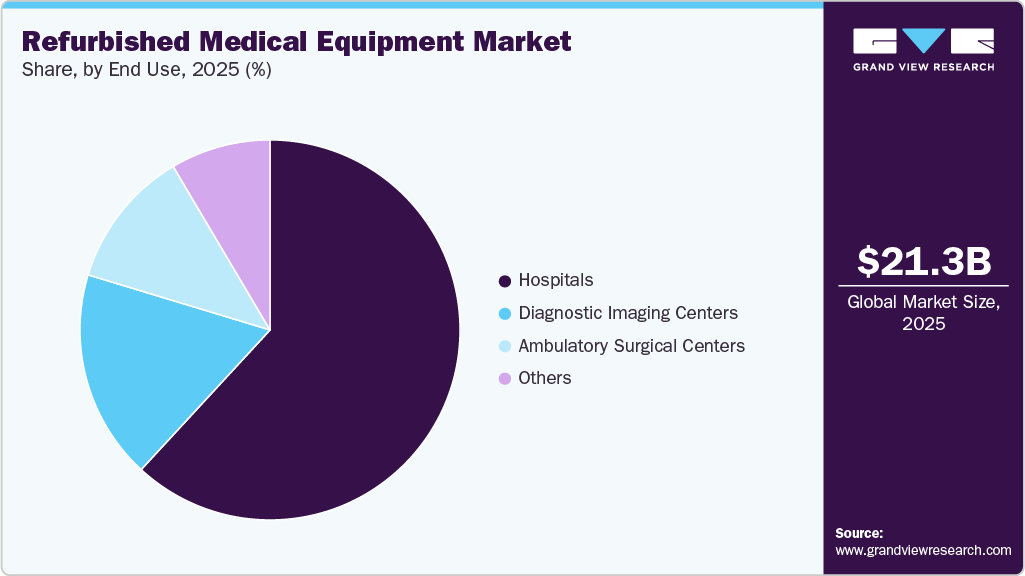
Based on end use, the hospitals segment held a significant share of 61.8% in 2025 due to their constant need to balance high-quality patient care with cost efficiency. Many hospitals, particularly smaller or budget-constrained facilities, face rising capital expenditures for advanced medical devices such as imaging systems, ventilators, and surgical equipment. Refurbished equipment offers a cost-effective alternative that provides similar functionality and compliance with safety standards at a fraction of the price of new devices.
 To learn more about this report, Download Free Sample Report
 The diagnostic imaging centers segment is expected to grow at a significant CAGR during the forecast period as these facilities require high-cost imaging modalities such as MRI, CT, PET, and ultrasound machines to serve growing patient volumes. Many diagnostic centers, especially small to mid-sized clinics and emerging-market facilities, face budget constraints that make purchasing brand-new equipment challenging. Refurbished imaging devices offer a cost-effective alternative, providing similar performance and reliability at a fraction of the original price.
Regional Insights
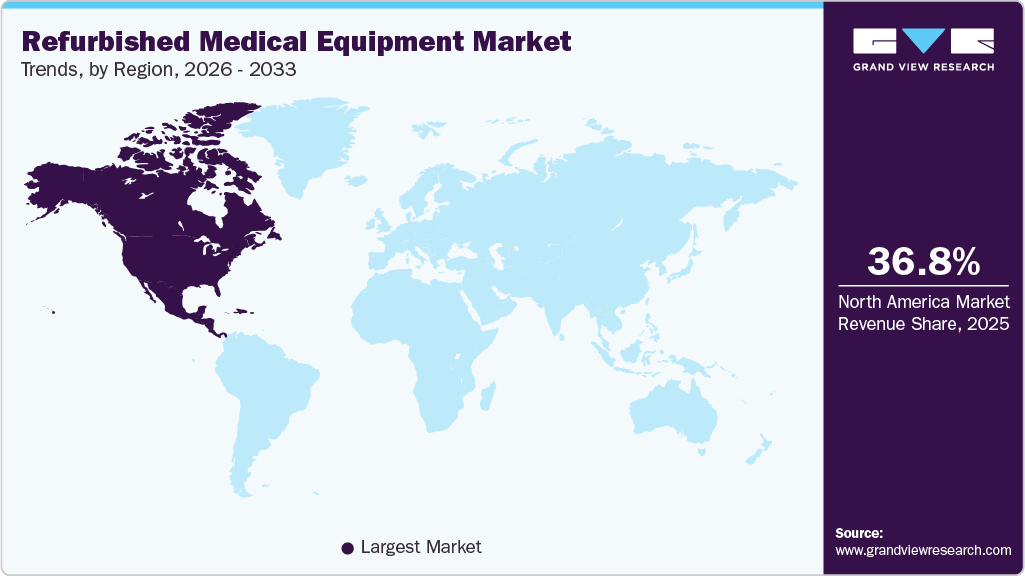
North America refurbished medical equipment industry held the largest global revenue share of 36.7% in 2025. This is attributed to the growth of this region that includes growing preference among healthcare professionals regarding the use of improvised refurbished medical equipment coupled with increasing chronic diseases in countries such as the U.S. Canada, and Mexico. The leading players such as Hygia, Medline Renewal, NEScientific, ReNu Medical, and SterilMed employ various strategies, such as mergers and acquisitions, to enhance their market presence. For instance, in April 2020, Yale New Haven Health established a strategic partnership with Medline. This collaboration enables YNHH to streamline procurement, reduce inventory complexities, and ensure timely availability of critical supplies, ultimately supporting improved patient outcomes.
 To learn more about this report, Download Free Sample Report
 U.S. Refurbished Medical Equipment Market Trends
The U.S. refurbished medical equipment industry dominated the global market in North America region in 2025 due to technological advancements and recent approval of many refurbished medical equipment. Moreover, hospitals & healthcare facilities and market players are increasingly investing in refurbished medical equipment, motivated by the economic advantages they offer over new devices for surgical procedures. Moreover, the global expansion and refurbished equipment launch by Surplus Solutions in February 2025 significantly strengthen the used medical equipment by enhancing supply credibility, geographic reach, and customer confidence. Through its acquisition of FAMECO and the introduction of Certified Surplus refurbished equipment, Surplus Solutions has combined deep refurbishment expertise with a robust global distribution network, enabling standardized, high-quality refurbished analytical and medical devices to reach customers globally.
Europe Refurbished Medical Equipment Market Trends
The refurbished medical equipment industry in Europe is expected to grow significantly over the forecast period. The UK, France, Germany, Italy, and Spain are the main markets in this region. Growing R&D activities in pharma and biotech sector in developed countries, such as the UK, Germany, Italy, France, and presence of high unmet needs in Eastern Europe are some of the factors anticipated to drive growth over the forecast period. Key players such as Stryker Corporation, Medline Industries, and Johnson & Johnson operate within a growing market for single-use medical device reprocessing across the region.
The refurbished medical equipment industry in the Germany is expected to grow significantly during the forecast period. Region’s strong and resilient healthcare ecosystem significantly drives the refurbished medical equipment industry by creating sustained demand for cost-effective, compliant, and high-quality medical technologies. With one of the highest healthcare expenditures globally, a large hospital base of around 2,000 facilities, and steady market growth of 5.1%-6.8%, Germany providers face continuous pressure to modernize infrastructure while controlling capital expenditure. Strict EU MDR regulations, CE-marking requirements, and high VAT on new medical devices make refurbished equipment an attractive alternative, as certified refurbished systems offer comparable performance at substantially lower costs while remaining regulatory compliant.
Asia Pacific Refurbished Medical Equipment Market Trends
The Asia Pacific refurbished medical equipment industry is expected to register the fastest CAGR over the forecast period. This is attributed to the expanding healthcare infrastructure in emerging economies such as India, China, and Southeast Asian countries has created strong demand for cost-effective medical technologies, making refurbished equipment an attractive alternative to expensive new devices. Budget constraints in public hospitals and smaller clinics further encourage the adoption of certified refurbished solutions that provide reliable performance at lower capital expenditure.
China refurbished medical equipment industry is anticipated to register considerable CAGR during the forecast period. Increasing prevalence of chronic disorders and growing geriatric population are some of the major factors contributing to the growth of China refurbished medical equipment industry. As a result of these factors, the demand for refurbished medical equipment in China has increased over time. In China, the prevalence of cardiovascular diseases has increased in recent decades. According to a 2019 report published in JAMA Cardiology by Liu S et al., the prevalence of these cardiovascular diseases has more than doubled since 1990, reaching almost 94 million in 2016. As a result, the usage of patient monitoring devices for cardiology applications has increased, which is expected to further grow, thereby driving overall market growth.
India refurbished medical equipment industry is anticipated to register considerable growth during the forecast period. As per August 2025 updates, multinational medical device companies are promoting the restart of refurbished medical device imports and seeking inclusion in India’s electronics repair initiative underscore a significant growth opportunity for the market in the country. Allowing controlled imports of refurbished devices is expected to address affordability gaps in India’s healthcare system, particularly for secondary and tertiary care facilities facing high capital constraints.
Latin America Refurbished Medical Equipment Market Trends
The Latin America refurbished medical equipment industry is expected to witness considerable growth over the forecast period. The growing prevalence of chronic diseases, and government regulations encouraging the commercialization of medical devices in the country are also anticipated to contribute to market expansion.
Brazil refurbished medical equipment industry is anticipated to register considerable growth during the forecast period. This is attributed to the availability of various products in the local market, increasing awareness of sustainable and environmental solutions, cost saving, prevalence of chronic diseases, and growing geriatric population. In August 2025, the Brazilian Government announced its plan to invest approximately USD 480 million in medical equipment purchases targeting basic healthcare and surgical technologies which stimulate the refurbished medical devices market in Brazil by creating broader demand pressure and resource allocation dynamics within the health sector.
Middle East Refurbished Medical Equipment Market Trends
The Middle East and Africa refurbished medical equipment industryis anticipated to witness considerable growth over the forecast period due to rising number of government initiatives in the country. In August 2023, Qatar’s Ministry of Public Health introduced new regulations aimed at the systematic disposal of medical waste. These regulations require the implementation of separate containment systems and specific transfer protocols for health centers. This shift in regulatory practices is bolstered by substantial financial investments, highlighted by the World Bank’s announcement in March 2023 regarding a USD 9.13 million grant from the Global Environment Facility
South Africa refurbished medical equipment industry is anticipated to register considerable growth during the forecast period. South Africa's healthcare system, recognized as one of the most advanced in Africa, has played a crucial role in promoting medical device reprocessing technologies. Healthcare facilities in the country are increasingly acknowledging the economic and environmental advantages of reprocessing single-use devices. The availability of local reprocessing service providers and their collaborations with international firms has contributed to the market's advancement.
Key Refurbished Medical Equipment Company Insights
The market is fragmented, with the presence of many regional and country-level refurbished medical equipment providers.The market players undertake several strategic initiatives, such as partnerships & collaborations, product launches, mergers & acquisitions, and geographical expansion to maintain their position and grow in the market.
Key Refurbished Medical Equipment Companies:
The following key companies have been profiled for this study on the refurbished medical equipment market.
- Medtronic plc
- Nationwide Imaging Services
- Koninklijke Philips N.V.
- Radio Oncology Systems
- Siemens Healthineers
- Agito Medical
- Amber Diagnostics
- Avante Health Solutions
- Canon Medical Systems
- Fair Medical Co., Ltd
- Fujifilm Healthcare
- GE HealthCare
- Henry Schein Medical
- Hitachi Healthcare Systems
- Integrity Medical Systems
- Johnson & Johnson Services, Inc. (Sterilmed)
- Master Medical Equipment
Competitive Benchmarking
Operating Strategies
Competitive Edge
Weaknesses
Mature Players: Medtronic plc
- Focus on OEM-certified refurbishment programs, long-term service contracts, global distribution networks, and standardized quality assurance protocols.
- Expand strategic partnerships with hospitals, diagnostic centers, and leasing providers to increase recurring revenue streams.
- Strong brand recognition, extensive refurbishment expertise, established regulatory compliance systems, and access to OEM-certified spare parts and software support.
- Large-scale operational capabilities also allow them to manage complex equipment categories.
- High operational costs associated with regulatory compliance, certified refurbishment infrastructure, skilled technical workforce requirements, and global servicing operations.
- Longer decision-making processes and dependence on established business models may reduce flexibility in rapidly changing market environments.
Emerging Players: Master Medical Equipment
- Adopt cost-competitive pricing strategies, regional distribution expansion, and niche product specialization to gain market presence.
- Utilize online sales channels and third-party sourcing models to scale operations rapidly.
- Operational flexibility, lower overhead costs, faster market responsiveness, and competitive pricing structures.
- Provide faster customization, flexible procurement models, and targeted product offerings tailored to smaller healthcare providers.
- Limited access to OEM-certified spare parts, inconsistent refurbishment quality standards, weaker brand credibility, and restricted regulatory expertise.
- Financial constraints may further restrict scalability and international expansion.
Recent Developments
-
In January 2026, Tri-Imaging Solutions and DirectMed Imaging announced their merger to create a scaled and more competitive imaging solutions platform by combining complementary strengths in refurbished imaging equipment sales, service, and lifecycle management. This consolidation enhances the combined entity’s ability to offer a broader portfolio of refurbished imaging systems-including MRI, CT, X-ray, and ultrasound-along with installation, maintenance, and asset management services under one integrated platform.
“Supporting DirectMed as it builds a scaled, global imaging platform has been a key focus for Frazier,” said Kent Berkley, Partner at Frazier Healthcare Partners. “Adding Tri-Imaging’s highly regarded service, parts and technology platform capabilities is a natural next step in that strategy and aligns with our goal of creating a best-in-class imaging solutions provider.”
-
In September 2024, Asker Health acquired a UK medical device repair company marks a strategic step in its rapid Europe expansion and underscores the growing importance of service-led models in the medical device ecosystem. By strengthening its repair and refurbishment capabilities in the UK, Asker Health is aimed to enhance its localized technical expertise, faster turnaround times, and regulatory compliance across key Europe markets.
Refurbished Medical Equipment Market Report Scope
Report Attribute
Details
Market size in 2025
USD 21.3 billion
Estimated market size in 2026
USD 23.6 billion
Projected market size by 2033
USD 50.0 billion
Growth rate
CAGR of 11.3% from 2026 to 2033
Actual data
2021 - 2025
Forecast period
2026 - 2033
Quantitative units
Revenue in USD billion and CAGR from 2026 to 2033
Report coverage
Revenue forecast, company ranking, competitive landscape, growth factors, and trends
Segments covered
Product, refurbishment provider, end use, region
Regional scope
North America; Europe; Asia Pacific; Latin America; MEA
Country scope
U.S.; Canada; Mexico; Germany; UK; France; Italy; Spain; Norway; Denmark; Sweden; China; Japan; India; South Korea; Australia; Thailand; Brazil; Argentina; Saudi Arabia; South Africa; UAE; Kuwait
Key companies profiled
Medtronic plc; Nationwide Imaging Services; Koninklijke Philips N.V.; Radio Oncology Systems; Siemens Healthineers; Agito Medical; Amber Diagnostics; Avante Health Solutions; Canon Medical Systems; Fair Medical Co., Ltd; Fujifilm Healthcare; GE HealthCare Henry Schein Medical; Hitachi Healthcare Systems; Integrity Medical Systems; Johnson & Johnson Services, Inc. (Sterilmed); Master Medical Equipment.
Customization scope
Free report customization (equivalent up to 8 analysts working days) with purchase. Addition or alteration to country, regional & segment scope.
Pricing and purchase options
Avail customized purchase options to meet your exact research needs. Explore purchase options
Global Refurbished Medical Equipment Market Report Segmentation
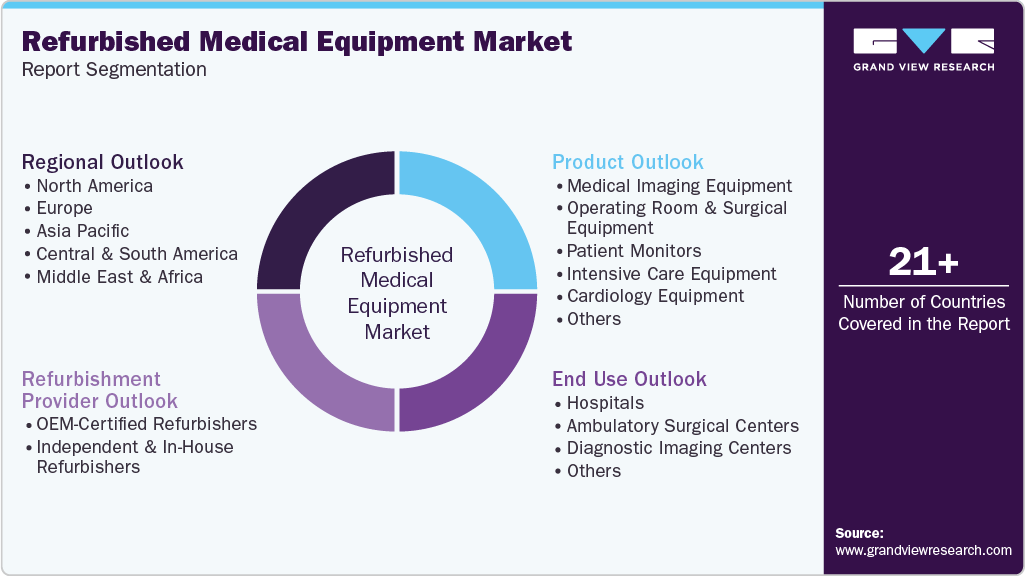
This report forecasts revenue growth at global, regional, and country levels and provides an analysis of the latest industry trends in each of the sub-segments from 2021 to 2033. For this study, Grand View Research has segmented the global refurbished medical equipment market report based on product, refurbishment provider, end use, and region:
 To learn more about this report, Download Free Sample Report
 -
Product Outlook (Revenue, USD Billion, 2021 - 2033)
-
Medical Imaging Equipment
-
CT Scanners
-
MRI Machines
-
X-ray Machines
-
Nuclear Imaging Systems
-
Ultrasound Systems
-
PET/SPECT Systems
-
Mammography Systems
-
-
Operating Room & Surgical Equipment
-
Anesthesia Machines
-
Electrosurgical Units
-
Operating Room Tables & Lights
-
Surgical Displays
-
Other Operating Room & Surgical Equipment
-
-
Patient Monitors
-
Multiparameter Monitors
-
Fetal Monitors
-
Electrocardiography (ECG) Devices
-
Pulse Oximeters
-
Cardiac Monitors
-
Non-Invasive Blood Pressure Monitors
-
Other Patient Monitors
-
-
Intensive Care Equipment
-
Ventilators
-
Infant Incubators & Warmers
-
-
Cardiology Equipment
-
Defibrillators
-
Heart-Lung Machines
-
Other Cardiology Equipment
-
-
Endoscopy Equipment
-
IV Therapy Systems
-
Endoscopy Equipment
-
Other Medical Equipment
-
-
Intravenous Therapy Systems
-
IV Therapy Systems
-
Endoscopy Equipment
-
Other Medical Equipment
-
-
Urology Equipment
-
Neurology Equipment
-
Other Medical Equipment
-
-
Refurbishment Provider Outlook (Revenue, USD Billion, 2021 - 2033)
-
OEM-Certified Refurbishers
-
Independent & In-House Refurbishers
-
-
End Use Outlook (Revenue, USD Billion, 2021 - 2033)
-
Hospitals
-
Ambulatory Surgical Centers
-
Diagnostic Imaging Centers
-
Others
-
-
Regional Outlook (Revenue, USD Million, 2021 - 2033)
-
North America
-
U.S.
-
Canada
-
Mexico
-
-
Europe
-
UK
-
Germany
-
France
-
Italy
-
Spain
-
Denmark
-
Sweden
-
Norway
-
-
Asia Pacific
-
China
-
Japan
-
India
-
South Korea
-
Australia
-
Thailand
-
-
Latin America
-
Brazil
-
Argentina
-
-
Middle East and Africa (MEA)
-
South Africa
-
Saudi Arabia
-
UAE
-
Kuwait
-
-
Delivered Customizations
This report has been delivered with the following In-depth customizations
Client Request
Customization Delivered
Value Adds
Product-Wise Refurbished Equipment Volume & Demand Assessment
Developed a comprehensive analysis of refurbished medical equipment demand segmented by imaging systems, patient monitoring devices, surgical equipment, endoscopy systems, anesthesia machines, and laboratory diagnostics. The study evaluated installed base trends, replacement cycles, procurement volumes, utilization rates, and secondary market demand across hospitals, ASCs, diagnostic centers, and specialty clinics.
Enables stakeholders to identify high-demand refurbished equipment categories, optimize inventory management, strengthen procurement planning, and prioritize investments in rapidly growing refurbished device segments.
OEM vs. Third-Party Refurbishment Benchmarking Study
Conducted a detailed comparative assessment of OEM-certified refurbishment programs versus independent third-party refurbishment providers. The analysis benchmarked pricing models, warranty structures, regulatory compliance standards, equipment reliability, service contracts, spare-part accessibility, and customer purchasing preferences across major global markets.
Supports healthcare providers and investors in evaluating procurement risks, improving vendor selection strategies, enhancing quality assurance processes, and identifying reliable refurbishment partners.
Hospital Procurement & Decision-Making Behavior Study
Developed a healthcare provider-focused study analyzing purchasing behavior, procurement criteria, financing preferences, and adoption barriers associated with refurbished medical equipment. The study incorporated interviews with hospital administrators, budget allocation trends, technology adoption levels, and concerns regarding warranty coverage, regulatory compliance, and after-sales service.
Provides actionable insights to improve sales strategies, customer retention, financing models, and service offerings, while helping companies address key procurement concerns among healthcare institutions.
Frequently Asked Questions About This Report
The global refurbished medical equipment market is expected to grow at a CAGR of 11.32% during the forecast period to reach USD 50.0 billion by 2033.
Medical imaging equipment segment held the largest revenue share of 27.4% in 2025 due to the high cost and rapid technological evolution of new imaging devices, such as MRI, CT, and ultrasound systems.
Key players in refurbished medical equipment market include Medtronic plc, Nationwide Imaging Services, Koninklijke Philips N.V., Radio Oncology Systems, Siemens Healthineers, Agito Medical, Amber Diagnostics, Avante Health Solutions, Canon Medical Systems, Fair Medical Co., Ltd, Fujifilm Healthcare, GE HealthCare Henry Schein Medical, Hitachi Healthcare Systems, Integrity Medical Systems, Johnson & Johnson Services, Inc. (Sterilmed), Master Medical Equipment.
Factors driving the refurbished medical equipment market include the rising healthcare costs, which are pushing hospitals, clinics, and diagnostic centers to seek cost-effective alternatives to new devices without compromising quality or performance.
The market in North America dominated with a revenue share of 36.7% in 2025.
Based on refurbishment provider, the OEM-certified refurbishers segment held the largest revenue share in 2025 and is expected to grow at the fastest CAGR during the forecast period.
Based on end use, the hospitals segment held a significant share of 61.8% in 2025 due to their constant need to balance high-quality patient care with cost efficiency.
The global refurbished medical equipment market size was estimated at USD 21.3 billion in 2025 to reach USD 23.6 billion by 2026
About the Author(s)
Medical Devices Research Team
Healthcare · Medical DevicesThis report was authored by the medical devices research team at Grand View Research - comprising two research analysts, one senior research analyst, and one industry expert - with specialized expertise in the medical devices segment of the healthcare industry. All findings are based on proprietary healthcare databases, executive interviews, and regulatory analysis, subject to internal peer review prior to publication.
Last Updated:
Speak to Analyst

Customize this report to your needs - add regions, segments, or data points, with 20% free customization.
Or view our licence options:


ISO 9001:2015 & 27001:2022 Certified
We are GDPR and CCPA compliant! Your transaction & personal information is safe and secure. For more details, please read our privacy policy.


