
- Home
- »
- Healthcare IT
- »
-
Regulatory Science and Evidence-Based Decision Support Market Report, 2035GVR Report cover

Regulatory Science and Evidence-Based Decision Support Market (2027 - 2035)
Size, Share & Trends Analysis Report By Component (Software, Services), By Application (Dose Selection & Optimization), By Deployment Model, By End Use, By Region, And Segment Forecasts
Market Size, 2026
$2.4BMarket Estimate, 2027
$2.7BMarket Forecast, 2035
$5.9BCAGR, 2027–2035
10.4%Regulatory Science and Evidence-Based Decision Support Market Summary
The global regulatory science and evidence-based decision support market size was valued at USD 2.4 billion in 2026 and is projected to grow from USD 2.7 billion in 2027 to USD 5.9 billion by 2035, at a CAGR of 10.4% from 2027 to 2035. The market in North America dominated with a revenue share of 49.4% in 2026. The market growth is driven by the growing regulatory acceptance of model-informed drug development (MIDD), rising cost, complexity, and evidence requirements of drug development, and the adoption of AI and generative AI in regulatory authoring, intelligence, and evidence synthesis.
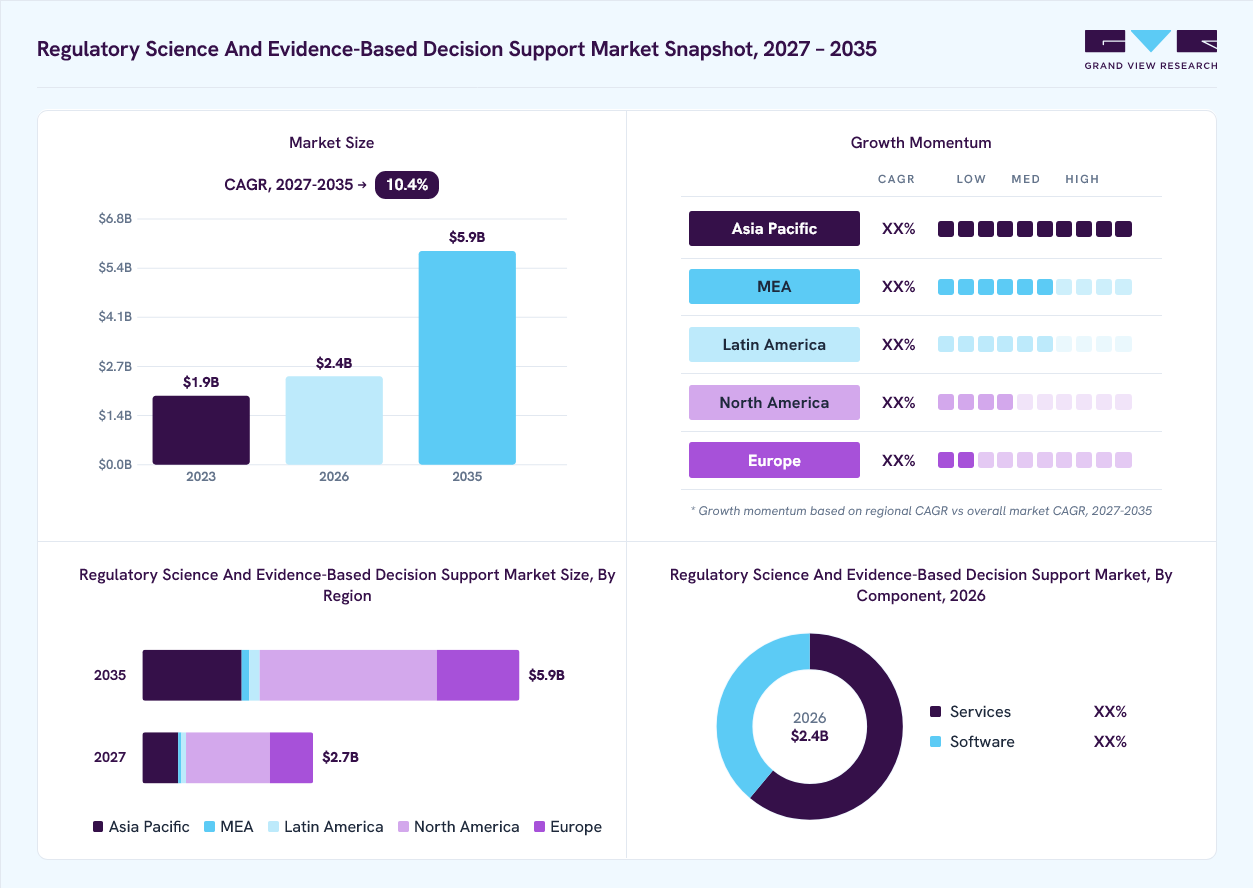 Source: Grand View Research, IR Documents, Primary Interviews, Paid DatabasesTo learn more about this report,
 Download Free Sample Report
Key Market Trends & Insights
- By component: Services segment held the largest market share of 61.0% in 2026.
- By application: Development strategy & regulatory pathway planning segment held the largest market share of 19.9% in 2026.
- By deployment model: Cloud-based segment held the largest market share of 67.8% in 2026.
- By end use: Life sciences companies segment held the largest market share of 56.3% in 2026.
Regional Highlights
- Largest regional market: North America (49.4% revenue share, 2026)
- Fastest-growing regional market: Asia Pacific (highest CAGR, 2027-2035)
- By country: The U.S. held the largest market share in 2026
Market Size & Forecast
- Market size in 2026: USD 2.4 Billion
- Estimated market size in 2027: USD 2.7 Billion
- Projected market size by 2035: USD 5.9 Billion
- CAGR (2027-2035): 10.4%
Prism AI by Grand View Research Free to tryAsk a question about the regulatory science and Evidence-Based decision support marketTry asking✓Every figure cited from GVR research Prefer the report? Download free sample →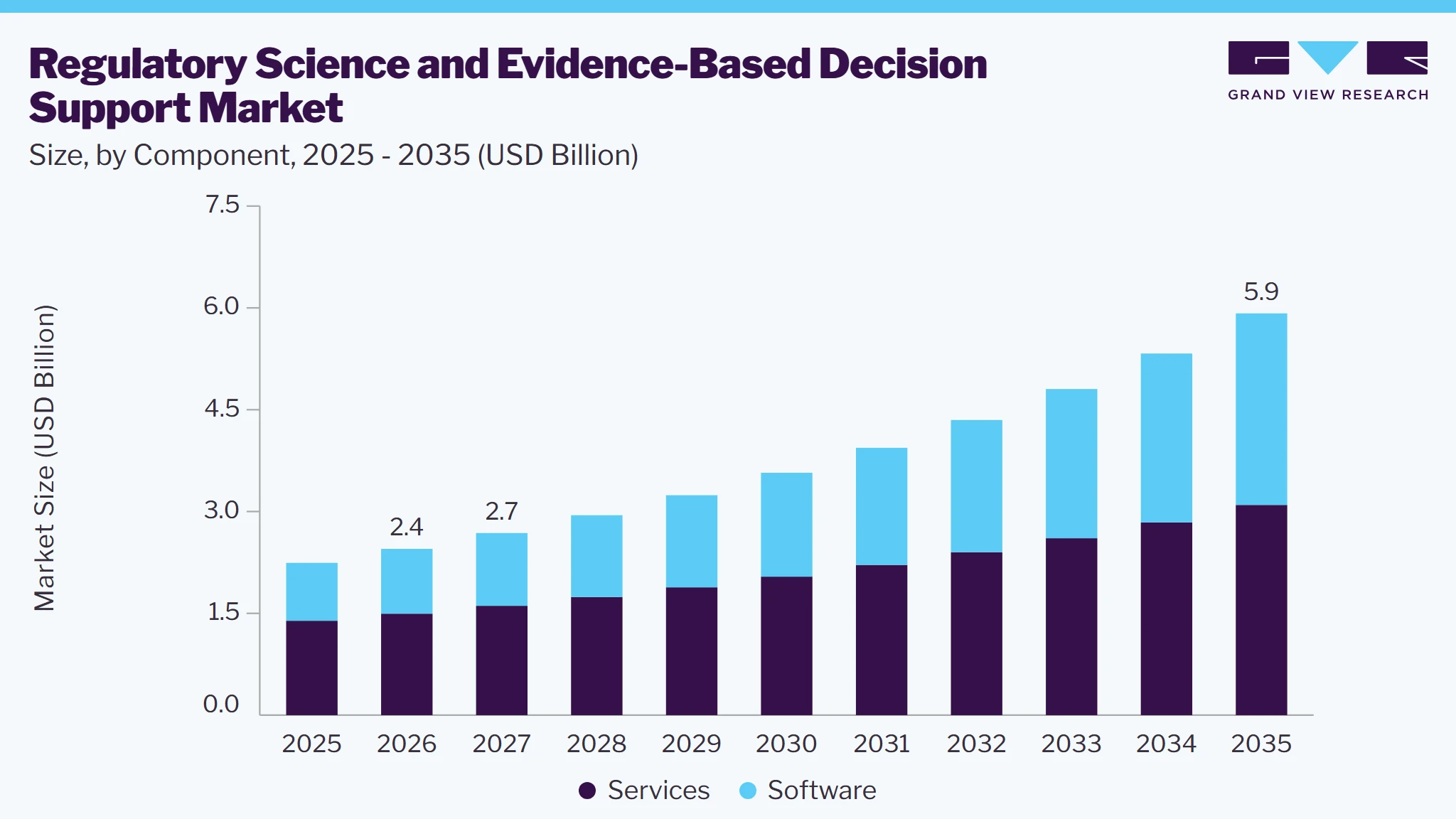 To learn more about this report, Download Free Sample Report
Market Dynamics
The regulatory science & evidence-based decision support market is driven by growing regulatory acceptance of model-informed drug development, rising drug development costs and complexity, increasing evidence requirements, adoption of new approach methodologies (NAMs), dose optimization, and regulatory divergence across markets. AI-enabled regulatory workflows and cloud-based platforms further support market growth. However, adoption is restrained by challenges in validating models and AI-generated content, ensuring data quality, transparency, reproducibility, and regulatory acceptance.
The growing adoption of AI and generative AI is driving demand for regulatory science & evidence-based decision support solutions. These technologies help pharmaceutical and biotechnology companies automate regulatory authoring, monitor regulatory changes, extract relevant information, and synthesize scientific evidence, improving workflow efficiency and reducing manual effort. Market players are integrating AI agents and generative AI into modeling, authoring, and submission platforms. At the same time, regulatory agencies are establishing frameworks for the credible use of AI-generated outputs, which supports wider adoption across the drug development lifecycle.
Product
Company
Stage
Key Details
NavaX-powered Advanced Compliance Docs
ArisGlobal
Launched in August 2026
AI-enabled solution automating medical writing and pharmacovigilance documentation, including PSMFs, PVAs, and aggregate safety reports.
Yseop Copilot integration with Veeva Vault RIM
Yseop
Joined Veeva AI Partner Program in September 2024
Enables automated generation and management of regulatory documents, streamlining content authoring, validation, and submission workflows.
CoAuthor (next-generation)
Certara
Launched in June 2024
Generative AI software for regulatory and medical writing combining a specialized life sciences GPT, eCTD templates, Microsoft Word integration, and structured content authoring; improves time to first draft by at least 30%.
The need to validate scientific models and establish the reliability of AI-generated content can restrain the adoption of regulatory science and evidence-based decision-support solutions. Pharmaceutical and biotechnology companies must demonstrate that model outputs and AI-generated information are accurate, reproducible, scientifically credible, and suitable for their intended use before incorporating them into regulatory submissions and development decisions. These requirements necessitate additional testing, documentation, performance assessment, human oversight, increasing implementation costs and extending deployment timelines.
In January 2025, the U.S. Food and Drug Administration (FDA) issued draft guidance proposing a risk-based framework for assessing the credibility of AI models used to support regulatory decisions on drug safety, effectiveness, and quality. The framework emphasizes evaluating model credibility in relation to its intended context of use and the potential consequences of incorrect outputs. Thus, validation requirements, regulatory uncertainty, and the need for specialized expertise can delay the implementation of AI-enabled solutions and limit their adoption in regulated workflows.
The increasing volume and complexity of regulatory guidance, clinical documentation, and submission requirements create significant opportunities for AI-enabled regulatory platforms. These solutions automate regulatory information retrieval, document drafting, content comparison, data extraction, and compliance checks, reducing manual workloads and improving consistency, accuracy, and traceability across regulatory submissions.
The integration of generative AI and natural language processing (NLP) further enables companies to interpret regulatory updates, identify documentation gaps, streamline report preparation, and accelerate submission timelines. For instance, in September 2026, Celegence introduced AI-assisted Clinical Evaluation Report (CER) authoring within its CAPTIS platform, reporting a 75%–80% reduction in drafting effort for selected report sections.
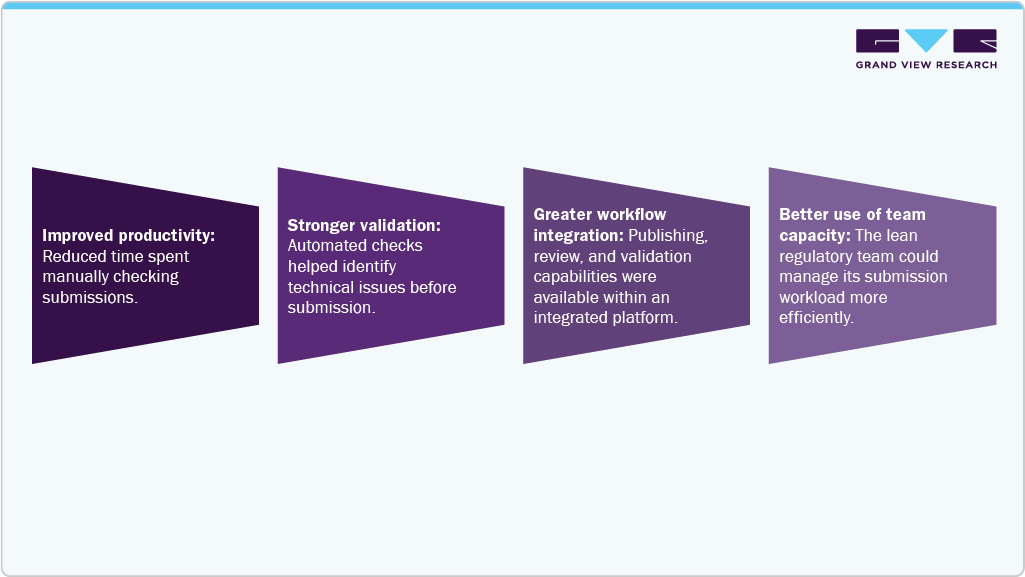
Case Study: Prelude Therapeutics Streamlines Regulatory Submission Quality Control Using Certara GlobalSubmit
- Background: Prelude Therapeutics, a cancer drug discovery company, implemented Certara’s GlobalSubmit electronic Common Technical Document (eCTD) software in 2019 intended to improve its regulatory submission workflow. Its lean regulatory team was responsible for preparing and managing more than 30 submissions annually, making efficient publishing, validation, and quality control essential.
- Challenge: Prelude’s existing submission publishing process lacked the flexibility to implement updates efficiently. Limited third-party review capabilities and the absence of dedicated eCTD viewing software restricted the team’s ability to review submission content comprehensively. Manual quality checks also consumed several hours per submission, increasing workload and the risk of technical errors.
- Solution: Prelude implemented Certara’s GlobalSubmit eCTD software following training, user acceptance testing, and validation. Key capabilities included:
- Integrated publishing and validation: GlobalSubmit PUBLISH supported submission preparation and automated quality checks.
- Automated cross-checking: LINK and CROSSCHECK functionality supported hyperlink, bookmark, and submission consistency checks.
- Technical validation: GlobalSubmit VALIDATE checked more than 200 error conditions to reduce the risk of technical rejection.
- Collaborative review: GlobalSubmit WebReview enabled stakeholders to search applications and review or approve specific submission content.
- Real-time compliance checks: Software updates reflected changes to eCTD requirements and supported live validation.
- Outcome: The quality-control process for each regulatory submission was reduced from hours to minutes.
 To learn more about this report, Download Free Sample Report
Technology Landscape in the Regulatory Science & Evidence-Based Decision Support Market
The technology landscape for regulatory science & evidence-based decision support comprises modelling and simulation platforms, regulatory intelligence and knowledge platforms, structured content and AI-assisted authoring solutions, and clinical data standards and validation tools. These technologies support quantitative drug development, regulatory requirement assessment, submission preparation, and clinical data compliance, enabling pharmaceutical companies to improve the consistency and scientific quality of regulatory decisions.
Key Technologies and Representative Platforms
Category
Details
Modelling & Simulation Platforms
PBPK modelling (Simcyp PBPK Simulator, Certara; GastroPlus, Simulations Plus), population PK modelling (Phoenix WinNonlin, Certara; MonolixSuite, Simulations Plus; NONMEM, ICON plc), clinical trial simulation (Trial Simulator, Certara; East Horizon, Cytel), and QSP modelling (Certara IQ, Certara; Thales, Simulations Plus) to evaluate drug behaviour, optimise dosing, and support trial design
Regulatory Intelligence & Knowledge Platforms
Regulatory intelligence databases and precedent analysis (Cortellis Regulatory Intelligence; IQVIA Regulatory Intelligence; Freyr GRI), AI-assisted knowledge retrieval, and AI-enabled regulatory change monitoring (RegASK; Redica Systems; ArisGlobal LifeSphere Regulatory Intelligence)
Structured Content & AI-assisted Authoring
Regulatory content management (LifeSphere Documents), eCTD publishing (LifeSphere Submissions; IQVIA Regulatory Productivity Tools), AI-assisted document authoring (CoAuthor, Certara; Yseop Copilot), and submission management (LifeSphere RIM; IQVIA SmartSolve RIM)
Clinical Data Standards & Validation (CDISC)
Validation of clinical trial datasets, metadata, and Define-XML against CDISC standards and agency-specific rules (Pinnacle 21 Enterprise, Certara), based on CDISC SDTM, ADaM, and Define-XML standards
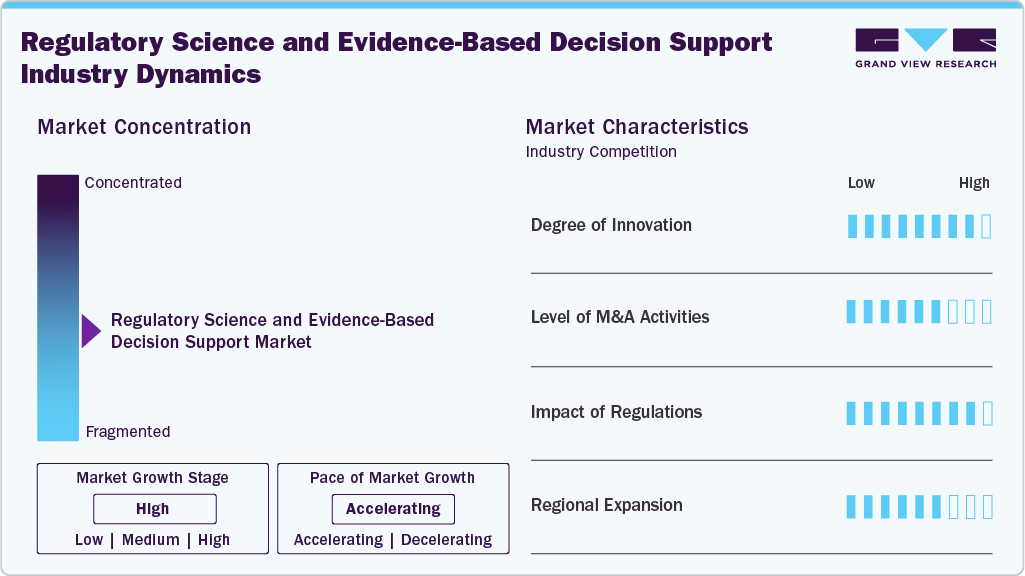
Market Concentration & Characteristics
The regulatory science & evidence-based decision support market characterized by a high degree of innovation, driven by the integration of AI and generative AI into biosimulation, pharmacometrics, regulatory intelligence, and authoring workflows, along with the shift toward cloud-native scientific platforms. For instance, in November 2025, Certara launched TFL Studio, a cloud-native module of Phoenix Cloud designed to automate tables, figures, and listings for pharmacokinetic and pharmacodynamic studies, reducing creation time by up to 50%, alongside AI PK Reports, which uses its CoAuthor generative AI software to automate pharmacokinetic report drafting.
“The introduction of TFL Studio marks a pivotal moment in our mission to bring advanced, cloud-native solutions to drug discovery and development.”
-William F. Feehery, Chief Executive Officer, Certara
The market demonstrates a high level of M&A activity, as companies acquire specialized software and service providers to expand their AI, modeling, and regulatory capabilities. For instance, in July 2026, Dassault Systèmes announced a definitive agreement to acquire ArisGlobal for approximately USD 1.8 billion in cash, with up to USD 200 million in additional payments linked to AI-related revenue milestones.
“Together, we will help customers accelerate innovation, simplify complexity and continuously learn from every stage of the therapy lifecycle – ultimately delivering better outcomes for patients. I am personally thrilled to be joining the Dassault Systèmes organization and I look forward to executing on this ambitious vision.”
-Aman Wasan, Chief Executive Officer of ArisGloba
 To learn more about this report, Download Free Sample Report
Regulations have a high impact on the market, as the evidence and documentation requirements of the FDA, EMA, PMDA, NMPA, MHRA, and Health Canada, ICH guidelines such as M15, E11A, and M7, the EU HTA Regulation, and the EU AI Act influence how companies generate, assess, and submit scientific evidence. For instance, in October 2026, the U.S. FDA announced that, effective January 16, 2027, it will reject electronic submissions that fail specified high-severity validation criteria for eCTD versions 3.2.2 and 4.0, supporting demand for submission validation software.
Market players are expanding their portfolios through upgraded modeling, simulation, and AI-enabled software to address a broader range of drug development and regulatory needs. For instance, in May 2025, Simulations Plus released DILIsym 11, introducing pediatric liver-safety modeling and a new T-cell model for immune-mediated liver injury, and in June 2025 released ADMET Predictor 13 with enhanced AI-driven drug design and high-throughput PBPK simulations integrated with GastroPlus.
Companies are strengthening their regional presence through distribution agreements and partnerships, particularly in Asia Pacific and Latin America. For instance, in May 2026, Ennov announced a strategic partnership with China-based CloudScientific, under which CloudScientific provides local distribution, implementation, support, and consulting for Ennov’s life-sciences software platform, including regulatory information management and regulatory publishing capabilities.
Analyst Perspective
The regulatory science & evidence-based decision support market is driven by growing acceptance of model-informed evidence, rising drug development costs and complexity, and increasing adoption of AI-enabled regulatory workflows. Specialized providers such as Certara, Simulations Plus, and Cytel focus on scientific evidence generation, while IQVIA, ArisGlobal, and Freyr emphasize regulatory information management and submission operations. Competition increasingly depends on integration across evidence generation, scientific assessment, regulatory justification, and submissions, with no single provider offering comprehensive coverage across all stages. Integrated providers such as Parexel, ICON, IQVIA, and Thermo Fisher Scientific (PPD) offer broader capabilities, while consolidation, including Dassault Systèmes’ planned acquisition of ArisGlobal and Altaris’ acquisition of Simulations Plus, is expected to reshape the competitive landscape.
Component Insights
Based on component, the services segment dominated the market with the largest revenue share of 61.0% in 2026. Growth of this segment is attributed to increasing demand for regulatory consulting, scientific modelling, evidence generation, and submission support across pharmaceutical, biotechnology, and medical device companies, particularly when internal teams lack specialized capabilities. For instance, in June 2025, ICON plc supported a biotechnology company in preparing and compiling its New Drug Application (NDA), including clinical summaries, product labeling, and electronic submission documents, with the company submitting its NDA, highlighting the role of specialized regulatory writing and dossier services in supporting timely regulatory filings.
The software segment is expected to grow at the fastest CAGR of 12.9% from 2027 to 2035, driven by the increasing use of modeling and simulation, quantitative pharmacology, and AI-enabled tools to support drug development and evidence-based regulatory decisions. For instance, in April 2025, Certara released Version 24 of its Simcyp Simulator, introducing enhancements to biologics modeling, drug–drug interaction assessment, and virtual bioequivalence capabilities, along with AI-enabled assistance to support drug development and regulatory decision-making.
Application Insights
By application, the development strategy & regulatory pathway planning segment dominated the market with the largest revenue share of 19.9% in 2026. This dominance is attributed to the increasing complexity of drug development, evolving regulatory requirements, and growing adoption of quantitative modeling to optimize clinical development strategies and support regulatory decision-making. Pharmaceutical companies increasingly use pharmacokinetic/pharmacodynamic (PK/PD), exposure-response, and population modeling to evaluate dose-response relationships, assess safety and efficacy, and determine appropriate dosing regimens before pivotal trials.
The lifecycle management & post-approval changes segment is anticipated to grow at the fastest CAGR over the forecast period from 2027 to 2035. This growth is driven by the growing complexity of managing changes to manufacturing processes, formulations, analytical methods, and shelf life across multiple countries, which creates demand for evidence assessment and regulatory impact analysis throughout a medicine’s lifecycle. These approaches help pharmaceutical companies determine whether existing data adequately support a proposed change, identify the need for additional comparability or stability studies, and coordinate submission requirements across jurisdictions.
Deployment Model Insights
Based on deployment model, the cloud-based segment held the largest revenue share of 67.8% in 2026 and is expected to grow at the fastest over the forecast period. Growth of this segment is attributed to increasing adoption of scalable regulatory software platforms, centralized access to scientific data, and seamless collaboration across geographically distributed teams. For instance, in April 2024, Certara launched Certara Cloud, a unified platform providing centralized access to its scientific software portfolio, highlighting the industry’s shift toward cloud-based delivery of modeling and simulation capabilities.
The on-premise segment accounted for a significant revenue share in 2026, driven by stringent data security requirements, greater control over sensitive clinical and regulatory information, and the need to comply with data privacy and regulatory standards. Pharmaceutical and biotechnology companies increasingly rely on on-premise solutions to maintain control over document storage, access permissions, and regulatory submission workflows.
End Use Insights
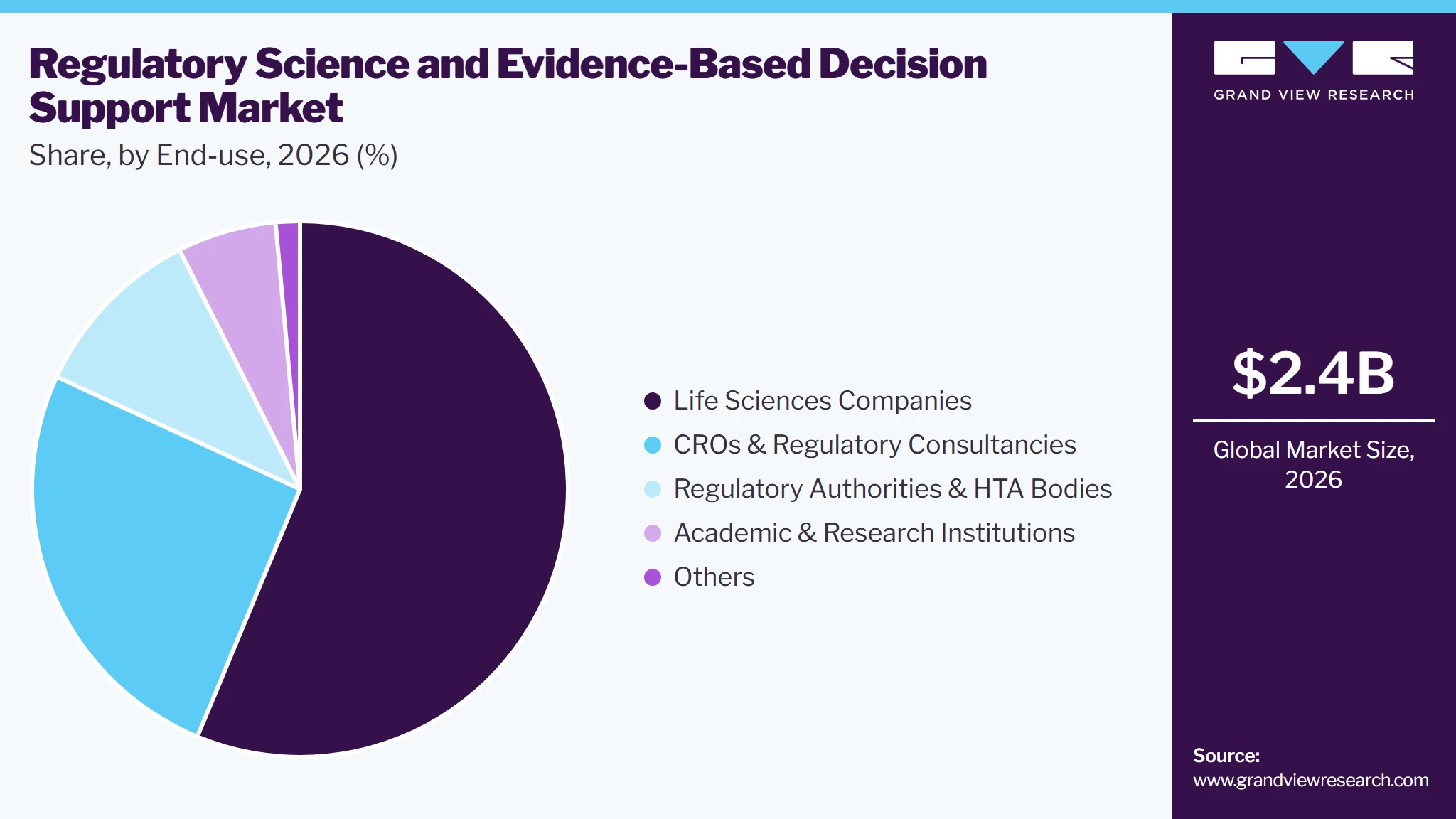
By end use, the life sciences companies segment dominated the market with a revenue share of 56.3% in 2026. This dominance is attributed to increasing investments in pharmaceutical and biologics pipelines, rising costs of clinical development, and the need to optimize drug development timelines and improve the likelihood of regulatory approval. For instance, in October 2025, Certara joined the Veeva AI Partner Program to connect its CoAuthor generative AI regulatory-writing solution with Veeva Regulatory Information Management (RIM), enabling regulatory writers to access source content directly from Veeva RIM when preparing submission documents.
 To learn more about this report, Download Free Sample Report
The regulatory authorities & HTA bodies segment is expected to grow at the fastest CAGR of 11.6% from 2027 to 2035. Regulatory authorities and HTA bodies increasingly rely on structured scientific evidence, real-world data, and standardized assessment procedures to support regulatory and reimbursement decisions. For instance, in January 2025, the European Union’s Health Technology Assessment Regulation became applicable, introducing a coordinated framework for joint clinical assessments and joint scientific consultations across participating Member States.
Regional Insights
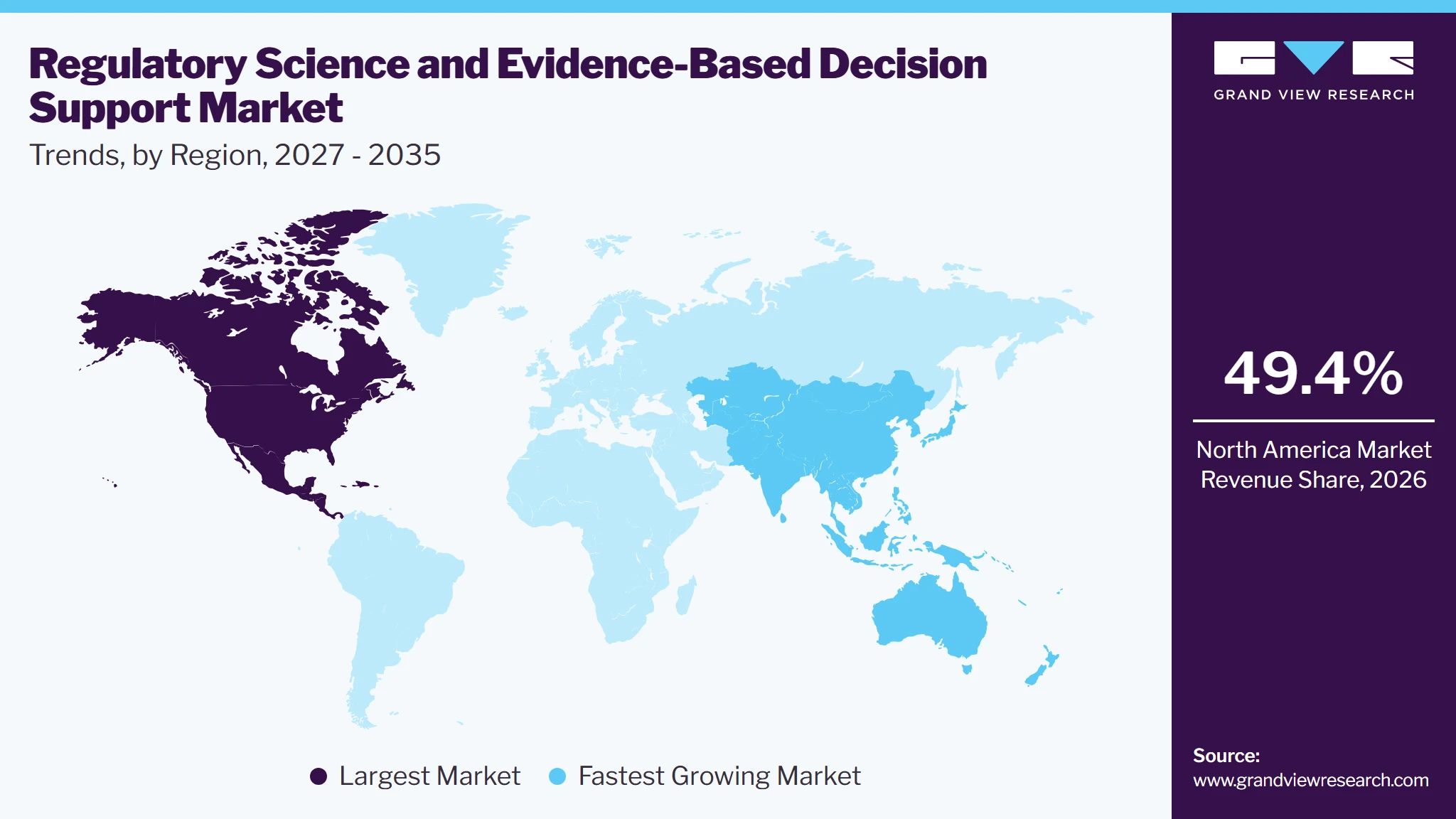
North America dominated the regulatory science & evidence-based decision support market with a revenue share of 49.4% in 2026, driven by the complexity of pharmaceutical and biologic development, the need for scientific regulatory submissions, and the growing use of computational models and real-world evidence in health authority decision-making.
 To learn more about this report, Download Free Sample Report
The FDA’s model-informed drug development programs and broader regulatory science initiatives are supporting demand for PK/PD modelling, PBPK analysis, QSP, dose optimization, and clinical trial design solutions. For instance, in May 2026, Laval, Quebec-based Altasciences announced a strategic partnership with Certara to integrate Certara’s drug development services and biosimulation technology into Altasciences’ development platform to refine dosing strategies, optimize study designs, and support early-stage development decisions.
U.S. Regulatory Science & Evidence-Based Decision Support Market Trends
The U.S. dominated the regulatory science & evidence-based decision support market in the North America region in 2026. The growing use of real-world data (RWD) and real-world evidence (RWE) in drug development increases demand for evidence validation, data assessment, regulatory writing, and specialized analytical services, while the integration of AI into regulatory workflows is emerging as a key technology trend. For instance, in July 2024, ArisGlobal introduced an updated version of its LifeSphere Regulatory platform with optional generative AI capabilities through its NavaX technology, supporting regulatory content ingestion, content generation, and regulatory insights.
Europe Regulatory Science & Evidence-Based Decision Support Market Trends
The regulatory science & evidence-based decision support market in Europe accounted for a significant revenue share in 2026, driven by the region’s consistent pharmaceutical regulatory framework, complex drug development requirements, and demand for scientifically reliable evidence across multiple health authorities.
For instance, in September 2024, the European Medicines Agency published its reflection paper on the use of artificial intelligence in the medicinal product lifecycle, outlining considerations for AI applications in nonclinical development, clinical trials, manufacturing, and post-authorization activities. In addition, in January 2025, Munich-based athagoras acquired Quantify Research, a Nordic specialist in real-world evidence (RWE) and market access, strengthening the availability of evidence-generation and assessment services for companies navigating European regulatory and reimbursement requirements.
The regulatory science & evidence-based decision support market in the UK is expected to grow significantly during the forecast period, supported by increasing drug-development complexity, growing adoption of RWE, and demand for efficient, evidence-based regulatory decisions.
Asia Pacific Regulatory Science & Evidence-Based Decision Support Market Trends
The Asia Pacific regulatory science & evidence-based decision support market is expected to register the fastest CAGR of 13.6% from 2027 to 2035, supported by expanding pharmaceutical and biotechnology activity, evolving regulatory requirements, and growing demand for reliable evidence across diverse national regulatory systems. Commercial partnerships are expanding access to specialized modelling capabilities across the region. For instance, in March 2025, Certara partnered with Japan-based A2 Healthcare to expand Japanese pharmaceutical companies’ access to biosimulation software and model-informed drug development services. The collaboration covers capabilities such as population pharmacokinetics, pharmacokinetic/pharmacodynamic (PK/PD) analysis, PBPK modelling, and exposure-response assessment.
China’s regulatory science & evidence-based decision support market held the significant share in the in 2026, driven by pharmaceutical innovation, regulatory modernization, and increasing integration of artificial intelligence into drug oversight. The National Medical Products Administration (NMPA) and the Center for Drug Evaluation (CDE) oversee medicine assessment and regulatory evidence requirements, and in December 2024, the CDE issued its Technical Guideline for Model-Informed Innovative Drug Dose Exploration and Optimization. Furthermore, in August 2026, the NMPA published its implementation opinions on “Artificial Intelligence + Drug Regulation,” outlining the application of AI across review and approval, inspection, testing, safety surveillance, and regulatory administration.
Latin America Regulatory Science & Evidence-Based Decision Support Market Trends
The Latin America regulatory science & evidence-based decision support market held the significant share in 2026, This is supported by pharmaceutical regulatory modernization, increasing alignment with international submission standards, and growing emphasis on reliable scientific evidence for medicine evaluation. For instance, in November 2025, Certara partnered with Brazil’s National Health Surveillance Agency (ANVISA) to introduce electronic Common Technical Document (eCTD) 4.0 submissions through its GlobalSubmit software, integrating submission authoring, publishing, validation, and review.
Middle East & Africa Regulatory Science & Evidence-Based Decision Support Market Trends
The Middle East and Africa regulatory science & evidence-based decision support market is growing significantly, supported by pharmaceutical regulatory modernization, the expansion of digital submission infrastructure, and increasing emphasis on standardized clinical and safety evidence for medicine evaluation. For instance, in June 2026, the Egyptian Drug Authority advanced Phase II of its electronic Common Technical Document (eCTD) project in collaboration with DAF and EXTEDO, covering eCTD 4.0, Master Data Management, and a regulatory information management system (RIMS).
Key Regulatory Science & Evidence-Based Decision Support Company Insights:
Key participants in the regulatory science & evidence-based decision support market are focusing on devising innovative business growth strategies, such as expanding their product portfolios, partnerships and collaborations, mergers and acquisitions, and expanding their business footprints.
Key Regulatory Science and Evidence-Based Decision Support Companies:
The following key companies have been profiled for this study on the regulatory science & evidence-based decision support market.
-
Certara
-
Simulations Plus (Altaris, LLC)
-
Cytel
-
Clarivate
-
IQVIA
-
ArisGlobal
-
RegASK
-
Redica Systems
-
Instem
-
Yseop
-
Parexel International
-
ICON plc
-
Thermo Fisher Scientific Inc.
-
PharmaLex
-
Freyr
Competitive Benchmarking
Category
Operating Strategies
Competitive Edge
Weaknesses
Certara, Simulations Plus, Inc. (acquired by Altaris, LLC)
Cytel Inc., Clarivate
IQVIA, ArisGlobal
Instem, Parexel International
ICON plc., Thermo Fisher Scientific, PharmaLex, Freyr
- Expand portfolios through acquisitions and collaborations
- Integrate AI across modeling, authoring, and submissions
- Regulatory expertise and validated scientific models
- Broad portfolios and strong industry relationships
- Legacy systems raise integration and maintenance costs
- Lengthy validation slows AI adoption
RegASK, Redica, Yseop
- Focus on AI-driven regulatory intelligence and writing
- Differentiate through traceable insights and platform integrations
- AI-native solutions for niche regulatory needs
- Agile development and faster adaptation
- Limited market presence and track record
- Reliance on third-party platforms and evolving AI
Recent Developments:
-
In October 2026, Simulations Plus announced the completion of its acquisition by Altaris and its combination with Chemical Computing Group (CCG), a provider of molecular modeling and drug discovery software, bringing together complementary technologies spanning drug discovery, modeling, simulation, and drug development.
-
In October 2026, Clarivate completed the sale of its Life Sciences & Healthcare segment to Altaris for USD 600 million, enabling the company to focus on its Academia & Government and Intellectual Property businesses.
-
In October 2026, Simulations Plus announced a funded partnership with a global pharmaceutical company to advance AI-enabled quantitative systems pharmacology (QSP) model development using Turin.
-
In April 2026, Certara announced a definitive agreement to sell its Regulatory Writing and Medical Writing business to Veristat for up to USD 135 million, sharpening its focus on Model-Informed Drug Development (MIDD), Clinical Intelligence, and AI-integrated modeling and simulation solutions.
“Certara’s strategy is centered on expanding the scale, reach, and impact of our MIDD and Clinical Intelligence solutions. This transaction underlines our commitment to the acceleration of AI-integrated modeling and simulation across the drug development lifecycle.”
-Jon Resnick, Chief Executive Officer, Certara
-
In December 2025, Clarivate launched the Cortellis Regulatory Intelligence AI Assistant, powered by agentic AI, to help life sciences regulatory teams interpret complex requirements through cited answers, multilingual search, automated document summarization, and comparison of draft and final regulatory guidance.
Regulatory Science & Evidence-Based Decision Support Market Report Scope
Report Attribute
Details
Market size in 2026
USD 2.4 billion
Estimated market size in 2027
USD 2.7 billion
Projected market size by 2035
USD 5.9 billion
Growth Rate
CAGR of 10.4% from 2027 to 2035
Base year for estimation
2026
Historical data
2023 - 2025
Forecast data
2027 - 2035
Quantitative units
Revenue in USD million/billion and CAGR from 2027 to 2035
Report coverage
Revenue forecast, company ranking, competitive landscape, growth factors, and trends
Segments covered
Component, application, deployment model, end use, and region
Regional scope
North America; Europe; Asia Pacific; Latin America; MEA
Country scope
U.S.; Canada; Mexico; UK; Germany; France; Italy; Spain; Sweden; Denmark; Norway; China; Japan; India; South Korea; Australia; Thailand; Brazil; Argentina; South Africa; Saudi Arabia; UAE; Kuwait
Key companies profiled
Certara; Simulations Plus (Altaris, LLC); Cytel; Clarivate; IQVIA; ArisGlobal; RegASK; Redica Systems; Instem; Yseop; Parexel International; ICON plc; Thermo Fisher Scientific Inc.; PharmaLex; Freyr
Customization scope
Free report customization (equivalent up to 8 analysts working days) with purchase. Addition or alteration to country, regional & segment scope.
Pricing and purchase options
Avail customized purchase options to meet your exact research needs. Explore purchase options.
Global Regulatory Science & Evidence-Based Decision Support Market Report Segmentation
This report forecasts revenue growth at global, regional, and country levels and provides an analysis of the latest trends in each of the sub-segments from 2023 to 2035. For this report, Grand View Research has segmented the global regulatory science and evidence-based decision support market report based on component, application, deployment model, end use, and region:
-
Component Outlook (Revenue USD Million, 2023 - 2035)
-
Software
-
Regulatory Intelligence & Requirements Management Software
-
Model-Informed Evidence Generation Software (PK/PD, PBPK, QSP, Trial Design & Simulation)
-
Evidence Standards, Validation & Submission Readiness Software
-
Regulatory Authoring & Evidence Synthesis Software
-
-
Services
-
Regulatory Strategy & Pathway Consulting
-
Model-Informed Drug Development (MIDD) & Pharmacometrics Services
-
Regulatory Writing & Evidence Dossier Services
-
Regulatory Intelligence & Policy Monitoring Services
-
-
-
Application Outlook (Revenue USD Million, 2023 - 2035)
-
Development Strategy & Regulatory Pathway Planning
-
Dose Selection & Optimization
-
Clinical Trial Design & Special-Population Extrapolation
-
Safety & Drug-Drug Interaction Assessment
-
Regulatory Submissions & Health Authority Interactions
-
Lifecycle Management & Post-Approval Changes
-
Others
-
-
Deployment Model Outlook (Revenue USD Million, 2023 - 2035)
-
Cloud-based
-
On-premise
-
Hybrid
-
-
End Use Outlook (Revenue USD Million, 2023 - 2035)
-
Life Sciences Companies
-
Pharmaceutical Companies
-
Biopharmaceutical & Biotechnology Companies
-
Medical Device & Diagnostics Companies
-
-
CROs & Regulatory Consultancies
-
Regulatory Authorities & HTA Bodies
-
Academic & Research Institutions
-
Others
-
-
Regional Outlook (Revenue, USD Million, 2023 – 2035)
-
North America
-
U.S.
-
Canada
-
Mexico
-
-
Europe
-
UK
-
Germany
-
France
-
Italy
-
Spain
-
Sweden
-
Denmark
-
Norway
-
-
Asia Pacific
-
China
-
Japan
-
India
-
South Korea
-
Australia
-
Thailand
-
-
Latin America
-
Brazil
-
Argentina
-
-
Middle East & Africa
-
South Africa
-
Saudi Arabia
-
UAE
-
Kuwait
-
-
Research Methodology
The global regulatory science & evidence-based decision support market figures in this report are based on a proven research process that combines executive interviews with secondary research from proprietary databases, company filings, and recognized regulatory and institutional sources. Market size is built through value-chain sizing-reconciling supply-side and demand-side estimates-and triangulated with bottom-up and top-down approaches. Every estimate passes multiple levels of expert validation before publication, with each regulatory science & evidence-based decision support segment quantified using the revenue-capture definitions in the table below.
Segment Definition
Component
Revenue Capture Definition
Software
Revenue generated from software solutions supporting regulatory intelligence, model-informed evidence generation, evidence validation, and regulatory document preparation, including regulatory intelligence & requirements management, model-informed evidence generation (PK/PD, PBPK, QSP, trial design & simulation), evidence standards, validation & submission readiness, and regulatory authoring & evidence synthesis software (including AI-assisted).
Services
Revenue generated from specialized services supporting regulatory pathway planning, quantitative evidence generation, regulatory documentation, and regulatory intelligence, including regulatory strategy & pathway consulting, MIDD & pharmacometrics services, regulatory writing & evidence dossier services, and regulatory intelligence & policy monitoring services.
Application
Revenue Capture Definition
Development Strategy & Regulatory Pathway Planning
Revenue generated from program strategy, expedited pathways (e.g., Breakthrough Therapy, PRIME), and orphan designations.
Dose Selection & Optimization
Revenue generated from exposure-response and model-based dose selection, including oncology dose optimization.
Clinical Trial Design & Special-Population Extrapolation
Revenue generated from adaptive and simulated trial designs and extrapolation to pediatric and organ-impairment populations.
Safety & Drug-Drug Interaction Assessment
Revenue generated from PBPK-based drug-drug interaction (DDI) assessment and in silico toxicology.
Regulatory Submissions & Health Authority Interactions
Revenue generated from submission readiness, dossier preparation, and responses to health authority questions.
Lifecycle Management & Post-Approval Changes
Revenue generated from label expansions, formulation and bioequivalence waivers, and post-approval variations.
Others
Revenue generated from other evidence uses, such as HTA and payer evidence packages not linked to a regulatory decision.
Deployment Model
Revenue Capture Definition
Cloud-based
Revenue generated from regulatory intelligence, model-informed evidence generation, and regulatory authoring tools accessed through internet-based platforms.
On-premise
Revenue generated from regulatory science and evidence-based decision support software deployed on an organization’s internal IT infrastructure.
Hybrid
Revenue generated from solutions combining cloud-based regulatory platforms with on-premise systems that retain sensitive data and documentation in controlled internal environments.
End Use
Revenue Capture Definition
Life Sciences Companies
Revenue generated from pharmaceutical, biopharmaceutical and biotechnology, and medical device and diagnostics companies purchasing software and services for their own development and lifecycle programs.
CROs & Regulatory Consultancies
Revenue generated from contract research organizations and regulatory consulting firms deploying modelling, regulatory intelligence, and documentation solutions to deliver outsourced services.
Regulatory Authorities & HTA Bodies
Revenue generated from regulatory agencies and health technology assessment bodies applying evidence assessment and analytical methods for regulatory decisions and health technology assessments.
Academic & Research Institutions
Revenue generated from academic and research institutions developing computational methods, validation frameworks, and scientific approaches for evidence generation and regulatory assessment.
Others
Revenue generated from government-funded research organizations, independent clinical research centers, and healthcare institutions using regulatory science and evidence-assessment capabilities.
Estimation Model
Approach
Details
Supply-Side Revenue Attribution (Model 1)
The base-year value was built bottom-up from company revenue (company market share approach), using the latest fiscal-year filings, attributing only revenue linked to regulatory-science and evidence decision-support software and services, and grouping other players by provider type.
Demand-Side End-User Spend Assessment (Model 2)
An independent demand-side assessment validated the supply-side value by estimating what each end-use group spends on regulatory-science software and services in 2026, based on published evidence of buyer activity and typical annual spend per buyer.
Segment Share Assessment
Segment shares were set at the global level for 2023, 2026, and 2035 with intermediate years interpolated, considering regulatory programs such as ICH M15, Project Optimus, ICH E11A, and ICH M7, vendor revenue mix, and demand-side buyer-group estimates.
Market Triangulation & Country-Level Analysis
The supply-side analysis was retained as the base-year control total and cross-validated with demand-side estimates; country estimates used vendor billing geography and a demand-side index of R&D expenditure, clinical-trial activity, and healthcare spending.
Forecasting
Forecasts considered wider regulatory acceptance of model-informed evidence, regulatory encouragement of NAMs and in silico evidence, joint clinical assessments under the EU HTA Regulation, growing use of RWE, and AI adoption to estimate the CAGR from 2027 to 2035.
Delivered Customizations
This report has been delivered with the following In-depth customizations
Customization Option
Description
Value to Client
Pricing Benchmarks and Pricing Model Analysis
Analysis of license-based, subscription / SaaS, service-based, and pay-per-use pricing for regulatory science software and services across key countries.
Supports pricing strategy, competitor benchmarking, and identification of revenue opportunities.
Competitive Positioning & Market Share Analysis
Company market share analysis, evidence path capability benchmarking (generate, assess, justify, submit), product benchmarking, and recent developments.
Enables benchmarking of established and emerging players and identification of partnership and expansion strategies.
Technology Landscape
Detailed assessment of modelling and simulation platforms, regulatory intelligence and knowledge platforms, structured content and AI-assisted authoring tools, and clinical data standards and validation (CDISC).
Helps clients evaluate technology adoption trends, identify emerging digital and AI-enabled solutions, assess technology gaps, and prioritize investments in platforms that improve regulatory efficiency, data quality, and submission readiness.
Strategic Recommendations
Actionable recommendations based on growth drivers, application trends, regional potential, regulatory dynamics, and AI adoption.
Supports decision-making on priority segments, market entry, product development, and geographic expansion.
Frequently Asked Questions About This Report
Key factors that are driving the market growth include the growing regulatory acceptance of model-informed drug development (MIDD), rising cost, complexity, and evidence requirements of drug development, and the adoption of AI and generative AI in regulatory authoring, intelligence, and evidence synthesis.
Some key players operating in the regulatory science & evidence-based decision suppor market include Certara; Simulations Plus (Altaris, LLC); Cytel; Clarivate; IQVIA; ArisGlobal; RegASK; Redica Systems; Instem; Yseop; Parexel International; ICON plc; Thermo Fisher Scientific Inc.; PharmaLex; Freyr
The development strategy & regulatory pathway planning segment held the largest revenue share of 19.9% in 2026.
The cloud-based segment held the largest revenue share of 67.8% in 2026.
Asia Pacific regulatory science & evidence-based decision support market is anticipated to register the fastest CAGR over the forecast period 2027 to 2035.
The global regulatory science and evidence-based decision support market size was valued at USD 2.4 billion in 2026 and is estimated at USD 2.7 billion for 2027.
The global regulatory science and evidence-based decision support market is expected to grow at a CAGR of 10.4% from 2027 to 2035, reaching USD 5.9 billion by 2035.
The services segment led with a 61.0% revenue share in 2026
North America dominated the global regulatory science & evidence-based decision support market with a revenue share of 49.4% in 2026.
About the Author(s)
Healthcare IT Research Team
Healthcare · Healthcare ITThis report was authored by the healthcare it research team at Grand View Research - comprising two research analysts, one senior research analyst, and one industry expert - with specialized expertise in the healthcare it segment of the healthcare industry. All findings are based on proprietary healthcare databases, executive interviews, and regulatory analysis, subject to internal peer review prior to publication.
Last Updated:
Speak to Analyst

Customize this report to your needs - add regions, segments, or data points, with 20% free customization.
Or view our licence options:


ISO 9001:2015 & 27001:2022 Certified
We are GDPR and CCPA compliant! Your transaction & personal information is safe and secure. For more details, please read our privacy policy.


