
- Home
- »
- Biotechnology
- »
-
RNAi Technology Market Size, Share & Growth Report, 2033GVR Report cover

RNAi Technology Market (2026 - 2033)
Size, Share & Trends Analysis Report By Product & Services (Products, Services), By Application (Drug Discovery & Development, Functional Genomics), By End Use, By Region, And Segment Forecasts
Market Size, 2025
$3.3BMarket Estimate, 2026
$3.7BMarket Forecast, 2033
$9.5BCAGR, 2026–2033
14.6%RNAi Technology Market Summary
The global RNAi technology market size was valued at USD 3.3 billion in 2025 and is projected to grow from USD 3.7 billion in 2026 to USD 9.5 billion by 2033, at a CAGR of 14.6% from 2026 to 2033. North America dominated the global market, accounting for the largest revenue share of 38.3% in 2025. The market growth can be attributed to the increasing prevalence of autoimmune diseases, rare disorders, and cancer across the globe.
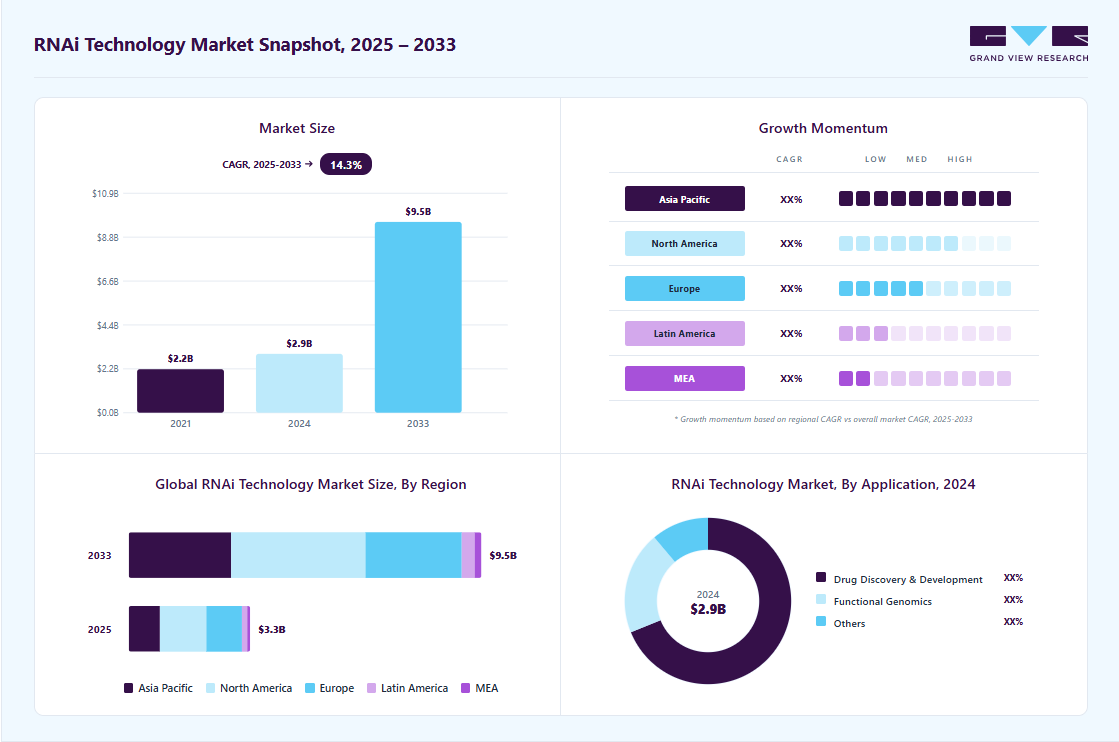 Source: Grand View Research, IR Documents, Primary Interviews, Paid DatabasesTo learn more about this report,
 Download Free Sample Report
 Key Market Trends & Insights
- By product & service: Product held the largest market share of 67.8% in 2025
- By application: Drug discovery & development held the largest market share in 2025
- By end use: Pharmaceutical & biotechnology companies held the largest revenue share of 56.5% in 2025
Regional Highlights
- Largest regional market: North America (38.3% revenue share, 2025)
- Fastest-growing regional market: Asia Pacific (fastest CAGR, 2026-2033)
- By country: The U.S. is expected to grow significantly from 2026 to 2033
Market Size & Forecast
- Market Size in 2025: USD 3.3 Billion
- Estimated Market Size in 2026: USD 3.7 Billion
- Projected Market Size by 2033: USD 9.5 Billion
- CAGR (2026-2033): 14.6%
GVR research-powered AIAsk Prism AI about the RNAi technology marketGet cited answers from GVR research on market growth, segments, regulations and forecasts.Start with✓ Source-linked answers ✓ Market-specific context ✓ Traceable figuresExplore Prism AI ↗ To learn more about this report, Download Free Sample Report
 Market Dynamics
The RNAi technology market is experiencing steady growth, driven by the increasing adoption of RNA interference in functional genomics, target validation, and drug discovery. Rising investments in genomics research, expanding therapeutic pipelines for rare and chronic diseases, and growing collaborations between pharmaceutical companies and research organizations are supporting market expansion. Moreover, the increasing focus on precision medicine, favorable funding for life science research, and the growing commercialization of RNAi-based therapeutics are expected to sustain market growth over the forecast period.
Continuous technological advancements in RNAi techniques are significantly driving the growth of the RNAi technology market. Innovations in RNA interference platforms, including improved algorithms for siRNA and miRNA design, high-throughput screening technologies, and enhanced gene-silencing efficiency, have expanded the applicability of RNAi in functional genomics, target validation, and drug discovery. In addition, advancements in delivery technologies, such as lipid nanoparticles (LNPs), conjugate-based delivery systems, and targeted formulations, have helped overcome major challenges in intracellular delivery and stability of RNAi molecules, thereby accelerating their adoption in both research and therapeutic applications.
For instance, in August 2025, Alnylam Pharmaceuticals announced that it had advanced its investigational RNAi therapeutic, zilebesiran, into a global Phase 3 cardiovascular outcomes trial following positive Phase 2 results, highlighting continued advancements in RNAi delivery technologies and therapeutic efficacy. Such developments demonstrate the growing maturity of RNAi platforms and their expanding potential across diverse therapeutic areas, thereby creating new growth opportunities for the market.
The high development and manufacturing costs associated with RNAi technologies represent a significant restraint to market growth. The development of RNAi-based therapeutics involves extensive investments in target identification, sequence optimization, preclinical validation, and clinical trials. Moreover, the design and synthesis of highly specific siRNA and miRNA molecules require sophisticated technologies and specialized expertise, resulting in substantial research and development expenditures. These factors increase the overall cost of product development and may limit participation by small and mid-sized biotechnology companies.
In addition, manufacturing RNAi therapeutics is complex due to stringent quality control requirements, specialized production facilities, and the need for advanced delivery systems, such as lipid nanoparticles and conjugate platforms. Maintaining product stability, ensuring efficient delivery, and meeting regulatory standards further add to production costs. In addition, the high capital requirements and manufacturing expenses may impact the global commercialization and adoption of RNAi technologies, particularly in cost-sensitive healthcare markets.
Market Concentration & Characteristics
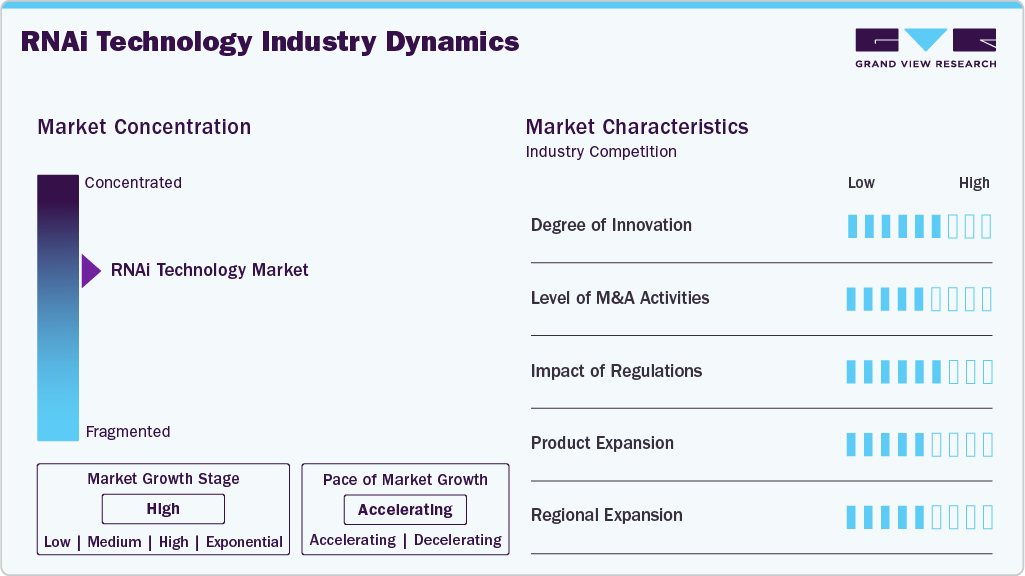
The RNAi technology market is characterized by a high degree of innovation. Recent developments in molecular biology, biotechnology, and therapeutic development have propelled substantial innovation in the RNAi technology industry. Through the silencing of genes linked to diseases, RNA interference (RNAi) has been used more to create treatments for genetic disorders. Moreover, numerous RNAi-based therapies targeting a variety of illnesses, such as neurological disorders, metabolic diseases, and viral infections, are currently undergoing clinical trials at various stages.
The RNAi technology industry is witnessing a moderate to high level of mergers, acquisitions, and strategic partnerships as companies seek to strengthen RNAi pipelines, expand therapeutic capabilities, and accelerate the development of novel gene-silencing therapies. Industry participants are increasingly collaborating to leverage complementary expertise, delivery technologies, and commercialization capabilities. For instance, in December 2023, Innovent and SanegeneBio entered into a strategic partnership to develop an siRNA drug the treat hypertension. This trend is expected to support innovation, broaden product portfolios, and enhance the competitive landscape of the market.
 To learn more about this report, Download Free Sample Report
 The regulatory impact on the RNAi technology market is significant. Regulatory agencies such as the FDA and European Medicines Agency are developing and refining guidelines for advanced therapeutic applications. These guidelines aim to establish a framework for the assessment of clinical trials, addressing issues such as off-target effects, unintended consequences, and long-term safety.
The market has witnessed moderate product expansion, driven by increasing investments in RNAi therapeutics, expanding clinical pipelines, and growing commercialization of gene-silencing technologies. Companies are strengthening their product portfolios through new product launches, label expansions, and manufacturing advancements. For instance, in March 2025, Alnylam Pharmaceuticals received U.S. FDA approval for an expanded indication of AMVUTTRA (vutrisiran) for the treatment of ATTR amyloidosis with cardiomyopathy, significantly broadening its commercial RNAi therapeutics portfolio and patient reach. This is expected to strengthen the company's market position and accelerate the adoption of RNAi-based therapies.
The industry is witnessing a high level of regional expansion, driven by increasing genomics and molecular biology research, growing investments in RNA-based therapeutics, and expanding biotechnology infrastructure across emerging markets. Rising adoption of RNAi technologies in drug discovery and precision medicine is further strengthening the market presence across key geographic regions.
Analyst Perspective
The RNAi technology market is expected to witness significant growth, driven by increasing adoption of RNA interference in drug discovery, functional genomics, target validation, and therapeutic development. Rising investments in precision medicine, oncology research, and rare disease therapeutics are accelerating the demand for RNAi-based reagents, delivery technologies, and screening platforms. Continuous advancements in siRNA design, delivery systems, and high-throughput screening technologies are improving research efficiency and therapeutic potential. In addition, growing biopharmaceutical R&D activities and expanding clinical development of RNAi therapeutics are expected to support long-term market growth, encouraging companies to focus on innovation, strategic collaborations, and portfolio expansion.
Product & Service Insights
The products segment dominated the RNAi technology market, accounting for the largest revenue share of over 67.8% in 2025, due to the high specificity of RNAi-based tools in targeting and degrading mRNA, enabling precise molecular interventions. Rising investments are also strengthening product pipelines. For instance, in August 2023, ADARx Pharmaceuticals raised USD 200 million in Series C funding to advance its siRNA programs, including ADX-324 and ADX-038, and further develop its RNA-targeting and delivery platforms. Such investments are expected to support product innovation and segment growth over the forecast period.
The services segment is expected to grow at the fastest CAGR over the forecast period, driven by the increasing complexity of RNAi research and the growing demand for specialized expertise in drug discovery and therapeutic development. Contract Research Organizations (CROs) and specialized service providers offer end-to-end RNAi services, including target identification, assay development, preclinical studies, and clinical support, enabling biopharmaceutical companies to accelerate development timelines while reducing costs and operational complexity.
Application Insights
The drug discovery & development segment dominated the RNAi technology industry in 2025, accounting for a revenue share of 68.9%, and is expected to grow at the fastest CAGR during the forecast period. RNAi’s ability to precisely silence specific genes makes it an essential tool for studying gene function and validating therapeutic targets, supporting early-stage research. Rising investments, strategic collaborations for RNAi-based therapeutics, and continued advances in delivery technologies are further driving growth in this segment.
The functional genomics segment is expected to grow at a significant CAGR over the forecast period. driven by increasing research focused on understanding gene function and disease mechanisms. The growing use of functional genomics in target identification, biomarker discovery, and cancer research is accelerating the adoption of RNAi technologies, supporting the development of novel gene-based therapies.
End Use Insights
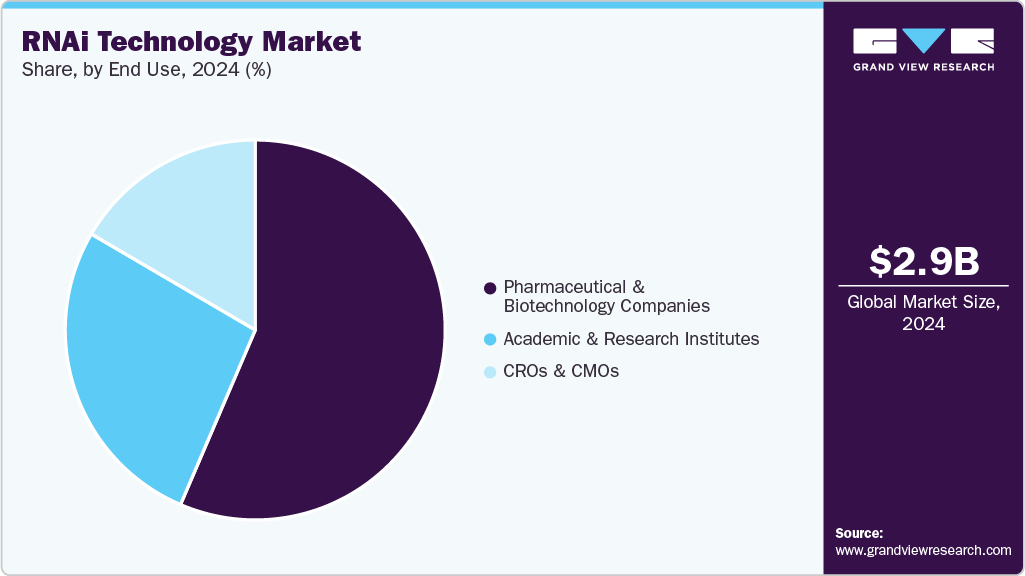
The pharmaceutical & biotechnology companies segment dominated the RNAi technology market, accounting for a revenue share of 56.5% in 2025. This is attributed to several factors, including ongoing research and development efforts, innovative therapies, and the introduction of advanced pharmaceutical products. In addition, the increasing demand for healthcare solutions and advancements in biotechnology contributed to the segment growth.
 To learn more about this report, Download Free Sample Report
 The CROs & CMOs segment is projected to grow at the fastest CAGR during the forecast period, as more pharmaceutical and biotech companies outsource to cut costs and boost efficiency. Businesses can access cutting-edge knowledge and technologies while concentrating on their core competencies by outsourcing research and manufacturing to specialized service providers.
Regional Insights
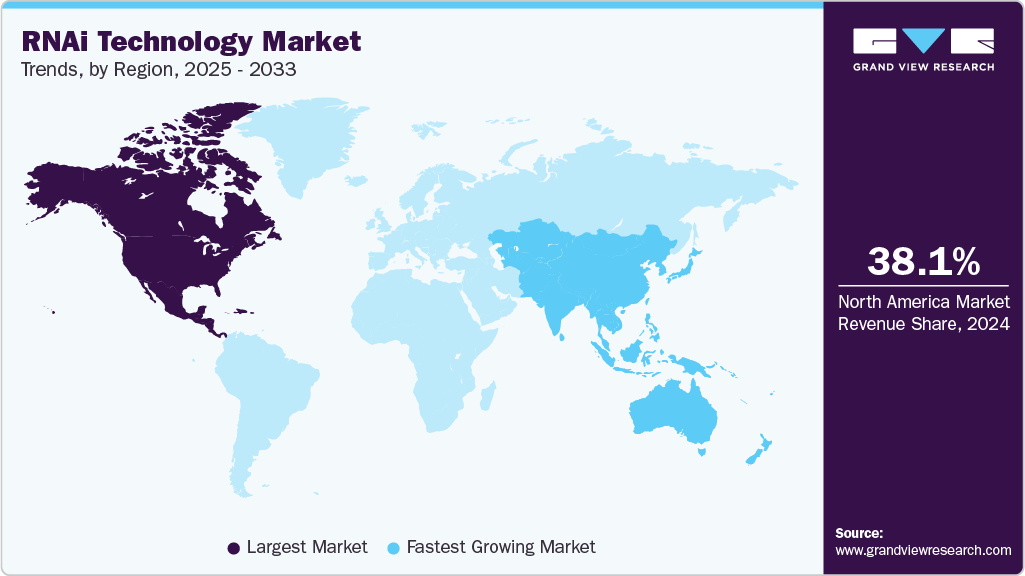
The North America RNAi technology market accounted for the largest global revenue share of 38.3% in 2025, driven by the strong presence of biotechnology and pharmaceutical companies, advanced research infrastructure, and increasing investments in RNA-based therapeutics. The growing development of RNAi therapies and innovations in oligonucleotide manufacturing further support regional growth. For instance, in November 2024, Codexis, Inc. successfully synthesized an oligonucleotide using an enzymatic manufacturing route, demonstrating advances in scalable manufacturing of RNA-based therapeutics.
 To learn more about this report, Download Free Sample Report
 U.S. RNAi Technology Market Trends
The U.S. RNAi technology industry is expected to grow significantly over the forecast period. The market growth can be attributed to the advancements in RNA-based technologies & their applications across various industries and the presence of key market players.
Europe RNAi Technology Market Trends
The Europe RNAi technology industry was identified as a lucrative region. With organizations like the Center for Genomic Regulation (CRG) and the National Center for Biotechnology (CNB) actively investigating RNA interference applications in healthcare, this further supports the regional market growth.
The UK RNAi technology market held a significant revenue share in 2025, driven by the rising prevalence of genetic disorders & diseases, the need for more efficient and effective treatments, and the growing interest in gene-editing technologies among researchers & scientists.
The RNAi technology market in Germany is anticipated to grow significantly over the forecast period. Germany’s strong R&D landscape in these areas is expected to improve the adoption of innovative therapies. Germany is one of the global leaders in scientific research, with renowned institutions & multiple biotechnology companies actively developing RNA-based research tools and novel therapeutics. For instance, in April 2024, Merck invested in a new Life Science Research Center in Germany, expanding capabilities in mRNA and bioproduction technologies to meet rising global demand in the market.
Asia Pacific RNAi Technology Market Trends
The Asia Pacific RNAi technology industry is expected to grow at the fastest CAGR of 16.6% during the forecast period, driven by the rising prevalence of genetic and chronic diseases, increasing investments in biotechnology and genomics research, and expanding biopharmaceutical manufacturing. High birth rates and the growing burden of inherited disorders in several countries are further supporting the adoption of RNAi-based therapeutics across the region.
The China RNAi technology market is growing significantly, driven by the rising prevalence of genetic and chronic diseases, the growing demand for personalized medicine, and expanding investments in RNA-based therapeutics. Government support for biotechnology innovation and the growing presence of domestic biopharmaceutical companies are further supporting market growth.
The RNAi technology market in Japan is witnessing rapid growth due to the growing adoption of precision medicine and personalized healthcare, which is boosting the demand for RNAi applications. In addition, Japan is a major player in scientific research, particularly in biotechnology & biopharmaceuticals.
MEA RNAi Technology Market Trends
The MEA RNAi technology industry is expected to grow exponentially over the forecast period. Cancer is a major public health concern in MEA. High mortality rates associated with the unavailability of resources, such as diagnostics, an underdeveloped healthcare infrastructure, and a lack of affordable treatment options, make MEA a preferred region for investment by large manufacturers. However, a limited number of institutes with advanced research facilities is limiting market growth in the region.
The Kuwait RNAi technology market is growing steadily, driven by increasing investments in precision medicine, expanding genomics research, and the gradual adoption of RNA-based therapeutics. Government initiatives to strengthen healthcare infrastructure and support biotechnology research are further contributing to the development of the country's RNAi ecosystem.
Key RNAi Technology Company Insights
Several well-known companies dominate the RNAi technology industry because of their extensive product lines, cutting-edge gene-silencing technologies, and consistent R&D expenditures. Due to their superior RNAi reagents, delivery systems, genome-wide siRNA/shRNA libraries, and robust global distribution networks, industry leaders such as Thermo Fisher Scientific, Inc.; Merck KGaA; Danaher; and Revvity hold significant market share. By providing integrated RNAi workflows that aid in drug discovery, functional genomics, and therapeutic development, companies continue to strengthen their position in the market.
Key RNAi Technology Companies
The following key companies have been profiled for this study on the RNAi technology market.
-
Thermo Fisher Scientific, Inc.
-
Merck KGaA
-
Creative Biolabs
-
GenScript
-
Revvity
-
Promega Corporation
-
OriGene Technologies, Inc.
-
Altogen Biosystems
-
Danaher
-
Bioneer Corporation
Competitive Benchmarking
Category
Operating Strategies
Competitive Edge
Weakness
Established Players (Thermo Fisher Scientific, Merck KGaA, Danaher, GenScript, etc.)
- Strengthen market presence through strategic collaborations, acquisitions, and investments in functional genomics, drug discovery, and precision medicine applications.
- Comprehensive life science ecosystems enabling seamless integration of RNAi reagents with molecular biology, genomics, and cell analysis workflows.
- Intense competition and rapid technological advancements requiring continuous innovation and portfolio expansion.
Emerging Players (Creative Biolabs, OriGene Technologies, Altogen Biosystems)
- Focus on customized RNAi services, gene silencing products, and application-specific solutions for research and preclinical studies.
- Strong expertise in customized RNAi design, gene knockdown technologies, and flexible research solutions.
- Limited global presence and financial resources compared to multinational life science companies.
Recent Developments
-
In November 2025, SanegeneBio in China and the US signed a global licensing deal with Eli Lilly to develop LEAD-enabled RNAi therapies for metabolic diseases, reflecting rising global demand for advanced RNAi technologies.
-
In October 2025, Creative Biolabs in the US launched a fully integrated RNA therapeutics platform, strengthening global RNAi research capacity and supporting rising demand for advanced RNAi-based drug discovery solutions.
-
In May 2025, Biogen and City Therapeutics in the US formed a collaboration to develop RNAi therapies, reflecting rising global demand for next-generation RNAi technologies and advanced CNS-targeted delivery platforms.
-
In August 2024, Skyhawk Therapeutics in the US entered a multibillion-dollar collaboration with Merck KGaA to discover small RNA-targeting molecules, reflecting surging global demand for RNA-modulation technologies in neurological drug development.
"We are proud to partner with Merck KGaA, Darmstadt, Germany a company with a strong heritage of innovation and a commitment to advancing transformative science."
- Bill Haney, Chief Executive Officer of Skyhawk Therapeutics.
RNAi Technology Market Report Scope
Report Attribute
Details
Market size in 2025
USD 3.3 billion
Estimated market size in 2026
USD 3.7 billion
Projected market size by 2033
USD 9.5 billion
Growth rate
CAGR of 14.6% from 2026 to 2033
Historical data
2021 - 2025
Forecast period
2026 - 2033
Quantitative units
Revenue in USD million/billion and CAGR from 2026 to 2033
Report coverage
Revenue forecast, company ranking, competitive landscape, growth factors, and trends
Segments covered
Product & service, application, end use, region
Regional scope
North America; Europe; Asia Pacific; Latin America; MEA
Country scope
U.S.; Canada; Mexico; UK; Germany; France; Italy; Spain; Norway; Denmark; Sweden; China; Japan; India; South Korea; Australia; Thailand; Brazil; Argentina; Saudi Arabia; South Africa; UAE; Kuwait
Key companies profiled
Thermo Fisher Scientific, Inc.; Merck KGaA; Creative Biolabs; GenScript; Revvity; Promega Corporation; OriGene Technologies, Inc.; Altogen Biosystems; Danaher; Bioneer Corporation
Customization scope
Free report customization (equivalent up to 8 analysts' working days) with purchase. Addition or alteration to country, regional & segment scope.
Pricing and purchase options
Avail customized purchase options to meet your exact research needs. Explore purchase options
Global RNAi Technology Market Report Segmentation
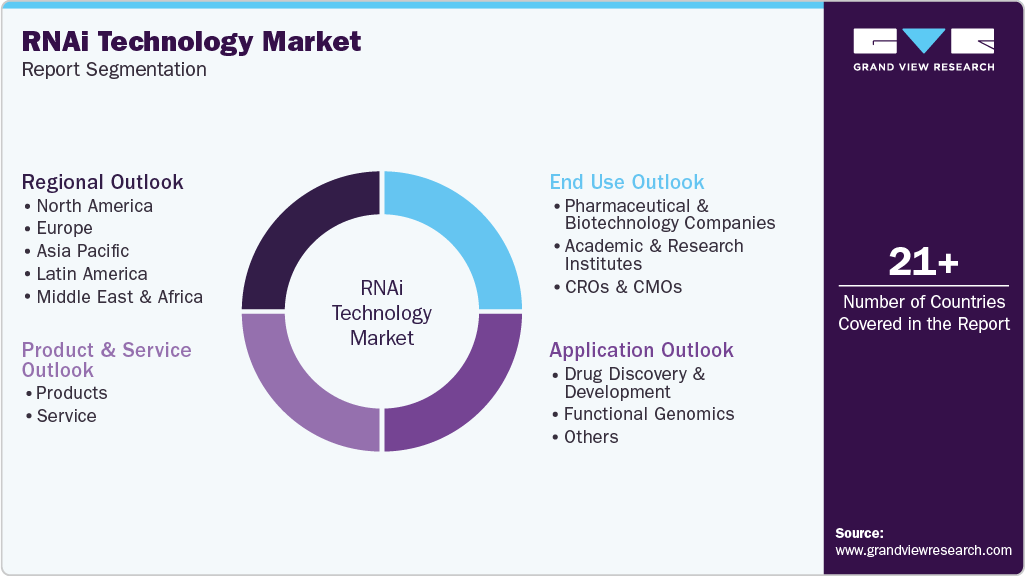
This report forecasts revenue growth and provides an analysis of the latest trends in each of the sub-segments from 2021 to 2033. For this study, Grand View Research has segmented the global RNAi technology market report based on product & service, application, end use, and region:
 To learn more about this report, Download Free Sample Report
 -
Product & Service Outlook (Revenue, USD Million/Billion, 2021 - 2033)
-
Products
-
siRNA products
-
miRNA products
-
Others
-
-
Services
-
-
Application Outlook (Revenue, USD Million/Billion, 2021 - 2033)
-
Drug Discovery & Development
-
Neurology
-
Oncology
-
Infectious Diseases
-
Metabolic Diseases
-
Others
-
-
Functional Genomics
-
Others
-
-
End Use Outlook (Revenue, USD Million/Billion, 2021 - 2033)
-
Pharmaceutical & Biotechnology Companies
-
Academic & Research Institutes
-
CROs & CMOs
-
-
Regional Outlook (Revenue, USD Million/Billion, 2021 - 2033)
-
North America
-
U.S.
-
Canada
-
Mexico
-
-
Europe
-
UK
-
Germany
-
France
-
Italy
-
Spain
-
Denmark
-
Sweden
-
Norway
-
-
Asia Pacific
-
Japan
-
China
-
India
-
Australia
-
Thailand
-
South Korea
-
-
Latin America
-
Brazil
-
Argentina
-
-
Middle East and Africa (MEA)
-
South Africa
-
Saudi Arabia
-
UAE
-
Kuwait
-
-
Research Methodology
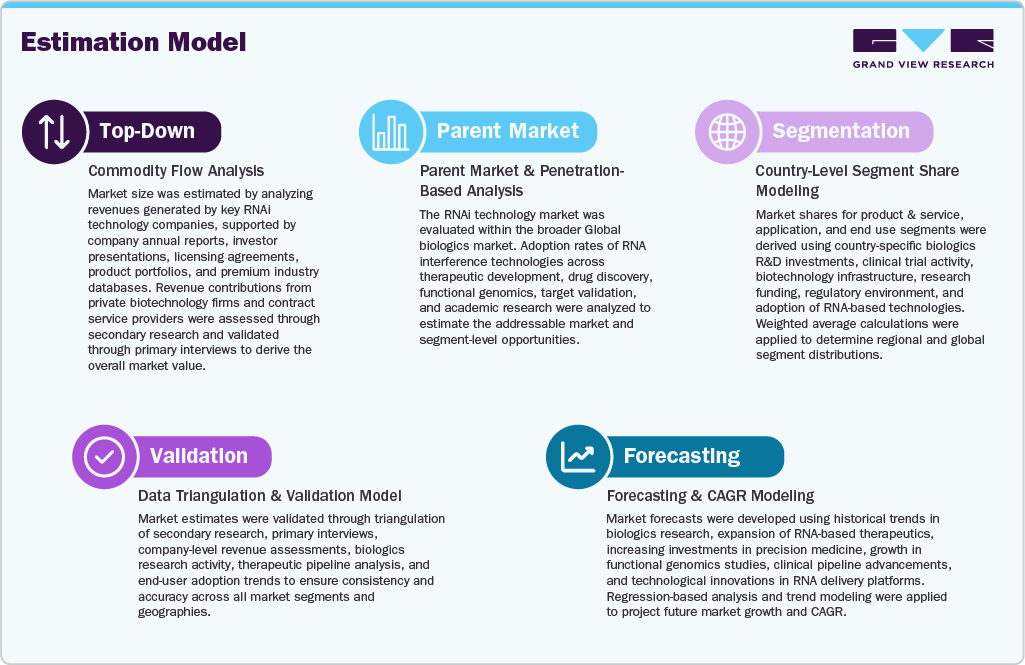
The RNAi technology market figures in this report are based on a proven research process that combines executive interviews with secondary research from proprietary databases, company filings, and recognized regulatory and institutional sources. Market size is built through value-chain sizing-reconciling supply-side and demand-side estimates-and triangulated with bottom-up and top-down approaches. Every estimate passes multiple levels of expert validation before publication, with each RNAi technologysegment quantified using the revenue-capture definitions in the table below.
Segment Definition
Segment- Product & Service
Revenue Capture Definition
Products
Revenue generated from RNA interference (RNAi)-based products used to silence or regulate gene expression across research, drug discovery, and therapeutic development. This segment encompasses microRNA (miRNA)-based products, small interfering RNA (siRNA) products, and other RNAi molecules, along with associated reagents and consumables that enable functional gene studies, target validation, and development of RNAi-based therapeutics.
Services
This segment captures income from contract and specialized RNAi services supporting experimental design, RNAi library screening, custom RNA synthesis, assay development, target identification, bioinformatics analysis, and preclinical research. These services assist pharmaceutical companies, biotechnology firms, and research organizations in accelerating RNAi-based discovery and therapeutic development.
Segment- Application
Revenue Capture Definition
Drug Discovery & Development
Revenue originates from the application of RNAi technologies to identify and validate therapeutic targets, evaluate gene function, screen drug candidates, and develop RNAi-based therapeutics. The segment encompasses research and development activities across multiple therapeutic areas, including neurology, oncology, infectious diseases, metabolic diseases, and other disease indications, supporting precision medicine and next-generation drug development.
Functional Genomics
This segment reflects earnings from RNAi technologies used to investigate gene function, regulatory pathways, cellular mechanisms, and gene-to-phenotype relationships. These applications enable large-scale gene knockdown studies, pathway analysis, biomarker discovery, and systems biology research across academic and industrial laboratories.
Others
Market value in this category stems from RNAi applications beyond drug discovery and functional genomics, including agricultural biotechnology, veterinary research, industrial biotechnology, environmental studies, diagnostic research, and other emerging areas utilizing gene silencing technologies.
Segment- End Use
Revenue Capture Definition
Pharmaceutical & Biotechnology Companies
Revenue generated from RNAi products and services utilized by pharmaceutical and biotechnology companies for target identification, drug discovery, therapeutic development, biomarker research, and preclinical as well as clinical development of RNAi-based medicines.
Academic & Research Institutes
This segment captures income from RNAi technologies adopted by universities, government laboratories, and research institutes conducting basic, translational, and applied research in molecular biology, genetics, functional genomics, and disease biology.
CROs & CMOs
Market value arises from the use of RNAi technologies by contract research organizations (CROs) and contract manufacturing organizations (CMOs) providing outsourced research, assay development, RNA synthesis, preclinical testing, analytical services, and manufacturing support for pharmaceutical and biotechnology clients.
 To learn more about this report, Download Free Sample Report
 Delivered Customizations
This report has been delivered with the following In-depth customizations
Client Request
Customization Delivered
Value Adds
RNAi Product, End-user & Technology Cross-Segmentation Analysis
Detailed cross-segmentation of RNAi products (siRNA, miRNA, and other RNAi products) and services across pharmaceutical & biotechnology companies, academic & research institutes, and CROs & CMOs. Includes adoption trends, procurement patterns, outsourcing preferences, and technology utilization by end-user.
Helps clients identify the most attractive customer segments, optimize product positioning, refine go-to-market strategies, and uncover high-value commercialization opportunities across research and biopharma ecosystems.
RNAi Competitive Intelligence & Strategic Partnership Assessment
Comprehensive assessment of the competitive landscape covering RNAi technology developers, reagent suppliers, service providers, and therapeutic innovators. Includes benchmarking of product portfolios, patent activity, licensing agreements, strategic collaborations, acquisitions, research partnerships, and innovation pipelines across key market participants.
Enables clients to identify potential collaboration and licensing opportunities, benchmark innovation strategies, evaluate competitor strengths and gaps, monitor technology evolution, and support informed business development, investment, and market expansion decisions.
Frequently Asked Questions About This Report
The global RNAi technology market size was valued at USD 3.3 billion in 2025 and is estimated at USD 3.7 billion in 2026.
The global RNAi technology market is expected to grow at a compound annual growth rate of 14.6% from 2026 to 2033 to reach USD 9.5 billion by 2033.
North America dominated the RNAi technology market with a share of 38.3% in 2025. This is attributable to rising awareness about the technology coupled with the increasing adoption of antisense therapies in the region.
Some key players operating in the RNAi technology market include Thermo Fisher Scientific, Inc.; Merck KGaA; Creative Biolabs; GenScript; Revvity; Promega Corporation; OriGene Technologies, Inc.; Altogen Biosystems; Danaher; Bioneer Corporation
Key factors that are driving the market growth include the increasing prevalence of autoimmune diseases, rare disorders, and cancer across the globe and the rising demand for therapies targeting neurodegenerative disorders, genetic disorders, and cancer therapeutics.
Asia Pacific is the fastest-growing region over the forecast period.
The products segment led with a 67.8% revenue share in 2025, while services is the fastest-growing segment.
The drug discovery & development segment led with a 68.9% revenue share in 2025.
The pharmaceutical & biotechnology companies segment led with a 56.5% revenue share in 2025.
About the Author(s)
Biotechnology Research Team
Healthcare · BiotechnologyThis report was authored by the biotechnology research team at Grand View Research - comprising two research analysts, one senior research analyst, and one industry expert - with specialized expertise in the biotechnology segment of the healthcare industry. All findings are based on proprietary healthcare databases, executive interviews, and regulatory analysis, subject to internal peer review prior to publication.
Last Updated:
Speak to Analyst

Customize this report to your needs - add regions, segments, or data points, with 20% free customization.
Or view our licence options:


ISO 9001:2015 & 27001:2022 Certified
We are GDPR and CCPA compliant! Your transaction & personal information is safe and secure. For more details, please read our privacy policy.


