
- Home
- »
- Medical Devices
- »
-
Senior Living Market Size & Share, Industry Report, 2033GVR Report cover

Senior Living Market (2025 - 2033) Size, Share & Trends Analysis Report By Facility (Assisted Living Residences, Adult Care Facilities, Nursing Facilities, Memory Care, Active Adults 55+ Community), By Region (North America, Europe, Asia Pacific), And Segment Forecasts
Market Size, 2024
$2.0BMarket Estimate, 2026
$2.2BMarket Forecast, 2033
$3.3BCAGR, 2025–2033
5.5%Senior Living Market Summary
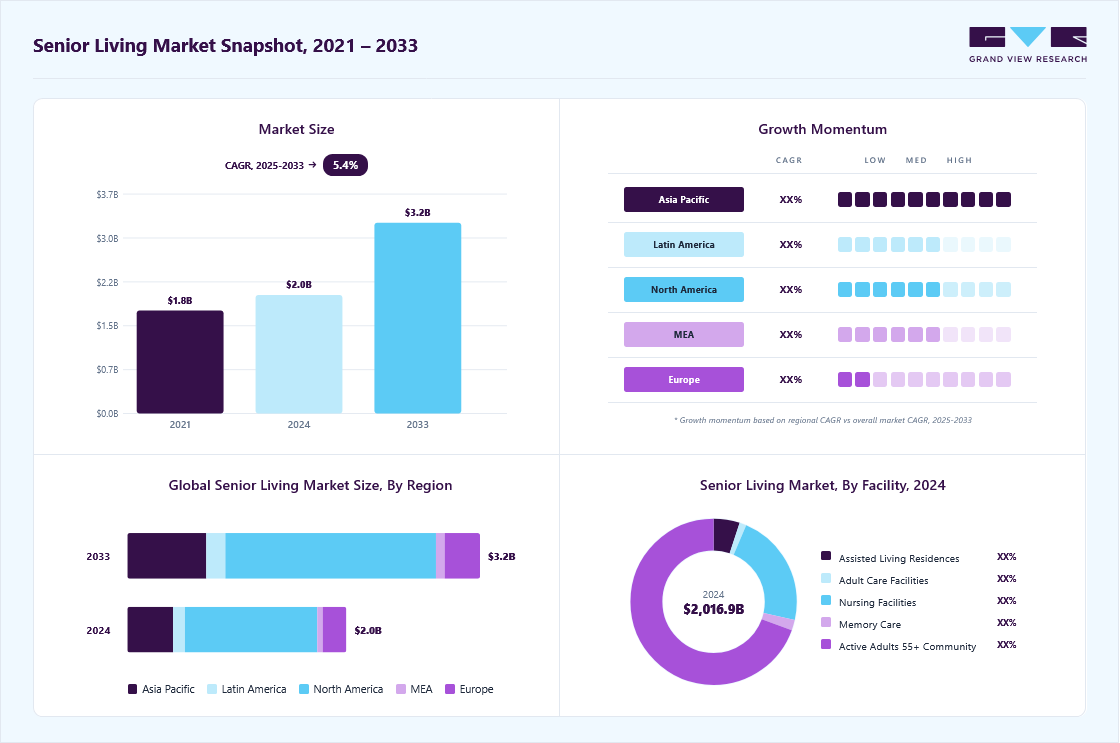
The global senior living market size was estimated at USD 2.02 billion in 2024 and is projected to reach USD 3.25 billion by 2033, growing at a CAGR of 5.48% from 2025 to 2033. This growth is attributed to the rapidly growing aging population, increasing life expectancy, and rising prevalence of chronic diseases that demand long-term care solutions.
 Source: Grand View Research, IR Documents, Primary Interviews, Paid DatabasesTo learn more about this report,
 Download Free Sample Report
 Key Market Trends & Insights
- North America led the global market in 2024, with the largest revenue share of 60.40%.
- The U.S. senior living industry is anticipated to register the fastest CAGR from 2025 to 2033.
- By facility, the active adults 55+ community segment held the largest revenue share of 69.52% in 2024.
Market Size & Forecast
- 2024 Market Size: USD 2.02 Billion
- 2033 Projected Market Size: USD 3.25 Billion
- CAGR (2025-2033): 5.48%
- North America: Largest Market in 2024
- Asia Pacific: Fastest growing market
Three ways to get this report
Buy it, customize it, or ask a question.Ask an Analyst
Analyst response in 1 business day
- AccessReport author, directly
- Reply timeWithin 1 working day
- No sales callDirect answer only
- FormatEmail reply
- CostFree, no cost
Get the Full Report
What the study covers
- FormatsPDF · Excel · Dashboard
- Timeline2025–2033 annual, 2024 base
- Coverage20+ countries, 5 regions
- Companies10+ key players profiled
Customize the Report
20% free customization
- IncludeCountries, segments, points
- TailorTo your product definition
- ExtendDeeper competitor detail
- OrA fully bespoke study
- Turnaround5–10 working days
Changing family dynamics and urbanization trends have also reduced the capacity for home-based elder care, further boosting institutional senior living options. In addition, technological advancements such as remote health monitoring, smart home systems, and telemedicine are making senior living facilities more appealing by improving quality of care and operational efficiency.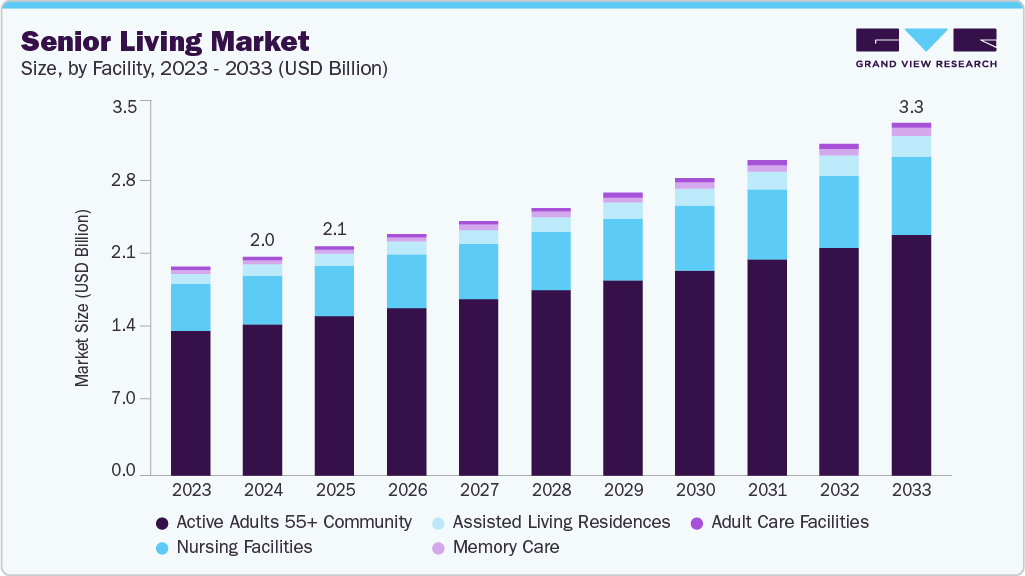 To learn more about this report, Download Free Sample Report
 Aging Population & Increasing Life Expectancy
The rapid rise in the aging population and rising life expectancy are primarily driving the expansion of the senior living market. As per the World Health Organization study published in October 2025, 1 in 6 people worldwide are expected to be 60 or older by 2030, increasing from 1 billion in 2020 to 1.4 billion, and this number is projected to double to 2.1 billion by 2050. Furthermore, the population aged 80 years and above is expected to triple during the same period, reaching 426 million.
Countries with the Largest Number of Older Adults
Country
Population Aged 65+ (in millions)
% of Total Population (65+)
China
166.37
11.9%
India
84.90
6.1%
U.S.
52.76
16.0%
Japan
35.58
28.2%
Brazil
17.79
8.5%
Germany
17.78
21.4%
Italy
13.76
22.8%
France
13.16
20.3%
UK
12.24
18.3%
Mexico
9.17
7.2%
Spain
8.99
19.1%
South Korea
7.83
15.1%
Thailand
7.61
11.5%
Canada
6.44
17.2%
Australia
4.00
15.8%
South Africa
3.51
6.0%
Sweden
2.05
19.9%
Source : Population Reference Bureau
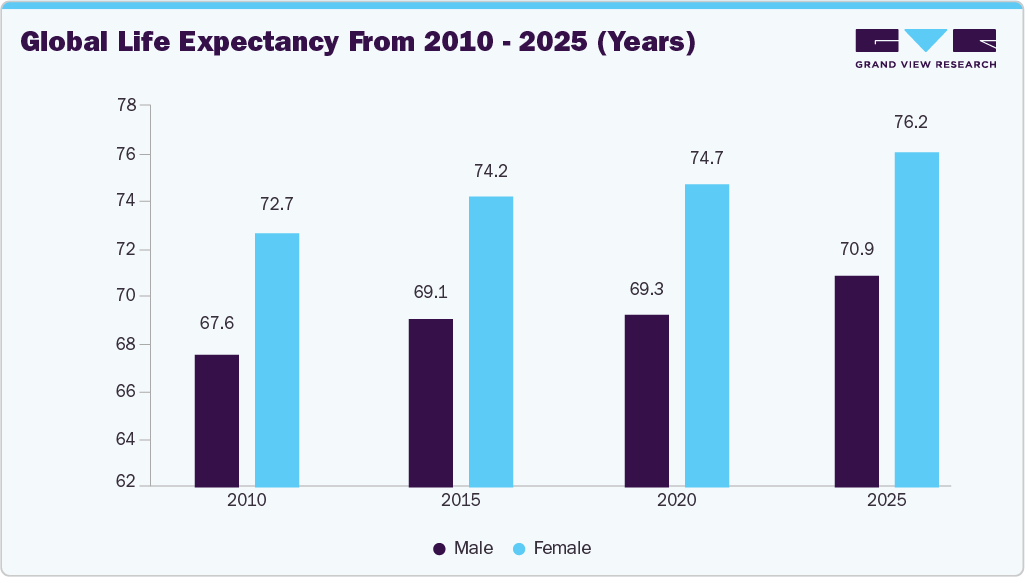
As people live longer, there is a significant increase in the proportion of individuals aged 60 years and above who require specialized care, assistance, and living arrangements that cater to their evolving physical, medical, and social needs. Longer lifespans often come with age-related health challenges such as reduced mobility, chronic illnesses, and cognitive decline, creating a greater demand for professionally managed environments offering healthcare support, safety, and comfort. According to the latest estimates from the United Nations Population Division, the global average life expectancy at birth is 73.5 years for both sexes combined, with females living an average of 76.2 years and males about 70.9 years. This steady increase in life expectancy reflects significant progress in healthcare, nutrition, sanitation, and disease prevention worldwide.
 To learn more about this report, Download Free Sample Report
 Moreover, seniors today seek both medical assistance and opportunities for social engagement, wellness, and an improved quality of life, which senior living communities are uniquely designed to provide. Hence, this demographic shift is prompting healthcare providers, real estate developers, and investors to expand and diversify their offerings within the senior living sector to meet the growing and changing expectations of an ageing population.
Rise in Chronic Diseases & Complex Health Needs:
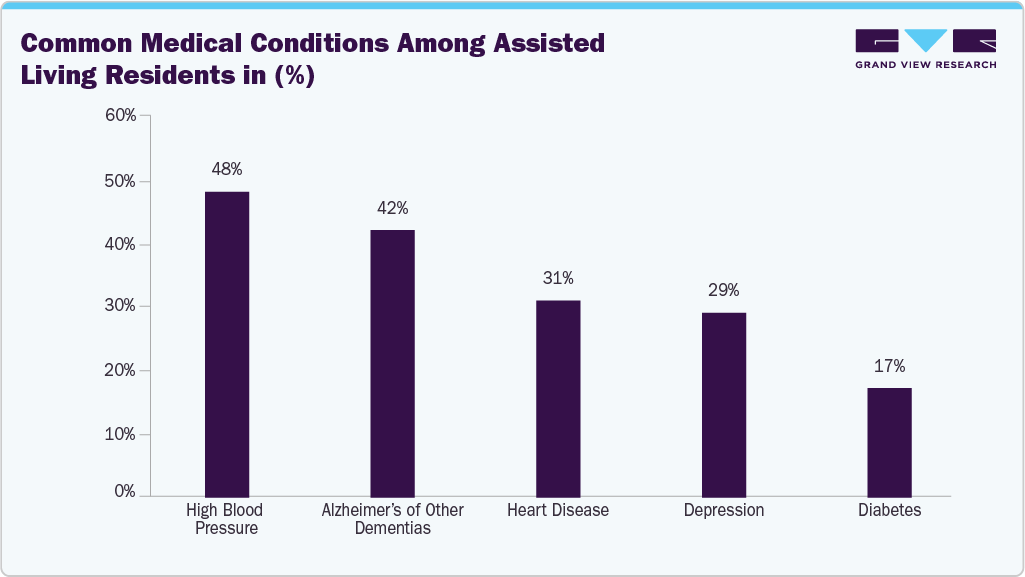
The increasing prevalence of chronic diseases and complex health issues among the elderly significantly influences the senior living market, as there is a heightened demand for specialized and continuous care that often exceeds what can be provided at home. Conditions such as diabetes, cardiovascular diseases, arthritis, Alzheimer’s disease, and various forms of dementia necessitate 24/7 medical oversight, medication management, and rehabilitation services. As per WHO updates published in March 2025, dementia affected approximately 57 million people in 2021 with over 60% residing in low- and middle-income countries. With nearly 10 million new cases diagnosed each year, the demand for specialized care services is rapidly increasing. Dementia arises from various diseases and brain injuries, with Alzheimer’s disease being the most common, accounting for 60-70% of cases.
In addition, as per Alzheimer's Association Report published in April 2024, currently, an estimated 6.9 million people in U.S. aged 65 and older are living with Alzheimer’s, and this number is projected to double to 13.8 million by 2060 if no major medical breakthroughs occur. This increases the need for continuous supervision, cognitive support, and specialized care but also significantly impacts families and caregivers who may be unable to provide the level of care required at home. With over 119,000 deaths officially recorded from AD in 2021 alone, the burden on healthcare systems is substantial.
 To learn more about this report, Download Free Sample Report
 Rise in Demand for Senior Living Facilities:
Senior living communities, particularly assisted living, memory care, and skilled nursing facilities are increasingly tailored to address the healthcare and lifestyle requirements through trained staff, on-site medical facilities, and customized wellness programs. As the global prevalence of chronic illnesses continues to rise, families and healthcare systems are increasingly relying on professional senior living providers to ensure the safety, quality of life, and consistent care for aging individuals. The rapid growth of the senior population is directly driving increased demand for senior housing. According to NIC MAP data, to maintain current market penetration rates, the sector will need over 200,000 additional senior housing units by 2025, rising to 500,000 by 2028 and 775,000 by 2030.
This transition is driving investments and expansions within the senior living sector, leading to market growth and innovation in services. The projected 21% growth in home health and personal care aide jobs, with roughly 718,900 openings annually, underscores the rapidly rising demand for in-home care services as the population ages. This trend highlights a significant opportunity for home care agencies to scale their workforce and infrastructure to accommodate the needs of seniors who prefer to age in place.
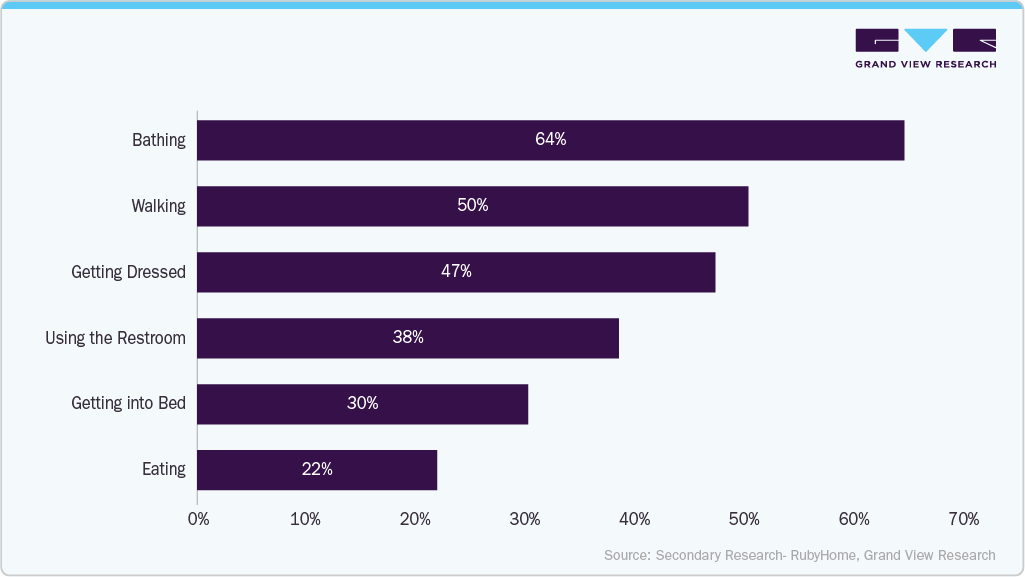
Common Daily Activities Requiring Help
Typically, residents require help with only a few activities and do not need round-the-clock assistance, though staff members are always generally present. Below are the common daily activities residents may need with them:
 To learn more about this report, Download Free Sample Report
 Source: Secondary Research- RubyHome, Grand View Research
Rise in Demand for Senior Living Facilities:
Technology Integration & Innovation is a major driver of the senior living market because it fundamentally transforms how care is delivered and experienced. Telehealth and remote monitoring allow residents to access medical consultations, routine check-ups, and chronic disease management without leaving their communities, ensuring timely interventions and reducing hospital visits. Smart home devices, AI, and IoT systems enhance safety through fall detection, automated alerts, and health tracking, giving both seniors and their families peace of mind. At the same time, data analytics enables providers to personalize care plans based on individual health patterns, optimize staffing and resources, and improve operational efficiency, which lowers costs while enhancing service quality.
In August 2025, Vedaanta Senior Living launched Vyom360, an in-house technology platform designed to enhance senior care by streamlining daily services, improving safety, and promoting resident engagement. Vyom360 empowers Vedaanta's teams to deliver high-quality services efficiently, allowing them to focus more on meaningful interactions with residents. The platform's data-driven approach supports personalized care, aligning with Vedaanta's mission to combine empathy with innovation in senior living.
Director at Vedaanta Senior Living, said, “With Vyom360, we are not just integrating technology, we are personalizing it for seniors. This platform empowers our teams to deliver high-quality services efficiently while spending more time in conversation, companionship, and care. It’s a blend of empathy and innovation, and a foundation for the future we are building.”
Moreover, in September 2025, ALIS (Assisted Living’s Intelligent Software) introduced "Ask ALIS," the first AI-powered GPT specifically designed for senior living communities. This innovative tool integrates seamlessly within the ALIS platform, offering real-time, context-aware assistance to staff and leadership in assisted living, memory care, and independent living settings.
Key Features of Ask ALIS:
-
Comprehensive Resident Summaries: Provides holistic overviews of resident charts, encompassing both clinical and financial aspects, available in over 20 languages.
-
On-Demand Reporting: Generates reports and visualizations without the need for manual data extraction.
-
Voice and Text Interaction: Allows staff to input instructions via typed or voice-to-text commands, facilitating tasks such as charting care or recording vital signs directly within ALIS.
- Integrated Insights: Accesses information across all ALIS modules and the ALIS App Store ecosystem, ensuring a unified experience.
CEO of ALIS said, “AI in assisted living isn’t a marketing buzzword for us-it’s a responsibility. “Ask ALIS was built to fit naturally into workflows, helping staff and leaders make better decisions, faster, without ever compromising security. This is not about replacing people. It’s about giving communities an intelligent, reliable assistant that lightens the load and improves outcomes.”
Increasing Investments and Franchising of Senior Living Facilities:
The industry is witnessing a surge in investments and franchising of assisted living facilities, propelled by a growing demand for quality senior care. Real estate investment trusts (REITs), private equity firms, and institutional investors are investing capital into the sector, recognizing the long-term growth potential of senior housing. As the industry evolves, established operators expand their footprint through partnerships, acquisitions, and franchise models. The rise of franchised assisted living facilities and adult care facilities has provided investors with scalable business opportunities, allowing for brand consistency, standardized care protocols, and operational efficiencies. For instance, in August 2024, Max Group's subsidiary, Antara Senior Care, inaugurated its first care home in Bengaluru marking a significant expansion into South India. The facility offers 83 beds and provides primary healthcare and emergency response services tailored for seniors aged 55 and above. The company has committed an investment of over USD 0.68 million for this facility and plans to add approximately 300 beds across Bengaluru and Chennai in the ongoing financial year, with a total investment exceeding USD 2.25 million. Antara's services encompass assisted living, care-at-home, and transition care, aiming to provide a comprehensive continuum of care for seniors.
Market Characteristics & Concentration
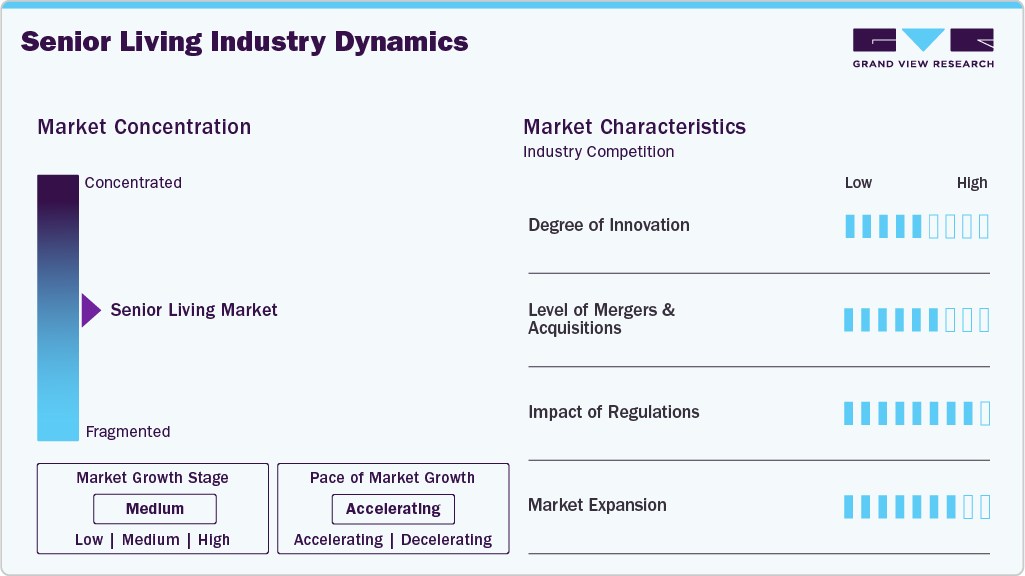
The chart below represents the relationship between industry concentration, characteristics, and participants. There is a moderate degree of innovation, high level of merger & acquisition activities, high impact of regulations, and high expansion of the senior living industry.
The senior living market is experiencing a high degree of innovation. In April 2025, Innovation Senior Living announced the launch of a pilot Adult Day Service designed to support older adults who continue to live independently at home. The initiative aims to provide a safe, engaging, and socially enriching environment during the day for seniors who may not yet require full-time residential care but can benefit from assistance, companionship, and structured activities. The program focuses on promoting overall well-being through health monitoring, cognitive and physical stimulation, and opportunities for social interaction. Founder and CEO Carvajal told Senior Housing News, “We’re going to be incorporating concepts of scientific wellness within the program that are really going to set it apart from the traditional model.”
 To learn more about this report, Download Free Sample Report
 Several key players are actively engaging in partnerships & collaborations to promote growth & innovation and improve their competitiveness by combining the expertise & efforts of different organizations. For instance, in September 2025, LCS (Life Care Services), a leading senior living provider, expanded its commitment to serving older adults through the addition of Vi, a well-established operator of luxury senior living communities. This strategic move strengthens LCS’s position as one of the largest and most diversified senior living companies in the U.S., enhancing its portfolio with Vi’s high-end, hospitality-driven communities. The integration combines LCS’s operational expertise and scale with Vi’s strong reputation for premium resident experiences, wellness programs, and quality care.
The regulations for the senior living industry in India are evolving as the sector gains recognition within the country’s broader healthcare and real estate framework. Currently, the market operates under a mix of central and state-level laws governing housing, healthcare, and social welfare for older adults. The Maintenance and Welfare of Parents and Senior Citizens Act, 2007 serves as the cornerstone legal framework, mandating the responsibility of children and relatives to care for senior citizens and enabling the establishment of old-age homes in every district. In addition, the Real Estate (Regulation and Development) Act (RERA), 2016 oversees real estate development and ensures transparency in senior living projects, particularly those offering assisted or independent living facilities.
In October 2025, Jaybird Senior Living announced a significant expansion, adding five new communities to its portfolio, each offering assisted living and memory care services. These acquisitions-the likes of The Retreat at Sunbrook and The Retreat at SunRiver in Utah, The Landings of Kaukauna in Wisconsin, and Autumn Grace and Water’s Edge in Minnesota-underscore Jaybird’s strategy to grow through acquisition and deepen its presence across diverse U.S. markets. President of SRI Management, said:
“These new additions represent our continued commitment to providing exceptional senior living experiences to residents and their families,” “We are honored to bring our signature programs, compassionate care, and operational excellence to both The Glen Villas and The Glen at Oak Ridge.”
Facility Insights
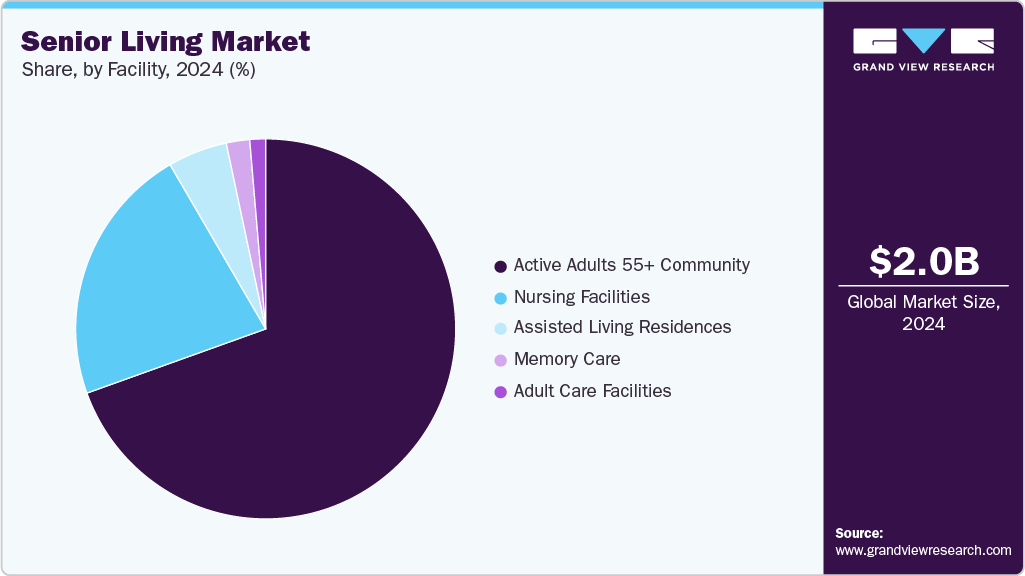
The active adults 55+ community segment held the largest share of 69.52% in 2024. A rapidly growing elderly population, especially the baby boomer generation, is looking for independent and socially vibrant living spaces that promote an active lifestyle without the burdens of home maintenance. This demographic is generally healthier, financially secure, and more adept with technology than past generations, driving the demand for communities that provide resort-style amenities, fitness facilities, cultural activities, and opportunities for lifelong learning. Moreover, the need for community living encourages social interaction and addresses feelings of isolation is a significant factor. In response, developers and operators are creating age-restricted housing options that blend privacy, recreational opportunities, and easy access to healthcare and essential services.
 To learn more about this report, Download Free Sample Report
 The assisted living residences segment is expected to grow at the fastest CAGR during the forecast period. Older adults with chronic health issues or limited mobility are increasingly looking for environments that provide a blend of medical support, personal care, and opportunities for social interaction. In addition, changing family dynamics and urban living have made it more challenging for adult children to offer round-the-clock care, leading to a rise in reliance on professional care facilities. Emphasizing quality of life and tailored services including meal planning, housekeeping, wellness initiatives, and leisure activities makes assisted living residences more appealing. Furthermore, advancements in technology, such as remote health monitoring and smart management systems, enhance the delivery of safe and effective care.
Regional Insights
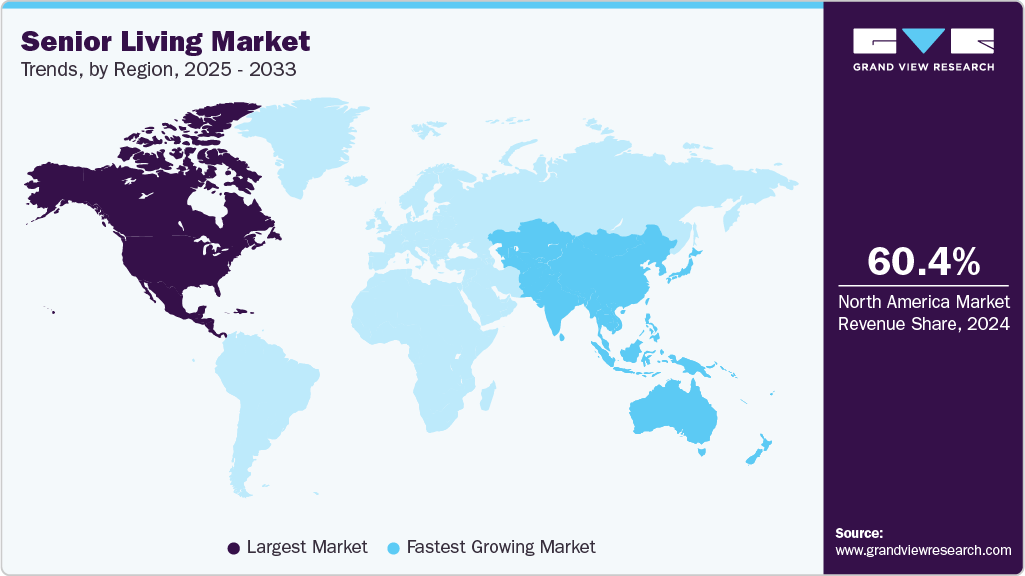
The North America senior living market held the largest revenue share of 60.40% in 2024. The region is witnessing a significant increase in the aging population, particularly individuals aged 65 and above, due to longer life expectancies and the aging of the Baby Boomer generation. This demographic shift has led to a growing demand for assisted living, independent living, and memory care facilities that provide personalized care and support. In addition, rising awareness about the importance of quality eldercare and the availability of advanced healthcare services within these facilities are encouraging families to opt for professional senior living arrangements.
 To learn more about this report, Download Free Sample Report
 U.S. Senior Living Market Trends
The U.S. senior living industry is experiencing significant growth, driven by the increasing investment in technology and innovations. For instance, in March 2025, Discovery Senior Living’s announced an investment in a new clinical technology platform reflects a strategic move to enhance operational efficiency, improve resident care, and support scalable growth across its portfolio of communities. By leveraging advanced digital tools, the platform enables real-time monitoring of resident health, streamline clinical workflows, and provides data-driven insights to optimize staffing, care plans, and resource allocation. This technology-centric approach strengthens the quality and consistency of care and enhances communication between caregivers, residents, and families, promoting a more personalized and resident-centered experience. Furthermore, the platform positions Discovery Senior Living to expand efficiently across hundreds of communities, maintaining high standards of care while scaling operations.
Asia Pacific Senior Living Market Trends
Asia Pacific is anticipated to grow at the fastest CAGR over the forecast period. The growth of the regional senior living industry is driven by a combination of demographic, social, and economic factors. Rapid population aging is the most significant driver, with countries such as Japan, South Korea, China, and India witnessing a steep rise in the elderly population, resulting in increased demand for specialized care and residential facilities. Rising disposable incomes and urbanization are also fueling the adoption of private and premium senior living options, as families increasingly prefer professional care services over traditional home-based care.
The India senior living market is witnessing growth, driven by the rising expansion and investment strategies. For instance, in August 2025, Ashiana Housing announced plans to expand its senior living portfolio across key urban centers, including Mumbai, Bengaluru, and the National Capital Region (NCR). This strategic investment underscores the company’s focus on tapping the growing demand for organized senior living facilities in India, driven by an aging population, rising disposable incomes, and evolving preferences for professional elderly care. The expansion is expected to enhance Ashiana Housing’s presence in premium and integrated senior living communities, offering tailored services and amenities that cater to the lifestyle, healthcare, and wellness needs of senior residents.
Europe Senior Living Market Trends
The senior living industry in Europe is expected to witness high growth due to the increasing prevalence of chronic diseases such as dementia, cardiovascular conditions, and mobility impairments is increasing the need for professional care services that senior living facilities provide. Moreover, higher disposable incomes and improved awareness of quality care options are encouraging families to consider private and semi-private senior living solutions. Government policies and healthcare reforms in several European countries are also supporting the expansion of senior care infrastructure, through incentives, funding, and quality standards for eldercare.
The senior living market in Spain is influenced by the increasing strategic alliances such as merger and collaborations by market players. For instance, in July 2024, Banca March partnered with Azora to launch Romano Senior, a co-investment initiative focused on senior living real estate. This venture, which commenced in June 2024, has already secured USD 99.2 million in capital, with Banca March contributing USD 93.3 million and Azora Capital adding USD 5.8 million. Romano Senior operates as a SOCIMI (Spanish REIT) and has acquired 16 facilities across Spain, totaling 2,200 beds. These properties are primarily newly constructed and are leased to leading operators such as DomusVi, Colisée, Amavir, and Emeis under long-term agreements. This initiative builds upon the success of Adriano Care, a previous collaboration between Banca March and Azora launched in 2019, which has invested nearly €250 million in 22 assets with approximately 3,000 beds.
Latin America Senior Living Market Trends
The senior living industry in Latin America is anticipated to grow significantly due to a rapid increase in its elderly population due to rising life expectancy and declining fertility rates, which has created a growing demand for long-term care and specialized residential services. Urbanization and the migration of younger family members for work have reduced traditional family-based elder care, prompting more seniors to seek professionally managed facilities. In addition, rising disposable incomes and an expanding middle class are enabling more families to afford private senior living options, while increasing awareness of quality healthcare, safety, and recreational amenities in such facilities is influencing preferences.
The Brazil senior living market held the largest revenue share in 2024 due to the country’s USD 15.5 billion housing program supports the growth of senior living facilities by improving overall access to affordable, quality housing and urban infrastructure. By targeting low- and middle-income populations and emphasizing sustainable, well-planned residential projects, the program helps create safer and better-equipped communities, which can later accommodate specialized senior living developments. The emphasis on basic amenities, such as sewage systems, solar energy, and environmentally safe land, ensures that new neighborhoods are suitable for long-term habitation, including elderly residents.
Middle East and Africa Senior Living Market Trends
The senior living industry in MEA is anticipated to grow significantly. Cultural shifts, including the growing acceptance of institutional elderly care over traditional family-based caregiving, are supporting the adoption of senior living facilities. Moreover, governments in the region are increasingly recognizing the need for structured elderly care and are investing in healthcare infrastructure, incentives, and policy frameworks to encourage private-sector participation in senior living.
The UAE senior living market is witnessing an increasing improvement and developments for senior care. For instance, in October 2025, Abu Dhabi has launched a new initiative called the “Obtain Home Improvements for Senior Citizens” service under the broader “Our Blessing” program. This initiative aims to enhance the daily lives of senior citizens by providing home modifications that prioritize safety, comfort, and independence. The program is a collaborative effort involving the Family Development Foundation (FDF), the Abu Dhabi Housing Authority (ADHA), and the Department of Community Development - Abu Dhabi (DCD).
Key Senior Living Company Insights
The senior living market is fragmented, with the presence of many -level senior living providers.The market players undertake several strategic initiatives, such as partnerships & collaborations, product launches, mergers & acquisitions, and geographical expansion to maintain their market position and growth trajectory.
Key Senior Living Companies:
The following are the leading companies in the senior living market. These companies collectively hold the largest market share and dictate industry trends.
- Genesis Healthcare
- Brookdale Senior Living Solutions
- Verve Senior Living
- Belmont Village, L.P.
- Casa Mar Senior Living
- Columbia Pacific Communities
- AntaraSeniorCare
- Always Best Care Senior Services
- Pegasus Homes Limited
- THE FLAG
- Vesta Care Home Health Center LLC
- Athulya Senior Care
- Sunrise Senior Living
- Kindred Healthcare
Recent Developments
- In October 2025, Solera Senior Living introduced a pioneering multi-partner care model at its Lumina Las Vegas Memory Care community, demonstrating significant improvements in resident health outcomes. This initiative, known as the Alliance for Connected Senior Care, involves collaboration with four industry leaders: Inspiren, Senior Doc, EmpowerMe Wellness, and ALIS by Medtelligent. The model emphasizes coordinated care through shared data and communication among providers.
"We're proving that senior living communities can evolve care models to drastically improve resident outcomes" said, Founder and CEO of Solera Senior Living. "By working with our strategic partners, we've shown that resident-centered communication and AI-supported workflows can make a real difference."
- In August 2025, Vedaanta Senior Living, a prominent provider of senior living solutions in India, introduced Vyom360, an in-house technology platform designed to enhance the quality of care, streamline daily services, and improve resident engagement. Vyom360 integrates various functions such as food and dining, housekeeping, medical support, and emergency response into a unified system, enabling real-time task allocation, service tracking, and resident feedback collection.
Director at Vedaanta Senior Living, said, “With Vyom360, we are not just integrating technology, we are personalising it for seniors. This platform empowers our teams to deliver high-quality services efficiently while spending more time in conversation, companionship and care. It’s a blend of empathy and innovation and a foundation for the future we are building.”
- In March 2025, Inspiren launched the first complete AI-driven senior living ecosystem, aiming to transform the senior care industry by integrating advanced technology with compassionate care. This comprehensive platform combines care planning, resident safety, staff efficiency, and emergency response into a unified solution. Powered by USD 35 million in Series A funding, the ecosystem addresses critical challenges in senior living, such as rising acuity levels, escalating staffing issues, and increasing expectations from families.
Michael Wang, founder and chief clinical officer of Inspiren said; "We are going beyond the traditional, often disparate care and operational management solutions by combining everything operators, care teams, residents and their families need in one fully-integrated system. Inspiren was founded on the belief that technology and humanity must work together to redefine senior care. This ecosystem furthers that mission and proves that compassionate care and technology can coexist."
Senior Living Market Report Scope
Report Attribute
Details
Market size in 2025
USD 2.12 billion
Revenue forecast in 2033
USD 3.25 billion
Growth rate
CAGR of 5.48% from 2025 to 2033
Actual data
2021 - 2024
Forecast period
2025 - 2033
Quantitative units
Revenue in USD billion and CAGR from 2025 to 2033
Report coverage
Revenue forecast, company ranking, competitive landscape, growth factors, and trends
Segments covered
Facility, region
Regional scope
North America; Europe; Asia Pacific; Latin America; MEA
Country scope
U.S.; Canada; Mexico; Germany; UK; France; Italy; Spain; Norway; Denmark; Sweden; China; Japan; India; South Korea; Australia; Thailand; Brazil; Argentina; Saudi Arabia; South Africa; UAE; Kuwait
Key companies profiled
Genesis Healthcare; Brookdale Senior Living Solutions; Sunrise Senior Living; Kindred Healthcare; Verve Senior Living; Belmont Village, L.P.; Casa Mar Senior Living; Columbia Pacific Communities; AntaraSeniorCare; Always Best Care Senior Services; Pegasus Homes Limited; THE FLAG; Vesta Care Home Health Center LLC; Athulya Senior Care
Customization scope
Free report customization (equivalent up to 8 analysts working days) with purchase. Addition or alteration to country, regional & segment scope.
Pricing and purchase options
Avail customized purchase options to meet your exact research needs. Explore purchase options
Global Senior Living Market Report Segmentation
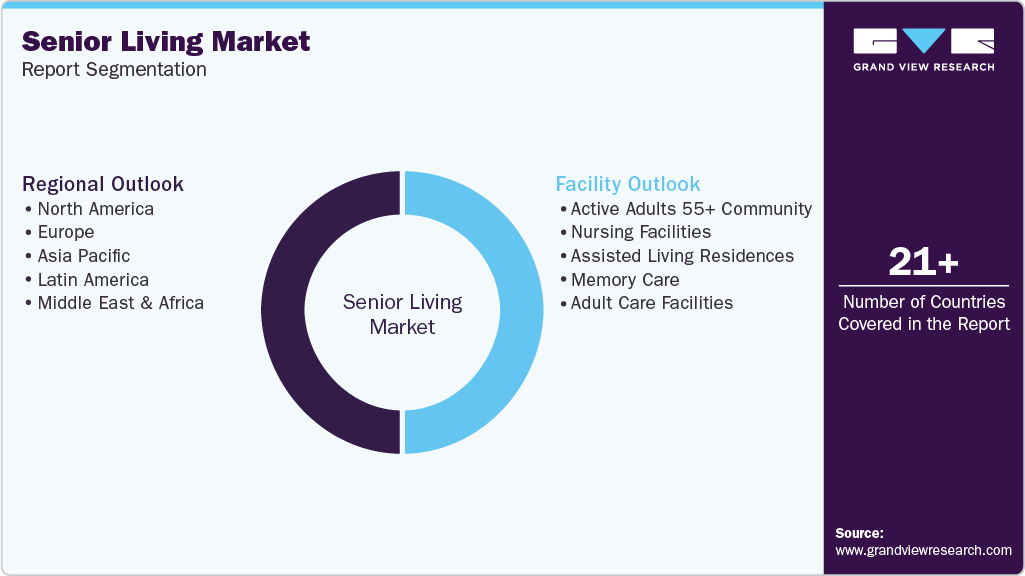
This report forecasts revenue growth at the global, regional, and country levels and provides an analysis of the latest industry trends in each of the sub-segments from 2021 to 2033. For this study, Grand View Research has segmented the global senior living market report based on facility and region:
 To learn more about this report, Download Free Sample Report
 -
Facility Outlook (Revenue, USD Billion, 2021 - 2033)
-
Active Adults 55+ Community
-
Nursing Facilities
-
Assisted Living Residences
-
Memory Care
-
Adult Care Facilities
-
-
Regional Outlook (Revenue, USD Billion, 2021 - 2033)
-
North America
-
U.S.
-
Canada
-
Mexico
-
-
Europe
-
UK
-
Germany
-
France
-
Italy
-
Spain
-
Denmark
-
Sweden
-
Norway
-
-
Asia Pacific
-
China
-
Japan
-
India
-
South Korea
-
Australia
-
Thailand
-
-
Latin America
-
Brazil
-
Argentina
-
-
Middle East and Africa (MEA)
-
South Africa
-
Saudi Arabia
-
UAE
-
Kuwait
-
-
About the Author(s)
Medical Devices Research Team
Healthcare · Medical DevicesThis report was authored by the medical devices research team at Grand View Research - comprising two research analysts, one senior research analyst, and one industry expert - with specialized expertise in the medical devices segment of the healthcare industry. All findings are based on proprietary healthcare databases, executive interviews, and regulatory analysis, subject to internal peer review prior to publication.
Last Updated:
Speak to Analyst

Customize this report to your needs - add regions, segments, or data points, with 20% free customization.
Or view our licence options:


ISO 9001:2015 & 27001:2022 Certified
We are GDPR and CCPA compliant! Your transaction & personal information is safe and secure. For more details, please read our privacy policy.


