
- Home
- »
- Biotechnology
- »
-
Sequencing Consumables Market Size Report, 2026-2033GVR Report cover

Sequencing Consumables Market (2026 - 2033)
Size, Share & Trends Analysis Report By Product (Kits, Reagents, Accessories), By Platform (1st Generation, 2nd Generation, 3rd Generation), By Application (Agrigenomics), By End-use, By Region, And Segment Forecasts
Market Size, 2025
$10.3BMarket Estimate, 2026
$12.6BMarket Forecast, 2033
$55.6BCAGR, 2026–2033
23.6%Sequencing Consumables Market Summary
The global sequencing consumables market size was valued at USD 10.3 billion in 2025 and is projected to grow from USD 12.6 billion in 2026 to USD 55.6 billion by 2033, at a CAGR of 23.6% from 2026 to 2033. North America dominated the global market with the largest revenue share of 52.7% in 2025. Continuous advancements in sequencing technologies and a growing emphasis on genomics research are the primary factors driving the global sequencing consumables industry's overall growth.
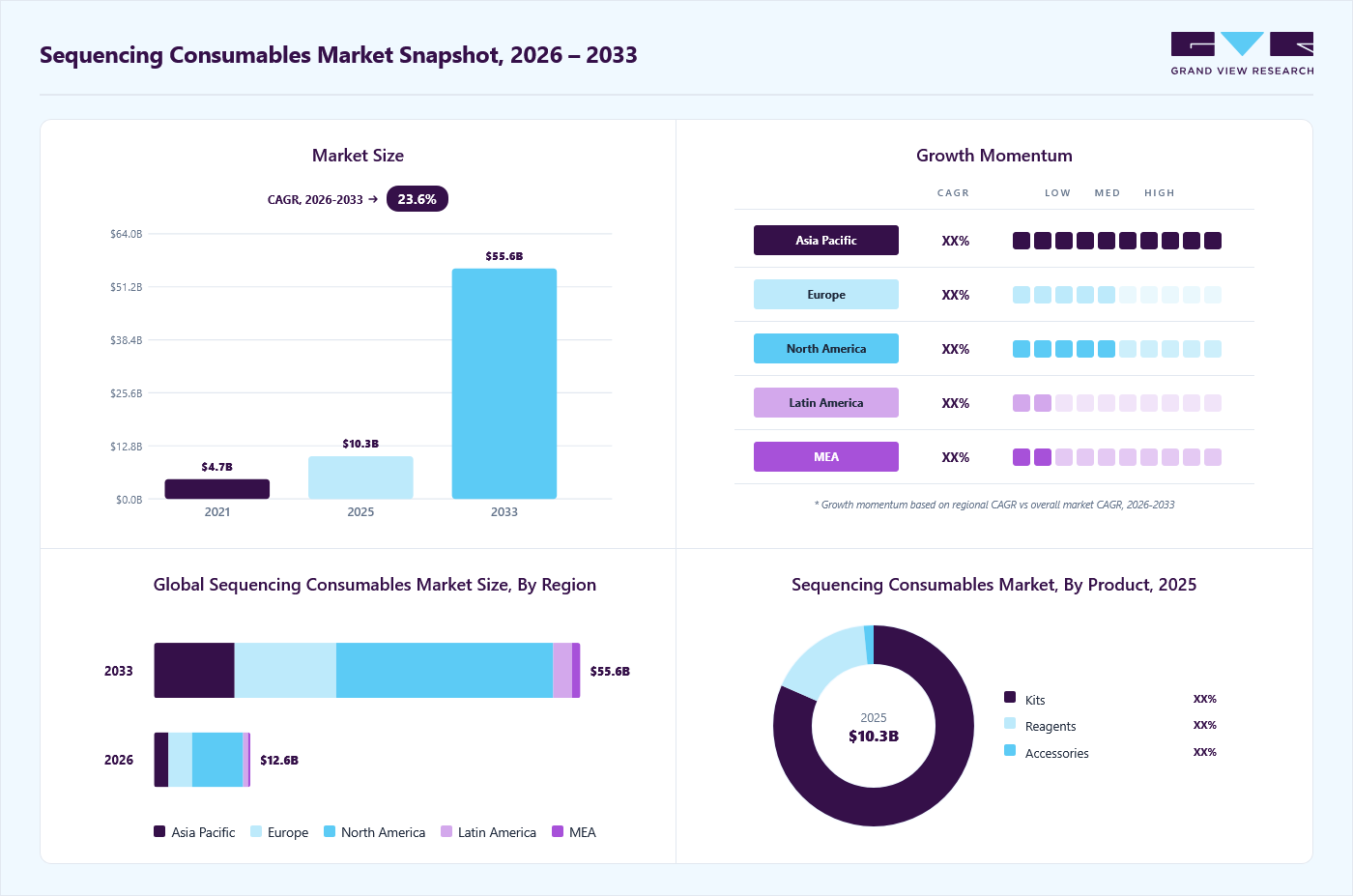 Source: Grand View Research, IR Documents, Primary Interviews, Paid DatabasesTo learn more about this report,
 Download Free Sample Report
 Key Market Trends & Insights
- By product: Kits segment held the largest revenue share of over 81.5% in 2025.
- By platform: 2nd generation sequencing consumables segment held the largest revenue share of over 67.1% in 2025.
- By application: Cancer diagnostics segment held the largest revenue share of over 27.4% in 2025.
- By end-use: Hospitals and laboratories segment held the largest revenue share of over 35.6% in 2025.
Regional Highlights
- Largest regional market: North America (52.7% revenue share, 2025)
- Fastest-growing regional market: Asia Pacific (highest CAGR, 2026-2033)
- By country: The sequencing consumables market in the U.S. held the largest share in the North America region in 2025.
Market Size & Forecast
- Market Size in 2025: USD 10.3 Billion
- Estimated Market Size in 2026: USD 12.6 Billion
- Projected Market Size by 2033: USD 55.6 Billion
- CAGR (2026-2033): 23.6%
Three ways to get this report
Buy it, customize it, or ask a question.Ask an Analyst
A direct answer, usually in 1 working day
- AccessReport author, directly
- Reply timeWithin 1 working day
- No sales callDirect answer only
- FormatEmail reply
- CostFree, no cost
Get the Full Report
What the study covers
- FormatsPDF · Excel · Dashboard
- Timeline2026–2033 annual, 2025 base
- Coverage20+ countries, 5 regions
- Companies10+ key players profiled
Customize the Report
20% free customization
- IncludeCountries, segments, points
- TailorTo your product definition
- ExtendDeeper competitor detail
- OrA fully bespoke study
- Turnaround5–10 working days
As sequencing technologies evolve, they become more efficient, accurate, and capable of handling larger volumes of data, which drives the increased adoption of sequencing in various fields, including genomics and personalized medicine.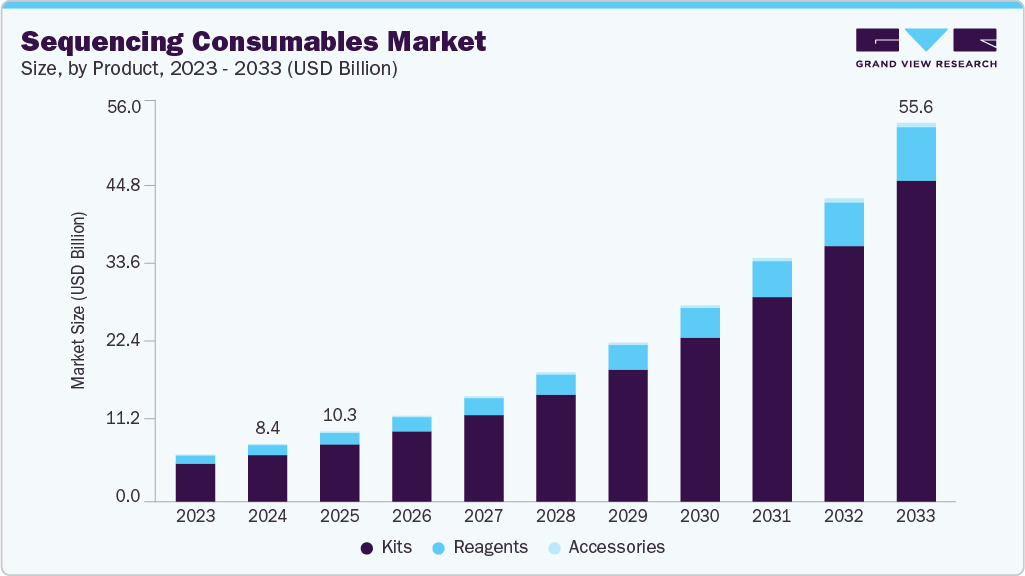 To learn more about this report, Download Free Sample Report
 Rapid Technological Advancements
The rapid advancement of sequencing technologies significantly drives the sequencing consumables market. The shift from legacy sequencing technologies to next-generation sequencing systems, which include accessible high-throughput short-read, real-time long-read sequence, and new emerging ultra-high-accuracy single-cell sequencing technologies, is fueling ongoing increases in demand for defined consumables. New sequencing technologies unlock enhanced sensitivity and speed through chemistry, workflows, and throughput, which necessitate new classes of reagents, buffers, library preparation kits, adapters, and sequencing chips.
At the same time, the producers have also been working on consumables specific to more advanced platforms such as nanopore flow cells, long-read sequencing cartridges, and microfluidic single-cell kits. The accelerated implementation of automated platforms, which involve integrated sample-to-result workflows and cloud-connected sequencing components, continues to increase capacities and offer reliable sales of consumables for compatible technologies.
Surge in Genomic Research
Growing global investments in genomic research and large-scale population sequencing programs are significantly accelerating demand in the sequencing consumables market. Governments, academic consortia, and private organizations are increasing funding to decode genetic diversity, understand disease mechanisms, and build national genomic databases.
The growing culture of collaborative genomics research, supported by strong public-private funding, is further expanding the installed base of sequencing instruments worldwide, thereby amplifying consumables usage as sequencing shifts from periodic experiments to routine, scaled genomic workflows.
Market Dynamics
The sequencing consumables market is growing steadily as next-generation sequencing (NGS) technologies gain global adoption across research, clinical diagnostics, and pharmaceutical applications. Rising investments in genomics, precision medicine, oncology research, and drug discovery are driving demand for sequencing kits, reagents, and library preparation consumables. In addition, advancements in sequencing technologies, declining sequencing costs, and the growing prevalence of cancer and genetic disorders are supporting market growth. Increasing government funding for genomics research and the expanding use of personalized medicine are expected to further strengthen the sequencing consumables market over the forecast period.
The rapid advancement of sequencing technologies significantly drives the sequencing consumables market. The shift from legacy sequencing technologies to next-generation sequencing systems, including accessible high-throughput short-read, real-time long-read, and emerging ultra-high-accuracy single-cell sequencing technologies, is fueling ongoing increases in demand for defined consumables. New sequencing technologies unlock enhanced sensitivity and speed through chemistry, workflows, and throughput, which necessitate new classes of reagents, buffers, library preparation kits, adapters, and sequencing chips.
Key Technological Advancements
Automation & Workflow Optimization
Enhanced Accuracy & Sensitivity
Sustainability & Cost Efficiency
Expanded Application-Specific Kits
High-Throughput & Rapid Sequencing Solutions
- Automated sample prep kits improving throughput
- AI-powered sequencing workflows reducing manual errors
- Robotic library preparation platforms
- Ultra-high-fidelity reagents for precise variant detection
- Improved error-correcting enzymes and buffers
- Single-cell sequencing consumables with improved sensitivity
- Low-volume reagent use reducing cost per run
- Recyclable flow cell components & greener chemistry formulations
- Oncology-focused targeted sequencing panels
- Infectious disease molecular reagent kits
- Pharmacogenomics & personalized medicine consumables
- Ultra-high-output flow cells and reagent kits
- Fast-turnaround consumables enabling real-time analysis (e.g., nanopore chemistries)
- Multiplexing kits supporting large-scale studies
Source: Secondary Research, Grand View Research
At the same time, the producers have also been working on consumables for more advanced platforms, such as nanopore flow cells, long-read sequencing cartridges, and microfluidic single-cell kits. The accelerated implementation of automated platforms featuring integrated sample-to-result workflows and cloud-connected sequencing components continues to increase capacity and enable reliable sales of consumables for compatible technologies.
The growing adoption of sequencing technologies generates large volumes of genomic data that require advanced storage, processing, and analysis capabilities. Managing these datasets often necessitates specialized bioinformatics infrastructure, high-performance computing resources, and sophisticated software tools, increasing operational complexity and costs for laboratories and research organizations.
In addition, the shortage of skilled bioinformatics professionals and data scientists capable of interpreting sequencing results can create workflow bottlenecks and limit the efficient utilization of sequencing technologies. These challenges may hinder the adoption of sequencing consumables, particularly among smaller laboratories and institutions with limited technical and financial resources.
The increasing adoption of precision medicine is creating significant growth opportunities for the sequencing consumables market. Precision medicine relies on genomic profiling to identify disease-associated genetic variations and tailor treatments to individual patients, driving demand for sequencing reagents, library preparation kits, flow cells, and other consumables. The growing use of next-generation sequencing (NGS) in oncology, rare disease diagnostics, reproductive health, and pharmacogenomics is further accelerating consumables consumption across clinical and research settings.
For instance, in January 2026, Metropolis Healthcare launched its Centre of Genomics in India to strengthen precision diagnostics, genomics research, and molecular testing capabilities, supported by advanced sequencing infrastructure and an expanding genomic test portfolio. Similarly, healthcare providers are increasingly introducing genomics-based clinical programs to integrate genetic insights into patient care, reflecting the growing adoption of precision medicine and creating sustained demand for sequencing consumables.
Market Concentration & Characteristics
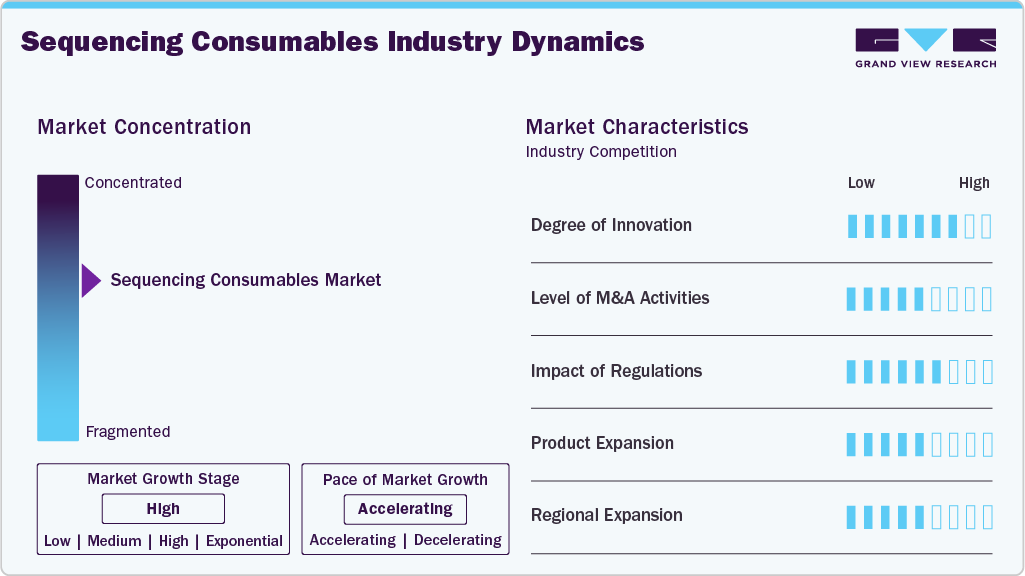
The sequencing consumables industry exhibits a high degree of innovation, driven by continued advancements in sequencing chemistries, automated library prep kits, and high-density flow cells that enhance speed, accuracy, and throughput. Companies are developing specialized reagents, cartridge-based consumables, and multi-omic sample prep solutions designed for next-generation and single-cell sequencing platforms. For instance, in October 2025, PacBio announced innovations for its Revio and Vega platforms, including new SPRQ-Nx reagents and consumables, that aim to decrease sequencing costs by up to 40% and optimize long-read capabilities.
M&A activity in the sequencing consumables industry is moderate but increasing as competition intensifies and demand for high-performance consumables increases. Continued consolidation between mid-sized companies and more specialized technology companies is likely to occur. For instance, in April 2025, Eurofins Genomics acquired LGC's Sanger sequencing operations, thereby expanding Eurofins' Sanger capacity and closing gaps in its broad genomic services offering, particularly in sequencing and gene production.
 To learn more about this report, Download Free Sample Report
 Regulations have a significant impact on the sequencing consumables industry, particularly as genomic testing expands into clinical and diagnostic applications. In addition, supportive policies related to the advancement of precision medicine and companion diagnostics are contributing to our market expansion.
Product growth in the sequencing consumables industry is expanding rapidly, as companies introduce new products to support various sequencing applications and next-generation sequencing platforms. Companies are increasing the availability of new, specialized reagents, high-throughput library preparation kits, and cartridges designed for use in long-read, single-cell, or multi-omic processes and projects, thereby expanding their overall portfolio of offerings. This range of product offerings supports improved workflows and more utilization within research, clinical research, and biopharma applications.
Regional expansion in the sequencing consumables market is accelerating as companies target high-growth regions, including the Asia-Pacific, the Middle East, and Latin America. The suppliers are improving access, streamlining supply chain efficiencies & capabilities, and enabling the advancement of genomics and precision medicine efforts across these emerging markets via strengthened local partnerships, distribution networks, and manufacturing footprints.
Analyst Perspective
The sequencing consumables market is poised for strong growth, driven by the increasing adoption of next-generation sequencing (NGS) in clinical diagnostics, precision medicine, oncology, and genomics research. Rising demand for high-throughput sequencing workflows, coupled with expanding genomic research initiatives and declining sequencing costs, is fueling the consumption of kits, reagents, and library preparation products. Continuous advancements in sequencing technologies and growing investments in biomarker discovery and population genomics are expected to support long-term market expansion, encouraging manufacturers to focus on product innovation and workflow optimization.
Product Insights
Based on product, the kits segment held the largest revenue share of over 81.5% in 2025 and is anticipated to grow at the fastest growth rate over the forecast year, driven by their convenience, reliability, and standardized workflows. Pre-optimized and quality-controlled parts reduce errors and hands-on time, making kits ideal for high-throughput sequencing environments. For instance, in September 2025, Quantum-Si launched its V4 Sequencing Kit, which expands coverage of the proteome with enhanced amino-acid recognition, extended barcoding, and bioinformatics for advanced single-molecule protein sequencing applications.
The reagents segment is anticipated to grow at fastest CAGR from 2025 to 2033. Sequencing consumable reagents produce various layers of genomic data vital for drug development, ranging from studying genomic alterations to profiling the transcriptome. This versatility is anticipated to drive substantial growth in this market segment.
Platform Insights
Based on platform, the 2nd generation sequencing consumables segment held the largest revenue share of over 67.1% in 2025. Second-generation sequencing consumables are known for their high-throughput ability, accuracy, and low cost, which enables a variety of project types. Moreover, the ability to reduce the risk of artifacts introduced by cloning or PCR amplification by analyzing individual molecules at a time further contributes to the segment's dominance.
The third-generation sequencing consumables segment is expected to grow at the fastest CAGR in the forecast period. Third-generation sequencing technology, as developed, is one of the most advanced technologies, offering longer read times that mitigate many computational hurdles surrounding genome assembly and transcript reconstruction. It also contributes to the segments' rising demand as it has a faster turnaround time than second-generation sequencing, making it a preferred option compared to other technologies.
Application Insights
Based on application, the cancer diagnostics segment held the largest revenue share of over 27.4% in 2025 and is anticipated to grow at the fastest growth rate over the forecast year. A key factor driving demand for consumables used in mutation detection, biomarker discovery, and disease monitoring is the rising incidence of cancer and the broader adoption of sequencing in oncology. Key players are continuing to offer cancer-oriented products; for example, Illumina's TruSight Oncology 500 consumables allow more expansive genomic profiling of tumor samples.
The pharmacogenomics segment is anticipated to show a significant CAGR of 24.38% through the forecast period because of its immense potential for understanding how human genes influence the way people respond to medical treatment. Therefore, increased clinical adoption of pharmacogenomics will drive the demand for sequencing consumables, including reagents, library preparation kits, and target enrichment solutions. This demand will be a factor driving growth during the forecast period.
End Use Insights
Based on end-use, the hospitals and laboratories segment held the largest revenue share of over 35.6% in 2025. Hospitals leverage sequencing consumables for cancer detection, infectious disease testing, and personalized medicine. At the same time, clinical labs and research institutions rely on them for genomics research, disease studies, and drug development, further supporting the segment growth.
 To learn more about this report, Download Free Sample Report
 The pharmaceutical and biotechnology companies segment is anticipated to register the fastest CAGR over the forecast period, driven by their increasing adoption of genomics technologies for drug discovery, development, and precision medicine initiatives. Sequencing consumables are crucial for enabling pharmaceutical and biotechnology companies to identify drug targets, conduct biomarker research, and assess the safety and efficacy of pharmaceutical compounds. This is expected to propel the pharmaceutical and biotechnology companies segment over the forecast period.
Regional Insights
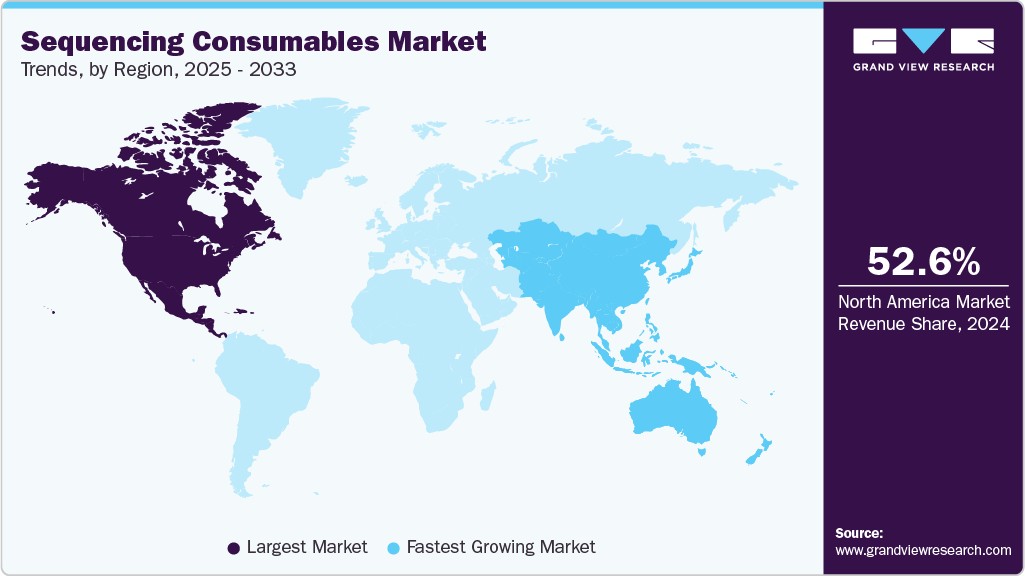
North America dominated the sequencing consumables market with the largest revenue share of 52.7% in 2025. The regional market is driven by the presence of multiple clinical laboratories that employ NGS to provide genetic testing services. In addition, substantial government investments in genomics research also contribute to the market growth in the region.
 To learn more about this report, Download Free Sample Report
 U.S Sequencing Consumables Market Trends
The sequencing consumables market in the U.S. held the largest share in the North America region in 2025., driven by the strong adoption of NGS in precision medicine, oncology, and infectious disease surveillance. Significant research funding, clinical lab capacity, and growth in high-throughput sequencing at academic and biopharma centers continue to boost demand for sample-prep kits, reagents, and sequencing cartridges, reinforcing the U.S. as a leading global market.
Europe Sequencing Consumables Market Trends
The market for sequencing consumables in Europe is continuing to grow. More specifically, sustained demand for reagent kits and library preparation solutions is arising from the expansion of clinical sequencing in oncology, infectious disease tracking, and reproductive genomics. For instance, in August 2025, Eurofins Genomics relocated and expanded its NGS activities across parts of Europe, increasing sequencing capacity and access to regional services to support the growing demand for sequencing consumables and integrated workflows in genomics.
The UK market for sequencing consumables is expanding due to a robust genomic research infrastructure, national precision medicine initiatives, and the increasing applications of next-generation sequencing (NGS) in cancer diagnostics, rare disease testing, and population-level sequencing, which supports market growth.
The market for sequencing consumables in Germany is expanding due to the strength of its ecosystem in clinical research, the growth of the biopharma sector, and the increased adoption of genomic tools in hospitals and academic institutions.
Asia Pacific Sequencing Consumables Market Trends
The Asia-Pacific sequencing consumables market is expected to record the fastest CAGR of 27.25% throughout the forecast period, driven by increasing investments in genomic research, the rising burden of genetic and chronic diseases, and the expansion of precision medicine programs. Moreover, Rapid advances in biotechnology capability and government-supported genomics initiatives position the Asia Pacific as a major future growth engine.
China is rapidly becoming a leading market for sequencing consumables, driven by significant government investment in genomics, the expansion of commercial sequencing labs, and large-scale cancer and population-genomics programs. Growing biotech activity and national innovation initiatives further boost demand and domestic production of sequencing consumables.
Japan's sequencing consumables market is growing, driven by strong research in genomics and molecular medicine, studies on aging-related diseases, and the increasing adoption of cancer sequencing. Precision-medicine investment and academic-industry collaboration continue to drive demand for reagents, NGS kits, and advanced sequencing chemistries. For instance, in January 2024, Quantum-Si established a partnership with Digital TOMY Biology to offer the Platinum protein sequencer and consumables.
MEA Sequencing Consumables Market Trends
The Middle East & Africa sequencing consumables market is growing, driven by rising genomic research programs, precision-medicine initiatives, and healthcare modernization. Increased cases of genetic disorders and cancer, as well as global partnerships, are increasing the need for sequencing reagents and clinical genomic workflows, mainly in GCC countries.
The sequencing consumables industry in Kuwait is experiencing steady growth. Economic diversification and research infrastructure upgrades are promoting the use of more sophisticated sequencing devices, while international academic and industry partnerships are building knowledge transfer and access to high-quality sequencing reagents and consumables.
Key Sequencing Consumables Company Insights
The sequencing consumables industry is characterized by well-established players with strong product portfolios, extensive R&D capabilities, and global distribution networks. Leading companies such as Thermo Fisher Scientific, Hoffmann-La Roche Ltd, QIAGEN, Agilent Technologies, Millipore Sigma, Takara Bio Inc., and Oxford Nanopore Technologies maintain significant market share due to their advanced sequencing chemistries, proprietary consumable kits, and integrated workflow solutions that support clinical diagnostics, research, and applied genomics.
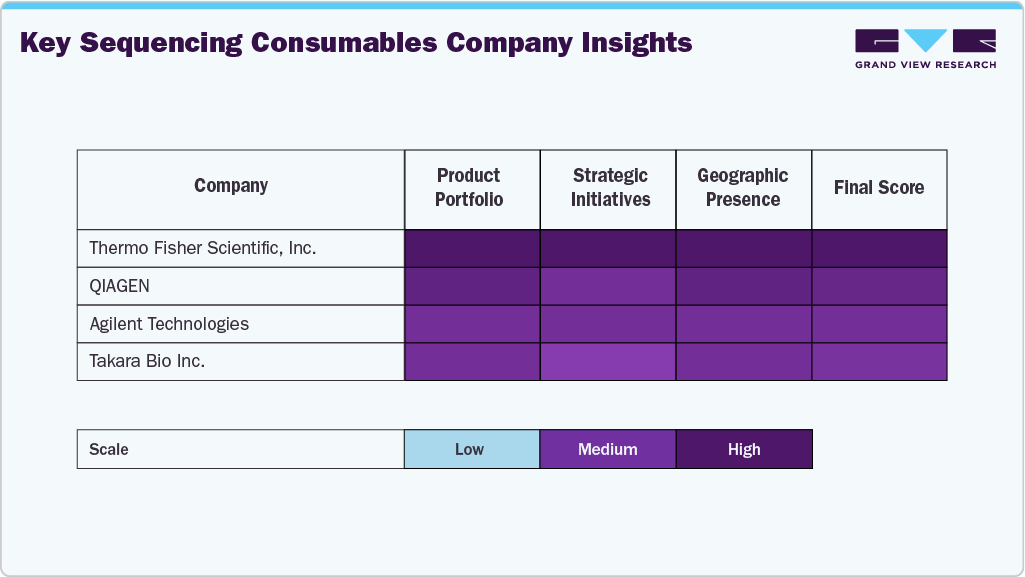 To learn more about this report, Download Free Sample Report
 Companies such as Beckman Coulter, Eurofins Genomics, and BGI Genomics are expanding their market presence through their focus on automation-ready consumables, high-throughput processing, and cost-efficient sequencing reagents support growing adoption in emerging regions and decentralized genomic workflows.
With the increasing use of sequencing in clinical and applied settings, market leadership will increasingly hinge on reliability, scalability, cost-efficiency, and regulatory-ready consumable solutions.
Key Sequencing Consumables Companies
The following key companies have been profiled for this study on the sequencing consumables market.
-
F. Hoffmann-La Roche Ltd
-
QIAGEN.
-
Agilent Technologies
-
Millipore Sigma
-
Takara Bio Inc
-
Beckman Coulter, Inc
-
Eurofins Genomics
-
Oxford Nanopore Technologies Ltd
-
Thermo Fisher Scientific, Inc
-
BGI Genomics
Competitive Benchmarking
Category
Operating Strategies
Competitive Edge
Weakness
Established Players (Thermo Fisher Scientific, F. Hoffmann-La Roche, QIAGEN, etc.)
- Expand sequencing consumables portfolios through continuous development of library preparation kits, sequencing reagents, sample preparation products, and workflow solutions.
- Significant R&D capabilities enabling continuous innovation in high-throughput, accurate, and cost-efficient sequencing consumables.
- Exposure to regulatory requirements and rapid technological shifts that may shorten product lifecycles.
Emerging Players (Oxford Nanopore Technologies, Eurofins Genomics, etc.)
- Expand adoption through targeted partnerships, service offerings, and development of novel sequencing workflows.
- Ability to address emerging research needs in clinical genomics, infectious disease surveillance, and precision medicine.
- Greater vulnerability to competitive pressure from large integrated sequencing and life science companies.
Recent Developments
-
In July 2025, QIAGEN launched its QIAseq xHYB Long Read Panels in the Netherlands, expanding long-read NGS capabilities and addressing rising demand for advanced sequencing consumables to analyze complex genomic regions.
-
In April 2025, QIAGEN advanced plans in the Netherlands to launch three automated sample-prep instruments, enhancing genomics workflows and supporting rising sequencing consumables demand through improved lab automation and throughput.
Sequencing Consumables Market Report Scope
Report Attribute
Details
Market size in 2025
USD 10.3 billion
Estimated Market Size in 2026
USD 12.6 billion
Projected Market Size by 2033
USD 55.6 billion
Growth rate
CAGR of 23.6% from 2026 to 2033
Historical data
2021 - 2025
Forecast period
2026 - 2033
Quantitative units
Revenue in USD million, and CAGR from 2026 to 2033
Report coverage
Revenue forecast, company ranking, competitive landscape, growth factors, and trends
Segments covered
Product, platform, application, end-use, region
Regional scope
North America; Europe; Asia Pacific; Latin America; MEA
Country scope
U.S., Canada, Mexico, UK, Germany, France, Italy, Spain, Norway, Denmark, Sweden, China, Japan, India, South Korea, Australia, Thailand, Brazil, Argentina, Saudi Arabia, South Africa, UAE, Kuwait
Key companies profiled
F. Hoffmann-La Roche Ltd.; QIAGEN; Agilent Technologies; Millipore Sigma; Takara Bio Inc.; Beckman Coulter, Inc.; Eurofins Genomics; Oxford Nanopore Technologies Ltd.; Thermo Fisher Scientific, Inc.; BGI Genomics
Customization scope
Free report customization (equivalent up to 8 analysts' working days) with purchase. Addition or alteration to country, regional & segment scope.
Pricing and purchase options
Avail customized purchase options to meet your exact research needs. Explore purchase options
Global Sequencing Consumables Market Report Segmentation
This report forecasts revenue growth and provides an analysis on the latest trends in each of the sub-segments from 2021 to 2033. For the purpose of this report, Grand View Research has segmented the global sequencing consumables market on the basis of product, platform, application, end use, and region.
-
Product Scope Outlook (Revenue, USD Million, 2021 - 2033)
-
Kits
-
DNA Library Preparation
-
RNA Library Preparation
-
Target enrichment
-
Library quantification
-
Purification & quality control
-
Others
-
-
Reagents
-
Sample Prep
-
Library preparation and amplification
-
Sequencing
-
-
Accessories
-
Collection tubes
-
Plates
-
Others
-
-
-
Platform Outlook (Revenue, USD Million, 2021 - 2033)
-
1st Generation sequencing Consumables
-
2nd Generation sequencing Consumables
-
3rd Generation sequencing Consumables
-
-
Application Outlook (Revenue, USD Million, 2021 - 2033)
-
Cancer Diagnostics
-
Infectious Disease Diagnostics
-
Reproductive Health Diagnostics
-
Pharmacogenomics
-
Agrigenomics
-
Others
-
-
End Use Outlook (Revenue, USD Million, 2021 - 2033)
-
Pharmaceutical and biotechnology companies
-
Hospitals and laboratories
-
Academic research institutes
-
Others
-
-
Regional Outlook (Revenue, USD Million, 2021 - 2033)
-
North America
-
U.S.
-
Canada
-
Mexico
-
-
Europe
-
UK
-
Germany
-
France
-
Italy
-
Spain
-
Denmark
-
Sweden
-
Norway
-
-
Asia Pacific
-
China
-
Japan
-
India
-
South Korea
-
Australia
-
Thailand
-
South Korea
-
-
Latin America
-
Brazil
-
Argentina
-
-
Middle East and Africa (MEA)
-
South Africa
-
Saudi Arabia
-
UAE
-
Kuwait
-
-
Research Methodology
Segment Definition
Segment- Product
Revenue Capture Definition
Kits
Revenue generated from pre-packaged sequencing consumable kits designed to support sample processing, library construction, target enrichment, quantification, and quality assessment workflows. These products provide standardized solutions that improve reproducibility and efficiency across next-generation sequencing (NGS) applications.
DNA Library Preparation
This segment captures income from kits used to fragment, repair, and prepare DNA samples for sequencing. Products in this category enable the conversion of genomic DNA into sequencing-ready libraries for research, clinical diagnostics, and precision medicine applications.
RNA Library Preparation
Market value in this category stems from consumables designed for RNA extraction, reverse transcription, and library generation. These products support transcriptomics studies, gene expression profiling, and RNA sequencing workflows across academic and clinical settings.
Target Enrichment
Revenue originates from kits used to selectively capture and enrich specific genomic regions prior to sequencing. Such solutions are widely adopted in oncology panels, inherited disease testing, and focused genomic research applications.
Library Quantification
This segment reflects earnings from consumables used to measure library concentration and quality before sequencing runs. Accurate quantification helps optimize sequencing performance and ensures reliable downstream data generation.
Purification & Quality Control
Includes revenue derived from products used for cleanup, purification, and quality assessment of nucleic acid samples and prepared libraries. These consumables help maintain sample integrity and improve sequencing accuracy.
Others
Covers income from additional sequencing workflow kits not classified under primary categories, including specialized preparation, indexing, normalization, and workflow optimization solutions.
Reagents
Revenue is generated from chemicals, buffers, enzymes, primers, nucleotides, and other consumable reagents required throughout sequencing workflows. These products are routinely used across sample preparation, amplification, sequencing, and validation processes.
Sample Prep
This category represents revenue from reagents used during nucleic acid extraction, isolation, fragmentation, and preparation steps prior to library construction. Demand is driven by increasing sequencing volumes across research and clinical laboratories.
Library Preparation and Amplification
Market revenue stems from reagents used for adapter ligation, amplification, indexing, and library construction, which prepare nucleic acid samples for sequencing analysis.
Sequencing
Includes revenue from sequencing-specific reagents consumed during the sequencing run itself, such as sequencing chemistries, flow cell reagents, polymerases, and detection components necessary for data generation.
Accessories
This segment captures revenue from ancillary consumable products that support sample handling, storage, preparation, and the execution of sequencing workflows.
Collection Tubes
Revenue originates from tubes used for specimen collection, transport, storage, and nucleic acid processing throughout sequencing workflows.
Plates
Covers income from microplates and related consumables utilized for sample preparation, amplification, library processing, and high-throughput sequencing operations.
Others
Includes revenue from additional workflow-support consumables such as seals, reservoirs, caps, and specialized laboratory accessories required during sequencing procedures.
Segment- Platform
Revenue Capture Definition
1st Generation Sequencing Consumables
Revenue is generated from consumables designed for Sanger sequencing workflows, including reagents, enzymes, reaction kits, and associated materials used in targeted sequencing and validation applications.
2nd Generation Sequencing Consumables
This segment reflects income from consumables utilized in next-generation sequencing (NGS) platforms that enable massively parallel sequencing. Products support high-throughput genomic, transcriptomic, and diagnostic applications across research and clinical settings.
3rd Generation Sequencing Consumables
Market value arises from consumables developed for long-read sequencing technologies, including single-molecule and real-time sequencing platforms. These products facilitate structural variant analysis, genome assembly, epigenetic studies, and advanced genomic research.
Segment- Application
Revenue Capture Definition
Cancer Diagnostics
Revenue originates from sequencing consumables used in oncology testing workflows, including biomarker identification, tumor profiling, liquid biopsy analysis, and precision medicine initiatives.
Infectious Disease Diagnostics
This segment captures income from consumables utilized for pathogen detection, outbreak surveillance, microbial characterization, and infectious disease monitoring through sequencing-based methods.
Reproductive Health Diagnostics
Demand within this category is driven by sequencing applications supporting prenatal screening, carrier testing, preimplantation genetic testing, and other reproductive health assessments.
Pharmacogenomics
Revenue is derived from consumables used to evaluate genetic variations that influence drug response, supporting personalized treatment selection and precision medicine programs.
Agrigenomics
This segment reflects earnings from sequencing consumables applied in crop improvement, livestock breeding, trait analysis, pathogen detection, and agricultural biotechnology research.
Others
Includes revenue from sequencing consumables used across environmental genomics, forensic testing, population genetics, microbiome analysis, and other specialized applications.
Segment- End Use
Revenue Capture Definition
Pharmaceutical and Biotechnology Companies
Revenue generated from sequencing consumables purchased by pharmaceutical and biotechnology organizations for drug discovery, biomarker research, clinical development, genomic analysis, and companion diagnostic development activities.
Hospitals and Laboratories
This segment represents income from sequencing consumables utilized by hospitals, diagnostic laboratories, and clinical testing facilities for routine genomic testing, disease diagnosis, and patient management programs.
Academic Research Institutes
Funding-driven demand in this category supports the use of sequencing consumables by universities, government research centers, and academic institutions conducting genomics and molecular biology research.
Others
Includes revenue from contract research organizations (CROs), public health agencies, forensic laboratories, agricultural research centers, and other organizations employing sequencing technologies for specialized applications.
Delivered Customizations
This report has been delivered with the following In-depth customizations
Client Request
Customization Delivered
Value Adds
Sequencing Technology & Application Opportunity Assessment
Detailed cross-segmentation analysis across sequencing consumable products (kits, reagents, accessories), platforms (1st generation, 2nd generation, and 3rd generation sequencing), and key applications including cancer diagnostics, infectious disease diagnostics, reproductive health, pharmacogenomics, and agrigenomics. Includes adoption trends, utilization rates, and demand forecasting by application and technology.
Helps clients identify the highest-growth sequencing workflows, prioritize product development investments, evaluate emerging application opportunities, and align commercialization strategies with evolving genomics research and clinical testing needs.
Competitive Benchmarking & Product Portfolio Analysis
Comprehensive benchmarking of leading sequencing consumables manufacturers across DNA/RNA library preparation kits, target enrichment solutions, sequencing reagents, and workflow accessories. Analysis covers product portfolio breadth, pricing strategy, technology focus, regional presence, distribution strength, partnerships, and innovation pipeline.
Enables clients to assess competitive positioning, identify portfolio gaps, benchmark best practices, evaluate partnership or acquisition opportunities, and strengthen differentiation strategies in a rapidly evolving sequencing ecosystem.
Regional Demand Forecasting & End-User Adoption Analysis
Customized country- and region-level market assessment across North America, Europe, Asia Pacific, Latin America, and MEA, with detailed analysis of genomics funding, precision medicine initiatives, sequencing infrastructure, regulatory landscape, and adoption patterns among pharmaceutical & biotechnology companies, hospitals & laboratories, and academic research institutes.
Supports identification of high-growth geographies, optimization of market-entry strategies, prioritization of regional investments, and alignment of sales and distribution strategies with end-user demand dynamics.
Frequently Asked Questions About This Report
Some key players operating in the sequencing consumables market include Hoffmann-La Roche Ltd., QIAGEN, Agilent Technologies, Millipore Sigma, Takara Bio Inc., Beckman Coulter, Inc, Eurofins Genomics, Oxford Nanopore Technologies Ltd, Thermo Fisher Scientific, Inc, BGI Genomics
Key factors that are driving the market growth include continuous advancement in sequencing technologies and growing emphasis on genomics research across the globe
The kits segment led with a 81.5% revenue share in 2025 and is also expected to grow with the fastest-growing CAGR throughout the forecast period.
2nd generation sequencing consumables segment held the largest revenue share of over 67.1% in 2025.
The hospitals and laboratories segment held the largest revenue share of over 35.6% in 2025.
Asia Pacific is the fastest-growing region over the forecast period.
The global sequencing consumables market size was estimated at USD 10.3 billion in 2025 and is expected to reach USD 12.6 billion in 2026.
The global sequencing consumables market is expected to grow at a compound annual growth rate of 23.6% from 2026 to 2033 to reach USD 55.6 billion by 2033.
North America dominated the sequencing consumables market with a share of 52.7% in 2025. This is attributable to the large number of research institutes and biotechnology companies using sequencing consumables within the region.
About the Author(s)
Biotechnology Research Team
Healthcare · BiotechnologyThis report was authored by the biotechnology research team at Grand View Research - comprising two research analysts, one senior research analyst, and one industry expert - with specialized expertise in the biotechnology segment of the healthcare industry. All findings are based on proprietary healthcare databases, executive interviews, and regulatory analysis, subject to internal peer review prior to publication.
Last Updated:
Speak to Analyst

Customize this report to your needs - add regions, segments, or data points, with 20% free customization.
Or view our licence options:


ISO 9001:2015 & 27001:2022 Certified
We are GDPR and CCPA compliant! Your transaction & personal information is safe and secure. For more details, please read our privacy policy.


