
- Home
- »
- Paints, Coatings & Printing Inks
- »
-
Sustained Release Coatings Market Size Report, 2026-2033GVR Report cover
![Sustained Release Coatings Market (2026 - 2033)Report]()
Sustained Release Coatings Market (2026 - 2033)
Size, Share & Trends Analysis Report By Substrate (Tablets, Capsules, Pills), By Application (In Vitro, In Vivo), By Polymer Material(Ethyl & Methyl Cellulose, Polyvinyl & Cellulose Acetate), By Region, And Segment Forecasts
Market Size, 2025
$336.0MMarket Estimate, 2026
$358.0MMarket Forecast, 2033
$584.9MCAGR, 2026–2033
7.3%Sustained Release Coatings Market Summary
The global sustained release coatings market size was valued at USD 336.0 million in 2025 and is projected to grow from USD 358.0 million in 2026 to USD 584.9 million by 2033, growing at a CAGR of 7.3% from 2026 to 2033. The market in North America dominated with a revenue share of 32.2% in 2025. The growth of the market is primarily driven by the rising demand for controlled and targeted drug delivery systems, which enhance patient compliance and therapeutic efficacy.

Key Market Trends & Insights
- By substrate: Tablets segment held the largest market share of 51.2% in 2025.
- By polymer material: Ethyl & methyl cellulose segment held the largest market share of 30.0% in 2025.
- By application: In vivo segment held the largest market share of 70.6% in 2025.
Regional Highlights
- Largest regional market: North America (32.2% revenue share, 2025)
- Fastest-growing regional market: Asia Pacific (highest CAGR, 2026-2033)
- By country: The U.S. held the largest market share in 2025
Market Size & Forecast
- Market size in 2025: USD 336.0 Million
- Estimated market size in 2026: USD 358.0 Million
- Projected market size by 2033: USD 584.9 Million
- CAGR (2026-2033): 7.3%
The increasing prevalence of chronic diseases, such as diabetes, hypertension, and cardiovascular disorders, is propelling the adoption of sustained release formulations. Advancements in polymer science and coating technologies, coupled with growing investments in pharmaceutical R&D, are further accelerating market expansion.The market is poised for growth with increasing opportunities in emerging economies, driven by the expansion of generic drug manufacturing and rising healthcare investments. The growing adoption of biodegradable and biocompatible polymers offers significant potential for environmentally sustainable and patient-friendly formulations. In addition, technological innovations, such as microencapsulation, nanocoating, and smart polymers, are creating new avenues for developing more effective and customizable sustained release systems.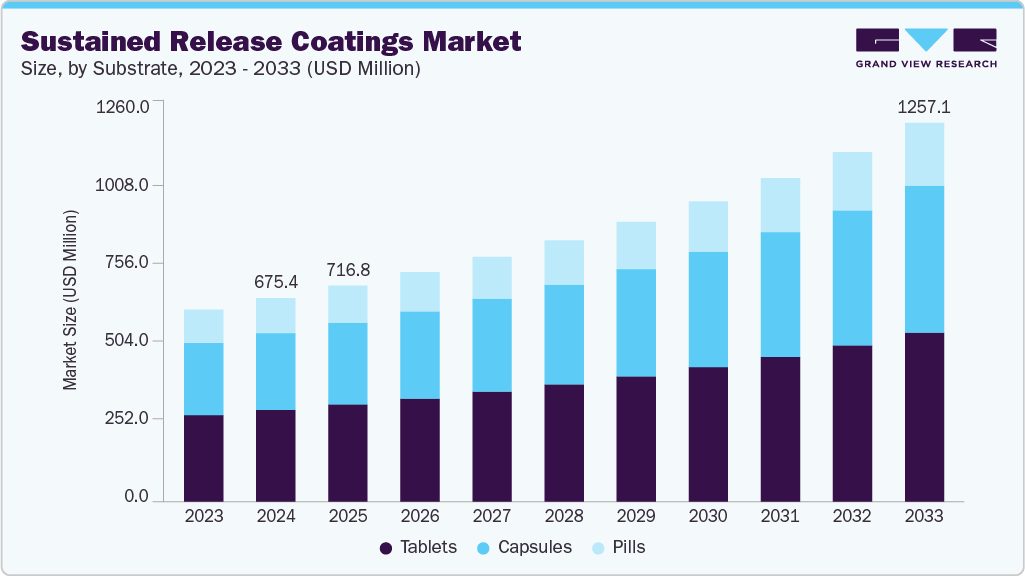
Despite its promising outlook, the market faces several challenges, including high formulation and development costs, which can deter smaller pharmaceutical firms from adopting advanced coating technologies. Regulatory complexities across different regions, particularly concerning polymer safety and product approval, further constrain market expansion. Moreover, achieving polymer-API compatibility and maintaining drug stability over extended periods remain critical technical hurdles.
Market Dynamics
Sustained release coatings are specialized functional coatings used to control the release profile of active pharmaceutical ingredients (APIs), nutrients, agrochemicals, and other bioactive compounds over an extended period. These coatings play a critical role in improving product efficacy, reducing dosing frequency, enhancing patient compliance, and optimizing performance across pharmaceutical, nutraceutical, agricultural, and industrial applications. The market is primarily driven by increasing demand for advanced drug delivery systems, rising prevalence of chronic diseases, and growing adoption of controlled-release formulations. Continuous innovation in polymer technologies and coating materials is further supporting market growth globally.
The increasing need for effective and patient-centric drug delivery solutions remains a major driver for the sustained release coatings market. Sustained release coatings enable controlled and prolonged release of active ingredients, reducing dosing frequency and improving therapeutic outcomes. These coatings are extensively utilized in oral solid dosage forms, capsules, tablets, pellets, and implantable drug delivery systems.
The rising incidence of chronic conditions such as cardiovascular diseases, diabetes, neurological disorders, and cancer has accelerated demand for long-acting medications that improve patient adherence to treatment regimens. Growing pharmaceutical R&D investments and the development of complex formulations are supporting the adoption of advanced sustained release coating technologies across global healthcare markets.
Developing effective sustained release coating systems requires precise formulation design, specialized manufacturing processes, and extensive performance validation. Achieving consistent release profiles across different products can be technically challenging and may increase development timelines and production costs.
Stringent regulatory requirements governing pharmaceutical excipients, coating materials, product safety, and manufacturing quality standards create compliance challenges for manufacturers. Regulatory approvals, stability studies, and bioavailability assessments further increase the complexity and cost associated with sustained release coating development and commercialization.
The growing market for modified-release pharmaceutical products presents significant opportunities for sustained release coating manufacturers. Increasing demand for once-daily medications, personalized therapies, and targeted drug delivery systems is driving innovation in coating technologies and functional polymers.
Expanding applications in nutraceuticals, veterinary pharmaceuticals, agricultural formulations, and specialty chemical products are creating additional growth avenues. The development of biodegradable, bio-based, and environmentally sustainable coating materials is expected to open new opportunities, enabling manufacturers to address evolving regulatory requirements and growing sustainability preferences across end-use industries.
Market Concentration & Characteristics
The market is moderately fragmented, with a few global players, such as BASF SE, Evonik, Colorcon, Coating Place, Inc., dominating the competitive landscape. These companies benefit from their scale of operations, competitive pricing, and diversified product offerings. They are actively investing in research and development, expanding production capacities, and focusing on sustainable practices to strengthen their positions in the competitive market.
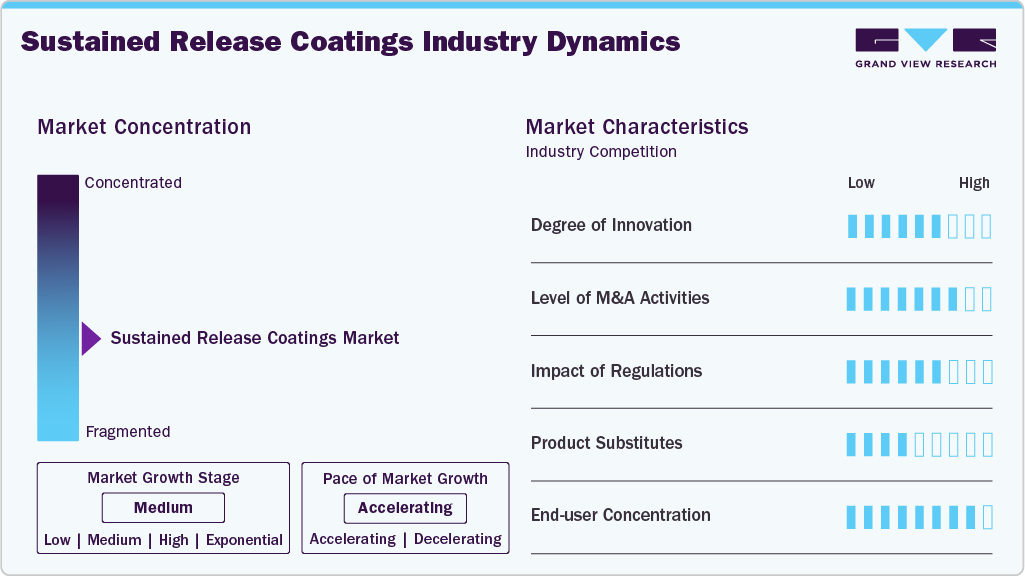
Leading players in the market are adopting a range of strategic initiatives to strengthen their market position, including continuous innovation in polymer technologies to develop advanced, patient-centric drug delivery solutions. Companies are investing heavily in R&D to enhance coating functionality, reduce production complexity, and ensure regulatory compliance.
Analyst Perspective
The sustained release coatings market is poised for steady growth, driven by rising demand for advanced drug delivery systems that enhance therapeutic effectiveness, improve patient compliance, and reduce dosing frequency. Increasing prevalence of chronic diseases, growing adoption of modified-release pharmaceutical formulations, and ongoing innovation in polymer-based coating technologies are supporting market expansion. Expanding applications in nutraceuticals and veterinary pharmaceuticals, coupled with increased pharmaceutical R&D investments, are expected to create new growth opportunities, positioning sustained release coatings as a critical component of next-generation drug delivery solutions.
Substrate Insights
Based on substrate, the tablets segment led the market with the largest revenue share of 51.2% in 2025, primarily due to their widespread use as the most common oral dosage form. Tablets offer several advantages, including ease of administration, cost-effective manufacturing, high stability, and compatibility with a wide range of active pharmaceutical ingredients (APIs). Their ability to support advanced coating technologies, including multilayer and osmotic systems, makes them highly suitable for sustained release applications. Furthermore, pharmaceutical companies prefer tablets for mass production and patient adherence, reinforcing their dominant position in the market.
The capsules segment is expected to grow at the fastest CAGR of 7.6% from 2025 to 2033, driven by their suitability for encapsulating moisture-sensitive drugs and enabling dual-release mechanisms. Capsules provide faster formulation flexibility and are often used for high-potency or combination drugs requiring modified release. Meanwhile, the pills segment represents a smaller portion of the market, primarily used in over-the-counter or traditional medicine formats. Although limited in industrial-scale pharmaceutical production, pills are gradually being incorporated into sustained release systems in niche therapeutic areas. However, the ease of coating and versatility offered by tablets continues to position them as the preferred substrate across both innovator and generic drug manufacturers.
Polymer Material Insights
By polymer material the ethyl & methyl cellulose segment dominated the market with a revenue share of 30.0% in 2025, owing to their excellent film-forming capabilities, stability, and broad compatibility with various APIs. These water-insoluble polymers are widely used for achieving pH-independent drug release, making them ideal for controlled and sustained release formulations. Their ease of processing, regulatory acceptance, and proven performance across a wide range of therapeutic applications have reinforced their dominant position. Moreover, their suitability for both hydrophilic and hydrophobic drug formulations makes them a preferred choice among pharmaceutical manufacturers.
The polyvinyl and cellulose acetate segment also commands a notable share, particularly due to their use in osmotic and extended-release systems where controlled permeability is crucial. Methacrylic acid derivatives, such as Eudragit polymers, are gaining traction for their pH-sensitive behavior, enabling site-specific drug release, especially in the gastrointestinal tract. Polyethylene glycol (PEG), commonly used as a plasticizer or pore former, enhances the flexibility and solubility of coating films, thereby improving drug release profiles. The others category includes polymers like hydroxypropyl methylcellulose (HPMC), polyvinylpyrrolidone (PVP), and biodegradable polymers, which are increasingly being explored in advanced drug delivery systems. While these alternatives offer specialized benefits, ethyl and methyl cellulose continue to lead due to their versatility, cost-efficiency, and well-established industry usage.
Application Insights
The in vivo segment by application accounted for the dominating revenue share of 70.6% in 2025, primarily due to its critical role in formulation development, quality control, and regulatory compliance. In vitro testing enables pharmaceutical companies to evaluate drug release profiles, coating integrity, and dissolution behavior under simulated biological conditions, helping to optimize formulations before advancing to clinical trials. The cost-effectiveness, reproducibility, and high-throughput capabilities of in vitro methods have made an essential step in drug development pipelines, particularly for sustained release technologies where controlled drug release is vital.
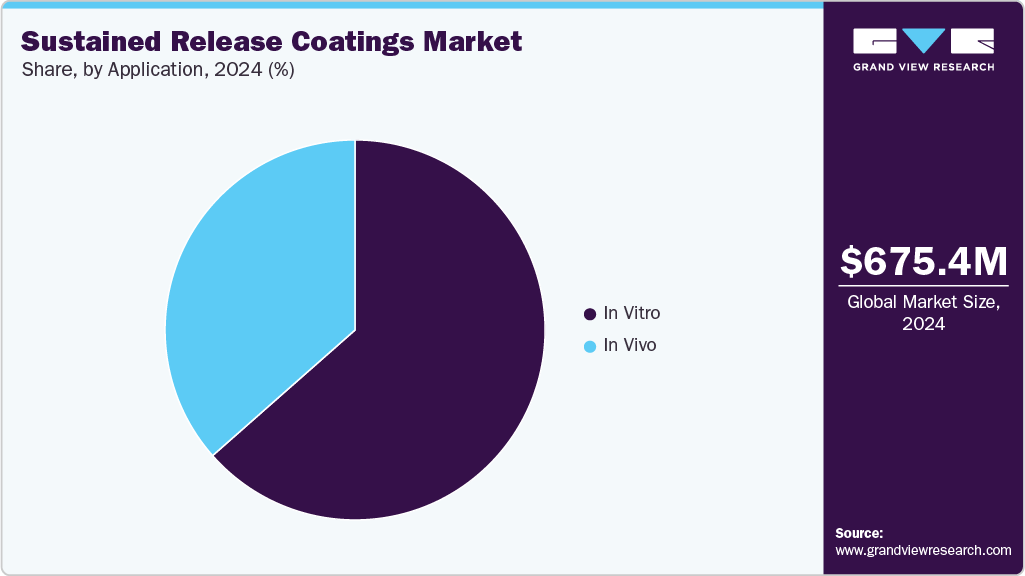
The in vivo segment, while slightly smaller in revenue, is experiencing steady growth driven by increased clinical adoption of sustained release formulations. In vivo studies are crucial for assessing pharmacokinetics, bioavailability, and therapeutic efficacy in real-world physiological conditions. These studies validate in vitro findings and ensure safety and efficacy prior to regulatory approval and commercialization. As the demand for long-acting and patient-centric therapies continues to rise, especially in chronic disease management, in vivo applications are expected to gain further traction. Nonetheless, the dominance of the in vitro segment remains intact due to its foundational role in early-stage formulation and regulatory processes.
Regional Insights
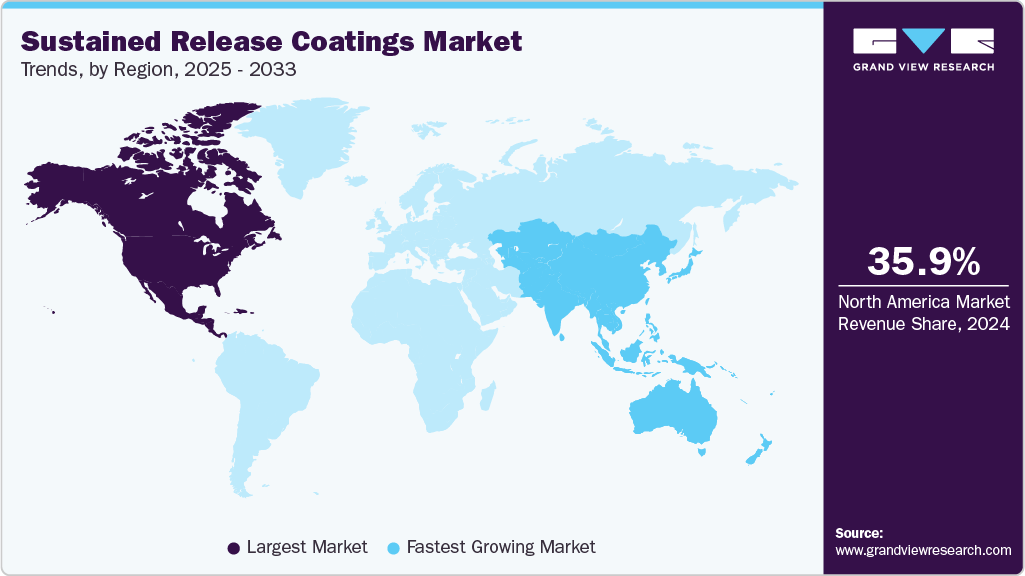
North America dominated the sustained release coatings market with the largest revenue share of 32.2% in 2025, driven by a well-established pharmaceutical industry, robust R&D infrastructure, and high healthcare expenditure. The region benefits from early adoption of advanced drug delivery technologies and the strong presence of key market players and contract manufacturing organizations (CMOs). In addition, favorable regulatory support from agencies like the FDA and increasing demand for chronic disease treatments have accelerated the development and commercialization of sustained release formulations.
US Sustained Release Coatings Market Trends
The U.S. accounted for 86.7% of the North America sustained release coatings market in 2025. The country has witnessed growing adoption of sustained release technologies in both prescription and over-the-counter (OTC) medications, driven by the need to improve therapeutic outcomes and enhance patient compliance.
Asia Pacific Sustained Release Coatings Market Trends
Asia Pacific sustained release coatings industry is emerging as the fastest-growing region in the market, driven by the rapid expansion of the pharmaceutical manufacturing sector, increasing healthcare spending, and a growing patient population. The region’s strong generics industry, particularly in India and China, is fueling demand for cost-effective sustained release formulations. Government initiatives to boost local drug production, combined with the rising prevalence of chronic diseases, are further accelerating market growth.
China sustained release coatings industry is a key player in the Asia Pacific region and is witnessing robust growth in the market due to its rapidly advancing pharmaceutical sector and government support for innovation-driven healthcare. With a large and aging population, there is a rising demand for long-acting therapeutics to manage chronic conditions such as hypertension, diabetes, and cardiovascular diseases.
Europe Sustained Release Coatings Market Trends
Europe sustained release coatings industry holds a significant share in the global market, supported by a mature pharmaceutical industry, strong regulatory frameworks, and a high focus on innovation and quality. The region’s emphasis on personalized medicine and patient-centric therapies is driving the adoption of advanced sustained release technologies. In addition, stringent regulatory standards from agencies such as the EMA ensure high product quality and safety, encouraging pharmaceutical companies to invest in novel polymer coatings and formulation techniques.
Germany sustained release coatings industry growth is attributed to Germany being Europe’s largest pharmaceutical market, which makes it a pivotal market for sustained release coatings. The country’s robust research ecosystem, coupled with significant investments in pharmaceutical R&D, supports the development and commercialization of cutting-edge drug delivery systems. Germany benefits from a strong manufacturing base, advanced material science expertise, and collaborations between academia and industry that drive innovation in polymer coatings.
Latin America Sustained Release Coatings Market Trends
Latin America sustained release coatings industry is gradually emerging as a promising market, driven by increasing healthcare investments and growing demand for affordable and effective chronic disease treatments. The expansion of the generic pharmaceutical industry in countries like Brazil and Mexico is fostering the adoption of controlled release technologies to enhance product differentiation and patient adherence.
Middle East & Africa Sustained Release Coatings Market Trends
The Middle East & Africa sustained release coatings industry represents an emerging market with considerable growth potential, fueled by increasing healthcare expenditure and modernization of pharmaceutical manufacturing capabilities. The growing prevalence of lifestyle and chronic diseases, alongside expanding access to healthcare services, is driving demand for sustained release formulations to improve patient compliance.
Key Sustained Release Coatings Company Insights
Key players, such as BASF SE, Evonik, Colorcon, Coating Place, Inc., are dominating the market.
BASF SE
-
BASF SE is a key player in the global sustained release coatings industry, leveraging its extensive expertise in polymer chemistry and pharmaceutical excipients to deliver high-performance coating solutions. Through its Pharma Solutions division, BASF offers a broad portfolio of functional polymers, including ethyl cellulose, methacrylate copolymers, and polyethylene glycols, specifically designed for controlled and sustained drug release applications. The company focuses on innovation-driven product development, regulatory compliance support, and technical collaboration with pharmaceutical manufacturers to enhance formulation efficiency and therapeutic performance.
Key Sustained Release Coatings Companies:
The following are the leading companies in the sustained release coatings market. These companies collectively hold the largest market share and dictate industry trends.
- ASF SE
- Evonik
- Colorcon
- Coating Place, Inc.
- Teva Pharmaceutical Industries Ltd.
- Pfizer, Inc.
- Sun Pharmaceutical Industries Ltd.
- Novartis AG
- AstraZeneca
- GlaxoSmithKline plc
- AbbVie Inc.
Competitive Benchmarking
Category
Operating Strategies
Competitive Edge
Weakness
Established Players (BASF SE; Evonik; Colorcon; Teva Pharmaceutical Industries Ltd.; Pfizer, Inc.; Novartis AG)
- Expanding functional polymer and coating technology portfolios to support advanced modified-release drug formulations. Investing in R&D for innovative coating materials, controlled-release technologies, and formulation optimization. Strengthening global manufacturing capabilities, regulatory compliance frameworks, and partnerships with pharmaceutical manufacturers and CDMOs to enhance market reach.
- Strong technological expertise, extensive intellectual property portfolios, and established pharmaceutical industry relationships support leadership in sustained release formulations. Large-scale manufacturing infrastructure, global distribution networks, and regulatory capabilities enable reliable supply and rapid commercialization.
- High R&D expenditures, stringent regulatory requirements, and lengthy product development cycles can increase operational costs. Dependence on pharmaceutical industry demand and evolving regulatory standards may affect growth and profitability.
Emerging Players (Coating Place, Inc.; Sun Pharmaceutical Industries Ltd.; AstraZeneca; GlaxoSmithKline plc; AbbVie Inc.)
- Focusing on specialty sustained release technologies, customized coating solutions, and niche therapeutic applications. Developing innovative polymer systems and formulation services tailored to specific drug delivery requirements. Leveraging strategic collaborations, licensing agreements, and contract manufacturing partnerships to expand market presence.
- Greater flexibility in addressing specialized customer needs and emerging drug delivery trends. Faster adoption of novel coating technologies and ability to develop customized solutions for targeted pharmaceutical applications. Strong focus on innovation supports differentiation in niche market segments.
- Limited manufacturing scale and narrower product portfolios compared to established market leaders may constrain competitiveness. Lower global distribution reach and regulatory resources can limit penetration into highly regulated international markets.
Global Sustained Release Coatings Market Report Scope
Report Attribute
Details
Market value in 2025
USD 336.0 million
Estimated market size in 2026
USD 358.0 million
Projected market size by 2033
USD 584.9 million
Growth rate
CAGR of 7.3% from 2026 to 2033
Base year for estimation
2025
Historical data
2021 - 2024
Forecast period
2026 - 2033
Quantitative units
Revenue in USD million/billion, Volume in Kilotons and CAGR from 2026 to 2033
Report coverage
Revenue forecast, company ranking, competitive landscape, growth factors, and trends
Segments covered
Substrate, polymer material, application, region
Regional scope
North America; Europe; Asia Pacific; Latin America; MEA
Country scope
US; Canada; Mexico; Germany; UK; France; Italy; Spain; China; India; Japan; South Korea; Saudi Arabia; South Africa; Brazil; Argentina
Key companies profiled
BASF SE; Evonik; Colorcon; Coating Place, Inc.; Teva Pharmaceutical Industries Ltd.; Pfizer, Inc.; Sun Pharmaceutical Industries Ltd.; Novartis AG; AstraZeneca; GlaxoSmithKline plc; AbbVie Inc.
Customization scope
Free report customization (equivalent up to 8 analysts' working days) with purchase. Addition or alteration to country, regional & segment scope.
Pricing and purchase options
Avail customized purchase options to meet your exact research needs. Explore purchase options
Global Sustained Release Coatings Market Report Segmentation
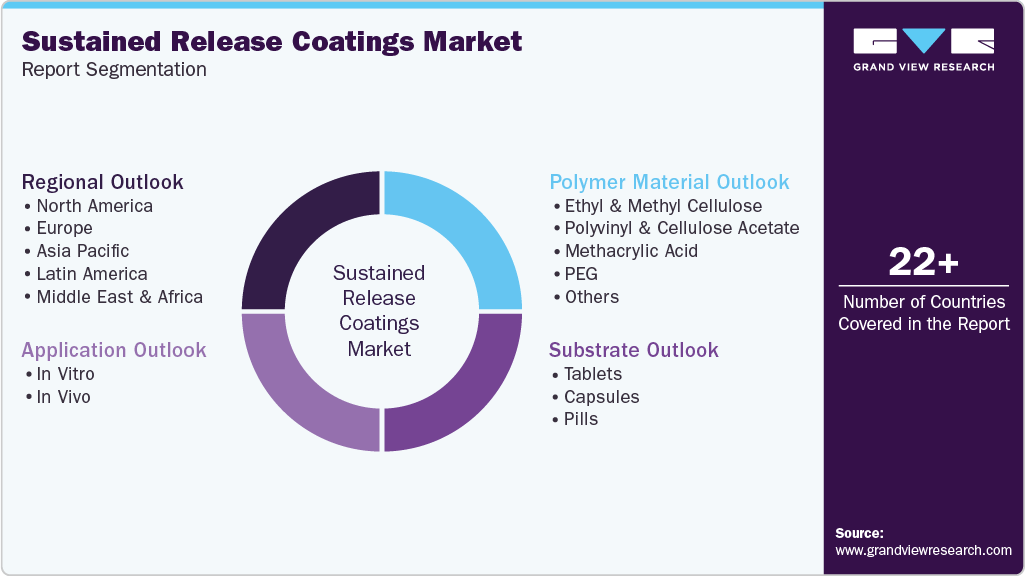
This report forecasts revenue growth at global, regional, and country levels and provides an analysis of the latest industry trends in each of the sub-segments from 2021 to 2033. For this study, Grand View Research has segmented the global sustained release coatings market report based on application, substrate, polymer material and region.
-
Application Outlook (Volume, Kilotons; Revenue, USD Million, 2021 - 2033)
-
In Vitro
-
In Vivo
-
-
Substrate Outlook (Volume, Kilotons; Revenue, USD Million, 2021 - 2033)
-
Tablets
-
Capsules
-
Pills
-
-
Polymer Material Outlook (Volume, Kilotons; Revenue, USD Million, 2021 - 2033)
-
Ethyl & Methyl Cellulose
-
Polyvinyl & Cellulose Acetate
-
Methacrylic Acid
-
PEG
-
Others
-
-
Regional Outlook (Volume, Kilotons; Revenue, USD Million, 2021 - 2033)
-
North America
-
U.S.
-
Canada
-
Mexico
-
-
Europe
-
Germany
-
UK
-
France
-
Italy
-
Spain
-
-
Asia Pacific
-
China
-
Japan
-
India
-
South Korea
-
-
Middle East & Africa
-
South Africa
-
Saidi Arabia
-
-
Latin America
-
Brazil
-
Argentina
-
-
Research Methodology
The sustained release coatings market figures in this report are based on a proven research process that combines executive interviews with secondary research from proprietary databases, company filings, and recognized regulatory and institutional sources. Market size is built through value-chain sizing - reconciling supply-side and demand-side estimates - and triangulated with bottom-up and top-down approaches. Every estimate passes multiple levels of expert validation before publication, with each sustained release coatings segment quantified using the revenue-capture definitions in the table below.
Segment Definition
Segment - Substrate
Revenue capture definition
Tablets
Revenue generated from sustained release coatings applied to tablets, including matrix tablets, multilayer tablets, and coated tablets designed to provide controlled drug release over a specified period.
Capsules
Revenue generated from sustained release coatings used on hard gelatin capsules, soft gel capsules, and multiarticulate capsule systems to regulate active ingredient release and improve dosing convenience.
Pills
Revenue generated from sustained release coating technologies utilized on pill formulations and coated pellets intended to extend therapeutic action and reduce dosing frequency.
Segment - Polymer Material
Revenue capture definition
Ethyl & Methyl Cellulose
Revenue generated from sustained release coatings formulated using ethyl cellulose, methyl cellulose, and related cellulose derivatives that provide diffusion-controlled and prolonged drug release characteristics.
Polyvinyl & Cellulose Acetate
Revenue generated from coatings based on polyvinyl polymers and cellulose acetate materials used to control permeability, release kinetics, and formulation stability.
Hot melt
Revenue generated from hot-melt coating materials and technologies that create solvent-free sustained release coatings through thermal application processes.
PEG
Revenue generated from polyethylene glycol (PEG)-based coating materials utilized to modify coating flexibility, permeability, and controlled-release performance.
Other Polymer Materials
Revenue generated from alternative polymer systems including acrylic polymers, methacrylate copolymers, polyvinyl acetate derivatives, biodegradable polymers, and other specialty materials used in sustained release coating formulations.
Segment - Application
Revenue capture definition
In Vitro
Revenue generated from sustained release coatings used in laboratory-based dissolution testing, formulation development, release profile evaluation, and other controlled experimental studies conducted outside living organisms.
In Vivo
Revenue generated from sustained release coatings incorporated into products intended for administration in living organisms, including commercial pharmaceutical products, clinical trials, veterinary applications, and therapeutic drug delivery systems.
Estimation Model
Layer Name
Key Question
Description
Coating Material Production Layer
What forms the supply base?
Identify global production capacity of sustained release coating materials supported by polymer manufacturing capabilities, coating excipient availability, pharmaceutical-grade material production, formulation technologies, and regional manufacturing infrastructure. This establishes the foundational supply base available for sustained release coating applications.
Dosage Form Adoption Layer
Where are sustained release coatings utilized?
Estimate the proportion of sustained release coatings utilized across tablets, capsules, pills, and other modified-release dosage forms based on pharmaceutical formulation requirements, therapeutic applications, product development trends, and industry adoption rates.
Coating Consumption Intensity Layer
How much coating material is used?
Analyze dosage-form-specific coating utilization rates, polymer loading levels, release-profile requirements, manufacturing practices, and regional pharmaceutical production trends to determine annual consumption of sustained release coating materials across major applications.
Revenue Layer
How is market revenue generated?
Market revenue is quantified through the sale of sustained release coating materials, functional polymers, coating systems, and formulation technologies supplied to pharmaceutical manufacturers, contract development and manufacturing organizations (CDMOs), nutraceutical companies, veterinary drug producers, and specialty formulation companies worldwide.
Delivered Customizations
This report has been delivered with the following In-depth customizations
Client Request
Customization Delivered
Value Adds
Regional Segmentation
The study delivers detailed country-level analysis across key sustained release coatings markets including the U.S., Germany, France, UK, China, Japan, South Korea, and India, covering pharmaceutical production trends, coating technology adoption, regulatory landscape, demand outlook, and competitive dynamics.
Provides stakeholders with a detailed understanding of regional demand patterns, regulatory requirements, manufacturing capabilities, and growth opportunities to support market entry, expansion, and investment decisions.
Application Assessment
The report delivers detailed analysis of sustained release coating utilization across tablets, capsules, pills, nutraceutical products, veterinary pharmaceuticals, and other modified-release dosage forms, including adoption trends and future growth prospects.
Enables companies to identify the most attractive application segments, optimize product development strategies, and prioritize investments based on application-specific demand and growth potential.
Competitive Benchmarking
The study provides detailed benchmarking of major sustained release coating material suppliers and pharmaceutical manufacturers, including product portfolios, coating technologies, manufacturing capabilities, strategic initiatives, and regional market presence.
Supports strategic planning by helping stakeholders evaluate competitive positioning, identify technology gaps, assess innovation trends, and understand best practices adopted by leading market participants.
Frequently Asked Questions About This Report
The global sustained release coating market is expected to grow at a CAGR of 7.3% from 2025 to 2033 to reach USD 584.9 million by 2033.
Some key players in the sustained-release coating market include Teva Pharmaceutical Industries Ltd., Pfizer, Inc.Novartis AG, AstraZeneca, GlaxoSmithKline plc, Arkema, Wacker Chemie AG, Allinova, Dow Inc Shin-Etsu Chemical Co., Ltd..
Key factors driving market growth include the rising demand for controlled and targeted drug delivery systems, which enhance patient compliance and therapeutic efficacy. The increasing prevalence of chronic diseases, such as diabetes, hypertension, and cardiovascular disorders, is propelling the adoption of sustained-release formulations.
North America dominated the sustained release coatings market with the largest revenue share of 32.2% in 2025.
Ethyl & methyl cellulose segment held the largest market share of 30.0% in 2025 while polyvinyl and cellulose acetate segment is expected to be the fastest-growing market.
The in vivo segment by application accounted for the dominating revenue share of 70.6% in 2025. Growth was supported by increasing pharmaceutical development activities, demand for extended-release therapies, clinical validation requirements, and growing focus on improving therapeutic effectiveness and patient compliance.
Asia Pacific is the fastest-growing region over the forecast period.
The global sustained release coatings market size was estimated at USD 336.0 million in 2025 and is projected to grow from USD 358.0 million in 2026.
Based on substrate, the tablets segment led the market with the largest revenue share of 51.2% in 2025. Its dominance was supported by widespread use in oral drug delivery, ease of manufacturing, dosage accuracy, patient convenience, and compatibility with various sustained release coating technologies.
About the Author(s)
Paints, Coatings & Printing Inks Research Team
Bulk Chemicals · Paints, Coatings & Printing InksThis report was authored by the paints, coatings & printing inks research team at Grand View Research - comprising two research analysts, one senior research analyst, and one industry expert - with specialized expertise in the paints, coatings & printing inks segment of the bulk chemicals industry. All findings are based on proprietary bulk chemicals databases, executive interviews, and regulatory analysis, subject to internal peer review prior to publication.
Last Updated:
Speak to Analyst

Customize this report to your needs — add regions, segments, or data points, with 20% free customization.
Or view our licence options:


ISO 9001:2015 & 27001:2022 Certified
We are GDPR and CCPA compliant! Your transaction & personal information is safe and secure. For more details, please read our privacy policy.












