
- Home
- »
- Biotechnology
- »
-
T-cell Engager Market Size And Share Report, 2026-2033GVR Report cover

T-cell Engager Market (2026 - 2033)
Size, Share & Trends Analysis Report By Molecular Format (Bispecific T-Cell Engagers, TCR-Based T-Cell Engagers), By Target Antigen, By Therapeutic Application, By Route of Administration, By Region, And Segment Forecasts
Market Size, 2025
$5.0BMarket Estimate, 2026
$6.6BMarket Forecast, 2033
$14.5BCAGR, 2026–2033
11.9%T-cell Engager Market Summary
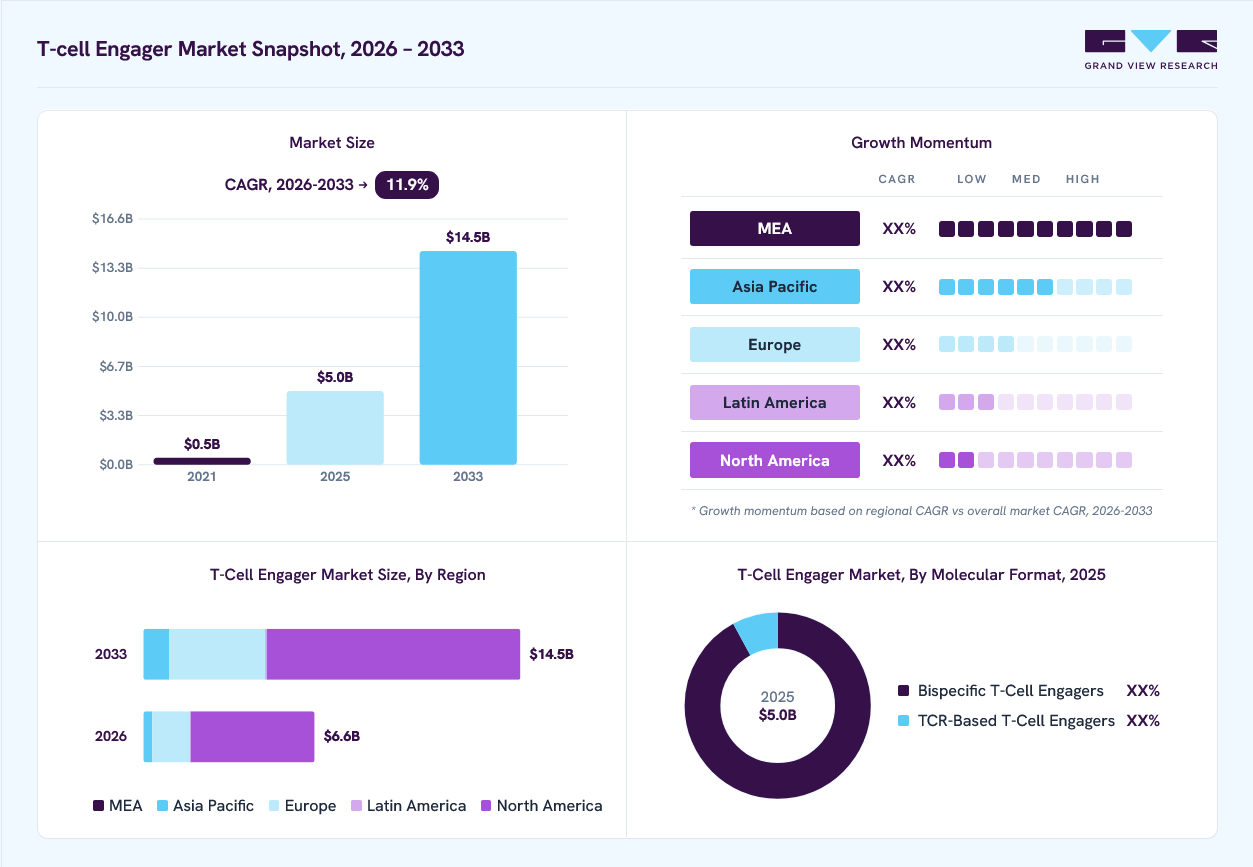
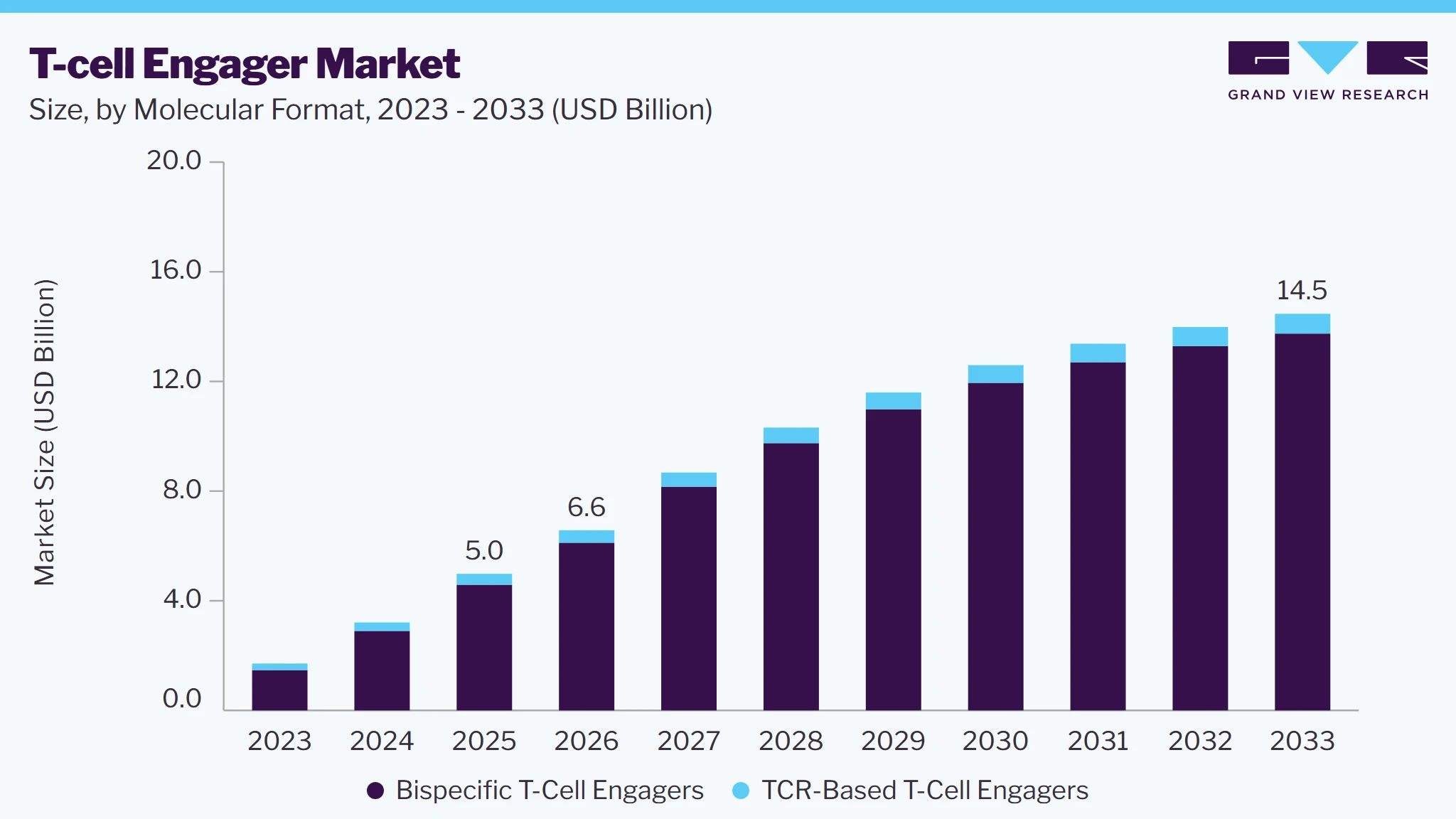
The global t-cell engager market size was valued at USD 5.0 billion in 2025 and is projected to grow from USD 6.6 billion in 2026 to USD 14.5 billion by 2033, at a CAGR of 11.9% from 2026 to 2033. The market in North America dominated with a revenue share of 74.1% in 2025. Market growth is driven by the increasing adoption of immunotherapies for cancer treatment, rising demand for targeted therapies, and advancements in bispecific antibody engineering. Growing clinical research into T-cell engagers for hematological malignancies and solid tumors, along with expanding investments in oncology drug development, is further supporting market growth.
 Source: Grand View Research, IR Documents, Primary Interviews, Paid DatabasesTo learn more about this report,
 Download Free Sample Report
Key Market Trends & Insights
- By molecular format: Bispecific t-cell engagers segment held the largest market share of 92.0% in 2025.
- By target antigen: CD19 segment held the largest market share of 31.3% in 2025.
- By therapeutic application: Hematological malignancies segment held the largest market share of 79.4% in 2025.
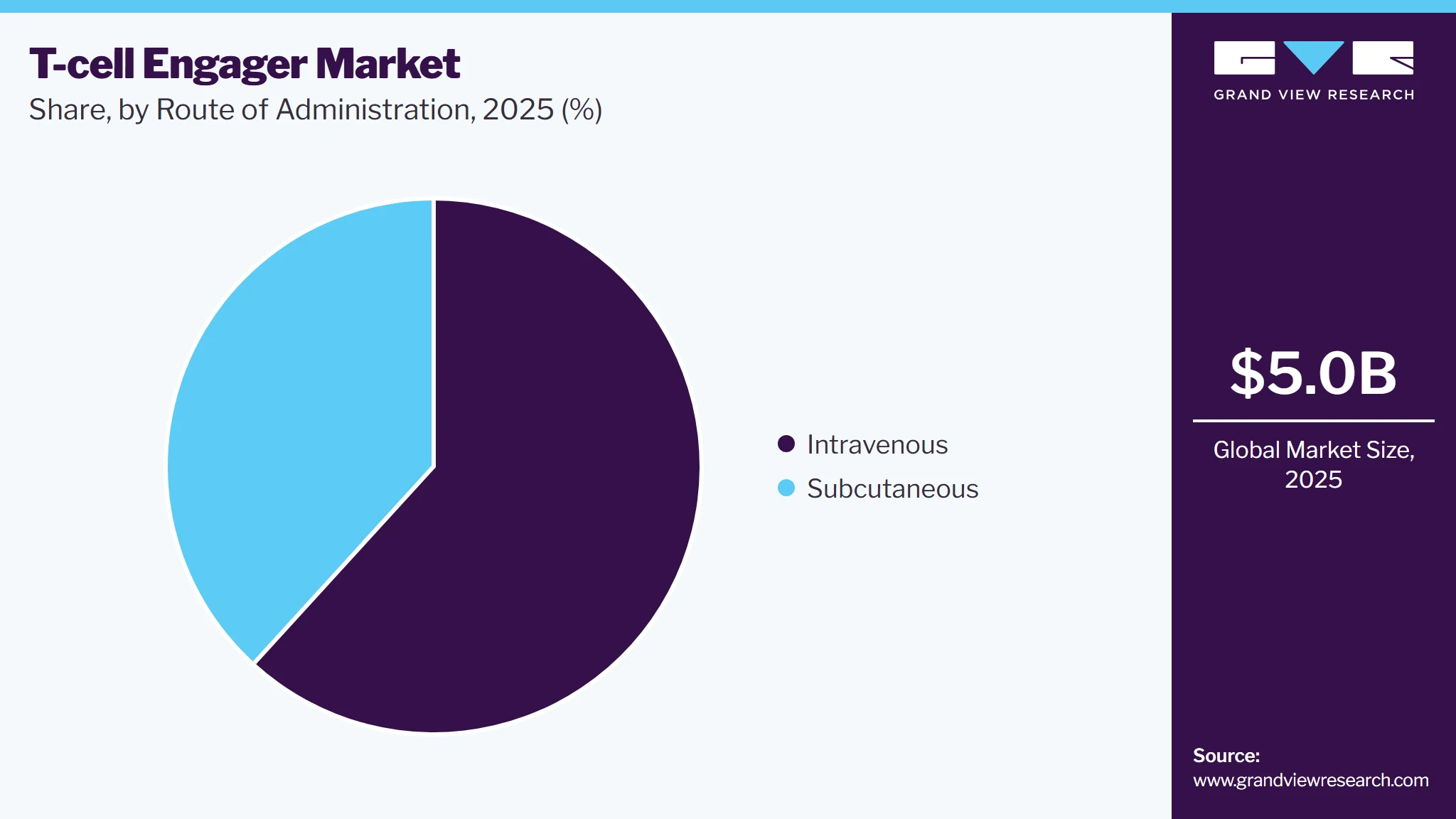
- By route of administration: Intravenous segment held the largest market share of 61.8% in 2025.
Regional Highlights
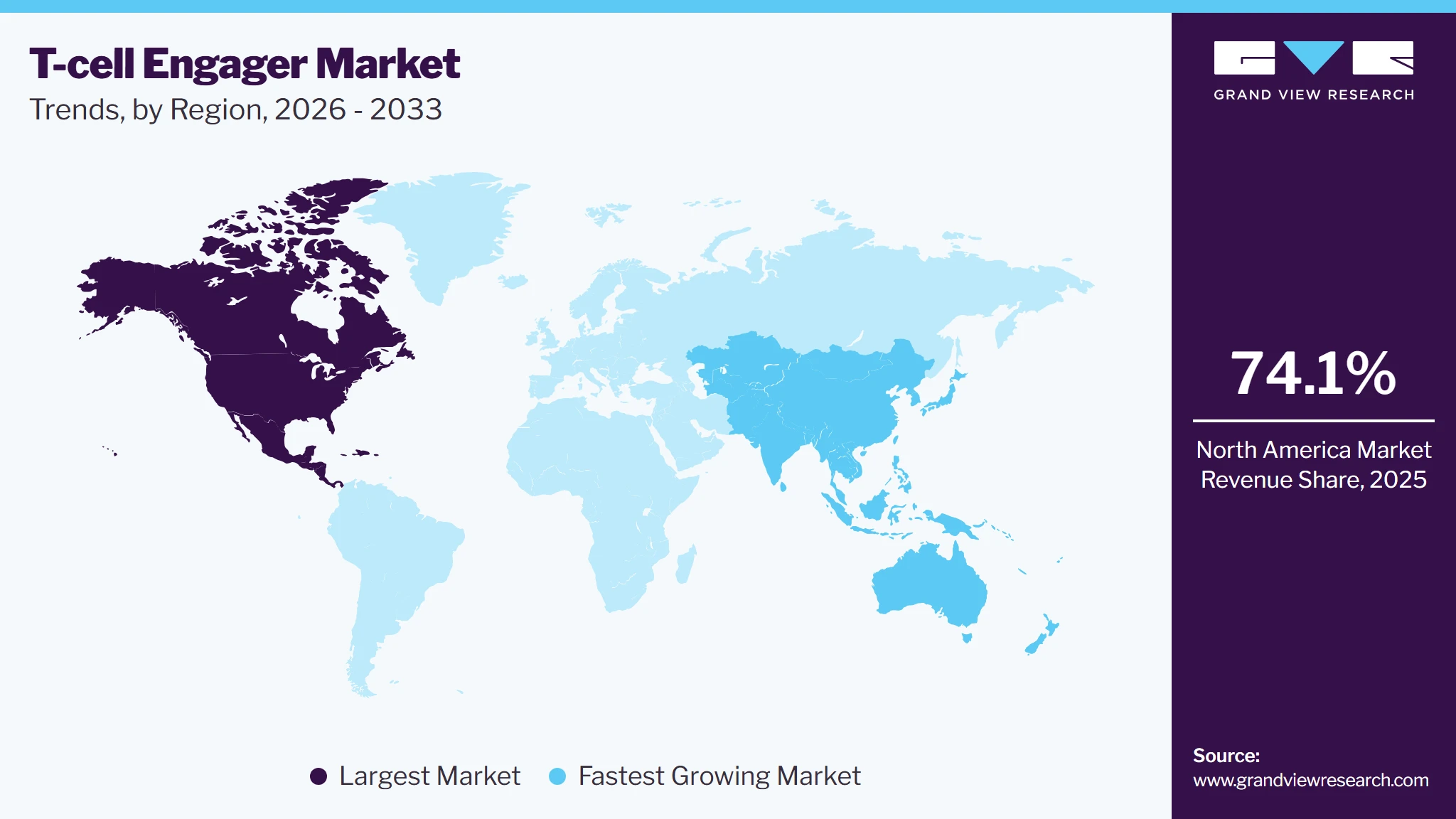
- Largest regional market: North America (74.1% revenue share, 2025)
- Fastest-growing regional market: Asia Pacific (highest CAGR, 2026-2033)
- By country: The U.S. held the largest market share in 2025
Market Size & Forecast
- Market size in 2025: USD 5.0 Billion
- Estimated market size in 2026: USD 6.6 Billion
- Projected market size by 2033: USD 14.5 Billion
- CAGR (2026-2033): 11.9%
Three ways to get this report
Buy it, customize it, or ask a question.Ask an Analyst
Analyst response in 1 business day
- AccessReport author, directly
- Reply timeWithin 1 working day
- No sales callDirect answer only
- FormatEmail reply
- CostFree, no cost
Get the Full Report
What the study covers
- FormatsPDF · Excel · Dashboard
- Timeline2026–2033 annual, 2025 base
- Coverage20+ countries, 5 regions
- Companies10+ key players profiled
Customize the Report
20% free customization
- IncludeCountries, segments, points
- TailorTo your product definition
- ExtendDeeper competitor detail
- OrA fully bespoke study
- Turnaround5–10 working days
 To learn more about this report, Download Free Sample Report
Market Dynamics
The T-cell engager market is experiencing significant growth, driven by rising investments in cancer immunotherapy, advances in bispecific antibody engineering, and an expanding clinical pipeline of targeted immunotherapies. Growing research into T-cell engagers for hematological malignancies and solid tumors, coupled with increasing focus on novel antigen targets, combination therapies, and next-generation engager platforms, is expected to expand therapeutic applications and improve treatment outcomes, thereby creating new opportunities for market growth.
The expansion of clinical trials for T-cell engager therapies is driving market growth by accelerating the development of novel immunotherapies for cancer treatment. Pharmaceutical and biotechnology companies are increasingly evaluating T-cell engagers across various cancer types, including hematological malignancies and solid tumors, to improve treatment efficacy and address limitations associated with existing therapies. Ongoing clinical research is also expanding the understanding of optimal dosing strategies, safety profiles, and combination treatment approaches, supporting the advancement of these therapies through clinical development.
Moreover, increasing investments in oncology research and the growing pipeline of bispecific antibodies and next-generation T-cell engagers are creating new opportunities for market expansion. Clinical trials evaluating novel targets, dual-targeting approaches, and combination therapies are broadening the potential applications of these treatments. As more candidates progress through clinical development and demonstrate favorable safety and efficacy outcomes, the market is expected to benefit from an expanding therapeutic pipeline and the potential introduction of new treatment options.
In addition, the expanding clinical pipeline of T-cell engager therapies is creating opportunities for market growth across multiple cancer indications. Clinical studies evaluating candidates targeting BCMA, GPRC5D, DLL3, PSMA, and MUC16 highlight ongoing efforts to broaden therapeutic applications beyond established indications. The advancement of investigational candidates into late-stage clinical trials, particularly for multiple myeloma and solid tumors, is expected to support future product development and expand the potential treatment landscape.
Selected Clinical Trials of T-Cell Engager Therapies
Drug / Candidate
Target
Indication
Clinical Trial ID
Clinical Phase
Elranatamab
CD3 × BCMA
Relapsed / refractory multiple myeloma
NCT05317416
Phase III
Teclistamab
CD3 × BCMA
Relapsed / refractory multiple myeloma
NCT05083169
Phase III
Linvoseltamab
CD3 × BCMA
Relapsed / refractory multiple myeloma
NCT05730036
Phase III
Talquetamab
CD3 × GPRC5D
Relapsed / refractory multiple myeloma
NCT05455320
Phase III
Tarlatamab
CD3 × DLL3
Relapsed small-cell lung cancer
NCT05740566
Phase III
REGN4336
CD3 × PSMA
Advanced prostate cancer
NCT05125016
Phase I/II
REGN4018
CD3 × MUC16
Recurrent advanced ovarian cancer
NCT03564340
Phase I/II
Source: NIH, Secondary Research, Primary Interviews, Grand View Research Analysis
The complexities associated with bispecific antibody design and manufacturing pose a significant restraint on the T-cell engager market. These therapies are engineered to bind simultaneously to CD3 on T cells and specific antigens on target cells, requiring precise molecular design to ensure binding specificity, stability, and therapeutic activity. Developing these complex molecules involves challenges related to protein folding, chain pairing, aggregation, and maintaining consistent product quality. These factors increase manufacturing complexity and require specialized technologies, advanced analytical tools, and stringent quality control processes.
Moreover, scaling up production while maintaining product purity, stability, and batch-to-batch consistency can increase manufacturing costs and extend development timelines. Variations in molecular structure and production processes may also affect drug potency, safety, and overall performance, creating additional challenges during clinical development and regulatory evaluation. These technical and operational barriers may limit the entry of smaller biotechnology companies, delay commercialization, and restrain the broader adoption of T-cell engager therapies.
The expansion of T-cell engager therapies toward new cancer-associated antigen targets presents a significant opportunity for market growth by broadening their potential applications across hematological malignancies and solid tumors. While established targets such as CD19 and BCMA have supported the development of therapies for blood cancers, research into emerging targets is creating opportunities to address cancers with limited treatment options. Targeting antigens such as DLL3, GPC3, CLDN6, and LGR5 may help expand the use of T-cell engagers across different tumor types. Moreover, advances in multispecific antibody engineering and tumor-selective targeting approaches are expected to improve tumor recognition and address challenges associated with antigen heterogeneity.
For instance, in June 2025, CDR-Life announced CDR609, a new clinical candidate targeting LGR5, a cancer-associated surface antigen with potential applications in solid tumors, including colorectal and pancreatic cancers. The candidate was designed to address tumor heterogeneity and broaden the potential reach of T-cell engager therapies. This development highlights ongoing efforts to expand the range of actionable cancer antigens and develop targeted immunotherapies for solid tumors, creating new opportunities for growth in the T-cell engager market.
“CDR609 embodies the key elements of our T cell engager platform: precision, potency and safety,”
- Christian Leisner, Ph.D., CEO of CDR-Life.
Market Concentration & Characteristics
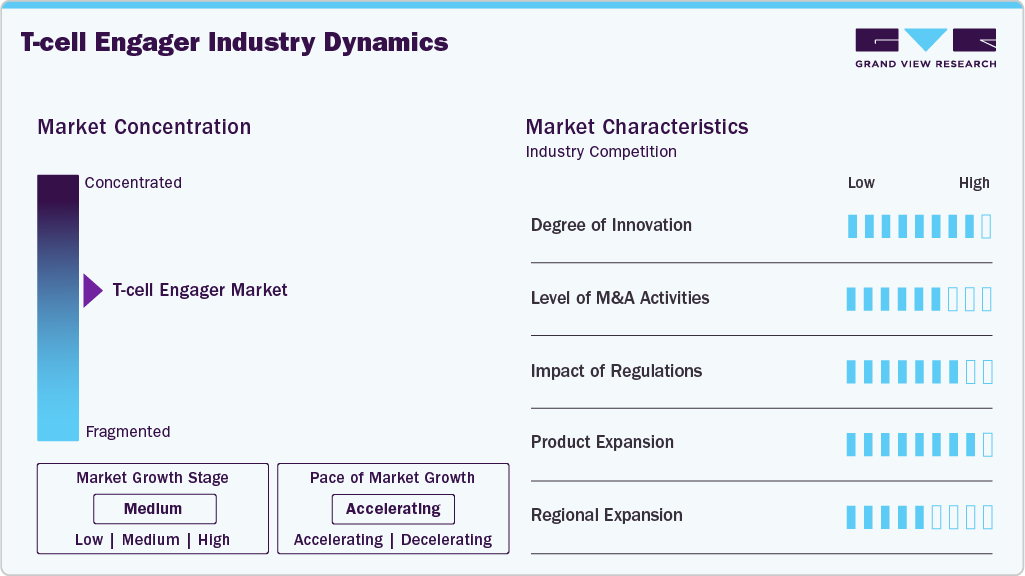
The T-cell engager industry is highly innovative, driven by advances in bispecific and multispecific antibody engineering, novel tumor antigen targeting, and conditional T-cell activation technologies. Companies are increasingly developing therapies designed to improve tumor selectivity, enhance T-cell activation, and address limitations associated with existing immunotherapies, particularly in solid tumors. For instance, in June 2025, Johnson & Johnson reported early clinical findings for pasritamig, a bispecific T-cell engager targeting KLK2 in advanced prostate cancer, highlighting ongoing efforts to expand treatment options for solid tumors.
“These first-in-human results for pasritamig are highly encouraging, demonstrating that KLK2 is a viable target for T-cell engagers in metastatic castration-resistant prostate cancer.”
- Capucine Baldini, M.D., Ph.D., Drug Development Department (DITEP), Institut Gustave Roussy, and presenting author
The T-cell engager industry is experiencing moderate M&A activity, as pharmaceutical companies seek to strengthen their immunotherapy pipelines and access differentiated T-cell engager technologies. These transactions enable companies to expand their therapeutic portfolios, access innovative drug candidates, and accelerate clinical development across oncology and other indications. For instance, in March 2026, Gilead Sciences announced an agreement to acquire Ouro Medicines, adding gamgertamig, an investigational BCMA × CD3 T-cell engager being developed for autoimmune diseases, to its pipeline. This transaction highlights the growing strategic interest in extending T-cell engager technologies beyond oncology.
“This acquisition underscores our commitment to advancing transformative therapies for people living with serious autoimmune diseases. BCMA is a validated target with emerging data demonstrating potentially transformative outcomes in autoimmune diseases. BCMA targeted T cell engagers represent a differentiated approach with the potential to induce durable disease control. This novel framework complements our expanding inflammation pipeline and reflects our strategy to invest in innovative science that may redefine standards of care.”
- Dietmar Berger, MD, PhD, Chief Medical Officer of Gilead
 To learn more about this report, Download Free Sample Report
The T-cell engager market is influenced by stringent regulatory requirements related to clinical efficacy, treatment safety, manufacturing quality, and post-marketing monitoring. Regulatory evaluation focuses on demonstrating meaningful clinical benefits while managing risks such as cytokine release syndrome and immune-mediated neurological toxicities. For instance, in November 2025, the U.S. FDA granted traditional approval to Amgen's Imdelltra (tarlatamab-dlle) for extensive-stage small-cell lung cancer. This milestone highlights the role of clinical evidence and safety management in supporting the commercialization of T-cell engager therapies.
The T-cell engager industry is experiencing rapid expansion through the development of T-cell engagers targeting emerging cancer-associated antigens and previously underserved solid tumors. Developers are exploring new molecular targets and antibody formats to broaden treatment applications and address limitations associated with existing therapies. For instance, in April 2025, Context Therapeutics dosed the first patient in a Phase I clinical trial of CT-95, a mesothelin × CD3 T cell engaging (“TCE”) bispecific antibody being investigated for mesothelin-expressing cancers. Such developments reflect continued efforts to expand the therapeutic pipeline and diversify product offerings across cancer indications.
The T-cell engager industry is witnessing a moderate to high regional expansion, driven by the growing adoption of advanced cancer immunotherapies, increasing participation in multinational clinical trials, and rising investments in targeted drug development. Pharmaceutical and biotechnology companies are expanding their research and development activities across established and emerging markets to advance clinical pipelines, improve patient access, and support the commercialization of novel T-cell engager therapies.
Analyst Perspective
The T-cell engager market is expected to witness significant growth, driven by increasing demand for targeted immunotherapies and expanding research into bispecific antibodies for hematological malignancies and solid tumors. Growing investments in oncology drug development, advancements in antibody engineering, and the expanding clinical pipeline are supporting market expansion. Moreover, increasing regulatory approvals and strategic collaborations among biopharmaceutical companies are expected to accelerate the development and commercialization of novel T-cell engagers. Market participants are focusing on improving therapeutic efficacy, safety profiles, and treatment accessibility to address evolving cancer treatment needs.
Molecular Format Insights
The bispecific T-cell engagers segment accounted for the largest revenue share, over 92.0% in 2025 and is expected to grow at the fastest CAGR during the forecast period, driven by their ability to redirect T cells toward tumor cells and trigger targeted immune responses. Expanding clinical applications across hematological malignancies and solid tumors further supported segment growth. For instance, in May 2024, the U.S. FDA granted accelerated approval to tarlatamab, a DLL3-directed CD3 T-cell engager, for extensive-stage small-cell lung cancer, highlighting the growing therapeutic potential of bispecific T-cell engagers beyond hematological malignancies.
The TCR-based T-cell engagers segment is expected to register a significant CAGR over the forecast period, driven by their ability to recognize intracellular tumor-associated antigens presented by human leukocyte antigen (HLA) molecules, thereby expanding target accessibility beyond conventional cell-surface antigens. Advancements in TCR engineering and growing clinical development of therapies targeting solid tumors are expected to support segment growth.
Target Antigen Insights
The CD19 segment dominated the market with a 31.3% share in 2025, driven by the established role of CD19 as a therapeutic target in B-cell malignancies, including non-Hodgkin lymphoma and acute lymphoblastic leukemia. The global clinical use of CD19-directed therapies, supported by ongoing research to improve treatment efficacy and address disease relapse, further contributed to segment dominance.
The CD20 segment is expected to register the fastest CAGR over the forecast period, driven by the growing development of CD20-directed T-cell engagers for B-cell non-Hodgkin lymphomas and other B-cell malignancies. Increasing clinical adoption of bispecific antibodies targeting CD20 and CD3, along with ongoing efforts to improve treatment outcomes in relapsed or refractory patients, is expected to support segment growth.
Therapeutic Application Insights
The hematological malignancies segment dominated the market with a 79.4% share in 2025, driven by the established clinical efficacy of T-cell engagers in targeting blood cancers, including leukemia, lymphoma, and multiple myeloma. Strong clinical evidence, the availability of approved therapies, and continued development of novel candidates for relapsed or refractory disease supported the segment’s leading position.
The solid tumors segment is expected to register the fastest CAGR over the forecast period, driven by increasing research into T-cell engagers targeting tumor-associated antigens and overcoming the immunosuppressive tumor microenvironment. Advancements in bispecific antibody engineering and the clinical development of candidates targeting cancers such as small-cell lung cancer are expected to expand therapeutic applications and support segment growth.
Route of Administration Insights
The intravenous segment dominated the market with a share of 61.8% in 2025, driven by its global use in administering T-cell engagers, enabling controlled dosing, precise infusion management, and close monitoring for adverse events, including cytokine release syndrome. Established clinical protocols and the availability of approved intravenous formulations further supported segment dominance.
 To learn more about this report, Download Free Sample Report
The subcutaneous segment is expected to register a significant CAGR over the forecast period, driven by its potential to simplify treatment administration, reduce infusion-related resource requirements, and improve patient convenience. Growing development of subcutaneous formulations of T-cell engagers is expected to support outpatient treatment delivery and expand access to these therapies.
Regional Insights
North America dominated the T-cell engager industry, accounting for the largest revenue share of 74.1% in 2025, supported by ongoing clinical development and regulatory initiatives to advance novel immunotherapies for cancer. For instance, in October 2026, Vir Biotechnology announced that the U.S. FDA granted Fast Track designation to VIR-5500, a PSMA-targeted, dual-masked T-cell engager being developed in collaboration with Astellas Pharma for late-line metastatic castration-resistant prostate cancer. This development highlights continued efforts to advance next-generation T-cell engagers for solid tumors and address unmet treatment needs.
 To learn more about this report, Download Free Sample Report
U.S. T-Cell Engager Market Trends
The T-cell engager industry in the U.S. is expected to grow over the forecast period, supported by ongoing investments in immunotherapy development and strategic acquisitions to expand therapeutic pipelines. For instance, in June 2026, UCB completed its acquisition of Candid Therapeutics, a U.S.-based biotechnology company developing T-cell engager therapies for autoimmune diseases. The transaction highlights growing industry interest in expanding T-cell engager applications beyond oncology and strengthening the pipeline of next-generation immunotherapies.
Europe T-Cell Engager Market Trends
The T-cell engager market in Europe was identified as a lucrative region in this industry, supported by regulatory authorization of novel bispecific therapies and efforts to expand treatment options for relapsed or refractory cancers. For instance, in April 2025, the European Commission authorized Lynozyfic (linvoseltamab), a BCMA × CD3 bispecific antibody, for adults with relapsed or refractory multiple myeloma. The authorization represents a market-specific milestone for the availability of another T-cell-engaging therapy in the European Union.
The UK T-cell engager market is supported by clinical research evaluating novel molecular designs to improve the safety and efficacy of immunotherapies. For instance, in March 2026, Cancer Research UK and NovalGen announced that the first patient had been dosed in a Phase I trial of NVG-222, a self-regulating ROR1 × CD3 T-cell engager for ROR1-positive blood cancers. The candidate's development highlights efforts to control excessive immune activation while maintaining antitumor activity.
The T-cell engager market in Germany is anticipated to grow significantly over the forecast period, supported by domestic biopharmaceutical companies advancing targeted immunotherapies. For instance, in April 2026, Germany-based Boehringer Ingelheim announced a clinical collaboration with Zai Lab to evaluate obrixtamig, a DLL3/CD3 T-cell engager, in combination with a DLL3-targeting antibody-drug conjugate (ADC). The Phase Ib/II study will assess the safety, tolerability, and preliminary clinical activity of the combination in patients with small-cell lung cancer and other neuroendocrine carcinomas, highlighting continued innovation in T-cell engager-based combination therapies.
Asia Pacific T-Cell Engager Market Trends
Asia-Pacific is expected to grow at the fastest CAGR of 16.6% during the forecast period, driven by the development of locally developed therapies and increasing clinical evaluation of bispecific and multispecific antibody formats. Growing clinical research activity and investments in innovative cancer immunotherapies are expected to support regional market growth. However, market adoption will depend on clinical outcomes, regulatory approvals, treatment accessibility, and reimbursement policies.
China’s T-cell engager market is supported by domestic development of next-generation multispecific antibody therapies and the advancement of locally developed candidates into clinical trials. For instance, in September 2026, China-based Biotle reported preliminary clinical findings from its Phase I/II study of BTL-101, a trispecific T-cell engager targeting BCMA, GPRC5D, and CD3 for relapsed/refractory multiple myeloma. The early findings indicate continued progress in China’s development of innovative T-cell engager therapies, although further clinical evaluation is required to establish safety and efficacy.
The T-cell engager market in Japan is expected to grow steadily, driven by advancements in antibody engineering and ongoing research into targeted cancer therapies. Increasing focus on novel antigen targets and combination treatment approaches is expected to support pipeline development. However, market growth will depend on clinical outcomes, regulatory approvals, and the commercialization of therapies for hematological malignancies and solid tumors.
Latin America T-Cell Engager Market Trends
The Latin America T-cell engager market is expected to grow gradually, supported by expanding access to advanced cancer therapies, increasing clinical research activity, and improvements in specialized oncology infrastructure. Growing participation in clinical trials and progress in regulatory approvals are expected to support the development and adoption of T-cell engager therapies across the region.
MEA T-Cell Engager Market Trends
MEA T-cell engager market is expected to grow steadily, supported by investments in healthcare infrastructure, the expansion of specialized oncology services, and increasing access to innovative cancer treatments. The development of regional clinical research capabilities and greater availability of advanced immunotherapies are expected to support the adoption of T-cell engager therapies across the region.
Key Companies & Market Share Insights
Several well-established companies operate in the T-cell engager market, supported by their portfolios of approved therapies and investigational candidates targeting hematological malignancies and solid tumors. Leading players such as Amgen Inc., F. Hoffmann-La Roche Ltd, Johnson & Johnson, Pfizer Inc., AbbVie Inc., Genmab A/S, Regeneron Pharmaceuticals Inc., Immunocore Holdings plc., LINDIS BIOTECH, Atnahs Pharma Netherlands B.V., Astellas Pharma Inc., AstraZeneca, Innovent, Wuhan YZY Biopharma Co., Ltd., and Xencor maintain their market presence through product development, clinical advancements, strategic collaborations, licensing agreements, and pipeline expansion focused on enhancing therapeutic efficacy, broadening target coverage, improving safety profiles, and advancing the commercialization of T-cell engager therapies.
Key T-cell Engager Companies:
The following key companies have been profiled for this study on the T-cell engager market include:
-
Amgen Inc.
-
F. Hoffmann-La Roche Ltd
-
Johnson & Johnson
-
Pfizer Inc.
-
AbbVie Inc.
-
Genmab A/S
-
Regeneron Pharmaceuticals Inc.
-
Immunocore Holdings plc.
-
LINDIS BIOTECH
-
Atnahs Pharma Netherlands B.V.
-
Astellas Pharma Inc.
-
AstraZeneca
-
Innovent
-
Wuhan YZY Biopharma Co., Ltd.
-
Xencor
Competitive Benchmarking
Category
Operating Strategies
Competitive Edge
Weakness
Established Players (Amgen Inc., F. Hoffmann-La Roche Ltd, Johnson & Johnson, Pfizer Inc., AbbVie Inc., Genmab A/S, Regeneron Pharmaceuticals Inc., Immunocore Holdings plc., Astellas Pharma Inc., AstraZeneca, Innovent etc.)
- Invest in developing and advancing T-cell engager therapies across hematological malignancies and solid tumors, supported by clinical trials and pipeline expansion.
- Robust financial resources, global commercialization networks, and established relationships with healthcare providers.
- High R&D expenditure and clinical development risks associated with complex T-cell engager therapies.
Emerging Players (LINDIS BIOTECH, Atnahs Pharma Netherlands B.V., Wuhan YZY Biopharma Co., Ltd., Xencor)
- Focus on specialized T-cell engager platforms and differentiated therapeutic candidates targeting specific tumor antigens and cancer indications.
- Greater strategic flexibility and potential to develop differentiated candidates for underserved oncology indications.
- Greater dependence on clinical trial outcomes, external partnerships, and regulatory approvals for future growth.
Recent Developments
-
In June 2026, CytomX Therapeutics expanded its strategic research collaboration with Regeneron Pharmaceuticals to develop conditionally activated bispecific cancer therapies, leveraging proprietary platforms to improve therapeutic selectivity and advance next-generation T-cell engager development in the United States.
-
In March 2026, Johnson & Johnson received U.S. FDA approval for Tecvayli, a bispecific T-cell engager, in combination with Darzalex Faspro for relapsed or refractory multiple myeloma, expanding treatment options and supporting market growth through broader adoption of T-cell engager therapies.
-
In June 2024, AbbVie received accelerated U.S. FDA approval for EPKINLY (epcoritamab), a CD20-directed CD3 bispecific T-cell engager, for treating adults with relapsed or refractory follicular lymphoma, expanding therapeutic applications and strengthening commercial opportunities in the T-cell engager market.
T-cell Engager Market Report Scope
Report Attribute
Details
Market size in 2025
USD 5.0 billion
Estimated market size in 2026
USD 6.6 billion
Projected market size by 2033
USD 14.5 billion
Growth rate
CAGR of 11.9% from 2026 to 2033
Historical data
2021 - 2025
Forecast period
2026 - 2033
Quantitative units
Revenue in USD million, and CAGR from 2026 to 2033
Report coverage
Revenue forecast, company ranking, competitive landscape, growth factors, and trends
Segments covered
Molecular format, target antigen, therapeutic application, route of administration, and region
Regional scope
North America; Europe; Asia Pacific; Latin America; MEA
Country scope
U.S., Canada, Mexico, UK, Germany, France, Italy, Spain, Norway, Denmark, Sweden, China, Japan, India, South Korea, Australia, Thailand, Brazil, Argentina, Saudi Arabia, South Africa, UAE, and Kuwait
Key companies profiled
Amgen Inc., F. Hoffmann-La Roche Ltd, Johnson & Johnson, Pfizer Inc., AbbVie Inc., Genmab A/S, Regeneron Pharmaceuticals Inc., Immunocore Holdings plc., LINDIS BIOTECH, Atnahs Pharma Netherlands B.V., Astellas Pharma Inc., AstraZeneca, Innovent, Wuhan YZY Biopharma Co., Ltd., and Xencor
Customization scope
Free report customization (equivalent up to 8 analysts' working days) with purchase. Addition or alteration to country, regional & segment scope.
Pricing and purchase options
Avail customized purchase options to meet your exact research needs. Explore purchase options
Global T-cell Engager Market Report Segmentation
This report forecasts revenue growth and provides an analysis on the latest trends in each of the sub-segments from 2021 to 2033. For the purpose of this report, Grand View Research has segmented the global T-cell engager market on the basis of molecular format, target antigen, therapeutic application, route of administration, and region
-
Molecular Format Outlook (Revenue, USD Million, 2021 - 2033)
-
Bispecific T-Cell Engagers
-
TCR-Based T-Cell Engagers
-
-
Target Antigen Outlook (Revenue, USD Million, 2021 - 2033)
-
CD19
-
CD20
-
BCMA
-
GPRC5D
-
DLL3
-
Others
-
-
Therapeutic Application Outlook (Revenue, USD Million, 2021 - 2033)
-
Hematological Malignancies
-
Solid Tumors
-
Small Cell Lung Cancer
-
Melanoma
-
Other Solid Tumors
-
-
-
Route of Administration Outlook (Revenue, USD Million, 2021 - 2033)
-
Intravenous
-
Subcutaneous
-
Other (Intraperitoneal)
-
-
Regional Outlook (Revenue, USD Million, 2021 - 2033)
-
North America
-
U.S.
-
Canada
-
Mexico
-
-
Europe
-
UK
-
Germany
-
France
-
Italy
-
Spain
-
Denmark
-
Sweden
-
Norway
-
-
Asia Pacific
-
Japan
-
China
-
India
-
Australia
-
Thailand
-
South Korea
-
-
Latin America
-
Brazil
-
Argentina
-
-
Middle East and Africa (MEA)
-
South Africa
-
Saudi Arabia
-
UAE
-
Kuwait
-
-
Research Methodology
The T-cell engager market figures in this report are based on a proven research process that combines executive interviews with secondary research from proprietary databases, company filings, and recognized regulatory and institutional sources. Market size is built through value-chain sizing-reconciling supply-side and demand-side estimates-and triangulated with bottom-up and top-down approaches. Every estimate passes multiple levels of expert validation before publication, with each T-cell engager segment quantified using the revenue-capture definitions in the table below.
Segment Definition
Molecular Format
Revenue Capture Definition
Bispecific T-Cell Engagers
Revenue generated from bispecific molecules designed to bind simultaneously to CD3 receptors on T cells and specific antigens on target cells, facilitating T-cell activation and targeted cell killing. These products are primarily developed for cancer immunotherapy, particularly hematological malignancies, with emerging applications in solid tumors.
TCR-Based T-Cell Engagers
This segment captures revenue from T-cell receptor (TCR)-based engager therapies that recognize specific peptide antigens presented by major histocompatibility complex (MHC) molecules on target cells and recruit T cells to induce targeted cytotoxic activity. These therapies expand the range of intracellular tumor antigens that can be targeted, supporting the development of treatments for hematological malignancies and solid tumors.
Target Antigen
Revenue Capture Definition
CD19
Revenue derived from T-cell engager therapies targeting CD19, a surface antigen expressed on B cells and many B-cell malignancies. These therapeutics facilitate T-cell-mediated elimination of malignant B cells and support treatment development for conditions such as B-cell acute lymphoblastic leukemia and other B-cell cancers.
CD20
This segment encompasses revenue from T-cell engagers directed against CD20, a surface protein expressed on mature B cells and several B-cell malignancies. These therapies recruit T cells to recognize and destroy CD20-expressing malignant cells, supporting the development of immunotherapies for B-cell non-Hodgkin lymphomas and related disorders.
BCMA
Market revenue in this category stems from T-cell engager therapies targeting B-cell maturation antigen (BCMA), a protein predominantly expressed on plasma cells and frequently used as a therapeutic target in multiple myeloma. These treatments promote T-cell-mediated destruction of malignant plasma cells.
GPRC5D
Revenue originates from T-cell engagers targeting G protein-coupled receptor class C group 5 member D (GPRC5D), a cell-surface protein expressed in plasma cells and multiple myeloma cells. These therapies provide an alternative targeting strategy for multiple myeloma, including potential treatment options for patients whose disease has progressed after other therapies.
DLL3
This segment reflects revenue from T-cell engagers directed against delta-like ligand 3 (DLL3), a protein expressed in several neuroendocrine tumors, particularly small cell lung cancer. These molecules redirect T cells toward DLL3-expressing tumor cells and support the development of targeted immunotherapies for aggressive cancers.
Others
Includes revenue from T-cell engager therapies targeting antigens beyond CD19, CD20, BCMA, GPRC5D, and DLL3. These targets may include other tumor-associated or lineage-specific antigens investigated across hematological malignancies and solid tumors.
Therapeutic Application
Revenue Capture Definition
Hematological Malignancies
Revenue generated from T-cell engager therapies developed to treat cancers of the blood, bone marrow, and lymphatic system, including leukemias, lymphomas, and multiple myeloma. These treatments target antigens expressed on malignant blood cells and recruit T cells to initiate tumor-cell destruction, particularly in patients with relapsed or refractory disease.
Solid Tumors
This segment captures revenue from T-cell engager therapies developed for cancers arising in solid organs and tissues. The category includes applications in small cell lung cancer, melanoma, and other solid tumors, with therapies targeting tumor-associated antigens or peptide-MHC complexes to facilitate T-cell recognition and destruction of cancer cells.
Route of Administration
Revenue Capture Definition
Intravenous
Revenue derived from T-cell engager therapies administered directly into the bloodstream through intravenous infusion. This route enables controlled drug delivery and dose management and is widely used for therapies requiring supervised administration and monitoring for adverse events, including cytokine release syndrome.
Subcutaneous
This segment represents revenue from T-cell engager therapies delivered through injection into the subcutaneous tissue. The route can simplify administration, reduce infusion-related resource requirements, and support outpatient treatment, depending on the product's formulation and clinical protocol.
Other (Intraperitoneal)
Revenue encompasses T-cell engager therapies administered through alternative routes, particularly intraperitoneal delivery into the abdominal cavity. This approach may be investigated for selected cancers and treatment strategies where local drug exposure is considered beneficial.
Estimation Model
Stage
Description
Top-Down
Commodity Flow Analysis: Market size was estimated by analyzing revenues generated by key T-cell engager developers and manufacturers, supported by company annual reports, investor presentations, product portfolios, clinical pipeline disclosures, and premium industry databases. Revenue contributions from privately held companies were assessed using industry sources and validated through primary research to estimate the overall market value.
Segmentation
Country-Level Segment Share Modeling: Market shares for molecule format, target antigen, therapeutic application, and route of administration segments were derived using country-specific cancer prevalence, eligible patient populations, treatment guidelines, healthcare infrastructure, reimbursement scenarios, regulatory approvals, and product availability. Weighted average calculations were applied to determine regional and global segment distributions.
Validation
Data Triangulation & Validation Model: Market estimates were validated through triangulation of secondary research, primary interviews, company-level revenue assessments, product sales disclosures, clinical pipeline analysis, eligible patient population estimates, and treatment adoption trends. Cross-validation across products, indications, countries, and regions was conducted to ensure consistency and reliability of market estimates.
Forecasting
Forecasting & CAGR Modeling: Market forecasts were developed using historical sales trends, anticipated product launches, clinical pipeline progression, regulatory approvals, expansion into new indications, clinical trial outcomes, and increasing adoption of immunotherapies. Patient population projections, treatment penetration assumptions, pricing trends, and product-specific commercialization timelines were incorporated into forecasting models to estimate future market growth and CAGR.
Delivered Customizations
This report has been delivered with the following In-depth customizations
Client Request
Customization Delivered
Value Adds
T-Cell Engager Technology & Development Assessment
Assessment of bispecific and multispecific antibody formats, conditional T-cell activation, half-life extension technologies, tumor-selective targeting, and combination therapy approaches, considering cytokine release syndrome and on-target, off-tumor toxicity risks.
Enables clients to compare technology platforms, identify opportunities for differentiation, evaluate development risks, and prioritize technologies with the potential to improve therapeutic performance.
Clinical Trial & Regulatory Landscape Assessment
Evaluation of clinical trial pipelines by target, indication, phase, sponsor, combination regimen, and reported efficacy and safety outcomes, alongside regulatory developments and commercialization milestones.
Helps clients benchmark clinical progress, identify promising candidates and partnership opportunities, assess development timelines, and support clinical and regulatory planning.
T-Cell Engager Target & Pipeline Assessment
Comprehensive assessment of CD3-based bispecific and multispecific engagers targeting BCMA, CD19, DLL3, GPRC5D, PSMA, and other emerging tumor-associated antigens, including pipeline maturity and clinical progress.
Helps clients identify high-potential therapeutic targets, assess competitive intensity, prioritize development opportunities, and identify underserved cancer indications.
About the Author(s)
Biotechnology Research Team
Healthcare · BiotechnologyThis report was authored by the biotechnology research team at Grand View Research - comprising two research analysts, one senior research analyst, and one industry expert - with specialized expertise in the biotechnology segment of the healthcare industry. All findings are based on proprietary healthcare databases, executive interviews, and regulatory analysis, subject to internal peer review prior to publication.
Last Updated:
Speak to Analyst

Customize this report to your needs - add regions, segments, or data points, with 20% free customization.
Or view our licence options:


ISO 9001:2015 & 27001:2022 Certified
We are GDPR and CCPA compliant! Your transaction & personal information is safe and secure. For more details, please read our privacy policy.


