
- Home
- »
- Clothing, Footwear & Accessories
- »
-
Trading Cards Market Size And Share Report, 2026-2033GVR Report cover
![Trading Cards Market (2026 - 2033)Report]()
Trading Cards Market (2026 - 2033)
Size, Share & Trends Analysis Report By Type (Physical Cards, Autograph Cards), By Category (Sports, Gaming, Entertainment), By Time Frame (Vintage, Modern, Contemporary), By Distribution Channel, By Region, and Segment Forecasts
Market Size, 2025
$30.0BMarket Estimate, 2026
$32.1BMarket Forecast, 2033
$54.0BCAGR, 2026–2033
7.7%Trading Cards Market Summary
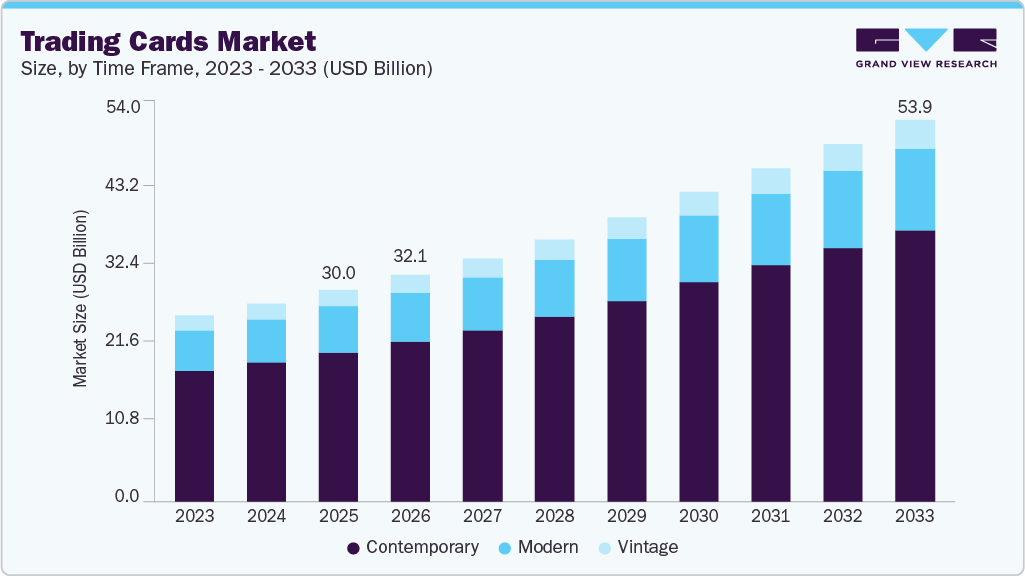
The global trading cards market size was valued at USD 30.0 billion in 2025 and is projected to grow from USD 32.1 billion in 2026 to USD 54.0 billion by 2033, at a CAGR of 7.7% from 2026 to 2033. North America dominated the global market with the largest revenue share of 38.1% in 2025. The global trading cards market is witnessing strong momentum driven by a resurgence in collector culture and nostalgia-led demand, particularly among younger demographics.

Key Market Trends & Insights
- By type: Physical cards segment accounted for a market share of 71.2% in 2025.
- By category: Sports trading cards segment accounted for a market share of 45.0% in 2025.
- By time frame: Contemporary trading cards accounted for a market share of 70.4% in 2025.
- By distribution channel: Sales through offline channels accounted for a market share of 58.6% in 2025.
Regional Highlights
- Largest regional market: North America (38.1% revenue share, 2025)
- By country: The U.S. trading cards industry held the largest share of 87.2% in the North America in 2025.
Market Size & Forecast
- Market size in 2025: USD 30.0 Billion
- Estimated market size in 2026: USD 32.1 Billion
- Projected market size by 2033: USD 54.0 Billion
- CAGR (2026-2033): 7.7%
Consumers are increasingly engaging with trading cards not only as collectibles, but as culturally relevant assets tied to personal identity and fandom. According to insights from Front Office Sports, a growing number of young collectors are actively chasing ultra-rare and limited-edition cards, with high-value pulls and graded cards gaining significant traction across online communities. This surge is being fueled by social media visibility, influencer-driven content, and live “card break” events, which are turning collecting into a shared and highly engaging experience. At the same time, older collectors are re-entering the market, driven by nostalgia and emotional attachment to legacy sports and entertainment franchises, further expanding the consumer base.The increasing perception of trading cards as alternative investment assets is also playing a critical role in market expansion. Consumers are increasingly viewing rare and graded cards as stores of value, similar to collectibles such as art, watches, or sneakers. High-value transactions, auction house participation, and the rise of professional grading services are reinforcing confidence in the asset class. Collectors are becoming more strategic in their purchases, focusing on scarcity, player performance, and long-term appreciation potential. This shift is transforming trading cards from casual collectibles into portfolio-driven assets, attracting both enthusiasts and investors seeking diversification beyond traditional financial instruments.
The market is further evolving with the expansion of digital and hybrid collectible formats, which are redefining how consumers interact with trading cards. Digital trading cards, blockchain-backed collectibles, and hybrid models that combine physical ownership with digital authentication are gaining traction, particularly among tech-savvy consumers. These formats offer enhanced accessibility, secure ownership tracking, and new engagement models such as gamification and virtual trading. As brands experiment with digital ecosystems and interactive platforms, the definition of collectible ownership is expanding beyond physical cards to encompass immersive, technology-driven experiences.
Growth in e-commerce and global resale marketplaces is significantly improving accessibility and liquidity within the trading cards market. Online platforms are enabling collectors to buy, sell, and trade cards across geographies with greater transparency and convenience. For instance, in 2025, Dynamics unveiled “The Authority,” an all-in-one e-commerce platform designed specifically for vaulted collectibles, offering integrated storage, authentication, and trading capabilities. Such developments are streamlining the transaction process while enhancing trust and security in high-value exchanges. In addition, established online marketplaces and peer-to-peer platforms are facilitating real-time price discovery and expanding participation from both casual collectors and serious investors.
In addition, the strong influence of pop culture, sports, and entertainment intellectual properties continues to drive sustained demand across the market. Trading cards associated with major sports leagues, celebrities, and entertainment franchises benefit from established fan bases and ongoing media exposure. Strategic partnerships are further accelerating this trend, for instance, Fanatics Collectibles partnered with Kayou to introduce officially licensed NBA trading cards in China, expanding the reach of basketball collectibles into new consumer markets. This integration of globally recognized IPs with localized distribution strategies is broadening the appeal of trading cards and attracting new audiences.
Brand Market Share Insights
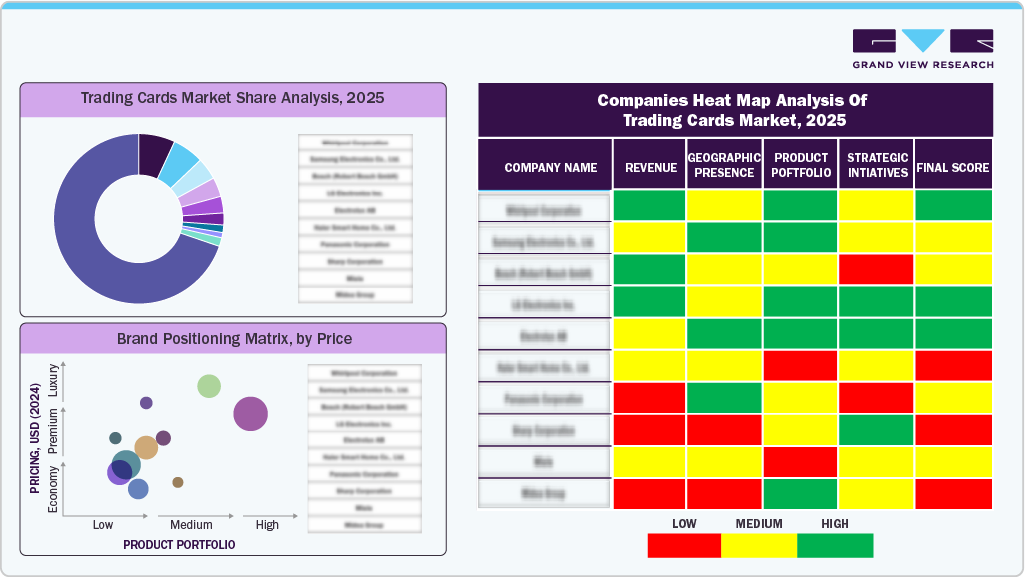
The global trading cards market is highly competitive, driven by the presence of established publishers and entertainment companies alongside emerging niche players. Leading companies such as The Pokémon Company, Konami, Panini Group, Topps, and Hasbro maintain strong market positions through popular franchises, licensed sports partnerships, and frequent product releases that drive collector engagement and repeat purchases. Competition is further intensifying as independent brands introduce niche themes and digital innovations, while the expansion of e-commerce and direct-to-consumer channels enables broader reach, real-time consumer interaction, and increased resale activity, collectively strengthening market dynamics.
Consumer Insights
Consumer behavior in the global trading cards market is increasingly shaped by strong participation from younger demographics, particularly Gen Z, who are actively driving demand through resale and digital engagement. According to Business Insider, trading cards such as Pokémon and Yu-Gi-Oh! emerged as the most-purchased secondhand items among Gen Z consumers on eBay, highlighting the scale of younger buyers' engagement with the category. This reflects a shift toward more dynamic ownership patterns, where consumers frequently buy, trade, and resell cards rather than holding them passively, supported by easy access to online marketplaces and real-time pricing.
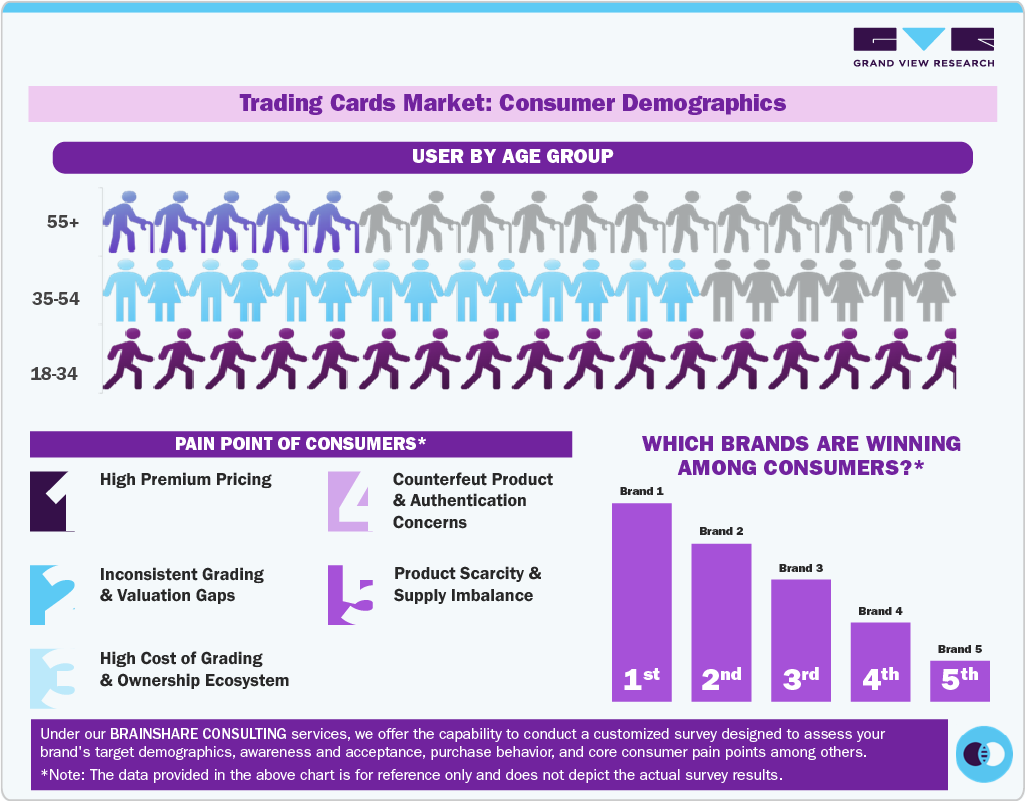
At the same time, trading cards are increasingly perceived as alternative investment assets, influencing more strategic, value-driven purchasing behavior. As reported by Fortune, eBay recorded nearly 14,000 searches per hour for “Pokémon” in 2024, indicating exceptionally high demand intensity and sustained consumer interest in collectible cards. The same report highlights that Gen Z and millennial consumers-particularly male collectors-are actively treating trading cards as investment opportunities, with resale performance in some cases outperforming traditional financial benchmarks. This perception is encouraging consumers to prioritize rarity, grading quality, and long-term appreciation potential when making purchase decisions.
These behavioral shifts are also reinforcing a stronger focus on liquidity and resale value within the market. Consumers are increasingly monitoring trends, player or franchise popularity, and release cycles to optimize buying and selling decisions. The accessibility of global resale platforms is enabling faster transactions and broader participation, making trading cards a highly active and trade-driven category. As a result, ownership cycles are becoming shorter, particularly for high-demand or limited-edition cards, reflecting a more investment-oriented and opportunistic approach to collecting.
Type Insights
Physical cards accounted for the largest market share, 71.2%, in 2025, driven by their strong appeal to collectors and hobbyists who value tangible ownership and long-term collectability. Physical cards are widely preferred for their authenticity, rarity, and condition-based grading, which directly influence resale value and investment potential. They are also central to traditional gameplay formats, tournaments, and organized events, supporting consistent usage and repeat purchases. In addition, limited-edition releases, special prints, and licensed franchise cards enhance exclusivity and demand, while protective storage, grading services, and secondary marketplaces further reinforce the ecosystem around physical trading cards, sustaining their dominant position in the market.
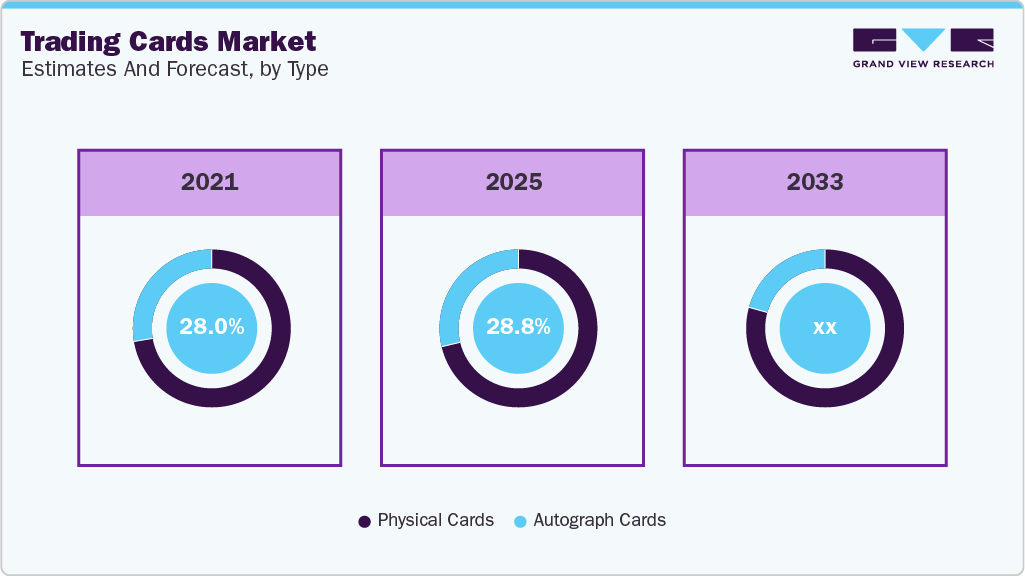
Autograph cards are anticipated to grow at a CAGR of 8.4% from 2026 to 2033, driven by increasing collector interest in rarity, exclusivity, and direct association with athletes, celebrities, and public figures. These cards carry higher perceived value due to limited availability and authenticated signatures, making them highly desirable among serious collectors and investors. Demand is further supported by the growing popularity of sports leagues and entertainment franchises, which enhances the appeal of signed memorabilia. In addition, the expansion of grading and authentication services is improving buyer confidence and resale value, while online marketplaces and live trading platforms are increasing visibility and accessibility.
Category Insights
Sports trading cards accounted for 45.0% of the market in 2025. These cards are widely collected due to their association with popular athletes, teams, and tournaments, making them a core segment for both casual collectors and serious investors. Demand is further supported by regular season-based releases, rookie cards, and limited-edition series that encourage repeat purchases and trading activity. In addition, the presence of well-established licensing agreements, organized trading communities, and active secondary markets enhances liquidity and resale potential.
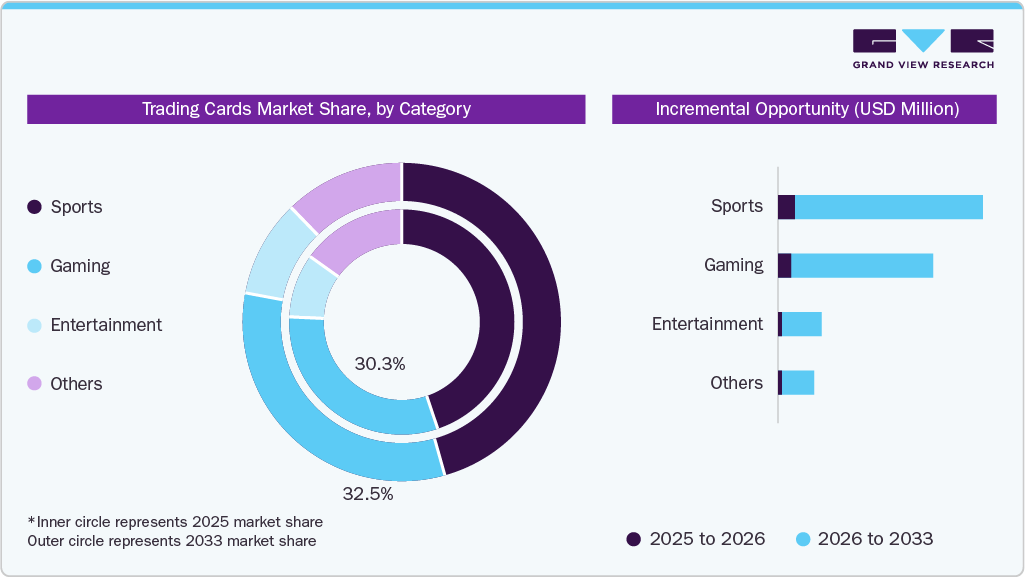
Gaming trading cards are expected to grow at a CAGR of 8.6% from 2026 to 2033, driven by the rising popularity of trading card games (TCGs) and strong engagement among younger consumers and gaming communities. These cards are widely used for both gameplay and collection, creating a dual demand structure that supports consistent purchases. Growth is further fueled by the expansion of organized tournaments, online gaming communities, and franchise-based ecosystems that encourage continuous participation and deck upgrades. In addition, frequent release of new expansions, character sets, and limited-edition cards keeps the category dynamic, while digital integration and cross-platform engagement are attracting new users, supporting sustained growth in the gaming trading cards segment.
For instance, in February 2026, Spin Master partnered with Universal Products & Experiences to launch Hellbreak, a horror-themed trading card game scheduled for release in 2026. The game will feature well-known horror characters in a competitive, collectible format, with plans to expand the lineup over time. It is designed to tap into growing interest in trading card games while offering a more immersive experience for fans of the genre.
Time Frame Insights
Contemporary trading cards accounted for 70.4% of the market in 2025. These cards attract both collectors and active participants due to their immediate relevance, frequent updates, and accessibility compared to older or vintage cards. Demand is further supported by regular product launches, seasonal releases, and special editions that keep the market dynamic and encourage repeat purchases. In addition, contemporary cards are widely available across retail and online channels, making them easier to access for a broader consumer base, while their connection to current events and player performance enhances engagement and trading activity.
Modern trading cards are expected to grow at a CAGR of 7.5% from 2026 to 2033, driven by increasing interest in portfolio diversification among collectors and investors. These cards are gaining traction as alternative assets due to their relatively lower entry price compared to vintage cards, while still offering potential for value appreciation over time. Growth is further supported by improved pricing transparency on online marketplaces and auction platforms, enabling informed buying and selling decisions. In addition, the expansion of grading services and standardized condition assessment is enhancing buyer confidence, while increasing participation from younger collectors entering the hobby is sustaining demand and driving long-term growth in the modern trading cards segment.
Distribution Channel Insights
The sale of trading cards through offline channels accounted for 58.6% in 2025. Physical retail formats such as hobby stores, specialty card shops, and large-format retailers enable buyers to inspect card packs, verify authenticity, and engage directly with knowledgeable staff before making a purchase. These stores also serve as community hubs, hosting tournaments, trading events, and live breaks that encourage repeat visits and higher engagement. In addition, exclusive in-store releases, promotional events, and instant ownership without delivery wait times continue to reinforce the dominance of offline channels in the global trading cards market.
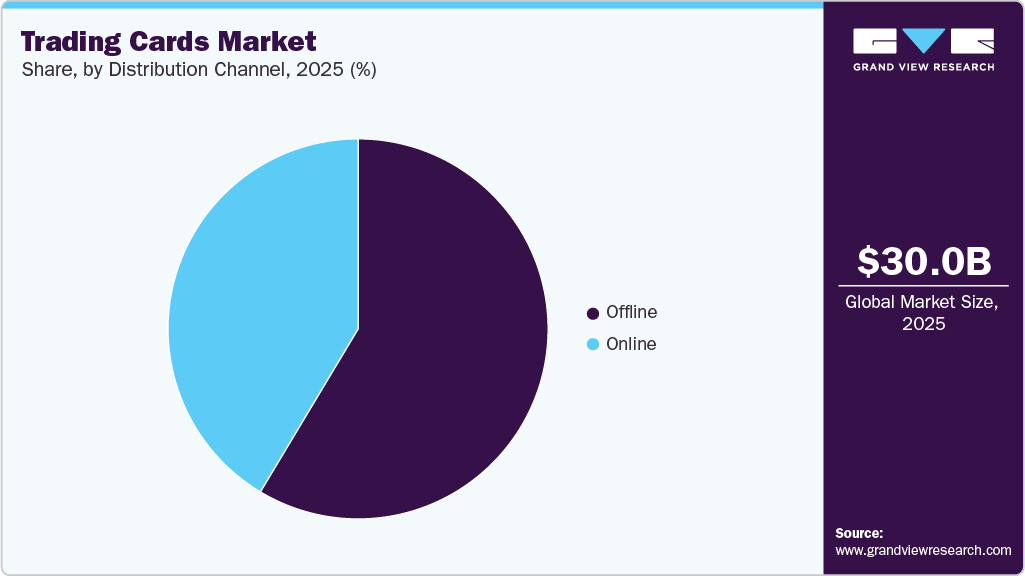
The sale of trading cards through online channels is expected to grow at a CAGR of 8.6% from 2026 to 2033, driven by increasing consumer preference for digital marketplaces that offer wider product availability and real-time access to global inventory. Online platforms enable collectors to explore a broad range of cards, including rare, graded, and limited-edition items, which may not be available in local stores. In addition, features such as price comparison, auction formats, and transparent transaction histories support informed purchasing decisions and enhance buyer confidence. The growth of live streaming sales, online breaks, and collector communities on social media platforms is further boosting engagement and repeat purchases, positioning online channels as a high-growth distribution segment in the global trading cards market.
Regional Insights
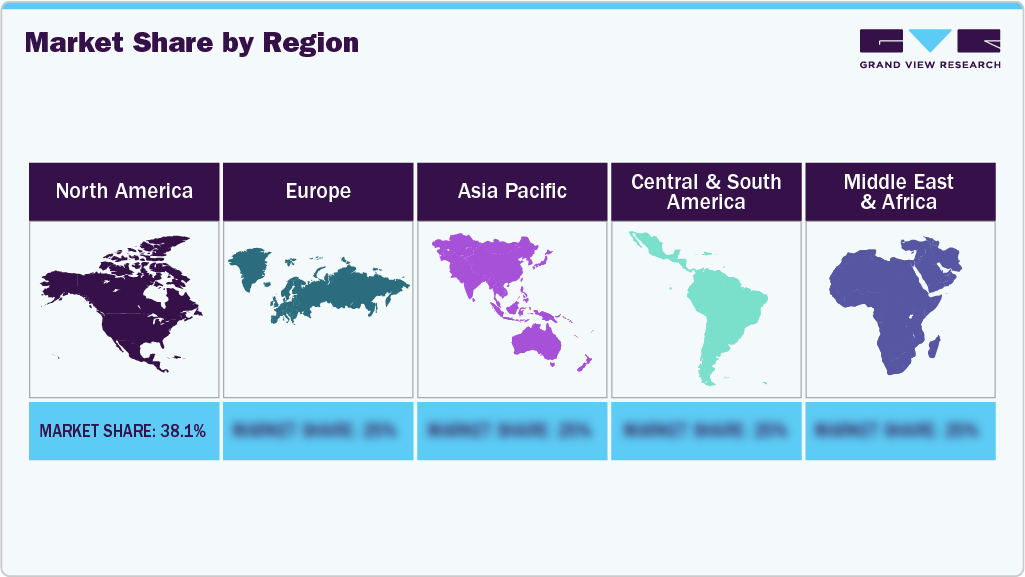
The North American trading cards market accounted for the largest share of 38.1% in 2025. The North American trading card industry is driven by a well-established collector culture and strong integration of trading cards into sports and entertainment ecosystems. The region benefits from the presence of major sports leagues, extensive licensing agreements, and continuous release of new card series, which sustain consistent consumer engagement and repeat purchases. Demand is further supported by a well-developed retail and distribution network, including hobby stores, large retailers, and online marketplaces that ensure widespread product availability. In addition, North America has a mature grading, authentication, and resale infrastructure, enabling trading cards to function as both collectibles and investment assets.
U.S. Trading Cards Market Trends
The trading cards industry in the U.S. accounted for around 87.2% of the North American market in 2025. The U.S. trading cards market is driven by a highly developed collector ecosystem and strong cultural integration of sports and entertainment collectibles. The U.S. market benefits from the presence of major professional leagues such as the NFL, NBA, and MLB, which consistently fuel demand for licensed trading cards linked to teams, players, and seasonal events. Growth is further supported by a mature network of hobby stores, large-format retailers, and organized trading events that encourage regular participation and repeat purchases. In addition, the country has a well-established grading, authentication, and resale infrastructure, enabling collectors to treat trading cards as investment assets. The expansion of online marketplaces, live card breaks, and digital collector communities is further enhancing accessibility and engagement.
The Canada trading cards industry is expected to grow at a CAGR of 11.2% from 2026 to 2033. The Canadian trading cards market is driven by rising interest in trading cards as an alternative collectible investment, particularly among younger adults and hobby investors. Consumers are exploring cards with long-term value potential, supported by rising awareness of grading standards and resale opportunities. Growth is further fueled by the expansion of subscription-based card boxes and curated collector kits, which simplify entry into the hobby and encourage recurring purchases. In addition, strong digital engagement through online communities, live breaks, and auction platforms is enhancing market participation, while collaborations between card publishers and entertainment franchises are attracting new consumers.
Europe Trading Cards Market Trends
The European trading cards market accounted for 19.4% of revenue in 2025. The European trading cards market is driven by strong demand for licensed entertainment and media-based collectibles, particularly from popular franchises in anime, movies, and gaming. Consumers across the region активно engage with character-based trading cards as part of a broader fandom culture, supporting consistent product uptake beyond traditional sports categories. The market is further supported by established publishing and printing infrastructure in Europe, enabling the efficient production and distribution of high-quality cards across multiple countries. In addition, increasing interest in limited-run and artist collaboration cards is attracting niche collectors seeking unique and exclusive designs.
The trading cards industry in the UK accounted for a revenue share of around 21.3% of the European market in 2025. The UK trading cards market is driven by strong consumer engagement with sports leagues, particularly football, which fuels consistent demand for player- and team-based collectibles. The UK market benefits from a well-established fan culture and high viewership of domestic and international tournaments, encouraging regular purchases tied to seasonal events and player performances. Growth is further supported by increasing participation in trading card games and collector communities, where hobbyists engage through tournaments, card exchanges, and online forums.
The Germany trading cards market is expected to grow at a CAGR of 9.7% from 2026 to 2033. The German trading cards market is driven by increasing participation in structured hobby activities and organized collector communities across the country. Trading cards are gaining traction as a social and skill-based hobby, supported by tournaments, exchange events, and local clubs that encourage regular engagement and repeat purchases. Growth is further supported by rising interest in investment-oriented collectibles, where consumers view rare and graded cards as alternative assets with potential long-term value appreciation. In addition, the strong penetration of specialty hobby retailers and dedicated card shops is improving product visibility and accessibility.
Asia Pacific Trading Cards Market Trends
The Asia Pacific trading cards industry is expected to grow at a CAGR of 8.3% from 2026 to 2033. The Asia Pacific trading cards market is driven by the rapid expansion of youth populations and increasing engagement with gaming, anime, and sports entertainment across key markets such as China, Japan, South Korea, and India. The region benefits from a strong culture of collectibles and fandom-driven consumption, where trading cards are integrated into both hobby and gameplay activities. Growth is further supported by rising disposable incomes and greater willingness to spend on licensed merchandise and entertainment-related products. In addition, the expansion of e-commerce platforms, mobile-first purchasing behavior, and social media-driven communities is improving product accessibility and awareness.
The trading cards industry in China accounted for a revenue share of around 22.4% on the Asia Pacific market in 2025. The China trading cards market is driven by strong demand for collectibles linked to popular entertainment franchises, anime, and gaming culture. Chinese consumers, particularly younger demographics, engage with trading cards as part of fandom and hobby communities, supporting consistent purchase activity. The market is further supported by a well-developed manufacturing and distribution ecosystem, enabling large-scale production and competitive pricing across product tiers. In addition, the rapid growth of digital commerce, including livestream sales and social media-driven marketing, is enhancing product visibility and accessibility.
The Indian trading cards market is expected to grow at a CAGR of 8.5% from 2026 to 2033. The Indian trading cards market is driven by rising youth engagement and increasing exposure to global sports and gaming franchises. The growing popularity of cricket, football, and international leagues is encouraging demand for player-based and team-based trading cards, particularly among younger consumers and collectors. The market is further supported by the expanding availability of affordable card packs and starter sets, making the category accessible to a wider audience. In addition, the growth of e-commerce platforms and online collector communities is improving product accessibility and awareness, while school-level trading, hobby groups, and informal exchange networks are fostering early adoption and sustained participation.
Central & South America Trading Cards Market Trends
The Central & South America trading cards industry is expected to grow at a CAGR of 7.8% from 2026 to 2033. The Central & South America trading cards market is driven by strong regional interest in sports, particularly football, which fuels demand for player- and team-based collectibles. Consumers in countries such as Brazil and Argentina активно engage with trading cards as part of fan culture, supporting consistent purchases tied to tournaments and league seasons. Growth is further supported by the increasing availability of affordable card packs and entry-level products, making the hobby accessible to a broader consumer base. In addition, expanding distribution through local retail stores and online marketplaces is improving product reach, while rising participation in trading communities and informal exchange networks continues to strengthen market activity across the region.
Middle East & Africa Trading Cards Market Trends
The Middle East & Africa trading cards industry is expected to grow at a CAGR of 7.0% from 2026 to 2033. The Middle East & Africa trading cards market is driven by increasing youth engagement and the rising popularity of sports and gaming culture across the region. Growing interest in international sports leagues, particularly football, is encouraging demand for licensed trading cards featuring popular teams and players. In addition, the expansion of organized gaming communities, hobby clubs, and retail events is supporting greater participation in trading card games and collection activities.
Key Trading Cards Companies:
The following key companies have been profiled for this study on the trading cards market.
- TOPPS
- Panini America, Inc.
- The Upper Deck Company
- Dave and Adam's Card World
- Pokémon
- Fanatics Inc.
- Leaf Trading Cards, LLC
- Beckett Collectibles, LLC
- Sports Cards Direct
- BANDAI CO., LTD.
Recent Developments
-
In March 2026, CardGrade.io launched an AI-based platform and iOS app that analyzes trading cards and estimates their condition using computer vision. The tool provides quick grading insights on aspects like edges and surface quality, helping collectors decide whether to grade, sell, or keep their cards more efficiently.
-
In June 2025, GameStop expanded its focus on collectibles and trading cards as it moved beyond traditional video game retail. The company increased its presence in areas such as sports cards and graded collectibles to tap into rising consumer interest, using these categories to diversify revenue and attract a broader customer base.
Trading Cards Market Report Scope
Report Attribute
Details
Market size in 2025
USD 30.0 billion
Estimated Market size in 2026
USD 32.1 billion
Projected Market size by 2033
USD 54.0 billion
Growth rate
CAGR of 7.7% from 2026 to 2033
Base year for estimation
2025
Historical data
2021 - 2025
Forecast period
2026 - 2033
Quantitative units
Revenue in USD million/billion and CAGR from 2026 to 2033
Report coverage
Revenue forecast, company ranking, competitive landscape, growth factors, and trends
Segments covered
Type, category, time frame, distribution channel, region
Regional scope
North America; Europe; Asia Pacific; Central & South America; Middle East & Africa
Country scope
U.S.; Canada; Mexico; Germany; UK; France; Italy; Spain; China; India; Japan; Australia & New Zealand; South Korea; Brazil; South Africa
Key companies profiled
TOPPS.; Panini America, Inc.; The Upper Deck Company; Dave and Adam's Card World; Pokémon.; Fanatics Inc.; Leaf Trading Cards, LLC; Beckett Collectibles, LLC.; Sports Cards Direct.; BANDAI CO., LTD.
Customization scope
Free report customization (equivalent up to 8 analysts working days) with purchase. Addition or alteration to country, regional & segment scope.
Pricing and purchase options
Avail customized purchase options to meet your exact research needs. Explore purchase options
Global Trading Cards Market Report Segmentation
This report forecasts revenue growth at global, regional & country levels and provides an analysis of the latest trends and opportunities in each sub-segment from 2021 to 2033. For the purpose of this study, Grand View Research has segmented the global trading cards market on the basis of type, category, time frame, distribution channel, and region.
-
Type Outlook (Revenue, USD Billion, 2021 - 2033)
-
Physical Cards
-
Autograph card
-
-
Category Outlook (Revenue, USD Billion, 2021 - 2033)
-
Sports
-
Gaming
-
Entertainment
-
Others
-
-
Time Frame Outlook (Revenue, USD Billion, 2021 - 2033)
-
Vintage
-
Modern
-
Contemporary
-
-
Distribution Channel Outlook (Revenue, USD Billion, 2021 - 2033)
-
Offline
-
Specialty Stores
-
Auctions
-
Peer-To-Peer
-
-
Online
-
-
Regional Outlook (Revenue, USD Billion, 2021 - 2033)
-
North America
-
U.S.
-
Canada
-
Mexico
-
-
Europe
-
Germany
-
UK
-
France
-
Italy
-
Spain
-
-
Asia Pacific
-
China
-
India
-
Japan
-
Australia & New Zealand
-
South Korea
-
-
Central & South America
-
Brazil
-
-
Middle East & Africa
-
South Africa
-
-
Frequently Asked Questions About This Report
The global trading cards market size was valued at USD 30.0 billion in 2025 and is expected to reach USD 32.1 billion in 2026.
The global trading cards market is expected to grow at a compound annual growth rate of 7.7% from 2026 to 2033 to reach USD 54.0 billion by 2033.
The physical cards accounted for the largest market share of 71.2% in 2025, due to their strong appeal among collectors who value tangible ownership, rarity, and long-term investment potential. Their continued use in in-person gameplay, trading events, and tournaments.
Some key players operating in the trading cards market include TOPPS.; Panini America, Inc.; The Upper Deck Company; Dave and Adam's Card World; Pokémon.; Fanatics Inc.; Leaf Trading Cards, LLC; Beckett Collectibles, LLC.; Sports Cards Direct.; BANDAI CO., LTD.
Key factors rising collector demand and nostalgia among adult consumers, along with increasing popularity of competitive card games and tournaments such as Pokémon Trading Card Game and Magic: The Gathering. Growth in online marketplaces, limited-edition releases, and strong franchise tie-ins with entertainment brands further support market expansion.
North America dominated the global trading cards market in 2025, accounting for a 38.1% share.
Sports trading cards accounted for 45.0% of the market in 2025.
Contemporary trading cards accounted for 70.4% of the market in 2025.
The sale of trading cards through offline channels accounted for 58.6% in 2025.
About the Author(s)
Clothing, Footwear & Accessories Research Team
Consumer Goods · Clothing, Footwear & AccessoriesThis report was authored by the clothing, footwear & accessories research team at Grand View Research - comprising two research analysts, one senior research analyst, and one industry expert - with specialized expertise in the clothing, footwear & accessories segment of the consumer goods industry. All findings are based on proprietary consumer goods databases, executive interviews, and regulatory analysis, subject to internal peer review prior to publication.
Last Updated:
Speak to Analyst

Need a Tailored Report?
Customize this report to your needs — add regions, segments, or data points, with 20% free customization.
Or view our licence options:


ISO 9001:2015 & 27001:2022 Certified
We are GDPR and CCPA compliant! Your transaction & personal information is safe and secure. For more details, please read our privacy policy.












