
- Home
- »
- Nutraceuticals & Functional Foods
- »
-
UK Hair Health Supplements Market Size, Share Report, 2033GVR Report cover
![UK Hair Health Supplements Market Size, Share & Trends Report]()
UK Hair Health Supplements Market (2026 - 2033) Size, Share & Trends Analysis Report By Ingredient Type (Single Ingredient), By Ingredient (Vitamin, Minerals), By Application, By Form, By Type, By End Use, By Distribution Channel, And Segment Forecasts
- Report ID: GVR-4-68040-838-5
- Number of Report Pages: 90
- Format: PDF
- Historical Range: 2021 - 2024
- Forecast Period: 2026 - 2033
- Industry: Consumer Goods
- Report Summary
- Table of Contents
- Segmentation
- Methodology
- Download FREE Sample
-
 Download Sample Report
UK Hair Health Supplements Market Summary
The UK hair health supplements market size was estimated at USD 155.8 million in 2025 and is projected to reach USD 259.7 million by 2033, growing at a CAGR of 6.6% from 2026 to 2033. The UK hair health supplement industry is advancing rapidly as consumers increasingly view hair wellness as an essential part of overall health rather than just a cosmetic concern.
Key Market Trends & Insights
- By ingredient type, the multi-ingredient segment led the market with the largest revenue share of 67.8% in 2025.
- By ingredient, the vitamins segment led the market with the largest revenue share of 24.5% in 2025.
- By application, the hair growth/thinning/loss segment led the market with the largest revenue share of 53.9% in 2025.
- By form, the gummies hair health supplement segment led the market with the largest revenue share of 34.3% in 2025.
- By type, the OTC hair health supplements segment accounted for the largest market revenue share in 2025.
Market Size & Forecast
- 2025 Market Size: USD 155.8 Million
- 2033 Projected Market Size: USD 259.7 Million
- CAGR (2026-2033): 6.6%
A noticeable rise in stress-related lifestyle changes, urban living challenges, and dietary imbalances has led to an increase in cases of thinning hair, reduced hair density, and weakened hair structure. As a result, consumers are turning toward supplements that offer nutritional support and long-term improvement in scalp and follicular health.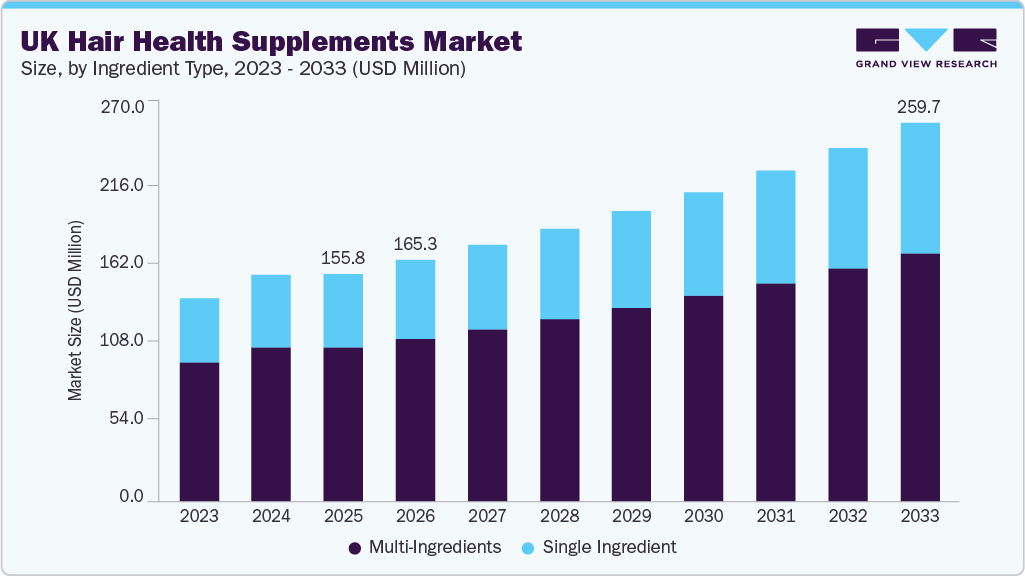
Growing awareness of the impact of environmental conditions on hair quality is further accelerating demand. Many regions across the country, especially urban areas, face high levels of pollution and hard water exposure, factors known to contribute to dryness, breakage, and scalp irritation. This has prompted more individuals to adopt supplements as a preventive measure. Dermatologists and trichologists in the UK are increasingly recommending nutritional support alongside topical treatments, reinforcing consumer trust in supplement-based hair care.
UK consumers are actively seeking products that align with their wellness routines and complement broader health goals. Supplements formulated with botanicals, omega fatty acids, marine extracts, and essential micronutrients are becoming popular as people aim to address internal deficiencies that influence hair strength and growth. In addition, the expansion of digital health platforms, online consultations, and social media-driven education is boosting market awareness and accessibility.
Continuous product innovation and brand expansion also contribute to market growth. For instance, in October 2025, Twenty One Again, a UK-based wellness brand, launched its line of Best Hair Growth Vitamins in the country. According to the company, the formulation contains essential nutrients such as biotin, zinc, and vitamin E, which are clinically recognized for supporting healthy hair growth.
Consumer Insights
Millennials form the largest demand cluster in the UK hair-health supplements industry, accounting for over half of total consumption. This segment is in the age bracket where early thinning, postpartum shedding, stress-related hair loss, and nutritional gaps are most common, making supplements an attractive, low-risk solution compared with pharmaceuticals. Gen Z also contributes meaningfully to demand as the first cohort fully influenced by the beauty-from-within, clean-label, and preventive wellness movements. Their consumption is driven less by hair loss and more by goals such as shine, density, hair strength, scalp health, and overall aesthetics. Together, Millennials and Gen Z create a strong foundation for long-term market expansion because they adopt supplements earlier and are more consistent with daily routines.
While Gen X continues to represent a stable and high-value segment due to age-related thinning and willingness to pay for premium solutions, their relative share gradually declines due to demographic contraction. Baby Boomers contribute a smaller share and will continue shrinking, as many shift to medical treatments (finasteride, minoxidil, PRP) rather than supplements alone. Overall, the market’s growth trajectory is increasingly shaped by younger demographics who prefer holistic, non-prescription, and wellness-oriented solutions. For brands entering this space, the most strategic approach is to build tailored portfolios: preventive and beauty-driven SKUs for Gen Z, stress- and hormone-related formulations for Millennials, and targeted anti-thinning solutions for Gen X. This demographic profile strongly supports long-term category resilience and expanding lifetime customer value.
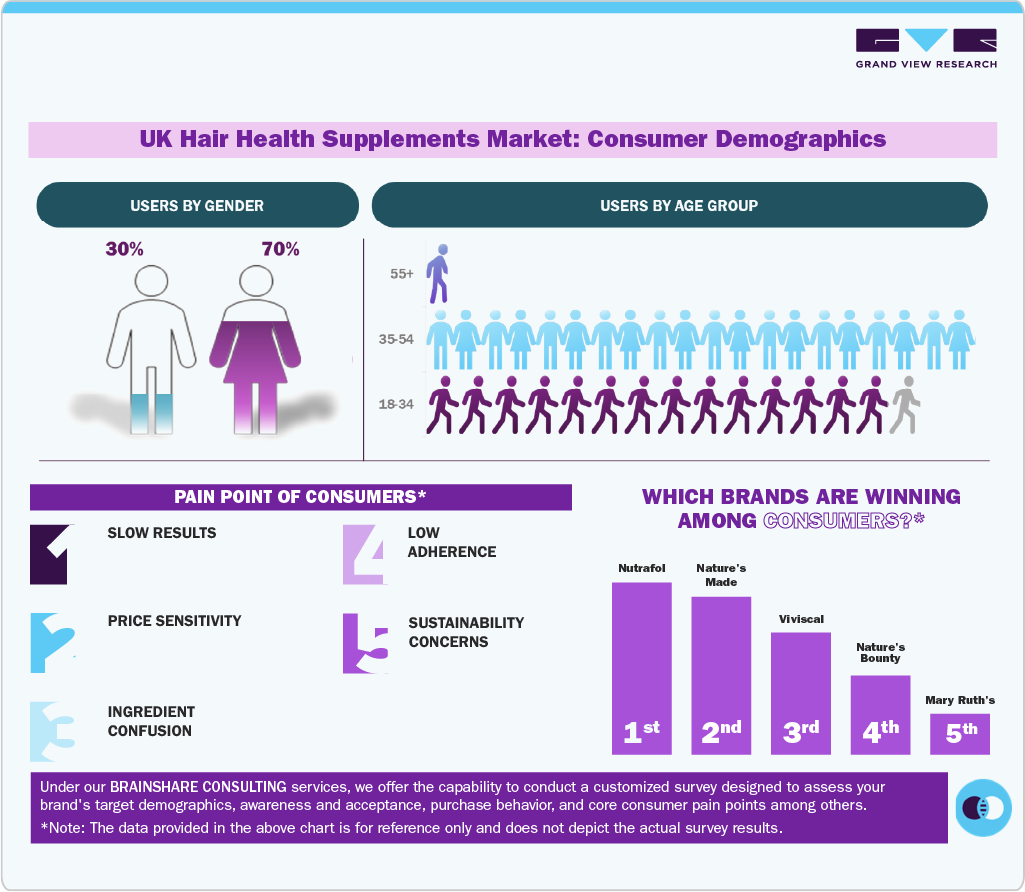
Pattern Hair Loss, 27% of individuals begin hair‑loss treatment in their 20s, 43% in their 30s, and 22% in their 40s. This suggests that a significant portion of the population seeks preventive and maintenance solutions in their younger years, making the 20s and 30s a key target demographic for early-stage hair health supplements. For this group, products focusing on preventing thinning, maintaining fullness, and scalp nourishment will likely resonate.
In contrast, those in their 40s and beyond are more likely to seek supplements targeting regrowth and density improvement. As hair health concerns shift towards age-related changes like hormonal thinning or reduced scalp vitality, supplements can be tailored to provide more clinical and performance-driven solutions. This creates an opportunity for brands to develop a multi-stage strategy with products tailored to both prevention and treatment for different age groups.
Ingredient Type Insights
The multi-ingredient supplements segment led the market with the largest revenue share of 67.8% in 2025. These blends typically combine vitamins, minerals, amino acids, botanical extracts, and collagen-based actives, creating synergistic benefits that appeal to individuals seeking broader support beyond what single nutrients can provide. Growth in this segment is reinforced by increasing clinical validation, improved bioavailability technologies, and greater product differentiation tailored to issues such as thinning, breakage, hormonal imbalance, or stress-related shedding. Brands are also developing targeted formulations for specific life stages, including postpartum, menopausal, and aging-related hair needs, which enhances relevance across diverse demographics.
The single-ingredient supplements segment is projected to grow at the fastest CAGR of 7.5% over the forecast period. Many buyers gravitate toward singular actives, such as biotin, vitamin D, zinc, iron, or collagen, because these products offer a clear purpose, simple dosing, and high transparency around expected benefits. The segment continues to grow as consumers increasingly seek minimal formulations free from unnecessary additives, aligning with clean-label preferences and the rising demand for focused wellness routines. Pharmacist recommendations, dermatologist guidance, and heightened awareness of nutrient-related hair issues further strengthen adoption.
Ingredient Insights
The vitamins segment led the market with the largest revenue share of 24.5% in 2025. Growing concerns related to stress, diet quality, and age-associated thinning have led many individuals to adopt vitamin-based solutions as part of their routine hair care regimen. Key nutrients, including biotin, folate, vitamin D, vitamin E, and various B-complex components, are commonly included due to their involvement in keratin production, scalp circulation, antioxidant protection, and cellular repair processes. Interest in biotin remains particularly strong, driven by its association with improved strand resilience and reduced shedding.
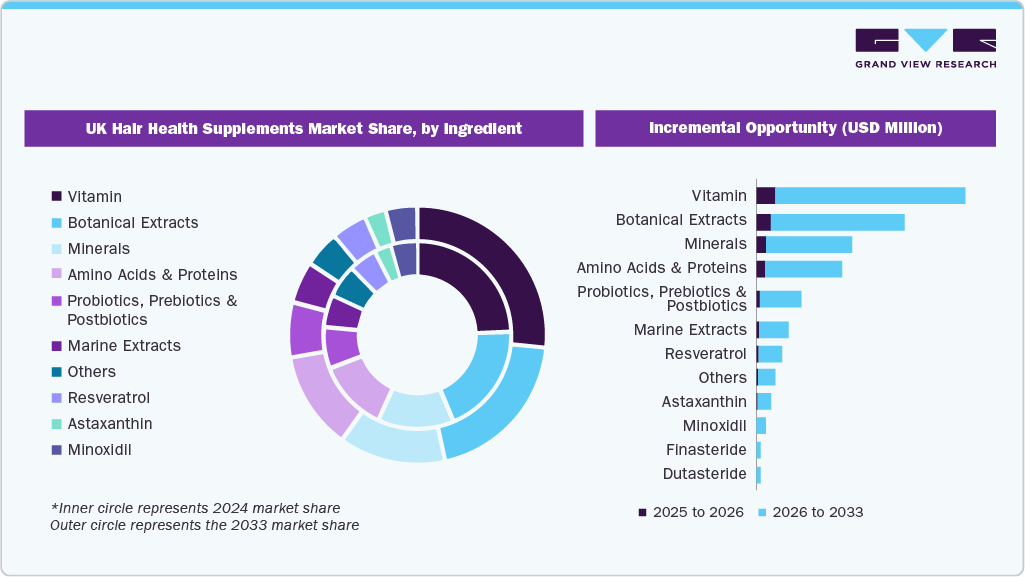
The botanical extracts segment is projected to grow at the fastest CAGR of 7.1% over the forecast period. Interest in herbs such as saw palmetto, horsetail, rosemary, nettle, and ashwagandha continues to rise, supported by their traditional use in promoting follicle reinforcement, reducing inflammation, and supporting healthier growth cycles. Improvements in extraction and standardisation techniques have enabled manufacturers to deliver more consistent potency and enhanced absorption, boosting confidence in the effectiveness of botanical-based products. The segment is also benefiting from growing alignment with holistic wellness trends, as shoppers gravitate toward supplements that pair hair benefits with broader stress, immunity, or hormonal support.
Application Insights
The hair growth/thinning/loss segment led the market with the largest revenue share of 53.9% in 2025. Shoppers are increasingly turning to nutritionally focused solutions that can strengthen follicles, enhance density, and help stabilise shedding without resorting to invasive treatments. Products in this category commonly include biotin, iron, zinc, vitamin D, and a range of amino acids, reflecting their established roles in supporting keratin structure, improving nutrient delivery to the scalp, and maintaining healthy growth cycles. Rising awareness through dermatology consultations, influencer-led education, and wellness platforms continues to drive adoption, while improved formulation science and cleaner ingredient profiles further enhance trust.
The scalp care/health segment is projected to grow at the fastest CAGR of 6.7% over the forecast period. Rising concerns surrounding irritation, excess oil production, dryness, and pollution-related buildup are motivating consumers to incorporate nutritional support that works beyond topical treatments. Products in this category frequently include omega-rich oils, probiotics, vitamin E, selenium, and soothing botanical extracts, all aimed at improving barrier integrity, enhancing microcirculation, and supporting a healthier scalp microbiome. Ongoing advancements in nutraceutical research are enabling more refined, issue-specific formulations that address sensitivity, flaking, or compromised scalp conditions with greater precision.
Form Insights
The gummies segment led the market with the largest revenue share of 34.3% in 2025. Their appealing taste profiles, chewable texture, and visually engaging designs make them a favored option for users seeking a more enjoyable alternative to traditional capsules or tablets. This format is particularly popular among younger consumers, lifestyle-driven buyers, and individuals who value routine-friendly supplements that blend seamlessly into daily habits. Brands are expanding offerings with sugar-free variants, vegan formulations, and fortified blends that combine biotin, folate, zinc, and collagen to reinforce strand strength and promote healthier growth.
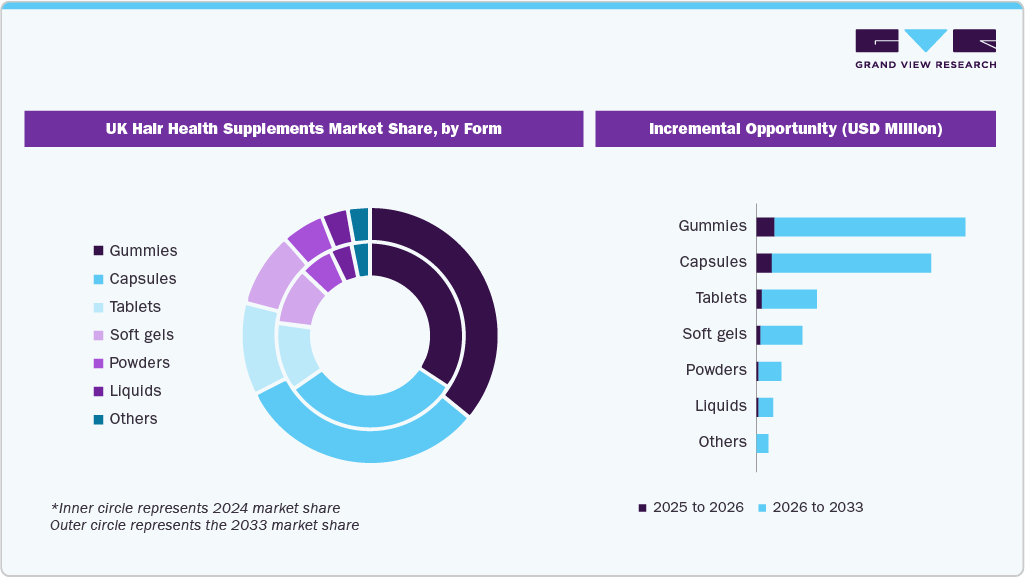
The capsule segment is projected to grow at the fastest CAGR of 6.8% over the forecast period. This format appeals to individuals who prioritise accuracy in dosing and consistent potency across nutrients such as biotin, vitamin D, iron, amino acids, and standardized botanical extracts. Capsules also support the stability of more sensitive ingredients, making them suitable for advanced formulations targeting hormonal shifts, stress-related shedding, and age-associated changes in hair density. The segment is further strengthened by increased product innovation, with brands introducing clean-label, allergen-free, and time-release options that cater to diverse wellness preferences.
Type Insights
The OTC (Over-the-Counter) segment led the market with the largest revenue share of 89.8% in 2025. High footfall across pharmacies, supermarkets, and health stores reflects strong reliance on OTC formats for everyday wellness needs, with many shoppers favouring products that can be purchased quickly without clinical consultations. The category benefits from broad brand visibility, frequent promotions, and trusted retail environments where consumers can review ingredient lists, compare formulations, and seek guidance from pharmacists. Growing health consciousness and the desire to address early signs of hair weakening with convenient, routine-friendly options continue to bolster demand.
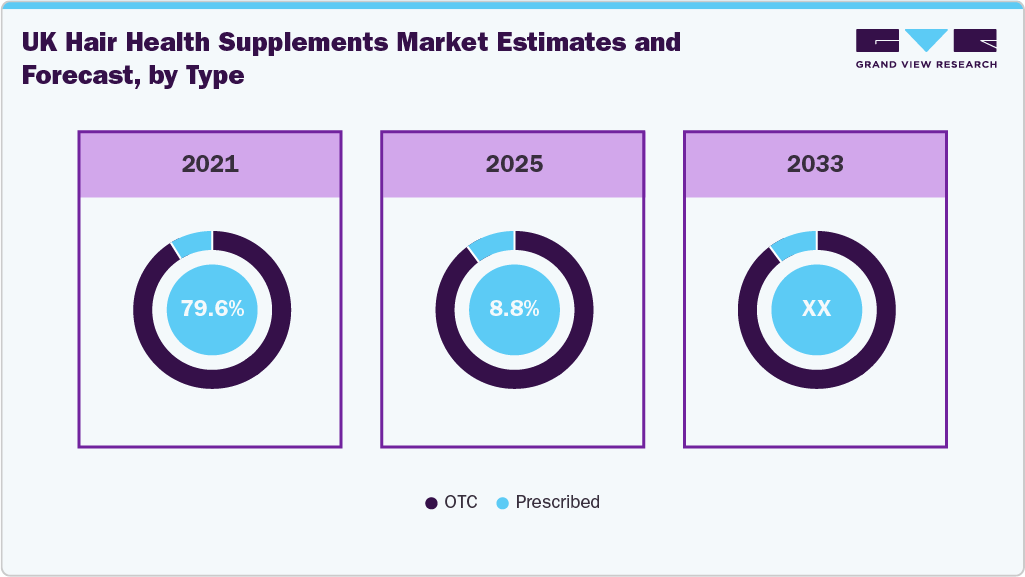
The prescribed segment is projected to grow at the fastest CAGR of 5.0% over the forecast period. Dermatologists and trichologists frequently recommend these products as part of broader treatment plans, ensuring that dosing, ingredient profiles, and duration of use align with underlying medical needs. The segment is further supported by rising awareness of diagnostic testing, greater access to specialist consultations, and growing recognition of the distinction between cosmetic improvement and therapeutic care. As personalised medicine continues to advance and more targeted blends enter the market, prescribed supplements remain an important pathway for consumers who require regulated, evidence-based support beyond what OTC options can provide.
End Use Insights
The female segment led the market with the largest revenue share of 65.8% in 2025. Women are increasingly drawn to supplements that offer multi-dimensional benefits, combining essential vitamins and minerals with botanicals, amino acids, and collagen-based ingredients to support thickness, resilience, and overall scalp balance. The segment continues to gain momentum as brands emphasise clean formulations, allergen-free options, and products that integrate smoothly into holistic beauty and wellness routines. Companies are also expanding specialised ranges that address distinct life stages, such as fertility planning, postpartum recovery, and midlife transitions, ensuring that products match evolving physiological needs.
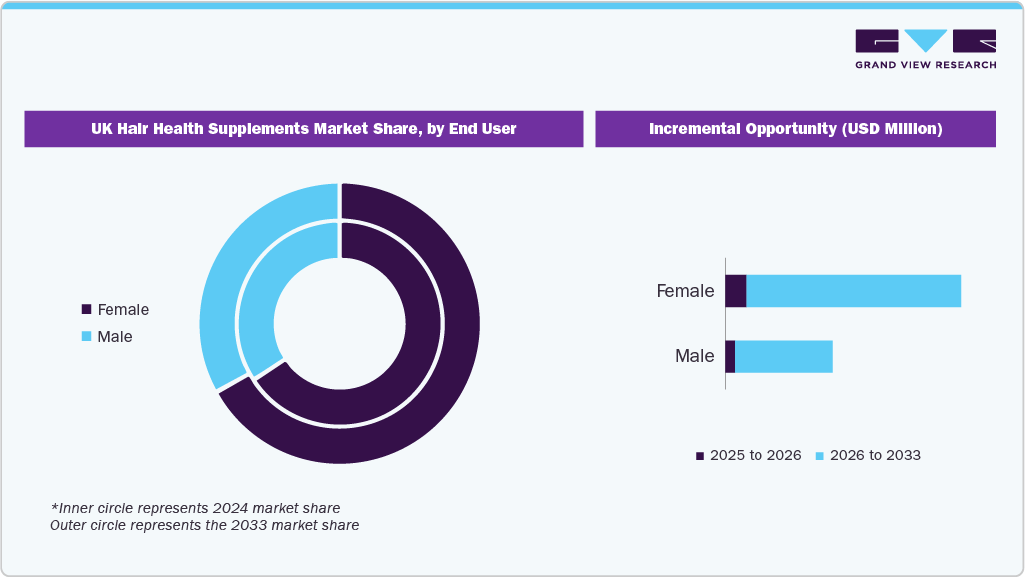
The male segment is projected to grow at the fastest CAGR of 6.1% over the forecast period. Formulations in this segment typically focus on straightforward, results-driven ingredient profiles that incorporate biotin, zinc, vitamin D, amino acids, and DHT-targeting botanical extracts to help reinforce follicle strength and maintain density. Brands are increasingly introducing blends that fit easily into daily routines, appealing to men who prefer minimal-effort solutions with clear functional benefits. The segment is also benefiting from greater visibility through barbershops, grooming retailers, online wellness platforms, and pharmacy channels, where educational guidance and simplified product messaging help build confidence.
Distribution Channel Insights
The offline segment led the market with the largest revenue share of 74.2% in 2025. Pharmacies, supermarkets, and specialist wellness stores give shoppers the opportunity to review product labels closely, compare ingredient compositions, and assess brand credibility before committing to long-term supplementation. These locations also offer direct access to knowledgeable staff who can provide personalised recommendations for concerns such as diffuse thinning, postpartum shedding, nutrient-related breakage, or ongoing scalp sensitivity. Regular in-store promotions, multibuy offers, and loyalty schemes make offline shopping financially attractive, while the ability to take products home immediately supports seamless integration into daily routines.
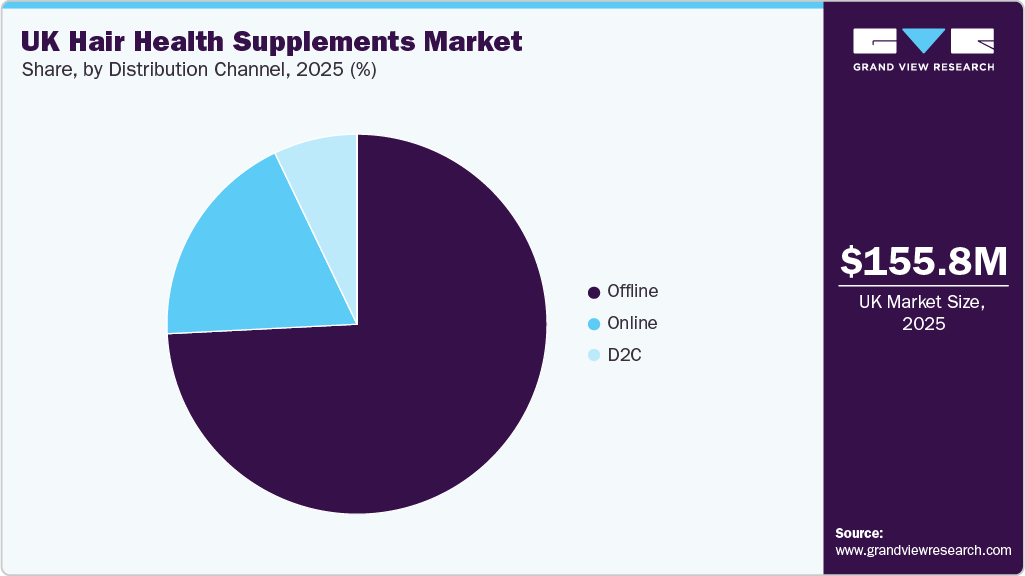
The online segment is projected to grow at the fastest CAGR of 8.3% over the forecast period. Digital platforms provide access to an extensive range of vitamins, botanical blends, collagen-based products, and targeted complexes, accompanied by transparent ingredient information and consumer reviews that help users make informed decisions. Personalised recommendation engines, subscription services, and automated reorder options make it easier for individuals to maintain consistent supplementation without disrupting daily routines. Competitive pricing, frequent promotional events, and rapid delivery services further strengthen the appeal of online channels, particularly for younger, tech-savvy shoppers who rely heavily on digital content and expert-led guidance when selecting wellness products.
Key UK Hair Health Supplements Company Insights
The UK hair health supplements industry is driven by a combination of established nutraceutical brands and newer wellness-focused entrants that continue to elevate formulation precision, ingredient quality, and targeted benefits for consumers seeking comprehensive hair support. Companies are advancing blends that address thinning, breakage, shedding, and scalp imbalance through clinically aligned vitamin complexes, bioavailable minerals, collagen peptides, amino acids, and standardized botanical extracts that collectively promote stronger follicles and healthier growth cycles. Consumers place strong emphasis on transparency, safety, and visible results, encouraging brands to refine dosage accuracy, improve labeling clarity, and adopt clean-label formulations across gummies, capsules, powders, and liquid concentrates.
Broad retail availability through pharmacies, supermarkets, specialist wellness stores, beauty retailers, and rapidly expanding digital platforms, many offering subscription programs and personalized recommendations, continues to strengthen adoption. Increased engagement through dermatologists, trichologists, and influencer-led education further boosts awareness, supporting deeper integration of hair supplements into long-term beauty and wellness routines throughout the UK
Key UK Hair Health Supplements Companies:
- Nutrafol
- Nature's Made
- Viviscal
- Nature's Bounty
- Mary Ruth's
- Vegamour
- Olly
- Lemme
- HUM
- Phyto Paris
- New Nordic
Recent Developments
-
In November 2025, Tru Niagen is expanding beyond general wellness and entering the beauty category with a new supplement that leverages NAD⁺ technology. This supplement combines ingredients like Niagen, hyaluronic acid, grape-seed extract, biotin, and astaxanthin to support skin elasticity, hydration, hair strength, and nail health.
-
In August 2025, Aurelia introduced a new “beauty-from-within” supplement range designed to enhance hair, skin, and nail health by targeting cellular vitality. The collection features six products formulated with the brand’s patent-pending Eternacell complex, which blends ergothioneine, bioavailable resveratrol, niacinamide, and zinc to boost cellular energy and support stronger hair, glowing skin, and resilient nails.
UK Hair Health Supplements MarketReport Scope
Report Attribute
Details
Market size value in 2026
USD 165.3 million
Revenue forecast in 2033
USD 259.3 million
Growth rate
CAGR of 6.6% from 2026 to 2033
Base year for estimation
2025
Historical data
2021 - 2024
Forecast period
2026 - 2033
Quantitative units
Revenue in USD million/billion and CAGR from 2026 to 2033
Report coverage
Revenue forecast, company ranking, competitive landscape, growth factors, and trends
Segments covered
Ingredient type, ingredient, application, form, type, end use, and distribution channel
Country scope
UK
Key companies profiled
Nutrafol; Nature's Made; Viviscal; Nature's Bounty; Mary Ruth's; Vegamour; Olly; Lemme; HUM; Phyto Paris; New Nordic
Customization scope
Free report customization (equivalent up to 8 analysts working days) with purchase. Addition or alteration to country, regional & segment scope.
Pricing and purchase options
Avail customized purchase options to meet your exact research needs. Explore purchase options UK Hair Health Supplements Market Report Segmentation
This report forecasts revenue growth at country levels and provides an analysis of the latest trends and opportunities in each of the sub-segments from 2021 to 2033. For this study, Grand View Research has segmented the UK hair health supplements market report based on the ingredient type, ingredient, application, form, type, end use, and distribution channel:
-
Ingredient Type Outlook (Revenue, USD Million, 2021 - 2033)
-
Single Ingredient
-
Multi-Ingredients
-
-
Ingredient Outlook (Revenue, USD Million, 2021 - 2033)
-
Vitamin
-
Vitamin A
-
Vitamin C
-
Vitamin D
-
Vitamin E
-
Vitamin B12
-
Niacin
-
Biotin
-
Folic Acid
-
Multivitamin
-
-
Minerals
-
Botanical Extracts
-
Marine Extracts
-
Amino Acids & Proteins
-
Collagen
-
Keratin
-
Cysteine
-
Others
-
-
Probiotics, Prebiotics & Postbiotics
-
Resveratrol
-
Astaxanthin
-
Minoxidil
-
Finasteride
-
Dutasteride
-
Others
-
-
Application Outlook (Revenue, USD Million, 2021 - 2033)
-
Scalp Care/Health
-
Hair Growth/Thinning/Loss
-
Aging Hair
-
Hair Strength/Quality
-
Hair Thinning Prevention
-
Others
-
-
Form Outlook (Revenue, USD Million, 2021 - 2033)
-
Tablets
-
Capsules
-
Soft gels
-
Powders
-
Gummies
-
Liquids
-
Others
-
-
Type Outlook (Revenue, USD Million, 2021 - 2033)
-
OTC
-
Prescribed
-
-
End Use Outlook (Revenue, USD Million, 2021 - 2033)
-
Male
-
Millennials
-
Gen X
-
Gen Z
-
Baby Boomers
-
-
Female
-
Pregnant Women
-
Millennials
-
Gen X
-
Gen Z
-
-
Non-Pregnant Women
-
Millennials
-
Gen X
-
Gen Z
-
Baby Boomers
-
-
-
-
Distribution Channel Outlook (Revenue, USD Million, 2021 - 2033)
-
Offline
-
Hypermarkets
-
Supermarkets/Grocery Stores
-
Discount Stores
-
Department Stores (Including Discounted)
-
Pharmacies
-
Drug Stores
-
Specialty Stores
-
Beauty & Cosmetic Stores
-
Health & Supplement Stores
-
-
Practitioner
-
Direct Sales
-
Travel Retail Stores
-
Others
-
-
D2C
-
Online
-
Amazon
-
Other Online Retail Stores
-
-
Frequently Asked Questions About This Report
b. The UK hair health supplements market size was estimated at USD 155.8 million in 2025 and is expected to reach USD 165.3 million in 2026.
b. The UK hair health supplements market is expected to grow at a compound annual growth rate of 6.6% from 2026 to 2033 to reach USD 259.7 million by 2033.
b. Multi-ingredient hair health supplements accounted for a revenue share of 67.8% in the year 2025 within the U.K. hair health supplements industry, supported by increasing clinical validation, improved bioavailability technologies, and greater product differentiation tailored to issues such as thinning, breakage, hormonal imbalance, or stress-related shedding.
b. Some key players operating in the UK hair health supplements market include Nutrafol; Nature's Made; Viviscal; Nature's Bounty; Mary Ruth's; Vegamour; Olly; Lemme; HUM; Phyto Paris; New Nordic
b. Key factors that are driving the UK hair health supplements market growth include rising consumer awareness of hair thinning and hair fall linked to stress, diet, and hormonal changes, and increasing adoption of preventive wellness.


Share this report with your colleague or friend.
Need a Tailored Report?
Customize this report to your needs — add regions, segments, or data points, with 20% free customization.


ISO 9001:2015 & 27001:2022 Certified
We are GDPR and CCPA compliant! Your transaction & personal information is safe and secure. For more details, please read our privacy policy.
Trusted market insights - try a free sample
See how our reports are structured and why industry leaders rely on Grand View Research. Get a free sample or ask us to tailor this report to your needs.













